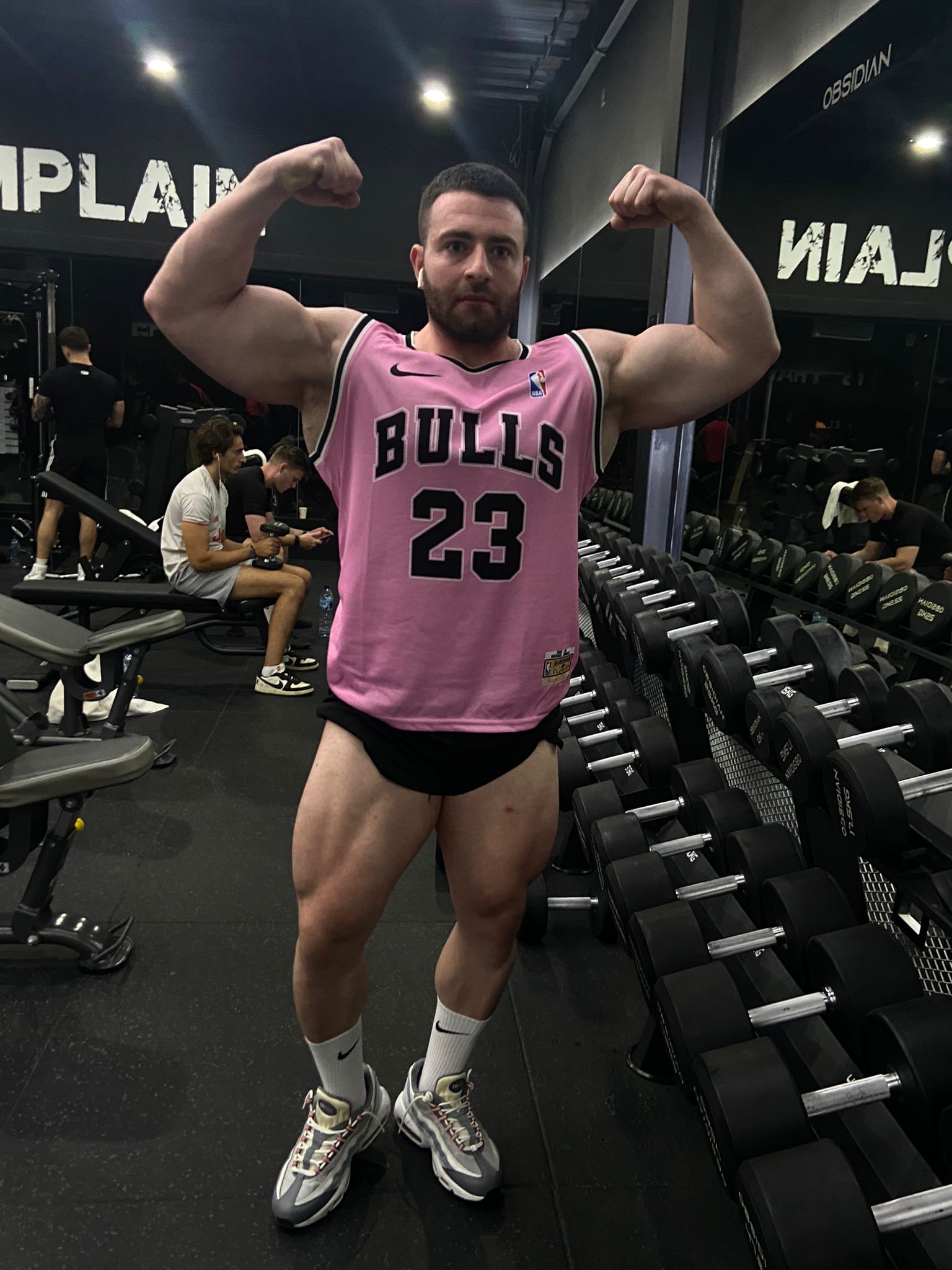
Dr. Nathan Chalik - Deep Dive on Heart, Kidney, and Liver Health, TRT Mistakes
63m 32s
In this podcast episode, host Scott interviews Dr. Nathan Chalik, an integrated health expert and bodybuilder. Dr. Chalik discusses his accidental entry into bodybuilding and medicine, noting a turning point when he encountered a patient using steroids whose severe health issues were overlooked by traditional healthcare, revealing systemic gaps. The conversation focuses on the widespread misuse and mismanagement of Testosterone Replacement Therapy (TRT). Dr. Chalik criticizes clinics for overprescribing, using outdated protocols, and neglecting patient health markers, while also highlighting the trend of overcomplicating regimens. He addresses the prevalence of performance-enhancing drug use beyond bodybuilding, underscored by inaccurate statistics and a lack of medical oversight. The discussion warns against unqualified advice from online communities and stresses that TRT carries risks like increased atrial fibrillation and blood clots. Dr. Chalik advocates for a cautious, individualized approach to TRT, using the lowest effective dose for symptom management rather than arbitrary optimization, emphasizing holistic health monitoring over profit-driven practices.
Welcome back to the Scott My Show. This podcast is brought to you by Element Electrolites. They're used by Navy SEALs, MMA fighters, endurance athletes, and bodybuilders alike. I use two element packets a day. They come in lots of awesome flavors. My favorites are chocolate and watermelon. I also really like the Lemonade and Lemon Lime Citrus flavor. It goes really well in your water, in your intro workout, proper hydration, and electrolytes being a big part of that are essential to both your mental and physical performance and overall health. I really like mixing the chocolate in with my cream of rice gives it a really nice flavor. I put the watermelon in my intro workout and taste really good. Disguises the awful flavor of essential amino. Go check them out. You can get a special offer and help support the show by going to drinklmt.com/scotmys to get a free sample pack with your order. That's a sample pack of all their most popular flavors. Element Electrolites also come with a money back guarantee. If you don't like it, no questions asked. You get your money back. This is a great offer for anyone interested in trying all flavors or you want to introduce a friend to element. Go check them out at drinklmt.com/scotmys. Thanks and welcome to the show. This podcast is brought to you by BioLongewity Labs for all your peptide and bio-regulator needs, including Reda True Tide, aka GLP3, MOTC, 5-amino-1MQ, BPC157 and TB500 for tissue and joint recovery and healing, as well as digestion, and much, much more. Head to biolongewitylabs.com and use code ScottM. That's ScottM. All one word to save and support the show. Thank you. All right. Today, Dr. Nathan Chalik is a renowned integrated health expert who explores the undeniable link between physical health, mental resilience, and personal responsibility. He's a bodybuilder. He's probably the most jacked doctor you've ever seen. He lives in Australia and posts some really awesome content on his Instagram at ahf.education. Welcome to the show, Nathan. Thanks. Thank you for having me on. Yeah, of course. I was just saying how, yeah, I appreciate the opportunity to come on just because I feel like this stuff just doesn't get spoken about, you know. So to have your platform, you've got like a fair few thousand followers on Instagram. So to have a platform like that to be able to talk about these stuff, you know, especially in light of everything that's happened pretty recently as well. You know, it's almost like what better timing, right? Yeah, absolutely. So I'd love to just start with a little bit more of your background. You know, how do you get into bodybuilding and the health side as well? Yeah. I mean, bodybuilding was more of an accident, getting into bodybuilding. I guess everyone sort of starts from place of, you know, just maybe being like a little bit chubby and insecure or I don't know, relationship problems or, you know, something quite superficial, I guess, usually starts off the journey, I think, for most people. And then slowly sort of get more and more into it. And especially the people that, you know, have that personality, that perfectionist type of personality, I think, get into it the deepest, I guess. And, you know, slowly but surely, I got more into bodybuilding, enjoyed the sport more and more, competed as a natural even. And then, you know, when it comes to the health side of things, same thing. This was, this was never sort of my plan, really. I mean, I just got into medicine just, just to be a doctor, right? Like, just another doctor. And it was my, the turning point was when I saw this one, the very first sort of bodybuilding patient I saw. He actually wasn't a bodybuilder. He was, he was someone who recreationally took steroids. And it was when I was still sort of like coming up, didn't have much knowledge at all. Still had a bunch of supervisors looking after me. And this guy comes into the clinic. He was adamant that he never took steroids, except for like one little cycle of Aniva, which is always what they say. Everyone says that. I just, I just took Aniva for six weeks, like four years ago. Yeah, of course. I was like, all right, cool. Whatever you say, bro. And anyway, he comes in, just asks for a bunch of bloods, order him his bloods. The blood tests come back and everything is like out of range. Like his liver function was completely out of range. His kidneys were shot. I mean, his hemoglobin hematocrit was up, like everything was out of range. And and I had no idea what to do at the time. I didn't even know what I was looking at. And, and then I went to go speak to my supervisor at the time. And I was like, you know, like, what's going on? Like, like, what do I do with this guy? Etc. Etc. And she was just like, I don't know, send him to a endocrinologist or send him to a nephrologist or something like that at the time. And there was nothing else. There was no second thought to it. There was no attempt to talk about things, to fix things, to explain things, nothing at all. And then on top of that, when I tried to contact him, multiple, multiple, multiple times to try and get him to back, come back in to the clinic, couldn't even reach him. Like, he just completely just let it go, you know. And that was the very first experience I had, you know, in general practice with that type of person. And that wasn't even a bodybuilder, you know, that was just a regular gym goa, essentially, essentially. And then it makes you think like how many more of these people are just walking around the street, you know, having no idea of how unhealthy they are, you know, or how their body is actually going on the inside. And then it sort of catapulted from there, you know, and then I got a few more of those types of patients and then sort of, you know, words start to spread and then I got a few bodybuilders. And then it turned from like hobby bodybuilders to like professional bodybuilders and, you know, and it just sort of catapulted. And then that's where it is today, I guess. Yeah, it's interesting. You hear the statistics about the percent of men who take steroids recreationally, let alone the, not even ones in the gym, just overall. And then I know people who go to the gym is a fairly small subset of general population as well. It's crazy to think how many people are using these substances and probably have no knowledge of preventative health and things to be monitoring. Yeah, well, I think like I say this like when I was learning for, you know, one of my exams a while ago, you know, came across the statistics that this statistic, I mean, obviously the exams that we do like cover a whole range of medicine, right? And there was just this tiny, tiny, tiny little topic that we have to cover about, you know, performance enhancing drug use, tiny, with almost no information at all. And I think the statistic they had was that it was like 0.08% of the population uses pads. And I was like, what? Like where is this number coming from? You walk into a gym, you know, and like every third person is using pads. Whether it's anabolic or pepsides or sarms or whatever it is, like that, that might be the minor difference, right? But, but you know, you've got to think that at least like one in five, like a man, like maybe, like it potentially could be that number, right? Higher than that. Yeah, it's crazy. Yeah. So talk about maybe we can start with, like in terms of clinical practice, TRT. What do you think? Where are some of the things you see people getting wrong about that or myths about TRT? So the first thing I feel like gets wrong is, so back in the day, I think the medicine behind TRT is both on the one end, I feel like it's still stuck back in the day. And I feel like on the other end, people are trying to get a little bit too fancy with things unnecessarily fancy. And so when I say still stuck in back in the day, like, so there was a guy in Australia who used to do a lot of TRT for like 20 years maybe. And he was, he essentially prescribed every single person, you know, one mill of tests, Australian awake. That was, that was just the formula, you know, one mill of Australian awake or if it wasn't one mill of test, like if it wasn't one mill of Prima tests in a week, then it was 0.3, 0.3 mills of test sip every second day. Right. And that was okay. So it ended up being about about a mill per week essentially, just divided into ejections. And that was it. That was it. There was no thoughts about, and also, as soon as the estrogen became out of range, everyone got an AOA.
Right. And there was no second thought about it. There was no, you know, this patient come from, you know, this level. So he only needs to come up to this level. Like there was none of that. Does this patient have symptoms? No, don't worry about it. Then the other issue that people, I feel like what gives TRT such a bad name in Australia as well, probably the same thing in America is that a lot of these TRT clinics that are up, they don't care after patients' general health. If something odd pops up, they say go back to your actual GP, right? But then the GP doesn't want to look after the patient because they're taking testosterone. Yeah. You know, and then so the patient gets stuck in the middle where they actually don't have anyone to look after them. Yeah. I feel what I've seen to, sorry, interrupt is just a lot of when the way it works in the US at least is these TRT clinics are mandated to do blood work every so often to be able to be allowed prescribing to testosterone. And if anything is out of range, they kind of hand wave it away on a console call. They're like, because they don't want to disrupt the revenue stream. They don't want you to stop buying testosterone from them. So they'll say, oh, this blood marker isn't that important. Oh, don't worry about this. Oh, maybe you do a little bit more exercise, a little more cardio. They're very dismissive of any problems. Yeah, I mean, like IST and ILT's high, don't worry about it. It's probably just a bit of fatty liver. Just cut your carbs down. Yeah. And then on the other side of things, you know, I feel like people have gotten a little bit too, I don't know, hey, I feel like they've gotten a little bit too interesting with their protocols. Yeah. You know, like, I mean, even even the, even the concept of having to inject every single day, for example, right? Like, I understand that like there's a theory behind it. It makes a lot of sense. But, you know, if you get a 55 year old dad, overweight dad, who's never, you know, injected anything into himself at all, you know, and works, for example, maybe, you know, maybe has to fly for his job a lot, you know, and it's difficult for him to take all these things with him. Like, there's no, there's no people aren't allowing room for that as well, you know, they're not allowing room for the individual. Yeah. So I feel, you know, they're using creams and then they're integrating other compounds into those creams. And for what reason, you know, no reason at all. And then they're adding on peptides, you know, for additional fat loss and muscle gain, and which don't even really work like that well, you know, etc, etc, etc. So I feel like that's the, that's the main, they're like the main issues with TNT still these days. Yeah. Yeah. I definitely see it too. I think a lot of times they're like always looking to sell you the next thing that they have available that they're now able to prescribe. Yeah. As though there aren't people that, you know, I mean, I spoke to a patient yesterday who is on 90 milligrams of testosterone per week, which is not a lot, you know, it's a good amount, but it's not a lot. He's free testosterone is only, I think, 500, 600. So it's like, so out to, you know, in our references, that's probably, you know, towards the slightly upper end of normal, definitely not outside the range, you know, and he feels fine. So, you know, so what's the point for pushing beyond that, you know, if the person's goal is, if the person's goal isn't to be a bodybuilder. Yeah. Yeah. In terms of, in terms of like the actual clinical practice, I guess, like I get what you're saying, like a lot of things are mismanaged. So when it comes to high hemoglobin, you know, doctors are still very quick to push blood donations on people, right? Yeah. When it comes to EGFRs, EGFRs being low, doctors are still very quick to diagnose, you know, kidney failure, for example. Yeah. When it comes to estrogen, they're still very quick to prescribe AIs. Yep. And the other one, the other one is probably the misdiagnosis of low testosterone in the first place. You know, people coming with the results of low free testosterone, and that's it. That's all they come in with. That's all the doctor asks for. They don't care about anything else that I want to know about anything else. But, you know, what happens if the person's, you know, FSH and LH low, and they've actually got a pituitary tumor. Yeah. And then you put them on testosterone, and then the FSH and LH goes low anyway. And then they, and then you never even know, right? Because now they've got the, like, you just never know, right? Because they're because they're, because they're the folgial results mimic the same thing. Yeah. Real. Yeah. Yeah. Yeah. Exactly. Exactly. So, yeah, I'm not sure if I'm getting off topic. No, no, definitely. Yeah, I think it's interesting. Like, I see, I see a lot of different things now. There's also another issue I see with a lot of clinics, is they're trying to promise. They're trying to basically lower the barriers to entry by saying, you know, this alternative doesn't have any downsides, but it'll get it rid of this inconvenience. So, for example, oral testosterone. Yeah. One of these clinics are now saying, oh, you just have to take a pill. Don't even worry about injecting. It's the same thing. And they don't, they don't talk about the potential downsides to oral administration first of the injection. Yeah. And we'll say, just take a moment, can do a lot of the same things TRT does. It won't shut you down. And, you know, it can help increase your natural production. They'll use words like that. And they'll say, you don't have to inject. So, they're basically trying to, they're, they're hiding really the downsides to the patients. And they're just trying to present it as something that gets them to sign up without worrying about some of their, their reservations. Yeah. 100%. Yeah. 100%. I mean, the creams, the creams especially, like the creams and notaries for, for increasing DHT levels even more so than, then, then injectables, right? So, so especially, you know, when they prescribe, I mean, from what I've heard. So, for example, one story that a patient told me is that he went to a TRT clinic and they said, you're overweight. And because you're overweight, you're more susceptible to the side effects of testosterone, which can be true. And as a result, you need to use the cream instead of the injectable. And like I get it in theory, but that's not the value, you know, how many fat people do you know who've started taking antibiotics? And then, you know, they get lean and shredded with no side effects at all. So, you know, like it doesn't necessarily work that way. And then, you know, also, if you're more prone to, to the side effects, and then you take a DHT, something that increases your DHT levels, you're going to get more acne, you know, you're going to get more, more hair loss, you're going to get more of the side effects anyway. Yeah. You know, the only thing that might improve would be the like erectile quality, right? Yeah. Yeah. It's funny. You talk about people trying to get too fancy, too. I remember back when I was on TRT in 2017 to 2022 or 2020, excuse me, I was on this forum Excel mail, which is a great forum. It's run by Nelson Virgil, a former HIV AIDS victim who survived largely through the use of TRT. And there's a lot of good information on there, but I describe a lot of the members on there and contributors as trying to like mentally masturbate over things that don't matter, like taking a hundred year, 155 milligrams a week. Yeah. One of the things that caught on as a trend was like guys trying to do like half injectable testosterone and half creams to try to like optimize their DHT and like how they feel. And it's like you're making this so complicated. Yeah. It was crazy. Yeah. Interesting. I mean, I don't know, actually don't know what an aim is, but you know that that lady on Instagram DJ Vanilla face. Yeah. Yeah. I mean, she made a post about DHT and how the actual DHT in your blood is not necessarily a representation of, you know, DHT receptor activation essentially, right? And so it's it's inaccurate anyway. Yeah. So I don't know, hey people, I don't know what they're reaching for sometimes. Yeah. Yeah. Yeah. The other thing that's huge here in Australia is there's massive groups, same thing, Reddit groups, Facebook groups, etc. Where patients are posting their blood tests, you know, online, they're saying what's my level at? Would I be eligible? You know, I'm not sure.
you know how do you fix this, what are the causes, what doses, do you think I should take, you know, and then there's thousands of people in this group, thousands and thousands of people in this group and it's this, it's like a melting pot for people to, you know, provide medical advice with no, you know, no background knowledge. You know, someone posts my free tea is this like what dose should I take and someone goes 150 and because they've been in, you know, contributor everyone trusts them and yes, yeah, yeah, yeah, yeah, yeah, yeah, I mean, in general, in general, I think tea art is just be the, like if it's, if it's necessary, right, it's a very invasive, I mean tea art is a very invasive treatment, right, with a lot of potential side effects, I think everyone forgets that there are side effects when it comes to tea art and everyone points to the traverse trial, etc, etc. But you know, the traverse trial show that tea art does have side effects too, right, it was relatively safe in heart failure patients and prostate patients, but it did show that there was an increased risk of of actual fibrillation and blood clot as well, right, it actually even showed that there was an increased risk of bone fracture in test and strain patients, right, so people forget that despite this a lot of, you know, positive evidence, there is still, you know, a lot of a lot of negative evidence against it too, and a lot of conflicting evidence as well, because I'm sure that previous to that, there was, there would have been plenty of studies that show that testosterone improved your bone density, right, so if the traverse trial got that wrong, imagine what else it got wrong, you know, yeah, it's interesting actually, the reason I started TRT was low, extremely low bone density. Yeah, I mean, I suspect that that was something that was wrong, like I don't really, I can't remember the details behind that specific point, but like I have no doubt that it improves bone density. Yeah. And what was it going to say? So, I mean, yeah, like it's, so it's a very invasive treatment, and as a result, you know, people really need to be, I think that ideally people should be using, you know, the minimum dose required to receive the symptom relief that they're seeking, bar, except for, except for muscle gain, right, because muscle gain doesn't, doesn't quite have a saturation point, you know, what I explain to patients is that every function in your body requires a certain amount of testosterone, right, and some functions require, you know, a free testosterone of 300 or 400, right, which is not that high, you know, and some functions require a higher free, a higher free testosterone, 700, 800, for example, maybe for, it's individualized as well, right? So I think muscle gain is the only thing that doesn't quite seem to have a saturation point, in other words, you know, if you took a thousand milligrams of testosterone, you will put on a lot of muscle, but if you took 2000, you'd put on more, if you put on 3000, you'd probably put on more. Of course there's a, there's a, there's a rate limiting sort of effect, but that's why I sort of don't count muscle gain in that, you know, in symptom, in too heavily in symptomatology of, of low testosterone. Yeah, you know, that makes sense. Yeah, it's interesting, yeah, everyone's so individual, like I was hypogonadol, my total testosterone, the normal range here in the US is 300 to 900 for all men, and I was consistently for over a year at about 100. Nantograms per desolate are I think is the measure, and I had no physical symptoms, other than the extremely low bone density and, you know, trouble putting on muscle, but, you know, I had no libido issues, no real root issues, anything like that. And like you say, it's very individual. Yeah, yeah, so it is still individualized. The one thing I don't like is when patients come and they're like, I have erectile dysfunction, not only symptom, I have erectile dysfunction, so I think I need TRT, or I think I have low testosterone, you know, and the reality is, you know, evidence doesn't actually point in the way that testosterone is a sufficient treatment for the sole reason of erectile dysfunction as well. So it's extremely, extremely, extremely, very person to person, and the levels change for person to person. You know, my dad's got a, my dad's got a free testosterone of 300, which is towards the, I suspect that your total testosterone is similar to what our free testosterone numbers are, like I think they're just sort of interchangeable. Yeah. But for example, like my dad's got a free testosterone of like 300, which I guess is borderline low, you know, and he's like, I feel fine. I don't know what you're talking about. Yeah. You know, whereas someone else might have a free testosterone of 400 and they're like, man, I've got brain fog, I've got fatigue, I've got libido issues, you know, I'm putting on fat, like, help me. Yeah, yeah, definitely, definitely. And different doses can result in different levels too. I remember when I started TRT, I was taking 120 milligrams per week, and my total testosterone was like 1100, and the doctors were like, can't believe this. Like your levels are so high for taking so little. I just, my body was just, and levels and what your body is using are different things. But I also think I was a hyper responder in how my body used it as well. Were you back then? Were you, so that's, so that's you naturally, like not, not using anything? Not using anything. I was on 100 nanograms per desolidory. Yeah, of total testosterone. And so you, that's my level. And you were still muscular at that point. No, I wasn't muscular. I was a roar. So if you imagine a very undermuscled swimmer, that's what it looked like. Like, yeah, very skin. I was actually 20% body fat on DEXA at 155 pounds. Yeah, okay, interesting. I mean, it's not uncommon to have those really high level, long distance athletes have low testosterone as well, I guess, and high SHBGs is probably part of that. I mean, what I say about SHBGs that, I know a lot of people don't like to worry about SHBG, but the reality is when you look at SHBG, you've got the low end, you've got the high end, and then you've got somewhere in the middle, right? And SHBG, at its very lowest, is the SHBG that you see, you know, in a very unhealthy population, right? People with metabolic disease, diabetes, obesity, hyperclestrolemia. So that's that population. And then at the high end, you know, yes, it can be a mark of health, but also it's old people, right? It's old people that have high SHBGs and they have increased risk of mortality, right? Increased risk of dying from something. And so when people are on TRT and they don't take the SHBG into account, I feel like they're sort of short-changing, short-changing that person's optimization, right? For lack of a better work, right? I mean, it's easy to put someone's testosterone up and bring the SHBG down. It's much harder to bring the testosterone up and keep SHBG in that sweet spot in the middle, you know? Yeah, yeah. I always wondered how to increase SHBG. It seems like there's a lot of people who claim they know how to do it, but very few that actually do. Yeah, it is quite difficult. I mean, one of the obvious things is changing your injection frequency and yeah, so increasing the frequency usually doesn't drop it as much or switching to sub-gitaineous injections doesn't drop it as much. Oh, interesting. Okay. Yeah, so the way I explain it is essentially it's like SHBG sort of like a nail in a piece of wood, right? And your injection is like a ham. So if you come in and inject one time, one big time during the week, you give them, you give them one big strike, the SHBG will drop. Right? Whereas if you come up and you just tap that nail, it actually doesn't move much at all. And so that would be sort of the equivalent of like maybe daily sub-gitaineous injections for example, right? Yeah, thanks. Let's talk a little bit about some of the main things that we see as potential causes of mortality in bodybuilders. Kidneys, heart and liver, start wherever you'd like to, but why are those the big three for bodybuilders? Yeah, I mean, liver, I have yet to say like any super significant issues when it comes to liver, especially in terms of you know, putting someone in hospital and really resulting in you know significant issues, but yeah, I have saying liver function values that were like ridiculously out of range. I mean, I've got patients who worry about the ASTN.
IoT being 10 months, 10 points above above the range. I've had Asians with AST and IoT in the 300s and 400s. Like just just wowed stuff. That's my thing. That's my thing. Yeah, well, there we go. Didn't talk to say that. No, I was ordering blood work privately, but I was using injectable wind straw and then I stopped a week later my levels were normal. Is this doing prep? Yeah. It's almost only doing prep that you say that sort of stuff going on. But I haven't seen too many issues of like liver cirrhosis or anything like that. I think the main thing I do see though is that a lot of bodybuilders and I see it a lot online. And I'm not saying this is wrong, but I don't think it's good practice. Where bodybuilders automatically put their AST and ALT down to just training hard and just down to muscle breakdown. Yeah. With the other second thought about what could be the cause. I mean, so for example, I had a patient the other day who had slightly high AST, slightly high ALT sort of training upwards, but not that bad. Still below 100. But then at the same time he had issues with his Billy Ruben. And it wasn't in the pattern of anything like Gilbert's syndrome, so it wasn't like a benign issue. And I feel like in most cases, actually in this case was really good because the coach and I sort of talk and so he sent the patient to me. But I think a lot of people would end up putting that down to sort of just like a whatever sort of thing. It's just Billy Ruben non-talks about on social media. So why do we have to worry about it? Just let it go. AST and ALT is like 70, 80. I trained yesterday. Don't worry about it. But in reality, what's more likely to be happening in a patient like this is that he's almost got an evolving potentially like a cholestatic picture, like a gallstone essentially. And he doesn't have any pain or anything like that. So potentially it's caught early. The only way to know is to really do a liver ultrasound. And then some of the other issues with it is like for example, high estrogen states can contribute to increased risk of gallstone production as well. So if you've never done that ultrasound to even see what's happening there, you don't know where potentially where you need to or how you need to control your estrogen levels as well. But that being said, I've never seen anyone die from or even really come close to dying from liver issues. How about can he be a second? Can he be one? Same thing. I feel like he gets a little bit mismanaged from both ends. I think doctors just rely very heavily on your own, sorry, on the EGFR without necessarily looking at cis-statency. Whereas like the bodybuilders are sort of the other way they almost only think about cis-statency. And I think cis-statins are good marker, but there are other markers of kidney deterioration too. The one that I use in bodybuilders, the one I use in every bodybuilder, once a year, is urine albumin to cry out, I mean, ratio, which is like a urine test that essentially shows you how much albumin, this type of protein that floats around your body, how much albumin comes out in your protein, sorry, in your urine. And that is actually more important. So if you sort of put it on a tealist, I would essentially, what I usually do is I check EGFR three, four times a year, so that's like my baseline test. If everything there is normal, then I usually don't go any further. If then I do a urine albumin to cry out in the ratio, I do that once a year for everybodybuilder, unless something funny pops up, unless they've got some other odd presentation or they've gone through a prep or something else happens. So if these two are normal, especially if they're very normal, right, EGFR is like greater than 90 or 80, and then urine albumin, creatinine is perfect, then I usually don't even check a system and see. I mean, you can, but it's a private test, patients have to pay 30 or 60 bucks, some patients might not all want to do it. You've got to wait three weeks for the result to come back as well. Like it's just a bit of a hassle sometimes for people. I have patients who really want to do it, and that's fine, we can do it, but it's not super necessary. I've never seen, as you start and see, come back abnormal if the EGFR and urine albumin to cry out in the ratio is normal. That's how I sort of approach kidney health. Obviously, I've got a straight case. So my kidney markers on blood work are almost always bad. My EGFR is normally between 60 and 75, and my creatinine is usually low, but I've had two kidney ultrasounds, completely normal. I have no symptom, I don't have high blood pressure. So what could be causing that if my kidneys look great on ultrasound, I don't have any symptoms. Is it blood work less concerning in that case? No, well, I mean, but you do see Stadins say, right? Yeah, and if the Stadins say is normal? No, it's low. Low, yeah. Well, I mean, I guess that's one of the reasons that, do you know what it means if the Stadins say is low? Well, it's calculated based on what's it calculated off of again? I can't remember what actually what's the thing that it gets calculated off. I think the Stadins say is just a protein, right? And then EGFR is the, you can get an EGFR that's calculated through the Stadins say. Yeah, yeah, that's right. That's what I mean. No, I don't know exactly what it means. Your kidney function is off, right? Yeah, so I don't think from my understanding, Stadins say still is not like a super, super, you know, verified, verified, you know, testing, testing, yeah, like a verified test for for renal function. It's one of the other reasons, one of the other reasons I sort of like leave it to a little bit later if you find it to use it at all. Just in case, it's not, like I don't think it's in, at least it's not in our guidelines to necessarily check it if renal function is normal. And I think it might be for that, that reason. And, and Stadins say you can fluctuate as well, it still goes up and down almost just like creatinine does. Yeah. So there's still a degree of variation, EGFR tends to stay a little bit more stable. And if your EGFR is within the normal range, and I mean, if your EGFR is within the normal range and your system stays low and your creatinine's normal, then I usually just sort of leave it at that. And potentially it is, it is just because of, it is just because of muscle mass. But, but like I said, I don't know, have you done, have you done the urine album to creatinine ratio, like the urine test? Yeah, yeah, that's normal. Yeah, exactly. Yeah. So my EGFR is low. Yeah, but not less than 60. Now, it has been before, but it's not right now. It's a normally between like 65 and 75. Sometimes, if I'm lucky, it'll be like 85, 90 and sometimes, and like once when I was unlucky, it was like 54. 54. So I mean, in that case, it could just be body, you know, muscle mass I do have bodybuilders who, who have EGFRs who pop in and out of the 50s, I guess, you know, like mid 50s, high 50s, and then they come back up to the 60s, especially the bigger guys, you know, and you're not a small guy either. So especially the bigger guys, actually, especially the women have, have, have noticed, have, have lower EGFRs. Oh, I'm interested in that. Yeah, I don't know if you've noticed the same thing, but I have a lot of bodybuilding, female bodybuilders who have, who have low GFRs and I've EGFRs and I've sent them to kidney specialists and everything just in case, because it's quite, it's distantly low, like with the males that pops back out into the 60s. And because it's so consistently low, I'd send a few of them off to the kidney specialists and they put it, they essentially said it was normal as long as the, as long as this system, say it wasn't greater than one. Interesting. You know, like you can do, you can technically do, like further work up of your kidneys if you're really worried. Yeah. You know, like if you're, I don't know, if you have symptoms of what's, what's notorious for like affecting the kidneys. So, I mean, you've done an ultrasound for, for
kidney stones. If you've got calcium issues, for example, you could maybe screen for multiple myeloma, for example. If you've got odd rashes and joint pains and arthritis type symptoms, then maybe you could do an ASR, an A and A, C3, C4, you could do an autoimmune screen, just in case you've got some autoimmune condition that's affecting your kidneys. I mean, if you've got a history of, for example, IV drug use, you could do a viral screen and test for like hepatitis B and C and there is a lot of room to move in terms of investigations if someone is really worried about it. On the surface, I would say that yours is normal and it seems like it's related to muscle mass, but there are still a lot of things that can be done technically if someone is really worried. Yeah. No, it's just been interesting because like I've seen multiple nephrologists, I've had other tests on, I can't remember the names of, and they've all said your kidney function is excellent. You just, you have rather large kidneys and you're a big person, so they're working very hard. Yeah. Yeah. Have you done the scan, MRI scan with a like manually C as well? Yeah. Yeah. So once you've done that, if that's normal, like you're good, that is the number one test for kidneys, like if someone is really worried. They don't really do that, they don't really do that too much for my patients. I've only had one patient have to do that and he was like very low, low, low, low, low, low, low, low, like end stage kidney failure, essentially. Right. But because he was, he was muscular, I think they did it just to really say what's happening. Yeah. But that's the, that's the time I'd say in that time. So it's lucky that you could actually get that done in America. Yeah. Yeah. I think, I think there's going to be a lot of bodybuilders on some form of kidney failure dialysis later in life. Yeah. I have, yeah, I have no doubt about it. I think I, I, I don't like how it gets swept under the rug. Like I know that, I know that I say that I have body, big bodybuilders, whose EGFRs fluctuate in and out of the 50s. I still don't know how like comfortable I am with that, if that makes sense. Yeah. Because it's not normal for lack of a better way to say it. Yeah. Like it really isn't normal, right? And, and this is such a new territory for medicine, like people getting this big that there's no, there's not much, if any, evidence to, to sort of, to justify, right? Like what we're doing and how we're testing. So, so I don't know how comfortable I feel about it. Especially, you know, there's still so many people walking around with high blood pressures. As much as blood pressure gets talked about online, bloody hell. Yeah. Like every other day, I have patients coming in with high blood pressures. You know what's more concerning? Doctors don't want to give blood pressure medications to bodybuilders that have high blood pressures. And then why? Just because they're like, oh, stop taking steroids and, and yeah. Yeah. Yeah. Yeah. That's unfortunate. Yeah. I mean, I've got so many patients that use a black market, telmasard and, and it doesn't do anything because, I don't know, I don't know how it's made, you know? Yeah. Thankfully, I've never had a problem with a GP giving me telmasard tan or omasard tan. They're always very willing. Yeah. I just, I just, I've had high blood pressure in the past, which isn't completely false. And they're like, sure, yep. Put you on 40 telmasard tan. No problem. Why, why omasard tan? I had heard once that it is more kidney protective than telmasard tan. Telmasard tan seems to have more positive effects on things like heart remodeling. I've heard it can have an effect on slowing neurodegeneration as well. But omasard tan, I've, I heard somewhere, I haven't verified this or researched it. But apparently it is more seen as more kidney protective than telmasard tan directly. Yeah, interesting. I'll have to look that up. Hey, I know telmasard, I know omasard can be associated with more, with more GI side effects, like it's got this, it's got this weed side effect, people stomachs. But I know it can be a little bit stronger in terms of blood pressure control as well. Yeah, I take, when I take home, I switch between the two, when I take home, I take half the dose, I take home. Yeah, I start to. Yeah. The other thing I don't like about bodybuilders taking their blood pressure into their hands is they, they never get their bloods, they never check their kidneys, you know, two to three weeks after they've started the medication. Not realizing that these medications do have a small but real risk of, you know, causing things like hypercholemia and actually, and reduction in your kidney function actually. Potentially even more, by more than 20%. You know, so that's the other thing that's a little bit, a little bit dangerous in that sort of side of things. Yeah, I think even on the supplement side too, I've heard that astrogolus, well, it can improve kidney function for some people, it can significantly reduce kidney function. Yeah, you can especially in high doses, it can actually make your kidney function much worse. Yeah, interesting. So I think people are a little too gun hoe saying, oh, I'm just going to start adding 8 grams of astrogolus every day, you know, it can only help. Yeah, I don't know how they forget that these medications have side effects. I mean, even if we transition to maybe like, if we talk about like cholesterol's right, like how people take the red yeast, rice extract, think there's just a natural supplement not realizing that it essentially acts as, you know, flava start and like a week, a week start and so, so, you know, it can cause just as many, like muscular aches and pains as, as, as startings. Interesting. I mean, on the topic of cholesterol's, same thing, I feel, I feel like I've seen people sort of go, you know, one way or the other as well there. I think when people have high cholesterol's, I think they're very quick to, to sort of jump to, to doing, you know, things like calcium scores and all that sort of stuff, thinking that, that, you know, one high rating of high cholesterol means that they're going to have plaque in the arteries of the heart, you know, as a 23 year old. So at least hard and plaque, you know, so that's always funny to say. I get so many people coming in though, like I need to do a calcium score and I'm like, why? Yeah, I never got that. So many bodybuilders recommend everyone needs to get a calcium score. I'm like, why wouldn't you start with an echo cardiogram? Like why that makes sense to me. Yeah, 100% echo cardiogram is, is higher tea than, than calcium score in terms of investigations. I mean, I sort of post, there was, there was pretty big coach who he's in the UK. So I won't say names, but, but he was essentially saying he made a big post. They got a lot of traction a while ago saying that everyone, every single person before they use antibiotics needs to get a calcium score. And I was like, I don't, you know, like maybe if you're like a 50 year old man who like smokes cigarettes for like the past 20 years, you know, like, okay, like I could say that, but you're a 20 year old kid. Yeah, I remember it was like three years ago. Nick Walker was probably like 25 and he was, you know, everyone was criticizing him saying he uses so much gear and then he like flaunted that he had a zero calcium score. I'm like, 25. What is it going to be? I remember I was speaking to Nick actually last night about this and I don't mean anything bad by this at all, like to this guy, but, you know, Jeremy Bondeo, obviously. Yeah. Yeah. I love that guy's physique. Hey, I think he was one of like, as I was starting to get into bodybuilding, I think his physique was like one of the more inspirational like physiques to me, like it was so aesthetic and yet so it seemed at least, you know, to an untrained eye, it seemed relatively attainable, I guess, but just so amazingly aesthetic and flowy and bubbly. And I remember the same thing maybe a year ago now. He was talking about how he had a calcium score done and actually came back not zero. He came back a little bit elevated. And he said in that video, he said that's a car ran past his team, who I don't know what that means, but passed his team. And they said, and they said that it's a little bit raised, but it's nothing to worry about, you know, it's nothing out of the ordinary for someone his age. And I was like, you know,
like if you're like he's what maybe like in his early 30s, I was like you know if you're in your early 30s and you've got you know hard and pluck on a calcium score like there is like something really really really wrong you know and then he's still competed one more time and to be honest I actually think he's probably lucky to get away with his life you know competing one more time or two more times I think after that. You know when he's got a when he's got a raised calcium score because if you think about it it takes a lot of time and a lot of effort for soft pluck to turn into hard pluck. Yeah right and and it's not the hard pluck that's the issue it's the soft pluck that's the issue. I mean soft pluck is what's what's what causes the the majority of heart attacks and strokes that's what that's what shoots off at any given moment shoots to a brain causes a massive stroke and you die in your sleep you know. So especially at night you know when you've got something like obstructive sleep apnea and then in those obstructive you know apnea episodes you get episodes of AF right you take anabolic increases the risk of AF you've got soft pluck in your heart that you haven't got checked up you know the AF that funny heart rhythm breaks off the clock the the pluck and then it shoots off you know and then before you know before you know you've passed away yeah yeah and then you're adding you know fat burners and t3 and clan and you know all these other things that just exacerbate exacerbate everything. Oh yeah like it's just a it's just a recipe for disaster so yeah for someone for someone in his team to say that you know having a raised calcium score at that age is normal like that is like that is malpractice like at it's at its best yeah yeah that's why everyone should be getting calcium scores that's why everyone should be getting echoes that's why if you're really worried about things you know you should be getting something like a CTA for example or even an MRI of your of your heart if that's if that's an option for you it's just sometimes difficult to get that I guess but but they would be the more ideal ideal options. Have you seen bodybuilders who have significantly improved their echocardiograms well bodybuilders? Yeah yeah 100% I mean I've got I've got one guy who's age of I mean Nicholas Nicholas we as age F hours what like sub 10% I think right as at its yeah at its beginning right and now he's I don't think he's he's a fraction yeah yeah I don't think he's above 50% now I think he's a little bit below that but he's heading upwards and then mine was 49 and it went to 76 years yeah I have no doubt I have no doubt that that's possible I mean anything above 70 is completely normal I think once it gets below 70 is probably a little bit reduced I think 50 to 55 is is low normal at best and then I think anything less than 50 is you know based on definitions an ejection fraction of less than 50's heart failure though there's room for movement there I guess but yeah I've had I've had I've had patients that have had EGF hours of 35% and go back up to 65% wow I've had patients who have had ejection fractions of what was the last guy that I spoke to two days ago his ejection fraction was I think 20 some 27% I think at the moment this is after I think six months only it's gone up to the 40's wow already yeah so he's he's like on the mend already as well a lot of it probably comes down to you know catching things early and implementing the right pharmacological sort of approach to managing it nice and early I think that's probably the I think that's probably where where a lot of the difference gets made and unfortunately I think a lot of bodybuilders are walking around Nick mentioned this I do agree I think a lot of unfortunate bodybuilders are walking around with with heart failure a degree of heart failure and playing it off for whatever reason right because someone's told them that an ejection fraction of 49% is is just because you have an athlete's heart it's not a it's not an animal experience they're a induced issue right they don't worry about left ventricular hypertrophy they don't think about you know left ventricular outflow obstruction they don't think about diastolic function they only think about C-stolic function they don't think about you know whether there's any concentric hypertrophy etc etc it's just sort of what whatever the craze is on social media they get pushed at the time you know yeah at the moment the flavor of the month is is ejection fraction so yeah so you're having a good time yeah what are some of the interventions you you've found to be most successful in improving injection fraction well I mean first and foremost you've got to stop using you know superficial level levels of testosterone they've obviously they've sort of quite well managed heart failure is not necessarily a contraindication to using TRT right so no one's necessarily saying you have to stop completely though potentially at this beginning stage that might be optimal for some people but you've got to stop using superficial logical levels of of PEDs you've got to lose weight now I don't necessarily mean you have to lose muscle mass necessarily I think you will probably lose a little bit of muscle mass as you lose weight but I think weight is a massive issue for people yep especially bodybuilding they're just two it's just too heavy for a normal heart you know and there's no two ways about it sometimes yeah you've got to improve the amount of cardiovascular exercise you're doing you've got a focus more on your micro nutrients I think that's at a very superficial level and then when it comes to you know the pharmacology side of things number one is obviously that the ACE inhibitors or the angiotensin receptor blockers is always is always first not just for blood pressure but you know improving all cause mortality for heart failure patients actually right so you've got ACE inhibitors in the angiotensin receptor blockers you've got the beta blockers obviously improve cardiac re modeling as well especially if you've had episodes of AF and you know funny heart rhythms in the past as well which I think a lot of these bodybuilders do have you've got the SGLT2 inhibitors as well so now they're not necessarily just for diabetes they're very effective medications for heart failure and and actually quite potent diuretics as well to the point where some people if they've had low lymphswelling and they had used something like fruismide to help with that low lymphswelling actually realize that they can come off the fruismide because the SGLT2 inhibitor is so good at at flushing that water you know and it's just an added benefit if the person's got diabetes it's an added benefit if the person's got a degree of kidney failure as well because it has evidence in those both those areas as well right so really really good drug and you know and then beyond that there's the Mineralo corticoid receptor antagonist right so things like spurinolactone is one of those medications mixed sort of thoughts about that one very strong diuretic especially when used in combination with those other medications can have a strong effect on blood pressure as well in combination with those other medications has the side effects obviously of like hypercalemia because it's potassium sparing right so people have to be careful about the foods they eat potentially and then the other issue is it's it's anti-androgenic right so it actually lowers testosterone levels it's one of the reasons we use it for females to manage to manage acne and hair loss right because it's got those anti-androgenic properties and unfortunately can sometimes also cause things like gyno in men that use it as well so you know if the heart failure can be improved without necessarily having to jump all the way down to that step then then that would probably be the the best option but it's not always the case and then the other option is another class of medication called Arnees it's it's obviously the latest stand for words right but but there's another class of medications called Arnees and that's usually reserved for patients that have sustained a sustained reduction in ejection fraction I think less than 40% over like six months or something like that despite you know despite having optimized their their ACE inhibitors their ARBS you know and and their other medications as well so they get switched out for those Arnees that's probably the last the last one of the medications but but those are all super super helpful the reality is though I think the majority of people improve quite significantly once they reduce their antibiotic load okay yeah yeah yeah that makes sense for the main culprit yeah yeah and body weight I mean yeah it's just we won't need to be this big you know yeah yeah it's scary I see Samson do other at like like 360 pounds and I'm like, I don't know how long someone can live like that.
Yeah, you've got to just wonder how, like, what is happening behind closed doors, hey? Like, I don't know. I wonder that all the time. Like, how does a guy look and he'll get away with? You know, how does someone take one gram of metabolic steroids, get heart failure, you know, two years later, and then how does another bodybuilder take? I'm not saying he uses a lot, but you know, how does another bodybuilder, you know, take that much, get that big, and then not have any issues at all. Yeah. We'll see. Time will tell, like you said. Yeah, that's all I had to experiment. Yeah, we don't know. 10 or 20 years with the old time, sorry. Yeah, yeah, we'll see. What do you think was the biggest thing that helps you with your heart failure? Honestly, it may have been a carryover from rowing because I was a good head of rower for eight years. Yeah. That may have contributed to it. But also just starting to tell Missartin was the biggest piece, I think, that really made a huge difference because I had not only low ejection fraction, I had bilateral hypertrophy, as well. And one other thing I forget, and yeah, all that improved my heart, essentially remodeled. So you just reduced doing as much, like, cardio and rowing? Well, I was a rower for eight years, and then I did nothing for like three years, and then I started bodybuilding. So I didn't change, I'm just saying, like, I think it's possible that some of the issues with my heart may have been caused by eight years of rowing. And that may have been there when I started bodybuilding, but then, you know, as I got further into bodybuilding, it was further away from the rowing. So that could be a contributor, I'm not sure. And with Artin, honestly, those were the main things I changed. Yeah, yeah, interesting. I think a little bit goes a long way when it's with Heart Failure, I think a little bit goes a long way, with an otherwise healthy person. Yeah. Yeah. Well, thank you for coming on, Dr. Tullich, really appreciate it. It was awesome chatting with you, hearing some of your perspectives on these things, definitely opened me up to some new ideas and things I didn't know about the interactions of some of these drugs. So, very cool. Artin folks, reach out to you if they want to get in touch to a console or all along. Yeah. So, pretty easily reachable on social media on Instagram. So my account is, I'm sure if you've got my name, you'll find me, but my Instagram handle is at ahf.education. Yeah, put out a lot of educational content. Most of it is not as in depth. It's what I did today. Cool. Awesome. Alright. Yeah, I'll have a good weekend. Thanks for taking the time. Easy. Thank you. Say, "I have a good weekend."
Podcast Summary
Key Points:
The podcast features an interview with Dr. Nathan Chalik, an integrated health expert and bodybuilder, discussing the link between physical health, mental resilience, and personal responsibility.
Dr. Chalik shares his journey into medicine and bodybuilding, highlighting a pivotal experience with a patient using performance-enhancing drugs (PEDs) that revealed gaps in conventional medical care for such individuals.
He critiques common mismanagement in Testosterone Replacement Therapy (TRT), including overprescription, inappropriate use of aromatase inhibitors, neglect of overall health, and clinics prioritizing profit over patient safety.
The discussion covers broader issues in PED use, such as underreported statistics, lack of monitoring, and the risks of unregulated online advice from forums and social media groups.
Dr. Chalik emphasizes that TRT is an invasive treatment with potential side effects, advocating for personalized, minimal effective dosing focused on symptom relief rather than arbitrary targets.
Summary:
In this podcast episode, host Scott interviews Dr. Nathan Chalik, an integrated health expert and bodybuilder. Dr.
Chalik discusses his accidental entry into bodybuilding and medicine, noting a turning point when he encountered a patient using steroids whose severe health issues were overlooked by traditional healthcare, revealing systemic gaps. The conversation focuses on the widespread misuse and mismanagement of Testosterone Replacement Therapy (TRT). Dr.
Chalik criticizes clinics for overprescribing, using outdated protocols, and neglecting patient health markers, while also highlighting the trend of overcomplicating regimens. He addresses the prevalence of performance-enhancing drug use beyond bodybuilding, underscored by inaccurate statistics and a lack of medical oversight. The discussion warns against unqualified advice from online communities and stresses that TRT carries risks like increased atrial fibrillation and blood clots.
Dr. Chalik advocates for a cautious, individualized approach to TRT, using the lowest effective dose for symptom management rather than arbitrary optimization, emphasizing holistic health monitoring over profit-driven practices.
FAQs
Element Electrolytes is a hydration product used by Navy SEALs, MMA fighters, endurance athletes, and bodybuilders. It comes in various flavors like chocolate, watermelon, lemonade, and lemon lime citrus.
You can get a free sample pack with your order by visiting drinklmt.com/scotmys. This offer includes a sample of all their most popular flavors.
BioLongevity Labs provides peptides and bio-regulators for needs like tissue recovery, joint healing, and digestion. Products include Reda True Tide (GLP3), MOTC, 5-amino-1MQ, BPC157, and TB500.
Many TRT clinics may dismiss abnormal blood results to maintain revenue, fail to address overall health, or use overly complex protocols. Patients can get stuck without proper medical oversight.
Using substances like steroids, peptides, or SARMs without monitoring can lead to severe health issues, including liver and kidney damage, hormonal imbalances, and undiagnosed conditions like pituitary tumors.
A common myth is that high estrogen always requires an aromatase inhibitor (AI). In reality, symptoms should guide treatment, not just lab values, and AIs are often overprescribed without considering individual needs.
Chat with AI
Loading...
Pro features
Go deeper with this episode
Unlock creator-grade tools that turn any transcript into show notes and subtitle files.
 PodcastTranscript AI