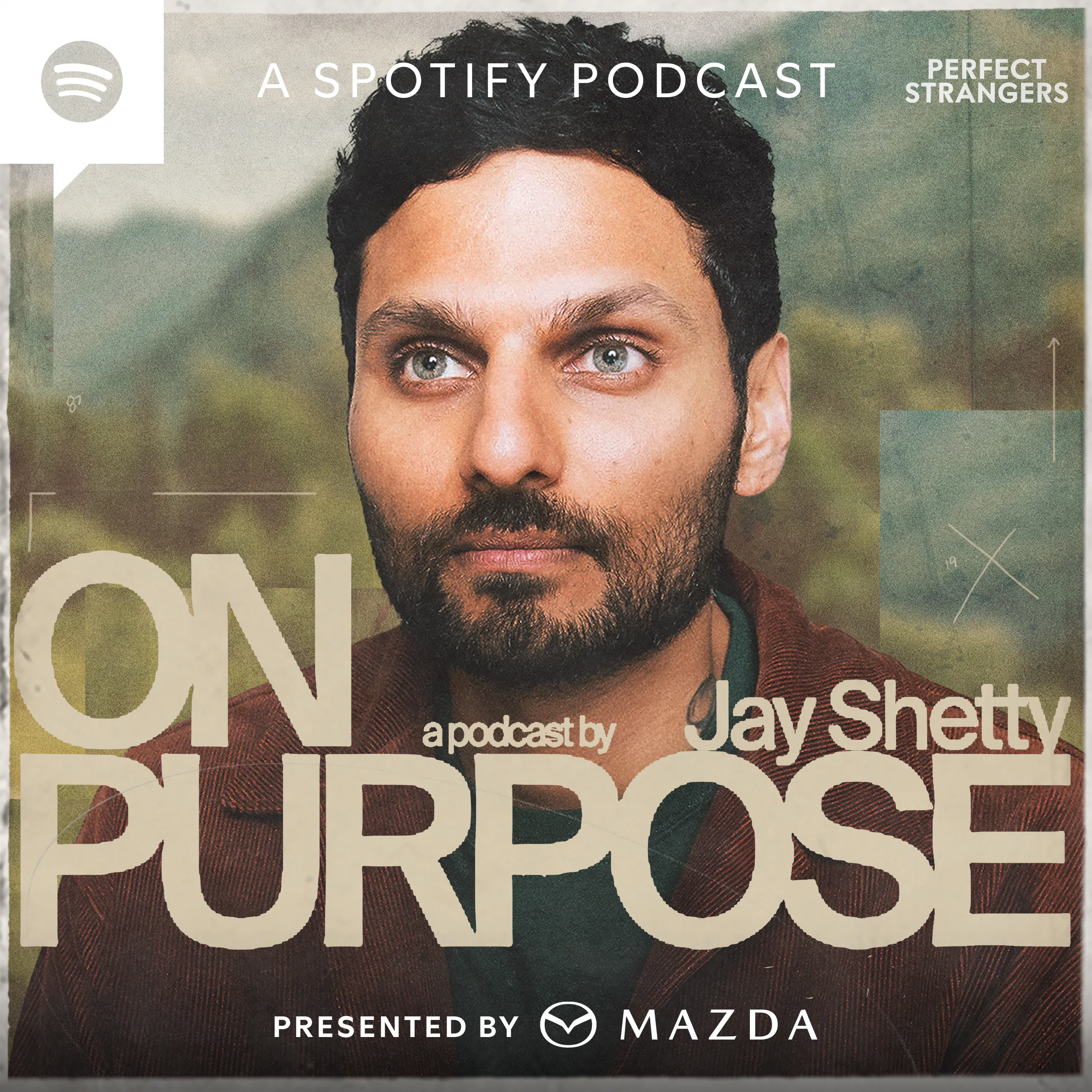
Dr Joe Dispenza: The Formula For Transforming Your Life
1h 9m 44s
Dr. Joe Dispenser emphasizes that lasting personal transformation stems not from external actions alone, but from internal shifts in belief, emotion, and thought. He argues that people are often trapped by past experiences, which condition their minds and bodies through automatic emotional and behavioral patterns. True change occurs when individuals consciously break from these patterns by becoming aware of their unconscious beliefs, emotions, and habitual reactions. Through consistent meditation and mental rehearsal, the brain can be rewired—creating new neural pathways, altering gene expression, and triggering biological changes such as reduced pain, increased energy, and even tissue regeneration. Dr. Dispenser highlights that after just seven days of immersive practice, participants show measurable shifts: improved brain function, harmonized voices, enhanced heart function, and reduced symptoms of chronic illness. He presents a revolutionary model where the mind and body respond to emotions as if they were real experiences, enabling people to live in a future they genuinely believe in. A key insight is that change requires stepping into the "unknown"—a moment of discomfort where the old self dissolves—and replacing it with a new, conscious identity. This process, though challenging, leads to profound healing, autonomy, and a sense of personal power. Stories of reappearing lost items or regrown body tissue suggest a non-linear reality where consciousness can bridge dimensions, implying that transformation is not just psychological but deeply physical and universal. Ultimately, Dr. Dispenser advocates for daily practices—like meditation, self-regulation, and intentional living—that train the mind to operate beyond fear and habit, unlocking a future of wholeness, health, and self-determination.
Hey, it's Jay. I don't know what your day's been like, but I was just thinking about you for a minute. And I hope you're being a little patient with yourself, because you deserve it. And yeah, I'll talk to you soon. Hey everyone, welcome back to On Purpose, the place you come to become the happier, healthier and more healed. Today I'm sitting down with one of the most popular, requested guests on the show. He's here for his fourth time, Dr. Joe Dispenser, researcher, teacher and best-selling author, who has spent decades studying the neuroscience of change and how people can transform their brains, their bodies and their lives. Dr. Dispenser, welcome back to On Purpose. Happy to be with you Jay. It's always great to be with you. I feel like I learned so much. I feel like my audience loves seeing us together. You have an incredible community of people that are looking for your advice all the time. And I wanted to start off by asking you this, right now, in 2026, what's the most common thing you hear from people that come to you, that feel stuck? I think people come to our events for all kinds of reasons. Some people come because they have health concerns and they want to transform their health. Some people want a greater expression of love in their life. Some people want abundance. Some people want a mystical experience. But really, what people really come for is wholeness, right? And so given the proper information, people can understand information, they can learn information, knowledge is power, but knowledge about yourself, the self and power man. And so the only way people actually arrive at their vision or their goals is to change. They can't be the same person. They have to change in some way. That means they have to think differently. They have to believe in different things. They have to make a lot of different choices. They got to demonstrate new behaviors. They got to set their goals and repeat an experience enough times. It leads to the outcome and they got to feel differently, right? And people come for all kinds of reasons, but I think the big reason that people come for once they get beyond themselves is a greater expression of wholeness. For anyone who says, I can't believe that changing my beliefs changes my life or changing my thoughts changes my life. What would you say to them? I would say if you believe that, you can believe that for as long as you want. But what's a belief, right? A belief is just the thought you keep thinking over and over again or information that you're exposed to enough times that it becomes more automatic, right? So we have a lot of beliefs that sit behind the scenes of our awareness. And for the most part, those beliefs never come to the service until you want to believe in something else. Until you say, I want to heal, I want to change, I want to become abundant. I want love in my life. I want the mystical experiences and all of a sudden the moment you're being defined by a vision of the future, right? All the hard, wired thoughts and beliefs come up because that keeps us in the familiar past, right? So all beliefs are based on past experiences. So a person who finally makes up their mind to change, they have to make a decision with such firm intention that the amplitude of that decision carries a level of energy that causes their body to respond to their mind, that the choice that they make to change becomes a moment in time that they would never forget. In the stronger the emotion we feel, the more we remember the choice, right? And we're branding that thought more neurologically in our brain. In other words, beliefs don't really change unless you come out of your resting state. People who finally make up their mind about anything in their life they will tell you. I remember exactly where I was the time of day it was who I was with, they can tell you everything about it because they created a long-term memory. Many people who do our work, let's take people who say, for example, heal, right? Some people, you know, the chemo isn't working, the surgeries didn't work, the radiation didn't work, the drug trial didn't work, the diets didn't work. And they're kind of left with their belief in themselves, right? And if you believe in yourself, you have to believe in possibility. And if you believe in possibility, you better be believing in yourself. And so the only way that we really can stay connected to the vision of what we want to believe in our future is when we feel the emotion of it. When you feel the emotion of your future, it's more you're more prone to believe it's going to happen and you feel less separate from it. In fact, you can't look for it. Why would you look for it if it feels like it's already happened, right? We can't attract anything in our life that we feel separate from, right? So the moment we default, we respond or react to someone or something in our life emotionally. The emotion remember is residue chemically from the past. The moment we react and lose that feeling of our future, we no longer believe in that future. It's impossible because we're looking at the future through the lens of the past. The immediate default causes us to behave like we're in our past. That's a habit, right? And believe in our past. And there's always a story that goes along with that. People who heal from all kinds of chronic health conditions. A lot of times they'll say, I did my meditations two or three times a day. And I always say to them, why? And they always say because I stopped believing I started doubting. Instead of staying in their doubt and their fear or whatever limited emotion they're in, they sat down and when they finished their meditation, when they got done, they believed more in their future again. And that's exactly what allowed them to change because it's that image and that emotion that fought in that feeling, that stimulus and response that's conditioning their body emotionally into the future. Keep doing that enough times. Your body is going to believe it's living in that future reality and it's so objective. As the unconscious mind, it cannot distinguish between a real life experience that's creating the emotion. And the emotion that we're fabricating by thought alone, the body's actually believing it's living in that environment. The environment signals the gene. That's epigenetics. And so if you're feeling the emotion before the experience, you're signaling genes ahead of the environment. And you're literally biologically changing your body's looking like it's living in a whole new environment. That's exactly what our data shows. At the end of a seven day retreat, there's so many genes that are up-regulated in people that their body looks like they're living in a whole new life. And they're in a ballroom and there's nothing really spectacular about a ballroom. There's nothing there to stimulate them. It's happening within them. I remember actually reading a study a few years back when virtual reality was new. And there was a study showing that when you're experiencing a virtual reality through eye goggles or some sort of technology that your body is experiencing those same fears. So if there's a dinosaur running at you, your body is experiencing that. If you're rock climbing on the edge of a cliff looking down, you're feeling as though you really are, even though you're standing on solid ground. And so we already have an experience. And what you're saying is if you're actually visualizing that or feeling that and believing it in your body, you're having that same type of experience. Exactly. The brain can't distinguish between the real life event and what you're imagining. The brain will look like the experience has already happened. The early research that was done at the University of Washington was on burn victims with virtual reality. Because when people have third-degree burns or more, when you take the bandages off the burned areas, it's extremely painful. So what they did is they created this virtual experience where they were in snow with penguins and a snowball fight. And they got so immersed in the actual virtual experience that they didn't feel the bandages being taken off because that was real for them. So it could work in all kinds of wonderful ways as well. This episode of on purpose is presented by Ultra Running. We all benefit from having a little more space so do our feet. That's why Ultra Running shoes feature ultra-fit design, giving toes more room for comfort, balance and strength. They're perfect for running, walking or hiking, any pace, any level. They feel right from the first step. Go to ultrarunning.com/onpurpose and use code purpose 10 for 10% off. That's AL-TRA running.com/onpurpose. Stay out there. I remember I was once traveling with a friend and he loves doing extreme sports. So I landed. I was with him and then he said tomorrow we're going skydiving. Now I didn't have any intention of skydive. I did not want to skydive. I'd never done it before, but I felt a bit of positive peer pressure from my friend and I always say yes to him. So I remember that night. I ended up watching skydiving videos on YouTube and I would close my eyes and I would visualize what it was going to feel like going up 10,000 feet, 13,000 feet, 15,000 feet into the air. What it could look like looking out. I remember I visualized it around seven or eight times and for the first seven times I felt sick in my stomach and then the eighth time I didn't and then when I went skydiving the next day I was totally fine and I was thinking wow, like the ability to feel something I was going to experience in the future. That was something I was worried about. We always hear that regret or pain of the past and worry or anxiety about the future are the two places we get lost. How do you encourage people to look differently at their past and their future? The definition that we've come up with that seems to be our best definition of change is being greater than your environment, right? And what's your environment made of? It's made of people, objects, things and places, right? To be greater than your body and
if you're living in the familiar past that's because you're experiencing some emotion, and that emotion is causing you to see your past or remember your past. The default, of course, is always to try to predict the future based on the past. And if you can predict the future, that's the known as well. So the familiar past is the known, and the predictable future is the known. There's only one place where the unknown can exist, and that's the sweet spot of the generous present moment. So the change is to be greater than the body as the mind, because if you keep remembering a past experience, as you remember the past experience with certain people, certain times, certain places, as you remember that image of the past, you're thinking in the past because you've experienced something with someone at some time or someplace, you have an emotion associated with it. So you feel the emotion of the past, and it's that conditioning process that conditions the body to subconsciously become the mind of that emotion. In other words, someone may even forget the trauma, you know, intellectually or consciously, but the body never forgets, right? So now the body is conditioned emotionally into the past. If you run through a series of routine behaviors every single day, thinking the same way, making the same choices, doing the same things, creating the same experiences, feeling the same emotions, sooner or later that's going to become habituated, right? The habit is when you've done something so many times that the body now knows how to do it better than the conscious mind, right? So to overcome the body when we change is to overcome the emotions that has been conditioned to in its habits, right? And it turns out it takes an enormous amount of energy, an enormous amount of awareness to catch yourself from going unconscious, right? So in the beginning it's very tedious. If the change then is to be greater than time, you have to catch yourself going unconscious to the predictable future, and you have to catch yourself going unconscious and remembering the familiar past. Nobody is going to do that for you, right? But what we discovered is that in the first two days of like a seven day immersive experience at our events are mostly seven days, the first two days is a lot of that. We call it overcoming yourself. There's a default mode network in the brain that consumes an enormous amount of the brain's energy. It's preoccupied all the time in doing that exact thing, always trying to predict the future based on the past. The brain in a sense is an anticipation machine. So if a person sitting in a meditation, they start remembering what happened three days ago or ten years ago, or it starts recalling a memory, and the body starts getting aroused, starts getting frustrated, starts getting impatient. That's usually when the person says, "I'm not a good meditator, or this isn't good for me, or I want to give up, or I'm going to get my cell phone on any scroll and go unconscious." But if the alternative is to catch yourself getting aroused instead of giving up on yourself, work with your body and lower the volume to that emotion and bring the body back into the present moment. That's a victory because you're telling the body it's no longer the mind that you're the mind. If your body wants to get up and do something and wants to plan and wants to start thinking about how long this is going to go, "What am I going to do tonight or I'm going to do tomorrow?" You catch yourself going unconscious and forecasting a predictable future instead of getting up and doing something if you can execute a will that's greater than the body's program and it's a bituation. That's a victory as well. It's just like taming an animal. If you keep doing it over and over again, sooner or later the body's going to acquiesce. Sooner or later the body's going to surrender to a new mind and when that happens, it could finally relax into the unknown, which is, goes completely against our biology, our biology's program for survival. And in survival and stress, it better chances of surviving, staying alive if you run from the unknown. So, it goes against our fundamental biology to work with people to teach them how to find the sweet spot of the generous present moment. That is the place. That is the eye of the needle where we have to create from. It turns out that if we look at our functional brain scans of both novice meditators and advanced meditators, at the end of seven days that default mode network, which consumes all that energy in the brain, literally turns off. The salience network and the default mode network on our FMRI studies, both in novice and advanced meditators, at the end of seven days, the voice in their head, the critic in their mind, the one that's always talking to them, it's always trying to predict the future based on the past is silenced. So now the person can actually relax into the present moment. Turns out, if we ask them to open their eyes, when they open their eyes, after the meditation, that network is completely shut off as well. The degree of change that takes place in seven days looks like the person is on psilocybin. It looks like they're on some type of, you know, psychedelic chemical. More than likely, their nervous systems, manufacturing the very chemicals that causes them to really relax into the present moment. So the point is, is that if you practice this enough times, you get better at doing it. And I think that that's the key, right? To be able to catch yourself from going unconscious, we discover the only way you're going to become more conscious is to catch yourself going unconscious. And as you catch yourself going unconscious over and over again, the thought I can't, it's too hard. I'll never change. It's my mother's fault. It's that past experience, it's my ex. I don't want to do this. All of those voices sooner or later, a person has to come up against. And if you're curious, what's on the other side of that? And you go past that point, the brain also changes the most. In other words, you get to that point where you want to quit or you want to give up. That's the boundaries of the known, right? If you take people past that point and you teach them what to do, and they stretch themselves out of the known, that's when we start seeing the greatest biological changes that take place both in the brain and the body. What are the childhood beliefs that keep adults emotionally trapped? Probably the biggest one is that this doesn't feel good. Because change is really uncomfortable, right? And if you think about it, it's never going to be the right time. It's never the right time. The change is always going to be an excuse. There's always going to be a reason. And so when we use feelings as a barometer for change, we'll always talk ourselves out of change, right? So how we've been programmed since we're young is that our reaction or our response to someone or something causes us to think about that person based on the memory we have of them and feel based on the experience we have with them equal to what we know about them. So then you may say to the person, why are you upset today? I'm upset today because of that person or that circumstance. What they're really saying is that person or circumstance is controlling my feelings and my thoughts and anything that controls the way we feel in the way we think we are victim to, right? So there's this kind of unconscious program of victimization, I think, that we're waiting for something in our life to change in order for us to feel joy, right? And that's the old model of cause and effect. The idea is causing an effect, right? So I think a lot of people, the easiest and simplest way to go unconscious is when our environment starts controlling our thoughts and feelings and ultimately our behaviors, to change then is to think, to act and to feel differently in the same environment. And that's what allows our environment to begin to change. Yeah, I mean, I always remember that old quote that says, you keep trying to ask God to change your situation, not realizing that God put you in that situation so that you can change. Exactly. And it's a fascinating thing that we all get caught in where we're waiting for things around us, wishing, hoping that they were different. But we're being required as you're saying to live, think, breathe, move differently in that position, which when you hear that, it sounds impossible because forget just being unconscious, we're lost at the shallow level of like, what will people say? How will people think about what I'm about to do? Who am I going to let down? How do I feel about letting myself down? What does it feel like to grieve the old version of me? Yeah. I call that standing on the cliff. You're on the cliff. You got to jump in the water. It's going to be cold. You know, you've got to jump, right? And that, I think that is the boundaries, the boundaries of our belief or our emotions, right? Some people would rather cling to their suffering and their pain than take a chance in possibility, right? And when we talk to people that have healed from a serious health condition, what we discovered was that they weren't doing their meditations to heal. They were doing their meditations to change. They thought, if I truly change, then I'll heal. And many people who do have that experience have this sense of temporality where they say, I'm not that person any longer. I'm not on someone else, right? And our personality is made up of how we think, act, and feel. So if you're thinking differently, if you're acting differently and you're feeling differently, you're a different personality. The disease could very easily exist in the old personality and you're literally someone else. And our language specialists that study the language of transformation and our work say that exact thing. There's a sense of temporality where for the person has a very disadvantage.
stink moment where they realize they're no longer that person, the disease exists or belongs to that person. I'm not that person any longer. What's a daily habit that we can do to start rewiring our thoughts that way? I mean, the experiment is really simple. If I change, my life should change or better yet, nothing really changes in my life until I change, right? I think the first step, and this is what we've discovered, there has to be a reconceptualization of our understanding of reality. That doesn't mean that people don't have a good understanding of reality, but if you really, really want to get serious about this, you got to fill your brain with knowledge. You got to fill your brain with information. As you learn new information, you're making new connections in your brain. If you don't review it, if you don't repeat it, if you don't think about it, the circus prune apart within hours or days. It's so much easier to forget this information than remember because we're programmed into something else. If you were serious and industrious, you would say, "Okay, I'm going to get this down. I'm going to learn. I'm going to understand. I'm going to understand what I'm doing and I'm going to understand why I'm doing it." That's so important because that's when the hell gets easier because you can assign meaning to what you're doing. There's no conjecture. There's no superstition. There's no dogma. There's no spiritual principles. Science is the language that demystifies the process. All of life uses information to organize itself and to form without information. Life can't give birth to anything new. Getting the information enough that you understand the practice. A real simple practice once you have the information is just to say, "Okay, I got to unlearn and break the habit of being myself. I got to relearn and reinvent a new self." It would be a really good idea before I started my day, before I bring myself and present myself to the world. The hard part is the unlearning process because by the middle of our life, 95% of who we are really is hardwired beliefs, perceptions, attitudes, thoughts, automatic habits and behaviors in really addictive and conditioned emotional responses. 95% were unconscious. The first step, the change is becoming conscious of those unconscious thoughts. Write them down. What are those thoughts? What are those beliefs? What are the behaviors? Are you sitting on the couch and you want to be abundant or you want to get in shape? What choices are you making that are undermining that future? What emotions that keep you connected to the past, you can't take to your future. You can't feel lack if you want to be abundant. You can't feel happy if you're feeling suffering. If I could become so conscious of my unconscious thoughts that I don't go unconscious to them in my day or so unconscious, of my habits that I default or my emotions, could I stay conscious my whole day? That would be a win. Then it would make sense you'd have to prime your brain. What do I want to believe? What did I learn? I got to remember to think this way. Nerve cells that fire together, wire together. If a belief is just a thought you keep thinking over and over again, keep doing that and you're installing hardware. Practice it enough times. It becomes like a software program. That's the new voice in your head. You've installed a new belief. Now that's not enough. Because many people in this work, they start the work. They feel better. They're sleeping through the night. They have more energy. They have less pain. But their health condition really hasn't changed from an objective standpoint. Their values, their blood values, their scans are still the same. Now I got to get really good at doing it with my eyes open. How am I going to be in my day? One hour of a good meditation or 40 minutes of a good meditation. The rest of my day. I'm unconscious. I'm in a program. I'm reacting. How am I going to be with my coworker? How am I going to be with my ex? How am I going to be with my partner with my children? What would greatness look like? What would love do? If you could close your eyes and mentally rehearse what you're going to do. There's such great research on mental rehearsal. Keep doing it enough times and rehearsing it. The brain cannot distinguish between what you're imagining in the real life event. In other words, if you do it enough times, your brain will look like you already did it. Your brain will look like the experience has already happened. You've primed your brain for the act. I got to remember to act this way. Then could I teach my body emotionally? What my future will feel like before it happens? Now that goes so against how we've been programmed. We need a reason for gratitude. We need a reason for joy. In what we're saying is that if you can teach your body emotionally what that future will feel like. Remember to feel that way. It's usually a very heart-centered emotion. If a person can get out of all those survival emotions and all those stress emotions, and there's always a thousand reasons why they shouldn't justified or not, the only person that's hurting is themselves. I know I know that the long-term effects of those hormones are going to push the genetic buttons and create disease. I got to maintain this emotional state. I got to stay relaxed in my heart my entire day-to-day. Let me remember to feel this way. In the word meditation literally means to become familiar with. Become really familiar with an old self so you don't go unconscious and become really familiar with a new self. So a practice would be okay. If I do this really well and I do it and maybe it doesn't. Nothing changes for the first day or the second. Let me just go for two weeks. I'm just going to work on change. How many times do we have to forget until we stop forgetting and start remembering? That's the moment of change. We go with default. We go unconscious so many times but the brain learns by mistakes. If you get serious enough, you're going to make a lot less of those choices again. If I truly do this well, then there should be some effects in my life and then with the synchronicities and the opportunities and the coincidences and the serendipities in the simultaneity of events start occurring. You start realizing, oh my god, I'm not the victim of my life any longer. I'm in fact the creator of my life because that novel experience, the opportunity is telling you, oh my god, like, did I create that? And that's what causes people to become inspired to do it again. So the experiment is, if I change, can my life change? As I'm listening to you, I want people to think about it like learning a new language. So if I'm learning a new language, I may practice it for one hour. But if I really want to make it my new reality, I have to talk in that language all day long. And I'm hearing words in that language, I'm translating in that language, I'm connecting with people in that language and all of a sudden, I'm now speaking this new language because I think when people hear about changing their beliefs and changing their thoughts, they think it's some wishy-washy, fluffy, ethereal idea, but the truth is anything you're learning, it's like learning a new script. You're learning a new script for your mind, you're learning a new script for who you want to be, the script of the actor, or the role that you want to play in the world. A lot of people today are worried about grieving their past self. So there's a sense that you want to move or you need to change, but actually you liked a lot about your lost self. It just doesn't serve you anymore. How do you do that? Look, I mean, I never want to say leave everything behind. Everybody has great habits and great skills. Everybody's done something great and their life wants. What we do know is that when you go from the old self to the new self, there's a gap and you have to kind of cross this river and that space is the unknown because the moment you decide to make a different choice and you feel uncomfortable, you step that the familiar known and you're in the unknown and if the body has been conditioned to be the mind, that's when you hear the assault of all the voices start tomorrow. It's too hard. You're never going to do it. It didn't work last time. Get a sit on the couch, watch it, you know, scroll, whatever, you know, feel this way. The body is telling you to go back to the familiar known, but if you're persistent, that discomfort is a dissonance that's taking place. You're no longer firing and wiring the same circuits in the brain. You're no longer making the same chemicals that are feeding your body or signaling the same genes. There's this kind of this chaos that's taking place because the body is no longer working the same way, right? And this is where most people listen to the voice in their head and says, that says start tomorrow and then they make the same choice and they do the same thing and they create the same experience and they feel the same emotion. They say this feels right to me. No, that feels familiar. In a sense, the grief that we're feeling when we go from the old self to the new self is a neurological. It is a biological. It is a chemical. Is it is a genetic death of the old self? There's a withering away, right? And we're not asking people to white knuckle it, but then you'd have to agree with me that if you were in that place, the unknown, that is the perfect place to create from. If you can turn it around then and you can start deciding on how you do want to believe and how you do want to act and how you do want to feel, there's a period where the body is craving those chemicals just like it, just like an addiction. And if you just go past that point, you look back at your past and you see it, you see it in terms of everything you learned from it, it served you, right? And so I think it's always worth the effort. I think that people who finally cross the river and get to the other side, there's no grieving any longer. There's kind of like a triumph, right? There's a victory that takes place because they're not that they've broken through. I feel like one of the biggest experiences people have today is that they get stuck in negative thought loops. Yeah. What's the fastest way to get out of a negative loop? The first step is always recognizing that you're there. The second step is justified or not. If someone or something is doing that to you, justified or not,
The only person that's hurting is you, right? I mean, it's like drinking poison and asking, you know, for the other person to die, right? I mean, the our response and our reaction is actually weakening the organism, right? So the second step, then once you realize that you could be victimized by that person or thing, the third step after that is to change it, right? And what we discovered is if you take some deep breaths, you slow your breathing down, you move out of that around state, if you place your attention on your heart, and you say, oh, I'm gonna trade those emotions for a different emotion, we call it self-regulating. And I think it when it's the hardest, it matters the most, right? 'Cause anything past that's gonna be easy, right? So there are tools that help us to move out of that sympathetic or fight-or-flight system into a different system. The other thing is, is that you get to this point when you're you're ruminating, right? You're thinking certain thoughts that are making certain chemicals that make you feel a certain way. The moment you're feeling a certain emotion, the brain checks in with the body and says, you're really miserable and you start thinking more thoughts equal to how you're feeling, making more chemicals for you to feel the same way. And this cycle of thinking and feeling and feeling and thinking creates what we call a state of being, right? So anything that interrupts that process and there's meditations that we use for that, but it requires then a person being able to self-regulate, to catch themselves, to not blame anybody, to not make an excuse and say, okay, I'm gonna move from one state of mind and body to another state of mind and body. Now, in the beginning, it may take you time to excuse yourself and to get into that state and come back out and you may lose it again and you might have to do that a series of times, but just like anything else, like you said, the more you practice it, the better you get at it. And I don't think it's bad to do that. I think the challenge is, is how long? How long are you gonna do that for, right? Being able to break those patterns and interrupt those patterns. Breath is a big one. Heart-centered focus, open focuses or broadening our awareness. These are all things that create more order and coherence in the brain and body. - What you're saying is that there's such a need for that pattern interruption because we get lost in these loops and patterns. For example, a lot of us wake up in the morning and the first thing we think is, "I'm so tired." And then you have your morning coffee and it's 9 a.m. and you're thinking, "I am still so tired." And then you get to mid-day and you think, "Oh, lunch is gonna be late." And then you have lunch at 2 p.m. and you think, "I am so tired." So you've had that thought multiple times already and now you make it through to 6 p.m. You're thinking, "Oh, I've got to work a bit more. I'm so tired." And then somehow at 10.37 p.m, you click next episode and watch another show and then you repeat the cycle again and again because you didn't interrupt that pattern. And I think when you're saying becoming conscious of the thought, whether you're talking about being able to breathe through it, whether you're actually saying, write it down. What's that thought that keeps coming back up for you? Let me become really conscious and cognizant of that. And now what I do is almost like, it's almost like this and so it's like, "I am tired and I'm gonna cancel my weekend plans." Because now I'm able to actually make a shift and a change based on that thought. That thought is now data and useful. Rather than the thought of I'm tired, loops to I'm exhausted, loops to I'm overwhelmed, loops to I'm burnt out over weeks, months and years. - Yeah, yeah. - No, it's exactly how it is. And again, like you can only talk around this. - Yes. - You have to be in the river. You have to be in the river because you're more conscious and you're more awake even though it's uncomfortable when you're in the river of change. - Yeah. - And it's kind of funny because you're looking around to see if anybody else is doing it and you don't even know. But that kind of moment where you realize, "Well, no one has the answers, but me." No one's gonna come for me. I gotta do this myself. I think when people heal from a health condition, it's almost like their life depends on it, right? So they're really managing their attention and they're really managing their energy by staying conscious all the time, right? And I think you get better at it. - Talking about 10.37 pm and clicking next episode, "What's the one thing humans should stop doing before bed?" - Oh God, there's no doubt about it. Images in stimulation, stop scrolling. I mean, what's it doing? Tell me what's happening. If we were to scan someone's brain, we'll scan someone's heart rate. If they were doing that before they go to bed, what are we gonna see? What's gonna shock us? - Yeah, so there's a problem with attention, right? As you shorten your attention span and you consume information that's stimulating, you're gonna create a shorter attention span without a doubt. But the real problem is the release of dopamine. It's the rush of dopamine that's created from the stimulation and the images. And the rush of dopamine is creates kind of this reward pleasure center in the brain. We don't know that, but it's kind of sublimating another disturbing emotion like emptiness or lack or fatigue or whatever. We're conditioning ourselves to become dependent on something to regulate our emotional states. But the pendulum swings the other way. It gets 70 dumps of dopamine. The body's not used to that kind of reward, right? And so the receptor sites on the cells can tolerate that immense amount of dopamine so they close down, they become desensitized. And now it requires more to turn it on the next time. So in a sense, we're starting to reset our pleasure centers, to recalibrate them to a higher and higher level. So it's always gonna take more of the turn of the month. Now the problem is, in the absence of that stimulation and you're not gaming or you're not scrolling or whatever, you can't find pleasure from anything because your reward centers have just been hijacked to such a high level and we experience this kind of adhidonia. And I can see it normally in young people. You can just look at a person when they've been on their device a long time. They're just glazed over their overdose. They've overdosed. So when the pendulum swings the other way and you don't have that amount of dopamine, it becomes a problem because anytime you start feeling and uncomfortable emotion, you're not gonna consciously know you're doing this, but you're gonna scroll now and you're gonna become more dependent on the images and stimulation. And so when it comes time to learn and learning should be a reward in and of itself, a kid goes to school and they can't learn is because they can't pay attention because their reward centers are out of balance. And I think in the long term, when you face challenging problems in your life, that you can't escape from, (laughs) this could be a big issue in the future for a lot of people because you can't escape from something in your life and you need something outside of you to change your internal state. It's gonna be difficult to change for people. What's the biggest transformation you've seen? - Gosh, you know, my belief in what's possible in the last five years, maybe in the last two years, I would say, has changed so dramatically. I mean, I just, my belief in witnessing both the research that we've been doing in the last five or six years, we partner with the University of California San Diego and Stanford and Harvard and some other schools, Johns Hopkins. And we're really interested in demystifying this process of change. So what we know from the research, this is insane, that at the end of seven days, people do not have the same face. The harmonicity of their voice is completely different. The language that they. - Seven days. - Seven days. Their language is completely different. Their brain, I could talk for hours about it. Their brain is completely different. It's more organized, it's more coherent. It's more, it's more orderly. Their heart works better. Thousands of metabolites are up-regulated in their blood. Their gene expression is different. Their microbiome is different without changing their diet, without taking the probiotic, without restricting it any way, without any external substance. Their breath is different. Their breast milk is different. Everything changes. Their gate, their posture, everything changes when we change, right? So I think the research has been super fascinating, but the reason that we've been doing all this research really is because of the stories of transformation. The human in you may say, "Wow, that's really amazing," but the scientist usually says, "If that happened, how did that happen? How did a stage four terminal cancer metastatic that spread to organs and to bones in 10 weeks, completely vanished?" And Petscan shows no evidence of cancer, right? So our envelope of what I believe is possible has been stretched to such a great degree. Here's an example. We had a woman that had colorectal cancer. She went for surgery and they physically cut out that part of her body. They cut out the colon and the rectum. And when you lose that area of your body, you lose your dignity because you're chained to a bathroom. So she had a bag, but she said that she couldn't go more than 10 feet from the toilet. That was her life, right? She got depressed. She couldn't sleep. And the doctor told her that it would, she'd have to learn to live with it. And she just thought, maybe I could grow my colon back. So she lost nine centimeters of her colon. When she first started doing the meditations, she couldn't get through the first minute to without having to go to the toilet. And then she started doing them on a toilet. And then she started practicing, and then after a period of time, she was able to
the go through a whole meditation without using the toilet, which is a win for a person like that. Then she started noticing that she was changing more and she decided that she wanted to have the belief that she could grow her colon back. Now I know that sounds insane. It was insane when I heard it as well. Long story short, she went on a two-year journey and came to a week-long retreat, went through every meditation sat through every lecture without having to use the restroom. She went for a scan and she had grown five centimeters back. No way. It's not done. Out of the nine centimeters she lost and then came to another event and then got her final measurement and she grew ten centimeters of her colon erect and back and she lost nine. In other words, she regenerated tissue, right? No, no. The crazy part about this is I saw the tissue. It wasn't scar tissue, it wasn't feeble tissue. It was brand new, juvenile, opalescent, vascular, fresh regenerated tissue. She re-grew her rectum and colon back. So, I mean, what does that mean? Like, what does that mean? It means the human body has the innate capacity to regenerate itself at any age if it's given the right information. Now, that's insane. That's not how we've been programmed. Yeah, I mean, everyone is saying he's like, "Ah, really?" But if you look at our data, if you look at our data and you look at all of the information that we're capturing in the plasma of meditators, there's factors in the plasma that cause a resistance to viruses and we wrote a paper about it. You take an advanced meditator and you put the COVID virus, the SARS virus, in the presence of an ACE2 receptor and that the virus can enter the cell. There's some type of broad immunity that the meditator is making. We've isolated the protein that inhibits the virus from entering cell, okay, so antiviral. If you take the plasma of an advanced meditator and you put it in the presence of a cancer cell, any type of cancer cell, 84% of advanced meditators carry factors in their blood that take 70% of the energy out of cancer cells. What do cancer cells like to do that like to move and multiply? If you're taking energy out of a cancer cell, my goodness, this is an anticharcinogenic chemical. We looked 63 different diseases and every one of those diseases at the end of seven days had a dramatic reduction in pain and fatigue. People had more energy and they had less pain, independent of their disease. One intervention and much less pain. When we decided to actually analyze the plasma of these meditators, 100% of the people that we measured were making their own endogenous opioids. In other words, natural pain relievers, right? The body's fabricating a pharmacy of chemicals that were not there at the beginning of the event. They're not taking morphine, but at the end of seven days, they're manufacturing their own morphine. Where is that information coming from? It's coming from within us, right? In the study that I was talking about earlier with the default mode network that FMRI study, we found an area of the brain that actually grows in volume at the end of seven days in advanced meditators. When we look at the plasma of these people, they have neurogenic and neurotrophic factors in their blood that are actually causing neurons to sprout, to flourish, to bloom. All of these chemicals that the body's manufacturing are pro-life and pro-growth. If we look at advanced meditators that go through a week-long retreat and we look at novice meditators that go through a week-long retreat, when we do the very sophisticated analysis for longevity, many of them add a year to the life. When we look at the controls that are vacationing at the hotel, we can tell you vacationing may not be good for you if they actually get older, right? So there's something happening with these people by interacting and changing in the transformation process, by combining a clear intention with an elevated emotion, they're changing their state of being, right? And the body's so objective that the body's believing it's living in a new environment and it's nurturing itself, it's growing, right? So we looked at a gene expression. Everybody has their own genotype. Your genotype is different than my genotype based on your race, based on your culture, based on your parents, based on your environment. Everybody has their own genotype and genes made proteins. At the end of seven days, 80% of the population is expressing the same genes and making the same proteins. What does that mean? It means the flock, the herd, the tribe. There's an emergent consciousness that's being reflected in people's biology and everybody's evolving together. So something happens really magically when people come together, right? And they behave in the same way, no different than the school of fish or the flock of birds, that kind of murmuration, that kind of emergence is reflected in human beings as well. In fact, it's so crazy that we could take 750 people, we can measure their HRVs, right? And at the beginning of an event, this was a 10 day event we did a couple of years ago in Cancun. We divided people into healthy and diseased, right? So we had about 265 I think healthy people, no disease. And then the rest of the people had all different kind of chronic health conditions. So we divided them into anxiety, PTSD, depression, cancer, Parkinson's. And so our first study, we looked at people with depression. Now when you look at a person who has depression, their HRV is on the, on the garment readings are very jagged, right? And if you compare to the control with your eyes open, the resting state, there's a very smooth, right? But we discovered that every single meditation, when we went into a meditation, somehow the depressed people had the exact same heart signatures as the healthys. And at the end, at every single meditation, they were being entrained at the end of 10 days, the depressed people looked exactly like the healthy people with their eyes open. So there's something that happens energetically, that's happening in the, in the audience, in the, in the ballroom, that somehow people are somehow entraining to each other in this very non-local way. This episode is brought to you by State Farm. We talk a lot about intentional decision making, and that extends to the practical stuff too, like making sure your coverage actually works for your life. State Farm is there to meet you where you are, and they know how sweet it is to feel good about your decisions. Welcome to a State Farm agent today to learn how you can choose to bundle and save with the personal price plan, like a good neighbor, State Farm is there. Prices are based on rating plans that vary by state, coverage options are selected by the customer, availability, amount of discounts and savings, and eligibility vary by state. Can you tell me a crazy story that's not a healing story? We just had one in Denver just a few weeks ago. So when someone comes on the stage, she tells a story that she's going to a training outside of Mexico City. And she's going to a kind of a dangerous area where there's a lot of crime, and she's wearing this very special pendant that she has, that was handcrafted. It's in the shape of a heart, and it has a crescent that's cut out out of the heart, and it's very special for her because she has a birthmark on our left calf that's in that exact shape. So she makes the decision to take off the necklace and long story short, she loses it. She looks for it. She can't find it anywhere. This is two years ago. So she practices maybe in meditation, bringing the pendant to her. She does it for a little while, nothing happens, so she just accepts that she lost it. We do a very extensive meditation towards the end of the week long retreat. She's very deep in the meditation, and she sees the pendant kind of drop in the void. She said that she was okay with it, just she just saw it, and she was totally okay with it. Now that day is a very long day at our week-long retreat, and the next day is the last day. So she finishes the day after 8 o'clock, she goes to a room, and she starts to pack because she's leaving the next day. And she says I never put anything in the drawers in hotels because I'll always forget stuff. So when I unpack, I put things on the shelves, and I hang things, but never in the drawer. So she said, I was just packing and organizing, and she said, I don't know what possessed me to do this, but I walked over to the nightstand, and I opened the drawer in the nightstand, and there was my necklace. Now think about that. She lost it in Mexico City. She's in a hotel room with over 650 rooms, a hotel with more than 650 rooms in the hotel. It's in her room, and it's two years later, and it's in a completely different country. How? Well, if you see time is linear, right, then we're going to have a problem with this. But if you see time is not linear, then it makes total sense, right? I mean, how many possible realities exist simultaneously?
Oh my gosh, yeah, you're blowing my mind right now. I know it's crazy, it's crazy. So she was wearing it. She was wearing it on the stage. It was her necklace, right? So that's crazy. So we have to upgrade our model of reality and time when we start thinking non-linear like this. And when something like that happens, it should cause us to stop and think about things differently. Yeah, I mean, I've always been fascinated by the nature of time in the East and the West. And of course, in the West, it's linear. And in the East, it's always been cyclical. And it's been almost cyclical and spiraling upwards, like it's ascending as well. Yes, yes. So it's not just like, it's just going around, around, around. And so it is fascinating when you start looking at these, in the same way in the West, we have this before and after, right? I used to be like this, now I'm like this, which kind of points to, I was stuck. And now I'm stuck with this diversion of-- Yeah, yes, yes. Whereas if you're cyclical in ascending, then you're always evolving and moving and regenerating in refreshing, which is so much closer to what nature's doing. And it's entirely possible, just like when you're in a changing room and in a closed store. And there's two mirrors. And you look down and you see an infinite number of views, one way, and an infinite number of views. That's how reality is. There's an infinite number of these entropic universes that exist. And one may be where you have one shirt, not in your closet. Like you think about how many variations, right? So in a sense, she moved from a reality in a dimension, a universe, where she didn't have her pendant into one of those changing rooms. Everything else is the same in her life, except she's in that universe now, where she has her pendant. No, I need to upgrade. I'm not there, yeah, I need to upgrade. It's crazy, no? What type of meditation does this? Because this isn't just any meditation. It's not all types of meditation. There's a very specific method. I don't study any traditional meditation. I think when you use tradition or religion or culture, I think you divide an audience, even the language that goes along with that. So we look at a lot of brain scans. We look at a lot of data, right? If changes to be greater than your environment, to be greater than your body, and to be greater than time, we use meditation not only to become familiar with the old self, and to become familiar with the new self, but also to get beyond our body or environment in time. So it's not uncommon in the first couple days, you find yourself thinking about your wife, or your husband, or your pet, or your job, or your coworker, or whatever. Your cell phone, right? Because you're in the habit of doing that, okay? So you catch yourself doing that enough times, you stop doing it over time. And if you're not thinking about different people, or different places, or objects, and if you're not thinking about your body, and you're not thinking about your emotions, or your habits, and you're thinking about the predictable future and the familiar past, there's this elegant moment, really, where you have no attention on your body, become nobody. You have no attention on anybody in your life that you relate to, you become no one. If you're not thinking about any objects or thing, you kind of enter this place of nothing, right? And if you're not thinking about any place, you're in this kind of place of nowhere. And if you're settling into the present moment, you're in no time. I call that the eye of the needle. That's the moment we get beyond ourselves. And if where we place our attention is where we place our energy, and we have no attention on anything in our three-dimensional reality, anything physical or material, we kind of enter this realm or all of a sudden energy changes in the body. Energy moves naturally into the heart. It's just, if you're no longer thinking and feeling in the same way, you're no longer mismanaging your attention, and you can relax into the present moment, energy moves right into the heart. And once it moves into the heart, the heart, all of a sudden, as the creative center of the union of polarity and duality, the union of opposites, where wholeness starts, once energy makes it into the heart, we've seen this over and over again. The heart tells the brain, the trauma's over. The past is over. The heart kind of resets the baseline for the trauma and the person, all of a sudden, changes the state. In fact, you can see it happen when you're in stress and you're in survival, the brain is very erratic. It's functioning in a very high frequency, call it high beta brain waves. When energy makes it into the heart, you could just see this beautiful wave of energy move right to the brain and the brain goes into these beautiful alpha states. The heart's telling the brain to get creative, to dream, to imagine, right? So we see that and we've kind of developed this way of getting people to focus on the in material instead of the material, to instead of narrow their focus on everything physical and material. And when we're stressed, we over focus, we obsess, right? We overthink, we overanalyze. The hormones of stress cause us to become materialists. It heightens our senses, right? And so if something's moving in the bushes, you freeze and you narrow your focus on the cause and you're looking at for something physical and material. Turns out that's how people focus most of the time. They kind of narrow their focus on objects and things. It's called a convergent focus. So people who have brains that are in high beta, they're overanalyzing, they're overthinking, they're looping, right? So what if we do the opposite? What if we go from a narrow focus to a broad focus? Instead of putting our focus in converging it on something, open it up in diverge, right? Open up in sense space, sense nothing. Now the act of sensing causes us to stop thinking and analyzing. And if you're focusing on nothing and if you get really good at this, you're no longer activating those different neurological networks in the brain that have to do with your wife or your coworker or your pad or your cell phone or your bed or your car or whatever. And those different networks that are siloed and compartmentalized are modulated at a certain age. They start to communicate with each other. They start to synchronize. And what sinks in the brain, links in the brain. So all of a sudden you see this diminishing of compartmentalization and this kind of more unified connection that takes place in the brain. And that kind of level of coherence that's created is exactly the proclivity for a mystical experience. In other words, when the brain gets that orderly, we can guarantee a person is going to have a transcendental moment. So we've done tons of research. In a seven day event, we do so many different meditations. We're doing four walking meditations. I mean, you got to be able to walk as it, right? You've got to practice with your eyes open. So imagine, you know, 2,500 people on the beach in Cancun. It's beautiful, right? The sun is rising and everybody's starting to gather. And again, it's the flock has taken off. So we do walking meditations. We do healings on other people. And I will tell you this, the greatest biological changes, and the greatest changes we see, period. And anything that we do in the week-long events is during the healings. Both in the healers, as well as the healings. There's some kind of dramatic change that takes place. There's a huge arousal that takes place in every single person. I know you've done research on the power of meditating together. Yeah. And when everyone has a collective intention in this, collective energy, and that really resonated with me because even from my spiritual traditions in past, collective meditation was seen as such a powerful, powerful way to really connect. We have these random event generators that we place all over the ballroom, and they're very sophisticated coin tosses. And what they do is they toss a coin about a thousand times in a second. But instead of a heads and tails, it's a machine that's programmed to throw a one or a zero. You can't predict it. That's why it's random. It could be 1, 1, 1, 0, 0, 0, 1, 0, 1, 0, 1, 1, 0, 0, but the more you toss the coin, the more it's 50/50, right? So we have these spread all over the room. And when nobody's in the room, when no one's in the room, as you would expect, it follows the midline, but it's zeros and ones. When we do these collective coherence healings where people are no longer focusing on themselves, but they're focusing on another person. And if they have a coherent brain and a coherent heart, they're going to jiggle the jala. If the field already exists, they're going to create waves in that field. And if everybody's coherent, when their waves come together, and they interfere, they're going to make bigger waves, the higher the amplitude, the higher the energy in the room. So when we do the coherence healings, the moment we start the coherence healing, all of a sudden you see a machine or the machines that are programmed to throw zeros or one, all of a sudden start going like this, and then all of a sudden start throwing ones, and it goes way outside the parabola, way outside of normal, way outside of the range. So a machine that's programmed with those ones and zeros, all of a sudden is behaving no longer randomly, but very orderly, right? If we take one of them, and we wrap it in a Faraday cage, you know, copper, nickel, and insulate it from electromagnetism, while the other machines are all behaving abnormally, this machine looks like there's nobody in the room, so we know on some level that there's a field that's created that is electromagnetic. It may not be the only thing, but we know that there's an electromagnetic field that's influencing this machine. Now it gets crazier, because we just published a paper and explore magazine on this, we partnered with the HeartMath Institute, they have random event generators spread all around the globe, doing their own random things independent of the other, they don't communicate in any way. But when we look at the collective network of observers that are with brain and heart coherence that are creating the signature in the room, those random event generators that are spread around the globe.
have the same signature, the pulse is being reflected non-locally in the earth's field. It means we're all connected. And what is the number to get to where the collective change changes human behavior? Really, that's what we're interested in. Look at, is it the number of people I doubt it? Is it the amount of energy I doubt it? It's probably the most coherent signal, right? And so they see these dramatic changes taking place. Now it gets crazier, because we have people wearing very sophisticated heart rate monitors on their chest that are the helis, right? The moment I say, turn your hands into the field of the person laying there, we have the data I can show it to you. The moment I say that, the person who's receiving the healing, there's a dramatic influx, an activation of energy into their heart. In other words, they're feeling an enormous amount of love, not a little love, like a lot of love. They can't make their heart do that, like something is happening to them. So what does that mean? That that field that exists between you and I is real. And all you need to do is get coherent in your brain and heart. And you could actually send information into that field. And it's not matter that's creating this field. It's the field that's creating matter. If I can change the information and the field of the person who's laying there, I can change the destiny of matter. And so we've seen people heal from, I know, this is crazy. We just had a blindness, deafness, ALS, Parkinson's disease. That just sounds like it's crazy. I know it's crazy, muscular dystrophy. We've seen just rare genetic disorders of cancers. It doesn't feel like unreal to you. It's totally crazy. That's why we're doing the research because it's not common. I have to catch myself because it's so common in the work that we do. There's so many footprints that are in consciousness. So there is something really powerful that happens. If we take 41 people, we did the study, and we move them to another room, they have no idea what's going on. And they sit in that room for three hours. And I run a meditation, and they're wearing heart rate monitors. And in the middle of the meditation, I ask the 2400 people in the ball room to send love to those people in the other room. For the greatest good, their lives being rich, their bodies be healed, their dreams be lucid, whatever. Only during the time that I ask those people to send that energy to the people in the other room, you see the highest heart rate, and you see the most coherence just at those two moments. So why is this important? It's so important because we have to remember this. I say to the scientists all the time, is the data greater than we think. And they say, yes, and I say, that means we're greater than we think. Why? Because we're studying us. We're studying people in not 40 years of devotion or meditation. These are common people, right? And the data is outstanding, right? So all of the stories of transformation that have come from a person healing or from a person being healed are the four-minute mile, right? Someone's standing on the stage and they're telling their story, we just had it in Denver, you know? A guy never meditated before in his life with macular degeneration. He wasn't going to stay for the whole event. He had a profound mystical experience. He came out of the meditation, but he had three huge blind spots. He couldn't read. He had to turn his head to read, right? He came out of the meditation next day. He was able to see, like, I don't know like how that happens, but I do know it is happening, right? And so when a person stands on the stage and tells their story, how they heal themselves of terminal cancer, stage four cancer, the pancreatic cancer. Someone in the audience is invariably looking at them and saying, they don't look much different than me. If they could do it, I can do it. And I think just like an infection spreads amongst the community and creates disease. You can see health or wellness become as infectious as disease. It's not uncommon that we have, you know, five people stand up out of a wheelchair, one event, or five people with renaissance syndrome, because one person stood on the stage, four more people heal, or one person with blindness, then it's two people with blindness. It's crazy. So something happens when people come together. That's why I'll never stop doing in-person events. And people, you know, one of the great things that happens at an in-person event is you meet a lot of really cool people. And you make a lot of great friendships because everybody's going through the same process of change and it's pretty exciting. Yeah, thank you for sharing that. And Dr. George, just I had friends who actually came to the retreat recently and they had a phenomenal experience in Denver. And, you know, I think everyone is listening and watching. I hope they get an opportunity to come and actually experience it for themselves. And we end every episode of on purpose with a final five. These questions have to be answered in one word to one sentence maximum. Okay. So Dr. George dispenser, these are your final five. Question number one is what is the best thought we can put into our mind? I'm greater than we think. I'm greater than I think. Yes. Second question, what is the worst thought that we need to avoid? I'm nothing. Nobody believes in me. Question number three, what's the first thing we should do when we wake up in the morning? Remember who you want to be. Question number four, what's the last thing you should do before bed? Give thanks for another day of life. And fifth and final question, if you could create one habit that everyone in the world should practice for the next 30 days, what would it be? Treat others the way you want to be treated. Well said, Dr. George, it's been so thank you so much. Thank you, Jay. Your time, your energy. It's always a pleasure. Always such a pleasure getting to talk to you and I'm excited for people to test some of these ideas and for everyone who's listening and watching whether you're commuting to and from work, whether you're watching at home with your family, whether you're sharing this with a friend, whether you're on a walk or a hike right now with your dog or cooking, whatever you're up to, I really, really hope that you'll clip the parts on social media that resonated with you, the parts that you're going to practice, the parts you're going to try and implement and start transforming your life today. Thank you, Dr. Joe. Always good to see you. Thank you, Jay.
Podcast Summary
Key Points:
People often feel stuck due to deeply held beliefs formed from past experiences, which condition their emotions, behaviors, and physical health.
True transformation requires conscious change in thought, belief, and behavior—leading to new emotions and bodily responses through repeated practice.
The brain’s default mode network, which predicts the future based on the past, can be silenced through meditation, enabling a shift into the present moment.
Emotional experiences (especially positive ones) can rewire the body and genes via epigenetic mechanisms, making future realities feel real.
Healing and transformation are not just mental—they are biological, with measurable changes in gene expression, metabolism, and immune function after meditation.
A key breakthrough is that people can "regenerate" lost body parts (like colon or rectum) through sustained belief and emotional focus.
Non-linear time and multiple parallel realities are suggested by stories of objects reappearing after loss, challenging traditional notions of causality.
Daily practice—such as meditation, self-awareness, emotional regulation, and mental rehearsal—can rewire the brain and body to align with new intentions.
Change begins by recognizing unconscious patterns, disrupting negative loops, and replacing them with new beliefs and emotional states.
Summary:
Dr. Joe Dispenser emphasizes that lasting personal transformation stems not from external actions alone, but from internal shifts in belief, emotion, and thought. He argues that people are often trapped by past experiences, which condition their minds and bodies through automatic emotional and behavioral patterns.
True change occurs when individuals consciously break from these patterns by becoming aware of their unconscious beliefs, emotions, and habitual reactions. Through consistent meditation and mental rehearsal, the brain can be rewired—creating new neural pathways, altering gene expression, and triggering biological changes such as reduced pain, increased energy, and even tissue regeneration. Dr.
Dispenser highlights that after just seven days of immersive practice, participants show measurable shifts: improved brain function, harmonized voices, enhanced heart function, and reduced symptoms of chronic illness. He presents a revolutionary model where the mind and body respond to emotions as if they were real experiences, enabling people to live in a future they genuinely believe in. A key insight is that change requires stepping into the "unknown"—a moment of discomfort where the old self dissolves—and replacing it with a new, conscious identity.
This process, though challenging, leads to profound healing, autonomy, and a sense of personal power. Stories of reappearing lost items or regrown body tissue suggest a non-linear reality where consciousness can bridge dimensions, implying that transformation is not just psychological but deeply physical and universal. Ultimately, Dr.
Dispenser advocates for daily practices—like meditation, self-regulation, and intentional living—that train the mind to operate beyond fear and habit, unlocking a future of wholeness, health, and self-determination.
FAQs
People come seeking wholeness—a deeper sense of balance and alignment in their lives—rather than specific outcomes like health or abundance. They are looking to transform their beliefs, thoughts, and behaviors to live in a more authentic and fulfilling way.
Beliefs are repeated thoughts or emotions that become automatic and shape our behavior. They are rooted in past experiences and keep us in familiar patterns. Changing them requires conscious effort and emotional engagement with a new vision of the future.
Yes, if you consistently visualize and feel the emotions of a future state, your brain cannot distinguish between imagination and reality. This creates a biological shift, with changes in gene expression and body chemistry that make it feel like you’re already living in that future.
Practice daily meditation or mental rehearsal of desired future experiences. By repeatedly focusing on new thoughts and emotions, you train your brain to associate those feelings with reality, leading to lasting behavioral and emotional change.
After a week of meditation, studies show changes in gene expression, heart rate variability, and blood chemistry. Advanced meditators produce natural pain relievers, antiviral factors, and neurogenic compounds that promote healing and growth in the body.
When we become aware of habitual emotional reactions and consciously redirect our focus to the present moment, we interrupt negative cycles. This leads to a reduction in stress hormones, a calmer mind, and a shift in how our body and brain respond to life’s challenges.
Chat with AI
Loading...
Pro features
Go deeper with this episode
Unlock creator-grade tools that turn any transcript into show notes and subtitle files.
 PodcastTranscript AI