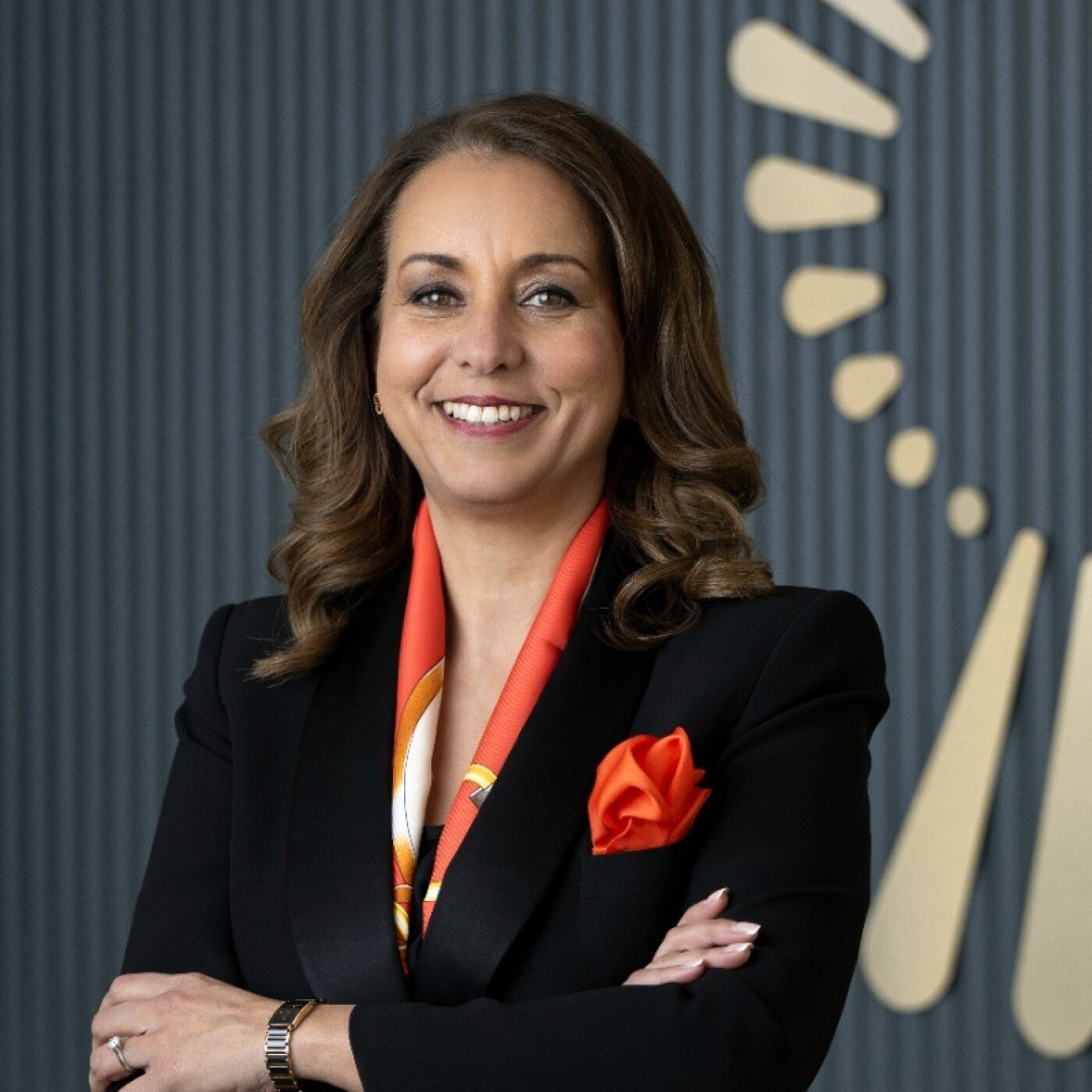
Dr. Ilham Kadri, CEO of Syensqo, President of Cefic & ICCA - To become a leader in a world-leading company
from Histoires d'Entreprises
58m 5s
The transcription features an interview with Ilham Kadri, CEO of Syensqo, a science company born from the Solvay merger in late 2023. Kadri highlights the importance of being in love with customer problems rather than specific solutions or technologies. She shares her personal journey from a humble upbringing in Morocco, where education was her only path to prosperity, leading her to study chemistry and physics, inspired by Marie Curie. Syensqo, with over 13,000 employees, operates in specialties like polymers and surface chemistry, serving industries from EVs to healthcare, and emphasizing sustainability by replacing metals and enabling circularity. Kadri notes the chemical industry’s poor image in Europe, contrasting with the U.S., and argues that chemistry is vital for green transitions, such as batteries and green hydrogen. She stresses that profitability and sustainability can coexist, as demonstrated at Solvay through a strategy that doubled returns while aligning with Paris Accords. Looking ahead, she calls for improved education about chemistry and European industrial policies to restore competitiveness, while welcoming recent steps like the chemical industrial action plan. The interview underscores Kadri’s leadership style, combining courage, transparency, and a focus on innovation for humanity’s pressing issues.
Sometimes the technologies are in love with their products and I don't like this. I'd rather be in love with the problem of our customers and then find the best solution for them. But definitely it resonates with our customers that we are a research and innovation machine that we can bring solutions to their problems. Dear listeners, hello. Man grows by projecting himself into the future. Yet, it has never been so unpredictable and more constrained. Understanding how to grow human organizations, businesses, associations over the long term is the whole challenge of business stories, namely, East to Avant-Ropri in French. With business stories, I come into contact with founders and managers who tell me why and how their organization was born in the group. We decipher with them what made them successful, which I try to understand the failures as well. And then we discuss the future and the challenges they face. How can we consign the economy growth, social peace, in respect for the environment in the future? Everyone has their own vision, everyone has their own recipes. My name is Martin Vidalen. I created Bluebirds, a platform of 5000 independents with vise or replace directors and managers in Europe, Africa and in the Middle East. There are CEOs like that, there's nothing you can do about it, you fall under the spell. Ilam Kadri is one of them. Born in Morocco into modest environment and raised by her grandmother, Ilam Kadri developed a passion for science from a very young age. She went to France to study chemistry and physics. It was chemistry that would take her all over the world. Ilam became the first female CEO of Solve and was the first Moroccan to lead a company on the UNEX100 Index. She now sits on several boards, including that of L'Oreal. Among her many other roles, she chairs the World Business Council for Sustainable Development and CIFIC, the very one and mentioned in a previous episode. CIFIC is behind a wake-up call for the reindustrialization of all over Europe with the ENVIRP declaration. It was while listening to her in the presence of the European Commission, President Ursula van der Leyen, that I decided to meet her. In short, Ilam is a lady and a rare one at that. Together, we discuss the creation of science school, born from Solve. We talk about chemistry, the mother of all industries. We evoke her meeting with Samatman, the intrusion of AI into large groups like the one she heads. We discuss the future of industry in Europe, and in particular of course chemistry. Ilam Kadri's strong oversimplicity, she combines strength and naturalness like the other. She smiles at you as naturally as you smile at your desk neighbor and takes an interest in you of camera like few of my interviews have. It didn't take much for me to fall under her spell. I hope you will be seated too. Nice to meet you, Ilam Kadri. Thank you for having me. Yeah, I'm very proud to have you here in Garderlion in our offices. You get a huge career already, just for those who do not know you. If you highlight of your career, you are chair of the World Business Council for Sustainable Development. You are the president of the European Chemistry Industry Council, EFIC. And by the way, we interviewed Marc Comensik, which is director general of the CFE Class February. You are vice chair of the European Roundtable for industry. And you are a permanent member of the World Economic Forum International Business Council. And you have your own podcast, which I discovered by the point of this podcast. And it's the future. And it's the future and it's launched in March 22. And of course, you are the CEO of Science Co. Can you tell me a few words about the kind of leadership that you are trying to have at Science Co? Well, Science Co is, as his name says, it's a science company. It's one of the largest specialty companies in the world. We are in a way startup with 160 years of wisdom and legacy coming from Solvedi merger, which we did in December 2023. So, yeah, it's a science company. So our culture is about exploration. We are explorers. We don't call ourselves employees anymore. And exploration goes from discovery, from research and innovation, to new ways of doing business, to adapting and adopting GenII in your way of working. So, yeah, I mean, it's about breakthrough technologies at the service of humanity. And that's what the purpose is about first. Then the culture is a culture of courage, of transparency, of meritocracy, of performance, of winning and enjoying to win with customers. Be in love with their problems, not the solutions, because sometimes technologies are in love with their products. And I don't like this. So listen, it's really amazing since the merger with Solvedi, we really tried to build a new company with a new culture, although we are proud of the legacy and the heritage. We took with us like the Solvedi conferences where the big minds in 1911, you know this photo. And in 1927, it's my preferred photo, by the way, where you had more than 18 Nobel prices in one single photo in Brussels. This is a crazy picture. It's according to Google. I didn't ask Jenai, actually, or Chad G.P.T. It's the most intelligence picture in the history of humanity. So, that's a legacy we like to carry and we like that story of science, of being scientists based, scientific based. Again, at the service of the most pressing issues humanity is facing. I wanted to dive into science school and maybe the legacy that you are getting from Solvedi, but just before getting into that specific topic, I would like to hear you about your own career. How did you learn to this type of leadership that you are trying to put into science school? Well, listen, I mean, my upbringing started in Morocco in Casablanca. I grew up in very humble home with no running water and electricity came in, but was not stable all days and all weeks. Long, I learned the hard way that sustainability starts at home because we didn't have a luxury to waste. And my grandma, who took care of me, used to say she was told as a girl or woman that she had to exist in her life's marriage to the house of her husband and the second one to the grave. So she dreamed for us the younger female generation to really find our third exit and mine was simply education. So for me, there was no other option but to study and study well and was the only way to access prosperity and better life. So I was lucky that I found in science as a passion. I love literature. I was reading books. I could equally go to maybe more literature type of studies, but I really love sciences. And one of my role models was actually Marie Curie, so I loved everything about this lady at young age. So as soon as you know, I knew that I love mathematics, physics and chemistry was almost a normal path or a linear path. And then I got two scholarships more open and French actually, Maritokrasy scholarships and I landed here in France in a colp preparatoire. And then I did an engineering studies and I wanted to continue in a PhD type of curriculum which I did. So in Strasbourg in polymer chemistry, this was probably my first time in physics and chemistry of polymers. So that's really my exposure. It came very late. It's actually my passion for chemistry. I was about to see you as very early actually. Well, I mean PhD, I'm not sure, you know, you're 25, 27. But I loved all about sciences. The polymers actually word space. It's not only chemistry. You produce the molecule, but you had there is rheology, it's physics and chemistry. I did modeling. So I it was a continuation of that passion till I got my PhD. And then you know I was hired by Shell who was a bit of Anglo-Saxon word and was intriguing to me. But listen, I never dreamed of becoming a CEO, frankly. I mean, each step in a life was already an achievement by itself. And I always say to my mentees and I'm blessed to be a mentor today, that the most importance is a journey rather than the destination. So if you focus on your journey, make it successful for you, a learning experience, you will have more than one destination if it's successful and brilliant. So yeah, and then in big corporation like Shell and others, you know, I had the test aptitude that that's how much I was my first job. They told me actually that's how will be in the sea sweet and I was laughing loud. The right about that. So what does this mean is sea sweet, you know, when you retire. So for me, you know, at the end of the day, I really tried early enough. I knew that I wanted to learn an impact in every single journey. And therefore, you know, was not a boring path. It was not linear, you know. So I changed companies. I moved across for continuous rights. So I'm a big traveler since I left Morocco where I didn't travel much over 17 years of early journey. But I became really a big traveler and allowed that. I know I consider myself a citizen of the world and and having international experience also open my mind and heart to other sculptures. cultures be culturally but it's
also professionally, you know, the way you do business in Japan or in the Middle East, is difference from the US or Europe. And even Europe has a lot of diversity in it. No, I was, you know, 10 years ago. So 30 years in the industry, which I loved, so I'm very much, you know, passionate about the chemical industry, but the industry in general, and I worked in automotive and aviation, in healthcare, in hygiene and cleaning, where I became a CEO 10 years ago, and then moved to Saudi back in 2019, moving from the US to Europe. Excellent. Let's focus now on science, if you wish. This company is quite a brand new company, it was born in December 2023, so it has a bit more than 80 months. So this is very, very brand new. And just for the people who are listening to us and who do not know science, maybe a few numbers, and you will correct me if I'm wrong or if I'm not precise enough. So a bit more than six billion turnover last year, 13,000 employees, 60 industrial sites, 12 R&D sites in more than 30 countries all over. And two pillars of business, you describe science like that, the material, the pillar and the performance and care pillar. In the first one, specialty polymers and composite materials. And in the second one, focus on surface chemistry solutions. Maybe for people who are not at ease with chemistry, can you describe it a bit more about the products or the kinds of products, or you said, forums of your customers that you are proposing to the market? Well, I'd rather tell you what where we are. And then the products are at the service of this. Listen, we are in one out of two EV cars in the world. Almost every vehicle flying in the air has science coincide, 90% of the advanced chips allowing you to connect and your smart devices have in science go inside one out to, you know, hemodile disease patients in the world use our product to purify their blood. 25% of your shampoo contain our product, right? And if it's Guar technology, bio-based is probably 100% or 90% is us. We are, you know, more than, you know, 170 million people around the world drink our water out of sea water purified with our membranes. We are at the service of green hydrogen. So our solution goes to green hydrogen. So we are, I mean, the solution of science, it's really aligned with light way in. So we make any mobile lighter, be it a car, a plane or an e-bike. We replace metal. That's our real competitor. We have peers. We have competitors in the chemical industry, but the real one is metal. We make object lighter and therefore if it's mobile, it's consumed less fuel. It's emits less CO2. So we are synonymous to sustainability in a way and less emissions. We are in a service of electrification in a battery, the binder, the separator, the electrolytes hours. We are at the service of connectivity with the chips, advanced chips, be it in smart devices, whatever polymer is in it. Sophisticated one, we're not in the commodities, but we're in the fact when you produce the advanced chips and obviously bio-economy or bio-circular solution, we are the service. So our products go from Guar, which is a plant which grows in Rajasthan in India. For your bio-shampoo to ceramide technology, we have a research and production asset in Korea, which goes to your beauty care creams, for example, to Rosemary extracts in Morocco, all the largest country in the world producing Rosemary at the service of bio-circular chemistry or greener chemistry, which is now a new way of of doing chemistry. So yeah, I think you see it is mainly about specialties doing more with less, being more circular. When I John Solve, back in 2019, our circular business was around 1-2%, now it's almost 18%. And we're going to get to 18, it's 16%, we're going to get 18 anytime soon. So it's really about reinventing the chemistry, the way we do chemistry, using biology, biochemistry, using natural ingredients, circular ingredients, recycled things, and doing it while emitting less. So that's our philosophy. And the core of your value-to-value proposition is based on sustainability, we can see that and we can hear that. And at the same time, I feel maybe I'm wrong, is that the image of the chemistry industry, at least within the Western countries, has not improved or not sufficiently. How can you explain that? Yeah, yeah, you're right. I think I remember when I moved from the US in 2019 to lead Solve to Europe, I was shocked because in Europe, I mean, in the US chemistry and the industry has been always well-recognized, right? I mean, manufacturing, etc. Even so, with the new US administration. But when I moved to Europe, I was in a shock because, you know, belonging to the chemical industry was like, you need to be ashamed because you were seen on a mass of being a problem. And I remember at that time, wherever in the course of 2019, in one of my, you know, public speeches, I said, we may be and we are part of the problem, but we are certainly part of the solution. And there is no life without chemistry, we are everywhere, we are in your daily life, invisible, but there and actually humanity has been progressing well, thanks to chemistry and sciences in general. So I think the Mandeliev table, which is our kitchen, right? We go there and, you know, we take products and ingredients from the Mandeliev table. It's just raw material, you know, is how you bring those atoms or raw material together, how you manufacture them, how you do it with less emissions, with less water, with less energy, with less resource, and how you allow to your chemistry to have a second life and a third life. So yeah, I think there was a branding thing. Now, I think in the past six years, I spent in Europe and I have the honor to lead the, the, the European chemical association since now more than two years, but also since January, this year, I'm also the president of the Global Chemical Association, ICCA. I think we've been, nowhere, you know, I mean, we've been pushing, you know, and trying to raise the profile of the chemical industry as a science. And I think people start understanding that without chemistry, there is no battery, without chemistry, there is no green hydrogen, without chemistry, there is no green deal, which Europe, you know, is proud to push and raise the bar of paying the sustainability economy, right, in, of the future. And as you've seen, we've been advocating through the Antwerp Declarations and that we need, Europe needs to restore competitiveness while aiming for sustainability. So science go, I mean, solve it first, solve it when I joined the company, was not even aligned with Paris Accords, right. So I challenged my team in 2019, but I challenged them in a way that I want both profitability and sustainability. And that's how I started my podcast and this the future. It started like this way because people will tell me, if you do this, you cannot do that. If you are a chemist, you cannot do sustainability or if you want sustainability, you cannot be profitable. No way. I want to vote. By the way, if it's not profitable, don't do it. And, and, you know, so it started this way and I'm happy that after five years at Solve, not only we joined Paris Accords, but we were on the course of one and a half and we did it profitably because we doubled our returns and we we restored the profitability of the company because we call it the triple four, four billion less depth, four billion of investments and four billion cash generation, three, four and a half. So we showed to ourselves, but to the word that you can in the chemical industry, if you have the right, you know, road map, it takes time and if you build the business case, you can hit the returns, obviously, and be profitable at the same time, you can be sustainable. And by the way, sustainability means also less waste. But I mean, you manage to show to the market that you're able to have to be both profitable and sustainable. Fine, but going back to my question, how do you explain that mostly in Europe chemistry has still a lot of work to build a positive image? I think it starts probably from, you know, from the school, you know, it's from education, right? I mean, as my time, but I'm older, right? I mean, chemistry was simply a science and, you know, we could go to the chemical industry and was a great career path. I think today we're always going on, yeah, maybe the chemical curriculum has been a bit less seen as less sexy or less attractive. And it's a shame because without chemistry again, there is no gen II. There is no connectivity. By the way, gen II and all these, you know, artificial intelligence needs a lot of servers and those servers need energy and need cooling. By the way, we're in this cooling, you know, industry, it's a huge opportunity for my company. So, and chips need advanced materials, right? Again, mobility, cleaner, mobility, aviation. We make your aircraft lighter, therefore, emit less. So I think we need to go back to universities, to even primary schools and. and explain what does this mean, chemistry and the bonding, the fun for doing it, and then the impacts on humanity and society because, you know, portable water. Water is one of the scarce resources in the world, right? I mean, it's the blue planet, but it's full of sea water and you need to have portable water and there are a lot of stress areas including for our manufacturing sites. So chemistry is at the service of disalination, right? Or gray water purification out of your showers and toilets and turning it back to tap water. That's chemistry. That's industrial solution which are needed and look at what's going on in the geopolitics. What the US is trying to do is ensure more industries. And if you talk about automotive behind it, there is chemistry. If you talk about semiconductors behind it, there is chemistry. China has been doing it for the past 30 years, right? Or 50 years have been building value chain from A to Z. And Europe, unfortunately, but I have hope, hope is not a strategy, but with the industrial, you know, chemical industrial action plan, which was released eight of July. We, I welcome this positively as a president of SEFIC, is the first step to restore the competitiveness, which is extremely important for the chemical industry in Europe. Going back now to the birth of phienscope, can you share with us the reasoning behind the birth of science, Cuba coming out from survey? Well, I mean, when I joined Solve, usually we didn't have, you know, my mandate was was pretty simple and clear, was to unleash the potential of a company. And that company was, you know, 150 years old, plus a bit of sleeping beauty, right? Who came out of decades of MNAs and, you know, without real purpose, although we had strong legacy with our founder, Ernest Solve. So my role was really to create that culture of having a big ambition and starts unleashing the potential. And after by 2021, and we went through crisis, as you can imagine, you know, COVID and its variance and inflation and wars, etc. But by 2021, we realized that we achieve our strategy, three years ahead of time, and we were looking at what's the next steps. And after having fixed the balance sheet, the delivery, the company creating cash, we became a cash machine, we became a better owners of our own operations. We realized that we were sitting on two sets of assets, one, which is more of essential chemicals, more of commodities, but with the high barriers to entries like soda ash for glazing, like silica for tires, like peroxide for the chemical industry. And those were our resilient cash generating businesses, which were needed yesterday at the presence and in the future. And it was helping simple technologies and from the investment point of view, they are like dividendy, you know, type of investment if you are an investor. You need for additional or strong innovation. Not in the product side, but in the process side. So in the products you write, we're not reinventing soda ash, right? But in the process, we needed to decarbonize them, for example. So that set of businesses are going to be carbon neutral by 2050. And I started removing coal, specifically in Europe because soda ash was still using coal in Europe. So I start decoding that. So that's a type of business. And then the second set of businesses, one more of a specialty where you're right, we needed more of a product innovation, high-bitality index. So in science, called this set of businesses, our vitality index is 20%, which means that every year 20% of our revenues are made with products less than five years old. So we churn every five years, we churn. This is number, which is crazy. It's a crazy. It's one of the highest in the world. So and maybe it was the dream of mine, but definitely it resonates with our customers that we are in a research and innovation machine that we can bring solutions to their problems. Again, this obsession of being in love with the problem. So the set of businesses are really about customer needs and met needs and being very close to them with the innovation which can meet those needs of today or tomorrow. And that's why electrification, like we in connectivity and biotechnology, they are our mega trends. So you need another way of managing both businesses, both sets of businesses. And you know, so I never had the ego of the size. So for me, you know, shrinking my company was not that problem. What's mattered to me is the focus and accountability. And we displayed with the right balance sheet. I wanted to have two investments, great companies. So it was not a bad call and a good call or less sexy company. And more sexy company. It was two great companies attracting the right competencies having the right leadership very focused on their agendas, which are very separated rights and very different investments, great. So and unlike almost I called myself a mother, I gave a legacy to both. This happens. I stayed with one, but I could equally say we have to stay with the other. Okay. Okay. Okay. Okay. Now both to decide this idea to split the company into two companies. It came out of your executive committee from you, from your shareholders. Tell us how the the idea emerged. It came to reality. So by summer 2021, when we realized, you know, we achieved our first one, solving one point zero strategy. I put for the company when I arrived in 2019, we had a dozen of options for two point zero. We were clinical. I mean, it was not, you don't wake up in the morning and you say, Oh, I'm gonna split a hundred sixty year old company. No, no, it doesn't happen this way. It was one of the dozen. I'm probably the most least probable. You saw something for my management team. For me, I like to cater or work on even least probable options. So we said it clinically. We engaged with our boards and the 12 became six and became three and you know, like any option when you go clinically after it and you study it, we look at the pros and cons. What does it take? What does it mean? Etc. And frankly, this option won it against all the odds of complexity. Yeah. Because it's a big project. I mean, it was almost like a double IPO. Yeah. And investors obviously want to involve that the end because that's structurally changing completely the shareholders structure and the company capital structure. So we had to call an exceptional AGM. And I always will remember in my life, December 8, 2023, 99.5% positive votes. Nine shareholders. Wow. Yeah. That's amazing. And December 11 was the birth of science. So that's another. That's another story. It's another day where you go with your management team and not only management team, the new board, but also importantly, you know, I remember it was a blue sky, really beautiful day in Brussels. Not that we had that blue sky every day, but it was that day and entering into the stock exchange and having, you know, the team who worked on this project, which was called the power of two, by the way, that was the nickname and the code of the projects. Okay. So this team was inside. And I could see in their eyes how proud they are because again, you don't do such projects. Okay. Okay. Very often in your life, I did this once in my career, but it was just one single demurder and one split. Here it was a two and a two standing up two companies, right? With two management teams, with two boards, with two capital structures, with shareholders. If you had one share, you had one on one, you know? So, yeah, amazing, amazing journey. So what made you decide to go for a science school because you have you could have decided to stay? I don't know if you could say stay. Yeah. The board asked me to continue, obviously, you know, the decision was made, you know, very late in the process because I wanted to stay neutral as the architects of the power of two. And I wanted to ensure that people do not think I'm favoring one side to the other, which now people can see, you know, right? Because, you know, I heard a lot that's solved, because it always stayed with the traditional old technologies, right? And people say, Oh my God, it's always going to leave the bell 20. It's going to be smaller, too small company, but always actually doing it really great and the share price appreciated very quickly, because it's very stable cash, you know, resilient type of businesses. No, science could have the chair of challenges, because you know, when you demerge a company, you need to decide where to leave your infrastructure, specifically, namely ITIS and the global business services we call GBS. And we elected to leave it with solvets. So solvets was leaving it was giving all the air. We breathed the water withering to science, until now, a month ago, actually a few months ago, May, we we did the cut over. So, you know, early May, we had like a weekend where 300 people were working 24 seven, you know, to cut what we call the service agreements, right? Or services given. So we are now 80% independence. And by the end of the year, we're going to be fully independent. So you imagine, you know, that's all the. It's a long process and it's a very difficult process as well. Very difficult. And actually, science, just to give you an idea, in 500 days, we had 800 people, you know, to allow us to be independence, right? I mean, so all of this, I mean, obviously, I had the experience, you know, and this is a, I call it the plumbing. You don't see it, till it doesn't work. If you don't have water or
hot water in your shower in the morning, you will see it. But you don't ask yourself how it works every morning. That's exactly how a company or corporation works every day. So, you know, obviously the board and I was honored that they really pushed it as a mess to have, you know, to really allow the split to happen. And I'm very glad now over the past 18 months right. I mean, we accelerated actually the separation. So we are ahead in the journey now, which is important because the spin-off we did, it's called a tax-free spin-off. So zero tax for the company and for the shareholders and many jurisdiction in the world, including IRS in the US, pushes companies if you want a tax-free to be separated year two, later. So December 2025. So we're going to, you know, obviously, you know, meet our commitments. But more importantly is that human journey, right? It's to stand up those companies. And one of the success people asked me often, you know, yeah, 24/25 were difficult years, obviously. There is less of volume growth. The macros are just as again, they can be, you know, with obviously the tariffs' words and the new geopolitics is shaking up the industry. But listen, I think, sir, Churchill used to say, don't waste a good crisis. So I think I think I would. So the waste, the good crisis you're saying. Yeah. So our, our, the Chinese, they're saying every crisis is an opportunity. So both sayings anyway, at Solve or Science, go ahead, just say, accelerate your reform, just build the foundation, use this, you know, chaotic times to rat focus on what you control, which means. What was the most difficult part in this, in this birth, I would say. The IS, the GPS, the team that you had to build. 2022/2023. And obviously, this merger was different from my first one I did in the US and it was another country anyway, another region. I think the most challenging is to stay focused. I think I learned from the mistakes maybe I've done in the US in my first one to not repeat them and do it differently. And probably, I'm not wishing for myself to have another one, but if there is another one, I will do, I will do it better. But the point is, I think it's really about having a focused team, completely focused on doing the demurger, right? So there was a dedicated team. 100% power of two team, right? Completely separated from the day-to-day and the operations with bridges, right? Obviously. But because the challenge is to run your business, right? And continue delivering because we are, you know, quarterly and listed companies, so you need to deliver on your promise. Second, to drive the splits and the power of two and be ready to propose it to your shareholders for obviously favorable vote. And by July 2023, I was running three companies. So the split was. Wait, wait, I am because I anticipated the split, so we were running Solvey and the two new coasts. So I was like, you know, having three companies under the roof, the split and preparing for the extraordinary AGM. And that was a learning from my first, you know, IPO or split demurger. I privatized the company in the US, but, you know, I did the splits or the operation running the new operations too close from the split. So here I decided I'm not going to do it in November or the fall. I'm going to do it in July. So the real cuts, our day one was July 1st, 2023. People taught is December 11. No, it was already day one actually. The day two was December 11 and now we call day three the separation from Solvey infrastructure. Excellent. I don't know if we can do that right now and tell me if you're at ease, but is there something that you, you and your team, did not realize in this in this birth that you wish you would have realized or let's call it a failure or something that could have been done better? Listen, this is a thousand of files and meetings. I think we had the team told me seven thousand type of meetings, right? I mean, hundreds of sites plates, right? I mean, because 160 years or even 50 years of common life, there are lots of things entangled, right? So you have to see per legal entities, right? You have, we are just now renaming the legal entities that are from Solvey to Science Co, inside Science Co. So you know, it's massive, it's massive. And obviously when you run a 160 year old company, there are many things you don't know. So you open a door and you find things you even didn't know after five years leading the company. And that's okay. You just need to be ready. You know, it's always difficult. I mean, obviously, we had our challenges, the ups and downs. And there were many downs, but okay, what is, what is important is to have to the right team, the right experience on board. And that's why having this dedicated team, you know, on the bio-rit, on a daily, weekly, monthly, to really ensure that we engage with the businesses, we do the right thing behind the scene, we close the gaps as quickly as possible. No, I think the challenge as well is to stand up the two companies, you know, with the right management team quickly. So imagine you have actually to hire, to see us to see a force because it's just the companies. And it's not, I was the only CEO before. So you have an obviously happy that the person I, you know, I groomed and proposed to the board, but on CEO, see a phone, won the deal because they are, you know, they were competing with other potential candidates, right? Actually, for both. So, you know, and the board, board membership as well, from one board, you need to have two boards, completely independent, right? And we decided to change the governance. So we put independent chairs because we are, you know, we are on 30% of our, of our companies owned by a family shareholding called Solvac and the families, you know, from our Solvay heritage. So you had to build a new governance with independent chair having, you know, new board members coming in. So all of this had to happen at the same time as a project, which you don't know is going to go through in December, right? You hire people almost like a startup, right? But here we are, you know, you so you started to hire those people before launching the company. And here in summer, I'm hiring people, C.H.R.O. G.C.'s, etc. I'm telling them, those are the projects. And then they ask me, who's going to be the boss? Who's going to be the CEO? And I'm saying, I have no clue. I said, yeah, but you are interviewing and we want to work with you. I said, no, you need to join the projects and the company without knowing if I'm going to be here or there. And by the way, it doesn't, it doesn't matter. It's matters because people work with people, right? That puts me wrong. But you need to join the projects, right? And the equity story. So it was fascinating. Those are things I've never done in my career. Yeah, because I was on it. I think a joint, by the way, when you say people do not, you know, they join. Okay. You just mentioned at the beginning of our condition, AI. And you were mentioning the fact that you were in the value chain of producing AI. So I would like to maybe to refocus a bit on that. And in the same time, I would like to hear you about the way science school is using AI for your innovation. Can you dip dive a bit on that? Yeah. Well, listen, obviously after the merger, right? I mean, we were a new company. We were one month old. It was in January. I remember January 2024. I was in Davos and I was attending the International Business Council as a permanent member. And Sam from OpenAI was invited. So he's extremely, you know, insightful, inspiring about what's going to happen. He told us we knew, but that's time that Gen. AI is progressing, you know, fast, but he really depicted the impact it's going to have, right? And I remember him, you know, talking about the impact on the way of working the impact on biology in medicine in, you know, how the DNA now is being very well modeled and worked out with the Gen. AI. The code in is getting very sophisticated and really predictable and good. And I remember and we talked about chat GPT, obviously, we were nowhere. I need a solver or science school at that time. But I remember asking him a question, can we chat GPT, the Mandeliev table? Imagine, chat GPT is using words and language, our language or languages. Can we chat GPT, the elements of the Mandeliev table? And he was laughing and he said, it's difficult because he was interested by the chemical industry or the chemical because the chemical reactions are very difficult to predict. They're a bit of can go. That's what that's what the sense of my question. Yeah, it's extremely tough. But then he, you know, the takeaways and I came back and I will explain what we did since then science school. He gave me two advices. One, don't invest in technology is going to be commoditized and it's going to go very fast. So don't invest in it. That's not your job. You rather use others, you know, technology is right and technology is not technology. So he was so I thank him because he could have said use mine right now. He said, you know, be very open. It's going to be very diversions and cost effective more and more. And number two, build a business case, right? Really build business cases.
So I came back, I'm not a digital native obviously, but I came back. Almost, almost. Yeah, almost, but okay. But I like business cases. So I asked my team, I mean, I put together a young team, right? Leader by the way, he's not a genie guy, but he is a digital, from a digital guy, but more of research and business guy. And I asked him to start building a business case. At that time, my business presidents were not that, you know, I mean, not so enthusiastic. They looked at it from far away, right? Is it a hype? Is it for us or not? Let's see. But this team, which grew since then, was directly reporting to me. So I protected them. I didn't give them any budgets on dollars, but each quarter, they came to my executive leadership and I, and we were a bit of shark tank. So they had to present their business case. We say, "Discillate, DCS, this will give you the money." And every quarter, since quarter one last year, they came back to us. So where we are today, it's amazing. We have our private chat GPT with 70% adoption. This is one of the highest in the world. 40% of my human capital, the 13,000 people are people working in manufacturing. So 70% is high adoption. It's private and people are using it, you know, every day. What do you mean by private? Private, which means that, you know, it's not accessible to you. We use our data. We take everything, which is public, but we use our own data. So if I ask a question to my private chat GPT, it's not going back to the machine. And you're using the technology of chat GPT. Yeah, we are using that. We different, I mean, we different providers, right? I mean, chat GPT has different sources. We learned how to code, how to prompt ourselves to make it customized. The second piece was on the sales force. How we can support the sales force, you know, we are a young company. We knew 2024 was, is a tough year. We didn't know 2025 is going to be equally another interesting year. But we said we need to help our sales force. So we now have in the automotive sector, which is one of our sector, is more than 10% of the company's revenues. Our sales people or accounts have a sort of avatar. So I have, if I'm a sales, you know, in automotive, I have my Ilham avatar talks to me in the morning, tells me that I'm going to meet you and I may be able to sell this or that product in that in such application, give me advices, give me 10 slides that can present to you, 10 questions that can ask you 10 references of where we do such a business elsewhere. Anyway, something which take all the knowledge in 10L1, I'm external because, you know, there is a lot of knowledge about you, my potential customer, right, out there. So I get to know you before coming in, which normally, as a sales representative, you do. I mean, 30 years ago, I was a salesperson in the automotive, by the way, but it took me ages, right? How many things? I mean, now the machine can do it in the blink of an eye. So we started with that. So now we are rolling it out beyond the automotive sector. And now the third front here for us is the research, you know, space which is going to be fascinating. Yeah, that was the core of my question. I'm really wondering how you use your technology, your AI technology, in order to search for new molecules, new processes maybe. So here we are. So in each area we have partners, by the way, and we are going to, and we are using now the science.i, which is a Microsoft platform. So we are one of the 10 companies in the world selected by Microsoft, which is a great deal. And we are now testing how we can use the gen ii to actually, with our data, right, proprietary data, proprietary know how, how we can accelerate, you know, our discovery, right? From failing earlier, you know, if in the old days, in handled experiments, I may have failed 80 times at the bench. Now, gen ii is your companion. He may actually support the researcher, right? As an avatar to say, well, you know, according to the public domain, but also to the private science code domain, you may focus on those 20, right? So all of this and then the modeling of of our polymers and molecules, which is the other front here. So it's fascinating. You already see results? Yeah, yeah, we already have, you know, first, you know, data coming out of this. I think we should not underestimate the change management, which needs with the labs, with the technicians, right in the lab, with the researcher, but also with the leaders, right? Because this is, you know, it's a different way of thinking, right? Of working in the morning, you know, at the bench, gen ii is like an avenue when you drive your car on an avenue. It's can a nice motorway. You can go as fast as you can or a bumpy road where you don't go as fast. So you need to start adapting and adopting it. So we are working also on change management with our leadership. It's a mindset. That's fascinating. It's a mindset. Yeah, okay. I would like to keep you for the last minutes talking about the EU. As I told you, I mean, I saw you the first time in ENFIRP, where you were with President Ursula Fandaleian in order to celebrate the second anniversary of the, of the envelope declaration. Can you maybe first tell us why you engage yourself in this ENFIRP declaration? And maybe develop on the future of chemistry within Europe? Yeah. Well, the engagement came, yeah, in 2024. And I was blessed to become at that time, the President of Cephic, you know. And this is the chemical association in Europe. We have hundreds of members in the chemical industry. All the names you know, including the foreign investors or, you know, the douse of the world, etc. So it's really the global names, the regional names and the small and medium-sized companies. Because the fabric of the chemical industry is also small and medium-sized companies, which are extremely important. And I think the declaration in February last year came with the, it was a critical, like we say in French, right? We are all Europeans, many of us. I hold our European passport. We have a passion for this continent, for this region. Yet we've seen, through the past years, you know, lack of competitiveness making the chemical industry suffering and leaving. And that's critical, which some people thought was skeptical. And they thought we may be exaggerating. Let me give you an idea. In the past few years, between 22, 23, 4, 5% of the chemical industry capacity shutdown. This is 11, in Europe. This is 11 million tons, right? Of capacity. And lots of jobs. So, and there are more coming in, like the upstream, you know, yeah, capacity is shutting down as well. And big problems like starting with energy prices, which are four times higher than other regions. I think the complexity of the regulatory framework, I think while the green deal, nobody is debating, shall we be, you know, more sustainable and carbon neutral? I think most of the CEOs and leaders of the companies out there are parents, and they want to leave a legacy of cleaner word, but not at the expense of competitiveness, right? I mean, because the best way to decarbonize Europe is to shut down the industry. All the world industry. Is this what we want? No, obviously. So, I think we came with 10 actions, which you can google. It's called the answer of declaration. We offered to Madame President to be re-elected right at that time in February last year to come and meet. And we were 70 CEOs who flew to Antwerp. And that's why we called it the Antwerp Declaration. And we met there. And we handed over to her and under Chatham House, we really shared with her our challenges and the opportunities, by the way. And we gave her one year of using it in between she was re-elected. And we said, let's meet. Let's meet again. Yeah. And we met again on 26th of February, where you joined us. And you've seen it. We were 450 people. Nobody could imagine how 450 companies, you know, from all the industry. It was not only chemical. It was all industry. Why? Because chemistry is the mother of all industries. It's the industry of all industries. So, we get our steel aluminum suppliers. We got our automotive customers. So, meconductors plays were there. All industries were represented. And we did the same under Chatham House. And you've seen that she handed over, Madame President to me and to us, the chemical industrial, you know, intense, right? And I'm happy that between then and now, July 8th, we were listened to, right? And I think the declaration of the chemical industrial action plan shows, you know, that there is an intense and will now, from the EU, with the member of states, because now it has to be implemented and executed at the nation's level. And there are 27 from energy. So, you know, the EU now is allowing to subsidize the energy prices, right? To make it easier for the hard to obey to who are suffering. Let's bureaucracy, we ask for it, right? And in the syndrome of CSRD, CS Triple D, taxonomy, and all of this cuts to bureaucracy. And there was a recognition of overcapacity coming from Asia. And that there is a need to have a bureau or engagements with the chemical industry to work on anti-damping dossier and, you know, support our small and medium-sized companies, you know, who are shutting down. So listen, it's a first step. We are not out of the week.
But I really hope and that's the fight over the past two years. I was, you know, I was honored to be a president of the Sepulch and the chemical association. It's really to say now it's about execution at a member state level. And in the face of, you know, a world which is, you know, globalizing where tariffs are still in the air, where competitiveness is extremely tough against, you know, fast speed China. And against USA, which wants to ensure so, yeah, listen, I think it's an opportunity. It's not yet done. It needs execution and fast execution. I mean, I see a lot of enthusiasm when I'm listening to you, but going back to the 26th of February, when I was there, I have to share with you that I saw many, many CEOs were skeptical about the future of industry within Europe. And I remember this CEO of a chemical company. I don't remember his name. He was the only American who addressed President Osloff and Allianne. And I remember he said to her directly, "When are you going to react?" And we could hear in the flight, we say in French, within the room. So there is one part of myself who's thinking like, "Who I mean, we can be a thazest, we can be positive." There is a reaction which is starting, I would say. And on the other hand, it seems to me at least very, very slow or not going in the right direction. What's your feeling about that? Listen, I mean, I'm not in a business of skepticism, whatever. I mean, a business of being very vocal, which we've done, I think, to Antwerp Declaration, February to February. The 70 people became 450. And our Antwerp Declaration was signed by 1,300 companies in between. The drag reports, has it all. It has all our 10 initiatives and call for action. You're right, the call for urgency. But listen, between February 26 and July 8, I must say, the EU commission and Miss President have been working very hard and really engaging with us. I mean, the chemical industry became one of the top five industries with automotive, with defense industry, by the way, which was pushed on the top of the file because of the geopolitics. So we were received in Berlema in Brussels. We had engagements with CEOs and with small and medium-sized companies. By the way, the unions have been with us. Industrial all was in the room, you may remember. And this is not a call from CEOs and leaders. This is a call from the whole chemical industry, right? I mean, from A to Z. And I think July 8 is a good response. I'm positive because there was a response. But I think it needs execution, you're right. And this is where it needs to happen now, like in any in our companies, right? I mean, if not, it stays as a concept paper, right? Thank you for the paper that we need execution, right? So I think now the national associations, our national association are really working now with the member of states and with government to see how they can implement it, how they can reestablish the level play in field. Unfortunately, there will be more closures because you cannot stop things which are happening now, because it's a legacy of lack of competitiveness. But also we are watching what's going on with the geopolitics, right? If the US administration is calling on more ensuring China with the overcapacity was going to happen, right? So the value chains are not going to be completely de-globalized, specifically the chemical industry, because it has been globalized for the past 30 years. So it's going to take time. But it's an evolution of the globalization I grew in, right? It's definitely an evolution. My company, my business at the end of the day, 40% is in America's and 35% is in Asia, my smallest region of say is actually Europe. But more importantly, I'm reviewing my value chains. I'm reviewing where I need to ensure more products or solution closer to China, maybe in Asia, when you have the industrial footprint or where I'm going to put the money, because now many investors, investors in companies, but also investors or our investments in CapEx, we are in wait and see mode as well to see what does it mean for us, right? It's not only return on capital employed and return on investments and where the market is, you need to look at your barriers to entry, you need to look at the customers, where they're going to invest, you need to look at the tariffs, right? Implication, protection of your IP, right? The anti-dumping. So all of this, it's now parts of the business case. So I think we are seeing big shifts and evolution. And then frankly, in Europe, it's creating demand, right? When you talk about Green Deal and the carbonized solutions, where all for it's between demand, without demand, there is no investments, there is no business case. So you need public procurements, for example, to start walking the talk, you need to incentivize the consumers, right? To buy more bio circular products. And yes, they're going to cost more at this at the beginning, where you don't have critical mass. You need affordable and clean energy. I want to decarbonize my assets, but I need, I'm not an energy maker, I need it renewable, right? To decarbonize, but I need a cheap in a region where you have CO2 pricing. Carbon pricing, and this is the only region in the world, right? Which has very substantial carbon pricing. So I think all of this is well understood, recognized, and I think, recognizing and knowledge in the problem and starting to co-work on a solution is the first step towards, you know, restoring competitiveness in the chemical industry. Thank you, Adam. When last words for the people who are listening to us, what do you want to tell them? A double message. Listen, I'm a humanist, so, you know, I believe in humanity, in genwiti, so that's why I'm a scientific person. So putting those two together, I always have hope, and I look at the world with, you know, curiosity and curious eyes, specifically in gen I.I. world, right? So I will tell them learn and learn and relearn, that was my grandmother used to tell me. So, and learning now is as important as relearning, right? I think there are old ways of doing it, which are now being challenged, and it's good for humanity to learn and relearn new ways of actually building prosperity. And I will say to the young people, come to the chemical industry, we need you. Thank you, Remyachila. Thank you. [Music] There's so much to send this episode. The kindness, smile and strength of conviction, of my interview, make me want to believe that there is still a future for industry in Europe. When times of discouragement come, remember, Adam Kadri, still optimistic, like her. I conclude the main theme of the podcast she hosts, and is the future. Industrial, agricultural, technological and service-based activity can be both profitable and sustainable. Don't choose between profitability and sustainability, seek and find both at the same time. All the adventures of Histoire d'entreprise can be read in the Histoire d'entreprise newsletter, which I sent out every Sunday morning. You can subscribe to it at istourentreprise.com. If you enjoyed this episode, please share, comment and subscribe on your favorite listening platform. If you have any suggestions, I'm always available on LinkedIn. Thank you all for your loyalty. Thank you, Ilam. See you next Tuesday. [Music]
Podcast Summary
Key Points:
The speaker emphasizes solving customer problems over being attached to specific technologies or products.
The guest, Ilham Kadri, is CEO of Syensqo, a specialty science company formed from the Solvay merger in December 2023.
She grew up in modest conditions in Morocco, driven by education and a passion for science, inspired by Marie Curie.
Syensqo focuses on lightweight materials, electrification, connectivity, and bio-circular solutions, competing against metals.
The chemical industry in Europe suffers from a poor public image, but Kadri argues it is essential for sustainability, green energy, and innovation.
She advocates for balancing profitability with sustainability, proven at Solvay through the "triple four" strategy.
The European chemical industry needs to restore competitiveness through industrial action plans and better education about chemistry’s role.
Summary:
The transcription features an interview with Ilham Kadri, CEO of Syensqo, a science company born from the Solvay merger in late 2023. Kadri highlights the importance of being in love with customer problems rather than specific solutions or technologies. She shares her personal journey from a humble upbringing in Morocco, where education was her only path to prosperity, leading her to study chemistry and physics, inspired by Marie Curie.
Syensqo, with over 13,000 employees, operates in specialties like polymers and surface chemistry, serving industries from EVs to healthcare, and emphasizing sustainability by replacing metals and enabling circularity. , and argues that chemistry is vital for green transitions, such as batteries and green hydrogen. She stresses that profitability and sustainability can coexist, as demonstrated at Solvay through a strategy that doubled returns while aligning with Paris Accords.
Looking ahead, she calls for improved education about chemistry and European industrial policies to restore competitiveness, while welcoming recent steps like the chemical industrial action plan. The interview underscores Kadri’s leadership style, combining courage, transparency, and a focus on innovation for humanity’s pressing issues.
FAQs
The leadership philosophy focuses on being in love with customers' problems rather than the company's own products or solutions. It emphasizes exploration, courage, transparency, meritocracy, and performance, with a culture of breakthrough technologies at the service of humanity.
Growing up in a humble home in Morocco without running water or stable electricity, she learned that sustainability starts at home. Her grandmother's dream for her to find a 'third exit' drove her to pursue education, specifically science, as the only path to prosperity.
Syensqo has two pillars: the materials pillar, focusing on specialty polymers and composite materials, and the performance and care pillar, focusing on surface chemistry solutions. These serve industries like EV cars, aviation, chips, healthcare, and beauty care.
Syensqo makes objects lighter, reducing fuel consumption and CO2 emissions, and supports electrification, connectivity, and bio-circular solutions. Its circular business grew from 1-2% to 16-18% by using natural and recycled ingredients, and it aligns with Paris Accords while being profitable.
Ilham Kadri attributes this to education and branding, noting that chemistry is often seen as less attractive in schools. However, she argues that chemistry is essential for green hydrogen, batteries, and the Green Deal, and efforts are underway to improve its profile through advocacy like the Antwerp Declaration.
Syensqo was born from the merger of Solvay in December 2023, aiming to create a new company with a new culture while honoring the legacy. Ilham Kadri's mandate was to unleash the potential of the 160-year-old company by fostering a culture of ambition and innovation.
Chat with AI
Loading...
Pro features
Go deeper with this episode
Unlock creator-grade tools that turn any transcript into show notes and subtitle files.
 PodcastTranscript AI