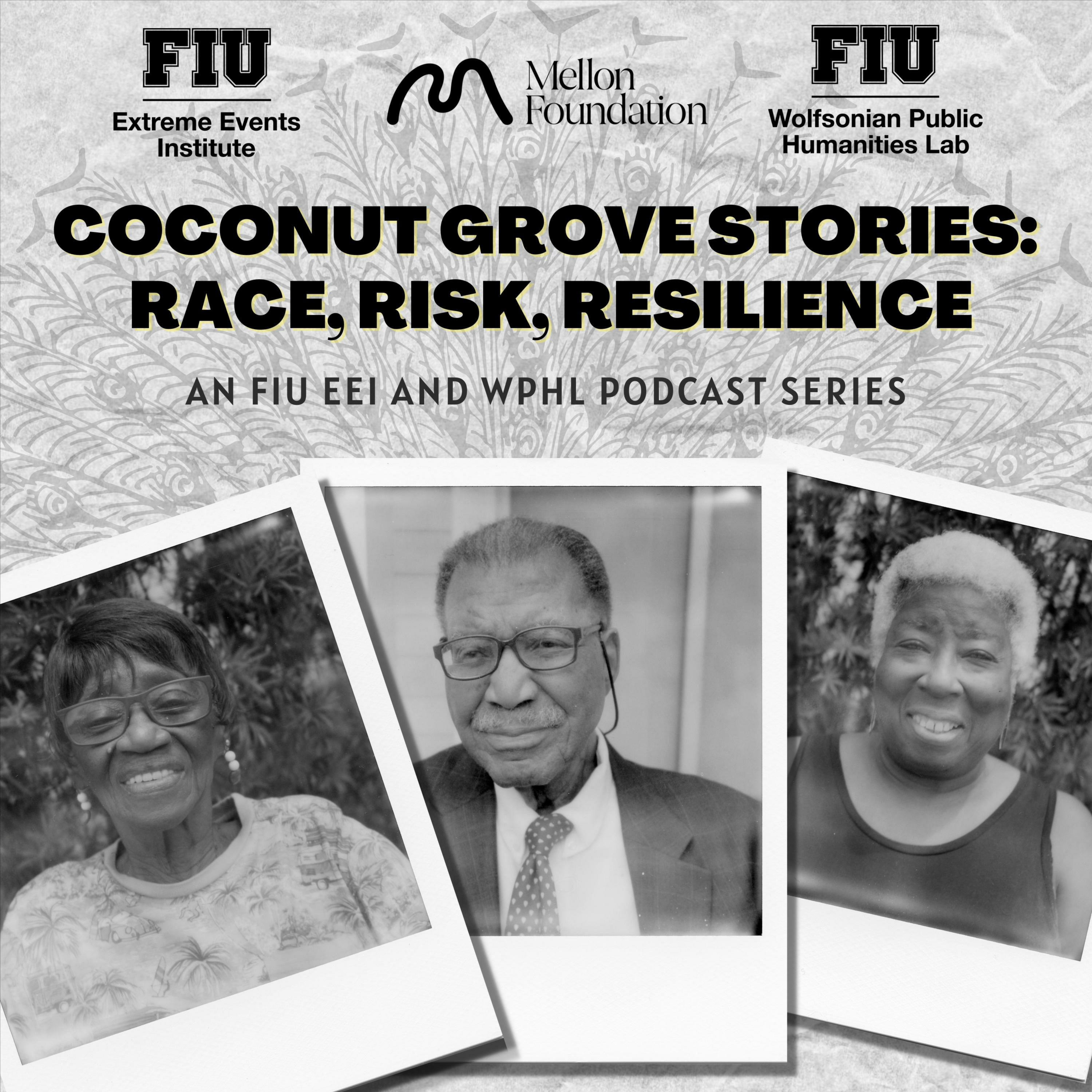
The interview explores the history and challenges of Coconut Grove, a Miami neighborhood founded by Black Bahamians. Gregory Simpson, a surgeon who moved to Miami in 1958, and Arte Metacrole, a descendant of E.W.F. Stirrup, highlight the community’s unique origins. Stirrup, a former slave with a third-grade education, became a millionaire by acquiring land, using mule teams from Cuba, and building affordable homes for Black families, fostering homeownership when traditional financing was denied to them. The Bahamian community’s independence, rooted in a history free from U.S. slavery, enabled them to resist racial violence, such as turning back the KKK in 1917. Shotgun houses, designed to withstand hurricanes, reflected their resilience. However, gentrification since the late 20th century has drastically changed the area, driving up property values and displacing original residents. Many sold their homes due to financial pressure, while others became climate refugees after hurricanes. Father Gibson, a Bahamian-descended priest, worked to preserve the community’s welfare and culture, influencing Simpson’s activism. The speakers emphasize that gentrification and natural disasters have eroded the tight-knit, self-policing community that once resembled a "Black Mayberry," where neighbors collectively raised children and maintained order. The loss of affordable housing and cultural continuity remains a central concern.
[MUSIC] Good afternoon. This interview has been conducted for the FIU CFJ project. The interviewer is me, Mike Hia Brown. I am a resident of Coconut Grove and also working with the company Hope Through Art. And I'm Arte Metacrole. I'm a graduate student at Florida International University in the Department of Global Social Cultural Studies. The narrators today with us is Gregory Simpson. George A. Simpson, MD. The interview is taking place at Christ Episcopal Church and today is May 30, 2020, and we're in Miami, Florida, Coconut Grove. Okay, so I want to ask you both, tell me a little bit about yourself. Well, I was born in New York City. I grew up in Harlem. I went to school in Harlem and I enjoyed what New York does expand. And that is exposure to a great variety of influences, cultures, and different experiences which you might not get in a smaller town. I was able to experience and benefit from those sorts of things that happen to be lucky enough to get a scholarship to high school and college, which was the only way my folks were very poor. We were on what they call home relief at that time, or WPA with my father work. But I was lucky enough to get a scholarship to a city college in New York and I finished there and luckily got into medical school on my first application at the only place probably in the country that I could afford, which was married, medical college in Nashville, Tennessee. I finished there and I did a residency in surgery at that school and in Seattle, Washington. And then I interned in St. Louis at homophilips hospital, which was the largest black hospital in the country at that time. This is in 1950 to '51. And I finished my residency at my Harry in 1958 and came to Miami in September, really July or September of 1958. My wife is a physician and she happened to have started her practicing Miami in 1953, she's a pediatrician. So that made an easier transition for me to start my practice in the same building that she was in. So since then I have been working in different capacities while practicing surgery in Dave County and in the state. I grew up here in Coconut Grove most of my life except for the years I lived in Atlanta going to Morehouse College and then a couple of years that I was doing real estate in Atlanta. I came back to South Florida and managed the properties of my mother's family. It's a stir up. During that time on land that we had built about 20 single family homes, affordable loans, affordable properties for rental. I believe Citibank at the time was doing that. There was a situation where they had been caused redlining and so that they had to put money into a community that they had completely ignored for affordable housing with people who were willing to build affordable housing. And so we got that opportunity. So I managed those houses for like about 17 years. When the boom in 2006 to 2008 came I went to a Cape Coral to build houses over there, joy being a developer, wanted to get back into it. The boom was very difficult for residents in Coconut Grove who had their own homes. One of the things about Coconut Grove that's different from South Miami and other areas and a lot of this has to do with my great grandfather was that. I'm sorry, and who is your great-grandfather? E.W.F. Stir-up. He was one of the founders of the church that were in. In fact, he donated the land for this church and for the cemetery, which is now I think that one of the only black cemeteries that's been maintained through its entire history here in Dade County. And he had built, he was a very large property owner who also was willing to sell his rental properties to the people that he was, who was clientele's overtime, which is the only way they could get land and a building. And so that's why so many people in Coconut Grove used to be, Coconut Grove is where yard men and teachers, black teachers could buy a home. And the reason they could buy a home is because he was willing to sell homes over a 20-year period to people. Otherwise they couldn't get any financing at all. In fact, I was going to speak about my father. His place that he financed was, you can tell that story. I think it was probably in 50 before it was born, so 55, 56 or 57 was one of the first places I got financed from a savings and loan. And where was that? That's our address on Percival here in Coconut Grove because black people in this country up until the very late and early 50s did not have any access to traditional financing like a leave at the Beaver family. Okay, so there's that. So your family has been in Coconut Grove for a long time and I'm curious to know how you've seen the growth change and how you've, what the community was before as you were each, you know, when you first moved here in the 1950s and when you were first born compared to what it is now. You want to go with that? Oh, again, but what was the question? How has the community changed since you first came here? How much have you gone? And so what it is now? Well, Coca-Gro is unique in many ways and one of the most important ways that it is different is that the original inhabitants of Coconut Grove are from the Bahamas and as black people from the Bahamas, they were not burdened by the 260 years of slavery and decimation destruction of their culture, language and societal motives. So they approach the American home lion differently from what would have been the approach of people who had been enslaved for 262 and for the years and that made a difference. They made a different particularly, I remember, in the 1917 when Ku Klux Klanzman came to Coconut Grove to round up blacks to constrict them into the army and those black Bahamians independent as they were with the history of independence a long time in the Bahamas then in this country got their guns out and they turned those folks back and we did not have the same sort of ravages in Coconut Grove because of that sort of independence that there were experiencing other areas of the country like French and Tulsa, Oklahoma. So that history of relative independence and society identification with culture has helped the original, or had helped the original Bahamians to survive and thrive in the early 1900s. EWS Derrub Sr. was a great pioneer in that area saying that if you don't own a home, you don't have to sneak into the community so it was his effort to increase home ownership as much as possible which enabled a lot of the people to own their homes. He worked for the Derring family, I think in their coconut fields and he instead of getting paid, he got paid in land which was the foresight and so that helped him to develop, to accumulate
the land that he used later on for building houses and selling them and renting them to behamians or affordable housing. And I just want to correct this is Mr. Sturb, correct? What's that? And this is Mr. Sturb, correct? He loves you, Sturb. Yes, yes. That's two years speaking of, correct? Yeah. He came here in the early 1900s. And he built his first home here in 1897, which still is an extended, has been renovated to last forever now. But it was the oldest inhabited home in Dade County, in the Copaboro. Yeah, that was his house. Now, before you go on and I just want to ask, was he the one who started the shop gun houses? Well, the Bohemian style was what you might call shop gun at that time. And that was the type of houses that he built, yes. And do you know why? Do you know why it was that format? Well, for one thing, they had enough knowledge of hurricanes and weather to have these homes survive the hurricanes that destroyed other parts of the city or county, which did not have the hurricane knowledge of that. To build a shotgun house is something that will enable you to withstand a hurricane. Whereas if you did not have the pass through of the winds, you would have been destroyed. So we could kind of say they kind of developed a way that the winds could come through but be able to pass the way they didn't take the whole home with it. That was one of the features of a shotgun home that it could withstand the terrific wind forces of a hurricane, yes. So it wasn't that you could shoot straight through the home and go all the south of the bad direction? They call it a shotgun. They could take a shotgun and shoot through it, not have a person. Yeah. Yeah. I remember also the way that wind could go through. You couldn't have air conditioning back then. And my grandmother and older people who used to sit on their porches, which you don't do anymore, described as, you know, as "behamian style houses". Shotgun houses really get to determine another black term, "manly made", mostly because they are old houses built from pre-World War II type houses. But people were still living there, especially most of the older houses were gone, but the powerful thing is folks own their home land and way, but build concrete black houses in a way that they were. So that economics was countered a little in coconut grove. My memories of coconut grove, like I said, I grew up here. And I remember, but I spent some of my young teenage years going to visit friends in Nassau. And I was thought of coconut grove. I could use a television term in my ear. It was sort of a black mayberry. So everybody knew each other. And everybody looked out for each other. My father often mentions Hillary Clinton is misquodied. And she says it takes a village to raise a child. The actual and closer African term, it takes a whole village. And by a whole village, that means not only everybody had it the good and the bad, but everybody looking out for each other. One of the things I noticed about Miami and coconut grove was a good example that there wasn't a black police force. And the only time white police became there was either to harass or arrest somebody from out there. Law enforcement was pretty much done via the community. That's why I used to think of it as a mayberry. You never saw really Andy or Barney busteting the people's homes or anything. They knew their neighbors and they knew if something was done wrong, that they would be there to fix it. And they had that authority of law. People growing up had that. And prior to the mid-40s, there were not black police officers. When they're only in the city of Miami, we're called a trove. And could not arrest-- if they did something wrong in the black year-- could not arrest a white person. And in communities, small communities like coconut grove, pretty much your neighbors were going to know who you did and then they're going to call on you. So you can be a kid and steal an apple and get three weapons by the time you get home because everybody who knows the great vibe would go on there and everybody had the right to correct you. And then your parents had the right to scare the hell out of you. So that was that. That's what this community was like. It changed as the whole country changed. So is it safe to say when I ask, do you think that's one of the threats that happened in coconut grove was the upchange of the community as far as the residents and neighbors? And let me clarify that. Because I hear you saying that everybody knew everybody and your neighbors-- it took the neighbors to make the community. But do you think that's what threatened coconut grove to what it is today that the neighbors and the community was changed because of the residents and everybody weren't so neighborly anymore? Gentrification changed this area. The same way gentrification changed Harlem or other places. Properties that were below market because it was a black area, all of a sudden, shoots up within the course of a decade to being-- as someone mentioned in earlier interview-- a million dollars a lot. And I'm quite in that, but close in the range where you'd have to build a house over a million dollars because of the amount of money that you paid for the land. And some people sell out more often who traditionally had it. But there are a lot of different people competing for this. Gentrification, you have-- we sold property to Venice, Wales, who were looking to just get a long-term visa and weren't as concerned with the property. They've essentially, after a while, put duplexes on it. But you have a snow bird from Canada who buy property and maybe live here three or four months of the year. And-- but the people who would be-- during those three or four months, it would be their-- their maids or their drivers or the teachers of their children at their in public school can't afford to live in coconut grove. And for you, Dr. Simpson? Well, gentrification is the name of the process, which changed property values were elevated because of the increase in value of the land. People with money moving in who formerly had moved to outlying areas now that tired of the commuting time and expense wanted to live narrow to these-- narrow to Miami itself. And so Coppna-Gurl became a prime target for gentrification. And the residents, many of them, growing older and their children having moved out, could not afford the rents or the expenses of living in the same place. And they often sold because of more money than they'd ever seen in their lives, was presented to them for selling. And they sold because they couldn't afford it. And so gentrification has really been the moving factor, which has changed the tenor, the living style, the very livelihood of the original residents of Coppna-Gurl. More fleet black people from the Bahamas. So gentrification is the human-made change that has changed Coppna-Gurl. But I'm also curious in terms of natural disasters, in terms of hurricanes and other forces over the years. In your memory, how did they affect the community?
and how did the community come together in those circumstances? >> Well, yeah, the weather change and the severity of hurricanes, you know, also had its great effect on removal really, displacement of original and ethnic residents in Copenhagen Grove. This is true. They had a great effect. The trend is still there. It's still happening. It's happening today, perhaps made me at a greater rate than it was back in the 80s and 90s because of a 30 to 40 year period of no growth and degeneration. This integration really of the property values and lifestyle of the bomb by Amiens, all of this has manifested as part of the gentrification process, which is still, like I say, still going on. >> I think the term is climate refugees. I'll go back to something that about EWF, stir up my great grandfather. He made money not just because he got that option and by the way, that option was actually used to be described by, I'm heard, but it's not good to give a Negro too much money. And so they make that choice of land and land over and money. But EWF also, he not only built these homes and sold homes, which is what he's often known for, but he became a millionaire three times in his life. And one of the second ways after just acquiring land and building homes, when the deerings and other people were building properties on the water in Copenhagen Grove, but supplies still had to come in from the Mayanee River. He was the one who had the liberty here. And he had the liberty because he had mule teams. And he had mule teams, opposed to other people, because other people's mules came from up north, from Georgia sometimes all the way. And he had the forced site to get his mules from West Cuba. So he would bring mules from West Cuba because he's a Bahamian and new, the type of animals that you need in a tropical climate, in a sub-tropical climate. You take them from West Cuba up to Baebi, hey, we are the sub-trophics. This is great. Where you bring a mule from Georgia down here, they'd die in one mosquito season in one marsh, to the point where you had to have men guard his mules because he's the only one who had a mule team. And how he made his money and how we got the particular place, that high elevation place where his home is, is because, okay, that's fine. If you're going to pay me half a land, I get to choose the land. And he knew as a Bahamian, you know, what the high land was. And hey, that's the case. And if you don't want to sell me that land well, you know, you can go get somebody else who just to clear it, but you know, you know, I have the only mule team and the only liberty. So he got a lot of high land. It's a remarkable thing about him. He had a third grade education. He never learned to read or write, but he came a millionaire, the first black millionaire in this area. And he was two or three times a millionaire because he was swindled out of it because he did, you know, he was, you know, cockled it into signing or not signing because he did not have the legal backing, at least once in his life. But for a third grade education, not reading or writing, was quite a remarkable individual. The first side and land, home building and businesses. One of the places where he didn't sign, I want to clear the record, quite often it's heard that the charter for the city of Miami was signed by almost an equal number of black and whites. And the story goes that EWF signed that charter, but EWF's stir up was against that charter because he knew the political ramifications. They were only asking for a black man because the ratios were that equal, which is also in that situation my father was talking about. That was like the first one when blacks were going to be conscripted in the army. The second one in the hurricane of 26. And you've heard those stories about black folks who you could come down here or basically going to shoot you. Well, that didn't happen in Coconut Grove because we were a tight community and everybody had a shotgun next to their front door because they'd already had that experience twice before. That's the first one, the 26. I don't know if there was one after the 26 might have been the last one in between. But since the ratios were numbers, like you said, they needed 100 men and they didn't have 100 white men. So he didn't access it. So to clear that up, one of these things, no. He voted against that because he knew once the city of Miami would be incorporated. A lot of other things would be incorporated to like segregation. Blacks had access to the beach before there was a city of Miami. And they didn't have access to the beach after that. Okay, so we talk about disaster in many ways and somehow I don't know. We always go to hurricanes and storms. But I want to kind of backtrack in. I know it used to be a disaster with food. And I know back then, sugarcane and all those things were popular and many people lost their lives paving the way with sugarcane from Key West to here to Coconut Grove. How did Coconut Grove experience with food? Was it any food shortages or did you guys ever try to get taken over besides the murals for food here? Well, you know, I'm not too conversant with that unfortunately or unfortunately my experience as a resident of Florida had been in the medical field and mostly in the city of Miami and the state. And only recently more with me because of a father Gibson really when I first came here was married by father Gibson and Christ Church. And I had just come from cocktail Mississippi where Martin Luther King first time I met or heard from him was in my last year resident residency. And I came here with the fervent beliefs that I was going to be you know Martin Luther King was going to be my model. The closest thing I could see to that here was father Gibson. So I became a member of the NAACP and later became president of the NAACP because of father Gibson's influence. But he was one of the people who was the caretaker if you will of the welfare and culture of the hamians in Coconut Grove. He himself was a Bahamian of Bahamian descent. But he was extremely important in preserving the livelihood and well being as well as preserving land and lifestyle of the hamians in Coconut Grove. His wife Delma equally active and still active. Tax user will then got me to come to the Coconut Grove to become the president of the chairman of the Coconut Grove local development corporation. And that was my first direct role in Coconut Grove's welfare. And we wanted to build businesses in that development but we were not that successful. However we did use the money to build housing. And we did build several affordable housing. I think it would be 24 to 30 houses out of the money that we got from it. But again, affordable housing was one of the things that I have always been interested in and that the Coconut Grove local development corporation was interested in also. You were talking about the food crisis. Did you guys experience any in Coconut Grove? I was born in '59 and so not, I don't recall that being the case in my lifetime here. I do recall though a few lessons I remember learning from Hurricane Andrew about how a community can be. And one of the strongest memories I remember. So after about three days of not having any national, you know, no power and no natural. This is Hurricane Andrew. The National Guard did come into coconut water.
grow, but they immediately they passed through they didn't stop. They came, they didn't, they didn't, in the black area. It's actually described this. I think there's, there's the grove. There's the grove and then there is, there's the grove and there is the village. I live in the grove, but over there is the village. When the National Guard came in and they gave with the Commodore Plaza, they went to Coconut Grove Bank, which had a Brent quarter branch and then the bank itself and they, they policed those areas. You know, they were there to keep looting out. They did, they did, they did, they did to keep looting out and I guess that bank vault that was there. They didn't bring in any water. They didn't help anybody who was stuck in their homes. That was individual neighbors did that and and that was one of the examples where I was most proud of my of my community and also things that you, you have to individually do yourselves. There were, when they were, hooking up power lines all on Charles Avenue. If you're, weather tower, you know, the metal tower there was broken. Half of them were all broken. Then you weren't going to get hooked up and probably be another month or two before you, you got your power on, on that street and on four other streets. I'm going to say neighbors, but I happen to know where you need to those, those, because we had five homes on there. So we got the ones for our properties, but we got ones for our neighbors too. And then we had some electricians in the community put those on so that when they came they'd have power. And we just charged you, this is what's going to cost us to get that. We were fortunate that that this we're in South Florida because you can go into Lil Hady and somebody in that, not Lil Hady and Lil Havetta. And there's somebody who has a shop who's got a license to actually make those those and was making them. So, but if you didn't, if you weren't aware, didn't have the resources. That was my day job back then. So, so I picked up maybe about 40 at the time, about the 20 that we used, another 20 for other neighbors whose towers are broken and local electricians licensed and unlicensed put those on so that when the power came, it would be help. I remember that we'd, back then, we still did have an ice house on US one. And that was, that was a life saver too. I never saw any, I never, I need to term violence. I always saw the best of people at that particular time in Eastern Andrew. And it reminded you that 90% of people are good. And in a crisis like that, the good shows out in 90% of the people and you can be risk, you can be, have your faith in humanity come back. The other 10% are going to be the worst at the at times like that. And so you have to be aware of that, but that's actually the ratio in life. And most of the time that the 90% though are keep silent until the crisis happens. And it's often when there's slow crises like a lot of things that happen in this country now. Gun violence, drugs, voting rights, which I, my father fought for, and now are in peril again, and the rights of their three women in this room, the rights of women to the integrity of their own body. Yeah. Got to fight that fight again. Just remembering that 90% of the people are good. 90% of the people want background checks. I don't know more to make this that, but for for for for gun sales, you know, they wanted but not bad enough. So you mentioned Andrew. I mean, more recently we had Irma. And so I was wondering, was the grove affected by Irma or was it more affected by Andrew? And if it was affected also by Irma, did you see a difference? Because you know, 92 to 2017, the neighborhood I think by that time had changed. I'm sure quite a bit. And so did you notice between a difference between those two periods in terms of how the community was able to cope with the hurricane? I don't know about Irma someone. I knew when the two behavior islands got covered over. This was the center for most of the county for relief. Let's just clarify Christ. Christ, Episcopal Church. It's where we are. Because the I think our the the minister here at the time was that and also the the councilman from the Bahamas who lives in Miami attends this church and was a friend. And so that community came together to help another community. And a good example of where your faith and people gets gets reestablished. And that happens a lot here in it's at South Florida. I think more individual people, the neighbors from neighbors group not only do that locally because we get hit by storms, but we also I've seen more people in South Florida go out and and and and and send to if it Jamaicans not only from the Jamaican community, but other people there as well because we know what it's like to not have your power on for three weeks, four weeks and and the the real things of life and necessities of life not being available. And it's still not as bad as you know what's going on Ukraine in other places. But but it's a lesson where people quickly forget and well to wrap things up on this first interview. Dr. Simpson another disaster I think we can talk about is how COVID came by storm and just you know took out so many people and so many communities and and no back then polio was something that you guys had to deal with as well too. So just looking at you know the different outbreaks in pandemics that you guys had to experience. Can you elaborate on how you guys coconut grow got through that during your time and now. Well you know the response of this country to the COVID epidemic open my eyes once more to the deep divisions within this country and the abiding deep seated animosity of the haves for the against the have nots and the prevalence and persistence of racism as a basic tenet of thinking in too many Americans. This country is still not agreed to acknowledge its faults along the lines of racial segregation and white supremacy. And as long as we do not we cannot have the society that we want. The unfortunate part is that there are too many otherwise good thinking people who are silent when it comes to that basic instinct of us against them and until we overcome that this country cannot be what it could be or should be and this was so evident in the treatment of this country by the at that time president of the United States who believed in my mind he believed that if he just let it run it's course it would kill off more black and brown people than it would white and it could be about okay. Because you know it's insane to think that a person of his supposed intelligence would do that but what is more insane is that too many people went along with him. So it opened up my eyes a great deal more to the deep seated insecurity of whites and this again was part of that last hurrah. They were afraid that population density will overcome and suppress their power and so they're willing to do anything including suicide of their own people in many cases to maintain power. That's what we're seeing now. I did not think that that could happen after the experiences with polio and malaria and especially polio, of course but there that those lessons were not internalized sufficiently to save us from one million deaths many of which were avoidable. We still got a long way to go. I still fear for this country's
existence as a democracy as long as that attitude, that deep-seated attitude is allowed to flourish by the silence of those who profess otherwise or act in a way that would support racial supremacy. - If I can speak, I think a period of time of debt was also referring to was the AIDS epidemic. During the AIDS epidemic, my father was the, director of Jackson's health clinic at the time. - And that was located where? - Oh, one of them. But yours, the one that you were at was the one on 12th Avenue, right? - Oh, the main, the main hostel, the one in the second. - Oh, no, no, no, no, I was a chendon at those clinics, but the help of Dr. Lynn Carmichael at the University of Miami, I was a medical director of the formation of the Department of Family Medicine, which was at the forefront of bringing complete comprehensive medical care to the people of the country. I think we were the fifth family health center, which was given a grant by the government, but we were the first to form the Department of Family Medicine, making family medicine or general practitioner medicine a specialty. - Oh, wow. - Yeah, I mean, because you know, the general practitioner was always at the bottom of the heap, everybody got the money, but he got none because he didn't have that specialization designation. And Dr. Lynn Carmichael, by forming the Department of Family Medicine and having it agreed to be, having it developed as a specialty in medicine, elevated the position and the financial benefits to general practitioners and family practitioners. Yeah, and I was happy to be a part of that development. But during the AIDS epidemic, you were at Jackson, and that's when the epidemic was, that's when the epicenter was in Miami, and you were in the clinic that was helped, that was actually treating the most patients at the time. And during those first three years, I'm gonna quote you here, it seemed you'd say that the current federal policy seems to be that we're gonna hire more ambulance drivers, and that is gonna be our solution to the AIDS epidemic. You used to say that, quoting out of frustration of having to deal with that and your staff, being afraid, that was before we had any cures or any medicines and staff members dealing with AIDS patients and needles were in danger. Well, those are some unfortunate days, being they were unfortunate days, the AIDS epidemic again. But even the response to the AIDS epidemic, to me, was not as despicable as the reaction of the COVID epidemic. - But though, - To politicize it to the extent that it was politicized was a despicable mark on the American character. Still is. - But though you still hear them connecting the two, because when COVID first came out, they refer to the epidemic like the AIDS. They said it was just like when AIDS came out, the epidemic was so big that COVID was similar to the same. So, you know, they do just say some people do kind of refer COVID like how the AIDS epidemic was. - I'm trying to be, yeah. Blame it on the Haitians, blaming it on the homosexuals. Yeah. In more modern case, blaming it on the Chinese. - Yeah. Well, let's just clarify this and I just wanna clarify these last two. And you're practicing during that time of the AIDS epidemic. Who did you guys treat the most? Because we do still keep that stereotype that it was, you know, the gaze or it was blacks or it was this particular group of people. - Well, unfortunately, the highest proportion of victims of AIDS were homosexual males particularly, because of the transmission by the sexual lifestyle. So, yeah, there was, in fact, a reason for in your mind, segregating out the most probable victim or transmitters of the disease. But the extent to which they were ostracized and avoided and segregated from good care, were, again, not a good mark on American medical care. That's true. - Well, I think just to ask my final question, you spoke about how what happened with COVID makes you fear for American democracy. And the changes that are happening in coconut grove with gentrification and everything else, how that's changing the community. Taking it all together, what do you see as the biggest threats to the community? What do you anticipate those being? - The biggest threat to the community. You mean in regard to disease? - Oh, well, in regard to just everything that's happening in coconut grove today, what's disease with just social change? What do you see as the threat to what coconut grove is right now? - The greatest threat to the carbonic grove is the threat that imperils the whole country. And that is a growing disregard for the true principles of democracy and the acceptance of a potential fascist, dictatorship to the benefit of those who are white. That's what I think. Well, I wanna give the exact quote of King, but when good people do nothing, evil flourishes. - Well, thank you both. And I really appreciate it. It was a pleasure. And we will close it out. But again, I thank you for your knowledge and your history and setting things straight for us that we did not know and giving us a little more clarity than what we did know. And I really appreciate just giving us your time on Memorial Day to help us with this and I'll pass it over to you to close our party. - Thank you both so much for your time. It was an honor and a pleasure to hear your stories and to learn from you. So thank you so much. - That's been a pleasure. - You're welcome.
Podcast Summary
Key Points:
Gregory Simpson and Arte Metacrole discuss the history and transformation of Coconut Grove, focusing on its Bahamian roots and the impact of gentrification.
E.W.F. Stirrup, a former slave and great-grandfather of one speaker, was a key figure who donated land for Christ Episcopal Church and a historic Black cemetery, and promoted Black homeownership through affordable housing.
Early Bahamian residents, with a history of independence, resisted racial oppression (e.g., turning back the KKK in 1917) and built shotgun houses designed to withstand hurricanes.
Gentrification since the 1980s-90s has driven up property values, displacing original Black Bahamian residents who could not afford rising costs or were tempted by high sale prices.
Natural disasters like hurricanes exacerbated displacement, with some residents becoming "climate refugees."
E.W.F. Stirrup became a millionaire multiple times through land acquisition, mule teams from Cuba, and building homes, despite having only a third-grade education.
Father Gibson, a Bahamian-descended priest, played a key role in preserving community welfare and culture, influencing Simpson’s involvement in the NAACP.
Summary:
The interview explores the history and challenges of Coconut Grove, a Miami neighborhood founded by Black Bahamians. F. Stirrup, highlight the community’s unique origins.
Stirrup, a former slave with a third-grade education, became a millionaire by acquiring land, using mule teams from Cuba, and building affordable homes for Black families, fostering homeownership when traditional financing was denied to them. S. slavery, enabled them to resist racial violence, such as turning back the KKK in 1917.
Shotgun houses, designed to withstand hurricanes, reflected their resilience. However, gentrification since the late 20th century has drastically changed the area, driving up property values and displacing original residents. Many sold their homes due to financial pressure, while others became climate refugees after hurricanes.
Father Gibson, a Bahamian-descended priest, worked to preserve the community’s welfare and culture, influencing Simpson’s activism. The speakers emphasize that gentrification and natural disasters have eroded the tight-knit, self-policing community that once resembled a "Black Mayberry," where neighbors collectively raised children and maintained order. The loss of affordable housing and cultural continuity remains a central concern.
FAQs
The narrators are Gregory Simpson, MD, and Arte Metacrole, a graduate student at Florida International University.
Black Bahamians were not burdened by centuries of slavery, giving them a sense of independence. In 1917, they resisted the KKK with guns, preventing the ravages seen elsewhere.
E.W.F. Stirrup was a Black Bahamian who became a millionaire through land acquisition, building shotgun houses, and owning mule teams. He donated land for Christ Episcopal Church and the cemetery.
A shotgun house is a narrow, rectangular home designed so wind can pass through, helping it withstand hurricanes. It was also called a 'Bahamian style' house.
Gentrification raised property values, forcing many original Black Bahamian residents to sell due to rising costs. New buyers, including snowbirds, often could not maintain the community's character.
Law enforcement was community-based, as neighbors knew each other and corrected misbehavior. White police only appeared to harass or arrest, and there were no Black police officers until later.
Chat with AI
Loading...
Pro features
Go deeper with this episode
Unlock creator-grade tools that turn any transcript into show notes and subtitle files.
 PodcastTranscript AI