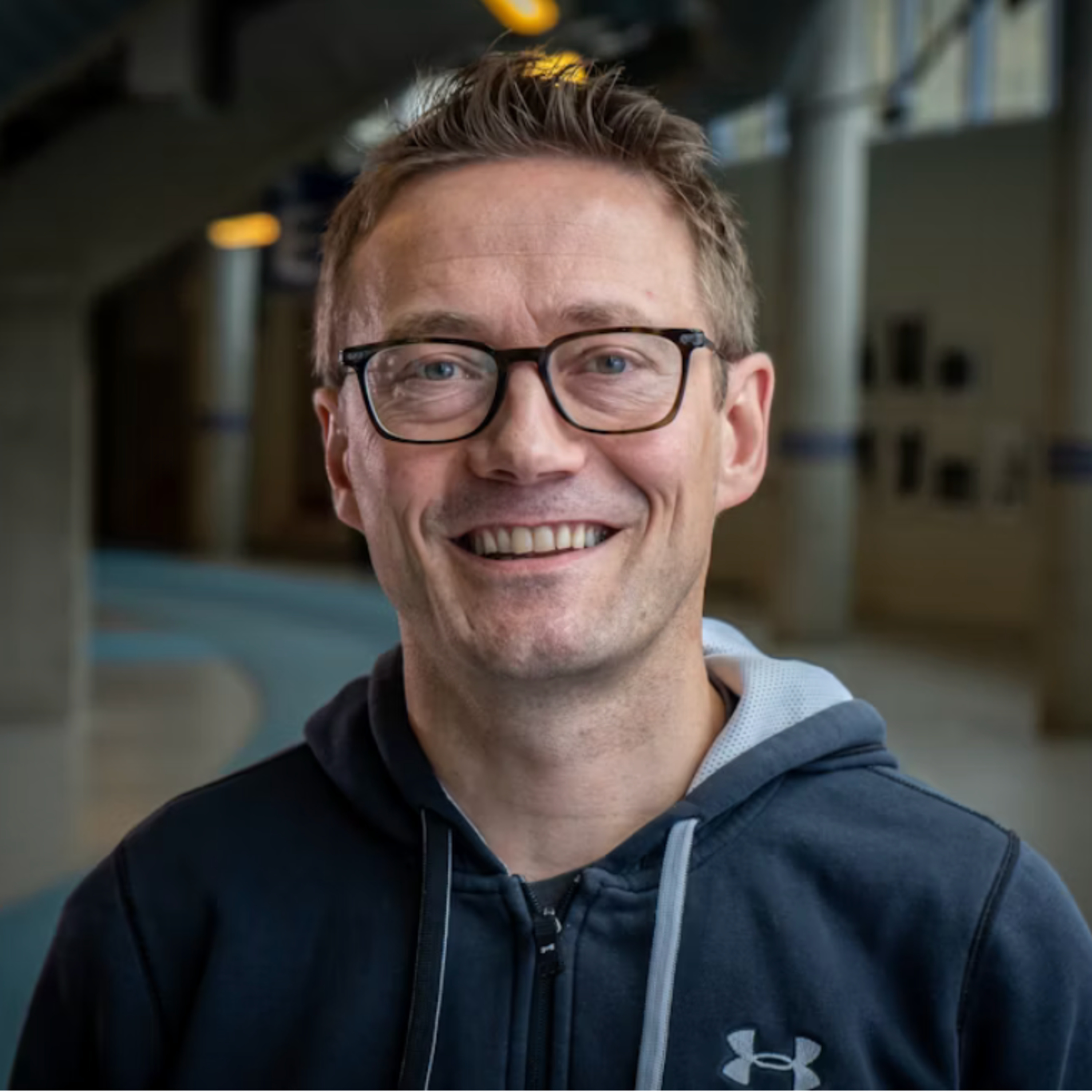
Dr. Ben Ronsted, a renowned figure in sports science, shares deep insights into training optimization for cycling and cross-country skiing. His work highlights the physiological effects of altitude and heat training, showing that high-altitude exposure increases red blood cell mass, while heat training expands blood volume—but these adaptations can conflict when combined. Dr. Ronsted cautions against combining altitude and heat training due to physiological trade-offs, suggesting that such combinations may increase stress without adding benefit. He emphasizes that effective heat training involves low-power, prolonged sessions on a trainer, with a 3–5 times per week frequency, and notes that benefits plateau after three to five weeks. For elite athletes, block periodization and super-compensation can drive performance gains by strategically overloading and then recovering from intense training, though this is rarely feasible for professional cyclists due to schedule demands and race-specific needs. Cross-country skiers’ exceptional VO2 max is attributed to full-body, high-intensity training, not just genetics. Dr. Ronsted also underscores that upper-body muscle mass may support metabolic efficiency, even if not directly involved in pedaling. Overall, his research supports a balanced, individualized approach to training, prioritizing recovery, specificity, and physiological balance over extreme protocols. His work is grounded in practical, evidence-based principles that bridge scientific theory with real-world performance.
This podcast is with Dr. Ben Ronsted, and if you like the training science stuff,
you'll love this one. If you're someone who reads the scientific studies around training
in cycling or cross-country skiing, for sure you know the name Dr. Ronsted from many of the
most famous studies around training. But if you only follow cycling without diving into the research,
you might not know the name. I've been reading Dr. Ronsted's work since I was a teenager, so this
was a ton of fun to dive into his work around so many common training practices like altitude,
heat, strength training, and super-compensation or block periodization. I hope you love it.
There's so much to learn in this one from one of the most brilliant researchers in sports science
in the world, and as always, there's no ads to skip over. The only ask is if you like this podcast,
I hope you share it. Pay it forward and help someone else find it if you find it useful. That's it.
And if you like books, I put everything I know in one massive textbook called How to Become a
Pro Cyclist to try to help those who don't have access to coaches or mentors. A lot of people
liked it, so if you like books or audiobooks and cycling, you might enjoy it, and I hope it
helps you go further than I ever did. I was just trying to create a mega toolkit for a younger
me trying to become a pro cyclist. You can find everything at howtobecomeaprocyclist.com.
It's before in the Fast Talk podcast, but I've always just seen your name at all the scientific
studies, like as far as I've been following you since I was a kid, because that's stuff, but it's
nice to actually hear your voice now. Yeah, thanks. Thanks. Yeah. So where are you right now?
Are you? Where in Norway are you? Lillehammer. Ah, okay. Cool. Yeah, you heard of it. So no. Yeah,
I've only been in Norway once for the World Championships in 2017 in Bergen, but I know where
Lillehammer is. I've never been there. No. Also, it's a winter city, I would say, if anything. So,
but snow, yeah, almost half the year, but now spring is approaching, so that's nice.
Yeah. Yeah, awesome. And then so what does your day-to-day look like right now? What is your work?
Yeah, so I'm a full-time professor at the university here, and then I have a small position in the
like the original department of the elite sports stuff in Norway, like the Olympic Committee and
yeah, working with coaches mostly and some athletes. Yeah, which are your favorite sports to work in?
Yeah, yeah, cycling cross-country skiing. Yeah. So I must say cycling,
yeah, it's easier. It's easier. It's more precise to work with at this. It's more noise in the
cross-country skiing stuff. For sure. Yeah, I can understand that. What do? Okay. Well, like I'm
again, like I said, I've been following your studies for a long time. What are you interested
in in studying now? Like what is interesting for you to start looking at when it comes to sports
science and finding ways that we get faster? Because if you look at let's say the last five,
10 years, like what have been the big things? Heat training got really popular. The whole
debate around like carbohydrates during training. How much can you really absorb all this kind of
stuff? There was all the advancements around like aerotechnology. Like what do you think would be
like the next area of interest for you? Yeah, for me, regarding so we have like limited,
somewhat limited possibilities to to investigate stuff. But it's overall it's like how we can
improve performance. And then you can attack that from very many different angles. But like,
so where does your mind go? And keep in mind, I understand that you're restricted by like what
studies you can actually do. And but if you had complete freedom to just, you know, what what gets
what are you excited about? Like when you think about what would be a fun study to do or something
to look at? It's it's much. Yeah, I guess. I guess then it should be to go to the to the extreme
and in terms of altitude stuff. So tell me about extreme altitude. No, I mean, like going
again, not only limited to the usual stuff around 1800 and 2300 is I guess that the usual stuff,
but moving up to yeah, between three and four thousand meters. And then make that build that
into a very good plan, because that's a pre-request. So and then integrated with intensity stuff,
strength training, heat training. And so I think there is a big potential for combining and
optimizing almost all the actions that we know today are effective, but maybe there is some extra
benefits that still are unexplored. Okay. Well, I love this topic. So let's talk about altitude
above 3000 meters, because I love schema. And I've also done an altitude camp at 3,200 or 3,300 or so.
And it does some crazy stuff. It absolutely does some crazy stuff to your blood. But you can
definitely crush yourself as well to a night. And I never did blood test with that, but you just
see your heart rate and you're like, am I running out of heart beats here? Like, what the heck am I?
Am I dying here? Yeah. Not at altitude when you come back to sea level. You don't open your
mouth for a few weeks, but so, okay. So if I were to do another camp above 3000 meters and you were
to sort of oversee this or like use me as a test subject or something like that, what are some
of the things you'd be curious about to play around with? Compared to what we know works at
2000, 2500 meters, something like this. Well, I guess it, what we need to know is maybe this will
work the same way. Just maybe it's likely better. As long as I mean, everything with training,
you have to follow the training principles. And as long as you are guided by them,
in theory, it should be okay to stay very high. So as long as you ensure the recovery stuff,
the nutrition stuff, control of the development, etc. But of course it's
like, it'll be the old training, also at sea level. I guess it's individual. So, so not everything
is for everybody. But yeah, it's difficult to be very precise in your question.
Okay. Well, how do you thought about like the idea of training at altitude? Because that was
one of the cool things that I got from ski mountain areas, like all the racing basically happens
between 3000 or above 2000 meters. Like a lot of the time is spent up around 3000 meters. So
what do you think about doing intensity at altitude? Yeah.
As long as it's controlled, I think it's durable. And I think it can be have a big potential as well.
So but of course, if you're measuring power, it will be lower. But of course, but in terms of your
like a maximal heart rate or oxygen consumption, I think it's doable as long as you have control
of it. Yeah. But so for example, like if someone was doing an altitude camp at 2,300 meters,
it's picked out like just a normal altitude right now. And the typical protocol is live high
train load. Like do your intensity down low. Do you think there could be any more added benefits
from doing some efforts above 2000 meters? Yeah. You keep your doing your training low,
so you keep the strain on the muscles so you can hit those higher power numbers and stuff.
But do you think there would be a benefit to doing, let's say, threshold work or VO2 max work
above 2000 meters that you just can't get from doing it at sea level? If you're at sea level?
Yeah, I think so the principle of variation. And I think for like a limited period,
I think doing what you just described can add some new stimuli and some variation in the training.
And by that, lift your capacity. But it's always about the mix. But I think
and I know yeah, several athletes doing quite tough training at altitude.
Yeah. Well, it's the balance between keeping it specific to the race that you're going for.
So I mean, I guess if you're at a race of 3000 meters fine, sure, but assuming you're racing at sea
level, keeping it specific. So you don't lose, let's say, a lot of your power at sea level versus
increasing the oxygen demand and possibly getting benefits there. It's just a curious question I have.
But yeah. No, but I think you're right. I think it was maybe I misunderstood you.
I thought it was like a more like a statement from you. But I agree in the balance and the
specificity, et cetera.
So of course you, you want at some point you need to have that high power output for preparing
for the sea level race.
Okay.
And then okay.
So I know a lot of your work has been around like altitude and then heat training is another
one.
And so this is analogy and analogy I came up with years ago to try to explain it to some
people.
The best that I could understand the study, but you are probably the best person in the
world to ask if my analogy is correct.
And so the way that I tried to explain the difference between altitude and heat training
to people was imagine you, do you know what Cheerios are, the cereal?
Yeah.
Yeah.
Okay.
So imagine you have a bowl of Cheerios, like a bowl of cereal like Cheerios.
And the Cheerios are your red blood cells and the milk is your plasma and the blood.
When you go to altitude, your body freaks out, it needs more oxygen.
So it up, it starts dumping more Cheerios into the mix.
You get a more, you get more Cheerios in your mix of cereal.
And so that's like the ratio of Cheerios to milk is your hematocrit.
And then so that's how altitude training works.
You add more red blood cells to it.
When you do heat training, the way your body cools itself down is it needs more water
in the blood because that's like your engine's coolant for it.
So what your body does when you do heat training is it dumps more milk into the bowl of cereal.
But then your body also wants to maintain a certain hematocrit.
So it will also add a little bit of Cheerios in order to maintain your normal hematocrit.
And then so with altitude training, it's like you end up with more rich blood.
Let's call it that way because you have more Cheerios in the cereal.
And when you do heat training, you end up with more total blood volume and more red blood
cells, but the same hematocrit.
Is this analogy somewhat correct?
Yeah, somewhat correct.
It is.
I'm glad I haven't been getting that advice.
But if I just want to pinpoint some small details there, go for it.
When we go to altitude, typically to keep it your picture, typically we also lose some
milk.
Yes, that's all right.
It's a little bit reduced.
And when we, at least in our hands, we see like typically an increase in hemoglobin
mass, which can be the cereal, as you was talking about, the red blood cells, approximately
for red blood cells, we typically see an increase in hemoglobin mass between 2 and 5% after
this typical two or five weeks interventions.
And that range is also quite typical to observe after a three-week altitude stay, at least
in very well-trained athletes with that.
It is a zero-ribbling method.
So maybe the amount of cereal, the increase in cereal, is pretty similar, at least in
our hands.
But I know there are several reports about hemoglobin mass increases between 5 and 10%,
which is extremely large in well-trained athletes and your athletes, at least.
Sorry, I didn't totally follow that last part of this.
Can you explain that last part there again?
Yes.
So we see an increase in hemoglobin mass after heat training of 2 to 5%.
And that's also kind of typical to what you expect after a three-week altitude stay.
Right.
Got that.
My understanding, though, was the reason why you have the increased hemoglobin mass is
an indirect effect of, essentially, when you do heat training, your body really wants
the more milk in the bowl in order to cool you down, and then indirectly, you end up
with more red blood cells, excuse me, sorry, I just got off the bike.
When you do heat training, your body wants more milk in the cereal to help cool you down,
and indirectly, you will end up with more red blood cells because your body will also produce
more red blood cells in order to keep the ratio of Cheerios to milk the same.
Because whatever your hematocritis, this is 43, 45, whatever it is, it wants to maintain
that level.
So when you add this extra milk, because it needs that to help cool you down from heat
training, it will also increase the red blood cells a little bit that way.
Is that correct?
Yeah, that is one of the suggested mechanisms as to why heat training increase.
Yeah.
So my point was that it's probably different main mechanisms, but leading to more or less
the same results and results exactly, cereal and milk, yeah.
Perfect, okay, that's what I was going for, and then sorry, the other part that I left
out of my analogy there, and then this is, so I have a question here as well.
My understanding was when you go to altitude, your body is, it needs red blood cells quickly,
but it takes time to build up red blood cells, and to increase the red blood cells takes
weeks versus changing blood plasma volumes can change in days.
So the changes in plasma is much faster than the changes in red blood cells.
And so because your body needs those red blood cells now and your body's lazy, it will
look for like easy ways to do it.
It will drain a bit of that milk out of your body when you first go up to altitude.
And then so that's why you see some guys will lose it like a little bit of weight, like
if they step on the scale after a few days at altitude, they see themselves as a little
bit lighter and think it's weight loss, but it's actually just water because you're slightly
dehydrated at altitude, and that will come back when you go back to sea level.
And then, but if you stay at altitude for three weeks, for example, like you give your
time, your body time to adapt, will that, will your race, will you, will more milk come
back into the, the cereal, like you'll basically normalize to what you would be at sea level?
It, it depends, and probably it, it depends on, on how focused you are on this aspect regarding
your fluid intake and your nutrition, for instance, salts, to increase the plasma volume.
But it's, it's kind of typical to see a slight, still a slight reduction in the plasma volume
immediately after returning from altitude, caps, yeah, but then it, it burns back.
So, so maybe it's like, yeah, between two and six percent reduction in plasma volume
after a camp compared to before, but then after like five, six, seven days, it's typically
back again, but, but some, some also have no, no reduction in plasma volume immediately
after. So, yeah, but, but, yeah, awesome. Okay, good. So I'm, I'm clear on all that part
then. And then so this is the next part, then talking about how that plasma volume can
decrease at altitude, because this is a huge thing, like this affected me a lot whenever
I would do altitude camps, is if I went from an altitude camp straight to, at straight
to a race and it was a hot race, I would get crushed from the heat, because now you don't
have, you've lost so much of your blood plasma, you basically like drained all the coolant
out of your engine in order to inflate your red blood cell count, you go to a hot race,
now you have no coolant left in the engine, and you just explode and you can end up performing
worse than if you've never done an altitude camp. And my understanding was exactly what
we just talked about there, but I was also thinking it's like, well, it is probably also
the effect that when you're at an altitude camp, it's typically not as hot as like a hot
race. So for example, you do, I like my favorite place to do an altitude camp is Livinio.
And if you stay at 2000 meters on top one of the passes and then you go down to 600 meters
or 500 meters or whatever it is in Toronto, it can be like almost 20 degrees difference,
it's just not hot on top of the mountain.
Yeah, yes, yes, also the conditions, the environmental conditions there can of course play
apart to, yeah, just as you described, come in. And so then if you know you are going
to race in like hot conditions immediately after a altitude camp, it's probably smart
to do some actions to be prepared. Okay. And then so now here's the next fun part of
the question. Can you combine altitude and heat training to get a double whammy effect?
So sticking with the serial analogy, you end up with more rich serial and more total serial
in the bull. So now it's like you have the double effect because there's more serial and
there's more, there's more Cheerios in that serial by combining altitude and heat. Could
that work to give you an even bigger boost? And of course the downside is, well, there's
a big risk of overtrining and just overdoing it and crushing yourself. Yeah, yeah, of
course, that's a very important point. But then there is some studies that have looked
into this and I don't think the message is quite clear because from one point of you
just like you said, maybe you get like a double extra benefit. But then when we have already
shortly touched upon potential mechanisms us to the adaptations and they increase in hemoglobin
mass. And then when we go to altitude, the plasma volume is reduced, but when we do heat
training, the plasma volume is increased. Right. So maybe if those two knocks out and
actually leads to less effect of the computer.
nation compared to its approach for itself. There is some data to suggest that you don't
get any additive effect and then it's some that, yes, so if I remember correct, I think
it's like there are some indications that the heat adaptations, so if you're racing in
heat, then then maybe this combination is not good. It's better to do the heat protocol
alone at sea level. But I guess it's about, so at the top of my head, these studies have
been performed in like altitude chamber and they, so of course, how it's in real altitude
and whole, so it's a lot of different ways of performing these combinations as well. So
maybe, I don't know, what's the best way of doing it? We are not quite sure, but I guess
a lot of people actually are testing this out as we are speaking and maybe, yes or so
it would be interesting to have a study on it and that probably is just around the corner.
But have you any experience yourself? With combining the two? I have tried to combine
the two. I don't think I've ever done it. Like the hardest part when you do try to combine
the two is it's just so much stress on your body. Like it's hard. I love heat training,
it works very well for me. Like it, I would say it's like it's one of the most effective
things for me. But the biggest thing is it is so much stress on your body. Like to think
like when you're new to it, you're going to be like, oh yeah, I'm just going to add
like an hour of heat training onto my, the end of my training and just keep everything
else the same. I can't forget it. You're going to do this for a week or two weeks. It's
like no way. Like you really, it's really significant. How much do you have to pull back
on the rest of your training? And so I don't think I ever was able to combine both of
them in a way where I would say, yes, okay, I've tried this and it didn't work or yes,
I tried it and it did work. Like I just, I don't think I've got it good enough yet where
I could give advice on that. What you said there, so I've never thought about like the idea
of them canceling them out. Just I can't believe I didn't think of that. Like I always
thought like, oh yeah, like maybe it would be better to do it. But following what you just
said there, and again, me just trying to follow along here with it, it's all incorrect
me if this is wrong. When you try to combine the two, it's almost like you, you don't get
the advantages of the heat training part of it. Because when you're at altitude, your
body is going to want those extra red blood cells. Like it needs that, like it's going
to really want that and heat training would only, I don't know if it would take away from
adding more Cheerios to the mix, but the altitude would take away from your body responding
to wanting to add more milk into the mix. And so it's basically like if you try to combine
the two, because again, I hadn't pulled this off in a way where it would work, but it's
almost like if you were to try to combine the two, you would be adding a lot more stress
onto your body by piling on the heat training, but you might not be getting the benefits
of the increased plasma volume in your blood. Because your body is, the altitude is working
against you to drain that plasma down because it doesn't want all that extra plasma because
it wants more red blood. It wants more rich cereal. It doesn't want the added milk in
there. So it's almost like you're piling on this extra stress of adding in the heat training
and that stress counts. It's very hard on your body, but you might not get the adaptations
and the benefits of it because the altitude and that stress on your body is saying, no,
we don't want anymore milk in the blood. We just need red blood cells. Am I not kind
of right?
Yeah. So that's a risk. That's what we want to avoid for sure. But could I ask how are
you doing your heat sessions or just a curiosity? Yeah. Yeah. Okay. So I mean, I do it.
I've tried everything. I've tried. Well, I don't I think I've tried everything. Maybe
someone else knows something else, but I've tried like the sonas, like going in the sauna
after training, I've tried the hot baths. I've tried and then riding the trainer, like
just overdressed, like which is close on and stuff like that. Without a doubt for me,
the riding the trainer is the hardest one to do, but also by far the most effective. The
sauna, I would say is not effective at all for me. And my thought on that is the fact
that like once you're at a really high level for elite athletes, it's just not enough
stress for it. Like to just be sitting, like even if you finish your ride in your hot
and to go sit in a sauna, I just found I had to push it so freaking hard in the sauna and
like to the point where you're almost dead getting out of it. Now you're just worried
about overdoing it. It's still that stress that counts on your body, but I never really
saw much of a benefit from that. The hot baths for sure, I did notice a bit of a benefit
from that, but without a doubt the riding the trainer, that's the most effective one for
me, but it's also the hardest to do. And so the way I would do it is you just whatever
your normal training would be, you do that, but you'd make it a little bit shorter and
then you come back and you just get on the trainer for an hour after and that works really
well for me, but it's hard to do it. And you mean when I think what's the gold standard
study, it's something like five times a week for three weeks or maybe five times a week
for five weeks or something like that. And that's like that's so hard to do that. Like
unless you're really cutting back on the rest of your training to do that, like to actually,
it sounds nice in theory, to do it in practice is pretty freaking hard. And then what was
the oh, there's like all the talk around like the heat sensors and the core sensors and
stuff like that. I don't have any science to back this up. It's just from feel I've always
found it better just like looking at my heart rate for doing it. And so the way that I do
it is you bait like I do it on the indoor trainer and I just set the trainer to Erg mode.
And then I would just have like some efforts at the start of the ride, just to basically
elevate your core temperature as much as you can. And then you basically to watch across
the hour, the power slowly goes down and you're trying to keep your heart rate pretty steady.
And that same zone and I would just give myself like a ceiling like I'm not allowed to
break this heart rate zone, whatever. And then I would just try to do that. And as you
get more adapted to the heat, the power doesn't drop as much. That's that's what I've found.
Have you been measuring your recital temperature? No, I've not done that. I haven't done that.
So I could be something to add to it. I don't know if I have the confidence to do that, but
I haven't done this. So there's a gap in my knee science. Yeah, yeah. It's just by
and then because I think maybe you are, if you are experienced, it's this so very, very hard.
It's is it is individual and some people really hate it, even though it's giving effect. But
so point one, if you have time in your daily schedule to have it as a second session,
not directly after the long ride, then most people experience it's easier
to perform. And then and then overdressing. So the power. So say, say if you're
FTP, whatever, defined the good old 60 minute way, is that 500? It's 500.
Now, but let's take like 350 watts. That's it. Okay. Then I would recommend to just the first 10
minutes to have like, of course, it depends on how much clothing you have and the temperature in
the room. But in general, I would guess first 10 minutes at 180 watts. And after that 10 minutes,
you go down to like 150. So extremely low power, but overdress. So you get the 38.5 degrees
rectal temperature after. So try to get that temperature as easy as possible with as low power as
possible. And then it's like for probably you need two, three sessions where you are measuring
the rectal temperature immediately after to fine tune. And then you know it. And then you don't
need to measure so much, depending on what you want. But by doing it that way,
most riders find the first week tough. But thereafter, it's more or less that they can
train us normal and just add on more or less, of course, but the best.
Yeah. So so my experience is also that people who are not actually measuring rectal temperature
are overdoing it, are cooking themselves too much. So they are 39 point something, worst cases,
you are touching 40. And we don't have any data as far as I know to suggest that the higher
temperature, the better effect. Yeah. Yeah, no, so everything you just said is exactly what I've
sort of learned on one for doing it. And so I do. Well, the first point is just overdress as much
as possible. So you can have the lowest power to do it. That
that's the first point, I do that anyways.
And then the second one, as far as treating them
as like separate sessions, this is huge
because when you hear about it from other riders
and stuff, they're like, oh yeah,
you want to do it right after
that way your body temperature is already warm.
And I'm like, if you dress in like a snow suit in July,
like you can get your body temperature up real quick,
no problem, like this is irrelevant.
You don't need to do this.
And the big reason for me why I started doing that
is because when I would,
I mean, the first reason is you're just crushed.
Like if we're just gonna look at one hour
on the trainer, one hour as a separate session
is much easier than the sixth hour
of a six hour ride.
Like that's the first obvious one.
But for me, the bigger point was,
like I'd constantly be based, so yes, it's easier.
Like when you have a bit of time to chill
and then go, that's the first point.
The second point is that I was just
blocking all the time when I'd do it.
Like I'd come back from this ride.
I would eat so much on the bike.
I would eat as much as you can.
But if you look at, let's say you have a five hour ride outside
and then you're gonna do a heat training session,
even if you eat right until the end of that ride.
And then it takes, I don't know, 30 minutes,
20, 30 minutes before you're on the trainer.
And then you're basically doing a long tempo effort
on the trainer.
If you were to go do whatever, six hour ride outside
and then you didn't eat for 30 minutes
and then you started a 45 minute tempo effort
and you weren't eating enough carbs during it.
At some point during that effort, you'd probably bonk.
And so it's easier for me if I just come home,
I have a recovery shake, I eat, I drink,
and you just sort of chill and then you start
that the heat session later.
Like if you give yourself that gap between it,
it works way better and you're much less crushed
by the end of it.
And then the third point is just after talking to Dan Bigum,
a lot about this 'cause they did a lot of heat training
when he was going after the hour record,
he just explained it's like, yeah,
it should feel like a tempo effort.
Like when you get off the trainer, you're not crushed.
You're just like, oh, if I just did a 45 minute long climb
and I just pushed, I was like on a good day
and you're just pushing some good power,
you're not on the limit or anything like that
and you finish and you're not like falling off the bike.
You're just like, that was good.
That's how it should feel.
And that's, yeah, I mean that's how I would do it there.
And then that's the other reason why I don't like the sauna
is because for the sauna, I would have to like go so hard
to the point where I'm like collapsing,
getting out of the sauna for like you're so dead
and I still wasn't getting much from an adaptation
from it that way.
Versus the bike, I could get off and feel good.
And for whatever reason the adaptation
seems to be way better doing it this way.
And the adaptations you're talking about,
is it like, yeah, what is it?
Your heart rate's just 10 beats lower.
Your heart rate is so much lower from it.
Like it's, and it's ridiculous.
It's like, it's literally like 10 beats, like across the range.
Your heart rate is just 10 beats lower.
It's insane.
So that that's the big one that I notice.
Power wise.
Also, also higher for the same.
Yeah, the power is higher, it's just like,
if I would do an effort at 450 watts for 20 minutes or so,
your heart rate's just that much lower.
And so like, yeah, you can push harder if you want for it.
But you just note like just in everyday riding
just out on the bike, you just see your heart rate
is that much lower for it.
Yeah.
That's the least that's what I've learned from it.
Okay, here's another fun question.
Because, so as we said, like heat training
is really hard to fit in with your trainings.
So now a lot of guys, they're basically doing it
like almost a year round.
Like the base, and for some of them,
it's because they go race two or down under.
Like they're already racing in the heat
in January or something like that.
But a lot of guys start their heat training blocks
in when it's still winter in Europe, when it's still cold.
Because you, it's like, you need to have this,
or I guess some of the sciences,
you need to have like this focus block of heat training.
And you can do that well out from the race
and then you can sort of maintain them
with fewer sessions going into the race.
You can focus on the more race specific stuff going
and that's the theory on it.
My question is, how effective do you think
heat training is to be doing in the winter
when 80% of your riding is done outside in the cold?
Like are you kind of just getting, like for me,
just by totally by feeling, I'm like,
if I'm over-dressing, okay, I can like do it
in the bathroom or something like that
and get really hot, no matter how cold it is outside.
But then I go right outside for how long
and I'm freezing cold.
And I'm like, am I not just losing all these adaptations?
Like for the other 80% of the time I'm riding
when it's two degrees out or minus five out in the winter?
- Yeah, yeah.
So I think I have a very clear answer to your question
because the majority of our heat studies
are performed in November, December, January
in Lilliamar, where it's, okay.
It's from minus five to minus 10th day.
That's the average stuff.
- Lovely, and dark.
And then you could, because it could be our,
or at least you could be afraid of that going
from the heat session, then the rider went out in minus 10,
either walking home or going out in a cold car
and driving home, that the risk of sickness would increase.
But that didn't, it does not seem to be the end.
- What's happening? - And the effects
that we have reported in the papers are,
yeah, from the typically performed in the winter.
So there seems to be a good effect even though it's cold.
And then you could maybe turn it around and say,
okay, maybe the effect is artificially elevated
because it's cold.
And your plasma volume, et cetera, is lower.
- It could be an argument.
But then again, there is other studies performed
in the summer showing kind of similar stuff.
So maybe not, but already in the 50s,
it was shown in, I think it was American students
that their plasma volume
followed changes similar admit to time due to heat and cold.
So, yeah. - Interesting.
Okay, because my first thought there was the fact
that it's like, okay, I'm stressing my body.
I'm making it really hot.
It's going to make all this extra plasma volume.
But then I'm going to go outside
and I'm going to go training for however many hours
of the freezing cold.
Isn't my body going to say, hey, we're freezing cold,
we don't need all this plasma extra,
but we're just going to get rid of this.
And like, isn't the cold going to be like telling my body
to just get rid of all the adaptations
that I'm working so hard for in the heat?
That was my first thought for it.
But the second point you made there was really,
I never thought of this is,
and I think I understood it this way,
was that if you're a winter sport athlete,
and to be clear, like if I was scheme out
near and racing or cross country scheme,
I would be doing heat training
because I do believe it does help
and I don't think you, I just didn't know
if the adaptations were not as big.
But the point that you made there was that if you were,
let's say you're the only one out of any of your competitors
doing heat training for a winter sport,
you might even have a bigger advantage compared to in the summer
because everybody else's use is just training in the cold
and their plasma volumes are extra low.
And you have more room to improve in the winter
because it's cold out, your plasma volumes
are going to be the lowest compared to in July
when you would naturally have a little bit higher.
So you have more to gain by doing it in the winter.
Is that the point you make?
- Yeah, yeah, actually, cool.
So, and then to your point,
then we know that the cross country skiers
are like famous for having some among the highest
video to max values in the world.
And they are racing in the winter in the cold climates.
But it has been quite common within skiing
and biathlon actually to use heat training
in the last, yes, at least here in Norway, Sweden.
- I can understand, that's awesome.
Okay, here's an interesting question.
This VO2 max question around like
why do cross country skiers have the highest VO2 max?
What's your opinion on it?
Is because there's two different opinions on it.
There's one that it's like, well,
the only reason they made it to the pros
is because they have a high VO2 max
and they're just like, that's like, it's a genetic thing.
And so these are just the best, these are just,
we've just found the highest VO2 max accolades
and they happen to excel in cross country skiing.
And then there's the second theory to it
where it's like, because they've been training for so long
using their whole body, like the most effective way
to max out your cardiovascular system,
it grows your VO2 max that much bigger.
And the reason I'm curious about this
is because I've done a bit of ski mountaineering racing.
And in my opinion, ski mountaineering,
this is like minute for minute.
If we just compare one minute all out of every sport
in the world, this is the hardest sport in the world.
It's like, there's, it is impossible
to push your cardiovascular system that hard on the bike.
Like if I look back on the last 15 years
of my cycling career, there's probably, I don't know,
five to 10 moments where you have max freshness,
max fitness, motivation, like everything lines up
and you can just kill yourself that much more.
And you finish the race and you're like,
I just took five years off my life doing this, but,
but like, it is broken as I've been in those efforts.
It's still ticklish compared to like a vertical race
in ski mountaineering because you're using your whole body,
you're going straight up the mountain,
you have these weights on your feet,
you have more glide than running,
so you can get enough momentum going,
but you have much less glide than wheels rolling
over the ground, so the muscles are under tension
for longer and you're doing it like 3,000 meters.
It's like when you see the cross-country skiers
and the ski mountaineers, like literally falling over
on the ground at the finish line.
It's like, that's real, and you can't do that in cycling.
Like, you can get close, but you cannot do this in cycling.
And then I remember the first, yeah, the first race
I've ever did was the World Championships
for like the vertical two years ago.
Oh, yeah, two years ago for this.
I remember falling over the finish line
and collapsing on the ground.
And it was the only time in my life
where I was so broken I couldn't breathe
because the muscles around my ribcage were so tired
they couldn't hold my chest open to breathe.
And I'm like, this is so ridiculous.
You cannot do this on the bike.
So I'm, do you think that type of training
can increase your VO2 max?
Or is it all just genetic?
And these are just like, we just found the highest VO2 max
kids and they excelled in skiing.
What's your opinion on this?
Yeah, I think it's no doubt that when you are working
with the entire full body exercise,
a ski, mountaineering and cross-country skiing are doing.
You are definitively stressing the cardiovascular
and the metabolic system at the maximum.
Right, I totally agree on that.
And probably that is a good way of exercising
for increasing the VO2 max.
But then again,
yeah, so some years ago we published
this case study on a Norwegian cyclist.
He was. Oscar Spensen.
Yeah, exactly.
And in entrained state, more or less entrained,
his VO2 max was like 74/75.
And then he trained for. And then he went from Alpine skiing to cycling.
Trains is dramatically for three years.
And we measured him like 12 days
before the World Championship.
And he had this crazy high values of 96/97.
Yeah.
And then he became the World Champion.
But then. So when he retired from cycling one or two years after,
and then he got him into the lab after one year
of no endurance, no systematic endurance running.
He was still on 74 in VO2 max.
So the genetics is for sure a big part of it.
Yeah.
So. But in my day, it's no doubt that doing work with your legs
and upper body at the same time
gives a very good stimuli for oxygen uptake.
Okay.
No, I love that one.
'Cause I remember, I think Oscar is maybe two years older
than me because I remember like he won the Junior World
Championships, and then I raced it like a year or two later.
So I remember that study.
That was really cool.
It was great.
And then, okay.
So here's another thing.
Somebody said, "I've never seen any sort of science on this,
but a teammate said this to me, I don't know,
probably 10 years ago or something like that."
And it was the idea that. Okay, I'm really going off a memory here.
So I'm like, get this wrong.
But it was a. The. In cycling, there's this big idea where it's like,
you want to lose as much upper body muscle as possible
to be as light as possible to have a higher watts per kilo.
His flip to that was that by having more muscle on your body,
even if it's in your biceps or something like that,
or your wherever, that's not like a primary mover for the bike,
it can help, this can help increase your VO2 max
because the muscles will help, I don't know,
it does something with the. Like having extra muscle on your body
can help with something around oxygen.
I'm really struggling to remember what this was,
but it was something around the idea that it's like,
"Okay, yes, it might not help you for watts per kilo."
But the idea where it's like. Riders on the flat, that don't specialize in the mountains
can be heavier.
Everyone just thinks it's like,
"Oh, 'cause they just have more power."
There, but maybe there's something as far as long as it's lean muscle,
it's not fat on them.
Maybe this can help increase their power output,
even if those muscles are not directly moving the pedals.
Is there something here?
Yeah, I'm thinking of two things.
So one is that in theory,
the muscle mass that is not working so hard can utilize lactate.
And that's it, that's what I'm talking about.
So that's one like, at least,
theoretical explanation for it, and then the other one
that we have been discussing in our strength training studies,
where we actually it seems like it's more
to slightly increase the muscle mass in the legs,
even though you express the outcome of power
divided by body mass.
Is that when you increase your muscle mass,
your engine in the legs,
and in cyclists and in duress athletes in general,
this seems to happen without a delusion
of the aerobic enzymes and the capillaries, capillaries.
So you keep the same concentration of the mitochondria,
the aerobic enzymes and the capillarization,
meaning that you have more mitochondria
that comes to fear, the stress or energy production.
So you could, in theory, increase your fractional utilization
over you to max.
- Right.
- Okay.
- That's another really good point.
Okay, going back to like this really gonna fall part here,
but like going back to the serial analogy,
you add like by increasing your muscle mass,
it's you increase, you have more serial,
but the ratio stays the same of mitochondria
in the muscles.
- Yeah, if you had changed the red blood cell
with the mitochondria, and. - Yeah, exactly, exactly, exactly.
- Correct.
- Okay, cool.
And then, oh, and just to make like a last point on here,
like for, like Vio2max, wait is part of the equation here.
So if you're trying to increase your Vio2max,
going and doing bench press
is not gonna probably help you with this,
but it was just the idea that you don't have to obsess
so much around stripping away muscle off your upper body
because that added muscle can help metabolize lactate.
- Yeah, yeah.
- Right, okay.
And then, we'll get to the strength training stuff
in a minute, but then what, when it comes to,
are you familiar with the Nils Vanderpool study,
the speed skater?
- Yeah.
- Yeah, okay, 'cause I know a lot of your workers
are on like super compensation stuff like this.
I'm just curious what you think about that.
- Yeah, and now it's a, it's a while since I read it.
It's actually so, so probably I don't remember everything.
The thing that I was most fascinated by
and actually inspired is was the clear approach
on the specificity principle.
So training at what he needs to do in the race.
And that's something that I have been used
also in cycling later.
So we have all these very good characteristics
or what it demands, what it takes to be among the best
in different stages or races, et cetera.
You have the power, power demands
and then you can actually pinpoint specific sessions
to train on those demands and over stressing it.
And so you're trying to be as good as prepared as possible.
- Yeah, it works, like I did it.
So I read his study and then I went and did it later that year
for what was it like five or six weeks or something like that.
And it absolutely worked, but it worked in the way
that he was like, what happened with me is
so I did exactly what he did for that.
And it was also nice because the two days off the bike
was a nice like little mental break for me
to like work in my computer and stuff like that
and take a break from cycling.
The end result was the fact that I went and did a performance test
after it and like all my fresh power values,
I broke every record I had.
Like by a long, I was like, this is ridiculous.
Like this is insane, but which is exactly what he was doing.
Like he just had to do a 10K speed skating race
like a one off ever.
The problem with this for cyclists is like the fatigue resistance
part of it like a bike race is four or five hours.
So that's the part that I learned from that.
And this was a couple of years ago, but it was just like,
Oh, okay, it's really effective, but there's a reason
why pro cyclists don't do this exactly.
Where it like, so if, all right,
before I even ask the next question,
what do you think about like super compensation
around cycling for cycling training or block periodization?
Yeah, you mean like like preparation
before like important races or?
Well, just in general, because like a lot of your work
has been around block periodization and super compensation.
What are like, what are your thoughts on this?
So I think that the idea of in some parts of your training
period or training year that you can get
some extra benefits, at least if you are really well trained
or blocking the training stimuli.
en giving a large focus on on on something and then the importance is very
important to then recover after. And I guess that's the period that you're talking about,
so and but and in most cases, if you are in in the preparatory period, you you go on and add on
new stressors and because yeah, it's it's this balance because if you are doing like say one
week or like hit focus and if the consequence is then that you need to rest for two weeks before
you're up again, then it's probably not smart. But the same you can say with with with high volume.
So if you are doing like 40 hours week training for 40 hours and and then the consequence is that
you need to recover for two weeks, then it's more coffee. So so so it's this this this balance
between the stimuli and and and to individualize it. So it's not too demanding, but just the right
amount, which is very difficult. Sure. And then just to go like because I know this is going to
drive some people not listening to this. So like the that whole Nils Vanderpoel thing that I was
talking about that I did and this isn't an ad phrase, just if you want more. I wrote I think like,
I don't know, three chapters in my book going through the details of exactly what I did for Nils's
thing. So just like for anyone who actually wants those details and stuff, it's it's in the book
that I don't know. It's like chapter 100 or something like that in there. But anyways, going back
to like this idea around heat block periodization super compensation. Okay, I'll give you my take on
it like my understanding of it. And then you can like add stuff on or tell me if you disagree with
anything here. It can be the block periodization and super compensation is a really effective training
tool to use for very well trained athletes. Because once you get so fit, it's very hard to keep
improving on that. So it's a really you just overload the body with a couple stimulus is that way.
And it's so something you can add in at specific times throughout the year. So for example, you do
a VO2 max block where you're doing like, let's say, double days every day for five to seven days
where it's just VO2 max efforts and you finish that week and you're completely crushed from it,
but you maybe only rode 15 hours or something like that. Like for I'm talking like pro numbers here.
So then you basically have to the next block has to be more focused on endurance because
when you need to recover from all the high intensity training, but now you you're a cyclist,
you need to have some endurance there. And you just did a week of a million VO2 max efforts,
but it's only 15 hours. You need to do this. And so this is why I get curious how this can
actually apply for very it only it's only really effective for very well trained athletes,
but you see pro cyclists, they don't really do this that often because it's like, I mean,
the first point is that pros they race so much they don't really have that much time to dedicate
to training. So that's the first thing like if they only have a three week window between
racing to train to dedicate one week of that to just a VO2 max block would be a bit ridiculous
for them. The second point is that it has to be very specific to the race and I think it's hard
to do a super compensation or a block period a block training block whatever that is similar
to the racing you're doing aside from doing a grand tour like a grand tour would be or a week long
state race is super compensation or block periodization training specific to road cycling,
but you're so crushed from the end of it. So when guys go to training camps that altitude training
camps they're essentially doing that, but the stress load isn't quite as high because you don't
want them to finish the camp absolutely dead and now they have to go race. Yeah, I agree. And then
I know some few pro riders that have tested this block approach, but then it's more compensated.
So you say you take three days in a row with double hit sessions, so six sessions in three days,
then you have like two or three days like with recovery or very easy like one to three hours
ride for recovery. And after that you can more or less go into like the normal structure.
So you can twist it a little bit to like give a give a very good signal, a clear signal
to the body for adaptations and still not be too recovery demanding. So in my head you can
okay, so to be safe, use eight days and reducing the volume in those eight days, quite
dramatically. So say yeah, 12 hours in eight days. But thereafter in my head you are then
recovered after the eight day and then you can go back to the normal with the 20 to 30 hours.
But then given a good stimuli for small adaptation and then you can continue and then
maintaining this new level with like one hit sessions per week value focusing on the volume.
Yeah, that's a way you could in theory at least do it. Well, no, I love that. I love what you just
said because the way that I've always thought about because that's exactly how I train. And I
think how most pros train is the way I've always thought about block training and super compensation
training is the longer blocks of let's say five, seven, ten days, something like that. And when you
think about it like that, it's like okay, how do you actually apply this to the life of a pro cycle
versus pretty much like the standard in pro cycling is three days on one day off. Like that's a
pretty like that's probably the most common way to do it. And that is still technically block
periodization. And the way that I do it is three days on one day off or four days on one day off
whatever something like that. And then you just have a few blocks like that that are just focused on
the O2 max efforts or threshold work or endurance work whatever. But because you're only doing
blocks that are three days long, you're never so crushed from it that you can keep this up for
two or three weeks. And then you switch to a difference energy system to work on. Yeah. Cool.
Okay. Huh? Okay. Going back to like the heat training stuff. Is there anything else you'd add
to that? Like what do you think is the ideal heat training protocol? So we already talked about
make it as hot as possible in the lowest power possible. Don't overdo it. Like you just need
enough doing it as double days is more effective for that. Is there anything else that you think
is important for heat training? No, you briefly touched upon it that maintaining the effect by
three days per week is what the studies show. But for every no one then a week with like two
sessions is also probably much better than nothing at all. So and then and then they don't
I'm not sure. And the study is comparing like the active heat stimuli with like the heat
overdressed cycling compared to the passive like hot baths. Right. So whether that's a good
option or not I'm not quite sure but in theory it could could be an option as well. But I agree
with you that the hot bath is like a more precise stimuli than the sauna. Yeah for sure. And so
like if I had to rank rank them I would say the sauna is the least effective or idly like if
we're talking about well-trained athletes like where it gets harder to find the benefits of the sauna
seems to be the least effective for me. The hot baths is a really nice one because
the stress like it's really hard by the end of it you're like struggling you want to get out of it
but it's easier than riding a bike overdressed. Yeah. Like when you're really tired from training
it is easier to just lay in a hot bath and just not get out for that. How hot do you have it?
That's just awesome. Off the top of my head I can't even remember because it's been a while
so I just googled it whatever the protocol that I found online was maybe I got it from Harry Sweeney.
I think I got it like one of the riders on EF because he was doing it a lot. I think I got it
from him. I don't know off the top of my head it's been a while since I've done this but it's
hot as I can take it. I guess the standard recommendation is around 40 degrees but yeah if you're
able to tolerate it 42 degrees is yeah it increases the temperature much larger poster so but then it
depends on how you are tolerating it. Yeah and then it's a little bit more work as far as like
actually measuring it out with the thermometer and then trying to keep it stable at this temperature
for the full 30 or 40 minutes and all this kind of stuff. The point I was making is the fact that
it's like that is easier than riding on the trainer and I do think a lot of the benefits are
almost the same as riding on the trainer with much less stress on your body. That was the point
I was making there and then so I know there's this gold I think the study is actually out of Norway.
or one of the Scandinavian countries where they said like the gold standard
protocol for heat training is five sessions a week for five weeks.
And I'm like, well, first, okay, I can understand why that's the gold standard
protocol because there's no way you can get more heat adapted after this,
but who the heck is actually going to do this?
Like, this is so hard to do this in December.
It's like, man, and then it like, you can maintain it for the rest of the year.
What's your opinion on how much do you need to get the, let's call it close
and after the maximum benefits?
Like, what's the minimum effective dose?
Yeah, well, since I'm probably a quarter or that study that you mentioned,
I guess, I guess I should say five times per week.
It will be an interesting study to compare three versus five.
And probably that will be done in the near future.
Okay, so, so I think almost all studies have used this five times per week.
And I guess the reason is that the first study used this approach and then everybody
after is, ah, if you use four and we can't see anything, all the effort for nothing and
it's too big risk. Sure.
So, yeah, but I, you know, you need to, to, to be realistic as well.
So, so I think if you in a five week period are able to do like five sessions and like two
or three weeks or five sessions and then two, three weeks with three, four sessions per week,
my take on that is that it's probably worth it, but I don't think we have science to back it up.
But, yeah, so, ah, and then the rationale behind this is that the plasma volume is probably
quite fast going back to the normal level. So, so, so, so, so probably we need this stimuli
quite regularly. Yeah. So, and then I guess like my, my initial question was like, like,
I can wrap my head around five sessions in a week. Okay. I can do that. But I guess my question was,
what do you think? How, how much do you have to improve between three weeks and five weeks? Like,
if I do this after three weeks, my 90% is good as at five weeks. Like that, I guess where I'm just like,
okay, really, I got to use for five weeks. Yeah. Yeah. And then the, the rationale behind this is
at altitude at around 2,200 to 300 meters, we see that after two weeks, almost nothing is happening
with the red blood cells. There's almost no increase after two weeks. And then you are like 24/7
at altitude, which should be in, I guess, in my head, you should think of that like a stronger
signal for improving, compared to one hour, five days a week. So, so that's why I, I would
guess that after three weeks, nothing much has happened. But maybe, maybe if you're able to like
initiate the process, you could imagine at least with five sessions the first three weeks and then
reduce it to three sessions. The last two, I don't know, maybe. Yeah. Okay. Well, and so going back
to like my serial analogy there, like, just like highlight a point that I made there was that the,
the changes in red blood cells or changes in red blood cells are much slower than changes in plasma
volume. So the thing is it's like, if you go to an altitude camp, you can hold on to those benefits
for whatever. Some people say four weeks or something like that. But if you stop with heat training,
you lose the effects much like the effects from heat training come much faster, but they also go
much faster for it that way. Is that fair? If you don't maintain them. Yeah. But if you are
speaking about the plasma volume, you are correct. Yeah. Regarding the short term effects of heat
training. But all right, because it increases them hemoglobin mass. Exactly. And that's maybe what's
most related to performance actually in well-trained. Got it. I forgot that part. Okay. Good.
But we have one study where we had a big group of cyclists doing five sessions per week for five
weeks. And after those five weeks, we divided them into two. So half of them continued with three
sessions per week and other half stopped. And we measured after three weeks the hemoglobin mass.
And we had also a third control group, which did no heat training at all at all at these three
time points. And after the first initial five weeks, the heat training increased the hemoglobin
mass. So it was larger than the control group. And after three more weeks, the one who stuffed
with heat training was still larger than the control group. And we're talking about hemoglobin mass
here. Yes, exactly. And those who continued with three sessions per week, they actually had a slight
but significant increase compared to the group that stopped with heat training. So even though
the group that stopped with heat training had an advantage compared to the control group,
the group that continued with three sessions per week had an advantage about them again.
Okay. And then just what was the time frame on this again? So they did the heat training block. And
then these second measurements were done how long after that? Three and a half week, three and a half
week. Three and a half weeks. Okay. So to summarize that, it's the group, the group who did the
heat training and then did not do anything to maintain those benefits for the three weeks after
they maintained some of the benefits where they maintained the benefits from the heat training.
But the group who continued to do a few sessions a week in those three weeks after they kept
improving. Yeah. Yeah. Sly. Okay. Okay. Got it. Okay. And that means that so they're all and then
how long is the hemoglobin mass from the altitude camp maintained? There are different studies.
Some are observing already after seven days a significant reduction, but others claim three weeks.
So there is a big difference. But yeah. So but yeah. So so it seems like at least that
hemoglobin mass increase induced by heat training seems at least to be as long-lasting as
the increase from altitude. Yeah. Right. Okay. And then so to to touch on this a little bit more,
the when you do the heat training, you increase your blood plasma volume and your hemoglobin mass.
And the hemoglobin mass will stick around longer, but the blood plasma will drop faster. So to put
this into practice, if I was a cross-country skier and I was competing in cold conditions,
it would be fine to stop the heat training a little ways out from the racing or maintain it with
just fewer sessions because we're just trying to maintain the hemoglobin mass. But if I'm racing
the Tour de France where it's really hot and I want to be able to perform well in the heat,
the big advantage. So of course, you're going to have also the benefits of the added hemoglobin mass,
but the big advantage to be able to perform in the heat is you want that added blood plasma.
So if you're preparing, if your goal is just increased hemoglobin mass, you can stop or reduce the
heat training a ways out from the racing. But if you're training to race and hot weather and you
want to perform better in the heat, you need to maintain the heat stress right up until race,
not right up until race day, but until very close to it. Yeah, it's also possible.
Right, to keep your blood plasma volumes high because of those will drop very quickly.
And it's just a distinction. Yeah, and also the ability to perform in the heat.
It's also like that. Yeah, that your ability to perform in the heat, that will drop off much quicker
when you stop heat training because the plasma volume changes very quickly versus the red blood cells
will stick around for longer. Yeah, got it. Okay. Okay. Switching gears a little bit here. What's your
opinion on simulated altitude versus real altitude? Yeah, I haven't done any studies on that.
Myself. Okay. And there are studies as far as I've read. That's so that simulated altitude
can give an increase in hemoglobin mass, but maybe slightly less than natural altitude.
So I guess that's my take on it. If I can choose, I would go for the natural stuff.
Yeah. Okay. Good point. We can leave it at that then.
All right. You want to talk? Can I ask you about gym training? Like strength training a
little bit? Yeah. Yeah. Okay. This is fun because this is me coming full circle on something
because back in 29. So I've done like gym training with cycling.
for a long time, and the way that I would always do it is I would spend like two hours in the
gym in the morning, and then I would go ride for like five or six hours in the afternoon.
And every year I would do this, I would get to basically the same place in the gym.
- You always did the gym.
- I did everything in the gym, I did so, I did a million freaking sets and like 10, 15 different
exercises.
Yeah, I was like two, two and a half hours in the gym.
Then I'd have a second breakfast and then I would get dressed and I'd go ride for five
or six hours.
I was training way too much back then, but anyways, not the point of the story.
I would get to the same place in the gym every year and I'd be like, I just sort of accepted
it like, okay, I guess this is good as I can get, but I'm trying to be a better cyclist
so I don't really care.
Then in 2019, I got a new coach and he gave me a trick that he was referencing a study
and I'm pretty sure you're part of this study.
And so this is where this story comes full circle year.
All he told me at the time was just like, if you do endurance training after gym training,
you turn off the enzyme, which builds strength in the muscles.
So if you're going to do gym training and cycling training, either do the gym after the
bike or don't ride on the same day that you go on the bike or give like a four hour gap
between finishing gym training and starting on the bike.
And I made this one, I didn't question it anymore.
I just made this one change and in three months, I had broken every record I had in the gym
and I'm like, oh my god, this is the greatest.
Like why I've wasted how much of my life in the gym that I've just thrown this all
away by doing these long rides after the gym training.
And I made that one change and it was so much better.
Everything was great.
Is this the study that you're a part of?
Because I never questioned this at the time, but I think you were a part of this, no?
If it was like, I don't think I've been involved in something that has specifically investigated
the effects of like four hours in between the sessions.
But some of your work has shown where the idea behind combining strength training and endurance
training and that when you combine the two, it could be in, so together with a professor
from Germany, I wrote a book on concurrent training or we were the editors of a book.
It's a completely book focusing on all the aspects of concurrent training with a lot
of brilliant authors in the different chapters.
So I'm pretty sure this could be taken from that book, this would make sense because
my coach was German and maybe he was even in the book, you know Robert Poloski is.
Yeah, I don't know him like, he's a German coach.
I think he's still with the German Olympic team, like he was the coach for the German Olympic
cycling team.
And then he was my coach at the time and then he also, he was the coach for Katusha at
the time when Katusha was around.
And yeah, anyways, that's who it was, but that would make sense that he would have read
this study along with many others.
Yes.
Okay.
Yeah, cool.
All right.
So what?
Okay.
Can you talk about more of your work then around like combining the strength training for
cyclists?
I'm just curious what you think about this.
Yeah.
So in general, we have done like two strength training sessions per week and four exercise
for the legs, for the lower body.
And typically the intervention period lasts from 10 to at least 10 weeks and then some
further.
Yeah.
And typically these sessions has been performed in the afternoon as a second session of
the day.
That has been the typical stuff.
And within one week, we have a slight difference in the number of reps.
So say the first three weeks, one session is with nine oren and the other one 12 oren.
And then the next three weeks, maybe seven and ten oren.
And then the last four or five weeks, five and seven oren.
And can you clarify Rm for people that don't know?
Yeah.
So repetition maximum.
So that means that the load should be so heavy.
So if it's ten oren, that you should just manage to do the tenth repetition.
If you are taking eleven, then it's too easy.
If you're taking nine, then it's too heavy for definition.
Okay.
Yeah.
Okay.
Continue then.
No.
Yes.
So that's the typical intervention and what we in general see is that in terms of U2 max
and then we compare it to a control group cycling only.
And in terms of U2 max, we see no negative effect, but no positive effect.
So it doesn't seem to affect the development of U2 max.
Okay.
And then in terms of threshold power output, usually measured by the power output at four
millimole in the lab standardized conditions.
Usually we see improvement, larger improvement in the strengthening group compared to the
control group.
In the U2 max test, we increase for males by 25 watts every minute until failure.
And the mean power during the last minute of this test seems to be a very good predictor
and very nicely correlated with most cycling performance measures.
So like time trials, etc.
And in this measure, we also typically see an improvement of the strengthening.
And then when it comes to the third determinant of endurance performance, work economy,
cycling economy.
When we are mastering it in the blood lactate profile, which is then performed in the first
state, we typically see no effect.
But that's typically seen by the same approach in runners, probably U2 different mechanisms.
But we have some studies where we investigate the effect in the work economy in the more fatigued
state.
So in my PhD, long, long time ago, we had three hours sub maximal cycling.
And in the last hour, in the third hour, we saw an improvement in work economy.
And that has been shown in several studies after.
But in the more fatigued state, strength training can improve the cycling economy.
And after those three hours, we had like a five minute maximal effort test to see mean
power out to maximal power out of four or five minutes.
And in that study, I'm talking so much about this results, the last 10 years, I have it
in my head.
The strength training group increased from 380 watts to 400 watts in those final five
minutes efforts after three hour cycling in an indoor standard load.
I'm going to go back and no changes in the control group.
So yes, so that's like the big picture from our research into this.
Okay.
So if I try to summarize all of that in like simple fifth grade understanding here is the
first point is if you if you do cycling specific gym training, let's call it squats,
leg extension, leg press, this kind of stuff.
If you add muscle doing this, if you gain weight from adding muscle here, there's no negative
effect even in weight, even in sportswear weight matters.
And I think this goes back to the previous point that you made before where when you increase
the muscle mass, you maintain the same concentration of mitochondria in the muscle.
That's the first point.
Second point is that gym training might improve fatigue resistance in cyclists.
Did I get that?
Yeah.
Cool.
Is it just those two points or is there any other points to make?
Yeah.
And then probably you're like finishing capacity, but that's that's also in agreement with
what you said, like the the fatigue resistance.
Yeah.
Yeah, exactly.
And then spring performance per se, which is very related to the muscle mass, so so what
we typically.
Of course.
Yeah.
Okay.
And I completely agree with all that because I did there was a point in my life where I
did where I was like I thought I was retired from pro cycling and I just went crazy with
the gym and I I felt amazing on the bike after and I didn't gain any weight at all and
I took as much creatine and as much time in the gym like way more creatine and gym than
any cyclist would ever do and I actually lost weight because I lost a little bit of fat
from it just from like burning so much from all the strength training.
So the end and then.
Basically, the point is, if anyone's ever worried about doing strength training and you're
going to decrease your Watts per kilo because you're going to gain weight, it's like, unless
you're doing bicep curls and bench press, like this is nonsense, it's ridiculous.
And the more important part of the fact, you're going to improve your bone density, which
is a huge one for that.
And then, okay, well, this is a fun one.
So I got this tip from Mateo Jorgensen years ago where he was doing, like he would finish
his ride.
And then he would do squats right at the end of his ride.
And the idea was that this could help improve fatigue resistance by doing squats as soon
as you finish your training ride.
And like it didn't really make sense in the science part of it, but I mean, he's really
good.
So I was like, oh, okay.
Interesting.
Do you have any thoughts on this?
Can you describe how the squats were performed?
So I never saw him doing it.
He just explained it to me, but it was like, I don't think they're that heavy.
I think it was just like sets of, I might even be making this up.
I'm trying to remember if he told me this or not, but like the details I mean.
But I just imagine like, I don't know, three sets of 10, something like that.
I'll just whatever weight you can do as soon as you get off the bike.
The point was that you just do squats as soon as you finish the ride to help improve
your fatigue resistance.
And was it as heavy as possible or you stopped at 10, but you could take 20 or 30?
I don't think he told me that.
I would be making it up if I said that.
Yeah.
No.
Yeah.
So in my head, you give a little bit extra stimuli in the fatigue state, which of course
in theory could be good.
When we are looking at the studies that are done when you go in the gym directly after
endurance training, you typically see that the load.
So the mechanical stimuli is less compared to in the fresh.
And therefore, like the quality of the session is, is not that good, but mechanical load
is not the only important stress or so.
So you would probably, unless you are very glycogen depleted, get a very high metabolic
stress.
So, but then again, if the metabolic stress was the importance, maybe 10 is okay number,
but if you had like 15 or 20, of course the metabolic stress would be even higher.
But then it might be to recover in the morning as well, especially if you're doing it many
times per week.
So, yeah.
But I think one point regarding strength training and the combination of it with endurance
training in general and cycling is specific.
I don't think you should be too concerned in general that you need to do it the optimal
way.
So many hours, et cetera, et cetera.
The most important thing is to do it and then don't do it more than you need to.
Yeah.
Because cycling training is the most important.
So, yeah.
Yeah.
Well, that's the point that I've always come back to is like, absolutely, the gym makes
you better.
Like, there's no disadvantage to me there and it absolutely makes me feel better on the
bike.
The problem is it's a big cost for how much, like it takes away from the work you can
do on the bike.
And when I'm really trying to be my best on the bike, the gym is something that goes because
I just get more of a boost from other things, heat training, altitude, whatever, like just
training more on the bike because at the end of the day cycling is in a aerobic sport.
So, it's like there's only so much stress you can apply.
And so, the gym is the, I don't want to say it's one of the first things I cut out, but
it's hard to say it's like, okay, there's not enough of a benefit to take away from the
more effective stuff in my experience at least.
Yeah.
And then maybe one important point is the benefits of maintaining it.
Yeah.
This is a huge one.
Yeah.
Yeah.
We had one study where riders were training strength from, I think it was from October until
April.
And then they, so during the entire winter and then they stopped for eight weeks and we
tested them again.
And all the benefits from that winter in terms of strength training and performance effects
that we saw in April, they had disappeared eight weeks later.
Oh.
There you go.
That's why I would do it.
Just explain.
Interesting.
So then if you know that you are not going to the strength training in the race season,
then I guess the main argument for doing it is your health injury prevention bone mineral
density.
Yeah.
But then again, I think if you're able to just put in, so in the week, take your, take
your teammate on the back and do a single leg squat as a warm up and then take it all over.
And then you can take the, what cycles do you work with?
None of my teammates could do this.
But this was just for a warm up and then you need the biggest, heaviest work with the
Vikings.
That's why for the real sets.
Sure.
The guys on Uno X can probably do this.
All the Vikings, the huge bodybuilders, none of the my teammates could do that.
Hey.
Put me on your back and do a one-legged squat.
I don't think they could do a, well, some of them couldn't do a one-legged squat without
me on their back.
Okay.
Two leg done.
Yeah.
You can't find a right person.
Okay.
Cool.
All right.
I know you're tight on time.
So just to like one last question then, because we've only got through like, I don't know,
a third of the studies that I've read from you over the years, which is absolutely
a pleasure.
What are your favorite methods to boost cycling performance?
Yeah.
So then it must be, okay, in these last minutes of the podcast, Dr. Ron Stead went off in
a totally different direction around training.
And for me at least, this last hit he gave was gold.
And I was thinking, oh, I'm keeping this one from my training and racing.
This is too good for the podcast.
This is my competitive advantage now.
It's just the last five minutes of this episode.
It's pretty short.
But for me, it was my favorite new trick I learned.
And if you'd like it as well, I will send it to anyone who shares the podcast totally
for free.
No strings attached.
Nothing.
That's it.
The only ask of this podcast is just if you like it and you get value from it.
Pay it forward and help another athlete out by helping them find it because you probably
know someone this might help for the small group of you who do share it on your Instagram
stories or whichever you prefer.
It means the world to me and you guys and girls are the reason I love making these.
So here's an extra bit of gold for those of you who do share it and try to help someone
else.
Share it anyway you like and reach out to me anyway you like.
And I'll happily send you those last five minutes.
If you want to help someone else, even if you don't know them, you're my kind of person.
And so I hope this gives you a bit more as well as my way of saying thank you.
That's it.
I hope you all enjoyed the podcast and got a ton out of it.
And if you want more and you like books or audio books, you can find mine at how to become
a pro cyclist.com.
See ya.
Podcast Summary
Key Points:
Dr. Ben Ronsted is a leading sports scientist whose research on altitude, heat training, and periodization has significantly influenced training practices in cycling and cross-country skiing.
Altitude training above 3,000 meters offers unique physiological benefits, including increased red blood cell mass, but requires careful management to avoid overtraining and performance crashes.
Heat training increases blood volume and plasma volume, with potential benefits in endurance, though it may conflict with altitude training due to opposing effects on plasma volume.
Combining altitude and heat training risks overtraining and may cancel out benefits due to competing physiological demands; current evidence is inconclusive and requires further study.
Heat training is most effective when conducted at low power, in controlled settings, with sessions spaced regularly (e.g., 3–5 times per week) and integrated into recovery-focused blocks.
Cross-country skiers have high VO2 max values due to full-body training, which stresses cardiovascular and metabolic systems more than cycling.
Super-compensation and block periodization are effective for highly trained athletes but are rarely used by professional cyclists due to time constraints and race-specific demands.
The ideal heat training protocol balances stress, recovery, and specificity—emphasizing low-intensity, high-duration sessions over extreme conditions.
Summary:
Dr. Ben Ronsted, a renowned figure in sports science, shares deep insights into training optimization for cycling and cross-country skiing. His work highlights the physiological effects of altitude and heat training, showing that high-altitude exposure increases red blood cell mass, while heat training expands blood volume—but these adaptations can conflict when combined.
Dr. Ronsted cautions against combining altitude and heat training due to physiological trade-offs, suggesting that such combinations may increase stress without adding benefit. He emphasizes that effective heat training involves low-power, prolonged sessions on a trainer, with a 3–5 times per week frequency, and notes that benefits plateau after three to five weeks.
For elite athletes, block periodization and super-compensation can drive performance gains by strategically overloading and then recovering from intense training, though this is rarely feasible for professional cyclists due to schedule demands and race-specific needs. Cross-country skiers’ exceptional VO2 max is attributed to full-body, high-intensity training, not just genetics. Dr.
Ronsted also underscores that upper-body muscle mass may support metabolic efficiency, even if not directly involved in pedaling. Overall, his research supports a balanced, individualized approach to training, prioritizing recovery, specificity, and physiological balance over extreme protocols. His work is grounded in practical, evidence-based principles that bridge scientific theory with real-world performance.
FAQs
Combining altitude and heat training may not provide a clear additive benefit due to conflicting physiological responses. Altitude reduces plasma volume to increase red blood cells, while heat training increases plasma volume to cool the body. These effects can counteract each other, potentially reducing overall benefits and increasing stress on the body.
Heat training increases total blood volume and red blood cell mass to maintain hematocrit, improving oxygen delivery. This can enhance performance, especially in hot conditions, though the benefits are most effective when training is properly timed and not overdone.
Yes, heat training in winter is effective and may offer greater advantages for winter sports athletes. Cold environments naturally reduce blood volume, so heat training can create a larger adaptive gap, giving athletes a competitive edge when racing in cold conditions.
Cross-country skiers have high VO2 max due to full-body, continuous training that intensely stresses the cardiovascular and metabolic systems. This type of exercise is highly effective at maximizing oxygen uptake, though genetics also play a significant role in individual differences.
Yes, lean upper body muscle can help metabolize lactate and improve overall aerobic efficiency. While not directly increasing power per kilo, it may enhance oxygen utilization and fatigue resistance, especially in endurance events.
Super-compensation involves intense training followed by recovery to stimulate physiological adaptation. It's effective for well-trained athletes and can be used in focused blocks for VO2 max or threshold work, but must be balanced with recovery to avoid overtraining.
Chat with AI
Loading...
Pro features
Go deeper with this episode
Unlock creator-grade tools that turn any transcript into show notes and subtitle files.
 PodcastTranscript AI