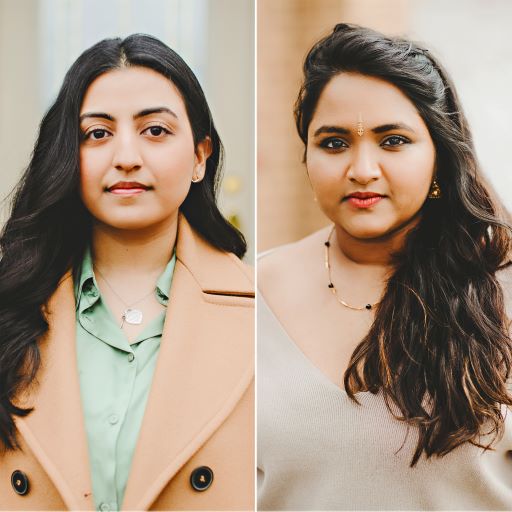
Domestic Violence Impacting South Asian Communities with Jenny Jay and Serena Lalani
49m 44s
The podcast "She Is Your Neighbor" delves into the complexities of domestic violence, featuring guests Jenny Jay and Serena Lalani sharing their experiences within South Asian communities. Serena recounts her journey as a survivor of domestic violence, highlighting the progression from verbal to physical abuse in her relationship. The conversation reveals how domestic violence often remains normalized within South Asian communities, making it challenging for individuals to recognize and address the issue. Jenny emphasizes the cultural aspects that contribute to the normalization of abuse and the societal pressure to endure such situations. Both guests stress the importance of breaking the silence surrounding domestic violence and initiating discussions to promote awareness and support for survivors. The dialogue underscores the significance of addressing domestic violence across all communities and the need to empower individuals to seek help and speak out against abuse.
Transcription
8083 Words, 44429 Characters
Welcome to She Is Your Neighbor, a show where we discuss the realities and complexities of
domestic violence.
This podcast is brought to you by Women's Crisis Services of Waterloo Region, a charitable
organization in Ontario, Canada.
I'm your host, Jenna Main.
Join me as we talk to different people each week to learn how domestic violence impacts
people from all walks of life.
She is your neighbor and we all have a role to play in ending domestic violence.
This week's episode is called "Domestic Violence Impacting South Asian Communities"
with Jenny Jay and Serena Lalani.
Jenny is an entrepreneur and CEO of the Double J Collective, a multimedia and marketing agency
that specializes in photography, videography, and ethical storytelling.
You can find her on Instagram under the handle "justaskjenny".
Serena is a freelance writer, content creator, and she currently works with Jenny at the
Double J Collective.
In this episode, Serena shares her experience with domestic violence and explains how it
impacted her as a young South Asian woman.
Jenny also shares her perspective as a young South Asian woman, discussing relationship
norms and expectations.
Jenny and I actually went to university together and we worked together at our student newspaper
the Western Gazette.
We actually shared a desk together in the newspaper office, so it was pretty exciting
to get connected again for this.
Now before we get started, I'd like to note that the following episode includes a discussion
of domestic violence and abuse, which may be distressing or traumatic for some listeners.
Please take care of yourself and don't hesitate to ask for help if you need it.
I'd also like to thank our episode sponsor, Magnet Forensics.
Magnet Forensics creates digital investigation software to help seek justice and protect
the innocent.
Their solutions not only protect corporations from cybercrime, but also help law enforcement
and government agencies fight cyber-enabled crimes like child exploitation, human trafficking,
and terrorism.
Visit MagnetForensics.com to learn more.
Thank you so much both for being here today.
I'm so excited to have you both here.
Jenny and I go back pretty far and Serena, we just met about a month ago I think now,
so I'm really excited.
I've been looking forward to this conversation, so I think it's going to be a good one.
So can you start by each telling me a bit about yourselves and we'll start with Serena.
Yeah, absolutely.
So my name is Serena and I am a freelance writer, content creator, and storytelling strategist.
I have been working freelance for about six months now and prior to that I was working
in TV and media, so very much just in the content creation and writing world right now.
Awesome, thanks.
And Jenny, do you want to share a bit about yourself as well?
Absolutely.
So my name is Jenny Jay.
For those that are listening in, I am a South Asian woman based just outside of Toronto
and I have been an entrepreneur officially for the last six years.
I actually started my business in university where Jen and I go back and I work full time
as a photographer, a videographer, and an ethical storytelling coach and especially
in the last few years diving into what it means to help other folks tell stories using
multimedia approaches and in an ethical and informed way, something that I think is really
missing sometimes from the industry itself.
So that's what I do for work.
It's what I love.
It mixes in multimedia and storytelling in all the best possible ways, so that's me.
Awesome.
I'm so excited to have you both here again, so thank you again.
I'm really looking forward to this.
So today I was hoping we're going to talk a bit about domestic violence and we're going
to talk about South Asian communities in particular, and I was hoping we could start
with Serena.
I know you have shared your story before publicly about being a survivor of domestic
violence and I was hoping you might be willing to share a bit about that with us today.
Yeah, absolutely.
So I was in a long-term relationship of about six years, which had started when I was fairly
young.
It was about 13 or 14 when the relationship started and about 19 when it ended.
And in between that span of time, the beginning of the relationship was just an average dating
relationship.
I'd say in the sense that it felt healthy and it felt normal, I guess would be the word.
But at some point in the relationship, there were red flags that at the time I didn't realize
were red flags and they didn't show up in the most obvious ways.
And looking back now, I can recognize them saying that, "Oh, yes, that was an instance
of trying to be controlled," or, "Yes, that's a sign of verbal abuse."
But at the time, I didn't really know that that's what those things were, I think primarily
because I was so young and also because I wasn't having these types of conversations
with friends or people around me.
So it definitely started in my situation, in my relationship as verbal abuse before
it was ever physical.
And I think there was definitely a lot of control over where I went, who I was friends
with, what I wore, just things that in the moment felt like someone was trying to be
protective of me rather than it was actually like being used as a tactic against me.
So it didn't necessarily start out in a horrible way, it was a pretty organic relationship.
And unfortunately, the direction it went in was leading towards verbal abuse, which then
escalated to physical abuse.
And a lot of the actions and words that were put into our relationship, I think, were only
started to become alarming when I started to feel extremely uncomfortable.
And I can't put my finger on one situation that really flipped the switch for me to be
able to see things in a different way.
But I think it was a collective of just making me feel like I wasn't good enough and making
me feel like I had to do everything in one way and I had to be a certain way and I had
to do certain things.
And I think that control, it's really difficult to decipher it from someone caring about you,
to someone being actually like abusive and controlling towards you.
So I think it was a collection of experiences.
Thank you so much for sharing that.
And I just want to say, I think it's incredibly brave of you to share your story the way you
are now and how you have before.
I think it takes a lot of courage to talk about something so personal.
And when it comes to a subject that's historically had shame and stigma attached to it, I think
it's so important that we do talk about this to break that because it does happen to so
many different people and I think that's why we do need to talk about it.
So thank you for doing that.
Yeah, and I did read your blog post and I know you've been in different news articles,
you've been on global news telling your story.
So I've read about it in a few different places and watched it as well.
And you know, there's a lot of things that struck me about your story.
I think, you know, there's so many just facets of it.
One thing that I kind of thought was interesting too is you're so young and you know, that's
something that sometimes I think gets missed a lot when we're talking about domestic violence
is talking about dating relationships and the fact that domestic violence can happen
in these relationships.
You know, you don't need to be a married couple living together for years for this to happen.
It commonly happens in dating relationships.
So I really appreciate you taking the time to share a bit about this.
And you know, there's another piece I'm wondering about too.
I know that you were actually able to leave the relationship.
And I'm wondering if you could share a little bit about that with us today as well.
Yeah, so I had tried to leave the relationship previously to the night that I actually did.
And there were instances where we were broken up for a few periods of time, but I can't
even consider it that way because it felt like even when we were broken up that there
was still this lingering like this lingering instance of abuse like hanging over me in
the sense that he very much still tried to control what I did and who I saw, even though
we weren't together.
It very much followed me.
So for me, I just see the six years as the six years.
I don't even see the time that we were not together because there was still so much
control happening.
So the night that I did end up being able to leave was pretty much because I was in
contact with a friend and I was able to secretly call the police.
We both were able to secretly call the police without him knowing.
And that's pretty much the only reason that I was able to get out was because they were
able to show up in time and arrest him and also take me and have that not happened.
I don't know what would have, to be honest.
I think it was the first time that I actually felt unsure of whether or not I would make
it out.
I think in all the times before, I would just try to tell myself that it's fine and I'll
get through it.
But this was the one particular night that I just knew.
There's no other way.
I thought I was putting myself in a safer situation by not further upsetting him.
But actually, it really, really did not end up that way and I realized that I could be
in a really unsafe situation with him or without.
So I knew I needed to do something that I hadn't done before to try and leave because
I had exhausted all the other options.
Like I had tried to leave on my own.
I had tried to help him through it.
I had tried to, you know, involve friends.
I had tried to do so many things that this was really the only option left for me personally.
So I did end up calling the police and they were able to kind of take care of the situation.
I have a lot of thoughts on that separately, but also in the moment, it really was what
I needed and that's pretty much the reason I was able to like physically leave the situation.
But also emotionally, it just felt like it really helped close the doors for me and I'm
really lucky that I like to this day, it hasn't really followed me in the way that I think
it has for a lot of other people in the sense that I have been fairly safe and again, like
nothing in that realm has happened to me since then.
Thank you so much for sharing that.
I know it was very difficult to talk about and I really appreciate it and I'm so glad
that your friend, you were able to get into contact with her too because that sounds like
a big piece of it as well.
And it's so awesome to hear that you had that support through her.
I could imagine that that would be comforting knowing there's someone else there, you know,
not actually there, I don't think, but you know, you were in contact with her, so that's
so good to hear.
Yeah, it really did make all the difference, like having just one person that was looking
out for me and wasn't judging the situation or wasn't judging me for being in the situation
but was more so just like ready to take action and ready to be there for whatever I needed.
And Jenny, I'm not sure when it was that you first heard Serena's story, but did you
want to talk a bit about what it was like for you to hear this?
Yeah, so I first got to talking to Serena.
I want to say like it's been like almost a full year after the summer, it'll come around
to a full year.
And in our conversations, even before I knew what her story was with the blog post or any
of that context, there was so much about her that just reminded me of my experience.
Like we both grew up and were raised in Mississauga, we're both two South Asian women with similar
interests in like the creative fields and all of those kind of things.
And so there was so much of me that I also saw in her and so when she started sharing
also these little pieces of what her high school experience was like and you know, the
relationships and the situations that she was in and you know, even the relationships
with her friends, right, and how they reacted to the situations around what was happening.
All I could think about was how similar it sounded and every single time I like noticed
another similarity, it was like, I really wish this wasn't something we can bond over
because like how sad is it that this is an experience we bond over and that we relate
to and you know, that I can look back at my high school experience and I know now looking
back I can reflect and say, I know exactly who the people were in relationships, domestically
abusive relationships, but as a high schooler in those moments, you also hear all the excuses
that you and your friends might have used or people around you would have used.
So as I think I've learned more about Serena's story, I've also simultaneously felt a lot
of feelings both towards my community, towards what it means to grow up, particularly in
the GTA where in Mississauga at least or Brampton at least where there is such a huge South
Asian community and like the idea of violence and domestic violence is actually really normalized.
What that experience even means and you know, obviously like not everyone has the same experience
we're not all a monolith, but at the same time there are these commonalities that are
like, shit like we really need to address this and fix this and change this because
the last thing we want is to continue perpetuating this.
Yeah, and you said often violence can be normalized, you would find within this community Serena,
is this something you found as well?
How did you know how did this feel for you?
Yeah, I definitely felt exactly that way and I think that's part of why I wanted to post
the blog that I wrote because at the time, you know, I did know that this existed, but
I personally at least I thought I didn't know anyone going through it, but I had seen hints
of it here and there growing up and you do hear things from other community members and
family members and I definitely felt like it was something that gets swept under the
rug a lot.
I don't think that's only within South Asian communities, of course, but I do think there
is just a large number of domestic violence cases within the South Asian community that
are extremely unspoken and, you know, once I posted my blog post, it was really like
it was extremely validating of that because that's pretty much what shook my entire community
I think the fact that I was just really saying it like it was and I wasn't really holding
back on the details of it or, you know, actually labeling it domestic violence, intimate partner
violence, like even using those terms, I think, is extremely uncommon.
Like you don't really, or at least at the time I didn't really hear any conversations
with people using those kinds of terms.
So I think to have everything written out in the way that I did was really what just
kind of created this wave and it led to a lot of really uncomfortable conversations for
a lot of people.
So I definitely think that that's true.
Yeah, that's something I've heard quite a lot.
And I think it can be really powerful when you do label it domestic violence and you
put a label to it.
Yeah, because I think that's not something that's always been done in the past and I've
heard lots of people say, you know, I knew I was in a bad relationship or my relationship
had problems.
It wasn't great, but I didn't see it as domestic violence.
And I think there's so many different reasons for that.
I think sometimes the different types of violence people don't understand.
You know, I think people think physical violence is domestic violence, but it doesn't always
start out that way.
Sometimes it builds and there's emotional abuse, psychological financial and sometimes
it can build to that point.
And I think that's why it's also sometimes confusing for people because they didn't
even know they were in a relationship that was abusive because they hadn't been taught
that this is what abuse looks like.
So I can totally understand what you're saying there.
And Jenny, I'm wondering if there's anything you wanted to add to this as well.
Yeah, I just think I can't stress enough how much I think it felt so deeply normalized
into what Serena said too.
It's not that domestic violence or intimate partner violence only exists within South
Asian communities.
Absolutely not.
Like it exists across communities.
But the way we share about it, the way we deal with it, the way a lot of especially those
who identify or socialize as women are kind of told to put up with it.
You know, like I grew up with this narrative that no matter what happens in your marriage
or relationship, what's so great about being South Asian is we stay no matter what.
Like look at our divorce rates and you know, there aren't divorce rates, we stay in relationships.
And it's almost seen as such a like prideful thing for like your family's pride and all
of the stuff that comes with it that there is a culture that would rather you suffer
and experience this and be quiet about it rather than be the kind of person who chooses
to share and be vocal and do that because it does taint, so to speak, like quote unquote
taint, like the community or how you're seen and prestige is so tied to these ideas of
like masculinity and like how we also show up.
And so because of that, because of that culture that's I think deeply ingrained in kind of
how we approach things, it's to me like one of the most frustrating things in this discussion
specifically about my community because you know, it's like, well, it's not that bad because
I experience it too, you know, or it's your bad isn't that bad and you're you're making
it worse than it is because we all go through it.
And it's like, firstly, it's really messed up that we're all relating to this situation.
Secondly, what the heck?
Like what do you like what do you mean it's it's not that bad or like what when does it
actually cross the line for it to be deemed like worthy of leaving or worthy of saying
like, okay, now, now it's too much.
And I think that line, at least for me, I feel like it's so blurred in our community
and it gets pushed so far.
Like it has to be deemed at such an extreme level that you are literally at the edge of
not surviving.
And even then the onus of proof of your actions and everything is put usually on the person
who identifies as a woman and not on the man in our society and in our culture to to
right their wrongs or to work through it.
So it's it's a hard thing to say about a community and a culture that I love so much.
Yeah, I understand that.
And like you said, it's I think domestic violence and that's kind of the point of these discussions
too is she is your neighbor domestic violence happens to so many different people and so
many different neighborhoods.
But also the point of talking about this is who is it happening to and talking about
it because I think people don't always understand and this is why and no one's ever going to
know what's happening and we can't make any progress towards fixing the problem if we
don't have these discussions.
So I really appreciate you both speaking about this because I know it is a really difficult
thing to talk about.
But I do think it's so important and I really value hearing hearing what you have to say
about this.
Serena, I wondered if you want to build on anything that Jenny was saying there if there
was anything you want to comment on as well.
Yeah, there were a lot of things Jenny said that I can definitely relate to, especially
in terms of like how bad does it need to get?
You know, like at what point is it OK for you to leave and also why are other people
allowed to decide that for you?
Like why are they allowed to make that judgment call of you should have stayed or why didn't
you stay?
And I think I experienced a lot of both, specifically in terms of the night that I had left my
relationship, my life was on the line.
And that's something I don't take lightly because it changed me forever.
But explaining that to my community, I don't think it resonated with a lot of people because
I think there was again that narrative of like she's exaggerating or like we all go
through this and you know, like how bad was it really, you know, and to have to describe
that.
And I know many others have had to as well, which I don't think is fair.
But again, these discussions are what helps expand this conversation and really uncover
the layers of domestic violence and intimate partner violence.
Living your life being on the line is not something that should be this conversation
of, you know, will we all go through it?
And I think that definitely is a big narrative that happened after I shared my story.
And I have I had seen it for sure before that as well.
And as Jenny saying within the South Asian community, there is a lot of trying to that
pride of trying to stick it out or trying to say that, you know, like this is just what
it is.
This is just what you do.
And as someone that was in their teens that just came out and was like, this is not how
it has to be.
And I'm not going to like continue this narrative on to future generations because I'm not okay
with that.
And I think that generational divide is really, really real, and it's really difficult to
kind of bridge that gap and explain even within my own family to my elders and my grandparents
and my parents to have those conversations of like, this is why I did what I did.
It wasn't a full conversation where they're like, amazing, like, we're so glad you did
this.
Definitely not that again, that generational divide is real.
And I really had to explain like what I've noticed as someone growing up here in Canada
as South Asian women, and what I've noticed about, you know, our ancestors and our heritage
and just like in general, the cultural divides and explaining why this is necessary, why
it's so important to have these conversations and not just continue on because it's something
that we're used to or something that has happened for years and years and decades, that there
is possibility and opportunity to really redirect this conversation in a different way.
Yeah, I agree with you and thank you for elaborating on that.
I'm also wondering, you're kind of making me think here, you're saying that, you know,
a lot of these instances are normalized and it has to get to a certain point where it's
, you know, deemed valid to even consider leaving, which I think is problematic, that
whole question, but we can get to that in a minute.
But what I'm wondering right now is, could you give some examples of what is normalized,
like what kind of behavior or things that you might have experienced or someone might
experience that is just considered normal, even though it might not be right.
Serena, maybe you could start and then Jenny, if you want to chime in.
I think it's like the controlling behavior that usually starts or sometimes leads into
physical violence and the emotional abuse that is extremely normalized because it's
not so much that you witness and see a whole bunch of people being physical towards each
other.
I think it's more that really emotional impact of, you know, how you dress, where you go,
what you do with your money.
So the financial abuse, those elements I think is what's really, really normalized and just
not really having full control over yourself and your decisions as women, I think is what
I noticed a lot of.
And again, at the time, like seeing these here and there, within my community, I didn't
even know myself, like, what exactly this was called or what it was.
But I always knew that, like, this doesn't feel right or this seems really strange to
me that we all just, like, ignore when someone makes a comment or we just, like, ignore when
someone says something that seems really not respectful.
And I think it, mostly for me, at least, yeah, it was definitely more so seeing the normalization
of the emotional abuse, financial abuse over the physical abuse.
Yeah, I'll add, like, I think so much of what Serena said is just, like, spot on.
If you could, if you could see us, we're just nodding along to each other.
But the other part, I think, especially, like, within my culture, within, you know, folks
who are from the island of Sri Lanka, I think what is so normalized within my community
is violence is just inherently there because we are a country that has had a civil war
for 30 years that only ended in 2009.
So there is, remove, like, domestic violence or intimate partner violence, there's just
so much violence in our communities, period.
And then you take all of these folks from our community who have, like, a lot of unhealed
trauma, who have tried to escape this war, who have come here as a place of refuge, and
there are so many people that I think have all of these experiences and never having,
like, dealt through their trauma, dealt through, like, any of these things because your only
focus is to survive for your family, for everything else.
And so you come also bringing that culture with you, and a part of that culture also
includes that control over the women in the households, the understanding that the person
who makes decisions is usually the person who is the man or the husband in the relationship.
And when you have all of those things and then it gets compounded by the culture that
we create where it's like, "Oh, like, is he going to be okay with that?"
Or like, "What is your husband or boyfriend think of that?"
And even the comments from relatives growing up being like, "Oh, you can do that now, but
not when you're married."
There's so much of that that's just ingrained in all these little moments that it becomes
so socially acceptable to understand that if you are someone who identifies as or is
socialized as a woman, and you are in a heterosexual relationship, then your life is going to be
controlled by the man that you choose to end up with.
I think that's the part that's just so deeply entrenched, let alone the fact that I've been
in parties or situations or gatherings where you will have couples fighting or raising
their voice, and it's completely normal.
And it's like, "Oh, don't look, don't look.
Let them do their thing.
We don't involve ourselves."
In any other situation, I think if you were to have that moment, people would turn around
and be like, "What the hell is going on?
They need help.
Let's do something about it."
And I think sometimes that's just not the case.
One thing I used to think about a lot is that whole skit from Russell Peters that got really
famous about somebody going to get hurt real bad, the part where he's talking about getting
beat up by his dad, and it is a part of this really famous comedy skit, or a part of his
routine.
And the amount of people in my school that completely related joked about it and would
make these light-hearted comments, and it's like, "There is a problem here, but again,
we've just completely bypassed all of that, and it's almost like the way that we have
to cope with it, but it means there are some really unhealthy narratives that are happening
in the background, so we sometimes don't even believe ourselves or think, 'This is actually
really bad, and this needs to change.'
Yeah, I definitely think everything Jenny said again, it's spot on, and it's definitely
something I've also experienced.
I think it's a bit different because we come from different ethnicities, and with an Indian
background, I think there's a lot of similarities for sure, especially the moments that Jenny
described of being in situations where someone raises their voice, you just look away, and
the man of the house, that phrase or that statement, I feel like when you're growing
up in the South Asian community, there is definitely this idea of what it looks like
to be in a marriage, what it looks like to be in a relationship, and what the expectations
are, and once I think, especially growing up in a Western society, seeing the differences
there, were very alarming to me because, again, nobody really teaches you that actually no,
that's not a healthy relationship, that's not something that should be tolerated.
When you're growing up and you're like, what you're viewing as relationships aren't really
healthy relationships, but you're being told that that's just what it is, I think that
also creates some level of unawareness when you end up being in those situations yourself
because you're just more likely to tolerate something if you've grown up knowing that
that's what you should expect anyways.
Yeah, that makes a lot of sense because if you don't even believe it yourself, how is
anything going to change if you don't even recognize there's a problem, and I can totally
understand how that would be the case.
Something else that I think is really interesting from what you're both saying, too, is about
how there's this confusion around when is it bad enough to leave, and first of all,
I don't even know why it needs to be the woman who needs to leave, like why does the abuse
need to occur in the first place, but that's not even a conversation most people are having
at this point, unfortunately, but something else that's interesting is we hear time and
time again people asking women why didn't you leave earlier, why did you stay, but even
in your situation it's almost like people are wondering why you even left, like it's
almost reversed even like why did you leave or was it really that bad that you needed
to leave which is even worse, I think, so I'm wondering your thoughts on that.
I think it was more so actually like why are you talking about this, like why are you still
talking about this, I think that is the narrative that has kind of continued with me as I decided
to share my experiences over the years, you know, like I think many people expected me
to share that blog post and just kind of be done with it and move on and that just wasn't
what I wanted to do personally, and I knew I had an opportunity and the ability to be
able to continue speaking about it, and so I've gotten a lot of comments, I've gotten
a lot of messages of like why do you want so much attention and why are you still going
on about this, and so that's kind of where the narrative has flipped over the years from
like the blaming of why were you even in this situation as if it was my fault to then carry
that out to why are you still talking about this, like it already happened and it's done,
but the reality is it's not done and it's still happening to so many other people just
because my experience is quote unquote done, which obviously it's not done, your healing
journey really never ends when you go through something so traumatic.
That's kind of how that question has changed over the years, at least for me.
Yeah, and I think, you know, I think it is still so important to continue this conversation
and keep it going so that we can hopefully prevent more instances of this from happening,
and I think the education is so important too because something we always say is, you
know, if you're experiencing domestic violence, make a safety plan, seek professional help
because leaving the relationship is the most dangerous time, it is when violence is most
likely to escalate and, you know, women need help during this time, like you don't know
what could actually happen even if there hasn't been a lot of physical violence in the past,
you know, that's when this is likely to occur when someone's leaving.
Jenny, did you want to add anything on to what Serena was kind of talking about there?
I feel like I have so many thoughts and I can't necessarily articulate all of them because
it just makes me so frustrated when I really stop for a moment and think about the questions
that get asked by community members irrespective of what community we belong to, the ownership
that community members tend to have of us and our experiences as well, and our stories
rather than allowing us to have that ownership and to just accept it.
You know, the question that you asked about how it's flipped, I have in my personal experience
have had conversations with women that are part of my community that I consider my friends
or people that are close to me and sometimes it's just so deeply ingrained that they even
will take, I survived this relationship for this long as like a point of pride of like,
oh, we went through all these hard times and when you really know what the hard times are,
it's like, well, that doesn't sound like hard times, that sounds like an abusive relationship,
but it's almost like a stamp of, and look, we're still together.
And I think like even those conversations, they're just so hard to have and the more
you realize that they exist, it gets really frustrating and I think like for me, sometimes
it feels like, well, how do we even change that amongst ourselves other than by actually
having these conversations.
And when we have these conversations, it's usually the people within the communities
having these conversations that are deemed like, oh, you're too much, stop talking about
it, you're such a buzzkill, like all of these things that suddenly because we're having
these important conversations, it's so much easier to dismiss our thoughts or opinions
or are very important things that we have to share.
You're talking about where we go from here and how, what is kind of the next step.
I know that both of you are working on documentary, which I'm really looking forward to called
This Is My Proof.
And I was wondering if you could tell us a little about that as well, Serena, maybe you
could start.
Yeah, absolutely.
This is something I've always wanted to do and I never really knew what it could be necessarily,
but it was something that that stuck with me of wanting to do something.
And I think that something was kind of unclear for many years.
And as I received, you know, messages from when I did interviews or when I posted the
blog post, yeah, my inbox just had all of these messages that I felt like a responsibility
to kind of do something with.
And I just knew that there was a deeper reason as to why I was having these conversations.
And so I think that's where this documentary came in and it came in so organically between
Jenny and I, you know, as she mentioned, a lot of my experiences and feelings are things
that, you know, touched her heart and things that she maybe had felt similar to.
And so I think that's ultimately what enabled us to be able to have that conversation within
ourselves of like, wait, this could really be something powerful and impactful.
And this could be part of what, you know, changes that narrative and part of I think
there's a lot of unlearning needed to be done, not just within our community, but in general
of what relationships look like and what abuse can look like.
And just really all of the layers in both of those situations.
And I think a lot of my experience was being asked for proof and just, you know, people
demanding from me receipts and just like, where's your proof?
And first of all, that in itself, like, most people don't have that.
Most people are fleeing relationships or they're fleeing a situation.
And there's so many cases unreported for very real reasons.
And I went through the court situation and I went through the checklist of what people
tell you you need from reporting it to having photos to having witnesses.
I had all of that.
And even though I had all of that, it still wasn't enough for so many people to believe
me.
So I think that's where that idea of this is my proof, my existence here and me being
able to share this truth is what the proof is.
Having this idea and knowing that this is what we need to be doing.
So hopefully this is a big part of that resource for people to be able to, number one, not
feel alone in their experiences because as Jenny's saying, you know, there's so many
people, whether they're in relationships or not in situations that are abusive.
And it just seems like this hard thing you have to go through rather than know it's actually
abusive that you're going through and you shouldn't have to be going through that.
So I think there's that fold in the education portion and also just a safe space for people
to feel like their experiences are valid.
And I think that's so difficult for survivors or even people in their situations to feel
like your truth is your truth.
And Jenny, what are you most looking forward to about the documentary?
What are you hoping people will get from this?
So as Serena has been telling me more and more her story over the last months, one thing
that we knew was, you know, the five year anniversary of her leaving her relationship
was coming up and she was like, I just want to do something.
And there's this idea that if you've been to a media theory class, you know that the
medium is the message.
And one thing that I think is very powerful specifically about documentary is that it
forces you to actually pay attention.
You know, it's not like consuming media on social on social media or in one of the instant
platforms, it forces you to put away your distractions and to really pay attention to
what's in front of you.
And I think that's what these conversations deserve.
You know, these conversations deserve people to give their 100% of energy of attention
of like resources to helping this.
And I think that's why I'm really personally excited about the medium of documentary.
And then the other part that I think I'm really looking forward to is for anyone who learns
about like documentary film and extractive journalism practices, a lot of the ways in
the journalism industry or storytelling industry that stories have been told historically has
been very extractive.
The folks who are telling their story do not get to be a part of the process and usually
give up control over their narrative and their story.
And so what is getting to be really amazing is having Serena be a part of producing this
documentary because it is her story and she gets to own it truly, like in the sense of
the word, while like filming and creating like what this looks like and knowing that
it also will continue to have the impact that it will have and hopefully be used as a tool
for education.
Yeah.
I'm really looking forward to it.
I can't wait to chat with you more about it too.
Also before we go, I have a couple more questions, but Serena, when we met to take your photos,
I know it was a really significant day for you and it was kind of interesting that we
ended up meeting on this day.
I was wondering if you would share a bit about why that day was so significant to you.
Yeah.
So it was actually just really, I don't want to say ironic because I think sometimes the
universe just does stuff like that, but on that day five years ago is when I had left
my abusive relationship and usually on that day, I think the first year it was extremely
hard and also the second year and there's always this heaviness, but I think there was
a shift that I made in my healing journey of just wanting to really take that day for
myself and take usually like that weekend or that week to really just take care of myself
and reflect and so when we were arranging our meeting to work on this campaign together
and I believe it was in an email that you had suggested the date and my heart just like,
I just felt it and I think I sent it to Jenny right away and I was like, "Oh my gosh, like
of all days, what are the chances that this is on that exact day?"
And Jenny and I had that conversation like, "Are you comfortable doing it that day?"
And I'm like, "I said I couldn't think of anything better.
I couldn't think of anything else I would want to do on this day.
It just really worked out."
So yeah, when we met, I just felt called to tell you that because it felt so powerful
on top of what we were already doing, just the significance of that day for me and we
ended up also launching our documentary campaign and just like telling the world about our documentary
that night as well.
Yeah, it was pretty amazing when you told me it gave me shivers and it just did again.
So it was pretty incredible that that happened to land on that day.
So before we go, something we always like to ask is, you know, part of the She Is Your
Neighbor series is talking about how can we be better neighbors to women experiencing
domestic violence and in this case, I think we should talk about specifically to South
Asian women who are experiencing domestic violence.
So I'm wondering what advice both of you have.
Jenny, maybe you could go first for this.
Number one, to stop praising our partners who aren't domestically violent.
That would be, I think, a good starting point.
I'm very lucky that right now I'm in a relationship where he is a lovely human, but I've talked
about this before.
Like, it shouldn't, it should be the norm, not the exception.
And the second thing would be to, when South Asian women specifically feel called to share
and to let you know that they're not safe or they might need support, really believe
them and provide them with as much as possible because sometimes the way family dynamics
are set up, living situations are set up, just whatever it is, there might be so many
layers that make it that much harder.
And so, how can you really equip yourself to equip them with the resources and how can
we as individuals learn to watch out for the signs so we don't have to wait for it to be
so bad that someone is really begging for help and that we can be a part of that change,
too.
Yeah, I really just want to echo everything Jenny said and I think it's so, so important
especially about, you know, if we've grown up thinking relationships are a certain way,
not having that mindset of if someone is not abusive towards you that that's like, I feel
like the bar has been really low for so long and so that point is really important.
I think it's just a lot, again, a lot of unlearning and really bridging that gap between generations.
So I think in order to show up for the people that are experiencing this and like genuinely
show up unconditionally, we need to be aware of our own our own opinions internally.
And so I think what comes with that is a lot of unpacking of why we believe certain things
and how we can kind of change that and really show up with the resources for people that
are going through this rather than just downplaying what so many people in our community
are going through.
It's like a collective unlearning and healing that I think really ultimately needs to happen
and I think everyone's at a different stage in that.
But yeah, it's again just echoing everything Jenny said that it is really important for
us to be able to support those community members that are going through this at whatever stage
they're at without judgment, I think is really important.
Thank you both.
I really appreciate you being here today.
It was so great to chat with you.
Thank you for having us.
I'd like to thank our episode sponsor, Magnet Forensics.
Beyond Magnet Forensics software, they have their own charitable initiative, the Oxtera
Project, where they aim to connect experienced digital investigator volunteers to organizations
that seek justice on behalf of vulnerable populations.
The Oxtera Project is currently focusing its outreach efforts on North American organizations
that work on missing persons cases within the indigenous community.
Please reach out via the Oxtera Project page on the Magnet Forensics website to learn more.
That's Oxtera spelled A-U-X-T-E-R-A.
That wraps up this week's show where the conversation is far from over.
We want to hear what you think.
Use the hashtag #SheIsYourNeighbour on Facebook, Twitter or Instagram and join in the conversation.
We all have a role to play in ending domestic violence.
.
.
.
.
.
.
.
.
.
.
.
.
.
.
Podcast Summary
Key Points:
Introduction to the podcast "She Is Your Neighbor" discussing domestic violence.
Guests Jenny Jay and Serena Lalani share their experiences with domestic violence in South Asian communities.
Discussion on the normalization of domestic violence in South Asian communities and challenges faced in recognizing and addressing it.
Summary:
The podcast "She Is Your Neighbor" delves into the complexities of domestic violence, featuring guests Jenny Jay and Serena Lalani sharing their experiences within South Asian communities. Serena recounts her journey as a survivor of domestic violence, highlighting the progression from verbal to physical abuse in her relationship. The conversation reveals how domestic violence often remains normalized within South Asian communities, making it challenging for individuals to recognize and address the issue.
Jenny emphasizes the cultural aspects that contribute to the normalization of abuse and the societal pressure to endure such situations. Both guests stress the importance of breaking the silence surrounding domestic violence and initiating discussions to promote awareness and support for survivors. The dialogue underscores the significance of addressing domestic violence across all communities and the need to empower individuals to seek help and speak out against abuse.
FAQs
The podcast focuses on discussing the realities and complexities of domestic violence.
The host of the podcast is Jenna Main.
The guests in this episode are Jenny Jay and Serena Lalani.
Serena shares that her experience started with verbal abuse and escalated to physical abuse over time.
Serena was able to leave the relationship with the help of a friend who secretly called the police without the abuser knowing.
Serena wanted to shed light on the unspoken cases of domestic violence within the South Asian community and to break the stigma and silence surrounding it.
Chat with AI
Loading...
Pro features
Go deeper with this episode
Unlock creator-grade tools that turn any transcript into show notes and subtitle files.
 PodcastTranscript AI