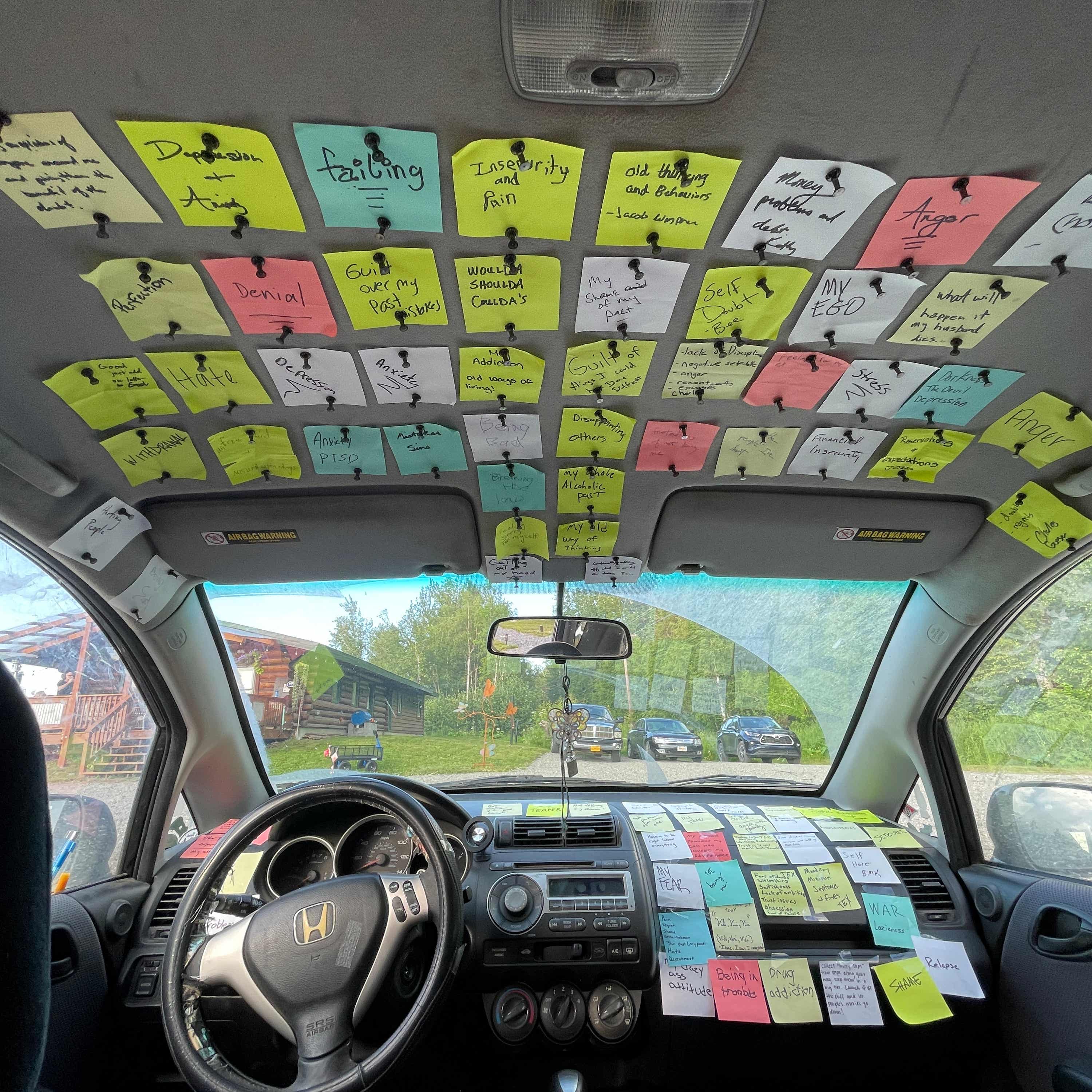
The speaker reflects on a powerful moment during a recovery meeting when a new person entered, experiencing deep emotional pain that was met with unwavering compassion and support. This encounter sparked a profound insight into balance—between individuality and interdependence, personal struggle and collective healing. The experience reinforced the idea that living well isn't about achieving goals or meeting moral standards, but about cultivating daily balance across mental, emotional, physical, and spiritual dimensions. Drawing from Native American teachings, the speaker describes core virtues—like love, respect, and honesty—as practical, lived principles rather than abstract ideals. True wisdom comes through active listening to others, especially experienced members, which fosters humility and connection. The speaker emphasizes that personal growth is rooted in service, reflection, and accountability, especially through relationships and shared stories. These connections create a sense of belonging and responsibility, reminding the speaker of their role in a larger community. Ultimately, the journey is not about personal achievement but about consistently choosing to live well—with others, with the world, and with a deeper sense of purpose and belonging. The experience left the speaker feeling whole, grounded, and connected to something greater than themselves.
Well, hello world. Not even sure why I'm doing this one today, other than had a minute in some moments last night where we had a brand new person come into the recovery program. Brand new never had been never dark in the doorway of one of these meetings before. And it was fantastic. The pain and the frustration, the despair, was palpable. Then the joy and caring and love and support that he received was incredible. This balance, like this scale, that's what it got me thinking about was balance. And then I had someone reach out to me afterwards and said to me, you're such a good person. And I don't know why that sometimes makes me uncomfortable. I appreciate it, but what I always think about when that is that it's regardless of good, bad and different, it's about trying to put good into the world or kind of living in a good way, right? That it's not some, like I'm not trying to get somewhere or get something. It's not some moral checklist. It's that I'm ongoing, I'm trying to practice this balance in how I live day to day in relation to myself, to others, to the world around me, to whatever it is that's bigger than me, that spiritual realm. And I left feeling whole, right, that I was part of something greater than me. You know, the fellowship feels like a family. We have our community and then it kind of ripples outward. And when I'm doing good and trying to live well, I am much more aware of this interdependence than of my own individuality. I've shared a bit about how I think wisdom, like shared wisdom, gaining wisdom, often comes to me from listening to others, especially those who have been around for a while. Because then I can appreciate their experience. It allows me to be a little bit more humble. And then just that act of listening to them, helps me, gives me a little piece of that wisdom. I talked, I did this whole little series on these 12 spiritual principles. There is a Native American, I think it's a chippewa, that they have the seven grandfather teachings. And they're so similar, there's so much overlap. Others are love, respect. They bravery, truth, honesty, humility, and wisdom. Right. And they talk about they are not some sort of abstract virtues, but they are practical guides for living. And that's what I'm trying to look for and trying to put out there. And so I have to try to align what I say, what's on this podcast with my actions. And that knowing that I have limits. And then trying to do the right thing for this greater collective good. That balance that I, I try to keep its mental balance, its emotional, its physical, its spiritual. And there are lots of things out of my control that can disrupt my balance, right. And so I have to make sure that I'm looking at all of those four corners, those legs of the chair and not just one, even if it feels like one is severely out of whack. There's probably something I could be doing for all of them. It's part of why I love stories. And I love when people share their own experience, strength, and hope. Because it gives me an insight that I would never be able to gain on my own. Not really. I mean, I can read lots of books. I could do all of those things, but this tradition that we have of sitting around these tables and really trying to actively listen and gain some additional understanding is amazing to me. It becomes much more like experiential. It's tangible. It's, it's not just information. And so when I'm there, I'm trying to be of service. When I'm there, I'm observing others around me. And when I'm there, these relationships that I've made and this new people that come in, they create additional accountability for me. And I need it because I know if I don't have it that left my own devices, I don't always choose to do the right thing. I know that about me. And it's okay. I mean, I'm, I'm, I'm fallible. I'm human. I'm, I'm not, I'm like everyone else. And so I really felt like a little lighter when I left last night. You know, that I'm trying to do the right thing because it's the right thing to do. I'm really trying to help others. And then I have that accountability. Somewhere along the line. And I hope this happens. And maybe this is, there's something that I think is can be foundational in a different way to live that maybe over time people in my, my own kids, I hope can learn is that I tried to have even tried to really install this in my coaching is, is, it's not so much about what am I achieving? But it's, how do I live well? How do I live well with other people? And how do I continue that over time? All of that that I'm thinking about today came from showing up at a meeting, being there for someone new. And then spending some time in a little bit of quiet reflection. I am so fortunate. Peace.
Podcast Summary
Key Points:
The speaker reflects on the profound emotional balance experienced when a new person joins a recovery meeting, highlighting the contrast between pain and the transformative power of love and support.
This experience led to a deeper understanding of living with purpose through balance—emotional, mental, physical, and spiritual—rather than pursuing external validation or moral checklist goals.
The speaker emphasizes that true wisdom comes from listening to others, especially long-term members, fostering humility and a sense of interdependence.
Drawing from Native American teachings, the speaker sees core virtues like love, respect, bravery, and honesty as practical, living principles rather than abstract ideals.
Authenticity in action is central—what is shared in the podcast must align with daily choices and a commitment to collective well-being.
The fellowship feels like a family, creating a ripple effect of support, accountability, and mutual growth that extends beyond the immediate group.
The speaker values personal stories and shared experiences as vital sources of insight, more powerful than isolated reading or theory.
Accountability and human fallibility are acknowledged as essential, reinforcing that living well is about consistent effort, not perfection.
Summary:
The speaker reflects on a powerful moment during a recovery meeting when a new person entered, experiencing deep emotional pain that was met with unwavering compassion and support. This encounter sparked a profound insight into balance—between individuality and interdependence, personal struggle and collective healing. The experience reinforced the idea that living well isn't about achieving goals or meeting moral standards, but about cultivating daily balance across mental, emotional, physical, and spiritual dimensions.
Drawing from Native American teachings, the speaker describes core virtues—like love, respect, and honesty—as practical, lived principles rather than abstract ideals. True wisdom comes through active listening to others, especially experienced members, which fosters humility and connection. The speaker emphasizes that personal growth is rooted in service, reflection, and accountability, especially through relationships and shared stories.
These connections create a sense of belonging and responsibility, reminding the speaker of their role in a larger community. Ultimately, the journey is not about personal achievement but about consistently choosing to live well—with others, with the world, and with a deeper sense of purpose and belonging. The experience left the speaker feeling whole, grounded, and connected to something greater than themselves.
FAQs
Balance refers to maintaining harmony in mental, emotional, physical, and spiritual aspects of life. It involves recognizing interdependence with others and the greater world, and actively working to keep all areas of life aligned and supported.
The speaker describes it as deeply moving, with palpable pain and despair initially, followed by overwhelming joy, care, and support from others. It creates a sense of belonging and connection to something larger than oneself.
The speaker feels uncomfortable because they view being good not as a checklist or achievement, but as an ongoing practice of living with balance and compassion, not for external validation or moral recognition.
The seven grandfather teachings include love, respect, bravery, truth, honesty, humility, and wisdom. These are presented as practical, living guidelines rather than abstract virtues for daily life.
Listening to experienced individuals helps the speaker gain humility, understand diverse perspectives, and absorb wisdom through real-life experiences, making their own learning more experiential and meaningful.
Accountability comes from relationships and shared experiences, especially with new people in recovery. It helps the speaker stay grounded, do the right thing, and recognize their own fallibility as a human being.
Chat with AI
Loading...
Pro features
Go deeper with this episode
Unlock creator-grade tools that turn any transcript into show notes and subtitle files.
 PodcastTranscript AI