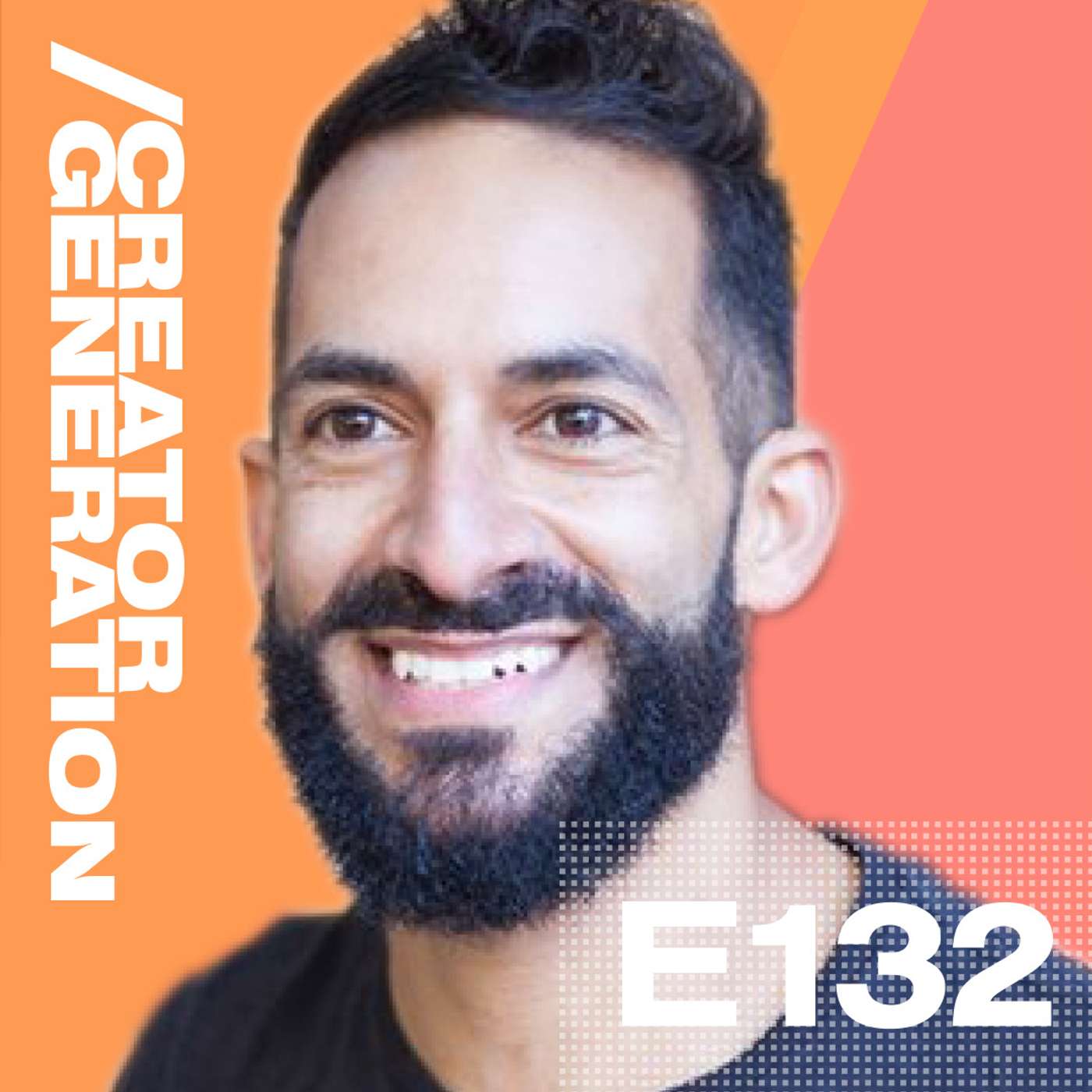
In this podcast episode, host Ant interviews Ruben Ashter, a top talent manager for digital creators. Ruben explains the distinct roles of managers and agents: managers serve as long-term career architects, strategizing across platforms and brand partnerships, while agents focus on transactional deals. He emphasizes that creators should seek representation that is selective, not overly eager to sign them, and capable of providing a clear strategic plan. Key red flags include representatives who are too busy to engage meaningfully, lack transparency about their client roster, or delegate work to inexperienced staff. Ruben highlights the importance of intellectual property in the creator economy, noting that managers often help navigate these complex rights. He advises creators to choose representation that understands their unique value and can help build sustainable, multifaceted careers beyond just content creation.
Hi I'm Ant and this is Created Generation. A generation of high. A thing that you should hear as a talent is the representation should be reluctant to sign you because they should be quite busy. So a flag could be if someone's really keen to sign you and is being very aggressive and you're not sold on them yet. That's tricky. And that can happen with a manager or an agent. Alright this week on the podcast I am flying solo and joined by my mate Ruben Ashter from Never Napping and Dark Matter Ventures. Ruben is one of the world's top talent managers for digital creators. He works with the likes of Molly Burke, the sorry girls, Amanda Rachel, Timothy Goodman, Liv Stone, a whole bunch of others and he's going to break down what makes a good agent or manager. What's the difference? How much should they charge? What should they be doing for you? All that? Come on right out yet. Alright let's get into it. Alright we're back with another episode of Created Generation. It's just me and Fred Rico couldn't be around but he misses out because we are hanging out with Ruben Ashter. Ruben is. Well he's the founder CEO, president and all the above for Never Napping that manages some of the best creator talent in the world. Heads up Dark Matter Ventures which is like you know what I'll shut up and let Ruben introduce what these two things are, who he is. Strap yourselves in. Ruben thank you for joining us. Thank you Matt. Yeah I'll try and say it quickly and we can go around the edges as we converse but basically the two things I do are I started a management company so I'm a talent manager essentially for digital stars and I've been doing that for about eight years and as you say I kind of do their management and I'm the lawyer for some of them because I'm an IP lawyer as well and kind of do their deals and their brand strategy and their PR and things like that and we'll kind of get into it I guess because there are so many examples you know and I'm sure we'll slide into them. I also work with some startups and companies like Deloitte and other big companies and startups in the creator space and the technology space IP music are things like that and I'm an IP lawyer. So the primary thing is Never Napping or a manager and then I also do this other stuff. So as we as we talk through I'm sure we'll find common themes. Let's pull that apart. So what's an IP lawyer doing managing talent that's a like how does that happen? Well I guess the better question why would you have anyone managing your wisdom than IP lawyer but it's kind of deals are everything I mean about Disney the news that broke yesterday night we're recording this on Monday that you know the CEO kind of was the person who ran Disney very successfully is coming back to take the reins because one of the reasons was that the person running the Disney now is one of the things was gotten a conflict with Scarlett Johansson over you know does Disney have responsibility to stars when they just stream something more heavily than when it's in at the box office and theaters because it affects the take home that Scarlett Johansson had the way he had wrestlers a woman as a star and also obviously everything that happened with some other projects as well but it often I think the world's changing in terms of its relationship to Old Hollywood, New Hollywood, platforms streaming. So IP in the actual property is just thinking about those rights so thinking about all the different parties you know in the case of Scarlett Johansson's vehicle you have Marvel you have Disney of different rights over movie theater companies her agency her talent agency you know her management all the different players and it's a constellation of issues so for better for worse IP law is always changing and complex. And then he's out at the heart of then like extrapolating that out to the digital creators like that's at the heart of like that's your philosophy then around everything that creators creating his IP. My philosophy is that there is this idea in society of the internet is there's still this narrative you still hear once in a while that the internet is cat videos or TikTok is just dancing videos or influencers are just selfies at the gym or the hotel but there is that aspect but the more interesting thing is thinking about all the movies that came out this year about Elvis and the Beatles and Bob Dylan these are multifaceted people and Bob Dylan really thought about how he presented himself very mindful of that right so is Elvis over the Beatles and you could argue that they were they were creators I mean I use the word creators I know you do too and the digital aspect of it they're interested in film and different mediums so you know for example one of the creators to mention a few of the creators who I manage and things are up to right now my creator Molly Burke who's doing a project with you now she also just keynoteed this amazing panel on beauty with Teen Vogue and she's blind and one of my other creators Tim Goodman he's a graffiti artist and he does murals and he does very tactile stuff and he during pandemic did a mural with a public school in Brooklyn with a Kevin Durant Foundation that's now become a Nike shoe which is about to draw if it's going to be Kevin Durant's shoe and things kind of go full circle so it's we say digital creators but really it's um tactility and augmented reality or the metaverse and all these things are the same with Andy Warhol with paint record covers you know times evolve and they come back and forth and arts ever changing so I think that's where the magic happens. Yeah cool well it's like I really want to because you know you mentioned some top talent there and you you know we could name drop like and we probably should name drop some of the other creators you work with um but like what you know what is it what does a manager do what should a manager be doing for a creator because like there's a lot of different offerings out there from managers agents and stuff will unpack that but what what should a manager do or what what's your philosophy of what a manager should be doing. So it's a great question and I think that to some extent some things are bespoke to certain talent so some people someone might be primarily interested in becoming a writer let's say a screenplay writer TV writer or something and they might want to write for other people someone might want to become a comedian and they use different platforms of medium some people want to do brand deals some people want to you know deliver a message for sustainability so to some extent people should craft a team around themselves so Miley Cyrus for instance works with her mother a fair bit um they're different kind of um and Jojo Siwa does as well as there's a mom and jurors and different types of relationships that are interesting uh and obviously Chris uh Jenner is an interesting example for the Kardashian Jenner plan as a mom and jur but I think that in general um managers usually have a smaller roster of people so let's say ten or under talent for manager agents often have 60 80 100 people they represent and they're more transactional so the managers are tend to be more long term they tend to stick with their talent for a long time and agents often um they you know it's it's it's a bigger a bigger pool and agencies represent a lot of talent they do more deals as they come up so movie agents um and music agents and other things with the digital space some people have lawyers that they give a percentage to some people have lawyers that they pay an hourly rate to some people have kind of a hybrid of a lawyer and a manager some agency is kind of help with contracts and I personally my philosophy going back to me is that the manager should sort of be an architect of your career for many years to come because things really change over three years you know three years ago TikTok was musically I mean obviously it's complicated but I primarily was lip syncing as a lip syncing app um we've seen how much Instagrams evolved how much YouTube's evolved YouTube now is going to be launching shorts as a real vehicle for monetization and things and that is going to really sway the industry probably in January we're talking in November now um and then things like Snapchat you know they have their moments they come they go and you know ups and downs Pinterest now is coming in more strongly we have everything going on a Twitter so a manager a good manager I think should see where things are going and really come up with help help creators come up with a plan for themselves for sustainable streams of revenue and for creative outlets and for their lives because mental health complicated revenues complicated artistic expressions complicated building teams is complicated so all those things are kind of under the management hat yeah cool now I like that like
like the architect of the career, both on and off like the content, like what you see the forward facing of the content output as well as everything else. I mean, and then an agent more transactional, here's a deal in out clip the ticket sort of thing. - Exactly, so if you thought about someone like Drake, let's say there could be an agent who works on appearances on TV shows or movies or things like that, or maybe plugging in a song into a movie or soundtrack. The manager's gonna think of a more elaborate, complicated deals like Drake's relationship with the Toronto Raptors, Drake's relationship with OVO records or OVO clothing. It's kind of more big picture thinking, what do we wanna do in the round of fashion? What's the relationship? What's the partnership is really gonna work? Do we wanna partner with the cannabis brand? Is that good for the image? And these sort of high level architecture questions? - And then like following on from all this, like there's a, like who needs a manager? I mean, I don't mean in that matter. Like when do you need representation? Because like, you know, we've been doing a lot of educational programs in North America and Canada. And like reaching out to like emerging creators and a lot of them have representation, mostly agents, but they have like a filter and I'm like, we're talking relatively small creators, like fewer than 50,000 subscribers on YouTube or even 10,000. Is there a time when a creator needs representation or like at a different level agent, manager, like how to, like what's your perspective on that? Do you do yourself out of a job? - It's a good question. I mean, as you can imagine, I would end, I mean, it's kind of a paradoxical answer in a way because I believe that most people don't need an agent in the sense of, and there's, again, there are agents, managers, lawyers and different things and you could compensate someone with an hourly rate if they're a lawyer, for example, versus a percentage. You know, some agents take their percentage and they mostly service a lot of inbound and then there's some people who are phenomenal on all those levels I know, some phenomenal lawyers and one of the things that you, one thing that you should hear as a talent is the representation should be reluctant to sign you because they should be quite busy. So a flag could be, if someone's really keen to sign you and is being very aggressive and you're not sold on them yet, that's tricky. And I'm not gonna happen with a manager or an agent, so I know stories about people who have signed with agents and over six months nothing happens, you know, not a single deal comes in. Now, the counter argument to that is sometimes it takes time to position people in the marketplace, get awareness that's kind of these are standard lines that are thrown around. I think that some people say it's the agency, some other people say it's more of the agent or the manager or the managing company. So part of the things is bandwidth, so you should really think about the bandwidth and the person you might sign with. And what kind of ideas, do their ideas make a lot of sense to you? Do they resonate? Is it the direction do they get you? I think as a talent, that would be the first thing I wanna really appreciate. One warning sign is a lot of representation will look over your shoulder because they're doing email as they talk to you, it's shocking. You wouldn't believe it, but it's so rampant. Other ones, they have really junior people working who don't really understand the industry. So a more senior and seasoned manager agent will say, "Yeah, I wanna sign you." And they just delegate your account to somebody more junior who just does the work and they kind of supervise it, but how much do they touch it? And another big thing is the management company or the agency, they could say we work with Nike, we work with Congress, we work with Adidas, we work with, you know, whomever. They could say whatever brand. They could say, "We've sound more on, Dior and Tiffany, "and do they work with them?" So who do they work with them? If they just, you know, if all that stuff's going to certain creator or band of creators within that thing, what are you gonna be exposed to? And then execution is huge. So how do they help you build yourself across platforms? So that's a really important thing to me. So for example, in March, I met someone who's, her name's Liv Stone and she was, she based as an upper limda friend, she'll answer her arms, you know, a really interesting looking and she has interesting digits and her arms are just super unique and she's a world champion of surfing and she's 19 and she's a firecracker and she's walking in a disabled fashion show. And she's very striking in one of my other creators, like, "Wow, this person's really amazing." She had 21,000 followers on Instagram. She didn't have a TikTok account, she didn't have a YouTube account. And I spoke to her family and I said, "Oh, TikTok seems weird, you know?" And then today, so we signed in the summer. And today she has about 500,000 TikTok followers, she has 200,000 on Instagram. And then she, I'm proud to say on YouTube because growth is complicated on YouTube. She's doubled her YouTube volume just this month from 16,000 to 33,000 subscribers on YouTube which is meaningful because then you really start to see a growth spread as you know from all your doings and she really understands the DNA, she's really thinking through, "Okay, my YouTube patron just be a filter for my TikToks. I shouldn't just be your purpose content, the fonts, the voice, the trends, how do I position things, think about collaboration?" So that's more the manager's territory. Agents are thinking about transactional monetary things. So for them, it would be great if you really boost your numbers but they're interested in the brand deal, you know, the collaboration, the insertion of a paid promotion. Maybe a speaking gig, maybe a book deal, maybe a movie. But as we know, I was speaking to someone today who's high up in the industry. And there's a reason I was suggesting that 90% of the money goes to 1% in digital world versus music where it's 73%. There are these different numbers thrown around but I really think there's a constellation of opportunity, power, money that's going to a very limited band of people and thinking through how you should position yourself as a creator is a complicated task 'cause everyone says, "Oh, I'd love to go to like, that really cool hotel that's a four seasons with these bungalows and just go there and get paid and maybe first class Eric Fair and I would do a thing." And it wouldn't have be fun. It's like, sure, I mean, it's everyone wants to do that, you know? And what's your differentiator? So helping them make their differentiator. - Hey, just a quick interruption. We have the creative generation discord community. Join your fellow creators from all over the world. We are here to help you grow, thrive, succeed, help each other be accountable and get it done. So hit the link, join us in the discord. I look forward to seeing you there. - So what, like you're talking about some, you know, unprompted, which is sort of prompted, but like red flags and like selecting agents managers and things like that. What sort of questions should, like, how do they, like, you know, other than have you a really fine tune bullshit radar turned on? Like, what, you know, like, what sort of questions or things should, should a creator be looking for then to know if it's like, other than some of the things rather than be flagged like. - And for sure, for sure. So number one, like I said, the person should want to spend time with you without rushing you off. So there's one time where one of my creators, I should want to kind of be general here because I don't want anything, anyone to be able to reverse engineer to anything that I have a particular story I'm telling. But we were speaking to potential agents because we were like, oh, let's explore the idea of combining a certain offering we do with agents to also complement my offerings as a manager. Which by the way right now, I'm with one of my talent, we're doing that with an agency on the speaking front and on the book deal front, the podcast front. So certain select things and kind of seeing how that goes on those particular verticals. And it's an experiment and we're seeing how it goes. A different big agency, we got a TV deal offer for one of my talent. And this agency supposedly really wanted to work with us and I had red line meaning sort of marked up to the agreement. So it was a TV show, but there can be really, really terrible clauses in any kind of contract. And there's no standard, y'all think you're about a standard contract, there's no such thing. And things are usually unfavorable to one side. So I'd marked it up to change certain things, to write notes. And the agent who supposedly really wanted to work with us was like, really lectured us on the phone. My talent and me about how they don't spend time if they don't sign someone.
and we shouldn't have asked and done it up. And they proceeded to say, I agree with all the notes you made. And I said, well, do you have any additions or changes? No, they're all great. You hit everything. And it's like, why would we want to work with you if you're not welcoming and hospitable in generous with your time? Because as you and I know in this industry, time is paramount. It's very precious. Connections are very precious and few and far between. And then the connectivity between those two things is really rare. Have you finding good meeting, good partners, good conversations of lead to action? It's a magic thing. It's timing and budgets and whatever one's looking for. So flags for me would include the person being too busy to talk to you, but also anxious to sign you. So it's fine if they say they're busy and they say, why don't we have lunch? I'm going to come to you where you live in a month. Can I take you out for lunch to the nicest restaurant? And just talk about your channels and what you're up to and your stuff. That's a great sign. If somebody's like, you need to let me know by Friday and it's inconsiderate and you start gaslighting you, don't work with them. If someone has either their roster isn't displayed or you can't get a feel for who they work with, I think that's a weird sign. Some good places don't show on their site, but they should readily want to tell you about who they work with. If you can't figure out how many people work there or who will be working with you to your satisfaction, that's a flag. Sometimes people tell me the name dropping is a flag. I don't think so personally. I think it's the right names and how what the association is if they're just telling you stories about an a-lister and a party and something. It's the meaning of it. But if they say, okay, for your career trajectory, I see these points of interest. Then a plan, I would really want to hear a plan. A plan with time, a plan of platforms. I'd want to see that being new, my stuff, if I were a creator, that they'd watched it and like, okay, it seems like you're making four types of content. A is really strong. C doesn't seem to be hitting what's talk about B&D. If they just say you should do collaborations, it'll be really good. You at Netflix show, anyone can say that. And taking your time and speaking to multiple people, I don't think it's a bad idea. And then think about the timing. It's like, do I want to do it now? Do I want to do it later? I don't think it's a good, sometimes people bring up a trial period. I don't think in those, because in those, let's say it's three months or six months, everyone's unguarded. It's sort of everyone's unguarded. So it might work for some people. I personally don't like it, because I think it takes time to build and you're trying to see from day one. So I have short termination clauses and we can all part ways if it's not working out. And so if people don't let you out in a short termination clause, that's also bad, I think, if they're trying to keep you hostage in a contract. And they should be really open talking about the contract as well. - Yeah, cool. And I guess, you know, that's something we see a lot is like one, people asking, it feels like I'm locked in forever. That's never good for any contract, whether it's with your manager or agent or brand deal or a collaboration. - Yes. - And then in the age old question, like what's standard, like how much should a creator agreement, what's a creator expecting to give up for an agent and a manager? Like, yeah. - I can answer that because the first time I was tasked with thinking about this because I was a lawyer for a big YouTuber before I managed anyone. And I tried to do internet reading and it's very hard to get a straight answer on this at a cross-aboard. And so I'll say kind of anecdotally and in terms of what I see across the industry, lawyers either charge an hourly rate and that hourly rate for a good lawyer is depending on where you live, of course, there could be different things. But in a city like New York City, Los Angeles, a world-class city. So let's say junior lawyers, it would be very unlikely they would charge less than $200 an hour US to $200 US dollars. Because it's just, there's legal insurance and office space and software and law society fees. It's an expensive business. I would say that lawyers can charge up to around $600. If you're in some crazy dispute, really like you against something really bad, I'd lower my charge $800 an hour. But generally in the creator's space, between, if you're a junior creator, it was nice not the biggest deal in the world. It's not life or death. To $250 maybe dollars an hour. To $400 an hour, let's say for a good mid lawyer. And if a partner or something had to work on it, it was really complicated. It really had to do with taxes or employment or a lawsuit, I think they're my worth investing. Otherwise lawyers do a thing where they take 5% of your gross revenue. And that's standard in YouTube world. It's standard in music. It's standard in a few other industries. The idea is that they're available to you all the time and they'll work on everything. Reality is, as you can imagine, bandwidth, ROI, return on investment, how big you are. So in music, for example, the really big bands make a lot of money if they have your TV commercial or a stadium tour or a sink. Whereas an emerging artist doesn't. And the idea is that they should both get the same treatment. They don't often. Some lawyers are amazing. Agents, it's fairly standard. It's 10% of everything. Managers really depend and they fluctuate between 10. This will sound like a wide range. 10% and 30%. The reason that it fluctuates so much is that different people have different roster types, different skills, different connections, and they offer different services. So some agencies don't do the legal so much. Some managers help with different things. Some of them do invoicing, some don't. Some help plan tours or do different things or merge. Some don't. Depends what their team is like, what they're staffing is like, what they're offering is like. So one of the things people and good people to do is to think about their representation across the board and if they're servicing what they need. So some people have a manager and agent and a lawyer, some famous YouTubers, some famous YouTubers only have one of the three or two of the three. And everyone has strong opinions about it. And some people bounce between agencies but stick to their manager. So a lot of YouTubers have had the same manager for a long time. And I think that's also a question you could ask, is how long have you been with your representation? So I just don't want to say anything about any creator or situation or relationship because it's complicated because different people do business differently. But long story short, if someone's going to charge a high percentage, then I would ask these questions. I would be like, can I call you? So if something comes up, who's the one helping me? Is it you? Is there a different agent or manager? How much-- and not just weakly meetings, but how's it going to work? How does communication work? Some agencies completely remove the talent from email threads and talent wants to be on. Other ones do communication. So finding the right tailored sort of system for you, I think, as a creator. Is that helpful, though? Yeah, yeah. So I cover it. The assumption would be there also if an agent or manager, a manager is taking more, you expect more. So if it's-- and then you can suss out that expectation. So if someone's taking 10% as a manager, then you find out what those expectations are in your line. Then great, if someone's taking 30%, you should expect quite rightly to get more from that manager at a high level. And if you don't feel that you're going to get that, yeah. Also expenses. Thinking about expenses as well. So some people still take the Hollywood model, they charge fees. So they'll be like, I'm going to set by Southwest for you. So then they charge back the flight, the hotel, their expenses, their transportation, to the client, which I'm not a fan of personally. And some people do different ways of double dipping, they co-own ventures with their people or things without the client necessarily understanding. That happens in comedy and acting and management. And there's also business manager in Hollywood and in YouTube, which is they take 5% and they kind of help you with all your purchases, like your house, your car. And they take 5% of all your money, but they solve stuff for you. And that's very. standard and Hollywood as well. So some people end up giving away like close to 50% 40, 30, 40, 50% of their money. And the business manager can really like sign for you. Agents also have the money funnel through them. So it's just really, really important to like understand what you're signing on to. And I think that's where you asked me earlier, who needs one and how does it work? It's understanding where you are in your career directory and how you wanted to go. How you want your life to run. So what it like, you know, it's a lot of these services like offers and services are real at a full-time professional, quite advanced top tier talent. Right. Like what about, you know, creators that are full-time, they're doing all right, they're making money, they're making money, they've got, you know, they've got it all sorted. How do they know when it's time or if it's time to get represented? I would think about how additive it is to your business. So if the sum total is, you'll be slightly more efficient with representation. And there isn't really going to be like a leap. They might not be worth it. If that representation is going to be doing answering your emails and doing your invoicing and doing a lot of stuff that lifts stuff off your plate. So it's also asking about your own team. You do have an executive assistant, part-time full-time, who helps you a stuff? What are your pain points for you? Some people like to do invoices and to do less. Some people hate them. Some people are good with equipment and borrowing it or renting it or thinking about how to store it, insurance, their space, looking at their YouTube analytics or adsense and tax optimizations. Some people are terrible at it. And I've seen it all. So I think people sometimes surprise you with what they're good at what they like. They often aren't reflective about that. So if you can understand the pain points you're trying to alleviate and you say, "Wow, this will solve four pain points for me." And I could see myself really growing. I think my rule of thumb is you should see if you think it will double your revenue and lessen your workload. That's kind of the golden metric, I think, over a year, let's say. So if you're a creator, let's say you're a comedian and you have, "Let's make up a person." So they do comedy. They were doing it on Instagram. I'm just making this up. This ends up being the same as someone's career. I'm completely making it up. That's 62,000 Instagram followers. They got written up in the daily mail or whatever publication, God Verification, Jack Mark, did a collab with someone else. Something got duetted. Did something help in John? So I real growth to 110,000 on Instagram. TikTok account does really well. They have 300,000 on TikTok and there are 50,000 on YouTube. So decent numbers, 50,000 on YouTube, 110 or whatever we said on Instagram, 500, I forgot what we said about TikTok. Understanding monetization is going to be complicated because adsense on YouTube is not going to probably be so strong. They're not going to be getting consistent advertising money from YouTube. Brand deals will be potentially a little bit hard to do if they're comedies. Let's say a bit racey here, thinking about the right brand alignments and they actually sell products. Because if they're funny, it could be that they sell well. It could be that they don't. So that creator should ask themselves, "What are my goals? Do I want to do performance as stage performances and the tour and book out a sell out a tour, a comedy tour?" Be careful about saying, "I want an Netflix special because every comedian kind of says that." Then which platforms, however I want to grow and making me making a podcast, for example, with other comedians. What is that path? Then I'm the manager or agent or whomever, perspective ones, and saying, "How are you going to help me in this round?" Here are the things I'm interested. What do you think? Then hearing how solid do their ideas sound, what the action steps would be? And asking them to about comedies. So if you're a comedian, the person you're talking to understand comedy, do they know your world? Do they, do you feel like they get it? Then asking other comedian friends who are successful, not successful, or whatever, like, have you ever checked any manager that do you know or agents? Do you know any going, maybe if you do things at a comedy club asking the bookers or different people there? Doing your research, I think, is huge. Remembering that, obviously, press online is kind of puff feces often. So it's like, you might read, "This is the best manager in Australia, and it might just be this kind of show thing." That's a good hypothetical because that's like a smaller, relatively smaller creator, like, doing well, but they're not like the mega star. Does everyone want to work with them? Like, does every agent or manager want to work with talent at that size? Like, how do they? That's a good question. So I think in those instances, I had lunch with someone today, and it was interesting because this person really cares about creators and their culture and kind of things like that. Some people only care, primarily care about money. Some people are in a niche. So I think some agents or managers, well, kind of, yeah, yeah, I wouldn't hurt me to have a comedian on my roster or something. It's kind of free money, whatever. Yeah, come on. They just want to want to sign you. Some might really be interested in talking to me, somebody to see something about the person. But I think you as the talent need to define, figure out what it is about you that the representation is drawn to, and asking questions in that regard. So I'll give you an example. Like, let's say, there are some really funny people who have talent and you're not exactly sure well that where they will land. So Kyle Mooney, for example, from SNL, he's kind of long-haired. He's a pioneer of YouTube, actually. So if you look up his YouTube channel called Kyle, 12 years ago, he was making really groundbreaking comedic stuff on YouTube. Like, he was a real OG on YouTube. So if people like Kyle, it probably would have been unclear to representation whether he was going to be a face of comedy, whether he was going to be directing or writing or what he was, but he had a certain something. And once somebody gets on Saturday Night Live, which you got onto, you're going to get a lot more calls. So if you have an appearance, there are a few TikTok comedians who, for example, have been blowing up now. They're in the zeitgeist. So in the beginning, they had trouble paying rent. But as soon as they hit, and they're on an HBO show, let's say, or something, or a showtime show or whatever it is, they're super recognized, their brand equity goes up a lot. So it could be a good sign if somebody reaches out to you early. Some agencies and some management companies just kind of throw a net. They have software often, they just tell them about rising creators. And they just say, "Hey, Ann." Wow, sorry, you're podcast. You have such great questions. I love your whole energy. You know, it just, I'd love to chat with you about podcasts are really taking off and I have so many great ideas for you. And we'd love to chat. And it's just like a hyper seem, it's a seemingly personalized email. And you'd laugh when you see these. I just received an email from someone and it said, "I think they left their coding was a bit off." So it's said, "Have you been to such and such restaurants based on my search location? It's near you." I heard it's great. And it's this weird thing of the code. They just, they screwed up the way that their email software is personalizing. So that was pretty hilarious. But I see with creators all the time, just somebody will say, "You play the guitar." Wow, it's so incredible. And I have to tell you, I never say this. I'm so moved by your guitar playing. And I really think that the way that you play the guitar and creators, they don't fall for it. It's flattering. You're not being reached out to a lot. And when you go to the website, it looks really legitimate. And you get written to by the head of the agency. And it says, "We represent all these big people." And you go to the web page and it says, "We work with and you know, huge friends." And I will say, "We work with Samsung and we work with the DDoS." And we're with the Super Bowl. And you know, here's our person. It's hard to know. So that's when you're going back to your system. You say, "Who will work with me? Do they get me?" You know, who else do they work with? Really asking the questions. What's the plan for my career? Who are other people in my category you like? And that last piece that you said, is it going to make a meaningful difference both in my revenue and my time? Like, I think that's also like, you know, yeah. I get the feeling a lot of people fall into representation early.
with not questionable operators, and sometimes there are questionable operators with questionable intent. And sometimes there are people with good intent who just don't have the bandwidth to be able to do what they truly intend to do. But either way, it ends up with a bad experience for the creator, and I think sometimes a lot of creators end up in those relationships primarily because, like it feels like they've been validated. They get validation because that's a milestone. You get X number of subscribers, you get X number of brand deals that've come through and you've dealt with them correctly. - Yeah. - And then someone wants to represent you. It's validation from the machine, or from the industry. - Exactly. - So I think that's one to be careful of. - Yes, that's exactly right. I think you nailed it. And to add to that by way of analogy, record labels. So when a musician is like, I'm signed to blah. So reality, a lot of musicians will say, don't rush to sign with a label or an imprint. But it sounds you think it's validation and you've made it. And by way of comparison models too often, they just sign something and it says that the agency owns their rights forever. And it's like, actually you could carve out things. You could say you have my rights to runways, but not billboards or different materials, different ephemeral things, but also like digital, like into my own digital brand deals. And if people are willing to engage with you and have those conversations, that's good. If people are really like, set in their ways and they say, no, I do it this way for these reasons and it's convincing, that's also good. But taking your time and not feeling, and then as you say, people do end up feeling trapped often because they got reached out to you right, because they were starting to dig off. It feels odd to them. The people are often scary and threatening in the hear stories of their friends. And then there isn't stuff about it on the internet because people don't want to disparage other people. So, or they're scared of the legal threat or something. So there are a couple of places that are notorious and have tons and tons and tons of clients. And they just bombard people with emails. They bring on more people. They keep using their big names to say, I'm legit because I have these big names. And then they just bring on hordes and hordes and hordes. And they don't have any screw pulls. They have thousands and thousands of clients. And we sometimes hear about it in the press. It's been there a couple of stories that broke over the past two years. But it's not talked about, right? - No, I think it should be, but yeah. And then I guess like, what's interesting is, a lot of this feels like traditional media world. Stuff coming onto digital media world. Isn't the online space meant to be like, all radical and different? And a whole bunch of creators just breaking all the rules and having no gatekeepers. Like, should it be different? Or is it like, this is just, this is how it should be? - I think that's a history of media. Everything always, you know, the rights of spring, Stravinsky, shocked people. I just went to a show in New York talking about an artist, you know, from 100 years ago, we couldn't sell this work. I think it was too bold in Paris and Germany. So we have these moments, you know, both those examples are 100 years old. But in more recent times, Elvis only broke on Black Radio. You know, the Beatles, it caused us scandal. The doors got, you know, on the Sullivan show, saying, couldn't get higher, cause us scandal. So it's oftentimes these moments. And then you evolve, right? So the Beatles stopped playing concerts because the audience was too loud, right? And you have those kinds of moments throughout time. So Blondie had Basquiat and her, you know, music video. And you kind of, these moments in Warhol, New Basquiat, and Blondie and these different connectivities in New York in a certain time. Today, I mean, one of the things happening is we have this digital forum, like the Roman forum, in a sense of your meeting people you haven't seen physically. And it's causing a disjuncture, but one thing that's interesting is you still have you have Jimmy Fallon, right? You host different people with Jimmy Kimmel. They have people, sometimes the world and digital world don't really get along. Like, you know, if you see Ninja kind of flossing and the ball drop and Times Square kind of funny internet moments, like that people don't understand. Today, you have people like Joe Rogan being like, "Who's Andrew Tate?" Like, why, you know, my kids and how did he get popular? And how do people share him? So you have Joe Rogan talking to Mr. Beast about TikTok and Mr. Beast will be like, "Oh, it's really interesting people post my stuff." And he's like, "Oh, people do that with my stuff on TikTok too." So authorship and fandom, how you post, how you related the platforms is evolving so much. And we had newsletters were huge a few years ago, you know, the skim and wire cutter was, you know, it's just funny how things evolve and change. And all those things have a home on the digital platform. So YouTube has people review phones and TVs and do different things, but also they learn skills. So I mean, I just went to this event and there was this amazing builder who's doing electric vehicles and that took Tuk Space. And they're green Tuk Tuk's. And he's gonna maybe change the world. And he learned a lot of his knowledge is from India, from YouTube, you know, he learned. And I hear this all the time, you know, coding and really complex math, really all these skills. There's that side, there's silly sides, there are dark sides, there are funny sides. But as you say about the intersectionality with Hollywood, there's a question of like, is that where you discover talent or do concerts mean anything? Where you discover funny people. There are also false signals. So a lot of people are kind of like, "Oh, this is blowing up. I should sign this person or whatever." And I think as a smart manager agent, you also wanna think about the trajectory of the career and the longevity. Where will this person be in three, four, five, 10, 20 years? How tenacious are they outcharming? How magical are they? - Holy tangible things. (laughing) And that's a question. There are intangibles, but you kind of see, I mean, that's where it's fun to think about these things. So I don't wanna, you know, I don't wanna sound negative about any types of creators, but if you think about the waves of like, the most popular TikTokers and you look up lists, let's say, from a year ago, two years ago and see where they are now and think about, "Okay, could I have seen that coming?" But the platform also changed. The types of content that was popular. - Yeah, fascinating. We're running out of time, but we're sort of, it's a relatively good segue. So where's the, we're looking ahead then the future. - Right, where do you see the future? Is it gonna stay like this? Is it gonna change? What's the short medium? Maybe let's go long term, what's the long term future for this? - I mean, so platforms will keep evolving. And so for example, today we're talking about Shopify and Amazon and there also startups like Forthwall and there are different players in the creator economy space, so they're also in the large space. So if you think about Amazon, Amazon's moving into healthcare and with Facebook, this is not insider information or anything. I'm just saying what people are talking about. Some people think that Facebook is gonna create a super app. So it's gonna be Facebook, Instagram and WhatsApp and it's gonna be one place where you can shop, watch videos, communicate with friends. You know, by your plane tickets, Facebook, the hotel and you do it all within the meta, which is the current company ecosystem. And then companies like Google have been more firewalled. Like it's been more like Google separate from YouTube. And they have very strict rules. Companies like TikTok are undergoing transformation. People are always asking questions. Companies like Snapchat, other things that are surprisingly popular. Pinterest is also a company that will start moving into video. We don't know what's happening with Twitter. Some people predict that Elon's plans for Twitter could be like the crypto place, right? That all the crypto conversation forget Reddit will happen there. And essentially my thought is, we're gonna keep seeing microchanges in the industry. So for example, with sports, just recently we changed, the rules were changed for sponsorships of your name and likeness before your colleges could control them. And now controls been seated to athletes. So much like in the other things you mentioned, there'll be like shady actors on screwpeless ones who will move into that space. There'll be like a period of a lot of uncertainty. There'll be articles that will say, this soccer player who wasn't even a starter on their high school team just made $100,000 to sell a water bottle. There'll be these silly stories. And the lessons people draw will be complicated. And as far as representation, the representation, some people say it's only as good as talent. Some people say representation is strong. I think basically, represent what have to change the playbook because, you know,
time and the old days you know you could say the movie studios ran talent so they would have a long contract with you you'd be signed a MGM or whichever you know studio you're with and then they could say the power dynamics change and some people think that as monopolies and things strengthen so companies for example paramount CBS via comm is a big company we have VidCon which we love and they have CBS is the biggest TV network you know and then you have other players like NBC or starting you know they have peacock and they have different things sometimes things like Quibi fall apart right which can be an Netflix competitor so good representation is gonna understand where those things are undulating and find things some agents are really good at by the way finding like really lucrative big deals within things like Quibi like I just got you like seven figures to make this show you know there's crazy things will happen once in a while but generally it's gonna be the person who's a lot and steady wins a race where it's gonna be the architect that you want for your career as a creator so you're gonna want to hear someone not just say hey you're an oscarillion soccer player I'll meet you the next you know David Beckham and you'll be like at the product shows like because no what Beck for example plays soccer play soccer and you know you see him at the Louis Vuitton show that a lot of work went into doing that for no back and the chamberland was also doing things creating her voice so I think it's really to constellation of like the creator finding themselves and then the representation really being able to like amplify that maximize it and then get opportunities with everyone being sober and mindful and consistent so that that's the real magic like that's why I own a lot of TV shows and movies you see it's like the agent kind of like in their car and like hey how you doing and the person's shocked to hear from them you know that show so that that's a funny thing and then some other times you might have a really junior person without them any connections and they're just getting you to put like a 20% off sale for like a fast fashion company in your bio and you know things that are happening now or the FTC and FCC which are regulators in America they're going to really come down I think on those kinds of undeclared sponsorships I think creators will no one knows whether their own products are really working or not there's like you hear stories about things that are working and not working and there's a lot of fatigue and mental health issues as well with creators like there's so many platforms so much demand to do it so I think good representation also is going to be the right kind of motivation for their talent like you need to be kind of a coach needs support system and looking out for those push and pull because if they're just pushing you to do deals all day long that's really dangerous yeah no that's that's a great crystal ball and also great inside on that and probably the best place to leave it. Riven thanks so much for hanging out made I really appreciate it we've got another episode coming up with you for sure around the other future stuff but thanks for hanging out I really appreciate it. Thanks for having me thanks for all the great work you do an encouraging creators and ecosystem and supporting Google and educating and informing I think this is key and also being motivators so really appreciate all the work you're doing and it was fun thanks buddy.
Podcast Summary
Key Points:
A good manager acts as a long-term career architect, focusing on strategy, brand building, and sustainable revenue across platforms, while an agent is more transactional, handling specific deals.
Creators should be cautious when selecting representation; red flags include an overly eager agent/manager, lack of transparency about their roster, and representatives who are distracted or delegate work to inexperienced juniors.
Effective representation should be selective and busy, offer a clear strategic plan, and genuinely invest time in understanding the creator's goals and differentiators.
The digital creator economy involves complex intellectual property (IP) considerations, and a manager's role often includes navigating these rights and exploring diverse opportunities beyond traditional content.
Summary:
In this podcast episode, host Ant interviews Ruben Ashter, a top talent manager for digital creators. Ruben explains the distinct roles of managers and agents: managers serve as long-term career architects, strategizing across platforms and brand partnerships, while agents focus on transactional deals. He emphasizes that creators should seek representation that is selective, not overly eager to sign them, and capable of providing a clear strategic plan.
Key red flags include representatives who are too busy to engage meaningfully, lack transparency about their client roster, or delegate work to inexperienced staff. Ruben highlights the importance of intellectual property in the creator economy, noting that managers often help navigate these complex rights. He advises creators to choose representation that understands their unique value and can help build sustainable, multifaceted careers beyond just content creation.
FAQs
If a manager or agent is overly aggressive and eager to sign you without taking time to understand your goals, it may indicate they are not genuinely invested in your career. A good representative should be selective and busy, not pushy.
A manager acts as a long-term architect of your career, focusing on strategy, growth, and sustainability across platforms. An agent is more transactional, handling specific deals like brand partnerships, appearances, or contracts.
Consider representation when you need strategic guidance for sustainable growth, such as expanding across platforms or securing complex deals. It's less about follower count and more about having clear goals that require professional support.
Look for someone who spends quality time understanding your vision, has a proven track record with relevant clients, and offers a clear plan for your career. They should prioritize your long-term success over quick transactions.
Ask about their current roster, success stories, and who will directly handle your account. Be wary if they are vague about their team or clients, or if they delegate you to junior staff without oversight.
An IP lawyer helps protect and manage intellectual property rights, which are central to a creator's work. They navigate contracts, brand deals, and legal issues to ensure creators retain control and value from their content.
Chat with AI
Loading...
Pro features
Go deeper with this episode
Unlock creator-grade tools that turn any transcript into show notes and subtitle files.
 PodcastTranscript AI