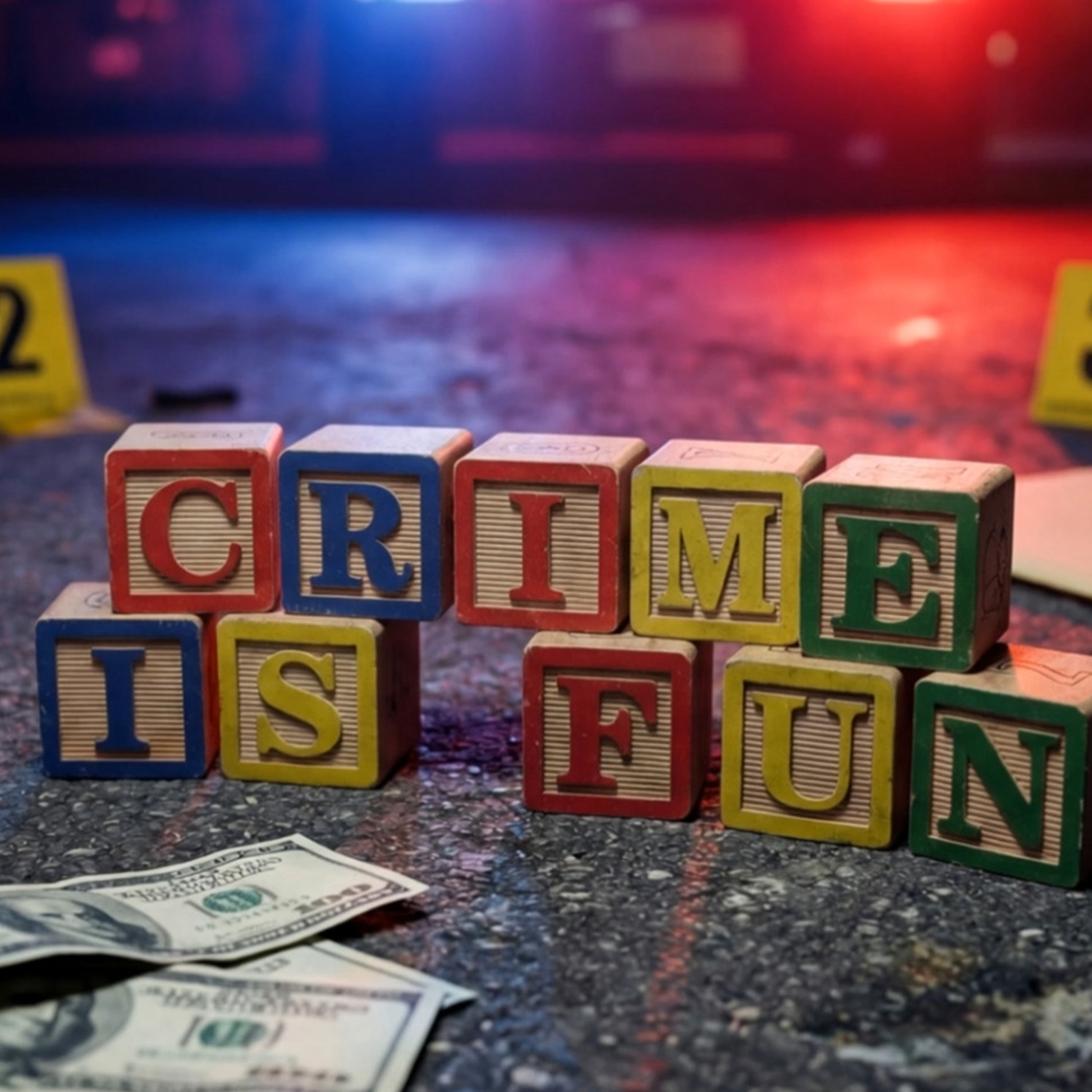
The Iowa State Fair, known for its wholesome traditions like funnel cakes, became the site of a chilling 1996 double murder. Bobby and Marilyn Bluer, a family-run funnel cake business, were killed by Jeremy Sneed, a man with a criminal record, who was manipulated by Rodney Borshasky into believing the couple were worth half a million dollars due to fabricated stories of abuse. Rodney, who had financial grievances and resentment toward the Bluer family, orchestrated the plan, offering Jeremy $30,000 for the murders. Jeremy, initially convinced, later questioned the truth of the abuse claims and the value of the business. After the killings, the case unfolded through a complex web of deception and family ties, culminating in the conviction of Rodney on two counts of first-degree murder and Jamie, the older daughter, who was found guilty of aiding the plot and sentenced to life without parole. Despite the family's trauma, their legacy endured: Jada, the youngest daughter, took over the family business, eventually launching a new funnel cake burger and returning to the fair in 2018 to honor her parents. The story illustrates how personal manipulation, false narratives, and systemic failures can lead to tragedy, while also highlighting resilience and the enduring power of family. It serves as a cautionary tale about the dangers of unchecked manipulation, the limits of trust, and the importance of separating personal ambition from human empathy. The narrative also draws broader parallels to theme parks like Disneyland, where policies prioritizing "magic" over immediate medical response have been criticized for contributing to preventable deaths, such as in the 1981 stabbing of Mel Yorba. Ultimately, the case underscores a profound truth: while systems can be designed for fun and safety, they cannot eliminate human cruelty or the consequences of moral compromise.
It's all fun and games until it's no longer fun, are a game. The Iowa State Fair is one of the oldest and most iconic in America. It's about as wholesome as you can get. Kids are on parents' shoulders, rodeos' shows and concerts, outdoors in the dead of summer. The smell of any food imaginable, deep-fried, floats through the air. Did you know they even fry Coca-Cola? I don't know how that works. This is the kind of wholesome fun that went on for 140 years without seeing one person murdered. Totally clean record. Then on August 12th, 1996, that clean record was destroyed. I'm talking about the 1996 double murder of Bobby and Marilyn Bluer, also known as The Funnel Cake Murders. I can smell them right now. The funnel cakes. Not the bodies. Speaking of smells, the first time I got sent to in-school suspension, it was because I told my friend Andrew, who I hope you're out of prison now, that his mother is a carny. And when the teacher asked me what a carny is, meaning a carnival worker, I said, "Well, it's a person in small hands who smells like cabbage." Anyways, welcome back to Crime is Fun, my new podcast where I'm taking a theme and giving you digestible cases and stories relating to crime. I'm your host Donut, and I've spent the past decade telling true crime stories. I just figured it'd be fun to make a podcast like this in a listening format. You can hear about people suing bar Pokemon-committing war crimes while you're in the gym taking a walk. Our screaming slurs in traffic. Today we're going to talk about the Iowa State Fair, specifically funnel cakes. Funnel cake murders. Funnel cake murders. You guys remember that show with thousand ways to die? I don't know if it's 100% true or not, or if anything on that show was true for that matter. I specifically remember one where there was a funnel cake stand at a carnival. A man was assaulting his younger female co-worker, she turned around and threw batter in his face, and he cartoonishly fell into the deep fryer head first. What a terrible way to go. Before we get into the funnel cake murders, let me tell you about something that happened earlier this January. Let's go down the donut hole. A guy actually took himself out in an olive garden earlier this year using a deep fryer. In Williamsport, Pennsylvania at an olive garden, a worker there, in front of, terrified co-workers and several patrons, dunked his head into a deep fryer after removing all of his clothes. Moving on, before we get into the funnel cake murder itself, let's talk for a second about who got murdered because it sets the stage for this whole thing. Good God, do you know what else is criminal? My air conditioning is out right now, so if you're watching this on YouTube and you see me sweating, I'm trying to get through this. Building you guys about how fun crime is is very important, which by the way, don't go out and commit crime, but crime is fun to listen to, is it not? Back to the funnel cake murders, Bobby Bluer was a salesman and a pretty damn good one according to people who knew him. In the late 1960s, he was working for a recruiting company in Missouri when he met his wife, Marilyn. Our buddy Bobby discovered funnel cakes on a trip to Branson City, Missouri with his wife and the rest was history. Both literally and unfortunately in the end. This may not be the best desserts you can get at a theme park or fair now, what with all the fried Oreos and fried ranch balls dipped in more ranch and giant spicy pickles or whatever, but in the late 1960s, they were a commodity. They weren't even really a staple yet because they were new to the scene. What I'm trying to say is that our guy Bobby and his wife Marilyn were pioneers, if you will. He had a vision and that vision was more funnel cakes. So he does what any reasonable American with a dream and a wife willing to go along with it does. He builds a trailer, loads his girl in it and hits the road. Festival to festival, fair to fair, selling funnel cakes under the name Florey's Funnel Cakes. How fun would that be to take the love of your life and just travel around the country making people happy with funnel cakes? His idea works great, not only does it work, it works so well before long there are two trailers for these delicious treats. Three kids come into the picture for Bobby and Marilyn and they raise them right into the family business. When they're old enough to help their oldest daughter, Jamie joins them, then Jada and then their son Bo. Well, started as one guy's weird little snack food obsession has become a full family affair. Get it? Affair. Ah, okay. Myself. A few years into the game, the Iowa State Fair became one of the anchors of the bluer family's annual circuit. Every summer they load up the trailers, hit the road and work the season. It was not a glamorous life by any stretch. There were long days and hot weather and sleeping in a converted charter bus on fairgrounds campgrounds, but it was theirs and they built it from nothing. By the time 1996 rolls around, they'd been in this game for 20 years. Eventually, the bluer kids grow up and the oldest daughter, Jamie, marries a guy named Rodney Borsh Kashki. Borsh Kashki. Borsh Kashki. Borsh, we're gonna go Borsh. Oh Rodney, every family has a Rodney, don't they? Except their Rodney might be named something else. And instead of coming to your grandmother's funeral sober, he butchugs wild turkey mixed with vanilla extract and shows up in Cookie Monster Bajama pants. He comes cloaked in red flags, but you put blinders on because you want to see the best in people, especially family. Rodney and Jamie popped out a couple of kids and Rodney helped around the family funnel cake business from time to time while Jamie was in nursing school. They lived in a modest trailer on the bluer's property near Granby, Missouri, which, if you're keeping score at home, means Rodney was living in his in-and-laws, working at his in-and-laws business, and by '96 was in serious financial trouble. See where this might be going, yeah, Rodney's having a rough time. Rodney wasn't just broke and resentful, which would have been bad enough, but Rodney had been paying close attention to the bluer's operation for years. He had watched Bobby run a business that dealt in mostly cold hard cash for two decades. He wasn't the brightest being in the burrito, but he'd done some math and arrived in a number that he believed the bluer's were worth. And he had developed some very specific opinions about where that money should go when Bobby and Marilyn were gone. You can tell where this might be going. And not surprisingly, he thought the money should go to him. The problem from Rodney's perspective was that Bobby and Marilyn didn't seem to be dying quick enough for him. They were only in their 50s, fairly healthy, and even running a funnel cake stand and showed absolutely no signs of dying on a timeline that was suitable for Rodney, which meant he needed to make other arrangements. Rodney knew, damn well, that Bobby was well-known for his heart of gold. That huge heart would eventually be his downfall when he was introduced to a man named Jeremy Sneed in 1996. Jeremy was 22 years old and an out on parole for the forced kissing of his 14-year-old neighbor back in 1986 that earned him a prison sentence. He had a history of his own childhood trauma, and Rodney used that information to manipulate him into doing a bit of dirty work for him. In conversations behind closed doors, Rodney told Jeremy that Bobby had molested his wife Jamie as a child. They found it on that and said that he was also currently sexually abusing their four-year-old son. Rodney was making Bobby look like a monster. He made it explicit and specific, just pulling on this felon's heartstrings. And then, knowing that Jeremy himself had been abused as a kid, he waited. He waited for it to strike a nerve. And a nerve it did strike. Rodney lays out an offer to Jeremy. He says, "The blurs are worth half a million dollars. If you kill them both, I'll pay you 30 grand." Rodney didn't just decide to have his parents murdered. He specifically recruited a man who had already been exploited as a child with his childhood abuse, told him a fabricated story, designed a pinpoint that exact wound, and then offered him money to pull the trigger. That is not a crime of passion that is a cold, calculated, deeply evil piece of social engineering. And Jeremy said he'd think about it. Bobby's plan was simple. He introduces his in-laws, Bobby and Marilyn, to his friend, telling them he just got now to prison on parole and needs work. Bobby and Marilyn find out about the criminal record, which is not exactly a good sign, but Bobby being a genuinely decent human being, believed in second chances, and decided to give this poor kid a job. Let's be clear here, Jeremy Sneet is not a good guy, he's a piece of trash. After the forced hugging of a 14-year-old neighbor, he should have been in the wood shipper. And he just took money to kill two people. That part's not very complicated, he did it. He served time in federal prison, and we're clear on that, he's kind of sucks. But Jeremy Sneet also may not be the straightforward monster that Rodney was hoping he'd be. Because Jeremy kept brushing Rodney off and not doing the thing that was asked of him. Maybe his conscience was coming into play a little bit. Let's see what happens. Jeremy went to work for the bluers at the Mississippi Valley Fair in Davenport. He spends time with Bobby and Marilyn, he works the stand. The whole time Rodney is calling him, "Where are you? What are you waiting for? Why haven't you done it yet? Do it already." Kill these old people so we can get 500 grand from a funnel cake operation Rodney was a fucking idiot. Anyways, Jeremy still doesn't do it. Eventually, he quits working the stand and drives back to Missouri. Maybe he thought that was the end of it, maybe he was trying to distance himself from it, maybe trying to turn a new leaf, or just realize that maybe the story Rodney Fedham wasn't even true, who really knows. But Rodney calls with a new message and it's a little more intense. He tells Jeremy, "You don't go back and finish this. I'm calling the police and I'm telling them you've been planning to murder the bluers. You're next convict on parole. I'm a husband and a father. Who do you think the police are going to believe? Think about the position that puts a dude in. He hasn't done anything yet. He might have had a change of conscience. Maybe you saw that Bobby and his wife Marilyn were just really good people who wanted him to succeed. But Jeremy the felon talked about it. He technically agreed to it. He was all those fairgrounds. He has connections to the bluers and he has a criminal record. And while not an evil mastermind, very far from it Rodney is right about one thing. An ex-con on parole does not walk into that situation.
situation and come out clean. The system was not going to give Jeremy's need the benefit of the doubt. So Jeremy drove back to Des Moines. The Iowa State Fair opened August 8th, 1996. Jeremy worked the stand and slept on the couches inside the bluer's converted charter bus. Okay Bobby and Marilyn seem like really nice down there at Simple Folk. But knowing that this is a convicted rapist, why would you let him sleep beside you? Anyway, as the bus was their home during the fair season, it had a kitchen, a bathroom, a sitting area, and a bed for Bobby and Marilyn in the back. The whole family crammed together and the way families did back in the 60s. Jeremy was in the bus and now all he had to do was wait. The Monday morning of August 12th, 96th, the fair is already humming. Bo and Jada, now in their teens at this point, oh my god, I didn't realize at first the kids are sleeping in there with the rapist too. So they wake up early and head out to open the funnel cake stand, they get the fryer's going and get set up before the crowd comes in. The bus goes quiet, it's just Jeremy, Bobby and Marilyn. Jeremy and Bobby talk for a few minutes, likely a normal conversation you'd have with a guy who's been living on your property, working your funnel cake stand and sleeping on your couch. No big deal, nothing out of line. And then something switches over in Jeremy's head, the decision has been made. He goes to the bathroom and comes out with a 380 caliber handgun. He already had a 22 revolver, he points to 22 at Marilyn's sitting at the table and tells them both that nobody is going to get hurt, he just wants money. Bobby looks at him and according to Jeremy's confession later, he says, "We trusted you, the money is for the farm, if you take it, we're gonna lose the property." Bobby is looking down the barrel of a gun and his first instinct is not to beg for his life, it's to try to appeal to the guy holding the gun as a person. As like I've said multiple times now, that's who Bobby Bluer was. Jeremy and Bobby open the safe and there's a little more than 20 grand inside, Jeremy takes 10 grand out of it and sets the other 10 aside. He then tells Bobby to put duct tape over Marilyn's mouth and throws him rope to bind her hands. Then he tapes Bobby's hands and has him lie on the floor and reaches for a pillow. Marilyn figures out what's happening and starts to move, she stands up quickly, catching Jeremy off guard and he shoots her with the 380. She goes down. Jeremy then shoots Bobby in the back of the head at close range and kills him instantly. But then he hears Marilyn still alive, crying. He walks over and shoots her point blank in the forehead. Then he casually wipes down the 22 and unbeknownst to me why exactly he leaves it on a chair. Then again him and Rodney who set this all up in the first place aren't exactly criminal geniuses. Jeremy grabs the cash and bows, truck keys and flees of the scene. Well, it gets a little bit more messed up because guess what, the parents are missing, someone's gotta go look for him and that's the son. A couple hours later Bo leaves the funnel cake stand to go check on the bus and sees the doors slightly open. He goes inside and he sees his parents lying on the floor and at first he thinks oh, they're napping. He calls out to them, he shakes his dad's foot, nothing. That's when he sees the blood in the duct tape over his dad's mouth and he sees that his mom's hands are tied up. He bursts out of the camper and runs back to the gate to get help. When word reaches the daughter, 16 year old Jada at this stand, she starts running but gets stopped by the yellow crime scene tape nor the bus she calls home during the summer months and is guided away by the police. I've got more doughnut hole for you, a gaping doughnut hole, let's dive right into it. So we've talked about murder at the fair, but what about when the fair murders you? You ever hear of a ride called the Fireball at the Ohio State Fair? July 26, 2017, there's an 18 year old kid named Tyler Gerald. He just signed up for the Marines and had his whole life ahead of him. He goes to the Ohio State Fair opening night with his girlfriend for a fun summer evening. He gets on a ride called the Fireball which swings 40 people into the air while spinning them at 13 revolutions per minute. Sounds completely fine. Midswing though the support arm of the ride just snaps. The ride flings Tyler and several other riders somewhere between 30 and 50 feet through the air. Tyler's girlfriend broker Pelvis or ankle and multiple ribs and unfortunately Tyler's pronounced dead right there on the midway. Calls of death was of course blunt force trauma for being slung in the air. They still support being snapped because it had been eaten alive by corrosion from the inside out. Let's be completely honest, a lot of fair rides are maintained by felons who just go from state to state when someone gets hurt on their ride. Personally I don't let my kid ride on carnival rides. I mean hell, at the little carnival we used to have when I was a kid, there was a girl riding one of the rides. I think it was the scrambler. It looks like a chain saw and it flips people through there, a girl's ponytail got called in and it just ripped it right off. Have you ever heard of the verdict at the Schlitterbahn Waterpark in Kansas City? August 7th, 2016. This ride in German literally translates to insane. And it is the world's tallest water slide at 168 feet, that 16 stories tall. You gotta climb 264 stairs to get to the top, you drop straight down, surge up a second hill, then dump into a pool at the bottom. It's three riders per raft for weight distribution. On August 7th, 2016, a 10 year old kid named Caleb Schwab got in the front of the raft with two women he didn't know and went down. Halfway down, the raft went airborne, cresting the second hill, Caleb was ejected and struck a metal support pole decapitating him. The park knew that something like this would happen, an engineering firm hired by the park had issued a written report one week before the grand opening, warning that the raft could go airborne only second hill at the approved passenger weight range. On top of that, the entire concept for the world's tallest water slide had been spontaneously pitched to a travel channel crew at a trade show by a park owner with a zero engineering background who wanted to impress a television producer. Yeah, the guy that designed it was like, man, that looks cool. Let's bolt it together. Engineering, Schminjeneering. So before this poor 10 year old got decapitated, the ride had been injuring people for two full years before it killed little Caleb. There were concussions, there were herniated discs, facial fractures and riders getting thrown into the safety net at full speed. A lot of the incidents were allegedly covered up. After this incident, though, they finally demolished this monstrosity in the park eventually closed. Criminal charges were filed against the owners, thank God, and then dismissed on a technicality no one ended up getting in trouble for it. Ooh, what about Action Park? This isn't about a ride specifically, it's an entire park. You guys remember that 2018 movie with Johnny Knoxville? He runs a theme park where people get messed up really bad, the movie's called Action Point. It comes from a true story about Action Park in Vernon, New Jersey that ran from 1978 to 1996. The locals called it Class Action Park. Our accident park, my personal favorite though, is The Grave Pool. It was called that because so many people drowned in the wave pool. There's documentaries all over YouTube, and I think there's one on Netflix about this park. It's insane. It was founded by a guy named Gene Mulvihill. Gene with no engineering experience or any experience in building rides was a former stockbroker. He had been banned from Wall Street for running pump and dump schemes. Yep, that's right, he's a con artist who said, "You know what, I know how to build amusement parks." Great idea, Gene. His philosophy was that riders should be in control of their own experience, which sounds great until you realize what it actually meant was, our rides have minimal safety features on purpose because Gene thought that was more fun. Dude was a menace. The park's most infamous attraction was the Cannonball Loop. It's a water slide with a full vertical loop at the end, like a Hot Wheels track, but for humans. Yes, an entire loop. They tested it by offering their own employees $100 to ride it. Those employees came out with bloody noses, back injuries, and you gotta hear this one. Broken teeth embedded in the walls of the fiberglass shoot. The state eventually closed this right out right. Then, there was the Alpine slide, described by a longtime regular as essentially a giant track to rip people's skin off disguised as a kid's ride. The sled supposedly had two speeds according to the park employees. They were slow, and then there was death awaits. The track was made of concrete fiberglass and asbestos. In 1980, a 19-year-old park employee named George Larson Jr. went too fast, flew off the track, and died from a head injury. The park's response to this was to put haybills on the corners of the track, and the ride stayed open. Like I was saying earlier, the wave pulled drowned three people over the years. The kayak experienced electrocuted a man to death when a loose wire made contact with the water while he was in it. It totaled over 18 years, there were six confirmed deaths over 100 lawsuits and eventually an HBO documentary. Nobody went to prison. No, no, Jean, Jean never went to prison. He did go bankrupt from all the lawsuits, though. You guys ever hear about people dying on rides over 100 years ago? Oh yeah, let's talk about the Big Dipper in Krueger Park, Omaha, Nebraska on July 24, 1930. This one is considered the deadliest rollercoaster accident in American history. This rollercoaster murdered a lot of people. Krueger Park was the pride of Omaha. It was literally marketed as Omaha's polite resort. Boy was the Big Dipper, not very polite to these people. On the evening of July 24, 1930, a single bolt work loosened the Big Dipper rollercoaster. That bolt was holding a brake shoe in place. The brake shoeming, the thing that stops the rollercoaster. So the brake shoe slipped, called under the rear wheel of one of the cars and sent four cars full of children and teenagers plummeting 35 feet onto the ground. It killed four people in injure 17. 42 years later in a completely different country, another ride named Big Dipper murdered some people. May 30, 1972, a wooden rollercoaster in a London park gets hoisted up towards the first drop. Brakes loose from a haulage rope and the emergency brake fails. car.
rolls backward, picks up speed, hits a curve, and derails. The backcar gets crushed under the weight of the top two, with five children dead and 13 injured. A post-crash inspection of the ride found 51 separate faults. What was I saying earlier about not trusting any of these rides with my child's life? What about that wonderful, beautiful time period called the 80s? You guys have what stranger things? Well that's the vibe here. June 14th, 1986. THE MIND BENDER! This is in America's Hat, Kanata, where all the snow Mexicans live. Ooh, sorry, frostbacks. This roller coaster was inside of a mall and was actually the world's largest indoor triple-loop roller coaster. It was also, per the park's marketing, one of the world's safest rides. On June 14th, 1986, 4 bolts worked loose on a wheel assembly of the last car in the train. The car fish-tailed, struck a concrete support pillar at around 60 miles an hour and launched all four passengers onto the concrete floor below. Three of those four died in the Soul Survivor, a man named Rod shattered both his legs, crushed half his shoulder, broke his feet, his pelvis, his lower back, and every single rib on his left side. Remember how I said that was 1986? Well, guess what? The ride was just demolished in 2023. Let's skip forward a little bit to 1999, which is the summer that the movie The Matrix came out on VHS and I watched it 8,000 times. New Jersey, there's a place called Gillian's Wonderland Pier, with a ride called The Wild Wonder. This ride had two mechanical failures at the same moment, and it was a brand new roller coaster. At the time all these failures happened at the same time, it was a woman and her eight-year-old daughter riding it. It was climbing towards the top of the first hill when the drag chain snapped. Normally, that's where an anti-rollback device kicks in and stops the car from sliding backward. That was one of the other things that filled at the same time. The car plunged backwards down a 40-foot hill and both of them were thrown to their deaths. To make this one even darker, there was another daughter, a five-year-old, who was waiting in line with the mom and the daughter who just plunged to their deaths, but the little one didn't meet the height requirement for the ride, so she watched what happened. The ride was immediately removed, not like the last one that operated for 20 plus years, after killing two people, and then this park and New Jersey eventually closed after over 50 years of operation. Let's go down to Florida and see what Florida man's up to. This one's called the Python. In July of 1976, the Python was Bush Garden Tampa's brand new roller coaster. Everyone was super excited to ride this one. It's hella fast and it's named after a snake. That's some serious America right there. It was actually Florida's first coaster with inversions. It had only been open for nine days and had been running press and VIP outings to show the ride off. On July 10th, a 39-year-old man who was a former semi-professional football player turned newspaper reporter who was at the time reportedly under a doctor's care for a pre-existing heart condition guide on the Python with his family. He got off, sat down on a bench, asked his wife to get him a cold drink, then he slumped over and died. So, not as gnarly as the other ones this had didn't get cut off, you didn't get cut in half for anything. But what made this one a little crazy is the advertising slogan for the Python was I challenged the Python and lived. They had to change this slogan. All right, we'll jump out of the donut hole. Let's keep talking about the funnel cake murders. We got to find out what happened. Iowa DCI Special Agent Dave Button and Poke County Assistant Attorney Frank Serrino got the call. Both of them had worked a lot of cases in their careers but neither one of them had worked a murder at the Iowa State Fair. It was unheard of. I mean, in 142 years nobody had worked a murder at the Iowa State Fair despite the millions of people that go through there. The investigators set to work. Meanwhile America's worst fugitive Jeremy Sneed, fresh off committing a double murder at the Iowa State Fair, now embarked on what he can only describe as one of the most chaotic and self-destructive victory laps in fugitive history. He only took 10,000 in cash, not the whole 20,000. Maybe he left it for the kids, maybe he's just a fucking idiot, but he had both truck and he has absolutely no plan. He goes to Missouri, then Kansas City, and then I need you to really absorb this epic geographic decision making, New York City, and then Los Angeles, and then Miami. He's just gallivanting around the country spending stolen murder money on alcohol drugs and prostitutes. I would expect nothing less from a felon who just got out. At some point, presumably while looking in a mirror in a roadside motel room somewhere, he has the bright idea to get tattoos put over his already existing identifying tattoos. Which is like putting a bumper sticker on your car to hide the fact that it's stolen. Are leaving the license plate on your personal vehicle if you're an army ranger robbing a bank like in Crime is Fun episode 4, check it out. While I'm talking about it, make sure you look at our Crime is Fun merch. And also subscribe and hit that notification bell YouTube is doing that thing where it absolutely hates me and my friends, and it'll just unsubscribe you for no reason. Back to our Criminal Mastermind Jeremy. So what does Jeremy up to? Well while he's doing all of this, the investigators back in Iowa are having a very productive investigation because Rodney Borshasky, the Criminal Mastermind who orchestrated the whole thing, turns out to be about as good at acting innocent as Jeremy was it being a fugitive. Oh Rodney, oh Rodney Rodney Rodney Rodney. And he shows up at the fairgrounds which you could argue is something a concern son-in-law might do. But then he claims he doesn't even know anyone named Jeremy Sneed. This presents a bit of a problem because everyone at the fair saw them together. Jeremy has been working with the family for a minute now. At the same funnel cake business that Rodney works at, well he realizes that excuse is dumb as a box of rocks and he's stories start changing. He spells a polygraph test and investigators find shell casings at his Missouri property that match the casings from the crime scene. Not a good look Rod. On August 23rd in 1996, 11 days after the murders, Rodney Borshasky is arrested. I still can't say his name right. Rodney Boris. There we go. That works. Again. Meanwhile, down in Miami, Jeremy Sneed has officially run out of money. He blew through $10,000 and less than three weeks on what I can only imagine when it's an absolute disaster of road trip. He's broke. He's been seeing his name in newspapers everywhere, as we say in the biz, the jig is up. On August 31st, 1996, Jeremy Sneed calls Miami police to confess. He tells them who he is. He tells them what he did. He tells them where to come pick him up. Then he waits. In the interrogation room, he confesses to everything the whole plan. Rodney's offer to lie about the child abuse, the black male, the morning of August 12th, all of it. He also tells them something else, something he'd been sitting with on that three-week disaster tour of the U.S. The more he thought about it and the more distance he got from Rodney's voice in his head, the more he doubted the whole story Rodney fed him of the abuse, and the fact that the blurs were worth $500,000, all of it. Damn, Jeremy, it only took you a couple of weeks to realize that people who have a funnel cake stand probably aren't worth half a million dollars crazy. Jeremy realizes he had been nothing but a weapon used by Rodney, pointed at two people who handed him a job and let him sleep on their couch. All over a $30,000 hit contract that Rodney never intended to pay. Once these cases got to court, we have three defendants and three separate trials and not one of them go smoothly. Rodney gets a defense attorney named Brad McCall who turns out to be genuinely good at his job in the most infuriating possible way. McCall's first move is to get Rodney and Jeremy tries separately, which the judge allows. His second move is to get Jeremy's confession thrown out, as he hears say. So granted, which means the prosecution just lost their single most damning piece of evidence going into Rodney's trial. I can imagine a prosecutor's fist going straight through a wall when they get a call of what else was up McCall's sleeve. Anyway, McCall tries to pin the murders on Bobby and Marilyn's son, Bo. Yeah, the kid that was at the funnel cake stand that found his parents dead. McCall points out that Bo was oddly calm after finding his parents. He argues that something doesn't add up. Rodney's wife Jamie, the bluer's own daughter, actually gets on the stand and testifies against her brother. She says he'd seemed in a good mood afterward and had given her $1,000. Jamie, the older sister, was testifying against Bo. While Rodney is on trial for having her parents murdered, Rodney must have been a master manipulator. In the end though, the jury deliberates for four days and convicts Rodney on two counts of first degree murder. That means life without parole. Being on to Jeremy's trial, the guy that actually pulled the trigger, he pleads guilty to federal interstate murder for hire. He gets life in federal prison and also becomes the prosecution star witness for the next trial. Because there is a next trial that few saw coming. Jamie, the older sister and Rodney's wife. While Rodney's trial was happening, investigators had been quietly doing their homework on the oldest bluer daughter. Jeremy had told them something during his confession that he'd been keeping close to his chest, likely hoping to be able to use it for leverage. Jeremy said that him and Jamie, the older sister, had been secret lovers behind Rodney's back. So this is a funnel cake murder and soap opera now. They have been writing letters back and forth and the felon had kept every single letter she had sent him, every single one. So maybe he's not the most in that criminal we've met. Prosecutors took their time building the case and in a decision that I can genuinely respect, they held off arresting Jamie until after the 1997 Iowa State Fair, specifically so they wouldn't blow up bow and jade's ability to run the funnel cake stand that summer. Authorities agreed that they had already lost enough.
September 2, 1997, a Missouri Highway Patrol officer shows up at Jamie's home in Joplin. She's reportedly making her son a baloney sandwich she's putting on a movie for her kids and they arrest her right there. The trial gets moved to Cedar Rapids because of the amount of pre-trial publicity as half of the state of Iowa has an opinion about the case at this point. In an unconventional move, prosecutors put Jeremy Sneed on the stand first before any other witnesses so he can lay out the entire plot for the jury from start to finish in his own words. The jury convicts Jamie Boris, Burashki, Burashkishachki, Boris. On two counts of first-degree murder, that's the older sister. She helps have her parents murdered and she gets life without parole because of it. She makes no statement at the sentencing. Both Rodney and Jamie Boris maintain their innocence to this day. There's another little heartwarming part to this story too that I've been holding in my pocket for such a time as this. Remember there were three siblings, Bo, who found his parents, Jamie who was convicted of being part of the plot to murder his parents, and Jada, the 16-year-old who was stopped by a crime scene tape earlier in the story. She didn't know where she was going to live. She didn't know who was going to take care of her. She was just a teenager standing outside a crime scene where her parents were lying on the floor of the bus she'd grown up sleeping in. But against all odds, she graduated from high school and took over the final cake stand. For 23 years, she worked the fair circuit the same way her parents had, loading up the trailers, hitting the road, working the summer season, all with her parents' original recipe, and with her parents' name. In 2018, she came back to the Iowa State Fair for the first time since '96, that was 23 years later. She renamed the stand Jada's concessions and set up in a spot on the same fairgrounds where her parents were killed. That's not a small thing to do to come back to the exact place and set up the stand and fire up the fires and hand funnel cakes and strangers, all day knowing what happened the last time your family was here. That's a strong lady right there. In 2024, Jada debuted the funnel cake burger at the fair. It got named one of the top new foods at the Iowa State Fair that year. She said in an interview that her parents had always dreamed of creating that dish but never could quite get the recipe right. Bobby Bluer started handing out free funnel cakes to strangers in Iowa 50 years ago because he believed in the product and knew all that it needed was an audience. And now his daughter is still out there living out their legacy in the form of tasty fair treats. So that's Iowa State Fair murders. It's a family business that should have died on August 12th, 96th, still running because their 16 year old daughter decided to do a good thing, following and her father's footsteps. I'm usually not big on lessons, but if there's a couple here, it's probably something about the difference between the people who built things and the people who stand next to the people who built things and think about how to take it. Also a personal lesson, sometimes maybe you should judge a book by its cover. Did you know a really popular theme park in Anaheim, California? Sometimes referred to as the happiest place on earth, has a body count? Well, I mean, it does Anaheim, California, that makes a lot of sense. The rest of the place has a body count. Why wouldn't the theme park? I'm talking about the always popular and always famous Disneyland. The happiest and most expensive place on earth. The only place on earth that apparently measures distances between trash cans, I'm not kidding. Google it if you don't believe me. Just whatever you do, don't reproduce any image or likeness of the place without written consent from the Walt Disney company or their army of lawyers will hunt you down, murder your family, and traffic your children. Happily. I mean, how much are you willing to pay for joy? Millions of people every year are willing to spend thousands to see the mouse in his pals, but I'm not sure I would be willing to pay the ultimate price with my life. That's just me. Walt Disney opened the park in 1955 with a very clear and specific vision. After creating a miniature railroad in his own backyard, he realized he wanted more. He wanted a clean and safe environment where kids and adults could have fun together. A way to disassociate from reality and connect into a bit more magic. And like I alluded to earlier, Walt allegedly went so far as to calculate the exact number of steps it would take a person to walk from eating something to a trash can because he wanted to reduce littering to keep everything nice and clean. To this day, there is still no gum sold anywhere on Disney property because Walt didn't want it stuck under the seats or on someone's shoe as they're trying to get inside the parks. He wouldn't say it's banned, but you're for sure going to have to bring it from home. Just like my mom did when I was little at the movie theater, she would always bring her purse spaghetti. Disney Land was magic all the time forever, and well for a while it worked. It would appear that Walt was either too disillusioned or just didn't take into account that no matter what you do, no matter how much magic you have, bad people are going to do bad things and you cannot actually keep the real world out of anywhere regardless of how hard you may try. Like any other company, Disney comes with its share of problems and if this is going to ruin any of the magic for you, you might want to cut this episode short and join us next week. Argo back and listen to one of the other crime's fun episodes you haven't called. In episode 1, a guy sells his grandmother's body to science but then the army balled it and blew it up with an IED. Old Walt Disney and his engineers thought of everything. Like he built a berm around the entire perimeter so guests can't see the parking lot or the freeway. He wanted to make sure when you're inside the park, you can't see your reality outside of the park. They trained thousands of employees, called them cast members to make them feel like part of the team, pay them like shit and they still smile and stay in character. You also have an entire underground tunnel system so that Mickey Mouse has never seen walking through tomorrow land to get to fantasy land because that would break the magic. Some say they also use those tunnels for child trafficking but what do I do about that? You got all this magic everywhere but somehow the magic of a knife going into someone else still happens. I wanted to point out that while I'm specifically talking about Disneyland's first murder, it is absolutely not the only time someone has died as a result from something that went down there. The Disney's first fatal injury happened in 1964 when a 15-year-old boy stood up in one of the "Matter Horn" bobsled and fell out after his friend reportedly undid his safety harness. Hah, it's just a prank, bro. In September of 2004, a 4-year-old was thrown from a Roger Rabbit ride because of a malfunctioning harness and was dragged underneath the car which calls cardiac arrest and brain damage. He never recovered from his injuries and subsequently died 9 years later at the age of 13. In September of 2003, a 22-year-old male died from blunt force trauma when the big thundermountain railroad coaster derailed. Disney being Disney had a very specific way of handling medical emergencies on park property. Before I go any further and piss off the mouse and his crew, please don't assassinate me. I spoke with the actual current and past cast members of both parks, even infiltrated some Disney cast members' Facebook groups and some of the following information is confirmed and some of this information is not confirmed but falls into the category of "Well, known, but unspoken." You know what, it made me think of also when I was doing this research. You guys ever read the Disney Creepypostas or watch the creepypostas videos on YouTube? There's a lot of crazy stories out there, but which ones are true? Anyways, Disney has their own internal first-age and security operations and for most of Disney lands early history, the Anaheim Fire Department was not allowed to drive their vehicles into the park, not because Disney didn't want to call 911, but because a fire truck rolling through fantasy land with his lights and sirens blaring would kind of destroy the vibe. Who cares about your heart problem Nana, I want to see magic! Cast members were trained to respond to medical emergencies first, if someone needed more help that that cast member could not provide than outside services got called. The cast member I spoke to told me that their training teaches them that they're supposed to ask the person if they want first aid at least three times even if something super minor is happening. But here's where it gets interesting, in 1994, David Konig wrote a tell-all behind the scenes of Disneyland called "Mouse Tales" and in that book he claims that Disney had an unwritten policy of not declaring anyone dead on park property. The idea being that if someone had a heart attack on Space Mountain, cast members would get them off of their ride, out of the public line of sight, and into a first aid station are an ambulance before any official declaration of death was made. Technically, therefore no one ever died at Disneyland, they died at the hospital or in the ambulance or somewhere that was definitely legal, not Disneyland because no one dies at Disneyland. Now I'm not telling you the Disney was actively letting people die, that's not what I'm saying Disney please don't kill me, their internal medical response teams were actually well trained and equipped, all things considered. But the optics of prioritizing the preservation of the magic, over-immediate access to the most qualified medical response available are exactly as messed up as they sound, and they become very relevant when we get to our main case. Disney's official position has always been that the policy is a myth, that they always cooperate fully with outside emergency services that the magic and the safety were never in conflict, but we're going to take a look at what actually happened on March 7th, 1981 and you can make your own call. Disneyland in 1981 was different because at Disneyland a person did the killing on purpose in the middle of the park with a knife. I'm about to butcher his name, but let's give it a shot, melanchon Christian Yorba, M-E-L-A-N-C-H-T-H-O-N. Melanchiton, Melanchiton, Melanchiton, Orangelo. I looked up the origin of Melanchon, Melanchon, and it's Greek, meaning something like Black Earth is family called a Mel, thank God, so will I. Mel was 18 years old from Yorba, Linda, California. And by all accounts, he was just a regular kid from Southern California doing regular things that regular 18-year-olds did in 1981. On the evening of Saturday, March 7th, 1981, Mel and a group of his friends are at Disneyland, which was pretty normal for them. Disneyland is about 45 minutes from Yorba, Linda, and for Southern California teenagers in '81, Disneyland is just a place you go on a Saturday. At some point during the evening, Mel's group got into a confrontation with another group of teenagers. The details of exactly how it started depend on the source and the witness. What is consistent across all the reportings is that words were exchanged, things escalated, and at some point, a young man named James O. Driscoll
produced a knife. James O'Driscle, who was 28 years old at the time, was also a so-cow kid. What happened between the verbal confrontation and the knife coming out is the kind of thing that happens in seconds in these situations. When the incident happened, Disneyland's internal security and first aid responded. The Anaheim Fire Department, which remember at the time, wasn't supposed to enter the park with sirens and whatnot, was not immediately waived in. Remember, magic is the most important thing in Disneyland. According to the Anaheim Fire Department's own chief, James Thompson, who later went on the record about this, the department had a longstanding informal agreement with Disney that they would stage outside the park and wait to be called in. Disney's internal people would handle the initial response and they'd call in for outside help if it was warranted. The stabbing of Mel Yorba warranted outside help, of course. I do not believe they were training the minimum ways Disney employees to be trauma surgeons. Our paramedics, our firefighters are the people that needed to be there. But by the time the internal response ran its course and the call went out to the paramedics, they navigated their way in. Mel Yorba was transported out of the park, but died shortly after at a hospital. It was the first homicide in Disneyland's 26-year history. James O'Drisco was arrested and charged with murder and then the legal process did what the legal process does, which just takes something that seemed like a fairly open and shut case and muddy the waters. James first trial ended in a hung jury. The jury had a hard time establishing the intent and degree. First-degree murder requires a level of premeditation and O'Drisco's defense characterized the confrontation as two groups of teenagers getting into it, things escalated and a split second decision in the heat of the moment rather than a premeditated act of violence. The prosecution argued that pulling an eye for using it is premeditation enough because at any point he could have decided to put the knife down. The jury agreed that he did it but could not get a unanimous verdict on what the intent was and the judge declared a mistrial. So they went at it again. The second trial got them to a verdict of second-degree murder O'Drisco was convicted and sentenced to 16 years in prison. The civil case is a whole other story and honestly, pretty wild ride. As is usually the case when something happens in a fairly public place like Disneyland, Mel Yorba's family sued Walt Disney Productions. Their argument was not that Disney stabbed their son, obviously. Their argument was that Disney's policies, even the informal unwritten one of keeping outside emergency services at ArmsLink and handling a medical situation internally, had contributed to Mel's death. Wait a minute, you mean the longer you wait for someone to bleed out the more chance they have of dying? That's crazy. His family stated that if the Anaheim Fire Department had been able to respond immediately and directly as they would have been able to it, literally any other location in the city of Anaheim, Mel might have survived. A stab wound is survivable. It hurts, but they are survivable. People survive them every day. The outcome depends enormously on how quickly proper medical attention intervention arrives. Every minute of delay has consequences that can be measured in blood pressure and oxygen levels and whether someone lives or dies. And if there is a policy that adds even a few minutes to that response time, those minutes have real life consequences. We've all seen, well maybe not you guys, but I've definitely seen the videos, the old live league videos where someone gets a little poke in the chest with a knife and then they're dead in two minutes. So Disney maintained their position throughout which was their internal response had been adequate. That outside services had been called appropriately and promptly. That the policy being described in testimony didn't exist in the form being alleged. That what happened to Mel Yorba was a tragedy, but it was a tragedy caused by James O'Driskel, not the Walt Disney company. The jury heard all of it, and in 1986 they awarded his family $600,000 in damages. If you adjust for inflation a day, that's well over 1.5 million. But when you lose a loved one, it's really never about the money, a civil suit is holding people responsible in societal standards. There never is a true winner in any case like that. As a shock to no one, Disney handled this pretty poorly. Nobody at the Disney company ever publicly said, "Hey, we got this wrong. Here's our plan moving forward. There wasn't even a press conference about it. What happened instead was the quieter corporate version of accountability, which looks like internal policy reviews, and improved coordination with the Anion Fire Department." You know, they handled it in the way all large institutions handled embarrassing revelations, efficiently privately and with the minimum amount of acknowledgement that anything had been wrong in the first place. Same shit, different company. A positive was that the Anion Fire Department got better access to the park in genuine emergency situations. The park quietly got better, letting outside emergency services do their jobs without having to navigate the institutional instinct to manage the situation internally first. Going back to the cast member I was able to speak with, the protocol now is that, and I quote, "If they're obviously dead, like say, from jumping off a hotel balcony, they'll be declared dead on site. If it's not as obvious, like a cardiac event, they'll be declared by a doctor at a hospital, which would be off property." If you've been recently, you know, they also tighten security on the way in. There are back checks, which are now standard at every major theme park in the country, became part of the Disneyland experience in the years following 1981. Of course, for the family, none of this brought Mel Yorba back. Hope you enjoyed this crime is fun. I'm going to try to get back to making these weekly, now releasing every Monday. Hopefully, I don't think I'm going to have any more weddings or honeymoon soon. I will be here for you guys. Thank you for watching Crime is Fun. Until next time, don't ed out.
Podcast Summary
Key Points:
The 1996 funnel cake murders at the Iowa State Fair involved the killing of Bobby and Marilyn Bluer by Jeremy Sneed, a convicted felon recruited by Rodney Borshasky, who falsely accused Bobby of child abuse to manipulate him into committing the murder.
Rodney orchestrated the plan by offering Jeremy $30,000 to kill the Bluer family, exploiting Jeremy’s past trauma and a belief that the family’s business was worth $500,000—ignoring the reality of a small family business.
After the murders, Jeremy confessed to the crime, later revealing he doubted the abuse allegations and the financial justification, while the case led to convictions of Rodney and Jamie Bluer (the older daughter), who was found to have had a secret romantic relationship with Jeremy.
Summary:
The Iowa State Fair, known for its wholesome traditions like funnel cakes, became the site of a chilling 1996 double murder. Bobby and Marilyn Bluer, a family-run funnel cake business, were killed by Jeremy Sneed, a man with a criminal record, who was manipulated by Rodney Borshasky into believing the couple were worth half a million dollars due to fabricated stories of abuse. Rodney, who had financial grievances and resentment toward the Bluer family, orchestrated the plan, offering Jeremy $30,000 for the murders.
Jeremy, initially convinced, later questioned the truth of the abuse claims and the value of the business. After the killings, the case unfolded through a complex web of deception and family ties, culminating in the conviction of Rodney on two counts of first-degree murder and Jamie, the older daughter, who was found guilty of aiding the plot and sentenced to life without parole. Despite the family's trauma, their legacy endured: Jada, the youngest daughter, took over the family business, eventually launching a new funnel cake burger and returning to the fair in 2018 to honor her parents.
The story illustrates how personal manipulation, false narratives, and systemic failures can lead to tragedy, while also highlighting resilience and the enduring power of family. It serves as a cautionary tale about the dangers of unchecked manipulation, the limits of trust, and the importance of separating personal ambition from human empathy. The narrative also draws broader parallels to theme parks like Disneyland, where policies prioritizing "magic" over immediate medical response have been criticized for contributing to preventable deaths, such as in the 1981 stabbing of Mel Yorba.
Ultimately, the case underscores a profound truth: while systems can be designed for fun and safety, they cannot eliminate human cruelty or the consequences of moral compromise.
FAQs
Bobby and Marilyn Bluer, a family known for their funnel cake business, were murdered by Jeremy Sneed at the Iowa State Fair on August 12, 1996. Sneed, a convicted felon on parole, was recruited by Rodney Borshasky, who falsely claimed Bobby had abused his wife and son, to kill the family for a $30,000 reward. After a failed attempt to carry out the murder, Sneed shot both victims and fled.
Rodney Borshasky, the son-in-law of Bobby and Marilyn Bluer, orchestrated the murder. He fabricated a story about sexual abuse to manipulate Jeremy Sneed, offering him $30,000 to kill the family, and later turned on Sneed when he failed to act.
Jeremy Sneed, a parolee with a history of abuse, was recruited by Rodney Borshasky who falsely accused Bobby and Marilyn of abusing his family. After being promised money, Sneed agreed to the murder and worked at the funnel cake stand before killing the family during the Iowa State Fair.
No. Rodney Borshasky was convicted of two counts of first-degree murder and sentenced to life without parole. Jeremy Sneed pleaded guilty to federal murder for hire and received a life sentence. Additionally, Jamie Bluer, the daughter, was also convicted of first-degree murder and sentenced to life without parole.
The youngest daughter, Jada, took over the family’s funnel cake business after the murders. She operated the stand for 23 years, eventually renaming it 'Jada’s Concessions' and launching a new funnel cake burger in 2024, continuing her parents’ legacy at the Iowa State Fair.
Yes. The story references several incidents where people died at theme parks, including a stabbing at Disneyland in 1981 and deaths from ride malfunctions such as at Ohio State Fair and Schlitterbahn. These cases highlight safety concerns and policy decisions that may delay emergency responses.
Chat with AI
Loading...
Pro features
Go deeper with this episode
Unlock creator-grade tools that turn any transcript into show notes and subtitle files.
 PodcastTranscript AI