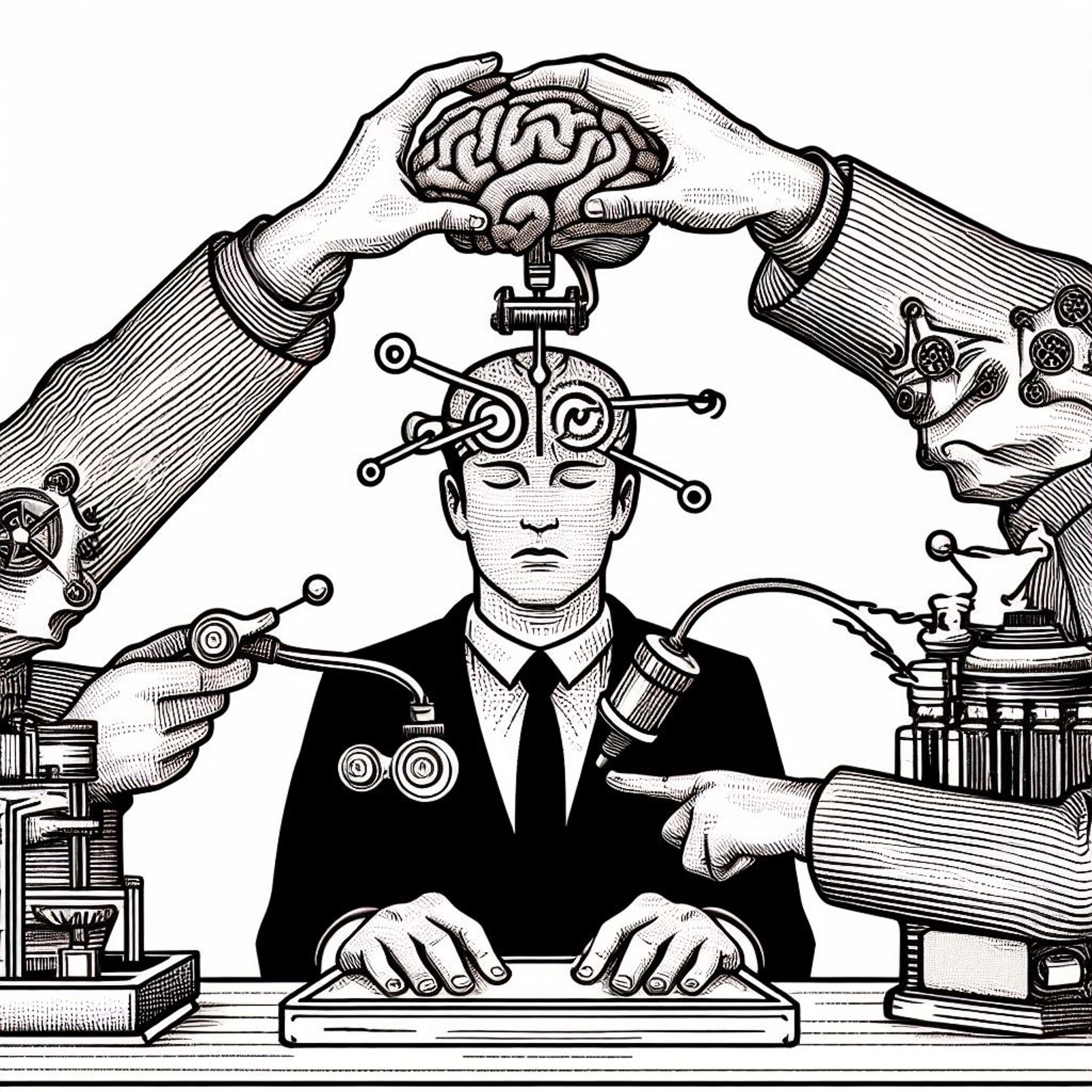
The UncoverUp podcast explores the costs associated with conspiracy theories, emphasizing the emotional and damaging impact on individuals and society. The distinction between misinformation and disinformation is discussed, highlighting how deliberate spread of false information can be financially motivated and targeted towards specific groups for manipulation. The discussion delves into examples like anti-vax content on social media, which can have significant repercussions on public health. The complexities of how disinformation is engineered and spread, including through hidden sponsorships and microtargeting, are explored. The episode underscores the ethical implications of misinformation and disinformation, especially in the context of public health risks and the need to combat false narratives effectively.
Transcription
9238 Words, 53179 Characters
Over the years here at the UncoverUp we've looked at a lot of conspiracy theories that
turned out to be true. Today we're going to be looking at those conspiracy theories that are
deliberate lies, that are designed to manipulate populations, and ask the question, "What does
this do to our health?"
Hello and welcome to another episode of the UncoverUp. One of your co-hosts, Lee Kohnle,
and with me, as always in The Bunker is Nathan Radke.
I want to talk about conspiracy theories. No. Yes. No. But here's what I want to talk about.
I want to talk about the cost of conspiracy theories. The emotional cost? The damage caused by them.
So we get emails from listeners all the time, and we had one the other day that really sort of
got to me, because this person wrote a book about the terrible losses endured by conspiracists
because of their beliefs. In his email he was talking about how his wife had left him after,
24 years. His children won't talk to him. This is damaging stuff.
And we have seen this in a bunch of episodes that we have done, not specific to this person who
you're referencing to, but to a lot of victims who were on the receiving end of conspiracy theories,
who somehow got infected with these ideas, and it totally destroyed their lives.
I mean, we've seen that personally with our own contacts. One of my contacts, his son,
refuses to speak to him because of his conspiracy beliefs. He's now dying alone of cancer,
and in addition to the social cost, there's a medical cost, but because of his specific
conspiracy beliefs, he will not go to a doctor. And so he is going to probably die
very uncomfortably before the end of this calendar year.
There are really big costs to erroneous beliefs about how the world works, especially when it
comes to things like financial scams or healthcare. I mean, we have seen this as well in the 90s with
the conspiracy theory that HIV/AIDS was not actually a disease, or that it was not actually
something you needed to treat. And that got a whole bunch of people not going to the doctor.
Our most recent episode was on Heaven's Gate, where we saw a group of conspiracy-influenced
individuals who ultimately took their own lives. So there can be an individual cost to people who
have fallen too far into conspiracism, believing conspiracies that don't have a factual basis
to them, seeing conspiracy in all things, everywhere they look. But there's also a social cost in a
community for the spread of false conspiracy theories. And to talk about that, we've got a
special treat. Okay, tell me. We've brought in an expert, finally. An expert besides the two of us?
Yes, besides the two of us. All right. So what we have done is we have brought in all the way from
Philadelphia. Evan Thornberg, a bioethicist who specializes in the public health risks of misinformation,
disinformation, and false conspiracy theories. Evan, thank you so much for coming on.
Thanks for having me. I'm super excited to be here. I'm not sure what to expect.
I mean, Lee is never sure what to expect either.
No, because you keep it all inside your brain and you won't let me in.
It's part of the magic. Yeah.
So Evan, before we get into our topic today, could you tell everybody a little bit about your own
research? Yes. So I work in public health. I specifically specialized in HIV, and I started
working or moved into my current position and working extensively on public health and HIV
at the kind of very beginning of COVID. So I also ended up working on COVID. I worked on vaccine
distribution across the city of Philadelphia. And so when I decided to go back to school for
bioethics, one of the things that really stood out for me in this current time, day and age,
was how there was so much interesting overlap with the public health communication and the
amount of misinformation, disinformation, and conspiracies that really cropped up very quickly
during COVID. I mean, in relationship to HIV, HIV spent years with these sort of brewing...
I mean, you mentioned it just before, like conspiracies and also just general disinformation
and misinformation that we continue to fight. But COVID seemed to do it, but it seemed to just
be like on, like, nitro. Like, it just happened like so fast, so quickly, just like exponential
climb. And so it felt very important to me in looking at and specializing in bioethics and
getting a degree in bioethics that I was like, there's an ethical imperative here, beyond just
the constant conversation of, like, do tech companies control this? Do we regulate this?
A lot of, at least in the United States especially, a lot of how we talk about misinformation,
disinformation, and conspiracy theories, the argument sort of starts and stops at free speech.
And I think there's a larger conversation to be had collectively. Like, what is it doing to us?
And particularly for me, what is it doing into our health?
Yeah, absolutely. I mean, HIV is such an interesting one, because that one is so linked with
misinformation, but also deliberate disinformation, things like operation infection from the KGB,
deliberately spreading the disinformation that the CIA had caused HIV. That conspiracy theory
just continues to circulate through what we tend to call the information ecosystem.
Absolutely. And that one is really great because the KGB developed that from like a random guy in
Arkansas who was sitting on like, not ham radio, but something similar, and just inventing it,
just spouting it off, along with a number of other conspiracies. He had built up a pretty
large scalar, pretty substantial following in the U.S. And the KGB picked up on this,
and then they spread it. And it actually ended up in the early 2000s, being a reference point
for a lot of South African, the South African president at the time, divesting from HIV care
in South Africa that had a detrimental effect and caused tens of thousands of deaths.
So these things like, it almost sounds conspiratorial when you trace it, but in public health,
this is what we're a lot of, what we're trained to do is trace the trajectory of an illness in a
population or in a person. And for me, I was seeing how this form of information moves in the way,
like a virus. And so that's like such a good example that you bring up. It's because that really,
you see it just boomerang around and become a major piece of public health policy that affected
a multitude of lives. Yeah. In ways that weren't intended. I mean, the KGB had a purpose for that
disinformation campaign, but it had nothing to do with impacting public health in South Africa.
But once these information or disinformation, in this case, organisms get released out into the
ecosystem, they sort of take on a life of their own. And there's no controlling it, and there's
no wheeling it back. And the ability to dismantle them, I mean, we haven't even fully dismantled
them from HIV from 1982, when there was like a major uptick in legislation based on, again,
disinformation related to HIV, and especially the gay population, particularly gay men,
40-something years later, we are still having these struggles with that. So it's not just
infectious and quickly infectious. It's also very, it's lifelong. It's long lasting
in a way that we haven't been able to excise it from the general populace.
Yeah, absolutely. And I think a really important thing to talk about now
is something about the nature of conspiracy theories and the reason why people are attracted
to conspiracy theories. They provide us with explanations. And we crave explanations, especially
during difficult times of chaos and of fear, which is, let's face it, most of the time,
that the tragedy with the false conspiracy theory is that people have the feeling that
they're being manipulated secretly. And so then these conspiracy theories become very seductive.
But then these false conspiracy theories, because of course, as we always say, there are real ones,
but these false conspiracy theories then manipulate the people in part because of their
fear of being manipulated. They think that these conspiracy theories are the root to the truth,
but actually, the conspiracy theories are deliberately engineered sometimes
to move them further away from the truth. And there's just, I think, a real tragedy to that.
For sure. I mean, there's so many great examples of this in COVID. When the vaccines came out,
for example, there was a uptick in anti-vax information and disinformation on Facebook,
specifically. And to be clear, they're not just engineered. This type of information,
this type of disinformation and conspiracy theories are engineered in a way to also be
very specific in who they target, either as the scapegoat or the community that they blame
for an issue, or as the community that they're trying to dissuade or trying to manipulate and
offset and change the general behavior of that population. So with anti-vax materials, the group
that got hit 10 times the materials were produced for this group, then the general body was for
specifically black and Hispanic people. For black and Hispanic people using Facebook,
they saw 10 times the amount of anti-vax information that was specified towards them
than anybody else's general consumption. And this was very intentional. And it also used a lot of
black and brown history of real conspiracies, real issues like the Tuskegee experiment.
It's an infamous one that gets used all the time. And as a way to be dissuasive for black and
brown folks to not go and get vaccinated, this becomes so outrageous. But also think of what
the outcome of that is if it works to a large-scale degree. And this is where the tools of technology,
especially social media, are such a useful and well-designed vessel because of things like
microtargeting in your geotag location and these things where I can basically pinpoint you in your
neighborhood with information on the device that you're using to socialize essentially and consume
general soup recipes but also... Now, you said a couple things there that I think we need to
stop for a second and examine in more detail. You talked about targeting. You talked about
how this is deliberate. I think it would probably be helpful at this point in the episode
to just discuss briefly the differences between information, misinformation, and disinformation.
For sure. So misinformation, and again, I'll do this from a lens of like health,
misinformation is just incorrect information and usually it's accidental.
I like to isolate that and call it accidental because that happens a lot in medicine.
People misinterpret because they don't have scientific training. I mean, the background
to all of this is like health and science literacy, which are very, very low for a lot of people.
And so people are consistently misunderstand or don't understand something their doctor has said
to them. So using HIV as the example in health and medicine, we say that HIV is passed through
bodily fluids. Now, for us, we understand that to mean specific bodily fluids, but for a lot of
people, one of the bodily fluids that they throw in there because they're over interpreting the
information is saliva. And so for a long time, there was this misinformation that you could get
HIV from kissing or from sharing a beverage or from anything that involved your saliva. That is
not true. That is misinformation because it's an overinterpretation of what generally health
professionals have said about HIV's transmission abilities.
Yeah, that's something that Lee and I sometimes call that. Lee has a clever phrase for that. It's
like a lie without a liar. Right, okay. There's nobody deliberately lying about this. It's untrue.
Nobody who's saying it knows it's untrue. And is that sort of the key thing about misinformation?
I think it's a very important key thing is about intent, right? And it's not anyone's intent to
share the wrong information when we're talking about misinformation. It's what happens because of
a lack of understanding and issue with translation. There's a lot of ways that things can be
misinterpreted that are, no one's at fault, like you said, a lie without a liar, right? But as it
gets distributed, it still is damaging. And so it's important to interrupt it or disrupt it as
best you can, debunk it, pre-bunk it, whatever. But disinformation is intentional. It is created
by an individual for the intent of misleading a group, another individual to target a group.
These things create or can be utilized or produce propaganda, for example. But disinformation,
the conversation that has to be outlined here is about intent between misinformation
and disinformation. And misinformation, the intent is not to mislead, but in disinformation,
the intent is absolutely to mislead and frequently for monetary gain. But there's other reasons to
do it as well. Right. What are some of those other reasons why people would be deliberately spreading
engineered disinformation? So with all the research that I looked at, the leading reason,
especially online, especially on social media, is monetary, either to try and sell you something
because there is someone paying them to say it or a combination they're in. So it benefits me
monetarily to spout off about how cancer is made up and it's about your will over the cancer. And
if you rub yourself in lavender oil, and it just so happens, I have some of the most potent lavender
oil in my TikTok shop. Yeah, what a coincidence. Thank goodness. So helpful. I'm curing cancer
all over if only you would just sit on my page for five more minutes and listen to me. Right.
And then you have things like the unseen monetary gains. So for instance, TikTok's a great example
because there is the unseen creator, ways that creators are rewarded financially. And so TikTok
itself through the creator beta program, which is monetization based on views. So
the higher your views are, the better standing you are with the app, the more money you can
make per view or per thousand views or something. This is very important. So if information that you
create or invent does well and consistently does well, the incentive is the money it's making you.
If I tell the truth and I only make about $5 a video, that's not and and telling the truth also
involves, you know, for me, it involves checking my sources. It involves reading, cross reading and
comparing to other peer reviewed sources. Like creating a video for me is a lot of labor to make
it $5. But if I can just make up something, it can make $50, $100, $300. Some people are making
a thousand dollars of video, I'm going to create that content consistently. So that's the incentive.
And then there's also like, who's funding you as in like, who's your sponsor? I mean, TikTok creators
over even smaller creators like 20k and above have people who are sponsoring them and sponsoring
videos. And so the question becomes, that's something we can't see. We have no way to see any of this
kind of quiet monetization that's happening either. So like, there's no place that you have to report
in, here's who I'm sponsored by for how much to say what. Right. And at those hidden sponsors,
they might be doing it for political reasons. They might be doing it to manipulate populations.
Absolutely. And oftentimes, those sponsors will be doing it for political reasons or
to build false virality. So what I mean by that is, is like, they're trying to get an idea to go
viral. And instead of trying to see if organically people pick up on it, dropping several hundred
dollars or several thousand dollars across a number of creators, and the trick can be smaller
creators, micro creator targeting is like very, very effective because of the ratios of interaction.
So the larger a creator you become, the less likely it is that you have a parasocial, a bought
in parasocial relationship with your audience. Right. You can become, you get too big. It's
almost like you're a celebrity rather than a person that the person feels like they know.
Right. Or somebody that they can talk to or somebody that they interact with your content
consistently because of a personal connection or feeling personally connected. So the creators
that have 20,000 followers, 50,000 followers can be very beneficial. If you can drop across 10 of
them or 20 of them, a few hundred or a few thousand dollars, and then say, Hey, I need you to promote
this thing, that creates a cacophony, especially if you target them inside of this, a similar silo.
And that's what these things can do. It works the same way to sell soap. And like, you know,
all of these other big companies use the same, it's not illegal types of targeting, but
it's reutilizing advertising, like social in the social media age advertising techniques that occur.
I remember creators on YouTube who were not at all in the healthcare industry. These were
guys who were like usually talking about cars or just about stuff in their fashion or sports or
whatever kind of stuff. And it turns out they were getting sort of secretly offered a couple of
thousand dollars to drop into their videos that the upcoming vaccine, so the COVID-19 vaccine,
was unsafe. And it came to light because a couple of people actually turned around and went to the
media, the more mainstream media and said, This is happening to us. We've been offered $2,000 or
$5,000 to drop this plug in our content. But then a bunch of people did it. And it seems to be exactly
what you're talking about, this sort of these kind of smaller creators who seem, for me, it would
seem very organic, right? Like I turn to one of the people I've subscribed to who happens, I don't
know, to be talking about cars. And then, you know, suddenly he comes out sometime in the middle
of it with this like, Hey, guys, by the way, have you heard? I've heard this is kind of sketchy.
It's dangerous. And then that gets me worried about it. And then it gets amplified maybe by other
creators. And like Nathan, I think you were saying, you know, one of the worries about this was even
who, so who was initially sending that money? And why? And why? And, and some people linked it maybe
back to Russian intelligence, but maybe it was somebody else. So this would be, this is one of
those things that becomes almost like the Panama Papers, right? Because, and if anybody's understood
that, I think it's one of the greatest conspiratorial things of our lifetime that like, nobody
understands because so the complexity of shell game is so hard for a general individual to understand.
The Panama Papers were a collection of millions of leaked documents that were released in 2016,
and showed how some of the world's most powerful and wealthy individuals use obscure loopholes
and offshore accounts to avoid paying their fair share of taxes to their home countries.
It's going to sound a bit like that. And it's going to be, I think it's hard for people to
consume. So my answer to that is, is that it's hard to know, right? Because you have a similar kind
of shell game happening, and you have it happening in a variety of ways, because you have like, for
instance, let's say I run a entity that sells lavender oil, you know, high-grade lavender oil,
and I'm trying to make a mint. You've got a real, you've got a real beef against the lavender oil
sewers, clearly. Well, you know, my actual, if there's, if there's one thing I'm actually,
I will, the singular hater on it, it's colloidal silver. I truly, so let's say I own a colloidal
silver company. No, no, before you continue, I'm going to give you a chance to just go off a
little bit on colloidal silver, because we've never mentioned it. No, we have talked about
scams. We've never, so give us a couple, give us your, your, your quick five on colloidal silver.
First of all, it's just, it's silver milk, essentially. It's water and then like, finely
powdered silver. To also understand, I'm going to put silver in quotations, because the presumption,
because these things are not regulated, that it is even silver that you're consuming is who knows,
who knows. What we do know is it's a shiny bottle full of shiny glitter that's supposed to be silver,
but I don't know. It's, it's got its history loosely in alchemy times, because in that time,
you had folks who were trying to, a lot of early chemistry, which was alchemy, was trying to
devise ways to create silver and gold, because they thought that these things had these health
properties that could basically be a cure all for all things. They also thought this is mercury,
but you know, glad we let that one go. Yeah, like don't, anybody who was getting syphilis before
like 1910 really suffered. But colloidal silver sort of has, I think, slithered out of that history
from what I can remember and a number of other things, but that's essentially its, its, its
background. But every time there's some sort of health, something that comes up colloidal silver
bubbles to the surface as like the cure all. And it's seen as something you could use as a topical,
that's seen as something you could ingest, please don't. And I will say don't ingest it. And the
reason why I want to tell you not to ingest it is because you will turn literally smurf blue.
Yeah. If you, if you ingest a certain amount of it, because you're being poisoned.
I don't want to ingest it. Don't do it, Lee. Don't, don't, I was not going to ingest it until I heard
the blue part. No, you heard the smurf part. Yeah, I'm like, I'm going to turn it to a smurf.
And that's permanent because it's actually settling into your cells. It's settling into your
cells. Yes. And yet, and yet it's all over social media. People, people selling this as the magical
cure all for all things. Don't listen to your doctors who are trying to force, you know, vaccines
and things on you. All you really need to do is drink this colloidal silver. And the way it's
talked about is both as a prevention and a cure, it's very few medications that in the same format
can be equally used as a topical or ingested. That's just like, there isn't going to be
this magical wonder thing in a bottle that you could be just glugging and bathing in and injecting
and using as a suppository or whatever else they tell you to do with it and would work in all of
these ways. But you could see why people would want it. You would see why people would want to
believe it. I can, because $50 to both prevent your cancer or prevent COVID and also treat or cure
those things, is an immensely affordable option. And especially if it does COVID and HIV and syphilis
and gonorrhea and the common cold and cold sores and, you know, genital warts, like if it could
do all those things, like, wow, that's an amazing $50. So I'm wondering, what is it that is driving
people to these non-conventional therapies? What is it that's driving people to believe the
disinformation as opposed to the information? Earlier, you were talking about, you know,
health and science literacy. Is it the fact that there's a lack of that? Is it the fact that the
alternative explanations are so much easier? What's going on? How come we're falling for this stuff?
So I think it's a combination. And I think this is also going to be regional. The answer is going
to be related to things like healthcare systems because of accessibility too, right? So the first
thing is definitely health literacy. In the U.S., the average literacy rate is between fifth and
eighth grade reading comprehension levels. In places where poverty is higher, education or access
to education is lower and the population is younger. Any combination of those things, the reading
comprehension level plummets. So where I am in Philadelphia, for example, we have about 25 or
a quarter of our population is under the age of 21. We have a pretty substantially lower high school
graduation rate than other urban spaces. And we have a pretty high poverty rate. I mean, after
COVID, it's somewhere around 27% of the population lives at or below the poverty line. So what I
can surmise generally about where I live now is that a lot of people, their literacy rate isn't
fifth to eighth grade. Their literacy rate might be as low as third grade. That might be the average
in some sections of Philadelphia. It's also compounded by things like English as a second
language or English as not your language of origin. I mean, there's a lot of disability and
comprehension. So those things are in there too. TBI is anything. Health literacy is even lower
than that. So this is what health literacy looks like is somewhere around that, swimming around
that fifth grade level generally. What really sucks is that most health information is written
and distributed at a 12th grade or up level. That's your prescription bottles. That's your
resources handed to you by the doctor. That's the way the doctor talks to you frequently
on average is at a 12th grade or collegiate level. And so this means that there's a disparity between
what people understand and what they're being told in medical or healthcare settings. On top of that,
nobody wants to feel dumb. There's no other way to say it, but nobody wants to feel that they're
the stupid one in the room. And healthcare spaces often make people feel that way because of this
disparity of understanding. It's a very alienated thing to try to get through any kind of health
bureaucracy, unbelievably alienating. Along with the systems of healthcare, because it's not just
understanding the information you're getting about your diagnosis, it's also now I have to get a
referral to an office to another guy who has to look at my eyes, but I said my heart hurt, my chest
hurts. And that's where people end up and they end up doing a lot of giving up and looking for
themselves. And just to also mention that this issue with literacy affects everyone who does not
have specific medical education and training. So even people with graduate degrees who that are
non medical or non science based have this issue, even people with certain science backgrounds
have this issue with health and medicine. So even like your cousin who's a PhD in rocket science
still may not understand the complexity of health and medicine. And that's the important nugget in
there too. So like 12% of people have proficient health literacy. And so that's a lot of what we're
seeing first. On top of that in the US, it's about affordability and accessibility. We have huge
sections of the country that have a complete healthcare desert between things like hospital
concentration and deserts of specialists. We have big issues with specialist deserts. People
look where they can where they can, which is the internet. Right. And that's the affordable thing
too. Right. Again, if colloidal silver for $50 could do all those things, I really wish it could.
That'd be amazing. That'd be amazing. And it means that there would be so many people whose health
would be restored or would be assuaged or would be cared for for something that they could actually
financially afford. And that's just not even with insurance in the US, health is really inaccessible.
So the situation that you're describing here is terrifying in a way, because what you're saying
is that for various structural reasons, there is a vulnerable population. And they are vulnerable
because they are alienated, they're afraid, they aren't taking seriously a lot of the time.
It's very frustrating. And then going after that vulnerable population are these disinformation
merchants who are predatory. They are seeking out these vulnerable populations. And you're
describing so many of my contacts. You're describing one of my contacts who has been drinking bleach.
The story that you have told is the story of that guy. And he's been through the health care system
and he's had struggles and he doesn't understand it. And his literacy is very low. And then somebody
comes along, not with collodial silver, but with bleach, and he starts to drink it and then
starts to become much, much sicker. And that's a common, that's a common adage, unfortunately,
is that. And also to remember, if drinking bleach is your only option because the health care system
that served your region collapsed or got absorbed by a health care region that is
centralized further out, because that's the other issue that we have in a pluralistic
payer system is these health care systems are privatized. And so they do as they please. They
consume each other, they purchase each other, and they close tertiary offices that may have been
doing a lot of service provision. And so now if my only access to cancer care is a three-hour drive
away, and I'm in a 1982 cutlass that I have to jumpstart at every red light, I can get to bleach.
I can't get to a specialist, especially get to a specialist repeatedly for the care that I need.
So we're having a conversation. I want to inject empathy as much as I can into this,
these conversations that this is where I think it's a bioethical imperative,
because we're looking at a symptom of a health system that is failing people on a variety of
planes, especially rural or impoverished individuals who may be not rural, but might as well be,
because poverty limits the square mileage that you can traverse from your home,
even in an urban, densely urban space. We're having a conversation about people that are really...
What else? I need an answer to my stomach ache. I need an answer to my teeth falling out.
The only answer is three hours away. This guy says, "Bleach can do it."
Right. I mean, this is something that Lee and I were talking about before we started recording
today, is this idea that people know something is wrong. People can tell something is crooked,
something is not right, and then when somebody provides a conspiratorial explanation for that,
then it's a really seductive thing to grab onto. Income the disinformation merchants to provide
us the scapegoats and the colloidal silver and the bleach, and it turns into a vicious circle,
because it seems like the worse things are, the more disinformation can get through,
and the more disinformation gets through, the worse things become.
And then even though when I was looking at some of your work, it seems like then there is yet
another structural component to this in the actual disinformation itself. I'm thinking now about
this concept of rage farming, which I think we have now a population, if I'm certainly in one of
these situations where my health is going badly and part of it is because I don't have access
to resources that other people have as opposed to, oh, it's just bad luck, I probably can imagine
myself already being quite angry. And now I get exposed to, Nathan, as you put it, these disinformation
merchants, and then they've got tricks to keep me there and keep me getting more angry.
And can you talk more about how is it that disinformation is so much more compelling
sometimes than just information? So I like to say that disinformation affects our health
behaviors and choices, but it also just affects our health. It is literally bad for our health,
specifically our mental health. And so for someone who's healthy, the consumption, physically healthy,
the consumption of disinformation and conspiracy theories renders us unhealthy.
It has the effect of, and rage farming is such a good segue or such a good premise because
first of all, it capitalizes on the concept of the grievance economy. And I'm not the creator of
any of these terms. The brunt of the referencing has to go to Marwick and Lewis, who wrote a great
report for data and society in 2016, really kind of ahead of their time. And both of these women,
as researchers, as data and media literacy researchers, gave us a lot of this language.
But the grievance economy is one where people feel left behind. The feeling is a very unique
term called "anami." Anami? I'm going to say that.
"Anomi."
"Anomi." There you go.
"I spend a lot of time in France."
"Anomi." It's this feeling that is so specifically that the world is leaving you behind, and you
are becoming more isolated because the world has decided to basically reject or neglect or drop you.
It's like a such a unique emotional description. The grievance economy is built around people
having that feeling and effect. And rage farming is what a disinformation individual will do,
which is they will see that there is this collective group of people experiencing anami,
and wanting a reason, wanting purpose, basically. Wanting to feel part of something
purposeful or feel affirmed in that the world is rejecting them or the world doesn't have a place
for them. And disinformation creators, and usually the term also coined here is "merchant of illusions,"
which I really liked, but also I think is a little too fun for what they do.
Yeah. That sounds like a magic show.
Right. Exactly. What they end up doing is capitalizing on this by saying,
"You're not crazy. You're not out of your depth. You're right. The world is turned away from you,
and it takes on all sorts of tropes. Definitely hyper evangelical Christianity or pseudo-Christianity
tropes. It takes on anti-LGBTQ tropes. I mean, racism. It really digs into that traditional.
It really feeds heavily on this 1950s advertising vision that many people who are experiencing
this feeling have for their life. Men going out and getting a job, women being in the house,
cooking, and being and caring for the men and children. Because it's such a dreamscape for
so many people that very few of us have ever accomplished in real life, even at the time
that those advertisements were popular. So that is where you have this play on it. And the reason
why it's called a grievance economy is because they're able to, again, monetize out of it with
rage farming. Again, getting an audience worked up and then selling them something. The greatest
merchant of illusions on this is like Alex Jones. Because he spends hours just lambasting
everything that's different on the planet, everybody who looks different, everybody who
identifies differently. And then he has these really tactful self-interruptions of like,
so if you're trying to prepare for the collapse of the financial system, here's this protein powder
that can stay on your shelf for over 20 years for your bunker. He became a multimillionaire
because of this. And mind you, he doesn't have a TV show. He's literally webcast entirely.
That's, there is an economy there. Lee and I are always looking for ways to make a quick buck.
So what you're saying is... And we fail. And we always fail. Here's the system. You locate some
divisions in a society, in a culture. You try to amplify the hatred and the fear and the anger.
And then when people are feeling all of those negative emotions, you provide them a scapegoat
or a drug or a something that then will be used to treat the anger that you have nurtured.
Absolutely. And to know that the health outputs or the health outcomes of this are things like
paranoia. It can induce, for certain people, the level of consumption can induce delusion in a
really quantifiable way, not just like they're acting deluded. Clinical delusion.
Clinical delusion. People are out to get me. People are following me. They're listening to me.
Clinical delusion. Depression, anxiety, hyperaggression, activated or aggressive disorders.
And that's where you see things like... I hate calling this things like lone wolf events that
come out of people over consuming this stuff, which is another way that it affects our health,
because it affects part of public health is safety, physical safety. And if we're saying that these,
this dial of information sharing, disinformation creation, is driving an exponential rise in
unpredictable violence, because a lot of public health is also about being able to, like I said
earlier, trace the trajectory of something occurring, like an outbreak. So we can do
that with things like violence in a community too. But it's one of the hardest places to do it is with
disinformation communities, because they're fragmented. They're all over one disinformation
creator sitting in Arkansas can inspire people in Russia. We don't know who their audience is.
If I was inciting violence through rhetoric or through my content, it most likely wouldn't
happen where I live. It's going to happen where my audience is. I mean, there have been a lot of
lone wolf conspiracy driven attacks in the last few years. There was the Nashville bomber
in the RV who played Petula Clark's downtown before destroying an entire block of Nashville on
Christmas Day, who it turned out was driven by the concept of the reptilian elite,
shapeshifting reptiles that were that were taking over the world.
Pizza gate.
Yeah, pizza gate. Somebody shows up at a pizza place with a rifle demanding to be shown the
basement when there was no basement. These things have happened and they have taken lives and ruined
lives. I can imagine somebody listening to us being like, "All right, not my problem though,
right? I'm healthy. I know how to deal with social media. I know where to engage if I need
some real health advice or if I need some real political insight." Yet you're suggesting there
are all these reasons why this is going to affect all of us, one of them being other people's violence.
The disinformation universe is very good at self-protection by predicting its demise at
the hands of people who don't want to hear the truth. That becomes part of the narrative of
the disinformation. It's like, "Look, they wouldn't be trying to silence us if Clodiel Silver wasn't
so amazing." That means that the trouble that that has in a systemic way is that that means that you
have preemptively created an irate audience who is opposed to you trying to disrupt this distribution.
That has really done a lot to paralyze decision making at governance levels because their concern
is they already told their audience, "Well, we're going to kick in their door and we're going to
arrest them for practicing medicine without a license or whatever." Now, all we're going to
seek to do if we kick in their door and arrest them for practicing medicine without a license is
create proof or provability and that makes actually the situation worse.
Because I can say, "We told you this would happen." This is exactly what we prophesized.
And an audience is going to be like, "This, they must have been correct because this is
exactly, they know everything because they knew they were going to kick in their door and arrest
them for practicing medicine without a license." That's the double-edged sword here. I think the
systemic element here is the worst one because things like lawmakers are affected by this.
And when I say lawmakers, I don't just mean currently serving individuals, but what we've
seen in the US is an uptick in extremism and people who are well-versed have built enough
following for themselves or have decided that what they're going to do is lean deep into conspiratorial
thought in order to generate the interest in making them or pushing them towards access to
these levers of governance. So instead of saying, "I'm going to try to appeal to the widest audience
with the most truthful-sounding information or the most honest or the most integrity and hubris-centered
campaigning," I'm just going to go full tilt into the lizard people running the deep state.
And I'm going to make sure that I get those people ginned up enough that they come out and vote for
me above all else. And now I'm in the halls of some sort of governing body, whether that be a
school board meeting where we're seeing people apply in droves to things like school board.
Previous to the last five years, nobody wanted to be on a school board. What is this? And it's a
very boring job as someone who's had to sit through their meetings for governance reasons.
It's not interesting, but people really running these heavily... I mean, I've never seen this kind
of money in school board campaigns, but it's because you have these folks who are looking to
gut libraries. But the worst way that I've seen it is the way that it has already seeped into
legislation, especially at the state level, where even the materials being cited in congressional
hearings, there's been a multitude of congress folks and congress representatives who have sat
in congressional hearings and referenced disinformation materials that were circulating.
Lee and I spent weeks on that because, of course, we were watching very closely the UAP congressional
hearings. And what was horrifying to us was that we were seeing people in those hearings repeating
disinformation that we knew to be disinformation, that we knew to be based on hoaxes or lies,
and they were sitting there in Congress in front of the whole world repeating these things. It was
very disturbing. And it very effectively was the center point of the news cycle for almost the
next week. I mean, there was so much reporting that could have been done there to really contextualize
the people who were giving the evidence, the stuff that they were citing.
The history behind those stories. Exactly. But instead, it was, "Hey, hey,
did you hear? The government might have UFOs that they're hiding." And even though the presenter
said it with a kind of an ironic twinkle in their eyes, and you were supposed to pick up on that,
the real debunking never actually took place. I mean, it did online if you had your certain
creators that you knew were going to now spend the next six months sort of digging through this
stuff and doing the work. But to your point about legislation, I think you had referenced
in a piece I read about people not being able to donate blood if they had gotten the COVID vaccine.
So when I referenced this, that video, I know exactly the one you're talking about,
and there's a comment in there that just drove me to want to eat glass because somebody said,
"Well, that bill failed." And my response to that is that is not my point. My point is that it was
suggested, that it was suggested not ingest. It wasn't a joke. It wasn't an April Fool Day submission
that sometimes Congress likes to pull. This lawmaker was very serious.
And it moves the parameters of what is considered normal conversation.
It's an Overton window shift. As someone who has health and medical training,
it horrifies me to see us now, especially in the general populace, with the general populace,
debating what have been established communal facts. There is consensus across all of these
medically trained people that these things are requisite or these things are necessary.
And now we're having to debate in a public sphere with someone who read something on Reddit.
I don't think that that's... And so the one that you're talking about is a bill in North Dakota
that was submitted and did fail. I think it also went all the way to a vote, which is even more
scary because it got out of committee. The fact that it got past several processes and procedures
also shocks me. This bill was suggesting that anyone who has experienced mRNA technology,
biotechnology, obviously through a vaccine because that's where it's applied, would be barred from
donating blood and tissue. That's going to get people killed. If that was passed,
it would get people killed because there would be not enough blood, there'd be people who desperately
needed it. And just to connect the dots for our listeners, this is predicated on a healthcare
conspiracy in which that vaccine is in some way dangerous. And I wasn't sure which way this
lawmaker was taking it because we've seen all kinds of things, like it's going to turn you
into a gorilla, to you're going to get cancer, to it simply hasn't been tested enough.
Do you know the background of the conspiracy that was animating this legislation?
That it was going to alter the DNA or that it alters the DNA in the person. I, as a public
health employee and a public health professional, cannot do my job if my job starts to be confined
by absurdist, not science-based law. And this is what you're seeing with things like these
different, like these anti-abortion bills in the US. It's not simply about the fact that they're
anti-abortion, it's about that they are scientifically unsound. So like in one of the
laws as they were debating the ins and outs in the amendments to one of these anti-abortion laws,
one of the lawmakers had wanted to add an amendment that said that if a person was experiencing an
ectopic pregnancy, the doctor was obligated to excise the ectopic pregnancy and re-implant it
into the womb. That is not a procedure that exists at all. Ectopic pregnancies have to be
aborted because it is a pregnancy that is occurring outside the womb. And to be clear, you can have
an ectopic pregnancy that latches onto the outside of your womb or onto your liver tissue.
This is a strange way that the body works and we don't always know how these things escape
and implant where they implant. But to say that you are going to avoid the act of abortion,
a doctor if they detect an ectopic pregnancy has to excise that pregnancy, which would be very,
not very far along because ectopic pregnancies are very deadly or can be very illness inducing,
excise that pregnancy and somehow re-implant it into a womb. That is absurdist. And how is an
OBGYN supposed to do their job when that is a requisite of them performing or detecting an
ectopic pregnancy? One of two things that is going to happen there in that professional's
experience is that number one, professionals are going to stop testing or checking for ectopic
pregnancies because in detecting one, you are now legally obligated to do something that is not
possible. This is just playing it out. I don't think that amendment did not get added in from
what I am to understand. But it could have. But how does this play out into real life? Because
people's attitudes towards legislation or towards law that is absurdist is like, well,
that's just dumb and nobody is going to press you to that. For doctors, they can't take that risk
legally because they can lose their licensure. And that is hundreds of thousands of dollars and
years of their lives of training that they are not going to be able to recover from if they lose
their license or end up in federal prison or end up in state prison because they can't re-implant
a pregnancy. That's just like, you know, so it affects all of our health.
Yeah. And Lee and I have been saying this for years when we've been looking at false conspiracy
theories is that absurdities generate absurdities. One absurdity will lead to like a cascading
waterfall of other absurdities until you get to just catastrophic situations.
And that affects all of our health in ways that we're not even aware of. And I think that's what's
really important is that there might be someone out there who's like, I don't listen to that stuff.
I don't believe any of that stuff. But are you going to be the person that has an ectopic pregnancy
that a doctor refuses to diagnose? And that's the problem with disinformation and conspiracy
theories. These things don't stay in a realm of like goofy people who are disconnected or
disaffected. Frequently, they end up in political space, either as things like lobbying groups,
they end up in things like your actual legislators. For me, it's the effect on the system. And that,
again, has a deeply chilling effect on medical professionals and people who practice medicine.
And people who practice medicine, especially those who have their education centered in the
United States, which is universally accepted other places that education is, you just have to go
through a licensing procedure. Those people do not have to stay and use their talents in the
United States. They have a universal job. And so my concern is things like brain drain, which
we're already seeing in some of these others in states where there is this absurdist anti-abortion
like legislation, for example, that is affected by and been designed by people with disinformation
in mind. That endangers things like babies. And so those doctors would start fleeing
those areas to go to places where the laws were less impacted by disinformation campaigns?
They would have to. In order to practice medicine, they would have to. And that also means that
doesn't that erode our trust in a medical health professionals too? Because if you have the talented
people who know how harmful this is fleeing a space, the question also becomes about the people who
stayed, who is to be trusted in those spaces then too. Because they either stayed because they're
like, well, now there's a dearth so I can clean up even if I'm not the best doctor. Or you've got
people who are bleeding heart and care that seriously. But how are you to know the difference
between the two as an individual looking for health care? You're not. And so it raises the
threat of encountering a quack for me. And then in those areas, as those areas start to have poorer
outcomes, the populations there will become more vulnerable to disinformation. And so the
disinformation merchants will then move into those areas to take advantage of those people,
making the areas worse, making the people more vulnerable, and so on and so forth.
It's going to be a hell of a thing. Yeah. Wow. So. Cheris Epley. No. I got nothing.
I got nothing. Well, it is really sobering this conversation because sometimes Nathan and I try
and make these points. But often we do so with topics that are not directly impacting people's
daily existence. And so it is more about a general approach to trying to get to the truth of the
matter and why that's an important thing to do. But then when you're talking about women with
ectopic pregnancies being potentially subject to really dangerous procedures that have no precedent
and don't make any sense, or doctors fleeing, or these are really, they're scary consequences.
Evan diagnosed it correctly. I had a scared look on my face. It's interesting that you
are on TikTok. You have a social media personality. How do you do it? How do you manage to be on these
platforms that are sort of designed to generate outrage, to bring the worst information to the
fore? And what do the rest of us do? How are we to keep ourselves safe short of unplugging?
As I was on TikTok, and again, watching bottles smash on stairs, and watching people kick rusty
cars, and instructions on how to raise shrimp, and all the things that everybody always gets in
all of their TikTok, I came across your material, and I thought it was excellent. It was like a nice
little rowboat of sanity in this ocean of disinformation. And so I really appreciated the
work that you were doing and really wanted to have you on. And I do highly recommend your work to
our listeners. Though to close this one off, what I'm going to ask you to do is, if you could give
like a TikTok style quick little bite about the dangers of disinformation in general, and maybe
a couple tips on how people can protect themselves from it. The dangers of misinformation, disinformation,
and conspiracy theories can be vast, but especially to your health. I want people to consider,
how does it make you feel? What does it make you think? And what choices does it make you do or not
do? I think that's super important. I want us to also ask, when we're consuming information,
especially on social media, what is this person's credentials? How do their credentials relate
to the topic that they're covering? And is this consistent or in alignment with their ongoing
content and material? And what would be the inspiration or how do they benefit? And is there
a benefit to them monetarily that you can see? Have they sent you to a link to buy something,
to their website? What that is called is life boating. And I want people to recognize when
they're being life boated into a sort of purchasing spiral somewhere else. I think we'll all do better
because of it. I think we'll all make better health choices because of it. There are some great
creators with great information. A key sign for a good creator, especially in the medical and health
field, is when they specifically say in their, especially if they're a doctor, they state their
credentials usually in their profile, but they also say things like not medical advice.
And that is because they risked their license if they were to give you medical advice on the
internet. Anybody giving you medical advice on the internet probably doesn't have a license to risk.
You can find Evan Thornberg's work on TikTok at EVN The Bioethicist. So Evan, without the A,
the Bioethicist.
Podcast Summary
Key Points:
Conspiracy theories can have detrimental effects on individuals' lives and health.
False conspiracy theories can lead to social and medical costs.
Misinformation vs. disinformation
Disinformation can be engineered to target specific groups and manipulate populations.
Social media platforms can be used to spread disinformation, utilizing microtargeting and hidden sponsorships.
The spread of false information, like anti-vax content, can have serious consequences on public health.
Summary:
The UncoverUp podcast explores the costs associated with conspiracy theories, emphasizing the emotional and damaging impact on individuals and society. The distinction between misinformation and disinformation is discussed, highlighting how deliberate spread of false information can be financially motivated and targeted towards specific groups for manipulation. The discussion delves into examples like anti-vax content on social media, which can have significant repercussions on public health.
The complexities of how disinformation is engineered and spread, including through hidden sponsorships and microtargeting, are explored. The episode underscores the ethical implications of misinformation and disinformation, especially in the context of public health risks and the need to combat false narratives effectively.
FAQs
Conspiracy beliefs can lead to emotional, social, and even medical costs, as seen in cases where relationships are strained, individuals refuse medical treatment, and lives are negatively impacted.
Misinformation is usually accidental and stems from misunderstanding, while disinformation is intentionally created to mislead and manipulate individuals or groups for various reasons, often monetary gain.
False conspiracy theories can manipulate people's fears, lead them away from the truth, and have damaging effects on public health, as seen in cases such as HIV/AIDS misinformation.
Conspiracy theories can be engineered to target specific groups or communities on social media, using tactics like microtargeting and leveraging historical events to manipulate and dissuade certain populations.
Conspiracy theories provide explanations during uncertain times, appealing to individuals' desire for understanding, but false conspiracy theories can exploit this need and lead people further away from the truth.
Chat with AI
Loading...
Pro features
Go deeper with this episode
Unlock creator-grade tools that turn any transcript into show notes and subtitle files.
 PodcastTranscript AI