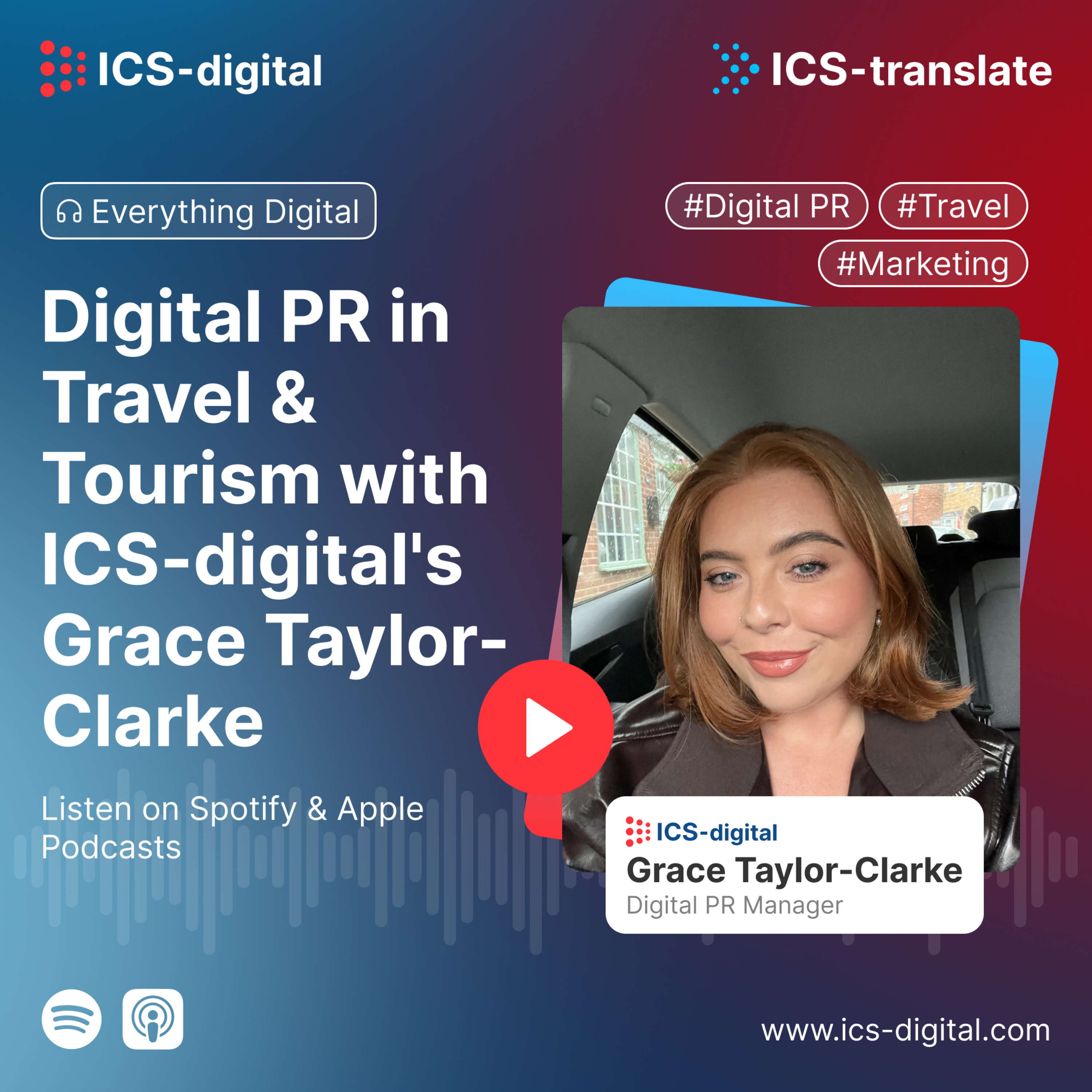
Digital PR in Travel & Tourism with ICS-digital's Grace Taylor-Clarke
45m 10s
In this podcast, Martin Calvert and Grace Taylor Clark discuss travel PR strategies at ICS, emphasizing the balance between SEO-focused campaigns (like earning links for keyword rankings) and brand visibility efforts. Grace highlights the importance of aligning PR activities with client goals, whether for driving website traffic or building brand awareness, and stresses that content must be newsworthy and tailored to target audiences. The conversation underscores the value of building authentic media relationships, as journalists seek trustworthy sources and stories that engage readers. In the competitive travel sector, successful PR relies on targeted outreach, understanding journalists' specific interests, and leveraging human connections. While travel content naturally appeals due to its visual and aspirational nature, effective campaigns require strategic planning, credible data, and a focus on both transactional outcomes and long-term relationship-building to achieve measurable results.
[Music] Hello everybody, welcome to the ICS podcast. My name is Martin Calvert, I'm the marketing director here at ICS Digital and ICS Translate. Today, I'm talking my colleague, Grace Taylor Clark, is one of our digital PR managers. I'm going to be talking about travel PR in particular. This is one of our focus areas for the year of 2026, building on prior experience but also looking into other specific niches within travel tourism, hospitality and so on, so on, so on. And so yeah, Grace, welcome to the podcast. Thank you, who excited to be here? Fantastic. So what can you tell us about your specific role at ICS? I suppose any kind of details about your background working in travel as a sector. Yeah, so on the day to day, obviously, acting as digital PR manager, I manage three of our digital PR execs, so and then I manage a day to day, helping like oversee workloads, oversee press releases, working on, I guess signing off on any PR material that get to written before heads to our editorial team, assisting on media list building, media strategies, basically sort of and responsible for the end and campaigns, I suppose, across a range of different clients at ICS. Go on. Yeah, I'm going to say and I guess in terms of the type of PR that we do here, there is a bit of a blend, I mean, given the digital heritage of the company, a lot of what we do is guided by SEO goals, I suppose, like earning links, but then as also campaigns that are more about visibility, awareness, coverage, column inches, you know, regionally, nationally, internationally and so on. How do you balance that type of thing out in the type of campaigns that we do? Yeah, that's really true. So there is some of our clients are cross-service, so they will be more heavily embedded with kind of SEO strategies and focusing on add-on what keywords that they want to target, if there's any keyword rankings that they want to grow, we can come up with the digital PR strategy to enhance that and focus more on the SEO side of things. It also depends on, I hate that answer, it depends, but it depends on the client's end goal, really, if their goal is to get more traffic to their website and they want to do that through an increase in keyword rankings, that's something that we 100% can idea on, so it's a digital PR topics, but if it is more of like a brand-vilden exercise, then the goalposts might change with the types of publications that we want to land on, so yeah, it is a bit of a blend, so it's really like it is exciting to be honest, to be working across such a different mix of clients and end goals, but I would say to be fair, at the start of it, you've got to know what the client might what they want, what their end goal, yeah, so yeah, you need to know the strategy really behind it and what is that they want to achieve, otherwise you sort of just do an activity for the sake of it, I suppose, so we like to make everything really strategic and driven by whether it is an SEO goal or a brand building goal, but that is not so that both can't exist because they can, and it's just making sure that yeah, we've got the right strategy in place, which is part of my job. Yeah, yeah, I guess a really good point about it, no, not just being busy, because there are so many activities you can do within PR that might seem effective, but if it not, lined up with the client goals or what works in that particular sector or crucially what journalists and audiences respond to, it's not going to have the outcome and people generally, but they're not always focused on the work that goes into a campaign, they're more focused on the work that results or the success that come from a campaign. How does that relate to, I guess, how we, I don't know, prioritise and strategise and ideate within like a sector like travel and tourism? How do we, you know, hone in on the kind of PR topics and themes and hooks that will actually make a difference? Yeah, it's a really good question, really good point, because often, often you might get a travel brand or a business in hospitality or something like that that will say, well, we want more sales and we'll go, well, in reality, how do we get from point A to point B? And it really does come down to is what we've got to say and use worthy, because at the end of the day, that is the only way that you're going to get in the publications that you want, whether it's the dream publication or somewhere that your target audience is spending lots of time, it kind of, you kind of sort of have to break it down to be really granular and say, right, okay, well, do you want more bookings for the restaurant that's in your hotel, for example? And then you go, okay, then we could take that end goal and sort of work backwards and look at the publications that people who visit this type of restaurant spend time reading and you can use that to really make your decision in terms of the outreach and the hooks that you'll put into a press release. And often, you know, it can be a quick reactive press release that the clients got say, I don't know, say their hotel or similar hotel has been featured in a really big program. This is just like completely off top of my head, but if you were like, well, you can you can recreate this visit at XYZ, you can do a quick reactive pace time into a trending topic that is being spoken about, while also relit and back to that end goal of you want more people to cook to your restaurant in your hotel. So the important point, and that's one of these things where, you know, it doesn't seem like any brand in Traveler, otherwise is in the perfect situation. Like most brands, they can benefit from, you know, attaching their campaign to some bigger topics, it's already prominent or on the rise, you know, like in pop culture or media or breaking news, you know, hence the need for reactive comment. And I suppose even some of the bigger brands who are like are like high street names, you know, they're kind of Hilton's and you know, various cruise lines and airlines and so on, even they don't have complete carte blanche to get media coverage if the story hook isn't there. You know, journalists don't impress just by the name. There's got to be some value for the reader that stops them scrolling. So what do you feel like journalists are looking for really? Is it a mix of like, I mean, so it could be like, is it exclusivity? Is it a unique data? Is it something more branded and engaging? Is it does it mean that brands should focus more on emotional topics or more data-driven topics? Is it any particular trends that journalists are responding to at the moment? In this sector, I do think the brand name, it does carry weight because with that comes trust and that's a huge, huge, you know, talking point in media and PR at the moment is having brand trust and journalists having PRs come to them that they know that they can trust. So that is really really key and yes, kind of your story has to be relevant to what's, you know, they're talking about, but ultimately publications are looking for stories that are going to get them clicks and are going to get them reads on the website. So you kind of have to take something that might initially not seem newsworthy and turn that into a story and it it lends itself to what we were saying then about SEO and brand-led. You do kind of have to have more of an SEO forecast mindset when it comes to things like this to understand, okay, what types of stories are getting clicks and what's going to get users going to that publication's website? What was the other part of the question, sorry? I mean, I cannot be trusted to remember even the first or seven parts of my question, but I think you were a really good point there about how brand can get your foot in the door. At the time, we're recording this, there are some stories around about the PR industry, inventing experts and inventing data, which is a very desperate way to kind of get coverage. So this is an area where if you do happen to be a big genuinely justifiably trusted brand, that might get you to a quick nor journalists, we'll hear you out about your story because they have more faith that you will have exclusive data or perspectives that are robust and trustworthy. Would you say that fair? Yeah, totally fair. And one thing that
I know I'm really passionate about and a lot of people within travel PR are also passionate about is building up these media relationships and making sure like at the end of the day journalists and members of the media they are people and they all just rely on that human connection. So if you can you know start conversations with key journalists that you notice a writing about might be your competitor, it might be some sort of story or trend that you think your client could fit in really well with. It all comes down to that and just I think we need to go back to the human relationships a little bit more because as you say here these fake experts and this fake data that's being revealed it's just I just don't understand I don't understand why people are doing it it's yeah it's really it's quite sad to see really because there's so many talented people in our industry that actually do have credible experts and it's you know there's it's not everyone that is creating this fake stuff it is just a few bad apples I suppose but yeah that would be my main kind of recommendation is just making sure that you're really hot on media relationships to be honest and speaking to people and yeah and those conversations. It's one where you know you don't want to burn a relationship that could have you know great potential for both parties way into the future to Joseco one one campaign but you know I think they probably do need to also acknowledge that you know across all aspects of this things have become a bit transactional you know journalists are under stress they need good content they are under pressure to monetize the content that they publish you know it's got to be against something that will attract clicks and rankings of its own in order for them to you know sell ad space or monetize whoever they normally monetize so they are under pressure from a transactional perspective not just you know publishing what is good but publishing what is profitable and likewise PR pearls and brands it's not just about getting some column and chosen saying we had this many potential visits or potential viewers but what is the actual impact on you know in this case bookings passenger numbers rankings traffic that is relevant and can be monetized again so I think it's difficult to kind of acknowledge that transactional I don't know environment but then you know make sure we don't lose track of the human aspect of it and kind of look after ourselves look after clients also look after these journalists who are themselves under a lot of pressure yeah I totally great and I think I think the sort of general consensus is that we sort of we understand it is transactional like that is just the nature of it but personally I think let's just bring a little bit of personality to it you know but let's just bring a bit friendly and I think a way of doing that is meeting them where there are people don't want to be called called nowadays that's not really the dumb thing so it's sort of it's working on your own interpersonal skills I get us to meet them where there are whether it's a big conference or an event or anything along those lines if you can meet them where they're at and just treat them like they're human and I think it goes along where yeah because yeah as we said there's a lot of AI written stuff being flooded in inboxes they're getting like thousands thousands away thousands a day some of them so they can verify you and verify your expert and that's where that comes in about having a big brand name obviously it does carry weight but it's not to say that the work can't be done for smaller travel brands and in building up their name in the press and that's where they can compensate for that with you know if you do work with PR professionals who have their own personal reputation you know you can use that likewise the more robust your data or the angle you're you're quoting this is stronger the chance if you'll get some some good results so they're trying to you're playing to your strengths as much as possible whether it's brand whether it's the volume of quality campaigns or just the depth of quality campaigns plus the personal reputation and you know the little black book and so on but yeah it's about how to feel like it's how to stand out when there are like landfill amounts of AI driven outreach that are interruptive and not going to result in any kind of positive relationship and might make journalists even more harassed and annoyed and prone to turning you down so yeah anything to the kind of disrupt that I hate saying disrupt or anything to kind of you know focus on human factors that seems like a good move particularly in travel yeah I mean travels hugely competitive right like when you speak to when you speak to anyone immediately load my PR friends are like oh god yeah I love travel PR because it just the nature of it is it's just it's great I mean as people we love to go to different places and see different things and meet new people and understand new cultures so naturally the area in PR is hugely competitive so I think having that human edge and it to caveat that it does take time you can't just I mean sometimes it does work if you're immediately you can answer a journalist request you know at speed and you've never really spoken to them before that does work I've had that occasion many a time it does work but if you want to build on that lasting relationship and be someone that they know that they can come back to because you will give them reliable answers with reliable data a verifiable expert yeah it's it is just coming back to that human nature of orally and try not to erase it anymore yeah only I think that's a biggie you know and you know it's difficult when you know you know you have a good campaign but you you want to put in front of them so it's this minting that balance of being cool but without being bloody and so on but do you think there's some compared to other niches and sectors do you think there are some intrinsic advantages to travel tourism hospitality because I mean I mean in the mainstream media at least because you know a travel brand can send over some really attractive you know images of a resort or a location and all of us pretty much like to look at a nice beach on our phone and because they dream a bit unlike let's see you doing outreach for an industrial machining company I don't know if people would want to get like an HD image of ball bearings on their phone you know do you think there are some advantages because you know people people quite like reading about travel and there's always yeah always people daydreaming about it so that kind of taps into what journalists might be willing to feature or I'm not being too naive no no I think you are right I think it again it it does entirely depend on what the messaging is and it's knowing how to contact different sections of major national media because obviously you've got your red tops who have all kinds of different niches and sectors so it's making sure that you are really well aware of who to target with your travel news but that is I mean that's obviously just doing your research into the journalist and understanding what they might cover because for example there might be a journalist who let me think about this because this has happened quite a few times I've seen where there's a journalist who has said written an article on the top 10 things that you can do in X country and then you might see that article in that headline and add them to your media list and go oh well yeah they're a travel journalist but actually when you actually click onto their author profile they might consistently only write top 10 recommendations they might not be interested in a travel trend report or this you know this hotel has seen huge surge in bookings so travel as a niche is yes it definitely as it's advantage because as I said we're all human and we love to look at things around the world but it is just within the travel niche there are so many different topics and different different ways that journalists cover it so you might think instantly oh yeah they'd be really interested but actually that's not part of their beat and they they don't care and it is interesting because this is a big part of what goes into a campaign that clients make not necessarily see because it's not all about the idea and the hooks or the the blood sweating fears of the outreach and press releases it's figuring out who to contact and what will push their buttons and I think that's you know there's a there's a quote I say a tedious amount on this podcast you know the end of them in quotes not enough to to work hard you got to know what to do and then work hard which it fits with the art so well because there's no point blasting at loads of messages to the wrong people or like not understanding that this person
beat might be the everything to do with that country and travel is one part of it but they're not a travel journalist like why somebody that I'd be doing you know quite engaging social driven top ten list but they're not going to feature like a sector report on something more substantial so yeah knowing who you're talking to seems really key. Yeah that's my that's my main sort of thing that I look for when I'm sort of proofing the media and I'm having a look at who it is we're actually targeting it's like I would much rather have a targeted list of twenty journalists than build out a list of 150 people who may or may not be right it really is just knowing your audience and with that it's like you need to understand is your travel brand a luxury company what is it that what is it you're offering and how does that relate to different journalists too. That's a really interesting point I mean I've got personal experience of this where I think sometimes travel brands can hold themselves back by being a little bit too conscious of maintaining a reputation let's say for luxury when you even you know extremely wealthy people do still like a deal you know and it will like a freebie so you're not necessarily you know compromising your well established brand by you know playing into human nature on those things or you know that type of thing it's obviously a balance but I just I think sometimes more protective people can be of the brand the more they're cutting themselves on off to repeat customers and you know getting you know good booking levels and capacity to a reasonable level. I think yeah on that point I would I agree with you to some extent but then I also believe if someone's got a really strong brand ethos and they know that they are they are a luxury I don't know a luxury hotel and they know what it is they stand for they know exactly the message is that they're sending it's throws it's been able to get on board with that and really understand the branding and the team and what it is that they stand for because yeah not everything is meant for everyone not everyone likes everything right so I actually do I do feel like having a really strong brand ethos and if you're a PR and you can embed yourself in internal teams within travel whether it's there are two operators there an airline it's knowing those little differences can really help you stand out to a journalist and there's like an example off top of my head for example if you've got some stunning like really luxurious interiors it's very niche but there are certain journalists that will cover you know certain designers work around yeah yeah you know hotels around the world things like that so yeah I always do I always do think there is sometimes a funny mismatch because no whenever you read press releases it you always see leading company bloody blah like you to go by that like every company is leading but that can't that can't be the cave I think sometimes I do I do think sometimes people work against their interests because if the word to position themselves as a again horrible word repeated let if the word position tells us a disruptor or a challenger brand they might find with that authenticity they get more relevant coverage versus trying to get a certain type of you know I guess visibility that they don't the brand doesn't quite back up so I mean I guess with that in mind you think it is important for PRs and agencies to sort of push back on clients or to get them to reframe you know based upon how the market and how journalists might view them so you know if journalists might view you as a well established interesting alternative brand rather than a luxury default leading refuel brand do you think there's something to say there about pushing back yeah 100% and that's what people come to you for like they're coming towards for our they're coming for our journalists contacts are coming to us for our knowledge of how to frame things to the media I mean if they truly are a disruptor and what they're doing is actually world leading a world for us then that's really that brilliant like that's exactly the type of stuff that we'd love to shout about but if it isn't necessarily a new something new for a journalist like I do feel it's important to be really transparent with the client and say look this is not the best way to frame it at this stage and then you can give them examples of why that is and you can show them you know by that point they're likely to have shared with your dream publications or mentioned publications that they want to be getting so it's just really important to match up what you know as a PR about your journalists and about publications and being honest but in a nice way to your diet and saying I'd like to totally buy into what they're doing but yeah yeah being constructive is really key but I think that's also what I think clients find reassuring at times because we've got access to so much experience and obviously we wouldn't share specific client data with anybody but we can give people a strong steer about what works well and that that de-risk things for clients who might you know not have worked at another company for a while so it's that external perspective I guess also brings things to the fore yeah when it comes to I guess you so you mentioned prioritization before what do you think the best travel brands get right about PR prioritization and how they present themselves oh that's a good question and like you think it's like you know for example having assets ready like knowing your strong point of making it easier for journalists to cover the story I know whenever I've seen stuff like press releases I always hate it when it's hard for the journalist to copy and paste bits they have to rewrite the thing that that's that gives so much friction yeah likewise you know we definitely we've definitely seen travel brands get things right by you know having a really solid understanding of who their customers are and then they've got customer data ready to go that they can back up or even I think certainly we I know we've had experience of brands who are just really really good at having multiple people available to do a reactive comment yeah that one thing or is it some fails that travel brands do well to be a good fit for PR the expert commentary thing is 100% a huge advantage like if you've got you know members of your team that are available and on hand to answer any expert commentary requests that come through at speed automatically you've got a huge advantage over other competitors who say maybe done I know I remember when I was working on a travel brand who I can't name yeah well response source request came through and it was for national geographic and they'd never been on there before and it was a complete dream publication and we managed to kind of get that comment turned around and you know within the hour and then they've now had coverage that was on national geographic and it was syndicated to different languages across national geographic so that immediately and you know they weren't the biggest brand yeah yeah but it does immediately show that if you can be really reactive then yes it is a huge advantage and being useful to people and yeah exactly it's so funny though because I mean there's so many downsides to being the person who has fifth fastest to respond if you've already used internal resource and time and email only to be too late so I think having the people on hand but then also having agency partners are consultants who are able to really marshal this stuff that makes all of the different because you can say well good job we had our comment ready to go but we were not selected that that wasn't when many friends yeah and if that's the case I mean it has happened to me before where we know we've got a really strong expert comment and it's not being used you can then see if you can make that work and take it further and actually turn it into a reactive press release that you can outreach to wider publications if it's obviously suitable and that's a really good point and yeah so it's knowing how you can make it work better for you well I guess they come back to de-risking things again and you're making things as modular as possible I think we're quite fortunate that could we have so many complimentary services to PR where having that type of data or a quote you can re-use it or adapt it for content campaign or something or SEO driven even if it comes part of like somebody's marketing collateral potentially you know if we design a white paper or an ad or something like that yeah getting maximum value out of this stash I think is a really good good thing especially when budgets are squeezed and travel and everyone's got the same anxiety of you know not being able to sell yesterday's hotel room or yesterday's airline tickets
or yesterday's cruise cabin today, so you can ignore - Yeah. - Doing anything is really key. I mean, I kind of want to come back to a point about National Geographic 'cause that was, that's gonna say, is a dream publication for a lot of people. What are your thoughts on, I guess, dream publications in general, because I guess sometimes people have dream publication 'cause they know it will generally, it genuinely will put them into a different tier. But do you think sometimes people have like vanity publications where it's not as useful to them for visibility or like let's say SEO benefit compared to like, less prestige, coverage? - Yeah, yeah, 100%. And often it might be some like a publication that I don't know, the CEO really loves to read, which is brilliant. And yeah, I absolutely think dream wishlist publications are totally valid. But it comes back to what I was saying about, is this a brand exercise, is this an SEO exercise, and then can we, you know, marry up the two together? 'Cause obviously, you know, we conduct like Lincoln to sects and things like that to see where you're competitors, you're getting coverage and you aren't. So I mean, and it would be amazing if all of those were all of the dream publications because it ticks both of those things off, but I think making sure that you can advise from the SEO side also is a really big advantage because at the end of the day, they want in more online traffic to the website. Maybe that might be to a bookings page. You can say, well, that's more likely to happen if you get coverage in this publication that your competitor's on. Rather than a piece in one of those big dream publications, that is definitely likely to be read. It is just make sure that you know how to advise on that properly and what's gonna have the most impact. But I mean, for Piers, it's always, it's fun to work towards the dream publication. - Yeah, we're right. - We absolutely love it. - It is so many different types of metric and measures of success, but yeah, especially when bookings are so critical, be able to give that guidance. And I think it really comes across how much goes into these types of PR campaigns because it's not just fire and forget. Some companies use the tenacity, the inventiveness and the relationship aspect that we've talked about already, are really key to unlocking some of these pieces of coverage and hopefully linking coverage for those with an SEO mindset. And that can impact the harder metrics. I guess when it comes to some of those measures like getting direct bookings, do you feel like that is like a common thread for like let's say hotel groups and airlines and so on? Do you feel that they kind of have a bit of resentment towards like the aggregators, you know, the big kind of comparison sites, for example, you know, and they, 'cause they have to spend money, they have to give them money for every booking they get, they might have to pay for like tenancy fees or certain positioning within those platforms whereas direct bookings, the profitability is just, you know, somewhat what I'm pull. - Yeah, I think they definitely can, you know, have that sort of frustration when it comes to it. It is tricky because obviously the visibility and the reach that you get from being featured on those, I don't know, such as like sky scanner or booking.com maybe, you know, you do get a lot of visibility but I think that's where it comes in really handy to work with someone who has that PR and SEO knowledge of, okay, well, maybe we can look at doing a campaign that drives links and engagement and clicks to a certain category page. So yeah, and I totally would understand the frustrations of it out for, you know, like taking away this sort of profitable element both. - Yeah. - I also think there is an advantage of having both. - Yeah. - Well, certainly the trust factor. I mean, I guess one of the things that actual brands have as an advantage over some of those aggregators is that they, they can highlight specific experiences that they offer. - Yeah. - I think that there's any types of travel product or experiences that are particularly right for PR, you know, either because they're intrinsically more interesting or because I don't know if there's a seasonal element or if there's a, I don't know, like a celebrity element, you know, I don't think it's falling to and out of fashion based on, you know, what people see on Instagram and so on. Do you feel like there is an element that some travel products are under rise or travel destinations even? - Yeah, I think when it comes to guided holidays and touring companies, they are always really interesting because often, you know, they have such experienced people that can give you like proper on-hand, local, like tales. If you will, about the areas that you're visiting and they are often really, really interested to turn into a bit of a PR story. So I think, yeah, I've got it to us, like guided tour holidays, often perform quite well. When it comes to sort of celebrity stuff, which is obviously the more like glamorous side of things, you know, if your hotel is frequently visited by some of the most amazing Hollywood star, for example, and you're not under an end yet when you're allowed to discuss that, then immediately yes, like it would be, you know, a great PR story, but again, it comes back to, what is it that you want? Is it just a brand awareness exercise, which is totally fine. We love doing that as well. Or is it, is it the very targeted kind of, you want to see that uplift in certain keywords and things like that, but I think, yeah, two is, two is often work, often work really really well. And, you know, if you've got this celebrity stuff, you can highlight, oh, if you're a film in location, you know, that's also really interesting. - Right, it's interesting, because I think people lead to also, again, make a business decision whether you want to get like a rapid benefit for the short term, if there were to disclose stuff about celebrity bookings and whatnot versus the knowledge that you might not get anymore celebrity bookings if you start using their name to, you know, fill up your hotel, I guess there's always decisions that we made there. - Exactly. - And, you know, prioritization, I guess. - A lot of it comes from, I'm so little media. Oh, you go. - Yeah, yeah, I go for it. - I was just gonna say, you know, obviously with TikTok, you get kind of some places, I don't know, for example, like a spa, might have absolutely blown up on TikTok and all of a sudden you get a huge influx of bookings and people wanting to visit you. So I think, again, it's important to consider your digital PR and making it more of a cross channel like multi-service kind of tactic, because as we know, social media, especially TikTok and Instagram can really, really blossom wear up and make it go viral. - Yeah, yeah. - I think it's one of these balanced issues, because the risk is that something goes viral and it ruins what the original appeal of the day was. So like once something exclusive becomes open to everybody if no longer inclusive and so on. - Exactly, yeah, that tie into knowing your niche and knowing, you know, some people might look at you and go, well, why would you not want that? But then you go, well, actually, the root of our brand identity, we'd all want that. And we want to focus on more exclusive bookings and we can only, you know, handle a certain amount of bookings across the year. And a lot of places really, really, are looking after the sustainability aspect of travel, which I think is hugely important to mention. So it's kind of, yeah, it's just, it really does go back to knowing your niche and knowing exactly what it is that you want from PR. - Well, I mean, one of these things also, I guess having that disciplines, well, to communicate what you want from PR as well and understanding what is the most appropriate thing for the brand, but then also how to build it into a longer term strategy, I guess. - Yeah. - When it comes to, I suppose, quirks within travel PR, are there anything that people might be surprised by or anything that you think of people outside of travel could be inspired by in terms of how, you know, how travel brands conduct themselves at a taper campaign and the campaign formats? - Oh, that's a good question. In terms of quirks, I suppose the main thing, I'd kind of say it is that, yeah, like not everything aligns even if you are the biggest brand, which it might not seem, I don't know, like, hugely groundbreaking, but you'll be surprised the amount of stories that do get pitched, that just do not get coverage, 'cause, you know, it might not be.
that it's not interesting. It just might be that there's someone else who's got something else to say that the media prefer at that moment in time, but because it is such an attractive industry, people think, oh, it's really easy, but it's not really the case then. It's always one bigger brand. There's always somebody with, you know, there's always somebody with another angle. So yeah, I think it makes perfect sense what you're saying about, you know, trying to get as many things right as possible over as many of these different elements. So the story, the hook, the human relationship with the actual journalists, having a more targeted list versus a mass mailing list and yeah, all the different things that go into it. Yeah, absolutely. Like it's, yes, it's probably one of the most attractive industries to work in, but many PRs and media and journalists will tell you that it isn't, it really isn't all that easy to succeed in. And especially when you've got the likes of night press trips, for example, you can't control how how the journalists are the influence or feels about your establishment. So it's like some people might think, oh, well, they've been paired to go to this amazing hotel. Like the course, it'll be a really positive review, but you can just never predict that. So that's another interesting thing. Yeah, for sure. I guess there's always, whenever you're exposing or promoting your brand, you don't have, once that's the stories out in the world, you don't have control over how people receive it. No, yeah, yeah, it's not like a fire and forget thing, as we said a few times, it's how you engage with people authentically and try and build that availability through trust, but then also, as we've discussed, there's so many things below the surface that go into this impact, not just PR visibility, but how this impacts a seal, how it impacts brand reputation, customer expectations. That's another one. You know, customer with artificially high expectations might see a good experience as a bad experience. So, you know, still my heart goes into this. I'm glad we've covered so much, but we've got a wrap sling up at some point. So my last question to you really is, what do you, well, firstly, what industries do you take inspiration from outside of travel? That would be my, let's call it my second last question. What industries do I take inspiration from? Mainly, I really kind of am very obsessed with entertainment and the kind of showpiece era. I don't know if it'll come as a surprise, but I did use to be a theatre kid. So, I am pretty much engrained in like entertainment and showbiz and all that jazz and love kind of cable and yeah, oh, there you go. So I love that industry. And then one of my other favourites, this is more and more. One of my other favourites is kind of health and wellness. And I'm loving seeing how, you know, different brands getting themselves out there in the media that way and you know, TikTok, health and wellness stuff on dear rock. I'm obsessed with. I'm sure another highly competitive sector was lots of potential noise, but lots of opportunity for the people that can cut through. And again, another one where authenticity matters when up against, you know, it really does. Yeah, I'm cleaned and so on. Yeah, that's a really interesting one. And I guess final question is like what's next for you? What kind of things are you planning for the year ahead? I guess the wider team will be heading to ITB Berlin, which is a major travel event. So hopefully we'll return with some interesting conversations about what other travel brand are planning, in terms of what you're looking at for building at the travel PR service. What kind of things are you focusing on? More focusing on kind of learning and learning and developing equipment for the rest of the team really and making sure that we are getting in front of the right learning opportunities, just a bit sure we are the best that we can be. Do others, endless webinars, newsletters, conferences and things like that that I'd really love for us to attend more of. And having those in person experiences with the media is something that is a big focus of mine for the hitter. Perfect sense. And yeah, I know another example of emphasizing the human factor of all of this amid all of the hard work and tenacity and the technical aspects of outreach and ideation of so on and metrics and measurement. Yeah, it all comes back to the human side again. That seems like. Yeah, definitely. Yeah. But yeah, so all the less things. So thanks so much for taking part in this podcast and thanks everybody for listening. No perfect, thank you so much.
Podcast Summary
Key Points:
The discussion focuses on travel PR strategies, balancing SEO-driven goals (like link-building) with brand visibility and awareness campaigns.
Successful PR requires aligning campaigns with client objectives, whether for SEO (traffic, keyword rankings) or brand-building, and ensuring content is newsworthy and audience-relevant.
Building genuine media relationships is crucial, as journalists prioritize trustworthy sources and engaging stories that drive clicks, especially in a competitive travel sector.
Effective outreach involves targeted, research-backed media lists and understanding journalists' specific beats to avoid irrelevant pitches.
Travel PR benefits from visually appealing content and human-interest angles, but still requires strategic, data-driven, and authentic storytelling to stand out.
Summary:
In this podcast, Martin Calvert and Grace Taylor Clark discuss travel PR strategies at ICS, emphasizing the balance between SEO-focused campaigns (like earning links for keyword rankings) and brand visibility efforts. Grace highlights the importance of aligning PR activities with client goals, whether for driving website traffic or building brand awareness, and stresses that content must be newsworthy and tailored to target audiences. The conversation underscores the value of building authentic media relationships, as journalists seek trustworthy sources and stories that engage readers.
In the competitive travel sector, successful PR relies on targeted outreach, understanding journalists' specific interests, and leveraging human connections. While travel content naturally appeals due to its visual and aspirational nature, effective campaigns require strategic planning, credible data, and a focus on both transactional outcomes and long-term relationship-building to achieve measurable results.
FAQs
A Digital PR Manager oversees PR executives, manages workloads, approves PR materials, assists with media lists and strategies, and is responsible for end-to-end campaigns across various clients.
Campaigns are tailored to client goals: SEO-focused strategies target keywords and links, while brand-building efforts prioritize visibility and coverage in relevant publications.
Effectiveness comes from aligning campaigns with client goals, ensuring newsworthiness, and targeting publications that reach the desired audience, often by tying into trending topics or reactive opportunities.
Journalists seek stories that generate clicks and reads, often preferring exclusive data, trustworthy brands, and human angles that resonate with readers, while avoiding generic or non-newsworthy content.
Building genuine human connections with journalists is crucial for trust and long-term success, as it helps secure coverage and compensates for smaller brands lacking big-name recognition.
Brands can stand out by leveraging strong brand ethos, providing verifiable data or experts, and using targeted outreach to specific journalists rather than blasting generic messages.
Chat with AI
Loading...
Pro features
Go deeper with this episode
Unlock creator-grade tools that turn any transcript into show notes and subtitle files.
 PodcastTranscript AI