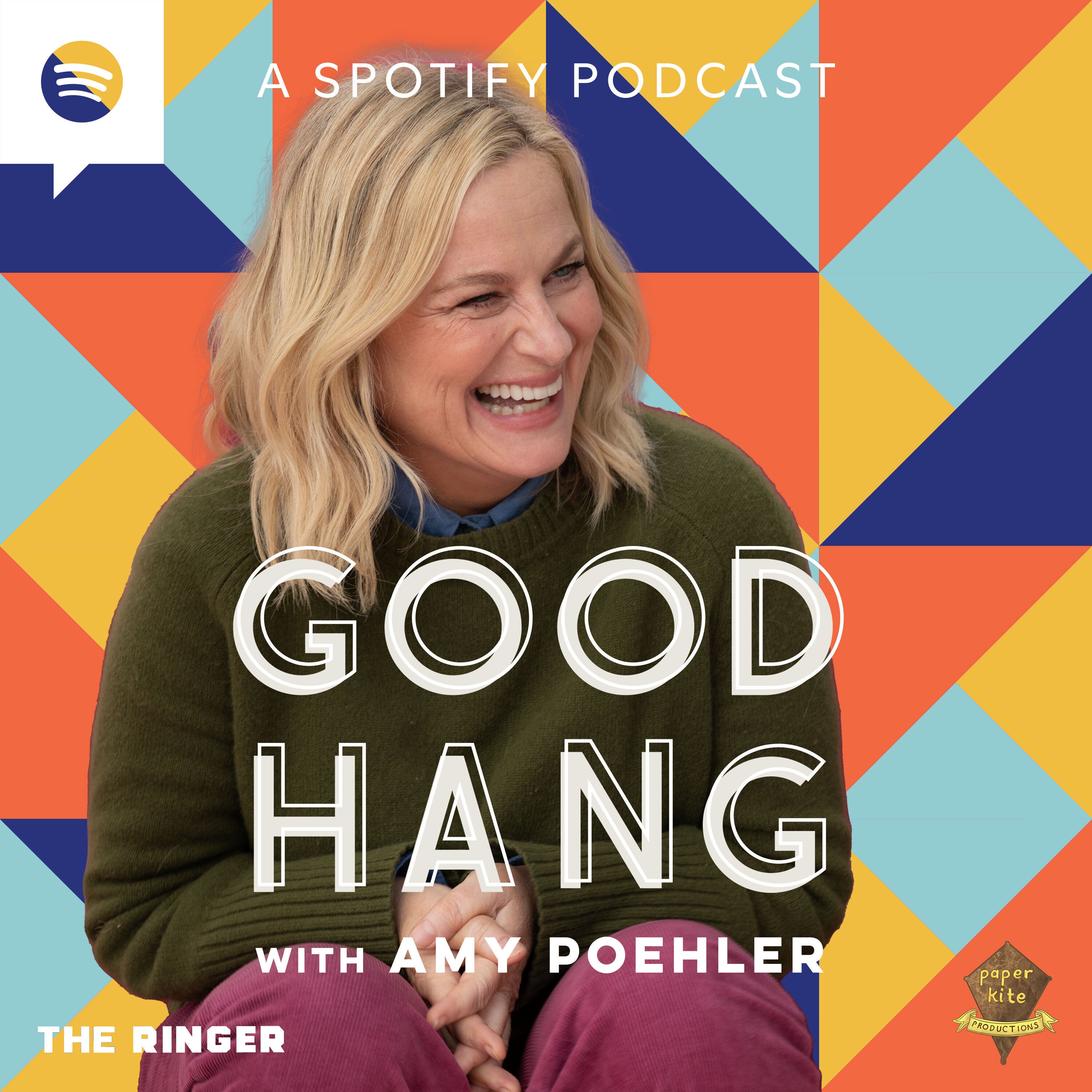
Dig: The Podcast E1 (with Amy Poehler & Mike Schur)
55m 15s
The *Dig* companion podcast offers a behind-the-scenes look at the creation of the new TV series, co-developed by Amy Poller and Mike Sure. While not a direct continuation of *Parks and Recreation*, the show subtly references the earlier series through character details and shared creative roots, creating a nostalgic yet distinct experience. The creators emphasize the importance of process, collaboration, and emotional authenticity over rigid formulas, forming a warm, inclusive environment that draws on their prior success and team dynamics. The core story follows four women across generations—ages 19 to 49—digging up both physical artifacts and personal truths, exploring how each stage of life shapes identity, relationships, and emotional resilience. The tone is grounded in realism and humor, built through iterative writing and character development that fosters genuine reactions and emotional depth. The podcast highlights the actors’ deep immersion in their roles, achieving a “fluency” in character that results in natural, witty, and authentic interactions. Production benefits from the return of key *Parks and Rec* staff, reinforcing a sense of continuity and team spirit. Real-world archaeology is woven into the narrative, with expert Professor Joe Rife providing both educational and narrative credibility. The show blends humor, heartfelt storytelling, and authentic workplace dynamics, offering both fans and new viewers a compelling, meaningful exploration of identity, legacy, and connection.
Hello everyone, it's Amy Poller and as many of you might know, I've been hard at work on a new TV show called Dig, which I co-created with Mike Sure and I'm very excited to tell you that the 10 episodes of Dig are out today on Peacock. And I've also been working on a companion podcast for Dig where we're going to go behind the scenes and we're going to talk to people, cast, crew, writers about every episode. And I wanted you to be able to hear the first episode here. So the show is hosted by a wonderful comedian, actor Brennan Lee Mulligan. You guys know him from many things on the internet and he plays a very special character on Dig. And Brennan is going to talk to me and Mike Sure in this episode and we're going to talk about a lot of things. We're going to talk about the Parks and Rec Band getting back together. We're going to talk about what it's like to finally get to play a grouch. We're going to talk about how Mike and I figured out the tone of the show and so much more. So if you like what you hear, slash watch, go watch or listen to the Dig podcast on Spotify or wherever you get your podcasts. And there are two episodes out today and more coming soon. So we hope you enjoy. Hello and welcome to Dig the Podcast. I'm your host, Brennan Lee Mulligan. We are diving deep into Dig season one. We'll be using every episode of this podcast to talk to the cast and crew of Dig out now on peacock. That's right. Every episode now available and bingeable by you. This podcast has its first two episodes available right now and we'll have new episodes coming out Wednesdays and Mondays for this inaugural episode. We will be talking to none other than series co-creators, writers and executive producers Mike Sure and Amy Polar about the pilot written by Amy and Mike and directed by Dean Holland. I cannot wait to dive in but make sure to stay tuned at the end of the episode for Give us the Dirt with Amy and Professor Joe where Amy will discuss with Professor Joe a real archaeologist all about presumably archaeology or they could talk about their day. We don't know. Folks, it's going to be an amazing episode. Let's dive right in to Dig the podcast episode one. In spite of God and his law, I have somehow managed to get myself at a table with Mike Sure and Amy Polar. Hooray! Yeah. This season of the show, my God, guys, it's unbelievable. We got to dive right into it with, first of all, let's, what fans all want to know. Is this in a shared cinematic universe with Parks and Recreation, the good place and a man on the inside? Hooray, question. Here's what I'll say about that. There are, over the course of the season, a lot of little Easter eggs, a lot of little things we laid in, a lot of little references to other shows, some of which maybe Amy and I worked on together, not big, not huge, not glaring alarm bell kind of going off things, but it's a fun little hunt for people to go on if they enjoyed Parks and Recreation or other shows that maybe we've worked on. So I'm not going to say it's a shared cinematic universe, but you'll see some familiar faces, you'll see a couple little items, a little, some objects, stuff like that. And if you look really closely, you'll notice that both Leslie Nope and Alista Bellnick have the same legs. I was going to say if we do in Oceans 12 where Alista and Leslie meet and go, hold on, hold on. Hang on a second. Exactly. Those things Amy said in the pitch when we were pitching the show was she would walk through why, why now, why this show, what she loves about it, and she talked about the friendships and she talked about generational relationships and stuff. And then she would end by saying also it involves a big hole in the ground and traditionally when Mike and I make shows together, we like to start everything with a giant hole in the ground. And then yeah, get out of it. Well, I mean, this is a like, you guys making a show to I, I, I cannot lie. This is, so this is true of anyone who works in entertainment. There's a lot of how you consider yourself an opportunity for yourself. When I got the breakdown for the character I play in the show and this is I, you, I can only insist that you believe this. I have no proof. My first reaction was not, oh, this is a cool opportunity for me. Oh, this is going to be cool for me. I saw Mike, sure, and Amy Polar, and I literally went, everything's going to be okay. Mike and Amy are making a show, they're making a show together. The light has broken over a far distant sky. That's very kind of you to say. Talk to me a little bit about like getting back in the saddle with someone that not only have you like been in the trenches with, you have a shorthand, you have a relationship, you know how each other's works, but you're also coming with the weight of experience of the prior projects. What brought you guys back together? What was it like getting back in the saddle working together? And what was it like doing it for this project in particular? Like excavations, the book that it's based on, the story, like this project speaking to you creatively, just like people want to know like what gets the band back together. Well, it starts with you reading the book, right? Yeah. I read excavations by Kate Meyers, a great book at PaperKite, and we thought, oh, this is a really good project for really good female characters, funny intergenerational comedy, a great part for also like a distinguished older actor to play our kind of novel character. And then as the more we developed it, we thought, well, we all thought together like this character of Elise really feels very familiar to me specifically. She's probably the closest, I would say, in terms of somebody that I've played who's like myself. And being a Gen Xer in this world, I really relate to this idea of just feeling very in between and getting, you know, having spent the last 20 or 30 years working for people, mostly men and putting a lot of time into that and then also developing and cherishing all these relationships I have with women who are my age or younger. So we just started talking about that and then we brought it to Mike and to Morgan and the hopes that like they would respond to it. And then when we knew that JJ Filman was going to be our head writer on the show, we just thought like, oh, this is a real dream team. And I'll just say, beyond ideas which are so important, of course, in any creative process. For me, the thing I just look for always is people and process. How are you going to make something and who are you going to make it with? I think ideas are wonderful and needed in every project. But for me, the idea is not the king, it's the people on the process. So we knew that was going to be excellent. And from my standpoint, what happened was I heard that Amy was going to call us with an idea for a TV show. When I heard that fact, the answer was yes, I would like to be involved before I knew what the idea was. Like if she had called and said like, this is kind of a weird idea, but it's like, I'm going to play, you know, time traveling Charlie Chaplin. I would have been like, okay, not what I would have suggested, but it's Amy Poler and so the answer is yes. Like I still would have done it. So I was in before the idea hit my ears, but then when she pitched the idea and she pitched it with such characteristic thoughtfulness, it was like this, these are the women. This is why it's interesting. This is what what the themes are. She already knew in her head like the metaphor, the central metaphor of like a woman who's let's say 50 years old, like literally digging and then also digging back through her past to uncover relationships and the root causes of behaviors. It's just it was all right there. It was all she had it in the front of her mind, and it was the easiest decision of my life. And you asked another question, which I think is interesting about like getting the band back together, right? So there is a certain there could be a certain concern or hesitation when you have worked together on a show that lasted for a while and that people have fond memories of which is, oh no, are we going to be crushed under the weight of expectation or something like that. But the thing is, is that when we did parts together, it was originally built as an office spin off, which it wasn't. And the show when it aired was immediately compared to the office, which was already a massive mega hit show, Amy was compared ridiculously to Steve Carell for no reason. The characters had nothing to do with each other. They're completely different worlds, whatever. And we slogged our way through that. We are very familiar with the feeling of like, what, but what will people think about whatever? And thankfully, I would say at this point in our lives, that is no longer a concern. Like, we're just like, people are going to think what they're going to think. They're going to take, they're going to watch it and they're like it or they won't. And if we make something good with care and love and attention that we care about, then we just have to trust that that is worthwhile and ever. And Apple already had a chaplain time travel thing in development. It's in like season five now. It is, it's hit. Alice Skarsgard is great. He's great. He's great, everything. He's a little taller chaplain. I've said, but and they went no must. They got that was a mistake. They got the better guys who did the hobbit stuff to make him right size. He's, he's usually 50 feet away from the camera. Yeah. Yeah. I genuinely think that you would crush as a chaplain time travel. Oh my God. Thank you so much. Should we? Should we do it? And in that right now. You're right. When we get a musical. [LAUGHTER]
I gotta be honest, I also think what you're talking about is it's about the process. What I felt there is I felt the joy of being an enormous fan of both of you from as long as I've been aware of comedy in general, I mean like so shaped and molded, not only by the work you guys have done, literally I am a UCB trained performer. I am a, I met my wife and started my family there. It's, there's no version of my life where I'm able to do the things that are meaningful to me without that. And I'm literally a comedy philosophy major. So like could not be more than the real bullseye. - Is it red in our sun? (laughing) - Oh my God, it could happen. - It's me, but what I felt so present when I got there is like you can describe it as a weight, but actually it's an uplifting thing. Your guys' prior work means so much to people that it is a buoyancy. It means so much when I got to set. And when I got there what I felt is the presence of those prior successes in the most positive way possible is not why you guys are there. You're there because you love this story. - Yeah. - It's there, this is what's happening. And what I felt in that moment, most of all, was like an incredible, this is I think often why people come to companion podcasts as they go, I want some vision behind the scene. Let me tell you, and I can tell you straight up, I got to set and it was one of the warmest receptions I've ever received anywhere. That's good. - That's good. - And it fit something that I deepen my bones believe, which is that warmth and humanity and kindness is never at the expense of efficiency and professionalism. It is a requisite component of efficiency and professionalism. - You're here. - I fully agree. I would say there's another layer to it in our case, which is wonderful and lovely, which is that we had on Parks and Rec for seven years such a wonderful team of people in every department. And in the time since that show has ended, both of us have continued to work with as many of those people as we can. I'm talking about costumers and props people and DPs and transpo people in every department, 'cause we had it a great time. And for this project, because it was Amy and because Morgan Sack at our producer was producing it, who also produced Parks and Rec, it felt like, oh, let's get the whole band back together. And so not literally everyone, but an enormous percentage of people who did important jobs on Parks and Rec came back and did them on this show. And so from day one, before you even got there, it felt like time traveling Charlie Chaplin. No, it felt like time traveling for us because it was like, these are the Dean Holland who started as an editor and was the director of more Parks and Rec episodes than anyone else was directing and directed, I think, six, set of five or six of them. And Morgan's producing and there's Kirsten Mann and Alexis Jax, who were doing the costumes and there's Gay Perello who's doing the props. - Who hopefully I think we're gonna be joining this podcast at some point. - And so everywhere you looked, it was like we never left. And that, it's just rare. It's a very rare thing these days, obviously. And that feeling of like we're getting to do this again was so joyful. And then to add to that that I was being, I was part in partnership with my own wife. - Yeah. - Who like Matt, you know, at SNL a million years ago and who was, you know, we were married right before Parks and Rec started and our daughter was born during the third season. And like it just, the amount of like good vibes, as the kids would say, the vibes were immaculate. That's what Kate, one of our producers of this podcast, if she were here right now, what she would be saying is the vibes were immaculate. And I would also like to say that we are a dream blunt rotation. - Oh my God. Incredible. And the dream vibe is immaculate. Mimetic language appreciated. But also just true. It was such, everything on set was so delightful and warm. And again, it's that feeling of the hours on a television set are incredibly long. And so that, some people take that as like, and there are some parts of the industry that take that as like the by word for being a little bit curt or brusque or anything else like that. And instead, it's like, no, no. Our lives are going to be so profoundly shaped by these long hours together. You are called upon to make this a warm and welcoming place. - I'm glad you felt that 'cause I'm gonna be real real with the people listening. And if you're listening, it means that you care about the show. So thank you. I was a little grouchy in the beginning. And I've since apologized. But speaking about getting back in the saddle, it had just been a minute since I had worked those hours. And also my character of, you know, like Elise has to be kind of standoffish and especially, you know, as we start the season, you know, no one has really bonded. She's keeping to herself. So it's really interesting when you're playing a character like that, you have to just inhabit that feeling. And unlike someone like a Leslie Nope, who's like, this is such the best day ever and you're the greatest. And let me tell you every day how much I love you. Elise is kind of like, don't talk to me that way. So I was using it. I was using my grouchyness. But I was a little out of shape in terms of just like the stamina. And so I'm really happy to hear that 'cause I remember a couple of times being like, okay, okay, get it together, Polar. Like, focus. And then I realized this is kind of helpful because my character would also be feeling this. Just a little bit of like distancing herself and in a way that I think helps. - So that's incredible to hear. And I have to respond to that by say, I'm just gonna tell the story of my first day on set if I can. So this is Amy Polar's grouchyness in action. 6 a.m. call time. I'm walking up to the makeup trailer. And of course, the fact that I got part at all, I'm like, "Shit, I'm like crazy." And you guys, we'll get to it in the episode where my character appears. It's just, it's a character that you could. - Woo! - Ghost! - Oh my God, we spilled water. - I got it, I got it. - Oh my God, Brennan's got, this is so exciting. - Oh my God. - Hold on, we're good. - Wait, wait, no, no. Is that your shirt? - What's your shirt? - Oh, relax. Look, you know what I'm saying? - Give me a break. - Oh my God, listeners, Brennan is cleaning up the water with his own shirt. Literally, the shirt off is bad. - Oh God. - So, your first day on. - First day, I won't spoil anything. A comedian could wait their entire life before getting a part like the one I got. And it was the thing you wait your whole life to get. And it just really from the bottom of my mind. But, it's six a.m. call time. And as I'm driving on to the lot, I go like, "Oh, six a.m." I was like, "Well, Amy is the star." And so the odds that she's called first are quite high 'cause she's gonna be in a majority. I was like, "Am I gonna meet Amy Polaro right now?" "Am I gonna meet my Amy Polaro?" She's like, "I'm gonna lock in Mulligan." And I walk in the makeup truck. It's just you and in the far distance, a wonderful makeup artist getting ready. But it's you. So this is your grouchiness. This is what I was greeted with. Brennan! And I go, "Hi." And I got a big hug and you're so welcoming and you go, "Oh, I heard you buy a reputation and come and do this thing and so we're so lucky to have you." And I'm like, "Yeah, you're lucky to have me." That's the dynamic here for sure. And I sit in the makeup chair and you do this thing that is, you reach over a hand and you go, "Brennan, I gotta warn you, I gotta give it to deliver some bad news to you." And I go, "Oh, and you go, I've completely forgotten that act." And I did. And I'm sorry folks, but I get it together near. If you're watching, know that by episode four, I remember. With love and respect for who is my boss, you gotta get the fuck out of here. That's crazy. It was so generous. 'Cause you are light speed and you are one of my, and so many people come to me to get heroes. And for you to say, I forgot I had to act, was such a generous thing to do for a guy who was freaking out. And it was so warm and kind and lovely. And so in a case, that's the grouchiness that I was given of. - I was about to say, just to be clear, that Amy Polar grouchy is not like Christian Bale, yelling at that deafy grouchy, like that's not what we're talking about. - Hell it. - God, if we can do that word perfect on a future. But it is to pivot away from the point being that there was so much warmth. And again, it was such a kind thing to say to somebody who was performing for the very first time with someone that they just admire to an impossible level. So to move away from sincere saccharin compliments. - Yeah, who wants those? - Who wants those? I'll instead say, as someone who I think occupies a place in American consciousness in a sense of Leslie Nope, literally playing joy and inside out, what was it like to play a fucking grouch? - So fun. It's so much fun. Like, I mean, men haven't so easy. Everything they get to do, they get to talk slow and like think and look out the window and shit. Like they get, like acting is so much better. - Constantly looking out the window. And my wife doesn't get to talk to you. - It's so much better when you just get to, someone says something and you just get to look at them and be like, what? Like it's so-- - And also mumble, you can mumble, you say. - So much more fun. No, it was really fun because in many ways, you know, I had to remember that Elise is just like not, that character is not,
trying to get people's approval, and she's pretty, you know, set in her ways and also confident at her job, and so I did have to physically slow down and not do the thing that I am you like to do, which is, you know, fill the silence and make people comfortable, and I like to like, you know, I don't want people to not know how I'm feeling, I think most people who know me pretty much know how I'm feeling all the time. And so that was a fun challenge, and it was really fun, you know, it was fun to play that with the women, it was fun to figure out how to play that with you, and you really helped me, especially in the first episode, because I, it was like, you know, in the first episode, I'm kind of like me and you are a team, and kind of everybody else is like this annoying noise. And so I just focused on you when we first started, just to be like, you know, kind of the way Elise would focus on Neville, which is like, what do you need, what are we doing together, like show me the way. When we were talking about how to make it clear to the audience quickly, that this is not Leslie Note, that this is a different character, same actress, very different character, different circumstances, like how do we differentiate, I remember thinking, what if the first thing she says is we are so fucked, which is a thing that Leslie Note would never say for multiple reasons, and that I love Dean directed this so well is she arrives in camera and is almost looking right down the barrel. Yeah, and says we are so fucked. That is a greasy flagpole jammed right up our butts. We're like, if you were, if you were interested in the debate about whether or not this character is like Leslie Note, let's end that debate right now, and tell the audience directly that this is a new world and a new character, and I was worried about it. I won't lie, I was like, it is work coming out guns blazing like we're not like soft pedaling this and we could start this and there's a lot of rules that you're taught about like make people like your character and make people start off with a show and they're saved the cat, that kind of thing. Yeah, those rules notwithstanding I thought personally and I think Amy agreed that it was worth it to just right from the jump say welcome to this new world, everyone who has liked Amy's previous work and what saves us, I think, is that by the end of that scene, she is holding hands with three other women and looking them in the eye and speaking to them very sincerely and very warmly, even if she's still making jokes. And you understand like okay, different character, but don't worry because on this journey you're going to go from from we are so fucked to like loving these people and caring about them and hopefully we'll see we'll know shortly whether people agree with our assessment of how to execute that plan. It's a beautiful thing to watch and I would say to you that like there is a comfort that you get from a Leslie, but there's also a comfort you get from an Elise that I can see in respect in that first episode because there's something about someone going we're fucked and I'm being decisive. Yeah, we're not losing momentum. Elise is a very action oriented character. Totally we talked about this a lot because the show right like very quickly it's you know women who are 19 29 39 49 they're all different generations dealing with different things and they're digging to find out about themselves. So if you got that kind of show where people are digging up stuff and having feelings it's fun to play a character who's like much more a doer than a feeler. And it's also frankly I would say a little generational you know I'm Gen X and we were very we were raised by boomers and beyond and we just did not have the same like training and feelings. So we approach work sometimes differently we approach like how we look at our past differently and that just feels very familiar so this side of playing of me is fun to play because I think Elise is. Leslie Nope is like may we all strive to have the amount of pure like open face sandwich optimism about life and incredible drive but I know that me and a lot of women my age are very tired. We're so tired and whatever we've been doing we've been doing now for probably 25 years. So it's interesting like it's interesting to be at that point in your life and what does that do to you and for you. There's a huge degree of like optimism and it's not you wouldn't say like cynicism is not the right word for at least but optimism versus maybe pragmatism or realism realism. But it's fascinating because you see a character like Pat or even the other character like Dylan and there's there it's almost what I love about the show is it's almost saying like optimism is appropriate when you have barely lived at all. You what mistakes are you regretful over you just got here right and there's so much about at least which goes no I'm aware of where I aired or where misfortune or calamity occurred. So I can't it's not appropriate for me to be rosy right when we were talking about the pilot long before we put a pen to paper so to speak we we all we did is talk about this exact thing talked about. We talked about generational shifts in attitudes towards the world towards work towards relationships that sort of thing. I remember a one point a sort of breakthrough for me personally was I was like oh you know what this reminds me of is those sort of like things you see in museums time times where it's like you know ape and then like crow magnum man and then like Neanderthal and they're sort of moving like getting upright and then the last one is like humanoid right and like if we think of these women as stages in development and growth of a single woman like think of like they're the same woman they're just at 19 20. It's at 19 29 39 49 and someone who works at paper could actually like drew it for us Jordan yeah she drew us a thing that we were like oh my god yes and so that became the organizing principle and the idea was let's think of what is good and bad about being at each of those stages right if you're 19 and you're like the most undeveloped sort of embryonic stem cell kind of a person. The whole world is in front of you the world of possibilities enormous you could become anything you have all your dreams and hopes but you have no experience you have no like no scar tissue no learned lessons. If you're at the end and you have all of that scar tissue and all those learned lessons that's amazing and very helpful when it comes to work. But you've lost a certain sense of wonder about the world or you can't you kids too late to shift gears you can't suddenly decide you want to change your life in a meaningful way. And so our pros and cons to being at every stage of the development and that became the main thing we talked about I think when we were writing the pilot and establishing the characters was like what is good and what is bad about being 19 29 30 49 49. Well this is a question I want to get into because I want to talk about you guys co writing the pilot together and establishing the tone for the show and there's a weird to even more specific because we have to shout out not only the just the incredible again Fina Antonia Geraldine as these three women that end up. Surrounding and creating this group with a lease yes and I wish to say Fina Straza Geraldine this one off them and Antonia Thomas all like very accomplished actresses who we were lucky to get. It's phenomenal when you were establishing the tone of dig and you were thinking about your four main characters how did you think about what the characters there to do in the story and how it was going to affect the tone and the sense of humor of the overall show. Great question. I would say first of all tone is the hardest thing always always always hardest thing about creating a new show and you have to talk. It's the analogy I always think of is there's a probably apocryphal story about how the David was carved where the someone he Michelangelo reveals the David and someone says how did you do this? And he says it's simple I took a giant piece of marble and I cut away everything that wasn't the David and the idea was like this is it was divine inspiration and I saw it and it's whatever and and all I did was remove what was into this masterpiece. Tone is a little bit the same way to me where the way you find the right tone is you keep writing and writing and writing and writing and you just you're like I don't think that's right and you throw it away. And it's like I don't think she would say this here and you throw it away and you keep removing things that you don't think are right and then what you're left with is what's right. And that was I think whether we were conscious of it or not that's probably probably how we wrote the pilot and the show in general. But when you talk about developing pieces on a board like that. The way I always think of it is like I know who first of all some of it should we should say came from Kate's book right the characters are in Kate's book all four of them are in Kate's book in different ways. And as his use character novel. But what I think of it is like what matters at the beginning is this lady and the character she's playing. And so let's talk about her we spend a large number of hours just like who is at least how does she function what is what would she think of what a flavor ice cream which she order what what would drive her crazy when she's getting her car from the valet like we just you try to you try to get a handle on her and then the other characters you figure out how to put people around her that would that she would enjoy.
certain aspects of them and then she would be driven crazy by certain aspects of them. Like what how do they talk and what they what kind of people they are like what would at least love about them what would drive her crazy about them and that sort of the same thing like you're removing stuff that you don't want. Like you end up with characters that in a clump when they're standing there in the pilot and they're all holding hands and she says you're my best friends and then says you're my best work friends and and Geraldine kind of goes that's fair. You know like that you you want to get to a point where the audience feels that exact feeling which is like we are an unlikely group of four women we aren't we didn't grow up together we didn't go to college together we haven't known each other forever but in this moment I love you and I care about you you get there by defining the other characters against each other and specifically against Elise and what you're left with is the right combination of pros and cons for her personality wise I would say. And that description is just why Mike is the best that you Mike sure is the best at that what you just said which is putting chess pieces on the board and then being like how should we play them where are they going and and also staying open to not knowing which is part of the process to like there's nothing like having a fixed idea about where someone's going and then you know like from improv like you have to kind of keep a bit of oxygen there because you have to see where it's all going with the actor brings in like what the writing brings no one is better than Mike no one in in in in my hundred years of being in the business and and the fact Charlie what a giveaway and JJ the way she runs that room with the writers that we have who are so funny and talented in all different ages and points of view is so like I think you the your answer is like you work with people who are really good at it if you're lucky and that's definitely Mike from from the conception for from Kate's book to you guys establishing the tone in the pilot to then that go into the writers room JJ Philbin incredible writer a group of television writer your wife SNL yes my wife JJ Philbin we met at Saturday Night Live before even Amy showed up 1998 we met and when we were working on the pilot we kind of both thought we needed a third person who could sort of run the room on a day to day basis because I was also working on another show on another streaming service and so we kind of started talking about like who this what kind of person this would be and we were thinking should be a it should be a woman and she should have like extensive comedy background hopefully is run her own show and eventually I was like oh I'm describing my wife describing the woman I live with and have shared my life with and so I pitched that to Amy and she was like amazing great I talked to JJ and she was hesitant at first because she never worked together but eventually she signed on it was awesome we had so much fun it went better than we could have possibly imagined and I I reminded her when she was she was like nervous because she was walking into an established world Amy and I've worked together the whole team is our production team and I reminded her something that she told me in season one of Parks and Rec we were taking a walk she I think she was pregnant we were walking around our neighborhood and I was like not sleeping I was so sweaty and like nervous all the time because things were so hard as Amy likes to say and at the beginning year at the bottom of show mountain and you have to claw your way up and it's very daunting and I remember very clearly where we literally were in time and space she said to me you're thinking about this all wrong you're trying to like you're trying to get through this with logic and like practicality all you need to do is love the characters you don't love your characters yet and you need to love the characters and once you love them and really care about them and really take on their lives as meaningful to you as if they're real people that you really love the stories will naturally flow like they they will come out of you because you'll love them so much you'll want them to go through have have triumphs and have good relationships and everything else and I knew with like blinding clarity that she was right and so I reminded her of this when she was saying like but you and Morgan and Amy have all worked together and I don't know how the world and I and I said listen all you have to do is love the characters and yeah if you love the characters like I love them and I'm becoming falling in love with them as I write this pilot with Amy like everything will be fine and she was like angry at me that I had thrown her words back at her but she was like okay fine yes fine you're right and thank god she signed on because she just did the best job. The brilliance behind your guys work together and it's very present in dig which is a character can be so bizarre and specific and truthful but outrageous that their honest reaction to another character frames them as unusual highlights their joke and springs into their own joke and reaction to that. I have a term for this exact thing which I have had for a long time in my own head which is fluency I think of it as fluency in a character so I remember the first time I had this thought was on working on the office in season two or three maybe where the show was had really started to click and we were doing a series of talking heads with Steve Carell and then we did a series of improvs and where and we used to do this all the time on the show we did it on Parks and Rec too where we do the script and then we would say like all right just do whatever we'll see if something fun comes up and I was behind the camera and I sort of tossed off a couple ideas to Steve of like maybe talk about this thing or whatever and he just kept talking like he didn't even break stride he just kept talking but shifted into whatever I had suggested and was super funny and also really in character like it was still Michael Scott and I remember thinking oh he's fluent in this character it's how Amy got with Leslie no it's how Nick Offerman was with Ron Swanson like at a certain point with enough reps and enough thought and enough practice you become fluent in the character and that is when shows take off it really is it's like when when you if you in your life remember watching a sitcom that you loved and the first six eight episodes like our little rocky but you like it and whatever and then there's an episode where it's like oh it's suddenly everything clicks that is the moment that the characters are that the actors are becoming fluent in their characters what's hard these days is you don't do 22 anymore you don't do nine seasons anymore you have to achieve fluency very quickly and what that involves frankly is a lot more work for the actors because the actors have to do so much more thought and preparation and like work on like who is this person how do I get fluency quickly in the character in Amy's case I think us writing the pilot together was very helpful and by the by the way by the time she came to me she had read the book a million times and had thought about the show and that's why her original pitch was so rich and had so many so much metaphor and so much kind of thought behind it I think she achieves fluency in a least a bell next language far earlier than if we just cast someone to play it I don't think that person could have possibly become fluent as quickly as Amy did and I I also think it's a testament to the other actors I think Geraldine was sort of fluent in Dylan like before she came to act on the show like and and Athena with Patty like and and Antonia too like did something made sense to them about each of the characters and I think from the second they showed up they felt like maybe not fully fluent but like way beyond conversational language level you know it's really the I mean it's to create credit to the actors credit to you as as writers and creators of the show and the casting process as well of like finding these amazing people because it feels like an orchestra I've so many mixed metaphors the I love a man I love it helps me because it's like the musicality of how you well totally yes I'm sorry I didn't interrupt you and and I just want to say that's why especially in the first episode why it's so important that we got you because what he does just like the actor who Laurie does just like the character of Neville is reminds us like you know in the same way Neville kind of swoops in and it's like archaeology is important and it means something and this is why those stories are buried beneath the strata of the ages the crumbling of civilizations and your sacred purpose is to uncover the truth of those lives so those stories can be told once again he has such a presence and he's such like he has voice is so different than mine he's just he has this like a very authoritative and somewhat like he's very very smart he adds this real gravitas to the production and we're like oh shit he was here like a you know and we really have to do a good to extend this to the previous metaphor he is fluent in like the concept of performance yes like he is a he I mean he's so good in this role in particular but he has do you actually
asked him once if he ever got nervous acting. - Yes. - And what did he say? - No. - Yeah. - He acting is very. - And he's also, he does, I mean, he does so many things. He's a great musician and plays a million instruments. He can do a lot of things. But acting, I think, is very natural for him. - It is. - It's wild. - And so, like, that was just the combination of his voice, which is kind of like, you know, when we start the episode, it's like, oh, this is gonna be the voice of the show. - Yeah. - And you're right. And then all the other music. And it's funny you say that I think about it all the time when we're writing, when we're writing scripts, when we're reading scripts, when I'm watching cuts, I sometimes close my eyes and I try to listen to the music not only for the comedy and the timing, but just people's voices. - If you go into it, I feel like you could literally assign between, like, between, let's say like, a lease, Pat Borkman, Claire, and Dylan, it's literally like, well, there's your strings, there's your woodwind, there's your, you know, like, it's this family thing. And to bring it back to, like, when I think about, like, scenes between, like, Leslie and Ron, right? From Parks and Wreck, there are moments where, I am aware that Leslie is overly optimistic, overly hyper, overly gung-ho. But if I were to respond, I would be like, yeah, we should probably check our, we should maybe check back in to get feet on the ground. - Yeah. - And then, but that's not what Ron Swanson says. Ron just goes, no. And it's, what's great about it. - Tell me about it. I mean, no one talked slower than it got from me. (laughing) Still, no one does. No one does. - And I know he's looking at a window right now. - Oh, man, right here. He's in my dressing room right now. And he hasn't finished a sentence. I've been here for hours. He eats five words to my hundred. - It's perfect. - Perfect pain. - But like that moment where you go, oh, you, it's, what it is is, like you're saying, it's fluency of the actor and it's efficiency of the writing. If you're talking, if you're talking to your JPM, we're talking jokes per minute. - Okay. - Let's talk to JPM. - Yeah, let's talk to him. - He needs the big numbers, guys. He likes numbers. He likes numbers. He likes math. - But the idea of like, no wasted straight man reaction. My straight man reaction to you is a move on my own game. - Yeah, for sure. - My straight man reaction to you is a move on my own game. And that is, yeah, Antonio is so prim and proper that like, yeah, we're all prim and proper compared to Dylan. But Antonio, but you know, Claire is so much more that it's another game move for her to react to Dylan. - Well, that's the real joy of writing TV comedy. If you want to get right down to it is so much work, so much preparation, so much thought, so much care, so much has to go right. You have to get so many good luck breaks in the world. If you get to the point where you're actually like, oh my God, we have a show. They're gonna put this show on the air. Let's write this show. Then what you get is you get, hopefully, in our case, Alison Jones, the greatest casting director who's ever lived to go find you the actors and you offer them jobs and they say, yes, oh my God, they said, yes, this is incredible. And now here's all the, here's everything we have. Here are all of our assets. And then it's just how do we maximize the amount of fun that we get to have with these people? Like, let's put Hugh Laurie and John Pointing into a story together where all they do, and I won't give anything away. This is down the line where all they do is make jokes. Like, it's just a pure comedy story of these two incredibly talented and funny people. And once you do that in a writer's room, when you come up with an idea like that, it's like an old-timey oil well gusher where like you're drilling and just the oil just gushes out and exploding everywhere. But you just, you get the best comedy brains in the world into a room, you give them all of these toys to play with and you pitch and pitch and pitch and you come up with like, what are the most fun ways that we can do this? And my personal favorite moments in every show I've ever worked on are when someone in the writer's room was just like, oh my God, what if we did this? And it's just two actors, two talented comedians, a room full of joke writers and like put them into that situation. And then you pitch for hours and hours and giggle and have a great time and then magically get to actually see it through. It's like, it's why for all of the sermon drawing and all of the like, you know, everything that's hard about this world, it's the best job. It's the best job we have the best job and we're so lucky. And doing it again with Amy was like a, I didn't think it was ever gonna happen and I'm so, so pleased that it actually did. - Same. (upbeat music) - Okay, we're about to play a game, it's called, it's all Greek to me. - Oh boy. - I'm gonna present pairs of offerings to world culture and civilization from the beautiful nation of Greece where you guys got to film, you filmed-- - We filmed Greece. - We got to film in Greece. And I wanna just like set up this by saying, I'm a very competitive person when I play games. So I'd love to know where I stand after each question and just-- - Who's winning, you're saying? - Yeah, who's keeping score and I'd like to know? - So just, if you could after each question, if you could just say who's winning the game? - Yeah. - Who's winning the game at that moment? - Okay, great. - Yes, please. - I'm gonna present these pairs to you. I will say this, we will judge the winner based on who answers fastest. - Oh, fuck yeah. - Someone on the beach. - It's a pair? - My, here we go. - And you have to pick your, what your preference is between these offerings to the world from Greek culture. - Okay, in terms of just what we like better, okay. - Your brick is your own, but we're measuring speed. - Right. - So, okay, it's all Greek to me, beginning in three, two, one. Yogurt or democracy? - Yogurt. - Yogurt. - Yogurt was first Amy wins, okay. Okay, number two-- - And then obviously loses. - Number two, Nia Vardalas or Centaur's? - Nia Vardalas. - Okay, Centaur's was shorter, so Mike wins. My gutted out faster, there we go. Okay, number two, John, number three. John Stamos or the Parthenon? - John Stamos. - Ty. - We always agree about John Stamos. - And that's a tie, it's all Greek to me, Amy. - Mike, double winners, there we go. That's the olive laurel to you both. Incredible, John. - So many famous Greek people, Tina Fey. - Tina Fey? - My favorite Greek. - Jason Manzucas. - Jason Manzucas. - There you go. - Jennifer Aniston, Zach Elphanakis, Nia Vardalas. John Stamos, so many famous Greek people. - Yeah, so many. - The only one who really matters is John Stamos though, right? - Oh, I thought you were gonna say Tina. (laughing) - I think Tina would want me to say John Stamos. - You're right, you're right. Stamos is the only one that matters. - Incredible. Well, that was just all Greek to me, and we want to say thank you to all of our wonderful, we want to say thank you to the country of Greece. Thank you to Greece. - Yes, before we go just as we start, as we kick off this podcast, I just want to say filming in Greece was so fun. - So fun. - And it was, the food is so delicious. - You filmed in Italy and we filmed in Athens. - Yes. - And both experiences were incredible. They were both wonderful nations that we had a great time and great crews, great people. - Great people. - Yeah. - So welcoming, so fun. - There's a second time I had ever been in Athens and I love that city. That city is like Rambunctious and loud and fun, it reminds me of New York. - Yeah. - And but everywhere you look, there's something that's like 4,000 years old. - I also want to say this show, and for everyone who's watching, I know we're wrapping up our episode here, and we have to get by the way to Amy and Professor Joe in a second. - Oh, that's right, I'm talking. Should I set that up? - Yes, set that up. - Well, I'm going to be talking to Professor Joe at the end of this episode, and Mike, you might want to explain specifically who Joe is. - Joe, so Joe Rife is an archaeologist who teaches at Vanderbilt University, and when we were in the early stages of working on the show, we knew we needed to talk to someone who knew what he was talking about. So we found Professor Joe. He became our like, we had like a red hotline where something a question would come up and we wouldn't know what it meant, and we would pick up the phone, and he would answer and explain what the hell we were talking about. He's a lovely guy. He is extremely passionate about, one of the things I love the most about him is that his passion for archaeology matches like Neville and Elisa's passion for archaeology, like he cares about it so deeply, he's run his own dig in Greece for decades, and he has agreed to join our podcast and give a have a little fun archaeology moment at the end of every episode. - On fact. - He's a lovely guy. He looks a lot like Tim Waltz, the former vice presidential nominee. - That's right, and I wonder if anyone's ever given him a nickname, 'cause I love to give people nicknames. - What do you got? - Pro Joe. - Pro Joe. - Pro Joe. - Professional Joseph. (laughs) - I'm sure it's for professional Joseph. - Pro Joe. (laughs) - Pro Joe. (laughs) - Right? That's a totally genuine reaction. - Pro Joe. - Pro Joe. - Pro Joe. - He's a shortened professional Joseph. - He makes total sense. - We're all on the same page here, absolutely. - I literally almost just knocked my way. (laughs) - I was like that. - Well, we'll strap in for professional Joseph and Amy Polar. (laughs) - Come on. (laughs) - Enough, next. This has been Dig The Podcast. Huge thank you to our guest, Mike Sure and Amy Polar. - Thank you, Brandon. - Thank you, you're the best. - A pleasure and honor privilege. And we hope you can dig it. See you next time. (upbeat music) - Well, ladies and gentlemen, get ready for your new favorite segment. It is called Give Us The Dirt with Professor Joe and Amy. And we are gonna talk about all things archeology. We have an expert with us. And I'm lucky enough to get to ask Professor Joe, who consulted on Dig and is our new archeologist friend. Questions that I've always wanted to know. So Joe, are you ready? - I'm ready. - Joe, behind you, randomly pull out a book and tell us what the title is. - Well, I've got some good ones here. - What do you got? - Okay, here's one. - And for listeners who aren't watching, we'll explain what the books are, but for people that are just listening.
this thing, Joe's got a bunch of books behind him. Joe's reaching back, and he's pulling out 50 shades of gray. No, just kidding. (laughing) Okay, Joe, what do you got? - I've got the Cambridge encyclopedia of human paleopathology. - Ooh. - That's the study of ancient disease. - Soon to be adapted by Ryan Murphy. (laughing) Can I give you a nickname before we start? - I'd like to refer to you as pro-Joe. Has anyone ever called you pro-Joe? (laughing) - This is the first time I like it, though. - Okay, it works, okay. Okay, so we're with pro-Joe. And we're gonna talk about archaeology, which is what digs into and you are our expert. And, you know, my first question is, can you tell us a little bit about what you did on the show? Like, and how it relates to your real job? - Yeah, so my job was to give a sense of what archaeology is about, how do archaeologists involve students in research overseas, especially on projects in Greece that are sponsored by universities, and to lend a realism, let's say, to the sets, the costumes, the props, the language, the whole setting. Essentially, I run excavations in Greece myself for Vanderbilt University, where I teach. I take students every summer, so in many ways, the show is a kind of a recreation of the life that I pursue professionally. It's a perfect fit, really. - It is, and we were so lucky to get you, because every time we were in the writers room thinking about, like, what would they be digging? What would they be thinking here? How would this go, we would call Joe? - Yeah. - I have a question for you, Joe. Archaeologists is the kind of like job that kids say they wanna be when they're young. It's like, it almost feels like a fake job, but you are an archaeologist. How did you know you wanted to be an archaeologist? When did it, that first become an idea for you? - Oh my gosh, I really looked into it. So, and this is an interesting story. I grew up in a town that had a wonderful art museum that also had an ethnography collection. This is the Jocelyn Art Museum in Omaha, Nebraska. And I went through a program when I was young, when I was in grade school at the museum every Saturday. And that just kind of that, essentially, it was a community outlet. That really sparked my interest in artifacts the past. And then just continuing on, I always carried that passion with me. I had the opportunity to study Latin and high school and that made me specifically interested in the Greeks and Romans. So, I was somebody who, you know, I was a nerd and I held on to that. Yeah, for all nerds, you can turn out to be like Professor Joe. Take your kids to museums and then they will have a job in archaeology. Well, okay, that is a great start, Joe, for us to talk together. We are gonna be talking throughout this podcast. We're gonna be checking in with you, asking you questions about archaeology. So, thank you for talking to us on our first episode and we'll catch you on the next one. - My pleasure. (upbeat music) - Well, that's all for us on Dig the Podcast today. Episode two of the companion podcast is already out. So, jump right on in. If you so choose at episode three, we'll be coming out this Wednesday with more episodes coming out Mondays and Wednesdays after that. As always, you can watch Dig in its entirety right now on Peacock, I'm Brennan Lee Mulligan. And we hope to dig in with you again next time. (upbeat music) Dig the Podcast is produced by Dunshire Productions, PaperKite Productions, Fremuelon and St. Boat Studios. It's hosted by me, Brennan Lee Mulligan. Our executive producers at Dunshire are Morgan Sackett, Dean Holland and Kate Rosenfeld. Our executive producer at Fremuelon is Mike Shoreer. Our executive producers at PaperKite, are Amy Poler, Kate Aaron and Jenna Weissberman. Our executive producers at St. Boat Studios are Barry Finkel and Gabrielle Lewis. Our senior producer is Ben Goldberg, Jordan Satmarie, Forest Green and Ted Hayden, are our video editors. These episodes are mixed by Hannah Sprown, special thanks to Annabelle Healy. You can find more episodes of the podcast on Peacock or wherever else you get your podcasts. See you next time. (upbeat music) Okay, I'm gonna hold on one second. I'm gonna get my little list out here. - Okay. - It's so fun. - If I knock over water, what a rookie move did knock over water. - I feel like we should keep that in, but. - I tweeted it. (buzzing) - Is that fucked up? - Yeah, instantly. - Oh, I don't know. - You snapped a picture. - There's already like really funny memes about it. - So embarrassing. - It's actually kind of a huge, we could probably license it. I don't know, is that what we're gonna say? - Yeah, like NFTs. - Put a pin in that Charlie Chaplin time traveler. NFTs, bring NFTs back. - Oh, it's bring out a thing. - Oh, I love it. The tech is just like fashion, it comes back. (upbeat music)
Podcast Summary
Key Points:
The new podcast *Dig* explores behind-the-scenes insights from the show’s creators, Amy Poller and Mike Sure, with episodes featuring cast and crew discussions.
While not a formal shared universe, the show includes subtle Easter eggs and references to *Parks and Recreation*, especially in character design and visual details.
The creators returned to work together drawing on their shared history and strong creative chemistry, emphasizing process, warmth, and trust over past expectations.
The show centers on intergenerational female friendships, with characters at different life stages (19–49) navigating personal growth through excavation and self-reflection.
The tone was shaped through iterative writing, character development against each other, and a focus on authenticity and emotional depth.
Actors achieve "fluency" in their roles through deep character understanding, leading to natural, reactive, and humorous interactions that elevate the comedy.
The production team included many returning *Parks and Rec* professionals, creating a warm, collaborative, and familiar on-set environment.
The show is grounded in real archaeology, with Professor Joe Rife, a real archaeologist, providing expert insight and enhancing authenticity throughout the series.
Summary:
The *Dig* companion podcast offers a behind-the-scenes look at the creation of the new TV series, co-developed by Amy Poller and Mike Sure. While not a direct continuation of *Parks and Recreation*, the show subtly references the earlier series through character details and shared creative roots, creating a nostalgic yet distinct experience. The creators emphasize the importance of process, collaboration, and emotional authenticity over rigid formulas, forming a warm, inclusive environment that draws on their prior success and team dynamics.
The core story follows four women across generations—ages 19 to 49—digging up both physical artifacts and personal truths, exploring how each stage of life shapes identity, relationships, and emotional resilience. The tone is grounded in realism and humor, built through iterative writing and character development that fosters genuine reactions and emotional depth. The podcast highlights the actors’ deep immersion in their roles, achieving a “fluency” in character that results in natural, witty, and authentic interactions.
Production benefits from the return of key *Parks and Rec* staff, reinforcing a sense of continuity and team spirit. Real-world archaeology is woven into the narrative, with expert Professor Joe Rife providing both educational and narrative credibility. The show blends humor, heartfelt storytelling, and authentic workplace dynamics, offering both fans and new viewers a compelling, meaningful exploration of identity, legacy, and connection.
FAQs
No, Dig is not part of a shared cinematic universe with Parks and Recreation. However, there are subtle references and Easter eggs for fans of the show, including a few visual nods and character details that pay homage to the original series.
The central theme of Dig revolves around intergenerational relationships and personal growth, with women from different ages (19 to 49) digging into the past to uncover truths about themselves and their relationships.
Dig is co-created by Amy Poller and Mike Sure, who serve as writers, executive producers, and showrunners. They developed the show's tone, characters, and narrative structure together.
Elise is a grouchier, more reserved, and action-oriented character who reflects the generational shift of Gen X women. Unlike Leslie, she is self-reliant, emotionally guarded, and grounded, offering a contrast to the upbeat optimism of earlier characters.
The show uses the characters' age groups (19 to 49) to explore how different life stages shape perspectives on work, relationships, and self-perception, highlighting both the optimism of youth and the realism of maturity.
The companion podcast offers behind-the-scenes insights, interviews with cast and crew, and discussions about the show's development, making it a valuable resource for fans who want to understand the creative process.
Chat with AI
Loading...
Pro features
Go deeper with this episode
Unlock creator-grade tools that turn any transcript into show notes and subtitle files.
 PodcastTranscript AI