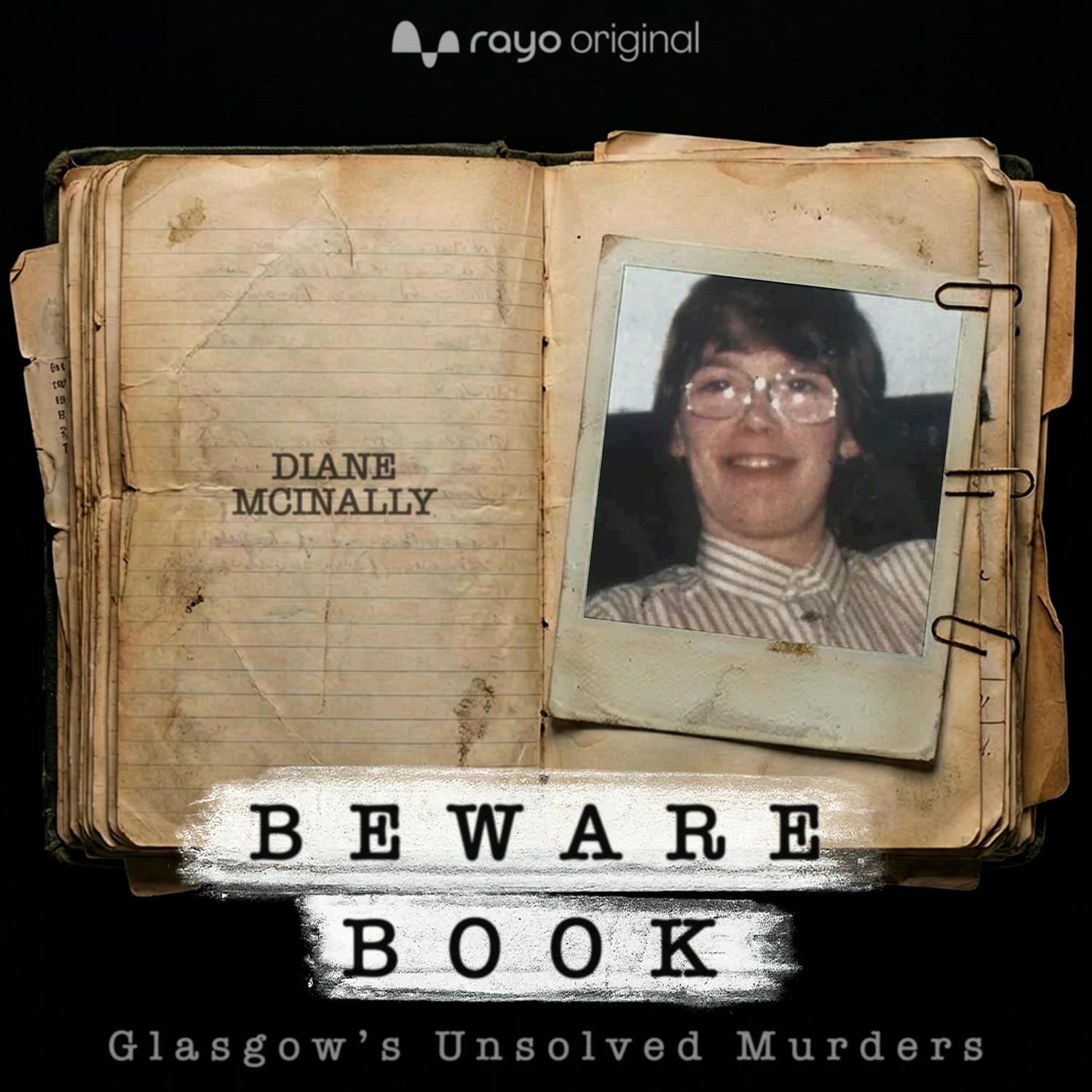
A reo original podcast. The Weirboot contains references to sexual violence and murder, which some listeners might find upsetting. What the fuck, Lauren? Did it? I'm not sure I'd only get dead. I can see you're like moving. Wait, I can see you're like moving. Give it a little more. Look, I can hear voices. I'm tired of later walks. I don't want to give her a fright. How would you feel knocking on someone's door a complete stranger? Decades after their loved one was brutally murdered. This is a story about just that. How two journalists end up at the front of the house of Dolly Glover, the aunt of Diane McInaalley, who was beaten, strangled and dumped. On a cold, dark night in a park on the outskirts of Glasgow in October 1991. She was all of her mother. It's time when she went to just. She didn't do anything wrong. She kind of condemned them. Asking about a case decade later, that still holds more questions than answers. Hi there. We're looking for an Elizabeth Glover. Is that your mom? Oh my God. Dolly? We are Callum and Collette from Radio Client. We're basically doing a wee bit of an investigation into the unsolved deaths of sex workers in Glasgow and the. Oh yeah? Yeah. And the cousin? Is that your cousin? Yeah. Is that any commanding on phone? I don't know if you need to go there. Great, yeah. Absolutely. Thank you. All that. I think it was something up in my brother or something. Oh, I'm sorry. This is why we hate doing it because it was a while ago. It's really hard to track people down. So, you know, we don't want to give in, dear, right? We're going to need to get done. Oh, thank you very much. And it's a fun. So that's Shirley. She's Diane McInaalley's cousin. We're sitting in her bright modern living room now with matching red curtains and scatter cushions and photos of her family in glittery frames. Well, your house is painted. Yeah. After spending a brisk summer morning, trapping doors and asking questions in Castle Milk and a state on the south side of Glasgow, I think we're quite happy to be sitting on Shirley's dark leather couch with a cup of tea. And we're really hoping that Shirley's mum Dolly, Diane Zant, talked to. But those two people that I speak to, it's just. just like a dog of it, Diane. Oh, you're acting? I know. So when Dolly does arrive after making the short trip from her house across the road, she bustles in with her two dogs, Buster and Junah. Come on, Junah. Junah! Yes, she is. Oh, fuck. You did. Come on. See what you made, Shirley. All smells like she quickly lets them out the back and asks her daughter for a cup of tea. But before we get too much into our conversation, maybe now's the time to tell you a little bit more about us. And why we ended up hearing about Diane McInelly sitting in her cousin's home last summer. That journey actually begins months before in a court room in the centre of Glasgow. Tonight, a 51-year-old man has been told he could die behind bars for the brutal murder of a 27-year-old woman in Lanarkshire nearly two decades ago. My name's Collette McGonagall. I'm Callum McQuade. And this is Beware Book. We are journalists who work for Glasgow's biggest radio station, Clyde 1. And this podcast, Beware Book, all started with a conversation after a long day at court. I just feel relieved. It's over with after all this time. So I was covering a case at the High Court in Glasgow. It's something I do quite regularly as a reporter. And I'm always talking to Collette, who's a desk editor about it, planning how to best cover the story for our listeners. But this case was different, really tough. About the murder of a young woman, Emma Caldwell, back in 2005. And I was there regularly during the six-week trial. And the evidence was really hard to listen to. It was graphic. There were screens all over the courtroom showing some really distressing images. Images that I'll never forget never mind the jury who had to take notes. Or of course the families of the victims watching on. I do cover court stories quite regularly. So I'm used to being in that setting. The day of this verdict was different though. We'd waited days for the jury to make a decision. It was packed when we were called back in. Certainly the busiest I've ever seen a court room. Dozens of people had given evidence over the course of the trial which lasted for around six or seven weeks. Journalists, media from all over the UK packed in and people were standing all over the place. There were over 40 charges against this man. And the atmosphere in the room became more and more intense. There were shrieks of relief coming from Emma's mum Margaret and our lawyer who were sitting at the front after what must have been an agonising wait as the jury went through each charge on a shoot of paper in front of them. You could only imagine what that must have felt like for the victims loved ones. And of course the jury sat listening to weeks of harrowing evidence. The case against this man was compelling. He was violent, manipulative and twisted. And I think that's putting it mildly. Lots of people waited a long time to see him brought to justice. Ian Packer convicted of Emma's murder and for a number of attacks on other women. There was a case the entire newsroom was talking about. Finally Ian Packer had been convicted 19 years after killing Emma and dumping her body in woods about 40 miles outside Glasgow. I feel relieved, not overjoyed, not elated, no punching the air or opening champagne. That's Emma's mum Margaret talking to us outside the court. Emotion like this made us want to leave no stone unturned in covering the story. But with Emma's case rightfully in the spotlight, it almost seemed like the other women killed in the city around the same time were more forgotten than ever. A string of vicious killings had shocked Glasgow between 1991 and 2005. The lives of eight women were mercilessly taken. They shared a lot of similarities with Emma and Diane, young and vulnerable, many had fallen into drug addiction and the world of prostitution. And most of their cases had never been solved. They knew that someday was out there and they were frightened to go into work. These losses were living in an effigy of renightment, they were getting out their cell in their bodies. So I gave Callama Call to ask if he wanted to look into these women a bit more. Start an investigation into their lives and deaths. Who killed them and why so many of these cases had never been solved. Did police take these deaths seriously or were they distracted by their high-risk lifestyles? Why did so many of these women feel their best protection was each other, not the authorities? Strolling their worries about the most dangerous clients in the tattered pages of a journal kept at the front desk of a drop-in centre. The Boowier book. A lot of bad things are not book. Do you think there would be police names in it? They were actually asking me that. Of course there is. Boy, please. All sorts. I remember when you called and we first started talking about all this. And I remember thinking it's such a strong story because these cases haven't been talked about for such a long time. In fact, most of them took place before I was even born, so I didn't know much about them at all. I think I'm the same. I'd have been at school back then, so it is more of a vague memory. But I do remember my parents being pretty worried about violence in the city. Over the next few episodes of the Weirbook, you'll hear from families who were devastated by this violence, whose loved ones were brutally murdered. Some of them haven't spoken to the media for decades, some not at all. Those have waited decades for justice, living in the silence of the forgotten. But for now, let's head back to Castle Milk, where another family sits. Decades on from the worst news they could ever imagine getting. Still without any answers. Yeah, can I have a wee bit of milk in my tea? No. Just a wee bit of whole milk in my tea. Quite a wee bit of milk, yeah. Like a wee bit of milk in my tea. Don't just tea. Builders tea. That's Dolly and Shirley again. Making sure I will sit up with a nice cup of tea. Strong. Strong. Strong. Strong. Before they start telling us about Dolly's niece and Shirley's cousin, Diane McHenali. Born and raised on the South Side of Glasgow, a girl who loved to laugh and was part of a close-knit family. She did well at school and became a mum at a young age to a boy called Craig. And when Dolly talks about her niece along with Diane, sister, Angela and brother, Stephen, you can't help but get the impression Diane might have been a bit of a favourite. Actually, I broke Diane into the world. I had a lover to. So I did. And Angela was only still a baby and no. They weren't much between the two of them and about a year or something. Ah, you know.
about a year between the two of them, so I was only 19, so they were close, but then Angela went in to do cheating the drugs and Diane was in it. No, she'd been nice to me, I was in it. I was in it, she had a lovely nap, so she did. Did you feel you had a connection with her pregnant into the world like that? What was she like as a child? We got a mix, so we're quite a close family, so we went out to see some street. I was sister, so I met up with cousins, you know, we get my pocket money off my grander than my grandma, but Diane was, oh she was a fun he was really funny. She just made it laugh all the time, no, she just picked things, so she went, but it was good as I said when we were out in there and then Stephen, my sister was Stephen, my sister did my little sister, my little sister, and I used to put the big belly hat on her and put it on her. Hey, he died, so tragedy, you know, so she's a shame, didn't it? No, the door, the door, the door, the door. I used to get in the closet like eight, Angela, and she was putting the door, she was putting the door, she was sitting at the camp place and then she died, I was there as well, she was. It's quite amazing really, how Dolly and Shirley talked us about such tragedy and all the while including memories of the good times too, about how close they all were growing up. Make no mistake though, Diane was no shrinking violet, something which Shirley thinks might actually help in the search for her killer. She was a tough man, she was tough, she was tough, she was like, you know, she was the soft, no, no, she was turning up, she was fighting, she was fighting by you, yeah, Angela, Angela was the same, no, but she never looked for trouble, no, she, if it came you know, then she would have fallen behind you, she would not be so, you wouldn't get if there was maps left on the left of her dinner. I know because there were eight and a finger nails or you know, because they were only told nothing, yeah, there was no evidence. So this takes us away from the story of Diane's life and back again to the night of her death. As we told you earlier, she was beaten and strangled, her body dumped in the grounds of Pollock Park on a cold night in October 1991. Right next to a well-known museum and popular tourist attraction, the Borrow Collection, her clothing had been removed and her injuries were very severe, a truly distressing sight for the dog walker who found her the next morning. And for Diane's uncle, who bravely stepped forward to help his sister Lynn when she needed her most. It was my dad's, my husband's, I did, I did, I did fire. So it was him and her brother. His name is Steven. Did he speak about that? Yeah, did he speak about that? No, really, no. And he's really one, no, for going to Diane like that, but he joined it for Lynn, he's been asked, you know, I mean, I'll go. But maybe me, I'd been the one, I'd be right up there, you know, I'll do, I'm always a head of the family, I'd say, do you have a few nose and a blade? No, no. But he's all in light. Yeah, but he, he, he done it. I mean, oh well, admire him for him, for going to date someone, remember it once a day, that. You know what I mean? Must have been very tough. I know, my own. But when he was dead, quite, even he was dead. I know, he never said no. We didn't ask him, well, like she was around, I mean, we just left it at that, that's it. But we know she didn't get, we know we couldn't have, it was a bad day, she got. And how did you know that you knew her to be somebody that could stand up for herself? I mean, she's, she'd have fought back, unless there was me in one there. And so I can say, if there'd been another person there, she wouldn't have led her. She wouldn't have led her. No way, she wouldn't have led her. But as I said, it could have been somebody else there. When you can fight back, too, you can. I think that really gives us a sense of how close the family were, all banding together in the most awful of times. And also, I bet about how they dealt with things quietly and without fuss, even in the most difficult circumstances. Dolly also talks again about how tough day and was that she would have put up a fight, one they think she might have had a chance of winning if it was just a single attacker. And it's only now the tellers a little bit more about the local rumour swirling around at a time of Diane's death. She's working that night, right? And these men were supposed to have killed her. Well, I didn't want to say what was going to come. Right, but that was the part of a court case then. They didn't have got her at any time while the guard was ever right made to when she's working to wouldn't get any carried out. If she was going to die, so if she knew that she was on a special court case going to witness against Sunday, that's never come up. So I do it. But that's why I send the Anmidden of Wink. No, she would. So what you're hearing there is that Diane had been due to be a witness in an upcoming trial. She'd been working on the streets of an area called the Gorbos that night, somewhere she often found clients before she ended up dead about a 15-minute drive away in Pollock Park. But did she get there by car and if so, who took her? What's really important to bring in here is that two men were actually arrested in connection with Diane's death, but as she'll hear in a minute, they were never charged or brought to court. That's something Dolly and Shirley can't understand, especially as they say the men admitted their last encounter with Diane had turned violent. He said only thing he made up during the day or some and he was arguing with you. That came up in the papers and he said that he said he was arguing with you and it slapped her or something. Then you have a bit. So you never confessed. You can face to other things but you never confessed to my brother. So you haven't won. I mean, you're going to confess. You're only a dying baby, which is a dead day. I have to give you some love. To get a mother and father piece of mind, but that's never come out. So you're often wonder and still somebody that is Shirley done it. So that's a lot of information to take in. Could Diane's upcoming court appearance have anything to do with her murder? And as far as we know at this moment, it's just local rumors. This is when we felt we had to speak to someone who was around at the time, someone who followed the case closely. My name is Aynon Solvester. I've been a journalist for 45 years, specialising in crime and investigations in Glasgow. I'm not told by a 1991. I was crime reporter on the evening times. So as you can hear, we're speaking with Norman Tavester, who worked in all the unsolved murders we were looking into. At a time, it actually happened. Norman's talking to us in a noisy coffee shop right in the middle of Glasgow City Centre. On the outskirts of Anaria, known back in the 1990s as the drag. It's a stretch of streets in the financial district where a handful of pubs and cafes nestled beside grey sandstone office buildings. But its name, the drag, described something else entirely. It's where women involved in prostitution would stand on a cold street corner in amongst all of this, waiting to be picked up by a client. And it's where we sit now among young professional students and even the odd family. As Norman tells us, the hope Steyance families had for justice were dashed in unusual circumstances. In the days after Dan's murder, it mirrors that she had a young son Craig. She led quite a chaotic lifestyle. And key to that lifestyle was her own addiction. Like most drug users who would have regular suppliers, she was certain people that she should be go to to get her own as in most of the girls. And it mirrors quite quickly into the investigation that she was due to give evidence in a shared of court case against some local drug dealers. And obviously, you know, to concern on their part, the Dan would be giving evidence and might lead to their conviction. So one of the lines in inquiry for the police was that this may have been an attempt to interfere with a witness to force her not to give evidence. In an end, indeed, whoever was responsible has gone one step further and killed her. And to erase where made then, but nobody was charged, is that right? Several months into the inquiry, around January the following year, the murder took place in not talking about four months later.
two men, I suspect they were taken to govern police office, charged, both charged with murder and then detained overnight and I'm pleased to sell taking it to the Glasgow Sheriff Court the following morning and this is where there was quite a dramatic development the police would have expected as normal for the two men to appear in court and to be demanded in custody pending any feature trial that emerged that shortly after the case was called, a correctorate or fiscal responsible for prosecuting cases in Glasgow and across Scotland decided that the warden enough evidence to detain them and so they were released without further charge and there was no further proceedings against these two men. Though speaking to officers at the time and since the officers involved investigation were fairly certain that the two men that they were arrested were the people that murdered Dan McIntyre. And that's just so unusual for officers to get to the stage of taking suspects to the court house ready to appear but at the 11th they were at the procurator fiscal decided there wasn't enough evidence to proceed. Norman does also seem to be mirroring what Dolly and Shirley are claiming the Dan was expecting to be called as a witness in a case against local drug dealers shortly before she was killed. So was Diane's silence before she could give whatever evidence she may have had and who were these men? Dolly seems to suggest that at least one of them passed away in prison after being convicted of a separate crime but that they didn't mention Diane's murder in whatever deathbed convictions they may have made. These are all questions we need to be really careful asking there could be legal implications in talking any more about these men at this stage especially if they're still alive. So we really need to get an official update before we tell you any more. But I think we are starting to understand just how much Dolly and Shirley have been carrying around for more than 30 years. Diane's violent death the rumors she'd been due to give evidence in an upcoming drug trial and the uncertainty over potential suspects. Hurtful descriptions by the media and police didn't help either. Seven it was actually one the news before we knew it was Diane and whatever. Now what they don't was they described that she'd take snap on and we manuscript and they thought it could be a sex worker before it was even clarified it it was Diane. Do you not mean so there's a board difference she's getting times serve whatever and we manuscript in my album. Do you not mean? You get the feeling Dolly and Shirley don't feel Diane's murder was taken as seriously as it should have been and we're given the impression they don't really trust the police to find any answers. I really like the police in it. I just think it's certainly crazy looking at it. I don't know you know you know do you feel it's taking since the 90s for it's just the same. I'd say that right just to say it up. It's all corruption I think so I think they'll choose to be claims they want to pursue and whatever they don't go for the big first. No I think probably prostitutes in the 56th of our safer than it ends now. Dolly and Shirley also tell us about the pain of watching Diane live in a dangerous world. The happy young mum had taken a turn down a tragic path she'd fallen into heroin addiction after some personal setbacks and we asked them what her quality of life was like in her final weeks. Well I don't think it was very good put it out. I know she was on the streets. She'd make her money in that way so she was but my name's Tim. Tim. It must have been really difficult. No difficult for mother, mother and father. It's difficult for anybody. They know they're daughters on the street earning money you know what I mean but they've tried their best for them. Every mother and father tries their best for their family but you can only do so much and then if that you really can you can't even day in the mirror then you can do it and so you either just go to let them go on me up and hope for the best that they turn up in. And it wasn't just Diane. heroin had begun to ravage the city in the 1980s when crime, poverty and unemployment rates were high. It took hold of Glasgow's streets. Sold as a release to these stresses its consequences were often far deadlier. Dolly tells us that the drug was also to cause more problems for her family. Yeah a sister went to St. Louisville. Angela. She went to St. Louisville but Angela was only a drug before Diane was. So she was she only died a couple years ago Angela and Steven he was found he would do that. We would do not. It's just I mean what could you say? She named my brother and and and Lynn. She was some good through tragedy we won but unfortunately they met through it was three but they went there. Graves never known who took her life. They went there. Graves so Dolly they are taking us through the deaths of Diane sister Angela and brother Steven and the factor parents Lynn and Roger died without ever getting justice. Diane's ex partner was murdered too at the hands of their son Craig who was just six years old when Diane herself was killed. So we've told you I think as much as we can about Diane McAnally's story for now anyway and certainly until we find out more about these two men who were arrested in the days after. And you've heard a little bit about Emma Codwell too. Also murdered in her twenties after falling into drug addiction to numb the pain of her sister's death. But as we mentioned earlier these two women are sadly just a part of a violent chapter in the city's history. Over the next few episodes of the Weirbootcule here from other families whose loved ones died in similar circumstances. The families of those whose murder still haven't been solved. Those who've waited for decades for justice, living in the silence of the forgotten. We wanted to know who was responsible for their deaths. Are any of their original suspects even still alive? And what was the police's role in all of this? Why have so few suspects in these cases been convicted? We're also looking into why many of these women felt they had to come up with their own warning system rather than relying on the police. To share details on the most dangerous clients in the pages of a worn leather-bound diary, the Weirbootcule. The fear on the bus was immense. I mean the losses that none of them were coming back at night. The Birgavi and they gave it away. We were punting, we'd write it in the book and some dude gave us the registration number and we'd write that in the book and he didn't even know if they were going to come back or not. That's Ann McOveen. She ran a Christian charity which helped Diane Emma and many others. The book she speaks of, which is now missing, is claimed by some to contain the names of powerful figures in the policing and legal professions, but have we finally worked out where it actually went? Women involved in prostitution in Glasgow, it was a system of warning each other. Did you come across that? It, and your kind of involvement in the inquiry, what did you know about this? As I say, it's commonly been called this Beware Book. I seized it. There's more on all of this to come, but our next episode will focus on the case of Marjorie Roberts. Her body was found washed up on the banks of the river Clyde just a couple of years after Diane's murder. Her case has also never been solved or even investigated as a murder. Join us then to hear from Marjorie's sister who tells us she'd fallen into the water while in the company of a man who was later questioned by police. The dinner list of people, the new, the new that was having the same as Emma. Probably a lot of women gave complaints in about them now and they've brushed them off because they were street workers. They try to kill a woman the same way, kill my sister. It's true, it's a fact, I know it's a fact. So that's next time on Beware Book. The story of a string of women brutally murdered in Glasgow, most of whose cases are still unsolved by police decades later. If you've been affected by any of the issues raised in this podcast and need mental health support or want to talk about your feelings, visit the hub of hope to find services in your area. If you think you might have information about any of the people we mentioned, you can get in touch with us at
[email protected]. Beware Book was written, created and presented by Colette McGonagall, presented and produced by Callum McQuade, the executive producer.
is Henry Etter-Harrison. Sound design is by James Stodd and Michelle Homan. The Bearbook is a real original podcast by Bearer Media.
 PodcastTranscript AI