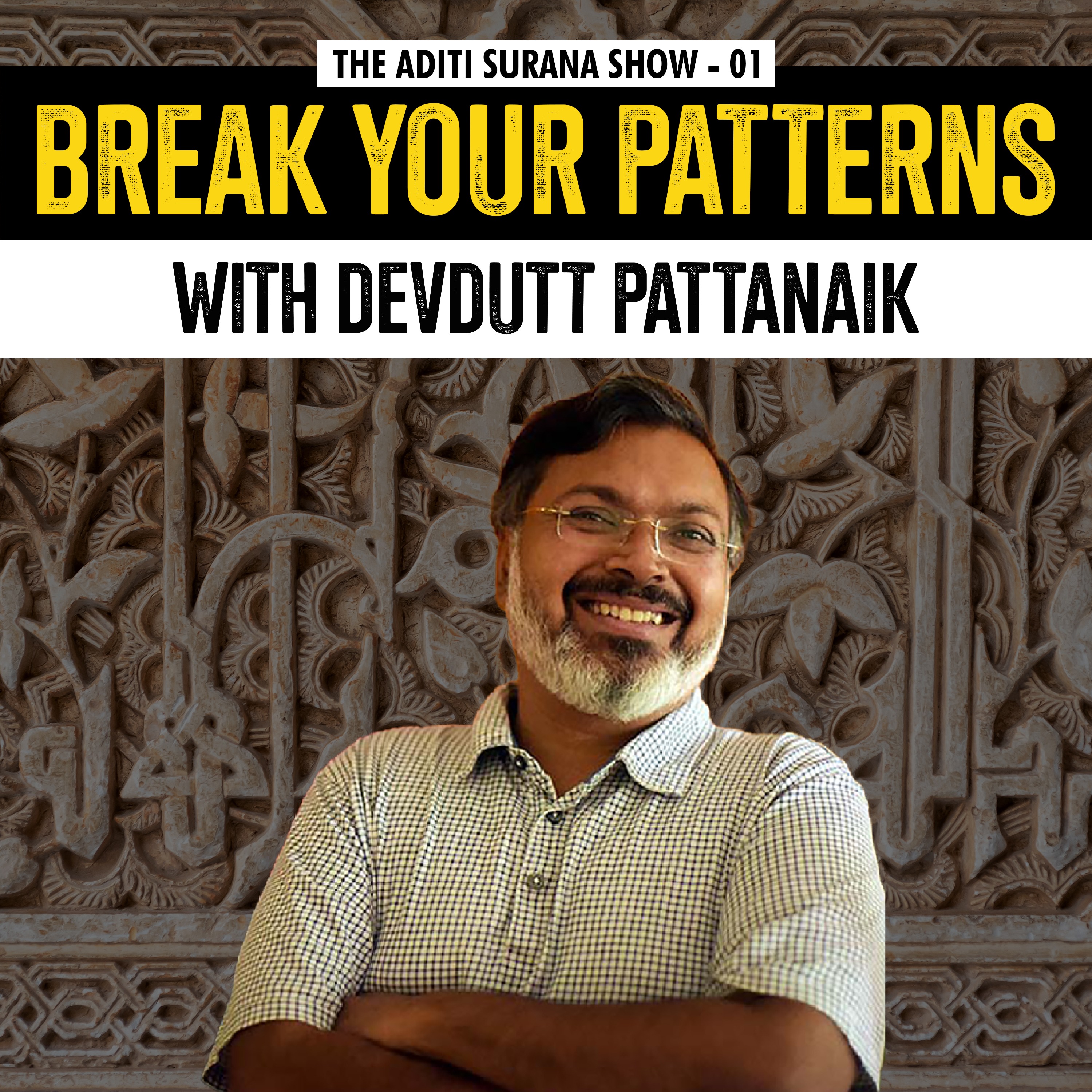
The speaker discusses the importance of showcasing high performers as role models to make India mentally fit. They delve into the definition of mythology as stories that convey a people's worldview. Indian mythology emphasizes introspection, empathy, and the acknowledgment of others. The concept of balancing withdrawal (Nivritti) and engagement (Pravritti) in relationships is highlighted. The speaker uses the Indian flag as a representation of philosophical ideas and balance, encouraging individuals to wave it with a spiritual perspective.
Transcription
9248 Words, 49883 Characters
People are busy, they are lazy. Wow, that's so good.
Because I knew exactly what you were talking about as you were explaining. That's brilliant.
Thank you.
Really good, really good the way you said it. It almost as if we knew my life.
Thank you.
Aditi Surana show mein aap sabhi ka swagat hai.
Aise kahite bhe, mujhe thoda alag lag raha hai because aashtak saari shows humne English
mein kiye. This is the first time we are going English and the reason being a few months
back I decided to commit myself to this larger idea to make India mentally fit. Aur agar
hum mentally fit hona chahat hai to hum sabhi ko aise role models ki zeroorat hai jo apne
life mein kuch alag kar rahe hai aur sirf alag nahi. They are the high performers who inspire
us. Their story is there, their body of work is so phenomenal that takes us beyond our
own limitations. Aisi kahi saari kahania aur aise kahi saare bohot bade hastiyo ko hum
invite karenge show pe. So thank you so much for joining in today's episode. Today I have
someone who requires no introduction, one of my favourite authors on Indian mythology
Mr. Dev Patnaig. Thank you so much for being part of the show. Before I start asking you
questions, mere papa communist thi jab humne bachpan mein paheli baar jab humare saari
dos mandiro mein jaate theh logose puja apart karthe to humare khan mein boh allowed nahi
tha. So mythology kahi jo concept hai, mein ne psychology ke hi saab se padhi because being
a behavioural analyst, I'm like aur konsei jaga ho sakti hai jaha pe hume logo ke ya personality
types ke baare mein seekhne ko milega other than Mahabharat aur Ramayan and it really
really transformed my life. So when you talk about mythology, you play a lot on this word
myth aur myth kya. And I'm jumping right into it because main rin maag mein itne saari
sawal hai kalse jabse humare baat hui hai. So why myth aur mythya is important?
So make a simple definition. First of all the word mythology doesn't come from mythya.
Yeh bahuthi, you know some political people like to spread this thing. But really mythology
word comes from a greek word called mythos. Aur mythos ka matlab hai kahaani. So aakhyaan
shastra is mythology, simple at a very basic level.
Aakhyaan is a story.
Aakhyaan is a story. Vyakhyaan is a commentary. Aakhyaan is a story. Vyakhyaan is a commentary.
So aakhyaan shastra is basically aakhyaan shastra. But it is a particular kind of aakhyaan.
So mythya ka matlab hai today we use it to mean a lie. It doesn't mean a lie. It means
limited truth. India mein there is no concept of lie. Jhoot ka concepti nahi hai.
So bhaaki hum sab ke pas mythya hi hai. But the variations, some have read 1 book, 10 books,
100 books. But anand ko rano mein, chhipa hai, anand, sanatan satya. That's what I keep
saying. Sabhi story sab ko nahi pata hai. But some people know more than others. So
mythya ka matlab and when you say mythology, stories that communicate the world view of
a people. Logon ki sochne ka tarika. So I use a very simple thing. Fact is everybody's
truth. Fiction is nobody's truth. Myth is somebody's truth.
How beautiful.
So it's a very simple text. Sab ka sach hai. Koi jhoot nahi bolta duniya mein.
Matlab aap kahre ho ki har koi apni life ka jo nazaria hai us nazariye se situation ko
dekhta hai. Aur wo uska sach bhenjata hai.
Aur usse lagta hai ki yahi parham satya hai. Aur world life ka problem hai. You'll see
nowadays a lot of young feminists think that they are changing the world dramatically.
And I'm like 100 years ago there were women doing this. That is why women are educated
today. Tum ne kuch nahi hai. Yhe chal raha hai. This is happening. So we think why one book
is the great knowledge. Aur wo life ka problem hai. Usko hankar kaite hai.
Jab aap keval bolte ho ki mera sach hi sach hai. Aur dosaron ka sach nahi hai.
Kansa sach? WhatsApp fala sach hai. And that's a real thing.
Yeah true.
Do you believe you have your uncles who may be PHD?
My mom. My mom would come and tell me achha yeh trai karna hi se bahut fayda ho gha.
Mami kaha padha. WhatsApp pe.
So when we look at myth and mythology as you speak about it. Aap ne kahi pe kaha tha ki
hume zaroorat hai mythology khe. Because wo hume right and wrong ke beech mein antar
sikhati hai. And I feel being a behavioural analyst for me is really important ki log
right and wrong se thoda ubhar kar soche. Because hume itna attak jaate hai jo sahi hai
galat hai sahi hai galat hai. Because again.
Sahi galat concept comes from Middle Eastern mythologies. Indian mythology me nahi hai.
So Jewish traditions, Christian tradition, Islamic traditions jaha pe Bhagwan pegam dete
hai ki assi zindagi jeena hai aur pegambar hote hai. And therefore rules hote hai toh
fe right and wrong ka concept aata hai. So that comes from a Middle Eastern tradition
jo India mein bohot strong influencers ka. India mein everything is contextual. Yeh situation
ki sahib se yeh thik hai jahse alag alag masala hai alag alag sabzi ho mein alag alag taste
deta hai.
Right.
Waise hi there is no such or a chute. Everything depends on a context. Namak achha hai yeh bura
hai.
No.
Patta. Depends on if you have you know blood pressure to namak bohoti dangerous hai. Agar
aapko low sodium hai toh namak is very good. So that is the Indian model. So Indian model
or Middle Eastern model mein yeh fark hota hai.
But kaafi confusing hai nahi idea. Because the very moment you have multiple choices
jo hamare Gen Z ka bhi problem hai. Itani sar hi choices hai ki decide nahi kar pahare
ki career kya kare. Hamare zaman mein 4 choices ho didi. It was much easier. To hate it or
love it. But now there are so many options. So hamare Indian mythology aur thinking ki
isaap se itani is aal ho pehle. How did they think about so many variations.
Dhe kye.
Her culture mein mythology hota hai. First ye clarify karna hai. Chinese culture mein
hota hai. Japanese culture mein hota hai. American culture mein hota hai. African.
Koi bhi duniya mein aise aadmin hi ho ka jo kahega. Mere pahas. Onko patta nahi hai ki wo
myth mein hai. Bhagwan mein vishwas karna bhi myth hai. Justice mein vishwas karna bhi myth
hai. Koi bhi boh le kao mujhe Bhagwan mein vishwas nahi hai. Wo bhi myth hai. Because wo
tumhara vishwas hai. Tumhe vishwas hai ki Bhagwan nahi hai. Ye vishwas se hi baate ati
hai. To aakhyan shastra vishwas ke. It is all about belief. Tumhara vishwas kya hai.
I believe there is justice in the world. I believe na husband loves me. Mujhe lagta hai
mere pitaaji bahat ache aadmi hai. Ye sab belief hai. Yiska koi praman nahi hai. And
this is something. You know when wo bollywood films mein wo mirror mein deke heroine bollte
ki I am so cool. Wo uska vishwas hai. Wo brahm ho sakta hai. That is also myth hai.
That is a limited truth. Kisi aur drishti kon se dekha jaa hai. To she is not beautiful
at all. She is hideous. So if you ask a monkey and tell the monkey ki aapko lagta hai. Ye
bollywood star boh beautiful hai. Monkey kaya ka nahi. Ye toh boh thi bhaianak hai. So from
a monkey's point of view you are not beautiful. To mithya mein rahite hai hum lo. Jo humari duniya
hum construct karke rahite hai. But Indian philosophy mein what is and Indian tradition
mein hum lo ke ne man ko bohot value diya hai. Other traditions were frightened of the mind.
While what is unique in India hum ne man ko. Isli you find a lot of psychological resonance
in Indian mythology more than others. Although Freud and all read western mythology aur un
ho nahi bhi badao theory banaya. But it is discredited because it is the problem is western
mythology doesn't like the mind. Onko aacha nahi lagta. Because so volatile it is not.
You can't put it into right and wrong. I will give you an example. The Greeks who are so
famous Greek mythology, Socrates, Plato they hated the number infinity. Why so? Onko badao
the world has to be predictable. So it has always finite numbers. So Greek mathematics
does not have anant aur Hindu dharma mein anant Bhagawan ka naam hai. So that's the delta.
That's the difference. And the Christians the Roman Catholics who inherited the Greek
traditions un ho nahi bhi kaha ki world is finite. Everything is like a mechanical clock. Isli
jab Galileo ne kaha ki nahi bahot aur duniya hai. And when science emerged, church was
opposing science. But science ko infinity chahiye. Calculus chahiye. Without calculus
you can't do any of the science work. So that is why the church is anti science. Because
the Greeks did not like infinity. They hated infinity. And lot of our ideas are based on
infinity. And mathematics is based on infinity. So if you study mathematics and good science
and high advanced science, space travel everything is based on infinity. Calculus is an idea
which talks about infinity. Ki ho gaya say ki itne purane itne salo
pehle. Calculus ya fer infinity ki baate karne ka kaha karan hanga? Wo bhi like really advanced
as human beings already we have different mindsets. What caused this? See advanced or advanced
we don't know. Everybody is we are not advanced also. We humlok lagta hain ki humare paa cell
phone hain. Therefore we are advanced. But tum abhi bhi you are a jealous person. So
jealousy was there 1000 years ago. Jealousy was there today. Are we more jealous or less
than people who lived 1000 years ago? So from an emotional point of view humnara hai
koi development nahi hua hai. Toh mai jab koi bahot hii bholte ki we are very advanced
as it means you travel in a car. But abhi bhi tum constipation ka problem nahi sol kar
sakte. True. So they are like oh why are you talking like this? I say no let's be realistic.
Technology has advanced. You have not advanced. So you are saying the kind of issues that
people had 5000 years ago 3000 years ago. Actually we look at Mahabharata. Abhi bhi
toh bahi kare hain. Gaa mein jao bahi problem hain. Jugi jhopdi mein jao bahi problem hain.
Tum sabse bade mahal mein jao bahi problem hain. I work with very rich and powerful people.
And I mean used to not. I have stopped that now. But me jaha jaata toh bahi problem diktate
jum je gharghar ki kaani mein diktate hain. O itta kapoor ke series mein ho tain. O sab
jaga diktate hain. Allegalak versions hain. So log bholingin hain. Ameeron ke ghar mein
hota aise nahi gharibon ke ghar mein bhi bahi hota hain. Just that they have more resources.
You have less resources. Tum ke ghar bahi air conditioning mein ladai hoti hain. Tum hain
hain you know Balti aur Bathroom ke paas ho raha ladai. Mori ke paas ho raha ladai. But ladai
toh bahi ho rahi hain. I don't see any decency and grace in rich and powerful people. Of
course. You know I am sure you have engaged with so many rich and powerful people. And
you think ki paise honne se power honne se wo grace rahega. Right. Wo bhi performance
hota hain. Dikaaba hota hain. They genuinely think ki logon ko treat kaise karna hain. So
those things have not changed. So we are as people the way we used to be. Ka kya
zaroori hain us mein badlaa vlaane ke liye according to you. To be happy. Simple. Technology
will never make you happy. Technology will never make you happy. It will make your life
comfortable. No by advance I did not mean technology as much as the ability to think
about so many possibilities. For example when you read our our scriptures or when you read
you know these mythological epics. Where do they why did they think about it in such
complexities. See they were very simple. Really India is a farming country and it is about
mythology comes from very ordinary sources. You should always look at basics. It is never
complicated. So I will give an example. Aapko bhook lagti hain aur aapko khana chahi hain.
So you are hunger and you are food. Science and technology focuses on the food. Unka theory
hai ki jada khana hoga toh fir bhook mit jaige. Indian philosophy will say jitna khana banao
bhook toh nahi mitne wali. First because bhook toh badti rahe hain. You will keep getting
food will create addiction. Food will make you want more. Then you will try to control
people by not giving them food and therefore food will never solve the problems. The problem
is with hunger. So if you start looking inward and look at your hunger and sources of your
hunger that is empathy. So apna hunger dekhon ke toh introspection ho gaya which meditation
does. Buddha ne kaha ki aakhe andar ki tarab dekhon. So the Hindu sages did not agree with
Buddha saying that sif andar aap dekh rahe hain aur bahar nahi dekh rahe hain toh ne kaha
darshan karo. So Buddha s images always have eyes shut while Hindu images have always eyes
open and they say darshan karo. Look at other people's hunger also. Both matter. Isli advaita.
It's not me. See advaita is not to do. It doesn't mean one. It means not to.
Kya andar hai ush mein. Yeh kirtna beautiful word hai agar hum kaha hai ki union communion
one versus advaita which is non-dual. So it means I acknowledge that you matter. If
I say only one then only I matter. But people also interpret as one means you and I are
one. No we are never one. Talk to any married couple. Talk to any friend. Nobody is ever
one because it means either you follow me or I follow you or you both agree on a common
rules. And if you don't agree then we are not one.
Then we are not one. But life is never. It's constant. Every second negotiation is going
on. And this negotiation they are saying it's like an Indian head shake how ek hai, do hai,
ek hai, do hai. Are you one or are you two? So they say advaita. So they chose a word
which is funny. They didn't say there is a word dvaita. Do log nahi do log nahi hai. Ek
hai. There is a word which is used but ek hum mein bhi problem hota hai. So people can't
handle these complex ideas. So one do hai or two do hai. Binary thinking hota hai. Ye
bolta hai ki not two. But they are not saying one. So why would Shankaracharya use these
words like not two? Because Shankaracharya himself was a celibate bachelor. Aur usko kya
bolta hai gyan mein ki dekhon ubhaya bharati. A lady tells him that you basically you are
a man. You don't have a woman's body. You are second you are a monk. Which means you
have never experienced sexual pleasure. How can you be jagat guru? So yeh sa bhele female
body nahi hai. Sexual explanation. So then he does lot of stories hota uske baati. Matlab
aap adhoore ho. And therefore you can see how the story is trying to explain advaita
concept kese nikal rahe hai. Kyunki these women whom we never talk about like ubhaya
bharati. His mother Aryambhal who had a very difficult life. She was a widow raising him
up and all that kind of things. And so it is really a counter of what is happening with
Buddha. Because Buddha walks away from his wife. He just walks away. So he was married.
He had a child. He had experience being married having sex all of that. And he walks away
and saying main apne baare mein soch raha ho. And then the other sages are telling him ki
nahi nahi. Patne ke baare mein nahi. What about your child? What about your kingdom? Don't
they matter? So aap dhar dhyan kar rahe ho. And then they will say nahi nahi nahi bahar
ke tara. So this is nivritti maharga. Which is looking inwards. Which is nivritti is in
a way. Resignation from outside. Outside. And this is balanced by pravritti. Where you
go out. So you come in and you go out. Isko sama kahte. The cycle is complete. You go out
and then you come back. This is important. It is not just one way. Which is what monastic
orders are. So whenever I see a celibate guru ji you will see me making fun of them. Is
it because to ek tarafa hai. And people like this. All these young millennials because they
are only thinking of themselves. Main main main. My thing is self. Look at Maslow's theory.
Self actualization. Self actualization. Self. It begins with me and only we. There is no
other. And everybody says sir there is no other. And how many others are there in this
world. There are infinite others. Paramatma. Param. Param means other. Param is Bhagawan.
So unless you acknowledge the other. And other is variety. So you are saying also when you
acknowledge Param which is other. And also the God in the other. Then and how many will
you acknowledge. Infinite. So I am talking to you. You are a different person. I didn't
know you one hour ago. Now I am trying to figure you out. And trying to connect with
you. I have to. Now I will meet somebody else from my staff. Professional reason. Personal
reason. Sister brother. Everybody is different. So my brain continuously is modifying it.
I am thinking about myself and about them. Nivritti Pravritti. When do I withdraw? When
do I engage? When do I feel hurt? How do I. This continuous advaitha nes. Where I know
that they are important to my life. But my life is I am important. Or they are important.
What about you are important to us. My sisters will say but you are important to us. It is
not about we being important to you. So now again going back to hunger and food. Khane
pakaane wala kaun and khane wala kaun. Right. In a relationship. Who serves the food who
eats the food. So now just looking at this one food metaphor. Everything in Hinduism
is explained. And India is explained. It just uses food. Ki hunger, food. Mai khana banaunga
yag paroosunga. Agar main ne paroosa hai. So you know your mother. I always tell people
your mother has cooked all your life for you. When was the last time you cooked for her?
I think the room just goes quiet. I am like you have never even thought about it. Like
you take them to restaurants. That is the same thing as you cook food. And when they
grow old and you take care of them you resent it. Or you talk about it. I am doing it.
She raised you. And the brothers are happy ki the other brother. I said do you realize.
We don't even realize these things are happening in our lives. And forget about husband wife
relationship. Parent relationship is just so primal. Same thing we are doing with our
children. And we don't realize who is feeding whom, who is taking care of whom. And all
problems can be solved. Not solved but you will recognize in your field. You will see
this. And you know what I am saying. I am sure they are happy. Absolutely. Absolutely.
So when we look at this simple what you said Sam. Like Nivruti and Pravruti going in and
then coming out. And going in again. Isko hum hum hari practical life mein use karna
chahe. To aap kuch 2-3 cheeze batasate. How do you keep that awareness on? Because
chappi pee word awareness use hotai people are like oh my god it's like this big deal
I will do it one day. But what you are making is very practical. Every moment.
Yes. Just put the India flag in front of you. There is a wheel. Right. And upar ek saffron
kalar hai. And niche green kalar hai. And they all have lot of meanings. Right. One cannot
exist without the other. Adwait. Beech mein white kalar hai. Blue kalar ka wheel hai. Wheel
is going round and round and round. Nivruti, Pravruti. Navriti. Growth. Movement. Saab
wo apne flag is a very beautiful flag with lot of philosophical ideas. Johan sochde.
Hum kusse dhamma chakra, saffron. White. Yeh saab wo mechanical hai. Mantrapati jaise
hotai. Look at it. I think that's a simple. I can explain the entire Indian philosophy looking
at the flag. How beautiful. Yeah. And how you see the people's anger because they want
part of the flag to be inferior. And I am like kya se hi ghar tootta hai? Anubhav hi mythology
humari. So buddhi ki story wo hampa milegi. Jayaniyon ki story wo hampa milegi. Peeron
ki kahaani wo hampa milegi. So my tip for people is look at the flag. You can wave it and dance
around it. I am India. I am India. Wo hankar hai. Lekin usko aadhyatm ka vise bana. Look at
the flag. Matlab har ghar jhanda tiranga ish tara vana chie where you actually look at
it and understand. See this is what we do. Hum log symbol ko zada. I always tell people
granta saheb ko from when I go to the gurudwara, I will see granta saheb is a guru. So guru
abhi guru means to teach. So I always tell aap. They say no we go and do. Waha pe matha
tekte hai. Haise hai. Thik hai. Langar karte. Thik hai. Skar sewa karte hai. Thik hai. Hum wo
bani sunte hai. So they listen to the songs. I said aapne padha hai. Have you read? Because
there are so many. Do you know what the contents are? And then they look at me strangely. I
said uski pr chintan kya hai, manan kya hai, kya bol rahe hai. Because I always use the
shab then all that kind of things to people. And they are like oh we never thought about
it. I said you are chanting it every day. This is mechanical. Our brain is very lazy. It doesn't
want to do things. So we like to do short cuts. So the same thing happens with the Hindu
mythology stories. You know I will give an example. When I started this. Every publisher
told me that. So I knew they didn't know. But see how do you tell people they don't
know they don't know. And finally I had to tell them. I remember in one lecture I told
them Ramayan Mahabharat se mani bombe mein ek flat kari. Abhi matlab hoa? Abhi. I am like
no really. I just. Mani darshan kya. Mani darshan kya Ramayan Mahabharat ka. Tumko pata hai
mani darshan kya. So many people attend my lecture. You talk the same thing again and
again. I said do you know that agar aap cha dahi ko ya milk ko if you keep rotating again
and again and again what happens to the milk. Suddenly it coagulates when makhan nikalta
hai. Makhan. Makhan banane ke liye aapka repetitive movement hi karna padha hai. To aap doodh
ke saath aatke hoi. Mujhe makhan mil kya. I raza ka painting dikhati hoon raza ke
pura art work. And we were having this discussion. The curator was there. And she was describing
ke 70 rsal. Ono ne sirfo zeros aur bindus aur triangles mein laga de. But onke jo triangles
hai. Onke jo bindus hai. Onko deke you feel something. Because he has put his entire
life into that one zero. So it's not about the zero. It's not about repeating. It's
about how intense you are with it. And you have. Now he's communicating it. And for
you too. I know people have copied him and made decent money. But I said you will never
be raza. Yes. Yes. You know they have become. I am like to raza because you are not getting
what he has struggled all his life. And even when you spoke to him, he was like he was
still lost. Because wo uske andar jaa raha hai. Jaa raha hai. So when you are buying his art
or admiring his art, you are really going into that mind. Man. Isli pratima is very important.
Murti ho mein jo pratima hoti hai. Art work hota hai. Usme man laga hai. And it's something
that people just don't understand. You know you get a glimpse of it during Ganesh puja
in Bombay. Bahaan pe aapka bohot kuch dikhay dehta hai. Lekin wo it's a struggle. It's a big
struggle because see self is more important than the other. So always jat Ganesh puja
tum apne liye kar rahe ho ya logon ke liye kar rahe ho. And everything is answered in
this. This is my basis of my all my work over the last 20-25 years. And this is so beautiful
when you say darshan. You are also saying wo pratima, wo sari jo symbolism hai hamare
hape uske pichhe hamara connection hai. Darshan wo hai jo mujhe dikhah. It's not what was
seen by others. It's when I looked at that pratima, I looked at that picture, that photo,
that image, what did I see and how I transformed by seeing this. So ye hum practical corporate
life mein kese use kare. Because it is so complex and people are so busy as you said
in ho nahi ye kaha hu. People are busy, they are lazy. See ballot. Because it's like somebody
telling me to go to the gym. I know it's important but I don't prioritize it. I know
my health and needs it. Logically make sense. Sab hai mere pahas. Technology bhi hai, logic
bhi hai, sab kuch hai gym toh 10 steps away. Building mein hota hai haj kal. It's so easy.
But still it is so difficult to go to the gym. So I empathize with the person not reflecting.
See just as I am unable to go to the gym, they are unable to do what I do so easily. Some
people wo roti bol toh phadha phadha phadha banan hain. Merkush kichen mein bolte hi mein
doh dar lagta hai ki omg. Goal bani nahi bani. So we all have certain skill sets which we
are good at. And therefore we have to live in a collaborative ecosystem. But from your
expertise after working with so many people and guiding so many people, how can you master,
you are a master of simplifying things. So kya karsate yeh darshan, yeh jo inward movement
hai. Laziness hai, log nahi karna chahate. Un ke pas tools nahi hai, methods nahi, intent
nahi hai, priority nahi hai. If somebody is willing to do it, what can they do?
I think they should observe people in their office and then work like one or two people
and observe the patterns of behavior. Jaisi zoom hai jaake hum log janwar ko dekhte hain.
To aap dosaron ko zoo banate hain. And we do it anyway because we gossip about it. Now
start thinking of yourself in the zoo. Apne aapko dekho tum kaisi bhihaab karte hain. And
then suddenly some patterns will start to emerge. Your own patterns that you have been
just taking for granted. So first you look at others unki khilli udhao,
thir apni khilli udhao. And then you will suddenly say, oh I do this repeatedly. Yeh
mera, I am trapped in this wheel. Yeh hai mera sansar. Desse mein moksh nahi prapt kar raha
ho. Whenever somebody talks like that. So I started noticing certain, when I would meet
people who were making stupid comments, I would get very angry. If you see some of
my tweets 2-3 years ago, I was very angry and people said, Devdath has lost it. I would
reflect and then I said, oh because yeh mera ghamand hai ki I can educate people. But that
is my pattern. That is my pattern. Yeh mera ghamand hai na, if I say people have to agree
and it's such a great idea because mein shastron ko bol raha ho. Yeh aadmi itna murkh hai.
But then you realize woh murkh tha uska property hai. It's not my property. And you have to
allow people to be stupid. Or it is their reality. It is their reality. They end. Their
trip in life is to make fun of people. Their trip in life is not to learn. When such a person
enters this in your room, you have to be very careful because his trip in the room is to
have fun. He is not interested in learning. So now do you allow him in the room or do
you tell him to stay out? And then I start blocking comments. I said nahi mujhe nahi.
Jisko sunna hai wo sunega. Mai engage nahi karne wala. I will get the right student. Right
student will figure it out. And then the world changed. Nothing happened.
So you broke your pattern.
I broke my pattern because I reflected on it. I reflected. And I was not shy of it. I was
like what I am doing is not. But I am reacting. It's real. Why should I be ashamed? See one
thing because of my medical background. I am trained in medicine. So one of the things
that doctors would always say never be ashamed in front of a doctor. You have to talk about
it. Imagine a Bollywood star going to the doctor and say mujhe gas hota hai. Mujhe constipation
hota hai. They have to. You can't go in front of the doctor and say oh I am a big star.
Be the hero.
Not in front of the doctor because the doctor won't be able to help you. You can be. But
the doctor won't be able to help. Same is true in psychology. So I have always been
aware of moments when I experienced jealousy. I have. Like I once saw my mother was always
embarrassed to tell that she likes money. Because. But I realized she had gone through so much
of insecurity in her youth. That money gave her comfort. That having money in the pocket.
And I saw it as a pattern. She never said it. But it was there. I said if only she admitted
it she would calm down. Did she? Never. Whole life she wanted to believe ke mujhe paise
is not important to me. And all her problems would come for not accepting ki money is not
bad. It gives you comfort. It doesn't give you happiness. It is a big mistake people
do. It gives you comfort. And comfort is a very important aspect of life. Right. You
know when you sit in eye conditioning you are like. So comfort is good unless you are
a real great yogi. But these things people don't reflect on their life. So what you
said is very powerful. So you said if we observe ourselves we find the patterns. Once we find
the pattern we can break the pattern. And the person who can break his or her own patterns
is freer. And they can choose something else. So moksha kahi wo end point nahi hai. Moksha
every day. See what is circle of life and death. Repeating patterns. Right. It says sanskrit
mein sansara kaha jaada. Sam sar. So Sam going back to the same thing. Nivruthi pravruthi.
Nivruthi is the activity. Right. But the diagram is the same ki tu mahi patak gayo without
Nivruthi pravruthi. Goal, goal, goal, goal. Not the spokes of the wheel. But the circumference
of the wheel. You are trapped in the circumference of the wheel. How do you change the circumference
make it bigger or smaller? How do you change it? Because kithna change karna hai. Thoda
aap drawing karna hai hoon na ek thoda angle bhi shift kar hoge toh fir wo spiral ban jata
hai. Right. Wo circle toodh jaata hai. Toodh jaata hai. Uskele kithna thoda change karna
padata hai. Uskele ye wo spokes. Thodaise. Thodaise antar. But now the spokes are equidistant.
So one of the spokes has to either go up or come down. Which is breaking a pattern. One
pattern. Just one. How beautiful. And you have to just do this. And ye jo spokes hai ye
Nivruthi pravruthi part hai. This is the inside-outside part. Wow. So it's a visual. They are using
a visual mnemonics. Because remember we were illiterate people. We didn't write. We used
art. Right. We used art to communicate. We used sound to communicate. We didn't have
text. We didn't write. We are handwriting expert. But please understand. India as a
culture hated writing. We did not write unlike Middle East. We had uniforms kept for 5-10,000
years. We told stories. We preferred oral traditions. Writing became important only with
the Brambian community in the Kayasthi community. And then later after independence everybody
is reading. But peri zamani mein. Even rich families would say, "Humare baite liye kyo
likha padayi karega?" Wo to Munim ka kaam hai. Wo to writer ka kaam hai. He will hire those
people. So we didn't understand that reading and writing is an important thing. But we
said we are talking. Talking is more important. Reading and writing is alone. And Indians
talking is with everyone. So Shiv Parvati ka saath baat kar rahe. That is the conversation.
Tantra is based on Shiv Parvati ka sambar. But sambar is important in India. Not reading
books. But that brings me to your writing. And before I say anything, what questions
do you have for me? So related to what I said before, where is this urge to... See, it's
my vanity. I want to be heard. That is why I am a good communicator. So I am constantly...
And I also intellectually know it is futile. Jisko sikhna hain wo sikhega. Aapko khana
parosna padata hai. But it is very frustrating. Because your ego is saying that, "Nee, nee,
nee." You have to ask for food. So I will buy. Serve it. And then you should like it
so much. You will say it's great food and it should digest. I want to control over all
those activities. And I want you to come back to my kitchen again and again. So where does
this... This is my biggest battle. Okay. That's a wonderful and complicated question.
So yes, challenged right at the beginning of it. So many times our identity is a built
with one what we think about ourselves. And second part of it is how people describe it
and how people respond to it. And a part of it is always enacting. So signature is that
enacted part of your handwriting. And handwriting is who you are. The gap between the two. Because
it's a public image, right? You sign only for official reasons when you want to project
yourself or autograph. So there is that gap between who you wish to be, projected to be
and who you are. Now in your case, when I look at these two things, the projection is slightly
different than who you are. So intellectually in your personal circle, if people disagree,
might choose to walk away, might be okay. Okay. He doesn't understand. She has a different
point of view in a public domain because you have worked so hard. You have gone against
every tide, every current and paid the price for it. So the when I look at your signature,
there's a letter D and there is overlapping another letter. Is that letter B? The Puttnaik.
Oh, I thought it's also one more letter between of your parent. So D and P are overlapping.
Right? So that's need for space is really, really strong. So when you do not get space,
the word that you use, I feel suffocated with other people's opinions. And if I look at
your signatures, exactly what I feel is a suffocation, because to just get my space,
I have to prove myself and I have to have that identity. And having an identity where
people celebrate you for who you are, is something you had to earn. Now, because you have earned
it, you value it a lot. When we value something, we identify with it and we expect others
to value. So when people disagree with your opinion, it's not the opinion, they're almost
disagreeing with the identity that you have earned and your resistance to it to protect
that entire identity and not that one comment. Wow. Wow. That's so good. Because I knew exactly
what you're talking about as you are explaining this brilliant. Thank you. Really good. Really
good the way you said it. It almost has been you my life. Thank you. So when you know that
what you're doing is making a difference, that time you momentarily get out of all of
this. And this is where you go beyond yourself, what we call the state of flow. Now, luckily
you have created so many avenues in which you are forced to go beyond yourself every
now and then. So when you get that moment where you're not being questioned, not being
challenged, not at that flow point where your skills set and challenge levels are pushing
you at that point, that time you become you and identity and ego creeps in unknowingly
and then you start defending. Imagine the phases. I believe you only had the time to
do it when you're not intellectually or spiritually inclined and engaged enough. Then you spend
some time responding to these. Am I correct? Exactly. So it is literally the boredom and
I want to use this concept of chaos, chaotic order. Some people believe in order. Everything
in life must be perfect, orderly, all of that. Some people, mostly creative geniuses, they
thrive in chaotic order, which means they create chaos and they bring in order. They
walk into chaos, they bring in order. They're thrown into chaos, they bring in order and
they love it to a point that when there is no chaos, they create chaos and they bring
it on. That laughter is very meaningful. I mean, I've heard this in different ways and
different people have, you meet people who are perceptive and they tell you things over
the years, you've understood. So I've seen all that in one place. Pattern. We found a
pattern. So that pattern is... And actually handwriting, I was reading about a few friends
who worked with you closely when you were the chief belief officer and that whole idea
of belief is a repetitive thought and emotion which becomes your belief, which becomes so
deeply engraved in your system that it becomes who you are. And handwriting captures that.
So thereby, though your handwriting keeps changing, because your beliefs keep changing
and your idea of who you are keeps changing, but still that some beliefs, they're so deep
rooted, they bring in the real truth. So what does this say? A few things to begin with.
When you look at yourself and when you look at a problem, the most amazing thing for you
is to find the observation that nobody has ever brought. And that's not today because
you do this work. That has been the case from childhood. Any situation that you went into,
for example, medicine, people are like, "These are the books you should be following." You're
like, "What? There is this observation that I can see that other people cannot see and
there are these things that I can observe and how are you not seeing it? Isn't it obvious
to you?" Now, that ability to see beyond or reading between the lines is where you constantly
question every small thing. There is a beauty of it, there's a creativity of it and I also
believe there's a reason for your worry and frustration.
Yeah, in my writings, I call it the Rani Rupmati Syndrome. Rani Rupmati is famous for her beauty
but all her unhappiness came from her beauty. If she was an ordinary looking person, she
would have lived a happy life. But we remember her because she was beautiful and she died
miserably because she was beautiful. Men wanted her, they wanted to possess her and she did
not get agency because she was beautiful. If she was just a little ordinary looking
person, that's her sister whom she would have made fun of as a child saying, "See, everybody
likes me, but you see your life is..." So your skill is also... What is your strength
is also your weakness. It's something that I keep telling people that you have to keep
playing this... It's a double-edged sword. It's what is... Because I see through a problem
and I will sit with someone who is very powerful and I know what the problem is but because
he is powerful, he will not let me reveal it to him. If I reveal it to him, he feels
powerless. You have information that he does not have and he hates you for it. And you
don't want him to hate? Because my bills won't get paid. So you would just be more available
and that is frustrating because... When you say that this space is toxic, your whole
purpose is to give that knowledge and if they want to pay you for being in the room for
the pleasure of their power, we know more than you. It's like Sabha, Agbair Bill, Agbair.
Good you use the visualizer. I always say it's a king's court. I go to king's court
and I see the king's court and the king has paid me to tell him something but the moment
I tell him, he gets angry. So he doesn't want to hear you but he just wants you to be there?
He wants you because he is mine, it's my property and you know what? And then it reaches a point
where he gets pleasure in telling he knows more than you. Because that's why he's paid
you. You are giving him money. I like to humiliate you. Because you are so great and you have
the power to humiliate yourself. So I have met people who hire people to abuse them.
And they hire rich, powerful, really talented people for the sheer things like they hire
an actor and they don't know how to act. They hire director and they don't know how to
direct. You go to Bollywood, you will see this everywhere. It is very famous. It's a very
famous phenomenon and I was once part of that. I am 2-3 places and I said wait a minute,
this is not healthy, this is toxic. Again pattern. Because I could see through what's
going on and I am like, okay, why am I here? I am like money. I said, okay, let me quickly
make it. Do I really need this money? Is it greed or need? And I thought, oh, this is
going into greed. I said no, pull back, pull back. Pull back because greed is addictive.
That is not going to end. Hunger is never end. And this because I knew the framework of hunger.
I said, this is my book. Have you paid your, you know, got a house, his EMI has been done,
money is in the bank, you will manage it for 2 years without a job. So you really thought
through practically and said no. And I looked at my friends, they had much better situations
but they didn't have the courage to break the pattern.
How beautiful.
The addiction to hunger is so much.
And it doesn't even end. Someone else has more in some other thing. Next thing that.
See that's why you worship Ganesh, not Kuber. Kuber is about more food, more food,
more food, more food. And Ganesh is about Bhukmitao. Bhukmitao. That's why here's a snake, always
people remember there's a mouse next to it, but there's also a snake next to it. The
snake in the mouse are their friends. They can only, and he has a mothak. Why is the rat
not eating the mothak and why is the snake not eating the rat? How beautiful. Oh my God.
And that, that darshan. Darshan. Darshan do Bhagwan. But we don't darshan. We don't darshan. Oh my God. Another
thing that I stood out when I looked at your handwriting is the, the ideology with which
you function is, is intensity. Which creates a lot of upheaval and discomfort in people.
No, that's the thing. My challenge is how do I relax. My big challenge is I tell my,
if I go to a holiday and I'm relaxed, my inspiration bursts out. In all holidays, everybody knows
they will put night to, soobai mad disturb karo. Before everybody wakes up, I will be
up and I'll be writing. You'll be up early on your vacations. I'll be up and I'll write.
Every day I write, it doesn't make a difference. There is no Sunday, Monday, holiday, kuch nahi.
Meh rose likhunga. Because that's my joy. And then people say that relax karo. I say
bravo relaxation hai. So I've made, but now the problem is, is it possible to live without
working? But then you don't know now. That's my big challenge now. But is it work? Probably
talking to those people and you know, like looking at them and understanding what they
are ready for. Like I feel you're one of the few people who found their flow or flow itna
palpable hai just to be in the presence of the flow and let it flow through you. It's
a gift by itself. Yeah, but you know, sometimes I feel, you know, this is a philosophically
talking to the people. So I'm a tree in the forest. We all are trees in the forest.
Yeah, but the tree that that is blossoming, the tree that is connected, it's not about
the jungle, but it's about the flow. So the fact that you get to experience the connection,
you get to have the roots where you find yourself is where you thrive. Yes, and then I'm saying
because handwriting up ka vertical hai. Signature mein you only write your first letter aur
ke signature ke niche hai jo apki autograph hai aap 3 dot krte ho. Three dots is the desire
to force yourself to be social. It's not being social naturally. It's that extra effort
to be social aur hosii ko karna padta hai je so naturally social nahi ho na chahat.
So you know, a person who is a very good architect had said this after looking at my house, sitting
you have designed your house. So yeah, this is not done by a designer. This is done by
you. It's about your personality and your design of your house. And now you're saying your
personality and the design of your writing. See the patterns, we manifest our patterns.
If you're genuinely in connected, everything we do, main hai, humare khaane pakane ke technique
mein kappadon ke karne ke. Even khaane mein agar thali parosi hai, toh aap pehle kya
khate ho, wo bhi pattern hai. Aapki favorite cheez pehle khaw gayi ki last mein khaw gayi.
That also talks. So these are micro choices, which I feel so fascinating because they talk
about the real person and not the projected idea of who you are. And the fact is see they'll
always be a signature and they'll always be a handwriting. I hope so. You know what
I mean? We assume people keep saying ek din viliin ho jao gayaise kachh nahi ho nahi ho.
This is life. Till the day you die, you will have an identity. You will have something,
you will have a social identity. This is, it never ends. We people always think ek climax
ho gaya jao perfect handwriting aega. I'm sure people ask you ki bachi ka handwriting
jaye. Perfect. Main li perfect kya ho. Main khun dyslexic ho. Toh mujhe hi perfect. Padai
ke liye achha handwriting sabhaj mein hiata. Because it's like, everything that you are
is the way you should be. And that's a fundamental idea.
And that's something that people, see this is what has happened because we believe in
perfection. Happily ever after. Disney bolta true love, true love. It is the most dangerous
thing they're telling to children. So true. Because the assumption of perfection ki life
mein tum abhi main. See now I'm 50 plus. And I am all, I am like very clearly vana prastha
ho nahi sanaya. I genuinely believe in what the Vedas say. Then the tree has to die one
day. That's why I'm, people, my partner gets very upset saying that why do you talk about
death so much. And I said, no, no, I'm 50. It may happen at the age of 90. But after
50, I don't like this youth culture. I said, wo ek samay hota hai. Where in youth you think
of yourself. As you grow older, you start thinking at least structurally about others
more and more. Param. Although there should be throughout your life, but structurally
because they job karte ho you thinking of yourself, tumhara ghar, tumhara gadi, tumhara
family, tumhara. But kitna because I know people are 90 years old and still talking like
this. And I just don't like those people because they're still grabbing and pulling and my
thing. You're 90 years old. Abhi kabhi bhi chale jaoge. Stop. Just stop. In the old days,
they would actually tell people ki tyago, chhoddo, you know, the Jain practices which
were there, Chandragoptham Auryan. They are trying to tell ki deko, ped ka bhi ek samay
hota hai. And I see old politicians, I don't like them. I'm going to meet them. So they
keep telling me, Devdas Shastra batao. I said, Shastra kisab sa tha, aap maha papi ho.
Don't make it very upset.
Devdas Shastra batao. Please chale jao. Time hoge aap ka.
Shastra kisab sa tha. Aap toh paise nahi de raho. Tum mujhe aap te mili ki koi. I'm aar aau
dalke ki.
Abh kuch kar loghe.
Abh kuch kar loghe.
I'm not come pyar se because tumko gyan nahi chahi.
Right.
So you can see that that I'm very happy not meeting people.
Absolutely.
I meet people either because there is a commercial benefit out of it or is there something interesting
to learn or I feel safe. I can be myself and they will not.
It's my space of being myself.
So I really nurture my friends, wujho garden bulte na maya garden. I'm very particular
about it.
Because I know that they are the ones. It's important to have your group of extended group
of friends and they may be family. They may not be family. But the people with whom you
connect the most, I'm very particular about it.
It makes sense because being an introvert, aap ke liye wo jo small circle hai, wo hi sab
sada important.
When people keep saying that you don't go, I said beyond the point, it becomes taxing.
Exhausting.
Exhausting also because I have been working the whole day, evening mein wujhe jis baet
na hai.
Recharge yourself.
So for me, that is where I, what I said, relax ka matlab is there's no input, there's
no output.
I'm just being.
Because normally it's always input/output.
Right.
So.
How beautiful.
Is there any last question you have that I can answer?
No. My question is, in your line of work, what do you see as the purpose of human life?
Based on, you have read so many things, right?
So I would like to know that from someone who has done so much work on writing, just
one. And through that, seeing the human soul, what do you see as, where are we going? Is
there a journey?
Before I look at people, I feel the journey is becoming about, like, building this public
idea of who you are. And that is such a fake idea that it's going to collapse in no time.
And then people will really meet themselves, what happened in the COVID, going to happen
over and over and over again, and they're not going to like themselves.
The signature is becoming too powerful, it's becoming signboards.
Signboards and it's becoming Instagram and it's becoming the clothes that you wear,
everything, every choice is so that you can showcase that I have this and I own this and
I am this and not about who you are. So imperfections are becoming rare. And that's a problem.
People talk about imperfections publicly to get likes on Instagram, but imperfections...
That is a performance. I'm vulnerable.
I'm vulnerable. Look at my vulnerability that I'm showcasing in a performance manner. But
when you go away from yourself, the cracks that we carry within will just get wider and
wider and we're not going to explode, we're going to implode in time to come.
That's like the unfortunate part. Having said that, I believe that human beings, a human
mind will figure this out.
They go through this chain and then figure it out that how meaningless it is. And then
as sustainability promoters and people who are really building this, they're like, okay,
all of this doesn't matter. So come back and follow the actual event, coming back to
your inner roots.
And thank you so much for making it so accessible for people, especially youngsters in a story
format.
Thank you.
Thank you so much.
I'm so happy we started this with you. I think just setting a right precedent is wonderful.
I'm so excited. Please tell me how did you like it, which were your favorite parts of
this music?
We're going to bring in these high performers, hats, mental ways, a wave of changing the way
you look at things.
So ask your question, share this with somebody who can get benefited. And don't forget to
subscribe and hit the notification button so that we can send you all the details regularly.
Bye bye.
Podcast Summary
Key Points:
The speaker aims to make India mentally fit by showcasing high performers as role models.
Mythology is defined as stories that communicate the worldview of people.
Indian mythology emphasizes introspection, empathy, and the acknowledgment of others.
The importance of balancing withdrawal (Nivritti) and engagement (Pravritti) in relationships.
The significance of the Indian flag as a representation of philosophical ideas and balance.
Summary:
The speaker discusses the importance of showcasing high performers as role models to make India mentally fit. They delve into the definition of mythology as stories that convey a people's worldview. Indian mythology emphasizes introspection, empathy, and the acknowledgment of others.
The concept of balancing withdrawal (Nivritti) and engagement (Pravritti) in relationships is highlighted. The speaker uses the Indian flag as a representation of philosophical ideas and balance, encouraging individuals to wave it with a spiritual perspective.
FAQs
Myth and mythology communicate the world view of a people and offer stories that convey truth from different perspectives.
Indian mythology views truth as contextual, while Middle Eastern mythologies tend to focus on right and wrong based on set rules.
Advaita emphasizes acknowledging the importance of others and recognizing the diversity and interconnectedness of individuals.
The Indian flag, with its colors and design, represents concepts like unity in diversity, growth, and movement, reflecting deep philosophical ideas.
One practical tip is to reflect on the Indian flag's symbolism, reminding oneself of concepts like unity, growth, and interconnectedness in every moment.
Chat with AI
Loading...
Pro features
Go deeper with this episode
Unlock creator-grade tools that turn any transcript into show notes and subtitle files.
 PodcastTranscript AI