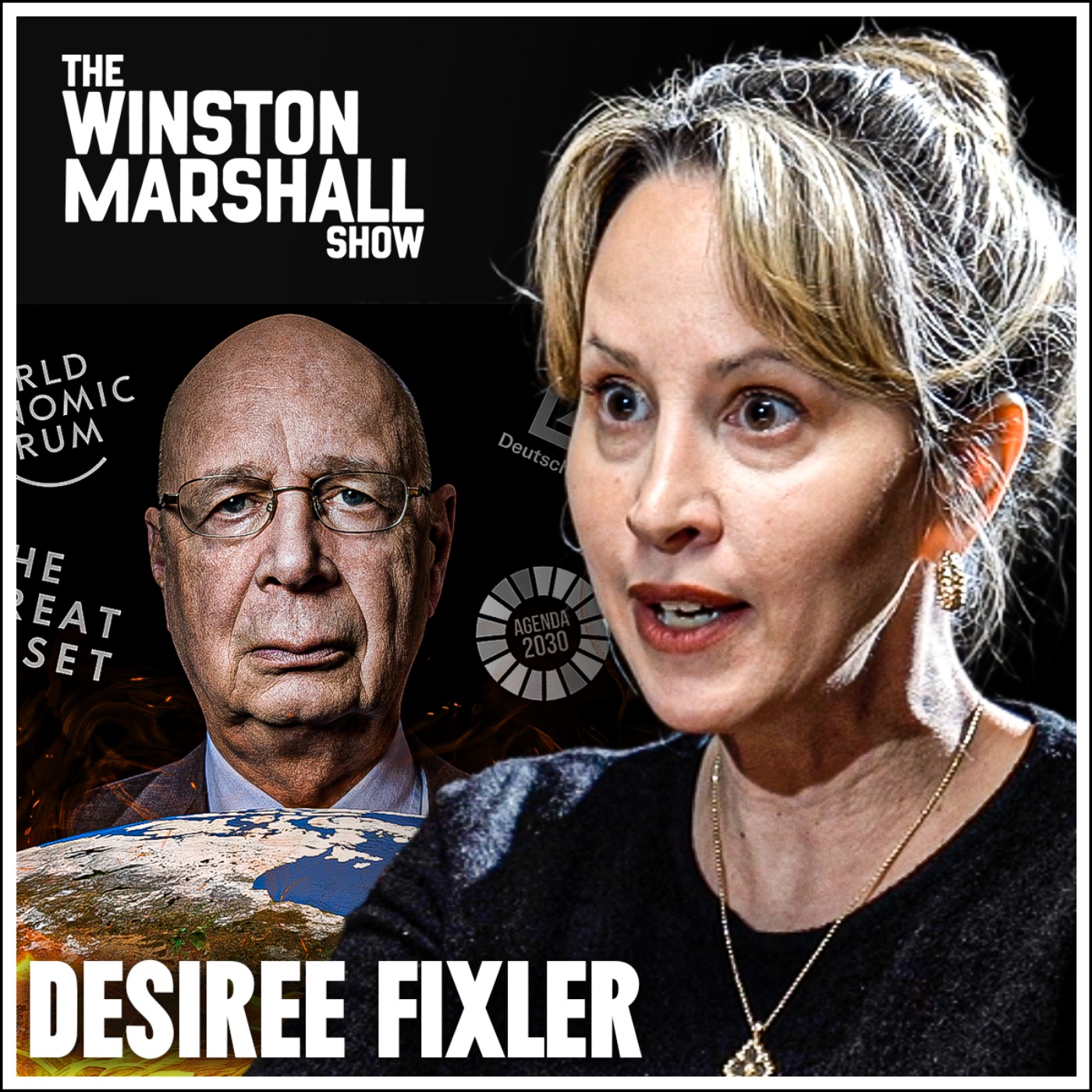
Desiree Fixler “I Helped Build It!” A WEF-Davos Insider EXPOSES The Great Reset
84m 9s
Desiree Fixler, a whistleblower and former banker, shares insights into the ESG world and its impact on business decisions. She highlights the profitability of ESG initiatives, which she describes as a marketing scam that overcharges investors. ESG became mandatory for businesses due to regulations in Europe, with requirements for ESG disclosures, carbon emissions, diversity, and other factors. The conversation delves into the shift towards stakeholder capitalism, influenced by events like the financial crisis, social movements, and COVID-19. Fixler criticizes how ESG distracted companies, leading to underperformance in investments. She emphasizes the need to distinguish between aspirations and actual results in ESG practices.
Transcription
13107 Words, 73076 Characters
Hello and welcome to the Winston Marshall show with me, Winston Marshall. I sat down with veteran banker and ex ESG insider, turned Davos whistleblower Desiree Fixler. Desiree, once a stalwart at Mount Davos and the WEF, has decided to speak out against the great reset and the ideology that has permeated the elites across the world. We explore her personal story, her journey, how she became this whistleblower and truth share, but we also explore the ideologies of Davos. Be it net zero, d-e-i-e-s-g, all this and much more. Before you hear from Desiree, I just wanted to say thank you, thank you for your continued support. Without you, we couldn't keep the show on the road. Remember, if you do want to support us, all you have to do is press subscribe and follow wherever you get your podcasts from and if you head over to Winston Marshall.co.uk, which is our sub-stack. Not only will you have the opportunity to ask future guests your questions, but you'll also enjoy an extended conversation between me and Desiree, where we go a little bit deeper, on Davos ideology and class swabism. We explore what she describes as the climate crisis hoax and we have a look at how d-e-i continues to hurt women, we also look at the very serious problem of low birth rates afflicting, not just the West, but the world. That's all exclusive at winstonmartial.co.uk. But otherwise, thanks again and without further ado, Desiree Fixler. Desiree Fixler, thank you so much for coming to speak with me. You have gone viral several times now of the last few months because you are an outspoken whistle blower. You've called out the Davos elite, class swab and the machinations of the w-e-f or whethers you've been calling it before we started. Before we get into all of that, I want to know your story. How did you get to a point where, as you say, you helped build the w-e-f's great resets? Sure. Actually, it starts pretty mundane. I was an investment banker working between London and Frankfurt at big firms. Of course, even back then, I started in 1994, bankers kind of had a bad reputation. There was always a w-e-k-r in the banker. It was, in the right up to the great financial crisis, I could see that the excess was too much, even for me. I loved it and I benefited from it, but it mismarketing became all too acceptable. It really became way too excessive. I decided to take a step out and I got involved with socially responsible investing. I thought that was a way that I could say, yes, I'm a banker, but I'm a good banker. I started my journey at this whole ESG w-e-f journey from the mid-2000s. I'm one of the original people in this movement. That's why I say, from 2005 through 2021, I was a chief architect of all of this stuff. I supported it. I wasn't like, I'm not saying I worked for Cloud Schwab, but I worked for other firms building the buy-in for this agenda. Okay. So, this is before the crash that you actually did at this moment where you want to do more responsible investing and professional behavior. So, how does that begin exactly? What did that look like? What were the first things enticing you? Is it zero? I mean, it's probably too early for that. It wasn't a little bit too early. "Shareholder Capitalism"? It was, well. "Stakeholder" I should say. Exactly. "Shareholder" being a little Friedman. Exactly. "Melson's version," which, of course, I was raised on, but then, of course, he got introduced to Cloud Schwab's version, "Stakeholder Capitalism," and that just sounds that's perfect. Profit with purpose, capitalism with a conscience, and I thought to myself, wow, this is an amazing opportunity. So, I had two hats on. I had my banker hat that knew this would sell. This is profitable stuff, right? This guy has a great narrative around it. And on the other side, I truly believe in this. We can make a difference. We can take institutional money, and we can invest it in strategies that offer great financial returns, plus positive social and environmental impact. So, I did believe in it, but I did it because it was profitable, right? I had seen your positions. So, what trove me is, in all honesty, at that time, was a belief in it, but I also knew it was the next big thing. So, I, you know, I wasn't surprised how it took off, but I understood that this was a hugely growing market, and there would be, it would attract trillions of dollars of capital flows, which did. And that's how I segwayed into it. Perhaps you can explain to me why it is profitable, because it doesn't actually, on the surface level, peer that it's obviously profitable. For example, Milton, his idea of shareholder capitalism is all about profit, whereas stakeholder capitalism, as I've understood it, explained by Schwab himself in his various books, it's where everyone is included, and it's not just about profit. It's all of these other contingencies, all these other issues, the environment, the society, all of these other things need to be considered. Everyone has to be considered when making every single decision for all these businesses. So, actually, it's going against the model of profit making, right? You're absolutely right. So, why, so why then is, did you consider it profitable? Because it was a marketing scam, because at this point in time, you could sell a story and double your fees. You could charge more for it. That's why. So, it wasn't my intent to do that, because, of course, there's a story around this, what we have to do extra due diligence. We have to care for these other non-financial factors, but we charged investors, we charged the consumer more for this. So, that's why it was highly profitable. But, obviously, at some point, the game is up. Right. Okay. So, then can you give me some examples, then, of this, it happening in industry that you would be an example of one of these sort of profitable endeavors. Okay. Well, I mean, you just have, you know, okay. So, when I was, so in my career, you know, I started as a regular banker, I said, way into, you know, ESG, and then in 2020, I get my dream job. So, I'm the Chief Sustainability Officer at Deutsche Banks, roughly one trillion dollar asset manager, and it's called for whatever reason, DWS. But it's a subsidiary of Deutsche Bank. So, I'm in the Deutsche Bank group. Okay. And I thought to myself, wow, a trillion dollars, wow, like we can, you know, we'll be making this as a for-profit, you know, venture will be making a lot of money, but we can also, you know, offer some good. When I was there, that's when I see the fraud. So, at the very beginning, I knew this is profitable. My salary is high. I'm getting paid very well. Right. You kind of have, I see that the table suddenly, you know, that, you know, the world had changed after the great financial crisis. So, you're, you're kind of in this Davos spotlight and lauded for the good that you're doing that does go to your head. Right. That's, you're not thinking about it at the time. Right. You're just doing your job. Right. And, you know, there's tremendous momentum. But when you're asking me, you know, an example, you know, I was sitting there at DWS, you know, working with all my portfolio managers. And it was Boone Times for ESG investing. And the team knew that we can charge probably double the amount of fees on anything that said green, that said justice, social justice, that said ESG sustainability. And then you have, you know, the UN's 17 sustainable development goals. So just slap that label on it and oversell it. Yeah. And we can double our fees for doing absolutely nothing. Even though you started this before the crash, am I right in understanding that the crash was a kind of moment where people working in finance, well, we've got to be more responsible here. So it was, was this ESG stuff a reaction to the crash? I mean, I know it existed before, but it was at this moment was like, uh, maybe we screwed up here. I'm just saying, and we need rebranding rebranding. I'm just saying you remember at the time, like Goldman Sachs for whatever reason. I mean, everyone was doing it. But Goldman Sachs was singled out. As I think they called it the giant vampire squid, you know, suffocating the world, right? So it was at a time Wall Street needed rebranding. Um, it needed a shield after the, the great financial crisis. There was so much distrust in the system. And then remember, there are bailouts. So yeah, there's fury, fury from everyone saying, why are we, we bailing out these people that caused the problem? And by the way, they're still in the seats. No one's getting arrested. And they're still, you know, getting fat checks. They're still making their bonuses. So there was absolute outrage. Yes. And so Wall Street understood, uh-oh, like, you know, the elite understood like, oh, shit, if we need to like keep this going, yes, we need to rebrand, and we need a shield. And absolutely, that's exactly right. That's when you see, you know, multinationals and especially Wall Street start to accept ESG doctrine, right? Start talking about stake holder capitalism. Yes. And then of course, you know, now we hit the 20 teens and you've got movements like, um, you know, the Paris climate agreement. Yes. You have the UN sustainable development goals being set. You've got the Me Too movement, right? So there's a lot of social capitalism. 100%. So from from George Floyd really 100%. Absolutely. Now, absolutely, you know, COVID happens. And that's when it explodes. And that's actually when ESG goes mainstream, not as an option, but as mandatory from starting in 2020 onwards. It's mandatory, uh, to merge, to blur the line between business and government, to blur the line between, you know, profit and purpose. Purpose, you have to set goals for your climate action. You have to adopt DEI strategies. That is that it becomes actually for every corporation. And by the way, government, the license to operate. Well, do you mean the license to operate that unless you are ESG driven, unless you back net zero, you back climate action, you back DEI, you know, addressing inequality, you cannot function either legitimately as a company or as a government. You know that, um, there is so much outrage in the public that internally in the boardroom, and I don't care like whether it's an NGO, it's like a government committee or it's a multinational corporation. What was being discussed is this is our now we understand, um, if we don't become political, we're not going to have a client base, we're not going to have a consumer base. And so we have to go out there with this, with these goals, right? It's not about optimizing. It was absolutely complete intentionality and moving from Milton Friedman's model of shareholder primacy to the stakeholder model where, which is pioneered by Schwab, 100% where you're serving, obviously, your employees, your clients, your community. But now you have these bigger goals. You're actually serving society and the planet. Oh, and then by the way, maybe your shareholders. And that's where it absolutely shifts to where every single operating business had to tow the party line to adapt to stakeholder capitalism. That's absolutely in response to COVID. Black lives matters, all the social unrest and events. Yes. Well, I want to come back to shareholder capitalism, sorry, stakeholder capitalism in practice because it doesn't, it's not entirely clear to me how that even works because if everyone's involved in decision-making, no one's involved in decision-making. But we'll come back to that. You say it was mandatory. In fact, we want one step even further, because ESG, environmental, social and governance, it's worth explaining to people who are not familiar with this. What exactly that means and what is the doctrine of ESG? Sure. It was termed in 2004 in a UN paper who cares wins. So it starts brewing back then, but it's very niche. And as I said, like I start getting involved, I start dabbling in this or actually moving into it in 2005. But remember, this is a niche market. It is not mainstream. So what the concept is that you can do capitalism better. That ultimately capitalism will fail because of climate change. There'll be no world left or because of social unrest because of inequality. So therefore, business in order to be sustainably profitable, have to factor in environmental and social objectives. But that's brewing, but it doesn't take hold till post-GFC. And then it becomes mainstream as you rightly say during COVID where everyone adopts this. Yes, at which point you're marinating it. And so it's self-congratulatory. Everyone is well done. Are you well done for doing more ESG? Well done for DEI. There's no one questioning. That's right. It's just absolute dogma. Yes. Okay. Sorry. Forgive me. So after the crash, you were saying? Yes. So well, after the crash, there's just more and more events where you start seeing, you know, it becomes fully mainstream. And, you know, to understand what it is, and it really does blow your mind is that businesses, rather than like in the boardroom focusing on, well, how do we make better products and services? Businesses have to start talking about, oh, can we save some polar bears? Oh, is there some climate justice we can do in Bangladesh? And this is what's odious about this because you're now blurring lines. I mean, for example, I throw this example out to you. You know, what do you want to fly in an airline that diverts more money to like polar bear, save your someplace, probably where it's not needed? Or, you know, they're, you know, putting money into unproven green technologies, right? Do you want to fly on that airline? That's diverting its cash flow to boondoggles. Or do you want to fly on an airline that, you know, you know, maintains, doesn't blur business and politics, but just says we want to be the best airline. We want to be the safest. And so cash flow is just going into maintenance and safety, right? So rhetorical question because, of course, I know, well, I'll vote, you know, to ride the airline that is just dedicated to be the safest airline, not an airline that starts getting confused with its money and running around. Well, that's not actually clear to me because for a long time, I think the market was actually making decisions if they could afford it to choose the sustainable option, to choose the environmentally friendly option, to choose the woke option, whatever brought sort of racial justice. I think that there was a fever pitch, certainly 20, really after Trump was elected until maybe the pushback began, which has been in the last few years, where people were making the market was making those decisions. So it's not clear to me, as you say, that people wanted to choose the known nonsense profit making businesses. You're a hundred percent right at that time, but it's a marketing scam. It's all virtue signalling. And there was some diversion of cash. But like, today, when I get asked, why am I against ESG? That's the reason I give. Thankfully, we stopped that nonsense. But it could have brought us to a place where, you know, companies are producing less viable products and services because they really do have to push more cash flow into saving the planet. So at some point, there was a turning point where the products were getting worse. Without a doubt. But remember, at the starting point is that customers are getting ripped off. There is a big difference between aspiration, intention, and results. So you've got all types of businesses distracting themselves and, you know, saying, oh, we need more girls. We need to hire more people of color, right? Moving away from the best talent bench, right? Because DEI is being forced on them. You're diverting cash flow into like, let's look at energy companies, right? There was a real effect. And you're absolutely right. There was a craze where shareholders were starting end consumers are starting to lean on energy companies to say, you guys can't like drill anymore fossil fuels. You need to move into renewable energy. And the US oil majors were slower to adopt ESG, but here in Europe and in the UK, they went nuts. So you see companies like British petroleum, Danish oil and gas shell. They move their energy portfolio from oil and gas into, you know, offshore wind, solar panels, green hydrogen. There was a real effect on the bottom line. At the time, people were sold a story that fossil fuels are evil. And that regulation would eventually stop the extraction of coal, coal, oil, and gas. That was turned a stranded asset. So don't invest, right? They came out with, you know, back then, they came out with ESG scores. Only invest in highly rated ESG energy companies because they're moving into renewable energy. That is the future, right? Well, fast forward. You know what you have today? The stranded assets. They're not fossil fuel extractions. They're the stranded assets today. Are the renewable, you know, investments that were made in unproven areas or in highly unprofitable areas. So today, the write-offs at BP, at Shell, to a lesser extent at the US majors, is actually the renewable space. And now you're hearing announcements from these companies to say, you know, sorry shareholders, we got distracted, right? We unfortunately sent way too much cash flow into unproven technologies that it was not within our expertise and we're moving back into, you know, what is like our primary business? Oil and gas. And you can see if you chart the share price, the stock performance, in, you know, European oil majors versus US oil majors, obviously the US outperforms, because they didn't get as much distracted by ESG. So the bottom line is this. Today, we can look back and we know that ESG investments underperform. So take the S&P 500, like our bell-weather, you know, index. And, you know, you can chart, let's say you have a thousand pounds, you invest in the S&P 500 index five years ago. There's an S&P clean energy index. Okay, so you're a thousand pounds, one goes into the S&P 500, the other one into the clean energy index. Five years later, guess what? You would make out of that 1,000 investment over 800 pounds investing in the S&P 500. It goes up over 80% in five years. Your investment in clean energy would have gone down over 30%. So your original thousand would be less than 700. You lost money, which is crazy. But ESG at the end of the day, underperformed. There were all these seminal research reports written, like by leading professors at Harvard, just on the take. And they linked ESG to profitability back in the 20 teens. All of that has been debunked. And now we have financial data. You have long-term data to see, holy shit, this was a total, you know, marketing scam that overcharged investors and the consumer for underperformance. I would like to come to when that turning point was when ESG, suddenly there was the light bulb moment. But before we get to that, there's something we missed out earlier, which is when it became mandatory. So at what point along the line did DEISG become mandatory for these businesses and industries? You know, it starts from, you know, CDOs just wanted to, wanting to pander to the public. Again, it's very much rebranding a reputational shield, if you will. But remember, you also have regulations kicking in in Europe. So the European Union starts with their sustainable finance action plan in 2018. It's hundreds of regulations, the mother load of regulations that start getting implemented starting in March 2021. So it does become mandatory with your ESG disclosure, right? What is your carbon emission profile? How many women do you have on the board? What are you doing to address biodiversity loss? But actually, their requirement is not that simple, right? So the Europeans actually are required today under like, it's this alphabet soup of acronyms, all these regulations that companies have to, you know, additionally report on kind of like 500 new line items. It's totally crazy. So it does become regulatory driven, right? Also in the UK, you guys have your own set of, you know, regulations where every company has to report out their transition plan, right? Because the country is going net zero. Now no one knows how to get to net zero. It's all bullshit estimation, but it does become mandatory, you know, the stuff starts in the 20 teams and then it goes live over the last five years. We'll come back to the renewables sort of fallacies and net zero bullshit as you to use your term. But I want to understand when you, Desiree, had your damocene moment, you'll come to Jesus moment on this stuff, having been an apostle for the SG nonsense, you then decided to speak out. So when, when did that happen? So I was chief sustainability officer at the Deutsche Bank Group and my CEO, I mean, just to say it, I mean, he was an outrageous liar. That's not necessarily against the law just yet. But what I had seen is that he was using. Lying is actually against law in the UK now under the online safety act, if you do it online, but that's a side point for another day. Sorry, sorry, sorry if it's true. At this time, you know, he understands rightly so. There was such a, it was boom time for ESG investing and any asset manager that was perceived to be advanced in ESG doing this. Celside equity analysts would start writing stuff like, you know, we have, you know, buy signal on DWS, share price should, you know, boom, 25% because they're so advanced in ESG. So for my CEO, he understood, holy shit, no one understands what this stuff is. There's no, like, no one's breathing down our net. There's a kind of regulation out there. There's no enforcement. Desiree, just go and say it. Just say anything because it's selling, right? And we're going to make more and more profits. Let's get our share price up, right? So we're just going to, like, miss market our share price to a high level. And then, like, we'll figure it out from there. Maybe we can buy someone who knows how to do this. And the problem was, is that, you know, you're not allowed. There is regulation on this. You're not allowed to have a gap between what you say and do. So you can't go out into the market and say, you know, the majority of our assets under management are ESG aligned. But internally, we're documenting, that's not the case, right? So he's going out and just making out numbers. He went out, so we had about 800 million, 800 billion euros of assets under management. He went out to say, um, over 450 billion of the assets under management. It's ESG aligned. We're doing good. Internally, we said to him in the board meeting, like, that's mental. Well, he made up that number. Oh, so in the board, you know, in the board room, I said, look, that's a, like, that's a false number because we don't have a tracking system. So no one calculated that because we can't, we've estimated and manually estimated and maybe the number, number's not 450. It's maybe 120. That's a huge delta. And so we need maybe so still you're still estimating. We're estimating, but there is like, but you can't go out with a number. And the SEC would choke us. Like, you can't market a number. This is now financial. Yeah. When we have no data behind it, we have no substantiation. And again, I'm raising the concerns to say, hey, Mr. CEO, cool down on this stuff. We were already on probation with the Department of Justice in Brooklyn. I wasn't going to happen, I forget. So I separate issue for bribery, for the fraudulent, like, I mean, don't you think it's the most scandal bank at this time? So we were already warned by the US authorities, like, no more lying. You know, you have to have like complete financial controls. And so I'm raising this to say, you know, we're missmarketing our funds. We're slapping, you know, ESG labels and everything. You know, we have technology tilted portfolios that suddenly we're calling like sustainable development goal aligned, right? And I expect of like an investment in Apple is not saving the world. That's missmarketing. We were fudging gender ratios. So my CEO's compensation, his bonus, is linked to achieving ESG targets, which is actually becoming very common at this time. So, you know, he would just look at like, how many women do we have in the company? You know, how many women are in senior management? Shit, fuck it. Get that girl to report to me directly, so I can fudge the number, right? And it's like, that's an intern. You're the CEO. But again, he was fudging numbers to show that there was better diversity. Just going out, talking about our artificial intelligence risk management systems that are all ESG driven. We didn't use AI. Like, no, that's, in fact, the system kept like collapsing. And there are emails where we're going back and forth. See, that's the thing. We're documenting this in real time, saying like, we don't use AI, right? There's no system that we use AI. And in fact, the ESG system has high operational risk, right? It's not 450 billion. It's maybe 120. That's the thing, right? So I blew the whistle and I only stayed internal. So I didn't go external. I didn't go to the regulator or anything. I just went to my boss, the CEO, and I went to the board. And I said, listen, we have a problem. But this is all fixable. And our annual report was coming out. And my CEO had all the lies in it. And I said, listen, I've redlined everything. Here are the, you know, we need to restate these things. We're not going to get in trouble at this point. Let's just, you know, go out there and say, you know, sorry, here are the real facts. So, you know, I kept saying it. There was no reaction. And then it was my last board meeting where I kind of have to say, I got a little aggressive because I'm getting very nervous. And I kind of, like, I think, and think the table to say, I need an answer. We cannot issue this annual report. This is a legal living documentary. Everyone's going to scrutinize it. It is filled with lies. In a couple of weeks later, I was fired. And the next day, the annual report came out with all the lies with all the misstatements. Wow. So for me, it wasn't that I was and people kind of misunderstand this. It wasn't that I was demanding that the company invest more in green activities. It was just as head of ESG, there's a G in it. It's called governance. You ahead of ESG. I was head of ESG, this chief sustainability officer. So I have ESG and DEI rolling into me. That's what sustainability it comprises those two areas. But there's also governance. And so I did my job because it was black and white. I did it. I blew the whistle internally. Well, because I didn't want to go to jail. I don't want to get in trouble. And I don't want the company to get in trouble. But it was a corporate governance issue. It wasn't that I was asking the company to make more investment in solar or wind or anything like that. So suddenly I'm fired. And what the company does is they don't just hire me. They go on this horrific smear campaign. They publicly discredit me in a Bloomberg article that I underperformed and I had questionable ethics. And they revoked my work permit. Because I'm working in Frankfurt at the time in head office. And they render me homeless. So it was like three knockout punches. And they figured that little girl would be so she's what they call me real kill. She's like so insignificant. Like she'll never recover from this. We'll never hear from her again. This is a DWS. Yeah. Don't you think that this to me? Yeah. This is all documented. This is truth. What year was that 2021? So when you're asked to ring the pandemic then. Yes. Sort of. Yeah. Yeah. So I get fired. I have no place to go. So I have to like I'm like 49 years old, I guess at the time. And like as a loser, I have to move back in with my parents and go into their basement. I have three kids. Yeah. We're also making a go. And all my stuff is stuck in Germany. I'm just that's all that the company never settled with me. They never face to face fired me. They just cut me off the platform and just did a runner. Well, and the Smith campaigns is much much worse than that. But this is quite important by there's a side point. But I think it's an important one is because whistleblowers. One has to be careful with whistleblowers, particularly if one wants to work with a whistleblower because they might work with you. And so if they're capable of whistleblowing on a previous company, why wouldn't they do that on you? Which if you've got nothing to hide, you might say who cares. But you know, there's good behavior. And you don't you don't want to reveal what's going on behind the curtain in any business. And just because it's bad practice. But actually it was them who started the Smith campaign, not you. They came off to you and you're acting in reaction to them trying to take down your own reputation. That's that's right. So that I have to live with the whistleblower non-clature, but it's not factual. I did my job and I kept it internal. They went external. So they went to Bloomberg and in truth, I didn't know what to do. I mean, at first I thought, screw it, black stones trying to look for it, you know, chiefs of senior ability officer, I'll start interviewing there. I'll start interviewing like, you know, for other jobs, just put this behind me. The problem was that the Bloomberg article was out there. There's an elephant in every room. And everyone's thinking that I lied, I cheated. I was the one that violated regulation. So I sat on it and I just started reading lots of books by other whistleblowers like Tyler Schultz, he blew the whistle on Theranos and but I decided, okay, you know, the only way forward is for me to clear my name. So I'm going to look out. You're in a corner. And a friend of mine used to run the Wall Street Journal, Jared Baker. So I gave Jared a call and I said, can we meet? And I explained to him everything and I said, do you know what? You're not just going to take my word for it. Here are the documents. And Jared assigned wonderful people at the Wall Street Journal. I explained my story. I handed over the documents they could see, right? You know, the lies that were published externally and what we documented it internally. And they ran a story. They came out on my side, though it was horrible. Like the headline is still like fired executive, you know, blows the whistle. But literally this bombshell of a Wall Street Journal article, you know, goes out. And within two days, the US authorities call me up. The SEC, the FBI and the Department of Justice. And they asked me to work with them on a case that they've just opened up. And that is to investigate Deutsche Bank, NWS, on ESG fraud. So dramatic number of events happen. But within a couple of years, there's a federal police raid at Deutsche Bank headquarters 50 federal agents in Frankfurt. The CEO along with like other senior leaders are eviscerated or fired. The US authority renders a guilty verdict that DWS made ESG misstatements. And the Germans open up a criminal investigation and also rendered guilty verdict there. So they did get in trouble. Right. I paid the price. There's no doubt. I paid the price with my career. But those lying sacks of shit also got in trouble. It cost them 14% in market cap. It was over a billion in one day. Tens of millions in defense legal costs. And those people got fired. Wow. One of the absolute, it's still an astonishing story. You have not actually answered my original question, which is that this is sort of your story and how you became a whistleblower. But you have spoken out against what were lies. But you were telling me to take me from deserate the ideal, the ESG ideologue, to now thinking the ESG is a scam. Because that part of the story, you haven't explained. So I obviously find out that at my company, in practice, we were greenwashing. I'm very plugged in. I also know it's not just happening at DWS. It's happening everywhere. A black rock at you know, other companies. As a practitioner, you start to recognize like these slogans, these like mission statements. It's just, it's so ridiculous, right? You have Goldman Sachs like 50% of our senior management will be women and diversity is our number one priority. Bullshit. And so I, with my own experience, right now have a different view on ESG. But you're absolutely right. I'm thinking at this time in 2021 that there's greenwashing, but there's a good version of sustainability. So you're absolutely right. I'm still, I'm a skeptical believer. But I'm thinking there's a better way to do this. When did you become skeptical though? Well, you weren't a skeptical believer. Well, I believe in it until I saw how when you're overseeing almost a trillion dollars of assets and understanding, it's just being mislabeled. My CEO doesn't buy into it. Everything is a marketing scam, right? There's no, there's no more thought behind it. You're also meeting up with regulators at this time. And like the cookiest of regulations are coming out that are just ambiguous and meaningless. And what I realized at this time, it's a multi trillion dollar industrial complex. ESG, right, is so profitable for so many types of companies, not just Wall Street. You've got all the consultants, all the data providers, all legal firms, you know, all the task force, you know, in government, right? Everyone had an ESG group. So it is academia, by the way, right? This becomes a multi trillion dollar industry. So that's what I'm, we'll come back to that. I want to understand why it's so profitable. It was so profitable because everyone was doing it. So let's just say for me at DWS, I, I urge Mendes budget just on consultants. So you have to bring in like a company like Boston Consulting Group to help you with your ESG strategy. You're kind of saying like, I don't need that. But the CEO is saying the board is saying you have to have it because we need to cover our ass, right? That we can outsource accountability. So bring in all these consultants. So you have to bring in Boston Consulting Group, PWC, who's going to help with all your reports, your reporting requirements, you're going to bring in a censure to help with new IT apps. So you can see, oh, we need, you know, you know, this feed from Bloomberg, this feed from MSCI, each one of these things, like each consultant is like a half a million, right? So it's a million and a half to sound like consultants, right? Just in my, you know, just my company, now you're getting all the other feeds from the data providers, all the legal help, right? In redrafting, you know, prospectuses and press releases, PR agencies coming in. Do you see it's a feeding frenzy? Every which way you're looking, it's a total feeding frenzy. And then you've got the investments, right? Again, right? Miss marketing, you know, an investment in Apple as saving the world. You know, you've got, you know, a lot lobbyists that we're supporting as well, to make sure that this isn't trying to regulation because it is such a feeding frenzy. We want more regulation. So there's more business. You see how it keeps ticking up academia, jumps in. And they're getting tremendous funding because every single thing they get funding on, if you link it to climate change. Okay. So stakeholder capitalism, in the name of helping everyone, created a sort of new elite of cronies, who are profiting. So it's not actually spreading the welfare, and it's just creating a whole sort of industrial complex, like you say, of new elites, who are making crazy money, all in the name of trying to help maximum amount of people, rather than just the shareholders like a hundred percent. But understanding also allowed the existing elite to rebrand, right? You're just in the seat, right? Even somebody who I do respect, Jamie Diamond, right? In 2019, he comes out at the business roundtable to say, you know, shareholder capitalism is past said. It's all about stakeholder capitalism. And why did he say that? Because guess what? They started to make a lot of money in this area, right? And it grows and grows and grows. So everyone kind of shifts into it. So it's the existing elite has now rebranded themselves like, hi, I'm Jamie, I'm no longer a wanker banker. I'm not Gordon Gecko. Actually, I'm here, you know, I'm Mr. Net Zero. I'm saving a planet. And so, you know, the existing elite is thinking this is the, you know, this is the new cover, the new shield. They get stitches from it. Yes, it appears in their circles, 100, 100 percent sort of honorable or whatever. But then to your point, it now gives rise to this whole all new bureaucracy. Yeah. Okay. So back to your story then, sorry, because I interrupted you there for that little segue, but you basically, it sounds like where originally you're slowly marinating in the waters of ESG and becoming more and more convinced of it. And now then you're slowly seeing the lies done in the name of it. And slowly these things are chipping away, this sort of, it's not one big thing. It's just lots of little things every day, chipping away, but it just, it seems more and more bullshitting to you. Have I understood the story correctly? Yes, it is. Yes. And what does it is that, you know, so I get fired and I can't get another job. No one's going to hire me. As you rightly say, now I have this whistleblower label. But people were reaching out. And so I was invited to join the UK's financial watchdogs advisory board, the FCA's sustainability advisory board. I'm asked to join the World Economic Forum. I'm asked to join one of their futures councils on responsible invests after this incident. In 2021, the end of 2021, everyone starts, like, my phone is ringing off the hook. And so people didn't fully appreciate my story. They thought I really was this green Joan of Arc that, you know, Desiree is the real deal and she gives us some street cred. So have her, like, you know, she could help us tackle greenwashing. You know, so I was invited to join lots of advisory boards, projects, because you were basically an ESG puritan at this point. It was, no, no, you want, but then you were seen as an ESG puritan. Correct. That's what they thought wrongly. Yeah. Meanwhile in your head, you're going. I'm already starting. You're going the other direction. Correct. And so I'm already seeing this. And, you know, as soon as I get fired, I am jumping in. I'm speaking to lots of people. I'm going, oh my goodness. Like, greenwashing is pervasive. I'm clocking. The market is still growing and growing and growing. And I really, by 2021, it is a multi trillion dollar industrial complex. And everybody jumps into it. I remember seeing a bank or once, let's call it 2019. And I was talking, you know, as a purist at that time, I was talking about the UN sustainable development goals, the SDGs. And I remember him sitting there. And he's like, does I don't know what you're talking about? What do STDs have to do with finance? And I'm like, you idiot. SDGs. But, you know, fast forward two years later. And he's like Mr. SDG, you know, like it's like totally into it. And I'm going like, oh my god, you just see everybody using this marketing play gimmick. And so I'm becoming more and more cynical. But now that I move from one company, and I now become part of, you know, big boards, I'm more part of the system. Now I have a front row seat to see kind of what everyone's up. So you take this up then. So you've brought in your W E F Laniards. The proud to have been part of those. So everyone is true. It's true. It's real. So you have evidence. But so you, you're like, at this point, you're going, okay, I'm going to take this on. I'm going to take these roles up, despite my skepticism. A hundred percent. I mean, look, and I did it for a couple of reasons. Number one, I need work, right? But I love being in the mix. Right. So there's a little kick like, oh, wow, I'm really impressed with the WeF and what's so cool to be on like a government, you know, advisory board, you know, to help these type of banks out, you know, this corporation. Some of the stuff I did was nonprofit. The WeF is nonprofit UK financial watchdog is nonprofit. But I'm very much in the mix. And I'm figuring, I can carve that something out of this, right? I can figure this one out. But all it does is now it reinforces that it's more of a marketing gimmick. You also have at this point, remember, now we're moving into like 2022. So, you know, you've got, you know, the Ukrainian War markets go berserk. And you now have, this is the first time you ask, what is the beginning of the ESG backlash? This is it. So my story is out there talking about fraud and ESG. But now, secondly, what is revealed is that ESG was never linked to profitability. ESG for most, for the most part, the trillions of dollars that were ushered into these investment funds, they were going into like technology portfolios, like Nvidia, Microsoft, Apple. So it was like, you understood that the truth was out there. But now these portfolios start underperforming because it doesn't have energy as part of the mix, right? These portfolios viewed, you know, oil and gas, fossil fuels as like, you know, the oil majors were, that was a sin industry, right? And they, you know, moved away from not just energy, but mining, transportation, right? So suddenly these ESG portfolios majorly start to underperform the overall market. So the results start coming in. Also, you know, you're looking at real world issues like, hang on a second. ESG and net zero promise to lower our electricity prices. Well, hang on a second. Holy, like, holy shit, my electricity prices have skyrocketed. And some people, you know, say, well, that's because of like, you know, the Ukraine war. Well, no, actually the way I look at it is that if we, if Europe wasn't so fucking stupid, especially Germany, to go net zero, right, Putin would never have been that bold to invade, right? But he saw an opening. And so I really feel that this whole net zero craze was one of the factors, right? Leading to the Ukrainian war had Germany been tough and not banned nuclear, not banned fracking, right? Basically, you know, Germany announced, hi, we're going to de-industrialize. Yeah. You know, I don't think Putin would have done that. Well, whatever the case is on the Ukraine war, it is the case for Germany that it's an act of national suicide, although, yes, I'm, I'm, I'm, I'm sounding they're turning it around now because it seems to be so unbelievably stupid, but I'm wrong. I'm wrong. I'm wrong. Okay. Okay. Maybe the room is wrong than that I heard. But it is absolutely the case that, I mean, in Britain here, energy prices of 4x, what they are in the States, it's costing everyone. But Ed Milliband promised that, you know, every family would have a reduction of 300 pounds. Yeah. So these are the things when you asking me, like, was it one moment? No, but it was the moment where I'm sitting in these meetings. And I'm saying, hang on a second. ESG doesn't make more money. ESG doesn't outperform the overall market. The facts are in it underperforms. And net zero is, you know, we're demonizing the fossil fuel industry, but hang on a second. We can't move away from that because wind and solar, it's not abundant enough. It's more expensive. And it's not hooked up, you know, perfectly to the grid. So where are we going with this? Well, more than that, by the way, was we're exporting that to make those that tech whose solar panels, for example, we're exporting that to China, who are making it with coal. I love it. Right. They must be sitting back like China and Russia, like to say, how dumb is the west to buy into this stuff? Right. We're making a bomb. They're actually destroying themselves, and we didn't have to fire a bullet. But yes. And, you know, but you have to understand that the zealotry in 2022, 2023, it's increasing. It's becoming so insane. And so it's 2022, where I actually immediately shift where I'm sitting in these meetings. And I'm realizing, you know, I have a seat at the table. And these are very senior people. And when you're sitting on advisory, you know, committee, you're with, you know, the respective government, you know, officials, I'm very senior ones. But you're, you know, the advisory committee, you know, goes across like every kind of industry. You've got professors on the board, like highly esteemed professors. You've got, you know, your lawyers, your consultants, you know, business elite. And what I've realized is everyone sitting there is a vested interest group. No one cares. Everyone's talking about using the slogan, we're here to save the planet and the people. And they couldn't care less. They were so detached with the real world outcomes. And that's when I would say, wait, hang on a second. Yes, bots. And I would like roll in, you know, economic data to say that what you're saying is not has no reflection on real world data. That is not happening. Energy prices for ordinary people are not going down. They keep going up. But by the way, that is also why it's so evil because all in the name of trying to help everyone, it's the poorest in society who it's costing the most. That's right. It's them, it's hurting the most. That's why I think it really is far more insidious than people. You know, it's way beyond the road to how it's paid with good intentions. It's like it's the most struggling in society of being hurt the most by these policies. 100%. That's when I clocked. I also have like the realization that like, this isn't stakeholder capitalism. This is socialism. Because the agenda, and this is very important, the agenda is not just about, oh, okay, you know, let's slap on and green label on everything and overcharge people. It actually, what kicks in are regulations. Not just driving up our electricity prices, right? But it feeds into a cost of living crisis, where it just cascades down through everything. And then also we have now new laws to say, you know, this is a transportation you have to take. This is how you heat your home. You know, you're seeing this whole Davos agenda. This is who you have to hire. By the way, you know, open borders are good. So the Davos agenda is much more than just net zero. The Davos agenda is about top-down control. It is about controlling nation's natural resources, production, distribution, demographics. And that's when the penny is dropping. This is about more and more state control. We didn't vote for this, right? This isn't democratic. And it's actually subverting capitalism. We're blurring the lines between business and politics. How did we get here? So I mean, this is what I totally got this from Clash Rob's book and his 2020 book, The Great Reset. It is all about, it's all about global governance. It's just the term he uses and globalism. For him, that means global governance. It doesn't mean what we might think of free markets, or I think it's about controlling. I think that's perhaps what you mean when you say socialism. Yes. Is it that sort of? Yes. Well, it's a lot of critics. I look at socialism as the state is controlling. The state says, like, you're in the UK. Oh, we have plentiful oil and gas in North Sea. But I at Milliband, I have decided to steal that from you, bridge people. And we're not going to drill there. I'm going to slap on an 80% windfall tax. And in fact, we're going to virtue signal because we're going to import, you know, our gas from Norway. But it looks like we're bending the curve on our climate, on our carbon emissions, right? That is the state coming in. You know, if people were asked, like, it should be democratic, where people choose what they want to do with their country's resource. Well, actually, it's funny that you mentioned that in The Great Reset, he makes this, he makes this argument about what he thinks is the trilemma, which is that there's democracy, there's sovereignty, and there's global government. Oh, well, he calls it globalization, but I think he means global governance. And he argues that they're not all compatible with each other. But then he doesn't go on to defend democracy or sovereignty. He then goes on to make a big defense about global governance. So it's quite clear what his priorities are. I wondered if you yourself were at Davos, or did you go to the WIF? So the web is much more than Davos. I get some, you know, folks like, you know, sending me messages to say, does it really like, what's your hang up with the web? It's just a think tank that has an annual conference in Davos. Like, no, it's not. The web is huge. It's tentacles. In fact, every part of your life, it is shaping. Like, you have to understand that. The web shapes markets. It shapes national policy, education, media, and financial flows. You have to understand that. Okay, you have to explain that because there's a lot of conspiracies about the WIF from the sort of lizard people controlling the world to sort of everything imaginable. And for good reason, we feel that the world's elites, not just politicians, but the sort of corporate leaders are all going to this one place and having behind closed doors conversations. Yeah, we're going to be conspiratorial about it because what the fuck is going on over there? So you say they are in fact controlling the world. 100%. You'll have to make the case how? Because even I'm, it's not totally clear to me. I mean, they're influencing the world. I've certainly convinced they're influencing the world. But if you're going further and saying they're controlling the world. Yes, well, maybe not China, or Russia, or, you know, Trump's America. Okay, the West. But yes, the left wing West. Yes. So it's, okay, so here, but the WIF is about 800 people based in Switzerland. They have four other offices globally. They don't actually disclose how many people work there. But safe to say above 1000 people work for the WIF. There are 22 industry sector groups at the WIF. Right? So it has, you know, a big membership network. And there are 22 industry sector groups, 37 future councils. So I was on one of the 37. On my council, there's about 20 people. So 37, these are all external experts, if you will, right across academia, business, politics, you know, the regulators media is present. And so 37 of these future councils with 20 members. Now remember, each of these sector groups or councils had their own monthly meetings. Right? Sometimes it's twice a month. They have all their own conferences, you know, plus there are over 140 projects. I'm not making this up. This is on the WIF website. So you can verify everything as this is, they disclose it because they're proud of it. They conduct a risk report every year. So this is how it works. So they reach out to their expert network, right? Their members, right? And, you know, funded academics. And they determine what's wrong on planet earth? What's, you know, what are our biggest challenges? What are our biggest risks? And so the WIF determines, like, what our problems are, and then they determine the solutions. And so no surprise, it is climate, climate, climate, misinformation, right? You know, social injustice. And then they are solutions are, of course, net zero, net zero net zero, you know, censorship against hate speech because of all this big bad Trump misinformation, right? And, you know, woke border controls and DEI to address inequality. So that is there, you know, it is. Like, they decide, like, we don't decide it. So, you know, you still have convinced me on how they're deciding. I mean, this isn't that different to, let's say, a think tank. I mean, what point are they actually making the decisions? Is it soft power? They have a hard power. They have. So I would say, you know, it's soft power, but you have to understand that when you have people like, you know, there's no difference between the agenda that Mark Carney has, right? To Keir Stommer, to Macron, to Ursula Fonda. It's the same worldview. It's 100% the same agenda, right? The same. So it's soft power. Yeah, okay, but it's tremendous power on topics. We never voted for. So is it soft or hard? Because it's been implemented. We never voted on, like, you know, to have open borders and, you know, to fund all these crazy woke ideas. We never voted on, you know, hiking up our energy bills because of net zero. We never voted on digital IDs or central bank digital currency. But we did vote for Keir Stommer. And so, I look, I think I agree with what you're saying. But the point is here, Klaus Schwab isn't actually saying, "Stommer, you have to do this." What is actually happening is that there is this big kind of conflict. They get together. They all swim in the same waters just as you were swimming in the ESG waters, those years back. They don't hear any alternative opinions. So their ideas are not checked. And then they go home thinking how great they are because they've been rubbing shoulders with all the world's elite. And they are convinced that those are the most brilliant people in the world. They are saying such and such, so they must implement these ideas. We the people could vote them out. Yes, but we, but information, they're long to the public. They've manufactured a climate crisis. There is climate change, but there is no climate crisis. Yes. So you have to understand, like, the weft will work with, you know, large asset managers, consultants and governments. And they're all in on it because they all profit from it. It's hugely profitable. But the most important thing, it's a job of enrichment scheme. You're there for life, fear of cells. So the problem is that that's a point, because these politicians who are eventually going to lose their jobs and almost all of them, they're rubbing shoulders with the corporates who are going to give them jobs where they leave Brussels or Westminster. That's an important point. That's the definition of colonialism, by the way. Totally agree. There is this tremendous and people are surprised by that. This public, private partnership happening. So it, it, it, it, it surprised me. I'd be in the room and everybody around the table, especially big business, they're all pro-regulation. And I'm seeing they're like, what? Like that goes against like capitalism. That's against our system. Why would we want more red tea? That, that just leads to economic decline. We know that. But then I'm realizing, of course, they want more regulation. Because again, like they have their, you know, their job, they'll get another bonus. There's like, you know, more bureaucracy. Because they're all bureaucrats at the end of the day. They're not making anything. They're the opposite of Elon Musk. So they want more regulation because now like their job as sustainability officer or their academic role, they have more funding, right? And there's more right at these big corporations. If you have more regulation, there's a higher barrier to entry. So you can take out your competition, right? Because you're big enough to adopt to more compliance costs. And, but you're working with the government. You're in on it. You're getting government contracts. So it becomes a feeding frenzy absolutely both ways. You know, you have, you're absolutely right, that you get voted out of office or you do something bad. Well, that's what you're going to get hired at one of the private equity firms or one of the, you know, the big like, when Nick Clegg going to Metta, when he's a perfect example of it. So you've got that. And that's when, I mean, for myself, when I understood that this will never stop, right? Their own selfless interests are here. The people are never spoken about. It is just their job security for life and more funding, more back and forth. But again, it's the untruths that are told to the public. They will promote that there is this climate catastrophe that the world is on fire. Right? They will use any incident like, you know, 10 people died in France this week from heat. Well, it's like, maybe, you know, actually, well, 10 times more people die from the cold, first of all. And maybe if you didn't have net zero and restrict air conditioning, they wouldn't have died. You know? So there is, you know, two sides of the story, but our media is so slanted. And that's what I fear. So more talking about, like, you know, heart or soft power, I hear you. Of course, it is just an agenda, you know, that they've agreed upon. But they've also agreed upon, you know, the story that gets out there to people. So voters in the UK, yes. You know, the UK voted for Kierstarma on what basis? Didn't they vote for less red tape, economic growth? Didn't growth? Didn't people vote for lower energy prices? They didn't vote for higher energy prices. I can tell you my everything goes up. Right? So had they actually been truthful? Right. I don't think labor would have gotten in. What to be totally fair is a bad example. I used by Starma because people didn't really vote again. I think he got 20% of the electorate actually voted for him in its only because the right was split. They got into power. But so, but the point I was trying to make is that we, the people have a choice and we could hypothetically, as they've done in America, voted in someone who goes against the Davos world view. 100%. And that's, you know, another question you asked earlier is like, when did the backlash happen? It really happens in 2022. You have all these stories of greenwashing come out. You have ESG portfolios underperforming. You have red state financial controllers going like, hang on a second. You know, we've been entrusted to invest pension money from teachers, firefighters, police officers. And somehow we were steamrolled into a default option by block rock to invest in an ESG fund. It's like the example I gave earlier. That didn't optimize financial returns. These people have worked hard. They didn't give, you know, their money over to a pension fund. That's like running around saving a polar bear. They worked hard so that they have, you know, decent financial returns for retirements. Right. And that's where you have, you know, a lot of people think it was a redneck movement. No, it was based on financials. People understood that this was a scam. And they didn't elect for their pension money to go into DEI projects or to go into net zero. They want to invest in the overall market. They wanted to optimize their retirement money. So you have like pushback in the US. The story comes out. Financial returns are bad. Energy prices start going up. You know, you're looking around saying like everything is about identity politics. Right. People are getting hired, promoted based on what they look like instead of what they're doing. And people are getting really agitated by this. So the Americans, obviously, you know, eventually pushback. Well, so much so now that they're being penalized if they have ESGA policy or DEI policy. That's right. It meanwhile in 2022 whilst the debunking, the great debunking begins. Schwab is doubling down and he publishes the great narrative, which is absolutely hilarious. And just to a point you made earlier. And I always find this puzzling but kind of funny. He writes of that book that it's a hopeful book that categorically rejects the doomsday mindset, consigning humanity to a future of oblivion whilst. And then I've listed every single term of climate, every time he uses climate catastrophe, climate crisis, point of no return, catastrophic effects of the climate change in our lifetime, existential threat facing humanity, weather disasters. We stand on the brink of not just abrupt and violent change, but disaster. And we've reached the point of no return. I mean, this is just a fraction of the book being littered with this. So they're going and wondering that they're doubling down. But does it right? You, at what point are you finally going enough of this? Because you're still in this. You're still in the doubles. I'm in deep. So in 2022, I'm already pushing back. By 2023 and 2024, I'm an outright critic in the room. And I'm thinking to myself, and I remember talking to, I am here to see Ali about this. And I said, you know, I'm still, you know, part of like all of these kind of sustainability boards. And, you know, I'm the only one pushing back. And, you know, I just maybe need to just leave, you know, these, this circle. It's just, you know, I really, I get a, like, clear and clear a picture that these initiatives are harming society. And I remember Ion said, no, doesn't rate. That's your role. You have to be there. We need a, a voice of common sense of reason in that room. We need to be, right? And it can't just be one view. And so I remember, like, you know, just going along with it, always objecting to it. You know, they would put out this propaganda. You know, net zero is profitable. Renewable energy is profitable. It is going to lower electricity prices for everybody. And pushing back and saying, no, here, here, here are the real costs. If you look at the net zero countries, right? Germany and the UK, you know, unfortunately have some the highest energy prices. And you can see the economy is starting to flatline, particularly in Germany. Germany is going on its third year of actual shrinkage. It's declining, right? The UK is flatlining. You know, I'd be in the room, you know, here in the UK where some government person would say, you know, net zero is adding jobs to our economy. And I'd say, no, it's not actually the ONS report just came out. Joblessness is going on. And they're like, no, McKinsey did a study. And McKinsey has said that it should add 10,000 new jobs in the renewable in the green sector here in the UK. And I'm like, wait a second. McKinsey, the one that pushed the opiate crisis in America, that's the McKinsey you're talking about. An old report that says, maybe there would be, but your own government, the office of national statistics has just told you in the last quarter, this country has lost over 100,000 jobs. That's the real world. That's, that is what it's like to be in these meetings. And I argue this all the time, right? It is like this, there is no climate catastrophe. There is however, we do have issues. We have a cost of living crisis. We have a low birth rate crisis. If we're not here in five years, it's not because of climate, it's because of war, right? We do have war, geopolitical tensions, right? These are the issues here and now. And to address the cost of living, just for PLNETS here, I've said it over and over here in the UK at the weft, because that unleashes economic growth, right? Everything today is based on affordable, abundant, reliable, very important, reliable energy. Computer is easy. Like, don't even start talking about technology AI, because the foundation is just your energy policy. There's no AI, there's no quantum computing or anything, there's no technological hub without good energy policies. And if we do want to move away from fossil fuels, we do that through economic growth, investment in new technology, that makes energy cheaper than what we have. But we can't move from fossil fuels today to something that's more expensive because of intermittency issues that also destabilizes the grid, like what happened in Spain and France. It was because of a solar surge. You know, it's incredible. In these circles, there's no debate. What happens? I'll raise my issues, I'll put out my economic charts, totally disregarded and personal attacks start coming. They were going off. Oh, I'm called a flat-earther. A climate change denial. Yeah. That's a very penacious word, by the way. The word "deny" is a reference to the Holocaust denial, I think. It blows your mind that you're in a room of like leading experts. And it's total council culture. It is just their worldview because they're only thinking about their paycheck. It relies on their academic funding, the next consultancy fee that they're going to get from ripping off taxpayers, banks ripping off their clients. It's more than that though. It's climate arrangements syndrome. They're not just worried about the money. I think they're true believers. I think they believe this stuff. You don't? I think there are a few that do. I think most of them are bureaucrats. They don't give a shit. They just know that fear sells and that this is the policy and they implemented it. I don't think they think for that. They don't give a shit or are they NPCs who are just kind of nodding along and not really looking into it and they don't give a shit and even bothering to look into it or no, it's not true and are still going pushing it. It's a mixback. You've got a few believers, the most people there, overwhelmed majority. They've never read anything. They get their speaking notes. They're speaking notes. This is the party line, implement it. And they know their job. Rest upon it. They're not going to read climate research. They're not going to go on an expedition to Antarctica to the Arctic. They're not going to even look at real world effects. These people are so wealthy. They don't even care. I remember at one of the events where I was banging on about high electricity costs. And I remember one of the guys in the room was like, you know, it does arrive. This just gets really tiring from you. Why is this such a big deal? It's not as if you struggle to pay. And like, did you just say that? I'm like, well, first of all, I don't have like a cushy corporate job like you. But secondly, we're here because of people's mandate. Are you kidding me? Did you just disregard the people you're here to say? You just set it out loud. That is exactly what it is like. So I would say this, no, in majority of people, don't care. They don't care to believe it or disbelieve it. They just have, they're just clipping their coupon. It's an easy life. And they're not affected by the cost of living. Their wages went up. They're not stagnating. They're not having a heart attack every time you have to walk into the supermarket because everything is just going up. And it's really hard to make ends meet on a monthly basis. They're not part of that. They could care less. So I need to understand the final part of your story then or at least up until the present day. So I'm sure there's a bright future ahead. But you are still on the inside calling out the bullshit. But you are now an open whistleblower, not least you're coming on this show and calling this out. So at what point then do you make that final leap from as I end is advising you to stay on the inside and argue the point to actually I'm going to go outside and see clips of you kind of calling out the EU elites on X now. And what's the final stage then? So well, I guess this is the final stage. It has definitely been a metamorphosis, of course. I used to be a very corporate person where I just toured the party line. I was trained at JP Morgan. So it was like nerve-wracking to speak out for the first time when I was clearing my name. And then about a year later, I start calling ESG a beer cap with by 2022. I'm already saying in the press, ESG is a bureaucratic tax on society. It's driving up energy prices. But my language is still a little bit corporate. I'm not using social media that much. I'm maybe using LinkedIn a little bit, right, that still not sure how to use X. And you know, it does take me a while to find my sea legs. And just to say, like, actually, I'm working, I'm just working for myself. I have the privilege. I can just say it. And I just start like, yeah, now I am the whistleblower. Like, absolutely. I might as well like, it's there. It's like it's pegged to me. It's on my forehead. I might as well live up to it. And tell people because I have been on the inside, right? I'm stepping down from the FCA this month. I stepped down from the WAF and it was December of 2024. My information is fresh. People need to know. This stuff, it's not just that these are like greedy control freaks. This is really harming society. And every single day, I see it getting closer and closer to close shrubs ideals. You know, whether that is with energy prices and grid instability, you know, digital IDs and central bank digital currency. And then like, what is just horrific is censorship. I mean, this is horrible, but it's all coming from, this is the Weft agenda. This is the Weft agenda. Well, as your star rises into the sky, the Schwab star begins to sink and he has now been found to have been embezzling W.A. funds. So the Wall Street Journal broke a story. Yeah, that there was inappropriate funding happening there. And also some discrimination cases against Schwab. So he, you know, was forced to step down. And my understanding is that investigations might be continuing. But yes, Schwab did not live up to his ideals of, you know, transparency and risk management. Yeah, he was like, it was a little ropey what he and his wife were doing at the Weft. Desiree, I should ask, did you ever meet Plashwell? Yes, yes. I've been to several Weft events in San Francisco and in Dubai. So yes. Anything to say about it? You know, truthfully, I'm just going to say, very unimpressive, a very stiff figure. He can, you know, he only gravitates the most famous in the room. You know, out in San Francisco was Arnold Schwarzenegger. You know, when we were in Dubai, it was, you know, to the government officials. But very, a very awkward stiff man. That's what I would have to say. Little did he know that you would be his undoing just, or only he'd spoken to you. And the wall's future. No, quite. So I want to invite you over to the substack to explore a little bit more about what is this W E F ideology that we're dealing with. And also go a little bit deeper on the dark side of net zero, which you've been calling out. Before we go over to the substack, which, but don't worry, you're not going to have to move see, that it will stay right here, but is there anything to this part of the story that you think I might have missed that listeners and viewers should know about? No, I think we've, I hope we've covered it. I, yeah, the biggest thing is that, you know, this agenda's coming down. And, you know, we the voter, don't have a say on it. And it is so crucial to do what we're doing here, because mainstream media doesn't object if we cover this. And it's so important to, again, you can look at mainstream media, but you have to, you know, you have to be on platforms like X, you have to listen to citizen journalists, you have to hear both, both sides of, of, of debate. I do a lot of talks at universities. The good news is I'm being invited more and more so that I can bring back, you know, shareholder capitalism to say to students, there's not just one way, because remember, it's not just that we, the voter happens to know that this is a road in our democracy, but our kids, okay, maybe that's the point I want to bring up our kids of being indoctrinated, right? It starts in high school in, you know, universities, executive training, right? People aren't taught, taught, like, there's capitalism, socialism. That stakeholder capital, stakeholder capitalism, it's not capitalism, it's socialism. It's about top-down mandate, it's about state control, right? And the other one is about let the market decide, shareholder primacy capitalism. Here are these, you know, two philosophies, right? You know, these two economic models, you can decide. But right now, that's not how it's being taught. It's like Milton Friedman has been banished and it's all about stakeholder capitalism. That this is the great reset of capitalism. This is the better version of capitalism, not at all. It's so good with that language. Brilliant rhetorical, you stakeholder capitalists, all seem so benign and so benevolent, and so for maximum prosperity and for the people, but at sort of tail as old as time, if you scratch underneath the surface, there's something a little bit more insidious going on, a little bit dodgy going on, Desiree, it's been an absolute pleasure speaking to you. Thank you so much. Let's head over to the sub-stack. Thank you for listening to the Winston Marshall show with our splendid guest, Desiree Fixler. Remember to head over to WinstonMarshall.co.uk right now for an extended conversation between me and Desiree, where we go a little bit deeper. On Davos ideology, we have a closer look at what Desiree describes as the climate crisis. Hoax, we look at how DEI is in fact hurting women still today and we have a look at the very real crisis of low birth rates afflicting the west and the world. That's exclusive to WinstonMarshall.co.uk where you'll also get ad-free viewing and listening, as well as having the opportunity to ask future guests your questions. Otherwise, remember to press subscribe and follow wherever you get your podcasts from and until next time, be well.
Podcast Summary
Key Points:
Desiree Fixler, a former banker and ESG insider, turned whistleblower against Davos ideology.
She discusses her journey into ESG, the impact of ESG on business decisions, and its profitability.
ESG became mandatory for businesses due to regulations in Europe and the shift towards stakeholder capitalism.
Summary:
Desiree Fixler, a whistleblower and former banker, shares insights into the ESG world and its impact on business decisions. She highlights the profitability of ESG initiatives, which she describes as a marketing scam that overcharges investors. ESG became mandatory for businesses due to regulations in Europe, with requirements for ESG disclosures, carbon emissions, diversity, and other factors.
The conversation delves into the shift towards stakeholder capitalism, influenced by events like the financial crisis, social movements, and COVID-19. Fixler criticizes how ESG distracted companies, leading to underperformance in investments. She emphasizes the need to distinguish between aspirations and actual results in ESG practices.
FAQs
ESG stands for environmental, social, and governance. It started as a concept in the mid-2000s but gained mainstream attention post-GFC and especially during COVID, where it became mandatory for businesses to consider these factors in their operations.
ESG investing became profitable due to the ability to charge higher fees for ESG-related products and services, creating a marketing opportunity to attract investors and consumers.
ESG influenced the energy sector by encouraging a shift towards renewable energy, leading to investments in unproven technologies that later turned out to be unprofitable, causing companies to revert back to their primary business of oil and gas.
ESG became mandatory for businesses with the implementation of regulations by the European Union, starting with the sustainable finance action plan in 2018 and fully enforced from March 2021, requiring companies to disclose ESG-related information.
ESG investments underperformed in the long run due to overcharging investors and consumers for underperformance, leading to financial losses and debunking previous claims linking ESG to profitability.
The unprofitable investments in renewable energy due to ESG pressures led energy companies, especially in Europe, to refocus on their primary business of oil and gas, as shown by the stock performance comparison between European and US oil majors.
Chat with AI
Loading...
Pro features
Go deeper with this episode
Unlock creator-grade tools that turn any transcript into show notes and subtitle files.
 PodcastTranscript AI