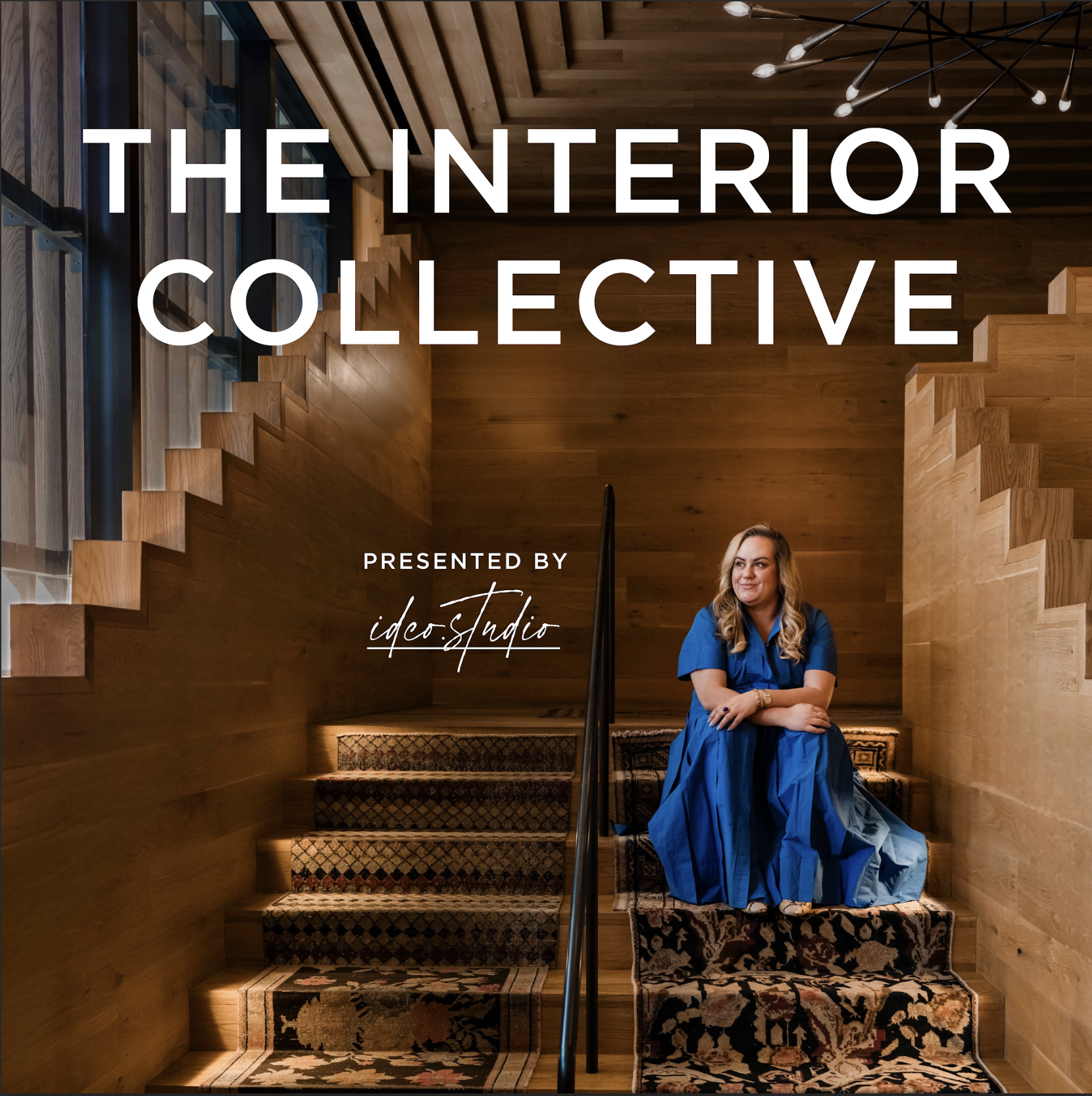
Designing a Service Menu That Scales: How Zoë Feldman Built a Studio That Serves Clients at Every Level Without Diluting the Brand
from The Interior Collective
64m 25s
In this episode, host Anastasia Casey welcomes back Zoe Feldman, founder of Zoe Feldman Design, to discuss the evolution of her business since her last appearance. Zoe introduces Demi, a new service line designed for clients who want her firm’s elevated design quality but with a reduced scope—such as one room or a single floor—and fewer team hours, often delivered virtually. Demi is not a lesser service but a difference in scope, targeting busy clients who can’t commit to full-service timelines. Zoe’s firm has grown to roughly 35 people, with a dedicated eight-person Demi team working alongside full-service designers, procurement, marketing, and accounting staff. Full-service projects remain comprehensive, covering entire homes with turnkey move-in support, including stocking lists and partnerships with organizers. Zoe stresses the importance of partnerships over in-house expansion to build a referral ecosystem and maintain quality. The core six-step process remains intact, with minor refinements. Demi was born from recognizing untapped revenue and a personal need for a lighter service, as well as a mission to offer flexible careers for women and mothers. Launching Demi required a new, properly staffed team to avoid overburdening existing staff, with a slow, deliberate hard launch to manage interest and preserve brand integrity.
(upbeat music) Hi guys and welcome back to the interior collective. I'm your host, Anastasia Casey. And today I am thrilled to be welcoming back one of the most business savvy designers working right now. And one of the most generous guests we've ever had on the show. If you were here for this always first episode, you know she walked us through her six step design process with a level of clarity and detail that genuinely stopped designers listening in their tracks. The questions have just kept coming in and honestly so have mine. So when I started thinking about who I wanted back in season eight, Zoe was at the top of my list. Zoe Feldman is the founder of Zoe Feldman Design, a studio with offices in both Washington DC and New York City, specializing in high and residential interiors with a signature approach. She's been featured in architectural digest, elder core, house beautiful and more. And beyond the press, she has spent years methodically building a studio that doesn't just produce beautiful work. It operates like a real business. In this episode, we're talking about something that every designer hits at some point in their growth. How do you build a service structure that captures the right clients at the right level without compromising your brand or burning out your team? Zoe has done exactly that. She runs a full service design offering for complex high investment projects. And she recently launched Demi, a design forward but operationally lighter service here for clients who don't need full project management. And she's the most book designer on the expert platform on the entire East Coast. How she built all three of those, how she prices them, positions them, staffs them, and protects the quality across all of them is what we are getting into today. This one is going to be a master class. If you are still the one holding your projects together, there is a better way. Material is the project delivery system built specifically for interior designers. One connected workflow from concept to hand off to billing. Interior collective listeners get 50% off their free month at GetMaterio.com. - Hey Zoe, welcome back to the show. I'm so glad to have you. I have to keep inviting you back to the show or to design camp because I just constantly want updates from you. So thank you for agreeing to be back. - Oh good, I want to be here. So thanks for having me. So since our last episode, I haven't been able to stop thinking about this concept of your Demi service, which you were sort of in the process of launching. It was like very new when we spoke last, when we chatted. And so give us the honest version. What has actually changed about the business, how that business runs since we last spoke, we will get into breaking it down. It's a focus of the episode. But like just off the cuff, are we still doing it? Is it still popular? Does it work? - Yeah, we're still doing it. It is popular. We are starting to do more of a hard launch, actually like right now, because we wanted to take our time in launching it to make sure that it was as good, I don't want to say perfect, but as good as it could be before we went to a larger market. So right now, up until recently, which I think we started running ads in the last, like honestly, a couple of weeks, but up until recently, it's been much more just word of mouth and like organic press. We figured out who we are as Demi, which has been sort of a road, like a journey, and ultimately positioned Demi as a difference in scope, but not quality. I was concerned that in offering, I didn't want to offer a lesser service. And so to do that, we had to be very careful and say, you know, this isn't, we are likely a bit more budget conscious in this experience, but it's certainly not a one size fits all for everyone. It's still an elevated service and an elevated product. And therefore, we're focused more on the size of the project instead of the budget, that makes sense. Yeah, definitely, because essentially, you're scaling back the scope of your team's time investment, like that's where the budget comes in. Correct. It's fewer hours from your team. And it's not necessarily that the products that you're sourcing, the custom pieces, that's still there. It's just you can help scale back the project scope simply by your hours. Correct. A person who wants Demi is likely busy and doesn't have the investment time also to come in all of the time and do these long meetings and that sort of time as well. So they are interested in a more virtual experience and that sort of affect aficioness. And also, they may only be doing one room, two rooms, three rooms, one floor, something like this. And so we figured out a way to be able to offer the same level of quality. And that's been really exciting because these are really important good jobs that we're doing. Yeah, and we're going to get into all of the business side of it and how it makes sense for cash flow and all of those other reasons. But it is so nice that if someone's not ready to do their three upstairs bedrooms, that you can still help them on that main floor and their main living spaces. Let's get a quick studio update. How many people are on the team right now and how is the studio structured? Walk us through the different roles and how they interact on a project specifically now that you have full, full service. And then this Demi option. Yes. So to sort of complete the loop on Demi, we've currently built out a dedicated eight person Demi team that partners with in-house designers that work on full service. So some of our senior level associate creative directors and things that end myself that help to make sure that we keep everything on brand. And then we also have outside partners, like for instance, Atelier Jacob, who's doing a lot of the cabinetry in Campbell Cottage, the house I'm building. They're helping with a lot of our kitchens and bathrooms that the company called Cabriol. So we're getting connected with trusted vendors as well because we're a little more hands off that we know can execute at the quality. We need things executed and that's been really helpful. Oh wow. Well, eight people in charge of Demi, that sounds big. How big is the team now? I mean, eight people's bigger than most people's studios. Right. And then I think we're about 35 people in total. And so, yeah. So the rest of that is designers. I think maybe we have 12-ish designers and remember, we have New York and DC. And then we have a procurement team that's fully dedicated to ordering and tracking and installation and everything associated with ordering. And then we have a marketing team that's two in an intern. And we have an accounting team that's three in an intern, trying to do all the math and thoughts in my head. We have a wonderful office manager who also is my assistant. And then we also always have rotating interns. It's important to me that we have high school interns. I really like Tim Entor. I've talked about this before. High school students who are creatives and think that they'll never be able to function in this world. Like I thought, on any important level. And then we also have wonderful summer interns that come in who are college aged, many do it for credit. And we'll usually have an intern in the fall and in turn in the spring. And that's a really important-- it's an incubator for us, the internship program, a place where we can look for talent, grow talent, and hopefully then hire. And also, it's a way for us to give back to students and give them good experiences. I love that. OK. I feel like maybe I didn't ask you this before, because I did not know you were working with 35 people. That is a big team. I am so impressed. And I know that when we chatted last, you really broke it down how you had worked with that business consultant before. Who was completely out of the industry had amazing experience at well-known brands we all know. And so it is interesting. I'm just assuming, oh, you've scaled so much since then. But I'm like, maybe you already had all those people. Either way, 35 people on a team, I'm like, I could never handle. That's incredible. OK. So you've narrowed your full service projects over the years to even larger, more complex scopes. I mean, you guys are doing the top of the top. Like, you are the ultimate. What does a typical full service client engagement look like today? When we're talking about differentiating between Demi and then full, what is like scope, timeline, investment range, when we're talking about your full full service, just to put things into some sort of context for those listening? OK. So full service is, I guess, sort of what it sounds like. It's a complete project. So it's a new build or it's a full-gotten renovation. Occasionally, they're comprehensive decorating projects that don't have much renovating. But either way, they're complete jobs. So it'd be unlikely in a full service project for us not to touch every square inch of a house.
So that's a good way to think about it. And that's why Demi became important because there's a ton of good work out there that just doesn't require a complete hand. So that we wanted to capture that. But that is what full service is. And then within that full service, it is quite literally a full service. So we're doing, we are obviously picking all the decorating, you know, the furniture and all the furnishings, all the art and all of the objects. And we've talked a lot about my involvement in art, I think in the past. And then we're also giving stocking lists. So much of what we've worked on are templates so that nothing gets forgotten. So we do all the pretty things. And then we also stabilize people as much as they want to be. So we can move someone in turnkey, like down to the vacuum. We can purchase everything. Or we can work alongside a house manager to purchase everything and pass them the stocking list. OK, you need toilet paper in every room. You need this. So nothing gets forgotten whether we're purchasing it or someone from their team. And that's really what makes the full service. Like they walk into their home that day and they can go up in shower and they can make a cup of coffee. And we've instacarded their whole food's order or whatever it is, you know? And it's like all done. And like their closets are moved in, all their clothes, like everything happens. Do you guys have professional organizers on your team or is that someone that you're like partnering with for those installs? No, I'm a firm believer in partnerships. So I don't want to become an organizer nor do I want to become an architect. I don't want to ever be design build. So I believe very much in like staying in your own lane. So we love to work with trusted, as I was saying before, with Demi, with trusted vendors. I think for two reasons. One is we can't be everything. And we have so much in our plate as it is that, and there's all these wonderful organizing companies out there that like, why do we need to do that? So we'll put a line item in our budget that like to hold for that, that like we will be bringing in someone to help you move. That person organizes up to a degree, but then you need like an actual organizer or whatever it is, whatever layers they want. We help manage that, but we don't do it all. I think it's important because everyone has their expertise and that's important. And also when you're building a business, it's about relationships. So this isn't, this is the ecosystem. If I do on-site architecture and on-site build and on-site organizing, then I'm fully responsible for capturing every piece of work I get. Because who's going to refer to me, if I'm not referring to them, then they're just going to say, OK, well, Zoe does all her stuff on her own. She's great, but like we don't do a lot of work with her because well, frankly, she does everything in-house. And I don't want that. I want, first I want to support other talent. And also this way, I'm referring an architecture. Architecture, referring to me. I'm referring to an organizer, the organizers, referring to me. Do you know? And it creates this beautiful professional ecosystem that I think people don't realize how important that is. Yeah, that's such a-- I mean, as you say, it makes so much sense. But I think when you're in the moment and you're building your brand, it's like, oh, I should just offer that because that's another revenue stream. I should just do that. But then it's also like, how are you feeding your pipeline? So that's always so brilliant. OK, Zoe, before we get into the new service layers, I want to revisit your incredible six step process from our first episode, which is linked in the show notes. You guys have to listen to it if you haven't already. Has anything shifted in how you run a full service project from programming through installation since we last spoke? And of course, there's constant nuance that you're shifting. But is there any core changes that you guys have refined in that process? No, there's not really any core changes that we've refined in our six step process. We're constantly making tiny tweaks like who joins the kickoff meeting to introduce the client to the experience. Maybe who should be-- how many people are involved in the installation and how often are they there? Or what happens if we have a client, a cute client, who needs a little bit of support up until the point where they become a complete client? Like they've paid to queue. There's three things they need from us, mostly architectural, so that when we acquire the job, it's in a really good place. And so obviously, we want to help out where we can. Things like that. But no, the general six step process remains the same. Amazing. And again, if you haven't listened to the episode, you have to because the way Zoe sets hers up A, it makes perfect sense for the scale and caliber of projects she's working on. So many times, we get questions from designers of like, how can I give someone a budget when we don't have a construction budget yet? How-- like we don't know what we're building. How are we giving them that budget? So please go back and listen to that because it solves all of those problems and also protects your studio's time financially. And also just time wise. So that is linked in the notes for you. But let's get into Demi. You have already moved your firm away from those smaller scopes. You know, we're not just going to do a kitchen. We're not just going to do a powder bath. But then you deliberately built a new offering to capture that market back. Walk us through the thinking. I know you mentioned it. Like there's great work out there that we're missing, that we're not capturing by only doing these full service. What made you decide to go back rather than to really just lean in to full service work? What was the deciding factor that was like, this is worth our time? So I think that I naturally have a little bit of a startup brain where I'm constantly-- and we've talked about this a bit-- trying to improve things. It's funny. It works for me sometimes. My husband recently told me I'm spending too much stupid money like at Amazon. And so I had to have a conversation with chat. And I was like, how do I stop spending this money? And literally, it was like the part of you that took a problem solver is this is the bad part, because you're so quick to solve problems and move things fast. It's like, you'll go to Amazon and be like, I need this. But then maybe think it through first before you press play. So I think it was just funny that it framed it that way, because I was like, well, first of all, thanks. It's always so positive. But I was like, wait, this is so interesting, because it is my brain, which is always and constantly problem solving. And so we were getting all these inquiries for a bedroom, a kitchen, everything we've talked about. And we were just sort of saying, no, we can't do it. We just can't anymore. We're at the place where we can't do that anymore. And when my husband, who was actually working on a startup with me, started to sort of involve himself more in the business, he looked at all this money we were leaving on the table. And was like, Jesus Christ. He and these consultants were like, there's all this potential-- I guess it's potential money. It's being left on the table. And we want to capture some of this. And part of it is that I would be more of a demi client. I can't afford full service in the way that-- no. I mean, I've very much aspired to be a full service client. But at the moment, I'm more demi, which is great. And so it was sort of like, I should be able to work for myself. I want that because I have good taste and I have a healthy budget, but I couldn't hire me. So that was part of it. Part of it was purely financial. We're leaving all this money on the table. I love building businesses. I love employing people, hopefully, in a positive environment. And so to be able to grow is exciting in that way that we can demi- I knew would help people like you, in a stage like young moms, who maybe don't want to be in office all the time, or want to have two days in. And maybe it's 10 to 4, you know? Just have a little more work-life balance, but still have a professional career and when they're proud of and do the thing that they're passionate about. And they think that women are often forgotten in the job market, unless you're willing to choose. And as a woman and a mother, I don't think that needs to be true. And so that was part of the impetus that there were many reasons that we created demi. And it's been really successful. And we have managed to not capture all of that money that we were talking about, but a nice portion of it. And I see this as a huge opportunity to grow. We just want to make sure we grow slowly enough that we maintain control of it. And we don't dilute the brand, and we don't dilute the quality of the work. It's so many follow-up questions, which hopefully I cover them all. But if not, I'm making mental notes to ask you. A, I love that ethos. I just admire you so much. And we have family Fridays. They're off in our office all the time, because my whole team are working moms or soon to be or in the future. So I know everyone listening is like, thank you, so that's a beautiful. But I know another question people have is, OK, so we see the potential money that we could be leaving on the table. What about potential or current workload? When you were considering launching Demi, where you like, we will absolutely have to staff this based off of the work that comes in. Or was there, you know, there's a little bit of loals in a full scope project when, you know, you're in the thick of construction and ordering is done? Was there capacity to start taking on a few Demi projects at first? Or was it like, OK, we're launching this? And it's a whole new team. Matt felt pretty strongly that we
needed to create a whole new team that it would, one of the weight reasons I think I hadn't been able to grow in the past is by putting too much pressure on my team to do too many things. And so he made it pretty clear, okay, we need to staff this properly. One of the reasons we have decided to hard launch Demi through advertisement and things is because we know that a offering like Demi can have a queue. And in hard launching it, we can understand our interest. Like we already have a lot of interest, we can understand if we if we have to wider net, what our interest looks like, and then staff up because it takes time to on board, people have to be properly trained. We make sure they apprentice a certain amount of time, or they have to come in with a ton of experience. And still they have to learn the process. So it's not sort of something that we can hire on Monday, and you know, launch them out on Monday. Yeah, definitely. So when you guys were developing Demi, how did you decide what to keep and what to remove from the full service model? What were the non negotiables that you're like, this is still our brand and this matters no matter what? And things that you were like, okay, this is where we can see the project being able to scale back to create this Demi. We always knew that we would cut back on project management hours. We knew that much of what was accelerating the cost and full service is just how hands on it is. We also knew that if we were with trusted vendors and trusted partners, contractors, and architects, and things then we could lean on them for support and we wouldn't have to always be the point of contact. So that became clear quickly and we knew that by going virtual that would just sort of naturally happen. Also, we lay out a really clean process for clients. So we set expectations at the jump so that they understand, here's how I'll be contacted, here's how often, here's how it will happen. Because we want the Demi clients to feel incredibly supported, which is also why they have a dedicated team. It's not just sort of like, oh, whoever picks up the phone or, you know, that sort of thing. Let's see, we, I knew that I, well, we, we were trying to figure out if we install or not. Ultimately, I really hope that we continue to do the installation. I have, I think it's important. I do think there's a way that we could do it without install. But I think the reveal in the install is sort of part of the magic. And so, and like I said, this is a sophisticated client. So I think they appreciate it. And so that at the moment is something that we're retaining. And the communication is something that we retain from both sides. So really, like, the process is retained within Demi. It's just sort of like, naturally, a little bit less hours because it's virtual. And because the site visits, you know, don't exist, you know, or they're limited. If it's local, and we say, okay, we're going to go once or twice or whatever it is, it's like very clear. Yeah. For the install process, I mean, I'm also sitting here going, gosh, do you guys ever get to photograph this? How do you handle that from a marketing perspective, especially if you guys are really like hard launching this with ads and everything? I feel like if you install, you get to get a photo shoot in, if you remove the install, that gets a lot trickier. And then you still kind of have like a mini install day when you have to style everything and make it work for photoshoot. How do you do you have any intention of photographing these projects? Yes, we have photographed a few, but that was sort of part of like recently, I sat down with a marketing team and I was like, all right, guys, we need to hard launch this. Demi is ready to like go full throttle and blow up. And so we have where we actually just shot one last week. And when we came out with Demi, we did a beautiful shoot around the Coleman's place, which was like this terracotta kitchen that I think that everybody saw and it's like gorgeous. And so we're doing now more shoots, more Demi shoots, because we're really proud of the work. But you know, it also takes time. The thing people don't understand is when you when you work on an interior's project, it takes months, sometimes years to get to a completion. Now Demi is a bit faster because the scope is faster. But it's still fast to six months, nine months, 12 months, I mean, fast isn't one month. So it takes time to build up the arsenal, you know, to get to the point where you're photographing, you know, etc. So we're there. This is a super logistical question. For someone considering a very elevated but mid to your service like Demi, you know, you've said, okay, we're not going to come do site visits. We won't be meeting in person, but we'd really love to come at the end and be able to photograph it. How do you talk to your clients about that? Like how do you make it feel really good for someone to get excited about the photo shoot to feel great about it? If it's the first time that you guys are even stepping foot in the project, and it's wrapped. Well, we don't photograph during installation. So we go there just to install the project. And be like, here's your home or here's your kitchen or here's your whatever. And then we later work out details around, we talk on the front end, would you be willing to photograph your house essentially? And that already, so that's already sorted out in the front end. And then the marketing team works out when they want to go in for a photo shoot. Because with Demi, because they're smaller, we'll often try to do like two or three projects at once, because we have, you know, photographers are expensive, they should be expensive, they're amazing. And and so sometimes we can get like two in and one day or something like this, if it's just like, you know, a small shoot. And so we're also trying to think logistically about how to shoot these projects, who should be shooting them, you know, and that sort of thing. So it tends to work out. We've also found that people are proud of their homes. Hopefully they have had a good experience with us. They're like excited to talk about their homes. I mean, sometimes we ask people to interview them alongside their home to talk about Demi, because it's young. And we've had people excited to help out with that. So that's been really nice. I think if you provide a good service, people are excited to help you. Yeah, definitely. And I do feel like that Demi client is kind of that sweet spot of someone who is excited to have a photograph. You know, your highest caliber of clients are more high profile in some cases and have to be a bit more private. And so this actually, I can see how these would be the clients would be like, yeah, come on, let's do it. So one of the things that you mentioned at the top of the show that I found so interesting is you have this ideal client is someone with a great budget, great taste who just doesn't need the project management, or they're just not ready to do their entire home down to nothing. How do you, when you're first courting a client, when you first get a call, how do you immediately know this call is going to be a full service client, or this call is going to be Demi, or does this happen in the discovery phase with whoever on your team is discussing with them? So my marketing team handles potential clients and is very well versed in understanding very quickly, if this is full service Demi expert. And mostly it's about the size of the project. But if someone comes to us and wants like a like if the budget they list is Demi size, but the project is full service, that's when it can get tricky. Because then we have to basically say like, while we appreciate this budget, it actually won't, we can't do it at this number, like not close to this number. So would you be interested in thinking about phasing your project and maybe starting with your your first floor or the primary bedroom or your first floor, whatever it is, your children's rooms, whatever is important to you, and then we can sort of like pick up in a year or two the next moment. So that's those are the ones that I think are trickier. But ultimately, most people are pretty excited about Demi and and are like, Oh, wait, okay, I didn't realize that was an option. And if I can get like a really good product, even if I don't get everything done right now, I think that could work. How do your builders and your partners, like you said, your great cabinet makers, those sort of things, how do they feel about this Demi service? Do they secretly love it? Because they're like, great, you're not walking in the site every week, or they're like, well, where's your designer? Like, we need this communication. How does that work? Or how have you experienced that relationship so far with Demi? The thing I've learned in life in general is people expect what you tell them to expect. So like, I used to think my clients want me 24/7. I'm tethered to my clients. I can't ever come up for air. If I'm not there, they're unhappy. And what I learned was like, well, that's because I was setting that precedent. I was saying, I'm going to be there all of the time. If you're, if you're in New York for three days, shopping, I am too. My team is just here to follow behind me and take notes. You know, and when I realized, I have this like insanely talented team, like, and my clients know that and they really respect my team. Like, they don't need me there 24/7. I was like, oh, so I think it's sort of the same with Demi. Like, we're very confident in what we do. And we wouldn't frankly do it if we couldn't pull the job off. So we sort of say, like, we don't need to be there at every, you know, we're always here. If you have a question, call us like FaceTime us. We have
have these weekly touch bases. I mean, it's so sorted that it's like this really just shouldn't be a problem and it hasn't been. Such as, hey, there's never problems. There's always problems. There's problems in every single job at every moment, all the time. But we can problem solve in the same way we do with full service and the idea that we're not there all the time is not a problem. If you've been running your firm for a few years now, you've probably got a system in place. And I do use that term loosely. It's going to be a mix of apps, some spreadsheets, maybe a project management tool that was closed, but never quite right. And you are still the one holding it all together. But here's the thing, most tools were not built for the way interior designers actually deliver projects. Material was. Concept to hand off approvals to procurement to billing with QuickBooks Sink built right in, one connected workflow. Interior collective listeners get 50% off their first month at GetMaterio.com. Free for 14 days, no credit card required. That's M-A-T-E-R-I-O-GetMaterio.com. OK, so talk us through in that vein. Talk us through what the actual Demi workflow looks like for your team, like how many touch points does the designer have with the client? Who's managing that relationship inside of your studio are their juniors and procurement people on that team? I know you said you have eight people dedicated to Demi. So what is the workflow of that look like? And we can even take that from a client's perspective. What does a client expect out of Demi? Well, the other thing I should probably though mention is that the one other marker of Demi is it tends to have less construction than full service. So we look for projects. It has a kitchen and then someone like a Tilly A. Jacob can do the kitchen and we can just red line. And we already trust the product. But for the most part, it's a lot less construction. Maybe we're adding an arch somewhere or a nook. But this is not like take it down to the studs and build it back up and we'll never be there. So I think part of it is we're very careful with how we engage projects so that we're not biting off more than we can chew and then being like, you guys got this? Totally. So I just wanted to mention that. No, that's super clear. Thank you. Okay. So the Demi workflow, the number of touch points depends on the size of the project. The lead designer manages the client relationship and consults and designs with our associate design directors. I have a meeting by monthly with those associate design directors and sometimes alongside the Demi designer to review work at a high, high, high level. And so that's sort of the food chain by which things trickle down to the client. So what I didn't want to do was build something that I was so far away from or full servers was so far away from that it was like a totally different product. So we're hoping that when somebody sees a Demi project, you can't really tell the difference. Yeah. So a Demi client still gets your eyes on their project at some point just maybe less frequently frequent intervals more at the review phase, that sort of thing. And so if we were reviewing your portfolio and things were not clearly stated of what was full service, what was Demi? It's having heard this conversation. It would be like, okay, are those like the original floors and walls? Those would be the type of things like you could see. What would be the outside perspectives differentiator? I mean, if we're doing our job right, there shouldn't be. Because you don't sort of know how much while we took down on a full service, like unless you're looking at it before and after. Yeah. If you were to look at it before and after, the before is would probably look more similar than the before is in full service because there's less architectural tweaks. But beyond that and the finished product, you shouldn't be able to tell the difference. What has been the biggest operational lesson you've learned since test/hard launching Demi? And is there anything that you've had to recalibrate even at sort of this newer stage? I think just determining how much construction work can be included before our project starts requiring the level of oversight that belongs to our full service model. Because we just keep going back and forth and having partners like Cabriol and D'Atelea Jacob do help because they can do mill work, they can do kitchens, they can do ads and we know it will be exactly how we want it. But as we get into like a full gut, which we have done some of these, like we've gone further, it's harder. So we're sort of like, can we do that but only local, like New York DC? Or do we just not do that at all unless it's very clearly just a kitchen? So we're kind of constantly in this battle with ourselves around how much construction should Demi be taking on. Yeah, and I feel like a Demi project is one of those types of project that the concept of scope creep could definitely happen because there is technically more scope to creep. If you're doing a whole house top to bottom, like there's only so much, but I could see how that happens. How does your team handle if a project does start to seem like, okay, we're really moving towards that more full service or this is gonna be more full construction? Do you guys then have to have a conversation with the client and say, hey, we are really moving toward something that's gonna require project management and Demi's not the best fit for you anymore or do you just kind of shut it down and be like, this is what our scope is and we aren't able to do that for you. We've had to go into hourly models to sometimes support things that look different when they started than how they're finishing. It's not our preferred way to work but we can't just like leave a client. Like, oh, sorry, we don't do that. I mean, we have the capability of doing it, especially for local clients. So it's just a matter of, I mean, the thing about being a small business, even though you think 35 is so big, it's a small business, and the thing about being a small business is it keeps you nimble and I'm a very nimble person, sometimes more than my husband or my director of operations would like. But at the end of the day, we're here to support clients and if something happens in this outside of our process, we have the capacity and ability to support it if we need to, it's more of a lessons learned on our side. - One of the biggest lessons you've taught me over the years, always, is just reminding us that we are a service industry and serving the client at the end of the day is really all that matters and kind of whatever it takes to do so. So I definitely see how there's just gonna be times that you have to pick and choose and say, we gotta get them over the finish line. So we know what our rules are and so now we know how to bend them. - Yeah, and listen, there are some designers who would disagree with me and do things very successfully, definitely than I. This is just like my core person, I think. And so it's probably my Achilles heel in business that like I will just do what it takes to get the job over the finish line and do it right. It's probably the best part of me and the worst part of me all at the same time. So, let's talk about the expert. I know we've talked about the expert on the show before, we've talked to a lot of people about the expert. You are the most booked designer on the expert on the entire East Coast and in the top 20% worldwide. How did that happen? Was that intentional positioning or did it just kind of grow organically? Like, did you make more slots available? Like I know that that's a huge thing. It's like you get to dictate how often you're taking the calls. So by having 20 calls available, is that what like put you over the edge or do you guys advertise it? Do you queue a lot of people over to expert? Talk us through how you got that incredible accolade 'cause there's a lot of experts out there now. - Oh, thank you. No, I don't, I think I have maybe like two a week that I have the ability to, and that doesn't always remain true because I travel so much. So I don't actually have, I don't actually do it as often as someone would think. We have, we make it part of our queue. So when we see that something isn't demi and isn't full service, and it could be the expert, it gets thrown over, I think I naturally have a personality for it because I'm not a gatekeeper and I kind of enjoy speaking to people and helping them. I believe deeply in good design and that with the right tools, a lot of people could be much better at it. And so I kind of like think it's nice to talk to people who are actually passionate about it and excited to be talking to me and like, oh, okay, and like, I don't know, like just sort of like, it's gonna make a big impact. I had an expert call with a friend actually who booked me like properly through the expert and I was just talking to her at a brunch the other day and she was like, like we started on the call and she was like, okay, so like what color should I do this kitchen and I was like, so have you paid for anything yet? And she's like, no, no, I'm paid for anything. It's just like they're kind of like, okay, I have to blow the whole thing up. Like you can't, this is not your layout. And we laugh about it, but it was great because I honestly in that moment was like, I'm actually doing something for her. Like this is gonna be so much better. And it was. And so I like that. I like to be able to actually help people get good design. And so maybe that comes through and yeah, and so I think it's kind of a natural fit for my personnel.
Who do you think are great expert clients? Like who are the people who are calling? Is it people who are working directly with an architect? And they're like, I just need like another opinion on this. We're not going as far as furnishings and stuff. Is it DIYers? Is it someone who works with another designer? And they're like, I want another opinion. Like, who do you feel like is coming to you most? Hmm. Design enthusiasts who are a little more budget conscious and but really care about the end product, they typically come savvier than you would think. Like they have a real understanding of the landscape. It's so design is so pervasive now and it's out there and people like know about it and they know about resources and it's easy to get to. And so they typically come fairly educated and a lot of times they want a gut check on things or they can't pull it all together. You know, the thing is is no matter how you slice it, interior design is expensive. Construction is expensive. Buying furniture is expensive and inexpensive room is still $10,000. And so you know, I mean, that's crazy. I don't know about you, but $10,000 is a lot of money. And so, but you know, you say that to a designer, I have $10,000 to spend in this bedroom and they're like, oh, yeah. It's just like crazy to me how we minimize these enormous amounts of money in this world. But listen, that's because 10,000 doesn't get you as far as it should. Because they are still having big investments and then they have a professional to be like, yes, that is a good idea. You are making a good choice or like, I don't want to pick the fabric on my sofa. I need you to. So a lot of what I do is I'll be like, okay, let's like get samples. Let's go to ever him and get your windows. Let's go to the expert and picks some pretty fabrics. Let's, you know, go to Nordic knots and get some rug samples. Let's get some fabric and let's pull it all together. Go order those samples and call me back and we'll finish it. Do you know? And so they have someone to support them. These are major decisions and they're hard to do alone. Yeah, especially a couch. I can't pick my couch fabric either. Oh my god. That's a commitment. If you're getting the right couch, it should last you for years and years. Do you feel like expert sessions are going to be a great funnel for Demi? I'm not a great funnel for like your highest tier of service. How is how is that playing into your business plan with it? Yes, I had a call just the other day, a demi call that immediately went. I'm sorry, an expert call immediately when I jumped on it was like, okay, this is demi client. And so I said to her, listen, I can do this call with you and I'm happy to like pick your sofa fabric. And so I'm happy to have a good one. We have this other service. And if you're interested in that. Why don't we just push you over to that. We'll give you a credit for this call. If for some reason we give you the pricing for demi, you're not interested. I'll pat like pop back on a call and do the expert call for you. So yes, that does happen. And if I see it, I try to identify it quickly. So I don't waste time. And you know, the person can get what they actually need. Instead of like, all right, you know, I'll take your money right now and give you like a couple ideas. And then you need to make sure that you're not interested in it. And that's full service, but it's exact. And so for Demi. Okay. So for Demi, Demi is a flat fee since the scope is defined at the outset. And also a cost plus on product. Okay. And so flat fee that includes because currently Demi does include install. That flat fee includes everything all the way to install. And so that's a good example. Yes, exactly nothing changes. There are certain things I have found you just can't cut corners everything goes through receiving house Period like and when clients like I'll get it. No, thank you That's the problem. We're not doing that. Do you know like there are certain things we just can't bend the rules for We even don't love to bend the rules for like but I really just need my sofa first like we have made exceptions, but All it does is cost problems. Obviously they don't like the sofa does not look good in the room and it's different I thought yeah, because the whole room is right. Do you know it's just like it's a problem waiting to have yeah for What about for like accessories and final styling layers does is there still budget allocation for that portion of the project on a demi project or is that a place where there could be some cost potential savings by eliminating that no I learned a long time ago that you have to have a line item for styling items that is Non-negotiable because here's the problem It'll be the first thing people cut. Oh, I don't need that. I don't have all my own pretty stuff And I don't need to style and then the project will never look good They're they're buying what they see online. They're like I want that room Well that room was styled and if I take out your styling budget I'm gonna can't give you that room and you're not gonna be happy and if you're not happy then I didn't do my job and Everyone's unhappy So we you know it listen if we say you have to spend 50,000 on accessories and you're like can we make it 35 we can have that Conversation, you know, but no, okay Real quick talking about pricing transparency you have always been very vocal that you fundamentally believe in it Being really explicit on how you charge in why do you feel like that actually attracts better clients on the high end? Or just some clients still push back on free fee structures regardless of the service level Yeah, I mean people are always gonna push back you're always gonna have people who want to pay last year I always gonna have people who don't think you should make as much money You're always gonna have people who don't who think you're double dipping. You're always gonna have people to do that We don't do any of those things. We talk a lot about why we charge what we charge We don't we're not transparent. We're both we're very transparent in that we do make money We're not entirely transparent when it comes to How much every single thing costs? Because we have learned that that creates a lot of anxiety and hesitation within a client So again, I've said this a million times If I tell you it's gonna be $50,000 to your living room And I'm able to get you all the things I told you I would in 50 55 58 whatever it is thousand dollars What does it matter how much the light is versus the rug if everything's good quality and everything's beautiful But if you look at every single piece you're always like wait, I can get that rug cheaper wait I can get that light cheaper and it messes with people's heads and then it messes with the design and it messes with the outcome And it messes with their level of happiness You know and instead we're just like look you approve the budget. You're happy with the budget. Let's put that to bed You're still gonna approve every proposal And we are keeping you on budget. We will let you know if something is out of budget and we can't find the money somewhere else At design camp with our clients this is like the biggest thing I get pushed back on and because I am not a practicing interior designer That is no secret. I do not have clients that I have to have this conversation with the biggest pushback I get from people is like our clients would never let us order a couch that we did not know how much that sofa cost Even if and I push your method all the time I am like this makes so much sense to me you are selling a finished product so they need to know what the finished product crisis How do you have any really tactile specific advice of how you're able to say no? I'm not gonna tell you how much that table like you don't get to see each individual item Because I'm happy to tell them how much the table cost just like I'm happy to tell them how much all the freight is for their tile But they're going to be annoyed It's like okay. I say this and I'm like what like what exactly what does it matter if you go and buy a pair of jeans Do you really want to know that the jeans are $60 and you're paying for 20? No, but it is you know, it's sort of like I mean that's a singular Example, but it's the same psychological concept like if it's just going to annoy you Why do you want to know that like I don't know? I wouldn't want to know I just want to know that this room fettin to my budget and everything's beautiful and everything works And everything's pretty if I know this table I'm sitting at which by the way it was like $200 of Vintage shop, but if it were 200,000 and it was in my budget And by the way like that might annoy me whatever But by the way, we then give a whole binder at the end that says here's all the product we bought for you This is geopante. This is this. This is that so they're aware of what was purchased They could go online and like look and see how much the table like this is, you know, it's not we're not hiding anything We're trying to push This is how you should explain the design camp, but you shouldn't invite me back to design camp I would totally love to design camp again, but we should push You should push that like it isn't about hiding things. It's about The client feeling comfortable to move the design along and knock it hung up on this one component And by the way, I'll freely say things to people like if I'm at the Dimitri showroom and I'm like this next No, it's gonna be 50 grand. It just is like it's just gonna be $50,000 Now it could be 45 or 65 But it's really expensive and then we're gonna go down the street to interior define and get you For your lower level this one. It's like 5,000 and that's here in a little for this one too But isn't this like the dope is sectional? Don't you want to sit in this all day long? Like I want this sectional so that's sort of how we frame it and I think it's a little bit about confidence But also just about like being a really authentic honest person And so you're like it's not about hiding anything It's just about giving a really good product and as people chip away at little things they chip away at the overall Product definitely well obviously soon as someone starts you know a side table sure we can swap that side table But as someone starts really nitpicking every dollar spent through everything Yeah, it takes away the fun of the project from from their experience too So I think that's a great way to position it It's like we are trying to deliver the highest quality and also highest touch service possible and with that I mean just like your builders not telling you how much the cock on everything that they just cocked is costing that and That would never be disclosing that Well and and like your doctor isn't telling you much the surgery is and how much you're paying for it You know everyone's just like give me 60 grand and I'll make your heart work Like you know like they're not like the taver is this much It's just the weirdest business because it's it's available to everyone to do themselves The other thing I would say is scream people early have this conversation before you sign a contract Tell them who you are before they'll let you know if they're not down with this There's some people who can't do this trust me We have people are just like I need to see every line and I'm like this is not for us This we're not gonna work well together and and you're amazing You're gonna find someone to work really well with you, but like it's not gonna be us And did you just like decide to do it that one day was it like okay on this project? We are not line iteming or did you just never line item? Oh, no, I used to line item and the hell that I went through line iteming I mean that's what it came from that and hourly work being like it took me 45 minutes to search Just I double by the way it did and they're like I'm not paying you You know this amount of money for and they're not totally wrong like you're like I know that's like a lot of information to give someone And like I would be annoyed too Take less is more and a lot of these things people don't want to fully know how the sausage is made like It's just some some things are better left like are you happy? Did you get everything you needed? Did we stay on budget? Did we stay on time? Great. What's there to complain about? Yeah, okay I have two last questions. I actually had a lot of questions. I have to skip over I'm gonna have to have you back to design camp and back on the show again tomorrow, but When we're talking about I feel like your brand language has evolved since I really started following you closely the studios now Talking about giving clients tools to discover and express their own good taste which is very specific and intentional framing Where did that positioning come from and how does it show up and how you present yourself to prospective clients? We want our clients to walk away from working with us knowing what they love stylistically Sort of like how to express themselves in their homes Understanding like their story behind the furnishings. So one of my goals is when we leave a project that the client is more educated than How they showed up whether that's through art Architecture and that they have maybe they've learned a language that they didn't know before they came in I have a general passion for like making the world more beautiful and stylish and I we just can't do that alone in Estasia. We need other people to do it So part of the process is to educate people to become more passionate excited about design and also like fill more confident Okay, so this is a very tough question and you guys are so great and you've all gone you have your notes for paired zone sure It's gonna be like mind-blowing, but designers who are
listening to this, we have designers around the world listening at all different stages of their career and their studios. Summer running, solo practice, summer trying to scale. If you could give one piece of business advice to a designer trying to build the type and caliber of studio that Zoe Feldman has become, what would it be? I think I say this a lot and probably said it to you before, but higher people better than you. So do not think you were the only person in the room who has a good idea. If you struggle like I do with project management, hire someone to rank operations or even just somebody who's amazing at project management. If you're terrible with numbers like I am, find someone, hire someone who's good. If you struggle with drawing, if you're not a great artist, I'm not a great artist. Find people in your team who have a wonderful fine arts degree. If you're not great at CAD, I'm not great at CAD. Find people who are great at CAD. Don't be afraid to hire people who are better than you or on par with you. I don't mean better with you in better than you in every single area, but compliment you. I think there's sometimes this idea that as a designer, I need to be the smartest one in the room or the most talented one in the room and know how to do everything and that's just not true. You can't know how to do everything. If you try to know how to do everything, you'll do everything sort of in a mediocre way. Yeah. Okay. And then lastly, I always like to have one final check in. What do you have in the works that you can share with us? I know you always have really cool exciting collabs coming up. Is there anything that you can drop here? Well, I'm glad you asked. Today, we just launched our glider with Nesdig. There's actually glider, rocker recliner with Nesdig. So it's sort of like grown up nursery and I'm really excited about that and Stasia, I feel like you need one. No, I know. I commented the other day because I was like, wait, now I have to redo Kim's room. Thanks a lot. You're welcome. You do have to do that. And then we have a book coming out in March or April of 2027. What? With Monicelli, which I'm so excited about. We just started working their designer. He's so already and cool and it's going to be amazing. And it's also going to be like my whole not gatekeeping like to like lots of information, but make it already. So that's going to be great. So cool. Congratulations. That is news to me. I did not know that. So yes. And then we have like, and then we have more collaborations coming out that obviously you can't talk about yet, but will it design camp in the next month on this podcast and all of the things? Amazing. Well, as always, I you're so brilliant and just I love I love how I love how your business brain works. And I love that you just go on Amazon and buy the thing that you need it, even if you didn't think through it. That is what makes us us. That is what makes us the crazies who are able to live this entrepreneurial life in the design community. So thank you so much for having. Thank you so much for coming back on the show. And literally I'm going to email you in five minutes being like, okay, when are you coming back? Well, you know, I love you. So thank you so much for having me. It's always so much fun to talk to you. For more in depth analysis, this interview, including exclusive downloads, examples and more, don't forget to subscribe to the interior collective on Patreon. We are building an amazing private community of interior designers, industry experts open to candid conversations and answering questions. Join us on Patreon in the show notes or at patreon.com/the interior collective. Thank you so, so much for tuning into this episode. Producing this show has truly been the honor of my career and I cannot believe I get to have these conversations. A big huge thank you to our production team at Idykos Studio in Fwin Made. Your contribution literally makes this podcast feasible. And the biggest thank you to you, our listeners, your sweet notes, DMs and reviews mean so much to us as we work to keep our show free and always accessible. Until next time, I'm Anastasia Casey and this is the interior collective, a podcast for the business of beautiful living. And a very special thanks to our presenting sponsor this season, Material. The project delivery system built specifically for interior designers. Visit material.co to get started.
Podcast Summary
Key Points:
Zoe Feldman returns to the podcast to discuss her new Demi service, a lighter design offering for clients who don’t need full project management.
Demi is positioned as a difference in scope, not quality, focusing on smaller projects (e.g., one room or one floor) with fewer team hours and a more virtual experience.
The firm has grown to about 35 people, including a dedicated eight-person Demi team, full-service designers, procurement, marketing, accounting, and interns.
Full-service projects are complete jobs—new builds or full renovations—covering every square inch and offering turnkey move-in services, including stocking lists and coordination with partners like organizers.
Zoe emphasizes partnerships over in-house expansion to build a professional ecosystem and avoid diluting the brand.
The six-step design process remains unchanged, with only minor tweaks to team involvement and client support.
Demi was launched to capture missed revenue from smaller inquiries, driven by financial motivation, a desire to serve clients like herself, and a commitment to flexible work for women and mothers.
Staffing Demi required a dedicated new team, not overloading existing staff, and a slow, careful hard launch to maintain quality and brand control.
Summary:
In this episode, host Anastasia Casey welcomes back Zoe Feldman, founder of Zoe Feldman Design, to discuss the evolution of her business since her last appearance. Zoe introduces Demi, a new service line designed for clients who want her firm’s elevated design quality but with a reduced scope—such as one room or a single floor—and fewer team hours, often delivered virtually. Demi is not a lesser service but a difference in scope, targeting busy clients who can’t commit to full-service timelines.
Zoe’s firm has grown to roughly 35 people, with a dedicated eight-person Demi team working alongside full-service designers, procurement, marketing, and accounting staff. Full-service projects remain comprehensive, covering entire homes with turnkey move-in support, including stocking lists and partnerships with organizers. Zoe stresses the importance of partnerships over in-house expansion to build a referral ecosystem and maintain quality.
The core six-step process remains intact, with minor refinements. Demi was born from recognizing untapped revenue and a personal need for a lighter service, as well as a mission to offer flexible careers for women and mothers. Launching Demi required a new, properly staffed team to avoid overburdening existing staff, with a slow, deliberate hard launch to manage interest and preserve brand integrity.
FAQs
Demi is a design-forward but operationally lighter service for clients who don't need full project management. It focuses on smaller scopes like one to three rooms, offering the same quality as full service but with fewer team hours and a more virtual experience.
Full service covers complete projects, touching every square inch of a home with comprehensive management, while Demi is for smaller scopes like single rooms or floors. Demi reduces team hours but maintains elevated quality, targeting budget-conscious clients.
Zoe launched Demi to capture market demand for smaller projects that her firm was turning away, leaving money on the table. It also supports clients like young moms who want a professional service with more flexibility and work-life balance.
Demi has a dedicated eight-person team that partners with in-house full service designers and trusted external vendors like Atelier Jacob. The team ensures quality and brand consistency across all projects.
Full service projects are complete jobs, such as new builds or full-gut renovations, where the team touches every square inch of the house. This includes all decorating, furnishing, and even turnkey move-in services like stocking lists.
No, Zoe believes in partnerships and staying in her lane. She collaborates with trusted vendors for organizing and architecture, creating a referral ecosystem that supports other talent and feeds her pipeline.
Chat with AI
Loading...
Pro features
Go deeper with this episode
Unlock creator-grade tools that turn any transcript into show notes and subtitle files.
 PodcastTranscript AI