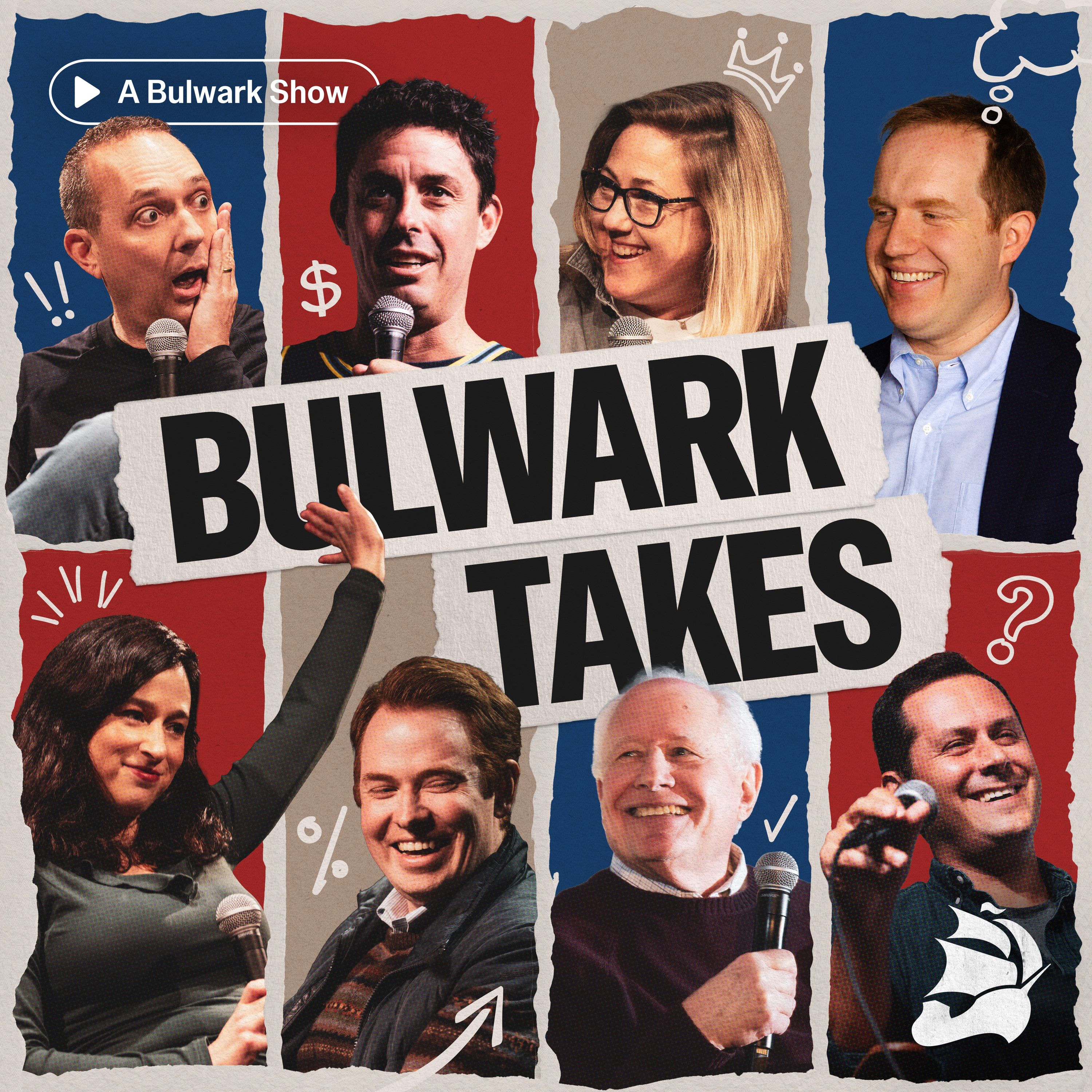
Democrats Aren’t Winning Because They’re Brilliant. It’s Trump.
55m 53s
The panel, featuring Tim Miller, Liz Smith, and Sam Stein, reflects on the state of American politics ahead of the 2026 and 2028 elections. A central takeaway is that the Democratic Party’s long-standing belief that mobilization alone leads to victory is flawed and outdated. Instead, success will come from persuasion, cultural relatability, and embracing diversity in local strategies. The panel emphasizes that the Democratic coalition is fragmented, especially in rural and working-class communities, requiring deeper, more inclusive outreach. They highlight the value of unconventional, authentic candidates—like firefighters, veterans, and small business owners—whose personal stories resonate more than traditional political figures. Institutional populism, focusing on corruption and economic inequality, is seen as a unifying message. The Republicans, in contrast, are becoming more ideologically unified around nationalism and anti-elitism. Despite widespread disillusionment, the panel notes that grassroots movements and personal acts of resistance still offer hope. They stress that the 2028 primary will be one of the most open in decades, urging voters to engage personally with candidates and recognize that unheralded figures could emerge as frontrunners. Ultimately, the conversation underscores the need for a "big tent" Democratic coalition that values diversity, authenticity, and real-world connection over rigid ideological purity.
Hey, everybody. It's Tim Miller from The Bullwork. I was up at Dartmouth. I was an Ivy man. Thanks to my colleague, Sam Stein, and my friend, Liz Smith, who are actual Dartmouth grads. The three of us were invited up there to do a little panel for the students in the community. And it was super fun. We discussed, kind of, state of the Democratic Party stuff, where the Republican Party's going, our thoughts about what lessons can be taken from this midterm, took some Q&A. It was great. I don't know. Maybe it's self-selecting, like the type of student that wants to come see me. It's going to be great, obviously. And so maybe it's just that. But I feel like every time campus doing these things, all of the discourse around what's happening on campus seems so silly to make. It's always people that have thoughtful and various different views and willing to share them. And I don't know. All the woes, the youth stuff never really lands today when I'm actually hanging out with youth. So I hope you enjoy it as much as I did to be up there. Stick around for me. Sam Stein, Liz Smith, live from Dartmouth College. Hi, welcome, everyone. So thank you so much for being here with us this afternoon to participate in this conversation as part of the Rockefeller Center's 2026 midterm programming. My name is B. Reichman. I'm a 27 studying government and Middle Eastern studies. And I'm the president of the Dartmouth College Democrats. So the Rockefeller Center is grateful to its partners in planning tonight's program, including Dartmouth Dialogues, the Office of Dean and Faculty Arts and Sciences, and the Office of the Associate Dean for Social Sciences. We would like to welcome our virtual attendees who are joining us today via live stream. For those joining us in person, when we reach the audience Q&A portion of the program, please raise your hand and come to the aisle when a staff approaches your row. Please be sure to wait for the microphone before speaking to make sure that everyone in the room and on live stream can hear you. As a reminder, Dartmouth is committed to protecting free speech and expression and peaceful descent. We encourage you to ask questions during the Q&A, but ask that you do not interfere or disrupt today's program, which would include preventing attendees from seeing or hearing the guest or moderator or interfering with our guest and moderator's ability to speak and be heard. This conversation is moderated by Professor Russ Muirhead, Robert Clemens, Professor of Democracy and Politics, and co-director of the Political Economy Project. I am honored to introduce this evening's guest speakers to who are Dartmouth alumni. First, we have Tim Miller. He is the host of the Bullwork Podcast. He's also a political analyst at MSNow, and previously was the communications director for Jeb Bush's 2016 presidential campaign and spokesman for the RNC during Mitt Romney's 2012 presidential campaign. Liz Smith is a democratic strategist and communications expert with experience on more than 20 political campaigns nationwide, from local races to the presidential level, and she's the author of the New York Times best-selling memoir, Any Given Tuesday, and a 2005 graduate of Dartmouth College. Sam Stein is managing editor for the Bullwork, and prior, he was deputy managing editor for politics at Politico. He held similar posts at both the Daily Beast and the Huffington Post, where he founded the site's Capitol Bureau, and has been a long-time contributor at MSNBC, and a 2004 graduate of Dartmouth College. Please join me in welcoming Tim Miller, Liz Smith, Sam Stein, and Professor Russ Meerhead to the State of America. Good work. Well, thank you so much. Thank you for coming. Welcome back. And let me start out by asking, I'm curious. I mean, I think we're already in the polls. We're thinking not wave, we're thinking tidal wave, we're thinking tsunami, you know. But I'm not so much interested in your prognostication about what's going to happen in the election. I'm interested in what lesson do you think, or lessons do you think the Democratic Party will take away from election 2026? I've got a lifelong Democrat, and I know that we are very good at taking the wrong lessons away from elections. But it is my hope we take the right lesson away from this one. And you know, you and I were talking before about this, but there has been a really dangerous myth that has been peddled in the Democratic Party for the last nearly 20 years. And it's that mobilization alone matters. You know, why do we need to persuade people? Just turn around our base. Have our candidates adopt the most maximum positions on issues. And of course, that 2008 coalition that materialized for Barack Obama and helped him win North Carolina and Indiana and Ohio and Florida and Iowa that it would keep on rolling. And you know, it was based on a lot of things that clearly are problematic, that you take the farthest left position and at that coalition of college educated voters, of black voters, of Latino voters, of younger voters, that of course they're all going to go along with you. Because why would black voters think differently from Latino voters or think differently from young voters? And why would young black voters think differently from older black voters? And why would men as well in Americans think differently from Cuban Americans, from Mexican Americans? So, obviously, we know that hasn't panned out because we went from having 60 Senate seats in 2009, Democrats did, to what is it? 48 now? Yes. We went from having, I think, like, close to 260 seats in the House to having many fewer than that. I'm not going to butcher the numbers. I could go through two times. And if you look down the list at, so legislatures, it's even worse. So, what you will hear is you will hear people, the day after the election say, this proves that mobilization works. This proves that only bold progressives can win and that we're the people who turn people out. And I know problems, progressives, I have no problem with them. I know that they feel like I do, that we have a lot of problems that we need to address. But the reality is this, if we win back the House of Representatives, if we win back the Senate, it will be because we got back in the listening business and we got back in the persuasion business. That's wrong. You said one wrong thing. That's good. We can start disagreeing. And this is the thing. We can't pre-judge. We don't know what's going to happen, but I do know this. If you look around at the battleground seats for House, for Senate, you can count on one hand, fewer than five fingers. How many people are running on the most maximalist positions? And so the House and the Senate, should we win them, are going to be won by Democrats who are trying to persuade people back to their side, whether they're independent or they're Republicans. And it means that there's no one way to be a Democrat, a Democrat in the Rio Grande Valley. It's going to look very different from a Democrat in South-East Washington, very different from a Democrat in New York City. And guess what, that's okay. We do not need every Democrat to subscribe to the same positions. What we do need to understand is that there is no one way to be a Democrat. And if we want to be a majority party, that we've got to really embrace that big tent thinking. All right, let's talk about it. Everyone says, first I want to say I'm so happy to be here. Dartmouth, never been. Been taking over town hall a few times. So I've been all this down the block. But, you know, I didn't even come close to making it in here. I didn't do my homework in high school. And so Liz, look at Liz, this is the prep Liz did for this panel. This is why Liz made it to Dartmouth and I didn't. But 20, 20 years later though, I'm here. We're in the same place. So it's all that work for nothing. Anyway, I think what I disagree with you about is, I think our core fun disagreement these days, which is if the Democrats take the Senate in the House with big margins, in November, it's mostly going to be because Trump stepped on his dick so hard. And it's not really going to be kind of, I mean, I think that some of the Democrats ran good campaigns. A better campaign in some places than others, but I think a lot of Democrats who run bad races are going to win. I think that there's some good examples of Democrats winning races and like, you know, had the Texas Senate been inverse, right? And had the Republicans put up John Corden and the Democrats put up some, you know, lunatic lefty. They probably wouldn't have won that race. So you've seen that with a lot of these races. You could. And of course the anti-Trump stuff is a big factor, but let's say across the board, the candidates who won, hadn't won a lot of these primaries. We'll be having a slightly different conversation. Maybe, maybe. I just mean that like, I don't know that, for example, like Sherrod Brown, I think we'll probably win in Ohio. I think this is a good example because he doesn't really fit in the factional fight part of this and the way I like a duel or really Cooper does. But hope probably we win in Ohio. Is he doing anything meaningfully differently than he did when he lost six years ago? Like, not really. I think he's going to do better this time because the environment's so bad and because Donald Trump made so many mistakes. And so to me, I just think that I think it would be wrong for the Democrats. I think that there's some good lessons I think that they should learn. Like, for example, the part we did agree with before you got to then there was that persuasion does really matter. And they're going to win and they're holy shit. It's possible they could win Alaska, Iowa, Ohio, Texas, like even if they don't win, even if they get very close in in those states. That should be a lesson to the Democrats. They can't actually go into communities.
So they've not been done very well for the last 15, 16 years and do well. And so I think that that is the lesson that they should take and will. I also just think that like off your elections are so different than presidential in this day and age. And I think that you can kind of obviously do a Biden way over interpret it as mandate after a kind of successful 2022, where the Republicans actually won the House Popular Vote, but then the Democrats somehow a Biden took that as a mandate for what he was doing. And so I think that you can over interpret this sort of stuff. That 2028, I mean, it's just a very like the types of people that vote, the types of people that you have to talk to, the types of media outlets you have to do. It is super different in presidential years than in midterms. First of all, it's 47 seats and not 48 in the Senate. So you should just count everything that you're not counting that you're not not counting Bernie. It's still 47. It's still 47. It's still 47. That's why they need to. My map is, see this is why I did not give it 47 plus three and 50. You guys, it doesn't this whole conversation make you feel like anxious? Like, well, why are you guys, I know the question was posed to you, but I'm sitting here mildly petrified that we have a massive polling, this interpretation again. I think it's very powerful. I saw something today, Iowa farmers are not actually answering the phones and the polls might be just overstating them. Well, there's a lot of literature that if your party's doing really poorly, you're not inclined to answer a pollster. I just think, I guess if I had to take a side here, one, as I would never talk about this because I'm superstitious, two is, I sort of agree with Tim and it's not because I work with him, although I do want to keep the peace. Yeah, but it's, sometimes you look up and you forget that the macro picture is so bad and it's, it's almost like in 2020, I think back to 2020 a fair bit where it's like, oh my god, we had just, there was one month where we lost 20 million jobs. There was a pandemic that was about to kill a million people. Everyone was losing their mind and living at home and going crazy and Joe Biden eaked it out. It's like, how did he just eak it out? Because there's a lot of serious forces that do work against the Democrats and I think those forces have been negated a lot by what Trump has done to Tim's point. You look and you say stepping on his own dick. I would not put it that colorfully. But yeah, I mean, so the atmospherics are a big thing. Are they going to be there in 2028? I don't know. Democrats have amazing capacity to fight amongst themselves and there will be factionalism to a degree that I think will be uncomfortable for everyone in this room and we'll live with it. But I'm like, let's not talk about that now. It was locked by the new month. And speaking of factions, do you have any sense of which factions within the Republican coalition might gain traction after the mid-dress? Yeah, that's way easier. We're not going back. Let's just be real. This is what it is. That's it. Yeah. No, it isn't. It isn't. It is from the standpoint of, they want Republican voters want like nationalism for sure. And I think that people could say, you know, I think critics could say they want white nationalism and, you know, Republicans say they want sovereignty or whatever, but like they're not going back to this idea, you know, see what you want about kind of the whatever, like our lifetime, you know, just forward to bush like Republican candidates. Like there was like some fundamental like underlying classical liberalism, not like liberal, like Democrat liberal, but classical liberalism, like believing in, you know, free trade and free markets and free movement of people and like some, you know, quasi liberalization of immigration and, you know, basic belief in rule of law. And like this Republican party is not interested in any kind of liberalism, classical or otherwise. Like they are going to look like a blood and soil party, like the right-wing parties in every other country, basically, except in Australia and except in the Anglosphere, basically, every other way in the world, the right-wing country, excuse me, the right-wing party is a nationalist party, it's religious and you know, some of it is like kind of state economic and it's not necessarily like free markets in the way that you think about it here. That's what they're going to go and they're all going to fight over it and JD will be the kind of standard bearer of that kind of nationalist movement, but even if Marco or someone challenged him, they look at how Nikki Haley basically ran, like kind of a quasi nationalist campaign last time, which is trying to challenge Trump. And somebody might challenge from the even freakier side. So that's just what people, yeah, that's what that's what the voters want. And they're much more homogeneous, you know, like the Republican voters are basically all on board with that. Like there is like a small category of like rich Republicans that just want tax cuts and support for Israel, but like 80% of the party is basically aligned, like they have little differences. So it's very different than the Democratic coalition in that regard. Yeah, interesting. And is diversity of weakness in the Democratic coalition? It makes it more challenging, right? It definitely makes it more challenging to build a coalition when you have all these different, you know, all this diversity, right? And I think that's a challenge that has presented itself to the Democratic party, when you're trying to build a big tent. And I think the debate and look, I totally agree that the anti-Trump sentiment is what the overwhelming thing is driving this. But in terms of the Democratic party and the candidates who are going to overperform, the candidates who are going to underperform, the candidates who are going to determine how Democrats do, it is going to be the type of candidates that I discuss. But to your question about the diversity in the Democratic party, the big thing that we've got to reckon with, the big thing that we've got to figure out is, okay, so we're we've hemorrhaged in all these rural states or hemorrhaged in all these rural areas. How do we, how do we come back there? And it's going to require some difficult conversations. And their disagreement is difficult and sometimes painful. And I think the big reckoning, you know, after this cycle, not, and the presidential sort of its own beast. But I think as we look how do we rebuild over the next generation is how much disagreement can we tolerate? Because a lot of people are like, fine, oh, you can disagree with me on this, but absolutely not on that. And, which it doesn't really work that way. Because they're going to be Democrats who maybe disagree with this sort of the standard position on abortion or on gun control or on oil and gas or climate. And to someone in the coalition, they're going to be really pissed off about that. So I think that's going to be the biggest messiest challenge. But I hear you say that you want a Democratic legislative coalition that contains more disagreement in it. I want a Democratic party across the board. Yeah. There's no choice but to do that. And this is kind of the funny thing about the Democratic coalition. Everybody from every faction is talking about, you know, how we can win this other group of people that is not them. Right? And like the median voter in the country, if I, if I got to into Dartmouth, I would have done, gotten the actual number of this. But I'm pretty sure the median voter in the country is like 62 white and didn't go to college. Okay. So that's in a presidential year, that is like the median voter demographic. And like the Democrats don't have the time- And look at this like suburbs excerpts. Right. Yeah. And the Democrats like aren't very well represented. The Democrats are super diverse in a bunch of other demographics, but like they're not very well represented and kind of the plurality group in the country still. It's not as big as it was in 1984, but like non-college, white working class people is still the plurality demographic group in the country. And for Democrats to win, especially with the way that the electoral college in the Senate biases towards that group even more, like they have to figure out how to get more of those people in. And, you know, I think everybody has different theories with the case about how to do that. Like whether that be economic populism or moderating more on on social issues, but like that, like the Democrats, you know, just because of the nature of how the coalitions break down, the Democrats need to broaden out more. And when I look at, I mean, I don't, I'm not really an expert. I think as you are about the specific races out there, especially to take congressional races in the country, but when I kind of glance at it, I see some interesting characters like a smoke jumper in Montana, a Navy helicopter pilot running for Congress in Florida, small town mayor in North Carolina. I mean, when you look at the specific races, does it, does it get you on the bench.com before you came here, you're just setting out all of Liz's candidates. Oh, is that right? I, you know, I just love your plans. Well, I mean, and that's, I, I think an incredible thing, right? Because look, I, I love lawyers, you know, lawyers play a really important role in society, but they're like a little over, overrepresented sometimes in politics. And we need to like branch out a little bit. And one thing I love about this election cycle, I'm part of a group called the bench that went out after 2024 and said, you know what? We're sick of losing. Let's start looking for different types of candidates. And among our candidates, we have a smoke jumper in Montana. Someone who like jumps out of planes to put out fires. We've got a Tejano music star in the Rio Grande Valley, Bobby Polito. He is awesome. And he is, I'm not going to jinx anything, but he is running a fantastic campaign. We've got a farmer and small businessman in Western North Carolina who's doing really well. We've got a woman leader
in the special operations who is running in the Hudson Valley of New York. And I think that's what's incredible, and part of the thing, too, is when you were running a woman, like Kate Conley, she's running the Hudson Valley. And her opponent's just calling her DSA every day of the week, it's pretty hard for that caricature to stick when you look at her bio. She was in special operations, deployed six times to war zones, to hunt down terrorists. Not only that, before that, she was a cop. So she was a cop in the military, went to hunt down terrorists. I'm not going to say that this is like AOC, Jr. It just doesn't work. A lot of the attacks just don't work on people like this. And I think that we've got to realize that we need different types of candidates with those sorts of bios, because one, I think they're a little more relatable, or a little bit, you know, less political seeming, and two, they're harder to character. And it seems like there's got to be sort of, you know, a generational change in the ranks of elected officials coming from, really, both parties. But I mean, when you see this younger generation that's activated, that wants to pay the enormous personal price of running for office, do you see, you know, signs of hope, a different type? No, Sam. No, I'm just thinking, the DSA plays the long game. You know, you pretend to be a smoke jumper and then you show your college when you get elected, so you've got to do better vetting list. You know, I sort of always wonder who would want to subject themselves to this nonsense. Like your whole life gets just absolutely turned over every little misstep, or in this case, social media posts that you've made, it's going to be unearthed. You have to have, not just incredibly thick skin to get into politics, but you have to be sort of masochistic in a way, and you have to be, and frankly, you have to be a little bit ego maniacal, like you have to believe that you are the solution to people's problems. So, you know, it draws interesting characters to say the least. It's a surprise you never took a breath. I've been hot for years. Yeah. Well, I'm here to announce, actually. It is, I will say, there's something valuable to bringing in these new perspectives, though. I'm married to a lawyer, so I do have to say I do love lawyers, too. At least one. At least one. But, you know, it's, I think having people who have come through different upbringings and bring to the Congress different perspectives can create interesting coalitions and interesting debates. Sometimes it's very frustrating. I always mispronounce her name, but who's the Congresswoman who you love up in Washington? Ray Gluisa-Capita. Yes, Ray. Yeah. I mean, she's still in my nerves a little bit. I like to love herself a little bit. Oh, I love her. She's great. She's got a different, she's just unique and interesting. I, I purchased from, so I'm different than them. I've never run campaigns. I've been involved in campaigns, but I cover them. And those are the type of people that you sort of, as journalists, gravitate to, because not only are they good characters who you can write about who bring a different biography to Washington. You see if they're elected, but they provide better quotes, honestly, that are not as polished. And I do think there's a little bit of chicken naked because I think it's that lack of polish, the ability to at least scan as authentic, that is a real currency in the modern political age. We are the people that fit, we are the ideological, they lots, but I like, I mean, if you looked at the last couple of years and you said, like, who in Congress has done anything? I feel like everybody's answer would be like nobody, right? But then it's like, okay, but really, like if you had to name somebody, who would you come up with? Like I think a lot of people would say Rokana and Thomas Massey, who actually did things together. And they're both very strange, like Thomas Massey has some views that are like completely crank and kooky, and, you know, like if your daughter was like, hey, I'm dating Thomas Massey, you'd be like, oh, bye. But, okay, but like he was a different kind of Republican, broke the mold and they, you know, they broke through an Epstein files, broke through an Iran and some other stuff and kind of Rokana also has like a quirky background where he is doing the popular Bernie thing, but also is in Silicon Valley and has tech growth. You know what I mean? But sometimes that kind of unpredictable, I do feel like one potential way out of this morass is like, you can't draw it up. I think a lot of times people say like, oh, I want more moderation and somebody like I think interpret what sometimes Liz is saying maybe a little wrong because they're like, oh, that means I want the moderate Democrat I have in my head, like, well, have in by and like the moderate Republican I have in my head, Bill Scott. And that's like, well, that's-- I also, whatever to say is like, I think that the idea of centrism is so out of date and so not where people are, right? When the reality is that most voters have pretty complex views and, you know, they don't fit neatly on an ideological spectrum. And, you know, if you-- if some of them are really far left on economics, really far right on cultural issues, some people are just like all over the map on different things. I think what we just need to embrace is not saying you have to be a down the line moderate or you have to be a down the line progressive and understand that maybe having some more of these, like, unconventional candidates who have sort of messy political views that frankly map more neatly with the American voters, I think, is smarter because I keep coming back to authenticity. So it's like, let's say AOC decides to run for president or whatever and Gavin Newsome decides to run for president. My guess is they'll probably end up arguing for about 97% of the same things. But you're going to probably be like, okay, she's way more authentic because she actually was a bartender, whereas he literally operates a vineyard, right? Like there's like some sort of-- there's some sort of prism through which you-- And the pants online will act like it's Stalin versus Matt. Right. Right. Yeah, they're going to be, oh my god. But it's really the ability of voters to sort of ascertain who is being genuine, which I think is really important these days. And when you cover politics, when you're inside a campaign, when you see it up close, is it more like Veepe, sort of so-- Yes. Yes. Next question. [laughter] It's not West Wing. No. [laughter] It's constantly-- Veepe is literally a documentary. [laughter] Yes. Truly. No, really. It's a documentary. It's a documentary. It's a documentary. So Veepe came-- Veepe kind of came out around the same time as that Kevin Spacey show. How's it going? It's like Washington's like, it's not even remotely. It's Veepe. Like these people are-- [inaudible] They're hapless idiots. Yes. [laughter] So we should be-- I should teach a course and Veepe, if people really want to-- Yes. [laughter] The truth of politics. Truly. I mean, yeah. Have you watched-- One of the students asked us earlier is that, like, I'm concerned about like the people running behind the scenes and I make it hard, I'm just like, they're-- the man behind-- it is Wizard of Oz and Veepe. It's like the man behind the curtain has nothing-- there's nothing there. Yeah. I promise. And-- I mean, a lot of us, you know, both-- a lot of people are idealistic about politics. I mean, how do you reconcile the way it really is with the idealism that motivates a lot of interesting politics? Well, I understand this is contradictory. But I do think-- because there are moments where you can be idealistic, I'll just say from the vantage point of the book, it's obviously meeting our politics, but we're kind of in the cross-sections. After the killing of Renee Good and Alex Prety, obviously it was a deeply troubling time and I'm not comparing this to Veepe, obviously, it was horrible, it was tragic. But one of the things that we did at the book is we-- and this is Tim's idea, we went out to Minneapolis immediately and we decided to have a live show there. And it was just a simple act of being like, "Hey, we're going to meet as a community." And we sold out within like 24 hours and we're like, "Okay, we got to do a second show." So we sold that out too. And you meet these people who have had to do unthinkable things to keep their community together. I remember talking to this one guy who was retired and he had basically been like, "I'm going to just have my retirement." And then this thing happened to his community and he started waking up every day at six in the morning so that he could be a human shield for kids going to elementary school because ICE agents were descending on them. And you look at that and you're like, "Oh my God, like that act, the ability of a community come together to affect political change on their own because the politicians have decided that they're going to actually turn against the community." That is inspiring. Obviously, it was in this milieu of horrible human tragedy and inspeakable government policy. But I left that feeling so like grateful that these acts of courage still could make a difference. Maybe not nationally, but certainly in that Minneapolis community. Yeah. Yeah, I don't. Yeah, sure. Look, life is messy and complicated and there are a lot of buffoons and politics, a lot of things that make you angry, but there are moments of progress that that's why we all got into politics. We all at heart are softies underneath our hard candy shells up here and I do worry about the kids in school now and their view on this about I give you or whatever, if you're a freshman now here at Dartmouth, you were younger than my daughter when Trump came down the escalator. So you remember nothing else and it doesn't
really feel like there's been many positive progress. And so I understand the disillusionment part of that, but that wasn't our two millennial experience, right? I mean, my family was illegal when I was in college. Like, literally, my current family was not legal. So, there was lots of progress that happened over a period of time, obviously, for older folks in here. There's tons of progress that happened before that. And so, and I think we have little moments of progress. And you mentioned me to sort of the other immigration thing, for example, is that I always come back to that we talked about a lot on the show was the El Salvador Gulag. And like, they wanted to expand it. Like, they sent a bunch of people illegally to a foreign country to a Gulag that they were gonna leave there to die. And there was a bunch of outrage, a bunch of pushback, and the Venezuelans that were in there are now, not, they're free, like one of them still messages me. And there's nobody in there from us. So, it's not like a huge win, you know? I can the grand scheme of things, no. But like, that's meaningful. Like, they're meaningful as to engage. - Yeah, and quickly, I mean, I think so much of the news that we consume, it seems to just like revolve around six national politicians, like six to eight, right? - Yeah. - And a lot of them, like, who's the one who I started? Like, you know, notably Chuck Schumer. Like, not that good, right? But like, not that good. And they're not gonna, they're not gonna, like, give you that thrill of your life. But I think what, the thing that keeps me going, and somebody's it's hard, right? I read the news, I'm watching these campaigns, I'm seeing all the horrible stuff that Tim and Sam are covering. And, but then, you know, I remember one day, I saw on my calendar a call with Adam Hamilton. And I'm like, who's Adam Hamilton? And they're like, oh, he's running for a Senate in Kansas. I was like, Jesus Christ, guys, like, you really, you're putting this on my calendar? Like, I'm having a bad day. And I remember, my colleague couldn't make it. I ended up talking to him for about 45 minutes. And I left the call absolutely buzzing. And like, feeling like, oh my God, you know, this is exactly why I do this. Is because, you know, outside of those six to eight, sort of lackluster people in national politics, they're like, all these really good. Like, I mean, good with a capital G, people who wanna step up for whatever reason it is, and run for office, run for office, statewide in Kansas. A place that hasn't sent a Democrat to the US Senate since the 1930s. And so that's what I always encourage people to do, is when you get sick entirely, and my mom's back there, right? She's always like, oh, I gave this money to this person. I'm like, no, no, no, look at this person. Look at this person, because I promise you, like, our politics is so much better than the leaders in our parties often are. - Let me invite your mom and others to ask questions. And if you have a question, raise your hand. We have people with microphones that come around. Let's take some questions from people in the audience. There's a lot of emphasis in your nicknames. - I'm gonna be ranking your questions, by the way, so make 'em good. - Well, hold up a number, 6.5 from that. In a campaign, it's zero sum. You're either gonna win everything or you lose everything, and it's a fight, and that maybe contributes to the kind of banality of a campaign. But in the university, and universities all in the country, leaders of universities are trying to cultivate dialogue, and while the conservative or Republican party in the United States is becoming a permanently mega party in many ways, like AFD, like right wing parties in here. And the Democratic Party tries to become something out of all of its diversity. Is there, do you believe that there's an occasion as dialogue possible, is dialogue something that-- - Liz, let's dialogue. - I do, do I think it's possible? Yes, I think it's possible. I think right now, it's more possible on the local level. I think it's more possible on the municipal level. I'm just gonna be realistic, right? But I don't think that just because things are bad right now, means that we have to say that this has to be what politics is forever. And there are some people who I think are really thrive, and their business model, you know, depends on, it just being this endless warfare. And I think some people actually sickly like it, but I'm an optimist at heart, and I do think that there can be dialogue, there should be dialogue, but it's difficult. - I think our business will be fine either way, but I will be in the old folks home pointing a bony thing, people I'm being like, they were for Trump. Sorry, I'm not sitting next to you. - We're not gonna forget. - Yeah, not at my table. - Sam, Sam, are you an optimist at heart? - I'm serious, so it's not a joke. - No, not really. I mean, at heart I am. I don't know, I guess everything's cyclical, and eventually there will be enough of an appetite for a different type of, not moderate, but like, you know, calmed down politics, but then I'm like, I look at stuff right now, and it's just, you know, it's like, we always joke about-- - The chatbot's gonna kill us before that. - Yeah, well, yeah. - Yeah, it's gonna take us to something. It's like, no, I don't want us to die. He and I always talk about RFK junior, 'cause I just can't take it, but like, I look at the stuff that's like, you know, RFK junior has unleashed measles on America, and like, the guy who gave him to us, Bill Cassidy, who got wiped, who see is like no longer up for grabs, who has no incentive whatsoever to play nice. Like, even he cannot, like, get off the Trump reservation at this moment, and that is just shocking to me, so that gives me very little hope that there's gonna be that kind of cross-pollination that you're talking about. - Yeah, well, you know, maybe I have to start somewhere with a question over here. - My question is what it is, because we kind of began this whole seminar on this idea, especially like, whenever you answer in question, the thing about a centrist versus populist, and this polarization, we talk about it. And I mean, even in Michigan, as you can see, I mean, LSI, even in the primaries, it was kind of polarized, and 'cause people, they were a group of people within the Democratic Party that didn't want him to win, because they thought he would be a weaker candidate in the general election, right? And my question to you is, Michigan being a swing state right now, if LSI loses, you can say, look at me, I was right. But what would you think, what did you make of it if LSI wins in Michigan? - So I don't think, I can't speak for other people. I certainly am rooting for Abdul Al-Sahid, and I think he ran a really impressive primary campaign, and he is starting to work to build a broader coalition, which I think is really smart. If he wins, I think it's a mixture of the two things that we said. And like, look, this is, when you were talking about the Republican Party before, and those two answered, I, Mike Rogers actually popped into my head, right? As one of these candidates, because I feel like, if you were gonna break with Donald Trump, like, this would sort of be an election year where you do it, right? Because he's so incredibly impopular. His numbers are worse now than they were after January 6th. And then the fact that you have guys like Mike Rogers in Michigan, just like clinging to him, and maybe a little bit saying, okay, we need to end the Iran War as soon as possible. Like, that's the biggest daylight you can put between them. So I think, look, I think he's running an energetic campaign. I also think that Mike Rogers is an incredibly weak candidate. Someone who's been living in Florida for a long time. He has been a lobbyist, all up in the DC swamp. So I think it's a combination of LCIED, running an energetic campaign, and Mike Rogers, being really, I just don't understand why it is so hard to really take out a different position. But I do think that that is gonna hurt a lot of Republicans and racists like that. I went out to Michigan as we were talking about the middle, as an example from earlier. As I feel like every time, if I'm on a panel like this, people hear the middle, and they think about, like what's the old, like, Iroly thing, I'm physically conservative and socially liberal, and that's moderate, and those people are the swing voters. And it's like, that's that kind of true, and that was more true in the past than it is now, and there are still those people that it so exists. But there's like the inverse side of people that have like opposite views to that. People that are maybe socially conservative, but very anti-war, and I think that LCIED speaking to those people, I think you can see in the polls, he does some well with some Trump voters. And I would love for somebody to try to get both of those groups of swing voters, you know? And I think that LCIED is really kind of locked in on a certain type of voter, and I think it'll be enough for him to win. And, you know, I just, yeah, I think that there's more groups to think about that are persuadable than sometimes, like, democratic strategists think about. - Question from this side. - Hi, so I think we have been like witnessing a populist upsurge from both the left, and the right very interestingly, and whether it is against economic elites or against political elites, and I'm just wondering, like, how do you think the democratic party should approach or confront this kind of, like, populist sentiment?
I mean, I think it's going to continue. If you look at some data today about real wage growth is now down, stock market is up huge. We're going to have ungodly amounts of wealth that are concentrated among a handful of rich weirdos and Silicon Valley. And so I think that the Democrats have to embrace some kind of, I think, that there is a way to do kind of a healthy type of politics, that's populism, that's not demagogic. It's risky, though. I mean, populism usually leads to demagoguery, certainly on the right, of course, but it can happen on the left, too. A plenty of examples of that. When you say demagoguery, do you mean sort of trading and angry passions? Yeah, trading and angry passions, you know, fueling hate, demonization, scapegoating, conspiracy. Sometimes it overlaps into that, okay. And I also think that their populism takes many different forms. And I think one sort of populism that a lot of Democrats are latching onto that I think is really smart is institutional populism, saying that, you know, there's a lot of corruption in our government right now. The system is not working for people, whether it is, you know, whether we need political reforms or we need, you know, to ban, you know, stock trading or crypto scams, whatever it is. I think it is really smart for Democrats to run, to understand that like the system is broken, that there are not enough rules in place to prevent corruption. And they're being very smart in tying that frustration with the system to a lot of the economic outcomes that people are seeing. I would only add that it kind of feels like more of a necessity now for Democrats to do it. Then maybe a little bit in the past, by that I mean, I think like the big lesson that a lot of Democrats have internalized from the era of woke 1.0 was the identity politics was toxic for a lot of people. And if you flash back to that primary, all the questionnaires that they were answering, all the stuff around, you know, criminal justice reform, I don't think it's bad or good or anything like that. An immigration should the border be decriminalized and things like that. Those were the things where they all felt like they had to take outwardly leftist positions. It becomes a little bit easier if your primary focus is on economic populism. And I guess the best template to kind of think about this is Bernie Sanders' two presidential campaigns. Because in 2016, his platform on immigration was, I mean, it wasn't Trump like, but it was like actually immigration. - It's the right of me. - Yeah, it was like immigrants, we need to like think about how immigrants are taking jobs away from Americans. Like that, you go back and look at it. - Yeah, he wanted to reduce like unskilled immigrants. - Right, and he barely talks about any of the cultural issues and he was kind of pro-gents. And in 2020, that wasn't Bernie. I think it becomes more unifying in a way for Democrats to think about just structuring everything around corruption, around the elites and the weirdos and Silicon Valley, just absolutely profiteering while you're struggling around the price of gas. Those are things that are simple and unifying. - Do we have another question? - Is there a microphone? - I would just like to ask the opinion of the panel as to what will happen if, indeed, there is a blue wave or blue tsunami. What is Trump going to do? How will he react to that, both immediately after the election and in the two years he has left in his term? - They'll probably take it pretty well. (audience laughs) - Working across the aisle. - Yeah. - Find some common ground. - Acknowledges to feed. - Yeah. - Man, I look, obviously this was unsuccessful, but on every interview panel, anytime I was talking outside of a liberal bubble at 24, I tried to make the case that the best reason to vote against Trump was that the tail risk of what he does is just so great, like he's so unpredictable. And I think that in the face of having no congressional power, he's gonna do what he's been doing, which is try to do stuff by himself and run roughshod over the government. And whether that is, how could I get into his brain and predict what it is? Like is that invading Greenland or Cuba or is that building, putting his face on Mount Rushmore or whatever? That's the kind of stuff that he's been focused on now. I think he's gonna continue to focus on. And I think he'll probably escalate the war in Iran after the election. And I think that he'll try to do as much as he can in the areas where he can act unilaterally. - The only variable I've had is that, I really don't think he's gonna try to run again. So, but you never know, right? He might start in theory thinking about what the-- - Evan. (laughing) - He's already not, he's not coming. - He really should have let you in. (laughing) - I gotta work on that. I gotta work on that. - No, I think, no, but I'm like, corruption might actually become even more in your face, where he's like, I gotta get my beak wet even more. Partens for everybody, really trying to lay the groundwork for prosecuting his political opponents in a way that's much more vicious than now. Not good, right? But also, at the same time, he is gonna step off the stage eventually. And other Republicans are gonna try to take his place. And I know we just said Trumpism's not gonna die. I don't think this is in contradiction to it, but there's gonna be a lot of kind of whoa moments for Republicans in those two years where they're gonna have to decide, is this like, you know, can they get behind this or what is actually happening? In a way that I don't think we've properly conceived of yet. - Yeah, I mean, I think he's shown he's a pretty lawless guy. And when he's cornered, he seems to get even more lawless. But I, I'm not sure that anyone's gonna step up to challenge him even on his way out. - Okay. I mean, in the, you know, when I'm hanging out in private with my Republican friends at the state level, they all revile Trump and they'll say, you know, kids stand the guy. In public, you know, especially since he's delivered them to electoral victory and power, they're all for him. And, you know, wouldn't a decisive electoral defeat break the fever? - No, because people, like no offense, like the people you're talking to are not representative of the Republican Party as a whole. - We also lived through January 6th, man. - Yeah. - Like they, they, they, they sick the job on the Capitol. They're like, oh, well, maybe it's worth a little shot. - Yeah. The normalization of that is the thing that I, that makes my head explode. I mean, I can, you can debate immigration and borders. You can debate trade. That's interesting. It debates so, you know, civil rights and the margin. And that's those are interesting discussions to have. And there's reasonable disagreements in them. But, the idea that when you lose an election, you know, you should walk away. That, I just don't see the other side of that argument. I don't see where the dialogue is in that. And the normalization of his effort to, you know, to corrupt the electoral college and reverse the outcome of the 2024 election is a thing that just. - Yeah, it was pretty depressing. Yeah, and it's, now, it's now built in. This is what we saw the other day, you know, with the, with the crazy talk about, did you attend a basketball game in Atlanta? It's the backstory there is, is we're normalizing, you know, the, what, what Jack Smith investigated, which was the effort to, you know, overturn the election question over here. - Yeah, my question is just about, you know, looking forward to 2028. And I think Sam and Tim might be able to answer this with a little bit more. Honestly, then maybe Liz can and her role as a campaign consultant. But I'm curious, just looking forward to the 2028 election. - Right here, top 2028ers. - Yeah, 110. - Was that really the question? - Sorry, was that really the question? - Yeah, I'd be curious to like, do you think, you know, especially like being on the right, like the most dangerous candidate for Democrats to nominate would be, and then maybe also like, who do you think the most likely candidate would be. And then also like kind of what that process is gonna look like, like for us, like the voters that are, you know, gonna see like these people throw their names in and like, with just how wide open it's gonna be, and it's gonna be more wide open than a lot of us have ever experienced in our lifetimes, like kind of what that's gonna look like. - Shall we go first? - Sure, so when you said dangerous candidate, you mean from a Democratic perspective, who would be the riskiest? Is that what you meant? - It's strong, I guess it's like, like, strong. - Strongest, yeah. - Okay, yeah, I'm not really good at these prediction games, I suppose. I will just say like, we definitely, is the pundits, especially like, we don't have a crystal ball and we're often quite wrong, so don't listen to me. The history, but I will say I come back and to my first presidential election I covered was the 2008 Democratic primary, and like the entire conversation in that moment was really, it's really risky to nominate a black man named Barack Obama. Like, that's a huge risk. And the car. country was just like Bush was not Trump level like problematic for Democrats, but if you guys are being honest, like you all hated Bush. And so everyone was like fixated on this, and of course Obama was able to not only sort of transcend that, but he put together this incredible coalition. I don't know. There's no Obama out there, and I don't want to give shine to the guy that these two love the most. Like I look at a Peabootage, and I'm wondering about like, are we just sort of overthinking it, right? Like, oh, yeah, he's young and gay. And man, we can't possibly, Democrats can't possibly win with someone like that, but like, why not? Yeah. I am. I have a, like, probably more satisfying answer, but we're not satisfied because you're not going to like it. But I have a more clear vision of what's happening on the Republican side. I just think that a lot of progressives and people on the left just underrate JD Van because he's so unappealing. I mean, you just look at him, and you just feel like I just want somebody to slap you in the face. And so he's just, you know, it's like the physical revulsion that comes with JD makes it hard to kind of assess him. But he has been very deft at navigating the Republican internal issues, you know, and deft at navigating Trump and also kind of separating with him on the war. Where I got to kind of a, I got a little too hot with Jonathan Swann on a podcast recently I had some regret because I was just like, he's getting away with that. He wasn't Jonathan Swann's fault, but I was like, venting my frustrations, he's kind of getting away with this, like, like, being the VP during this war and also kind of being the one who's against the war. So I think JD is better than people think, and I think he'll be the Republican nominee, and I think he'll be harder to beat than people think. And on the Democratic side, I just, like, somebody's going to have to rise to the moment. Like, I don't, I'm not really, nobody really is not, like obviously Pete has a lot of skills in the no doubt. But you have to win, black voters to win the Democratic nomination. That'll be a huge challenge for him. Asaf, Asaf has a lot of skills. Asaf goes against what a lot of the other conventional wisdom is done. A lot of people have said since Kamil and Trump, like, you really need somebody that is very comfortable in their own skin on social media and can communicate, can go on podcasts. John Asaf isn't good at any of that. John Asaf's good at, like, 2008 politics. Like, he's really good at speeches, you know, and I think that he's skilled, obviously, at winning in Georgia. But I don't know. Can he do a presidential? The presidential campaigns are very different than Senate campaigns, but I think he's super talented. So, and, or somebody else could kind of emerge and demonstrate it. I don't think there's any clear person right now on the Democratic side that is, to me, that, like, stands out. Yeah. I'm not going to rank. I'm very biased, but I like the candidates I like are 10 to 10. You can tell everyone who you're biased for. I mean, I know. I was a senior advisor for People to Judge in 2020. I did it. It's really important to me. The campaign team was Chasten, Pete, and Liz. Yeah. Liz called me and I was like, are you having a psychotic break? Yeah. Yes. But to that point, how the 2028 primary will unfold is this? And I think that we don't, to the point, we don't know what's going to happen. And there are a lot of big names who are being floated right now. A lot of people at the top of polls right now. And it's going to change. And the one thing I learned from the Pete experience, and we talked about this, you know, backstage before with a group of Dartmouth Dums, is that, like, when I started working for him, thought I'd had a psychotic break, other friends of mine thought I'd, like, lost a bet. But you just don't know. And so as you're evaluating candidates, you know, and the amazing thing about being here in New Hampshire that I saw close to Dartmouth is you can actually, like, go up to them and like, literally touch them. That's how close you get to them here is, like, go up and see all of them. Can I interject a quick question here? Don't touch it. You think as long as there's consent. Yeah. It would be good for the Democratic Party to have the first of the nation primary in New Hampshire. Of course. Yeah. I'm completely biased. I've worked with four years ago when the Biden administration, when the Biden White House was moving South Carolina to the front, I worked with the New Hampshire Democratic Party, but the goose was sort of cooked, can't imagine why. But when it comes to all this is to understand that whoever is in the lead right now may not even make it to New Hampshire and, like, take that opportunity. This is the most wide open presidential primary in the Democratic Party that we've had in decades. Really, I think it's the most wide open we've had since '92, because I think in 2008, you essentially had a de facto incumbent with Hillary Clinton or husband. Yeah. Three candidates. Yeah. Probably '92. Yeah. So take the time to go, yeah, a little bit, but so I would just, what I was just, I'll finish my point quickly, is take the opportunity to go and see everyone and understand that someone who you may have never heard of, you might not have heard of right now, that that person could end up being the nominee. And so I think it's really, really important for everyone to keep an open mind, go out, because you have the luxury and ability to go out and see them personally and go from there. Well, I want to thank all of you for coming and for dreading us today. Really appreciate it.
Podcast Summary
Key Points:
The Democratic Party must move beyond the myth that mobilization alone ensures victory and instead embrace persuasion and diverse, localized strategies to win back battleground seats.
The 2026 elections will be shaped more by anti-Trump sentiment and the political climate than by pure ideological alignment, with candidates who are authentic and relatable proving more effective than ideologically maximalist ones.
The Democratic coalition is highly diverse and fragmented, making it harder to build a unified base, especially in rural and non-college-educated areas, which remain pivotal in the electoral landscape.
There is a growing need for unconventional candidates—such as firefighters, military veterans, and small business owners—who bring authenticity and relatability, helping Democrats connect with voters on a personal level.
The Democratic Party should embrace institutional populism—focusing on corruption, economic inequality, and systemic injustice—as a unifying message that resonates with voters' frustrations.
The Republican Party is becoming more ideologically homogeneous, with strong nationalist and anti-elitist sentiment, making it easier to unify behind a single platform, though it lacks internal diversity.
Voter disillusionment stems from perceived inaction and a lack of progress, but there are meaningful moments of grassroots resistance and community action that offer hope.
The 2028 election will likely feature an unusually open primary, with no clear front-runner, emphasizing the need for candidates to be personally accessible and for voters to engage directly with them.
Summary:
The panel, featuring Tim Miller, Liz Smith, and Sam Stein, reflects on the state of American politics ahead of the 2026 and 2028 elections. A central takeaway is that the Democratic Party’s long-standing belief that mobilization alone leads to victory is flawed and outdated. Instead, success will come from persuasion, cultural relatability, and embracing diversity in local strategies.
The panel emphasizes that the Democratic coalition is fragmented, especially in rural and working-class communities, requiring deeper, more inclusive outreach. They highlight the value of unconventional, authentic candidates—like firefighters, veterans, and small business owners—whose personal stories resonate more than traditional political figures. Institutional populism, focusing on corruption and economic inequality, is seen as a unifying message.
The Republicans, in contrast, are becoming more ideologically unified around nationalism and anti-elitism. Despite widespread disillusionment, the panel notes that grassroots movements and personal acts of resistance still offer hope. They stress that the 2028 primary will be one of the most open in decades, urging voters to engage personally with candidates and recognize that unheralded figures could emerge as frontrunners.
Ultimately, the conversation underscores the need for a "big tent" Democratic coalition that values diversity, authenticity, and real-world connection over rigid ideological purity.
FAQs
The Democratic Party should learn that winning won't come from maximalist policies or just mobilizing their base, but from effective persuasion and listening to diverse voters across the country. Success will depend on adapting to local contexts and embracing a 'big tent' approach that includes different viewpoints.
The Republican Party is likely to move toward a more nationalist, identity-based platform, with a focus on sovereignty, cultural values, and anti-immigration stances. This shift may be led by figures like J.D. Vance, who are seen as navigating internal party divisions while maintaining a strong base.
Yes, dialogue is possible, especially at local and municipal levels. While national politics is currently dominated by polarization, there are still moments of genuine community-driven action and shared purpose that can inspire more inclusive political engagement.
Unconventional candidates—like smoke jumpers, military veterans, or small-town mayors—can bring authenticity and relatability to politics. Their diverse backgrounds help reflect broader American experiences and create more inclusive, engaging political coalitions.
The party should embrace institutional populism by focusing on systemic issues like corruption, economic inequality, and political reform. This approach can unite voters around shared frustrations with elite power, without falling into demagoguery or identity-based division.
Trump is likely to remain unpredictable and may escalate unilateral actions, such as foreign policy moves or attempts to undermine democratic institutions. He may also intensify legal efforts against political opponents, though he may eventually step down and leave room for new Republican leadership.
Chat with AI
Loading...
Pro features
Go deeper with this episode
Unlock creator-grade tools that turn any transcript into show notes and subtitle files.
 PodcastTranscript AI