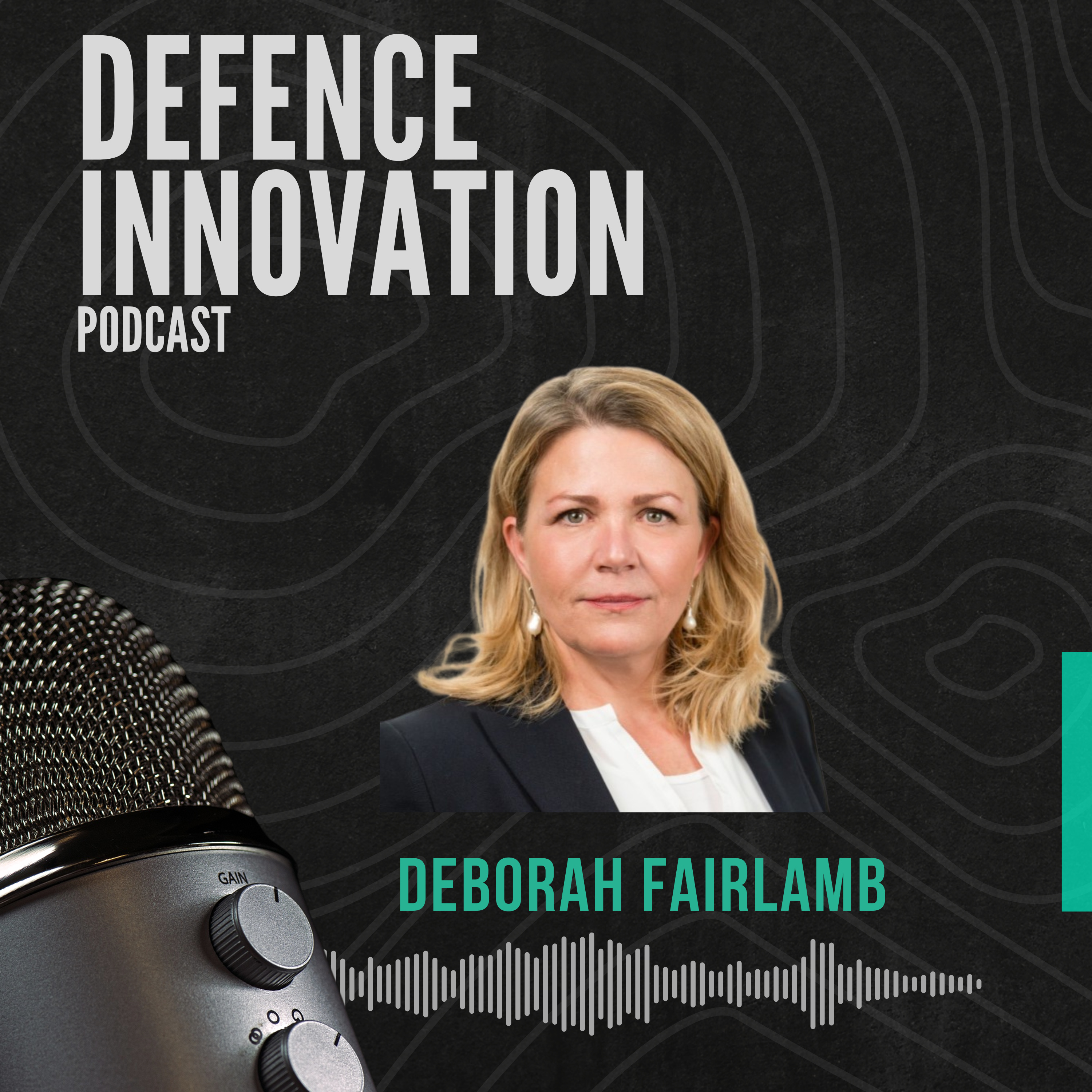
Defense VC: Why Silicon Valley is Missing the $100M Opportunity in Ukraine - With Deborah Fairlamb
from Defence Innovation Podcast
68m 24s
Debra Ferlam, co-founding partner of Green Flag Ventures, discusses her journey from Wall Street to leading a US-based VC fund investing in Ukrainian defense tech. The fund, launched in 2023, targets overlooked innovations like communications, hardware, and software developed from battlefield data, not just drones. After moving to Ukraine 15 years ago, Debra worked on projects like Ukraine Invest and the Ukrainian Startup Fund, gaining deep insight into the tech ecosystem. Following the 2022 invasion, Ukraine's tech sector pivoted from FinTech to defense tech, driven by personal ties to the front. Green Flag provides capital and Western connections, believing these innovations have global military value. Debra highlights that Western special forces admit their units are unprepared for modern warfare, exemplified by Ukraine's use of sea drones to push back the Russian Black Sea fleet. Russia's drones now terrorize Europe, shutting down airports in Poland and the Netherlands. While the West is slowly recognizing the need for new drone doctrines, Europe still lags in procurement. Debra emphasizes that this conflict's technological lessons are critical for future defense, as autonomous and uncrewed systems redefine warfare globally.
(upbeat music) - Debra, I'm really, really excited that I have you on here today from Ukraine and I sure hope we managed this episode recording without any interruptions. If we need some, let's perfectly find that's real. As we always do it, I'd like to ask you to introduce yourself real quick. - Absolutely, so thank you very much, Jonas, for having me on. I'm really excited to join you. So my name is Debra Ferlam. I am co-founding partner of a VC fund called Green Flag Ventures. We are actually a US-based fund. My partner is also American, but our thesis is to invest in Ukrainian-founded defense tech. We launched Green Flag in October of '23 and we have made six investments to date. We are raising a $20 million fund and the thesis is founded on looking at this new tech that is coming out of this ecosystem. So Ukrainian-founded, we are particularly interested not so much in the drones, which is something I know we're gonna talk about, but what we are focusing on is a lot of the other things that people aren't necessarily seeing, which includes some extraordinary new communications, small individual hardware systems, actually some remarkable new software that's being developed here in Ukraine that's utilizing all the data they've been collecting. So we are looking for things that are maybe a little bit off the radar of what a lot of defense tech is looking for, but we are really excited about the companies we've already found in the pipeline as well. As you can tell by the accent, I am not Ukrainian. I moved to Ukraine about 15 years ago, had come from about a 12 year stint on Wall Street, first with Merrill Lynch and then with UBS. My bridge to Ukraine was actually a Ukrainian husband who I met and married in New York and then we moved over here about 2007. And the time that I had spent here was largely sort of taking what I had learned working in New York with international investments, global business and kind of working in the space with new business development and bringing investments here. So I worked in Ukraine, I actually worked in the country of Georgia for a couple years and came back to Ukraine full time in 2015. Time here has been essentially, I worked for a regional bank, I worked as a consultant. I did some advisory work with a project that was actually paid for USAID, I was working with a woman who was then Minister of Finance. There were two projects under her that really kind of got me going in the ecosystem. One was launching Ukraine's foreign direct investment office, something called Ukraine Invest. And so that was an entity set up to help foreigners who are interested in investing, find projects, find their feet here in Ukraine. And then the second project was something called the Ukrainian Startup Fund. And that was a project where what we were doing was literally sort of modeling what the Israelis and some other countries had done, but where there were government funds that were set up to invest into the ecosystem. And while I had the fund structuring and that background, actually I really had to do some research and understand what was happening in the tech sector at the time. And this was back in 2017, 18, 19, was this band that I was sort of working on this project. And that also really coincided with this great growth sector that was going on in Ukraine at the time, in just the tech sector. So it was FinTech and SAS and B2B and there were a whole bunch of these new products companies and software SaaS companies that were kind of starting to come through the ecosystem. So I was able to sort of continue this balance between business development investments and then working specifically in the tech sector. And if you fast forward a little bit when the full scale invasion happened in 2022, I was actually working on another USA project for cyber security and really what happened and what became the base for this now defense tech ecosystem was essentially the private tech ecosystem that had been doing, like I said, FinTech or Agtech or Medtech really just pivoted towards, okay, what is needed at the front? And because in the beginning, so many, there were so many people who signed up and volunteered to join the army in that first year. So there was nobody in Ukraine who didn't have a brother, father, aunt, son, husband out at the front. And so this whole resistance to the Russian invasion has been an all of society thing from the first days. And in some ways, it is most visible and most powerful and really has driven a lot of the growth with this merging of this very dynamic, very smart, very savvy tech sector into more or less the military. And in the beginning, it was not necessarily sort of directly through the deal with the stock, directly with the soldiers. So this was all playing out the background when I was introduced to a mutual friend to a guy who was introduced to me as this crazy American who wants to invest in Ukraine. And I've been the crazy American investing in Ukraine for 15 years. I'm like, yeah, I'll be glad to talk to him. And we had a conversation. I was actually, at that time, I was not in Ukraine. I was out for a little while, but I was over in Europe. He is based in Los Angeles, and he and I just really kind of sort of collect. So Green Flag is and was Justin's idea to set up a venture capital fund. He had actually Ukraine in April of 2022 and had been delivering medical supplies. He has a US government background. He actually had been an EMT. So he was very comfortable coming into this scenario. And in the three weeks he was in country, he was able to meet a bunch of Ukrainian founders who would literally sort of stepped away from their business. And we're now all trying to do something for the war effort. And when Justin went back to the US, he really started looking for something to do other than just write checks and volunteer. And he very correctly identified that one of the most important things that this ecosystem needed was capital. And then the second thing that it needed were connections back to the West. And he thought, well, I could do both of those. So Justin and I got together, we came from very different backgrounds, but we've got a really good balance in terms of our skill set. He is, like I said, US government experience. He actually is also a founder. He's got a very successful cybersecurity intelligence information company that is still running. I had the finance background, the Ukraine experience. And in the context of just what we wanted Green Flag to do, which was to really support the growth of this ecosystem that we saw. But then also really importantly was to help these companies eventually make this job to the West. Because we really, this is not a philanthropic fund that we are running. We really do believe that there is an extraordinary business case that is unfolding in front of us. And in the context of just being able to sort of help facilitate that, that is the other piece of what we are looking to break. So that leads us to here we are. Now, somebody, a girl from New Jersey ended up in Ukraine with finance background. And there's now eyeball deep in the Ukrainian defense tech ecosystem. Fantastic. Thank you so much. There was a fantastic overview of all of the very important steps and the unique combination of skills and experience you bring to the table and your support in Ukraine, obviously. So there's a whole bunch of stuff I immediately love to jump in. The connection to the West, I know that we will talk about this later on. But how wise that's so important and specifically wise to so important for you in your fund and your investment thesis. So there's two ways to sort of look at that. And I'll start with the investment side of it, because that's actually an easy one. So what is being developed in Ukraine is not only sort of helping the Ukrainians continue to fight and defend against the Russians. But what they are doing is really sort of building a whole new class of how wars are being fought and the tools that are engaged and used in this. It is not just the Ukrainians, the Russians-- this is a two-way thing that's happening here. And there's tremendous innovation happening on both sides. But in the context of us having this ecosystem here and understanding how a lot of this new kit will have a place in existing military structures because whether or not the West, and it's very traditional, and very established defense ecosystem in terms of training, tech, tools, everything, what is happening is the Russians, the North Koreans, and the Chinese are all very much-- and the Iranians too-- very much involved in all of this new technology and how this war is being fought. And what that means is that this is not in isolation, that this is something that is going to matter to the West. So in the context of the fund, we have very strong companies with very good products that we know, and actually that we work with experts who are NATO, WUSI, NASA, the different MODs in the US Department of Defense. So we know these products have a place in Western ecosystems.
And so that is, you know, on the fun side of it. But I will tell you another thing on the personal side. And this was something that I sort of started to become aware of, not long after we had launched the fund, because one of the things that we were doing, we spend our days talking to Ukrainian soldiers, to foreign soldiers, you know, retired foreign soldiers who have since come over here to fight or to see what's happening or, you know, support in different ways. And one of the things I was consistently hearing, especially from you as special forces guys, so we tired you as special forces who came here, went out to the front, stopped and came on the way back, spent some time talking to them. Consistently this message was, my unit would not last for two days out on the front. We are not equipped to fight like this. We are not trained to fight like this. We don't have the communication tools. We don't have the tactics. And as I continue to hear this, it really started setting off alarm bells because, you know, I do not come from the military side, but when I have got these really well trained, very highly regarded soldiers coming back and say, we're not ready for this, I realize that there is just this enormous gap of understanding what is here. And so the second piece of my, why are we doing this? And is really just to help people in the West understand how much is changing, how it is changing and why it really, really matters. I know it's very easy for a lot of people to think, ah, this is just a Russian Ukraine thing. It's far away. It doesn't matter to me, but it does. And with every iteration of cycle of new technology that we know that the Chinese are involved with with a lot of the back end electronics, that we know that, you know, the North Koreans are now in Russia building drones. There are factories in Russia, staff by the North Koreans because they're building drones. They're taking the technology back to North Korea. All of these things have implications for, you know, the West in the context of defense and any other potential conflicts that they may be facing in the future. Yeah. Yeah. That that that's really insightful. And I mean, you specifically mentioned the US now from my personal experience in talking with a lot of, you know, European forces that even now, I sometimes hear things which confuse me where people don't really take it to serious. I mean, you just teased it a little bit where there was a time where people start, you know, that's just a Ukraine Russia thing. Nature would find fight very differently against Russia and all of these things, which I don't think is true because exactly what you just described, even these highly trained people that are describing this is not what we are capable of, you know, working with or working against. Has that changed over the years and is every one right now at this stage or has everyone arrived at the stage where they recognize that because, yeah, I've seen very mixed things over the years. Yeah. No. So you have to think about things in a couple different ways. So one is, I think that the sort of the NATO countries, US, Western Europe, the one area that that is sort of not contested is is an air superiority. And that I absolutely understand the power and the importance of that. And I think that that is something that a lot of people kind of fall back on that that nothing will actually ever get past that because we're just going to fly in and it's all going to be. But it really, it does go beyond that. And I'll just take it not to the ground war, but I'll take it out to the, to the sea, you know, what's happening in the seas. And so I don't know if you remember, but if you, you know, go back timeline three years ago, the Russians had essentially blockaded Ukraine. They couldn't ship grain. Nothing was going in. Nothing was going out in theory. There was a broker agreement that actually was never recognized or followed by the Russians. And so the Ukrainians knew that they had to do something. And so they had already had started having some success with the drones on the land. And they said, well, why can't we see what we can do with the seed drones? And so that's essentially exactly what they have done is that they started developing new classes of unmanned seed drones that essentially have pushed the black sea fleet, black sea fleet back. There's a time to us, there for you. And that really allowed Ukraine to re-open the shipping lines, both again, for, for everything coming in as well as going out. And most of the Russian black sea fleet is, is fairly well sequestered away from the seed drones. And so that was the first part of it. But then the second piece was Ukrainians kept looking for different ways to continue to increase the advantage. One of the things that the Russians are doing is using a Crimea as a launch pad for a lot of the missiles and the drones, the big ones, the, the, the, the, the Ronan shaheads that are coming into Ukraine. And so the Ukrainians started looking for ways for how can we start doing more? It's so they have now since come up with seed drones that have the capability to watch FPVs. And they have taken down Russian helicopters with those, you know, of seed drones that have the capability of launching missiles. They take it planes down with those. They now have stealth underwater drones that have started hitting the Russian fleet back in poor. And so I am bringing this up because this is not an area of people are thinking about, but if you think about something happening in the South China Sea and the Pacific theater, I guarantee that drones are going to be a very, very big part of that. So this is another piece, you know, I think that that people need to be aware of. This is not a one dimensional war at all. If you go back to the ground war, you know, I cannot speak to the potential of the possibility of, you know, ground war conflict between Russia and, you know, Nordics or Baltics or or country within the European, within the European space. But if you even just look at the fact that, you know, the Russians are using drones as sort of terror tactics in Europe already. They sent drones over Poland in September. There have been drones in the Netherlands, got to give the Netherlands credit. They shot the drones down. They didn't tiptoe around. They shot them down. They've been in Germany. They've been in Copenhagen. They've been in Finland. They have shut down airports. So the Russian use of unmanned vehicles is already impacting Europe. And so this is why people have to continue to understand that this is not just, you know, that 20 kilometer dead zone because there's the saturation of drones out on the front. These drones unmanned vehicles are already spilling into new territory. The Russians are already using them as terror tactics against Europe. And this is just going to continue. So all of these pieces sort of work together, even though it may be hard to see. I know I've lived in the middle of all of this. And I know it's very hard to kind of see sometimes in the West, you know, a drip of information here, a drip up there. But really, there are very concerted patterns with this and move towards, you know, autonomous vehicles, well, uncrewed vehicles with more and more autonomy on their own. And that also speaks to a lot of the technological advances that we're seeing as well. I think that was a very, very important point you made there because, you know, a lot of politicians in the West like to talk about this vision of this European drone wall, whatever that might mean. And I always have to laugh about it because, you know, how is that going to work if you crane can't figure it out, which, you know, there's no argument that they're the absolute leaders when it comes to that in the combination of everything, EW, which we'll touch on later counter, counter, counter UAV. And they're completely forgetting about that it is already happening, what you're just describing, they're starting from inside, you know, it's like it took the German government months to figure out, oh, actually, they might be starting drones from their shadow fleet. And we're like, yeah, who would have thought? So your vision of a drone wall on the, on one side of the continent is delusional because, you know, you won't catch anything, you need to hard and targets or areas locally. But anyway, so I think that's, that's absolutely key that, you know, everyone gets to this point and understands that this is relevant for everyone. And it's not saying, you know, all right, I won't, won't be, won't be a problem for us. But on that, so you already mentioned a Shahed, as Shahed Ronson and all of these horrible things being used to terrorize Ukraine. I also know that we, we discussed previously, you want to talk about specifically the, the role of counter UAV and, and how that has evolved. And you maybe, you know, give us the overview there, what you've seen over the last years. And I also feel like, and this is just my perception, I'd love to hear your thoughts on it. That slowly but surely we're getting somewhere where they're getting really, really effective. So please, could you give us an overview there? Yeah, I know. So, so we've actually been talking about a lot of these things for two years, trying to get the west to kind of pay attention. And it was, it was really last summer, where there was, you could see there was kind of this like, wake up moment. And it happened both in Europe and the United States. It's slightly different times and for slightly different reasons. In the US, it really started when Trump, President Trump had come in and started talking about, hey, the Ukrainians are doing some really innovative things with drones and maybe we need to change our drone doctrine. And so there was a shift in the United States. And in the context of,
sort of Europe, you know, there's been this great, I'll call it a grassroots ecosystem that has really has started growing in Europe and that we've been watching a lot of the new defense tech companies that have been starting. But in the context of if you were watching, you know, military procurement out of any other big countries, there were no procurement requests coming up for drones and there's still not been a lot of them. There's some. So there's like little light bulbs that have been happening over time or people are starting to have this recognition. And now, yes, everybody has that concept of drone. But in the context of what we are seeing with a lot of the defense tech companies and what they're building, a lot of these actually are more offensive in the context of what they are building. But quite frankly, I think Europe is at a position where they are sort of so far behind in terms of where this technology has you know, has gone. At this point, back to the concept of a drone wall, I would be much more comfortable seeing you, you know, most of Europe really ramping up its counter drones because I really don't think at this point, you know, Finland is not going to invade, you know, Russia with the, you know, 1000 FPVs, you know, a day or something like that. So it is far more likely that Europe is going to be in a position where they have to defend against drones first. And if you look at Europe's capabilities and how they are defending, you know, with F-16s and million-dollar missiles every time they shoot, that is utterly and totally not sustainable for the sheer volume of drones that Russia is capable of sending if they so chose. As somebody who has been living here and has, I can always tell you when it's one of the jet shaheads versus, you know, one of the slower older ones are, you know, when they change their trajectories of how they're flying, you start getting used to this just because we've all heard this so much for, you know, that was something that the Russians ever chose to use over Europe. It is paralyzingly terrifying, especially early on. And if there is not a good and strong and robust response and it just cannot be just sending up the F-16s or the F-35s or the Gryffins or whatever, there really have to be different layers of defense. And this is essentially what Ukraine is showing. Even now, to your point, Ukraine has been doing this for years. You know, it has not been, it's not final because the Russians are never done with how they are, they themselves are innovating. And this context of it drone wall, and that's great that you brought it up because that people envision, you know, this wall of patrolling something, stopping anything coming in. Ain't gonna work, it's gonna work. You know, really, Ukraine has multi-multi-multi levels of different layers of defense and how they're going to stop and what you do over open fields is very different over what you do over cities. And is it a, you know, high speed shahead that's coming in? Is it one that's, you know, coming in low and slow, which then is really hard to pick up on the radar and how do you, there's, there's so much more to the complexity of this and people kind of flip-off drone wall, that is not going to do it. This issue of how you take down, you know, unmanned vehicles that are coming in as an attack situation takes an enormous amount, not just of the technology, but here's the other piece, and I wouldn't mind also talking about this later, this is not just like magic tech. You have humans behind a lot of us tech, so they have either built, they are coordinating between each other, you know, the way someone with the Ukrainian defense works is, you know, a unit will have a certain perimeter, you know, a circle that they are kind of responsible for. And as a quick example, you know, if you all of a sudden have 10 drones in your space, how do you decide which one you go for force? First, how do you decide which one you are going for and that the unit who is next to you, you know, a kilometer up with defense, which one they're going to go for it? Like, there is all of this unification coordination that has to go on. And yes, the tech G is getting better and better, but it is not fully automated, it is not, you know, at all, it, they have no man in the middle. So it's the people and them being trained at how, you know, what are their skillsets? So there's a whole cascade of things behind, you know, just the technology. There's the doctrine, you know, right now, as far as I know, with most NATO countries, a soldier is not allowed to make a decision to to to send up a drone without command approval. Well, that, you know, that just does not work. It not for offensive or defensive if you're talking about the of UAVs at this scale. So there's doctrine that has to be changed and all of these pieces really need to work together. And it is because Ukraine has figured all of this out over the last four years that they have gotten themselves the position where they are, but for Europe to think or the US, to think that they can just figure this all out in one quick swoop and a couple great tools are going to solve all the problem. It is leaving them vulnerable and not prepared. And I'm glad that you mentioned it that it all comes down to people. And this is actually something I I keep talking about because one of the major things why I'm so unhappy that, you know, no drones are being bought in meaningful numbers. What we would need to, um, to start getting used to it is the training aspect. I mean, the argument many, many are using is that all, you know, until we will need them, they will be outdated. Fine, I understand that. And that's okay. But at least we had some drones to drain our troops on, which we don't have now. Exactly what you just described is this assumption that in case we need it, we will then just quickly get everything we need and tell our people how to do it. It's like easy peasy and everything will be out automated either way. No, it's not going to happen. I mean, there's a reason why it's still until today. There's, you know, like, I don't know what the percentage is right now, but the vast majority is still steered until killed by a person. And it's not automated. And you still haven't really thought we haven't really spoken about EW, which obviously is a massive, massive thing. And I mean, unfortunately, we hear it all the time that, you know, we send European companies to Ukraine, which, you know, they do off their fancy demos on a military ground in Germany or wherever. And the dolls looks fancy and cool. But it has nothing to do with the reality because they don't really have the, have a good idea of EW, how severe it is, how crippling it can be for all sorts of technologies. I mean, I think that would be probably a fantastic other point we could jump on is to entire electronic warfare happening because I think you mentioned it also that it is very, very big factor to everything happening at the moment. Yeah. So there's a couple of different ways to look at it. So one, you are right that most of the Western, the new defense tech that is coming into Ukraine, either to be used or tested, where it fails is that it was not built for what the electronic warfare that the Russians are waging. And it is really the intensity of what the Russians are doing combined with sort of new tactics and things that that I think people just sort of are really having a hard time understanding. And in fact, I have to tell you, like I've seen a couple US startups that are essentially, you know, things that you would use your phone for. So they give you an app to be able to like drive a UGV or something like that. You know, if a soldier turns on his phone out on the front, you can expect, you know, incoming FPVs, you probably have about a two minute window before, before you can do it. So there is this both mass monitoring of all of the electronic signatures that are out there. And so that, you know, the Russians are constantly trying to figure out where the Ukraine drone operators are, where, you know, soldiers are in terms of entrenched or in dugouts, but there is also mass suppression. The intensity, I actually saw something just the last day or two. And they were saying that there are large stations more or less on the Russian side, almost every 10 kilometers. So these in and of themselves are large EW systems, but then even between the big systems, there are sometimes there are dozens, sometimes more than 100 smaller ones that are essentially there to kind of continue to do the jamming in between and to enhance the jamming. And so really it is just sort of this total saturation of certain areas. The other thing that they're doing is it is not standard across the front. And so you can have, you know, two drones out of the same batch that were made and one goes goes out to Harkiv and one goes down the Hara Sun. And it is guaranteed that in one of those places it will not work because of whatever the Russian EW is in that place. And so what that means in the way the Russian, the Ukrainians are sort of adapting is when drones are out to the front, they are almost more in a modular format. And what I mean by that is that they they're not closed OEM closed systems.
which is how the West thinks in terms of what they want to buy. These are not closed. So they go out and you've got the main frame, but they are swapping out antennas. Sometimes they're actually updating the chips out at the front. Sometimes they're swapping out chips. They're adding in additional chips. They're updating software. So there is this on the front adaptation that is happening with these Ukrainian soldiers that allows them to continue to fly despite all of this. Now for somebody coming in, whether you're a unicorn company, which we've had a few of those, or you're just, you know, in a trepid defense tech startup who's got something new and they're coming in, really it's the EW where they just hit this wall and it doesn't work. The West is not only like the Western governments, it make it very difficult. You know, I know in most of Europe, you are not allowed to test things against electronic warfare. There's all kinds of restrictions around that. But what the problem is, is that actually is ampering the growth of systems that will be able to fly in a very situation where they are going to be, you know, ready for EW like this. The US is similar. There are some places in the US that some of the much bigger startups can test, but it's well fairly limited. And so I think this is one of the things that really almost more than just drones, people have to understand the environment, the electronic environment that they're going to be flown. And I mean, you already mentioned they, the Ukrainians are essentially remodifying drones or whatever technology they might use at specific frontline workshops, so to say. And you also mentioned in the conversation we had beforehand that there are even different tiers and also that it has quite a lot of implications in terms of what talent, what kind of personnel is needed in the troop stair. Can you maybe tell us a little bit more about that? Because I've never heard about frontline workshops. So please enlighten us there. Yeah. So so first of all, there's sort of two kinds of drones if you think about it. You've got your rotor drones and you've got your text wing drones and they can serve all kinds of purposes. For the moment, mostly what I'm talking about are the rotor drones. Although there are some in the fixed wing. But really, as I mentioned, you know, there are sort of workshops out at the front now and almost every unit has some sort of workshop for the teams that are working with drones. And they have, they, they should, just like everything else in Ukraine, and it was kind of this just ground up evolution in terms of first to solve a problem, then to say, oh, we didn't just solve a problem, we can, you know, build a little bit here. And the way that these workshops have now evolved is that they're actually almost tiered. So like a tier one workshop is largely just, you know, repair arm and maybe swap out in tenants. You know, it's a very small amount of skills and it's mostly meant to just maintain and keep things, keep things going. The second one is, tier is a little bit more sophisticated. And so again, just repair arm, but also doing some building, maybe additional alterations. Maybe it is somebody out there who can, you know, change chips and they're starting to share a little bit of information with units who are sort of up and down the line. In terms of sort of the next tier, so they just kind of each keep building. And it is the, these are sort of what is now the fourth tier. So these are, these are very sophisticated workshops that are now out on the front line. They have essentially, they've got 3D printer machines so they can print their own drones locally. You know, the body frames, they're not just repairing. This is actually sort of very proactive in terms of what they're doing. And they are also at sort of this level, they are even building things that are not coming, you know, from elsewhere in Ukraine, but they are actually active R&D for new things to use out on the front. There's also a lot of data collection that is starting to really be gathered out of the front. And it is not just data collection for the sake of data collection, but it's really now starting to drill down into the specifics of, okay, and this kind of terrain, this drone, with these capabilities, works better, you know, under this scenario. But we don't see that happening over here, what's the variable, okay, you know, this is maybe what the variable is. So, this is no longer just throw them up and point, you know, have the pilot or the operator send it out and pray that it's gonna work, you know, the level of sophistication of understanding of what is working in what environment under what kind of, you know, either weather or EW environment are all now actually being analyzed to help the Ukrainians get better and better in terms of what they are doing as well. And these are just Ukraine, Molders. (laughs) These are not people coming in from the universities. So, what this, you know, the implications of this are really, you matter for again, for Western armies in the context of, you know, the makeup of the units that are successful, utilizing drones are vastly different from what most people sort of would think of as your traditional soldier and the traditional training that they're getting. You know, these are all people, not all, but these are the people who are working in these workshops have, you know, either strong engineering and math skills to start with or they have learned them very quickly, you know, in terms of what they're doing. But it's a whole new range of skills that soldiers are, are really being, you know, tapped into and needing to use. And I'll just make kind of a one about weird side comment, you know, when the Americans went down to Venezuela, there was a lot of comment around, you know, the Russian, the W system, or the Russian defensive systems, and why, you know, why didn't they stop any of the American things coming in. And I don't know if this is true, but one of the things I thought that was interesting that sounded very plausible was that actually the Venezuelans who were manning these systems really had not been properly trained. They did not understand how to use them, especially when there was a lot of targets, you know, what they would have seen as targets on their screens coming in, how to distinguish between a real target and a spoofed target. And so it comes back to the training of the people who are using this equipment again, being able to utilize it in the situation. So it plays out in small levels, it potentially played out in big levels there. And so it just, it's again, it's not just the technology, it's not just the tools, it's the training and the people and the skill sets behind it. - And, you know, when it comes to these workshops, I'm almost thinking like for me, this opens up a whole new, I'd say almost stage of evolution when it comes to frontline innovation because one thing I've been talking about for years now is that whenever I hear people in central Europe, let's just say that they want to start something and want to develop a frontline relevant technology, my simple point was always, hey, how do you want to keep up with the changes and the speed of the Ukrainian companies being at the frontline on a daily basis? That's on the basis that you have a startup, a whole by a small group of people which are having this direct connection to maybe frontline soldiers. But now having workshops at the frontline, developing new iterations in real time, as a next, as an entirely next step, which for me almost makes it even more impossible to keep up with the changes and from an entrepreneur's perspective, I mean, the entire thing for in normal businesses is, you develop something, you reach product market fit and then you make money based on the R&D efforts you put in. But on an ongoing basis to have these R&D costs, which are churning through and you have to keep very high R&D spending up, is a really difficult task on an entrepreneur's basis where you need to make the numbers work in some point as well. So that is a really, really interesting insight. That makes it even harder for the West to keep up. - No, well, you actually just did something that's really interesting. So in the context of, you know, when you start up as thinking about product market fit, well, in defense tech, who is your market? It's actually soldiers and you have to understand, what is the situation where they are fighting? What are their needs? Like I can't tell you how many iterations of things that we've seen where, you know, like there's software or new systems that a soldier standing in the freezing cold in the mud is never going to be able to scroll four streets, screens down to be able to find the Wulch button. You know, you so probably in no other sector, do you really need to understand who your user is? And what is the situation that your user is in and what is your user facing? And with all due respect to the many, many, many smart people all over Europe developing things right now, if they are not in Ukraine, testing alongside the soldiers out at the front, they really don't understand what is going to be, you know, their own soldiers or their country's soldiers are going to be facing if, you know, worse comes to worse and you're facing the Russians. in the context.
of trying to build in a bubble, like the idea of it, you just are bumping up against very, very different realities in the field of defense. And again, it's just because so many people do not understand what is that experience at the soldier, what is it that they are facing, what is it that, in this case, the Russians, but it could just be the Chinese, what are they doing, and what are you defending or, you know, against or going on the offensive against. So that is, and again, similar to the EW, it's the, if you don't know what you're going into, you're never going to be able to build for that proper thing. And in the context of these frontline labs, you know, I can tell you, most of these soldiers who are out there, many of these guys, in fact, most of them, I think at this point, we're not professional soldiers before the Russians invaded. Ukrainian armed forces is made up of guys from the tech sector and veterinarians and taxi drivers and, you know, farmers and accountants and lawyers. And so it is a very different mindset than you would have from a traditional professional army where they came up through the ranks and there was this certain thing. This is a fight for Ukraine's existence. And so the people who are going out, you know, you'd not have that same dog mall, the doctor and that they, that a professional soldier would have gone through in terms of the growth of their own professional career. So there's a tremendous amount of new kind of thinking that is happening within the Ukrainian ecosystem, just even within the soldiers themselves. And so that is also part of, you know, somebody saying, "Hey, why don't we, you know, try doing some R&D ourselves?" I can guarantee you the average, you know, American private out on control somewhere in a situation is not going to be thinking about, "Hey, let's build an R&D lab to make this a little bit better." But it's just this extraordinary set of circumstances and that have brought Ukraine to this point where it is with the people, backgrounds that, that absolute use determination not to be again, that really has, has brought it to the point where there's things like research and development lets. And these guys again are at the market. They don't have to go find, they are at the heart. They know exactly what the pain points are to be solved. They're not wasting time with, with things that are not pain points. - And that also brings me perfectly to procurement. I mean, we all frustrated in the West that procurement cycles are notoriously slow. I know yesterday their voice of positive forward in Germany to speed up procurement massively. But still we, my humble opinion, we still have a massive distribution problem where the vast majority of the money goes into, to the prime contractors. And yes, I know, and, you know, I'm certainly not one who says, "Oh, we only need to draw and stuff." But it will always be the combination, but it still sounds unreasonable to me that we spend over 80% on legacy systems when I believe that we need to do quite a bit of spending on the other side of the innovation cycle. Yes, at the end it will be a combination. But, you know, one thing which is very obvious is that the Ukrainians have figured out how procurement needs to be. It needs to be fast, unbiocratic, decentralized. And, you know, I know, for example, because I also had Artem Morris from Breifon on the podcast before that there's, that there have been doing fantastic job with their almost Amazon for soldier kind of platform, which has a very lean improvement process with, I believe, two or three experts evaluating a technology, and then it could be approved for the platform. So maybe you have some additional insights on there, but certainly the entire world probably can learn a lot from how do Ukrainians have been going about finding right materials and being, you know, really flexible in changing demands and all that stuff. Yeah. So there's two different ways to tackle this. So I'll put, we'll come back to Breifon because they're extremely important. But what the things that I don't think people understand is how much has gone out to the front, not through purchasing of MOD. The amount of private and wallet charitable support for soldiers out on the front is probably in the hundreds of millions of dollars, if not even more so. And I think I heard 500 million over multi, so every year I think about 500 million. Yeah, it would not surprise me. And you know, some of that was again, just from the way all of this started and all of a sudden just everybody, you know, grabbed their gun and headed out west kind of thing. Again, this has been an all of society effort. And so a lot of these people who went out to fight early on did not have, you know, the kit and the gear. So there was all of this fundraising that went on to just, you know, make sure everybody had what they needed. Then when, and it was still fairly early when they started using the DJI Mavic largely, that they were kind of poo pooed by some of the traditional soldiers in the beginning. But what it did was they would just send these things up and they could see what the Russians are doing. So this provided, you know, again, this is just innovative thinking, you don't have something. How do I solve the problem? If I put up a drill and I can see it. And so, but all of a sudden this call went out and like every DJI Mavic was taken off the shelves in Ukraine and Poland and Romania and everything was being brought it. So from the beginning, there was actually this very large, there was a tradition of soldiers buying things directly. And that has actually continued through now, even into the context of Brave One. So their soldiers, you know, can buy through MOD. They also receive an enormous amount of equipment that just goes by passes MOD directly and goes straight out to the front and a lot of it is purchased on behalf of the soldiers by charity foundations and other things. And now where it is is Brave One, you can buy on like the Ali Baba or the Amazon of Ukrainian defense tech and units can just go online order what it is that they need. And it's, you know, shipped out to the front by Shab or, you know, other ways that literally almost deliver out to the front. Just really quickly about Brave One for anybody who might not know. Brave One was originally set up in, it was a summer of like 2023. And the government had set it up as just to be kind of a clearing house because there was all of this stuff coming in and being close to the government. And they needed a way to just kind of manage all of this. And so what Brave One was was literally, it was like just the door. So if you are interested in trying to sell to the ministry of defense of trying to, you know, get under this ecosystem, you had to go through Brave One and exactly like you said, there was experts who evaluated it. They need a decision. Is this something that the Ukrainian government needs? Not, no, okay, fine. It was just a way to sort of work through the huge volume. But and then what they, kind of the next step beyond that was they, when they started seeing Ukraine, new Ukrainian tech that was still very early, but had promise and that, you know, somebody said, oh my gosh, we really need that. Brave One actually partnered with what was the old Ukrainian startup fund, which is the project that the data originally worked on, putting grants into the ecosystem. That fund was repurposed to put it into, to put money through Brave One into this new defense tech ecosystem. So they started doing just small grants, 25,000, 50,000, that sort of thing. And Brave One has really kind of just grown in extraordinary ways, both in terms of continuing to give out grants, continuing to help support Ukrainian defense technical companies. But it's also now really become almost a platform that is connecting investors. So Brave One has, you know, a whole investor group where they do demo days, they send us information, you know, what something happens in the ecosystem. Or there's a new startup coming through. All of the investors are notified of it. They also, they're doing broke shows in the United States next month. They're doing like six stops around the US. So Brave One is really kind of evolved in many, many ways. But if we go back to where we started with this, which was procurement, if I was going to advise some European nation about where in the world to kind of start, I would say every, there's two things that are happening. One is, I understand every country wants to build up their own defense tech. You, you're on equals, their own defense and their own ecosystem. One thing we are seeing just because we sit on the outside, I know that multiple European countries are all buying, procuring, trying to build the exact same thing. If you look at European defense as a collective thing, I strongly would recommend that somebody, even if it's outside the NATO framework, somebody needs to start coordinating because there's a lot of time and energy being wasted between multiple, you know, things being developed and, you know, six different countries. So that's kind of an aside, but I'm putting you out there, putting it out there, because that's happened. So in the context of how do you, how do you evaluate
weight, like just all of this new tech, whether it's done on a European level, whether it's done on a NATO level or just within a country level, an entity like Brave One is incredibly helpful because what it does is it sort of creates this small but super fast sort of processing pipeline, or how do you look at a value weight and a fi things through more or less the commercial sector, not through the traditional, you know, prime procurement process. And again, you made a really good point. None of this is going to replace some of the very traditional military equipment. We all get that that's there, although I hope to God that people understand that $500 drones are killing $10 million tanks. And if you are not upgrading the armor and everything else to be able to defend against, you know, these stupid little but highly accurate FPVs, you should be a held accountable, that's all I'll say. But this new tech really is 10 and should be considered in conjunction, you know, with the old traditional tech. And one thing that you could possibly do to kind of speed up or or just sort of jumpstart procurement is with this new tech that isn't not coming out of the traditional primes that is coming out of smaller startups that they need, you know, faster, quicker feedback. If you maybe you're not buying, you know, a million for the next 10 years, but really you want to buy maybe 2000 because you want to put them in the hands of a bunch of different soldiers and let them go out and test, find out what works, find out what doesn't. A small parallel system, you know, that looks like something like Brave One would be an ideal, not exactly a stopgap, but it's a different way of looking at procurement. One of the other things that I would say that really is important and you actually mentioned something about this before that people don't want to buy drones because they're going to be outdated. Actually the way that you get around that is allowing for, you know, some modular conditions. So the frames themselves, I promise you, are really not going to change. They're not. They're all pretty much maybe, you know, some of them are reinforced differently for the bigger drones, you know, they may have different configurations, but the bodies themselves are really probably not going to. The things that probably would change are things like the antennas. It's the software and I got to tell you these things are going, they're outdated in Ukraine in five months. Anyway, this is how fast the technology change is happening. So unless defense tech companies are building understanding how fast things are changing and that you have to be able to do updates to software every single night to be able to include new information that's coming in or to be able to, you know, enhance your mesh network because you've got more data that you can, you know, share with everybody that night. There has to be a rethinking of how any system on care if it's a, you know, the tanks or, or, you know, FPV drones, there have to be new thought patterns around not just the buying because the buying is going to influence what these, what the soldiers are going to be able to do with it and the soldiers are going to have to have to have to be able to be adaptive with the new technology just because the speed of this is not going to slow down. The Russians and the Chinese are not going to slow the tech down. They're just not. No, absolutely not. And I really love the idea of a European wide brave one version. I think that's an idea I take with me and I'll rally around DMSC which is coming up very soon. So leave it with me. I'll take that with me because for a very long time. I'm yeah, I think I think it's also, I think it's a very good analogy because I, I for a long time, I always try to describe that we need a speed boat because the speed boat is the only thing which will keep up with the technology speed. You know, we need a traditional procurement for traditional legacy tech, great works, but we can throw traditional procurement at these incredibly fast developing innovative technologies. It's just, it's just a massive mismatch of speeds and demands. So I think that's a very, very great point you made there. Now, being aware of the time and us start having started naturally, almost the other way around. But obviously we cannot finish before we have spoken about how the venture capital industry and market and the volumes of money in the country have evolved from very, very little money in and I'm sure you have the right numbers. But I'd also love to hear your perspective how things have changed and I know you mentioned before it feels like something is really happening and finally, finally, finally took way too long. But finally, we've reached a point where Ukraine and venture capital industry in the FENSTEC is getting the appropriate attention and capital internationally. So I'd love to hear your thoughts on that. Yeah. So one of the hardest things again, pre-invasion with the growth of the Ukrainian tech ecosystem was always finding local capital. Ukrainian companies were very well versed in doing a Delaware registration if they knew they were going to go to the US market or if they were going to go try to raise capital. There are not functioning capital markets in the context of the way it is in a lot of the European countries. It used to be pre-Juanikovic days. Actually, there was a fairly stable but in terms of the size of the internal capital market that cash flow, that everybody in the West takes for granted is just not there. And so the Ukrainians have long been sort of conditioned to understanding if they wanted larger investments, they were going to have to head outside of Ukraine in terms of the market. And that was true very much when Brave One started in a few of the very early venture capital companies started showing up and saying, "Hey, we're here looking to invest." I can tell you from a venture capital perspective, it's been a really interesting set of conversations over the last two years talking to people about investing in companies in a war zone. A lot of people have very strong feelings about defense tech or dual use. There's been a lot of political overlay particularly in the United States in the context of what we hear from potential LPs who would invest in us and then we go forward. And then if you look in parallel at the rise of the defense tech, you know, ecosystems in the United States and then in Europe, you know, I think, well, to your point, earlier, what you had mentioned. So in 2023, there was about $5 million that was invested into Ukrainian defense ecosystem last year in 2025. It hit about 100 million and I think that they're anticipating that this year, it'll be about 250 million. But just as kind of a point of comparison, if you go back to, I think it was 2024, there was something like $4 billion that was invested into Ukraine to defense tech in the United States. It was about 1 billion euro in Europe and that was the year we were at. Yeah, about 75 million. Here we are, the only market in the world that actually has the tech that is being used and being tested and we know what works and what doesn't work. And it's like a little drip from an eyedropper compared to the ocean of money that is out there. That's what it's just biote. It is. No, I mean, the number, so it is both somewhat shocking and demoralizing and they help, but at the same time for anybody who is there and is actually seeing how this is growing and what is working, we all have confidence that long term, this is absolutely, you know, going to play out. But one of the things it speaks to is that one, a lot of people are particularly in the United States. Most of the money goes into companies in defense tech that already have connections into DOD. So it is really what they are doing is it's just the money play. It's we know because the DOD is going to do huge contracts and they're going to have that. And that's fine. This is venture capital. People are looking for outsized returns. There's no criticism about that whatsoever. But in the context of if you look at what are the things that actually are going to work, have been proven to work versus theoretical may work. There's a huge difference. And that actually is it's kind of a more of a national security issue in all honesty. It's not just the money, you know, you would yes, again, we are looking for investment, you know, for returns for our investors. I fully understand that. But when you are looking at defense tech, this is not, you know, is going into technology that is going to be the difference of life or death for either your soldiers or your civilians. And so you really want to if you are making a defense tech investment, this is not an area to kind of dip your toes into you really, you know, if you are like for a VC doing this, you really have to know that there's almost in my mind almost I don't want to say I'm a moral obligation. But when you talk to soldiers, you spend your days with people and you want to
understand what happens when technology works and when technology doesn't work, it's not like you can just do, look, we'll do a reboot and update the stuff overnight and we'll have a bit of data was lost. There is a very different end of the line product here. And so there is a stronger sort of compulsion for that. So what we have started seeing in the Ukrainian ecosystem is more and more people now coming in. I think back in 23, there were three new defense tech funds, three new funds that were stood up just for defense tech. We saw a number more coming in in 24 more in 25. So the numbers just kind of keep growing. The ticket sizes are starting to get bigger just because these are companies now that are three years in there past R&D. They are doing proof of concept. They have sales histories now in terms of direct units or to the MOD. So they're starting to raise more money. We're getting closer to round A series size just because they're moving into production growth that sort of thing. So yeah, at the end of last year, there was three new funds that were announced, which probably brings the ecosystem to give or take about 20 funds. But everybody is based in Ukraine, not everybody is got on the ground, but they are specifically looking to invest in Ukrainian tech. And then just in the first, now January 15, just in the last two weeks, actually, I've heard of two more funds that will be launched within the next two months, something like that. Most of these are actually European funds. There have been one or two coming in from the US. We have a focus on this. It's really Europe that is sort of starting to finally step up and see that what is happening here will definitely have pertinence for there. So the private money now is coming in faster. It's not fast enough, but it's better than it was certainly. Yeah, we need to, I mean, you already set the baseline, which is essentially zero. So everything, everything above that is only, is an exponential improvement. No, fantastic. Now, look, it gives me a lot of hope that finally it feels like people are waking up and understand why, as you so rightly describe, it is not just a another tech bet, but there's real implication of life and death there, not just for the Ukrainians, but also for quite frankly, the entirety of Europe or the entire world. So it's fantastic to hear that there's finally lots and lots of movement and I'll show hope this continues. To wrap things up a little bit, I'd like to ask you two, I'd say, final questions. The first one is probably a more, you know, what you think will be some of the most influential and impactful changes we will see in the coming months or years when it comes to defense tech overall. And the second follow up question is always the last question, if our listeners only take two or three things from our entire conversation with them, what are those things you would like them to take away from this conversation? Okay, so we'll start with the first one. Just sort of where I think a lot of this goes going, I think that there will continue to be this tremendous move towards uncrewed unmanned vehicles. Ukrainians have a saying, it's send robots, say humans. And I think that if you sort of really think that through, it makes an enormous amount of sense. The software that's allowing for autonomy, a lot smarter, larger scope and scale of capabilities continues to grow. There are enormous data sets in Ukraine. The Ukrainians actually started gathering data since 2014 when the Russians first invaded and took Crimea. So there is a tremendous amount of data in terms of, you know, troops, tactics, terrain, and now just this, all of this evolution and there are companies that are, you know, collecting acoustical signatures of drones and being able to match them against DW or against, yeah, well, how to mitigate those particular drones based on the acoustics. So all of this data is really enabling a couple of things. One, it's better software and it's more information and the other piece of it is AI. And in the context of there is more and more AI being used in Ukraine and it's not in the context of Ukrainians are building the next chat, but it is that there are models out there. There are ways and, you know, algorithms that the Ukrainians are using to be able to just go through these just enormous volumes of information and it's all kinds of information. It's videos, it's photographs, it's all of this information that they have. So it's not just language models and AI really is accelerating and helping them to get smarter, better, faster and almost become more capable in predictive modeling for what, you know, what the enemy is going to do next. I think we will absolutely continue to see so more unmanned vehicles, more data, driven decision-making, more autonomy. These will all accelerate without a doubt. And again, this is not just Ukraine. Yeah, this is Russia, this is China. I mean, I don't know how much you or some of your viewers watch some of the things coming out of China. You know, a lot of what they put out probably are, say, the AI enabled videos in the context of it's, you know, very fancy, but they are absolutely doing work in this area. So yes, this will absolutely continue. And then as a closing state, I think really the most important thing is that this is not just a Russia against Ukraine. This is really sort of two different world ideologies that are clashing. It is not just Russia. Russia has North Korea, Iran, China behind it in terms of these authoritarian views of how the world should be run. Russia came up against Ukraine who has a very different view. Ukraine is very much more aligned with, you know, the democratic West, the understanding that the most important thing is freedom to live your life and to live that both, you know, freedom from fear, but freedom to choose what you want to do. And the Ukrainians literally are, you know, fighting to the death of over this. That is how much they do not want to give into this authoritarian view of the world. And this is not just Ukraine's fight. This is all of the West because, you know, if Ukraine were to fall, they would be in this world view does not stop. All it does is it swallows up everything in Ukraine and then moves on to the next country. And so I really would just encourage people not to think of this as just a local conflict. This is a clash of ideologies and what matters and how do you want to live as citizens of your country and what are you willing to do to defend it? You know, freedom has responsibilities as well. And we are you going to stand up for your own country? Perfect. I couldn't have said it any better, Ebra. Thank you so much for taking the time and thank you for all of the great work you're doing. Please continue it. Make sure that the important and right companies get the funding they need to make sure everything works out. And yeah, thank you so much. Really appreciate it. Thank you, Jonas. I really appreciate what you're doing. I appreciate everything that you are bringing to the forefront and for having me on and, you know, helping us share some of what's going on.
Podcast Summary
Key Points:
Debra Ferlam is co-founding partner of Green Flag Ventures, a US-based VC fund investing in Ukrainian-founded defense tech, launched in October 2023 with a $20 million target.
The fund focuses on overlooked technologies like communications, individual hardware, and software using battlefield data, not just drones.
Debra moved to Ukraine 15 years ago after a Wall Street career and worked on projects like Ukraine Invest and the Ukrainian Startup Fund.
After the 2022 invasion, Ukraine's tech sector pivoted from FinTech/Agtech to defense tech, driven by personal connections to the front lines.
Green Flag aims to provide capital and Western connections, believing Ukrainian innovations have global military applications.
Western special forces report their units are unprepared for the new warfare tactics and tools used in Ukraine.
Ukrainian sea drones have neutralized the Russian Black Sea fleet, reopening shipping lanes, and now include capabilities like FPVs and missile launches.
Russia is using drones for terror tactics in Europe (e.g., Poland, Netherlands, Germany), highlighting the global relevance of this conflict.
The West is slowly waking up to the need for drone doctrine changes, but Europe lags in procurement and technological readiness.
Summary:
Debra Ferlam, co-founding partner of Green Flag Ventures, discusses her journey from Wall Street to leading a US-based VC fund investing in Ukrainian defense tech. The fund, launched in 2023, targets overlooked innovations like communications, hardware, and software developed from battlefield data, not just drones. After moving to Ukraine 15 years ago, Debra worked on projects like Ukraine Invest and the Ukrainian Startup Fund, gaining deep insight into the tech ecosystem.
Following the 2022 invasion, Ukraine's tech sector pivoted from FinTech to defense tech, driven by personal ties to the front. Green Flag provides capital and Western connections, believing these innovations have global military value. Debra highlights that Western special forces admit their units are unprepared for modern warfare, exemplified by Ukraine's use of sea drones to push back the Russian Black Sea fleet.
Russia's drones now terrorize Europe, shutting down airports in Poland and the Netherlands. While the West is slowly recognizing the need for new drone doctrines, Europe still lags in procurement. Debra emphasizes that this conflict's technological lessons are critical for future defense, as autonomous and uncrewed systems redefine warfare globally.
FAQs
Green Flag Ventures is a US-based VC fund that invests in Ukrainian-founded defense tech. Its thesis focuses on new tech beyond drones, including communications, hardware, and software developed in Ukraine.
Debra Ferlam is co-founding partner of Green Flag Ventures. She moved to Ukraine 15 years ago after a 12-year stint on Wall Street with Merrill Lynch and UBS, and has worked on projects like Ukraine Invest and the Ukrainian Startup Fund.
The private tech ecosystem pivoted from FinTech, Agtech, and Medtech to defense needs, as many tech workers joined the army. This merged the dynamic tech sector with military efforts, often directly supporting soldiers.
Ukrainian innovations are building a new class of warfare tools relevant to Western military structures. The fund helps these companies transition to the West, as the technology has applications beyond Ukraine, given global threats from Russia, China, and others.
Ukrainians developed unmanned sea drones that pushed back the Russian Black Sea fleet and reopened shipping lines. They also created sea drones with FPV capabilities, missile launchers, and stealth underwater drones to target Russian assets.
Russia uses drones for terror tactics in Europe, with incidents in Poland, the Netherlands, Germany, Copenhagen, and Finland, shutting down airports. This shows the threat extends beyond the front lines.
Chat with AI
Loading...
Pro features
Go deeper with this episode
Unlock creator-grade tools that turn any transcript into show notes and subtitle files.
 PodcastTranscript AI