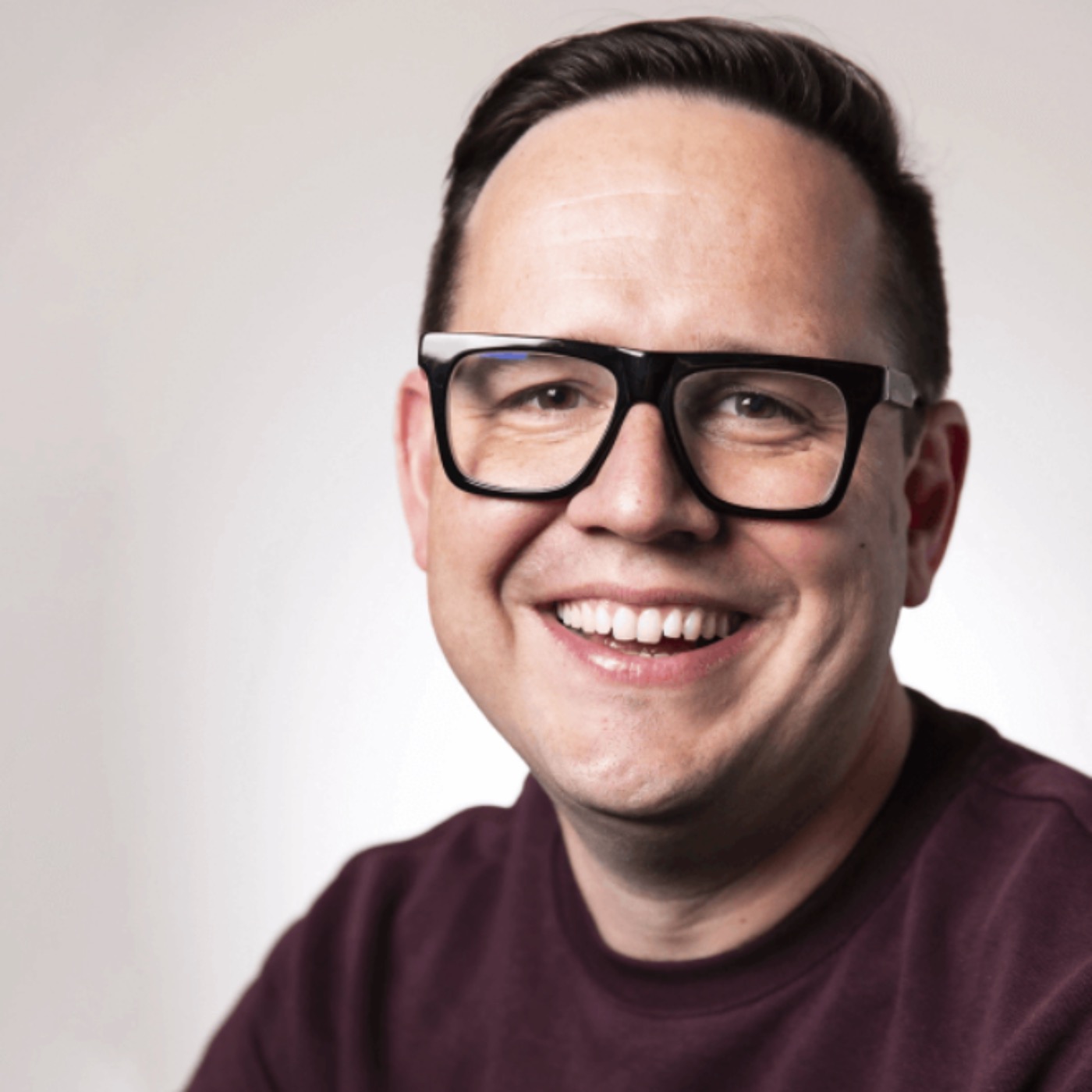
James Wilson, a self-described sleep expert and poor sleeper, discusses his journey from working in his family’s bed business to becoming a coach and educator. Growing up, sleep was never discussed at home; his grandfather and mother were early risers, and his father offered simplistic advice like "close your eyes," which didn’t work for James. As a teenager, he struggled with falling asleep, but it wasn’t until university that he realized it was a problem, especially after poor performance in exams due to lack of sleep. His career shift came when he encountered a pompous sleep expert who blamed poor sleepers for their issues, sparking James’s activism against such attitudes. He now advocates for a more compassionate, realistic approach, rejecting the idea of "cures" for sleep problems. Instead, he provides clients with a toolbox of strategies to manage sleep when challenges arise, acknowledging that insomnia can return. He stresses the importance of clear boundaries and expertise, noting that not all doctors are sleep specialists. James also highlights the skepticism he faces, particularly from men in high-performance settings like football, where sleep issues are seen as weaknesses. He believes building trust through honesty about his own struggles is key, and he refuses to work with organizations that have toxic cultures, focusing instead on helping people find sustainable, individualized solutions.
Is your lack of sleep impacting your decision making? This is Talk, a show about connection, purpose and pressure. Real relatable stories told honestly for men and for the women in their lives who want to understand what it's like to be a man. Following a life-changing accident, I'm on a journey to discover how we connect as men and I'd like you to come with me. This episode of Talk is all about sleep. The main interview and talk 10 quick fire questions are with James Wilson, a sleep expert and we'll also be talking to Julie Moore about sleep and breathing. Now, I've always been a light sleeper but since my accident last year sleep has been a real problem for me. Mainly getting back to sleep if I wake up. So I'm really curious today to find out what solutions we have and we can provide to all of you. And I'm hoping that's going to help me as well. On today's episode I'm joined by James Wilson, also known as the Sleep Geek. He's a sleep expert and you might be surprised to hear a poor sleeper. He's helped hundreds of thousands of poor sleepers sleep better working with sports teams and international brands to help individuals improve their sleep and make better decisions. If you like what you're hearing then please like, subscribe, download. That's really going to help grow the podcast and if I can be cheeky, if you have time, leave a five star review. Thank you. James, welcome to talk. Hello. Thanks for joining me. I wanted to start just by talking to you about the irony of your story and the different family of bedmakers and you've become a sleep expert. Yeah, and I think the irony continues in that the power of the heart of my being is I am of a good sleeper. And my grandpa who founded the bed company was also not a good sleeper. So I think he said, "Possibly, it's always been something that's been with me." I think being a mouse sleeper looks on my life but probably no one who was working in that industry took us younger, really considered sleep products to a piece of furniture. Your mattress was a piece of furniture, your bed was a piece of furniture. And my grandpa used to tell me about mugs, rifles all the time, which was a 30 centimeter mattress that other people sold, obviously not. Other people sold that had some springs and not very much fillings in it but it looked deep and that's probably mattresses. You know, a 50,000 pound mattress looks pretty similar to a 50 pound mattress and you know a top end car. You can tell it difference in a large or a Lamborghini. You can't tell difference between the easily between an all-right mattress and a, you know, a rubbish mattress. When did you first become aware that sleep was a problem for you and was that taught about at home? No, not really. I was really poor sleep as a teenager in particular. I was a kind of footballer who sent him excellence then of other them. And that was sort of when I was 15. So yeah, sort of year 10 GCCs and that. I just didn't sleep. I just didn't know sleep. I went to work from South Yorkshire, stayed listening to Mark Minnecroft on Alamed Femme until the Clyac Lockwood or James Wells on the week. That would normal. It would just go up to bed and try and get to sleep. I might have thought sleep but wake up again. And it wasn't really until I finished uni that I realised it was a problem. I struggled. Exam time used to, as I got older, I used to struggle within that was a time that I really saw it. I was drunk quite a lot of the bottle of dirt Daniels night before the an exam at university. And as you can imagine, did not perform particularly well in that exam the next day. So I was, I was not really aware until I actually started. The original family business was solved when I was a kid. My dad set up as an employer. I worked for one of my dad. They were important for me too. We still had retailers. And I then started working for them and got an interest in the product. And it was then like by that interest in the product. And like this is actually something that helps people sleep better. But no one talks by in that way. I then started to think, well actually I'm not the best sleeper who's probably a couple years after that. I started to at least try and address some of my issues with sleep. You talked about your granddad not being a good sleeper as well. When did you find out that was the case? That was my mom's dad and my mum and my grandpa were both those early rises who get up and you know they'd be, they lived in the end of the green alarm and I go to school and stay with him and he'd be up. You never see him. It'd be a way because you went to bed and a way because you got people on and then my kids see me very similar. That I've never, so I was there constant. I've never been bad because I'm always up. They've been older now. But when I was a little, they would say that to you, you're good to bed. And so it was that it was always like, and then my mum was very similar. You know, it was growing up, you would get downstairs because the family business was running from the house. You go into the back of the back room, which was the office. My mum would be working at sort of, I was always in the early rise a bit. I'd be able to put like half six of my mum's already working and so it was, maybe that normalised behaviour that probably wasn't that normal for me because I was very similar in terms of my sleep type. It was being up in the early morning, wasn't something that was weird in my household. There was at least two of us doing something. It was something you just recognise now in the behaviour in them rather than necessarily something that you've talked about at the time. Oh yeah, never, never talked about it. I remember like being a kid and going downstairs. It was often if my mum were out and going downstairs and saying to me, "I can't get to sleep." And then I just closed your eyes. And so I'd go back up to bed and I'd go, "And then go downstairs and get daddy to work." "Cus me dad was a little sleeper, so he just closed his eyes." "Where for me, he closed his eyes because his sleep, for me, it wasn't like that." And I always got up early. So these people with cartoons on Channel 4 sat down in the morning, like 5th of the clock in the morning, sort of those European, quite strange cartoons and I'd get up and watch them. So I was always, I was always like an early rise, but from time to time I had that night time sort of getting to sleep and that was the issue. And then there was a teenager because your body clock changes. There's a teenager become more of an owl. It became going to sleep. And like many teenagers, as it still happens now, "Good good, you good, you good, bed?" It was telling her, "I have rooms then, I have a TV in my room." I just could have been like, "Good to have a bedroom at like eight o'clock." And then there's no like, "Well there's bed time." I'm not tired at eight o'clock. I'm just watching telly on my bed. And at some point I'd hope I'd fall asleep, but often I often didn't. I think the other time I fell asleep was much of the day. As soon as much of the day seems to start, I'd had fall asleep, but everything else didn't seem to work. For most people, they might struggle with that throughout their life and try and find solutions for themselves. You went down a different journey and tried to find a solution for everybody, I guess. What started that off? I think a little bit is like my personality is I've always been an activist in some way and an agitator. And that can be good and bad. So I think I started to notice, you know, you know what I was selling to start off with? Well, I was saying this about it, but I'm sure that materials don't do that. It can't do that, that product can't do that. So you start like, "Pretty, kidding, questioning." I'm being a little bit naturally skeptical, I would say. And then looking at some of the advice, like, "Well, I've stopped drinking caffeine. I've, I've, I've, I've, I'm not using my phone before, but I am trying to exercise. I am eating as soon as I wake up. Why is he, why is he like sleep? What we call sleep hygiene rules, which is an awful name and doesn't really make any sense. But that's the basis of sleep education. He's really prescriptive. So it was that, it was that noticing of this is something that's prescriptive. We employed a sleep expert, so the business became a retailer in Sheffield online. And it was good we love sleep and it was about kind of like linking sleep products to the problems that people have in our sleep. So you might be allergies, it might be temperature, some rudimentary sleep trackers are sold, some weird snoring products. So I wasn't probably not as expertise in smelling the BS as I am now, but I wanted to link products, probably employ the sleep expert. And it was just not very kind or nice and he was like, he's very, you know, very patronising pompous attitude. And it was a bit like, it's my fault because he's not so damn an idiot. And with that sort of, everyone has that, you know, that founding moment of their purpose in life. And for me, it was, poor sleepers is better than this fella. And he ended up actually years later quite badly stalking me online and harassing me significantly. Because they didn't like the fact that, you know, what is this boy, has he called me? Who's he think he is giving people sleep advice? And that's been quite a common theme in my career that because I come from the point of view of a poor sleeper, who's then gone and trained as a practitioner and trained as a coach and trained, and and surrounds himself with other experts who would blame him what they do. Well, who do I think I have to go and like try and help people sleep better? They should be doing it because they're adoptive or they should be doing it because they're professor. And I've never been a great one for for for deference for the sake based on titles or based on what you need have gone to or based on why you think you're better than everybody else. And it is that that personality of a I've always been quite quite an activist. I've always been a I was I once let refuse to do CDT at school.
as we were made to do it, I wanted to do a job for free. So I did a six week sitting, refusing to do it. And the CTP teachers come to me and look, you need to do it and you're annoying me and I'm annoying you, but let's get through this. And I did it and it was, but I had the head teacher come get through to me at the depth yet, I didn't think it would be right. I would have been made to do something that didn't make sense. So I think it's that if you don't make sense to me at what I'm going to try and work out, why it doesn't make sense and what the right way is to go about doing it. And that's what I've been doing since my mid 20s. So for 20 years I've been, I've been hoping the pomposity of the sleep world I'm pointing out where what the same doesn't make sense and how it's, especially when it doesn't help poor sleepers. And I'm lucky that I've been working with hundreds of thousands of poor sleepers. I get an amazing insight into what works, what doesn't and what's some of the stuff that we educate people on our sleep it just causes significantly worse sleep. And that is because we approach sleep like it's exercise on nutrition and it's not. Sounds like this individual was inspired you in some way despite the fact that he clearly felt threatened. And even had a 1.8 page on the internet about me. I'm a big fan of Mean Girls, the film, the burn book that they used to have on Mean Girls is it had some aversion of that on that. Everything that was bad about me and he got weird. Like he actually, I put my dad plays with other him and he put a picture of his team up on some Twitter and he's lying about that because he's not said which one his dad is. You look at the picture you could tell we should be daddies, the one that looked just like me. But that's the background of, how dare you come into this world and start giving people sleep advice because I should be doing it because I'm a doctor in your own idiot back to the start of where I do this. Maybe he can't sleep at night, hey. He can't, he's quite a father. He doesn't get them sleep and that makes him unique competitive on else. So it sounds like you had quite a tough introduction into your field. What were your, how did you deal with that? That online abuse, having to try and make your name in the field of sleep probably at a time when it wasn't very fashionable or popular to do so. I think that we're very small, very new and people that can be doing it quite a long time and they did say, you know, and they did say people coming into it as well, I'll have a day and I've been doing this for ages and I should really tell you because of my natural inclination of I want to be as truthful as I can be. And I've got quite strong ethics around, you know, what's right and what's wrong. I've always talked to my line quite clearly. I am, you know, I am a coach and an educator but I'm not going to, I'm not finished and I'm not going to help you with your sleep apnea. I'm not, you know, I'm not a friend of a logist. My work around jet lag is influenced by a colleague who's a who's who I work with previously, who's a friend of a logist. I think it's that, it's that kind of like having clear boundaries and barriers and what are you good at and what you're not. And where it was a company I've owned, sleep unity, we have eight, nine experts, we have loads of experts because if you've got a certain issue, you know divergent or you work dealing with your baby kids or pets even, I want you to work with someone who's an expert in that field, not me be good at taking their information where a lot of my competition, it might be at best two people and it might be a GP who's claiming he can now treat your sleep apnea or it might be a GP who's now claiming they can do your jet lag for you. And I just think that's part of why sleep is quite a new thing can look, can lack credibility because we're not, we're, because someone's a doctor doesn't make the doctor of everything and there's something about the medical profession that seems to give them the idea that they are. And I don't think that helps, that helps people find the answer that they need. Really, I want people to find the right answer. You know, what you want the stories you tell me about your sleep, what needs to be investigated and let me try to help you find the right answer. It's all quite simple. If you make it, if you make it simple, we often as an industry conforming to look out clever, I am, and isn't sleeping better difficult, but don't you worry, 'cause I'm a superhero and I'll save you, I ain't a superhero and I ain't gonna save you, but I can help you sleep better. That's the one thing I can probably do. Do you sometimes get some people, you know, when you tell them that you are not a good sleep yourself, do you then get skepticism from people? Yeah, definitely. And it's quite funny, especially like a certain sort of bloke who, you know, like, it's helping me talk. And I think we probably, we probably wear that sort of bloke who wants to show why he's clever than the person who's coming to the company as an expert. And, well, if you can't sleep well, then you can come very good then. Yeah, but no one's looking for all the time. If someone just tell you the sleeping well all the time, they're just a big fat liar, 'cause no one can do that. It's not possible. And you do get it. And actually, if someone who was one of the competitors, who was a bit of a, who did that quite a lot, as recently the company's folded in, and that's what happened as, you know, you probably is perfection and people don't get it, people start trusting you. And any coach and any culture you're coaching in, you need to build that trust first. And I think you're going with the, with the clear story that I can make it better. I think so much better than I used to. But I've just gone back in the week. Last week, I didn't sleep well from probably Tuesday to Saturday morning. I was Saturday morning, actually, I was up at, I was at a school reunion, I had to get up here to catch a train in London, and I was up at half past two. Now it's not just that event. Some people got broken to on the street this week. We've had, you know, we've got some issues around, around like kids and we're blended families, so exes and that sort of stuff. And I will sleep poorly because of it. And actually going, I sleep brilliantly all the time. I don't think it helps anybody because, I see all the time language of deafness around sleep, we cure this, you are broken, let's fix it. It can't be a how frustrated it makes me, because you're not broken. We don't need to fix anything, and I ain't got a cure for you, for sleeping poorly. You might absolutely partner here, and that's a disorder, and we can cure that. You can't cure insomnia because it will come back, because if your treat is supposed to it, the conditions will return again. What I give people is a toolbox, so when those conditions return, you've got some sort of plan, rather than, and all poor sleepers will know this, they're panic and the fear and the adrenaline, and like that moment in bed, where you can actually taste how scared you are because you can't get back to sleep. If you talk about cures and fixes and false promises, that's where people end up. If you talk reasonably and compassionately, and give them the tools they need for their lives, and who they are as a sleeper, then you've set them up for life, and that's the difference in what we try and do in the company's eye, one, and me as a coach. - So, your experience of delivering to groups of people, and you've just talked about somebody saying, giving you being cynical about your ability to help them, because of being a poor sleeper yourself, do you find that in certain areas where perhaps there's more cynicism or perhaps people being less willing to be honest with you about their own sleep? - Yes. - And is that a male thing, more than a female thing, would you say? - Definitely a male thing, a female thing, high performance environments, so CEO's founders, people leading teams, and sport, he's seen as a sign of weakness, and I have these sports, so sometimes I work in football. I am the winningly sleep creep coaching football, if your team wants to win, come and see me. And in football, if you'll get a manager saying, who's not sleeping then? Do he's a immense football, I'm talking about more than women's, although I think the first, he's maybe moving in this direction. In men's football, it always was, let's find a weakness, and everyone's covering the back, and it's quite, if you want to experience, if anyone younger wants to experience what it was like to work in 90s, in a workplace, going to work in mental football, because it's that same sort of toxicity and back covering, and who let's work out whose fault this is environment in many, many sort of cultures that that's like, I say no to a lot of football clubs, and I said no to some big, big teams, because the stories I hear around the cultures, 'cause I could only work within a culture that's already pre-existing, so work with organisations and sports teams, and if that culture's not right, I'm not a miracle worker, but that's what they're expecting. They're expecting you to go in and flick a switch, and everything would be perfect. The thing I'm, the greatest of par, no, puff puff puff and everyone's asleep, that is what the thing, and just not lie that, and it's, it's, so in certain environments where that's skepticism, and you know, in football team, so you've got 30 players, you'll get 10 really banged away, there might be the end of the careers and want to extend it, they might have just had children, there might be start of the careers and want to get an advantage over the teammates. They really get, I'm a middle-oil, or listen, sleeper, I, and they don't need my help, but I don't have anything to do with them, 'cause what if I like jinks and I'm making worse? So go over there, you all might go think about, so soon start thinking about it, you might start sleeping poorly. Then you have probably a third, and it might be like, it's normally about three to five players, who just think he's allowed, in their words, allowed to ball, this is ball, jank, this is ball, jank, I'm not buying it. Now, interestingly, not one of them players has ever, have ever played at higher levels than the level that I've worked with them at. The players in the first group, consistently were played at higher levels than the level that I've worked with them at, and that's the difference.
Because it's not about the sleep, it's about the mindset of being open to things that may be challenging your views. Because high performance people have always been taught and men in particular, we're taught as men, try hard to get better. Try hard to get better. Sleep, try harder, get worse. Every single person listening to this knows that as a truth. Because we've all tried to get to sleep when we need to get to sleep and not be able to get to sleep. So everything you've learned is a high performance. And I've worked with Westand with people at the Climax Syndrome, Bowen. You're at that level, you're at that level because you have tried hard when you've got better, you've got more talent and you've got more perseverance than anybody else around you. And now you've got a problem that the thing that you've been taught all your life to do just does not work. And because the messaging around sleep is often based on the messaging around exercise or around nutrition, where you can force it to a certain extent, we don't, when we do that and we try and sleep better as men, it doesn't work and we stop because we actually, we're actually, when something doesn't work, I think we might, my clients who are men, it's harder. There's a lot of the coachings keep them going and women aren't often just looking for help for them, looking for help for their own families, where men are often looking, they're actually not looking for help. You know, honestly, not looking for help, they'll, they'll, they'll see their core sleep is a sound of success. Must be successful, because we'll get it for another house. Yeah. Do you feel there's an element of bragging about I can, I can continue, I can carry on them as good as I ever was and I'm still not sleeping. Look how good I am. Yeah. And it is, it's like the problem is most sleep experts believe all core sleep is like that and they're not, it's quite small minority in the advanced game of things, but they're the hardest because if you're in a culture and there's 30 of them and there's this, so like say if you've got a manager in a football team who says, I care so much about this club that I'm not sleeping because I'm just thinking about how we could get from over to get out the delegation battle. Well, that's the worst thing you can say to a group of your men, but it's now we're saying to them, if you sleep, you don't care. So we link poor sleep to these, these sort of heroic personality traits that actually are very toxic and quite destructive. My bet is most men operating in the manus fear sleep quite poorly because if you're smoking at many cigars, you're going to be able to stimulate it, aren't you? So I think there is a lot of, there is a lot of, yeah, there's a lot of like linking poor sleep to an edifice or a veneer of success, but you ain't going to be successful. And I remember when Constituencies came in 2010, David Cameron said, I'm not going to sleep until we formed a government. I tell you what, Dave, mate, I would rather you have a little cape and make a better decision than trying to make a decision on three days and no sleep. And he thought, I know, I know, I know, like, in the job you did, in so many well-paid, successful walks of life with your man or a woman, your culture and your organisation give you such little chance to sleep and then expect you to do some incredibly difficult mind-bogglingly, difficult work on two hours over four days or something stupid. So we have a weird cultural norm that, possibly, must mean that we are asleep when I'm dead. If it's happened in F1, that's his attitude. I was watching Dr. Succeed, this new episode, new season and he was saying that. And my argument, that's also, is imagine how good you be if you say, well, he's brilliant, imagine how good you be if you say, well. I think there is a perpetuation of that idea that, you know, if you are thinking about something at night and you're successful and that you're, it helps towards your goals, right? The more you think about it, you're working out a problem, you're solving a problem. What other sleep myths are there that you've come across that you think perpetuated in society? So in sport, unfortunately in sport, the first person to do sleeping sport was a fellow like me for the mattress industry, it was just meadowed. So E is embedded so much like BS in sport. So you need eight hours sleep. The idea of you need eight hours sleep comes from when we got workers' rights. We had eight hours for work, eight hours for leisure, eight hours for sleep. It was a campaign slogan for the for the fellow who was trying to get his workers' rights in the early 1800s. Field level, though, he's not the field level. He was doing Betfew Play with him on the podcast we said, listen to him. He's like, field level says we need eight hours sleep. You know, that can imagine like centri- over centri- a half ago, that fellow David Toil in England, trying to get workers' rights through us, didn't think some dipstick would go in and tell footballers that they all need to get eight hours sleep. And then that perpetuates through the industry and you've now got people going out, you need eight hours sleep. And the other one, do you remember if we mentioned that, Phil, never told him? Sleep before midnight is worth more than sleep after. And like you start on picking it as like a rule that we all need to follow. It just doesn't make sense. That's a high performance environment of someone working with probably one of the best teams that's ever played football. And that's the level of sleep advice we're giving. Oh yeah, if you go to bed after 11, you've only had one hour of good sleep. And the other eight out here. And now, bearing with me, I know also a lot of those players are more inclined to be at-als because in society, we're more inclined to be a late type. And until I'm mid-20s, we're more inclined to be a late type. So you're basically going to, I'm good to be in it now, talking tomorrow, the day, the day, the clock in the evening, because that's what winners do, because I've just created a myth. So there are two quick numbers. The 90-minute cycle again from the same sleep expert. So your sleep cycles, you come in at sleep cycles, you've got sleep cycles, which is when you come in and out, you come in and out of it roughly every 90 minutes, roughly, it can be as short as 75 and some claims, or it can be as long as 120. What it definitely is in is 90 minutes exactly every single time. So he would say, if you want to wake up at half seven, count back 90 minutes cycles and go to bed at 10. We can't force you up to sleep at 10. So you want, if you set you along for half seven, you haven't gone around through these minutes cycles. So you hit half seven, you're not guaranteed to be just coming out of the sleep cycle at that point. And you're creating a pressure. So we're creating this pressure around sleep, that you've got to be in bed for 10, because you need to wake up at half seven, and have you had enough sleep for you, that's not true. And so that, that, again, that theory, I've seen that train to well-being officers working with Academy footballers, and this is the problem. So that's come from somebody who saw mattresses, didn't, I've trained as a sleep practitioner, didn't do any training, created these myths and these ideals, and that's now in high performance sport, because I think you also work with British cycling. It's, it's, it's, and then that gets into businesses, because business people, we like to think, see ourselves as business athletes. Well, if this is what they're doing there, I'm going to do something similar. And then we've, we've, so I would, if we take that back to what, what does that create? What does this miss create? They're not harmless, because what they actually create is, is a world now where we are so much more aware of poor sleep, and we're so much more aware of the impact of poor sleep, and we are sleeping so, so, so much worse. Like, compared to 10 years ago, people are just, and we've got too much information, we've got too much data from things like sleep trackers, because we have, we have no ability to, to contextualize that data, and we've got a fellow running people running my hand turns, like, if you've listened to them now, sleep one night, we're going to die. Sleep is about pressure. You have sleep pressure you need to build, you have emotional pressure that prevents the sleeping because we stressed, and you have environmental pressure. How does that impact on your sleep? And a lot of the advice, which uses the sleep pressure, you need to be in bed at the same time every night, you need to be in bed before, at 10, because you need more sleep before midnight, we have, advice that increases the emotional pressure. And it turns like, you know, you need to do these 50 things before you go to bed. What's your supplements stack, what track we're using, what track suggest they are, how are we sleeping better? So we create such that, that, that, that emotional pressure. And then we have environmental pressure of noisy neighbours, or more people bring in pets into the bedroom, or you've got a partner who snores, you've got a mattress that tells you it's going to keep me cool all night long, but you can't do that. And so we've got, we've got more awareness of sleep, but what do we do? We think, well, there's more ability to sell stuff, and to sell snake oil myths, and poorly designed products. And if you, if you want to summarize what I do, I want to stop people drinking the snake oil, believing the myths, and sleeping on an under the poor design products. If we can do that, we'll all start sleeping. That's great. I mean, you're, you're talking about slogans, it reminds me of, it reminds me, breakfast being the most important meal of the day, which was an advertising slogan from Kellogg, many, many years ago. It's that sort of thing, isn't it? It's, they become sort of social norms, in, in, in, in, in society, and people start to believe them and use them for their own purposes, usually to sell something. And often those people are, what's, they don't do any for bad, like, I would say those experts have described aren't doing it, they don't know any better. And I think it's more of that of, they don't really understand how it lands because they're not talking to normal people about sleep. The difference between me and a lot of my, it's filler experts is every day I'm talking to poor sleep, because I'm getting the feedback off of what happens where they've been looking at data, although I've been working with particularly small groups of people, and that, and that's, it's, it's a perception issue, and, and the desire to present yourself as a hero, that, that's got all the answers. I'm, I'm an investigator who I haven't got the answers. If I was working with, we, we, we, you know, I'm, you, you've got the answers. My job is to, is to pull those answers out with you, and that's what I'm, that's what I'm skilled at. It's not for me to come and tell you what you need to do, because I got to clue what you are, and that, and that's where we're going wrong. Well, I certainly don't have the answers about my. I can tell you that. What's the biggest change you think you've seen? I'm interested in this, because what's the biggest change you think you've seen when somebody, as a poor sleeper, when somebody has transformed their sleep? What's the biggest impact you've seen it have on their life outside of sleep? I will tell you a story, and this doesn't happen to happen to be one, so this is not me going, this happens every time, and it's like I have a magician. So I talked to a lady who unfortunately had suffered some quite horrific trauma in her life, and she just dedicated, she was single-peer and having this kid reignited the trauma. So a kid with three years old, and for the last three years she'd just not be sleeping. She had to give her work, she wanted to pass a driving test, she could take a kid's place and she wasn't able to, and she spent a fortune. So as she got in touch with me and said, I'm thinking about that in these bedding. What do you think? Am I as bonsai with anything like that is, let's start, start, what problem are we trying to solve? Is this bedding, it was like some temperature-related bedding? Is this bedding, is your problem temperature? And is this the best product to solve the problem for you? And actually, when we're talking to her, it was probably about a 45-minute chat over the phone. And we're talking to her, when we explain some of the simple signs of sleep that you can't fall shell-fee sleep, that you wake up every night at least three times, that distinct emotional pressure and severity of tiredness, and actually, as an animal, you are designed to not sleep when you're just an anxious we are the most attuned animal to those hormones that connect stress things out here. We can probably stay longer than most other animals, but to get not a poor sleep, you're an efficient human being. What we need to do is actually help your body feel safe, and for you to understand where it's going wrong and to start again, and not go to bed unless you sleep, being able to have a consistent wake-up time, and get a bit of daylight early in your day. And when we wake up in the middle of night, we've got a couple of tools that we can use, maybe like some cognitive shuffling, or we listen to something. And we've prepared. So when poor sleep comes, we're ready. It's not a shock, it's not an emotional overload. So we had that conversation with it, and about a couple weeks later, on Twitter. She put a thing up saying, "I've just passed my theory test. I've been getting eight hours sleep for the past two weeks, at least eight hours sleep most nights, the past two weeks. I just feel like a totally different person. I know I'm now on for passing my driving test, and you know, it's all thanks to the sleep. He's the God of sleep. He's on my test of millennials page, if anyone wants to look here. You've got to use that one, haven't you? Yeah, of course I've got to sleep. But that is it. So that was stopping. This is what people need to do. Stop. I can't sleep, right, but wise. Don't just go and buy stuff. Don't just go and listen to Andrew Huberman, or Steven Bartlett, or Jay Conford. I think especially men, one of my big frustrations is the the other men we are listening to when it comes to sleep are an actual kids TV presenter and an social media manager. If that's when you're going for your sleep advice, then you're going to struggle to sleep. Now they might be getting experts on, but they can't challenge what those experts are saying. And I think in the sort of the podcasting world, we've come to a place where it becomes, it doesn't become a like, well, tell me about that. And actually, we'll have tried that, and that doesn't work. And what does this? It becomes, do you know, my girlfriend does this? Yeah, and actually, she tried mouth-taping, and now she's sleeping brilliantly. Oh, what's that? What's that, Steven? You've got some shares in a mouth-taping room. They were, that's weird, and said that you're advocating for it. So we start with that. This is the ecosystem we as men have to operate in. And it's not fair, because actually, start, start. Let's try some free stuff. So if someone came to me and do a talk and like, what's one thing I can do to sleep better? The free thing you can do to sleep better is have a consistent wake up time. Every morning for two weeks, and get some daylight as soon as you can in your day. And if you do that, and it's not working, then at least we've got you underline foundations there. And that's the, that's a bit of the, that's a bit of the problem is that we'll just go with jumping that up. Magnetium is a bit magnesium is a big one at the moment. And magnesium, if you've got magnesium deficiency, it will affect you sleep, it can affect you sleep. If you're having, you've just paid £25 to have an expensive wake. Now, why I like magnesium is, it's not that expensive compared to putting four-off ground on like a top of that claims to track your sleep, keep your call, and, and, and these really uncomfortable. If it doesn't work, you spend somewhere between 10 and 25 put on it. You've got to go as it were for you. I actually get a lot of people saying it has helped. Placebos are really powerful with sleep, like incredibly powerful. Yeah, yeah. So, so again, I'd rather you placebo be £10 magnesium, tap like supplement, then a four and a half thousand down, fuddo that you've got, that you're convinced yourself. So, it is like, magnesium is a really good example of something that actually it's not doing really any harm, but some people it will be helping. But it's not, it's not the right thing for everybody. And I would rather people start, the start of like, well, I'm waking up at three o'clock every morning because my name is dog's barking. Like, well, we can address that. If it's, I'm waking up at three o'clock in the morning, a dog's barking, but I've got no idea where the dog is, it's like four streets over. You probably struggle to adjust that. So now we need to maybe try and accept that. That rather than we're going to wake up from it, but rather than getting really angry, and letting big women, we're killing a lot of dog. We accept that. He's happening and we maybe try some breathing exercises or we try and do something to relax ourselves again. So, a lot of my, my, my, my coach approach is based on, what's your trigger? Who are you as a sleeper? So, like, how does that trigger affect you? And what's your life like? And then can we address the things that are triggering your poor sleep? If we can, let's do that. If we can't, let's actually accept it. That we can't, we can't maybe like make it perfect, but we can make it better by addressing what we can address. And that, that simple process really works because, because you're not going into it with the promise of this eye mask is going to kill your chronic insomnia, which is what one eye mask burns claims. Is that what you mean by cognitive, when you mention cognitive shuffling? Yeah, is that what you mean by that? Is just resetting your expectations or how outside influencers impact you? It could be statistical issues. In really, when I say cognitive shuffling, what I mean is something like a tool like A to Zs of football clubs or cities or countries or let a P name all the words that you can think of that begin with the let a P. So, that is, that is a distraction, more distraction technique. Because what we want when we don't can't get to sleep, we wake up in the night and can't get back to sleep is we want to let a mind wander, not wonder. So, their distraction techniques to create a wonder in effect. Because what we often do is pour sleep, because we wonder have I said in that email, are the kids P.E. kids clean? What time I've got to get up in the morning? So, he's that like sound could be quite a good distraction, spoken with what you've read before or music you love. Or like I'm a big fan of the archers, I listen to the archers and that like I'm not listening to episode before but it's just finding your little toolbox and you've got to let your mind wander. You can't lay there in bed, looking at the ceiling and you'll fall back to sleep and you don't work because you gotta do something. I think that's it that I'm talking about where we go through it. It really is like acceptance and commitment to make it. It's mindfulness but I find if you use a word mindfulness people can get a bit like about that because they don't see that as a bit wishy-washy and in this way the world is at a moment it probably gets cues being woked because you're aware of what might be stopping you sleeping which is quite interesting. It's a clever way counting sheep I guess. Yeah it's a clever way counting sheep. The common thing is the clever way counting sheep. The approach is a coaching model that's being developed by working with loads of people and what works and what doesn't and that really what I'm trying to help people do is investigate themselves because coaching is a dance. It's me and the coach working together to work out how my knowledge and an expertise can be applied to their lives. You spend all this time helping other people with their sleep. What do you think your poor sleepers cost you over the years? I think bad decision-making. I think it's actually like using a relationship for too long because actually I'm shattered and I can't be asked to deal with this or you are you winning a business and it's not working. You just have no mental capacity to actually be able to work out why it's not working because because you're not you're not sleeping very well. I think it's that it's decision-making. I've probably been starting making the better decision for quite a lot of my life. It's delayed. It's delayed that better decision perhaps. Well yeah you win the poor life. You win the poor life because you win not making better decisions down the line but I would definitely say a let life me end doing happened rather than grabbing hold of it for a long time because I was just so tired. It's a question that you never get asked about sleep but you wish you did. I think I wish I could ask more often a question. I wish I could ask questions that actually was about people being alright. So so much stuff is like I'm doing this James is that okay? And I think we can start at least that one.
worry, people have such a worry like so like caffeine before bed. The amount of people come to my talk, it's with more question like, I wish I wish I wish that that didn't happen because they'll come to my talk and they'll sit for an hour and they'll come up to me at the end of the go, I'll drink a cup of tea before bed is that of I? And I go, well, do you sleep? I'm fine. It's fine. Then you just waste an hour because you're worrying about someone's told you, you need to do that. You don't need to do. They might need it to do it, but you don't. And that's the sweet. My aim is that that question disappears because people have my messages got out so strongly into the world that you are you. And I don't think these messages are asleep. It's well being as a whole. You are you. Yeah. Yeah. Yeah. If that you're doing that and it works for you, that's fine. So I think it's more question. I wish I wish it wasn't as I think it's really sleep at moment. It is. He's that thing in it. But everyone is asking questions about sleep. There is there is so many that we've touched, we've touched on everything. I'll put up the other one is the other one. Starting starting start like what should we actually sleep on under? Because we sleep on like a mattress, feel that the history of mattresses and pillows. We're kind of not doing much different to we're doing before Christ we're born in all honesty. We slept on something that we tried to make comfortable that was in a bag. And we we had some it under his head that we out would give us some Ed some support. So the way mattress looks, we've been sleeping on bags full of stuff for thousands of thousands of years. And no one's ever stopped and gone. Is that is that the right thing for us to be sleeping on? I think that'd be interesting. Right. Well, fascinating stuff about sleep James and continue to help people. It's great. Where can people find you? I am the sleep geek on social media. So I am on most social media platforms. My website is the sleep geek.co.uk. And my my company that does coach and training is called sleep unity. And that is a sleep unity.org. All my companies, we are social enterprise for profit. But we we donate a few percent of our profit to supporting the country to sleep better. So if anyone does work in a school, for example, this year I am giving sleep unity time for free to go into schools and support parents, pupils and teachers and staff in in a get better sleep. That's brilliant. James, thank you very much. Sleep well. Across this series, I've been speaking with Julie Moore. Julie is a consultant respiratory physiotherapist with guys and tomasis and leads to the UK physiotherapy for breathing pattern disorder special interest group. Julie also works at the Institute of Sport, Exercise and Health, where she supports athletes with breathing issues. How quickly can somebody see changes in their sleep quality if they start improving their sleep habits? I suppose it depends how deeply ingrained the habits are and how open their body is. The physiology is to change. So we often see that the way someone breathes is often just due to habits. And so habits can be broken within 30 to 60 days. But it takes repetition, consistency for that to make those behavioral changes. So I'd always say to someone, look, you know, this is not going to happen on day one. And you're going to have to do this daily, consistently. And then, you know, be open to a period of time going by and for you to start noticing perhaps a better quality sleep or being able to sleep for longer. And what should that pattern of breathing be if I want to make sure that I have the best quality sleep? What should I do going into going into night time? I've done all the things that you've told me to do. I've changed my habits. I'm not on my phone and I'm winding down. What should I do to focus on my breathing? So I would recommend starting to experience slower breathing. So just trying to slow your breathing down and trying to activate that power sympathetic nervous system. You know, the evidence tells us that breathing at six press per minute can activate the power sympathetic nervous system. Now, you can't always jump to six press per minute because it's quite a drop for some people. So my starting point would be, why don't you just count how many press cycles you take in one minute? Listen, if you start at 15, 16, maybe just drop it down to turn 12 to start with. You know, go with what's comfortable. You can imagine if someone says, oh, I must read at six press per minute and they're sitting at 16 press per minute. It's quite a jump and that might actually be quite stressful for the body. That's not the point, right? So I think you've got to go with, you've got to be accepting of where your body's at. And be able to, yeah, just gently start to slow the breath down and make it more diaphragmatic too, which means making it downwind to the belly, rather than the top of the chest. Okay, great. I was going to give that a go. Is it connection between snoring, breathing technique? We think so and sleep at me as well because you can imagine snoring usually involves the mouth being open. And we know that people with sleep disorders also possibly have an element of a breathing dysfunction, which obviously you'd recommend, you know, if you think you've got any signs of sleep apnea, then you go and see a doctor that's usually due to drowsiness and sleep, sleepiness during the day. But snoring does link with that as well. So I would always recommend working on trying to keep the mouth closed to help with snoring. And you'll see, again, there's lots of devices out there that in terms of changing the position of your jaw to try and get your mouth closed. Or there's devices that open up your nasal, airway, there's some magnets that you can put on your nose that makes it easier to breathe. As you can imagine, or well, have seen some people do resort to putting tape on their mouth, which I'm always recommended. Let's make sure your nose is nice and open and paint and you can breathe for it comfortably. If you consider doing mouth tape at night, then try the tape during the day for an hour and make sure your hand is comfortable with it. And then it doesn't create any anxiety or, you know, distress because that's not going to help you sleep. Okay, I think my wife would like to take my mouth at night sometimes, but I'm going to try the breathing instead. Thanks. Are we from the main topics of our interview? I want you to get to know the guests better with some quickfire questions in a section called talk 10. James, I've got some talk 10 questions for you. Quickfire questions. What makes your laugh out loud? I'm quite a lot of stuff. I like laughing. I think laughter is a good thing. Lots and lots of I would say I'm quite sure I'll in my comedy. So I was a big fan of Lee and Heavings. Fist of fun as a teenager and I think I've never got beyond that level of humour. Which TV programme is your guilty pleasure that you tell no one about? I'm not like that. I tell people they will be so I watch. I'm a massive fan of reality. So from the days of Jersey Shore onwards, I have watched Rubish as long as I am. So I like it. I married it first. I like it. I made it made in Chelsea. The only way is I six. I think he's the equivalent of Shakespeare for modern age. I instantly appreciate your mood. I think the artist. What was the last film that made you cry? I cry a lot of films. But I probably forget what they called. But I am a we don't know what it's called. But I am an incessant craer. I do feel that emotion of films and TV quite strongly. What's overrated when you're older? I'm only about being old. I quite like getting older. I think the idea that you have more freedom is you get older. I'm open. I've got kids at 18, 14 and 11. Maybe when they go, I'll get that freedom. You do. You get a bit more back. What's the song that makes you get up and dance? That's the song that I buy Bruce Springsteen. When do you feel most like yourself? Watching football? I think I just love watching football and just being calm. What's easy now that used to be hard? Talking. I had a really bad stutter when I was a kid. So I did the King's beat when I was a kid.
I did a fusion instance at 10. I did lots on the King's Beach type stuff. And he's still there, he's still come out, and he walk on that as a stop, rather than getting stuck on a word. But I have weaved it into my style of presentation. So I'd say talking is a lot easier to be. - And what gets better with age for you? - I do think life, I do think it does. I think having experience is like one of the great joys of life, that thing where it got becomes really good because you've had enough failure and success to know what this is probably gonna be. And I think that I loved that. And I think that's the thing about getting older. He's a embrace. I feel better at what I do and who I am as a person every single year. So I better use myself. And I'm between my personal life and my work life. You just feel that I'm more in tune with what I need to do with that sort of. In the Johnny Wilkinson flow kind of theory, but I don't think he's applied tonight. And his late children should be man from Motham who's slightly blind and wears glasses. But he flows there, that's where flow is. It comes with experience. And last question for you, what's the best sleep you ever had? Where were you and why? (laughing) - Oh. I know, it's hard to think about it. So I thought this question is good as surely can I put some point. If I'm sleeping next to my wife. And we might have a, we might have a lot on. We've had a good day. I'm sleeping next to my wife. And that's where I feel like good sleep comes with the emotionally and physically secure. And that's where I feel safest. So whenever I'm sleeping next to her, I would say. That's gonna go down well at home now. Thanks, James. - That's your emotion. You're not doing it right. You're just saying that. - But it is true. It really is true. Sleeping next to when you love is the greatest gift you can give yourself. And I think lots of people sleep problems often come with sleeping next to people that truly we know we don't. (upbeat music) Here's what I take from those conversations. Sleep is a really personal issue. And we are all different. And we have to find something that works for us and our lifestyle. One thing we do have in common is that we're constantly in undated with data, information, stress. And that makes it difficult for our minds to shut down and close off sometimes. So you need to find what works for you. And hopefully there's something in there that you can take away and apply if you're having a problem with sleep. If you know someone who's struggling with their sleep, then tell them about this podcast and hopefully it can help them. And if there are any other topics you're interested in hearing about, we've got lots of different ones coming up. But please drop me a line and we'll see what we can do. This show is all about connection. So I'd love you to get in contact with me. Leave a review, subscribe to the podcast. You can email me or get in touch with me on the socials. All the details are in the show notes. This has been talk by Prussia Meets Purpose, conversations that count. I'm Don Fiora. Let's connect and talk soon. (upbeat music) [BLANK_AUDIO]
Podcast Summary
Key Points:
James Wilson, a sleep expert known as the Sleep Geek, is himself a poor sleeper, which he views as an asset for building trust with clients.
He grew up in a family bed business, where sleep products were seen as furniture, not health tools, and his early poor sleep as a teenager went unaddressed.
A negative encounter with a patronizing sleep expert inspired him to challenge prescriptive sleep advice and offer more compassionate, practical solutions.
He emphasizes that sleep isn’t about cures or fixes; it’s about building a personal toolbox to manage sleep challenges, as insomnia can return.
He faces skepticism, especially from men in high-performance environments like football, where poor sleep is seen as a weakness, but he refuses to work in toxic cultures.
Summary:
James Wilson, a self-described sleep expert and poor sleeper, discusses his journey from working in his family’s bed business to becoming a coach and educator. Growing up, sleep was never discussed at home; his grandfather and mother were early risers, and his father offered simplistic advice like "close your eyes," which didn’t work for James. As a teenager, he struggled with falling asleep, but it wasn’t until university that he realized it was a problem, especially after poor performance in exams due to lack of sleep.
His career shift came when he encountered a pompous sleep expert who blamed poor sleepers for their issues, sparking James’s activism against such attitudes. He now advocates for a more compassionate, realistic approach, rejecting the idea of "cures" for sleep problems. Instead, he provides clients with a toolbox of strategies to manage sleep when challenges arise, acknowledging that insomnia can return.
He stresses the importance of clear boundaries and expertise, noting that not all doctors are sleep specialists. James also highlights the skepticism he faces, particularly from men in high-performance settings like football, where sleep issues are seen as weaknesses. He believes building trust through honesty about his own struggles is key, and he refuses to work with organizations that have toxic cultures, focusing instead on helping people find sustainable, individualized solutions.
FAQs
James Wilson, also known as the Sleep Geek, is a sleep expert who helps poor sleepers improve their sleep. He comes from a family of bedmakers and has worked with sports teams and international brands.
James Wilson is naturally a poor sleeper, which gives him insight into sleep challenges. He believes no one sleeps well all the time, and sharing his own struggles helps build trust with clients.
He criticizes sleep hygiene rules as prescriptive and unhelpful, noting they can worsen sleep. He advocates for practical, individualized advice over rigid guidelines.
He embraces skepticism, especially from men in high-performance environments, and builds trust by being honest about his own sleep issues. He focuses on providing practical tools rather than claiming cures.
He states insomnia cannot be cured permanently, as it can return. Instead, he provides a toolbox of strategies to manage sleep issues when they arise.
He avoids clubs with toxic cultures that expect quick fixes, as he can only work within existing environments. He believes changing culture is not his role as a sleep expert.
Chat with AI
Loading...
Pro features
Go deeper with this episode
Unlock creator-grade tools that turn any transcript into show notes and subtitle files.
 PodcastTranscript AI