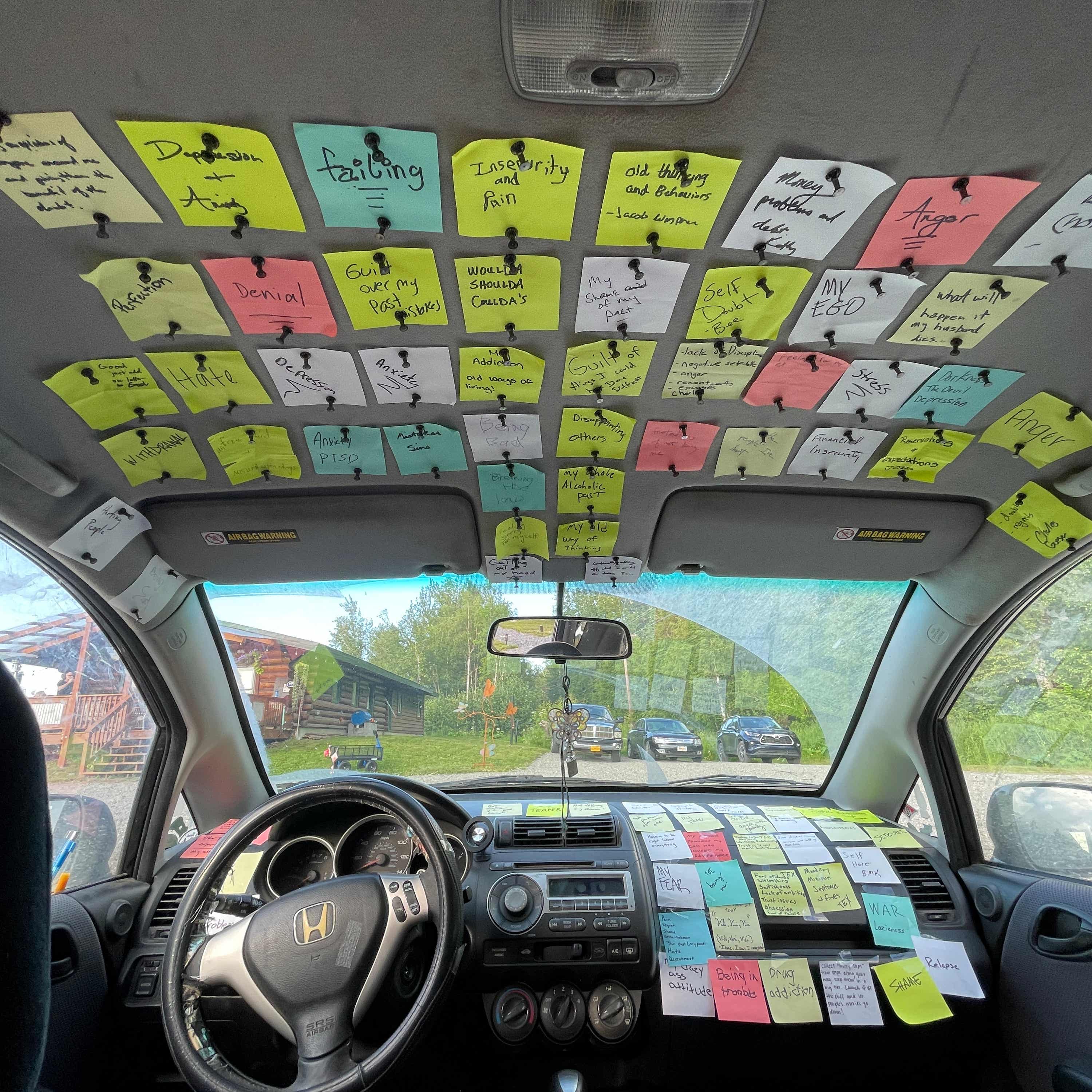
The transcription explores the challenge of boredom in early recovery, where sudden free time after quitting substance use can lead to fear and destructive habits. The speaker reflects on how this fear was overcome by actively filling time with constructive activities—such as attending meetings and engaging in physical exercise like running. Drawing from personal experience, he highlights how a simple 5K led to a long journey of increasing challenges, from half-marathons to 24-hour races, demonstrating that sustained effort and curiosity are key. He emphasizes that one does not need to be the best at anything to enjoy it, and that being "okay" at activities like dancing or trail running brings joy and connection. The core message is that recovery is not about isolation or stagnation, but about embracing life beyond the recovery program. By taking initiative and exploring new interests, individuals can transform boredom into purpose, find fulfillment, and live authentically. The journey begins not with waiting for life to offer itself, but with actively going out and engaging with the world. This proactive mindset not only combats fear but also nurtures long-term well-being and resilience.
Well, hello world. I was reading this morning in the 24 hour day book, and the topic was boredom. And the question that was asked was, have I got rid of the fear of being bored? And I know for myself, and especially those early into recovery are coming in, there's a very real logistical problem that one has to face when they first get sober. And that is, if you're coming into a recovery program, it's more than likely because you're spending a lot of time doing the thing that you're trying to recover from. Which means when you stop doing that thing, you're going to have a lot of time on your hands that you otherwise didn't have before. And there's some fear of what am I going to do with that time? Am I going to be bored? And if I'm bored, I'm going to try to fill it with something, and I need to fill it with things that are good for me, rather than the things that are destructive. And for a lot of us, that boredom, or, let's even go so far as to say, not having the means to maybe do the things you want to do that would fill that time. And drugs and alcohol are a relatively cheaper way to fill it. And now I say relatively because by the end, it is not inexpensive. But I digress, I met a couple guys when I first came in that were runners. One was a former runner, and one was a current runner, and he is still a current runner. And now mind you, this is 17 years later. So 17 years ago, I came in and I thought, oh man, what am I going to do? I was spending an inordinate amount of time alone in my garage, for hours. And I thought, okay, well, I do, I definitely need to fill it. And so what they say is what you'll hear often is come to a lot of meetings. The things that you're doing before fill it with meetings. So at night, come to meetings. If you come to a meeting every day, just keep doing it. Keep filling that time. And in some ways, I think that's really good advice because you don't know what the hell you don't know. You should learn more about what this, how this program specifically works. That's a good way to do it. And if you were like me, my brain was foggy. It was not firing on all cylinders when I came in. And so to expect to be able to grasp the concepts and the suggestions and the steps that I was going to need to take in order to get and stay sober, that just wasn't really possible. And so in that interim, as my brain started to clear, which took a while, let's be honest, it takes a while to fully regain and fire on all cylinders takes a while. Months, I would say. So in that time, maybe it's, I'm coming to a lot of meetings as I'm coming to more meetings. I'm starting to understand more about how this whole thing works, what I need to be doing, I'm taking suggestions, things are starting to make more comprehending things. All good. Those things are all good. But eventually, and I heard this from a guy named Fast Eddy, is that I don't want to take the things that I learned in the rooms and they keep me in there. That there is a life to be lived outside the halls and don't be afraid to live it. Because that's what's the point. You spend all this time working your ass off to get sober, then you're just going to stay inside and be afraid of the world. That was not how I was going to do this. So I met these guys, like I had mentioned, that were into running. And a long time earlier in my life, high school, junior high, I was a runner, and one was my sponsor, and he had been a runner. When you talked about, you know, that's something you could do. Exercise is a good idea when you get back into this program, start trying to not just heal your body mentally and spiritually, but also physically. Then I met this other guy who was doing every state of marathon in under four hours. And I thought, well, that's wild. Not something I'm going to do. But I'm like, oh, let's see what's out there for me. When I found this group called the Trail Nerds, and this man named Ben Holmes, and Ben was the race director, founder of this organization called the Trail Nerds, and they ran their races, primarily at Wyandotte County Lake Park. Beautiful Jam of a Park. That was only about 15 minutes from my house, and I saw that they had a 5K in the woods coming up, and early in my life, I had spent a lot of time in the woods, a lot of time in the woods growing up. Probably my formative years were spent running around in the woods around the neighborhood that I lived in. So I already had an affinity for that environment. Then I started spending time. I go into these 5Ks, and the 5Ks led to 10Ks, and the 10Ks led to half-marathons, and half-marathons led to marathons, and then they led to 50Ks, and then 50Milers, and then 100Ks, and then six-hour races, and 12-hour races, and 24-hour races. I say all this because in that took years, like 17 years, that I've been running now, but it started with this fear of boredom, this fear of I need, and this understanding, this practical understanding, that I needed to fill my time with something. Primarily was something that was good for me, and that was a really, really good suggestion. Because drinking and drugging is a really useful answer to the problem of boredom, but it does fill it. So you need to find or rekindle interests, and don't be afraid to quit things. If you start something, and you like it, great, if you start something, you like it, then you don't like it, quit it. Try something new. The other line that I always think about too is you do not have to be the best at something in order to enjoy it, like the case for mediocrity, like it's okay to just be okay at something. You don't have to be the best in everything, and that was a lesson I also had to learn, because you can find a lot of enjoyment in being okay at stuff. I love to dance, and I don't dance very often, but I dance a lot alone in my bedroom, in my apartment, with my music on, dancing around, like a fool. It's a lot of fun. I watch these little dance tutorials on reels on Instagram. Yeah, it's kind of, you know, a little, makes me a little embarrassed or even self-conscious when I do it, but no one's there. Who cares? It makes me feel good. It makes me smile. So this idea that we're going to be a boring, glum lot that our life has destined to be dull is the furthest thing from the truth, but it takes action. You can't expect life to come to you. You have to go to life. But if you do, I promise. You will, you will not be bored. You will not be bored. Get out there, folks. Have a great day. It's beautiful. Peace.
Podcast Summary
Key Points:
Boredom is a common challenge in early recovery due to sudden free time after stopping destructive behaviors.
Instead of filling time with substances, individuals should engage in healthy, meaningful activities like attending meetings or physical exercise.
Physical activity, such as running, helps rebuild both mental and physical wellness and reconnects people with nature and personal passions.
Starting with small challenges—like a 5K—can lead to gradual growth in fitness and confidence over time.
Enjoyment does not require excellence; being "okay" at something is sufficient and valuable.
Reconnecting with old interests, such as running or dancing, fosters a sense of purpose and joy.
The fear of boredom is often mistaken for a sign of failure, but it signals a need for exploration and action.
Life must be actively pursued—recovery is not just about abstinence but about living fully and meaningfully beyond the program.
Summary:
The transcription explores the challenge of boredom in early recovery, where sudden free time after quitting substance use can lead to fear and destructive habits. The speaker reflects on how this fear was overcome by actively filling time with constructive activities—such as attending meetings and engaging in physical exercise like running. Drawing from personal experience, he highlights how a simple 5K led to a long journey of increasing challenges, from half-marathons to 24-hour races, demonstrating that sustained effort and curiosity are key.
He emphasizes that one does not need to be the best at anything to enjoy it, and that being "okay" at activities like dancing or trail running brings joy and connection. The core message is that recovery is not about isolation or stagnation, but about embracing life beyond the recovery program. By taking initiative and exploring new interests, individuals can transform boredom into purpose, find fulfillment, and live authentically.
The journey begins not with waiting for life to offer itself, but with actively going out and engaging with the world. This proactive mindset not only combats fear but also nurtures long-term well-being and resilience.
FAQs
A common fear is boredom due to having free time after stopping substance use, which can lead to anxiety about what to do with that time.
People may turn to substances to fill idle time, but healthier alternatives are needed to avoid relapse and build a sustainable, recovery-focused lifestyle.
Regular attendance helps structure daily life, builds understanding of recovery principles, and provides community support during the initial stages of sobriety.
Engaging in physical activities like running or dancing, or pursuing new hobbies, provides meaningful, constructive ways to fill time without relying on substances.
Yes, the speaker emphasizes that being 'okay' or merely average at an activity is sufficient for enjoyment and can be a valuable part of a fulfilling life.
Running helped fill idle time, reconnected the speaker with a lifelong interest, and gradually evolved into more challenging events, promoting physical and mental well-being.
Chat with AI
Loading...
Pro features
Go deeper with this episode
Unlock creator-grade tools that turn any transcript into show notes and subtitle files.
 PodcastTranscript AI