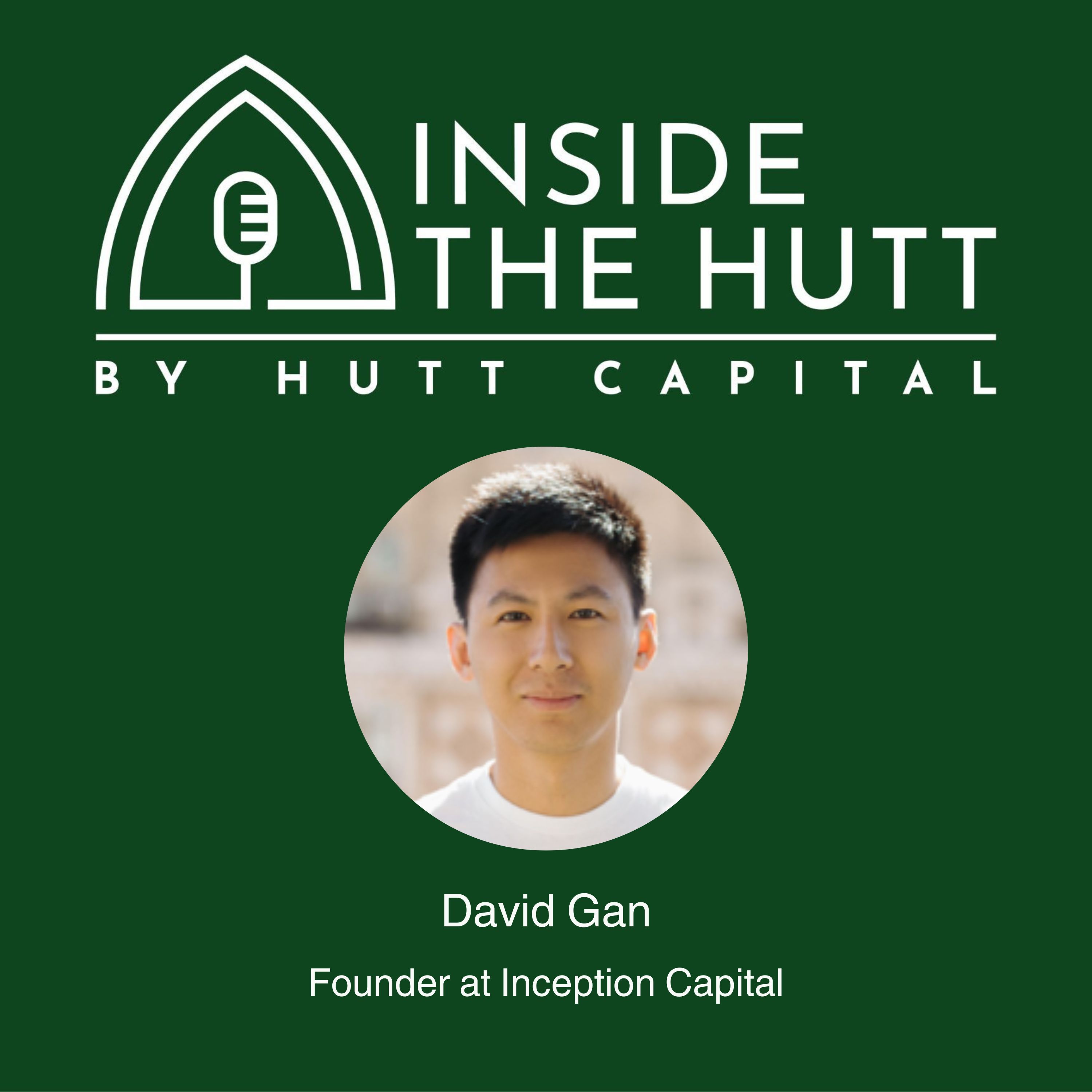
In this episode of Inside the Hut, host Brooke Pollock interviews David Gain, founder of Inception Capital. David has been in the crypto space for about 10 years, starting at Huobi where he managed venture investments and global strategy, investing early in projects like Polkadot, Circle, and Arbitrum. He left Huobi in late 2021 to start Inception Capital (formerly OP Crypto), driven by a desire to build a firm with his own vision and address the need for US entrepreneurs to access Asian markets. Inception Capital operates two separate vehicles: an early-stage venture fund focused on pre-seed deals across Asia and the US, and a fund of funds that invests in emerging managers. The firm aims to be the earliest investor possible, often backing founders from the idea stage, with a focus on infrastructure and new-form financial services such as tokenization. David emphasizes the importance of bridging US projects with Asian markets, leveraging his extensive experience from Huobi’s global expansion. He notes that while China remains restrictive for crypto startups, founders often move to Hong Kong or Singapore. Inception Capital helps portfolio companies with go-to-market strategies in Asia, exchange listings, and market making, and also supports emerging managers with fund setup and scaling. The firm sees significant opportunities in both directions, investing in US founders seeking Asian expansion and Asian founders needing US institutional capital.
[MUSIC] Welcome to Inside the Hut. I'm your host, Brooke Pollock, founder of Hut Capital. [MUSIC] Inside the Hut is a podcast that talks with leading blockchain venture capital investors to dive deep into their firm, strategy, and approach to a complex space at the forefront of innovation. You can find this and other episodes on Spotify and other podcast players. Or on our website at www.hutcapital.com. [MUSIC] The content of each episode of Inside the Hut is for informational purposes only and should not be taken as legal, business, tax, or investment advice. Or be used to evaluate any investment or security and is not directed at any investors or potential investors in any Hut Capital fund. Please note that Hut Capital and its affiliates may also maintain or be considering investments in or related to the company's funds, assets, or strategies discussed in the podcast. For more details, including a link to our investments and related closures, please see www.hutcapital.com. [MUSIC] >> Welcome everyone, this week's episode of Inside the Hut from Hut Capital with your host, Brooke Pollock. We're really excited to have with us this week, David Gain, founder of Inception Capital. Welcome to the show, David. >> Thanks for having me, Brooke. >> Yeah, it's my pleasure. So, for people who don't know you, we always kind of start with the general background. If you could introduce yourself, that would be wonderful and kind of how you got to where you are today. >> Definitely, so I've been in crypto space for about 10 years now. So, started off my career in crypto at full B where I was the manager, I took four investments in global strategy, spent a bit over four years there before starting Inception, it was previously called OP Crypto and An Inception or early stage venture fund plus a emerging managers fund of fund vehicle. So, two separate funds out of Inception as a whole. >> When did you start Inception? And I guess, I assume it will be, it was right towards the end of 2021. So, it's been right about four years now. And before all of this, I was a lesson banker and an entrepreneur. I started and sold my own startup and was also an investor at Shimming Venture Partners for a while, focusing on the consumer investing side of things before getting into crypto full time. >> Okay, and Shimming, I guess, for Pro2R familiar, a Chinese venture capital firm, correct? >> It's very large. I mean, it's over 12 billion in AOM. There were early investors and Xiaomi, Billy Billy, musically that TikTok acquired. So, many early stage consumer products that invested in it. And they invested globally, mostly within, I guess, Asia market. But I have a global team in China and the US as well. >> What kind of startup did you build? I think I was pre-cryptodays. >> Yeah, definitely pre-cryptodays. So, I built kind of like the Meetup.com for the China market. It allowed people to find their interests together with other sort of online people to me and tend to interesting events together offline. So, it's kind of like the online to offline movement in China back in 2013, 2014. >> Well, given the massive crypto conference industry that we have, that seems like a natural transition, I guess. >> Yeah, yeah, that's right. >> What was your role at? What would you do there? >> So, I managed all the sort of external investments done straight from our balance sheet and also helps sort of hobby to expand into the international market. So, I was leading global strategy for a while as well. Ultimately, Hobi had expanded to 170 countries globally and over 20 million user-based. And both of it was in China obviously, but I think played a great role in helping to spread Hobi to the global markets. >> What kind of stuff were you investing in over there? Was it stuff that was strategic to Hobi or just kind of a broad range of crypto things? >> There was actually two different arms. So there was like the more strategic strategic investments. So that was managed by the other team. I was more focused on the direct venture sort of the alpha investing. Early investors, like Polkadot, Tara, I mean from the early days, even though we're the only, probably institutional investor that actually made money from there. And also, Blatfolio that was acquired by FTX. Many of the these sort of early stage protocols and stablecoins at large. And some of the other big equity plays were like circle with the very early days. And Arbitrome, that's layer two. >> And then so eventually you left to start inception, what made you want to go out and start a venture fund? >> I think just being up over four years, I feel like I learned all I can. And I think I've contributed everything that I could giving the sort of stance of things. They're also my earliest investor in the fund. So I guess kind of mutual agreement I wanted to sort of build a firm within my own vision. And I saw there was a big need in that I had moved to New York in 2020. And there was a really big need for entrepreneurs in the US to help them go to market in the Asia, right? And I just wasn't able to do all that. I hope it there was a lot of other things going on. I had to run a lot of the global strategies type of things. So I wasn't able to focus 100% of my time on investments. And I think that's where I felt my passion. And I wanted to sort of not only start a firm, but also address all the needs for these founders looking to have access to Asia market. And I think ultimately I wanted to sort of be the pivotal point of that. And also obviously help with exchange listings, as well, which was a very, very big bottleneck for a lot of people at that time. And even today is still the case. >> Yeah, I kind of curious to dig more into that. We'll come back to that in a bit though. So what is inception capital? We started off as an early stage VC firm, mostly pre-seed, leading pre-seed deals across Asia and the US. We have about 50 or so portfolios right now. And then we started a fun and fun about two years ago. Also founding a need that there were a lot of really good emerging managers coming into play in 2023 and beyond. So really started the notion to also fill a need, kind of like the same need that I saw in 21 for the venture fund to be the cross-border angle that we're able to do is really be able to seed some of these emerging managers and help them scale their business over time. So actually also, while I was a hobby, now only did I manage early stage investing in some of the things, but we also had a fun and fun practice that we invested as first institutional checks in the likes of multi-coin, dragonfly, one-kx, all of these funds when there are sub-10 million AUM. So obviously a lot of these funds have grown significantly over sort of these years. And we want to effectively replicate similar models where one of the first institutional checks come in to these emerging funds and help them grow their business. And also be a step ahead of them, tell all of them all the potential sort of role-box hurdles that they will run through as an emerging manager given that I was an emerging manager myself and really be able to train notes not only on the deal flow set of things, but just giving them guidance on how to set up a fund and how to sort of build out institutional practice that they're able to grow in the likes of multi-coin and such. I've kind of seen the journey of a lot of these funds as they scale going forward. We're obviously a big fan of the fund of funds models. That's awesome to hear. And obviously, you know, you and I trade notes on a cage and looking at funds as well. So I've enjoyed that. Is it two different vehicles? Like you have a venture fund and a fund of funds or how is it structured for you guys? That's right. It's completely two different vehicles, separate LP based. We kind of run both independently, even though I'm the sole GP on both. I feel like it's both vehicles are very mutually synergetic and with the emerging managers themselves. We actually proactively look to take GP sticks so that we can ultimately be equity owner and also help them scale their business. So for the fund of funds out of things as well, we try to be as proactive as hands on as possible so that not only are we just investing as LP, but helping them with fund rates, helping them with fund setup, helping them with even hiring. A lot of the things that we do on the venture side as well, when helping our portfolios and making sure that they help them in the entire lifespan of a project. And also I think one of the things that unique to us as a venture fund is the ability to help go to market in Asia and also helping with exchange listings and market making side of things. And those are all some of the things that we also let in support to some of our emerging managers that we invest in as well. Can it remind me of what Foundry did a while back where the start is our early stage venture fund and they actually launched a whole fund to funds business and they were a very active LP and that became kind of a big part of their business as well. Which you don't see a lot of venture funds do that. But I think it's really interesting model and yeah, obviously you kind of have walked in their shoes which I'm sure is much appreciated. I mean I think a lot of that just stems from myself being in the position of OB where for four years I did both of these things and I just was able to see how quickly some of these projects grew and also similarly how some of these funds grew as well. So being side by side with them and a partner for multiple years I think just allowed me to see the synergies in between and being able to build that experience from the ground way up the am able to then replicate and start the firm that's really just taking in some the early success and also big.
some tweaks so that we're able to actually get the most upside forward doing as well. So for the early stage fund, he's getting a little color in terms of kind of, you know, what stage are you investing at? I mean, do you guys have a certain thesis or certain focus areas you guys are interested in right now? Maybe some color there to be great? We focus on the earliest stage possible hence the name inception. So we'd like to say that we've founders right when the idea is born and we help to see their dream like the moving inception for our color reference. Green movie. For us, like we just want to be the earliest tech possible. So we actually dictate a lot of what the value shouldn't look like. Typically they're sub 30 but for some protocols are sub 40 so those are tend to be sort of where the value angels lay. And yeah, I think a lot of what in 21 leading up to now is the very infrastructure heavy. So for the first investor in mega-eath and really supportive of that ecosystem. So I guess going forward now, now that we have some exposure to really create ecosystems, we're able to then double down on some of those ecosystems that invest in the applications on top. So I think that's one side of it. And two is like we really are thinking now looking for high new form financial services or FinTech 2.0 where, you know, I was early investors that will be in the like so circle, you know, secure ties and also was personal investor of Ondo. So ultimately now I think under the current administration, we're able to now get a lot of these new form financial services exposure that right in the heart of New York where it can able to be finding founders in our backyard that we're able to, you know, also give very hands on support and showcase sort of some of the trajectories, some of the companies that I've mentioned earlier and giving them a lot of the support and they'll be also able to capitalize on markets that's outside of the US. I think a lot of the finished, especially the tokenization side of things, people in the US, I think we're very fortunate to get access to the best financial products available to the masses. But that's not true for the rest of the world, right? Like most people just locked out of like US equities in general and I think a lot of the other financial instruments, they don't really have great access as well. So I think a big part of tokenization is actually sure like we're going to start it in the US, but I think there's a much bigger global demand outside of the US and we're looking to help sort these products land sort of the user base that I think is able to get them a lot of traction going forward. So I'd be like working with the US project trying to expand into different parts of Asia or what that looked like. Yeah, exactly. So I think a lot of it is obviously being compliant, being institutional and having all sort of the right licenses here in the US so that they're able to operate under a good umbrella here, but also understanding the importance of the Asia market and where the addressable market, where the demand for some of these US institutional products is and we're sort of the segue to help them get there. You hear people say, "Oh, Asia's a big market for crypto." I mean, Asia itself though is obviously a massive continent. When you think about Asia and crypto markets, where is the action really happening out there? Where are you seeing the most focus? Where are the founders? Where are the potential customers for these startups? When a help skill will be to international mass, right? Obviously China is massive. There's probably the most amount of volume coming from China, but on the token side, actually Korea, Japan have a lot of activity and the regulatory standards is also loosening up there as well. So those are definitely very, very big markets. In terms of just like pure user based on the applications side, there's a lot coming from Vietnam, from Indonesia, from Philippines as well. So even though they're not big sort of source vendors are on volume, but they're definitely a great deal of addressable user based there. So those are some of the main markets when it's to Asia, but what are you thinking about like setting up the institutional backend? That will be started in Singapore and entity that those are where the entities of the formation of the companies give form and that's typically where the founders are based to just have greater access to rest of Asia. So that's I guess where some of the founders will be found. Yeah, obviously you worked at World War II, actually the Chinese exchange. I think you said you moved to New York in 2020. Where did you move from? Where were you living before that? So I was in between Hong Kong and Beijing. So I spent a lot of time there working with other executives, but I would say like my role has always been on an investor hat and running a lot of global strategy. So I actually went to almost 70 countries during my time at home to not only place some of the local CEOs like we were having satellite. We had a program called Hobi Cloud where people use Hobi's back and infrastructure to set up a exchange where they control the front end and they control user based. So that was actually spread all over us. I spent some time in Africa, I spent some time in Latin America, spent a lot of time in Southeast Asia, spent some time in Europe as well. We had a Gibraltar license, I believe. So all of this time during my time at Hobi, even though I was based in Beijing, I was constantly traveling, expanding into emerging markets, looking for new and interesting deal flow within those markets that could be synergetic and also helping and meeting with the local CEOs of all those different regions so that we can help them with really capturing market share in the local markets. And I think that was able to help me build the distribution channel that we have whenever we work with projects that we invest in just because I've been to most of these emerging jurisdictions and helping sort of at that time was actually really hard to expand. Crypto is giving how nice and it was. And I think now if we're able to have a really good financial product that is mature, then it's actually I will say have much easier time in utilizing these distribution channels and helping them scale over time. Do you see these countries being more or less friendly to crypto over time? Like has that really evolved much? I guess everyone looks to US as the centerpiece on how crypto friendly they could be, right? As sort of US, I really open the stores and I spend a lot more regularly, friendly. I think a lot of other countries are now following suit, right? Some move slower than others, but definitely it's been a complete opposite 360 sort of change over the past couple years on the US front. And that's also caused a lot of sort of these emerging countries to fall, right? Because a lot of them they actually do business with the US and they actually have heavy dependent on US support. So if I live in mainland China and I want to launch a crypto startup, is that something you can do currently or do you pretty much have to go to Hong Kong if you want to operate in the space from that perspective? I think like a lot of Chinese founders at the very start of launching their project, they can be in China. But I think once you're ready to launch a token or once you're ready to, I guess, more publicly market and really just be out there showcasing not only the application itself, but I guess getting distribution for token and also potentially on the fundraising side. Then I think that's where it gets to a more gray area where it's not really, it's very frowned upon, right? Within China. So I think China is still very restrictive because obviously China is not one of the few countries that doesn't really follow what US does and they have their own policy at hand. But the user base is actually everyone kind of uses a VPN and the users themselves. I think don't have as much restriction as long as they're willing to go through certain loopholes, just like Google is not even available. YouTube is not available. All of these US internet products are not available in China. It's the same thing as crypto as it is, but there's definitely ways for people to get around it, use applications, hold crypto even, trade crypto, as well. Still one of the biggest official markets, but in terms of starting something yourself as a Chinese founder, like you have almost no legal support, right? So they then they have to go to like Singapore or Hong Kong to like set up the entities because China wouldn't recognize an entity that started and that does crypto. Okay, interesting. I guess if you're starting something, you have to kind of be prepared for the eventuality that you'll likely need to move elsewhere when you get to a certain stage. Hong Kong is actually pretty convenient, right? It's like Hong Kong, it's actually still part of China, but it's kind of within its own sort of specialized administration. So most people just move to Hong Kong. It's not like they're leaving China all together. I mean, they still have the same balance of life, but yeah, definitely for actually their own protection because you don't want the Chinese government to comment potentially seize your assets. You see, you live in the US, but you know, obviously I have the background in Asia. Do you see the opportunity mostly as backing, let's say American founders any kind of helping them be that bridge to Asia? Or are you also seeing a lot of great start-ups coming out of Asia that you're looking to back and then maybe doing reverse? Or is it mostly kind of American startups that you guys are seeing as the most promising these days? The trend flushes from time to time. I think there's a lot more, I guess, right now in the US going to Asia, but that was not always the case. There's always opportunities in Asia for us to invest in founders there and helping them actually get institutional capital in the US. So I think for that, we're able to actually make a lot of really good investments on both ends of this. So I'm curious between the US and Asia, do you see people building different types of things like maybe
Maybe the founders and, I don't know, let's say Hong Kong are particularly good at building in D5 or whatever might be, whereas in the US they're particularly good at building, I don't know, layer one blockchains, just making this separate. Do you see any kind of like trends in terms of what each geography is, particularly good at building or kind of what type of companies get built there? Yeah, I mean, we don't want to go into so much of specifics as each region with the Asia, but I think the general sort of stereotype is that like, it's just API founders are much better at building consumer apps, right? And that's actually the core thesis of what I focus at Cheeming, investing in some of the future consumer apps of the world, like Pinggledo or like TikTok or all these sort of art actually built by Chinese founders that have really large user basis globally. And I think US is much better on the financial service infrastructure layers, I don't think. So these are sort of like as the two sort of convergence of where the investment opportunities would live. And you mentioned you had invested in securities back in the day, you know, when you're in your prior firm. And I think you guys wrote a piece on tokenization, not too long ago as well on the inception side. It feels like a category that's getting a lot more attention recently. It's see, well, I mean, historically, anytime we've seen the price of crypto go down, it feels like people get more excited about tokenization again, you know, just because it's kind of a lot more maybe tangible in some ways. But it also seems like, me, if you look at the growth of tokenized assets, it actually has seen a lot of growth over the past year. So it kind of feels like it is finally taking off after many years. I guess, do you think that, you know, we've kind of finally hit that growth curve here, you know, is everything really going to be tokenized in five to 10 years? Or what do you think that trajectory looks like? I think it's never been a technical issue. It's always been a sort of regulatory issue. I think now that things have opened up in the US and it's all more friendly to crypto and tokenization as a whole, I think that's what opens up those words. I completely have secured ties or companies like figure what we looked at as well. Like, technology was always there, right? But it just they had to go through so many groups on the compliance side of things. So now that administration is very supportive, I do think that over the next couple years, you're going to see a lot more advancement on the tokenized agency than we've seen in the past 10 years combined. I think ultimately, there's also the US equity markets doing very, very well. I think that's also something that the rest of the world looks upon because most of the local stock changes of the local jurisdiction just aren't doing well, right? It's not really getting any returns at all. And I think that side of it, there's a lot of sort of demand for just having equitable access to financial products globally. The only way to do that is really the tokenization. And similarly, like US investors, they also want to be able to potentially diversify and look at other market. I mean, particularly Hong Kong stock market has been something that a lot of US investors have been looking at and that is now starting to come back from the depths of the bear and be able to make a run again. So I think there's also that component of where a lot of the US investors, they want to be able to get exposure into certain products that they don't really have great access to here in the US as well. So I think financial products should be a global game, right? I think that's where sort of the tokenization side of things really come in and allow for people to have global equity. Yeah, I guess given the growth in that market, have you seen an increase in high quality founders coming and building that space or any kind of notable changes there? Yeah, I mean, I think the talent rise has been quite significant because before it just, you just didn't want to sort of build something that is so much in a gray area that you don't know if you have the support of the government where you're able to even do anything there at all, right? So I think especially a lot of, we're seeing it, obviously for us like we're at a very front of investing where we're investing in these founders, right, when they have their idea. So we're definitely seeing a great uptake and sort of the talent level that's coming across the poor, especially in the New York area where there are a lot of them. Are leaving. They very, very established institutions and now starting something new. Yeah, it does seem like New York has very clearly taken over as the center of crypto. Yeah, a lot of folks moving there and make sense with what, you know, Wall Street and the finance talent nearby. So I guess from your perspective, you live in New York, do you feel like you need to be there? Like that's kind of where you need to be if you're doing this? Yeah, I mean, you definitely need to have a base here. Like I want to say, like you have to be here 365 days of the year, but definitely I think spending majority of your time here and using that as your base helps a lot. We also actually during my days in New York, we actually started a community called Alpha Dell where we're regularly kind of host events with some of the New York based institutions, like DCG, Galaxy, like Republic. So that we're also not only, our here, but we're making our presence known. We host events regularly. We try to bring in some of our partners in Asia, like Binance, like Hobi, like by the to also comment and do not only sort of demo days, but also just these sort of exchange launch pretty G events. So I think that's also helpful. We want to just bring in the best connections on both sides of the world and New York is sort of the central hub to be able to do that because so many people not only are based in New York, but a lot of people transit through it. We want to capture sort of community on both ends and be able to sort of have a community that not only were able to find early stage founders from, but also like a community where there's a lot of really good service writers that are able to help these founders grow, but also it's a community that was able to help them get a lot of traction and distribution sort of things as well. Obviously, some of these Asian exchanges are pretty massive Binance being the largest historically people have kind of done whatever they need to do to get listed on those exchanges. I'm sure that having the relationships was extremely welcome. Have you seen that change over time in terms of like let's say you're a US founder, you're doing a TGE, is it still like super important to get listed on these Asian exchanges? That's still a top priority or like has that changed over time? I'm just kind of like is there any kind of trend there? They're definitely a trend towards other options, but currently that's still the best option. I think even Binance realizes themselves, right? They're making their own decks. They're actually trying to decentralize the effort a lot more, but still especially now like the liquidity is thinning across most of the decentralized platforms is still very much within sort of the centralized platforms that have most of the power. So unless sort of liquidity starts shifting to the Dexas, that's still going to be a case. But that's definitely a trend that's moving towards, but at least for the next couple of years, I think centralized exchange listings are still very key. And yeah, I mean, I think that's just something that people have to deal with. And the format of the exchange listings are constantly changing. You always have to kind of stay up to date with the latest. And that's why it's important to actually build these relationships eight, nine years ago back when just these exchange were started. That's when I started my career as well, so a lot of my contacts are with the founders themselves so that we're able to then don't matter how things shift with the exchange. The founders are there, right? So they're able to help you steer into the right direction and put you in the right places to converse with the right people. It's not necessarily like, we'll just automatically guarantee you have to exchange listing, but it's more so like we kind of walk through your stuff. We even help you advise. Some deals are not good. You can have a financial stream, but some financial things are better than others. And there's a lot of sort of negotiation down both ends to be able to get the best offer for where the current situation of the project is. But also be able to speak to the right people or a lot of that. Just there's so many people that just get lost in a shuffle. They speak to all these intermediaries that ultimately don't really get them there. And a lot of them are actually the purposes that should scam the project not to actually help with the listing itself. So that's why there's a lot of ultimately not great experiences when dealing with decentralized counterparts. It's such a black box process, right? And it's pivotal that you find the right partner to help you guys through that process. Hopefully we're trying to get all these processes become kind of more transparent in public, but you know, we're obviously not quite there yet. Talking about kind of TGs and listings. There's a lot of talk around the state of tokens in general right now and kind of how capitals flowing, tokens needing more fundamentals. And I think like, you know, Monat had their TG today. And I think there's a time where if they had launched, given everything around them, they'd probably would have easily had a $10 billion FDV at launch. I think at least the last time I checked today was at like three and a half billion. So obviously it's still like a great outcome. But it's just harder to get those big outcomes, maybe than a once-while. I think like Sui is still trading like 14 billion, for example, as kind of one for a prior generation. I'm curious, as a venture investor, are you seeing anything there that impacts how you think about investing? I would assume one result of the fact that let's say like the floor valuation for a very high-quality L one is lower than it used to be. I also mean that valuations are going to be lower going forwards for L ones. Maybe I'm wrong. But like, I don't know. I'm just kind of curious like any dynamic you're seeing there around tokens that impact how you think about investing. I mean, because of just a stage we're investing, we're always equity first.
like most of the times, the time that we invest, they haven't even had a chance to think about a token or how sort of that conversion works. So I think at the end of the day, we're the ones that dictate the valuation. So if we're investing in a project and the valuation ultimately didn't make sense in comparison to the outcome, that's not really on the founder himself. So I think for us, we're in a select sort of privileged position to not only have the responsibility of setting the right price, but also having the larger responsibility of being the preceding investor and the lead of the preceding to also help them scale to a really good outcome. I think for us, what sort of valuations as a whole, as mentioned obviously, it helps with negotiations and that whenever we set valuations, it's been easier in the bear market, whereas first of all, like everyone just commanding ridiculous valuations. So, but also that just means that like we're just going to set out a lot of opportunities and then the whole market just because they don't make as much signs than a bulk of our investing is actually done during the bear market. So that's where we're coming from. You saw the unistop proposal recently, right? Where they're, at least the proposal has changed their structure and do kind of a bind burn mechanism kind of a kind of a hyperliquid does, I guess. Part of that clearly is like, okay, well, we have this token. How do we actually drive value to token holders? Like, are you seeing more broadly projects where you guys are talking to or invested in, whether they have tokens or thinking about a token? Is that like an increasingly a focus where like, okay, we need to do something where there's clear direct financial benefit to token holders? Is that top of mind these days or kind of curious what you're seeing there talking to those folks? I mean, for the ones that haven't launched, they're mostly actually just the equity first company that you want to drive as much revenue as possible, especially on the financial service site. But I think on the portal call side that ones that have already launched definitely there's a much bigger need to figure out how to token can accrued value, how sort of users within their ecosystem can utilize the token. I just have a lot more utility for token. So I think a lot of times for the financial, whether it's exchanges like Unisoba hyperliquid, these sort of tokenization and sort of figuring out token value accrues a lot easier, these should be a pretty standard sort of token model where everyone is kind of just benchmarking on similar things where instead of like everyone, I think five years ago, which is trying to be very creative with the token so that they can get the most out of outside and sometimes they flop, sometimes that does really great. So I think over time, there's going to be a standardization of like how tokens are going to accrued value and that's going to be the industry standard for how things go for and that's where fundamentally these tokens will not only accrued value but get user buy-in as the ones that will to me see these fundamentals and are able to be longer term holders. One of their interesting trends in token land seems to be the return of public sales. So you guys are in Russia's McGee's, they did, I think there is 50 million massively over subscribed public sale, not too long ago. It just seems like that's coming back into Vogue. I guess one, do you think we're going to see more of that and two, what's the rationale for going that route versus just selling 50 million more to venture funds or you know kind of more traditional routes of that nature? I definitely think that McGee's has started a good trend of really being community first, being community own portal call right. I think that's something that they have coming for them that they were the ones that exceeded quite well on that behalf. So I guess to answer your question on why not to sell to more venture funds because like venture funds can only do so much at a later stage. The thing that you want is actually a global distribution, right? You want as many people behind your token that can be active owners and also active power users of the protocol itself. So it's actually instead of just launching a token and praying that people buy it. It's a better form of a token launch prior to the actual token launch itself is that you have a bunch of your tokens that you're selling to a very controlled community that you know that they're going to be a high conviction long-term holder. This is actually a big part of the sale where it's called the conviction round. It's like those people that are actually going to be long-term contributors. People that have demonstrated that they can contribute long-term value and add quite a lot to the project themselves. And a lot of the allocation is based on your contribution level and your conviction level as a whole. So you want to be able to get the token to the right hands and I think they've ultimately threw just sale was very successful in doing so. Yeah, I definitely hope we see more of that. I think they did like a 1 billion FDV for the public token sale which time will tell whether that ends up being a good valuation or not. But yeah, it definitely didn't seem like they were trying to maximize valuation. It seemed like they were trying to do it at a fair evaluation with the ID being like, "Hey, we want to make money for these people. That's not really building that community if you lose money for them, right?" So it's good to see people kind of taking that mindset versus saying, "Hey, let's go exploit retail by doing this right." So that's nice to see. Yeah, and also like they didn't set the 1 billion dollar value. It's anywhere from $1 to actually $9.99 million. Ultimately, it's like people bid on the valuation that they want to invest that. So it's also something that ultimately retail decided for themselves. It's not just like, "Hey, it works with $1 billion and you guys invest and/or not." People bid on it and obviously the people that bid the 1 billion were the ones that ultimately got the voucher. So if you bid under it, then you probably didn't get the allocation. So again, they were trying to just figure out a judicial process where they're not effective side in turn. But they could have also just like if they were being max extracting, just didn't set a cap to it. Then it probably would have been much higher. Again, as you mentioned, they want to be very friendly to retail and they want to make sure that there's actually not necessarily money to be made, just broadly speaking, but just like there's upside for the retail to actually be able to contribute and see the long-term growth of the project, which is not just like, "Okay, we got in that 1 billion, okay, launch us that 4 or 5 billion, then you're able to have a quick 5x and liquidate out." Like these are actual people that have ensure that they have locks on sort of the investment itself so that they can be longer-term supporters. I mean, not to dig into that pressure on the public sale a little more, but I haven't really spent much time on the mega-eak ecosystem. Is there like, is there a lot of developer activity happening there for you to launch? Yeah, so I mean, a lot of it's not very transparent to everyone, just because main line is not up yet and you don't have a talk of a mega-eak. So a lot of these are instellos, but they do have a really good ecosystem called Megamafyo where they bring in just early stage founder building all sort of cool things. So I think it's kind of curated by the mega-eak team thus far. So that's why it's very important that you spend time with the team and learn about sort of the founder basis a whole because they get sent out, like by the time the bash comes out, more or less, the investors have already gotten involved. But yeah, I do think that mega-eath also has a really good job of pure ecosystem talent acquisition, right? Like, I think a lot of the other foundations, they're like giving out a lot of grants, they're like physically paying people to build on their ecosystem where mega-eath is really just a very community-based ecosystem where they're not spending any net extra money to actually get founders' builders, really just kind of word-of-mouth community. And they have some really, really talented builders coming out and building on mega-eath. So one of the ones that we invested called WCM, which is World Capital Markets. So Lucas has been a crypto for exchange veteran for a number of years now. He sold the exchange back in Dingo's 2018 or 2019. So they're building kind of what F-TX envision to build without sort of some of like using customer funds. I have building a much more transparent version of F-TX, across margins and portfolio margining. So like, I think that's a product where a lot of institutional traders actually enjoy because all of your assets are kind of sitting on one platform and you're able to just get a lot more margin for your assets. So I think that's something that they're building out on the mega-eath ecosystem. And I think one of the quotes I really enjoyed is like, before mega-eath really came to a place, there wasn't really any change that they could face with builders on because everything else was way too slow. And the user experience wasn't up to par for this to be actually able to be built and get any significant reduction. So I think they're actually significant sort of business opportunities that mega-eath as a underlying blockchain is also unlocking on the financial service side with things. So as we're recording this Bitcoin is at 89. ETH is just shy of 3K. There's a lot of talk out there like, oh, are we heading into a bear market? I'm curious if you have any particular view on that, you know, if we're for your cycles intact, we're heading to a bear market or like who knows? I mean, you don't have to, you know, have an opinion on that per se. I'm curious if you do. And maybe more importantly, like, how does that impact how you invest? Do you need to take a view on that to be a venture investor in crypto? And like, oh, well, we figure out any bear markets. We're going to be more patient right now and save capital. Should you just be deploying consistently into great teams and not focus so much on that because at the end of the day, you can't predict that per se. I'm kind of curious how you think about it and how you approach it as an venture investor. I think on a deployment side, we definitely deploy much more in the bear. So I guess from just the act of investing as a whole is actually the more bear the market is, the hatching the better it is for us. I think it ultimately matters on portfolio management and potential exits, like you do.
don't really want to be taking any chips out of the table in a bear market. So I think just more from exiting for photos and giving DPI batch investors, I think that's where you need to have some sense of where the market is heading. So I think that will sort of be my two sense of things. But in terms of investing because we're just investing at the earliest stage and we also help to dictate the value of yourself, it doesn't really matter for us to take a view on whether it's bear or bull market for that of investing. Do you have a particular V1 if we're heading to a bear market or are going to pass on that one? Well, I think we've been in a bear market on the Alcoins time for quite a while now. Like there hasn't really been much activity. There's like short-stints of bull market activity. You probably heard this answer many times, but it's not just going to be a bull market or everything just rips, right? I think there's just going to be certain verticals within crypto that ultimately is able to get more traction. And I think a lot more demand within sort of retail public. So there will be like different incidents up to from bull market for different material tokens, right? Like for Zika, I should have the mini bull market for a couple of weeks there. So I think there just be like these spurts of things that happen over time, but I think generally as a whole, we're kind of in a transition period between bull and bear. It's nice to have privacy come back and be fooled again as a kind of important fundamental part of the space and something that's clearly increasingly needed. So Zika, whether where the price goes up or down or at least bringing that more into focus, that's cool to see. You talked about I guess world capital markets and mega ETH obviously WCM is building a mega ETH. Anything else from like a portfolio company, a perspective that you know, you're particularly stoked about right now? Just on the Zika side of things, opacity were one of the pre-seed investors there as well, which were working on Zika TLS technology. Where I think all data encryption is massive area of need going forward. So very excited about them. And also just agenic payments as a whole, like well, so early investor pre-seed with SkyFire, which is a leading agenic payment infrastructure platform. So definitely I think as sort of the future of finance, it's not going to be sort of manual, right? That's going to be operated by humans going forward. I think a lot of how we're going to be doing, prefer a rebalancing or how we're going to be doing as management, how we're going to be doing some of our trades going forward. It's going to be all electronic, all managed by agents. So like we definitely need some infrastructure for these agents to take over some of our financial activities. And I think that's going to be pivotal going forward as well. Yeah, it seems like a really interesting area. And I feel like for me, it's hard to gauge what is the timeline that that happens. But whenever it does, seems like something you want to exposure to. So we talked a little bit about the start. We haven't gotten too much into the fund of funds business. What kind of funds you guys looking to back? Is there like a certain profile or what are you guys looking for there? I think I touched a bit on this earlier. It's like we want to, again, for even these fund managers be the earliest investor possible. So supporting them at the earliest stage will help to see slash anchor their fund and help them raise the rest of the capital. Because we're taking an active GP stake approach, we definitely want people that are very up and coming and really sort of sharp and not only sort of their investment thesis and what their sort of expert area is. But also having the ability to build an institutional practice that they have to scale through multiple funds going forward, where, again, long-term holders and investors of the GP stake, so being able to see how they can scale going forward and really having a thesis that's not just sticking for the next two or three years, but something that they can sort of work off of and continue to build on for the next 10, 15 or even beyond. So I think that's sort of the type of investors that we ultimately want to look for that people that are just going to be around taking long-term bets and are not so concerned about these short-term volatility or taking short-term profits. Awesome. And then it sounds like you guys are primarily focusing more emerging managers and kind of smaller funds. We definitely have a viewpoint that smaller funds are performed, you know, a capital, is that kind of thought process with you guys in terms of why you're backing smaller funds as well or what's the rationale there? It's not only just from a performance perspective, but it's also, we feel like we can add a lot more value, right? Similarly with our venture fund, it's like, we want to be in a position to not only invest, but add a lot of value and also help them grow over time. And particularly also these smaller funds, also a lot more nimble, right? They're able to really be at a forefront of capturing the best opportunities as they come up versus the later funds that are kind of just waiting to see how things turn out versus I think via sort of exposure into some of these emerging managers is where you're able to get early stage venture exposure into just ownership in truly revolutionary companies right when they get started. So I think that's sort of our perspective on things. And there's a lot of also mutual synergies given that we focus on early stage investing as a whole. And there's a lot of sort of deal flows sharing that we're able to do within those venture funds as well. And there's a lot more synergy because of it as well. And to round out the conversation today, the most important question of course, if you couldn't work in crypto or tech or VC finance, what would you do for a living? I've thought about this quite a lot. So I've obviously been in crypto for most of my career. I did not like the investment banking very much. I think the natural route is to be a founder. I've been a founder already before, so I kind of had that experience. I actually wanted to be a professional poker player and an astronaut really up. So I think it's really just like finding a hobby that doesn't feel like a word that you really enjoy doing. So I think at least on venture, I really enjoyed the intellectual sort of stimulation from talking to the early stage founders, but also helping not only sort of just my peers within the crypto industry, but also some of my friends make money as well. I feel like that's a really good responsibility that I'm having, but also the same amount of joy where we're all making money together, right? So I think that's also a big part of starting a venture fund and really having the enjoyment of it, but also having a vision that you're able to be not only empowering founders, but also making money for Dell piece as well. How's your poker game? So I mean, obviously not as good as it can be, otherwise I'll probably be a pro poker player by now, but yeah, definitely something that I aspire to as a kid, I actually paid college via poker. So that helped, but I think I was just lucky in winning a tournament. Ultimately, those skills didn't last for the test of time, but I played pretty casual, you know? So when I was in college, we would do online poker. And I remember, you know, my wife and I financed a vacation over the holiday break using our poker winnings that we'd just pay from playing online poker. Did you grow up in Beijing then or where'd you grow up? Actually from Wuhan, where COVID happened, but I moved to US 109, so I grew up in Jersey. And I played a bunch of online poker. And that's how I actually found about crypto to begin with, because they stood down full till poker back in the days when I was in college and we were forced to actually transadvy a bit coin in like early 2011. I think that's how I found out about it, but over time, you know, started to get more into it. OK, yeah, I was wondering if online poker was a big thing in China or not. I just don't have contacts on that. But yeah, online gambling as a whole is just very, very restricted in China. So they would just have to go on the US websites and UCP. OK, got you. Interesting. Yeah. And then back I canceled. So anyways, it folks want to find you or inception online working. They find you guys. Yeah. So my Twitter is David, GAN, 1-8-1-8 ends the same telegram as well. So definitely we'd love for anyone to give us a follow. And we also have a newsletter that we have people subscribe to as well. Where can they find the newsletter? It's also within the Twitter. You'll be able to find it. Cool. Well, this is a wonderful conversation. Thanks so much for joining. I appreciate it. Thanks for having me. Thank you for listening to this episode of Inside the Hut with your host, Brooke Pollock. You can find this and other episodes on any podcast player or at our website, www.hutcapital.com.
Podcast Summary
Key Points:
David Gain, founder of Inception Capital (formerly OP Crypto), has been in crypto for 10 years, previously leading global strategy and venture investments at Huobi.
Inception Capital operates two separate vehicles
The firm focuses on the earliest stage possible, backing founders from the idea stage, and has a strong emphasis on infrastructure and new-form financial services (FinTech 2.0, tokenization).
A key differentiator is helping US-based projects expand into Asian markets (Korea, Japan, Vietnam, Indonesia, etc.) and providing support with exchange listings and market making.
David’s experience at Huobi included global expansion into 70 countries, building distribution channels that Inception now leverages for its portfolio companies.
Summary:
In this episode of Inside the Hut, host Brooke Pollock interviews David Gain, founder of Inception Capital. David has been in the crypto space for about 10 years, starting at Huobi where he managed venture investments and global strategy, investing early in projects like Polkadot, Circle, and Arbitrum. He left Huobi in late 2021 to start Inception Capital (formerly OP Crypto), driven by a desire to build a firm with his own vision and address the need for US entrepreneurs to access Asian markets.
Inception Capital operates two separate vehicles: an early-stage venture fund focused on pre-seed deals across Asia and the US, and a fund of funds that invests in emerging managers. The firm aims to be the earliest investor possible, often backing founders from the idea stage, with a focus on infrastructure and new-form financial services such as tokenization. David emphasizes the importance of bridging US projects with Asian markets, leveraging his extensive experience from Huobi’s global expansion.
He notes that while China remains restrictive for crypto startups, founders often move to Hong Kong or Singapore. Inception Capital helps portfolio companies with go-to-market strategies in Asia, exchange listings, and market making, and also supports emerging managers with fund setup and scaling. The firm sees significant opportunities in both directions, investing in US founders seeking Asian expansion and Asian founders needing US institutional capital.
FAQs
Inside the Hut is a podcast hosted by Brooke Pollock, founder of Hut Capital, that interviews leading blockchain venture capital investors about their firm, strategy, and approach to the crypto space.
David Gain is the founder of Inception Capital, formerly called OP Crypto. It is an early-stage venture fund and an emerging managers fund-of-funds, investing in pre-seed deals and helping scale new fund managers.
David spent about 10 years in crypto, starting at Huobi as a manager of global strategy and investments, and previously worked as an investment banker, entrepreneur, and investor at Shunwei Venture Partners.
Inception Capital focuses on the earliest stage possible, often pre-seed, investing in infrastructure and now applications on top of ecosystems like MegaETH, as well as new-form financial services and tokenization.
They leverage David's experience and distribution channels built from his time at Huobi to help US-based projects expand into Asia, including exchange listings, market making, and navigating local markets like Korea, Japan, and Southeast Asia.
It invests in emerging managers, providing first institutional checks and hands-on support with fund setup, hiring, and scaling, similar to how David helped funds like Multicoin and Dragonfly grow.
Chat with AI
Loading...
Pro features
Go deeper with this episode
Unlock creator-grade tools that turn any transcript into show notes and subtitle files.
 PodcastTranscript AI