The discussion focuses on composable technology as a solution to overly complex and bloated marketing technology stacks. Unlike monolithic vendor systems that promise to do everything but often underdeliver, composable approaches allow marketers to integrate specialized, API-driven services (like headless commerce platforms) into a flexible, tailored ecosystem. This requires a central data hub to act as the source of truth for customer information, enabling personalized, coordinated campaigns across channels while managing privacy concerns. Key priorities for marketing leaders include organizing first-party data as a foundational asset, aligning technology choices with specific business goals (e.g., reducing churn or improving acquisition), and partnering with experts who can navigate the integration of multiple vendors. Ultimately, a well-architected composable stack helps accurately measure marketing impact, avoid vendor ROI inflation, and deliver relevant consumer experiences without being "creepy" or inefficient.
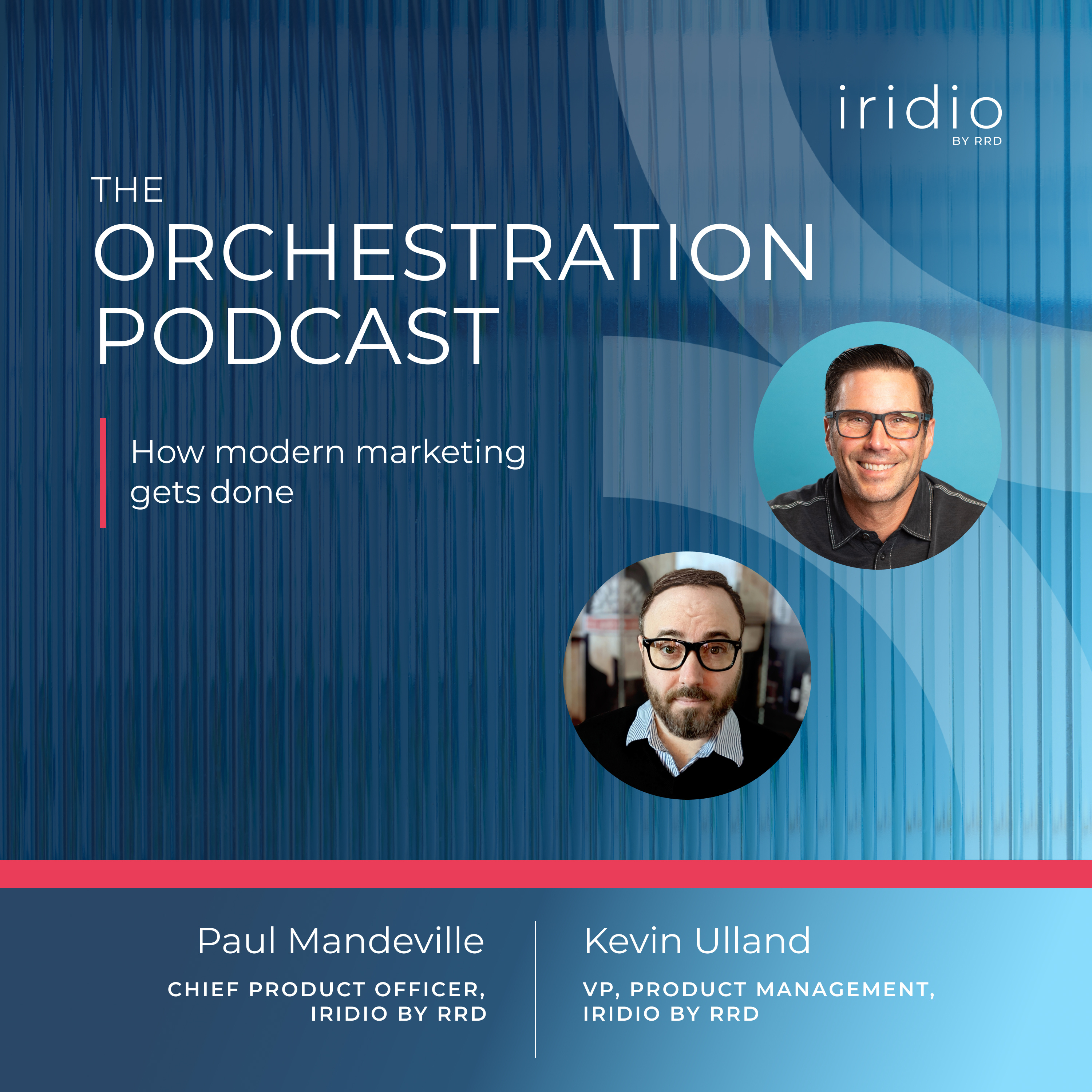
[MUSIC] In a world where marketing technology stacks are necessarily complex and are far too often bloated as a result. We're bringing in this concept of composable technology. Now you're probably tired of vendors promising you the moon but delivering a black hole of complexity. So I think if that's where you are, you're going to want to listen as we dive into composable technology. What is it? Why does it matter? And how can you make it work for your marketing stack? Make your marketing stack actually work better for you. I'm Matthew Tilly and I'm your host for the orchestration podcast. This is a podcast from a radio by RID on how modern marketing gets done. Got today two of my colleagues here at a radio by RID. That's Paul Mandelville and Kevin Eulin. Now Paul is the chief product officer for a radio by RID. He is worn just about every hat and the start up and marketing technology world. He's been a founder, product leader, operator, you name it. He has been part of that. And he has over 20 years of experience driving innovation and scaling companies. So I believe his insight will be very valuable in this conversation. Kevin is the vice president of product management for radio by RID. He spent nearly 20 years leading products and engineering efforts such as building SaaS platforms and things like that that are really building impact for businesses. He's also a co-host of a podcast called the Acceptance Criteria podcast. And in that podcast he explores the messy sort of human side of how software actually gets built. I think you may want to check out those fund conversations as well. These guys join me to discuss how we can cut through a lot of the noise that is in the marketplace so we can actually build a tech stack that truly works for your business. So let's get into it. The first thing I want to do is define some terms because we're supposed to be talking about composable systems. And I want to ask the question because sometimes the people that are that we're talking to may or may not really understand that concept. So can you talk about what composable actually means composable systems, composable technology. And what does that have to do with what we're talking about and bringing to market with the radio? Sure, I can go first and Kevin jump in. But the term is popular as of late. And I think that there are two evolving definitions. There's a purely technical definition that came out of the ranks of solutions that were built. Another confusing term, headless. Meaning that these are enterprise software platforms that don't have a front end technology. They have these really powerful back end capabilities and their API driven services first. And the promise of those platforms is that you can put whatever front end workflow, whatever front end experience, whatever pieces of that workflow work best for your consumer, for your buyer. And they were made really popular in the commerce space where more and more headless commerce solutions were being pulled together. And then the front end of those solutions was optimized for whatever buyer journey existed and whatever unique corner of the commerce universe existed. And I think that term has caught fire and been expanded to mean any parts of a solution that can be pulled together in a seamless way beyond just the front end of a technology becomes a composable solution. We've heard the term as a composable service stack now working with a provider that provides not only technology, but also services that can take many shapes and forms and fill in the gaps that exist when you're trying to work with one technology provider or worst yet when you're trying to pull together three, five, ten different technology and services providers for one solution. Do yourself are managing a composable stack of technology and services. It just gets difficult over time with resources. Kevin? I think it's one of those everything old is new again, right? So Web 2.0 was this idea that the entire web was going to be just APIs talking to one another. Twitter originally was just going to be like the open API to have conversations and chat with friends about things, right? Like it is a lot of those concepts, I think finally started showing up and becoming real in this concept of composable and being able to say, yeah, a bunch of our systems should talk together and I shouldn't need to talk about this probably in a minute. I shouldn't need to go pay one vendor $40 million to get everything. I can have all of my different little parts of the ecosystem partnering, collaborating well. Now, what does all this have to do though with the marketing landscape? So a lot of what we're talking about with the radio is a marketing solution. So what does this technology, terminology, capabilities that you just described? What does that have to do with marketing right now? Yeah. So we've participated in some research, even driven some research that suggests that CMO is on their top list of complaints is managing this bloated vendor stack and this bloated technology stack. So if you just think about the nature of contemporary marketing and the challenges that a CMO faces today, you've got an offline challenge where you still delivering media through print, even if that's printed marketing material, even if you're not doing printed marketing material on mass, you're shipping things and that's a physical experience. The shipping experience, the consumer's expect is going to have a digital component if I need to begin a return of a product. As soon as the consumer starts to experience your brand, you've opened up, pick a number of channels, digital, CTV, physical print, the return experience, the commerce experience, the whole social and search experience now being impacted by AI that everyone's ringing their hands about how do you get search right in the face of AI. So composable started to rear its head in the marketing sphere because CMOs were struggling with how do I manage the stack of an increasingly large number of vendors, an increasingly large number of technologies, more than one agency. The count is just sort of growing and this concept of composability just got more and more popular in that context. Well, and I think a lot of people run into there are vendors out there and I'm not going to name names because who knows if they want to become a radio client at some point, but there are plenty of companies out there. We've seen massive Fortune 100 companies whose entire answer is, well, just buy everything from us and we'll do a seven year, $30 million implementation to get you into every single module. And those are the kinds of companies like we've all used the HR system that isn't great because it's one company trying to be everything to everyone and you're therefore nothing to know one. So being able to say, actually hold on in this composable world, I can go find the email vendor that does exactly what I want to do, the social vendor that does exactly what I want to do, the printer that I'm going to talk to you in the East Coast versus the West Coast, like all of these different pieces of the ecosystem can come together or you can have the one vendor who's going to be like, well, I do everything including this email module and this social module. And it's like, okay, but the social module doesn't do anything. It clicks a button that opens the Facebook screen. So why am I paying you $100,000 for this module? Like it sucks to be the CMO trying to get all of this to work together versus composable. I can go pick and choose what I want. >> Yeah. >> What's your kind of getting at seems to suggest that there's not really, it's not really realistic to expect one system, one vendor to really truly, quote, do it all for you. But is it possible for maybe one or two vendors to maybe be kind of a backbone or kind of a hub if you will for that, even though you may have to latch on a couple of unique solution sets. But is that even a goal to have one or two kind of centralized vendors as that part of this? >> I mean, I think that is the challenge that you run into is you do still need someone in charge, right? You do still need a central hub to be able to say, okay, well, I'm the source of truth. I'm the thing that's telling you all eight planks of this summer promotion campaign that you're running so that you can then be the orchestration hub to this composable world and going out and pulling in the email stats, going out and sending over the message to the text message vendor that's going to send out the SMS coupon. All of those things you have to be coordinating, and that is one of the challenges for a marketing team is being able to say, okay, well, I want this seamless life cycle for my consumer. And if I'm on the hook for going into each vendor individually, that also sucks from me a little bit. So the marketing and sales pitch you get from these big vendors makes a ton of sense. They are coming in and being like, come to our one screen and do all of this kind of stuff. And then you kind of notice that they just like quickly be like, and email. And it's like, okay, well, show me the actual email capability. And then you go, you know, you're going to be like, I'm going to send you a email and you're going to send it to the email. And then you're going to send it to the email and you're going to send it to the email. because it creates the problem that Kevin just mentioned. No company can be best of breed in
every single martec category or in every single service category. And the whole promise of composable is yes there has to be a hub there has to be some source of truth but the company that claims to be composable has to be brave enough to grow and shrink when it's appropriate and have that handshake the API with the solution that actually is a better fit for the client because you're also a good steward of your clients trying to help them navigate and develop the best possible business solution to a business problem and that's a big part of it. So can I get you guys to think about the audience that we hope to be talking to which is that CMO that marketing leader who is struggling with the marketing stack or maybe has thinking on the front end of this how do I build this out? You've kind of given some watchouts here but what does that person need to prioritize how do they need to think through that process as they are building out the technology stack that's going to support their marketing initiatives. Every single brand needs to be thinking about getting their data house in order so the data that they collect about whatever they call their customers their house file their CRM system the consumers that they consider first-party data that is the currency of the future right it's been around forever some people still find it boring to talk about I don't care if it's boring to talk about it is the currency of the future because whether you're going to adopt agentic AI to change the way that you treat those customers whether you're going to try to send a really clever piece of provocative acquisition marketing material you need to know as much as you possibly can about those customers and more importantly you need to have a system in place that is constantly growing like every single day every single minute collecting little bits of data and treating it like gold and that has to be a steady state current that runs through the whole company that's job number one is the thing that CMO should be worried about. It goes back to that hub conversation about the challenge when you're trying to be aware of that data is the privacy concern making sure you're not susceptible to what's going on out there that hub that ability to say I know who's in charge of my data and I can go and interact with it and also you get into weird things which is John Smith Jack Smith and John S and J dog at hotmail.com like all of these things get really challenging when you're across all of these systems and if you don't have one person trying to say I'm in control of all of this helping you figure out what's going on there's no way you're going to get those messages to those right people I think part of that thing that you also run into is it's an expertise problem right so we can say this it's great for us to be able to say sure you should have data at the center of all of this. How are you being privacy compliance how are you coordinating across all of these things how are you dealing with the fact that your email vendor is doing something that your print house doesn't know about but then all of that is an expertise challenge so are you partnering with eight different partners because you're in this composable world or do you have that hub where you can say okay this is the partner that's helping me figure out this big problem or I'm hiring internally to do all of that and I'm working with this one vendor who can help me do all of this there's an expertise slash vendor thing that the CMO should be thinking about is am I the one who knows what I'm doing with all of this or am I finding somebody who can help me navigate this landscape. Okay so I'm hearing just a recap here priority number one gets your data right and then right on the heels of that Kevin what you were talking about is making sure you have some expertise and you know who that is who to go to when things go wrong go arrive change whatever they're the one that you can go and talk to and and they can understand and help you help you fix it. So the other thing yeah go ahead I was one extra priority I think people don't tend to think through is what is your marketing outcome what is your goal you have a churn problem you have an acquisition problem you have so many things can drive this when you're prioritizing what's going on when you get the vendor who's blowing smoke and you've got to figure out actually emails not that important of a strategy to me you guys spending 45 minutes telling me how great the integration with email and social and print it's like okay but I'm not doing a ton of email acquisition I'm doing a couple of you know order confirmation emails I don't need the role's Royce email vendors when I'm figuring out that social and search are one of the prime places I need to spend and this vendor is like well we acquired a search company three years ago and it's kind of duct tape over here in the corner those kinds of things you as as a marketing team need to know what's your most important thing and what your outcomes are because then how are you possibly prioritizing and no one does RFP is anymore but how are you prioritizing the questions you're asking and finding the right vendors got you and once once you've got that that those priorities kind of lined up as you've described them and we'll just assume we're fast forwarding to a world in which we have the data infrastructure that sort of backbone that we've talked about kind of architected correctly what is now possible you know let's inspire the listeners here what where can we go with this yeah I think you can you can do two things right away right so one is you can level the playing field for all of the vendors that are in your stack so one of the challenges with marketing is that everybody wants to prove that their marketing solution works it's driving some amount of incremental value the challenge is that if you talked at any brand that is selling anything the total value that that brand creates in one year is never more than the total amount of stuff that their consumers bought in that year and the problem is if you add up all of the return on investment from all of the marketing vendors and they're very bloated stack oftentimes you get some number that goes way over a hundred percent possible value but yeah but it doesn't matter you only generated 57 million dollars of revenue because that's the total amount of stuff people bought from you last year yeah if you have your data house in order that the first thing that you can do is you can get your own value metrics established and just eliminate the noise of what every vendor is trying to say their marketing ROI really is tie yourself anchor yourself to the day by day week by week performance of your business as a steady state and then understand deeply the profiles of the consumers that have driven that value and then from there from that baseline you can start to evaluate okay how are my marketing vendors performing the second thing that you can do right away is try to get each touch right this is I'm not going to say the five rights because it's just just overused mantra right the challenge is it's hard for it's hard for CMOs to put in the systems in place that allow them to get every interaction with a consumer right and we like to talk about a four quadrant matrix called the creepy crump creepy clumsy safe surprising matrix where okay if you've collected a lot of data about somebody and you use it too early in the engagement process it feels creepy you know too much about me I shouldn't get an ad that talks about my kids what I've never heard of your brand but if I haven't ordered from you in two years and you remember that I used to buy a lot from you and in my very next order seemingly out of nowhere you recall all of that history and give me something special then that's a pleasant surprise yes that creepy clumsy safe surprising matrix it's all based on data and in every single campaign that you plan out should have either that matrix or a similar matrix in mind as you're developing content and planning personalization and increasingly allowing systems to make automated decisions about the data and the content driving the consumer experience yeah yeah I think you're also challenged when you want to do any kind of test and control so being able to so you sort of what made a bill is taught in Paul was I'll take that again sort of what Paul was talking about sort of what Paul was talking about on sort of the greediness of the vendor all seven vendors show up claiming 120% of a little bit of it what everybody else does people run into this with Google all the time Google's like I'm the source of all of your revenue and it's like well okay a person did drive by the billboard a person did watch the TV ad they might not have clicked on the email but they saw the email right like so being able to know what's going on in all of these different places you don't need a single vendor doing all of that but that hub being aware of what's going on and being able to say okay when I'm gonna go and do a testing control I'm gonna hold Paul out because we randomly selected him not to get the print piece not to be included in the digital ad all of those kinds of things being aware of that and then seeing Paul show up in the search statistics and being able to say okay well that kind of messes with your control and you need to be able to influence your multi-touch attribution models to be aware of that kind of thing so if you're on the hook for figuring that out yourself across all of your vendors that's not great if you're trying to go to one monolithic vendor they're not usually thinking about that either they're happy to take 120 percent sure it so you have to figure out how do I actually understand the impact of this channel and the row-as of that channel in this complex ecosystem
and that backbone, that hub can really be helpful there. >> Kevin, you've already kind of answered what I'm about to ask with what you just said and a couple other things. But let me just ask it very pointedly this way. You know, I've just imagined a world in which, yeah, we've figured this thing out. We've got this great data infrastructure. But what if we skip that step? What if we just go by the shiny piece of software or whatever that looks like? And we really haven't thought through that. What are some of the specific challenges that you've either seen, maybe even some people we've worked with that we've had to help them fix that or that you anticipate folks having if they just, like I said, go after some big installation or whatever really hadn't thought through the data. What are some of the specific challenges that they would, as you should anticipate? >> I mean, two that I can think of in both directions. So you go with the massive vendor who solves everything for you. >> Yes. >> But you're locked into 100% of their identity resolution. >> Okay. >> So if the way that they're figuring out, Kevin Uland as a person lives in the Uland household and then you need to introduce just one extra vendor. Now you just want to pull in search and you want to figure out when search finally told you that Kevin converted and Kevin comes in at the geolocation because he converted while he was on a road trip. And so your addresses don't match. You're now locked into how that one vendor decided to do everything. And if they don't go exactly how your marketing plan needs it to go, it kind of hosed. >> Yes. >> In the other direction, you don't have anybody doing any of that. And campaign ID 405 is equal to line item ID, AB XY2 is equal to promotion ID in meta of whatever. And now you're on the hook and you've got entire spreadsheets with thousands of rows trying to figure out. My summer promotion campaign is just one thing to me. I'm trying to get people to convert before back to school. >> Right. >> Okay. And now I'm on the hook for tying in all of these things manually. Your marketing team is no longer focused on your message and your goal and your outcomes. They're like data analysts. And maybe that's what you hired them for. I don't think it is. >> There it is. >> I'm a lot of third and I think it's, you're going to be stuck on the hams or wheel of chasing the shiny new, which is where most CMOs feel like they are right now. And you're never going to really be able to based on that baseline effectively pivot because things change all the time. Your pivot is going to be an all out rush to the shiny new. And then you're not really going to be able to sort of evaluate or be prepared for the next shiny new thing. >> And whether you should hop on it or not, right? So in things change quick, right? Like all those people three years ago, maybe the metaverse becomes real in everyone that bought Earth to properties and kingdoms and Roblox. Like that's the next frontier. Like is everyone going to rush into that? And then when the machine fades, right? What happens? Are you just going to pivot to the next thing? >> Sure. >> Right? That's a lot of what exhausts CMOs, marketing teams and the people that are stuck with the tech stacks that support that ever shifting landscape. >> I'll add one extra thing, which is that data privacy concern, right? >> Yeah. >> So being able to have clean rooms, being able to know when you're anonymizing data is sending it over to the email vendor, all of those kinds of things. Like there's a reason that a lot of the times your credit card is now offering you the virtual card. So when Home Depot gets hacked, you don't have to disable your credit card and get a whole new one. A lot of same things can happen in the composable world where you have the hub who's doing things through clean rooms, managing your data effectively, and making sure when it sends data over to one of the six vendors that you're working with, that one vendor gets hacked, you're not massively screwed with your privacy concerns. >> Absolutely, absolutely. One more question I want to pose to you, and again, it kind of recaps some of the things you said, but let me just ask it a little bit of a different way. You're advising some of these marketing leaders as they are hearing pitches from different vendors, including a radio. We're probably talking to them as well. How should they evaluate the different claims, different offers that they're hearing from these vendors? Again, let's lump us in there as well, as we're making some claims as well. So how should they, what are some of the critical analysis they ought to be doing of what they're hearing from these vendors? >> I know my quick answer is, if you've got me on a call, like the way or radio thinks the way we talk about things, you should listen for the hesitation, you should listen for your vendor to go, actually that's a good question. Let's talk about how we would integrate with your search vendor. >> Sure. >> The thing I've always been happy about is Paul and I have decades of working together and being in these sales situations and being honest with the client because you earn more when you're honest with them about what you do and don't do. And this composable world lets us say yes without us being on the hook for being what you run into a lot of vendors. When the sales person in your vendor immediately says yes to the hard question, it's like, oh yeah, yeah, we can do that. Our email module does that. Okay, dig into that. Like you shouldn't get 14 immediate yeses, you should want the person to go. Yeah, actually that's a really good scenario. I've never had to have the print vendor be aware of the SMS scenario. Let's talk through what that would look like. Okay, we could use a data feed over here. We've not done it that way before. Versus you run into the vendor who's in the business of acquiring 14 companies and just taping them all together and then being able to say yes in the sales cycle. It sucks for you later. So interrogate those kinds of things. A quick yes is actually sometimes concerning. Yeah, just examples keep you safe too. So there's a big difference between saying that you can do it and then talking specifically about scenarios even if you can't reference client names just because clients tend to sort of demand a lot of confidentiality about those things. Sure. But if you're doing things, if you're working with a vendor who's doing things at scale and you ask for examples, there are stories that support those examples and those stories have depth. Yes. There are things that went well. There are things that didn't go well. There are examples of how we overcame the things that didn't go well. Like you're either managing, you know, distribution and warehousing and physical mail at scale or you're not. You're either deeply involved in some of the nuances of how difficult it is to work with social influencers or you're not, right? Right. There are stories there that you can ask for or that tell the difference between someone who's done it and someone who hasn't. Excellent. Thank you so much for your time and we will talk to you later. Hi there. It's Matthew Tilia here again. I've got a lot of information from this conversation, a lot of promises, lots of possibilities. But let me just give you three big takeaways. The first was we need to prioritize data management. You have to get your data house in order as a top priority for your business. That ensures that the data infrastructure is robust and capable of supporting any of the marketing initiatives that you have planned, not based on what the vendor's limitations require. Data is the currency of the future and having a solid foundation in this area is absolutely crucial for activating effective strategies. The second is don't skimp on expertise in coordination. You're going to need to have expertise within your organization as well as with your key partners to manage the complexities of composable technology. That means knowing who to turn to when those challenges inevitably arise. And you want to want that sort of central hub, that single source of truth through which you can coordinate your efforts across technologies, across vendors, no matter what gets thrown at you, some new challenge, some new hurdle that you have to deal with. The third takeaway is that you need to focus on clear marketing outcomes. Understanding and prioritizing your marketing outcomes is fundamental. This is more than just simply knowing your goals. You absolutely need to do that. But it's about making your goals lead the charge in developing what goes into your Martek stack. That's going to make you-- put you in a better position to make the right decisions, to make the right choices about which technologies to engage, which vendors to bring in. And finally, if you are a leader of marketing in your organization, I know, and you know, you're not able to, and you're not going to have to, go down this path by yourself. You probably have a team of partners both inside and outside of your organization and definitely within your own department that you can lean in on. And if you found this information that we covered in this conversation helpful at all, I would highly recommend you pass this on to some of the folks that you have in your network. For example, whoever it is that's leading your data strategy. This role, of course, is very critical in ensuring that infrastructure for your data is robust and capable of supporting the Martek that you want to leverage. So getting them to hear this certainly give you their perspective on it is going to be helpful. And then if there's somebody that's in leadership within the IT function, they're the ones that are going to help you integrate and manage your stack. So they're going to obviously be an essential partner here. And you're going to want their perspective on this conversation as well. Both of these roles and several others as well are going to be essential for implementing the things that we talked about in this episode and ultimately ensuring that your vision is effectively executed. Thank you so much for listening in on this conversation. and for more information about how it works.
or radio by RRD can ignite strategies, inspire actions, influence outcomes, check us out at aridio.rrd.com. That's iridio.rrd.com. [MUSIC PLAYING]
Podcast Summary
Key Points:
Composable technology involves assembling best-of-breed, API-driven services into a flexible marketing stack, rather than relying on a single, bloated vendor solution.
A centralized data hub is essential for managing customer data, ensuring privacy, and orchestrating seamless consumer experiences across multiple channels and vendors.
Marketing leaders must prioritize data management, define clear business outcomes, and secure expertise to effectively navigate and integrate a composable ecosystem.
Summary:
The discussion focuses on composable technology as a solution to overly complex and bloated marketing technology stacks. Unlike monolithic vendor systems that promise to do everything but often underdeliver, composable approaches allow marketers to integrate specialized, API-driven services (like headless commerce platforms) into a flexible, tailored ecosystem. This requires a central data hub to act as the source of truth for customer information, enabling personalized, coordinated campaigns across channels while managing privacy concerns.
, reducing churn or improving acquisition), and partnering with experts who can navigate the integration of multiple vendors. Ultimately, a well-architected composable stack helps accurately measure marketing impact, avoid vendor ROI inflation, and deliver relevant consumer experiences without being "creepy" or inefficient.
FAQs
Composable technology refers to a modular approach where different software and services, often API-driven, are integrated seamlessly to build a customized marketing stack, rather than relying on a single, bloated vendor solution.
It helps CMOs manage increasingly complex and bloated vendor stacks by allowing them to select best-of-breed solutions for each channel, improving flexibility and efficiency while avoiding over-reliance on one provider.
A central hub acts as the source of truth and orchestration layer, coordinating data and workflows across various composable components to ensure seamless campaign execution and consistent customer experiences.
The top priority is getting your data infrastructure in order, ensuring first-party data is collected, managed, and treated as valuable currency to support personalization, AI integration, and effective marketing outcomes.
By centralizing data through a hub, it enables accurate multi-touch attribution, allowing brands to measure true marketing impact across channels and avoid inflated ROI claims from individual vendors.
Without a solid data foundation, brands struggle with fragmented customer views, inefficient personalization, privacy compliance issues, and difficulty in accurately measuring campaign performance across vendors.
Chat with AI
Loading...
Pro features
Go deeper with this episode
Unlock creator-grade tools that turn any transcript into show notes and subtitle files.
 PodcastTranscript AI