(upbeat music)
- Welcome to the Lisa Wexer Show Podcast.
Think of it like a magazine or a box of chocolates.
You never know what you'll get.
From politics to pop culture,
healthcare to legal issues, it's all here.
And my behind the wheelchats
are personal observations created especially
for you on podcast only.
Enjoy.
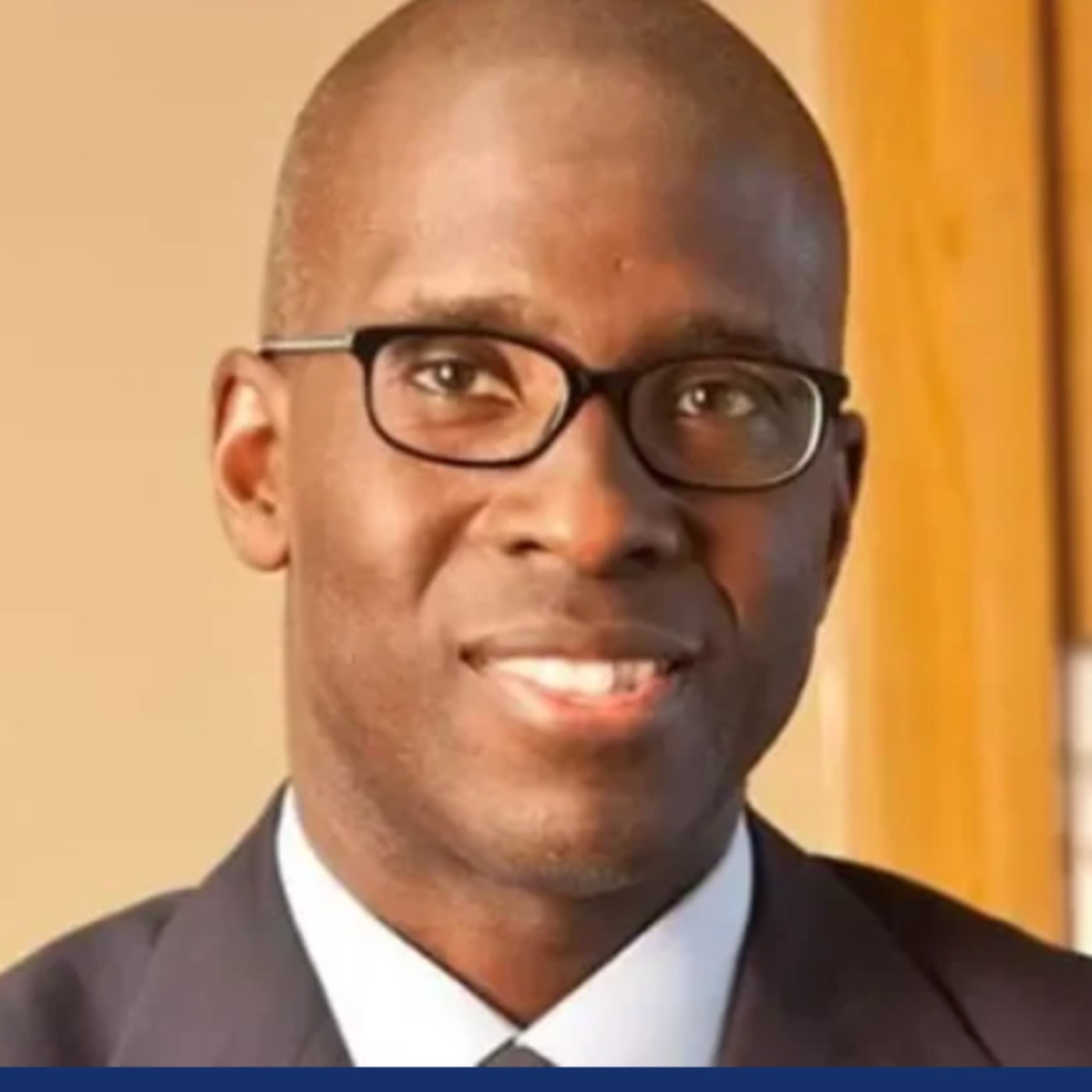
- Joining us now is Darryl Harris,
who is endorsed by the Republican Party
as well as the independent party of Connecticut.
He's running for District 135,
which represents Weston, Redding and Eastern.
And he is a Republican and he is also Black,
which may or may not be relevant.
We'll ask him about that
because that issue of race seems to come up
a lot in various campaigns.
He's the chairman of the Eastern Republican Town Committee
and he's challenging Democrat incumbent and youth
who will be with us next week
to represent Eastern Weston and Redding in Hartford.
Darryl Harris, hello and welcome.
I'm sorry I'm not there in person.
I'm babysitting my granddaughter Abbey
in the city right now.
And so I wasn't able to get there
to shake your hand and meet you in person.
But perhaps next time, hello and welcome to the show.
- Thank you so much.
I'm really honored to be on this show.
It's a fantastic privilege to be able
to speak about my campaign and what we're doing here.
- Well, I'm very interested about it.
First of all, may I call you Darryl?
Is that all right, may I call you Darryl?
- Oh, please do.
- Okay, so Darryl, are you only relatively recently running?
In other words, when did your campaign really form
and you start to run?
- Yeah, we really started to run in September.
We really start to run in September.
I was on the ballot for a while
but then we really kind of got going.
Then one of the things is that,
people really don't pay attention to races in the summertime.
And it's really after labor day
that people really start kind of getting going
in terms of focusing on instead of vacations
and things that nature are focusing on more local matters.
And so our campaign was timed really to take advantage
of the increased attention that people have during the season.
- Now you are a graduate of the Bronx High School of Science
and you also attended Yale University.
Did you single in Connecticut
after graduating from Yale?
- Well, no, I attended Yale.
But after Yale, I went to Wall Street actually.
I spent a lot of time in New York City.
So I ended up on Wall Street, started at Payne Webber,
the formally known as Payne Webber.
And then did a lot of work on Wall Street
and different capacities for about 20 years.
And then starting in 2005, after I left Goldman Sachs,
I ended up working in a bunch of startups.
Either telecommunications startups
or working out in LA, working with a consulting startup
that helped with Mike Milkin and his philanthropic efforts.
And in Connecticut, when I moved to Connecticut,
ended up working for a couple of companies,
one of which was a startup that ended up still around.
It's actually working in virtual respiratory health
and management.
And that company's been quite well
and I was involved in that pretty much from,
I guess I was employing number six in that company.
So kind of been active along those lines.
OK, so and that's kind of maybe like a biotech thing.
So you're interested in fledgling companies
and starting companies and how they grow in flourish.
Is that your passion?
It is a passion.
And actually when I work for the company,
it's now known as Wellynx.
We did a lot of work with connected innovations.
They ended up having some, I think at some point,
had some work representation on Wellynx.
And I got to see how Connecticut is really doing very well
in terms of shepherding startups, shepherding business.
And I feel the solution to companies
that are potentially leaving Connecticut,
big companies leaving Connecticut like GE did a while back,
is to really foster smaller companies
and nurture them, have them create jobs,
settle down in Connecticut and grow from there.
And I want to kind of continue that work as a state rep.
Representing this area.
And you live with your wife and son in Easton?
How old is your son right now?
How old is your son?
Right, he's 17 years old.
And he is actually, OK, he's working on his ego project.
And so we hopefully have that done on Saturday.
And then he can focus on other things.
Yeah, he turns 18 in about three weeks.
So anyone that knows anything about Boy Scouts,
you have to have everything done by midnight
of your 18th birthday.
Just, you know, that's it.
The last day you're 17.
He's a legal project.
What is it?
Yeah, his ego project, he's actually
working on a community garden in--
I'm actually the scout master in Monroe, Connecticut,
the town next door to Easton.
And he's working on an ego project
building a community garden at a place called the Harmony
Grange.
Connecticut's had Grange systems.
There's one in Weston.
There's one in Monroe.
And they're building a community garden.
And hopefully, what will happen is with the vegetable gardens,
vegetables that are growing that garden,
it'll supply food pantries in Monroe and other places.
So we really care about--
we really care about the environment.
And we care about the community.
And Elliott is really kind of committed to that.
So it's been a great project for him.
That's wonderful.
Now, you have been in Easton since 2019.
So tell us, Darryl Harris, is with us a 203-3339-422.
If you have a question or a comment, why do you feel
that you're better than Ann Hughes to represent Weston,
Easton, and Redding?
What do you think the issues are in Hartford
that you can do better for your community
than she has done?
Yeah, so I kind of run on four platforms.
The first platform is our towns should
decide what's built in them.
So local control is central to where
I want to be in terms of where our constituents are
and whatever want to represent in Hartford.
And I feel that Ann has--
while she's served in Hartford for four terms,
there's not much in whose representation
about our interests in Hartford.
We're a watershed community.
Class A and Class 2A watershed is right here at the Aspen Valley
Aspen Reservoir.
And we really need protections to make sure
that the water that is providing fresh drinking water
to a lot of Fairfield County is protected.
And we've really wanted-- we've sought carveouts for 830G
to allow watershed properties to do what they can,
but not have the owners' restrictions
and requirements that could potentially jeopardize watershed
by increasing density, identifying this region too much.
And I've made public comments.
I've submitted things where Tony Huang and Tony Scott
have tried in legislature to actually put out those carveouts.
And was unfortunately silent on that.
Now, she did say that she spoke with people privately,
but we need a public voice doing that.
That's my first thing.
And fair state funding for local projects--
one of the things that is important to our community in the West
is they're going to be able to middle school at some point.
And it's in discussions right now.
It's not going to be decided for another year or so.
But it could cost up to $120 million plus.
And Westin is not going to get a lot of reimbursements
from that from the state.
If they're lucky, at this point, they'll get 22%.
And there are other towns that have gotten a lot more
than that.
Now, they're in a different situation.
But republished legislatures, republished representatives
in town like Wilenton have been able to add another 15%
to 30% more reimbursement back in that town.
And when you speak with Ann about more,
what do we do to help Westin that has paid so much in taxes
over a period of time, given it has given so much to Hartford?
But then when they want something done once every 50 years,
like built into school, then there's just excuses
about why things can't be done rather than a forceful advocacy
about trying to state our case to Hartford.
So that's one of the reasons why I want to run.
Because I feel that the district is not
getting the representation that it deserves in Hartford
for everything that we do for it.
And the other thing is, if Hart for mandate something,
Hartford pays.
That is a lot of these unfunded mandates
that come in from Hartford.
They don't want to say, oh, we have to raise sales taxes
because we're having all these mandates.
So they get around it in two ways.
They get around it by forcing towns like ours
to pay inflated property taxes to fund those things.
Or they force charges onto our electric bills
to fund those things without being transparent and saying,
this is what we need to do and put a force to the people
to be able to say, look, I want this.
I don't want that.
And I think there should be transparency
to the people in Connecticut to know that if you want
to pay for something, let them decide and let them pay for it.
But don't put these self taxes on people
where they complain about affordability
because of things that are not under their control
when it actually is, when Hartford's doing a lot of that stuff.
OK, we're chatting with Darryl Harris,
who's running as a Republican for the 135th.
He's running and uses the incumbent.
He's a Democrat, she'll be on our show next week.
And he's running to represent Reading, Western, and Eastern.
And he's a resident of Eastern.
I see also, Darryl, that you are also
a representative or the leader of a diversity inclusion.
I don't know if it's a board or a committee
or something in your town.
How are you going to bring your--
It's a committee.
How do you bring your identity as a black person
to politics.
in Hartford. In other words, there seemed to be a bunch of issues where traditionally the
majority, if not all of the black legislators, have coalesced on certain issues. How do
you see yourself with respect to that? Do you think you will do that with them and caucus
with them on those maybe social issues or issues uniquely affecting the black community
or not necessarily?
Well, I take it out of case by case basis, but I want to build coalitions wherever I can.
And one of the things that's important to me in terms of my district is, look, we do
have diversity here. Now, I don't want to speak co-chair of the Eastern Diversity Inclusion
Task Force, so I don't want to speak for them. I'm speaking for myself, but I think Eastern
Diversity Riding are becoming increasingly diverse. And I think as more people come to these
areas, I think they'll understand that this is a welcoming, fantastic place to live.
But in terms of what involves what concerns the black community, the big concern that
I have is Bridgeport. For too long, I feel that money has been given to that area in
terms of programs, things like that. And people will say, well, if I give my tax money
and legislature sends it to that area for whatever programs they decide, then I've done
my part and that's it. And I feel that we're all community here. Bridgeport is not far
from where I live. And our church is actually moving to Bridgeport, so we're making a commitment
as a church to really sell into that area and help build it up. But when I looked at the
history of Bridgeport, they don't need a handout. They need a hand. And Bridgeport used
to be in the '40s, '50s and '60s, the economic engine of Fairfield County. So many businesses
and manufacturing and industrial development happened in Bridgeport that supplied things
to the rest of the country that we need to have that redevelopment brought back. If
manufacturing can be brought back and good jobs brought back to that area, that will revitalize
the area. It'll give people a purpose. It'll give people the opportunity to work hard
and live in anywhere they want, including Eastern Western and Reddit. So that's where
I want to increase opportunities for everybody to do that. I mean, I grew up in housing
projects in the Bronx. So I know what it's like to have people in an environment where
there's no hope. But I also know what it's like for people to work hard, transcend their
environment and move out of the projects and move into great areas. And I want to be
able to give the opportunity as a state rep to that area as well. I care very much about
this district, Eastern Western Reading, but I care very much about my neighbors. And if
I can help my neighbors in some way and I can partner up with other legislators, Black,
White, Hispanic, it doesn't matter to help that area next to us. It benefits everybody.
And that's where I stand.
And Darrell Harris, before I let you go, theoretically and technically and certainly financially,
being in the legislature is a part-time job. It certainly pays like a part-time job.
How do you earn a living the rest of the year right now?
Yeah, so at this point, I've started business with my wife. I'm a real estate wholesaler.
And what we do, real estate wholesaler for those who don't know, is we look for properties
that are abandoned, in terrible shape, not neglected. And then I would contact you and
try to purchase those properties and really make sure that those properties are available
to people that can actually utilize them. So for instance, in a neighborhood like Bridgeport,
I can find a house that's in that position. And I can sell to another family that potentially
fix it up and live in there or fix it up and actually do something with it. And all
those, you know, a lot of those families are immigrant families that come to the country
of work hard and they want to find a place that went out on a piece of the American dream.
So that's one of the things that I do along those lines. We recently passed legislation
in Connecticut where you have to be licensed to do that. So I went through that licensure
process and I put my business on hold to run for office for full time, but I intend to
kind of pick that up again as the election ends. And I can absolutely do both. I have
the flexibility to spend time in Hartford and spend time on my business as well. My wife
works in the nonprofit sector and so, you know, I think we're doing fine. So I'll be
able to have the flexibility to serve this district in the way it deserves to be served.
>> Okay, Darryl Harris. It's very nice to get to know you. I wish you good luck on
the campaign trail. If people want to know you, call you, find your website. How would
they do that?
>> Oh, great question. So I'm on Facebook. Darryl Harris for State Representative. And
I'm not a Facebook person ordinarily. So to get up to speed on Facebook was a bit
of a lift free, but it's a great platform. My website is at DarrylHarrisCT.com. That's
www.darryl.com. And you can reach out to me in various ways. And I interact with public.
And it's a short sprint to the election. So I'm available for anyone that has any questions.
>> Thank you so much. Darryl Harris on the Lisa Wexel Show. Thank you for running and
putting your hat in the ring. We're going to speak with your opponent and use next week
on the Lisa Wexel Show. It's a pleasure to meet you and good luck. Thank you so much.
Thank you so much. Bye-bye.
>> Thank you for listening. If you like what you heard, please share it with your friends.
And as always, feel free to contact me at
[email protected].
 PodcastTranscript AI