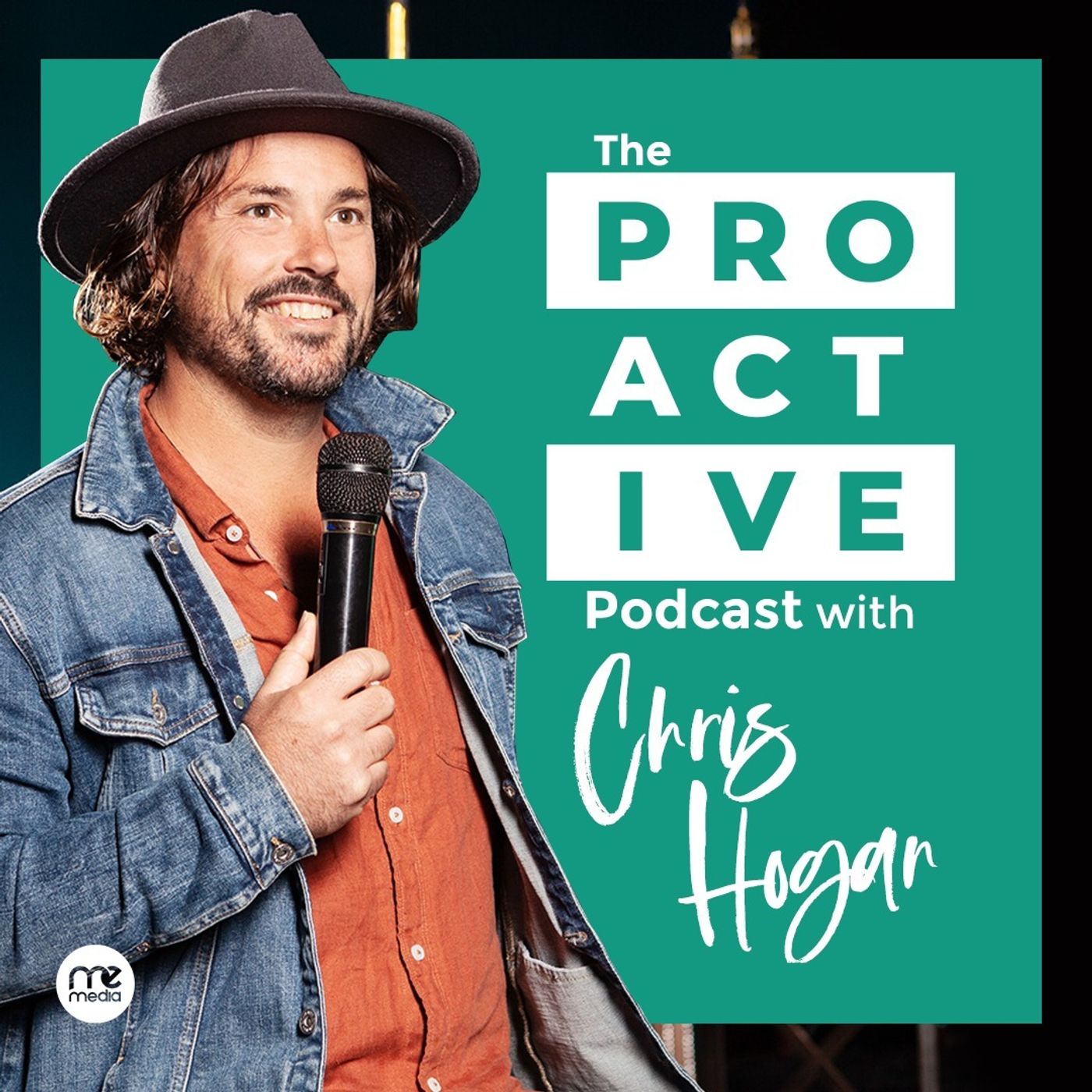
Daniel Willis & Chris Hogan on Marketing Agency Life, AI & Mental Health
66m 27s
In this podcast conversation, agency owners discuss the current challenges and opportunities in the agency landscape. Key issues include shrinking marketing budgets, which force agencies to do more work for less pay, and the impact of AI on the industry. While AI can improve efficiency and reduce campaign costs, concerns are raised about its limitations in generating original ideas and maintaining authenticity, potentially eroding consumer trust. The speakers emphasize that humans are still essential for creative ideation and strategic thinking, with AI serving as a tool to enhance output rather than replace human roles. They also note the growing difficulty of marketing attribution, leading to a renewed focus on brand lift and sales metrics. Overall, the discussion advocates for embracing AI to stay competitive, while recognizing the need for human oversight and adaptation to evolving skill sets in the marketing field.
Get a Royal Chris Hogan coming to you from Emilia Studio here in Belly Heads for the proactive podcast. And today I have with me Dan Willis, CEO and founder of Collaxon Agency, another agency owner, and well we're going to get into what agency life is like in the current day and age and scaling up. So welcome Dan, thanks for us. Thanks Chris. Mate, we've known each other probably all of three months. Funnily enough, I think we've both been around for a long time and I'm glad to get to know you. And I guess that's where this podcast came from after a lovely lunch. Yes. So, agency life at the moment with AI, with inflation, cogs going up, pressure from the market to I guess push down prices left right and center. Where do you think we are at in agency land and what are the major challenges that we're going to need to overcome in order to survive slash thrive? Mate, firstly appreciate you having me on off the back of that awesome lunch that we did have. I think it's a really interesting time to be an agency owner for a few different reasons. I think that there's one that the pressure of shrinking budgets, which I'll sort of mention in a moment, but also the rise of AI. So, I think there's there's two aspects of pressure right now. I think the first one is it's undoubtedly tough to be an agency right now. And whether that is a small independent agency or a bigger independent agency or even a whole code, it is it's tough right now selling time for money is a challenging business model to be in within a challenging industry. And I think I know more agencies that have gone out of business in the past couple of years than the previous seven years that I've been in this industry. And I think there's a few reasons for that, but one of the big driving forces is agency budgets or marketing budgets in general are shrinking. You know, we went to an industry conference probably about three months ago. And some of the data and obviously, you know, different people have different data points, but some of the data was that current marketing and advertising budgets, around 30 to 40% of what they were two years ago. And the challenge with that is that exact teams and CEOs and boards, they're still demanding the same performance or year-on-year growth, but from a significantly smaller budget. And what that does for agency partners like herself is it means that we're doing more work for less money. And, you know, agencies in notorious for over-servicing clients, but what happens is when you have a trend of, you know, a lot of clients sort of wanting more work for less money, it squeezes margin and agency sort of turn off the lights, which has been super sad to see. But I've seen it with like really small agencies and some really well-known agencies as well. So I think that's probably the first thing that's challenging. Yeah, I would tend to agree. And I think that's also the, obviously, the rise of AI, right? We've seen that it has helped improve productivity for anybody who's in the know of how to use it properly. Obviously, there has been a plenty of hallucinations going on with various LLMs. And the content that's been produced can be really questionable at times. And sometimes it's wow, you know. So I think we've been lulled into a bit of a false sense of security like everybody around how great ALA is and how much money it's going to save us in terms of actually having to, you know, all of what, in terms of allowing us to decrease humans in our business, whether that's internally, whether that's externally with agencies. So currently not feeling that confident about AI, there's plenty of reasons to use it. For example, setting up agents and automating systems and all of those types of things. Conversational ALA on e-commerce can be really great, albeit it certainly wigs out at times too. So, you know, there's been plenty of cases where conversational ALA has made promises to people that their business couldn't keep. And they've been put in lots of trouble for that. So, you know, the AI side of things is I guess going to get better. It only has gotten better. But to what extent are we going to trust it and what extent are we going to remove humans from, I guess, the system, you know? I can't see us removing humans altogether. But I do see a decrease in it. And to some of the conversations we've had, maybe the skill sets in the business and in marketing are going to have to change to be far more analytical than maybe even creative, which I say that. And I really hope it doesn't come true because trusting AI with creative is also pretty crap right now. Like inconsistent original ideas, forget about it. I'm not seeing a lot of original ideas coming out of there. It's regurgitated stuff from what it's learned, right? So, the human is still supreme at the moment. Well, I think there's a lot of stuff to unpack in what you said. Some of it at a more fucking exited existential level around sort of machines replacing humans. But I think I think it's a really incredibly exciting time to be alive. I think for a lot of people it's a bit scary. My view on it is maybe slightly different. If we're sort of talking from an overall kind of humanity level, I think we are so far away from some of the things that people sort of fear from AI. I don't believe that a lot of the stuff that people are sort of fearful of will be and play at least for the next sort of like 10 or 15 years. But if we sort of bring it back to an industry level, we've been massive supporters of AI from day one. My personal view is that AI will not replace agencies, but agencies who use AI will replace agencies. Exactly. And I see it and we see it sort of as a company ourselves really as a tool and no different from a Photoshop or an in-design from a creative perspective. It's a tool that allows us to create cool work more efficiently and more with more effectiveness than the way that it's sort of always been done. So we were winning fully creative AI campaigns two years ago, which is a long time ago sort of in the world of AI. And if I look at the work that we've done, you're talking about not a lot of original ideas. You're absolutely right, but I don't think that that's not my view on how AI should be used. It's the humans and it almost makes what the humans do more important. It's the ideas and the ideation that the humans should be doing and then the application of that idea that AI can do. And what it's allowed us to do is really democratise expensive campaign budgets and allow us to create and build campaigns. That would have cost, you know, 80, 100, 150,000. It's allowed us to do it and for the client to pay 20,000 or 30,000. So it's really leveled the playing field. And I think that if agencies embrace AI and use it for doing a couple of things, one, I think it can improve some efficiency in automation within the business just to remove some of the laborious tasks. I think that with the right mindset, it can really help from a creative perspective, not come up with the ideas, but create great applications of those ideas far better than traditional tools could do. So I'm all for it. I'm not fearful of it and I say, "Fuck and bring it on." Beautiful. Yeah, I'd say I'm not fearful of it either now. I'd definitely had my wobbles this year. It was, you know, I think AI really flipped the table on marketing for the first six months of this year. It accelerated like nobody's business and in fact, you know, a very famous marketer called Rand Fishkin came up with a term, you know, zero click marketing and that was that we're not actually seeing traffic flow like it used to, you know, to websites and so. And then we're also not seeing it at all, like where did it go, you know, for a period of time there. And so there's the challenge with attribution in the digital marketing space is like, well, it's been a challenge for a long time, but there was a time there that we knew where all the traffic was coming from in digital space and was fantastic. And that's what sold digital against any other traditional offline media, right? And now and now it's like, well, attribution's out of the window, but what do we go back to? And it's funny. You just go back to good old fashioned brand lift, like where are we seeing brand lift, you know, geographically and and and sales, like where are we seeing sales geographically as well. So it's, you know, can we track QR codes, yes, but how much is that actually, you know, how many people are actually scanning me QR code? So there's all of them. That's exactly right. That's always the answer to that question about QR codes. Hardly anybody. So exactly. So it's really, it's a really interesting time, I think, for attribution. Grand Fishkin again says it's dead. No, he said it dead. I tend to agree with him. But yeah, to your point, it's not meant for, it's not meant to replace humans. It's meant to augment us and and help us with productivity. And yeah, we hopefully then, if it's helping us with productivity, it's giving us more time to be creative. That's more time to actually experience what it's like to be a consumer or a business that's buying the other services. More time for us to be empathetic. And then potentially, with that experience, we create better campaigns. Yeah, I think it can help take what a human does and just help bring it to life better. Then traditional tools. And I think that's a positive thing for clients and for agencies. There's certainly hearing different things from different industries. The film industry, for example, there's lots of mock ups being created and storyboards being created using AI. Then that storyboard comes to shoot location. And it's like, what you're asking for there is not achievable in a one day shoot. For example, the example I was given this morning was, okay, we want to zoom in from 100 clicks away, come across the land or the ocean, come right in on a drink, on a bottle, a beer, sitting on a table with the sunset, like shining through the bottle, and someone picks it up and drinks it and happy day is right. And it's like, yeah, you've had one set sunset every day. Do you want to come back every day until we get that right? See, this is an interesting point where my mind goes to why not create that entire campaign in AI with no restriction on sunsets? Why not do that or why not do a hybrid campaign of the first part of that with AI and then the person with the drink from that life, I think you know. Well, I would go there too, except that I personally, well, if I can tell it's AI and it's pushed back, I'm just going, that's not real. Like, I know you're trying to sell the drink here, but you know, I was listening to fake music. Someone told me about fake music on Spotify and I'm listening to this album of fake music and it's all of these covers, you know, created in 1950s style jazz of, you know, black whole sun and Pearl Jam's best and you name it, right? And I'm just like, I can't get into this. I cannot get into this. Who is this singing? Who is it, right? So I actually went, screw that. I just went, I can't say it, but I told Apple to get off Spotify, I told Apple to play me some James Brown and there I am. I'm getting into James Brown. See, I think share those fucking playlists with me on Spotify. That's what I think. I think share those playlists with me. I'd be curious to listen, because I think, you know, the thing about it's AI, if we think about just advertising, but especially movies. There's not many movies that don't see. For me, people seem to be a fuck that's AI, but that's cool. It's CGI, where we're all used to that. To me, I go, well, what's the fucking difference? So if I saw an ad and it was, it was, you know, rushing over an ocean like in between, I write up somebody having a, having a drink, I would immediately think that, you know, the production company didn't shatter a plane and fucking drive it halfway across the earth. So I would be like, well, cool. That's clearly been, you know, done, you know, not in a real sort of sense. So for me, whether that's AI, whether that's not, I'm here for it. I think everybody's just trying to find their way and figure it out. And, you know, Coca-Cola did a super cool commercial. That was all AI and I fucking lumped it. I thought it was really cool. Again, for me, I just see it as a tool to do cool stuff. And, and I don't see creators shunning Photoshop and InDesign saying, well, that's not really being a creative and wanting to draw everything on a sketchpad. They're all about it. They're all about Photoshop and InDesign because it makes what they do more efficient and more effective. And I think that AI is the same. Yeah. I can't really grasp why I don't like it. Is it just my sense of adventure and love of our doors in nature? Like, is it just me? And I think that that's right. I think everybody is different and everybody will like certain things differently. You know, and, and so, yes, we're using AI here too. Absolutely. And, you know, the productivity really does help. I guess I'm just seeing both camps or lots different camps happening and nifty opinions happening. And so, in that regard, like, it comes down to your audience and who your audience actually is. And are they going to be the ones that push back on it? And if that's the case, like, can you actually define that or know that before you go to campaign? Like, is that even possible? Without running a, you know, a focus group and a large one of that, of that. So, or do we just go ham and see how it goes and test the market and see if it resonates or not? I think it's coming either way. So, to me, it's kind of a bit of a get on board moment or die or just be left behind. And I think the interesting thing is that these days, anytime there's something on the internet that's a bit wild, people's first response is, well, fuck, there must be AI. And I find that really interesting. And that's even with non-AI stuff. Yeah, I know. So, for me, if people, I think if you, if you did something that was a really cool ad or a really cool campaign, and you decide not to use any AI, but it was super cool, people are going to assume it's AI anyway. So, if AI lets you do it more efficiently and for a much lower budget for the client. So, do you think then if everyone's going to assume it's AI and they either trust you or don't based on their like or dislike of AI, then do it anyway? That's my view. I think people's people that have sort of these existential fears around AI, you know, none of that's advertising related. I think it's just more of a, it is sort of confronting some people around humanity and everybody's seen Terminator and is this what's happening and are we losing like, you know, you mentioned the outdoors, right? Like, is life changing at such a rate, you know, is it changing faster than we want? I think that a lot of those sort of more existential questions are what makes people a little bit hesitant around AI. I've never met anybody that, you know, loves AI and is all for it, but hates AI based advertising. It's kind of like a blanket, people either for AI or they're not. And so that's why you just, you just met one because I'm actually in both camps. Really? So, is that you are not that supportive of AI in general, but are supportive of AI advertising or is it the reverse? I'm supportive of AI helping with productivity. I'm supportive of AI helping with concept and campaign production within reason because I want to make it believable. I want to make it as authentic as possible. And when I see fake ads, AI generator ads, I lose trust. And so I don't want that to happen to the brands that I manage. Know me like me trust me, right? Know me? Yeah. Look at all these crazy us AI videos that they're putting out. Wow, like me. Yeah, they're pretty cool. Trust you. Don't know. Do you know what I say to that? The creative AI, the output needs to be better because I think with great, with great creative, you shouldn't even be able to tell. That's where it's going. That's my view. I think that when people still need to do the great thinking and the great ideas behind it. And to me, if people are putting out really low quality stuff, and I get that, people are doing it because people are just finding their way, then I think the output just needs to be better because as we both know, AI is not going to do it for you. That's the one thing. You still, you need humans to do the thinking, but you still need humans. If we do a campaign, we're not charging like two thousand for that campaign because it takes five minutes. It takes a really fucking long time. It doesn't take as long or cost as much as if it's a, you know, a full-scale production, but it still takes a lot of time. There's certainly no just putting in a prompt and it spits out a campaign. So for me, humans are just as important in the process as ever. Their role is just slightly changing. That's what I think. So you're absolutely right. Humans are still integrated into the whole scenario. It's likely going to get to the point where we're not going to be able to tell the difference between real and what's not. In some cases, you can't now. Correct. I reckon we're already there. We're already there. Scary. There's some scary stuff happening where, you know, avatars are being created and people are turning up on zoom meetings to actually be the only real person in the zoom meeting because the avatars, the people that they're seeing and the people that they're hearing have been cloned. Real love story, just heard it. Send me that link if I could get a clone of me to attend half of my meetings, I'd be a happy guy. So again, I'm fucking awful. You won't know it though. You won't know it unless you read the transcript and you won't. It's okay. I'll have my clone of me attend my meeting. Send me the transcript. I'll review it. I'm all about it. But the problem with that is that hacking and fishing have gone rough. But, you know, this podcast actually could be clones of us. And many podcasts actually are now. There's some great podcasts that I've seen with two dogs having a really fucking great conversation. It's wild. That's, again, I'm all for it. I look at that and I think how fucking cool is that? What a wild time to be alive. Oh, great. And I think it's a bit like kind of the.com era. AI's here. It's coming. It's coming either way. And I think that, you know, the people that are resistant to it now, that's okay. And like I totally understand the people that are. But I think that they're just going to be playing, you know, massive catch up in a few years time. So for me, I'd rather sort of sit comfortably on the surfboard on the wave and just sort of coming with kind of that cultural shift and change. Rather than still be out the back and have to like, you know, doggie paddle my way into shore in a couple of years time. Yeah. Yeah. Yeah. Yeah. Good chat. So let's get off that topic. I think it's it's everywhere right now. But it's really good that two agency owners are actually talking about this from from our perspective and what's happening in the marketplace and that people still need people. So thank you for that. People still need people. But for me, I think it's it's great. It allows people to spend more time doing the stuff that they're special at. Yeah. And get the opportunity to get rid of some of the laborious tasks. So for me, that's a win for people as well, you know. We spoke at our lunch about your history of scaling businesses. And it was it was fascinating here, you know, your life before agency life. Personally, I haven't really had one. I've had mostly agency life and and so it kind of, I don't know, it's it's really great to hear other people's life stories and journeys. How important are people in scaling up in terms of you can take that how you like actually. I might just let it open. That's a very open question. Yeah. I think the first thing is at a fundamental level, a company's not a real thing. A company is only a group of people. That's what it means, isn't it? You know, we're in company. That's it. If if it's the wrong people, then you know, business is hard enough. Businesses war. Businesses always war. I don't care whether you're just starting out as a solo entrepreneur or whether you're running, you know, a billion dollar company. All that really changes is zeros on a sheet, whether it's zeros in a bank account, zeros from a revenue perspective, number of staff. But it's all the same. I think people are critically important. And interestingly, sort of talking about scaling companies. One of the things that I think catches people out is the people and then the mindset of those people that you need to get out of startup phase is a different mindset and way of thinking and different people that you need to be successful in the scale up phase. But at a fundamental level, you know, no company is anything without the right people. I don't want to bring anyone into this conversation, but I would agree. You know, you've the culture that you form is is extremely important. And the players that you have on your team, you know, in startup land, like you say, you can you can survive on different types of players. Scale up, you've got to have a players. Be players at worst. And it's a different world. And I think that's what catches a lot of companies out. You know, for me, I'm 47. I have been in advertising for coming up to nine years, but prior to that in finance and medical devices and fashion, I'm still trying to figure out what the fuck I want to be when I grow up. I have no idea, but I enjoy building and scaling companies and I've been fortunate enough to be okay at that in my career. And I've run companies, you know, tiny of run my own businesses, whereas just myself and one other person, and I've run companies with 500 staff. And I've taken businesses on that journey, sort of everywhere in between. And I think that what catches a lot of businesses out is, you know, it's a hard journey to get through startup phase. But you can generally get to the end of startup and I'll quantify the end of sort of startup. It usually sits, there's always exceptions, but it usually sits at around about 10 mil-ish of revenue and around about 25-ish people. That's kind of at the end of startup. You've got proven product market fit. By that stage, you know, take out your super fast growth, sort of tech startups at pre-revenue, raise the shitload of money and there's something got 100 staff. Take out those ones. If you just sort of focus on the ones that have started from maybe, you know, one or two or three sort of co-founders and build up organically, generally when you get to the end of that startup phase, you know, you're three to five years old on average. So you know what you're doing and you've been out of get there on enthusiasm, great people, a lot of fucking hustle and a lot of relentlessness. But those traits are, you know, still really important to have, but they're not enough to get you to 50 people. They're not enough to get you to 100 people. The business at a fundamental level needs to change to go on that journey. And so, is there a title for that change? Is it strategy? Is it systems? Is it cash flow? Is it sales? It's a few things and it probably starts with, however, is running the business. Their mindset needs to change and it's one of the reasons why companies can be 10 or 15 years old and still locked around that same size. And what happens is companies will go from 25-ish people they'll go up to, you know, 30, 32 and then they'll lose a few people and slide back down. And it's like kind of slight trying to climb up this slippery slope. You can get a few steps up and then you keep sort of sliding back down if the mindset of the person really driving the business doesn't change. And that can be one of the hardest things because often that person is the founder. So what smart founders do around that size is they need to start bringing in people who think a bit differently, who aren't that work harder, late nights, do whatever it takes, then more of the work smarter mindset. And the two don't have to be mutually exclusive. You can have people that think more structurally and are still hustlers as well. But what needs to happen is it becomes less of a focus on people doing cool things to strategy systems, focus, so operating rhythm systems, you need a structure and the way I sort of like in it is if you're building your own house and you didn't know, you weren't a builder, you had no idea what the fuck you were doing. You could go out there, you could buy some 4x2 and you could buy some jibrock and you could bang up something and put a roof on and if it was one story, you would pretty much be okay. And that sort of like getting through the end of startup. But if you wanted to go into scale up, if you're like, I want to put a second story on my house or a third story on my house, or I reckon I can take this to five stories, the second you start building on that first level, it's going to topple over. So what you really need to do is go back and make sure that the foundation is level, bring somebody in to strengthen the foundation, strengthen the walls and then you can start building from there. So that strategy systems operating rhythm processes and what's needed, you need structure within the business and then you have exceptional people to do exceptional things within that structure. But without the structure, you never get past kind of putting a few walls up on the second story before it tumbles down again and it's just this never ending cycle. And one of the hard things is founders often equate that to selling out, becoming too corporate. You know, this is not the entrepreneur hustle life, but that's not true. That's not true. It's not true at all. But a lot of them think, well, too many systems, I don't want to have an operating rhythm. I don't want to have all these processes in place. That stifles what makes us us. And it's not true. It provides a strong foundation for growth. So, you know, for me outside of Claxon, one of the things I do is I work with founders and boards to help scale businesses. And it's literally that. It's a different application across different industries, but it's the same thing. Is there one thing? Is there one metric? First thing that you see, you will need to know about a business. It might not be one, right? It's really hard to pinpoint my thing. That tells you that someone, a business is ready to scale or not. It's more to do with the size. It's more to do with the size or, you know, about that revenue, you can't, you can't do half a mil a year and have two people and go, right, I'm ready to go into scale up. You've still got a long way to go and to start up. Yes. So, putting those things in place too early can be a bit clunky. You know, I think it's more so wearers, the company out in terms of revenue, where are they in terms of size. And really importantly, what is the appetite for the founder for growth? Because a lot of founders also fall into the trap of thinking bigger is better. And if I scale, it'll mean that people think I'm more successful. And scaling is hard. Scaling sucks cash. And it's really hard, even when done the right way. So, I think for a lot of, you know, founders, if they're at that 10 mil size, 25-ish odd people, if they don't want to grow any further past that, that's okay. And then it's about how to optimize their business for really maximum profitability at that size. And there's different ways to do that as well. Of course. Daniel Presley put it to me. I'm not sure if you know who he is. He's, well, there he is. I knew I'd have his book here somewhere. That was his first book, "Keep Person of Influence." Several books and he's been quite a successful entrepreneur and he's owned right, not just an author. Believe he had a bit of math of Donnie's program and he was saying about you're ready to scale based on, uh, river you per full-time employee equivalent, right? So it was somewhere in the vicinity of if you're doing 150 K per full-time equivalent in revenue, then that could equal scaling depending on your profitability. But it was somewhere between 150 and 200 K. It's likely that you're ready to hire and start scaling. I liked that as a simplified formula, right? He's like, okay, uh, we're doing, you know, 100 just for argument sake, we're doing 100 per full-time equivalent. No way know how we're like breaking even, you know. Uh, 120, not still too risky. Work harder, work smarter. And 150, okay, maybe, maybe we could go for it now. And start hiring, albeit 200 is far more, I guess, likely to have the cash supply to be able to fund that scaling. What would you think about, about that math? So I'm going to be controversial and say, I don't believe in metrics like that because my argument to that, and the first time I've heard that, my argument is a couple of things. One, what if you are, uh, you know, 150 grand and you have four employees doing 150, you know, grand full-time equivalent, you're doing 600 grand. Does that mean you're ready for scale? I say absolutely not. What if you've got employees in doing 200 grand? Well, it depends what industry you're in because if the average cost of your employee is, if you're paying them 200 grand, then you're going to be going nowhere, even at 200 grand per full-time employee. Of course. Whether you've got five employees or 20 employees. So I appreciate, you know, what he sounds like he's trying to do, which has given some sort of metric around it. But I think that that's probably too simplistic to think of it like that. It really, in my view, is that size of when you're around 20 or 25 employees or when you're doing around about 10 mil of revenue, it means that you've got a business that works. You've been in business for more than two sort of seconds and that's the right sort of size foundation to go from. There are exceptions. You know, great business people can start scaling earlier. Some people that aren't quite as experienced, it can take, you know, a bit longer before they're truly ready. But that 25-ish people, 10 mil, that's the best sort of way of gauging that I've come from. Now, I don't want to confuse scaling up with growth because they're two different things. Because, you know, going from five to 10 people, that's growth. 10 to 15 people is growth. 15 to 20, that's growth. But what's required to go from 25 to 50 is a fundamental change in the business and that's where things have to start to change. Yeah, because I mean, if everyone thought that they weren't going to be able to grow instead of scale, I guess they're good definitions there until they reach 10 million, then that's going to be very few businesses in Australia because of what is it, something really low number percentage, single digit percentage of businesses in Australia actually achieve 10 million. Oh, yeah, it would be ridiculously low. And I see that. And to me, that's sort of part of the whole entrepreneur hustle culture, which I actually am anti, that hustle culture for various sort of reasons. I'm happy to share if you want, but otherwise, well, defying a hustle culture, what do you think? What do you mean by that? I think, so for me, hustle culture is you have to work a billion hours and sacrifice your whole life. And how hard you work and your input, that is the sign of success. So in hustle culture, you quantify your success by how hard you're working the sacrifice you're making. But those metrics are irrelevant because if you are working, you know, 20-hour days, you're never seeing your family, it's putting a strain on your relationship, you're not seeing your kids grow up, things are rocky with your husband or with your wife, and your business, there's no output. Then I think that people, and I've got friends that have done this over the years, and the outputs almost irrelevant to them. It's the the medals they put on themselves or other people kind of hang on them aren't because the businesses become a successful business that generates revenue, generates profit, generates it income for their family. The medal is kind of adorned on them because they've sacrificed so much. And I don't believe in that. For me, I think that what's important is output, not input. And if you are working five hours a week, but you're building a successful business that's providing for you and your family and is something tangible with real money, then to make that person correct, that person is far more successful than somebody literally killing themselves, putting themselves in hospital from stress for not much out the other side. So I think with that in mind, to me, I always do any aid between my view on who's an entrepreneur and who's a business person. And I think there's a difference. And to me, entrepreneurs are mainly focused on input, whereas business people are mainly focused on output. So I've always never identified as an entrepreneur, even though I have my own business and I've had businesses, I've never identified with that term. I can't say that I have either. And then I've had to learn the hard way and the slow way in becoming a better businessman. And despite the challenges, I absolutely still love it. And that dumb founds me. It's like, this is the hardest game, like this is war. Always war. When I'm getting killed on the battlefield, one week out of, I don't know, 20, how do I come back the next week and actually get right? Let's go. Let's be honest, it's 18 weeks out of 20. But for everybody. And that's the thing that I think that people forget is they see this all this shit on social media. But a lot of my friends, most of them own businesses, it is war all the time. Across any industry, across any size business, it doesn't matter. And anybody that says it's not is full of shit. Businesses always tough, always. And so, how do you stay positive and stay on top of the stress that comes with business? What's your daily practice? What's your weekly practice? What's your life look like in order to be proactive? So, I think, so for me, it's a blend between how I've sort of learnt to think over the years and the daily practices. So, I'll be awake at 5am every morning. I'll get up, I'll go to the gym. And that classic, you know, go to the gym just as much for my mental health as my physical health is really true and really important, helps me with sort of stress management. I used to struggle a lot with managing stress when I was younger. And I guess what I learned and I think this is more say just a getting older sort of thing. I kind of realised and look back that a lot of things that seemed so critically important at the time and was such a cause of like deep levels of stress never really mattered. So, it was a bit of a perspective shift as I turned 40. That, you know, you hear people say, well, we're not saving lives. And it's easy as a throwaway line, but for me that kind of really hit home. And I realised that I'm not saving lives. I'm out there helping people do cool stuff in their business with it through, you know, advertising or whatever it is. And I remember somebody asked me one day, they're like, has it been a bit of a stressful period? And I was like, yeah, fuck, it's always a stressful period. And they said to me, can you think back six months in the past and tell me the two key things that were the most stressful at the time. And I couldn't, I couldn't remember what they were specifically because he was like, I want specifics. And I couldn't remember and I was at that moment, I was six months ago. Six months ago. Yeah. Six months ago. What was it? Yeah. And I remember I gave some sort of like general answer and he was like, no, no, no, like specifically. And I remember I sat there for a couple of minutes and I was just like, fuck, I can't actually remember. And it was that sort of moment that was a bit of a shift in perspective for me or I was like, okay, does any of it really matter? And I don't think it does. So for me, it was, I used to feel that this was my life and this was the business. And my life and everything about me and who I was and what I did was consumed by the business. And my perspective now is that this is the business, but this is who I am in my life. And the business is a small part of that, but it's not my family. It's, it's not exceptional experiences with loved ones. So I just learn to go, you know what? In fact, that's really shitty. That's happened and business is always war, but it just doesn't affect me as much these days. Sometimes it does because I'm also human. But for the most part, I just go, you know what? It's really not that important and that just takes a lot of the stress away. Yeah. Interestingly, similar ride with the age thing, except when I got to 40. So yeah, couldn't handle stress as well when I was younger. Bit of a worry ward as a as a term. Kind of like genetic. Same as me. Yeah, dad was a warrior. And learned through those times that, you know, when I was losing sleep and worrying, I was like, hang on a minute, you know, there's nothing I can do about it now. Tired, you know, stressed out at 10, 30 at night or 11 a.m. sorry 11 p.m. at night, there's nothing I can do about this. I am all I need is sleep because unless I get that sleep, I'm known me no good tomorrow. So I was like, I got through that worry period doing that and eventually stopped worrying. And didn't even know about anxiety until, well, until one day when the business was basically going to go to shit and that's quite a public story in my book. But that was the first time I experienced anxiety. And then it was like, well, hang on a minute, how do you get past that? What is anxiety? It's fear of the unknown. Pretty much things are out of your control. Businesses out of control, what's out of control, whatever it is, right? And so then I worked on that. What is it that I need to get under control? And obviously we can only control ourselves and everything else is indifferent, right? And the cash flow forecasting was actually an amazing thing. The exercise was amazing. The breathwork, ice baths, you know, hiking in the in nature, all of these things became daily or weekly practices. And yeah, I always used to watch people our age where the same age, like all of a sudden, going to the gym more. And I'm watching successful business owners like, right, like you're doing a lot more exercise. And it's like, you're you're jacked. Like, what's with that? Is that just the midlife crisis? And it's like, no, hang on a minute. That is a proactive energy management. During I learned something sort of when I turned 40 previously in my career during stressful periods, a stressful, really tough time like in the business because for the past, almost 20 years I've been running companies. So even if it hasn't been my own company, I've still been responsible, that one responsible. And prior to sort of turning 40, my ethos was if stuff is really hard at the moment, do longer hours and work harder. And then when I got to 40, I changed that. And now, during times of like real fucking war, like it's real tough time in the business, I will work less. I will cut my days shorter, sometimes down to as much as four hours a day. And I will go to the gym twice a day. I will go for a walk along the beach every day. I will go out and I'll play golf once a week. And it's not because oh fuck, you know, it's a really challenging time. I don't care. It's the opposite because that proactive energy management allows me to be rested and fucking sharp. And when you're at war, and when times are really challenging within business, if you're the one running the business, and you are exhausted because you've been working yourself into the fucking ground, you're going to make poor choices. And that helps nobody. But if you're rested, if you're refreshed, and it's a focus on making great choices within the business, then I believe that's what is going to make you a more effective leader during those times of peak stress. Could not agree more. And done the same. Like blows me away that that is actually the right thing to do from experience. You know, it sounds so counterintuitive. I've had so many friends over the years say to me, like, what are you doing? And I'm like, business is really tough right now. And they all say the same thing. Then why aren't you at the office? Why aren't you doing here? Why are you going for war? Can I like, because it helps me make better choices? How's me navigate us out of the situation way more effectively? Well, the science is out there too on walking just for the brain and how it lights up the brain, you know, MRRized, you know, all that sort of stuff. It's fascinating. And something else I heard also was, you know, like, it's all well and good to adopt music and podcasts and watching a television show or a Netflix series or whatever. But in those times, it's not time for that. It really isn't it? It's time for silence as much as you can get it. You have to process those thoughts and get those podcasts, get those earbuds out of your ears. And look, if you need to talk to someone, talk to someone, actually, like, journaling far out, like amazing. You know, get it out of your head sometimes too. You know, being trapped in your own mindset is terrible. That's where I've actually made some of the worst decisions in business. It's like, had these thoughts that have, that's the right way to do this, hadn't actually communicated with others about that, about what I was planning on doing and then all of a sudden they'd end up being the wrong decision. You know, so it's interesting about the whole, we need time out, we need silence. And yeah, the walking, the exercise is a great way to do that. And minus the music as well. I go for a walk almost every day, not every day, but I try to kind of get in 10,000-ish steps, never ever, ever where, if I'm just, for me, that's time to think, be present, let my mind do its thing. With silence, a lot of people are fearful of silence, but, you know, silence, you know, or lack of input, gives your brain the ability to solve a lot of problems. And it's kind of like, you know, I liken it to fasting. The whole thing around fasting is it gives your body a break from digesting food to allow it to divert its energy to fixing your body, right? That's a whole kind of thing behind. Fasting and doing like long sort of like water fast, reduce faster, whatever. I think that when, if people weren't so fearful around having a quiet brain, a lot of the stuff will just get that fixed. Like, if I'm going for a walk, I'll often be half thinking about, you know, 20 different things, but really nothing at the same time. And then suddenly something that's been a challenge for the day or for the hour or for the week or for the month, suddenly my brain just goes, "Oh, hold on. This is what you do." And it's like, great. And if my brain had been preoccupied by listening to, you know, a podcast or music, it wouldn't have had the time to work on the shit that it needed to work on. Who's your sounding board after that? Do you have a sounding board for that idea first before you go and implement it? Like you're, "Ah." There it is. So it is absolutely my fiance, Jade, who is also in the business with me within Claxon, but she also does some advisory work with me outside of Claxon. Again, sort of helping companies navigate that that start up into scale up. She's way fucking smarter than me. I wish I was half as switched on as her at her age. She's quite a bit young. She's 32. So she is my right or die sounding board to run stuff past. I always though like to, if it's a big choice, I will always go to trusted friends or trusted advisors and share with them what I'm thinking. That doesn't mean I'll do what they're suggesting, but I am a fan of kind of getting as much information or as many viewpoints as possible, because it is dangerous to get trapped in our own mind. Sometimes that can work out really well for us, other times it can be a complete fucking disaster. So I'd rather always err on the side of caution and at least have a few people that I know and trust in their opinion to consider and then make what I believe is the best choice from that. But the first person and the last person would always be Jade. It's funny about opinions of adopted the same one said and I think that's attributed to my experience with the Australian Institute of Company Directors where I'm around directors all the time talking about their roles as chair and all the rest of it and how what it means to act like a good chair and how opinions matter and perspectives matter. That doesn't mean that you take, you know, all on board and do everything that everyone says. It's kind of like and then I attributed to testing the market, you know, it's like, oh here's my go-to-market strategy. You guys are my little focus group. I'm going to test you and then go, well how did that go? How did that turn out? Oh, you know, I didn't think about that. Well, I'm a massive supporter of companies having boards, having advisory boards. A massive supporter of this, I think that you're never, ever, ever too small to have an advisory board. I appointed Claxon's advisory board of three external people that joined three of us internally. So there was six in total. So we had an advisory board of six in total when we had four staff. That was it. But they were there and they weren't industry people. They were there to provide guidance at an external viewpoint and support around key choices to enable us to grow more effectively. So, you know, it's people often they'll go out and they'll get a business coach. And I fucking hate that. I hate the whole business coach thing. Tell us how you really feel there. You know, because it's like they're paying somebody a grand or a couple of grand a month. Often business coaches have gone and done a course on business coaching. And they'll go and they will sort of work with businesses, take them through this tick box sort of method. You know, whatever the method of the company that ordered the training for is. And I think it's, I personally believe it's a waste of money. I think that if more founders thought about appointing an advisory board, two to three people, most people that are experienced enough to be on a board will generally be at the stage in their career where they want to be able to give back and they want to be able to help other aspiring business people on their journey. So, for founders, there's no shortage of experienced people who have had a lot of real life success that will be willing to sit on an advisory board. And it's easy, you know, get together three people. They don't have to have experience in your industry. They don't have to. And meet with them once every couple of months. And they will help you get to where you need to go to way faster. And 95% of people will sit on an advisory board for free. So, it doesn't cost a founder. And it kind of, this all ties back to your point of not being stuck in our own hits, you know, as a founder and as a business person, seeking external advice, but seeking the right type of external advice. An advisory board is an amazing way to do that. Mate, I think I want to end on that because you nailed a question that I had. And that was the opinion about coaches. And I think you really, really got the answer for me and a lot of people. Thanks so much, Dan. That was a great chat. It was the first. I hope of many. I think the agencies not being competitors and being rivals and actually coming together at this time, you know, which is a crazy time I think in human history to be alive, but an exciting time. I think it's going to be so much better if we do it together and voice our opinions around this versus I think it just coming to Edith's alive and probably the negative rhetoric, just taking hold that that agencies aren't required anymore. And I think we still have a plenty of offer, which is I think a good thing. I think that good humans and great agencies are even more important now than they were before AI. So agencies aren't going anywhere, but thanks for having me on Chris. It's been a pleasure, bro. Cheers mate.
Podcast Summary
Key Points:
Agencies face significant pressure from shrinking marketing budgets and rising costs, leading to more work for less money and threatening profitability.
AI is viewed as both a challenge and a tool; it can enhance productivity and democratize campaign budgets but raises concerns about creativity, authenticity, and trust.
The role of humans remains crucial for ideation, strategy, and ensuring quality, with AI seen as augmenting rather than replacing human creativity and empathy.
Attribution in marketing is becoming more difficult, shifting focus back to traditional metrics like brand lift and sales due to changes in digital traffic and AI influence.
Embracing AI is considered essential for agencies to stay competitive, though its adoption varies based on audience acceptance and ethical considerations.
Summary:
In this podcast conversation, agency owners discuss the current challenges and opportunities in the agency landscape. Key issues include shrinking marketing budgets, which force agencies to do more work for less pay, and the impact of AI on the industry. While AI can improve efficiency and reduce campaign costs, concerns are raised about its limitations in generating original ideas and maintaining authenticity, potentially eroding consumer trust.
The speakers emphasize that humans are still essential for creative ideation and strategic thinking, with AI serving as a tool to enhance output rather than replace human roles. They also note the growing difficulty of marketing attribution, leading to a renewed focus on brand lift and sales metrics. Overall, the discussion advocates for embracing AI to stay competitive, while recognizing the need for human oversight and adaptation to evolving skill sets in the marketing field.
FAQs
Agencies face shrinking marketing budgets, increased pressure to deliver more for less, and the need to adapt to AI. These factors squeeze margins and make the traditional time-for-money model difficult.
AI is a tool that can improve efficiency and democratize campaign production, allowing for high-quality work at lower costs. Agencies that effectively use AI are likely to outperform those that do not.
No, AI is seen as an augmenting tool. Humans remain essential for original ideas and strategic thinking, while AI helps execute and produce creative work more efficiently.
Traditional digital attribution is becoming less reliable, leading some to consider it outdated. There is a shift back towards measuring brand lift and sales as more holistic metrics.
Agencies must find ways to deliver value efficiently, often by leveraging tools like AI to maintain performance despite reduced budgets, while avoiding unsustainable over-servicing.
Risks include producing content that lacks authenticity or trust, potential public backlash if AI is detectable, and over-reliance without human oversight for quality and originality.
Chat with AI
Loading...
Pro features
Go deeper with this episode
Unlock creator-grade tools that turn any transcript into show notes and subtitle files.
 PodcastTranscript AI