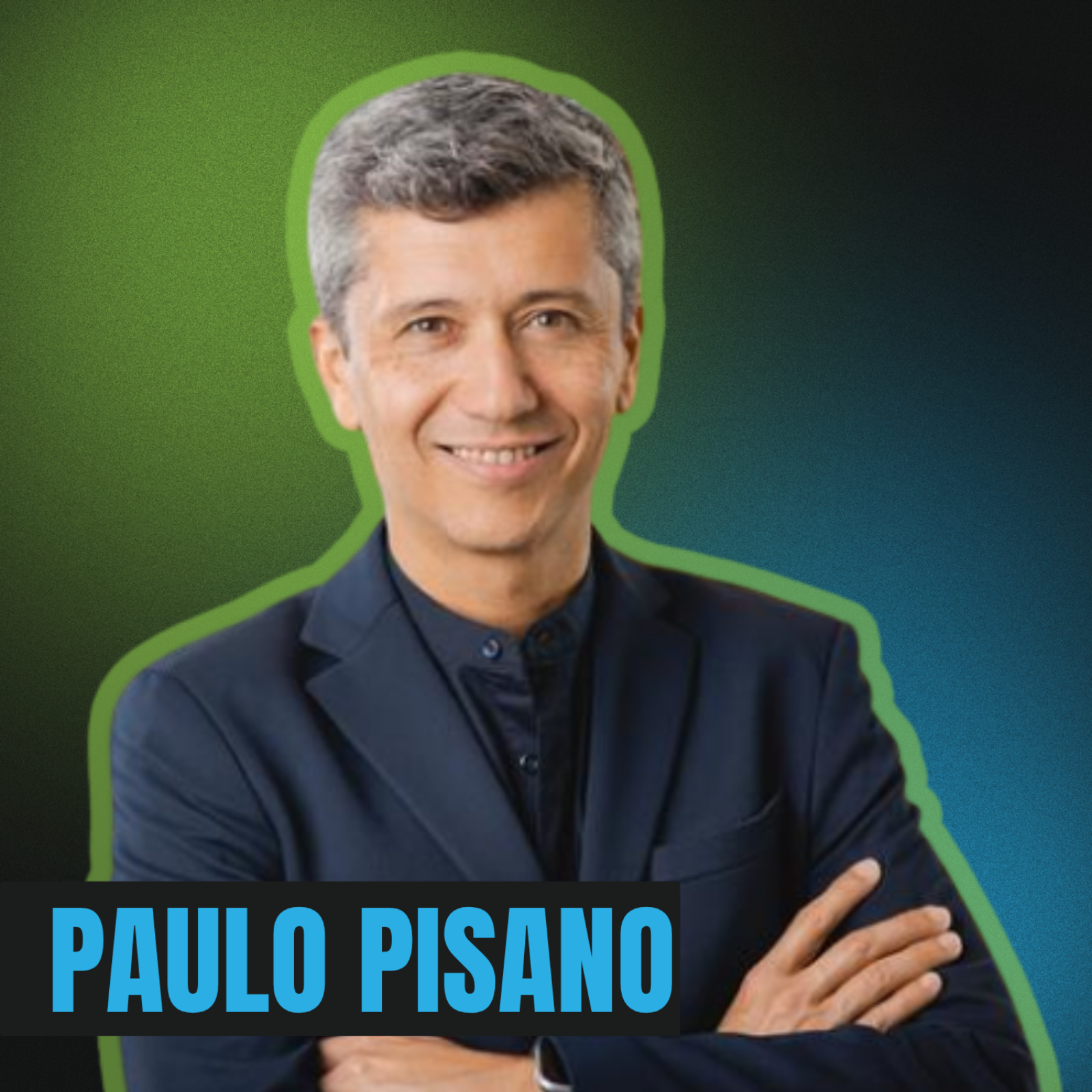
“Culture as Operating System: Connecting Strategy to Performance” with Paulo Pisano, CHRO, Booking Holdings & Chief People Officer, Booking.com
37m 43s
The podcast episode discusses the significance of aligning culture and strategy for organizational success. Culture is described as an operating system shaping how individuals collaborate and make decisions within a company. Leadership behavior, communication, and transparency are highlighted as crucial during challenging times. Booking Holdings focuses on fostering a culture of high execution and low ego across its various brands while also exploring talent movement and development opportunities. Culture is viewed as a competitive advantage that should align with strategic objectives to drive business performance effectively. The episode emphasizes the importance of intentional culture shaping and connecting culture with business goals to enhance organizational performance.
Transcription
6446 Words, 37082 Characters
This is the future of HR podcast, episode 164.
I forgot who was it, Drucker or whoever said that culture eats strategy for breakfast or
something like that.
I never liked that sentence because it feels like defensive or reactive.
Culture is super important, but if you don't have a good strategy, culture is not going
to be enough.
You need culture and supportive strategy.
So the way I see culture is one way to look at it, let's say, is the way we do things
a year.
So it's an operating system.
So I can have amazing hardware.
I can have an amazing strategy, a great operating model or organizational design.
But then how people are going to work with one another, how they're going to approach
decisions, how they're going to approach collaboration, everything else, that's culture.
That's how people operate.
You like it or not, culture is there.
But arguably on a strategy, you can make more binary decisions instead of going to move
investment from this market to that market, this customer to that customer, throughout
the time.
So over time, you start having more disconnects between that direction or hardware or whatever
you call it and the operating system.
For me, that's the angle on connecting culture with business is you are, because you have
a culture and all matter what the choice is, do you want to intentionally shape it?
How can culture become an operating system that drives business performance?
Why does leadership behavior matter more than systems and driving culture?
Hi, I'm your host, JPL8, and this is the future of HR podcast, the only podcast whose mission
is to inspire the next generation of HR leaders.
On each episode, I interview successful HR executives and thought leaders who are reimagining,
rethinking and leading our field into the future.
During our candid conversation, you will learn about their career journeys, their lessons
learned along the way, and their insights on how to take our field, and most importantly,
your career to the next level.
Over the past three years on future of HR, I've talked with more than 150 CHROs and
HR thought leaders about what separates good HR leaders from the great ones.
And there's one thing that's very clear, the best HR leaders think differently.
And that's why I've created the Next Gen HR Leader Accelerator Program, a four week
intensive live virtual development experience designed specifically for HR directors and
senior managers who want to have more impact and influence.
After those four weeks of intensive learning, you'll continue your development journey
by completing a 360, receiving two coaching sessions with me and learning alongside peers
from leading companies across industries for another 12 weeks.
Together, we'll focus on building your business and financial acumen, thinking strategically,
influencing executives with impact, and creating HR strategies that deliver measurable business
results.
More than 100 Next Gen HR leaders have participated from companies like Nike, Prudential, ABV,
McDonald's, Cardinal Health, and Corning, bringing these ideas to life and driving results
inside their organizations.
Our next cohort starts January 27th, 2026, and enrollment closes January 17th with limited
space available.
This isn't just about your next role, it's about shaping the kind of HR leader you want
to be, and if you're ready to take that next step in your HR career, visit futureofhr.com
and secure your spot today.
And if you're a CHRO, you already know your team's impact shapes the future of your organization.
That's why I partnered with CHROs and their leadership teams to design custom HR capability
programs that build these skills at scale.
You can learn more at futureofhr.com.
And with that, my guest this week is Paolo Passano.
Paolo is the Chief People Officer for Booking.com, and he's also the CHRO for Booking Holdings,
one of the world's leading travel technology companies.
He joined the organization in February of 2020, just weeks before the pandemic forced
the closure of 200 offices worldwide, and brought the world and the travel industry
to a standstill.
And in our conversation, Paolo shares how booking holdings not only survived the pandemic,
but has since thrived, and why he believes culture is an operating system that drives
business performance, the importance of experimentation culture for AI adoption and innovation, and
how HR leaders can become the chief simplifiers who drive growth and create value.
I'd love to hear your thoughts on this episode, so drop me a line at LinkedIn and say hello,
and now let's jump into my conversation with Paolo.
Paolo, welcome to the future of HR podcast.
How are you?
I'm pretty well.
It's great to be here.
Great to reconnect.
It is great to reconnect.
It's probably been, it's over 10 years since we last saw each other.
But we look great.
We still look great, not just like 10 years ago.
You do look great.
I think we both look pretty good.
We're holding up.
We're holding up pretty good.
I think we're holding up.
Yes.
It's really skincare.
You know, it's all about skincare, we're saying.
Exactly.
But really, it was so exciting to have you come on the podcast because in those 10 years,
you have accomplished quite a lot, and you are the chief people officer for booking and
booking holdings.
But I want to take you back to March of 2020, when you joined booking.com, because COVID
had just started in March of 2020.
I think everyone remembers this very vividly, and that was really difficult for bookings
holding and booking.com as revenue really plunged a lot.
A lot of time for the travel business, obviously, and what you do.
Yet, the company has bounced back remarkably well.
It's doing better than ever, and I just wonder, as you look back over the last five years,
what have you learned about leadership, resilience, that you're now applying to the company?
Yes.
It's a great question, and as I say, timing is everything, right?
I accepted the offer to join booking, I think, in November of 2019, and I joined in February
2020.
A couple of weeks later, we worked closing 200 offices around the world, and moving
into remote, like everybody else, and trying to figure out how to manage the business around
the world with people working from home.
Look, I think the learnings were probably similar to what a lot of our colleagues learned from
the process.
The first important thing, when you have to live it at that level of intensity, it becomes
really ingrained in how you think about the business, was proximity, visibility, empathy,
that kind of thing.
Visibility, in particular, is a tricky one when you're trying to build visibility and
you're working remote.
You have no opportunity to be in the same spot and to just bump into people.
We had to manufacture that, so to speak.
We had to create more instances where people could connect with one another.
Many more instances where they could hear from leaders.
Even if we didn't have an update, even if we didn't have something fundamentally new
to say, it's being there, being visible, being transparent, but at the same time, being
empathetic and articulate with what is it that we have to do and keep people focused
on the objectives of the organization, what we're trying to do.
That learning, I'd say, has outlived the pandemic cycle.
I say that because I think before the pandemic, we were not as rigorous, sophisticated, might
be a strong word, but certainly not as rigorous with how we thought about the communication
across our organization.
The pandemic period taught us how important that is, how many layers there are around that,
how many different channels you have.
That certainly outlived that period and has been helping us.
I think there are so many good lessons out of a really difficult situation, but I love
that you were really leaning into leadership communications as well during that time and
probably have continued to do that more.
I think that transparency from leadership, people want and expect that more now, especially
during those difficult, challenging times.
People were looking for understanding that, "Hey, we've got a good path forward, leadership
cares, and we're doing this together," so I think that makes a lot of sense.
It's interesting.
Like most other organizations are there, we measure engagement on a regular basis or engagement
scores at the beginning of the pandemic, they went up.
As we were analyzing why, a part of that was that, was that people felt a significant increase
or strengthening of the bonding around the organization, and that you could say, "Well,
it's obvious," but when you have that embodied experience as an organization, it's a good
reminder for you to do more of that.
The other bit that really helped was mission.
Organizations that have a very good, common, well-articulated mission, they do better in
periods of instability or crisis.
For us, the notion of having something that's simple around helping, making it easier for
people to experience the world at a time where you couldn't do it because people couldn't
experience the world.
It was, "Okay, so how are we going to work to take care of all the people who have booked
their travel already?
How are we going to take care of our partners, and how are we going to be innovating and thinking
about how to make things better in the future so that when things get better, we can get
out there and do even more than we do now?"
Building the narrative around that mission also helped focus our people.
Yeah, it sounds like you built a lot of employee loyalty, but also customer loyalty and partner
loyalty along that way.
Obviously, it's great you're back and doing better than ever.
I'm a booking.com customer.
I'm sure many of my listeners are because you've got so many great brands also that
just really play so much of an integral role in our lives.
It was interesting.
I'm just curious a little bit to think about all these great brands, and you have team members
working for the brands who feel maybe they're part of OpenTable or Kayak, right?
They've got some affidlting to the products they're developing, and then you've got booking
holdings, which is the holding company.
How do you think about culture from an operating company perspective and then more of these
kind of product-focused company perspective?
Actually, it's a question I often get also as we get new people coming into the organization,
and it's one of those living questions in the sense that there isn't a final answer
for it.
We're trying to figure it out, but here's the background or the context there.
For many years, the booking holdings grew through acquisitions like many companies in
our space.
One of the things that did very deliberately was to bring your companies in and to give
them as much autonomy and independence as possible.
Generated for us was a lot of agility and a lot of focus on the market, right?
There wasn't a lot of work needed for deep integration in turn, and you and I have worked
in those processes where that sometimes are needed, but it takes a lot of work, a lot
of focus from people to figure out how to align internally.
Because we weren't doing that, many people will claim that while some of our competitors
were trying to integrate internally and we were not, that gave us an advantage.
What that generated was very strong cultures tied to each of those brands.
Those brands have some differences, they have different histories, they've had different
leaders, so they will be somewhat different between each other.
Then you have the culture around booking holdings like headquarters, which is historically
small team, very lean, focused on helping connecting the dots across the group and operating
also the relationship with the board, with the market.
Over the years, that paid off really well, but we realized as we became more mature,
as we became more global, that we were leaving value for our customers on the table.
There were opportunities for us to generate more value for our customers if we started
collaborating and aligning across brands a little bit more.
That's the journey we've been on for the last six, seven years.
That journey is about finding the right balance between a level of autonomy and independence
and connective tissue in the organization.
What that has meant is that almost for the first time in the history of, if you look
at the group as 25 years or so and the last five years or so, we are engaged in that conversation
around what are the cultures and the subcultures, what do they have in common, what is different
and where is it fine for it to be different and where do we want to have it a little bit
more similar.
There are some things that are very similar across the group, such as high execution,
low ego.
That's something I've noticed and I hear from people who join in.
I hear from people who left us and are like, "Oh, I missed a part of it," which is this
notion that people are down to earth and they're really focused on getting things done, kind
of out executing the competition.
There isn't a lot of ego.
There isn't a lot of kind of empire building or politics, and that's great because you
can really focus the energy of the teams into getting stuff done.
That is common across the group, but then you're going to have some dimensions that
are a bit more different.
For example, in the Netherlands, at Booking.com, which was born in the Netherlands, you do
have the Dutch influence of kind of consensus on decisions, for example, whereas Agoda,
which was born out of Thailand, but also with a strong US culture, it might be a little
bit faster, more agile, and more top-down decisions on certain things.
There'll be a lot of discussion, but it's great that we have those differences because
they really align to support each of those brands in their own right.
Yeah, what's really interesting, I think, is just a cool case study.
Booking Holdings is an ecosystem of not only brands, business models, and then talent and
then culture, actually.
That connective tissue is really interesting as you're talking about it, keeping these
entrepreneurial brands with leaders who are understanding the customer and building and
growing.
You also are having this amazing pipeline for talent, potentially.
Are you doing some movement of talent, and is that starting to happen where you're able
to say, "Let's fuse different ideas into different parts of the brands and to shake
things up and get some, maybe some synergies you wouldn't have gotten before?"
This is one of the, in my opinion, many untapped reserves of value that we have in the organization.
I say that because, yes, we have moved talent around.
I think you're right.
You can develop talent in so many different environments and business models and geographies,
et cetera, that you can build a really strong and diverse talent pipeline.
Historically, though, because we were so independent, you didn't have, you didn't see much talent
moving across the organizations.
We've been deliberately creating more pathways to do that.
Some of them, I'd say, they are triggered by business need.
We're developing rules of engagement, of ways of working across, let's say, two or three
different operating companies that might operate in the same market.
Because you're trying to do that, you start bringing teams from across those organizations
to work together, and they are starting to work more deeply with one another, getting
to know one another, starting to build those connections that will, hopefully, and I think
they do outlive that specific initiative or project.
That connectivity is happening very much because of, I'd say, short-term business needs.
They live in the tactical space.
Then we're trying to build also opportunities for development.
If I'm developing managers or leaders in each of the brands, I think you and I will probably
agree that there are only so many ways to develop a great manager or a great leader.
There might be some variations, but every organization will describe you their framework.
It's going to be like 80%, maybe more, the same.
We're starting to leverage those initiatives, and if you have a brand that's further ahead
in a management development program, can we open up spaces and start bringing people from
other brands, from other parts of the organization, last year and this year for the first time
we developed an executive development program at group level to bring the top of the house
together?
Then you create these amazing opportunities where people are spending a week or two together,
learning together, and they see a different side of one another, and that's another way
to do that.
Then we do talent reviews, the good old-fashioned succession planning talent reviews, and we're
starting to build more action behind that and a bit more intent in moving people around,
and we've started to do that.
There are a few fronts where you see that happening, but I think there's a lot of value that can
still come from it.
We are doing our first steps, I'd say, in that space compared to some companies that have
done it for longer.
Thanks for just being so transparent, giving us that good lay of the land and where you're
at in that path, because it's not really easy to do what you're trying to do a lot of ways,
because there's tension just from this idea of being entrepreneurial and brand driven
versus, hey, we're trying to build group enterprise leaders or cross-pollinate talent, all that
good stuff.
I know you think culture, and you've thought we're talking about culture as a competitive
advantage.
Paulo, it's obvious you believe that, but sometimes for HR leaders, we get the, hey, culture is
soft.
Culture, I can't measure it.
How do you connect culture in your perspective?
How do you connect to that to performance and growth?
You do get a lot of that, the question around culture being soft.
I was talking to someone the other day about this.
I forgot, was it Drucker or whoever said that culture eats strategy for breakfast or something
like that?
I never liked that sentence, because it feels like defensive or reactive.
Culture is super important, but if you don't have a good strategy, culture is not going
to be enough.
You need culture and supportive strategy.
The way I see culture is, one way to look at it, let's say, is the way we do things
a year.
So it's an operating system.
So I can have amazing hardware.
I can have an amazing strategy, a great operating model or organizational design, but then how
people are going to work with one another, how they're going to approach decisions, how
they're going to approach collaboration, everything else, that's culture.
That's how people operate.
If you like it or not, culture is there.
The moment I think you have two or more people working together, you have emergence of a
culture.
Then the question is, as a culture emerges and as it evolves, is it evolving in service
of your strategic ambitions or is it not?
More often than not, we know that.
It's not a binary, but more often than not, parts of it are aligned and in service of
the strategy, but parts aren't because you could argue strategic direction or strategic
decisions can change faster than human behavior.
Whatever is wired in our brains on how we work takes longer.
It's just a fact.
It's more complex as well.
I can't decide it in a room and people start going in a different direction or acting differently.
But arguably on a strategy, you can make more binary decisions and say, we're going to move
investment from this market to that market, from this customer to that customer or product
line.
Over time, you start having more disconnects between that direction or hardware or whatever
you call it and the operating system.
For me, that's the angle on connecting culture with business is you are, because you have
a culture, no matter what, the choice is, do you want to intentionally shape it?
There are tools and there are competencies that help people do it better.
Then as you operate on that, you can develop some indicators.
It's not a science, but you can develop some indicators that will tell you if that culture
is moving you closer to where you want to get to.
I love the way you're thinking about this, because when we talk about culture, what I
find from most HR leaders, great HR leaders as well, is we're talking about aspirational.
We're like, what's the behavior we want to see?
It's very aspirational, which is good.
Hey, maybe with new strategy, here's these new behaviors we're trying to put in place.
We're always thinking about how do we get better in the future.
What we're not talking about, which I think you're really just putting it under the line
here, is that what's not going to work for the new strategy?
What do we have to stop doing or change, which is much harder for organizations to do that?
I think about culture.
I love your perspective.
For me, it comes into how leaders make decisions, who gets promoted.
Those are things that really start to show the culture, especially decision making.
For really top-down, but we need to be more agile, how do you push decision making down?
You can say that on your behaviors, but if everything has to go back up to the leadership
team and get reviewed by your CEO or your operating president or whoever, and you don't
really can make decisions at the lower levels, you're not really going to have an agile entrepreneurial
culture.
I think a lot of times leadership teams don't want to have those conversations.
They want to put the nice new behaviors in the wall and then keep acting like they've
acted for the last few years.
That's what I see culture doesn't always have a disconnect.
I agree completely with you.
One of the powerful things I think around engaging on the work on culture is, if done
well, let's put it this way, if forces conversations and forces awareness around the alignment
or the misalignment, let's say, between a set of things, including behaviors, for example,
and your strategy or where you want to get to.
When we talk about culture, we use three or four distinctions that we think are helpful.
We look at culture and say, "Okay, what are the levers for culture?"
We have behaviors, what people are doing will help certainly leaders, first and foremost.
You have symbols that links to maybe who gets promoted or do executives have special benefits
or a special floor that only they have access to or not or the parking is a thing right
in some companies.
Then the systems and the processes that you have, how do they support what you do?
With that language, with those distinctions, you can start engaging with executives and
executive teams in a conversation around where is it that they're trying to get and what
is it that they need to get there, and then compare that with the reality and to your
point, to their own behaviors.
It generates often, in my experience, nine times out of 10.
It generates very interesting, very deep, and sometimes very hard conversations.
The times that I've seen executive teams engage on that and shift some of those levers, the
results are evident.
Yes, it takes a long time for the whole organization to follow, but it doesn't take that long
for the first ripples to be visibly noticed in the organization.
Yeah.
No, I think it's just almost a masterclass there of how to think about that, so I really
appreciate it, Paulo.
You're giving a little more insight into how you see that.
It wouldn't be a conversation in 2025, but we didn't talk about AI a little bit, so we
had to bring it up.
I know you're doing some pretty innovative things around AI at bookings, holdings, and
different companies.
Tell me more about what you've been doing to upskill the team, involving mindsets, like
how are you preparing your workforce, maybe even in yourself, for AI?
It's everywhere.
Generative AI is everywhere these days.
I think we do have a little bit of an advantage in terms of the starting point for the organization,
because we are a digital native organization, so we were born digital in the e-commerce
space and that's our genesis.
That helps, certainly.
You already start from a place where folks are pretty familiar with technology and the
power of technology and what you do, and also, we've been using machine learning and AI for
many years, way before you had the more recent advances with LLM's generative AI.
We were already using machine learning for a lot of what we do.
Certainly in the experimentation space, booking was known for many years as one of the pioneers
in A/B testing.
Now, you have many other technology companies that do a great job in that space, but this
notion of in every single moment, you're running hundreds or thousands of experiments and you're
looking at the data and what does the data tell you?
On the basis of that, you're making choices or you may have machine learning helping you
make those choices.
That's been ingrained in the DNA of the organization.
That has helped us connect more quickly with the recent developments.
With that said, like any organization, people are set in their ways and you need to put
effort into it.
It doesn't happen automatically.
We ran a classic effort of engaging people first from an awareness standpoint and then
an interest standpoint and then we've made tools available for people to play with.
We've implemented a couple of tools out there that people can engage with and experiment
with.
Because we have an experimentation culture, I've been very pleased that a lot of people
started playing around with it.
It's like with any other technology.
I think it's not until the new technology you're using or the new tool you're using becomes
second nature.
It's not until then that you can start finding some real innovation because your first reaction,
and I think we are at that stage to a certain degree in generative AI, is a stage where you
pick up that technology and you try to do something you already did better.
Think of the early days of the internet.
People would pick up a phone book, it's physical, now we can put it online or an encyclopedia
and now it's online.
It's great, but the notion of things like e-commerce, which are the basis of what we
do were impossible to think back in the day and today is absolutely normal and taken for
granted.
I'm very curious about what are the new use cases that are going to come up once generative
AI becomes second nature, but in the meantime, to get as many people as you can engage with
it and playing with it, I think is the way to go and that's fundamentally what we're
trying to do and it goes from personal productivity to AI bots or agents that can help people
book travel.
I have people in my team that have picked up all the information we had on the cultural
programs we've been developing and put it onto one of the gen AI platforms and generated
a coach that you can engage with if you're going to have a difficult meeting or if you're
thinking about something and you converse with it and it's going to use all the content
of the programs we've been running or all the way to coders that are, of course, going
to using generative AI to code or to review code or to audit code, all the way to AI bots
that can interact with customers.
It's pretty cool to see the wide range of experimentation.
Yeah, what's great about being a digital native company like you talked about is you've got
a front row seat, some of the innovation that's happening because you're right, I think when
you look at developers and the idea of vibe coding, I've tried it.
I've vibe coded a website.
I don't think it was good, but I've tried it to see what is it like to use lovable or
replete and curse for all these guys because if the tech is so amazing, then you've got
to your point like building maybe a GPT that does coaching.
It's interesting.
I mean, when do you see the future of HR or HR functions building their own tech versus
going to vendors?
It's almost like, why do I need to go, honestly, hire a vendor or a SaaS vendor if I could
just build certain use cases that I think will make sense for my company?
Do you get that sense?
How do you feel about where it's going to go?
The short answer is I don't know.
It's very hard to know where we're going to go with all of this because, yes, generative
AI empowers teams and individuals in a way that you just couldn't before, right?
You hear in there of companies that seem to be making more radical turns into not using
some of the classic big HR systems and ERPs and just doing it differently.
At the same time, those companies that have a lot of, particularly the good ones that
have a lot of knowledge and a lot of depth in the HR space, they are in that race as
well trying to make their products more compelling and more interesting and easier to integrate,
etc.
So I'm very agnostic in that sense.
It's going to be, I'd say, tougher competition for them.
The standards, the expectations will rise.
I have vendors, for example, that offer us coaching tools and generative AI, and don't
get me wrong, I've seen some very good stuff out there, but just on the example I've just
given you where I have someone from my team from the side of their desk developing something
that's quite good, it's not perfect, and it's quite narrow, I'm saying, well, this was
done with one person, a smart person doing it from the side of their desk, and it's
pretty cool.
What if we put five people, 10 people doing this?
You could argue you can get some of this stuff for a fraction of the cost and a lot more
control than you get through an external engagement.
It's possible.
Equally, I want to see what's out there and I want to see how creative companies can get
and how compelling they can build their offerings, and we're going to get whatever is best for
the organization.
That's how I see it.
I think Will said, I think this idea of being agnostic is really smart.
No one's got skin in this game.
I think what matters for you as an HR leader or HR leader is listening is that we're doing
what's right for the business, and it feels like the ecosystem is just going to get bigger.
You're still going to have to have some big HRS systems, and they're going to get better
to your point, and then you've got an incredible opportunity for your team members to build
their skills, feel empowered, feel entrepreneurial, make a difference because they see a need
and it's really cool that that's where the world we're at today, where you could say,
I have an idea for an app or chatbot or whatever it is or GPT, and I just built it on my spare
time or is there a job?
I think that is empowering for the future of work, and so I'm actually a little more optimistic.
I've definitely had days when I'm pessimistic depending on what article you read.
I feel less pessimistic about what's happening.
I feel more optimistic that it's going to really be new skills, new capabilities, more
innovation that we've seen, and when you think about really just even OpenAI, Cloud, all
these models are global, so you have seven billion people who are able to access information
and come up with ideas, and so to me, that just seems like an amazing opportunity for
more innovation.
While I want to talk to you about next is really around how HR leaders can be much more business
drivers of growth. How do HR leaders position themselves with the business to really drive
growth? I think sometimes that can be a struggle for HR leaders. Sometimes we get pigeonholed
as transactional or as non-strategic, but you've done this for your whole career where
you've been a business leader who has HR expertise. What advice do you have on how to position
HR differently in that way?
I'd say first and foremost, it's the basics. HR leaders have to understand what are the
drivers of the business? What are the main challenges that the business is going through?
What are the greatest opportunities that the business is trying to get to? If you don't
really understand that as a start, then it's very hard for you to look at your function.
By the way, that would be valid for HR as it be for any enabling function, I'd say, and
to be able to look back at your function and then to make decisions around how to best
align that to help the business with generating more revenue, improving margins, getting market
share, doing a transition or a transformation or whatever it is. I know it sounds basic
and it is, but I say it because I engage in many conversations with counterparts and fellow
practitioners where at times, I think in HR, one of the classic pitfalls we have is we
fall in love with our products and we want to drive product with the business. Why? Leaders
are engaging with this thing that I'm trying to do. I'm like, "Okay, so how is this thing
you're trying to do helping the business? What's the itch it's helping to scratch?"
Sometimes I get a blank stares. I don't know, it's just good business to do this. I'm saying,
look, it might be that doing succession planning, anyone could agree it's a good thing to do,
but if people aren't engaging with it, sometimes, I'm not saying always, but it's not about,
"Oh, how can I sell that more effectively?" Sometimes is, "Well, is there something else
that's more important for the business now that would be more relevant for them and that
can allow you to deliver value to build credibility?" Then maybe there's a later moment where you
can bring those other things. Really connecting with what is the business reality? What are
the challenges and the opportunities? Then looking back at your work and your portfolio
and realigning it. For me, that's the most important thing.
Paul, the last question for you asks this to all my guests. What is one word or phrase
that you believe will define the future of HR over the next five to 10 years?
Chief simplifiers. I'll expand on that because this came up organically in some conversations
with colleagues. I look around my own world, but I know this is true for so many other
people and organizations. Everything around us is generating more complexity. The regulatory
environment, for example, is getting incredibly complex. Geopolitical complexity and risks
associated. Then as you grow as a business, you become more complex. You have more geographies
and more product lines, whatnot. You grow. You have more areas to coordinate. I think
in HR, we have a unique vantage point. We have an alibi to touch any part of your organization,
and we're often in relevant conversations with leaders from across the group. There's
a role we can play in helping organizations simplify. I think you got to start it with
leading by example. How do you simplify HR first? You don't have to be perfect, but you
have to show the business by its worth while trying to do this and then using that unique
vantage point we have to also help other leaders. I think there's something to be said around
simplification that will be, I don't know if it's going to be the main part, but it's
going to be a big part of the world of HR.
I love it. Paulo, HR is a chief simplifier. Thank you so much for being on the podcast.
This was an incredible conversation.
Thank you so much.
Thank you so much for listening to this episode of Future of HR podcast. Thanks again to Paulo
for reminding us that culture is an operating system that can drive business performance.
As always, you can go to futureofhr.com to view all of our past episodes and learn more
about our mission to inspire the next generation of HR leaders. And if you enjoyed this episode
of Future of HR, I think you'll enjoy my Future of HR newsletter, which is the only newsletter
that's focused on helping you to elevate your career and business impact. Go to futureofhr.com
to subscribe and be sure to download my HR leaders blueprint, which is 18 pages of real
world device from 100 plus HR thought leaders with simple, actionable, improving strategies
to advance your career.
And we'll be back next week with another amazing guest, Muriel Wilkins. Muriel is the founder
and CEO of Paravis Partners and host of the award-winning Harvard Business Review podcast,
Coaching Real Leaders. Muriel will be sharing insights for her new book, Leadership Unblocked,
Break Through the Beliefs That Limit Your Potential.
Drawing from her extensive coaching experience, Muriel outlines seven hidden beliefs that
can hold leaders back and actively block progress if leaders aren't aware of their existence.
You won't want to miss this conversation. Thanks again for being part of our Future of
HR community.
Podcast Summary
Key Points:
Culture and strategy are both crucial for organizational success.
Culture is likened to an operating system that influences how people work together.
The importance of leadership behavior, communication, and transparency during challenging times.
Booking Holdings nurtures a culture of high execution and low ego across its brands.
Efforts are being made to foster talent movement and development across different brands within Booking Holdings.
Culture is seen as a competitive advantage that needs to align with the organization's strategic goals.
Summary:
The podcast episode discusses the significance of aligning culture and strategy for organizational success. Culture is described as an operating system shaping how individuals collaborate and make decisions within a company. Leadership behavior, communication, and transparency are highlighted as crucial during challenging times.
Booking Holdings focuses on fostering a culture of high execution and low ego across its various brands while also exploring talent movement and development opportunities. Culture is viewed as a competitive advantage that should align with strategic objectives to drive business performance effectively. The episode emphasizes the importance of intentional culture shaping and connecting culture with business goals to enhance organizational performance.
FAQs
Culture can be seen as the way people operate together, forming an operating system. Aligning culture with strategic ambitions can drive business performance.
Leadership behavior influences how people work together, make decisions, and collaborate, shaping the culture of an organization.
HR leaders can inspire the next generation by sharing career journeys, lessons learned, and insights on advancing in the field.
Booking Holdings balances autonomy and connectivity to maintain strong cultures within its individual brands while fostering collaboration and alignment across the organization.
Transparency and visibility in leadership communication build trust, keep employees focused, and show care and unity during difficult periods.
Booking Holdings is establishing programs and initiatives to facilitate talent movement across brands, enabling diverse development opportunities and building a strong talent pipeline.
Chat with AI
Loading...
Pro features
Go deeper with this episode
Unlock creator-grade tools that turn any transcript into show notes and subtitle files.
 PodcastTranscript AI