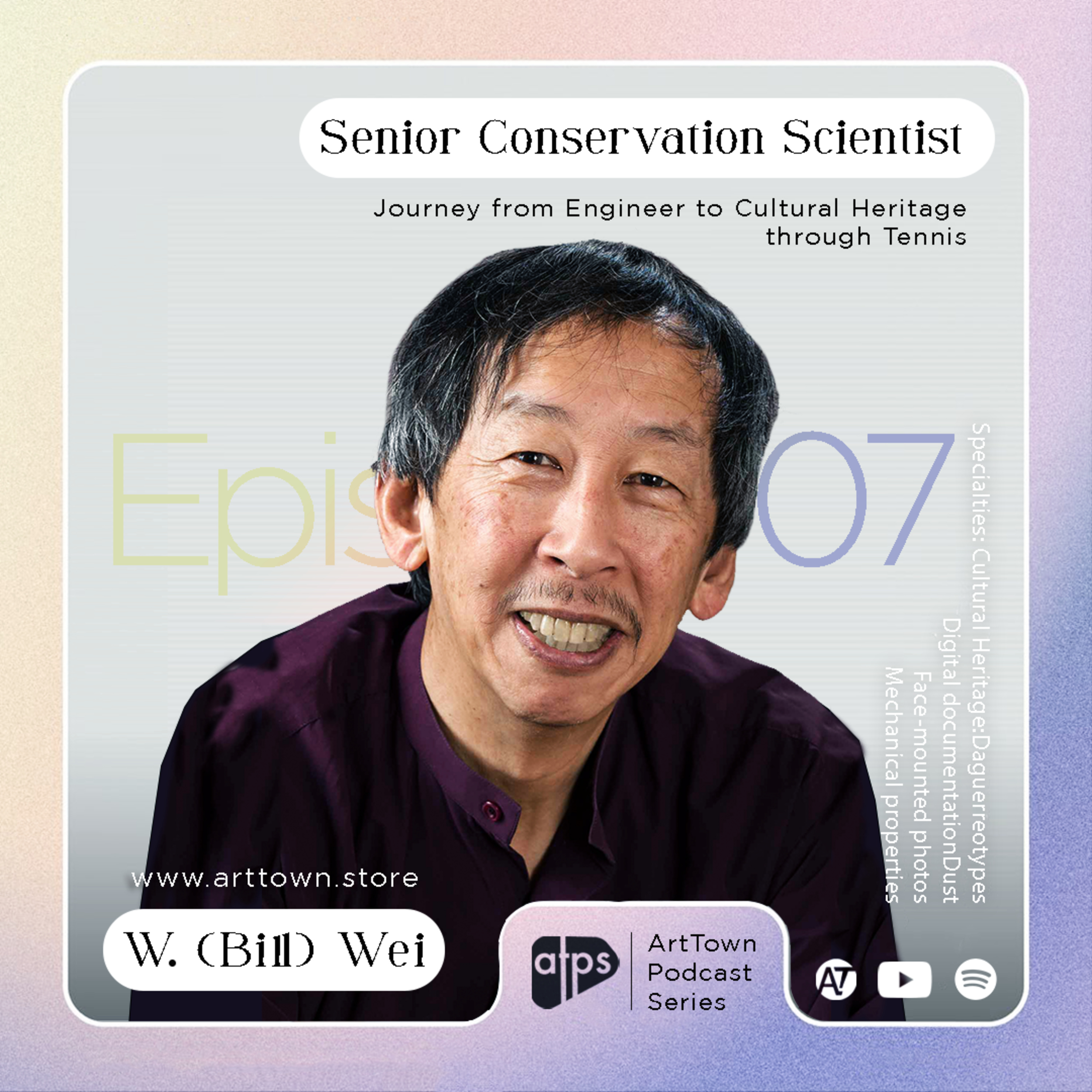
Cultural Heritage & Art Conservation from a Scientist's Eye | Bill Wei | Senior Conservation Scientist | S3E7
52m 32s
En esta entrevista, Bill Wei, un científico de conservación senior con una larga trayectoria, narra su inusual transición desde una carrera en ingeniería aeronáutica hacia el campo de la conservación del patrimonio cultural. Originario de Estados Unidos y ahora ciudadano neerlandés, Wei explica que su cambio profesional fue catalizado por una amistad forjada jugando al tenis en Múnich, que lo conectó con un conservador de museo. Este encuentro le presentó el mundo de la conservación en un momento de transición en su carrera de ingeniería. Define la conservación del arte como un esfuerzo filosófico y técnico para preservar objetos, permitiendo que su significado histórico y artístico perdure para generaciones futuras. Destaca cómo su formación en ingeniería mecánica y ciencia de materiales es invaluable en su trabajo actual, aplicándose a problemas como la evaluación de daños en el transporte de arte y el análisis de propiedades materiales. Wei también reflexiona sobre la evolución tecnológica en la ingeniería, enfatizando el papel transformador de la computación y advirtiendo sobre los riesgos de confiar ciegamente en el software sin una comprensión fundamental. Su historia subraya la importancia de estar abierto a oportunidades inesperadas y cómo el conocimiento especializado puede transferirse de manera fructífera entre disciplinas aparentemente dispares.
Transcription
9104 Words, 47293 Characters
Hello everyone, welcome to our turnporka series or ATPS as you like to call it. Every week on Friday we feature our 10 design professionals who take us to their journey in this fascinating world of art. Make sure you follow us on instagram, youtube and spotify with that let's continue with this show and dive deep into the ocean of art. I haven't been much more excited about releasing the podcast after a short time, today we have scientists with us, Bill V, who is a senior conservation scientist. He has been in this industry for 30 plus years. In his earlier life he was an engineer, building aircrafts and whatnot. And then somehow tennis actually turned him towards culture heritage. Here, you'll be able to learn about the journey from aircraft building to using those simple mechanisms and techniques to perfect art conservation world. Presenting you, Senior Conservation Scientists, will be on our turnporka series. Hi Bill, it's my absolute pleasure having you on my show today. Thank you. Yep, so with that I would like to actually ask you to introduce yourself briefly and then you can actually tell us a bit background about art conservation and what does it actually consist of? Okay, well actually the second question is actually very complicated answer. My name is Bill Wei, I'm a, what's known as a senior conservation scientist at the Cultural Heritage Agency of the Netherlands. Although that's just for two more weeks and then the government says I have to retire. So I will be starting my own consulting business in the same field called Bidemeck. Yeah, my background, I was born in the United States and I was an American citizen. I did all my studies there, including a bachelor's of engineering at Princeton University and PhD in material science and engineering that's in metals, the University of Illinois in Urbana Champaign and that was in 1984 and then I essentially left the country. I did a postdoc in Dusseldorf also on engineering materials and after a short stay in the United States. So I've been in the United States, I've been in Europe actually more than I've ever been in the United States and actually since 2002 I'm a Dutch citizen. So that's my private life. I began my career in engineering, actually my parents because they were from China, they came after the Second World War because my grandfather's worked for the nationalist government. So they left and they went to the United States. So of course I have a Chinese kind of upbringing. So I was sort of steered into engineering which I thought was fine because my father traveled a lot and I thought it was very interesting. So I actually was in his field for many years, for 10 or 15 years and that is in the aircraft industry and that has to do with mechanical properties and materials for our past. Fastened your aircraft and for jet engines and then so I ended up in Munich, Germany for seven years and after that I took a professor position at the University of 20 in the Netherlands for four or five years and yeah, actually it's a very odd story but I did get into cultural heritage in a very odd way and it's actually through tennis which might be an interesting question for you later but I actually got into cultural heritage in 2000 and I've been working in that field ever since. I wanted to do something else than mechanical properties and engineering and materials but your background sort of catches up with you. So I'm doing a lot of work that has to do with transport of art, whether it will get damaged in transport. And now your second question about art conservation, what is art conservation and art restoration? That's a very complicated question philosophically which I'm also interested in. If you talk about your own life in a family or in a history you want to save certain things, I'll call them things that will remind you of history. And then the question is, okay I want my children or future generations to remember it the way I remembered it. So then you try to do something to the object to make sure it stays in the same or a good condition that people can still remember what you were talking about. And the same thing works for artists, I think I'm married to an artist but I think most artists don't think about their work being saved for two or three hundred years. But still people buy art and they want to pass it on. And in the past of course here in the Netherlands everybody wants to save a rent, rent or a phone ho. So they want to be able to treat that object so that it tries to bring out what the artist wanted to say and pass it on for another two hundred years. So that is sort of the philosophical theory behind art restoration and the cultivation of culture heritage. And that can be also historic buildings, I mean I think of the Abra in India, things like that. You want to keep it in some kind of condition where people will quote unquote enjoy it the way it was supposed to be enjoyed. Absolutely, I just said that artists, whatever art which the artist makes has to pass on from generation to generation for them to live on this story and thus it makes it very necessary to have art conservation and restoration done properly. With that you just actually mentioned that you actually had a shift from engineering to culture heritage because of tennis. So could you actually share that story with us? Yeah, you know tennis, there are a lot of things you know you have sport clubs, you have business clubs. You know a lot of things happen through contacts, contacts and I guess you just have to stay open for things. I just happen to be, I play a lot of tennis and actually I've met my first wife playing tennis and unfortunately she passed away and I met my second wife also playing tennis. But the conservation world was I was in Munich working for six and a half years for a jet engine manufacturer in research and development of new materials. But I played team tennis there, it's amateur team tennis and when I got there they wanted me to play on their team and so in Germany when they play team tennis there's nine matches. You play six singles and three doubles and so this team was always doing well in the singles they win four and lose two but then they lose all their doubles. So when I joined the team they say well you go play with Konrad. So I played with Konrad for six years and we only lost once and that's because we always played number three doubles and the one time we lost was at number one because the people were on vacation and Konrad had just come back from a trip from a month and I hadn't played any tennis and we still lost in the third set, tiebreaker. So you know of course when you never lose and you're such a good team you build up a chemistry and a friendship which still lasts to this day. So one day I discovered we were talking and it turns out he was a senior conservator for the Alta Pinappote which was a very well known internationally well known museum in Munich. And one day we were talking and said Bill you have to get away from the military industrial complex come to my studio. So I went to his studio and I'm standing in front, I appreciate art but I'm not that good of it but I'm standing in front of an Alta Dürer painting which was one of three that were very badly damaged by a vandal with acid and you see all the paint running down and yeah he was conserving that and he gave me a tour and I'm seeing a couple of my favorite artists they're just sitting back in the studios waiting to be conserved and I thought oh this is cool. So he said yeah Bill you have to get into this field and what happened right around that time was the fall of the Berlin Wall. And so I'm working for a jet engine manufacturer in research and development and it really doesn't matter but of course half of their work is for military jets engines. And of course when the Berlin Wall fell and Germany became united there was a European fighter plane and the question was yeah why do we need a European fighter plane the enemy just gave up. So the company put us on what they call in English they call it short work that means a company can legally they can apply to the government to say we want to make everybody unemployed for one day a week if they promise to take us back in two years. So the government pays our unemployment. So Clara said well why don't you just come to my institute and I'll introduce you my director and you have a volunteer position. So I went there and it had to do them in the canonical properties it was actually the very first digital cameras that were ever made. You wouldn't believe it was four million pixels really big and yeah and what they were doing is they were they were taking pictures of paintings for them at that time very high resolution also with scanning and stitching of pictures together and before transport and then they go out and six months later the painting would come back and they would set it up exactly the same way and take another photograph. So my interview was well-built here is the before and the after picture and they had a computer software that makes it marks the pixels at a change and he just asked me okay but what are these changes. And I said well that's dust that's dust that's dust that's dust that's dust he said how do you know that's dust is like yeah I've been looking at this for 20 years that's dust it's too sharp and then I saw a little crack in the paint and I said well when the painting came back the crack was closed and he looked at me he said cracks don't close I said well yeah but if your canvas if your canvas sort of moved back and forth of course if it's this way it's open and if it's this way it's closed so he took me and that sort of that sort of the background is culture heritage it's all chemistry most of most of the stuff that conservators do is chemistry you have to know what it's made of and you have to be careful before you clean so there's absolutely no people aren't stupid they just absolutely no background they don't teach mechanical properties in conservation so that's how I got started but it all started just knowing the right person playing tennis. Absolutely opportunity can actually occur to you when you don't even expect for it and you just actually told that the upper person does actually need a background having to know about the material and how it actually works so this was actually in your previous life where you were actually a mechanical engineer and then you did the masters and then ended up doing the PhD so could actually walk us through that journey of yours like how was that change from being a mechanical engineer to doing PhD in material science. Oh yeah I mean like I said I was sort of steered into it you know I actually actually wanted to be an architect I thought that was kind of cool but of course by my parents with their with their upbringing they did their best but they say why architecture is there's no money and things like that of course they were doing their best to have the best things for me so it's sort of like I steered that way so I just went into engineering and I think you know at that time you don't really think about it and and then when I did my PhD was essentially in the field that was my father was in so of course he gave me recommendations of which university and which professors to work for so I went to the University of Illinois and there was a guy named Howard Beerbaum who was a very good in his field and it was sort of the same field as my father and I have to say my father was internationally one of the top people in what they call aging aircraft he developed a lot of the models with several colleagues on how to predict when you need to maintain an aircraft and how it's so long so I got steered into that I don't know if I would do that all over again but it has given me the background to do what I am doing now if you ask me what has changed in the last years I think a lot of it's just what you can do with a computer you know if you ask somebody who was born in in 1890 or 1900 what was the biggest thing the fastest thing that ever happened to them probably was he invented the airplane when I was studying at Princeton University I learned computer programming with punch cards I don't know if you know what those are I think a lot of this generation does not know what a punch card is you know that one that one you know I used to do baseball statistics and you you you know you punch all the data in and you punch the program and then you put it in the card reader it goes and you think oh no the reader crashed which means I have to repunch 20 or 30 cards which got all mangled and then when you actually feed the cards soon and it's success then you have to wait a half hour for the operator to bring out this big piece of paper where your program's on it and it says error in hollarith field now it took me several times and asking somebody that means I forgot a parenthesis so that's one of the biggest changes in the last 30 years it's just the use of computer computer design calculations being able to do these huge calculations on jet aircraft or power plants or consumer products just doing that on a computer I just watched one of your other podcasts very interesting of the guy from the Royal Academy of Arts I mean the kind of stuff that he does you probably could I mean he probably had the same thing 34 the year 40 years ago you had to do that on paper you know on a drawing table I don't think this generation knows what a drawing table is so you know they just know they just know cat cam and it's on a computer screen so I think that's that's one of the biggest changes in mechanical engineering I does have a negative side that many students and engineers just sort of blindly trust the software and they don't quite understand what's actually in the software you know it's the kind of thing also in banks they say oh computer error there's no such thing as computer error somebody programmed that and I think a lot of the younger generation just sort of punches numbers in and gets them around and don't think about whether the answer makes any sense so but I think that's the biggest change I've seen in the last 30 years yeah absolutely like as I also have an engineering background seeing my friends struggle with that I do feel that they don't have actually a practical knowledge of building in a drawing from hand rather they actually work on cat cam and many other software such as those so right now you you just told us about the 30 years changes in engineering field but from the great boiling wall was built they right now it's almost 30 years and you have built in art conservation so what has changed in that let's see you're talking about the book yeah it wasn't the thing is I've been in this field part of my work has been on mechanical properties and like I said it has to do with the transport and I also get questions on why do panel wood panel paintings crack why does furniture crack on the other hand when you're working concert this is going to be a little bit long answer because I'm also on a philosophical side what happens when you start talking to people you begin I do have a bit of a conservation background when I first started here in the Netherlands I was actually also volunteer and then they started hiring me but I do have an understanding of how a conservator thinks and so when they started asking me questions you start also getting to realize you know path has that shirt on and he's going to be a very he was a very famous digital podcast art sales very important for India and now in 300 years the only thing that left of him is that shirt and it's torn and it's a little bit discolored and people really fine part was so so important for Indian art history they want to conserve that shirt but they can we say in Dutch thank you people conservators and art historians and historians can drink each other's blood on how are we going to restore his shirt what are we allowed to do with it what are we not allowed to do with it and that's about that's that's why your question before on art conservation very very difficult because that's something called conservation ethics what is now original about your shirt what is authentic about your shirt what is your shirt saying about you that's what people have to try to figure out in 300 years so so that so actually I started getting interested in perception and even though I'm engineering mechanical properties there's another kind of instrument where you can measure roughness roughness for example I don't know do you have that Swedish company IKEA or Ekea in your country okay well anyway they make they make mass production wood furniture but it's actually good and inexpensive but it's the kind of thing you know if I buy a table from them this today and in two years I really like the table assuming the color is the same it still has to look the same in terms of gloss or madness and you can measure that with this instrument and in the art conservation well people always think they just think they remove a varnish from a painting and they say oh it looks it looks mad and I thought yeah of course it looks mad you just took the varnish off but what they meant is that 16th and 17th century ours they knew that the varnish would only work is it if it had the same composition as the material which was in the paint the filler you know paint is a pigment and filler and so I said and so they start doing chemistry I said that's that chemistry things are matte means that they're rougher than something something that's really glossy is very smooth and you can measure that and they do that in the automobile industry for example there are a lot of parts that rub each other they have to have a certain roughness so anyway I got interested in that kind of thing and then I was doing perception tests I would have people would sort of do a treatment I do a roughness measurement but I also said you know you just do a roughness measurement that doesn't say anything you also have to do a subjective perception test how what does it look like after you change it so they you've got all those discussions and the end of the story is that I was starting to do something called eye tracking I don't know if you know eye tracking it's a it's an instrument that that sort of follows your eyes and it can tell what you're looking at on a screen so for example I mean you and I are now looking at this laptop and I can it can see that I'm looking at your picture or you can see that I'm not looking at the bottom of the screen so I was beginning to use that partly in this sense to ask what does a normal viewer look at when they're looking at a 17th century painting because conservatives can get really in vicious arguments around a little thing and where I think does the visitor actually see that so getting back to the book that was a long story but getting that the book I gave a talk on that several years ago in Spain and you know sometimes you have it was a fairly well-known conference so sometimes you have publishers looking for interesting things for books so a publisher wrote to me so oh do you want to write a book on eye tracking I said well you know that's the first experiment I've ever done I'm not really an expert in eye tracking so thank you but I don't yeah it would be stupid if I wrote a book like that but then they say well we're actually very interested in getting into the art conservation area is there something you would be interested in and that was something I've been talking about with the back of my mind but you know I'm not somebody that sells myself or wants to go to a publisher so I said well I could say something about mechanical properties that's something that nobody has ever taught in engineering and I know that I'm sorry in art conservation so they said oh that's a good idea and because I've been teaching for 10 years I mean writing a book is very difficult but that book was not as difficult I thought because of course I've got 10 years worth of teaching notes the difficult part is just writing it so that it's understandable so you know you asked me what motivated me to write the book the motivation was sort of in the background but it wasn't like I'm gonna go write a book but the opportunity presented itself and I said oh okay I'll do that that's awesome to hear so my next question to you is what were some of the early changes which you faced and how has this journey been for you challenges I guess yeah I guess on the engineering on the engineering side it was just sort of continuing what I was trained to do so I I would say one of the challenges of course I was I was actually working on new materials for jet engines those are what they call composites a composite is sort of like what you have on a golf club or a tennis racket or somewhere you have ceramic fibers or carbon fibers in epoxy those kinds of materials do not behave the same way as a normal metal and so it's very difficult it's very difficult to design for example a jet engine is it's it's a rotating parts so it's very difficult to build something that has rotating parts but it's still made with ceramics because you can't drill holes in it and you can't cut it because if you do that you cut the ceramic and it makes it very difficult so I think the challenge there is convincing very traditional engineers to work with those kinds of materials I face sort of when I started getting into conservation you sort of it's it's sort of a similar challenge I mean the the old engineers do not understand exactly what the what the material is that I work with and like I said the conservators say oh we have a mechanical engineering wow we can ask them everything except that the very difficulty is they don't have the language to do that and the challenge is really trying to listen and ask them questions to figure out what the real problem is and then once you figure out what the real problem is then you sort of have to develop I mean you develop a solution which is it has to be fundamentally and theoretically good but you can't present it that way because I have no idea what you're talking about so you have to be the the challenges is trying to convince to first to explain it to them very simply and then convincing them to believe it because of course well of course one of the reason that conservators fight about how they're going to handle your shirt is because they don't want to be the one excused of making that mistake of doing it wrong so of course if it's a feel that they don't they never learned about like I said they're not stupid they just don't have the background and the language then of course you give them an answer but they still don't believe it because they haven't seen it so then then one of the other challenges is sort of doing the experiments sort of practical practical experiments not theoretical experiments so try to do something that they can understand in their own work and then and then they get this aha moment oh okay yeah that works but I mean even to this day that's very difficult that's awesome with that you had actually escorted one thing that learning from an older engine design helped you to actually simplify things and is necessary for an engineer when he's getting into art so could you elaborate on this quote yeah I mean you're talking about yeah actually that example I just gave you of the engineering material there was there was actually one guy who really wanted to do it he really wanted to use those materials he saw and promised but he really didn't understand how he was working and so he called me into my office one day and I remember it was Mr. Kruger and he asked me he said Bill I really want to use these materials I think they were very promising and they give fantastic properties but I need you to explain how they work and and please explain it in such a simple way that maybe you might be saying something that is wrong but then you might know that I understand it because if I understand it and then I understand what you were saying wrong and then I can ask more questions and so yeah so I did that and and the short story is that for the next two or three years I mean they've never been used but we actually wrote several patents together on how you can do these kinds of things and if you go into conservation like I said it's it's the exact same thing it's the exact same thing you know people want to know for example I worked on a project here at a modern art museum where a vandal had slashed paintings but you're talking about slashes that are three or four meters long and they wanted to they was a scandal with one of the paintings many years ago where they they sent it to a conservator in the United States and apparently it was a monochrome painting one color and he apparently just put a backing board on it and painted it over with a roller except the artist our our our people had seen that he that it was actually it was monochrome but it was actually with a brush if you look carefully you can see all the brush strokes so this museum didn't want to make the same mistake the second time and of course you can ask how the day let a vandal in the second time but that's a different story but so they did say they said they wanted to sew the painting back together and they they want to ask me yeah Bill can we sew this together we know it's going to be very very difficult because it's 15 meters of tear can we just sew it together like this and I said you know most conservators are women I said I'm sorry I don't want to insult you but every housewife knows if you tear parts shirt you know just sew it this way because when he puts it back on it's going to it's going to rip right apart you have to that's why people sell patches to put on on a on a tear so you know it's that kind of simple thing you can say patches but then of course when you say put a patch on you're it's actually kind of risky just to say put a patch on because the patch has to be properly designed but at least when they understood that concept then I could start explaining okay you can't just put a patch on especially if you don't want to people to see where the patches so you can't just have a straight line but you know just by explaining you can't have just a simple line because if you pull your shirt back on it'll tear immediately and putting a patch so that the load has been just distributed and now that's the theater part they they then understand that absolutely that's actually necessary for you to explain to the customer and the clients properly so that they actually know how difficult and how how how it should be done properly so with that I would like to ask you is there any moment where you feel that what I'm doing is it right and is there any particular project which you're proud of? at any time yeah what is right you can never be sure if you're doing something right the thing is you know in the mechanical engineering field actually one of the scary things in the mechanical engineering field is that I'm I'm actually one of the only people in my area in the whole world which is very honorable that people come to ask me but then I don't really have any my old colleagues to ask me am I doing this right so you can only sort of hope you're doing it right yeah so I don't know if I can I can tell you when I I don't think I've ever done anything wrong but I can tell you that you do have to be careful what you say because people really want to believe it was another one of those practical things it was there was a museum that wanted to hang up a lot of prints from Andy Warhol and they were worried about vibrations because it was a big construction project right next to the museum so but these are prints and I sort of tried to politely ask what do you expect from a print and they say well you know with all the vibration maybe the ink will fall off okay you don't want to insult anybody so you know I didn't say it I say well you know what you could do is you can hang the bump on springs because springs are actually dampers but I said you can't just choose any spring because you know if you choose a spring that's too stiff it doesn't do anything if it's if it's if you choose a spring that's too soft it also won't do anything because you overload the spring so you have to pick something in between so that your object will move a little bit but but it will be protected from the dangerous vibration what they think are dangerous vibrations so they say well you can't do that you can't hang is you can't hang a painting on a spring there's no way to hang them I say well if you look in a spring catalog you can buy springs with little rings on the end and so you're painting hooks in this way and it hooks in this way and they yeah I guess they thought oh what a genius you know but it's a practical solution so I went to the opening and I saw a hundred prints hung up on springs you know so you know I don't know if you call it a success story but it's one of those success stories where you really have to be careful what you're saying because they believe you and then they do it and it's a good solution but it's like I don't you know I don't know you really needed to do that so on the one hand they understood exactly what I was saying on the other hand it was the kind of thing I was giving them a solution to sort of try to lay their fears of something happening to these prints absolutely like you just told about this story and and it actually has an bigger impact if you look in the world like for me I would have never imagined hanging and painting on a spring but I actually told that I started thinking in that when I find this to be a better solution if you're in an earthquake perproneidia or somewhere where the construction site is based with that I would like to ask you that while you're on this point in your tragic three do you notice any change your personal life because of this and do you actually believe that restoration has put an impact on your personality level oh that's really recording and progress it's really a complicated question yeah my personality I guess my personality my parents of course you get your personality partly from what you are and what your parents do and my father was a very perfectionist disciplinary guy so I think when I started getting into work especially when I got into conservation science I was I expected very much I expect a lot from myself but then I expect a lot from my colleagues so I think I think in that sense I would say most of my career I was probably seen as obsessive and arrogant however having worked on this you know on the other hand with that old engineer and when other people you suddenly realize you know people aren't stupid they just don't have the background and you have to realize and you have to realize I can't hold my own perfectionism and other people can't also so you try to calm down I would say I'm still kind of arrogant although some people would see that way but on the other hand in the conservation look so conservation conservation of course it's very it's a again I sorry I come back to your shirt but it's it's a very obsessive kind of thing and so you but you start meeting conservators who also have an idea of okay this thing is really valuable so you have to be obsessive but this one you know you can sort of let it go and the way I came to that conclusion is that because I see all these arguments I actually have I've begun sort of dialogues for people to discuss these kinds of issues and they're called socratic dialogues it's a way of you and I do not agree at all on what we should do with your shirt but it's not like I'm trying to argue with you or we're going to get into fight about how we do it what we do in this dialogue with socratic dialogue is to I just want to understand why you think the way you do about how you should handle your shirt and you want to understand why I think the way I do and it's not it's and there's a certain way of asking questions where we're not accusing each other of anything we just sort of really truly interested why do you think that way and maybe I'll understand why I think that way so I've run these dialogues for 10 or 12 years actually internationally now on various controversial issues in art conservation and I think having done that having been trained as that kind of dialogue person I think is a slight change in my personality that I have a tendency to listen to people every once in a while instead of immediately jumping in with my opinion so whether that's art conservation I don't think that art conservation itself has changed me that way but it's the fact it's the way my career has developed that it just it just happened that way and I took the opportunity yeah yeah this is very nice to hear and you have been in this field for 30 years so absolutely it it has a rotten change in your life with that I would like to ask you like we just mentioned about the young generation and before that also about how a young mechanical engineers actually work on computer more than actually knowing what was behind it so I wanted to ask you how would you like to motivate this young generation who was tilted towards computer to do something physical and to get to know about the field more I don't know you're asking somebody it's it's I mean you're not nearly that old but you're asking some it's it's a kind of thing you know I was young I was an engineer I thought yeah philosophy you see some some these old guys going to philosophy and thinking all questions like what you just asked me I think about what it what's stupid and now I'm 66 and I'm in philosophy and I'm trying to say okay what I do with the young generation I was a young generation at once too you know young generation has their own way of thinking and you can't really change the masses you sort of have to reach the individual and if I look at the conservation world itself the conservation world is that that really minority of people who really know what they want to do they don't want to do computer stuff they don't want to do theoretical stuff they really want to work their hands but they want to contribute something and I guess I guess in a sense that's sort of what I did I mean I everything I've done I've never done on purpose it just showed up that way and you just sort of take the opportunity and sometimes you sort of have to I don't know if it's there I just have you know they talk about the soul I have you know I don't know if you know that you know sometimes they talk about the logical person I think it's very Eastern philosophy Chinese Indian you talk about the logical person thinking here and then what your gut says what your soul says and and I think for the digital generation you know everybody sort of locked in into everything and but you see what's happening with for example Facebook and stuff like that and TikTok and everybody starts believing that without actually understanding what's happening behind behind it and you get all our I would say all of our political problems are a lot of it is because information travels so fast that nobody thinks about what they're doing and I know there's a lot of motivation but it's it's it's a kind of thing I hope I reach maybe just enough of a younger generation to say hey maybe you should just put your computer away for a while and just go walk outside especially artists I think artists you know you see a lot of wonderful digital art and how they how they really can yeah when they call it render render nature do wonderful films they can make statements about humans interacting with nature which you couldn't possibly do in nature because humans can't do something but yeah how would you you know I would just sort of ask them go outside and see what's really happening out there instead of just sitting in front of your computer making also sort of fancy stuff but it does take it does take a little I guess for me it wasn't a chance but sometimes it takes a chance to step out of your comfort zone and do something else or you know nobody wants to do it the old way everyone wants to do that that's the complication thing of course you know yourself as art artists of course want to have a different profile they want to they want to become important so they have to do something else so the last 20 or 30 years is everything's on the computer and I've seen articles where I say well the art of painting has been lost because nobody wants to do a real painting anymore but it's it's the kind of thing is it you know electronics and digital isn't everything there's there's still stuff out there real stuff where you can still reach people that was that was actually very theoretical philosophical thing because I can't take an example off hand yeah yeah absolutely and and if I would like to summarize what you actually just said right now I could just say two things that the generations to actually start questioning what they're actually asking questions why and how it actually works can lead to the answers and knowing much more than beyond and also rather than sticking to their computers and laptop they could actually think out of the box and this especially will help artists to grow more and then develop the other side in a greater way with that you have actually done a lot in this field like you have spent 30 years and and absolutely mastered everything which you could but still I want to ask you is there any specific goal of yours which you still want to achieve yeah big goal what are big goals I guess I I mean I never had any big goals I mean now I'm 60 I'm still trying to break away from my my Chinese parents background of you can only play after you finish all your work and then I saw my father get Alzheimer's and all he did was work my he was to work a holly so I'm a busy holly so yeah what do I want to achieve I guess I'm still because of our government changed their policy I actually have to retire three and a half years earlier than I was planning to and my boss was planning to so I still want to I still think one of the goals I want to do is to try and still get people to have dialogues with each other so I'm continuing to run these socratic dialogues it's not just in conservation I've actually done it for artists too it was sort of a community art project on actually it was on nature and I was asked to do some dialogues because they were having a little trouble figuring out what they wanted to do you know you can you can sometimes especially young artists they start doing something and if you ask them to explain what they're doing they can't but if you get in a dialogue situation then you get different people who think different ways and then maybe it dawns on them so that's something I would like to do in the in the next few years and just to bring people more in dialogue with each other myself personally I do want to play so I am I am planning to make a little bit more art for myself I'm not a artist but I've always because my wife is a community artist I help her a lot in her projects she does a lot of commemorations for for the dead she does a lot of commemorations for the Jewish year who were who were murdered by the Germans in the concentration camps and that that's really inspiring to help her with that kind of work but of course but that's that's community art and I'm more as a hobby autonomous artist I want to do stuff like that and I play a lot of tennis so I still want to maintain my tennis level so it's not just all career I do have some career things I like to achieve but I still have based on my grandfather I still have a few years to live so I want to do other things as well that's spectacular and I hope you're able to do all the things which you've got with that before we end the podcast I would like to ask you the last question for today do you have any advice or for yourself of when you were actually young and and what what might you have had to change when you were actually young I have students or artists yeah well you know you know I'll do I'll say I answer a question differently some people say wow that was really really brave of you to go into culture heritage which is very difficult to get a job out of engineering which of course is very well paid you say that was really brave decision of yours and you know in I never made the decision it just sort of happened and I'm not sure what happened means but you know you sort of figure out things you're interested in and what it looks like and if the opportunity presents itself you just sort of start doing it and hoping that it will grow and sometimes it works and sometimes it doesn't and but usually if it doesn't work it's because you're not really interested in it and so that conservation stuff it happened right around the time I was at the university and they were doing a reorganization and my wife my first wife got terminally ill but I had and my friend had already got me into conservation and he said oh you have to call so and so at the what it was called the cultural heritage institute of the Netherlands at the time and I just started volunteering once a day and my first wife she was encouraging me she thought it was also cool that I was in the art world so it just happened and then and they like me and then I got a one day a week paid and then two days a week and then it became permanent and yeah and the surprising dialogue sort of happened the same way it's sort of you're doing a lot of work and I had a very good colleague of mine I spawned Humberland who is a conservator by a theoretician but he and I just love to talk and at some point I said you know I like to have I was at one of these things organized professor you know it's a flash in the pan it just happened once on conservation history and I said to him afterwards like you know I really think there should be a debate but I hate the way debates work now and I'm probably sure you have them all over the world this is debate where you get four or five experts panel on the stage and a blah blah blah blah blah blah blah and then you and I are sitting there and maybe we're allowed to ask a question and then you go home and then it's like oh I was there but you know there's people who want to talk their heads off and there's people who really want to say something but they're too scared so I said yeah I want to do something else so he said you know I he agrees with me and he said you know I really don't know but you might want to look up I heard of something socrates dialogue or something so I looked it up and it was a dialogue and because I never asked for much in terms of education I just sort of asked my this is a different boss at the time I asked her can I take the course on supetic dialogues and she said sure that's part of your educational or further education so I took that and yeah then I organized one dialogue and then I organized another dialogue and I just noticed people really because of the way the dialogue runs they really like the there's only two rules but one of those rules is you're not allowed to attack each other even even in the way you ask your question you know I can say you and I are in a dialogue and then I can say why didn't you do something at that time but that's actually the short form why did you not in the word not is an accusation hey stupid you should have done something so that kind of question you're not allowed to ask in people just so I'll say this is such a safe way of having a dialogue and talking about our differences without attacking each other so it just sort of but again I didn't make a conscious decision to do this it just sort of happened and the long story is you know for artists you know artists it's again you know if something looks interesting but it's not really in the area you're in now give it a shot you know do it and and you'll discover yourself whether it'll work or not but you know not everything in life is is a fixed decision my wife when my wife for example was a she was a she started off as an autonomous artist a what do you call an autonomous artist you know painter or sculptor or things like that and and she actually at some point got tired of all that blah blah and doing exhibitions and stuff like that but actually one of her first projects which she didn't even think of as community art or ritual art and actually the term community art didn't happen at time but was one of her first projects was there was an old house near her studio she lives in she's actually Dutch she lives out in the countryside a farmer's daughter and there was an old house that the guy wanted to tear down and build a new one so she just asked him can I do something with this so she first went in she went into the empty house and what she did she painted the whole inside of the house with everything that she saw on the outside so that the painting or the drawing on the wall would match if you stood in a certain position a window the empty window it would match exactly what was on the outside so that's autonomous but then at some point she had to tear down the house so actually she she set it up and the last thing she did was to burn the chimney down which is actually a odd thing it's a cremation of a chimney and she found actually that kind of project good because she had to involve the neighbors and stuff like that so without even thinking about it she started getting into community art and ritual art and you know destroying a house is actually a way of saying farewell and so that's how she got into that and again it's not something she really thought about but it's sort of it just happened and all of a sudden she found oh that actually I prefer to do that kind of stuff working with people social things then just painting and then trying to explain to some rich guy why why I painted that so again in her case it's it's exact same thing I was the same thing I would say to young artists you know don't get locked into what you were taught you know you were taught also to think about other things so you know if something looks interesting yeah give it a try yeah absolutely as you just not told this story idea is that all the great artists didn't actually found out their field of interest till they got into meat forties of fifties that was it time after they had actually tried on everything they they settled down on one thing which they actually loved to do for the rest of the remaining life with that I would like to thank you for coming on my show it was absolutely my pleasure hosting you today and thank you for coming on my show yeah thank you very much for the invitation congrats to all of you who made it till the end I really hope you like the show you did please leave us a review on youtube comment box and by the way if you had any question which came up because of the content we covered with our guest go on youtube go on instagram and you can leave us a comment we will surely get back to you and help you as much as possible arttown.store that's the website name and on instagram id2inders and talk to us we are waiting to converse with you
Podcast Summary
Key Points:
Bill Wei, un científico de conservación senior, comparte su transición única de ingeniero aeronáutico a experto en patrimonio cultural, impulsada por una conexión personal a través del tenis.
La conservación del arte se presenta como un campo complejo que combina filosofía, química e ingeniería, centrado en preservar objetos para transmitir significado histórico y artístico a futuras generaciones.
Su experiencia en ingeniería mecánica y ciencia de materiales resulta crucial en su trabajo actual, especialmente para evaluar daños durante el transporte de obras de arte y analizar propiedades como la rugosidad superficial.
Wei reflexiona sobre los cambios tecnológicos clave en las últimas décadas, destacando el impacto de la computación y advirtiendo sobre la dependencia excesiva del software sin comprensión teórica subyacente.
El relato ilustra cómo las oportunidades inesperadas y las redes personales pueden redirigir una carrera, y cómo una formación aparentemente no relacionada puede aportar perspectivas valiosas a campos especializados como la conservación.
Summary:
En esta entrevista, Bill Wei, un científico de conservación senior con una larga trayectoria, narra su inusual transición desde una carrera en ingeniería aeronáutica hacia el campo de la conservación del patrimonio cultural. Originario de Estados Unidos y ahora ciudadano neerlandés, Wei explica que su cambio profesional fue catalizado por una amistad forjada jugando al tenis en Múnich, que lo conectó con un conservador de museo. Este encuentro le presentó el mundo de la conservación en un momento de transición en su carrera de ingeniería.
Define la conservación del arte como un esfuerzo filosófico y técnico para preservar objetos, permitiendo que su significado histórico y artístico perdure para generaciones futuras. Destaca cómo su formación en ingeniería mecánica y ciencia de materiales es invaluable en su trabajo actual, aplicándose a problemas como la evaluación de daños en el transporte de arte y el análisis de propiedades materiales. Wei también reflexiona sobre la evolución tecnológica en la ingeniería, enfatizando el papel transformador de la computación y advirtiendo sobre los riesgos de confiar ciegamente en el software sin una comprensión fundamental.
Su historia subraya la importancia de estar abierto a oportunidades inesperadas y cómo el conocimiento especializado puede transferirse de manera fructífera entre disciplinas aparentemente dispares.
FAQs
Bill Wei is een senior conservatiewetenschapper bij de Rijksdienst voor het Cultureel Erfgoed in Nederland. Hij heeft een achtergrond als werktuigbouwkundig ingenieur met een PhD in materiaalkunde en werkte eerder in de vliegtuigindustrie.
Kunstconservatie en -restauratie gaan over het behouden van objecten zodat toekomstige generaties ze kunnen blijven ervaren zoals bedoeld. Het is een filosofische benadering om de intentie van de kunstenaar te bewaren en door te geven.
Bill kwam via tennis in contact met een conservator van de Alte Pinakothek in München. Na de val van de Berlijnse Muur verminderde zijn werk in de defensie-industrie, waardoor hij de kans kreeg om als vrijwilliger in de kunstconservatie te beginnen.
Door teamtennis leerde hij Konrad kennen, een senior conservator. Deze connectie leidde tot een uitnodiging om het restauratieatelier te bezoeken en uiteindelijk tot zijn overstap naar het veld van cultureel erfgoed.
De opkomst van computers en software zoals CAD/CAM is de grootste verandering. Een nadeel is dat jonge ingenieurs soms blindelings op software vertrouwen zonder het onderliggende principe te begrijpen.
Hij past kennis van mechanische eigenschappen en materiaalkunde toe op vraagstukken zoals kunsttransport en het barsten van houten panelen. Hij onderzoekt ook perceptie en gebruikte oogtracking om te zien waar kijkers naar kunstwerken kijken.
Chat with AI
Loading...
Pro features
Go deeper with this episode
Unlock creator-grade tools that turn any transcript into show notes and subtitle files.
 PodcastTranscript AI