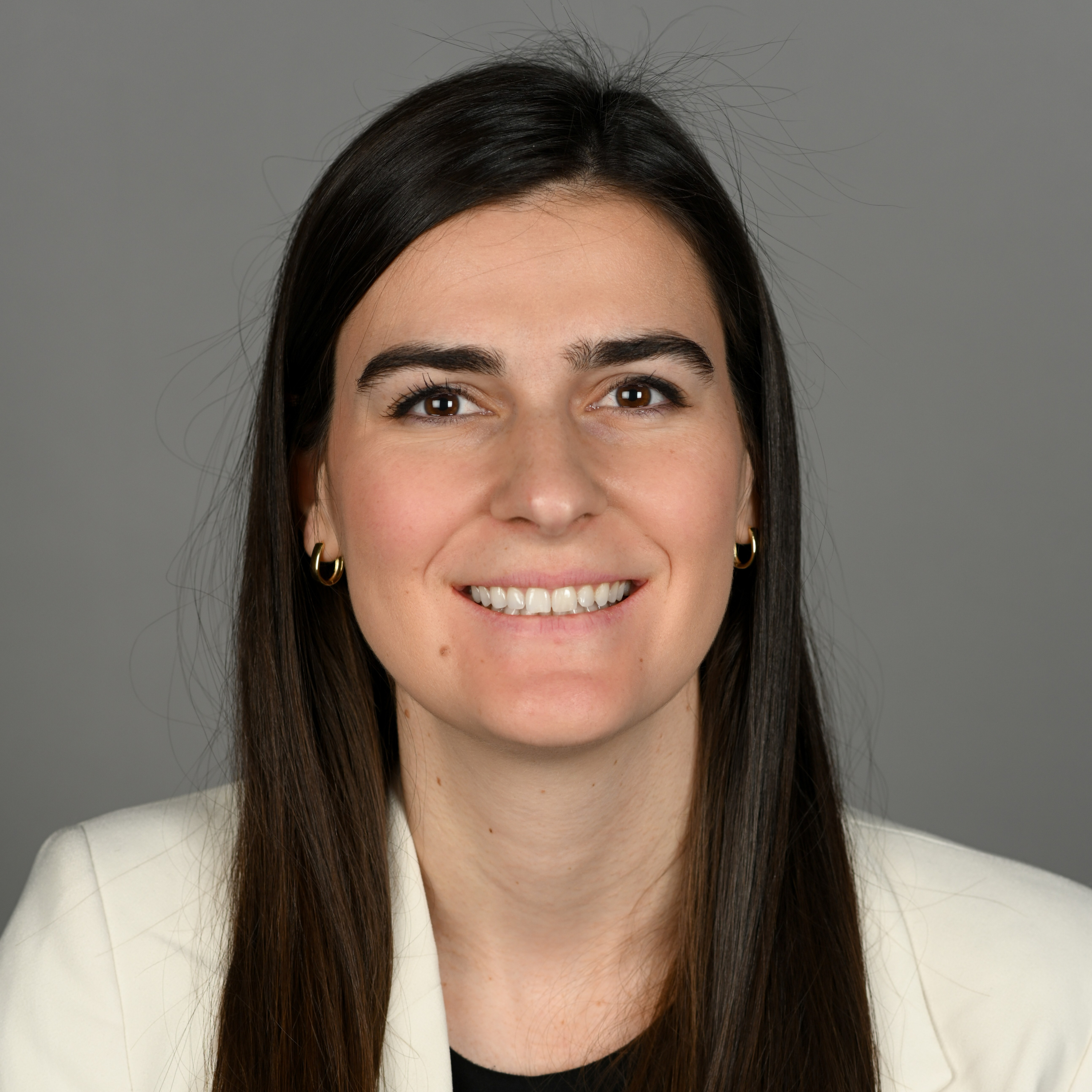
CRP#3: 90% of Patients Don't Do Their PT. Band Connect is Fixing That, with co-Founder Abby McInturf
from Life Science Insights
53m 21s
In this episode of Life Science Insights, host interviews Abby McInterf, co-founder of Band Connect, which began as a university project addressing concussions in female soccer players. After graduating, Abby joined the University of Cincinnati’s Venture Lab pre-accelerator, where she met co-founder Rohit Nayak. Through customer discovery with physical therapists and orthopedic surgeons, they pivoted from athletic concussion prevention to physical therapy, recognizing a larger impact opportunity. Band Connect’s hybrid therapy platform combines sensor-enabled exercise equipment with a digital app, allowing patients to perform prescribed exercises at home while receiving real-time feedback based on their in-clinic baseline. This addresses the critical problem of low patient compliance—90% of patients fail to complete their therapy plans. The platform also helps PT clinics manage productivity challenges, reduce no-show rates, and extend care beyond the clinic. By providing objective data, it enables clinicians to reduce visit frequency while maintaining quality care, achieving a 95% therapy completion rate. Abby’s industrial design background and Rohit’s health tech entrepreneurship experience formed a complementary team. Early funding from grants and a pre-seed round supported a clinical trial to validate the solution’s efficacy. The company now focuses on scaling its hybrid model, which aligns incentives across patients, clinicians, and payers by improving outcomes and efficiency.
[Music] Welcome to the latest episode of Life Science Insights, a podcast for anyone shepherding medical technologies through early stage or clinical development into commercialization. We are in the midst of season three in which we're highlighting the 10th cohort of the University City Science Center's Capital Readiness Program, which ran in March 2026, in which I had the opportunity to be an observer during. Before we begin, I just want to thank you folks for following this podcast. I really do appreciate the community that has built around it, the feedback I've gotten, the encouragement and suggestions and advice over time. So our interview guest for today is Abby McInterf, she's co-founder of Band Connect. Abby McInterf earned her BS in industrial design from the University of Cincinnati's College of Design Architecture, Art and Planning. In 2018, during her time she accumulated over three years of professional design experience working with leading medical and consumer brands, both locally and internationally, considering the surgical tool development with the focus on ergonomics, usability and improved outcomes for clinician to the patients. While she was at the University, she also developed a concussion mitigation tool for women's soccer players addressing the higher incidence of concussions in female athletes relative to male athletes. Surely after graduation, she joined the University of Cincinnati's Venture Lab pre-accelerator, where she met her co-founder, Rohit Nayak, together they built on her early work to launch Band Connect, which has a message of transform physical therapy through a hybrid evidence-based platform. So today we're going to talk to Abby about her work at Band Connect, her co-founding with Rohit, and I hope you enjoy it. Welcome to the show, Abby. I'm excited to have you on and I'm excited to hear a bit more about Band Connect today. So maybe we can begin and tell us what that brick wall is behind you. Yeah, so I first off, I'm excited to be here today. So the brick wall is our current office space. So it's a cool, really old building in downtown Cincinnati that we've been working out of for the past year. But everybody asked me about the brick brick behind me. Yeah, it is nice. There's a I've worked in an office that had exposed brick a couple times and it it will say the work environment does make a big difference. I'm glad I'm glad you have that. Unfortunately, most of our audience is listening on Spotify. They won't get to see the pretty exposed brick behind you, but audience, you have to take my word for it. Yeah. So Abby, let's start a little bit with kind of how you got to the point of co-founding a company, maybe you can start with what we'll start with. What led you to say, yeah, I want to do this. I want to start a company, a technology company in the physical therapy space. And then maybe we can kind of drift from there into into what your longer term background was and experience that led to that. Yeah, sure. So Band Connect started as a class project of mine at the University of Cincinnati when I was getting a degree in industrial design. I UC has a really cool co-op program started five co-ops before I graduated and I was really interested in the med tech space from a design perspective. And so I designed a concussion prevention tool for female soccer athletes because they're twice as likely to get concussions than men. And that's how band connect started. So the product that we have today started as that tool. And when I graduated, the university has a pre accelerator program called the venture labs at the 1819 innovation district. And that's kind of where we pivoted into the physical therapy space. That's the way I got to stop you because I had like now I have three questions for the reason. So the first thing the first thing that I want to make sure I ask you about you said that you had five co-ops while you were a university of Cincinnati. So I only count three sort of off terms that are naturally there. How did that work? Did you like did you take more off terms to do co-ops or how did tell me a little more about that. So at UC the program I was in it was through the design school. And so it was a five year program where after your fall semester, including summer. Every other semester you were you were doing a co-op that we started in the spring and then would go to school this summer. And then we would go back to co-op in the fall. And so it was a very structured program, which was awesome because you got a lot of really good experience interviewing and working with different companies really quickly. Yeah, okay. Yeah, that is really interesting. So near us Drexel University, which is in Philadelphia, has a very popular co-op program. And even though they only have, I think they have three. So there's six months each. And so I for a lot of companies around us, it's very attractive to hire Drexel co-ops because you know with a co-op you get it's like two months before they get their their feed under them. And then and then you've only got a month where they're really productive. And so if you have them for six months, it can be a lot better. Okay, so. So you're going to go on you were going to say no, I just going to say that's interesting. I think as a student, I didn't realize the value of it at the time of just having that quick cadence of going to different companies learning how to go through that process a lot really quickly. Yeah, well, certainly valuable to as an employer of hiring so right out of school, my biggest fear is that I'm going to invest the ton in this person. And so I'm going to realize either together or they'll realize privately, we're all realizing they won't that it's not a good fit. And that's a problem because I'm investing a ton in if someone's really new, I'm just I'm training them so much right. I you've already got some some assurance. Okay, this person already worked in this space or even better already worked for my company. And I know who they are they knew who I am and we have a pretty good idea to fit. So it does make a lot of sense. But that wasn't really my main question. I have one more like sort of side question from what you said. And that was. Female soccer players of concussions to twice the rate of men. Why is that? So it's actually really interesting and this is what I learned in school, which I had no idea and I was like surrounded by soccer. So both my siblings played in college and I played in high school, but I didn't know the statistic until I was in college. It's not the actual impact of getting hit. It's the whip lash of it. So women don't have as strong next and a lot of times collegiate women soccer players don't want to do heavy weight training because they don't want to be perceived as bulky. So the premise of what I had designed was resistance based training because it tones versus books. And so that was the premise. But yeah, it's not the actual impact. Yeah, yeah, well, I did know. I didn't know that element of it, but the the weaker neck as a social problem. Yeah, interesting interesting. That is that is interesting. Okay, so, so then I'm really interested to learn about this is pivot and for those in my audience who don't know it's really common for early stage companies to do major pivots because they start to develop a solution. And I realized that some of their one of their assumptions was wrong, right? Maybe the assumption was that their problem was a worthwhile problem or maybe it was some other element of their pathway. So tell me about like, at what point did you pivot had you already created this company where you already out of college. When did you do this pivot? Why did you do this pivot? I mentioned the venture lab program. So it's an eight week per accelerator program to essentially validate your business idea. That was right after I graduated and that's also where I met my co founder Rohit, but we had done a lot of customer discovery in this space. At the time, the product was just a concept. So I had 3D printed and CMC mill the product as like a visual, but it wasn't actually functional. But we talked to a lot of physical therapists in orthopedic surgeons at that time and realize that we could have such a bigger impact if we started in the physical therapy space. And it was kind of funny because now we're having conversations back in the athletic space today, but we decided that we wanted to stay really specific and focused and the impact that we were seeing in the physical therapy space was a lot bigger. And we felt like it was a more direct path to commercialization where we could always go back to the athletic side of things. so that meant.
sense. Okay. And so a lot of the folks that I work with and folks who are among our audience are academics who have years of research behind what they're doing. In fact, I was just talking with Johannes from Cadence, who you probably remember. Yep. And they had 10 years of laboratory research and they were sort of trying to decide, is it time to start a company? But you were in a different situation, right? You really had more of like an identification of a problem in a way that you could solve it. But you didn't even have a functional prototype. Correct. And you started a company. So walk me through that like, you're graduating college and you're like, well, I could do presumably you could have gotten a regular job. But instead you thought, I'm going to do this thing instead. What made you believe that this company, that this idea could have legs? I think that in the physical therapy space, everyone knows someone or has been impacted by physical therapy. So like, I knew this problem personally by myself and other people around me. And so when we started putting the pieces together of this being a physical therapy challenge, it just kind of clicked to me that this makes a lot of sense. And so I felt there was a lot of merit there. I also felt like it was really interesting because we weren't having any negative conversations with these stakeholders, which is really rare at the stage. Like we didn't have one person tell us that it was a bad idea. And I know that sounds crazy, but it just kept snowballing and people kept saying, hey, like this is so obvious. Why doesn't this exist yet? And then I think to your point, I could have gotten a different job, right? But I was lucky enough that I had a lot of people around me to tell me like, it doesn't hurt to try this out and see how it goes. And so I think compounding both of those was really helpful for me to say, okay, let's give this a shot. Okay, that's exciting. And we're going to walk through a little more of the history after that, but it's really helpful to hear the genesis. And I do appreciate that, yeah, what? Like it is a time in your life where you can take a chance. And the downside of failure is maybe wasn't as bad as it could be. Okay, so this is a really good time for you to describe, band-connect, like what does the product do and why is it getting such positive feedback from the physical therapy community? Yeah, so I guess starting with the problem, so 27 million patients undergo some sort of physical therapy services each year. And out of that, 90% of us aren't compliant with our plan of care. And another statistic that really surprised me is that they spend, they know spend on musculoskeletal care is 380 billion, which is more than cancer, diabetes, and cardiac care. And you always hear about the other three. So it's a massive problem. And on top of that, PT clinics themselves are suffering from a lot of generational challenges. One is that they're facing decreasing reimbursement and increasing costs. Their clinicians are being squeezed for more and more productivity. There's a massive shortage of physical therapists. And patients are just not showing up to PT. So no show rates are between 12 and 20%. And a lot of investors and health plans are looking for change without addressing some of those core challenges. And so what we're focusing on is actually providing a solution for PT's and PT clinics. There's a lot of solutions out there that are trying to go around physical therapy and providing a fully virtual solution. So we've developed a hybrid therapy model where we're putting the clinicians at the center of the patient's care and providing a tool for clinicians to extend their care outside of the clinic. So we have sensor enabled exercise equipment that connects to our platform that gives patients feedback based on what they did in the clinic with their therapist. Okay. So maybe just to just to give that a little more specific flavor, it's a handle. I don't know if you have one with you. I don't have one. I can go grab one. But I don't have one with me. We don't it doesn't matter because nobody watches this anyway. They just listen to it. Anyway, it's a handle and you would have be attaching some kind of like elastic band or something to it so that you can you can apply force in your rehab. And that it will be giving it'll be measuring presumably it's measuring force and then maybe location and orientation. Yeah. Force range of motion forces a huge indicator of patient progression. And I think the key is also that this is no different than what PT clinics are doing today. We're just adding objective data to it. So the technology is really masked inside of the equipment. And it's providing objective data. But it's still enforcing the need for the clinician and the patient to have a relationship, which is a huge component to what we find as successful. Yeah. And so, so help me understand that a little bit. The provider is still being reimbursed for that work even though even though the patient is doing the work at home and not under the direct supervision of the of the therapist, right? Yeah. So that's why we call it hybrid therapy. So the patient receives a kit with the equipment during their first in clinic visit. The PT uses our equipment while they're they're going through that initial patient setup. And the equipment is capturing a baseline for the patient for all the exercises that they need to do at home. And then when the patient goes home, the app instructs them what they need to do, but it also gives them real time feedback based on what they did in the clinic. That's done asynchronously. So the patient is just doing that on their own, but they're getting queuing based on what the clinician said. And then the clinician can see that data. So they can make assessments based on what they're seeing. I mentioned at the beginning that 90% of patients don't do their treatment. So first, we're trying to address compliance. But then secondly, making sure that patients are doing it accurately to to make sure that they're getting better faster. Right. Yeah, I think what what's really cool about what you're describing is the alignment of incentives, you know, often in the medical space, there are so many perverse incentives. And it only takes one stakeholder to be misaligned. But in this case, better compliance means better recovery. So it's better for the patient, right. And I know having had plenty of busculoskeletal injuries myself and having been the patient who was sometimes compliant, sometimes not compliant, it's really it's kind of obnoxious when you go home and you're supposed to do an exercise and you're like, well, I don't really know if I'm doing it right. Like, yeah, and if I don't know if I'm doing it right, it's hard to motivate to do it, right. But if you've got a if you got a device that's telling you that you're doing it right, giving you real feedback or at least if you don't get that from the device, you can get it from your your clinician when you go back, that's really that's really nice. So you get the incentive is very much in favor of the patient using it. But it also sounds like it's very much in line with the physical therapist because as a therapist, I'm pretty much bound by my bill rate times the number of hours I'm able to work. But if I can be billing time that I'm not spending, it's my patient is spending it, but I'm just reviewing what they've done. Now I've got an opportunity to make more money without working more. So there's a real strong incentive on the on the provider side as well. So I yeah, that makes a lot of sense. And I think it's interesting because another another benefit that we're seeing is that we're able to reduce the frequency of visits, which sounds kind of intuitive, right? But as patients, the expectation is that you're coming into the clinic three times a week, which is unmanageable for a lot of people because you have so many other things going on. The reason that that model exists is because they assume patients aren't doing anything at home. So they're having patients come in to do their treatment. So what our solution enables is they can actually track the objective data so that they can spread out the in clinic visits. So it's more conducive to patient schedules. And what we're seeing is that patients are dropping out less. We have a 95% therapy completion rate, which is significantly different than the 70% of patients that drop out after three weeks, because it's more conducive to patient schedules. And then on the clinician side, they can actually see more patients and manage more patients with the same amount of work because they're able to track that data objectively. Yeah, that's great. I have to be careful because I really am interested in PT and orthopedic care, but my audience isn't as I am. So I want to get back to that. So we've got enough information about band connects. So hopefully the audience knows what we're talking about now. And they should have a little bit of idea. Okay, well, I see how a lining incentive amongst stakeholders matters. But let's talk about you and Rohit. So you have a co-founder and you had this technology. You maybe weren't even, you were actually looking at it for
for reducing concussion, but how did you connect with RoHit? Why are the two of you together a good team to lead this forward? How do you know you were good team? How about that? - Yeah, I think that, so I met RoHit at the University of Cincinnati Venture Labs and how it works is that they connect founders and startups with EIR, so entrepreneur and residents. And the idea there is that they pair together to validate the idea and go through that process. So RoHit and I started down that path for that eight week program and we really just clicked. I think that his background in the context is that the EIRs are experienced in entrepreneurship. So RoHit has significant health tech experience. He's had prior startup exits and has the experience that I didn't have coming out of college. And I think that's why it's really interesting that we have paired together because his expertise and knowledge has helped drive some of the vision of the company. And not only that, but RoHit and I just worked really well together and we've been at this for six years. So it's been a long journey. - So yeah, no, six years is definitely a long journey. I want to actually explore that a little bit. So you haven't had revenue for the whole time, right? You only started selling product in the last two years, is that right? - Yes. - So how did you fund the company in the beginning? - Yeah, so we got really fortunate at the beginning. So we got a combination of grant funding from the University of Cincinnati as well as the state of Ohio, which actually enabled us to take the path that we were able to take, which is we went the clinical trial path. We didn't have to go through clinical trials, but we wanted to prove the efficacy of the solution and publish that data to add credibility to our solution. And so it allowed us to do that. And since then we've raised a precedence in the round of funding as well. - Well, you're, but in order to run that clinical study, you needed a product and my, unless industrial design has broadened in scope since I, last was connected with it, you probably weren't gonna be designing electronics and building that into your device. So how did you, how did you make that happen? - Yeah, I got an education for sure, but we worked with a consulting group of technology developers. With our platform, we have hardware, we have software and we have firmware. So it wasn't really realistic for us to hire one person to be able to fulfill all of those roles. So we decided to partner with a technology group to help us build the product itself. - And how did you, and really I'm asking these questions 'cause a lot of my audience is in a similar situation in the sense of, okay, I've got, I've got a potential technology here. If, how did you find those people? Did you, did Ro hit no people? Or did, did resources at university help you? Or had you find them? - Yeah, so we, we connected to them through different network groups that we were a part of. The, the group that we actually moved forward with, we met at CES. So they were, they were there and they had some musculoskeletal experience, so it seemed to be a good fit. - Yeah, okay. And, and maybe for, for the audience to say, 'cause some people might not know what CES is. Can you just say, like, what is that conference exactly? - Yeah, it's the consumer electronic show. So it's a massive show that's put on every year. There's a lot of really cool technology and just a great place to meet people in the tech space. Less focused on healthcare, but there is healthcare there as well. - Yeah, and for the audience, I think, there's a lot of times you'll see videos from CES where people will, it's almost like, it's almost like the world's fair for electronics. And there's, they'll have like, dancing robots and stuff there. A lot, so yeah, that makes sense. So, all right, so you, you got some initial grants from the university and from the state, which is, that's really great to hear. I teach at Rowan University and I'm always, that's a, it's a state college in New Jersey. And I'm always trying to encourage them to be, be supportive of entrepreneurship. They actually do a pretty good job of supporting entrepreneurship among their faculty and students, but it's nice to hear of other schools doing, doing similar things. So you got that money and then you went out and raised money from, from investors. Did you do that fundraising? Did Rowan do that fundraising? Did you guys do it together? We did it together. So, so our preceded round of funding was what we started with and jumpstart ventures in Cleveland, Ohio, led that round. And between our preceded and seed round of funding, we went through the Techstars Healthcare Program, which was sponsored by Cedar Sinai UCI Health, 0.32 and United Healthcare. So that was great exposure for us. And then we went on to raise a seed round of funding that jumpstart also decided to lead that round, but Techstars participated in as well. - Okay. Now, Cincinnati is not known as a venture hub. So, but when I hear what you're describing your investors, there seem like a lot of groups within Ohio did invest in you. And I wonder if this is the case that there might be fewer investors in the area, but there might be more eager to support companies in their local geographic area. Have you found, have you found, well, how have you found trying to raise money in Ohio? - Yeah, I think Ohio is a really interesting place to start a company. I think the cost of living is obviously lower than a lot of communities that have big startup hubs, which is really helpful. We also have, it's great for healthcare because we have so many great health systems here. And I think our partnership with jumpstart ventures has been fantastic. They have the network here, right? So I think it's a great ecosystem in that regard. We've also connected with people, so the tech stars program was actually based in LA. So we were out in LA for three months and so got some great connections out there as well, which was great for us. And then we recently participated in the Capital Readiness program in Philly. So we're kind of spread out all over, but Ohio has been really, really good to us. - Yeah, yeah, no, that is encouraging. And I think the world is kind of getting smaller in the sense that you can, it's not as hard to connect with people in different locations. Sometimes I do sometimes feel a little bit jealous when I talk to people in the Silicon Valley because they're like, you know, oh, the, you know, the home was kind of in the street like gave me a check for $250,000 because he's just, he couldn't afford a house in San Francisco, but he certainly could afford to invest in an early stage Medtech. And that's not exactly the way it is in where I am in the Philadelphia area, but I think that it does seem much more reasonable to connect with, with people in different geographies. Now you mentioned the Capital Readiness program, which is where we met, right? I was an observer, which means I was invited to just hang out and listen in. And I was, I'm curious to hear, I wanna hear your thoughts on that program. It sounds like you've been a part of a couple of other things. What maybe, how did that fit into the other, other accelerator type programs that you've been involved in? - Yeah, what I really liked about the Capital Readiness program was it was a week of really intensive focus work, which was really helpful. Other programs that I've been a part of have been months long, right? And there's different incentives and motivations there, but this was specific to fundraising. And fundraising is always a topic for startup founders. And there's never enough time to focus on fundraising. And so I think it was really helpful to kind of sit down and assess what, where we are, what suggestions people had, get feedback from outside stakeholders. And it just aligned well with our timing. So we've closed our seed round of funding. We're starting conversations for our series A. We've opened a bridge round of funding because of some of the traction that we're seeing. So it was just a really great week to kind of focus on just that, aside from all the 50 other things that we were, that we're always doing. - Yeah, now this is, this is not an investment podcast, but I'm curious, what is your series A gonna look like? What are you, like what are you thinking the series A will be? - Yeah, so the you mentioned, we've been around for six years, we built our product, we've gone through clinical trials, we've now recently converted to commercialism.
We have a few paying customers. Our goal over the next 12 months is to prove repeatability. So we're already about halfway there. And our series A, the what we're looking at there is we're looking at it as our Earth acceleration phase. So building the infrastructure over the next 12 months that when we raise our series A, we can really focus on growth and scale. And it really doesn't take a lot of customers for us to be able to do that over the next 12 months. You know, we want to go deep within organizations and show impact. And so that's really what we're focused on now to position ourselves for our series A. But what I meant by that question was how much are you raising? Oh, yeah. So I mean, obviously it's still like a moving target given the ecosystem and all those different things. But we're looking at a five to seven million series A round. I think that you'll get more traction if you mentioned AI as part of your offering. This is true. Yeah. As I heard. Well, and and actually, I mean, you do have you do an interesting situation where you are potentially going to collect a lot of data. And there might be things you can do with that data, you know, as long as it's obviously de identified where you might be able to. I don't know. Answer is an interesting bio mechanical questions or or even who knows what kind of interesting question you might be able to answer. That's more of a big data thing than an AI thing. Yeah. Yeah, I think the AI we get that AI comment a lot. And I think the way that we look at AI is we we obviously use AI. But we see ourselves as a human first solution where the clinician and the patient are working together and we can help enable that through technology. I think to your point about the data that we're collecting right now, we're just kind of laying the foundation for our broader vision, which is taking a very subjective industry. And we're becoming the objective later layer of physical therapy. So in physical therapy today, if you I mean you've been through physical therapy, you go in the PT typically has you press against their hand and they make an assessment of how strong you are right. And they don't have the tools to be able to do some of those assessments. Well, we provide those tools for those assessments. So we can look at patient progression based on demographics and other things like that. So that's kind of what we're building as the infrastructure as our long term vision of providing that objective data layer. Yeah, now that's that is that's great. I love it. Okay. So you talked about that you've got some customers. Help us. Well, actually before I get into the customers, you are a class one medical device, right? Class two. So so do you have a five 10k? We're five 10k exempt. So we're. I think a class to. Okay, so. So that means you have some special controls that are required. So we have to have like we're registered with the FDA. We've been registered for the past two years and we have to have a specific documentation in place to support that. Sure. Okay. Okay. But there's not any. There's not any standard. What's the classification of your of your product? Like is it to have a name like it's. I don't know what physical therapy adjunct device or something. Yeah, it's a rehabilitation tool. Okay. And are there are there performance standards around that beyond the standard electronics 60601 stuff. So we we we've gone through the FCC certification and the six of six oh one. So there's like electronic stuff that we have to go through. And then on the FDA side, it's procedural design history file, all of those basic things. Sure. Yeah. And. And just for. Well, yeah, for the sake of the audience, can you tell me a little bit of the timing of some of those things like. What did you start to do the electronics testing? When do you start to develop your design history file? And when did you actually even confirm with FDA that you were 510k exempt a class to. So I'll go back to our clinical trials are clinical trials is kind of where we started this process, which is. Before our clinical trials is when we started our design history file. So when we started our technology development that that became the input to the output of the design history file. Then we were positioning for clinical trials with two of our first partners. And that's where we went through we used a regulatory consultant to identify what our classification is how to actually register with the FDA and go through all that stuff. And when we were transitioning to commercialization is when we looked at the FTC and so 6 so 1 certification because the clinical trials it was covered under something else, right. But when we made that transition to commercialization is when we looked at those other certifications. Okay. Okay. And then did you ever had. Did you ever do a presauber anything? I don't know if FDA about that. Okay. And. And so, okay, you did this clinical study and you published the data. And how did you find your first client first customers after that. Yeah, so we started with two clinical trials. We ended up with six. So some of them are still ongoing and I think people get really excited to see that we're an IR, our IR be approved trial. And I was like, oh, I want to do that with us as well. And so looking at some different inputs there. So going through that process to kind of get there. And then most of our early customers were actually transitions from our clinical trials and pilots to commercialization. And then there's a couple others that you know, we've we've been talking to a lot of people over the past few years. So a lot of people that were really excited about our solution, but wanted to see the data. And so now that we have the data, having those conversations with people to see, okay, this is actually working well is also some of the newer customers that we have. So I've never done a clinical, done a lot of clinical studies, but never done one with with a physical therapy organization. And I find PT sites that are capable of running a clinical study and, and like documenting it or, or do you have to supply them with the research associates to, and clinical research coordinators and whatnot. Yeah. So our clinical trials were largely with health systems. So they kind of had arms to help support some of this stuff. Okay. Which was really helpful for us. And the other interesting thing about our solution is we look at ourselves as elevating the continuum of care between the patient physical therapists and orthopedic surgeon. And all of these IRB trials, it wasn't just the physical therapy physical therapist and physical therapy funics. It also was orthopedic surgeons at these organizations saying, yes, I want to understand this more. So it was patients being referred to physical therapy by specific orthopedic surgeons and following specific protocols within that. So then your, so your first customers were coming from that body of people that are participating in the research. And that, that makes sense. Of course, they're going to have the most firsthand experience with the product. And then from that. So it seems like then from there you've got two different avenues for growth. One would be word of mouth, right. And then this PT says, I love this. Well, this product, they go to a conference or whatever and they, you know, you get to talk to them, talk to their friends. But then the other would be where you're, you're showing people your data from the publication. Which do you find more. And I think it's helpful in, in building out your, your trust more broadly. Is it, is it that like personal testimony of customers or is it. Is it the published data? I think largely it's a combination of both. But I will say that I think that the clinical data is like table stakes for us and for the clinical community where like that's what they're looking for as a base requirement. And so I think that having the clinical data, data enables us to start the conversation, right. Because they see the clinical data, they see that it's with a nationally recognized organization and they can do that. And then I think that the sentiment from people that have actually used it is really helpful to kind of continue those conversations along. Yeah, yeah. So, so so far everything we talked about seems like this has been completely smooth sailing for the beginning. But I have to believe that that you, you know, has an always been smooth sailing. In fact, I think there was a global pandemic at one point during your company's existence. So like can you give me, give me an example of some challenges that you've faced along the way.
I think that I think that good news for us is that a lot of pain is behind us in regards to like the technology development. I think you know our technology is actually really hard to develop in what we're trying to do. So we're really excited that that's behind us. We have a patent and all that stuff. I think the other thing is we have a hardware component, right? So a lot of companies are just software companies and they don't have to manage manufacturing. Obviously there's been a lot going on in the manufacturing ecosystem over the past couple of years as well. So we've spent a lot of time setting up our manufacturing protocols for scale. And then I think again like the clinical trials and clinical data obviously that takes a long time. So there's a lot of different pathways that we've taken that have been a very painful pathway. But we feel like we're largely like at that point where we have the data, we have the products and we have customers. Yeah. Well it's always helpful for entrepreneurs to believe that the hard part is behind them. Yeah, I know. I always like to convince myself of that. Yeah. Sometimes sometimes my wife looks at me a little funny when I say and I'll be sure the hard the hard parts. Yeah, yeah. That's fair enough. But I appreciate you talking about technology development and yeah, you can have a design freeze and of course you'll continue to improve your design over time. But yeah, a lot of times the hard part can be behind you. And so what about now? Like now you've got your product, your product is complete and you are building out you are revenue and you are getting ready to do a fundraise and maybe you're actually already a little fundraise for the bridge. So what are the challenges you're facing today? What's what's hard about what you're doing right now? I don't think that this is unique to us or to start up in general. But I think it's just finding the focus of what to focus on. Our activity levels have exponentially grown because we've grown with customers. We have manufacturing facilities. We have all these different things going on. And I think the key part for us is how do we execute in a way that's focused while we keep our team small? I mean, I think every startup is funding constrained. And how do you manage that within funding constraints to support the different activities that you have going on? So I think that's largely like what we're dealing with right now. And I think that there's sub activities that are focused with that. Right? So with our customers, how do we continue to engage them? We're continually updating our protocols and procedures and onboarding materials and all of those types of things. And it just takes focus to get some of that stuff done. Similarly, we're trying to expand our product and platform. So continuing to iterate on that as well. And are you primarily doing the customer outreach or is Rohit doing that? Or do you have sales people doing that? How's that happen? Yeah, so it's largely Rohit and I. We do have a couple of contracted people that we work with on a part-time basis. But a lot of the sales is also coming from us as well, which is another thing to juggle and keep make sure that we're following up on as well. And how do you become knowledgeable about that? You were your industrial designer by collegiate training, but you've now had to do five or six different roles. And now this new role is your salesperson of you selling to physical therapy. Physical therapist. So how does that? How do you learn how to do that? Yeah, I mean, I think you learn by trial and error, but I also think that like we have a great ecosystem around us of supporters that can help build up some of the materials that we need and different things like that. I think also like Rohit has done this before, right? And so having his expertise to help kind of drive some of those activities is really helpful. So I think it's a combination of things. I think that the beauty of an industrial design degree is that it teaches you how to problem solve. And so I feel like I've taken that skill and tried to replicate problem solving with different elements of this of where do I fit into this process and how can I push it forward? Right. Yeah, that that does make sense. And I guess even just echo that a little bit. One thing I've learned from working with investors over the years is that just about every person who's investing has successfully commercialized something. So they understand sales in a way that many people don't really understand sales. And so you talked about you being able to rely on your ecosystem. I think that one of the benefits of having early stage investors is those investors, they usually at least, I will say at least outside the Silicon Valley. I mean, I have this I have this vision of like random people on the street just handing out money there. Those folks may or may not know anything about selling product. But but certainly in Philadelphia, all of my investors, they they were, you know, they became successful by by working hard and finding a way to bring a product that product or service that helps and that helps a community in a way that enabled them to get paid for it. So I can imagine between the tech stars people and your jumpstart people and then Rohit who certainly has got a lot of experience. You do have a lot of resources to call upon. So that's that's great. So what let's let's just project forward since one of the fun things about this podcast is it takes months between when we record it and when it actually gets out there. So so as we speak now, there's at least one straight that is being blocked. There may be two straights being blocked. I'm not even sure. There's a risk of war in two different locations. But we're not going to worry about those things and how they might progress or regress. But what do you see for band connect in in six months to one year? Like what what are your what are your goals for the company in the next in the next two quarters to four quarters? Yeah, I think that our focus is on the implementation side. So not only like the sales, but also implementing and going deep within organizations. So for example, a lot of the groups that we're working with we started with two clinic locations and we've expanded to eighth clinic locations. So I think it's really focusing on how do we make an impact within the organizations that we're working with? How do we make an impact with the patients that were engaged with? And also the clinicians, the clinicians are heavily strapped with time. There there there's a shortage of physical therapists. How do we help them with their their jobs as well? And so I think that over the next quarter two quarters three quarters is really focused on how do we how do we really operationalize this to a scale that that we can continue to grow and go through that process? Yeah, okay. And and would you do you have sort of hard numbers of like this is what I want to hit from a number of patients or number of clinics or or number of units in in the field? Or do you have hard targets that you're trying to hit? Or you just hey, want to scale as quickly as we can? And if you know, the more the barrier? No, we definitely have targets that we're trying to hit. And I think that we have a various number of targets that we're trying to hit. So one is, you know, number of patients per clinic per month, right? How do we get the cadence of onboarding patients up to a scale that's consistent? And I think the second one is just share number of patients volume, right? I think that's that's our core metric of how we believe that we're going to scale this. And so based on where we're we're our trajectory right now, we believe that we can get to 2000 patients by the end of this year. So continuing to assess how we can do that and achieve that is really what we're focused on right now. Okay, that's great. That's great. So I want to I want to as we're almost at the end of time, but I want to go back and ask one other question because I feel like I didn't I didn't actually explore this enough. We talked about how you connected with Roe hit. But I didn't I I want to understand this again for the audience who who is you're trying to they're considering starting a company. The team is so important. The team is more important even than the problem or the solution. In fact, you were addressing a different problem. You ditched your problem and came up with a new problem. But your team you feel good about your team. So how do you and Roe hit? How do you divide up
the labor. In fact, when I look at your LinkedIn profile, it says you're a co-founder. It doesn't say, it doesn't say anything more specific than that. How do you guys divide up who does what? How does that work? How do you guys work together without stepping on each other's toes without having things fall to the cracks because your roles are, they seem a little bit fluid. Yeah, so I think that like the, I think anybody that's in a startup can relate to the fact that everybody is wearing many hats. And I think that that is like the quintessential relationship between co-founders of being able to pick up where others left off and different things like that. And I think that that's where Rohan and I work really well together to go through that process. My, my, I focus more on the operational and product side of things where that's kind of where my expertise lies right, especially on the product side. And not building the product, but managing those activities. But obviously with an early stage startup that is resource constrained, you have to kind of just be able to do a lot of different things. And I think that's, that's what we've been doing. And it's gotten us here. So I think that that's what we'll continue to do. Yeah, now that's, that's great. I appreciate that. All right, so we are at a time, but maybe in closing, what is the best way if people want to keep in touch or keep track band connect, track what you're doing, what Rohan is doing, what's the best way for them to keep aware of what you guys are doing? Yeah, great question. I think if you go to our website, there's a contact us page that we can add you to our update list. But also LinkedIn, our LinkedIn band connect account is a great way to follow along. We've been posting updates there and we'll continue to do so as well. Great. Well, Abby, I am, I'm excited for what you're doing and I'm excited to be following your company as you, as you kind of continue to make, make a difference in the in the PT world. So I really appreciate your time today. Thanks for, thanks for meeting with me. Thanks for having me. Thank you for being a part of the life science insights community. These podcasts are better when you get feedback. So reach out to me on Spotify, on LinkedIn, or by email to tell me what questions I missed, tell me who I should interview, tell me what content you want. If it is related to shepherding early stage medical technologies through preclinical and clinical development, I want to talk about what you want to talk about. So, again, thank you for being part of the life science insights community and I'll catch you next time. [Music]
Podcast Summary
Key Points:
Band Connect originated as a concussion prevention tool for female soccer players, later pivoting to physical therapy after customer discovery.
The company offers a hybrid therapy platform with sensor-enabled equipment that provides objective data on patient exercises, improving compliance and outcomes.
Co-founders Abby McInterf (industrial design background) and Rohit Nayak (experienced health tech entrepreneur) met through a university pre-accelerator program.
The platform addresses key industry challenges
Band Connect achieved 95% therapy completion rates and reduced clinic visit frequency, aligning incentives for patients, therapists, and payers.
Early funding came from grants (University of Cincinnati, State of Ohio) supporting a clinical trial, followed by a pre-seed round.
Summary:
In this episode of Life Science Insights, host interviews Abby McInterf, co-founder of Band Connect, which began as a university project addressing concussions in female soccer players. After graduating, Abby joined the University of Cincinnati’s Venture Lab pre-accelerator, where she met co-founder Rohit Nayak. Through customer discovery with physical therapists and orthopedic surgeons, they pivoted from athletic concussion prevention to physical therapy, recognizing a larger impact opportunity.
Band Connect’s hybrid therapy platform combines sensor-enabled exercise equipment with a digital app, allowing patients to perform prescribed exercises at home while receiving real-time feedback based on their in-clinic baseline. This addresses the critical problem of low patient compliance—90% of patients fail to complete their therapy plans. The platform also helps PT clinics manage productivity challenges, reduce no-show rates, and extend care beyond the clinic.
By providing objective data, it enables clinicians to reduce visit frequency while maintaining quality care, achieving a 95% therapy completion rate. Abby’s industrial design background and Rohit’s health tech entrepreneurship experience formed a complementary team. Early funding from grants and a pre-seed round supported a clinical trial to validate the solution’s efficacy.
The company now focuses on scaling its hybrid model, which aligns incentives across patients, clinicians, and payers by improving outcomes and efficiency.
FAQs
Band Connect is a hybrid therapy platform that addresses the high non-compliance rate in physical therapy (90% of patients) by providing sensor-enabled exercise equipment and an app for at-home use, while keeping clinicians at the center of care.
It began as a class project by Abby McInterf at the University of Cincinnati, initially designed as a concussion prevention tool for female soccer players. She later pivoted to physical therapy after customer discovery.
After talking to physical therapists and orthopedic surgeons, the team realized they could have a bigger impact and a more direct path to commercialization in physical therapy, while still potentially returning to athletics later.
Patients receive a kit with sensor-enabled equipment during their first in-clinic visit. The app guides them through exercises at home with real-time feedback, while clinicians can monitor objective data and adjust care asynchronously.
Patients benefit from increased compliance and convenience, with a 95% therapy completion rate. Clinicians can manage more patients efficiently, reduce in-clinic visit frequency, and improve outcomes through objective data tracking.
The company received grant funding from the University of Cincinnati and the state of Ohio, which allowed them to conduct a clinical trial to prove efficacy. They later raised a pre-seed round of funding.
Chat with AI
Loading...
Pro features
Go deeper with this episode
Unlock creator-grade tools that turn any transcript into show notes and subtitle files.
 PodcastTranscript AI