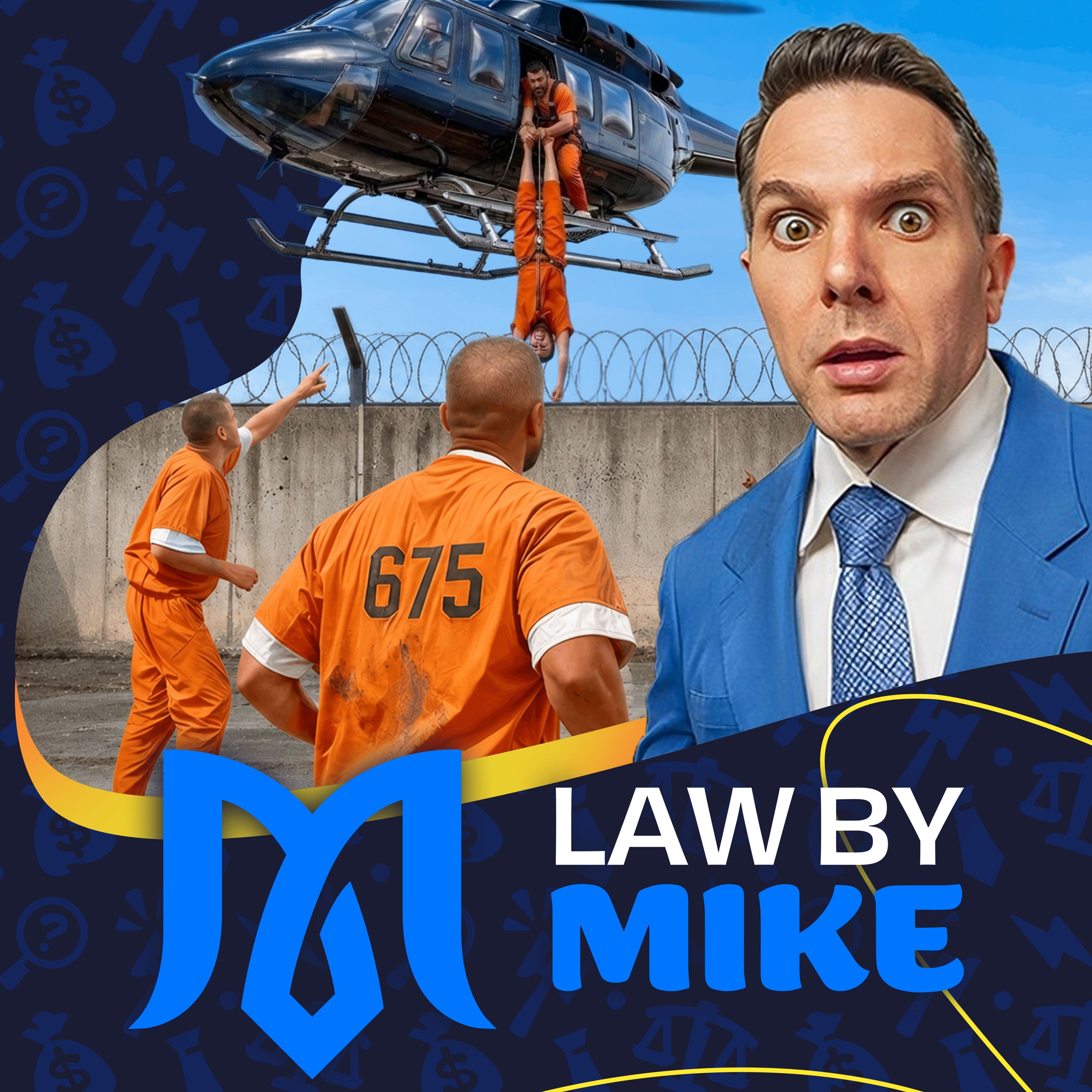
Several popular YouTube creators have found themselves at the crossroads of viral stunts and potential legal consequences. Pranks ranging from unauthorized entries into private property to dangerous wildlife encounters and public disturbances have pushed some into gray areas of criminal law. Despite the risks, legal systems often intervene due to context, intent, or lack of real harm. For instance, MrBeast’s prank arrest and Arak’s entry were shielded by friendship and prior permissions. Similarly, Kaisenat’s fireworks and Misfit Minds’ restaurant prank were treated as non-criminal due to pre-planning and minimal harm. Nico’s drone violation and Milk Boys’ social interaction with a fugitive were narrowly avoided due to lack of active criminal intent or evidence. The most severe case involves Johnny Somali, who faced up to 31 years in prison for multiple offenses in South Korea, including defacing a protected monument, public disorder, and creating illegal deepfake content. Though some charges were dismissed or reduced, the prosecution built a strong case based on repeated disrespect, public disruption, and deliberate deception. His final guilty pleas and the addition of deepfake charges significantly increased his risk of long-term imprisonment, highlighting how online content can lead to serious legal repercussions when it crosses cultural, public, and legal boundaries.
What if I told you some of YouTube's most popular creators should have gone to jail,
but the law saved them?
From a YouTuber who broke into MrBeast's bedroom
to another who got away with wrestling an endangered species,
I'm breaking down how they escaped the legal consequences of their craziest moments.
Starting with MrBeast.
The crime begins with iShowSpeed being pulled over by police.
They tell him it's because they have a warrant for his arrest
over skipping a court appearance on a speeding ticket.
Speed is quickly handcuffed, put into the back of a police car,
and then brought to prison.
When he gets there, the inmates inside begin hazing him.
Eventually, MrBeast appears,
which is where things cross into potentially serious criminal territory.
It turns out that MrBeast had sent police officers to arrest Speed
and bring him to jail as a prank.
Since Speed was taken by force and moved to another location,
that could be considered kidnapping.
And since MrBeast stopped him from leaving,
that could be false imprisonment.
So why wasn't MrBeast charged?
Well, most likely, it's because MrBeast and Speed are friends,
and Speed most likely knew the clip would go viral.
Next is Arak, who breaks into MrBeast's bedroom.
It starts with Arak hiding inside a giant Amazon package.
He then gets his friend Beans to dress up as an Amazon delivery driver
and attempts to get past security at MrBeast's front gate.
Once they're inside, Arak cuts himself out of the box,
puts on a disguise, and walks into the kitchen of MrBeast's studio,
where he starts eating company food.
So there are three crimes here.
First, entering the property like this would be criminal trespass.
Second, because they lied to the security guard to get through the gate,
that trespass happens by fraud.
And the third crime here involves the food.
By entering under false pretenses and taking them without permission,
even if it's just. Even if it's just snacks and drinks, that can be treated as burglary.
So how did the law save Arak?
Even though MrBeast had no idea Arak was sneaking in,
the head of security did.
And luckily, he had given Arak permission to film the entire stunt.
Next is Kaisenat, who sets off a massive amount of fireworks,
destroying his house, and gets away with it.
The stream starts with Kaisenat and MrBeast
sitting with a large tower of fireworks stacked behind them.
A friend comes in with another firework,
begins to joke about lighting it,
and then puts it in the middle of all the others.
Kai and the friend begin fighting.
Because Kai feels like it would be extremely dangerous.
MrBeast quickly leaves, and then the friend lights them anyway.
It won't be no quip.
What?
It turns out that this was a full-scale replica of Kaisenat's room,
and they had built it to blow it up.
Normally, they'd be charged with reckless endangerment and maybe arson.
But in this case, the law would treat it as a controlled stunt.
All the way back in Australia,
a YouTube group called Misfit Minds
came up with a prank to plant a fake speaker at a restaurant.
Customers would pull up, expecting to place an order,
only to hear Misfit Minds messing with them through the fake intercom.
Just an Angus Burger meal?
Good boy.
Do you mind if you just turn your car off?
I can't quite hear you.
Turn the car off?
Yeah.
Good boy.
One customer was caught completely off-guard
when one of the boys started yelling his order through the intercom.
Can you speak, huh?
Me?
Yeah, you.
Who else am I talking to?
And another customer became so upset
that she simply gave up and drove away without ordering anything.
Okay, well, I just had a look.
And, um, I think the ice cream machine's broken, actually.
You know what?
He's kind of right.
This is, like, the shittest Hungry Jacks I've ever been to.
Excuse me?
You did?
Bye.
Where are you going?
Now they've escalated from annoying customers
to actively preventing the business from making sales.
By causing customers to leave without purchasing anything,
Misfit Minds directly interfered with the restaurant's ability
to generate revenue,
putting them at risk of being charged with obstruction of business.
Because Misfit Minds left after filming and were unlikely to return,
management probably decided it wasn't worth pursuing.
But had the restaurant pressed charges,
Misfit Minds could have faced fines, criminal records,
and jail time for what they likely saw as a harmless prank.
During one of his videos,
Nico Amalana found himself in Chile with one goal,
see penguins at a protected colony.
Nico and his crew arrived just as the park was closing,
and they were able to get to the restaurant.
And the gate attendant wasn't willing to let them in.
So Nico hatched a backup plan.
Drive into a spot outside the restricted area
and use their drone to capture footage of the penguins from above.
But flying drones over protected wildlife areas
without authorization is illegal in Chile,
as it can disturb protected wildlife
and violate airspace restrictions.
Shortly after launching the drone,
Nico spotted a park ranger coming straight for them.
Oh my gosh, oh my gosh, oh my gosh, oh my gosh.
Nico and his friends panicked.
They grabbed the drone, jumped into their car, and took off.
By fleeing from a park ranger,
Nico could have been charged with evading a lawful authority,
escalating this from a simple drone violation
into resisting public authority,
punishable by up to two years in prison.
Fortunately for Nico,
the ranger eventually gave up the pursuit.
Nico got away with this
because by the time park authorities could have filed a complaint,
Nico and his crew were already out of the country.
Milk Boys have built their brand
on pushing penguins to the top,
but during their trip to Japan,
they left even their most loyal fans
questioning if they'd gone too far.
The Milk Boys connected with a fixer named Dr. Allen,
who claimed to have direct access to the Yakuza,
Japan's notorious organized crime syndicate.
Allen offered to arrange a meeting
with a high-ranking Yakuza leader
who was actually wanted by Japanese authorities.
Allen made it clear that this wasn't a joke.
The person they were about to meet was a real criminal,
someone law enforcement was actually looking for.
Some of the Milk Boys started having second thoughts,
questioning whether they should go through with it.
But they went ahead with the meeting.
They sat down face-to-face with the Yakuza leader
and asked him questions about his criminal operations
and what life in the Yakuza was really like.
How does someone join the organization?
When the video dropped,
the comment section exploded with one question.
How is this legal?
In Japan, harboring or concealing a person
who's committed a crime is illegal.
But simply meeting and interviewing a wanted person is okay,
as long as you don't actively assist in hiding them
or obstructing law enforcement.
But the Milk Boys didn't just interview the Yakuza leaders,
they ended up partying with them into the night,
drinking together and talking with women from his entourage.
By spending extended time with a known fugitive in a social setting,
the Milk Boys potentially crossed into providing companionship
or social cover, which could be argued as assistance.
Japanese authorities likely determined their actions
didn't rise to the level of criminal harboring.
And by the time the video was posted,
the Milk Boys were already back in the United States.
David Dobrik is one of the most popular creators in the world.
But after the pandemic, he completely stopped posting.
So when he decided to make a comeback,
he knew he had to go big.
David and his friends went to a lake in Utah,
rented a massive excavator,
and came up with a plan.
Attach a rope to the excavator's arm
and spin people around like a makeshift carnival ride.
Members of his friend group took turns swinging from the rope
while David operated the machine.
Then Jeff Wittig jumped onto the rope for his turn.
David began spinning him around,
but this time, the excavator was moving much faster.
With the help of his friends,
Without accounting for the extra speed,
David abruptly stopped the excavator's rotation.
And the sudden stop sent Jeff flying directly
into the metal arm of the crane.
Jeff suffered a fractured skull,
severe damage to his left eye,
and multiple facial injuries.
Years later, Jeff is still undergoing surgeries
to repair the damage.
And he eventually filed a lawsuit
against Dobrik for negligence,
seeking damages for medical expenses,
lost income, and pain and suffering.
But while David's actions were reckless
and caused serious damage,
prosecutors likely determined
they didn't rise to the level of criminal recklessness.
David didn't intend to cause harm,
and the incident could be characterized
as a tragic accident rather than a deliberate act.
So he'll likely get off without any criminal convictions.
Holsten, better known as the real Tarzan,
has built a massive following
by getting up close with some of the world's
most dangerous animals.
But he then posted a video
that made the authorities start a formal investigation.
The video, filmed in far north
Queensland, Australia,
went viral with over 22 million views.
And what it showed was shocking.
In it, Tarzan is seen getting out of a boat
and heading toward a freshwater crocodile.
The crocodile tries to swim away,
but Tarzan dives onto the animal,
wrestling it as it thrashes in the water.
His arm was visibly bleeding,
and another crocodile could be seen lurking nearby.
After the video went viral,
the Queensland Department of Environment
confirmed they were investigating
and stated that interfering with a crocodile
is a significant investment.
Not to mention extremely dangerous.
If Tarzan was caught in the act
by local rangers or police,
he would have been arrested and deported from Australia.
But pursuing international charges for wildlife interference is complicated,
expensive, and rarely results in prosecution.
Tyler Oliveira has built his following by confronting criminals directly on camera.
"Hey my friend, do you think you'll hit someone again today?"
But during a trip to Paris, Tyler didn't just document crime,
he found himself in the center of it.
"I'm just gonna go in for it."
Tyler and his team identified scammers operating near the Eiffel Tower,
targeting tourists with fake petition scams and pickpocketing.
It then looks like Tyler confronts one of them by spraying him with water mixed with fart spray.
The scammers immediately react aggressively,
then the situation escalates into a full-blown street fight.
Spraying someone with a chemical substance is assault,
even if you're doing it against someone who may be a criminal.
But there's two reasons why he wasn't charged.
First,
the scammers themselves were criminals who likely didn't want to involve police,
since doing so would expose their own legal operations.
Next,
Tyler says the spraying was done in self-defense,
which if true, could be a legal defense.
Had the French police arrived during the altercation,
Tyler and the team could have been detained and held in custody,
while authorities determined whether the force was justified
or whether they charged them with assault.
Thanks so much for watching.
How is it possible that a YouTuber could get 31 years in prison?
"I have no morals."
"I'm a sociopath."
You're about to watch someone who thinks they can do anything,
anywhere,
face real legal consequence,
and how five mistakes built a legal case so strong
that this creator may never be allowed to return home again.
It all starts with a simple visit to one of South Korea's most beloved memorials.
"I stand with the Korean people.
I love Korea.
Everything that I did in Japan was for the Korean and the Chinese people."
When Johnny was in Japan,
he walked through the streets shouting about two atomic bombs that were dropped on
Hiroshima and Nagasaki.
"Hiroshima, Nagasaki!"
That's super offensive.
A lot of people died because of what happened there.
I don't know why he's yelling that in Japan.
The problem is that this isn't a normal statue.
It's called the Statue of Peace,
and it commemorates Korean women who were forced into slavery
by the Japanese military during World War II.
And Johnny's trying to justify his crimes in Japan
by claiming everything he did was for the Korean people.
But really, he's just disrespecting a protected public monument,
which is obstruction of law.
It's an obstruction of both public order and a public place.
And that was just the first of five things Johnny did
that could land him up to 31 years in prison.
Next, look at what he did inside a convenience store in Seoul.
Johnny is seen sitting in a convenience store,
making an alcoholic drink and blasting music.
An employee comes over and tells him to quiet down and stop drinking.
Under Article 21 of the Food Sanitation Act,
allowing customers to drink inside a convenience store
can result in the owner getting fined or even having their license canceled.
He continues to act like a jerk.
This is obstructing business,
meaning he's stopping someone from performing their duties.
But it's the least important thing that's happening here.
Then, a customer tells Johnny to clean up his mess.
Johnny's response?
He turned the music up even louder
and started dancing in the middle of the walkway.
Once he starts yelling at other customers,
he becomes liable for violations under Korea's Minor Offenses Act,
which covers disorderly conduct and cleanup costs.
So what does this mean?
All of these actions will be included in the case against Johnny,
and when a judge reviews the case,
the judge will treat each of these moments as evidence.
What's even more interesting is that Johnny deleted the original footage
from the convenience store because of backlash online.
However, he may not realize that other people have already re-uploaded the video.
A judge can still find and use it as evidence,
and depending on the circumstances,
could treat the deletion of the original as an attempt to destroy evidence.
Which brings us to the first bus incident.
This is the bus incident in which Johnny was forced to stop a bus.
The music Johnny is blasting on the bus is a North Korean propaganda song.
He's trying to offend and disrupt the passengers to get a reaction from them.
Get out.
Get out?
Get out.
Oh.
Get out.
Allah akbar.
Let me stop my thing, buddy.
Let me stop my thing.
Allah akbar.
So once someone forces a driver to stop a bus and they're removed,
they're no longer just being disrupted.
They're now preventing someone else from running their business.
But this wasn't the only incident.
The only case of Johnny causing a scene on public transport.
People are very frustrated with him already.
Wow.
This is where things get dangerous.
Because now Johnny isn't just putting himself at risk.
He's putting that man, the people around him, and the driver in danger too.
And that opens the door to even more serious charges like intimidation and assault.
But the man on the bus was the least of his problems,
because once Korean news started running this footage, everything changed.
Mapo police station confirmed they had opened a formal investigation.
Police began reviewing the clips for proof of crimes being committed.
And soon after, the local news reported that Johnny had been booked by police.
In Korea, being booked does not mean that Johnny is going to be arrested.
It means you are now a formal suspect and the case is moving through the legal system.
And if that wasn't bad enough, the police also placed a travel ban on Johnny,
which meant he couldn't leave the country while the case continued.
Then something happened that shocked not just Johnny, but everyone following the case online.
Johnny was attacked by a group of strangers,
who said they were fed up with what he had been doing in South Korea.
And then it happened again.
But this time it was different.
It wasn't a random civilian.
It was a former Korean special forces soldier turned YouTuber.
Oh man, look at him.
My hat, my hat.
He's wobbling.
Sir, come this way.
That was a hard hit.
And this guy's getting arrested.
It's still against the law to hit someone.
But, you know, if you're Johnny, you should expect this coming.
You pretty much angered an entire country.
After the incident, the attacker was investigated and charged under South Korea's criminal act.
Reports first said he was fined around 1.5 million won, about 1,025 US dollars.
But later, Dahlgen told
another YouTuber his punishment was far worse than anyone expected.
He was also charged with intimidation and stalking,
because the confrontation with Johnny was planned and filmed.
And once legal fees were added, the total fine was 10 million won, roughly 7,000 US dollars.
This is huge, because in South Korea, the average monthly income is around 2,800 dollars.
And at first, it looked like he would be stuck paying all the fines alone.
But then he posted a photo on Instagram of him standing
in the street next to Johnny.
The caption read that he did what he had to do as a Korean citizen.
He thanked people around the world for calling him a hero.
Underneath was a PayPal link.
Almost immediately, the public began to help cover the cost.
But what's even crazier was that a former police officer and American YouTuber,
known as Donut Operator, paid the remaining 4,000 dollars.
By this point, most people would start taking the situation seriously.
And for a brief moment, it looked like Johnny did too.
Johnny then went live to explain himself and share his side of what happened.
I want to apologize to the Korean people.
I was not aware of the significance of the statue.
You know what I mean?
It was just entertainment for my audience.
But despite Johnny's best efforts, the public didn't believe this apology was sincere.
Almost immediately, people warned the Korean public
that Johnny had done the exact same thing in Japan.
They said he apologized there too.
Then, the moment he left the country, he insulted them again.
And things only got worse.
On the actual day of his hearing, Johnny showed up late to court.
This is seen as extremely disrespectful in any court in the world
because it shows that you're not taking this matter seriously.
And it became worse when he entered the courtroom.
He was wearing a Make America Great Again hat, which broke courtroom rules,
and he had to be told twice to remove it.
Then the prosecution read the charges into the record.
In total, he faced two minor offense charges.
And four obstruction charges.
Johnny's lawyer entered guilty pleas to all of them.
By pleading guilty at the hearing, Johnny locked in criminal convictions.
And in South Korea, that sharply increases the chance of a prison sentence.
But then something totally unexpected happened.
The judge introduced a fourth charge that Johnny and his lawyer had not reviewed yet.
Back in October, Johnny was doing more than harassing random people.
He was also targeting a well-known streamer named Bongbong.
Johnny pulled up AI-generated
images and video on a livestream that showed him and the Korean streamer Bongbong
IRL-instaged intimate moments, including a clip that makes it look like they were kissing.
He used that as supposed proof that she was his Korean girlfriend.
He told viewers that she had invited him to Korea
and used those fake clips to sell that story, even though there had never been a real relationship.
The clip he showed even had an AI watermark in the corner, which viewers noticed right away.
Under South Korea's violence laws and recent deepfake reforms,
creating or sharing NSFW deepfakes of a real person is treated as a crime,
even if everyone knows the footage is fake.
Each count can carry a sentence of about 10 years in prison, and prosecutors have said that the
Bongbong deepfake is one of the main charges driving Johnny's potential prison time.
Johnny's lawyer entered
not guilty pleased to the two deepfake charges, but he clearly shook Johnny because of what he
asked the judge next. She explained that other foreigners had already been waiting nearly two
years and that Johnny would not receive any special treatment. But a lot of what Johnny said
may be a lie because during one of his streams, Johnny claimed that his family disowned him.
This contradicts his statement to the judge that he needs to go home to see his family
and could affect his credibility for anything he says in the future. What's even more ridiculous
is that I found an interview where someone from Johnny Somali's team revealed just how much money
Johnny was making from all of his stunts. In a day, roughly, how much would he make?
If he was streaming a long stream, it was $700 a day.
What? $700?
It's only on donation.
$700 to terrorize a country?
That's. That doesn't seem worth it. He's literally risking his life over a few hundred dollars.
The public also wants to see Johnny face real consequences, especially after years of YouTubers
causing problems across Asia. Because of that history, some people are openly saying Johnny
should be punished harshly. The next court date has been set for February 11th, 2026.
If the victim, Bongbong, does not appear, the hearing could be delayed again. Right now,
Johnny Somali is facing eight charges in South Korea, and if he is convicted on every count,
The maximum sentence is 31 years in prison.
Thank you so much for watching.
Podcast Summary
Key Points:
YouTube creators like iShowSpeed and Arak engaged in prank-like acts involving unauthorized entry, false pretenses, and trespassing, which could constitute criminal offenses.
MrBeast’s prank arrest of iShowSpeed raised questions of kidnapping and false imprisonment, but legal leniency likely stemmed from their friendship and the viral nature of the incident.
Arak’s infiltration of MrBeast’s home involved trespass by fraud and possible burglary due to false claims and unauthorized food consumption, yet the security head’s prior permission spared him legal action.
Kaisenat’s fireworks stunt, though dangerous, was treated as a controlled, non-criminal activity due to its pre-planned nature and lack of real-world harm.
Misfit Minds’ prank at a restaurant disrupted business operations and caused customers to leave, potentially violating obstruction of commerce laws, though authorities dropped charges due to low risk and no return.
Nico’s drone use over a protected wildlife area violated airspace laws, and fleeing from a ranger could have led to evading authority charges, but he escaped prosecution by leaving the country.
The Milk Boys’ encounter with a wanted Yakuza leader crossed into legal gray areas by offering social companionship, which may constitute unlawful harboring, though authorities deemed it non-criminal due to lack of active concealment.
Johnny Somali committed multiple offenses in South Korea—including disrespecting a peace monument, public disturbances, and creating deepfake intimate content—leading to eight charges, with a potential 31-year prison sentence if convicted.
Summary:
Several popular YouTube creators have found themselves at the crossroads of viral stunts and potential legal consequences. Pranks ranging from unauthorized entries into private property to dangerous wildlife encounters and public disturbances have pushed some into gray areas of criminal law. Despite the risks, legal systems often intervene due to context, intent, or lack of real harm.
For instance, MrBeast’s prank arrest and Arak’s entry were shielded by friendship and prior permissions. Similarly, Kaisenat’s fireworks and Misfit Minds’ restaurant prank were treated as non-criminal due to pre-planning and minimal harm. Nico’s drone violation and Milk Boys’ social interaction with a fugitive were narrowly avoided due to lack of active criminal intent or evidence.
The most severe case involves Johnny Somali, who faced up to 31 years in prison for multiple offenses in South Korea, including defacing a protected monument, public disorder, and creating illegal deepfake content. Though some charges were dismissed or reduced, the prosecution built a strong case based on repeated disrespect, public disruption, and deliberate deception. His final guilty pleas and the addition of deepfake charges significantly increased his risk of long-term imprisonment, highlighting how online content can lead to serious legal repercussions when it crosses cultural, public, and legal boundaries.
FAQs
MrBeast and iShowSpeed are friends, and iShowSpeed likely knew the clip would go viral. The arrest was a prank, and since it was consensual and not a genuine legal enforcement, it wasn't considered criminal kidnapping or false imprisonment.
Yes, Arak committed trespass, fraud, and potentially burglary by entering under false pretenses and taking food. However, the head of security had given him permission to film, which likely prevented legal action.
The event was a controlled stunt, not a real firework explosion. Since it was pre-planned and non-harmful, it was treated as a safe, legal demonstration rather than reckless endangerment or arson.
Yes, they could have been charged with obstruction of business for causing customers to leave without purchasing. However, management likely decided not to pursue charges due to the low risk and lack of direct harm.
Yes, flying drones over protected wildlife areas without authorization is illegal. However, he escaped prosecution because he fled the scene and was already out of the country before authorities could act.
Meeting a wanted person is legal as long as no assistance or hiding is provided. The Milk Boys were not charged because they only interviewed and did not offer cover or support, and they left the country immediately.
Chat with AI
Loading...
Pro features
Go deeper with this episode
Unlock creator-grade tools that turn any transcript into show notes and subtitle files.
 PodcastTranscript AI