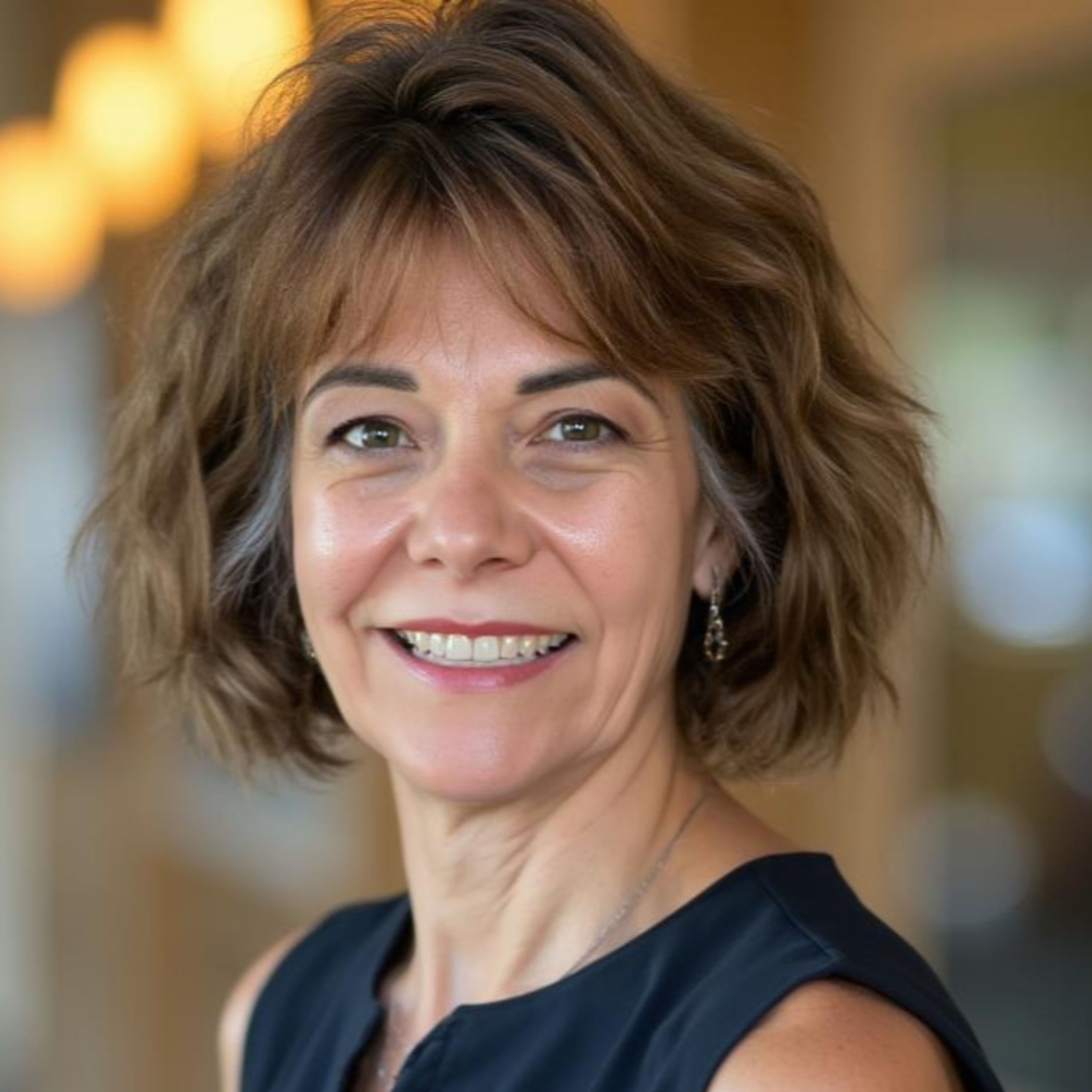
161. Creating Impact Through Technology and Everyday Ideas
31m 39s
Funda Erden presents EchoSort, an app designed to tackle waste and promote sustainable consumption. The app, built entirely by Funda using AI, addresses two main needs: guiding proper recycling through photo recognition (EcoSort) and evaluating grocery products for health and sustainability via barcode scanning. Unlike many apps, EchoSort requires no download (it works as a progressive web app), avoids subscriptions by using a token system (starting with three free tokens), and protects user privacy by not selling data. The app grades products based on ingredient analysis and company sustainability certifications, drawing from open databases like Open Food Facts and paid services like GoUPC. It provides actionable alternatives and deep dives into company practices. Funda, a software architect and Rotary member, was inspired by observing improper recycling and the time-consuming nature of ethical shopping. She emphasizes that the app informs rather than alarms, helping users make sensible choices. Future enhancements include location-specific disposal guidance, personalization for allergies, and integration with farmers markets. Funda sees Rotary as a supportive community for her environmental focus, and she plans to expand the app's corporate applications for waste management. The project reflects her passion for using technology to foster human connection and environmental responsibility.
Welcome everybody. This is the Rotary Club of Silicon Valley and every week we bring you the stories of people who are making a difference in the lives of others. They are improving communities around them doing this locally, globally, digitally. This is a part of the world we live in now. There are so many ways that we can make, we can make a wonderful impact on communities near and far. And our club is part of Rotary International, 36,000 clubs around the world that work to improve the lives of those in their communities. And in doing so, you will find lots of different models of clubs along the way. Clubs that meet a lunch, clubs that meet at breakfast, clubs that meet online and asynchronously like ours. And if you are looking for a hyper-flexible service club that is online, that you can access from anywhere, or even catch as a podcast, then check out Rotary.cool to learn more about who we are as the Rotary Club of Silicon Valley. Today we are going to be speaking with Funda Erden, who is a Rotary colleague that I know through our district, and who began describing to me an app that she was developing sometime last year. And I was so interested in what she had to say about it that I said, "I'd love for you to talk to us when you're ready." And so just a few weeks ago, she said, "We've got the app up and going." And I said, "Let's get this story in a space where people can start thinking about what it means to be able to answer questions of recycling far more easily than they can be answered now." So Funda, we're excited to have you. Welcome to the Rotary Club of Silicon Valley. I hand the mic over to you. Thank you, Rochson. First of all, I'm very honored to be talking with you guys, and you have great speakers coming and sharing things. Whenever I have time, I learn so many things from your recordings. And like I mentioned, most likely, I'll reach out to some to make new connections, which brings me to, at this stage of my life, I love connecting them based on where I have my experiences on. And one of them is technology. I prove technology. And there's something I would like to also mention. I have been a software architect implementing business, software, and so on. But this is my first day, my first baby, that I did from ideation to publication, all of my myself. So thanks to AI, and maybe we should talk about how it helps our lives in that sense. The story began, I think seven or eight years ago, as an idea that falls to my head. I was working at a very large company then too. Very educated people, but it was right, really not to see different garbage cans, just having things that shouldn't be in that kid. So we had the heck at on idea at the time. And AI was not what it is now. So we tried to do our best with two other developers, of trying to get a snack from our shells. And just take the bottle and the app directs us where the garbage goes. Because that was like the eight percent of the use cases, people will get something from it. And you know, on the idea stuck with me for a while. And no, with where we are, I'm like, well, I wanted to do this. I know I also wanted to create an app which I had the needs for. So it goes so, as we'll see, it is going to be one. And the second one is consuming products that are not just healthy, but comes from sustainable companies, right? I think being a consumer is our biggest, biggest leverage in given directions to the companies. So my grocery shopping was taken really a lot of time. I was trying to see if this is good. And so what are the things that I know no problem about for the things that was new? Well, it started to end like a master's degree. And where is this? Well, I wanted to create an app or something to that EchoSort which we'll see is this is not an alarm in first of all, it comes from a space off. There's nothing perfect out there. And we know it. So what can we do in that space where things are not perfect? Well, how can we work it by from the companies at least who gives some attention to sustainability? And it's healthy for us. So I think that's for the app that I'm going to show differs from in its very database. It's not alarming. I wanted to have it come out with database rather than there's one ingredient and you can't buy it because I was hearing the conversation around people are feeling like they can't eat anything, which is right. And so mine comes from the EchoSort perspective, which we'll dive into and from the health perspective to something database. Let's be sensible about it. Let's make informed decisions. And I'm hoping that I'll add more thanks to my app in time to make it a pocket guide. If the pocket guide that you don't need to really dive into chat, jibby, thiz and so on, something very simple. I know you also want it to change to different things along the way. First, I'm so tired of downloading things all night after. Phone is like a flume of apps, which we're using and not using. So I look for something that doesn't be quite downloading, but still very handy. And then many subscriptions. I hate many subscriptions. And this app shouldn't be a manual subscription either. So this is where it's all talking. You buy them when you need it and it starts with three tokens to try. If you like it, your buy all tokens to continue. If you don't, you just then delete your book more and you're done with it. And another thing I don't like being a product of data, where then I'll be flooded, which can't be translated. So none of the information about email and so on are being sold in here. This is purely, let's get together. Let's try to get anything from the waste livens as much as possible. And let's support the companies and care about health as much as we can. So it's a color way to make daily choices. I haven't said that. Let's get into the app. So the way you can start is simple. Maybe you just go to the green at and I'll show you something. Maybe you might not have seen it before. And this is in the most mobile clones. So when you view more and add the home screen, this just adds to home screen and then you would be able to use it. See? So this is doesn't require download. You can make it look like a mobile app out from here on. It acts like a mobile app. So you can load now that I logged in already, report the reporting. This talks about the grading data I use as the baseline. So if you're interested, you can do it. Let's start with the IcoSort. In fact, I use it myself. Although we know many things. Sometimes we come across some things that we might not need it before. So the one that I had before, so you can enter this manually and then I'll bridge water. Just thank you. Oh, yes. I just did for and I love what's spelling. Yes. All right. So it talks about that is mix and it talks about whether the materials included in the disposal guidance, also the environmental impact. Again, I want it to be informative. It just doesn't go in waste, recycle, garbage. But in talks about what you do recycle, what is the benefits doing? And then if you don't, what does the base calls to you? It's all the in alignment. And also sustainable alternatives to your decisions. So it's just like a bucket guy of what you can do and the next. And you can also use photos or you can take the photo of anything. So this
This is a wireless e-bots case, and again, it's mixed with plastic and electronics, and then it gives you again the directions to do for sustainable alternatives and so on. So this is an e-theguard that you can use when you're cleaning up your arise or anything that you have question about what the right place to go. My next step in this app would be to detect your location and give you specific form what it needs to go. So it's going to be more informative in the next version. And the other one that I mentioned is regarding everyday products. Now we use the mouse sold product for the last of the life's ingredients and the salon. So you would stop paying, you just go and scan the product that you want to buy. Then GIF gives you a grading if it's acceptable and then you want to learn more about the details of it. So what is it? That way not be good for you. What does the company does and so on? So it does give you a green ingredient analysis at the high level of what might be the higher concern ingredients to the accepted ones. And then it gives you a company sustainability analysis. Let's say, well, okay, I want to buy something a little bit better than I click on alternatives. And then it gives me the brands and the product that will be better for me and the environment. Well, if you are very, very interested in so this can go as deep as you want. There's a deep analysis, which is which it goes with every ingredient and also looks for the company's sustainability certifications. So which one is the alarming one? And then the company is carbon practices, water, responsibility and in all those areas, what is the published things about this company? It's not what's been told. It's what's been published. So there is a difference. I think our perception sometimes takes over the data part that we believe in places where we see more organic, it's good. It's not that easy, even in those products that will be good. Just getting and learning about it can help. So in the information, I give the details if you want on where the data came from, and how it was in a license. So that's really the functions of the app. I tried to be transparent through ads, so it shows you where you use your tokens in which history. So you can see what has been done and so on. So this isn't very simple for this day. In the low term, I will add more features to it so it can be your pocket guide to sustainability and your hull. And let's see when it will take me. Questions? Absolutely. Fantastic, Runda. I am jazzed for us to be able to talk about this. Let's first introduce the group that we've got on the recording today. I am in San Jose, California, also from our club. Here in the Bay Area is Shaggen. In Budapest, Hungary, we have Victoria Grieshmuller. Also here in California is a longtime friend of the club, Aggie Freeman, and then up in Oregon, we have with us Claire, a pastor district governor, Claire, who joins us for a number of these. And as everyone knows, we are well excited to have you contribute your questions as a part of this as we go. So to start with this, you talk a little bit about what it means to use good data that the app can draw on in order to help people know what to do with it. What those data sets, what do they come from and how did you figure out that you'd be able to use that as a part of the app? There's a couple of things. The photorecognition parts and the barcode jcognitions, the photorecognitions and a good react feature now. So it can identify from the photo what the materials are based on. So there was lots of experiment that and the wanting to make sure that the park was good. I got inspired in materials and it's in a good place in terms of the AI APIs that I have used. The other data sets about ingredients and so on, I use an open database, obf and OFF, those companies like you guys on, just edit the so it's very collaborative. So you can see the transparency of when that data is been used. And then there's also another company who gives paid services called gouPC to provide the ingredients. And after the ingredients, the company animals, as that we depend on. So I trained the AI to use the certifications to be able to as you have seen what is the carbon footprint, the best practices that they are doing and so on. So it goes and checks those locations to see if those companies have anything that's been put on public. If it doesn't, that's where it did us talk us. So I'm not going just in general get it getting it. Again, it's a verification by the certification for in that sense. And that makes it reliable because when we just write on chat, we will sell the times that yeah, just a general look, feel, feeling of it. But if you train the AI to look into certain locations and serve the certification that we found the short database. So I can have a very quick grade at my fingertips when I'm shopping rather than going and writing it again and trying to get that information. Got it. Now in terms of being able to use that information successfully, are there particular kinds of products that proved harder to identify and to make sure that they were working properly with the other? Yes. Some of the ingredients of the items that we use are not disclosed and we will find it bit further. So you will have nutritional labels and some of the ingredients, but not all of them. And then some of the things that did be able to context the driver right in terms of how much you use it, how much in your product and the salon. So in the app that I find to tag it to be context driven, you know, we don't know how much they have it. So it can be harmful and not. When you use the audio, you'll see that if it's in years that read it out there looking like food, it would be an acceptable way, right? Like the fresh ingredients and so on. When you go into the snap departments, that's kind of right right away from the practices and so on. So I was a lot of fun, a lot of ours, in the grocery stores, very fine and then checking against the data before I felt comfortable, okay, this is working good now. The one with the eco-sort to I think that's the generic problem right now. If I take a photo of a dark object with a dark background, it's hard to read. That's for all the photos. So if you have an image to be taken and you want to be recognized well, it's better to have it on the white or light background. So it can be recognized. And now since the app is out, I'm also getting data on which products were ingredients that were not found and so on. So I'm partnering also with GoUBC to get that to that. So I have better data next time. Again, this is just the, I will move on to the campaigning part. That's the part of the work that I am not the big panel, like recording less out. But every app.
needs to have it in a kind of a can-pay. And then recently I also established my consulting company where I work with small businesses or people with idea that they need the technology boost. I think making connections has been my passion. We can just so much when we get together. AI is really powerful these days but it doesn't replace human connections or come in together to establish new things. So I think as long as we continue to support each other we don't need to be afraid of AI or other things in general. We have a great power to make things better and to be able to focus on the things that really matter for the humanity. One day, mundane jobs can be done by an automation. I think we have pie yourselves. That we can benefit. Cool. So one of the ideas that struck me during your presentation is that if you can identify the ingredients for any given product there's probably also a database of allergens and allergies that have a connection to those products. Is that the kind of thing that you imagine expanding the app to be able to cover? Yes exactly. So that's a great idea. And I was thinking about that too. So you can create your profile with what you have alerted us for. Personalize it. It will be a generic grading that comes in but it can so did I. Stay away from this. So more personalization along the way and localization that can come in too. I feel like this is going to just grow with me for a while. I'm working on a spin off the ecosystem part and now for the larger companies which pay fines for their garbage. So I think they might have a good fit for it as well too. And then the other part I have is organic worth it. So we are very organic focus but not everything makes a big difference of organic organic. So something to take our photo. And then I want to integrate the farmers market to it. We know know what it's in our farmers market. So that will take more time but I want to have integration of the farmers market so you can order things before you leave home or you can even find somebody with a bike to bring you your groceries when you need them. So something handy to live with you or that you can use for multiple days in your life. And I'm looking to get more ideas. You know I can have my uses but there might be uses like I haven't thought about but which would be beneficial. So my ears are at the app for the feedbacks that I receive to see what I can include. That's why I wanted to get the MVP part out and gather more information to bring it to something that will be useful for more people. Perfect. Now it seems like the business model for the app is built around the use of tokens. Can you talk a little bit more about what you expect like the costs to be related to tokens and I saw that there were different different usages of tokens based on whether it's in a national thing or a deep analysis. Can you go into more detail about that? So I think especially on the AI and there is the use of tokens right because it depends on your usage which makes more sense for apps like this where you'll have your usage for a time and want to use it. So the number of tokens you can get for $10 for $100 which can you know get you quite much. And I want to also learn one thing especially why initial thing was to be okay this is going to be a great app and I'm going to be very rich from this. It wasn't that. My goal was really see how we can be helping out. And it was for me to be able to learn the ins and outs of getting an app. I was always on the product management program management app and I named it code software architecture and I work as an architect but I did write code. I know you always enjoy it. So that was for me to be able to learn code. Yeah, it used AI and different things to get it out. So that does my main goal while getting something out usable and hopefully that's going to grow. So that feedback from the people who's first started using it and it will be again the use of token. Maybe it's a nice thing but I believe if you do something that's right for the holistic approach and if it feels right in your heart, money will tell. So we'll get to see how that works. Again, the subscriptions and so on is just driving in knots these days. I'm not going to be another one in that. You can buy your tokens as a user when you run out of them after your retoken and I have a striping integration itself. It's credit card usage and it's been tried to as you use them. So that would be the monetization model for it as all as it can go and in that way. Well, that makes sense. So as a final question, tell a little bit about how your experience in rotary has had an impact on the focus that you've had on building this app or the nature of the app or the nature of your work. So I had this idea, I guess, the first time we met. Okay, there's the question to it. I'll get to that. I had this as I mentioned for a long while and I had a time in my life where I needed to focus on the health of my family in Turkey. So there's a break where I looked at what I'm going to work on differently in terms of raw three and how this helped. As you can see now, there's a support from the idea. In fact, I'm a member of SRAC and I reached out to that and so wherever I mentioned the app, they were very interested in using the app, especially the ecosystem of it. We don't talk about it in a live, but that's we believe it or not the change in the climate change. One thing that's always seen is we have a way too many garbage. Then this world can accommodate that's a fact. We can see it with our eyes and so on. So that's one real problem that we can also, it's in our pits. So whoever heard it from raw three clubs, really got excited about the app and I think he was for your support. And I'm so happy that even when you forget about it to reach out. So I would say that's the support for it. So when you're doing something, people say, "Oh, that's a good thing. I can wait for it to get out." Is a good motivation. Fantastic. Let's wind down the recording. As we always do, we'll keep talking to you because that is a part of being in the club and getting connected to so many interesting people. And I see we've got a question in the chat ready to go as well. So we'll hit that as soon as we've started. But for all of you who have taken your time to watch this recording or listen to this podcast, we thank you for taking an interest in the kinds of stories that are out there to help others better understand their ability to make a difference in their communities and in the lives of others. We hope that you will take a look at our page at rotary.cool and about rotary generally at rotary.org and that you will tell your friends about the stories that you encounter. Because we think there is a lot there to inspire you to see those pieces of yourself that may not be what you normally get in touch with as a part of the doom scrolling that happens so often. As we always like to do, we hand it back to our speaker for the final word. So for
wonder what would you like people to have clearly in mind before we finish this recording? The Russian, my last thoughts would be different than Apple and so on. One of the things I'm also fighting against, I would say, is the age or the age of the right. Before we talk about the age of the biggest block that is our source. When we come to an age, we feel like, okay, what can I do after this age? I'm looking to change that thought to, we can squeeze too many things, all of our last breath and there's so much to do. So I'm going to need to talk thinking about retirement, started coding and started doing very different things. It's so much excitement. And doing the right things, especially as we age, takes a great power on us. So, combining it with learning new things and keeping healthy and makes our life rewarding and makes us very useful for the bigger size because we have so many wisdom that accumulated with us at the time. So to be able to deliver it, we made that belief in ourselves that we can do so much. Fantastic. Thank you so much and thank you everyone for watching. We will see you next week.
Podcast Summary
Key Points:
The Rotary Club of Silicon Valley introduces Funda Erden, who developed the EchoSort app to simplify recycling and sustainable consumer choices.
EchoSort uses AI for photo and barcode recognition to guide users on proper waste disposal and evaluate product ingredients and company sustainability.
The app avoids subscriptions; users buy tokens (starting with three free) and data is not sold, ensuring privacy.
Funda built the app from ideation to publication using AI, aiming to be a pocket guide for informed daily decisions on waste and health.
Future plans include localization, personalization for allergies, integration with farmers markets, and expansion for corporate waste management.
Rotary connections provided support and interest, especially for the app's environmental impact on waste reduction.
Summary:
Funda Erden presents EchoSort, an app designed to tackle waste and promote sustainable consumption. The app, built entirely by Funda using AI, addresses two main needs: guiding proper recycling through photo recognition (EcoSort) and evaluating grocery products for health and sustainability via barcode scanning. Unlike many apps, EchoSort requires no download (it works as a progressive web app), avoids subscriptions by using a token system (starting with three free tokens), and protects user privacy by not selling data.
The app grades products based on ingredient analysis and company sustainability certifications, drawing from open databases like Open Food Facts and paid services like GoUPC. It provides actionable alternatives and deep dives into company practices. Funda, a software architect and Rotary member, was inspired by observing improper recycling and the time-consuming nature of ethical shopping.
She emphasizes that the app informs rather than alarms, helping users make sensible choices. Future enhancements include location-specific disposal guidance, personalization for allergies, and integration with farmers markets. Funda sees Rotary as a supportive community for her environmental focus, and she plans to expand the app's corporate applications for waste management.
The project reflects her passion for using technology to foster human connection and environmental responsibility.
FAQs
It's an online, hyper-flexible service club that is part of Rotary International, meeting asynchronously and accessible from anywhere, even as a podcast.
EchoSort is an app that helps users make informed decisions about recycling and sustainable product choices, addressing confusion over waste disposal and supporting companies focused on health and sustainability.
Users can enter a product name or take a photo to get disposal guidance, environmental impact info, and sustainable alternatives, with future plans to add location-specific recycling directions.
Users scan a product's barcode to receive a grade on ingredients and company sustainability, including a green ingredient analysis and alternatives for better choices.
It uses AI for photo recognition, an open database (like Open Food Facts) for ingredients, and paid services like GoUPC, with AI trained on public certifications for company analysis.
The app uses a token system, starting with three free tokens; users can buy more tokens as needed for $10 or $100, avoiding subscriptions and data selling.
Chat with AI
Loading...
Pro features
Go deeper with this episode
Unlock creator-grade tools that turn any transcript into show notes and subtitle files.
 PodcastTranscript AI