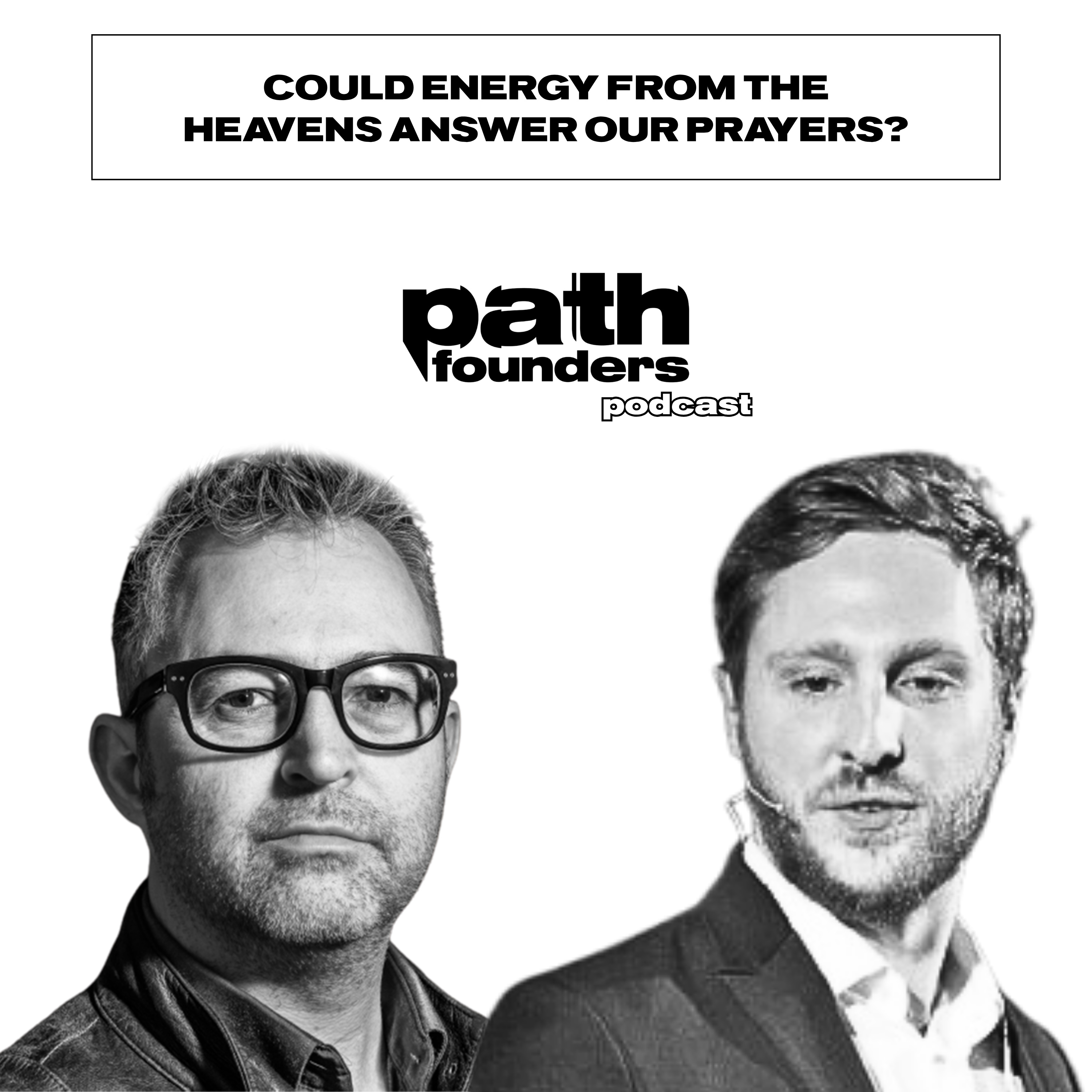
In this interview, Jasper Dipres, CEO of Terrace Park, discusses the revival of space-based solar power, a concept dating back to the 1940s. He explains that while technically feasible in the 1970s, it was not economically viable until now due to falling launch costs, improved satellite manufacturing, and cheaper solar cells. Unlike historical proposals for giant geostationary satellites, Terrace Park builds small systems in low Earth orbit (LEO) to start. The company aims to provide firm, 24/7 energy to off-grid locations where traditional power is difficult or expensive, such as mining sites, remote islands, and data centers. Dipres stresses that space-based solar is not competing with terrestrial renewables but complements them by overcoming intermittency issues from weather and day/night cycles. The company raised over €5 million in pre-seed funding and plans to seek additional capital soon. Dipres notes that the current geopolitical climate, including AI-driven energy demand and supply concerns, creates a favorable moment for such innovation. He also highlights the inspiration from a major blackout in Spain, which underscored energy fragility. Terrace Park operates within existing regulatory frameworks and aims to compete with diesel generators, not other space-based solar firms, as the energy market is vast enough for multiple players.
Welcome to Path Founders, the new tech media title about code, capital and consequences. With both the rise of AI and of course a potential oil crisis looming from the war in the Middle East, the energy that we all consume is now possibly the biggest issue of this half of the decade. Across Europe, demand is rising fast driven by AI data centres electrification, while the grid itself is under increasing strain. Where are we going to get all the energy that we need? Well today's guest is from Terrace Park, a startup building towards space-based solar power. Long scene is a sci-fi concept, it's now being re-examined as launch costs fall, satellite manufacturing improves and Europe looks for sovereign energy solutions. Terrace Park has just raised over 5 million euros in a pre-seed funding round and joining us to discuss it all is Jasper Dipres, co-founder and CEO of Terrace Park. Thanks very much for joining. Thanks, Mike for having us. Well this just sounds fantastical, space-based solar. And it has been sort of mooted as a concept for a long time, but what's going on? And how do you feel you're going to be able to execute this? Yeah, so I think when you look at the concept of space-based solar, indeed, it's been already around there from, I mean actually really from the 40s and then the same people that put a man on the moon looked at it again in the 70s and already then we knew that technically this was possible, but in the 70s really the question was about is this economically viable? Right, and so when you look into how they were doing it back in the 70s compared to the capabilities that we have now, a lot has changed. Yes, I mean you've already mentioned that the cost of launch obviously dropped, but also things like in space assembly, the cost of solar cells, also just the way how we manufacture these satellites, like all of these things have changed, which now makes it a possible part towards making space-based solar also economically viable, not only technically viable. Carry on. No, and then the second thing that changed is probably the approach to it. So quite often if you look at these historical systems and you search space-based solar in Google or in chat GPT or whatever, you're going to get these kind of like very giant systems that are killing me to wide and sitting geo and I can power 80% of Europe, which are all fantastic, but these are too large to start. So in terras park what we're building is the smallest possible space-based solar power company that you can humanly imagine. So we make very small systems in Leo rather than going for the mega-systems in geo. I see. Right. So how are you going to sort of commercialize this? Yeah, so it actually starts already on the ground because if we're able to send energy from space to work, you're also able to send energy like this. So these are ready to rest through use cases, right? So think about anywhere in the world where it's hard to to power something because of a cable. So these could be things in the sea, these could be things in valleys. Mining is a very good example. And then from there, I mean when we talk about energy from space to earth, the question is for who does a certain price point make sense. So when you send energy from space to work in the beginning, it obviously is slightly higher in price, right? And as we progress, the price drops, but so you need to go and match who are those users at a certain price point that are willing to go and pay for that energy. That could be in mining, to give you an example, those could be remote islands, but those could also be data centers where the opportunity cost of not having energy is larger than the cost of energy. Isn't the problem though that as cheap as it might become to do this kind of thing from space, it's surely going to get a lot cheaper, a lot faster doing renewables from earth. Yes, but there's this really weird concept called the day and the night and clouds, right? So the problem with renewables is, and by the way, don't get me wrong, we are not competing with renewables. We need renewables to win, we need to renewables to win anywhere, but the problem with renewables is that it's not firm, base load energy. So it's not there 24/7 always on. So you're weather dependent or it has to be day and night and so you're depending on cycles. With space-based solar, we're effectively able to deliver energy in any weather condition in 24/7. So what's to stop Elon Musk coming up with this himself and blowing you guys out of the water? Well, energy is kind of a really big market. It is the biggest market that we have on the planet, so there will be more than one player for sure. So we actually would welcome him and I think it would be a good idea. I guess he would confirm your thesis I suppose. What about regulation? Because you've got energy, you've got radio, frequency transmission, you've eventually got space infrastructure. Isn't that quite a lot of regulations to deal with? Yeah, no, I mean, there's already a lot of existing regulation as well, right? So when we talk about what's the power density that you're allowed to bring to Earth, like all these things are regulated already. We operate within the existing regulation framework and then yet there are obviously topics that we need to move. There's also topics that just have to be there. Like any single energy source has to be safe, right? And so a lot of effort is being made also on ensuring that that is the case. And I mentioned Elon Musk because I was being flippant, but there are other players in the space for the gift upon. UK, I think, there's a company called Space Solar. There are others. Do you feel you have any kind of particular technical technology advantage or perhaps you're a bit further ahead on funding and stuff like that? Yeah, so there's different players in there, right? I think the first thing that we need to really understand is who are we competing with? We're competing with Fossil, right? So really we're competing where anywhere in the world where a diesel generator is the current solution, that's what we're competing with. And we're going to need more than terras park alone to go and solve that. And then as well, you have different technology categories, I guess, right? So you have, for example, Reflect Orbital that's using mirrors. You have organizations like Atherflux and an overview of energy that are going for lasers. And then you have a school that is working on radio frequency. These different technology decisions or choices are addressing different markets and different energy needs, right? So it would be the equivalent of saying lovable and Harvey are competing because both RNAI solution. Yes, but they're addressing different needs in the market. Well, you've raised 5 million euros in a precede round, but this is obviously fairly capital intensive industry. What sort of projections do you feel you're going to have to get to to make this reality? I know, I was also shocking for me, right? So space tends to be expensive. I know it's crazy. But I think the first thing that we need to understand is that the systems indeed are expensive, but they are paying themselves off, right? So that's the first thing that we need to understand. We will be announcing that we will be looking at additional funding, obviously, right? And capital is obviously one of those stories that is quite important in an endeavor and this, but we'll be sharing more details on that as we progress. Right. Will that be this year? Probably yes. And I mean, another aspect of this is the sort of the space race, I suppose. And there's a bit of a competition going on between Europe and the US. Where do you think you'll be launching first? Wherever we have the cheapest launch. Right. Well, that'd be space X, I presume. That could be, I mean, we probably need the second or third launching company anyway, right? To really get the price down as well. But, you know, we will be launching what makes the most economical sense. Do you feel that you're getting enough backing from, you know, the governments or funders for this kind of project? What do you think might be lacking? Yeah, I actually think surprisingly that we got quite some support on this. Obviously, we want more support, right? So anyone that is watching this, we need more support, right? Space-based owner is one of those things. If it takes a village, a child, imagine what's needed to create a new source of energy, right? But I think that the environment is the right one. I think the awareness on how fragile energy really is becoming top of mind. And I can feel at least in the conversations that we're having that the question is not around how much does it cost or is this really needed? It's more about when can we have this? Which is an excellent indication, right? It's a good signal to work with. I mean, I don't know if you know the story, but the entire reason why terrorist park started was because of the blackout in Spain. I don't know, Mike, if you remember, but you probably remember a bunch of Spanish people partying in the streets. That's usually what people remember with the videos. Yeah, but it was actually quite scary if you think about it. The entire Spain and Portugal were the art of energy. And
I have two small children and in my little village the energy went out for six and a half days and I can tell you six and a half days are two small children really makes you realize how fragile energy and how much that is needed right so I think that the climate is right finally to go and pull such thing off and I think it's very much needed as well that we do so. I said at the top that the the confluence of both the demand for energy for AI and also the crisis in the Middle East and it's feeding into questions about energy supplies you know is definitely pressure on us all right now do you think this is this is your moment as it were because of everything that's going on geopolitically. I mean I think that the moment of energy is not only now I think that that is you know like if you look historically civilizations are built on the amount of energy that they have access to we're now at one of those moments in in history where the amount of energy that we have access to versus the demand that we have is not matching and that requires us to rethink how we're going to work around these systems and I think that is a moment where you have beautiful solutions like fusion that are now being very well funded geothermal is also you know making quite quite big movements there's quite a lot going on in batteries as well and space based sort of also fits within that movement. So yes. You mentioned that you might be able to use space based solar for things which are relatively off-grid such as in mining would that also apply to say data centers you know out in the middle of nowhere? Yeah so I think if you if you I think the question that that should be asked is that if you're not depending on the grid or if you do not have to build real estate where the grid is and it can build it anywhere how would we operate? Yes data centers is a good example another good example is desalination right of water is a very good example but really like even in mining there's a lot of precious material that we need but we don't go in mind in these places because getting energy to these spaces is simply very you know un-economical yeah okay but if that is no longer an issue how would you operate differently? And that's really the question that we're answering with Terrace Park. Well we'll be watching your progress with interest I certainly hope you your solutions arrive sooner rather than later especially given what's going on but for now we'll leave it there thank you so much for joining path founders Jasper DeBrez co-founder and CEO of Terrace Park. [Music]
Podcast Summary
Key Points:
Terrace Park is a startup developing space-based solar power, using small systems in low Earth orbit (LEO) rather than large geostationary ones, to provide firm, 24/7 baseline energy.
The company raised over €5 million in pre-seed funding and targets off-grid applications like mining, remote islands, and data centers, competing with diesel generators rather than terrestrial renewables.
Key technological advances include lower launch costs, improved satellite manufacturing, and cheaper solar cells, making the concept economically viable.
Terrace Park operates within existing safety and frequency regulations, and sees potential customers where the cost of energy downtime exceeds the price of space-based power.
The founder, Jasper Dipres, emphasizes that space-based solar complements renewables by overcoming intermittency issues from weather and day/night cycles, and sees growing geopolitical and AI-driven energy demand as a catalyst.
Summary:
In this interview, Jasper Dipres, CEO of Terrace Park, discusses the revival of space-based solar power, a concept dating back to the 1940s. He explains that while technically feasible in the 1970s, it was not economically viable until now due to falling launch costs, improved satellite manufacturing, and cheaper solar cells. Unlike historical proposals for giant geostationary satellites, Terrace Park builds small systems in low Earth orbit (LEO) to start.
The company aims to provide firm, 24/7 energy to off-grid locations where traditional power is difficult or expensive, such as mining sites, remote islands, and data centers. Dipres stresses that space-based solar is not competing with terrestrial renewables but complements them by overcoming intermittency issues from weather and day/night cycles. The company raised over €5 million in pre-seed funding and plans to seek additional capital soon.
Dipres notes that the current geopolitical climate, including AI-driven energy demand and supply concerns, creates a favorable moment for such innovation. He also highlights the inspiration from a major blackout in Spain, which underscored energy fragility. Terrace Park operates within existing regulatory frameworks and aims to compete with diesel generators, not other space-based solar firms, as the energy market is vast enough for multiple players.
FAQs
Terrace Park is a startup building space-based solar power systems, specifically small systems in Low Earth Orbit (LEO) to provide 24/7 energy.
Unlike renewables like solar or wind, space-based solar provides firm, baseload energy 24/7 regardless of weather or time of day.
Initial use cases include powering remote locations like mining sites, remote islands, or data centers where grid connection is difficult or costly.
Terrace Park targets customers where the opportunity cost of not having energy is higher than the energy cost, such as off-grid operations, and aims to lower prices over time.
Terrace Park has raised over 5 million euros in a pre-seed funding round and plans to seek additional funding.
Regulation covers power density for energy transmission to Earth and safety standards, but Terrace Park operates within existing frameworks while addressing new issues.
Chat with AI
Loading...
Pro features
Go deeper with this episode
Unlock creator-grade tools that turn any transcript into show notes and subtitle files.
 PodcastTranscript AI