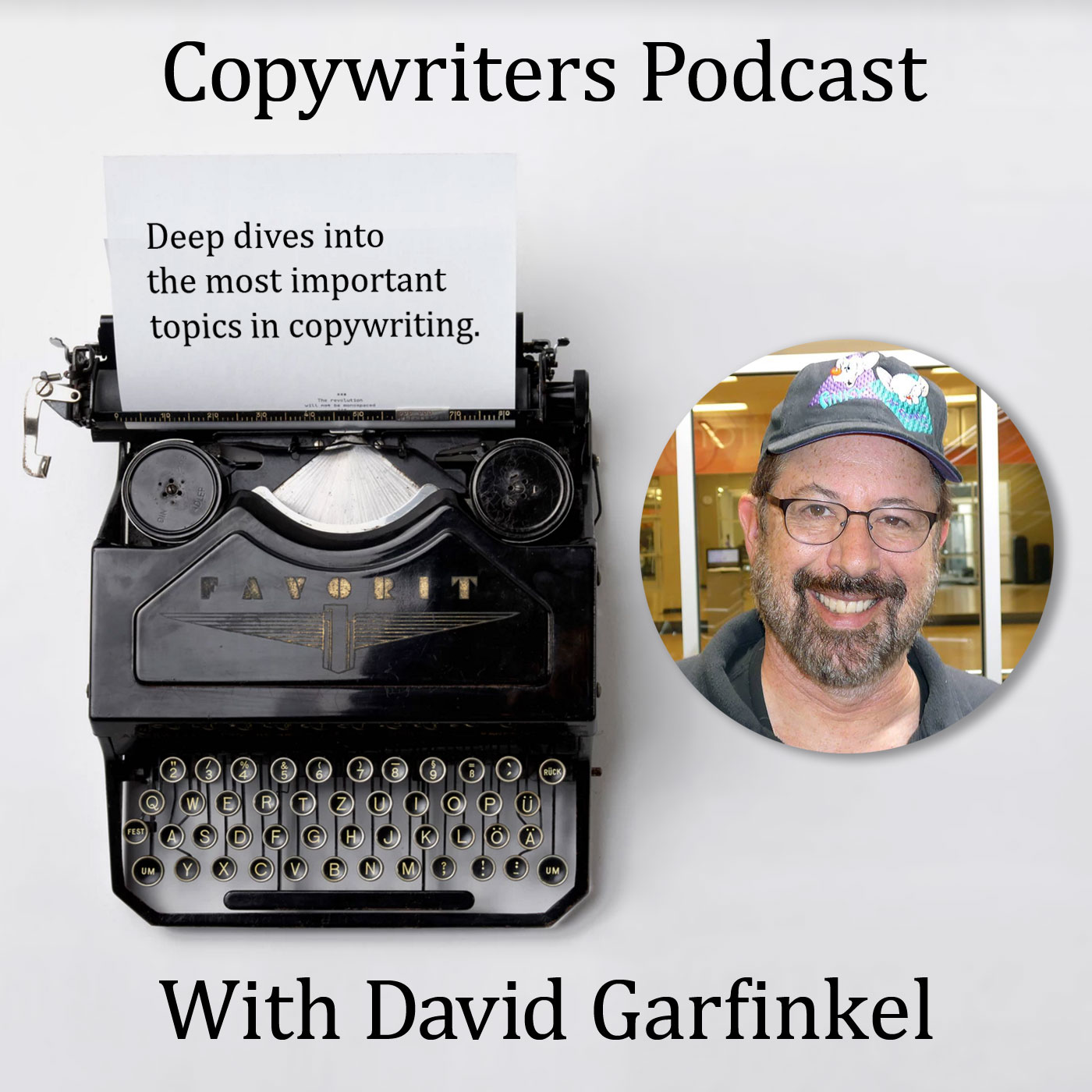
This podcast episode, part of a series on copywriting fundamentals, emphasizes the timeless principles from John Caples' "Tested Advertising Methods." It stresses that mastering basics is crucial, even for experienced writers, and revisiting them can significantly improve effectiveness. Key lessons include crafting headlines that promise clear benefits, give news, or spark curiosity, with self-interest being paramount. The episode advises building ads systematically by learning from past tests to compound gains and find winning appeals. Copy should focus on the prospect's benefits, using "you" frequently, and immediately fulfill headline promises in the first paragraph to avoid losing readers. Additionally, using testimonials and case histories adds credibility. The discussion underscores that while creativity has its place, fundamentals like clarity, benefit-oriented messaging, and systematic testing form the foundation of successful, persuasive copywriting.
[MUSIC PLAYING] Unvailing the secrets, a list copywriters use to make themselves and their clients millions. This is the Copywriters Podcast. With your host, the world's greatest copywriting coach, David Garfinkle. So once again, we're back to our copywriting 101 segments in the old master series, picking up where we left off a couple weeks ago. And this is about copywriting fundamentals. It never hurts to review them. And if you weren't grounded in fundamentals to begin with, and I had one client who came to me specifically because of that. He was doing very well, but he felt like he didn't have the underlying basis. So there's probably a lot of people who somehow fell into this, learned how to do it. It's not too late to learn. It's never too late to learn the fundamentals. It's OK to do that. It's not going to ruin anything. It's just going to help you. One of the best sources for an expert list of the fundamentals is John Capel's in his book, Tested Advertising Methods. There was nothing fancy or intellectual about a Capel set or dead. And yet, he was one of the greatest direct response copywriters of all time. So our old master series turns to the late John Capel's resource material. Based on his book, we put together a list of fundamentals that everyone should remember in practice. It's easy to forget or get distracted by the latest shiny object, but ultimately, to win, you have to go back to the fundamentals. And that's what we're going to do today. Right after I remind you that copy is powerful. You're responsible for how you use what you hear in this podcast and most of the time, common sense is all you need. But if you make extreme claims and/or if you're writing copy for offers and highly regulated industries, like health, finance, and business opportunity, you may want to get a legal review after you write and before you start using your copy. My larger clients do this all the time. So as I said last time, we're going to take our time with this series. We covered six fundamentals last time. And today we're going to cover six more directly sourced from K-PL's book tested advertising methods. Let's get started. Let's do it. All right, so fundamental number one for today is headlines that give news or promise benefits pull the most readers. How about we take a look under the hood into the deep dark recesses of our minds? When we see a headline, we are unconsciously asking one question, why should I care? You may not be aware of it, but you will base your decision to keep reading on the answer you come up with, often experienced as a feeling rather than a verbal reason or argument. The question, why should I care is so important? K-PL's answered the question this way. He said there are three kinds of headlines that work. One, those focused on the self-interest of the prospect. Two, news headlines, and three, headlines that arouse curiosity. And what do these reign supreme? In chapter two of tested advertising methods, K-PL's wrote, the best headlines are those that appeal to the reader's self-interest. That is, headlines based on reader benefits. They offer readers something they want and can get from you. Something they want, that's the key. Then he said, the next best headlines are those that give news. And the third best kind, he said, were those that arouse curiosity. Notice what he didn't mention. He didn't mention cleverness or wordplay or e-muse. Now here's a subtle thing most people never consider. When you give a curiosity headline, you're making the reader do a little work. And a news headline interrupts the reader. But benefits, benefits, benefits reward the reader. And that's a big difference. If your headline says a breakthrough discovery in financial systems, that's company news. If it says, a new way to cut taxes by at least 15% this year, that's a benefit or reward. Keep 15% of what you would have otherwise paid. Hey, maybe just by reading this ad. All right, Capel's also pointed out that when you combine curiosity and self-interest, even though you make the reader do a little work, you get power. By combining the two features, curiosity and self-interest into a single headline, he writes in the book, and he gives you example, how a fool stunt made me a star salesman. The copyrighter produced one of the most successful mail order advertisements of its day. Look at the headline, how a fool stunt made me a star salesman. There's curiosity, what fool stunt? And there's benefit, star salesman, a real one-two punch. Now, what does it look like when copyrighters get lazy as they're writing their headlines? They say things like, save money. How much? Improve your health. But what does that mean? They say, boost productivity. By how much? And how long will that take? Vigbe benefits are really not much better than no benefits at all. But if you can turn the phrase, save money into, cut your grocery bill by $150 this month, then it's specific, and as a reader, you've got something I want. Especially these days, with coffee prices, in the last year, increasing by as much as 40%. Now let's take it one step further. If you can frame it as news, new plan cuts average family grocery bill by $150 in 30 days. Now you've got news, benefit, and curiosity. That's how you put these things together. OK, here's a short checklist to go over your headline with. Does this headline promise a clear benefit? Is it something the reader actually wants? Can I make that benefit more specific? Can I frame it as something new or immediate? Or-- and this is a hard one-- so brace yourself. Am I leaning on curiosity because I don't have a strong promise? Here's the truth. News gets attention. Curiosity can add intrigue, but at the end of the day, self-interest reigns supreme. So if your headline gives the reader something they want or tells them something new that helps them, they'll stop. And that's when you have your greatest chance to sell. OK, I'm going to push back a little bit. I won't write a headline or a subject line if it doesn't include a little bit of curiosity. And it's because I found headlines like save $150 on your grocery bill. It's a declarative statement. It ends of the conversation. It doesn't invite the reader in. But new plan cuts average family grocery bill by $150 and 30 days. Although sudden, you've made the declarative statement, but you've told me there's more. I need to continue reading. And so I agree with needing the benefit to be clear. But having that hint of curiosity, at least in my experience, has always been a key role in actually getting them to read rather than just saying, oh, save $150. I don't know. What do you think about that? I think you're right a lot of the time. I think sometimes people want the benefit so badly that you don't need curiosity. If you can just tell them the benefit. And it's a case by case basis. But I would tend to agree with you. The problem is, depending on curiosity alone, and actually sometimes that can get the people to read it. But more like they're just following a whim or a fancy, rather than actually pursuing a desire. So I'm leaning towards what you're saying, but not all the time. I think it's so easy to save $150 on your next grocery visit versus this one trick saved me $150. And it could save you the same on your next grocery visit. The declarative statement doesn't really get me to read more. But if I'm like, oh, this one trick, it already worked. And now it could help me. I need to know what this trick is. Yeah, I can't disagree with you there. All right, let's keep going. OK, so fundamental number two is build every new ad on what you've already learned. This would obviously be for the same business all the time. And as a copywriter, maybe for other businesses, but not necessarily. If you are constantly testing new ideas because you're supposed to test, and the new ideas don't build on what you learn in previous tests, you're throwing away a lot of money. A lot of people approach tests, haphazardly, and capels would have called that a waste. Instead of looking at advertising like a series of isolated events, he saw every ad and its test results.
steps in a growing system of advertising know-how for that particular business. Intested advertising methods he wrote, "Build upon everything you learned from testing to create an ever stronger system that you return to with each project. Treat every ad as an ongoing test of what has been learned before." Notice his use of the word "system" here. It's easier to visualize if it is, easier to visualize. Think of a system as a machine and every test or every win or loss was a part of upgrading that machine. Information used to refine the machine. But you can't build a system if you do a series of one and done tests and then unfortunately for many people that's what they do. It would go like this. Headline A beats headline B by 6%. Great. Now you implement headline A and then all the data disappears into a forgotten dashboard. Three months later you get the urge of the compulsion to test something new. So without realizing it, you simply include headline B's weakness in a different campaign because you didn't realize the value of the earlier test results and you didn't save them and build those results into a system. Here's how Capel's thought about it. He understood the power of compounding when it came to small gains made from a test. Let's say you get a 5% improvement here and a 4% bump there. Add that to a stronger appeal discovered over time. Keep making incremental improvements like that and suddenly you're not just 5% better. You're 30% better. So testing in this systematic way gets you to the point where you have determined a winning appeal for your copy. And this does not come instantaneously but over a series of tests over time. And that's actually more important than killer copy. In his book, Capel's wrote, "If I were a manufacturer and I hired an advertising agency or I had an in-house advertising staff, I would be vitally concerned about getting the right appeal. I would much rather have a hastily prepared advertisement based on the correct appeal than 20 beautiful pieces of copy with beautiful pictures featuring an ineffective appeal. And once you find it, you hold onto it stubbornly. It's like gold. The actual metal gold, which as of the week where recording this is selling for $5100 and ounce. Wow. Okay. It's like gold because a little bit of the correct appeal can bring you a whole lot of money. And when you treat every ad as part of a larger system, advertising starts feeling a whole lot less like gambling because that's when performance starts to become predictable. And that's what Capel's meant by scientific advertising. I would just like to add a 5% bump here and a 4% bump there doesn't turn into a 9% bump. It compounds. You're getting 4% on top of that increase 5%. And then if you find another thing that improves it by 3%, it compounds again. So this is leverage rather than just incremental improvements. Absolutely. That's a really good way of putting it. Yes. Okay. Let's go to fundamental 3. Focus on the prospect and what they will get. Here's a simple way to figure out if you're focused on your customer or not in your copy. Count the number of times you use the words you and you're. Then count the number of times you use we, our I, me, my. If the we, I, me, my our total is higher than the you, your total, you're doing it wrong. In Capel's collaborators' preface to tested advertising methods, this is spelled out pretty clearly. Maintain the prospect's interest. Keep the ad mailing or commercial focused on the prospect on what he or she will get out of using your product or service. So take note. You're talking about what he or she will get, not about what you built, what they get. Why do so many advertisers get this wrong? Because they fall in love with their products. They announce upgrades. They celebrate specifications. They rave on and on about improvements. And then they hope the reader will connect the dots and see why all this quality means a better deal for the reader. But that's a big mistake. And Capel's would never assume that. In the book he does a little raving of his own. Benefits, benefits, benefits. What do I get? What will it do for me? That's what people want to know. And that's what makes them read advertisements. But there is more. Because it's not enough to just list benefits. The entire ad has to live in the prospect's world. It has to talk about their experience. And make it clear you know what's left out of their experience that you can provide. Here's how Capel's talks about it. The best headlines are those that appeal to the reader's self-interest. They offer the reader something they want and can get from you. You're really getting into the prospects head in the prospects world when you follow this advice. The prospect's transformation is the story. Let's say we're talking about a super high capacity SD card. Express this feature you could say 256 gigabytes storage. Now as a benefit, store up to 10 hours of 4K video. But put it in terms of transformation. And now your SD card saves the day. Like never again will you worry about running out of space for important footage. So let's go over it to point checklist. Before you finalize any copy ask for every feature have I stated the benefit for every benefit have I shown the real life result. Remember if your prospect has to translate your features into value, you've made them work too hard. And when people have to work they stop reading. When your copy speaks to what they will get specifically, clearly, personally, you stop sounding like a brochure. You start sounding like you have some help to offer. And that's when people lean in. I think a lot of especially new copy writers, they think they have to impress people into buying. They have to say, look how cool I am, look how cool this thing that I have is. And that subtly leaks in security. But when you connect and you focus on how the other person's experience will be improved and you let that be the core of the message, that signals the opposite of insecurity. It signals, hey, I know what you want. I know how to get it for you. And I don't have to show off or brag. I can just connect with you and that inspires confidence. I agree. That's a really, really good point. The more confidence you can show, the better your sales are going to be too. All right, let's jump to fundamental four. The first paragraph must deliver on the headline. Let's say you went to a restaurant, maybe kind of like a sports bar that's famous all around town for its chicken wings and your server comes up to you and she says with the wing, hey, bet you're here for the wings, aren't you? You smile. And then she proceeds to tell you about all the farm to table veggies that have been added to the menu. Great detail about how they are organic and delivered fresh daily. And it just so happens, you're a big fan of farm to table organic veggies. So why are you feeling so disappointed and even a little cheated? I'll tell you why. Because as much as you like organic veggies, you are looking forward to the wings, at least as a starter. Your server brought them up with the wink and a smile. And then, and this is when the downer started, she changed the subject. Ouch. Kind of ruins the magic of the evening, doesn't it? Well, that's what happens all too often in ads too. The headline makes a big promise, gets your prospect all excited about that promise. And then the body copy promptly and abruptly goes off to talk about something entirely different. When that happens, you lose the reader. Capel's understood this well, he wrote, "Just as the headline of a mail order advertisement decided whether or not the prospect would read the copy. So the first sentence of a direct mail letter usually decides whether or not the prospect will read the letter." Here's a practical example. Cut your grocery bill by $150 this month. Here's a bad first paragraph. For decades, economists have studied consumer purchasing behavior. You've already lost them. Try again. Headline. Good first paragraph. It seems like you're spending more at the checkout line this week than you did six months ago.
If that's the case, you're not imagining anything. Prices keep edging up each week. But now, here's a simple plan families are using to cut their monthly grocery bill by up to $150 in just 30 days. See the difference? Same promise. Immediate continuation. No detour. No throat clearing. In journalism, we used to call putting the important part several paragraphs after it should be burying the lead. It seems everyone knows that phrase these days. But copy-riders don't always connect the dots in the heat of the moment. In direct response, it's even more important not to bury the lead. Here's the bottom line. The first paragraph should restate the promise in slightly different language, expand on it, with just enough detail to build credibility, and create enough curiosity so the reader wants to keep going. This if the headline is the hook, the first paragraph is the line that pulls. And if the line doesn't hold, nothing else you write is going to matter. So in video games, they have these things called side quests. You've got the main quest and then you meet a character that says, "Hey, I need my cat is stuck up in a tree. Can you help get my cat out?" And that's great for video games. But if you have side quests in your copy, it's a chance for them to go off. You've mentioned before your copy should be like a well-loved slide. And in the time that there's a rough patch, I'm not sure I used the word "lood." It's okay. I might have added that in. You might have. But every time there's a rough patch or a potential side quest, now they're opening up their browser window and looking up a word, maybe they didn't understand or. Oh, scientists say that economists say that this, this and this, I need to go check and make sure that that's actually true. Every time that you give them the chance to leave the copy or leave the main slide that directs right to the buy now button, it's offering a potential side quest that will distract them and take them longer to get where you want them to go. Okay. This is really interesting that you're putting in those terms. I was working with a client yesterday who's starting a podcast and they were a little confused about the rules for an ad for a direct response copy and for a podcast like what like we're doing. Now they're not going to do a copy rating podcast. It's on, you know, their business is subject. But the key thing is ads are much more linear and focused towards an end result and they need to really, you know, tunnel vision in a sense. Content, storytelling, copy, entertainment is more like, you know, a vein system in a leaf or, you know, it's more like the original mind map that where one, there's just one branch that goes this way and this way. And you know, they have a name for it in Hollywood. I mean, besides, I don't know what you call a side quest. You call it a side quest. Yeah. Yeah. They also call it a B story and because entertainment is a little more like real life and, you know, unless you're real OCD or, you know, a very engineering type of person, which may or may not be OCD, you're not going to have all your conversations and live your life in such all in your fashion. But you want your ads to be that way. Yeah. Sometimes the side quest is okay, like in a video game or a TV show, not when it comes to your copy. No, really, really good distinction and really good role. Okay. Fundamental number five. Use testimonials and case histories to make your claims believable. Now you could be the most honest person in the world. You could even be a direct descendant of Abraham Lincoln, who was known as honest Abe. That might hold up fine among friends and close family. They might believe you are a forescore in seven years ago, unquestionably honest. But once you start advertising your business, none of this matters. People are automatically going to assume you're exaggerating in your ads at the very least. And really, this has nothing to do with you personally or your business, just like you expect chili peppers to be spicy and you expect honeydew melon to be sweet. People expect advertising to be filled with exaggeration. Why? Because so many ads they've seen in the past were like that. But once you get a third party, a customer or an outside expert to offer testimonial, people will be a lot more inclined to believe what they say as true. As obviously it's not you talking, it's a customer. Or someone else who doesn't seem to have a dog in the fight the way you do. And that's where testimonials come in. Sometimes a testimonial is strong enough to actually lead your copy. As Capel's points out and tested advertising methods, your headline can be an actual testimonial. Or it can be a testimonial style headline. It's a smart move to lead with proof instead of promise. But the proof has got to feel real and it had better be specific. A photo of the testimonial giver helps. So does a small, ordinary detail that's hard to fake. So here's a simple set of three questions you can use to get great testimonials. What was your situation before? What did you do with the product and what changed in numbers or clear outcomes? And edit lightly. Keep the customer's voice and keep the specifics. Also use testimonials in places where the customer is likely to feel doubt. Near the promise, near the price, near the guarantee, or near the call to action. In a low trust world, third party proof is not simply a box to check. Oftentimes it's the bridge between, and that's interesting and I'm buying. I would only add to this testimonials from somebody who looks like or feels like the reader. If the reader can relate with the person giving the testimonial more impactful. If your software makes a promise and you say you're advertising to internet marketers and you say Russell Brunson and Alex Hermosi and Tony Robbins all used our software and saw thousands of dollars within the first three minutes. Well great, I'm not like any of those. So those testimonials don't do me any good at all. Right. That's a really good point. You can bring, you know, behemoth personalities like you mentioned in his experts, but you need to have peer-to-peer testimonials too. Okay. Fundamental number six. Make it easy for prospects to take action. So when I made the transition from journalism to copywriting some 30 years ago, my friend Bob was a big part of my new learning. When we would see someone who made it especially hard for prospects to buy, he would refer to that part of their business as the department of sales prevention. We had a lot of laughs, but I learned an important lesson. The same one K-POLs taught many years before. It's this. You can write a brilliant headline. You can build desire. You can overcome objections. You can stack testimonials and prove every claim, and you can still lose the sale. All because you didn't give the prospect an easy and clear way to buy. And to K-POLs, closed sales were the one and only measure of a winning ad. This from tested advertising methods. Move the prospect to favorable action. Unless enough prospects are transformed into customers, your ad has failed, no matter how creative. That gets in the way of making it easy for your customers to buy. Most of all, offering too many options. Buy now plus. Learn more plus. Like and subscribe plus. Call us. It seems like it would be better to give your prospects as many different ways to get in touch or get information, but the opposite is what is proven out in the real world. When you give your prospect multiple choices, you initiate decision-freeze. It takes too much energy to decide. It's easier to do nothing. What's better? One primary action. One way to buy. Period. Another mistake? Baring the call to action. Don't make your prospect go on a hunt for your call to action. Make it visible and easy to find. You can have multiple calls to action in the same piece. Put them in high impact places after the promise. After the proof. After the objection handling. And here's something you might not have thought of. A strong, confident call to action actually reduces a prospect's anxiety. It tells the prospect exactly what will happen next. Before you publish anything asked, do I have one main action I'm asking for? Is it written in benefit and/or transformational language? Is it obvious? Is it easy? Have I removed the unnecessary steps? Because the call to action is the finish line. So finish strong. I remember one time you told me a story about somebody that ran
an ad in a print publication and they made it almost impossible for people to buy. Before adding it, I'd love it if we could revisit that. Yeah, it was a one-page reader ad in a magazine and the entire ad was white type on a black background, including the coupon you had to mail in. So in order to fill out that coupon, you needed a pen that would write in white ink. How many civilians, I don't mean graphic artists, I mean everyone else have pens that write in white ink. Not any. That's a great example of making it almost impossible for the customer to buy. Right, and it's tricky because you get so excited about your own product and your own promotions and what you're doing and you forget you have to take some time to stop, take a breath, take a walk, take a drink of water, come back and look at it solely from the customer's point of view. Because if you don't, you can end up in a situation just like the one I described. Alright, this was a fantastic follow-up to the first episode that we did a couple of weeks ago. We're out of here, let's do a recap on what we learned today. Sure, sounds good. So the first fundamental headlines that give news or promise benefits pull the most readers. That's because these types of headlines give the readers something they want immediately. Fundamental too, build every new ad on what you've already learned. Each advertisement should build undocumented test results, compounding small wins into a stronger, reliable system over time. Fundamental 3. Effective advertising centers entirely on the reader's desired outcome, translating every feature into a clear specific benefit that answers the question, "What's in it for me?" Fundamental 4. The opening paragraph must directly continue in deep in the headlines, promise, maintaining a momentum without introducing new or unrelated ideas. Fundamental 5. Use testimonials in case history to add credibility. Specific detailed testimonials in case histories provide third-party proof that lowers skepticism and makes your claims believable. Fundamental 5. Single clear benefit driven call to action removes friction and ensures the reader knows exactly what to do next. That's it. I will make sure to include a link to test advertising methods in the show notes over at CopyrightersPodcast.com. All you're there, check out the other episode we did on John Capel's just two episodes ago. The two of those together are like a copywriting masterclass. David, thank you so much for putting this together, man. You're welcome. Thank you. All right, and we will catch you later. Catch you later. Stop using the hero's journey in your sales copy. My book, The Persuasion Storycode, will help you put together stories that convince your prospects and resolve their objections. If you are a copywriter, you'll appreciate that every single one of the 25 kinds of stories in this book have been proven, time and time again, in profitable sales copy. But I've also used these kinds of stories to close five and six figure deals for my own business and so have many of my clients. These stories are easy to create and easy to tell. They sound like ordinary conversation, but they are all designed and proven to lead to a yes. You can get the Persuasion Storycode on Amazon.com, so get your copy today.
Podcast Summary
Key Points:
Effective headlines should prioritize reader benefits, news, or curiosity, with self-interest being the most powerful.
Advertising tests should build systematically on previous results to compound improvements and identify winning appeals.
Copy must focus on the prospect's benefits and transformation, using "you" more than "we/I," to connect personally.
The first paragraph must immediately deliver on the headline's promise to maintain reader engagement.
Testimonials and case histories are essential to make claims credible and believable.
Fundamentals are critical for success, and it's never too late to learn or revisit them.
Summary:
" It stresses that mastering basics is crucial, even for experienced writers, and revisiting them can significantly improve effectiveness. Key lessons include crafting headlines that promise clear benefits, give news, or spark curiosity, with self-interest being paramount. The episode advises building ads systematically by learning from past tests to compound gains and find winning appeals.
Copy should focus on the prospect's benefits, using "you" frequently, and immediately fulfill headline promises in the first paragraph to avoid losing readers. Additionally, using testimonials and case histories adds credibility. The discussion underscores that while creativity has its place, fundamentals like clarity, benefit-oriented messaging, and systematic testing form the foundation of successful, persuasive copywriting.
FAQs
The three most effective headlines are those focused on the prospect's self-interest (benefits), those that give news, and those that arouse curiosity. Among these, headlines appealing to self-interest are considered the best.
Building on past test results creates a compounding system of improvements, turning small gains into significant performance boosts over time. This approach makes advertising more predictable and less like gambling.
Count the uses of 'you' and 'your' versus 'we,' 'I,' 'me,' 'my,' or 'our'; the 'you' count should be higher. Always emphasize what the prospect will get from the product or service, not the features or the company's achievements.
The first paragraph must immediately deliver on the headline's promise, restating it in slightly different language, expanding with credibility, and creating curiosity to keep the reader engaged. Avoid changing the subject or 'burying the lead.'
Testimonials and case histories make claims more believable by providing social proof from real users. They help overcome skepticism and build trust, which is crucial for convincing prospects to take action.
A feature is a factual attribute of a product (e.g., 256 GB storage), while a benefit explains what the prospect gains from it (e.g., storing 10 hours of 4K video). Effective copy translates features into clear, desirable benefits.
Chat with AI
Loading...
Pro features
Go deeper with this episode
Unlock creator-grade tools that turn any transcript into show notes and subtitle files.
 PodcastTranscript AI