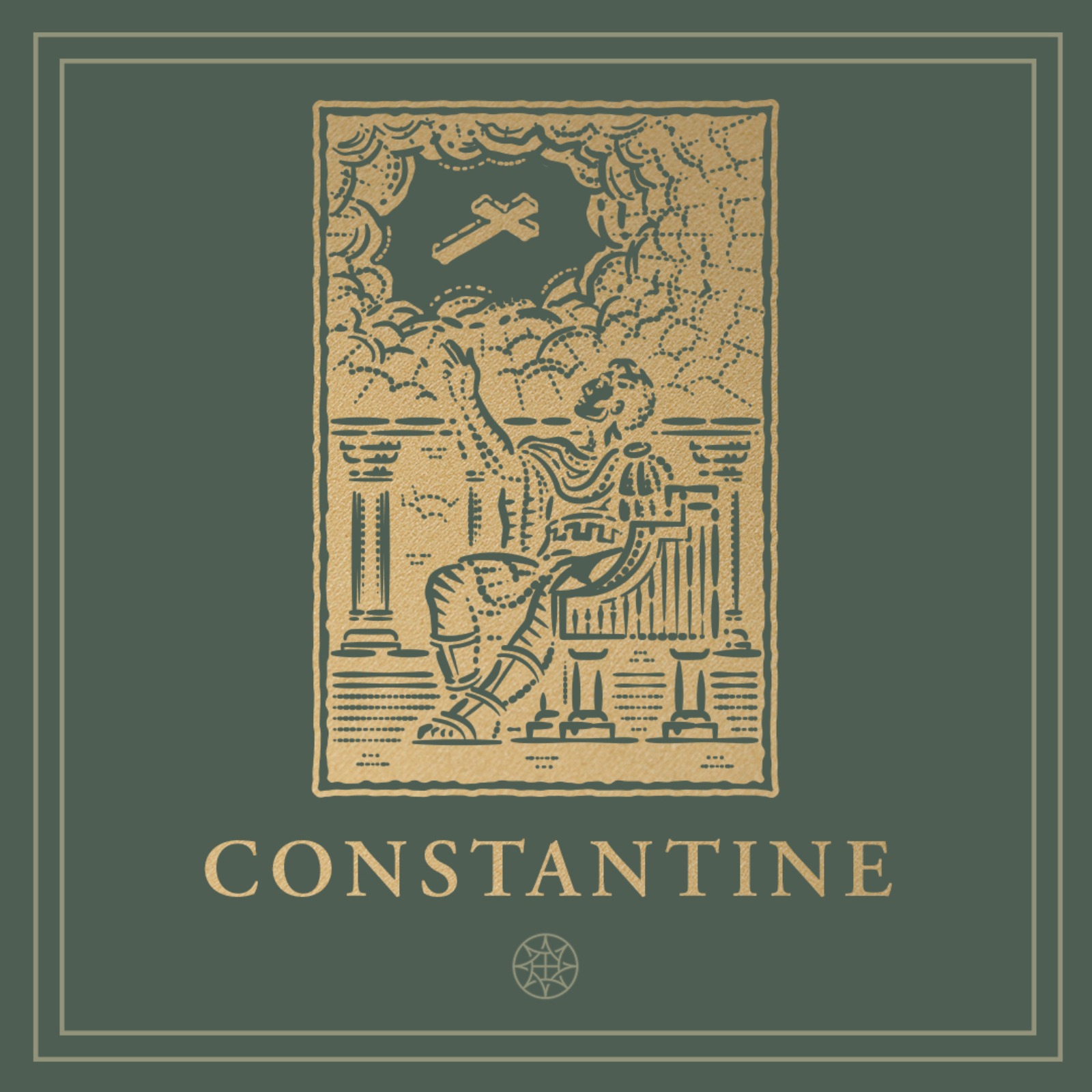
Constantine’s conversion and rise to power marked a pivotal turning point in Christian history and Western civilization. The night before the Battle of Milvian Bridge in 312, he reportedly saw a divine sign—a dream or celestial vision of the cross—interpreted by Christian counselors as a sign of Christ’s victory. This vision, later affirmed by both private accounts and public observation, led him to march into battle under the Christian symbol, resulting in a decisive victory over his rival Maxentius. After the battle, Constantine entered Rome as sole ruler and refused to offer sacrifices to Jupiter, signaling a shift in religious allegiance. In 313, alongside Licinius, he issued the Edict of Milan, ensuring religious freedom for Christians and restoring their churches. Though Constantine’s personal faith remains debated—some see him as a politically savvy pagan who adopted Christianity for convenience, others as a genuine believer—his policies dramatically advanced Christian institutional life. He commissioned major church buildings, including basilicas with structured worship spaces, shaping early Christian architecture and community life. Despite controversies over his later pagan practices and political opportunism, Constantine’s legacy is foundational: he ended state persecution, elevated Christianity’s status, and created a lasting Christendom that influenced European culture for over a millennium. His story raises enduring questions about the relationship between faith, power, and state, and how persecution and divine signs shape religious identity.
This event was actually the sign of the cross, and it was a symbol of the victory that
the Christian God would give him, and in fact, looking back later, that's how Constantine
describes this event.
He now interpreted that something, which he didn't quite know what it was, but he saw it
in the whole army saw it as a sign that the God of the Christians would give him victory.
As Christians, we have a 2,000 year history filled with stories to tell and lessons to learn.
The Church History for Everyone Podcast offers snapshots of key figures and consequential
moments in time.
In this episode, Kevin DeYoung explores Constantine and the conversion of the Empire.
This lecture was originally delivered at Christ Covenant Church during Sunday School on
October 9th, 2022.
Welcome back to our class on Church History from the beginning of the early Church 70 A.D.
through 451, which is the date of Calcedon, and we are halfway through this class boo-hoo,
but glad that you can be here, and thank you to Alberto for his help.
In this morning, we come to, well, everyone in this class that we come to says I'm picking
just 10 people over 400 years of Church History.
Everyone is quite significant, but we're coming to someone not just significant in the
history of the Church, but truly in the history of Western civilization.
There's very few people that you can really say without exaggeration that that life marked
a turning point in the history of the world.
We often speak like that in every four years, every two years, we are facing the most important
election of our lifetimes.
You can discuss amongst yourselves whether that's the case or not, but we always now have
just constant fevered pitch hype.
Everything is absolutely world-altering, there has never been a moment in history like ours.
Everything is about to get better, or usually everything is getting worse than it's ever
been.
So we deal in hyperbole, and yet we can say from the vantage point of history that this
life marked a true turning point in the history of the world, and whether that turning point
has been for good or for ill, or like most things, for some combination of both, we'll
hopefully get to at the end.
So we are talking about Constantine.
The next day was to be the most important day in Constantine's life.
The day was October 27 in the year 312.
Some of you may have vague recollections of the story from some Western civilization
class in yesterday year.
Constantine stood with his army outside of Rome, ready to face his rival, and we'll explain
why there was this rivalry in a bit, but a man by the name of Maxentius, sounds like
a good strong name.
They were rival claimants to the throne in the Western Empire.
They had both laid claim to be the Emperor of the West.
And if Constantine was to be the sole Emperor in the West of the Roman Empire, he needed
to defeat Maxentius and his larger army, waiting for him at the Imperial capital of Rome,
almost north up the Tiber River at a place called Milvian Bridge.
The bridge, by this point in the battle, was a series of pontoon boats, which were there
to allow armies to cross over the Tiber.
And the thought, by Maxentius, is he would meet Constantine there and lead him across this
bridge of rickety pontoons and there attack him, and he would drown.
They met at Milvian Bridge, and as we'll see quite the opposite happened.
But before we get to the battle, which was October 28, we go to October 27, the night before
the battle.
And what happened that night has long been a matter of historical debate, and like so
many things in history, can't finally know exactly what happened or didn't happen.
But we're left with the record of those who detailed to us what they heard.
There's one account from a man named Lactantius, who was a Christian in the court of Constantine.
Lactantius was a Christian, and he was a tutor to Constantine's son.
And he leaves us an account.
He was kind of a Christian scholar.
And he reports that the night before this battle at Milvian Bridge, Constantine received
a dream.
And in this dream, he was instructed to mark the heavenly sign of God on the shield of
his soldiers.
He saw this sign, which was an X with a vertical line through it.
Later it was called Labyrinth, and we don't know exactly where that word comes from.
But this sign, let me draw it a little bigger here, would come to be drawn like this, which
is known as the key row or the Cairo, because these are the Greek letter K, and then the
Greek letter Ro, which looks to us like a P, sorry, but is pronounced like an R. These
are the first two letters in the name Christos, the key Ro.
This became one of the most famous signs for centuries of the church, of course we're
familiar with the cross, but the key Ro became one of the most famous signs.
And Lactantius reports that Constantine had a dream the night before this battle, that
he was to mark on the shields of his soldiers with this heavenly sign, the key Ro.
A later account from UCBS, no, I know we're multiplying names here.
This is UCBS of Caesarea.
You've heard of Caesarea, it's in the Bible, so this is Palestine, this is the area of
Israel.
UCBS was from, there's some different people with the same name, but this is UCBS of
Caesarea.
You may have heard, me mention him before, reputed as the first church historian.
And he records, having heard from Constantine himself, a slightly different story, that
a sign appeared in the heavens during the day, and it was seen by him and his whole army.
And UCBS describes this scene as not happening at Mildee and Bridge, but happening, he gives
an indeterminate date sometime before in some other place.
And so scholars try to say, well, which one is the story from Lactantius, is the story
from UCBS, now most historians think, well, they were talking about two similar but different
events.
And probably what UCBS is talking about was some event, some apparition in the sky in
around 310 when Constantine's army was in Gaulle, so up France, that they saw not just
a private dream, but in the sky a sun halo, and there's lots of meteorological explanations
for what that was, but it looked like a glowing sun that had something like a cross through
the middle of it, and people who know these things say there can be in certain climates,
in certain types of the places and certain times of the year, you can have these sort
of signs in the sky, it can happen, so there was some sort of sun halo that had something
like the sign of a cross through it.
Sometimes there were two signs, one, this event in 310, which UCBS talks about, and then
this event with the key row in a dream in 312.
In 310, when Constantine received this dream, he didn't quite know what it meant.
We took it, it seems, has an initial sign in it.
Omen, something, some sort of marker from the Son God Apollo. And he became a
worshiper. The God's soul invictus, the unconquering son, son, invictus,
unconquered son, not unconquering, but the unconquered son. You want the son
to not be conquered. He took this as a generic sign given his own religious
understanding. And then it seems that years later, after this subsequent dream that
probably with the help of someone like Lechtanches or UCBS or Christian
counselors, they gave to Constantine a different interpretation of this event.
That this event was actually the sign of the cross. And it was a symbol of the
victory that the Christian God would give him. And in fact, looking back later,
that's how Constantine describes this event. He now interpreted that something,
which he didn't quite know what it was, but he saw it in the whole army
as a sign that the God of the Christians would give him victory. And sure
enough, as he marches his army from the north and gall down through Italy, he
faces very little opposition. He is victorious all along the way. And then so
this dream, which introduces him to this other symbol, the key row,
Lechtanches tells us that in the vision, a voice said to Constantine, in this
sign, this sign, you will conquer. In this sign, you will conquer. And so
Constantine took this together with this earlier vision in the sky, and he
understood that the Christian God was speaking to him and telling him that if
he would march into battle under the banner of Christ, that he would receive
the victory. Parentheses here, people in the ancient world were very religious,
but their religion often looks to us like superstition. But they took their
religion very seriously. And any army that went into battle considered that they
wanted the right God or gods on their side. And then if they were victorious, it
was the God who had given them victory. And if they were defeated, then their
God had been defeated. So we can say, well, this is sort of crass and crude, how
you would take it as a sign that your God is going to give you victory, but this
is the way they thought. And often very, usually very sincerely. So marching
into battle on October, I'm running on a room on October 28, 312, Constantine
with his smaller army met Maxionthus with his larger army at the famous battle of
Milvian Bridge, and Constantine routed the army. In fact, as Maxionthus was
trying to flee this pontoon bridge, he fell into the water and swimming to
shore. It crumbled upon him and he drowned quite the opposite of what he had
planned for his rival. And so the next day Constantine entered Rome in triumph, he
was now the sole ruler of the West. He was celebrated by the people and
Constantine believed that the victory had come to him through Christ. When he
entered the city, it was the custom that the Emperor, the conquering Emperor, would
first offer a sacrifice to Jupiter, Constantine refused. And three years later,
when Constantine's arch was unveiled to commemorate his victory, the Emperor
was depicted with his, as it was facing the statue of Jupiter in the city and the
arch that Constantine's back was toward the statue of Jupiter. As if to say,
that was not the God that gave me the victory. We'll pick up the story there in
just a moment. But let's back up and learn a little about Constantine and why he
came to this moment on Milvian Bridge. To do so, we need to back up and
remember or learn something about our Roman history. If your kids ever ask you, why
do I have to pay attention to all of this ancient history because it helps you
know about the church? There's other reasons, but that's one of them.
Constantine was born on February 27, 272. His father was named Constancius Chlorus.
They were not very creative, the family. All of the kids were Constantine or
Constantinus, and their kids were all just various forms of Constantine. His
father was a neoplatonist, but was tolerance of Christianity, and Constantine's
mother, Helena or Helena, in some church traditions, she's Saint Helena, was a
Christian. So Constantine did not grow up as a Christian, but he grew up in a
home that was sympathetic to Christianity. His father was very important. His
father would later become a Western Caesar and Augustus, say more about those
two terms in a moment. We've heard Caesar Augustus in the Christmas story, but
these become official titles and meet, well they were titles then too, but they
have a certain nomenclature here in the fourth century, which we'll get to.
Constantine grew up mostly in the east, and during his early years he served in the
army, under this man, who will loom large in our story this morning, Diocletian.
Constantine was obviously a skilled and brave military commander. He never lost
war, hardly lost a battle, and when it came to his two most important military
triumphs, Constantine credited the Christian God in both accounts with giving him
the victory. In the beginning of the fourth century, so the 300s, Christians made
up around 10 to 15 percent of the Roman Empire. So fourth century, the Roman
Empire, I want to give a guess, how many people in the Roman Empire? Nobody knows,
but we got estimates. So the Roman Empire was around 50 million people. The
Christians then were again just estimates around 7 million. So 10 to 15
percent is not very big, but 7 million is a goodly number of Christians. They
were the majority in Asia Minor. That's where all of these seven letters to the
seven churches in Revelation are. Modern day Turkey, they were the majority
there. They were the majority in Armenia. Not Armenians, they come many years
later. This is the country of Armenia, which was one of the very first
countries to embrace Christianity. And they were a sizable minority in Egypt,
in Carthage. So about 10 to 15 percent of the Empire. There were more than 200
bishops in the Latin speaking parts of the Empire. Alexandria had become a
major center for Christian intellectual development. So at Carthage. So nowhere
near a majority 10 to 15 percent. And yet this was no longer a small backwater
sect. There were many Christians. And there were sympathizers and cities and
towns. Christianity was strongest in the cities. The, you may have heard this
before, this word paganus means country dweller, rural dweller. A pagan was
someone who was in the countryside. That's what the word meant. Christianity was
strongest in the cities and then spread to the countryside. And it's usually a
bad sign if your faith is weakest in the cities strongest in the country. Of
course we want everywhere to be Christian, but that's where influence usually
radiates out from cities. Now be interesting to say, well is Christianity
stronger today in cities or in the countryside? On the one hand, say, well,
clearly it's in the countryside. You go there. It's more conservative and there's
more Christian culture. And most people are going to be sympathetic to
Christianity. And yet where can you
You more easily find a really good church, many people who live out in small towns around
the country say, "Oh, it's really hard to find a good, solid church," and part of that
is, or just to get more people in the city, and there's more options.
But the pagans were those so named out in the countryside.
In 284, this man whose name was Diocles, but if you're going to be really important,
you need to give yourself a better name.
If I'm going to be an impure someday, I need to be Covenian or something, or Covenxius
the Great or something.
So Diocles becomes Dioclesian, changes his name, more regal sounding, and he is acclaimed
impure.
So, there's no real good way to determine the impure.
It's supposed to be father to son often, but there's always rivalries.
And so what you often find in the Roman Empire is someone is acclaimed impure by the army.
So if you're a well-beloved, successful general, then your army just acclaims you, you are
the impure.
So he was acclaimed as the impure.
More of the Christians, Dioclesian comes down to us in history as one of the worst, most
despicable, impures.
To the Romans, however, he was enterprising, he raised taxes, he fortified the frontier,
he introduced court ceremonies from the east, and he reorganized the administration of
the empire.
The picture of the Roman Empire, the Mediterranean Sea, sorry I don't have can't draw a good map,
but the Mediterranean Sea and you have to the east, Israel, Palestine, and then all the
way up around there, up there, and then this is Asia Minor, Turkey, and then Greece,
and then Italy, over to Spain, down around Northern Africa, all the way up into Britain.
The Roman Empire is this vast realm.
It's so large, it's too difficult for one man to rule.
So one of Dioclesians' reforms was to divide the empire into four administrative sections,
called a tetraarche, tetrafour, archy rule, four different rulers.
If you ever study this time in Roman history, it's very confusing because there's impures
popping up all over the place.
What they had were two, well let's do the plural, Augusti, Augustus is, and then two Caesars.
You had an Augustus in the east and an Augustus in the west, and then you had a Caesar in
the east and a Caesar in the west.
It's like senior emperor, junior emperor.
And the emperor was usually the Augustus in the east because the east had more people,
more resources, more culture.
The east was, we think of, well the west in Rome, but actually Rome was fading and it
was the east where the real strength in the empire lay.
So there'd be two Augusti, two Caesars.
And one of the thought was, well this will tap down the constant murders and rivalries
jostling for power because it's very neat and tidy.
We have an Augustus here and an Augustus there.
And then they have their vice-imperors and after ten years, these men will just nicely
go off the scene and then their junior Caesars will become Augustus and then they'll point
some other Caesars and they'll all be nice and orderly and of course it didn't work
anything like that.
To divide this into the tetraarchy, just multiplied rivalries.
Everyone constantly jockeying for position.
Diocletian was the emperor, the main one, the man in charge.
And over the years he had become increasingly suspicious of Christians.
Some Christians wouldn't serve in the army, wasn't always like that from the beginning.
In fact, you read through the Gospels and Jesus seems to have a special fondness for centurions
and other people in the army are presented in very good stead.
But some Christians, by this point, refused to serve in the army.
Some of them, when they served in the army, refused to wear the Emperor's insignia.
They weren't going to go out to battle under the Emperor's insignia as if he were some
sort of God.
Diocletian didn't like this.
He knew of several Christians in his court who refused to do the traditional sacrifices.
Some of them, when they were ordered to do the sacrifices of the gods, would do the sign
of the Cross instead.
He didn't believe that Christians were good Romans.
In fact, he shared the belief with many people in the Empire that Christianity never really
fit into the Roman Empire.
Rome had found a way to make an allowance for Judaism.
They were monotheists and the rest of the Empire were polytheists.
But you could somewhat more easily set them aside.
They were kind of an ethnic group.
They were certain people, and they had their own strange ways of doing things and their
long history that had been around for a really long time, and so it could kind of try to tolerate
the Jews.
Well, then this sect of Judaism, Christianity, emerges, but it's not tied to any one people
group.
It's international, and it has its own, within time, it's very definite system of structure
of priests, and deacons, and presbyters, and bishops, and it begins to look like a nation
within a nation, and an international nation within a nation.
And they refuse to do the sacrifices that everyone does for the good of Rome.
And they don't worship the emperor, so you can understand how Diocletian and many others
thought these Christians, and they're growing, they're now 10-15% of the Empire, they will,
they have never been real Romans, and they will never fit in the Roman Empire.
Thus in 303, we saw this in one of the other classes, AD303, the Great Persecution begins.
That's what we call it as Christians, the Great Persecution.
Diocletian thought, "If we are going to restore the glory of Rome, the only way to do it
is to restore and return ourselves fully to the ancient gods."
And he wanted the Christians in particular to reject their God and return to the gods
and goddesses of Rome's past to become pagans.
He said later that he never really wanted to kill them.
He just wanted them to change, and he thought it would be a relatively simple thing.
Sacrifices to the gods became obligatory, churches were burned, scriptures, and other liturgical
books were sought out and destroyed.
Some Christians were imprisoned, maimed, burned, tortured, killed, bishops, and pastors
in particular were targeted.
To be sure, the persecution was not carried out with equal force everywhere in the Empire,
even here under the Great Persecution, wasn't as if everywhere among this population
of 50 million people just every day somebody was looking to hunt down a Christian.
But it could be carried out with a new barbarity and ferocity.
And yet, this Great Persecution, which began in 303 under Diocletian, could not last forever.
In fact, it could not last very long.
It lasted about three years in the West, and it lasted almost ten years in the East.
Now, why?
You got the Emperor behind it.
It's an Empire-wide persecution.
This is different than the other Persecutions which flare up in little cities.
This is across the whole Empire.
Well, Christians were simply too numerous, and their communities were too close knit,
too cohesive, too organized, and Diocletian, and then the Emperor who was before him, Galerius,
who also began this Persecution, they vastly misjudged the Christians.
And let's hope, and we pray that it doesn't, but should there be persecution, that our
authorities would vastly misjudge the Christians.
They figured that when Christians have to choose between being a Christian and being a good
Roman, that the choice would be relatively simple.
And of course, they would throw in a pinch of incense for the Emperor.
Of course, they would throw a sacrifice to the gods, but he had missed
judged as it turned out, although, let's be fair, some Christians did capitulate. And yet in mass,
they didn't. In mass, the Christians, when having to choose between Rome and Christianity, chose
Christianity. And you could not, you did not have the manpower, the resources, the time to coerce
seven million of your citizens. And this is also important lesson for us. By this time, Christians
often had many sympathizers among non-Christians. These were their friends, their neighbors. They
bought bread down the street from this Christian. They had the iron hooks for crops beaten out by a
Christian blacksmith. Many of the pagans felt sorry for them. Sometimes they hid them. So Christians
were no longer strange, bizarre outsiders. They were enmeshed in their workplaces and homes and
communities. This was never a popular measure by Diocletian. Well, in 305, he becomes seriously ill.
He's no longer fit to serve as emperor. And so in his place, he has this man Galerius, who became a
gustus of the East. A gustus of the East, and then Tantius Chlorus, that's Constantine's father,
becomes a gustus of the West. So two of, you got Galerius East, Constantine's father in the West,
they're the Augusti. And then the Caesars, remember, they're the junior emperors, are two of
Diocletian's military friends, Severus and Maximum. Now, Constantine thought he was in line to
become one of the Caesars, but he was passed over. And so he joins his father in the West as his
trusted military commander. And he leads Constantine along with his father, leads the army,
and they're doing battle out in the West, way out in the hinterlands. The farthest reaches of
the empire, they're fighting these very strange and stubborn people called the Picks out in this
God-forsaken place called Britain. And their past Hadrian's Wall and Constantine's father
falls ill. And just a year after being named Augustus of the West, he dies in 306. And there,
after his death, remember, he's the emperor of the West, after his death, then his son, he passes
it onto his son, and Constantine's army acclaims him. In all places, a place some of you have probably
visited, York in Midlands, North of the UK of Britain. He's acclaimed emperor Augustus of the West.
Now, Galerius sends him a purple robe. Now, in sending Constantine a purple robe, he's indicating
that yes, Constantine, you are now an emperor. And so he receives it, but politics is always very
tricky and symbolic. If Galerius, who's in the East, sends to Constantine a purple robe, he's
indicating yes, you are now one of the Augusti, you are one of the emperors. But in receiving it,
Constantine is also acknowledging, well, this is really the senior among us. Because I'm receiving
from him, he is recognizing and investing me with his authority. And though Constantine bristled
under that, he accepted that arrangement. Because this was one of Constantine's chief virtues
as a politician. And he could be a very ruthless man. But one of his chief virtues was patience.
Okay. High time will come, he thought. I'll take that. I'll take emperor of the West.
As emperor or Augustus of the West, Constantine made his first action to proclaim a formal end
to the persecutions in the regions under his control. So Constantine, I know you're getting lost
with the sea of dates here, but Constantine becomes emperor of the West in 306. That's why I said
the great persecution starts in 303 by 306. It's over in the West because Constantine declares
that it's over. So this is Britain, Gaul, Spain. So England, France, Spain, he declares the
persecution over. He's not yet a Christian, but he's sympathetic to Christianity.
In 311, Galerius was close to death. He issued a proclamation ending the persecution in the East.
He said his aim was for the Christians to return to the institutions of the ancients,
but that had been unsuccessful. So he was following the policy of Diocletian. He said, I wanted
the Christians to return to the institute of the ancients, but it didn't work. He said the only
thing that we got from this great persecution was a lot of suffering, a lot of harm, and a lot of
division. It hasn't made the empire any more peaceful. So Galerius orders that the Christians
would be released from prison. Their property would be restored. There's no record that that
happened. He also, this is significant. Galerius in 311 also asks that the Christians would pray
to their god for the safety of the res publica, the republic. A century earlier,
Tertullian, who unfortunately had to skip over, one of the arguments Tertullian made,
he said, you want the Christians to offer sacrifice to the emperor for the emperor.
Tertullian said, we absolutely will offer sacrifices for the emperor. Really? Yet Tertullian said
absolutely, our sacrifices are our prayers. That was often the Christian argument. We want the
health and well-being of the emperor. We're happy to pray for him. We're happy to pray that our
god would strengthen him. We're not opposed to praying for blessing upon the emperor. We will
not sacrifice to him as some sort of god. So this was key. Galerius says in 311, would you
pray now to your god? So he's acknowledging that their prayers can act as a kind of sacrifice
and by asking the Christians to pray to their god for the emperor, he is acknowledging
they could be Romans and Christians at the same time. After Galerius dies,
there is of course a scramble for power. There's various people who are scrambling to pick up the
scraps of his power. And this man, who we started off by seeing, Maxentius, also claims for himself
some authority in the West over the regions of Italy and North Africa. So you have Constantine
who does have rule over Spain, Gal, Britain, and his army says he's the emperor of the West,
but then you have this other man, Maxentius, who has Italy and North Africa, and he wants to be
the emperor of the West. Which is why if Constantine is going to be the undisputed heavyweight champion
of the West, he needs to go right to Maxentius, who has the imperial capital in Rome and meet him
and defeat him, which he does in 312 at the Battle of Milvian Bridge. After this battle,
Constantine is now the unrivaled ruler in the West. But remember, this system, so he's in the West,
but in the East there are still two other emperors, Licentius and a man named Maxim Daya.
This man, Maxim was hostile to Christianity while Licentius running out of room. Licentius
is not a Christian, but at least initially is sympathetic to Christianity. So they're in the East.
Licentius and Maxim do battle, and Licentius orders that a prayer would be prayed by the army,
quote, to the great God, the Holy God. And he, too, places Christian symbols on his soldiers as they
go into battle. And so when Licentius defeats Maxim, and Maxim loses, Licentius credits the
Christian God as giving him the victory. It doesn't lead him to be a Christian. He's still a pagan
all his life, but he's happy to say, ah, this Christian God is also powerful. In 313, Licentius,
so he's emperor of the East, I don't know which way East and West are, but East and Constantine,
Emperor of the West, they meet in Milan in 313. Licentius is a Christian, but Licentius is a
Marius was marrying Constantine's half sister,
what was her name, Constantia.
(audience laughs)
Marius' alliances rarely work, but they gave it a try.
So they meet Milan for the wedding.
And while they're in Milan, they discuss the Christian question.
What is our policy toward the Christians?
Later, following this meeting in Milan,
Licinius and Constantine in per the west, in per the east,
issue a joint letter.
And it's called in history the edict of Milan,
even though it didn't come from Milan
and it wasn't in edict, but you can understand it.
It references their meeting in Milan,
and it didn't really change imperial policy,
but it was a joint letter from both emperors
putting into writing how they would handle religion
in the Roman Empire.
Here's what they said, remember, this is 313.
Let me just read a few paragraphs.
When we, Constantine and Licinius emperors,
met at Milan in conference concerning the welfare
and security of the realm,
that of the things that are of profit to all mankind,
the worship of God ought rightly to be our first
and chiefest care, and that it was right
that Christians and all others should have freedom
to follow the kind of religion they favored,
so that the God who dwells in heaven
might be propitious to us and to all under our rule.
We therefore announce, notwithstanding any provisions,
concerning Christians and our former instructions,
all who choose that religion, Christianity,
are to be permitted to continue without any hindrance
and are not to be any way troubled or molested.
Note that at the same time, all others are to be allowed
the free and unrestricted practice of their religion.
For it accords with the good order of the realm
and the peacefulness of our times
that each should have freedom to worship God
after his own choice.
And we do not intend to detract from the honor
due to any religion or to its followers.
Moreover, concerning the Christians,
we believe orders with respect to the places
set apart for their worship is now our pleasure
that all who have bought such places
should restore them to the Christians
without any demand for payment.
So give them back their buildings,
give them back their property.
You can see why this is justly famous, 313.
And these two emperors are issuing a statement
of religious freedom.
Each person should be able to worship
according to their own mind, their own conscience.
Perhaps not quite the first amendment
as we have it in the Bill of Rights,
but this is quite a remarkable turn of events
in Western history.
Constantine was no doubt instructed in part
by Lexancius, remember I wrote his name.
He was a Christian serving in his court,
a tutor to his son.
And Lexancius argued for the toleration of paganism.
He argued for the toleration of the pagans
on Christian grounds.
You might think, well, if Constantine was really a Christian,
he should have rid of all the pagans.
Well, Lexancius argued that coercion
was inimical, inimicable to the true nature of religion.
Worship must be out of genuine piety and devotion.
In fact, some have even speculated
that maybe the edict of Milan was not only trying
to give freedom to Christians,
but it was trying to speak to some Christians
who might have been hotheaded in the empire
and thought, we got one of ours who's an emperor now,
and they're going to crush the pagans.
And the edict of Milan said, no, Christians,
you can do your thing, but listen up.
Everybody can do their thing, I mean, within reason,
but everyone can worship the God as they choose.
And yet we should not think that Constantine
was neutral religiously.
He often cited the error of the pagans.
He built Christian churches.
He, I'm very happy to say,
gave special tax favors to the clergy.
Everyone knew that Constantine was on the side
of the Christians.
We have this man Licensia, Licinius in the East.
And there's differing accounts
about how he treated the Christians.
For a number of years, he took no actions against them,
but then he tried to quell certain disputes
and many Christians considered themselves wronged.
And they thought of Constantine as the quote,
"imperer whom God loved."
He was the real Christian emperor.
And they prayed for Constantine.
And they perhaps prayed for Constantine against Licinius.
Licinius was not a Christian.
He never was a Christian, but he feared the Christian God.
And he felt it was treason on the part of his subjects
to be praying for the other emperor.
And so he took measures to strike against them.
And as he instituted some persecution against the Christians,
this gave Constantine the opportunity to present himself
as the defender of Christianity
against the persecutor Licinius.
Depending on who you listen to,
this was either Constantine just waiting for an excuse
to go and knock out his Eastern rival
or this was Constantine genuinely caring
about the welfare of his people and the Christians.
Whatever the reason they met in 324,
the little town of Byzantium,
Constantine pushes back Licinius to Calcedon,
a little farther out in the countryside
and their two armies meet again.
And Constantine once again is victorious.
Licinius gives up his purple cloak in exchange for his life.
And he makes a vow that he will live the rest of his life
in banishment as a private citizen. He's not going to assert
any sort of imperial power.
Again, depending on who you listen to,
Constantine says a year later,
Licinius breaks this vow and so he has Licinius hanged.
Constantine celebrates this victory by founding a new city.
And he chose that small Greek city,
which had a long history, but it was a very small city,
Byzantium.
And he decides he's going to build a new imperial capital
there on the North Shore of the Sea of Mamara.
And there, Mar-Mar-Mar-Mara, M-A-R-M-A-R-A.
And he calls it very humbly Constantinople.
Is Stanbull Constantinople, is Stanbull Constantinople?
Why they change it, I can't say,
I guess they liked it better that way.
Go look up this song.
Well, here, it's Constantinople.
It's a long time before it will ever become Is Stanbull.
And it will become the new Rome.
In fact, Rome will be sacked by the barbarians
less than a century later.
And this town, this city of Constantinople,
will be the center of a Christian empire
for more than 1,000 years
until the Ottoman Turks overrun it in the 15th century,
which is when it becomes Is Stanbull.
Constantinople, founded by Constantinople
as a commemoration to his own greatness,
but he also wanted to be a Christian city.
It was sometimes called a city of churches.
Unlike Diocletian, or desiast,
if you remember, he was another persecuting emperor.
Constantin believed, yes, I want to restore the glory of Rome,
but the way to do that is through Christianity,
not through paganism.
Constantin had a last great plan
that he was gonna march down through Persia.
He was gonna be a new Alexander the Great.
He was gonna conquer Persia.
He was gonna convert the Persians to Christianity.
And on his way, he knew he was coming to the end of his life.
He would come and be baptized in the Jordan River.
Constantin had this idea,
which was not uncommon in the ancient world.
A mistaken idea, but I better put off my baptism
until the very end because if I do something immortal sin
after baptism, I may not be forgiven.
So let's just save it to the end as an emperor.
You're kind of like a mob boss
and you're gonna get your hands dirty with some messy stuff.
So it's better to get this baptism thing on my deathbed.
Well, he never makes it to this run through Persia,
but he is baptized.
He falls terminally ill shortly after Easter in 337.
He dies at Encorona and Asia Minor on May 22, 337.
His body was taken to the church of the Holy Apostles.
That's a church he built in Constantinople.
Now within this church of the Holy Apostles are 12 tombs.
Obviously representative of the 12 apostles.
And Constantine is placed there in the middle
as the 13th tomb.
So did he think he was the 13th Apostle?
Did he think that he was carrying
on the mission of the Apostles to come?
Christianize the world.
Did he think he was a kind of Christ?
It's hard to say.
So as we come to concluding in these last 15 minutes,
how should we evaluate Constantine
and all that Constantine hath wrought?
Who was Constantine?
Was he a brilliant politician, a successful military commander
who used Christianity for his own cynical, cruel purposes?
Or was he a genuine Christian convert?
Maybe even God's chosen instrument
to bring about a great victory for Christianity.
You can make a case for both interpretations.
Here's the Constantine was a bad guy interpretation.
You could point to the fact he never became a catacumin.
For most Christians, before they get baptized,
they go through a period of intense discipleship
and mentoring and teaching.
He never submitted himself to that.
He always reserved the right
to determine his own religious practices.
Even after his conversion in 312,
he sometimes took part in pagan rites and rituals.
He considered himself to be, quote,
the bishop of the bishops.
And he was only baptized at his deathbed.
Only then could you say officially he was a Christian.
He served other gods.
Sometimes he served as God's soul in Victus.
Later, he will declare, he's the one we have to thank,
all these millennia later, he's the one who declares
that Sunday will be a holy day
and everyone in the empire is deceased from their activity.
But he declares it a day, Sunday for soul in Victus,
for the God of the sun.
Some Christian apologists say, well, yeah,
because that's what most of the people in the empire think.
But we also know that Constantine knows
he's also giving Christians the day for worship.
And they have the son of righteousness
who arise with healing in its wings.
And they'll interpret it according to their own designs.
Coins minted as late as 320,
continued to have names and symbols of pagan gods,
sometimes along with the key row.
He never excluded pagan officials from his entourage.
He could be ruthless with his enemies.
His religious pronouncements talk in generic terms about God.
They don't often mention Christ.
So many argue Constantine was a lifelong pagan
who had the good political sense to back the winning horse.
But there's another interpretation.
A more positive interpretation.
That says, well, for starters,
let's not be anachronistic.
We should not view him like modern politicians.
Of course, politicians are politicians sometimes,
but then there's good ones too.
But he actually believed there were religious consequences
for his religious affiliations.
It wasn't all just cynicism.
I'll just say one thing and he really believed it.
So one author said,
Constantine may have been a brilliant propagandist,
but he believed his own propaganda.
And here is the central point that I keep coming back to.
Christians were only 10 to 15% of the empire.
Why would you?
He didn't know he was backing the winning horse.
Sure, they were growing.
They were organized.
They could not be stamped out.
But you run the risk of alienating as many as 90% of your people.
What would be the motivation?
And remember, when you go into battle in the ancient world
with your symbols,
this is not just like a little rabbit's foot in your pocket.
This is like going into battle.
The United States going into battle.
And the day before they go into battle against the Martians
will just keep it safe.
They lower the stars and stripe and they put up some new flag.
Well, that's a pretty big deal.
It was a big deal for Constantine to say,
no, no, no, we're putting a different symbol,
a different emblem.
And would he have done that for just political reasons
when he risked alienating 90%.
And remember, many Christians refused to serve in the army.
It wasn't as if he was going to swell his army
with Christian recruits.
So it seems he really believed he saw something.
He really believed he had a dream
and he really believed that the Christian God
would give him the victory.
And he took some considerable risk in so doing.
We can also look at Constantine's policies.
He, from the very beginning, had pro-Christian policies.
He included many bishops as a prominent role
in his administration.
Gladiator contests were forbidden.
Laws were passed against sexual immorality
and cult prostitution.
Eusebius, remember him, claims that a law was passed
around 324 intended to restrain the idolatrous abominations
of the past and that he outlawed images and outlawed
foolish arts and outlawed sacrifices.
And let's say something about Eusebius.
Eusebius, in addition to writing his church history,
wrote a book called The Life of Constantine
and a book called Impraise of Constantine.
If you read it, you'll shake your head and say,
oh boy, this guy, he was, he loved himself some Constantine.
All right, he was absolutely fawning over Constantine.
And it's a bit embarrassing at times.
And yet, so much of what you view about Constantine
really comes down to, how much do you trust
what Eusebius says about Constantine.
But here's what you have to remember.
Yes, probably the rosy picture that Constantine paints
is quite a bit too rosy.
But before you say, ah, Eusebius,
you're just a pawn of the empire.
Remember, Constantine brought an end to the persecution.
And the persecution was especially fierce in Palestine.
And Eusebius would have seen it.
Christians were butchered, some died in the fire.
In some towns, not all, but some towns,
there were so many Christians, their bodies
were heaped up into piles. One Christian named Peter
refused to sacrifice.
He was stripped naked, he was hoisted in the air,
he was whipped into a bloody pulp.
When he didn't die there,
the soldiers poured vinegar and salt on his wounds.
And then they cooked him alive, slowly roasting his body,
keeping him alive as long as possible.
In other towns, Christians were torn from head to foot.
There's a story of a Christian woman hung upside down
completely naked.
Some Christians had sharp reads pounded into their fingers
underneath their fingernails.
In another city, molten lead was poured down their backs.
Bowls were sliced open, sexual organs cut off.
Yes, the total number of martyrs during this great persecution
may only be in the hundreds or the thousands only.
But many more were threatened, churches were burned,
many were imprisoned, and in many places,
even if you didn't die, you knew somebody,
who knew somebody who had.
Christians had reason to fear,
and Eusebius had witnessed some of these horrors.
So for him, the Battle of Milvian Bridge,
he said was a new exodus for God's people.
Constantine was a great hero,
chosen by God to bring about peace to the church
and to bring the Roman Empire to its zenith.
So in the end, I am convinced Constantine
really saw something in the sky.
That was a public event.
He said he saw it, his whole army saw it.
It would have been very easy for this is not a story
that came 500 years later.
This was within a few years, this story is told,
be very easy for members of his army to say,
I don't know what this thing didn't happen.
I think they saw something in the sky.
I think Constantine initially interpreted it
along his pagan lines, and later the Christians
gave him a different interpretation.
I think he probably did have a dream.
I think he was, though a very imperfect, inconsistent,
but a simple Christian.
He will loom large, of course,
he calls the Council of Nicaea.
And at times, he does sound very Christian.
He says at the Council of Nicaea,
he's very concerned about unity.
They might say, well, he's a politician.
Of course, he wants people to be united.
But the way he talks to the Christians about unity,
he's using Christian language.
He talks about fellowship, about the body of Christ.
He says, "Delay not, dear friends.
You ministers of God and faithful servants of him
who is our common Lord and Savior begin from this moment
to discard the causes of that disunion
which has come among you."
He sometimes spoke of Christ our Savior
or the mercy of Christ or the Catholic religion.
The truth, we don't hear him talk about Christ.
He speaks in very generic terms.
But remember, almost everything we have from Constantine is some official pronouncement as an
emperor. We don't have a spiritual journal. We don't have poetry. He didn't write hymns.
One author I read said sort of tongue in cheek. Well, yes, it's true. We don't have many references
to Jesus from Constantine, but there are probably more references to Christ and Constantine
than in the Federalist Papers. Well, that is probably true. I like the Federalist Papers, don't worry.
By some accounts, he was a cruel, adulterous, pagan man all his life.
Eusebius says he was a man of prayer, generous, treated prisoners with kindness, an example
for others to follow. Likely, he was not an example of humility and meekness,
burying himself with the twelve apostles. But as one author puts it,
I assume throughout the remainder of this book that the Constantine we are examining was a Christian,
flawed, no doubt, sometimes inconsistent with his stated ethics, certainly, an infinite faith,
yet a Christian. So what half Constantine wrought? Worship gatherings in the early church
began in private homes. We see that in the Bible. Then they moved sometimes to cemeteries or
catacombs. By the second into the second century, they did have some buildings. That's why
Constantine can say return their buildings to them. But after Constantine's conversion,
we have the great era of church building. And Constantine, often out of the imperial coffers,
builds churches, often builds basilicas, you've heard that language before. A basilica was a type of
Roman public space sometimes for military gatherings or large court proceedings. Because the Christians
can't take the pagan temples, but they're still pagan stuff going on and there's associations
there. But the pagan temples are just they're set up for one thing. Sacrifices ritual. But the
Christians are coming together. They need space for dozens, hundreds of people to come together
in worship. And so that he starts building these basilicas. And all of this church architecture
language comes from these basilicas. It's like a long rectangle you enter in an atrium. And then
there's a space called a narthex, which I just as a kid, that's where the cookies were. And then
that connects to the nave, which is the center down the middle and then there's aisles. And then
there's the sanctuary, which is where the altar is. And in some of the basilicas and some of these
churches, the semi-circular sanctuary there would have a single chair. The chair was called a
cathedra. And if you were a church where the bishop served, he would sit there on the cathedra.
That's why the bishop's church is called the cathedral. Because that's the church where the bishop
serves. So you think about all that came with this new arrangement. Yes, some considered it
apostasy that the church would be aligned with Rome. We saw last week with Anthony some
saw now that they wanted to pursue a bloodless martyrdom. How are we going to be these
really radical Christians now that were favored by the emperor? It won't be till later in the
century with emperor Theodosius that Christianity becomes the official religion of the empire. But
it is now with Constantine the favored religion of the empire. Most Christians I imagine looked
upon this new arrangement with great relief that the persecution was over, great opportunity,
and also understood there were dangers. And we, whether we like it or not, are all heirs
of Constantine, of this Christendom. And it is truly remarkable. Christianity would hold a
privileged position of power and influence. And in some cases would be the official state church
in Europe, in North America, and in the countries colonized by Europe from this time. Now it's
going to take a long time to Christianize Europe. But marking this time 312 until what
it starts to unravel a hundred years ago. That is a long time. Why is it that in every old city
in the United States or in Europe, you will find at the center of the town some old,
stately church. Now in some of those places the church has become a bar, it's become an apartment
complex because there's no Christians there anymore. But all of this is the legacy of Constantine
and the Christendom that he introduced. The conversion of Constantine and his attempt to convert
the empire has left us with a number of tensions which are not fully resolved even today. I leave
them with you because we're out of time to resolve them. The tension between Christianity and power.
Is it better when Christians are out of power or when they can wield power?
The tension between faith and culture. Is it better when it takes guts to be a Christian?
Like the martyrs who are persecuted? Or is it better when it takes guts not to be a Christian?
You can make the case for either. Well Christianity is pure and on fire when you got to really
sign up for it. You got to opt in. But talk to anyone doing evangelism on college campuses of
the day. They'll tell you it's gotten a lot harder. What's easier to do evangelism when you had
to sort of opt out? So is it better when you have to it takes guts to be a Christian or takes guts
not to be a Christian? Church and state is the church over the state is the state over the church.
Should the church and state be seen as implacable enemies or should they be seen as friends and allies?
How do we understand earthly Christendom and the heavenly Jerusalem? To what extent can we
expect and ought we to aim for some kind of Christendom? Or are we just passing through and we're
better to say let's not try to have power. We'll be influenced. Our influence will multiply
when we're persecuted. Well in the end we can't go back. We cannot change a millennia
in half of history. And what we ought to do as thinking historically minded Christians
is look to the past and understand that there were many attendant dangers to Christendom.
Many times when Christians used power for ill but we should also be honest to recognize
that all things considered surely our lives are better and the life and the history of the world
not least of all Western civilization is better for there having been a Christendom for some
1500 years. For all of its faults, all of its inconsistencies and that moment began with the
conversion of Constantine. Whatever that dream was that he saw the night before the battle of
Melvian Bridge. Dive deeper into this biography and others by reading Kevin D. Young's book Church
History for Everyone, published by Crossway. On the next episode Kevin explores Athanasius
and the threat of Arianism. The Church History for Everyone podcast is a ministry of clearly
reformed. You can find more resources like this at clearlyreformed.org.
Podcast Summary
Key Points:
Constantine’s victory at the Battle of Milvian Bridge in 312 is widely believed to have been influenced by a divine sign, either a dream of the "sign of the cross" or a visible celestial phenomenon seen by his army.
Historical accounts differ between Lactantius, who describes a dream, and Eusebius, who reports a celestial vision, but both suggest a pivotal moment where Constantine interpreted the sign as a sign of Christian divine favor.
Constantine, initially a pagan ruler, shifted toward Christianity through a combination of personal conviction, political necessity, and religious experience, and later promoted Christian worship in the Roman Empire.
The Edict of Milan in 313 granted religious freedom to Christians and restored their churches, marking a turning point in the integration of Christianity into Roman society.
Constantine’s policies, including the construction of basilicas and support for bishops, laid the foundation for organized Christian worship and church architecture in the Roman world.
Despite his political power, Constantine’s religious faith remains debated—some view him as a pragmatic secular ruler who used Christianity for state benefit, while others see him as genuinely converted and divinely guided.
His actions helped end centuries of Christian persecution and established Christianity as the favored religion of the Roman Empire, shaping Western civilization for centuries.
The legacy of Constantine includes enduring tensions between church and state, faith and power, and the role of persecution in strengthening religious identity.
Summary:
Constantine’s conversion and rise to power marked a pivotal turning point in Christian history and Western civilization. The night before the Battle of Milvian Bridge in 312, he reportedly saw a divine sign—a dream or celestial vision of the cross—interpreted by Christian counselors as a sign of Christ’s victory. This vision, later affirmed by both private accounts and public observation, led him to march into battle under the Christian symbol, resulting in a decisive victory over his rival Maxentius.
After the battle, Constantine entered Rome as sole ruler and refused to offer sacrifices to Jupiter, signaling a shift in religious allegiance. In 313, alongside Licinius, he issued the Edict of Milan, ensuring religious freedom for Christians and restoring their churches. Though Constantine’s personal faith remains debated—some see him as a politically savvy pagan who adopted Christianity for convenience, others as a genuine believer—his policies dramatically advanced Christian institutional life.
He commissioned major church buildings, including basilicas with structured worship spaces, shaping early Christian architecture and community life. Despite controversies over his later pagan practices and political opportunism, Constantine’s legacy is foundational: he ended state persecution, elevated Christianity’s status, and created a lasting Christendom that influenced European culture for over a millennium. His story raises enduring questions about the relationship between faith, power, and state, and how persecution and divine signs shape religious identity.
FAQs
Constantine reportedly had a dream in which he was instructed to mark a sign—an X with a vertical line—on his soldiers' shields. This sign, known as the 'key row' or 'Chi-Rho,' later became a prominent Christian symbol.
Initially, Constantine interpreted the sign through a pagan lens, but later he came to believe it was a divine sign from the Christian God, indicating that Christ would give him victory in battle.
Constantine defeated his rival Maxentius at the Battle of Milvian Bridge in 312, securing his position as sole ruler of the Western Roman Empire and marking a turning point in the spread of Christianity.
Christians saw the victory as a sign of divine favor, and Constantine's actions—such as ending persecution and building churches—marked a shift toward Christianity becoming the favored religion of the empire.
The Edict of Milan declared religious freedom for Christians and all other religions, allowing Christians to worship openly and restore their churches, signaling a major step toward the acceptance of Christianity in the Roman Empire.
Historians present both views: while Constantine never formally converted until his deathbed and continued some pagan practices, he also took significant steps to support Christianity, showing genuine belief in its power and truth.
Chat with AI
Loading...
Pro features
Go deeper with this episode
Unlock creator-grade tools that turn any transcript into show notes and subtitle files.
 PodcastTranscript AI