Go back

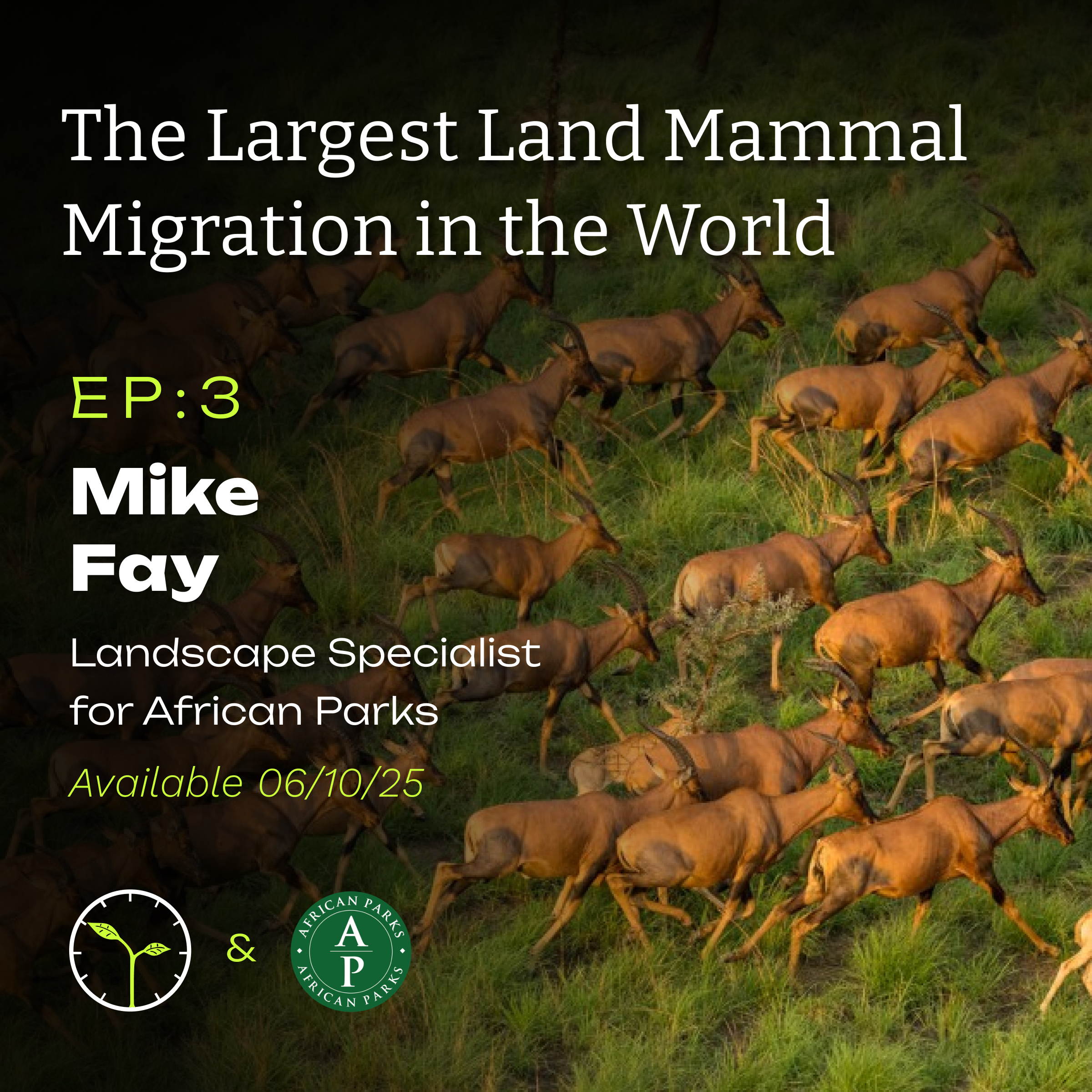
Conservation Across Africa: The Largest Land Mammal Migration with Mike Fay

52m 48s

Conservation Across Africa: The Largest Land Mammal Migration with Mike Fay

The podcast series explores the Great Now Migration of six million antelope in Africa, focusing on their need for water, food, and security as driving factors for their seasonal movement. Threats to the antelope include hunting, human-made barriers like roads, and the absence of a comprehensive land use management plan. The conversation highlights the complexity of conservation efforts in regions like South Sudan, where economic development priorities often clash with wildlife preservation needs. Initiatives to engage governments and stakeholders in sustainable land management practices are essential to mitigate threats to the antelope population and ensure their survival amidst increasing human activities and infrastructure development.

Transcription

7400 Words, 39839 Characters

The three fundamental things are water food and and security so usually when you're trying to figure out like why do these antelope move thousands of kilometers literally every year based on our coloring data you know why would they do that that's a good question why do they do it hey everyone i'm excited to share a new podcast series in partnership with african parks conservation across africa over the month of june we sit down with six leaders from african parks to explore how they're protecting biodiversity in managing some of the most iconic landscapes across the continent on the third episode of our series on conservation across africa we're joined by mike fey landscape coordinated for african parks to explore the largest land mammal migration on earth every year nearly six million antelope move across vast grasslands from south sudan into southwestern ethiopia a phenomenon now known as the great now migration it involves four species of antelope and this seasonal movement went largely unnoticed until a groundbreaking aerial survey conducted by african parks and his partners revealed a population twice the size of the serengeti's famed wildebeest migration join us as we unpack the extraordinary journey of six million antelope across africa's grasslands so we are back with another episode in our series on conservation across africa in partnership with african parks today we're sitting down with mike fey the landscape coordinator for african parks and we're going to talk about this groundbreaking aerial survey that's being called the great now migration which looked at approximately six million antelope moving year-round from south sudan to southwest ethiopia this is work that african parks kind of uncovered last year in 2024 but mike i just want to introduce you to this to this show we're very excited to have you speak about this groundbreaking work and talk about you know what you do in a day-to-day so i guess the first thing i would ask you is could you talk about your position as landscape coordinator what you do for african parks how long you've been with the organization and then what what are some of the cool projects that you're working on right now yeah so i've been around as is obvious i've been around a long time and i i really started working with african parks um right from the inception about 20 years ago but i didn't really start working for them until about four years ago previous that i worked for the wildlife conservation society all over central africa but like i said i've been working closely with african parks for the past 20 years helping to develop projects in the central african republic in chad um drc congo um pretty much all of central africa so in 2007 i came to south sudan right after they separated basically from from the north before they got independence and we did an aerial survey then which was the the first aerial survey that had been done post the war and we discovered that um this migration of wildlife that's been known for you know at least by by kind of the colonial press i guess you'd say since since the 30s 1930s um had never really been looked at um since about 1983 so from 83 when the war really broke out till 2007 no one really looked at it so we we did a survey in 2007 and we came up with you know over a million antelope still in the landscape so in 2022 i started working for south sudan or sorry for african i started working for african parks to come and and work full-time here establishing a project in the migration area so i spent about six or so months speaking to the government and kind of highlighting what we might do as an organization and the importance of the migration etc etc and finally in august of 22 african parks signed an agreement with the south sudanese government so one of the first priorities obviously was to get back up in the air and reassess what the situation was with the migration and so we undertook what was the most extensive survey that had ever ever been done in the migration area because it's very big and most people have never kind of conceptualized you know the the mega kind of survey that you might do so we drew a polygon on the map that included what we thought was the entire range of these four migratory species of antelope that that migrate in south sudan and did that survey in 2023 so since then we've been you know kind of getting much more embedded in the landscape getting to know the different ethnic groups building bases and having infrastructure that allows us to function in a place that is quite wild and quite insecure in a lot of places so you know it's it's it's been kind of a building phase i guess you'd say and a getting to know you phase and we are now kind of getting ready to to really i would say get into the into the rubber meets the road phase which is obviously the most difficult part of what we need to do right you know i would i would ask mike one of the initial questions here is and just for our listeners you know we're talking about you know approximately you know it could be less it could be more but around six million antelope you know migrating over a year long period from south sudan to southwest ethiopia what i would ask is you know why do animals migrate what why do antelope specifically migrate what's the reasoning that they're moving from one area to the next yeah i mean large mammals that don't have you know the luxury of having agriculture or refrigerators have basic needs that they need to fulfill water is a big one food is another one and security is the third one and and pretty much all large mammals wild large mammals that that roam the earth based their movements on those three things sex is another one but but the the three fundamental things are water food and and security so usually when you're trying to figure out like why do these antelope move thousands of kilometers literally every year based on our coloring data you know why would they do that that's a good question why do they do it well if you combine those three variables and you start looking at which one is more important in this landscape depending on the kind of era that you're talking about security i.e. the probability lowering the probability that you'll be killed by a human is number one so so if you have other imperatives like water what you're going to want to do is say okay in the dry season when when 80 percent of this landscape completely dries up where there's absolutely no water i'm going to kind of relinquish a little bit of my security because i need water if i don't drink water i will die so so i'm gonna lower my tolerance to humans and i'm gonna and i'm gonna kind of like say okay i'm i'm gonna attempt to get as close as i possibly can to these guys because i need water and they monopolize all the water resources in the dry season so so that's a big factor and then food generally speaking here is is relatively abundant compared to you know a lot of other species that might be migrating for for food so really the dynamic here is okay if i have enough water to drink i'll stay as far as i possibly can get from human beings because the probability that i'll get killed by a human is low and then as the seasons vary because you get a small wet season and a big wet season and you never know when that's going to be as as a large mammal you know you you gauge your movement based on the anticipation of that or the indications of that but then every once in a while you know it dries out again so you have to go back right and and you end up going back and forth still working on that dynamic of staying as far away from humans as you can possibly get and having enough water to drink so that's really why they move and then in this this migration pattern i mean you're talking about millions and millions of antelope um specifically here but during that journey what are some threats that these antelopes face i mean we talked about i mean you just discussed humans and and security right there you talked about food water but are there other animal species that you know post threats to these antelope along their journey from one place to the next is it humans is it hunting is it poaching you know what are some threats that they face along this this great journey that they that they take because in my head i can just imagine that you have this massive amount of you know animals that are moving there's got to be some roadblocks along the way that they're facing yeah i mean this landscape is from a kind of large mammals point of view again relatively benign other than the fact that it does dry out to a large extent in the dry season so if there are no humans on earth or there are no humans in south sudan the the number of threats that these animals face is relatively low you know because even disease a lot of times the real epidemics come in through through domestic animals so yeah they'd be facing large predators they would be facing an extreme drought and and those can be you know impactful especially drought if if you had say a year where really there was absolutely no water but this migration abuts the Nile river so so in that case if there were no humans the probability that you would not find water is very low so so really you know and it's kind of the planet we live on the the the threats that these animals face today are almost 100 related to humans and and some of those are direct threats and others are indirect threats so hunting is absolutely 100 a major threat to the continued existence of this antelope population and and the levels of hunting are definitely going up but then you have this this kind of other major factor here where we are transitioning from a relatively traditional kind of land use scenario where you have ethnic groups that occupy certain areas and don't normally venture very far into the hinterland because they encounter other ethnic groups which with which they compete or have skirmishes with or have cattle raiding events with or other things so so you've ended up with these hinterlands between human populations so that's where the antelope find their space right but those areas once again are occupied by humans because they have permanent water so again these antelope are kind of in between the human zones between the ethnic groups when water is abundant and then when when water becomes scarce in the dry season they have to go to one side or the other to whatever ethnic group they're going to encounter so as we transition from that traditional landscape to a much more modern nation state landscape where you have roads and and human populations become you know homogenous where where any ethnic group can go anywhere in the country and and settle and do what they want normally the exposure of wildlife to kind of that modern world where where now you know if you get killed 400 kilometers from juba you can be in juba fresh in in one day whereas in that other world that they lived in not too long ago that wouldn't happen that would have never happened right so linear infrastructure road building which is happening quickly here is a major threat to the existence of these of these antelope especially when they they go perpendicular to the migratory paths so if you have a million antelope crossing a particular area and all of a sudden a road goes in perpendicular to that to that migration and and there's no modern management that has been brought along with the modern infrastructure that that is being built then you can see a collapse in these populations very quickly and in Central Asia you know they've seen that happen with the antelope species in Kazakhstan and Mongolia and other places in central asia i will say micah it's interesting that that you bring that up last week i had a conversation with this company called ecometric solutions and what they do is they have the software where you can go in basically plant the boundary of your property let's say your manufacturer and you have a manufacturing facility you can go on the software plant the boundary of what you own land-wise and then it will grade your ecosystem based on you know how it's impacting the land the people the biodiversity around that area and the idea for the software it got started i think in the early 2000s because the federal interstate was was looking to build across the us a lot of highways and they came to ecometric solutions and was like hey can you develop a platform for us to see how when we build roads how it's going to impact the ecosystem around it and in this case i brought that up because it's it's very fresh on my mind i had this meeting last week but in this case it's very similar i mean in south sudan all the way across to southwest ethiopia this migration of of antelope when when building roads it could it's a roadblock it's literally a roadblock for these antelope along their path from one place to the next so you know something looking at like an ecosystem assessment when the government or whoever's building these roads could be a very valuable thing because then it sees how it's going to impact the local communities the local wildlife the biodiversity the area but it's all very interesting i know that's kind of like a side point but um just a conversation i had last week yeah i mean normally um as you transition into a modern kind of nation state structure um and as you kind of build infrastructure and humans start to uh become more and more dense on the landscape and you have agriculture and you have roads and you have um you know industrial projects like oil or mining or whatever it is you know one of the first things you want to do is to come up with a land use management plan that says okay we're going to designate these areas as protected areas these areas as traditional areas where people practice traditional cultural use of the land and and these are for development so here's where oil is going to be here's where your diamonds and your gold are going to be this is where you're going to do industrial agriculture all those things so so right now um one of our priorities here is to is to convince the government that we actually need a comprehensive land use management plan for this migratory landscape because if we don't have it um and these threats continue to build uh as they are the writing is on the wall the writing is already on the wall and so we need to kind of um you know get to the point where where we unify all of the different kind of stakeholders um and that's up to the government to say okay guys you know oil ministry agriculture ministry roads ministry um mining ministry all of us need to get together and and agree that we're going to come up with a land use management plan for this and then any project that's proposed needs to be accompanied by an eia and and normally the eia would have a plan that is funded that would mitigate um you know the threat to to whatever resource you're trying to manage for so in this case the migratory landscape um you want those antelope to survive so if somebody's going to build a road you say okay well we're going to need to establish a corridor on that road we're going to have an entry point and an exit point to where that corridor is going to cross it's going to be guarded and there will be no hunting along that corridor so that doesn't preclude building the road um it just means we need to manage the wildlife when they're kind of traversing that road in harm's way of course the road can't become a barrier so if you build a six meter tall dike and the animals can't get across it or you build a canal or you build any other infrastructure um one of the interesting threats that we have here is the jongle canal which was built in the 1980s which never actually functioned but the idea there was to um take the water from the white nile and and divert it from the the great syd swamp so that they would lower the evaporation as it went through the swamp so that Egypt could receive more more water and the war broke out before they finished it but that they almost completed it so you have this gigantic canal on the east side of the river which um up until a few years ago was not a particularly important threat to the wildlife because um they could they could get up and over the dikes swim across the canal and get to the other side and get to the Nile river and all that land um to the west was still open but as as the last few years have been um years of flooding the floods of the Nile have come right to the banks of the dike of that of that canal and all of the people that used to live to the west have moved on to the dikes of the canal so so it's it's become basically a linear village that's about 200 kilometers long and therefore once again you know that that that is this barrier to the movement of wildlife not because of the the dike or the canal per se but now it's it's 100 occupied by people in a linear way and and all of those people have guns and all of those people hunt and so and so you've you've now blocked um their passage to the west that's a huge threat you know and so so you know we've obviously listed many of these threats we've um been talking about these threats we've been reaching out to people who can make decisions about how we can start um this land use management planning process so I would ask um if we're looking just at South Sudan here um the note that I have down is you know South Sudan is one of the world's youngest in one of its most fragile nations um emerging from decades of conflict with limited infrastructure education health care or sustainable food systems um kind of tying that directly to this land use management and this plan and working with government the mining sector um all of these different stakeholders when you have a nation that's you know brand new that's developing how do you go about you know talking to governments when they might have massive economic priorities um and you're trying to conserve a species and make sure a species doesn't have any any roadblocks along its way of migrating it seems kind of complicated to me and like a hard conversation because governments have so many priorities and a lot of times what I've seen is greed plays a big factor in a lot of things um so yeah I would ask you that I mean how how difficult is that talking to governments especially like the government of South Sudan who is trying to become more and more developed um as as one of the world's you know youngest nations um in fragile nations yeah another good question um what I would say is if if you want to sleep well at night and you want to not have um constant kind of of anxiety and worries in your life don't become a conservationist but um you know humans are on the march there's eight and a half billion of us everybody wants to use more resources uh everybody wants to have more not less uh they want to be better off not worse off and the general trend is that not only you know have we seen our populations explode on the planet but the per capita consumption has also exploded so so it's all fine and good to say you know we need to preserve this migration of antelope um but as you say uh in this country um people are thinking about their next meal if they're living outside of the city that's their that's their biggest priority is what am I going to eat tonight you know not even tomorrow but what am I going to eat tonight and so and so if there's an antelope to be eaten and you're hungry um that's what you do and that happens thousands of times a day um in this landscape so so there's that but then like you say if you look at you know what we would call in the united states the highest and best use of of the land um dedicating it to to um a relatively low value thing like a migrating antelope rather than a hectare of productive agricultural land or a mine or an oil well or um transportation avenues that open up your country to commerce and and kind of health care and education then yeah it's it's something that is extremely um you know difficult to imagine but what I would say is there there's a way to have your cake and eat it too right there's no reason why you should not think about can we preserve this migration what economic value does it have well the first huge economic value that it has here is that probably 80 or more of the animal protein that the people who live in this landscape eat is these migratory antelope so if those migratory antelope disappear they're going to have to find another source of food right um and an animal protein comes in two forms here it comes in the form of antelope and it comes in the form of fish right so so if you liquidate that asset either the fish or the antelope um you end up uh like a lot of people on earth you've eliminated your main source of food but you haven't found an alternative right and so and so you're worse off rather than better off and we saw that with um you know the north american um native populations just like we're seeing here right as resources get destroyed people don't necessarily become better off they can become a lot worse off and i think that rural people here understand that they understand that they depend on these animals so when you talk to them about about perpetuating these populations they say hell yeah we want these antelope we we depend on these antelope so i do want to pivot a little bit mike in into the work of african parks with this this aerial survey i'm interested because in the beginning when you were introducing this this migration the great nile migration you talked about i think it wasn't correct me here but i think in 2023 the aerial survey commenced it started and then 2024 the results were released so i'm just curious about that year-long period um was the was aerial surveys going on the entire time what was the process of gathering data and then what did african parks do with the data once it had it and then another question i'll add i know this is a lot of questions but you did mention um collaring in the beginning kind of tracking these species seeing where they're going um so yeah just just talking about this whole process of the aerial survey 2023 to 2024 how that all worked and then you know what's going on today yeah so like any kind of scientific endeavor data are extremely important you know you have to know what you're talking about you know if you're a chemist having the periodic table and knowing that these elements exist and how they behave and everything else is essential if you're going to do chemistry right and so if you're trying to manage wildlife which which are impacted by many variables one of which is humans then then what you really want to know is not just how many animals do we have but where are they um why are they there how do they interact with the human populations what's their juxtaposition with with humanity and other structures um what's their proximity to water what's their proximity to food all of the factors that that would add up to um their survival so the first cut is to say okay we've got this area of 125 000 square kilometers no one has really looked in detail at this population forever pretty much because because no one had ever surveyed the entire migratory landscape in one fell swoop so you say okay first cut we don't know what's going on we're going to take airplanes and we're going to systematically fly over this entire landscape in a short amount of time and we're going to get a snapshot of the populations of wildlife all the human infrastructure the vegetation the water any other variable that you add into that equation so it's not just about counting wildlife it's it's basically drawing a map of of all of those different variables in the landscape so the methodology that is typically used is um you fly in straight lines across the landscape you block it up into blocks and it's all statistically kind of figured out uh as to its validity um statistically and and you want to have as high a sample size as you possibly can um because the higher the sample the more statistically kind of tight the numbers are so so when you're doing a broad stroke kind of one-off um you know survey that has to be done in a short amount of time because you don't want to be surveying over months because those antelope move every day so you're not getting a snapshot you're getting all a bunch of gobbled gobbledygook right so you need to really take a snapshot so you have to do it quickly use multiple aircraft um and typically what people do is they count the animals using observers out of either side of the airplane in a strip that is is designated you know um before you fly and you know the strip because you put bands outside the airplane and you can see in the counters only count between those sticks and they count the wildlife as it goes by the sample size depends on how much time and money you spend and the minimum that you want to get is um usually about a three percent survey i.e. you actually count the animals over three percent of that landscape in a in a systematic way and and you do the the mathematics and you say okay we extrapolate the three percent to a hundred percent how many do we have there's obvious a lot of of variables in there that could make your plus or minus bigger or smaller and that's why when you say six million it's like six million plus or minus a huge number right and so one of the things in getting back to the question of why did it take so long to come out with a result um after the survey um what people have started to do is is attach photograph cameras to to the inside of the airplane that mimic the view of the observers and take pictures all along the way to actually have a photographic record of what that observer saw and then you take those photos and you literally using software that annotates the photos and it's a very complex databaseing system but unfortunately AI has not um you know solved the task of automated counting yet where we have and in this case we had six people counting the antelope along the band of photography for every single transit tens of thousands of photos so that took about seven months for those counters to actually tabulate the antelope that were seen by the cameras and then we compared that to what the observers saw so we have two data sets one the observer data set and the other the camera data set and we compared those two things and and there is variation but in general the the observers did quite well um and and the cameras you know also obviously are quite objective right um but there's always a question of you know is the strip width exact and is the height above the ground of the aircraft correct is it so there's a lot of variables that could introduce error into um your system even if it's an objective photograph so this year um in fact we're repeating um that survey and we're doing it right now in fact I was flying on this morning where we're just using cameras now no more human observers because they're much less objective obviously than cameras are and and you know the fact that you can actually um see the antelope in these photos and you can count them one by one very objectively um considerably reduces the error but at the same time things that are generally difficult to count like oh we flew over village you know how many huts were there how many cattle were there how many dogs were there how many people were there how many granaries were there all those kinds of variables um are much more difficult to count with observers so we find today that most people are transitioning to photographic surveys instead of um human observation uh but that's why it took us so long to come out with the result was it took seven months to count the photos wow so I to your point on AI you said AI hasn't hasn't enhanced enough to be able to to count these in my head I would be like man if you could if AI with machine learning could somehow you know take that I feel like it'd be a lot easier but it seems like we're years away from from AI being able to do that because it that seems like such a that's a hard that's a hard um process I mean seven months initially that was in 2023 to just count these antelope uh you're doing it manually with with people just observing and then also manually I guess with the camera then counting them after the the cameras have the footage so you would hope in the future AI would progress enough to be able to do that for you well we we are working with several different groups who are interested in um automating the count and machine learning of of counting um wildlife from the air but that obviously is a lot less lucrative than than an airplane flying over a highway and having AI determine how many cracks and how big they are and and what they need to repair and what they don't in that case they have millions of dollars at their disposal to develop their models um their algorithms whereas wildlife surveys are kind of you know low budget normally conservation in gentlin yeah is low is is really low budget so but there are there are several groups that we're working with who are are actively working with our photography from here because it's a it's a really good sample and it's clean um and and they've gotten to the point now and we're going to try to do it with the survey we're doing now um where they can with with good reliability have the computer tell you whether or not there is an animal in that photo right and and most photos don't have animals in them right so if you can eliminate already 80 of the photos um from your sample then that relieves you know it's like one fifth the work that you have to do now and and we've also gotten to the point where where they can count animals they can't necessarily distinguish the species but they can count animals in in a photo with with good reliability not not fantastic reliability but good reliable but if you then back that up with human counting of a sample of those photos you can correlate those two things and come up with a good number so so there is a lot of progress with AI and I think that in the next two or three years um we're going to be able to reliably process these photos using AI and then we're only going to have to count a subset of those photos to validate the AI work and I think that that's it's not far away it'll happen soon but for this survey we're going to be giving those photos to these guys and and we're going to see what we come up with hopefully almost for sure we're going to be able to eliminate the photos that don't have animals in them and and that'll reduce our work by five times and we may actually even be able to count but probably not on this survey but certainly in 2027 2028 I think that will happen right and I'll tell you Mike we so this series we're doing african parks it's six episodes so this is one of the six in almost every episode we talked about some form of conservation across Africa species conservation and we talked a lot about you know tracking the species in this case collaring the species um you know you talked about how how valuable data is and just gathering data having data on these animals for this project is there an element of tracking collaring the animals um along their journey I mean we know about the the photography that's happening but is there anything with the with the animals themselves that they're getting collared they're being tracked um is there any of that happening yeah so so you know if you get back to the survey that gives you a snapshot right okay in like right now may of 2025 over a 10-day period a 12-day period we're gonna have a snapshot of where the wildlife was where the people were what the linear infrastructure looked like for the entire landscape in the here and now but two weeks from now that picture is going to be significantly different especially from the wildlife perspective so so we know that these antelope move a lot right and so in 2023 already um we collared about 150 animals most of which were in the migratory species the four migratory species and that allowed us to to see not just where an individual went but to distinguish kind of subpopulations of those species the problem we face is collaring is very expensive once again we don't have unlimited funding and so if you look at um uh the the percentage of the cob that we which is the main species of migratory antelope here um we have only collared 0.0024 percent of the population so again you know you're trying to to surmise the movement of of millions of antelope from 150 individuals you know and and so if that individual happens to be old and maybe has a little bit of arthritis or whatever maybe its movement pattern is is totally different from 90 percent of the population so so generally speaking you know from my point of view we'd want to have a much higher percentage of the wildlife collared to be able to really figure out in a in a high density way um where um they are going and and therefore why they're doing it right but what what's really interesting is you know we've already discovered for instance that the lions in this um landscape because of the high seasonality of the water availability and the movement of of most of their prey um they have they have home ranges that are 10 times bigger than any lion um that's been recorded before right and and these antelope are literally moving thousands of kilometers per year you know that that's also not normal that that's a much higher number than than the majority of even migratory species so so we're learning a lot and we are seeing the general patterns of movement um and that helps a lot in in figuring out where the corridors are um what the relationship between humans and and wildlife is we can can really measure and see like that the buffer the minimum buffer between humans and wildlife when you see them moving and and they get close to that human zone and they hover around there and then they move around it so it's it's really amazing data um there's just not enough of it so so um the conclusions that we draw from it are are relatively kind of general conclusions they're not they're not hard and fast like we've figured it all out kind of the conclusion and it's really about sample size so a couple last questions here for you mike um the first is i mean we talked about 2023 is when that last aerial survey started now you're talking about a survey that's happening now what is what is african parks hoping to accomplish with this aerial survey um compared to the last one um and then will this one also run i may maybe not maybe i can answer the question myself but will it also run this period of seven months or do you believe that since you're just using cameras it's going to decrease by a good bit for you to actually gather that data and be able to release that data yeah so on the first point um we're doing this survey at more or less the same time um seasonally right not not at the same dates um but very close to the same dates but you try to to try to replicate um the survey you want to you want to do it more or less when the animals are facing the same environmental conditions which right now we're at the beginning of the wet season they've already moved out of their dry season range um and they're relatively stationary right now because um they've kind of moved farther out in the landscape where they're comfortable far away from humans and they might get more drought coming in um so they might go back um toward water before they're done but but this is a relatively stable period of time so so the the reason we're doing it is because in general you want to keep tabs on your wildlife and and the normal rhythm that AP kind of uses is every two years um you want to have an assessment to see what the trend is in your wildlife populations um and here because the threat levels are changing extremely fast especially vis-a-vis um resettlement and linear infrastructure um it's really about about yes monitoring um what the change has been based on all of the threats we're seeing to see if if um you know we're we're looking at at a massive decline of the population or you know even though we witness um a lot of of use or killing of the wildlife maybe it's sustainable you know we don't really know because we don't have a really good assessment of the offtake um throughout this landscape because that's an enormous job to know that um but but we're going to see very quickly if we've lost a significant number of animals in the last two years and we're going to see how much farther humans have gone in the landscape um in that time and that'll give us a reality check on are we are we behind the power curve in in you know kind of getting um this management scenario put in place um because once again South Sudan even though it's facing a lot of economic and and you know insecurity challenges I've never seen a country um in Central Africa developing as fast as South Sudan is developing it's changing very fast so I think the last question I'll ask you Mike is obviously we have listeners um that they're going to be tuning into this episode and you know that they hear you talk about you know callering something that's very expensive um you've called I think 150 out of millions and you would love to call her more but it's super expensive you don't have that kind of funding so my question would be you know how could people that are listening help help the cause could help with with the work that African parks is doing with this great now migration are there ways that they can get involved that they can help um with the with the great work that that you guys are doing yeah I mean um it's kind of like the antelope and proximity to water right so um if you can physically help um then then that help is welcome um but the vast majority of people just like the vast majority of antelope we don't call her can't help physically right and so and so we have teams of people who do the work and and the more resources that we have the more work we can do right and and typically um one of the main and I wouldn't say the main but one of the main um constraints and less so with African parks than a lot of other NGOs because they have um a lot of supporters um who believe in them and who give them substantial amounts of money but but really the the easiest way to help is by contributing um cash you know I mean that that's that's the the universal solvent to getting work done right and and I would say that right now and and I'm and I'm working on um kind of the overall vision for this place but we are we are definitely um underfunded for what we need to accomplish here and and the the landscape is changing so fast that that if you don't get ahead of the power curve um you know at a certain point it doesn't matter how much money you put into the equation because you're you're too far behind right so not only do we need resources but we need them the quicker the better you know because if if we don't get them we're going to be too far behind right and and that is a dilemma that we face but I think that's that's mainly um how people can help either either directly or indirectly by telling their you know um you know powerful friends and and congress people or whatever it is hey this is important we need to do it

Podcast Summary

Key Points:

  1. The podcast series discusses the Great Now Migration of six million antelope across Africa.
  2. The migration is a result of the animals' need for water, food, and security.
  3. Threats to the antelope include hunting, human infrastructure like roads, and lack of land use management.

Summary:

The podcast series explores the Great Now Migration of six million antelope in Africa, focusing on their need for water, food, and security as driving factors for their seasonal movement. Threats to the antelope include hunting, human-made barriers like roads, and the absence of a comprehensive land use management plan. The conversation highlights the complexity of conservation efforts in regions like South Sudan, where economic development priorities often clash with wildlife preservation needs.

Initiatives to engage governments and stakeholders in sustainable land management practices are essential to mitigate threats to the antelope population and ensure their survival amidst increasing human activities and infrastructure development.

FAQs

Large mammals move based on water, food, and security needs, with the primary objective being survival.

Antelopes face threats from hunting, drought, and human activities such as road building and habitat encroachment.

Roads can act as barriers to antelope migration, leading to habitat fragmentation and increased hunting risks.

Engaging governments in conservation discussions amid economic priorities involves advocating for sustainable land use planning and mitigating threats to wildlife.

Antelopes move thousands of kilometers annually based on water availability, food resources, and security from threats like predators and human activities.

Chat with AI

Loading...

Pro features

Go deeper with this episode

Unlock creator-grade tools that turn any transcript into show notes and subtitle files.