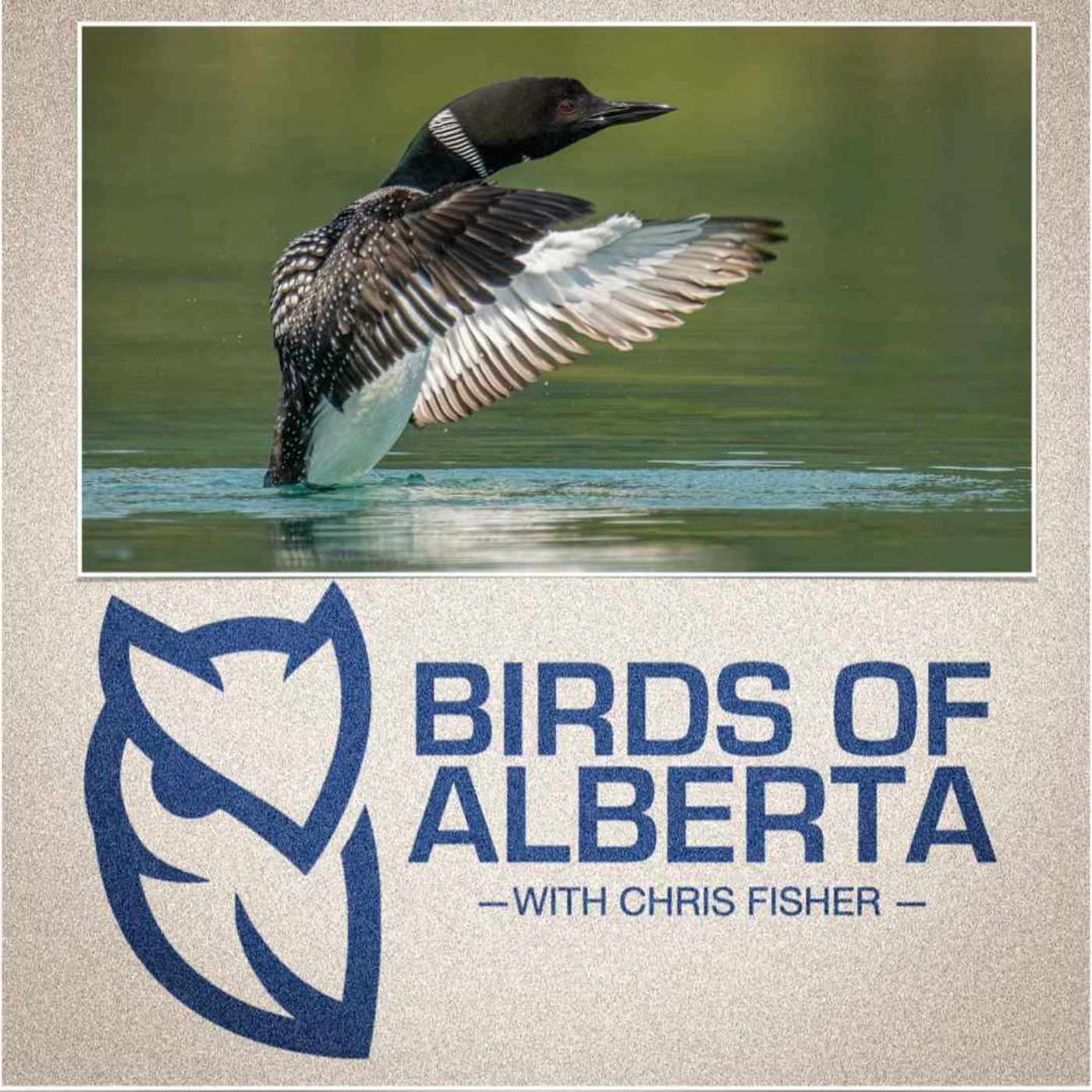
The common loon holds a revered place in Canadian culture, symbolizing the intersection of solitude and companionship. It appears on the dollar coin (the "loonie") and in art, embodying shared national experiences. Physically, loons are large diving birds with dense bones and striking black-and-white breeding plumage that provides camouflage from above and below. They summer on northern lakes, migrating to coasts in winter. Their haunting calls—tremolos, wails, hoots, and yodels—serve specific communication purposes. Behaviors like preening maintain their feathers, while wing-rowing and the "penguin dance" signal distress when threats approach. Conservation programs, like the long-running Canadian Lakes Loon Survey, track population declines linked to habitat changes and pollution. Across Alberta, from boreal forests to popular parks, loons are a common sight and sound, offering profound natural encounters that deepen the connection to Canada's wilderness and collective identity.
Welcome to the Birds of Albert, a podcast I'm Chris Fisher, co-author of the best selling field guide, Birds of Albert. Now here in Canada there is one singular bird that has migrated from our distant remote northern areas into the very heart of Canadianna. It magically straddles a line that intersects with the romanticisms of solitude and the comforts of companionship. It is both distant and intimate, remote and personal, lonely and reassuring. But to become a unifying symbol of such a large and diverse place, well it doesn't happen by committee, it comes about organically through shared experiences and shared values. And wow, not all of us has sat lakeside long after the sun is set and be haunted by these birds as their voices echo across calm waters. Enough, enough of us have been collectively moved by these humbling moments. To spread these feelings of belongings in whichever ways we best express our most sincere feelings. So from the opening bars of the all Canadian classic song "Week Kings" by the hip, to our most familiar currency, to the northern reflection sweaters worn at the cottage to stamps. There is a bird that imparts a meaning and a feel like none other. For like so many Canadians, they summer on our distant northern lakes. For them it's the place of their birth. But for us these are the home place of family and friends that inform our characters and memories. It is where the forest meets the lakes that we both seem to share a common fellowship between us and the most serene of the birds of Alberta, the common moon. Looms and can't seem to be a perfect match in just about every way possible, including their looks. Now the males and females tend to look a lot alike. Males being slightly larger, maybe 25% larger than the females. The birds themselves are quite large, about a meter long from the tip of the bill to the end of their tail or the end of their legs because the legs do stick out further than their tails, particularly in flight, they weigh up to 15 pounds, which is very very large. Of course they are not a duck, they are a loon, they're very own thing, part of just a handful of species that occur around the world in northern areas. They are known for diving, of course. They are heavy birds, their bones in fact are much more dense than the bones of other birds and that allows them to sink down into the depths to swim after the prey that they go after, namely fish, but also aquatic invertebrates, things like leeches and dragon and dams of fly larvae will make delicious meals for themselves and they're young. In the summertime their breeding plumage is spectacular, though simple. There is a black and white checkered pattern on their back that glimmers like the surface of a northern lake, their iridescent head and neck, they've got a black bill, and they have a red eye, like so many birds that spend their lives hunting underwater, red eyes help them see through these dark environments and lastly there is a a prominent white necklace that kind of marks around their neck, which really makes them a very very snappy dresser even though they're really only plumaged in black and white. They make the most of those two colors. Now truth is this black and white plumage is not necessarily for R.I. It is by natural design, the by-coloured design really allows it to blend in. If you view the bird from from above or below, from above, they're sparkly white back and black coloration blends into the surface of lakes and from below, well they've got an all white belly, so if you're a fish, swimming beneath them, you don't see them coming when you look above for that belly blends into the light sky. This classic plumage is of course what they wear for most of the time in Alberta as they breed. Throughout the province in our northern lakes, by the time they migrate in the fall, for most of our lakes free solid, so they have to head to the coast. They lose that distinctive and utterly beautiful classic breeding plumage and turn kind of a little, two browns and graze and they use that plumage to ride out the waves off the coastal areas. When they do tend to leave, they sometimes will be seen in larger flocks, really flocks in the sense of geese and ducks, but in some areas such as Lakeland Perventual Park in the Northeast corner of the province, there's been observations of several hundred of these loons migrating and gathering prior to their southern migrations, but typically when we do encounter loons there in individual or small family groups and that's certainly the case when we do encounter them on their breeding territories, a pair in their family, occupy a corner of the lake, a large lake, or if it's a smaller water body, they will have it all to themselves. So as much as their look is perfect in its simplicity, it's probably the vocalizations that make loons stand out in a haunting visceral way for all who hear it and we've been hearing loons for as long as humans have been around, loons are a very ancient group of birds that have been around for, oh upwards of 40 to 50 million years in some form or another, their vocalizations are broken down to several different types all with very specific meanings and uses, one of the most common is called the tremulo, also known as the crazy laugh, it's usually a response to the threat from humans or other predators and they're pretty given during a territorial interaction, sometimes with other loons, and this is the thing that we often hear at night echoing across the lake and sometimes as a duet between two bonded pairs, the whale is a much more simple type of vocalization, used usually for long-distant communication between the pairs of loons, or shorter range of communication between two pairs rather than the whale, sometimes the hoot is used, it's much softer, shorter call and very intimate in an exchange between mated pairs, and the last very distinctive call is known as the yodel, and the yodel is really typically only given by the male when it feels threatened or its family is threatened oftentimes with aggressive territorial interaction with other loon families, or quite frankly when we approach a little bit to closely the male will often extend their next flat over the water, or sometimes they might even rise out of the water with its neck extended, and this allows the yodel to project a little bit more widely across the surface of the lake. Really loons just have everything going for themselves that make them interesting, they're just a trifecta perfection, they look spectacular, they sound spectacular of course, and they do really interesting things, they all have some very interesting behaviors whenever you do encounter them, the most prominent behavior when out observing loons is probably printing, these are aquatic birds and they have to maintain their plumage in an ideal state in order so that it sheds water doesn't bog them down, they certainly want to be diving through the water deeply, but they also don't want to be waterlogged and soaked, that will serve them no purpose whatsoever, so they're always reaching back to their their pring gland by their tail and working those oils through the plumage throughout their bodies and their wings, and in doing these printing activities you'll often see them fluff up a little bit, may be bat their wings in the air, stretch a leg out the back side, it is always a very common and comical use of the printing exercise where they engage in maintaining their feathers, other forms of behavior that should be aware of and quite frankly, we do see particularly when we get a little bit too close to loons or are things like wing rowing, that's when the loon will kind of use the the forearms of their wings to roll around a little bit, that's oftentimes a sign that we're a little bit too close to their their nests or two, their chicks, and another one is the the well-named penguin dance and that's when they will rear up just a little bit out of the water with their wings spread out or sometimes even clasp on the bodies and they'll rapidly paddle their feet and propulse themselves over the surface of the water, if you see either the penguin dance or the wing rowing, those are pretty good signs to back off just a little bit because you're in their safe zone. This too is one of the neat things about loons, you don't really have to get all that close to them to really fully appreciate them, in fact I would say that some of my most powerful, loon encounters throughout my life were when I never saw the bird at all, it was simply a voice echoing across the distant calm waters of a northern lake and the voice, as much as anything is just a perfect part of these pristine and humbling scenes. And I suspect those memories and those feelings because they are shared by so many Canadians, the reason why, that the looning, the dollar coin, is so valued as part of classic Canadianiana, but the funny thing is that almost didn't happen for when the Royal Canadian Mint was looking at replacing our paper dollar bills in the early 1980s, well they already had a design for dollar coin that went back decades, it was a voyager theme, so still very much part of northern Canadian watersheds. But unfortunately for the voyagers, unfortunately I suppose for loons and and Canadiana, those dies that featured the voyagers, well they were lost on transit between the Ottawa Mint facility and in Winnipeg where the new coins were to be cast, so as a result of the the dies, the stamps. Being lost it was felt that it was too risky for counterfeit operations to continue to go with the voyagers. So the loon theme was chosen and artist Robert Ralph Carmichael designed the famous icon that we know so well today, as if you want to view more of the art made by Robert Ralph Carmichael, well there are exhibitions and collections at the University of Calgary and also up in Edmonton at the Alberta Arts Foundation. And I just find it really cool that since 1987 the dollar coin has been so embraced and embedded in Canadian culture of course, it is endearingly known as the loony nickname that was just fallen upon it organically by the Canadian population and whatever derogatory connotation the word loony has meaning crazy and unhinged actually is a reference to the bird itself, it's a reference to the word lunatic, which is a reference to the moon, a lun and of course means that the crazies come out when the moon is full. Should be no surprise that Canadians great passion for loons is expressed in many many ways including conservation and bird studies Canada, a group that is concerned with the conservation of our Canadian birds has organized the Canadian lakes luned survey all the way since 1981 so this survey has been going on a citizen science project for almost 45 years now the participants the volunteers have spent about three days visiting lakes and surveying the occupants of the lakes they visit once in June then again in July and August for seeing the nests that are there and then the young hatchlings and then seeing how the chicks are doing well into August. Now the results that we've seen over 45 years at the Canadian Lakes Loon survey is not unexpected the population seems to have dropped a little bit about 1.4% per year since the survey began and that may have something to do a shoreline development and in some areas there have been elevated levels of mercury and other contaminants that seem to have affected their population but for the most part loons continue to be found and many of the same areas of Canada that they always had and certainly would be a sadder, lonelier place if these numbers dipped any further. We are quite lucky here in Alberta because you know we can see common loons really on all the large lakes in Alberta from Elkwater Lake in the deep southeast and Waterton Lakes National Park in the Southwest. Through Central Alberta all the big lakes there, Pigeon Lake, L Lake, Buffalo Lake, Buck Lake, Crimson Lake, Provincial Park a great place medicine lake not far from Rocky Mountain House was a favorite place for me when I lived in that part of the world. Every named and unnamed lake sweeping across the boreal forest will have them if you're lucky enough don't a cottage up at Colling Lake or Slave Lake or Love Camping Thunder Lake in Black Lebesh you'll hear loons off in the distance as you fall to sleep. So while these are places that Albertans live and recreate where the tourists come boy there are loons to be seen as well even our most heavily visit nature hot spots like places like Vermillion Lakes in Bamp and also in Jasper National Park they're famous on Pyramid Lake and Patricia Lake, Edith Lake and Talbot Lakes so really no matter where you go to wild wet country in Alberta you'll find loons there waiting to be seen and heard. And those experiences with loons are a vital part of summertime for me here in Albert and just a few weeks ago. I got spending afternoon looking and listening to common loons alongside a new Canadian citizen who was born and raised a hemisphere away in a tropical exotic homeland. We found ourselves up north in Big Lakes County in Albertan north of High Pring and the mixed boreal forest there it hugged the shoreline of this lake as it does so many thousands of other lakes throughout the province the shoreline was grassy but misleading I've walked these shorelines many times and have found them to be too spongy for my weight and other heavy weights out there but these shores are just firm enough for loons to flop up and down coming and going from their lakeside nests. Of course this is what we found when we were there a nesting place of loons and that family was putting on their usual ship and as we stood there the parents swam near for performing yodels and treblos and whales young followed closely their parents and they were be dately fed fish and aquatic invertebrates right in front of us. It it was a classic scene fully complete so much so that in that moment I suggested that the time with the loons was a truer test of Canadian citizenship than any other form of possible examination and looking off to the forest and the water and the loons she agreed and joined the realization of us all that knowing the common loon is foundation to knowing ourselves and the birds of Alberta.
Podcast Summary
Key Points:
The common loon is a culturally significant symbol in Canada, featured on currency and in art, evoking feelings of solitude, companionship, and shared national identity.
Loons are large aquatic birds with distinctive black-and-white breeding plumage for camouflage, dense bones for diving, and haunting vocalizations like tremolos, wails, and yodels used for communication and territorial defense.
They breed on northern lakes in summer, migrating to coastal areas in winter, and exhibit behaviors like preening, wing-rowing, and the "penguin dance" when threatened.
Conservation efforts, such as the Canadian Lakes Loon Survey, monitor populations facing declines due to shoreline development and contaminants, though loons remain widespread across Alberta's lakes.
Encounters with loons, whether visual or auditory, are profound, connecting people to nature and reinforcing the bird's iconic status in Canadian culture.
Summary:
The common loon holds a revered place in Canadian culture, symbolizing the intersection of solitude and companionship. It appears on the dollar coin (the "loonie") and in art, embodying shared national experiences. Physically, loons are large diving birds with dense bones and striking black-and-white breeding plumage that provides camouflage from above and below.
They summer on northern lakes, migrating to coasts in winter. Their haunting calls—tremolos, wails, hoots, and yodels—serve specific communication purposes. Behaviors like preening maintain their feathers, while wing-rowing and the "penguin dance" signal distress when threats approach.
Conservation programs, like the long-running Canadian Lakes Loon Survey, track population declines linked to habitat changes and pollution. Across Alberta, from boreal forests to popular parks, loons are a common sight and sound, offering profound natural encounters that deepen the connection to Canada's wilderness and collective identity.
FAQs
The common loon is a large aquatic bird known for its distinctive black and white breeding plumage and haunting calls. In Alberta, it can be found on large lakes throughout the province, from Elkwater Lake in the southeast to Waterton Lakes in the southwest, and across boreal forest lakes.
In breeding season, common loons have a black and white checkered back, iridescent black head and neck, a black bill, red eyes, and a white 'necklace.' They are about a meter long and weigh up to 15 pounds, with males being slightly larger than females.
Common loons primarily eat fish, as well as aquatic invertebrates like leeches and insect larvae. They are expert divers, using dense bones to sink and swim underwater to catch prey.
Loons have several calls: the tremolo (or 'crazy laugh') signals alarm or territorial disputes, the wail is for long-distance communication, the hoot is a soft call between mates, and the yodel is a male's territorial or threat display.
The loon is a unifying symbol in Canada, featured on the dollar coin (the 'loonie') since 1987. Its haunting calls and presence in northern lakes evoke shared experiences of solitude and companionship, making it an iconic part of Canadian identity.
Common behaviors include preening to maintain feathers and activities like 'wing rowing' or the 'penguin dance,' which indicate you are too close to their nest or chicks and should back away.
Chat with AI
Loading...
Pro features
Go deeper with this episode
Unlock creator-grade tools that turn any transcript into show notes and subtitle files.
 PodcastTranscript AI