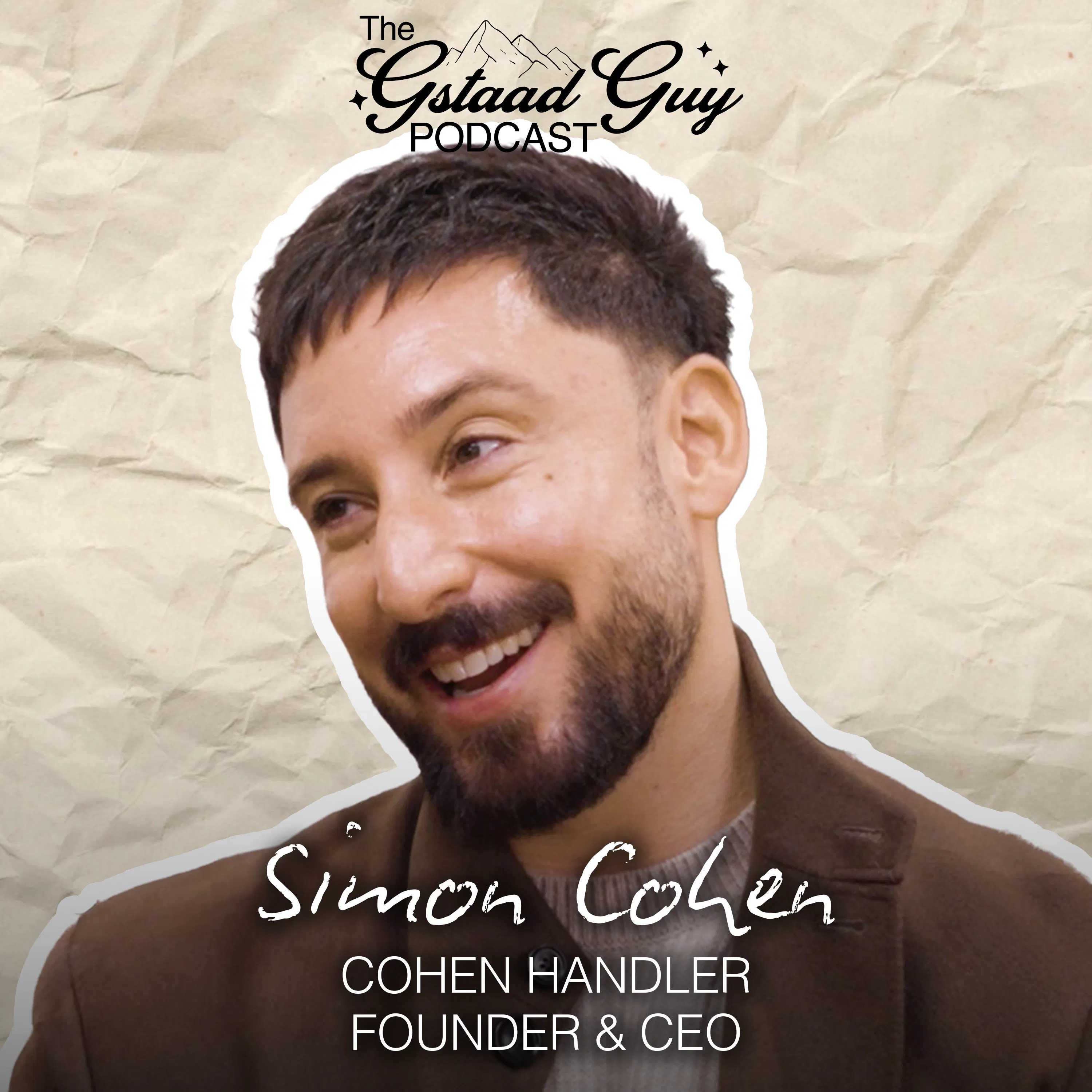
Cohen Handler Founder & CEO: Simon Cohen – Real Estate, Risk, and Reinventing the Rules
from The Gstaad Guy Podcast
68m 25s
Simon, a real estate entrepreneur originally from South Africa, moved to Australia at age two and later founded a pioneering buyer's agency in 2009. His business model, which prioritizes the buyer over the seller, was initially met with skepticism, as it was unheard of in Australia. However, Simon’s passion for real estate and marketing, combined with a desire to create an ethical workplace, drove him to succeed. Today, his company operates eight offices across Australia, handling transactions from $300,000 to hundreds of millions. Simon stresses that the key to his success is a focus on customer experience, honesty, and transparency, which builds trust and turns clients into advocates. He hires solely for passion, believing it outweighs formal education or experience. Simon advises young people to identify their passion and pursue it diligently, noting that money is a byproduct of doing the right work. He also highlights the importance of problem-solving, taking risks, and learning from failures. Through his journey, Simon has transformed real estate in Australia by making buyer representation accessible to all, from first-home buyers to billionaires.
It's a tree flurning from. Yes, today I came in from Paris. How was that? The weather was amazing all week. Yeah. Sunny, warm. I mean, I love Paris. Yeah, it's great. And you're in Koshravel before that? Yeah. Not yet. Which, well, you know what the problem with Stardews? I wanted to go, but it was a 10-day minimum at the hotel that it's had. I didn't have 10 days. It's crazy. So there's nothing I could do. But maybe this Christmas I'll try Stardews. You should. You'll have to try to get me in somewhere. It depends how much you love skiing. The skiing is better in Koshravel. Yeah. I'm not a great skier. I ski for four hours within instructor of my friends, but I don't go for the. I'm not like an Olympic skier by any stretch of the imagination. I go. Also skiing, like, your focus are not dying. So I'm not thinking about work, which is great. So my mind's so clear in the snow. And I love the coziness of it and the. And it's very cozy. Yeah. I actually. I'm very keen to try Stardews. You should. Well Simon, it's a real pleasure to have you here. It's great to be here. Thank you. So you. I were born in South Africa. Moved to Australia when you were about two years old. Yes. I'd love to know how you got into the business that you're in. Well, my family moved to Australia with kind of nothing. Yeah. They moved there to give us a better life. South Africa was a dangerous place. Mm-hmm. And. You know, I had a great lifestyle. I grew up in the suburb. I've set a beautiful family. But my whole life, everyone always said real estate was. was where I was going to be. Whether it was curious advisors or family. You know, my grandmother was a real estate agent. We were never used to going to South Africa. I'd spend all Sunday sitting at open homes with her. And I got a job in real estate as a real estate agent. Very young. At the dream real estate office that I wanted to work in. And. I loved it. And I did really well at it. But it was sales. And in Australia, it was all about the seller. It was never about the buyer. And I just was really perplexed that without the buyer, there's no transaction. And a lot of transactions happened off market. A lot of transactions happened behind closed doors. And people weren't getting access to them. They weren't getting those opportunities. And so I had this idea that I wanted to start buyers agency in Australia. And so I went to live in L.A. in the U.S. For a year and see how the model worked and things like that. Forgive me, I'm not familiar with the industry. So what is the difference between seller first and buyer first? Right question. Sell first. You are just out to get listings. And you represent the seller. And you run a marketing campaign. And your job is to sell that property and that property only. When you come and work with a buyer's agent, which didn't exist, their job is to go out and find you every opportunity. It buys you on every opportunity. Do the due diligence on every opportunity. And then negotiate you the lowest and best price that they can for the opportunity that you end up deciding on. Okay. I hope that's clear. That's clear. That's clear. So I ended up kind of twisting the model a little bit and creating it into my own. And in 2009, crazy or not, we launched our first business co-handler in Sydney. And yeah, the rest is kind of history. Amazing. I assume that being buyer first, the clientele is looking for something more premium. That's everyone's perception. And it's not a silly perception at all. It's how we started out. We started out in the high end property. And that's what I specialize in. But we have eight offices around Australia. And we do transactions anywhere from 300,000 up to hundreds of millions. It's kind of now for everyone because it's become part of the process. And whether you're a first home buyer, and you need the advice on what is the best property to buy first, because ultimately that first property can be your stepping stone into the next, or you're buying a hundred million dollar home, and you want to know that you've seen everything and you can save ten million dollars. It kind of has evolved into something for everyone. Fine. So what was your transition from a salesman in many ways to entrepreneur and founder? It was an interesting one because at school I was probably least likely to succeed. If any of my old teachers are watching this, they're probably thinking, you know, what the hell, how did this happen? But I was always very driven, and I was always very passionate. And I had two passions, real estate and marketing. And in my old job, my old bosses treated me in a way that I didn't think was the right way to be treated. And so I had a vision to create an environment, a workplace, where I would want to work if I was the employee. And I also had that marketing flair. And so I guess at the beginning there was no strategy. It was just, you know, throw every dart you had at the board and see what hit. But then when you're in business and you start dealing with people in business, you learn so much more than at university or school. I mean, being in business, I've learned law, I've learned accounting, I've learned marketing, I've learned everything from not only having to learn it from running a business, but being surrounded by so many incredible people that I've been able to pick things up from. So I don't think you necessarily need to be born intellectual. I don't think you necessarily need to have done any courses. I think life is the best skill that I've ever been given. And from that, that's helped me become an entrepreneur. Will Australian, particular, I've actually never been to Australia. The elephant in the room, I need to acknowledge. I'd love to come see you. You're going to be my guest. Absolutely. I love that. I appreciate that. I'd love to know what the appetite for entrepreneurship and what the climate looked like before you stepped up and became an entrepreneur yourself. It's really interesting. Australia was known as a place in the past as having tall poppy syndrome. It didn't love people who succeeded. It wasn't a country about that. It was a country about the everyday working man. But I would say in the last five years especially, there's been this movement towards seeing people succeed. I wouldn't say it's a huge movement, but it's definitely gotten a lot better. I mean, for me, the greatest joy in life and the biggest lessons I've ever got in life are from people who are successful. So I love nothing more than seeing people succeed. I think it's inspirational. I think it's exciting. I think it's motivating. And I think you'd be surround yourself with those people. You're only going to get better and grow. And so it's definitely evolving into more of an entrepreneur style type environment. But historically, it's not necessarily been that. Fine. And when you were starting your own business, were there any entrepreneurs in the similar space that you looked at as a kind of motivation in some ways? Look, there were no people in the industry I did. I mean, I literally bought it to Australia, but there were a lot of people who were business leaders and successful at what they did. And did it in a way that I thought had integrity and class and sophistication and there who I looked up to. And incredibly enough, a lot of them are like clients today, which is for me one of the most exciting things about what I do. So absolutely. But when it came to my business, I kind of had a reinvent the wheel. I had to create the industry. And I kind of was running blind on my own. Also, when I started it, I would say 99.9% of people, fact, told me I was crazy. So I really was up against a lot of negativity, which kind of made me far more motivated to make it work. So it wasn't a bad thing. Why did they think you were crazy? Because they didn't think biosegency would ever work in Australia. They didn't think anyone would ever pay a fee to have someone represent them. They thought that I was crazy giving up a good role as a Riddestead agent. I was only 23. They just didn't understand that sometimes in life, you got to take a risk. And unless you try, you're going to die wondering. And I just had this niggling inside me that I just knew it had to exist. And unless I tried and gave it everything, what did I really have to lose? So what is the main driver of your business today? Is it finding those exceptional properties?
or finding the buyer to represent, what is the biggest gear in the engine that keeps the thing moving? Look, we kind of have five businesses now. It's like residential, commercial investment, property management. So it's kind of like a big ship that sort of does everything. But because of who we are and how long we've been around, we get a lot of customers. And we love customers and we always want more customers. But you know, I think the biggest thing for us is customer experience. We want to deliver a customer experience so good that we never have to market. So that all of our customers are our roving marketers. There's nothing more powerful than someone sitting at a dinner table saying, I just used Coenhandler and they found me a house I could never have found on my own. Or it was 10 million and they got it for me for 8.8 million. So for me as the CEO, my biggest focus is all of our team delivering that experience to our customers that they tell everyone they know about. I would love to know more about Australia as a market. What makes it unique and different and why were you the first to do what you're doing, you think? Look, Australia's always been behind. You know, the US and Europe would always lead the way in everything. And we were always slow to follow. And so I think one, we were behind. And two, I think people were scared to take risks there, especially back then. We were always instilled that you have a steady job and you know, you stay there and you don't risk it and you know, all of those boring things. But I guess I wasn't born to be like that. I've never been someone who was happy with mediocracy or complacency. I think I was the first because I was in the industry. I experienced it. And I just simply noticed something that wasn't that smart to notice. I don't think I'm a genius by any stretch of the imagination. I think I just noticed a gap in the market and wanted to explore it. I think when people think of innovation, particularly in something as mature as real estate, they would never, I mean, at least I would never think that it can come an idea like this. I think of innovation as something often very tech. Yeah, because you're so young. That's what you think. I'm old. So I had to think old school. I love real estate as an industry. I think it's something very cool. And being able to innovate in this space is kind of a form like entrepreneurship where you're solving problems from within versus coming in from the outside. Is that something that you always did as a person? Were you always a problem solver? Yeah, I've always been a great problem solver. But I've always been great. There's a lot of things I'm not great at. So we don't need to touch on those. But the few things I'm great at, one of them is problem solving, getting shit done and making stuff happen. And I've just never believed in fapping around and letting time and the wind pass. I think something happens. Because one path that way, another path the other way, pick one and what's the worst that can happen. And that's just always been my philosophy in life. I've failed. I've taken the wrong turn many times. But those wrong turns I feel like have either made me stronger, more resilient or eventually led me to the path I was supposed to be on. And so everyone who ponders on is at the right decision is at the wrong decision. What do I do? I think, you know, just go with your gut. Like the world's not going to end if you make the wrong decision. Everything will go on. I mean, it assumes it's a massive part of your business is actually helping others through that decision process. People are always pondering decisions. So true. I said to my team every Monday when we all catch up nationally, I say 90% of our clients come to us because they want someone to tell them they're making the right decision. When I'm at the store and I've got a pair of jeans on, I'm not going to buy them on my own. Maybe I will because I'm a strong decision maker. But let's say 90% of the world, they need their friend or their partner or their mom or their dad to say, you're great in those jeans, right? And it's the same even way more with this is the right house to buy. And so we are that hand holder, that advisor and that is a huge part of what we do. And so trust is a massive part of what we do, especially with our ultra high net worth clients and the clients that fly me around the world to advise and negotiate. It's that trust to say, this is the right one. This is the right price or this is a dog we can do a lot better. And to me, that's very important. When I realize I have that trust with clients, to me, that's the most beautiful thing about business because that's one thing you can't buy, you have to earn it. What would you say is the process of earning that trust with a client and building trust? Total and utter transparency. You made a comment earlier. How did I transition from going from a sales person to an entrepreneur? It's about not being a sales person at all. It's about telling them the truth. And if that means you're not going to get a deal for six months, that truth will earn you a roaming client for the rest of your life and their trust forever. And so I just think being honest is the only way. I think an honest sales person is something that is rare when someone is trying to just close a deal versus build trust. And I think the credibility can come from criticism if they say, actually, this one's wrong for you. Even as bad for the person involved in the transaction. When my clients first join me, they laugh at how often I say that is a piece of shit. It's like a famous line of mine. They're not buying that property, right? You've just got to be honest, but it also comes from a place of not having desperation. Yeah, abundance. You can't live a life by desperation because that breeds desperation. If you're in a place where you believe what's meant to be will be, and if you just give the right advice along the way, everything else will fall into place, then in my experience, everything else does fall into place. You can't think about money. You have to think about what's best for the customer. And does that process usually happen through knowledge sharing? You're basically making them as educated as they can be to feel empowered? I don't think you can be good at any role unless you know everything there is to know about your role. For me, I know everything and anything about real estate and the markets I work in. And so I can be incredibly educational to my clients. I can tell them every comparable properties that's sold, who's bought it, why they bought it, why it's sold for that, why this is worth more, why this is worth less, what the replacement value is, all of that sort of stuff. And to me, that is power. And I think, you know, if you're a doctor and you specialize in oncology, you want to know you want to be the leading expert in that. And I think it's the same in every field. Absolutely. You know, you buy an AP because they know everything about the craftsmanship, the workmanship, the history, and it's the same in any industry. And when you're building these big teams and you're transitioning from closing a lot of these deals yourself to actually empowering people to do that on behalf of the business, what are the skills you're trying to make sure that you pass on to the teams or at least the values that the team shares that you look for? Number one is knowledge. Knowledge is the greatest power anyone in my business can have. Knowledge of their industry, knowledge of their marketplace, knowledge of what they do. Two is being honest, honesty. They have to be honest with their clients. And three, and one of the reasons I left and I started is just being ethical. I think those three values, coupled with the fact that we're a bit of a fun, crazy culture, is what makes us tick. One of the most recurring questions today during this difficult time for young people looking for jobs is how can I stand out and how can I become valuable? I think young people are really struggling to find a place where they can actually create value. And it sounds like a lot of what you look for in your teams is based on value that people can actually be
aligned with without necessarily having a lot of the years of life experience necessary. I think a young person with the heart and the right place could come work for you. How do you measure and test for those attributes you're talking about in a young person looking for a job? There's one thing I hire people on, one thing only, and that's passion. You can sit in front of me and have a Harvard degree and all the experience in the world. But if you don't have passion, you're not going to learn. And so I always say in any podcast or talk or interview I do, passion is the number one thing that you have dairy farmers here in the UK, like the milk company. I think if you're passionate about milk and cows, you can become the founder of dairy farmers. Right? Passion is the greatest gift you can ever be given. I was born with passion about real estate and that was my gift. And so I think if you're young and you're looking to get into, you know, to find your place in the world, the place you have to start is finding out what your passion is. Because if you do something, you're not passionate about every day, you're going to hate life. I think some people find passion in outcomes versus passion in the process. Yep. And I think the difference is important to highlight because sometimes for the sake of problem solving, people really pull a lot of passion into the outcomes of a job because they want the financial upside to be able to solve problems in their lives. But sometimes that passion is actually in the process because they just love real estate so much. So this kind of comes down to what the driver is, the driver of the passion. Is that something you try to understand? My philosophy has always been, and listen, I've needed money in life, right? Yeah. So money has been very important. But the second my mind switched from thinking about money to just doing the things I need to do. And then the money just comes as a byproduct of that. And I'm surrounded by a lot of incredibly successful people and very lucky at the client until I have them. All of them came up with ideas. And the hundreds of millions, the billions they made from that was just a byproduct of those ideas. They never, they never set themselves, I need to make $10 million. So what can I do to make $10 million? They saw a gap. They saw an issue. They saw an opportunity and they created something and money came from that. And so I don't think all of the top performers in my business, they don't think about money. They come to work every day. They do what they got to do. They pour their heart and soul into it. They work hard. They do with integrity. The money comes from that. And so I think whatever you're looking for, if you focus on the money, that's where I think most people get stuck. Yeah. I agree with that. Having a lot of these transactions where you build trust and you work on these relationships of people that, as you very well said, they've become very successful in their own right. They become very switched on of, okay, I'm being sold something here. They understand the art of the sale. How do you navigate those relationships when you ultimately do want to make a transaction happen? Someone that is an expert at deal making as well. I mean, yeah, I represent some of the greatest deal makers in the world. Yeah. I'll say a few things. One, I don't see myself as a salesman. I would say I see myself as an advisor and it's very important to have that in my head because my job is to advise. Two successful people are smart. And they know that they should always outsource an expert in their field when they're looking to do something. And all of these people know that real estate typically isn't their field of expertise. And that's why they hire an expert in it. And three, to a point where it's actually hilarious, I'm brutally honest with them. And I will tell them if we should buy something or if we shouldn't, I'll tell them if it's too expensive. I'll tell them if they're getting emotional and they need to calm the hell down. I'm very honest with them because for me, if I do a deal with them today or I do a deal with them in four months, it makes no difference to my life, right? But I know, I know if I do the right thing by them, they're going to use me again or they're going to tell their friends or I'm going to buy for their kids or whatever it might be. And so I think if you have that mindset, it makes it very easy not to sell. I see. One lesson I've learned in life is your reputations, everything. And like, you really need to screw someone over for a deal or like to ruin 20 years of hard work. I just didn't think it's worth it. I agree. I like what you're saying about the advocacy that's involved with building that genuine trust in that good relationship. Lots of people ask me about the network that I've been lucky to build and they ask me, have you been involved in any like networking opportunities to get you there and networking events or anything like that. But I was never intentional in that way at all. It's actually just trying to create good relationships that lead to people saying, "Oh, hey, by the way, I think you should connect with this person because you can have so and so value exchange with each other." Look, it's so true that's how it works. But I mean, I'm interested to know, like how did you, how did you start? How did you become the first Laura ambassador? Like were you born connected? Did you create connections with, because it's a question I get asked all the time, how well. I think with Laura Piano, I come down to what you were saying about creating that value. I started working with them back, initially. I was talking about the brand in my videos and I was using them. Thank you. And using their logo in ways that shouldn't have been using their logo. We'll try it Mark. We'll try it Mark, yes you. And they asked me to have it take it down. And I said, "Only if we have a meeting first, please." This is a long time ago. We had a first meeting and said, "Listen, we don't work with creators. This is another thing." I said, "Please just give me one chance." And the numbers won't lie. We'll just do one test and the test goes well and you'll take me seriously. And we launched a limited edition pair of shoes. This is now over five years ago. And the pair of shoes did very well. And that was the proof of the pudding, really. Oh, I didn't know Laura Piano before years. So that's a thing. I really think so. Right. Thank you. It was a. But can I say what you just said is so the key to it, right? Most people would get a phone call from Laura Piano or whoever it is. And they'd say, "Take the trademark down and they go, 'No problem, I'm sorry.' They'd close the book and that would be the end of that chapter." I think if you really are passionate about something, as you work, if you really believe in something, you're not going to take no for an answer. You're going to push the boundaries. You're going to step on people's toes. And ultimately, they'll tell you to get lost or we'll be sitting here five years later and. Talking about it. The rest is, you know, history. History. And so I just think people have got to stop being scared. They've got to stop taking no for an answer. And if you really want something in life, no one's going to give it to you. You've got to go out and get it. You know, I completely agree. And I think there's hurdles and rewards of being the first mover as well. I think being the first mover and anything. Like being Uber versus Lyft. You only have to pave the way. Yep, who's Lyft? You know? I mean, the thing is, which business would you rather operate? I think it's a very reasonable question because it's. Someone can do the dirty work for you first and you can get the benefit of their problem solving. Then be the second person there, where of course you probably have less of the early adopters. But at least you lost less than the process of figuring out what works. Often I get asked that question, would I rather have gone through all the heartache I went through? Or would I rather be the guy slapping the sign on the door today and I can tell you without hesitation, without question, I'd rather be the guy in 2009. Because for me, I can sit here proud knowing that, you know, I had some influence in an industry. And two, or B, whatever I said before, I know I'm original. I haven't copied someone else. And I think whilst they say imitation is the greatest form of flattery, I would hate to imitate anyone else.
That would be a low point in my life. And when someone steps in and imitates, all you can really do is elevate and innovate at that point. You have no idea how much more motivated I got when people started opening biasing on these. Before I was just competing with myself, now I was competing with everyone else. And so we had to double down on everything. We had to get much better stuff. They had to be way more experienced. Our customer experience had to be 10 times better. Everything we did was then not only measured by what we did, but by what everyone else was doing. And it's so interesting what competition does for you. So many people say they hate competition. But for me, it's the greatest thing. You know, I believe that unless I'm moving forwards, I'm moving backwards. And I also believe to this day that I did think of this industry first. And so there is a part of me that is responsible for keeping it a great industry and setting the bar and setting the standard for all the copycats to follow. I love that. I love what you're saying. And I really resonate a lot with that. I started Stadguy, which again is a very different business, very different industry. But when I started this, the reals featured didn't even exist on Instagram. So I was one of the very few first accounts on Instagram that was purely focused on video. So much so that Instagram actually had reached out to me and asked me to help them push their new reals feature. So cool, which is a very cool thing. And your first time I get on so many things, it's a blessing in a curse at the same time. No, it's always a blessing. I think it's a big blessing for the most part. But when a lot of people felt inspired to tell similar stories or tell stories of their own inspired by Stadguy, of course, naturally at first I felt a bit of resentment. Like, oh my god, I can't believe this person is telling a similar story to me. And then I realized that actually they're slowly doing me a favor because they're turning my niche into a category where actually that competition you're talking about, where I can outshine them. There's now actually an arena where we're competing. It was actually these many storytellers telling this sort of like rich kid story and Stadguy can play among them. And I think competition breeds innovation. And every point in time when a new player entered my space, now there's about six or seven that I think are telling similar stories to the Stadguy story. I had to innovate and elevate in some way. And the most recent innovation and elevation was to speak about things that are beyond the obvious for the world of Stadguy. It used to be very much like this product, this experience, but now it's even more so about how to live within those products and those experiences to keep elevating beyond. And I don't think I could have done that without these copycats and that. Compressions? - What did it all be, right? - They push you. - Absolutely. - Firstly, you're the only one I know. I don't know who these are, the six are. And secondly, I could still be educating the market. I want to buy this agent. What was it for these people? They've helped me make Australia know that you need a buyer agent when you buy a house. And so I think competition is a beautiful thing. It really pushes you out of your boundaries, keeps you on your toes. It doesn't let you get complacent. And it actually helps your market get bigger and bigger and bigger, which is an entrepreneur which you clearly are. Is a great thing for business. This podcast is brought to you by Pouben by the Stadguy, bringing you charms hand painted with an amul on 925 sterling silver, allowing you to express all the things you love and all the things you might question from riverbatos to Bergamon board and caviar tins to paddled rackets. There is a Pouben charm or completed set for everyone in. The now, thank you so much for watching and enjoy the podcast. So if I moved to Australia tomorrow, which I might have to do after going there with you, you'll be sold once you have a tour with me. I've heard I've heard of this old. And I now want to buy a property. I call up your firm. Yep. What does that process look like and what does that timeline look like? So if you're just, you know, an average person, because there's some people we buy probably is full outside of Australia. But if you're someone who's just looking at Australia early, you'll call my office, you'll speak to someone, you'll give them your brief and you'll get connected to an area expert in the area that you're looking in. Obviously, if you're happy with what we offer, you'll sign up. And then the buyer's agent's job is to go out and find you kind of do three things. Their job one is to find you everything that exists in the marketplace. And in Australia, it's on market, it's off market, it's pre-market, it's post-market, it's price reduced. So to go out and find everything, 79% of what our firm buys is unadvertised stock. So it's to find you all of those hidden treasures, things you can't find your own, all of the opportunities. Their job is to then shortlist all of the good ones and send them through to you. You're in a chat group, you're on an email, however it might be. Then obviously any of the ones that you like, I'm giving you the bridge version or this podcast will go for a long, long time. Shortlist the ones you like. And then any of the ones you like, it's to go into the due diligence phase. So is it a good street, is it a bad street, is it a good building, is it a bad building, can you ever get built out, are they going to build a child care center next door, or a hostel across the road? Can your views be impeded? What's a bargain, what's fair market value, what's a top dollar walk away price, what's replacement costs, what will it cost to renovate it to get it to what you want? It's great. What will it be worth once you do that, all of that sort of stuff. And then comes the fun bit, the third bit, the bit that keeps me a buys agent still. Because to me I don't think I'll ever get this out of my blood. It's putting that strategy in place to get it for you for the cheapest price possible. So the job is to find everything that exists, do all the due diligence, and advise and get it for you at the cheapest price possible. Which is very rare in these transactions, because usually people are trying to maximize the price of the property. That's an elegant job. The allocation is a possible, exactly. So on your side is it a flat fee that they cut the buyers paying? No, it's a commission. It's a commission. But in your incentive, I just to get the deal closed versus closing it for the most possible. We're incentivized to do our job and what's going to keep our client in client for life. And to save them $500,000 is way more valuable to us than to cost them $500,000. And get the tiny bit of extra money that you would get on that $500,000. It seems obvious when you say it, but I think a few people actually end up sharing that long-term vision. I don't know. I've never understood short-term vision in people. I've never understood why someone would want to do something to get a quick win. But forget about the fact, you know, I have clients today who have been clients of mine for 20 years. And I have bought 20 or 30 properties for them. And if I thought back then, after the one transaction I took with them, that I'd never do another, it would have been one of the biggest mistakes of my life. Because if you win a customer over, they will be a customer for life. And that's one of the greatest lessons I've learned. I've never taken a short-term vision on anything because I just think it's dumb. I grew up with that. On this podcast and the StartGa in general, we really like to study the real-life StartGa. This is a very big spender, like the best of the best, any costs. They prioritize excellence. And now what it's going to take. A man or woman after my hard heart, exactly. I'm sure you meet many of those people. How do they differ in always of being from a more typical high-street buyer? Where do they look for? Where do they study and how do they behave? They know what they want and they make a decision straight away. That's it. And they don't play games. They get straight to the point. We'll sit down and we'll have a meeting. And we don't need to talk about the weather or how our Christmas was. Or, you know, how pretty the leather on your shoes is. We know we're here for a reason. And we know what we want out of that meeting. And they just get to the point and make it happen. And that is one of the greatest things I've learnt from people highly successful like that. They value their time. They value the time.
you their knowledge and they just want to make it happen. And is that your favorite sort of transaction to be involved in? My favorite sort of transaction to be involved in is a decision maker. Someone who knows what they want and when it comes up they say great and they're happy to be patient when it doesn't. What do you think it takes to become a buyer like that? Well, I think you've got to be born like that. Yeah. I don't think you can change a personality trait. That big, that deep and that strong. I really think it's how you're born. Yeah. You don't think it's something that people grow into based on their budget as well that they can make such fast decisions because they can afford to do so. Budget doesn't change your mentality. No. Money doesn't buy taste. Nor does it buy quick decision making. Nor does it buy the right decision making. I don't think it's actually about money at all. I think it's the way they're born and also the job they do. If you're a CEO or an entrepreneur and every day you're making decisions, you're getting stuff done, things are happening fast pace. You know what you want and you make it happen. And I think that's something very important when it comes to buying. There's a very funny meme in Australia. It's of an old man. And there's words saying, "I'm still waiting for the market to drop." And you know, there's a saying, "He who hesitates loses." And it's the people who constantly wait. They wait for prices to get cheaper or they wait because they think something's gonna be better around the corner. They're typically the ones who buy a worse property for more money. Decision makers, they win in life. They get great outcomes because they know something's good and they strike one of my best clients. I mean, he's on the front cover of Time Magazine's is the deal maker, right? And we have an incredible relationship. He's one of the people I bought, many, many, many properties for. And he has one line to me when I send him an opportunity and he just writes two words and he goes, "Deal it." He's one of those guys that he knows when there's an opportunity, he just strikes. And I say to him, "You have bought some of the best deals I've ever seen." I mean, we've bought things for three million, that's worth 20 million. 10 million, that's worth 50 million. One probably I bought him for 20 million, so worth 120 million, right? He's got the best deals ever and I say, I say, "You've got the magic touch." But when I really think about it, his greatest power, his superpower, his kryptonite, is that he just knows, he doesn't hesitate, he strikes. And I think that is a great gift and it's seen him succeed in real estate so well. I bring the opportunities to him and he knows the strike and he says, you know, what a great partnership it is. And I say, what a great eye he has, I guess it's just-- I love that. It just works well. There's one of these viral TikToks that came up my feed recently. That's live-- I think that it was like one of these white text ones that says, "Live like the CEO in every way that you exist." And it sounds corny and cheesy, like one of these typical Instagram things. When you really think about it, it makes sense. And there was this girl talking about it in the video and saying that, think of your busiest friends and the doers. No matter how busy you are, you text them, like, at the task done and they'll move on. They don't sit there pondering, is this the right reply? They just do it and move on. And 10 times out of 10, the most successful people around me that I admire, they're fast responders. And they fast-movers, they're fast quick decision-makers, they make decisions well, and they make them quickly. Yep. Not well and slowly and not poorly and quickly. Yep. And I love what you're saying about this friend of yours. When you want something done, give it to a busy person. When I look at the most successful people in my office, in my company, in my industry, in the world, they have the people who get up every morning. They have a routine. They go to gym. They go into the office. And they go there and they get done. They don't stroll in at 10am with a coffee in their hand, faff around, three o'clock comes. They got nothing to do. They complain. They're not those people, right? They're people who get up with a purpose. They go to work with a purpose and they get stuff done. And I've always struggled with the housewife who says, my mom is the CEO of our business, right? She was our first employee. Oh nice. She's an incredible asset to our company. She literally is the head of our whole group. And she has friends who are very privileged and they don't work. And I mean, my mom gets to the office at 7am. I get angry at her. She's a very hard worker. She'll tell you she's very busy. She'll have friends who all messager and say, ah, I can't make it. I've got polarities. And then I've got to pick up one of the grandkids. My mom who works full time, runs a household. Has a family can make time to meet her friends. And to me, that's to the exact point we're talking. A busy person gets something done. And so to the point of the TikTok you watched, it's so true. Get into the routine and the head and the lifestyle of who you eventually want to be. Because none of us started as the CEO. I don't know about you, but I started as a sh*t kicker. I was getting coffee. I was driving open homes in areas I didn't even know existed. It really was a far cry to where I am today. But in my head, I always woke up every day acting like who I wanted to be. And I think that turned me into who I am. So you started working in the industry at a very different time as well, in terms of the tools that you have access to. How has technology helped you skill your business and expand it? Well, when I first started, blackberries had just come out. If you had a blackberry, it was like the coolest thing ever. You look a lot younger than you are. Thank you. You're very flattering. But I'm 41. And so blackberries had just come out. So thank God we could be on the road and get emails right. Because I don't know what life would have been like before. But as Instagram and Facebook and SEO and SEM became more prevalent, it helped take out business, not even in a market, but to the world. And so technology has been incredible in helping grow our brand and grow our business and grow our storytelling. And so it's been really good at that. And obviously TV shows and things like that helped dramatically. But I think it would be a much harder, much more difficult, much less exciting world with our technology. We get to share who we are as a business, who we are as our brand, who our clients are. And we get to showcase to the world what we're all about. And I think that's an incredibly powerful and incredibly fun thing to be able to do. Absolutely. As you know, as part of my job, I'm studying this top customer of yours and how they live and how their habits and consumptions are changing and evolving over time. Possibly thanks to this technology that we're talking about and maybe just the way the world's moving. I'm noticing lots of people leaving the cities and moving outside the cities and also living a more entirely remote lifestyle where they live between a few homes and remote places. And this is this new way of living for the top 1%. Have you seen that change the way you do business with a more global desire from your customers? 100% life for the ultra rich is about lifestyle. And if we did this podcast two years ago and no one at home even knows this, I was getting flown around the world to look at houses for clients for this reason, to have a place here, to have a place there to be international. It has certainly since COVID and in more recent times become a way of living for the 1% as a, I do think it comes down to technology. It comes down to how easy it is to now work from anywhere. How you can just hop on FaceTime or Zoom or Teams and speak to your business, your people, your team. And so people are all about lifestyle today. They're about spending summer in one part of the world and summer in another part of the world and a bit of winter.
are in one part of the world and having a lifestyle that you really enjoy life from, rather than the 355 days a year people would stay in their country and then spend 10 days a year on holiday. And in terms of the homes these people look for is what they look to get from a home. Is that also changing? Lifestyle. Lifestyles were people won from home. If it's an apartment in New York City it's to go downstairs and be in the hub of what New York offers. If it's Los Angeles it's privacy. If it's Sydney it's the harbour. If it's the slopes it's ski in, ski out. So it is a lifestyle in every facet of the imagination. And I guess there must be some reoccurring destinations that you see over and over again or some themes. Sydney, London, New York, LA I would say are the reoccurring. Yeah. But I'm all up for mixing it up. I mean London now is going through an interesting time where people are saying it's the best time in the past 30 years for a buyer. Yeah. In London today, how do you feel about the market in London and how do you see it? I say one thing I've said for years. Opportunity does not knock very often. And when down markets hit or prices drop in major cities in the world like London, it doesn't last very long. And in my many, many years of doing this will be it you think I love young. No one's ever said to me, thank God I waited. And so if the opportunity is showing itself in London now, when London is a global city, a city where people are always going to want and need to live, it's a great time to buy. And if you can, if you buy blue chip assets and a blue chip city in a city that anyone on every corner of the earth knows about, you're never going to go wrong. As long as the right asset. Have you seen anything good in London this trip? Yeah. Since people who had I was here, I've been dragged to some pretty cool places. Yeah. Yeah. I mean the prices though, when you convert them into Australian dollars because it's double, yeah, it does make Sydney look cheap. I think now more than ever, the desires of this top 1% when it comes to their homes becoming a global desire. The followers I study and the people who might send a network who live the real life life of the Stad guy are looking to live more globally than ever. Locally in each of their homes, very much globally. Yes. Where they feel like Londoners when they're in London, they feel Swiss when they're in Stad, they feel Australian and Sydney, but nevertheless, two months here or two months there, two months at sea and so on. It sounds like you made a big leap in your business to transition towards servicing that client partially because that top 1% has moved in that direction, but also because you're placing a bet on more and more people living that international life. Can you tell me more about that? Guess what I do just kind of morphed into that. I started working with a few of these people and then it just grew and grew and as you so rightly say, one, they want to have the lifestyle, but two, they also realize the wealth that real estate creates. And so they don't only buy these assets for lifestyle, which is a big key part, player in it, but they do it as wealth creation for themselves and for future generations also. And so I've been hired by many of these people to help them find these assets, whether they be around Australia or around the world, one because I know what they're looking for and I get them. And I think that's a really important part of being good at what you do is being able to understand your customer. So I'm honest with them and three, I know real estate and it's become a massive trend where people don't only want or want to own one home, it's to have iconic homes and iconic locations around the globe. And for me, it's one of the most exciting parts of what I do because I get to find the most beautiful homes in the most beautiful places around the globe. But I don't get to hear stories from my clients about how much they're enjoying them, but I get to see them go up in value. And that's really like a win-win. And that's a beautiful thing about real estate. You can double and triple and quadruple your money and also live in the most incredible place. It's really quite exciting. Is there a market in particular where you're getting lots of inbound from? From you right now is the US. My fastest growing subset of my audience and customers are Americans. US and Germany are my biggest customers at the moment. Well, a lot of German billionaires buying in Australia and around the world and the US. A lot of people want to get out of the US and get into Australia. Where did that is? On the flip side, people have wanted me to go to New York and buy for them. I think the thing about Australia is we're such a stable, safe, place to live. And when I speak to a lot of these international billionaires and I'm talking some of the most extraordinarily successful, powerful people in the world, they've said to me in their words if the world was going to end Australia is where they want to be. I've heard that. And the doomsday. The doomsday, right? And so they all want to buy these properties on the water in Sydney and have not any places for the doomsday, but have a place to live part of the year, which is really a magical place to live. But also unlike so many places in the world, the Sydney luxury real estate market is unlike any other and the wealth creation from buying an iconic property is so incredible that that's where they want to put their money. It's a great way to park. So money I guess. Plus when you're going from there to from America or Europe to Australia, it's like half price. So it's really great for them. So are most of your clients buying for personal use or for investments? I'd say 90% of personal use, even if that personal use is one month a year. And 10% are just to landlock. I have a question for you. Sure. One of the most reoccurring conversations among luxury business owners is the transfer of wealth happening right now between generations and also the amount of wealth creation taking place among the younger generation. So more than ever, younger and younger people have more and more crazy, crazy spending power. And they like to spend differently to how their parents did and how the older generation did. Is that something you're already noticing in your industry? Absolutely. The amount of young wealth looking to buy property is crazy. And I think the older generation were way more modest. They were living in smaller homes, more modest homes. When I even look at generational wealth families that I deal with now, the parents who created the wealth live in way more modest homes than the kids, right? And then the ones who meet it. Exactly. The other ones who made it. So I think the younger generation are far more flashy. They want to live in far better places. They see home as a place to spend a lot of money in. And so there is a shift in that. But especially in Australia, the Australian dream has to always been instilled in us growing up is to own a home, own your own home. And so people are brought up wanting to buy property. They know what a great investment property is. And so they're very inter-property. And so that is absolutely something I'm seeing. I see that a lot. When you said that the Lizerelle hotels are some of your favorites? Yes. That is a very stardust opinion. Yes. I think in a opinion that many of your best customers would share. I'd love to know how important it is to you and your business to actually rub shoulders with that customer and lead a similar lifestyle to your best customer and your free time. I think it's so important to be able to relate to your customer. I think when you work with someone, number one is trust. And you have to be able to find common ground. You have to be able to break bread. have to be able to understand each other, get along with each other and
and really share stories and life experiences. Let's put aside the fact that I was born in a way that I'm just obsessed with luxury. And I love great hotels and great cars and great watches and all of those things. I think it's incredibly important that I do do those things or have those things or experience those experiences so that I can have those discussions with my customers. You know, where I go skiing at Christmas, I only ever started going seeing there was because one of my greatest customers told me I have to go and what year I joined them. And many of the hotels I've gone to and experiences I've done are because my clients have told me I need to try them out. And so we end up having this commonality. We ended up having a relationship where we can relate to one another. And for me, that just puts us on a totally different level because we're able to talk about similar interests, similar passions, similar experiences and we're able to say, "Ah, we went to that restaurant and the service was terrible." We went to that hotel and we had the time of our lives. And so I think it's really important if you're going to work in luxury, to live luxury. On this podcast, we always play a game of Ella Pubell versus Fantastique. Things you'd like to change in your industry or just the world that surrounds you and throw in the trash, Ella Pubell. She can name one or two of those things and then a couple of things you love seeing and would love to see more of. That we call Fantastique. Can you help share first a couple of things you would throw at Ella Pubell? I think for me, there's a one that really stands out. And it's people, especially like the younger generation who just expect things will fall in their lap. They're kind of like what we were talking about before. They stroll in a tent, they leave it three, they think magic's going to happen. For me, that's just Ella Pubell. I need to see a lot of that change. I need to see people get back into the world and realize that unless you work hard for something, you're not going to get it. I agree with that. And I actually really look for that in a measure that I recently started to look for. It's when things go wrong. Which they often do. Which they often do. Does that person take two steps in or two steps out? You want to know what that person does? They blame everyone else and they look for every excuse under the sun. And I think that is the most revolting thing anyone can do. Because Ella Pubell, because unless you take accountability and step up and say, "You know what? I could have done better." You're always going to go backwards. And I actually think that applies to friendships, relationships. People who say, by the way, I could have done better. Yeah. That's something I look for in every person I interact with. I've really tried as I've got an older. And I hope I've gotten better at it to be that person. To say, "You know what? That was wrong. Or I didn't give it my best. Or I should have done better." Because that's what I would like. Not necessarily people to say, but you know, to think. I agree with that. I think the inverse is entitlement. So entitlement, Ella Pubell. Absolute, Ella Pubell. You say it so much better than you say it very well. You just go back from Paris. You're good. Yeah. Any other Ella Pubell's? I think really that to me is the main one. I mean, I hate QR codes at restaurants. I agree. I like it when I'm not in COVID anymore. I want to sit like the start guy, open a menu, and look for a perfect millionaires. You know what's actually even more start guy than a perfect menu? Tell me it's telling the waiter you take care of it. 100% or when you get on the plane and you're in a certain class and people want all of the free stuff. Tonight in the morning, I'll take the champagne. You know, they're like throwing the used pajamas in their bag and the toothbrush like Ella Pubell, you know, like start guy, throw them away. Because I got to fly home. I'll get them again. Yeah. I agree with them. I like them. What about fantastic? Fantastic. Things you want to celebrate. Great customer service. You know, a customer experience to me is just really one of the most wonderful things. Seeing people in the world succeed. I think that's fantastic. To me, that's so inspirational. It motivates me. It pushes me. I think when there's winners around you, you want to be a winner. When there's a loser around you, it kind of makes you a loser. And so I draw great inspiration from that. And obviously, you know, a great pair of summer walks or something like that is always fantastic. It's always fantastic. I agree with that. Absolutely. I agree. I think that people like you can help someone create a setup that just makes their life feel better and happier and more positive. It's absolutely a big part of that fantastic energy for the real life start, guy. I love that. He lays a little bit of different places. Wave one. Exactly. I agree. Ossimon, I really appreciate you taking the time today. It was my pleasure. The pleasure is mine. And I'm very excited to come see you in Sydney and hopefully become a client of yours and build up Constance as pietratares around the world. I would love nothing more than to be Constance's bias agent. So I'll have the paperwork sent over. Let's do that. And I look very forward to seeing you in Stunt Sydney soon. What do we see in the before start? Okay. We've got 12 months to start, right? Exactly. So Sydney before start. We'll have to make that deal. Deal. Thank you. Thank you, Simon. Thank you. Thank you for listening to this episode of the Star De Gaire podcast. If you're keen to learn more, please follow along by engaging with our social channels. On Instagram, TikTok, Spotify, YouTube and Apple podcasts. And we look forward to seeing you next week. Thank you very much. See you next week. And a big hug from the Star De Gaire.
Podcast Summary
Key Points:
The speaker, Simon, is a successful entrepreneur who founded a buyer's agency in Australia, shifting the real estate focus from seller-first to buyer-first.
He grew up in Australia after moving from South Africa, and his passion for real estate and marketing drove him to start his business in 2009, despite widespread skepticism.
The business now includes five divisions (residential, commercial, investment, property management) and serves clients from first-home buyers to ultra-high-net-worth individuals.
Simon emphasizes customer experience, honesty, transparency, and ethical behavior as core values, with trust being earned through total transparency.
He hires primarily for passion, believing it drives learning and success, and advises young people to find their passion rather than focus solely on money.
Summary:
Simon, a real estate entrepreneur originally from South Africa, moved to Australia at age two and later founded a pioneering buyer's agency in 2009. His business model, which prioritizes the buyer over the seller, was initially met with skepticism, as it was unheard of in Australia. However, Simon’s passion for real estate and marketing, combined with a desire to create an ethical workplace, drove him to succeed.
Today, his company operates eight offices across Australia, handling transactions from $300,000 to hundreds of millions. Simon stresses that the key to his success is a focus on customer experience, honesty, and transparency, which builds trust and turns clients into advocates. He hires solely for passion, believing it outweighs formal education or experience.
Simon advises young people to identify their passion and pursue it diligently, noting that money is a byproduct of doing the right work. He also highlights the importance of problem-solving, taking risks, and learning from failures. Through his journey, Simon has transformed real estate in Australia by making buyer representation accessible to all, from first-home buyers to billionaires.
FAQs
A seller's agent focuses on getting listings and representing the seller to sell a property. A buyer's agent finds opportunities, does due diligence, and negotiates the best price for the buyer.
After working as a real estate agent focused on sellers, he noticed buyers were underserved. He spent a year in LA studying the model, then launched the first buyers agency in Sydney in 2009.
They didn't believe anyone would pay a fee for a buyer's agent in Australia, and thought he was foolish to leave a good role as a real estate agent at age 23.
His biggest focus is delivering an exceptional customer experience so that customers become 'roving marketers' who tell others about their success.
Knowledge of the industry and marketplace, honesty with clients, and ethical behavior.
Passion. He believes passion drives learning and success, regardless of degrees or experience.
Chat with AI
Loading...
Pro features
Go deeper with this episode
Unlock creator-grade tools that turn any transcript into show notes and subtitle files.
 PodcastTranscript AI