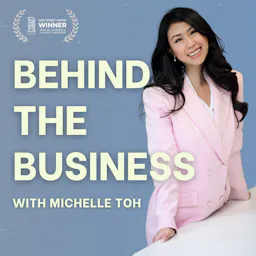
Coffee Meets Bagel co-founder on building the 'anti-Tinder' and turning down Mark Cuban
1h 14m 12s
Roomie, one of three sisters who co-founded Coffee Meets Bagel, launched the dating app in 2012 to address the frustration of online dating apps that prioritize casual connections over serious relationships. Inspired by personal experiences and observations of her friends’ struggles, the sisters developed a unique model offering one curated match per day—designed to help users find meaningful, long-term partnerships. The platform quickly gained traction, especially among Asian Americans, who value efficiency and serious relationships, making up 40% of U.S. users. A pivotal moment came when sudden employee departures revealed deep flaws in leadership, including a lack of transparency and employee trust. This prompted a cultural transformation focused on candor, vulnerability, and better decision-making processes. Roomie has since led the company through strategic growth, including expansion into Asia, where the app now serves as a key player due to low market penetration and strong demand for serious dating options. The company has also invested in features to combat ghosting and improve user experience, including AI-powered conversation tools and auto-chat extensions. Despite early scrutiny and a notable "no" to a $30 million Shark Tank offer, Coffee Meets Bagel has thrived through user-centric design and sustainable growth. Roomie emphasizes energy management and flexible work models—like a four-day workweek and distributed teams—as essential to long-term leadership, proving that success in the startup world requires not just vision, but resilience, self-awareness, and sustainable values.
Imagine setting your makeup, then forgetting it's even theirs. Meet new groupie setting mist from Mavily New York. Gel to mist technology locks in your look for up to 24 hours, with flexible all-day comfy grip. No tightness. No stickiness. No residue. Just plump, dewy hydrated skin that still feels like your skin. Try new groupie setting mist from Mavily New York. Maybe it's Mavilyne. The business was great, we're doubling every year and sort of like you're in like nothing is stopping us mode and I've made some series of in hindsight not so great decisions that my employees were not happy with and totally by surprise a lot of them decided to leave the company. At the same time. Yeah, and I've never had employee turnover until that point. And so it was a real eye-opening moment for me and I really had to reflect okay what happened, like what have I done? Welcome to Behind the Business, a show about the people behind top consumer brands in emerging as ruptures and how they push through to make the most about work and life each day. I'm Michelle Toe, a journalist most recently with CNN. Today I'm here with a room com, one of three Korean sisters who back in 2012 were fed up with how looking for love online often felt dejecting and demoralizing, especially in their view for women. Another answer to create a new dating app called coffee meets bagel. Now from the start it build itself as a serious dating app, boldly calling the platform the anti-tinder. This meant that instead of giving users AC of endless swipes to go through, it sent them just one curated match each day. The idea was hatched while a room was studying at Harvard Business School and she later enlisted Twin Sister Da-Woon and Elder Sister Sue to give up their high-paying jobs to come along for the ride. Together they've turned it into a household name. Coffee meets bagel is now one of the top dating apps globally. It's set up over 200 million matches in more than 10 million dates around the world. The app is so prolific that a room is often invited to the weddings of users who matched on coffee meets bagel and at one point even officiated the wedding of a couple who met on the app. So I will tell you, your app has helped several of my friends find their life partners and now get married. So on their behalf I will start off by thanking you. Yeah, that's the best part about this job hearing these stories. Well, it's actually really interesting because I learned recently that this is actually pretty much the norm for coffee meets bagel users. 91% of your users say they're looking for serious relationships, is that right? That's absolutely right. So we're dating app for singles who are ready for something serious and from the very beginning this is why we highly focused on curating limited number of matches so people don't have to waste so much time on others who are not looking for the same thing. And people who are looking for long-term partners do not want to waste time on people who don't have the same life goals as they do. So we are highly focused on helping those people. How have you managed though to curate this community and keep it mostly to intentional data and not just the people who are looking for hookups? You know, we do that in sort of multiple fronts so number one, we're very clear in our message about who this platform is intended for. It's funny because we also did a campaign a while back that, you know, if you, we asked users from the very beginning, okay, what is your intention of using coffee meets bagel? And if your goal is finding a long-term partner, we make that clear, yes, you are at the right place and if you're not ready for something serious, we also welcome you, but we all let them know, hey, maybe there are also better apps that you can use such as Tinder. So we're very clear about, okay, who this app is for and what the community is looking for. So that is why we attract those people who are looking for something serious. And the second thing, of course, is we do a lot of things on the product side, whether it's the algorithm or the features to also reinforce the intention of our users. So it's pretty unorthodox, right? Because you're being very clear about, you know, hey, like feel free to go someplace else. But I imagine for you, it's also about making sure you're giving them the best user experience so that everyone is aligned. Yeah, yeah, you have to be very clear about who you are going after and who you are serving because we can't be servicing everyone, you know, every single is out there. Yes, just to provide some context, you were born and raised in South Korea before moving to Hawaii as a teenager, along with your sisters. But this was without your parents, that must have been a really formative experience. Yeah, I mean, it was actually kind of crazy because now that I have my own children, I'm kind of thinking like, how do my parents like decide to actually do that because I don't think I could actually do that to my kids, but it was somewhat of a crazy experience. And I think a couple of things that I learned through that experience and of course, number one, like my sisters and I became super tight. And so, you know, it was kind of almost like no brainer that we started working together. And the second thing is like, it almost forces you to grow up, right, and be independent and be responsible. And I also knew, you know, we were high school students back then, like what my parents had to go through to give us that opportunity. It was my dad's dream to be able to study in the U.S. And so knowing that, you know, a lot of people asked, oh, did you guys party every day? Like, no, those super vision, how did you guys do it? But no, we were very responsible and we wanted to make sure the sacrifice they made. You know, it became worth those sacrifice, yeah. Yeah, how old were you exactly when you moved? I was 13 and my older sister was 15. And in Hawaii, actually, when if your parents are divorced, which my parents were, actually, you could get a driver's license at 15, not 16. And so as soon as we got there, my sister got her driver's license and she would like drive us to school and grocery shopping. I mean, she had a lot of responsibility, yeah, that's what we did for four years in Hawaii. Well, you've been really open about the fact a room that your father made a lot of sacrifices to send you and your sisters to the U.S., to which I can very much relate. How did that shape your sense of drive? Did you, from the start, feel a sense of pressure to improwd? Yeah, this is such an interesting question because I think it's like a double-edged dashboard, right, because in one sense, you know what your parents had to go through to give you that opportunity. So there is a tremendous sense of responsibility and pressure to be successful, you know, in a traditional sense. And that's what I did. You know, you set goals and you strive and you get there and you build your resume, etc. On the other hand, I think over time, what that does is after you get to a certain level, like I always had this fear of my biggest fear, actually, it was like being ordinary because my father would always say, "Hey, you're going to do extraordinary things." And that actually landed on me as tremendous pressure. So there's always like this fear running behind your head, okay, I don't want to be ordinary, I don't want to be an ordinary person, I need to do extraordinary things. And so I think to a certain degree, it helps you get to some level of success, but after that, I think it can actually work counterproductively as well. And so at some point, as I gained experience, it was also sort of a mind shift that I had to do, "Hey, actually, this is not helping me, like being so critical of myself and always striving and always driving." And so that's one thing that I really had to learn, like, reprogram myself, and that took a lot of coaching and, of course, self-care and being more aware of how I'm thinking about myself and how I approach things. And how you approach things as a leader now, I am not sure. Yeah, absolutely, yeah, yeah. Because all these assumptions, I think, impacts also where you lead, right, because I grow up actually watching my dad, and this is typically what you see on media, right? This charismatic, and he was, my dad was, a very tough leader who somewhat rules by fear. And so I think that's kind of how I started my leadership journey. And I don't think that came naturally to me, but I felt like, "Okay, that's what I had to do." And so I think, at the beginning of my career, if you were to ask my employees like, "How?"
I was as a leader. I think a lot of people would have said, hey, she's a little bit scary. Yeah, she's tough. Yeah, she's tough. And I mean, also the fact that it doesn't help that in Silicon Valley, that is sort of the norm of how you lead. And I mean, interesting thing is when I first moved to the Valley, of course, I'm sort of seeking advice, especially around fundraising and talking to VCs, et cetera. And the first advice that I got, I still remember, was, hey, you're too humble. Yeah, you need to be less humble. You need to brag more and just exaggerate more, et cetera, et cetera, which I totally didn't feel myself doing that. But I had to play that part. I felt like I had to play that part. And as I gained experience as a leader, and this sort of a lot of coaching, self-work, I realized, you know what? Actually, that is not my style. It is not authentic to me. And I think when I finally became comfortable with sort of fully accepting my leadership style, sort of more softer style, being authentic, being vulnerable, being real and being truthful, that's I think when I started really shining as a leader. And I think that's also why if you look at sort of our glass store, any stats, or if you talk to any of my employees, like culture, and the kind of team that I've created, that's one of the biggest assets that we have. And when you say all you wanted to before was to be ordinary, because there was a lot of pressure to be extraordinary, was it because you felt like you were often perhaps a bit too harsh on yourself or that kind of thing, were you very hard on yourself when you were at school or in the workplace? Oh, absolutely, absolutely. Yeah, and I think a lot of, especially Asian Americans, maybe also children of immigrants can be late to that, my guess is, yeah, just kind of driving yourself always to do the next thing. And then you realize when you get to the next thing, it's like, oh, that's great for a second. And then it's anti-climactic, and you're looking at the next thing and looking at the next thing, right? As we never ends, you never ends. And then at some point, you find yourself completely unhappy. And forgetting that the journey is really what counts, right? I think it took me a long time of being unhappy and somewhat desperate, actually, to actually be able to make that shift in perspective. Just to continue along the kind of timeline, what point did you know that you wanted to become a founder? I think I knew that actually pretty early on. So I was one of those kids when you asked, what do you want to be when you grow up? I didn't know. I actually didn't know what I wanted to be. But I think there were always desires to do something independent, having autonomy, and creating something out of nothing. That's what my dad talked about a lot. Being entrepreneur, one of the greatest thing is that you get to create something your legacy out of nothing. And so I didn't know what I wanted to build or what kind of business I wanted to have. But I think I had an inkling that I wanted to be a founder from very early on. Maybe I couldn't articulate it. Yeah, and it was very natural for me to actually start it with my sisters because of how tight we have become. Still waiting in line? Again? That's time you will never get back. Save time and money with stamps.com. Over 4 million businesses have skipped the line with stamps.com. Join them to save up to 90% of carrier rates from your computer or phone right now. Print posted for certified mail, registered mail, and packages in seconds. Then schedule a pick up right from your home or office. For a limited time, go to stamps.com and use code podcast for a free welcome gift. Taxes and fees apply. Meet TV is America's number one classic TV entertainment network. Erring over 60 of the greatest TV series every week. Now, meet TV presents The Golden Girls of Summer. Show casing the best of The Golden Girls. Watch Dorothy, Blanche, Rose, and Sophia. Weeknights on meet TV at 10 p.m. 9th Central. Log on to meettv.com now to find out where to watch meet TV free over the air. And on cable, satellite, and select streaming services. Meet TV is memorable entertainment television. Yes, well, I was going to ask you actually-- you later went on to Harvard Business School. So by the way, far from ordinary things. So I think check on that part, dad. But that's where I understand you got the idea to start coffee meets bagel. Tell us a bit more about that light bulb moment. Because from what I understand, did you already have a partner? So it wasn't out of personal need. Yeah, so I was dating my current husband. And there were a couple of things I really drove was to founding of coffee meets bagel. So like you mentioned, I was studying at Harvard Business School and took a class called competing through social networks. And we looked at networks that foster existing relationships, as well as networks that foster new relationships. And as part of that ladder networks, we also looked at dating companies. And what I realized was, OK, first of all, the market is big and growing. The mobile was still growing. And so there was plenty of opportunity. And just globally, not even just in the US, especially internationally, the young population, the way that we are just becoming so busy every day, they really could leverage technology to meet new people. And on the personal side, even though I was already in a relationship, I saw my sisters, as well as plenty of my especially girlfriends, who are amazing in so many ways, having a really hard time finding and going on dates with the potential partners that they were happy with. And they were putting time and effort, right? They were on dating apps, et cetera, because there were plenty of dating apps back then, too. And so-- but it was really hard for them to actually decide for OK, which of these people are actually worth spending time on, because they would get so many messages and so many interests, et cetera, right? So then the light bulb moment came when my older sister and I were in her apartment in New York. And we were just talking about potential ideas, et cetera. And then we were looking at, at the time, sort of curated e-commerce experience was really coming to light. And we thought, you know what? What if we take a similar approach and curate the immediate number of people, we started with one, at a regular time every day. And we picked noon because it's a sort of a break time. People are taking lunch from work, et cetera. And so we decided, you know what? Let's actually build an MVP. I don't know anything about building a platform, but we can find somebody. And so we hired somebody to design something pretty rudimentary website, and that was the beginning of Confirmance Bagel. And I understand that that first iteration, you were initially testing out with friends and family? Yeah, it was mostly friends. I just love this stage of building a company because it's all about just not worrying about anything else except building the right product. And so what we did was we recruited about 30 friends, single friends, and basically asked them, OK, we are going to have you use the product for a week and let us know what you think. And what we noticed, at that time, we were making all the matches manually. I was doing the spreadsheet, Excel, thing, and every day at noon, I would just match. And they would be connected via text message, actually, because we didn't, of course, have a app. And the feedback was overwhelmingly positive. The strong indicator to me at the time that, oh, wow, there's something here, is vast majority of my friends were actually using it every day. Because actually having an app or any product and getting users to use it consistently is hard. So they're not going to do it unless they find it intriguing or it really serves their need, et cetera. And so I saw that they were actually using it every day. And then I called every one of them after that week, a house experience, and they loved it. And so that's when Sue and I decided, OK, there's something here. Let's build it up. What were you basing it on at the time? It's so fascinating to hear that you were the one manually behind the field playing matchmaking, right? Yeah, yeah, yeah. This was pre-algorithm, pre-everything, right? It was a website that you had people manually just put in their details, and then you looked at it and said, look, here's what I think would work. Yeah, yeah, yeah. Honestly, at that time, because I only had 30 people, there wasn't really bases to go by because I just have to match. But I mean, the good thing is because they're sort of among my friends and Sue's friends, there are similarities, right, in the close network of people that we have. So I think they found it interesting enough. So we didn't need to have an advanced algorithm at that time. Right, it's not like you were like this is going to be. your future husband. - Exactly, exactly, exactly, yeah. - Right, that's so interesting. For those who don't know, what is behind the name, coffee means bagel? - Because we are asking our data to come in every day at noon. We wanted to have the name represent something that they do on a regular basis every day, basically. And so we thought about, okay, coffee break. Like people drink coffee almost every day. And so coffee comes from that. And then we were trying to find something complimentary to coffee. And of course, like people think doughnut or whatever. And then we chose bagel because it goes well with coffee as well as we started in New York City. So it's kind of honor of the city itself. - It sounds like it was firstly your idea. And did you kind of have to convince Sue and Da Woon to, you know, 'cause they were working jobs as well. - Yeah, you know, it was a good timing for me 'cause I had just graduated. And basically I gave myself a year to, you know, find something product market fit. And if I don't, you know, actually, if nothing takes off after a year, my plan was to get a job. And then of course, my older sister Sue and Da Woon they had their full time jobs. And so I spent most of the time, you know, during the day working on this thing. And then Sue would actually help out after her job, a day time job. And so that sort of model, when I think for about six months, and when we started seeing the product really pick up, and then we started getting actually inquiries from our users if we were raising money. And that's when I think Da Woon, she was actually at a private equity arm of JPMorgan in Hong Kong at the time. Decided, you know what? I'm gonna fly in and do this full time. Yeah, so the short answer to your question is, they didn't need convincing. They convinced themselves to join this full time. Oh, that's so funny. Wow, it's pretty remarkable though, right? To give up, you know, a stable income and to take that leap of faith. It isn't every day that you come across three sisters who started a tech startup together and have more importantly kept that partnership going for more than 10 years. I know. What has that been like, you know, working with family, not always easy? I gave a lot of credit to my dad about us quitting, you know, at least Sue and down quitting their job and joining because when me sort of floated that idea, I think especially Asian American parents, being a little bit more conservative, he could have been like, don't do that, you know, you're quitting a nice job, but he wasn't like that at all. He's, I mean, being an entrepreneur himself, he basically told us, go do it and whatever support you need to the extent I can, I will help you guys. So that really gave us the comfort and a confidence to dive in. And then to go back to your original question, it was not always easy, especially at the beginning because you feel like you have to have control over everything. And I, of course, we all have different opinions. So it was, it was a lot of drama. It was a lot of drama, a lot of crying. Oh my God, I still remember a lot of those conversations. And at some point, we said, you know what, we need help. So we actually brought in, because downwind to GSB, one of the professors from GSB who specializes in family business. So we had several sessions with her around just understanding each other. I mean, this was really the beginning of our sort of leadership work. And so understanding each other, what roles and responsibilities do we want to have and having that clear boundary of who is a decision maker within those roles and responsibilities. And so it took a lot of time and effort to be able to work as a family. It is definitely possible, yeah. But you got to put in the effort. Because you get to know each other probably quite differently, right? It's obviously in a typical business meeting, you may not show them if you've got a tears coming on, right? Like you might go outside, whereas if you're with your sisters that you've known your whole lives, you're kind of maybe feeling a bit more free to kind of say what you really think. From almost the beginning when we started having employees, even though it was a small team, we started doing sort of anonymous feedback surveys. And I remember one of the surveys, response that I got in terms of like, oh, what can we do better, et cetera? It's like one employee said, OK, sisters, please stop bickering because it makes me uncomfortable, yeah. So we definitely bickered, and they got better over time. That is funny. And for those who don't know, by the way, GSB is Stanford's business school. So you brought in someone. It sounds almost like they played the role of partly family therapists, partly executive coach, startling that line. And I'm a big fan of working with professionals, coaches, therapists, et cetera, to get help. You really need all the support you can get as a founder, because just the roller coaster ride never stops. It's refreshing to hear that, by the way, because I think especially in our Asian community, people don't often speak about that very candidly. If they were going and getting help, they might not want to be so open about it. So thank you for sharing that. You have become a mom during your tenure as CEO, speaking of family. That can be a lot on one's plate. How have you adapted to life as a working mother and has it shifted the way you lead in the workplace? Absolutely, yeah, absolutely. I think before I became a mom, of course, I actually think I had bias against if I'm being really honest, bias against working moms. Because the typical expectation in the Valley tech companies is like, you got to put everything in, right? You got to put the hours, you got to live at work. You got to hang out, socialize, like your life is work, basically, yeah. And at the beginning, just from the demographics of employees we had and myself, that's what we did. That's what we did. That's what the culture was. And when I became a mom, I realized, oh, my God, a lot of things that I was doing at the company such as having late meetings and having happy hours every Friday, whatever, was not very probably convenient for, at the time, we only had working dads, but working dads, right? And so when you are, you become, and you are in that position, that's when you start to understand what it takes. And this is another topic, because this is why diversity is so important that work, because you just don't understand until you're in that position. And when I became a mom, it was really hard. Yeah, it was really hard. And that's when I became, I think, almost desperate for help, because I really felt like, OK, I can't do it at all. It's either my happiness or a coffee mitzvangel. I have to make a choice. And I started working with my first coach, who actually introduced me to love-kind meta-meditation at the time. And until then, I was like, what is meditation, what is self-love? I didn't know any of this. But because I was so unhappy, losing sleep, becoming anxious, et cetera, I started diving into that. I think that's when my whole self-awareness journey started. And of course, that impacts your leadership style and your perspective in how you approach things. So just to be clear, you're saying that when before you became a mother yourself, you were maybe secretly you're just freely admitting, perhaps a bit doubtful that working moms could give the same amount, perhaps, than someone who didn't have kids. Yes. But now that you are in that position yourself, you see how much it takes to even be able to do both at all. Yeah, and also just how much more efficient and effective I've personally became, because you don't have all the time that you used to have before kids. And so you have to be really focused and great at time management, being productive. I mean, so many of our hours are wasted on unproductive, just busy work. And so what is that thing that really matters to the company? There's only a few things really that has enough leverage to make a big difference to the company. And so learning what those are. And also just giving people more flexibility. When people are happy with the way they can work that fit into their lifestyle, and I see it, there is so much more productive. And so those differences. I've heard that, by the way, about efficiency. It's like that saying, if you want to get something done, give it to a busy mom. Oh, yeah. Because they know how to juggle. So would you say looking back now, then, a room, that assumption that you previously had, you feel like it was incorrect?
I'm totally completely incorrect, and I am a huge fan of hiring working moms. And also even just for not even full-time jobs only, right? Part-time flexible jobs, I think there's so much talents out there that we can leverage. This is not about, okay, let's do nice things. This is about actually, let's produce better results. And we got so much talent among working, not working, but generally females, mom, pool that I think the companies can totally take advantage of. Yeah, it'd be more flexible. Let's talk more about the takeoff phase of coffee meets bagel. Can you walk us through how you got the business off the ground? You mentioned that it started out with testing, with early users. You then had some folks who liked what you had done and reached out to you to see if you needed funding. How did it go from inception to development to then going really big with it? I think a lot of people, when they see companies, they think, "Oh, it happened overnight." But that's not the full story. It happens over time. And so we weren't even thinking about fundraising until we started getting questions from our users like, "Hey, are you raising? I'm an angel investor, etc." And so that's when we thought, okay, this is a sign that perhaps maybe we should seek external funding to really build a team and grow this out. And so down and I made a trip at that time to San Francisco, we met a bunch of investors here and was lucky enough to rate seed round. And so we moved out to San Francisco and that was really the beginning of, I guess, building a proper company, yeah. Right. I am so curious about the fundraising game and your journey as a woman in tech. A fellow HBS alum who you might know is Tacha founder Vicky Ty. She's previously stated that even though I went to Harvard Business School, started off in finance, had multiple acquisition offers within the first month of launching, had a profitable business with brand awareness and a product and a CPG marketing background. I could not raise a dollar for the life of me. Now a room, you and your team have successfully raised over 20 million dollars. So clearly this doesn't fully apply to you. But I wondered, could you relate to this at all, especially starting out? Yeah, yeah. And you know, what you have to realize is, especially in the traditional venture capital funding, there's sort of the hard mentality that happens. So at some point maybe the consumer sector is like everything that's where all the money is going. And then the next year it's totally out of flavor. And so this is really not, first of all knowing this may not be about your business and yourself. It's really about sort of macro trend also and whatever they're having to improve and go through the firms themselves. And then the other thing is, this is a highly competitive process, right? You know, they're getting pitched hundreds of companies all the time. They don't have the time really to properly like vet out, especially the early stage companies. And so what happens is a lot of VCs who are of course run by men. They tend to make unconsciously, I don't believe all these people are making consciously BIOS decision, but unconsciously, if you don't have a time to really get to know a business and look at all the, especially when there's not much data, right? And you have to be pretty quick at making those like few investments that you make in a year. Of course you're going to have BIOS towards things that seem familiar to you, founders who sort of talk and think like you, so of course. So it's not, I don't blame them, it's more just a systematic thing that's happening. And this is why we need more representation in the investing side of more females. And so yeah, I can totally relate to that. And that's exactly how I felt too. And after my seed round, which actually was relatively quick, the fundraising was very difficult. And that's when I started really reaching out, okay, what kind of networks can I use? Female networks. I mean, I think it's getting better by the day, right? We have more females investing and more female focused also investment, philosophy, etc. And so really leveraging those has been helpful. In 2024, pitch book data shows that the share of venture funding by female founders actually had its lowest level in five years, which was already, as you just pointed to, widely known to long be an issue. I mean, I've been covering this for so many years. I was going to ask what you think needs to be done to address this going forward. You've just kind of pointed to the need for more representation. Is there anything else that you think, short of getting more women in those chairs that would be helpful to founders and female founders? I really don't want to put this all on male investors because there are so many of them that are actually trying to make change too. It also happens on our side too. I think for me, at least I can't speak for every other female, when I'm actually pitching to male, I have my own bias about pitching to older male. And so I think unconsciously, I also put myself sort of in a weaker position. And so mentally, I have to really prepare myself, okay, like we are peer-to-peer. And the other thing that's really been game-changing for me is, and this is why I think, especially if you're minority pitching, I always advise this, is because it takes a longer time for us to actually get their attention and for them to get it, you got to build that relationship. And one really important lesson I learned is, you really don't want this to be a pitch. You really want this to be, hey, I'm building this thing, what do you think? Let's give me some advice. Who should I talk to, et cetera? Build that relationship. And over time, have them sort of feel vested and ask you, okay, like, hey, it looks like it's about time that you raise some more funding. I think that is such a much smoother way for minorities and especially females to raise. So he's like, give me one hour of your time and then you make a pitch. Shipping, building, admin, payroll, marketing. You're managing all the things, so why waste time sending important documents the old fashioned way? Mail and ship when you want, how you want, with stamps.com. Print postage on demand 24/7 and schedule pickups from your office or home. Save up to 90% with automated rate shopping. That's why over 1 million small businesses trust stamps.com. Go to stamps.com and use code podcast to try stamps.com risk-free for 60 days. A room you've also said that coffee meets bagel has been profitable since 2020 and highly profitable at that. We so often hear of tech firms that struggle to make money. What did it take to really get to this point? It's a strategic choice, I believe. And so for us, I had the advantage of, of course, being in a dating space. Our business model is somewhat proven. We know people are willing to pay for, if you look at the market. And so it was really a matter of when do we want to be profitable and how much? That comes, it's a strategic choice because that potentially comes at the cost of growth. I think back in early 2020s when the economy was better, it was all about, we don't care about margin. And then soon, in about 2020 when the economy started shifting, everybody turned into like, that's the profit, profit, profit, forget the growth, you have to be sustainable. And so it's really a choice that you make as a founder, how you want to grow your company. I think a lot of us assume, especially in the tech world, you got to grow and not think about profit from the beginning, but that's a choice you make. Yes, I remember in 2020, early days of COVID, there was an open letter that went viral. Do you know what I'm talking about? From Sequoia Capital, I was telling all their portfolio companies, forget what we said before, please make money because we're entering the winter for startups. And I cannot tell you Michelle, being unprofitable versus profitable is an identity difference for on your psyche and also just the things that you can do, the freedom it gives you. And so, again, it's a choice, having been there unprofitable and profitable, it is a much better place to be. What do you mean by that? Because before you're profitable, you're in a survival mode, right, because there's always a time bomb ticking. And I cannot tell you how many times I felt like, oh my god, we're going to run out of money. And then of course, like the, you know, you start thinking about all the worst case scenarios. And so to some extent, it could really push you, but in another way, it could make you make choices out of fear, which is not healthy, nor will you make the best choices. [BLANK_AUDIO]
Because when you have this luxury of being profitable, there's nothing you have to do, right? Because you don't need external help, source of funding. So completely changes, I think, your state of mind. And even for investors, I think humans are so smart, they can smell it. When you're desperate and you need something, versus when you don't need it and you can always walk away, I think it's a night and day difference. >> Right, and when you say it was a choice to become profitable, are you referring to the fact that you were probably spending a lot to obviously chase growth at the time? >> Yeah. >> And there was a point where you decided to turn on that. >> Yeah, yeah, and it came, it was a difficult choice, right? Because whether it's marketing or workforce, I had to make conscious choice to reduce that. And we had to make some personal changes, cost reduction, layoffs. So it's not easy, it was not easy going from growth mode to profit mode. But I think it was, I just knew knowing the macro situation, as well as how I wanted to lead the company in a more sustainable way. I just knew that it was the right thing to do at the right time. >> What have been some of the lowest moments? There's so many peaks and valleys throughout a founder's journey, right? I imagine obviously like you just touched on the difficult decision to have to do cost reductions and restructuring have those been among some of the toughest decisions you've had to make. >> There's so many, there's so many, oh my God, just layoffs are always the hardest. But my first actually sort of existential crisis I think come to my mind and this was, this didn't have to do with layoffs that I had to make, it actually had to do with massive resignation that happened that totally took me by surprise. So this was around like 2018-19 and the business was great, we're doubling every year and sort of like you're in like nothing is stopping us mode. And I've made some series of, in hindsight, not so great decisions that my employees were not happy with and totally by surprise, lot of them decided to leave the company at the same time. Yeah, I've never had employee turnover until that point. And so it was a real eye opening moment for me and I really had to reflect, okay, what happened, like what have I done and I thought we had the best culture, I thought I knew the employees, etc. And so I spoke to pretty much everybody at the company like what happened, including people who were leaving and what happened most because I sort of had this thing in my mind that I want to do this. I rushed into making that decision and I thought I had the buy-ins of my team, they didn't agree, but they sort of relatively went with it. And it turned out, you know, a particular thing that we were sort of betting on didn't result in what we were hoping for. And so they somewhat became demoralized and decided, okay, we're going to leave. So it was sort of series of things building up to that point. And that was when I really had to reflect, okay, like one of my cultural values was fearless candor. And like, did I actually foster the right environment for people to be candid? And so I worked with, again, leadership coaches, release, self-reflecting, etc. And that's when I actually brought this whole philosophy of what I absolutely, it's like it's become a Bible at our company called Five Dismonctions of a Team, which is all about basing your entire culture on trust. And so that comes to my mind as a month of a turning point for my leadership, sort of style, as well as, I guess, a little point in our company history. It sounds like that was a wake-up call. Yeah, yeah, yeah, it was a wake-up call. Do you mind my asking and feel free to share as much as you're comfortable with? But, you know, what really was the specific decision that led to that, do you think? And how many employees was it that ended up, you know, you ended up saying goodbye to you at that point? So it was actually, I don't even remember at this point what exact feature it was, but it was about this feature. And I wanted to launch that, like, in Q4, Post-Christmas/New Year is our biggest season for dating industry. Because this is when everybody's like, okay, New Year, New Me, I want to find a new relationship. And so I wanted to get this particular feature out, and I thought it was going to be amazing, of course. Roached everybody into building this new thing. So people had to work over time and, you know, basically do, you know, a lot of sort of, bend over back to get this done. And the holidays. Yeah. And it didn't do what I thought it was going to do. It didn't take off the way that you explained it. Yeah, exactly, exactly. So then you feel like maybe people were like, what was all that for, like, you know, busted our butts to make it happen? Yeah, yeah, yeah. And didn't even, exactly. Right. Yeah, and it was really hard because over like a month period, actually, I think about maybe 15% of our employees don't remember exactly how many people sort of trickled in over the course of like three to four weeks with resignation. Yeah, and did they say it was over that our room specifically or was it, you know, maybe various things going on? I'm sure it was, you know, not just that, but maybe that was what sort of tipped people over. And when I had exit interviews, yeah, basically a lot of it was centered around, hey, you know, we didn't think this was the right thing to do. And we didn't have the really the right opportunity to talk about this. You just like kind of bulldoze over and made those decisions, et cetera. It's really refreshing to hear of, you know, a leader like you being so frank and honest about that. It sounds like you learned a lot from it, and you're taking steps to make sure that it wouldn't happen again. When you say that you've looked at your company culture now and kind of dug deeper, doesn't mean that you want to provide opportunities now for your staff to be able to raise their hand and say, Hey, look, I don't know if this is the right call here. Is that the kind of thing you mean? Yeah, yeah, and the thing is, I think I didn't realize is when a leader is asking you, okay, like, what do you guys think about this? Just asking that isn't going to have your team give you honest and candid response. And I think my naive assumption was, well, I asked you that, and nobody said anything, so therefore it's fine. And so what we, how we train our managers is what we call mining for conflicts. And that is, we really, first of all, generally, I think people really have to trust each other and that's a hard, that's the takes time to be able to feel comfortable raising their, you know, candid opinion. But also the manager has to, so many times, I think we feel like we have to rush to a decision, but that actually ends up slowing things down because not everybody's fully bought in. And I'm not saying everybody has to agree, but there has to be, I agree to this agreement. So, and that happens when people have ample time and space to be able to say all the things that they want to say. And after that concluding, okay, I heard you, we consider pros and cons, et cetera, and we're still going with this direction. But that, you need to take time for that to take place. It sounds like that was actually a very valuable experience for you in the end. >> Absolutely. >> Yeah, you've had a lot of clear takeaways that you can apply going forward. >> Yeah, yeah, yeah. >> I'm curious as well, obviously you play in a very competitive market, right? Online dating, there are apps out there. How does coffee meets bagel differentiate itself from other apps like the Bumbles or the hinges of the world? >> Yeah, it is a very competitive world, and one of the things I tell my employees is we have to know what our competitors are doing. But we don't obsess about our competitors, we obsess about our customers. And knowing who your customers are, your core audience, I think is the first step to be able to differentiate. Because you cannot serve everyone out there. And the other thing that we found over time is that in particular in the US, we do very well among Asian Americans. And so strategically, we decided, you know what, we're going to double down on servicing Asian American singles. And we want to be the best dating app out there for Asian Americans looking for serious relationships. So you talked to a lot of them.
Why are you using coffee mitzvagol that we can double down on? And for particularly Asian Americans, I think this is somewhat in their culture. They value efficiency. There are certain things also they value, such as profession, education, basically similar values. And so it's funny, like one example of how we decided to service that customer-based better is like when you look at our profile. They describe us, "Oh, a CNB's profile looks more like a resume." And for some audience, that's a negative thing. I don't want to be on a dating app with a profile looking resume. For a lot of our core audience, for busy, and they want to get to the point and they know what they want, this is a huge plus. So we're sticking with that feature, for example. So you're making choices that are very unique to how to service your customers the best. One start that really stands out about coffee mitzvagol is that it has seen this remarkable success within the Asian American community, specifically. I believe this demographic makes up 40% of users for you in the U.S. Why do you think that is? And how have you tried to continue to hone in on catering to this community while still making clear this is an app welcome for everybody? This is not even just for Asian Americans, but we see this among Asian data in Asian Asia, because we're very growing fast over there too. I think culturally they really value serious relationship, like even at a pretty young age like college, for example. And so our value prop of focusing on serious relationship and also making what they're looking for, easy to filter, easy to see, et cetera, I think is primary reason why we've done so well with this audience, not just in the U.S, but in Asia too. Right. And that's happened fairly organically, it sounds like. And speaking of Asia, it's been a really bright spot for you as well. You've said that the region has emerged as the biggest source of growth for the company. To what do you attribute that and how are you investing to grow within Asia specifically now? Yeah. You look at the region, it's interesting, the population is younger, and online dating adoption is still significantly lower than the U.S. And so I think there is ample opportunity to grow, the market itself is just growing more. And the other thing is, if you look at regionally who are the players, Tinder is still the biggest player in the market, and after that is Tantan, which is basically a local app that pretty much mimics Tinder. And so the most popular few apps tend to be very casual. So I believe there is a pent up demand for a product that really caters to serious relationship, and that's why Cuffing Meets Bagel value proposition has really resonated so much in that region. And so probably four or five years ago also, we started organically seeing tremendous growth coming from that region, and we decided, okay, we're going to invest. And we have now our headquarters in Singapore, we have about over 30 employees, and our CMO is also based in Singapore. We have a general manager there, and we plan to really invest in the region to be the no more serious dating app. And what we realize is, okay, this momentum is very important. Another dating tip is once the chat opens, how quickly you respond makes a huge difference in whether you're going to actually go on a date or not. So we've looked at chats that somebody actually responded within three hours of opening, has a significantly better result than, let's say, chats where people didn't respond either parties for 24 hours. So we wanted to create some sort of momentum for people to have excuse to talk or exchange number, et cetera, which is why we have seven-day chat. What we learned in Asia is people need more time, they like to chat, because in the US it's like, okay, let's meet in person at this point, like the sooner or the better, they have to talk more. And so then we introduced auto extensions, so as long as one person is talking, we're going to keep auto-extending for another three days. Yeah. Well, talk about the roadmap for coffee meets bagel going forward. In what direction do you really hope to grow in the next few years, I think you have a few goals that you're hoping to hit. Yeah, so our three-year goal is to become the no more one dating app in A6, what we call A6 market in Asia, as well as among Asian Americans in the US. And I think from product perspective, you know, there are still a lot of challenges that singles will be happy to tell you about dating. And one of the big areas that we are thinking about is ghosting problem, yeah, ghosting problem and also safety. So our product team is working very hard at some really innovative and creative features to help that, that we, you may sort of hear from us in a few months. Shipping, building, admin, payroll, marketing, you're managing all the things. So why waste time sending important documents the old fashioned way? Can you say any more about the ghosting problem? Because that is actually a very big one that I hear a lot of my single friends talk about. Yeah, yeah. I mean, the ghosting problem, it's really funny because singles complain about ghosting problem, but they, they ghost all the time themselves, that's the thing. Because, you know, whatever, like you change your mind, et cetera, and especially if men, when we sort of watch how they're using the app, because they don't hear back, they don't get liked back, often enough, at least as often as a woman, they tend to play this numbers game, right? They like everybody. And then once they hear back, it's like, okay, let me now decide who I actually want to spend time talking about. So I think there's a variety of ways that we can solve this problem, whether it's upstream, you know, like, okay, we, we, I mean, one brute way to do this, like, we don't let you actually, you know, like as many people as you do, or how can we actually educate people? I mean, especially men, because they tend to be the one initially initiating conversation, make better conversation, because, I mean, and education actually makes a huge difference. The number of one initial text that we see is, hi. And when you say things like, hi, I, first of all, a lot of people are just like, I'm not even going to respond at this point, like you are not putting any effort in, but also it just makes it hard to respond, right? Well, what's wrong with high, though, just like, what's wrong with high? I mean, what else do you expect from the responsive people out there, you know, sometimes high is okay, too, no? Well, okay, so other person may not respond, or like likely we'll say, hi, back, and that it's like, that silence again, so, so, I mean, there are very little things that we can teach, educate singles, and that's the other thing that we believe, at Copenhagen Spago, our job goes beyond introduction, because in order for us to help people get into relationship, we must also educate our users, healthy dating behaviors. So to that point, I've heard of some apps that try to integrate generative AI to help you craft a good opening line, is that something that you guys are? I think AI has a huge place in terms of helping singles, not even just this specific problem, but of course, making better matches, et cetera, yeah, I think that's a very much of an opportunity area. Let's talk about outlook for a second. Dating apps have famously struggled on Wall Street in recent years. Having said that, would you ever consider taking coffee meets bagel public, or have you felt pressure, too? You know, I've been very lucky with my investors in terms of not putting pressure in one way or the other, and the way I think about, but you know, of course, I took external funding, so I think about how do I provide our investors with the liquidity opportunities. And now, I think nowadays, there's other ways, whether it's secondary and other things to provide liquidity, that I don't particularly think going public is the only way, but I think about it more in terms of, in order for us to hate our goal, what is the resource we need, and does going public actually help us get there faster versus some other route? Yeah. Well, one potential exit that could have been really interesting was the time you appeared on Shark Tank. This was almost exactly 10 years ago, and at the time Mark Cuban famously asked you and your sisters if you would accept $30 million for your business, which in theory would have been the largest offer in Shark Tank history.
Without even blinking a room, you straight up just said no, what made you so sure? Because we saw how much opportunity there is, and also what we can do to help singles. It was just so early in the company history to actually say, "Okay, we're done here." And so they didn't even have to think at that point that we have so much work cut out for us that we're not going to consider selling. I totally hear your point, but I also see the flip side where one might point out, "Well, this was at a time where it was really early on." You guys were making, I believe, hundreds of thousands of dollars in revenue at that point compared to, obviously, tens of millions. So, I guess looking back 10 years on, how do you reflect on that moment? You know, it's interesting when I talk to first-time, especially first-time founders, I think they have this idea of, "Okay, there are like checklist of things you have to do. You go create something, you raise money, et cetera, et cetera." And often, we think we have to do it all alone. I have to be the one to do it. But I've now seen different models, whether it's you partner with a strategic, you know, bigger company, or you get an investor from Shark Tank, et cetera, that I do think, you know, at that point, my thought was, "Okay, if I sell the company, that's it." But it could have just as well been, "Oh, I have this great investor now on board." Well, I guess it would be the owner on board who can actually help us fly, right? So, I think you don't have to think about your business growing in just one particular way. I think there are a lot of ways that you can in this help. I think it's a matter of, like, do you want to retain control of your company or not? I am curious, did you ever run into Mark Cuban again, or ever drop him a line to share how things were going? No, actually not. Maybe I should. Just to also continue that zoom out for a second, you have been at this for a while, 13 years to be exact. How do you keep going on days when, you know, maybe it feels just a bit too much, or it may not feel like that shiny new dream anymore? Yeah, I think this is a lot, a big thing for founders who's been at it for a long time. What it comes down to me is energy management. And this is a long journey, right? And you can't, it's not something like, "Okay, I'm going to work really hard and like, overwork and take a vacation and then come back." You'll burn out at that pace. It's really about knowing, when I assess, you know, what activities bring me more energy versus draining energy? Where I can actually focus my time, right, on activities that really give me energy and therefore probably I'm better at. And delegating things that drains my energy and building a team around that. And really working in a pace that works for you. So, you know, a couple of years ago, we actually implemented, for example, implemented four-day work week. A flexible work environment. We have completely distributed workforce in the US and Canada. And we have a hybrid model in Singapore. And I found that, honestly, if I hadn't made those arrangements, I think I would have completely burned out. Then I probably wouldn't have been able to continue. But I'm able to do that because I'm pacing myself. And ultimately, I think just knowing that this is a long-haul game. And also knowing that this doesn't make you less productive. It actually gives you more power to go on and go through the low and tough moments and not break down, etc. And so, it comes down to energy management for me. That's a really great answer, I think. What are some of the specifics just to follow up on things that you do to keep your energy up maybe on a day-to-day basis? And some of the things that you might hand off to preserve that? Yeah, so I'm a product person. So, what gives me energy is jamming with my team on product features, etc. And so, at our team right now, among my executive members, I don't have a chief product officer. That's basically me. Because that's what gives me energy, and I love, and I'm good at it. But the example of something that drains me is not that I'm not metrics oriented person I am, but having to deal with operational metrics and financials every day. That's just not my something that gives me energy. So, I have a really strategic and great CFO handling that. And I think auditing your calendar also on sort of, okay, when what activity actually did give me joy versus not? And constantly just reassessing that? What's the best use of your time? Exactly, yeah. The other thing is, you know, there are little things that I do that I think gives me first of energy, which I think is really important. And so, for example, just getting up early when everybody's sleeping and doing a little journaling or having like a really refreshing hot cup of tea, things like that, sort of a ceremonial things that gives me joy. I think that, believe it or not, it's a small thing, but it makes a big difference. Definitely, yeah. I think the morning routine is something I never tire of hearing of, right? Well, Arum, what is the end game for you here? We kind of touched on this briefly. You spoke about the secondary market. Does that mean that, you know, if we were to sit here again in five to ten years, would you want to have been acquired by then or, you know, what is the next step? Yeah, again, I think those are all means to an end, which end being for now the three-year goal that we have. So, I'm not attached to one particular path. In fact, I think that's kind of dangerous, like being attached to one path. I think, you know, allowing yourself to go with the flow and letting the opportunity arise, I think that's really how I want to approach. So, for example, if there's a great strategic partner that we can partner with who's going to enable us to get to that goal earlier, of course, I will consider it. I don't have to be running this on my own, for example, so I'm not married to that. Well, this brings me to a segment we are calling What It Takes, where an audience member and fellow entrepreneur gets to ask for advice and hear more on what it takes to get where you are. Today, Sachin, an e-commerce entrepreneur from London, has another fundraising question that kind of ties into what we spoke about earlier. He asks, "What is it like raising funds from investors as an Asian, where there hurdles you had to overcome, and what was your early stage strategy?" Yeah, I think we briefly touched on this. This is not even just about being Asian, but this is basically being minority, right? You could be woman, Asian, or old, or, you know, in Silicon Valley, being old is being a minority too. And so, early strategy, again, really knowing that you're going to have to do more convincing, because your audience might not get you right away. Or audiences bias towards people who may not talk and look like you, building that relationship, and so just, you know, constantly keeping them in the loop, asking for advice, what do you think, etc., naturally gets them more vested in your business, and you. And so, I think that's really, honestly, how I raised seed round two, right? Because they already knew the product, and they were asking me, "Hey, do you guys need to raise money?" And so, the relationship building, I think, is what I would recommend, especially for minority founders. Is there anything before you walk into that room, any rituals you'd like to do to kind of gear up for that mentally or anything like that? You know what? I don't even want to actually walk into that room per se anymore, because that already puts the dynamic, again, going back to who, you know, weaker or stronger position, going into, I find, personally, if I go into VC office, and sort of whatever the room, even if you're not pitching or whatever, it kind of puts you in that weaker mentality, again. And so, I would rather, I mean, at some point, you will have to do that, right? At some point, you're going to have to, like, pitch to all the partners and stuff, but at the very beginning, in order for you to get there, made it a coffee shop, keep it very casual, right? And so, those dynamics actually make a big difference. Yeah, so, kind of, don't necessarily have to go to their turf so early on, especially if you feel like it puts you on uneven footing. Yeah, exactly. That's a good tip. All right, I'm going to do a quick rapid fire round with your room. Don't overthink it. Just say whatever comes to mind. Ready? What is your favorite way to unwind after a long day? Probably sauna. Oh, yeah. That's a good one. Yeah. True or false. Does playing hard to get online actually work? [BLANK_AUDIO]
Podcast Summary
Key Points:
Coffee Meets Bagel was founded by three sisters after identifying a gap in the dating app market for serious relationships, leading to a curated, one-match-per-day model that emphasizes authenticity and intent.
The app has grown into a global success, with over 200 million matches and 10 million dates, driven by strong cultural alignment with users seeking long-term partnerships, especially among Asian Americans.
Founder Roomie faced a major leadership turning point when unexpected employee resignations revealed a lack of candid communication and poor decision-making, prompting a cultural overhaul centered on trust, transparency, and employee well-being.
Summary:
Roomie, one of three sisters who co-founded Coffee Meets Bagel, launched the dating app in 2012 to address the frustration of online dating apps that prioritize casual connections over serious relationships. Inspired by personal experiences and observations of her friends’ struggles, the sisters developed a unique model offering one curated match per day—designed to help users find meaningful, long-term partnerships. S.
users. A pivotal moment came when sudden employee departures revealed deep flaws in leadership, including a lack of transparency and employee trust. This prompted a cultural transformation focused on candor, vulnerability, and better decision-making processes.
Roomie has since led the company through strategic growth, including expansion into Asia, where the app now serves as a key player due to low market penetration and strong demand for serious dating options. The company has also invested in features to combat ghosting and improve user experience, including AI-powered conversation tools and auto-chat extensions. Despite early scrutiny and a notable "no" to a $30 million Shark Tank offer, Coffee Meets Bagel has thrived through user-centric design and sustainable growth.
Roomie emphasizes energy management and flexible work models—like a four-day workweek and distributed teams—as essential to long-term leadership, proving that success in the startup world requires not just vision, but resilience, self-awareness, and sustainable values.
FAQs
Coffee Meets Bagel focuses on serious relationships by offering one curated match per day, unlike apps with endless swipes. It also caters specifically to Asian Americans and emphasizes efficient, resume-like profiles that align with cultural values of professionalism and intentionality.
The idea began when Room Com and her sisters were studying at Harvard Business School and noticed the frustration of finding meaningful dates online. They created a simple, manually curated dating platform with one match per day at noon, which evolved into a full product after positive feedback from early users.
The founders wanted to create a platform for people seeking long-term partnerships, not casual connections. This focus helps users avoid wasting time on matches who don’t share their intentions, which is especially important for those prioritizing meaningful relationships.
Early challenges included employee turnover due to poor communication and rushed decisions, as well as the difficulty of balancing growth with profitability. These experiences led to a deeper commitment to transparent, candid company culture and better leadership practices.
The company has seen strong growth in Asia due to high demand for serious, intentional relationships in a market dominated by casual apps. It now has a headquarters in Singapore, a local team, and a strategy to become the leading dating app for Asian singles seeking long-term connections.
The company actively collects anonymous feedback and uses it to improve. Early feedback revealed that constant bickering among founders was uncomfortable for employees, leading to structured discussions and a stronger focus on trust, transparency, and team well-being.
Chat with AI
Loading...
Pro features
Go deeper with this episode
Unlock creator-grade tools that turn any transcript into show notes and subtitle files.
 PodcastTranscript AI