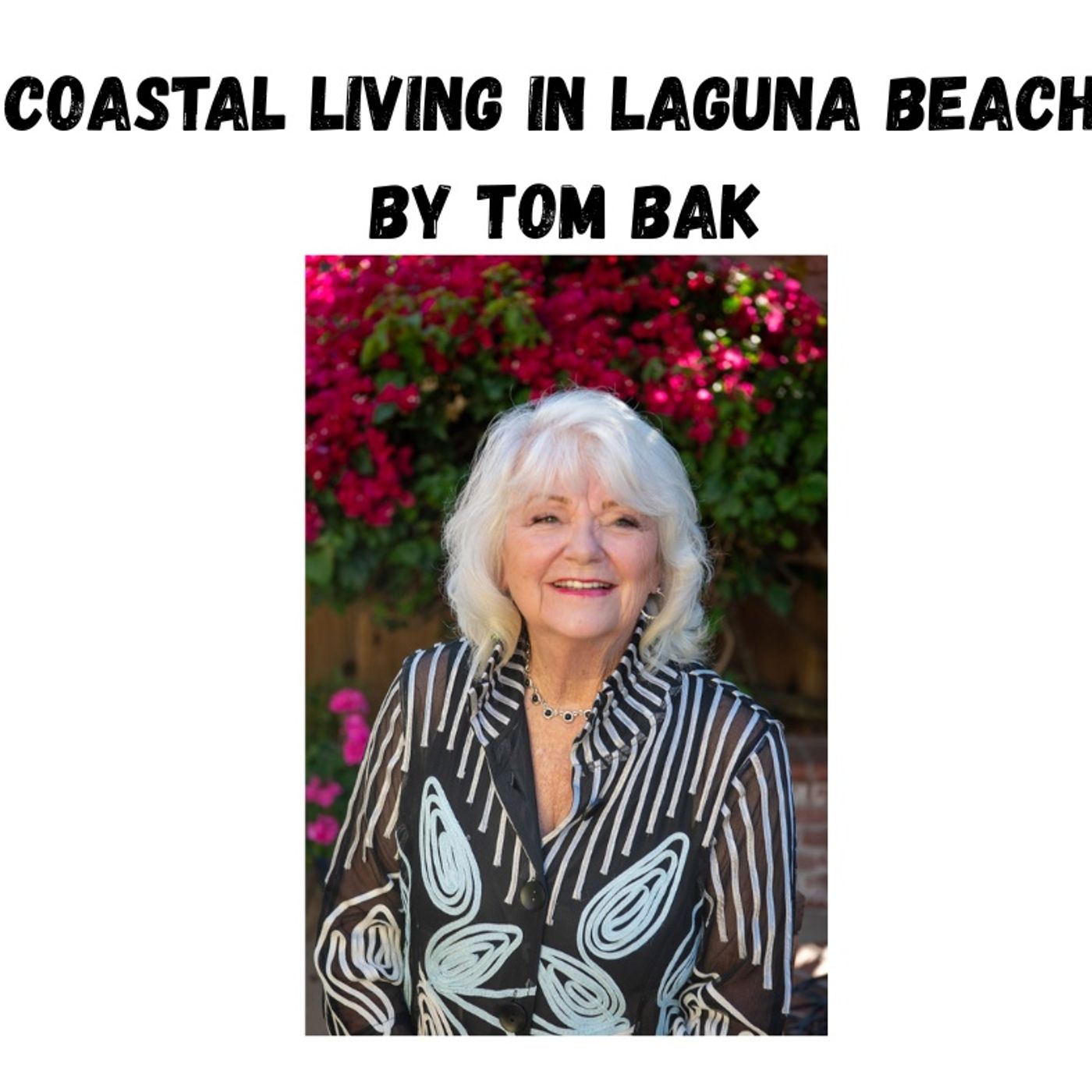
Coastal Living in Laguna Beach - Episode 45 - The Community Land Trust with Kris Thalman
from Coastal Living in Laguna Beach
55m 10s
The episode of “Coastal Living in Laguna Beach” features host Tom Bach interviewing Christine Thalman, president of the Laguna Beach Community Land Trust (LBCLT). The discussion highlights the trust’s first real estate transaction, which involved purchasing two parcels with 25 units—mostly studios and live-work spaces—to secure affordable housing for artists, who are integral to the city’s identity. Thalman emphasizes that the LBCLT is a volunteer-run nonprofit with a board of seasoned real estate professionals, ensuring expertise in acquisition, due diligence, and financial structuring. The trust distinguishes itself from other local organizations by focusing specifically on permanently affordable housing through land stewardship. This initiative tackles two critical challenges: the exodus of artists and essential workers due to high costs, and the state’s requirement for Laguna Beach to plan for 394 affordable housing units to retain local land-use authority. The city provided key funding, and the trust operates as a working board, with members contributing daily hours. Thalman notes the importance of this tool in preserving cultural diversity and meeting state goals, as market-rate housing targets are being met but affordable units lag. The transaction, completed in just six to eight months, exemplifies the city’s entrepreneurial and progressive spirit, offering a real, sustainable solution to housing affordability.
Good afternoon and welcome to another episode of Coastal Living in Laguna Beach. Our community-based talk show that brings you live up to date coverage of our unique, and eclectic and ever-evolving community. I'm Tom Bach, your host every week. The show that profiles prominent members of Laguna Beach who offer their perspective on what makes Laguna such a special place to live, work, and live. We air live every Friday from 1 to 2 p.m. on KXFM radio, 104.7, and our episodes are found on Spotify and the Coastal Living in Laguna Beach podcast by Tom Bach. Good afternoon everybody. Welcome to Coastal Living in Laguna Beach. Our regular Friday afternoon podcast. As many of you know, we have a pretty eclectic group of people that share what they're up to and provide some some accurate, hopefully, perspective and information regarding many subjects. But today, we're going to be pretty excited because what we're going to talk about is an example of the progressive, innovative, and forward-thinking nature of our city. We're going to talk all things. Laguna Beach Community Land Trust and just as a bit of background, we have successfully closed our first real-estate transaction in that land trust and many people have read about it. And you know, as always, people who may not be in the real estate business or even people who are in the real estate business don't always know the specifics of what the transaction entails. So we're going to talk a little bit about the land trust in general, how it's differentiated from other land and housing organizations. We're going to talk a little bit about the goals of the organization, how the Laguna Beach Community Land Trust sources its business, its deals, its land, its property, a little bit about how it's structured, how it's funded, the collaboration that exists between the land trust and various organizations, including the city of Laguna Beach. And then I'd like to maybe talk a little bit broader about some of the things that we could do from this. And so we're very fortunate today to be guided through this discussion with Christine Thalman who's been part and parcel with this organization since its inception. She serves as the president of the Laguna Beach Community Land Trust and it's great to have you here. Christine, I appreciate your presence. Thanks, Tom. You know, it's everything we see in the organization of how things are done in Laguna are a function of volunteerism and this city is so fortunate to have the contributions for people who volunteer and don't get paid. And this is a good example of some heavy lifting that was done. And so I thought it might be interesting. They Christine give us a little bit of a sense of her background and how she got involved in this because you know this is a real estate activity and anybody who's known as real estate knows that it's kind of like being a stage coach, driver here, to be up there but you got to get the horses aligned and running down the same direction. So there's a lots of different skill sets that are needed and I just offer up maybe Christine you could talk a little bit of your background and I know you're shy about doing so. So I'm gonna prod you if you don't come clean on this. Well thanks, Tom. My background actually started in hospitality when I was in my early 20s and decided to go back to school to get my degree and after that there was an opportunity working for the City of Anaheim doing there. It was a traffic management new job that the city had created and from there kind of moved up to the City Manager's office doing intergovernmental relations. So things kind of I wasn't on a career path. It's like there was opportunities that came up and that sounds interesting. I think I could do that. So ended up doing the government relations for about 15 years actually about 13 years the last two years of the city. I was working on the resort improvements around Disneyland. It was a $5 billion infrastructure improvement and all the the extension of the second gate. So after that there was an opportunity with KB home. They were starting a new position director of government relations for the Southern California area. So a friend of mine said I should apply. So I applied and got the job and started one of their first government relations divisions out of the LA office which I hear they're just moving to Arizona KB home. So did that for about four years and then for there there was an opportunity to run a nonprofit. The Building Industry Association for Orange County which is their largest chapter in California and I said can I I don't know if I can do that or not. So applied for the job and I think it was my background with city government and real estate seemed to meld well for the association and then so my task was to learn more about nonprofit management. So that's about 30 years in a couple of minutes. Yeah. So you obviously had some encouragement to take this role on with the land trust and we'll talk a little bit about some of the other land-oriented and focused trust but this specific one what what interested you in doing this because it is clearly something that's novel. There are certainly conservancies and we'll talk about other you know land foundations that have different purposes but you know we're we're in a you know affordability challenge as a state and certainly therefore as a city you know I think we've got like a 394 unit shortfall that we've got to make up and so this blends in and we'll talk about its you know purpose in a minute but what was the you know what attracted you what was like the holy cow I should do this. Well like you said there was a couple people in town that said oh this is you know this is a perfect job for you Chris I just had finished my sixth year on design review on the design review committee which is an intense committee it's a lot of a lot of hours a lot of volunteer hours and like I used to say you make friends and enemies every two weeks. So it's it's not an easy job but it it was a great learning experience and so after leading at this opportunity came up about the land trust and coincidentally I serve on the advisory board of Jamboree housing which is their psych a quasi it's not the governing board it's the advisory board and learned a little bit about land trust and what they can do and when I heard LaGuna was doing that I was very impressed because it has from what I learned my my primer I'm not an expert on that I'm still learning it was that it it had so much potential of not just affordable housing but for economic development services for the community and things that you couldn't do without this mechanism the land trust mechanism so and that it was going to be a non-profit so I knew how to run a non-profit and so I put my name in the ring and I was surprised because there was so many people that were so qualified a lot of there's so much talent in the city it's got it had to be so I mean it's obviously you're you've been chosen in here perfect for this spot I don't know you you have some real estate people so the first thing I want to do is talk about credibility and that comes from the people involved and you have real estate people
who have transactional experience. - Mm-hmm. - Uh, there's gotta be two or three maybe off the top of your head, you wanna highlight who it is. - Well, yeah, Jeff Randolph, number one, he's had extensive experience. Ed Salz, as well in acquisition and entitlement, he understands the environmental issues, acquisition issues, Cody Ingle has experienced in senior housing, a real estate managing nursing homes, all kinds of different facilities, Cindy Shopoff, Bill Shopoff, well-known, housing developer now has extended his reach, I think. Let's see. - So just for the audiences benefit, we have credibility, experience to be doing this. - Right, I really wanna make that point that this is not just a financial transaction that we're gonna talk about, how it's structured, et cetera, and what the purpose of it is, et cetera, et cetera. But we've got a team on this board that understands real estate, from everything from a location to evaluation, due diligence, how you actually transact, because the art of the deal is in the buying it right, and under the right condition and circumstances, and having the right seller work with you to make it a risk minimized deal or transaction. And I applaud the group that is on that board, because that gives me the comfort, that it was priced properly, underwritten properly, executed, transacted, and on a go-forward basis makes financial sense. - Right. - And I think there's any clarity that I personally wanted to hear was that, because that means the purpose we'll talk about, but the actual implementation, it's a real estate transaction, if you will, that has to have all these components, and we'll talk pretty extensively about the financial side of this, because the city of Lugona Beach was a primary contributor and enabler to make this happen, but there'll be a lot of heavy lifting going forward in terms of future donations, philanthropic activities, grants, et cetera, that will have the ongoing evergreen nature of this. But, you know, in any public organization that's involved in real estate, the what I've found is, you gotta have people that know what they're doing. - Absolutely. - And so I wanna just start off by saying, before we get into anything else, you got an A team, the people who are governing the governance team of this fund is a real estate experience team. - You know, our treasure, Catherine Burton Gray, has extensive experience, and she knew all the right questions to ask of the broker, things that others may not know, she knew, things that came up on due diligence, either Jeff Randolph or Ed Salz, asked those important questions. And so it gave, I think it gave everybody, a level of comfort. And one of the first things, I don't think any of the board members knew this in the beginning, that this is going to be a working board. There's no staff. So all of us are operating as a, when you say a working board, we are putting in hours every day. - Yeah. - So let me just emphasize this, 'cause if there's anything I wanna have people walk away from saying, I know who the Laguna Beach Committee land trust is, I understand their mission, but I believe in this, because we have an A team on the board, doing the heavy lifting, making the decisions that are really hard decisions to make, and those decisions can be in the due diligence phase. Are there proper utilities brought to the site? Is there environmental issues to the property? There are land use issues. What is legally the zoning on the property? What's my next door neighbors rights to my property, are there encumbrances that have gone back, this complicated thing. So I just wanted to, you brought people in the audience, probably go, Tom, man, you went heavy on the board. Well, that's what you're betting on. And it's called, in the real estate business, it's called sponsorship. And if you ask investors, what do they invest in? They invest in the sponsorship of the property transaction. And then they look at all the facts of the property, et cetera. Right, you bet on the people, their capability. So I just want to start off the show by saying, you know, you got the name, the land trust, the community land trust, and you got the people. Yeah. And now we'll dive in a little bit to maybe the mission. Okay. And I think that's an important part of this, because we have various organizations. And when I was thinking about this, I'm like, okay, we have the Laguna Beltway, we've got the Laguna Canyon Foundation. We got kind of like all this stuff that sometimes clutter's the mind a little bit. So just like we did with sponsorship, your board. Right. We get really clear the land trust that we're talking about. The Laguna Beach Community Land Trust is different than anybody else. That'd be the, you know, Laguna Beltway, Laguna Canyon Foundation, whatever other foundations that have some tangential reach to real estate, to property. Your group deals with a land trust that is focused on. Well, I can just tell you what the mission statement is to create and preserve permanently affordable housing through community stewardship of land. And this is like, forgive me here, because this is very dynamic. The mission is still being massaged. Like I said, the land trust was actually formed because an opportunity became available. It wasn't the land trust was formed, and then we looked for something. Okay, so this is called for the audience entrepreneurial, innovative, progressive thinking. This is what people in the Laguna Beach wanna hear about. You know, we talk and we dispute and we argue and we have ideas. This is the greatest idea town going. However, this is a model of seeing an opportunity and identifying how it can be done, how it can be structured, and it's an evergreen ongoing thing. So I just wanna offer up that this is not evolving in the sense of ideas and, you know, and this is a real thing. This is you own real estate. You bought two parcels of land. You have tenants. You have income coming in. It's real. It's a business. So again, I know where you're gonna go with this in terms of flushing out the definition, but this is a great example of an entrepreneurial culture that exists in Laguna Beach. As a matter of fact, most of the people here who've made money have done it entrepreneurial. So to me, this is a great example of this. And it's not typical for most cities, especially a small city. You know, we are a small city, but it is your right. It's very entrepreneurial. And it's very, to me, it is the true preservation tool we have. I mean, it is the really only preservation tool we have to preserve our cultural diversity. It's also a situation where I'm trying to gather these thoughts together in one concise idea. But when you think of what we had before to preserve, it was mainly done through special interest or a group gets together and doesn't initiative. This is actually a business tool, if that makes sense, that you can actually use and achieve either affordable housing or affordable studios. For us, the main issue was for artists because this opportunity came available. These two lots were open. They were concerned that there was some interest by big industrial developers who wanted to make that into something much more profitable. And so there again, we start losing more and more of our artists who are the fabric of our community. That's our identity. And so I think it was very smart on the city's part to initiate this.
said so quick. I mean, it was a phenomenal, I mean, when you say it was maybe six months to eight months, that is phenomenally quick for government speed. But it's on the bar with private markets. Yeah. That's quick. Yeah. So let me ask you this. This is kind of if I, you know, think about how you can, as a resident, get your head around this from a big picture. So everybody knows this is an expensive town to live in. And everybody knows that artists can't afford to live here unless we're, you know, building affordable housing. And there are, you know, tangential parts of our heritage that also need to be taken care of musicians, essential workers, you know, so there's a catch all that maybe you're going to perhaps allow around. But the reality is it's expensive. So that's the reality. We also have a state that has decided that they're going to attack the affordability issue from an objective standpoint. So they've mapped out all of California and our little town has been analyzed by the state to say, based upon the demographics of your city and the socio-economic nature of it, et cetera, et cetera, you're short in your, your housing element plan by 394 units. So we have that dynamic that we're facing. We have on the one hand, the reality of our people needing to live. And the other hand, we got a state that says, you know, if you don't deliver 394 unit housing element plan, I think is by 2029 or something. Yeah. Then you're in a situation where they're going to take over our land use and whatever that is as it relates to zoning, as it relates to design review boards, I'm not sure exactly what it means in terms of takeover, but I think we essentially lose the power of control. You lose fund, you can lose funding from the state. But the housing element basically is a plan that all cities have to submit to the state of California and has to be approved by the Department of Health and Human Services. So once it's approved, that's fine. If you don't have your housing element approved, then you become, I forget the name of the term. It's where it's, you can not ask built. You probably know the term where you don't need to go through this traditional authorities to build housing. So the state, I forget what I can't think of the name of it. But the state essentially takes the city out of the approval process. So by right. By right development. That's what I was trying to think of. By right. Yes. You're going to do what you want to do. Yes. Thank you. That's what I was trying to search for. Yeah. So, so, so this is the dynamic that I think the audience to put this in perspective, to put this to two, two parcel project in perspective. We have the reality of artists that can't live here because they can't afford it. And then we have a state that's saying, you're going to lose your rights as a city to govern yourself in land use matters if you don't put a plan together of 394 units. So I want to combine those two and I hope I'm right in this because it feels like you're solving through the the land trust, both issues, which is we need to keep our artists here, but we also have to show this state. I think this is the first time we have a tool. Yeah. We never had this tool before. Big. Yes. This is not just on a map saying, yeah, 394 units. This is where they could go. This is real. Yeah. This is where you can actually have the tools to do it. Yeah. As far as as as going forward, I just want to clarify with the two properties that we purchased was 25 units, mostly studios. There are six live work units in both combined with the two. So it was affordable for studios for artists was a major because otherwise they're going to go to Santa Ana or Anaheim or somewhere else where the rent's not as high. And of course I mean with the every we are at the center of the art world, but the sawdust festival, the art museum. It just you know, it just made sense. So as far as going back to the housing element from what I understand. And this is something I read. The city manager does a sort of an outline of what's coming up on the agenda. And he mentioned the housing element that we were doing okay on market rate housing. We were achieving that goal. But when it came to affordable and moderate and low income, we weren't reaching that goal. So so it's a real yeah. So so this is an important this is you know, meeting meeting goals and then also meeting reality. I mean, how many just again, how many people are affected by a live and work environment that we've been able to maintain? You said 25. Oh, it's more than that. It's more than 25 people. Some of the studios are shared. And I really don't have the total number of people there. I just know the units. But that's a lot. Yeah, that's a lot. And the interesting thing that we learned about this is that there is a synergy among artists that they feed off each other. One might just have they make frames. Or another one is strictly a painter with their huge paintings. And sometimes they have to be created. So they work with their neighbors on creating. It's just there's that synergy between the different artists, how they bounce off each other and help each other, which I just learned that it was kind of a new experience. But so we'll talk a little bit more specifically again, trying to give the residents and listeners a true understanding of of what was purchased. So if we could get maybe a little bit specific about, you know, how was this source then, you know, how do we go about, you know, knowing, you know, quite honestly where I'm going to go with this is what, you know, what's the next deal need to look like for you to be interested? Right. But if you could kind of start by saying enough about what you have done so far, which is considerable dollar amount and obviously impacting a lot of people so that we get to, well, what's the next one needs to look like? Yeah. Okay. So the other thing that I did want to mention because the long-term view, the vision is like you said, the senior, senior housing, we have no affordable to speak up. We have a few units, not a lot. We have no assisted living whatsoever, which could be put into a land trust. The workforce, we have many first responders that don't live in the city, some live out of state, firemen, I know a lot of firemen that live out of state. And some, you know, as far as police officers can afford to live here either. And they're workforce. We are a service oriented business community with hotels and services to tourists. And so they can't afford to live here either. So there is a community out there that needs to be service. And I think it's important that this generic term of affordability, I hate the even think of having to say this, but lower income, those are words that I find derogatory and uninspiring. You know, we struggled with this when I was working for the Building Industry Association because we had the same problem every time you brought up affordable, it has a bad connotation. And when you think of affordable, I mean, these are standard, I mean, a place officer is not. So let's go through these. You know, you're talking about police and fire artists. I mean, school teachers, seniors, seniors, seniors. Yeah. And so the fabric of a community. Right, right. And we're kind of losing that fabric. And we're trying to limit the gentrification because that's what was so beautiful about Laguna. It's just, it's a place like no other. You know, it really is. So, so this first acquisition just recently occurred and by the nature of finding a good opportunity, things happen. I believe that's how good things happen is when somebody has a vision, season opportunity, I think works and creates around it. So to me, this is like one of the great examples of how Laguna Beach can do things unlike anybody else. Right. So when we hear, you know, at City Council meetings or planning commission meetings or wherever, you know, we've got to get this thing. You know, this has got to be a can do place. I'm like, this is about as good as it gets in terms of examples. Yeah. Yeah. It says you essentially have the city step up and backstop the
deal by essentially utilizing its financial well-being and purchasing the property and then giving you the opportunity to have that seed, that seed property or money, however you want to look at it, to go forth with a business plan. Well, and that's just it. You said a business plan and that's what we're just starting. We've only been in operation five months. So we've kind of sketched out a strategic plan, which was sort of my go-to from a non-profit standpoint. When I talked to several friends that are in management and real estate, they said, "You really need this is not a philanthropic organization. It's really an investment organization." And that just made it crystal clear to me that if we look at this as a business plan, a business strategy, it has all the components to be successful. So I want to pick up on that because this is a really, really important distinction. This could be a fund, an investment vehicle. It doesn't have to be. But I was thinking about today's show. I'm like, you know, this is interesting because the city put up the seed money, an adventure capital, if you will, which we call it the bridge long. Yeah. And you'll have people coming in and maybe you could talk about who your thoughts are in terms of how you're going to expand this investment. And in my vernacular, you could create a fund. In other words, I donate money. I know I'm a participant in this fund. And I don't necessarily have to have a return on it, but it's run as an investment vehicle. And it gives somebody a lot of protection and comfort when it's thought of as an investment. Because I thought about it myself philanthropically on a side issue, I was thinking, you know, if I donated money to something and then it went away, how I'd feel. You know, and so I go, you know, I, I'm philanthropic with my kids now. And I, I'm expecting that, you know, they're going to be smart with what they do with it. So they're choice, obviously. I'm not going to put it. You bring up a good point because that's one of the things we've already been contacted by people who want to donate their house to the living trust. Yeah. To the living, not living trust, to the land trust, maybe land trust. But it's surprising how many people in this city don't have errors. Right. And we were talking to, and Christ off recently and she was kind of interested because she knows a lot of people that want to give their estate to charity. But the downside is is that they just sell it, use the money. Well the land trust has an opportunity to use that house, put it out for rental or if you want to get into a for sale model, that's another option that's down the road for us. We're strictly sticking to rental properties at this point. But I mean, that's an option down the road. So I had somebody on my show and a local brelter source of peace, a house just like you talked about. It was donated to the big brothers, big sisters organization. And because the amount of money that was involved, it essentially gave them a real long runway where their organization's operating. So this is interesting. It's to the nature of how you're going to create an evergreen business. It could come from a variety of different ways. But I really, I do think there's something to raising money in this particular way by calling an investment because it is, it's an investment that can make tax benefit. Yeah. Yeah. And that's the other thing. It's a nonprofit without threatening our tax exempt status. We still have to be very careful about policies and how things are implemented. But no, I mean, the possibilities are endless. There's land trust up in Northern California. I think the mayor was mentioning this where they built a museum on a land trust property. And some have been, they've had service businesses for the community where they didn't have those businesses before. So the land trust created those opportunities. And I mean, it's very appealing to investors. Yeah. So let's look at kind of the pool of people that would be interested in financially participating philanthropically grants. What does it look like in terms of the potential folks who would be wanting to contribute to this? And it's early, I mean, you're five months into this. So it's probably springing this on you. Well, no, we've kind of looked at it on the surface. But it's kind of interesting. This was tax week. And I just paid my taxes. I believe that brother give it to the land trust and give it to the other. Think about that's how most people feel. So that it goes to a cause that you can see in your community and benefit in your community. But yeah, that's the benefits. I mean, not only donating homes, land, I mean, any kind of property, but it can be transitioned to some other use. There's a lot locally within the city of Laguna Beach where people can participate. Because you're going to talk probably a little bit later here about donors and philanthropy, you know, you have within Laguna Beach people who own homes, land, etc. Who could participate as they think through their either estate planning or otherwise. In our community, there's a lot of potential. Well, just, I mean, even a cash donation for those of us that have to take a required minimum distribution every year. If you take some of that and put it into a nonprofit 501c3 organization, that's going to limit your tax liability. That's another opportunity where you can invest in your community. You see where those funds go instead of going to, you know, everybody has their favorite charity, but it's another option. Yeah. So, this is a unique one because we're talking about affordable housing. Right. Everybody talks about affordable housing in Laguna Beach, the unaffordable nature of it. Yeah. So, I know there's a lot of sleaze of philanthropy and. We have a lot of silos. Yeah. This is an important one because it speaks specifically to solving the problem. You're buying a piece of land that has existing improvements that has housing, existing, and right away can be utilized. So I think, again, that's the nature of what you're doing. You're solving a problem now, today. You know, the people are working and living out of the real estate that you purchased. So in terms of going forward, you're going to want to deal, if you will. You know, and that deal may be through somebody's inheritance that could be a donation of property. There's a variety of ways people could give a deal for you. It seems like the ideal is an apartment type acquisition because it may not be. I mean, you almost hit a perfect first deal where you've got to live and work combined. But it's kind of, to me, like an apartment building might be the best deal where it's an off-market deal either somebody's looking for tax benefits or whatever the reason. You're talking an existing apartment. Yes, absolutely. I mean, that's our neighbors to the north, Irvine. Irvine Community Land Trust. All of theirs are, well, they have apartments, but they also have four sale units as well. And they work with the developer, of course. But we're just coming up now. We're just developing those policies on how various assets could be donated to the trust, working with an attorney. And then we're also working with another attorney on property tax, the welfare exemption,
which is going to be huge if you don't have to pay property taxes on that property. That's going to keep your rents down as well. Right. So, the tools are enormous. Yeah. So, for the people in our community, specifically the brokers, is it too early to show them, show you deals and-- Oh, absolutely not. I mean, that's how a land trust platform, there was a deal in front of us and we-- Yeah. Right. So, what we're doing is encouraging those that have either circumstances or they do it professionally as a real estate broker or realtor to present opportunities. Sounds like apartments would be a high fastball opportunity, but there are a lot of facts and circumstances that exist. And I've heard of some that have motel conversions that-- Yeah. Into either single room occupancy or small unit, single units. Yeah. Okay. So, that's the bullseye going forward. What was the city's role in the first acquisition and what do you think the city's role going forward is? Some of it might be financial, but a lot of it I think is expediting certain things because they're part each of the transaction. They've got effectively risks, so hopefully they need to manage the process in a timely fashion because they're at risk. And so, obviously they have the expertise of your board, but they themselves have a fiduciary. So, how do they fit in the first acquisition and then what do you see going forward and still ill define because you're obviously working in your business plan. How do you see what they did and what they will do? Well, and I can only speak from my perspective. I know the mayor has a vision on this, so I can't speak for him. But I think, as far as the relationship with the city, they've been very supportive. They still have two council members that are liaison members and they are welcome to come and sit in on the board meetings. But our first meeting, when we met, both there was three officers, the consultant and Bob Whelan and Mark Orgill were the two officers when they filed to do the land trust. Once the board was sworn in, they resigned from the board. And so, staff helped through the broker with the sale of the property. But going forward, I think we're pretty much on our own. That's something the city can't get involved in. So that's an important thing for the residents to know. They came with the idea and the seed money. But once that transaction occurred, separation occurred. The 501(c)(3) is the organization and the city is the city. So there's a distinction here. I don't want to have people blur the lines here. This is the city had the vision and others within our community who are obviously volunteers, but very influential and helpful. But once that transition, transaction occurred, the separation occurred and you now have a separate 501(c)(3) organization. Right, separate and apart. Our own articles of incorporation, all the other legal paperwork that goes along with that. So, like I said, the city has been very, very helpful in getting, you know, if we needed some sort of information or resource from the city attorney's office during the transaction phase. But now it's pretty much where we're on our own. Okay, I'm going to plug our radio station area a little later doing so. But we are here today, coastal living in Laguna Beach. And we have KXFM 104.7 as our community-based radio station. As we all know, there aren't many radio stations left. And there aren't many formal ways by which residents get communicated with. We like to think the show is informative and with that information, we see a lot of collaboration that occurs between all the various aspects of our great town. This is one tool, as it's been referred to, that Christine Thalma, who's our guest today, she's the president of the community land trust. And this is a tool for our future. I've seen maps of kind of this housing element be created. And I think it's, you know, in accordance with our requirements of the state. In terms of the reality of what we're doing, this is real stuff. I mean, people are affected in that they now have a living and working situation. So to me, this is evidence of a progressive city. Many cities you'd have to go through a two-year planning process, a business plan, and go through some sort of guesstimation of what your capital requirements would be. This is what entrepreneurs do. You know, Steve Jobs worked out of his garage. I mean, this is the kind of thing that happens when you're an entrepreneur. And I don't think people appreciate that it's entrepreneurial. You can criticize entrepreneurs all you want, but they got this one done. And to me, that's a real compliment to Christine's organization, to the members of the team. To the leadership of the city council, which without it, you know, this vision and monies would never have progressed forward. You know, I'd like to just share a couple thoughts that may or may not apply to this particular fund. But I think it's important that as residents, we think about our financial picture, our financial statements, whether it be our balance sheet or income statement. But if you look at our balance sheet, you know, I was just looking up to the other day, where a triple A rated city, you know, our borrowing power is strong. And I'm not saying what anybody needs to deal with it or how it needs to be, you know, used, but we have very strong financials, very low debt ratios in comparison to other cities. So our borrowing power is, however it's going to be used, you know, I think needs to be looked at as another tool, just like you put this out there in terms of, yeah, we bought this land, we have a business plan or creating a business, it's a tool. Well, if you look at what happened with, I don't know, $10 million or, you know, their bounce, you know, you look at the borrowing power of a triple A rated city, and I'm not saying they're going to come up and do all these deals this way. That's not where I'm going with it. But we're a powerful city. And I don't know if, you know, it kind of leads me to maybe I should have a show on this because, because people look at our income statement and go, wow, you know, if you look project forward, are we, you know, how stable are we? You know, what's our revenues, what's our expenses? Should we increase our retail taxes? I'm like, wait a minute, wait a minute here. That's your income statement. What is your balance sheet look like? Yeah. Strong. I mean, it's a powerful city. And this is an example of using the city and its balance sheet to good use. And they're putting pressure on you, which I like. They back off and say, you know, we're going to take $0.50 on the dollar is, you know, back and, you know, you go out and raise money. But that's per business. You know, I'm putting a 50% loan, you know, due in five years. It's a hell of a deal for the city. If you fail, they just, as a city, get a great piece of property in the canyon for $0.50 on the dollar. Now, they're not going to want you to fail. No, but I mean, people, it's not a band investment. It's not a, no, I mean, I'm looking at it going, the city was smart, they're innovative. They fronted the money. They also kind of put a good debt deal together. Now, people are going to criticize, you know, the rate that they're charging and, you know, the borrowing capacity and the borrowing terms of the city allow for this to happen. This is an enabler. This is not a city that needs to take every penny off the table. They don't want you to succeed because this gives us the housing element for our artists. Right. And so, you know, I have to think about this show, but I need to put together because it's just done.
We need to use our balance sheet. I just worry about our income. I'm just worried about our income. Yeah. You know, with the city. Right. Look at creative. And it gives you the bad because one of the things was funny. Before this call, I was like, I wonder how other cities have done things. And I got in touch with somebody that was an expert in public financing. And she said, you know, I'd have been in Canada 15 years ago, but it's still done. It was a semi-capastrano affordable housing project of some sort. And I don't know many more specifics. You know, it was a $50-100 million deal. I mean, significant public-private partnership of some sort, I assume. This is the type of creativity when you have a balance sheet like this that you can mitigate your risk but use your balance sheet. Because here you are. I mean, as an organization, you just made something happen. And you're only five months into this business plan. And you've been, you've housed, what did you say, 25 units of 25 units? It's probably about, I would say, close to 30 residents. I'm guessing here. Yeah, yeah. But it's still, yeah. It's working. Yeah. You know how long it would take to do 25 units in this town? Yeah. Three to five years. Oh, at least. Yeah, okay. I know from designer too. Okay. Think about the value that you created. Yeah. Because if you take the land value today and you say it's going to take five years to build it and get those people occupying the building, do you know the appreciation of that land over five years? You just got a hell of a deal. Especially when you're going to make sure that you're sore. I have to probably get thrown off the area. But you know what I mean? Think about the today you bond a piece of property that's going to appreciate. And it's an investment. You can sell it. You know, by finance it. Or you can do that. You can sell it. And somebody says, you know, the city's in for 50 cents on it. Oh, I'm like, yeah, they did well to get this seeded, but they can get their money back. Well, you know, in a variety of different ways. And you can refinance it. If you want to sell it because you think there's another two or three opportunities that are even better, you get a lot of flexibility. Right. Well, and the alternative at that time was to have it sold to a major industrial developer who would make it completely different than what it is. And that goes back to, you know, our identity, which was kind of one of the issues behind it. We get to this discussion about preserving our heritage. You know, this is like, like, should be a poster child of this. And that's why we're having this show today because it's happened and people, you know, want to know more. And sometimes those questions kind of come back. They don't feel so good that, you know, they're asking because this is a great opportunity that's happening and it is preservation of our heritage. It's preserving a piece of land and a building and our heritage with the artistic community. Yeah. I mean, this is like magic. Yeah. So, again, this show today was intended to bring to light and inform people what is this land trust? What is it that they did in this project? So that it's not a discussion that has taken place. Everybody's positive, but there are some people that have a tendency to say things that may not be well informed. Right. And so the show today is to say, this is what the land trust is. This is the sponsorship of the people involved. This is what has happened in terms of the acquisition. This is the benefit that these people are getting and living and working there. And this could be replicated. Right. Right. And the other thing, I think the misinformation mainly was because we didn't have the, sorry, lost my Twitter. We didn't have the benefit of, oh, I'm sorry, I just lost it. You didn't have the benefit of being on KXFM. Yeah. Well, that's one of it. Yeah. Well, and the other thing is that. It's a major, a station that brings everybody in the world. It's the website. And finally, our website went live. So we have some place, a portal for information where we didn't have that before. That's really important. We've got a certain time. You got about 20 seconds here before we got it signed on. LagunaBeach, clt.org. Yeah. Other right. Go see it. And we're up and operating. Yes. Thanks, everybody. It's been a great time. Top ofock, coastal living in Laguna Beach. On Friday, the subject of land trust and how successful the effort is. So thanks again, everybody. And we will talk shortly. Bye.
Podcast Summary
Key Points:
The Laguna Beach Community Land Trust (LBCLT) has successfully closed its first real estate transaction, purchasing two parcels with 25 units (mostly studios and six live-work units) to preserve affordable housing for artists.
The LBCLT is a volunteer-driven nonprofit with a board of experienced real estate professionals who handle all aspects from acquisition to due diligence, ensuring credibility and risk management.
The trust addresses two pressing issues
The mission is to create and preserve permanently affordable housing through community stewardship of land, serving as a preservation tool for cultural diversity and the city’s artistic identity.
The city of Laguna Beach provided primary funding and support, and the trust relies on donations, grants, and philanthropic efforts to remain financially sustainable.
Summary:
The episode of “Coastal Living in Laguna Beach” features host Tom Bach interviewing Christine Thalman, president of the Laguna Beach Community Land Trust (LBCLT). The discussion highlights the trust’s first real estate transaction, which involved purchasing two parcels with 25 units—mostly studios and live-work spaces—to secure affordable housing for artists, who are integral to the city’s identity. Thalman emphasizes that the LBCLT is a volunteer-run nonprofit with a board of seasoned real estate professionals, ensuring expertise in acquisition, due diligence, and financial structuring.
The trust distinguishes itself from other local organizations by focusing specifically on permanently affordable housing through land stewardship. This initiative tackles two critical challenges: the exodus of artists and essential workers due to high costs, and the state’s requirement for Laguna Beach to plan for 394 affordable housing units to retain local land-use authority. The city provided key funding, and the trust operates as a working board, with members contributing daily hours.
Thalman notes the importance of this tool in preserving cultural diversity and meeting state goals, as market-rate housing targets are being met but affordable units lag. The transaction, completed in just six to eight months, exemplifies the city’s entrepreneurial and progressive spirit, offering a real, sustainable solution to housing affordability.
FAQs
The Laguna Beach Community Land Trust is a nonprofit organization focused on creating and preserving permanently affordable housing through community stewardship of land, primarily to maintain cultural diversity and support local artists.
Tom Bach hosts the show, which airs live every Friday from 1 to 2 p.m. on KXFM radio 104.7 and is available on Spotify and as a podcast.
The trust successfully closed its first transaction, purchasing two parcels of land with 25 units, mostly studios, including six live-work units for artists.
It was formed entrepreneurially in response to an opportunity, operating as a working board of real estate experts, and provides a tool to preserve affordable housing and cultural diversity in a high-cost city.
The state requires Laguna Beach to plan for 394 new housing units by 2029 to meet affordability goals, or risk losing local land use control to by-right development.
Key board members include Jeff Randolph, Ed Salz, Cody Ingle, Cindy Shopoff, Bill Shopoff, and treasurer Catherine Burton Gray, all with extensive real estate experience.
Chat with AI
Loading...
Pro features
Go deeper with this episode
Unlock creator-grade tools that turn any transcript into show notes and subtitle files.
 PodcastTranscript AI