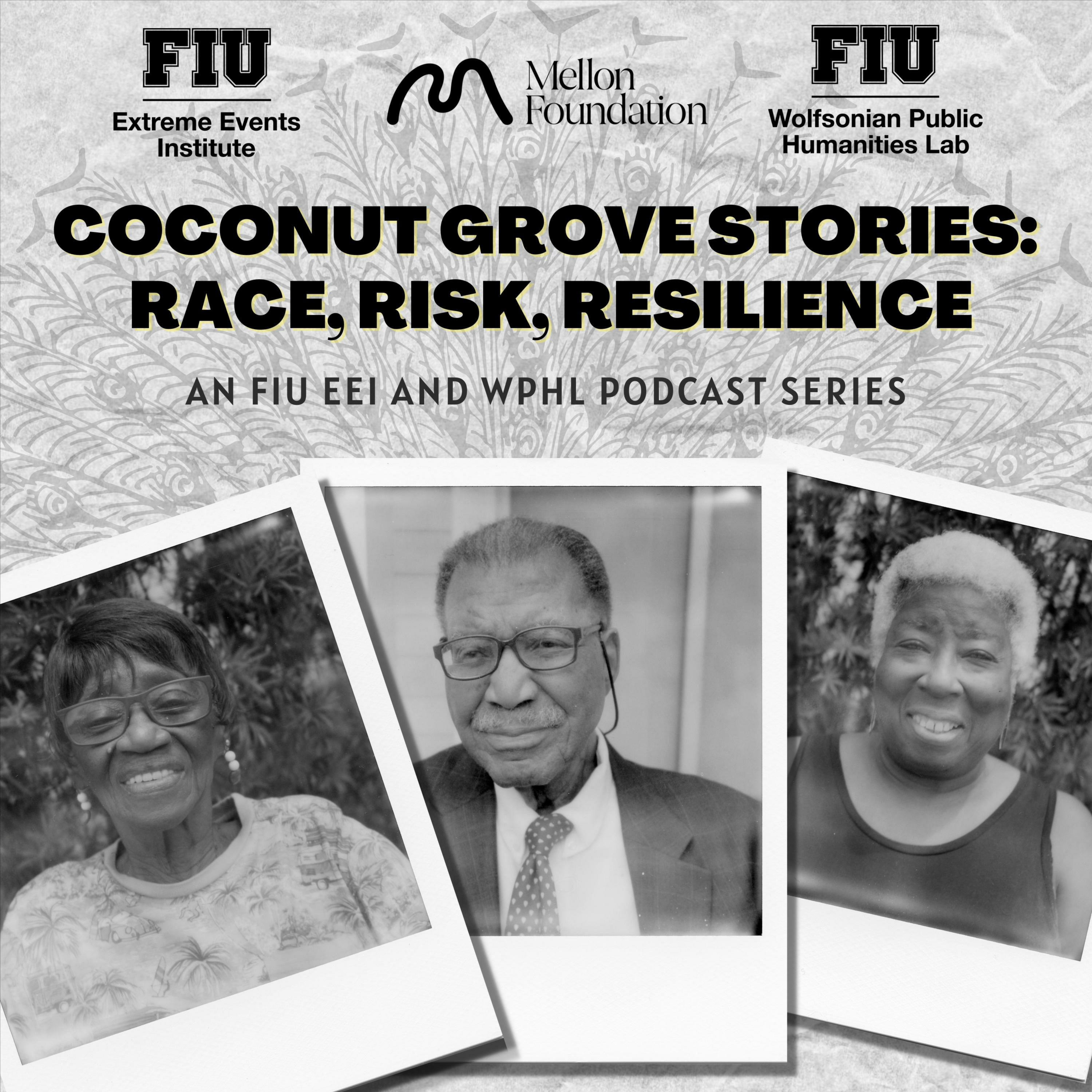
In this interview for the FIU CFJ project, lifelong residents of West Coconut Grove, including Rinal Martin and Clarice Cooper, share their personal histories and the evolution of their community. Both have Bahamian roots and grew up in a tightly knit environment during the 1950s and 1960s, where their parents were active in the civil rights movement, fighting for desegregation and equal opportunities. They recall a time when local schools, social clubs, and organizations like the Boyce Club served as community anchors, fostering a sense of collective responsibility and mentorship. However, they describe a significant decline since integration, which, while beneficial in some respects, led to a loss of local control over institutions and jobs. Gentrification has further eroded the community, with rising property values and development pushing out long-time residents and making it unaffordable for younger generations to return. The narrators also highlight the negative impact of drug culture and the school-to-prison pipeline, which have diverted youth from education and trades. Despite these challenges, they remain active in local organizations, advocating for affordable housing, better jobs, social services, and increased political engagement to preserve the legacy and future of West Coconut Grove.
[MUSIC] Good afternoon. This interview has been conducted for the FIU CFJ project. The interviewer is me, Mike here Brown. I am a resident of West Coconut Grove and I work for the company of Hope Through Art, LLC. I've been doing activism in Coconut Grove Liberty City and over town over the past five years or more. And I am just here sharing information and I'm delighted to do this interview. My name is Alexa Bies-Ramos. I'm an undergraduate student in the Green School of International and Public Affairs and delighted to be here. My name is Yasmeen Northern. I am a graduate student at Ford International University in the African and African-Dash for Studies program and I'm happy to be here. I am Jake McGee and undergrad at Florida International University, majoring in political science, minoring in psychology, and I also am happy to be here. >> The narrator is? >> I'm Rinal Martin. I'm an activist here in West Coconut Grove. Been here most of my life. My family is from the Bahamas. Fortunately, unfortunately. I'm here. I'm happy to be involved in this project. >> I'm Clarice Cooper. I'm a lifelong resident of Coconut Grove here in Miami, Florida. I'm really happy to be here because I always wanted something like this to take place that we get to share our history. The pass on as a legacy. >> The interview is taking place at Christ E. Piscobo Church in Coconut Grove, Florida on May 31st, 2022. So tell me about your early life here in Coconut Grove. >> I am one of five boys born to Gus and Cherry Martin, who, like I said before, both from the Bahamas. My father was born on the island of Bimini, but he was raised on the island of Gran Bahama where he met my mother. They grew up together. They've known each other all their lives and they migrated here with, and end up having five, five boys, of which I am the third. It's been a very interesting life traveling back and forth to the Bahamas and growing up in the grow with people from various places, including Assal and some of the Southern States, Georgia, Carolina, even Mississippi, and Alabama. These guys from those areas, we all came together in the grow as a melting pot. I've enjoyed my life here. I returned here with my wife and we raised three boys here in Coconut Grove, and they're happy to have been part of the legacy of Coconut Grove. >> Yes, I'm Clarice Cooper, as I stated, and I was born here and have lived here, and I still live here. You can't pull me away from Coconut Grove. I really love this place. I've only gone away to college and then I returned home. Of course, that was a big decision to me, but it was simple enough because everybody that I was close to was back here. My family's also Bahamian. My mother was actually born in Nassau, which is on the island of New Providence. She came here as a teenager. My father was born here, to Bahamian parents, and they met here and got married by father Gibson, who was passed here at this church. It was so very long, a very long time. They raised five children here, and my parents were very active in the community, and I've continued that tradition as well. >> Can you tell me about your community, West Coconut Grove? >> We are very close in that group from back in the '50s because we had issues that were on the table as far as getting our civil rights, because most public facilities and schools were segregated, and these people who were very active, including my parents, Mr. Martin's parents, and other people at the different churches and organizations, and the PTAs. They were all about getting that to be changed, which was changed with the Civil Rights Act of 1964. And at that point, we went through a transition with a school desegregation, which is something that we hadn't experienced before, that we had to get adjusted to that, get acclimated to that. So we really went through a whole lot in our childhoods growing up, because we're like 50s and 60s children, as far as the time frame that we lived in. So we saw the assassination of John F. Kennedy. We saw the assassination of Martin Luther King, the assassination of Malcolm X. So we went through different years in our lifetimes. And of course, we have gotten to see things now, like apartheid eradicated in South Africa, Black president who won two terms here in this country, things that we would thought like were hopeless a long time ago. But we actually got to see that done through hard work and perseverance. And you, Mr. Renem, are you Martin? I grew up in the grow as an athlete. I played a lot of ball at the Boyce Club, baseball, football, basketball. And you know, the Boyce Club was kind of a melting pot for a lot of people, Hispanics, had come to this community as well. And many of us excelled in athletics. So I came up in the hook of a grow as an athlete. I was not so involved politically. My parents, like she said, attended all the meetings. They were not an educated group of people, but they were a concerned people about what's going to happen in the lives of their kids. So they felt that the only way to really impact that was to come together. And together tried to solve the issues that come to the attention of our community. And of course, something of that nature gravitates to all of us. And we all become involved. I went to college and got involved in all kinds of issues. And I think it was because my parents got involved in issues that impacted their lives. And I become an activist because my parents were activists. Because we had to do it. Somebody had to do it. Because if no one does it then guess what? How polite is left up for anything to happen. And God forbid, we allow that to occur without input for myself. And it seems that the history your parents could pass to you was extremely formative for you. And being raised by this community, I imagine was something that helped you eventually raise your kids here. And something that I'm not sure if you're going to cut that out in the pause. But how was it to raise your kids here in the community that you were brought up in? You know, it was very interesting for me. I was fortunate when I went to college. I met a young lady from Florida. She was from Sarasota, very bright lady. And fortunately, she's impacted my kids more than me. I'm not the academician. She was. I'm the athlete. All my kids were athletes. But they became scholars. And I think they became scholars because of her involvement in their lives. Not because of me because I'm the job. But because of my exposure in education, because I didn't get involved in higher education first of my family, I can encourage my kids to do the same. You know, we're called stay in school, do the best you can, and your outcome. You know, it will be enhanced. But thank God for a mom that also can emphasize those kind of things. And our kids have done well. I was going to ask, how have you seen the community evolve from you growing up in this community and then you raising your kids in this community? How have you seen the community evolve from the time from you growing up to seeing your kids grow up in this community? You know, the community has not fared well. Unfortunately, many of the young people, unlike my kids, did not go to school. I mean, they did not go to college. They did not pursue higher education. And the job market for folks that are not prepared lessons. And then because things are happening in Miami all over the world, you know, you can't find a place to stay if you can afford it. And if you're only offering the world labor, you're making less. And you're not able to stay in a community like Coconut Grove because Coconut Grove has turned out to be an elite community to live in. And unless you're making some good money, unless your parents pass something on to you, it becomes very difficult for you to afford to live in a community of this nature. And Miss Cooper, for you, how has your community involved here in West Coconut Grove? Well, it's very different from when we started out here. It's ain't all of them. Yes, that's where I met Clarice. Yes, yes.
- Yeah, kindergarten, by the way. - Seems as though the kids at that time, and I guess it was because of our parents, individuals, we have most seriousness of purpose. These kids now want the latest iPhones, they want the hair done, it's just like education has been like put on a back burner. That was a big aspiration for us. What college is we were gonna go to, which branch in a military you go to, which trades you were gonna pursue. And that's what I think we lost out with, especially when the schools became integrated. We were more of a community, your teachers, principals, boy and girls, scout leaders were involved in the community. They were friends with your parents. And so it was like, it was like, it takes a village that's termed as used often, that that was more applicable now. I mean, then, then it is now, and that's unfortunate, 'cause everything is just like dissipated. And then we have this gentrification issue, and that is also making us less and less visible in this community. And about holding on to what your family had acquired through property, real or personal, whatever that's going away. Like take for instance, I get calls every day in emails and texts and whatever, whatever former correspondent's about selling my house because all of a sudden this is hot property. Like Mr. Martin said, this is the place to be and everybody wants us to move so they can make it what they want to, which I think is like Midtown Manhattan. I've gotten off as over a million dollars in my little house. So you see how, yeah. - Who are we doing that? - One of them is you making me that number. A lot of us are getting off as like that. So it has changed a bit. And I wish we got back into more emphasis on what it is we need to pass on to the youth and make them understand that you have to be prepared to excel in this society. - You know what's interesting? My three boys all want to come back. They love coconut grow. But there's no growth to come back to. Fortunately, you're unfortunately, we might folks blood sweat in tears that they bought a home and we're trying to hold onto it so that there's a legacy for my kids to return to. I don't know what they'll do with that little plot, but they know a lot of folks are doing a lot with the little plots that they have. The realtors are building up these town homes and selling each one for me and each. Which make my little probably worth a whole lot of money and gives my kids an opportunity to do something and to stay in this community and hopefully make a difference in terms of the legacy that have been established here through our parents and our parents' parents, you know, here in coconut grow 'cause my folks came here in the late 1800s and we thrive. But the difference is that we didn't have necessarily thrived in coconut grow but people that move all over the world and they may have had a humble start here in coconut grow. - So I did hear you mention saying that your sons want to come back to West Grove, but they just can't afford to come back. Now for the bolt-- - I didn't say that. - Well, I mean, it's nothing to come back to because I'm not myself. - Oh, okay, I'm sorry. - Don't let my son hear you say that. - Yes. - I'm sorry. - I'm sorry. But that it's nothing to come back to. Can you elaborate a little more on when you say there's nothing to come back to? - Well, the home that they left no longer exists so they can't return to the Grove as they knew it. There is something to come back to, but they want to return to a legacy that they remember. It's like when I go to the Bahamas, oh man, that's so wonderful you get to see your family. You know, they've not been uprooted there. When I go to eat my rock, eat my rock, you still eat my rock. My family lives there from one end of the rock to the other. - Yeah, and it's like the socialization is missing. If somebody, I know people who in my family and friends who left from the Grove, and they say when they come back here and they walk down Grand Avenue and Douglas Road, they don't see anybody that they recognize 'cause see, the whole family are already gone now. That's like, that's lost now. So, and that's the thing that we have, this gone away. Once people moved out to other outlying areas where there was new development and housing and job opportunities, we've lost that here in Coconut Grove. And everybody's almost like their own little cocoon, except for a lot of the organizations that both he and I belong to. And that's where we get to interact with other people for the common good of the community. - We talked about Goon Bay. Go ahead, you had a question. We talked about Goon Bay before we started the interview. And Goon Bay would never be the same because the Goon Bay that I grew up experiencing went down Grand Avenue and Grand Avenue was the center of Coconut Grove Life. We had community centers like three chips and Tiki Club and Gill Spot and last chance. All those are bars and social institutions that I think actually made Goon Bay an environment that we all cherish to come to because everybody went into, you met people that you hadn't seen in a while. Now there's no bars, no social institution of that nature. So when Goon Bay, if Goon Bay shows up again, - Oh, Grand Avenue. - That would be missing. That would be missing. And unfortunately, it's a shame because I enjoyed that not that bars have social redeeming values, but it made a difference in the Goon Bay that I experienced. - And now we have to go to Key West to get that same flavor back. - That's a focus at yes. - You both keep mentioning the kind of decline of the social institutions in the Goon Bay Grove areas and I kind of want to know more about that. When did it start and did it happen gradually, that it happened exponentially? I'm interested in the logistics of how that change started to occur because you mentioned community members being the principles of your schools, the scouts. So when did that societal and demographic change start to occur? The world as people got older and they retired and they died and then their families and children didn't want to retain anything here. And they were already people living away. Because they weren't that many job opportunities here during the segregation era. So usually if a person went away to school, chances are they weren't going to return here because they were big of fish to fry in New York and Chicago and Atlanta places like that. So a lot of homes were sold that belonged to people who were prominent in this community. And so that started happening across the board, even with just working class people. So you saw the organizations that we used to have a lot of them just like abolish because there was nobody there to fulfill those spaces anymore. We still have the American Legion. We still have the Homeowners and Tennis Association. We still have the community advisory committee. We still have the Negro Women's Club. But that's just a small number compared to what you stick to in this community. And as I say, segregation, the end of it did kind of destroy our community in a lot of ways. It was supposed to be helpful overall. But all of a sudden, everybody wanted to get into the mainstream activities and organizations that existed. And they kind of like with some people said that we abandoned our community. You know, integrations had always achieved the things that we hoped that it would achieve. I think we fared better in our community when we had a segregated lifestyle here in Coconut Grove. We had control of our school. And in our school, the school was the biggest employer in the community. There are still a lot of jobs in the school. But now that the schools are integrated, we don't control those jobs anymore. So segregation, I think, was a boom for us. Integration has caused a eradication, if you will, of those opportunities that we had when we had a segregated lifestyle here in Coconut Grove. And everybody-- somebody like myself-- I don't have any kids. But there were a lot of people like me who were elderly or just single, whether they're having any kids. They took an interest in what went on in the local schools. If a graduation took place, everybody would attend the graduation because you would be happy about the achievements of your neighbor's children. And that sort of thing-- see all of that's lost now. That's kind of like that doesn't happen anymore. And something people don't realize is that when we had control about our school system, we had P.K. President and all the skilled roles that people have to play belong to people from our community. So we got training that allowed us to pass things on to our kids that we no longer get. Yeah, because we had role models from those people to write in our community. They didn't have to look at the Michael Jordan's and the Magic Johnson's as such. You had people that you could look up to right here in this community who had done very well by our standards. So what are some of the major crisis or disasters that occurred in the community? Well, my-
biggest problem has to do with the arrival of the drug culture that I think affected the whole world, but especially in low-income communities, black and communities of color, because as much as that has been financially a boost to the people who bring it in here, I don't want to say too much about that, because I don't really know that much about that, but I know how it has effect us negatively. And people who figured that they didn't have to work a minimum wage job anymore because they can make more money selling drugs. See that kind of mindset has also helped to destroy our community and others like ours. The school to prison, pipeline is alive and well because folks feel like, hey, you know what, I don't need the school. But without school, you have very few opportunities. And so many our kids, even today, look forward to being on the street making money without having to work. They think that drugs is still a way out. Man, it's not. And it's not. It's not. It gets you to hold out more trouble than you can imagine. Yeah, I don't know. We get, as far as law enforcement, they do as much as they can. But it's going to take a whole lot more. And then when a community is already depressed and blighted and people are leaving, whatever is his, it gets to be more and more like a thing that people just kind of push to the side. That's why you have people like us who remain active in our organizations and try to get certain things pushed through. And a failure of government to realize that a community like ours has special needs. We need to be protected more. You know, they use things like eminent domain to develop things that we didn't need. Why not use it now to develop things that can enhance our existence here? So government has failed us. Yeah, government definitely has failed us here. What would you say are some of those needs you just mentioned for the community? People housing, number one, jobs, more social services available to us. Now we do have those in within the community, but it's still a matter of getting the right people to even inform them about those services that are available. And see the interest of a lot of young people is not like it was with us because we've got a big thing with colleges. We were going to go to a branch in the military. These kids now are interested in that. They want money fast and whatever. And that's the other thing we have a problem with, even in all organizations, everybody's like an R age group. We have very little young people who are trying to get to care at these organizations into the future. So jobs and affordable housing and social services. And also to get people interested in voting because that's another thing to be a part of a community. You need to also be engaged in the political process. And we have a lot of young people now who are very apathetic about that, about voting because they think it doesn't make any difference. And it's not going to mean anything to them in the long run. And that kind of attitude we need to have changed to. We got a lot of work to do. We do. And we're not getting any younger. No, we aren't. We're looking for folks to help us do. We think it's necessary in our community. And I work with the 5,000 role models and many of them are getting the message. Many are not, but many of them are getting the message. The problem is that the 5,000 role model program operates in the school, not in the community. Once again, we still need to get people like ourselves involved in directing these kids while they are in the community, not just in the school system. And there is hope. We hope to keep it alive by being involved in activities like our organizations. And even organizations like ours and due to churches and whatever, when you had a whole lot more people involved, then you got parents. Because see, that's my problem also with youth. If you don't have parental involvement, that's where you feel. To see, we had that. Overall, we did have that. But now, that's like almost a thing in the past. You could get a child, you've identified that you could probably help. But if the parents aren't going to meet you halfway, a quarter of a weight, that's still like a waste of time and a waste of resources. And I find that to be a big problem. And in this concern for rejuvenating the presence of a youth, particularly, which could say native youth to the West Grove has the impending presence of climate change as a factor, especially affecting Miami. Has that created any kind of sense of disencaragement towards the future of having a established consistent population here? I don't think anyone's paying attention to it. Well we have through our organizations of Gatton City and County and even some national involvement as far as people giving us information. We've had speakers that are neat as they tell us about climate change or global warming or whatever. And how did the impact are? But has that impacted us like as far as we go to sleep and say, oh my god, I wonder what's going to happen on the climate change calendar tomorrow? No, that's not really a concern. I would say a big concern in a community like ours, even though our proximity to the water in the bay and the ocean, you think that would be a concern because of the erosion and everything. I don't really think that the people on the street, I don't think they're concerned about that. It seems to me that when you guys speak about specifically comparing the past to the present and we return to this question of eroding of the public institutions, when you speak of the problems faced that the youth of West Grover facing today, it seems that maybe a lack of this kind of community guidance that you guys received from elders and mentors in your community that maybe at times even compensated for support you made it me wearing getting from your parents or from family members that directly. So do you think that specific change in mentorship has pulled young people away from? No, they're not, you know, folks like Clarice and I, to go around, you know, and we do what we can and we try to impact as many kids as we possibly can. I've been involved in boy scouting for years and years, I'm a former boy scout leader and you know, it's kind of hard to get parents involved and kids have other interests now and it's difficult and sometimes you feel like giving up because you're not getting the response of you hoping to get. But we keep perceiving, hoping that something will happen. Yeah, something. You know, that's one of the two things right. Like maybe a machine would show up and God is out of the shit thing. Yeah, because this is a good example of here of people who grew up. You just never know. Yeah, you never know. And that's why you just can't give up on everybody. It's easy enough to look at the kids and say, oh, they aren't going to be anything, but then you shouldn't take that kind of attitude because in that group, there may be one or two, there may turn out to be a diamond in the rough. So someone told me that the court's going to give the West Grove the property that they caused the contamination and they're going to force the city to clean it up and develop it and create affordable housing so that that community can be reestablished and co-could of grow over thrive again. Wouldn't that be great if the court did that? Yeah. Like, give up. And not to cut you off. There's hope. Not to cut you off. But what exactly is that that you're talking about when you say clean up? Well, O-Smokey is an incinerator that was built in the 20s and they just stopped that within the 60s. 60s. So it thrived for a long time and created a lot of contamination that impacted the lives of so many. Many people have lost their lives and have had lives that were not as abundant as it could have been, had it not been exposed to the contamination caused by the incinerator. Accinerator because people are still suffering from respiratory and up of, you know. Contamination exists today. Right. Yeah. And maybe that's what's happening in co-could of grow. We're being affected by the contamination that started so long ago that was not managed properly by the city or the county for that matter. Because that was city on property and that's what we have to keep focused and all because it wasn't like an independent person came. We know that that was the city of Miami that did that to its own residents. Most of who were property owners and taxpayers, I might add, invaders, you know. It was just like nobody cared. And of course that was during the segregation era. So it wasn't going to make much of an impact. The fact that black people in the state who were going to complain about it. Because you really didn't buck society, buck the government. Like whatever you did. See, people back then were more obedient if you will or receptive to what they were told by government higher ups. And now you see all these protests
everything like what we saw in the '60s when we were college age. And you wish that some of that could have happened in the past. And we got results because we probably will be further ahead if that had happened. And interesting that O spoke, he was the environment there was not thought to be bad until white kids started going to cover. Well, when the incinerator was rebuilt and the fumes from the incinerator went out in the coral gate was going to say, what are people out there who actually found the suit? Yes. Yeah. And then it was shut down because they complained. We complained too. Yeah, we complained too. We complained too. Which is the point. Yeah, I know. Only until it affects them. Yeah, right. Then mad at that. We're complaining. We're having this problem, but it affects us now. And it's bad when it affects us, but it's not bad when it affects you guys. We had to go to school in that environment. Oh my god. Yeah. Can you imagine the stench? All the stench. Oh yeah. It's terrible. Has the city or any local government acknowledged this issue? And is there any plan to do something with that space or work with against the contamination or has it just been forgotten? The city just recently filed a motion to dismiss the class action lawsuit involving all smoking. I mean, this is usual. Our current commissioner, Ken Russell, had talked about utilizing that property over there to do affordable housing because it does belong to the city. It's a fire college now. And they're thinking that maybe the fire college ought to be moved someplace else. And we can use that property to do something good for a change in this community. And so with the local authorities that have jurisdiction over the West Grove, outside of the community members who reside in it, how's the general attitude they've shown towards your concerns over the years? Can it be summed up as dismissive? Whether it relates to old smokey or are there other examples? The attitude has been dismissive, yes. We've not seen anything innovative coming from the city as it regards to uplifting and improving the circumstance of the humble community established here in the West Grove. So we talked about old smokey and forgive me. I just know a little more knowledge. And I just have to bring this up because Miss Cooper, you fought against the trolley that they put in, which was also a threat to our community. Can you elaborate and just start from the beginning about that a little bit? I mean, a synopsis of the beginning of that trolley that they thought would be wonderful. And who thought it would be wonderful in the West Coconut Grove? Okay, back in 2011, which is some time ago, I received a letter from the city Miami and also my neighbors did that they were going to have some sort of development at that corner there on Douglas Road, Southwest 37th Avenue, between Fro Avenue and Okavano. I live on Okavano. And I called the attorney and he says, "Oh, they're going to put a trolley on there, say a trolley." What kind of a trolley? And he says from the city of Coral Gables, "Well, first of all, we're in the city of Miami." So they did build it and we did have several rallies. But then I found the administrative complaint to the Department of Transportation and they found the Gaines that project. So that was quelled, but the building is still there and it's still just sitting there. And just to clarify again, this was the trolley for. The city of Coral Gables. In West Coconut. Yeah, in West Coconut Grove, which is in the city of Miami. And what was there previously before they bought that trolley? There were three properties there. One was the blue chip. The other was a fast-root restaurant and then another piece of land was privately owned. Yeah, residential. But that's from a long time ago. But I do know the person who owned it. Yeah, but. Is there a blue chip? No, no. That was nothing there at that point when that came about. That was just an empty piece of land, vacant piece of land. You know, the interesting thing about the struggle against the trolley garage, we had some students from the law school investigating and trying to help us. Yeah. universe of my law school. And that's when they discovered the contamination that the city was trying to hide from everybody over at Old Smoky. They said, "Look what we found and trying to find some remedies to the trolley bond because one of the issues about the trolley garage was that it was going to cause contamination as well." So, since they were looking at the issue of contamination, "Hey, we're talking about contamination that the trolley garage would cause. Look what we found. That's still active in our community." And the city hadn't said a word. But in just to elaborate on that a little more, that is one of the reasons why that trolley garage where they fixed up on trolleys that are need to be repaired or broken, came to West Grove, which is considered the Black West Grove, not East. Black West Grove because the residents of Cargay was didn't want the contamination over there. They didn't want that over there in their area. And what had happened was a gentleman wanted to swap out the land that was used to maintain the trolleys over in the gate. It was across the street from Gables High School on the June Road and they were looking for an easy piece of property to work on. And so they said, "Oh, here is something in West Grove." And so they bought that. And that was going to really put a big drain on us because it was the traffic. The trolleys were going to have to come through on the hour and they were going to be maintained. They had like eight bays there. And that was supposed to go happen every day on the hour and they were supposed to come in on my street and go out on, which is okay, I'm going to go out on throw avenue. And we did have people there who had health problems that were going to be compromised because of that. And they were real concerned about that. So that was one reason why we fought it because of the environmental impact of it along with the traffic. And I just want to ask, what was there when they decided, hey, let's move the trolley from here over at that property across from Cargayville, San High School? What is there currently now? >> Mr. Torres has a big, married man or I think it's going to call. It is called because it is open and they have condos there and on the lower floor they have retail. I think there's a beauty salon and a restaurant. That's all I think. They use multi-use buildings that are cropping up all over Miami-Dade County and everywhere else. >> So they threaten your community and compromise even more health issues to build luxury condos and so on. >> For a game, yeah. >> And all that in Cargay. >> Yes. >> Somebody saw a good opportunity to make somebody, hey, you know what, this land over here is where there's a whole lot more than a land over there. If we can switch to uses, we can build something here and make a hole out of mine and they did. But it didn't quite happen the way they wanted it to happen. They didn't anticipate something. >> The public outcry because we protested against it. But if we had not said anything that would have been the, I look over there every day, you know, that's, you just think I would have seen trolley's going out here all day long. >> It was a done deal as far as they were concerned. >> Yeah. That never would have served as coconut grove. >> The trolley's would have not come through to pick up the people are the residents that either lived in coconut grove, used to live in coconut grove, or work as that worked in West coconut grove. They would have never served as that. >> That was not the plan. We were not in the plan. >> Yeah, but what ultimately happened and is in truth today, we do have some service that goes through that area because that was like one of them. >> It would be because of it. Yeah, because we said that wasn't even service. >> One of the resolutions. >> Exactly. So that's one thing we got out of here. >> So it's clear to me that when they set up these unfavorable development projects in coconut grove, specifically in the West and Black side of coconut grove, that they don't expect the people of coconut grove to have the resources to be able to fight back these unfavorable development deals. But clearly, you do and you have been making it work with the resources that you have. So I want to know what are some channels through which you get help to accrue, for example, these legal responsibilities. You mentioned UM Law students. So I want to kind of know what actors are helping coconut grove through these processes. >> Well, the UM Law School, the Center for Athletics and Public Service, they have been active in this community for maybe about 20 years or more. And they've done different projects with the Black churches and then with old smokey, with the trolley barn. And they've worked on a lot of different things. And the civic engagement.
the arm has to. What we try to do here is people who left to go away to school and came back, we figure civic engagement and involvement is very important and enlightening our fellow residents about things and that's how we have established very good ties with our elected officials at the city of Miami level, the county level and also we deal with our state representatives, the representatives and also the state senators and we also deal with the people on the federal level as well. You know that center for ethics and public service have allowed us to engage with pro boner attorneys and they have been instrumental in us being able to challenge the Charlie Bond, challenge old smokey and other issues that come up in the community like civil rights issue as it pertains to affordable housing and recircating blacks in the community outside the coconut grove when they are displaced in this community which violates the community. This community which violates the civil rights law as well and that's an issue that's up and coming and we're hoping that more attention is paid to that so that we can address these issues that impact housing affordable housing in our community. Well what's on the table now is the community redevelopment agency, CRA here and it has been one established for the west grove that's on the table that the city of Miami has approved but it still has yet to go before the county because it's an interlocal agreement they have to both the county and the city has agreed. That's what we're hoping is going to be like our saving grace as far as getting jobs and affordable housing put on the table and then bring more interest in our community that could help us financially and otherwise second obically and otherwise. So let me ask you we talked and talked about so many things that the residents of west grove have asked for have you guys seen anything that you have asked for come to frutation here in west grove. You know I've seen construction come and housing come but it has not come for us you know and that's a problem it's come it would be a savi if these things were available or more available to to people of color affordability is the key and and I guess that's just part of the problem when you build these things they have to be sustained. And with the kind of incomes that our people have you can't look for low income people to sustain you know high in facilities. Yeah well that's the message that we have to continue to get across there you want to do things you want to help but look around these people are not equipped to be helped in the way that you think they could go and buy a three quarters of a million townhouse or condo or something and that's where we run into a problem with that too. Which also leads me back to how most people in the community whether what level they're on you know financially it should be more involved and what goes on in the community and try to stay aware of what's coming down the pipe like if you're here they're going to build houses and you want to get a house where you prepare yourself to be able to get a house on apartment because we do have a big project that's being constructed right now on the corner the southwest corner of 37th Avenue and US 1 platform 3750. And they're going to be 192 units in that residential units and 79 have been earmarked for affordable housing will see because that's federal funds they can't be any local preferences there so what we have tried to do is to get our people in place to be able to fill out the applications and whatever because see once you have that kind of lack of knowledge then you know you will be back that nobody from this community a very little bit of a lot of people. And this community a very little people from this community be able to take advantage of what's going to be available as far as affordable units. The interesting thing there is affordability in that plan but only at the workforce level and that that kind of bothers me because at one time they were talking about E.L.I. and that's extremely low income. But the only affordability that's being provided in the 79 units workforce housing. Yeah, work with your offer teachers and police police officers and nurses. But not for folks that that makes salaries you know below that which which tend to characterize the people in our community. And when what was there before this development on 37 Douglas Road in US one what occupied that space before they decided to approve this new development? There was a county on building a human resource center which had a had a myriad of services there and now they're temporarily placed on the south east corner of Grand End Douglas. We're Helen McGill that she's the center director there. Yeah and they're supposed to be going back into that building but occupied a very small space. It was a grocery store too. It was a grocery store. Yeah, that was back in the back in the day. Yeah, a grocery store. Yeah, but a service and the grocery store didn't work. But he's been a community service center. So now what do you feel is a serious threat to what's coca that grown? I would say the apathy among his residents. We're our own worshiping me. Yeah, exactly. Yeah. Unfortunately, we're our own worshiping. Like we try to get people engaged in the organizations that we're involved in that used to have like standing room only at the meetings. And now that's like pulling teeth or whatever. And I know we've gone to oh still in the pandemic. But even before that we had difficulty. And you can't say they don't care because they always ask me, well what y'all do? What do you want to do? Y'all are us. We're in this together. But if we have more people involved, there will be less tax in for us too. And as you say, we are getting any older and I mean younger and then that's just not good. It's like find the battle and everybody's in you know cheer and y'all want to say let's go and you turn on. Nobody said yeah. We got you back right away. Nobody there. I wanted to I know you mentioned earlier the involvement of the black church. How has that relationship evolved in terms of the black church getting the community together and doing community work? What was happened in this neighborhood has happened like in other areas over town, Liberty City, Miami Gardens, Goose, Richmond Heights. Most of the churches including this very one where we're sitting. And we have several churches here in this neighborhood that over 100 years old. St. James, Christy Pissable Church, Greater St. Paul, Macedonia, almost churches over 100 years old. That speaks volumes. But most of their members do not reside in West Coconut Grove. So these people come to services and they may come to Bible study and then choir rehearsal and then they leave. So these people involved in other communities where they live and work and play. You know they worship here. So that's the other thing before everybody lived here for the most part. But as Miami Day County became larger and there was more housing development, people started moving out because they wanted better living conditions and whatever. So as far as church use groups, do you have one of your church? No. Yeah. Those were like bed rocks in the community and now a lot of that doesn't exist. So if it exists it's like through a summer program. Something is very temporary when before it was a mainstay. And so that's kind of messed us up too. And like Boy Scout and Girl Scout troops and we they were plentiful one time here. They don't pretty much exist anymore. But you do have like through athletics like you know the club that you work with the optimism stuff. Yeah they have programs like that so they're trying to reach kids at that level but it's still not what it could be. Pooing our resources and trying to reach out to the kids that are still here and enhance the opportunities. So for these institutions, these churches that have been here for several decades, 100 years even. The what's happened is the denominations are now regionally removed from the actual locations of the churches. When I want to know if originally they were local members of the Grove that would attend church and now it's is it their descendants who are now living outside of the community? My son in Chicago he's actively involved in his church. Unfortunately the field that he's in finance you know you can't find a kind of job in this area where he's found in Chicago area. But I do know that if he was here or he be actively involved in the church. So these folks that came up in churches in this community and involved lifestyles in this community they take that knowledge and experience and exposure where they now live and apply it there. Unfortunately for us we're left with those that.
tend to offer a little less than what we expect from our brightest and our best. - So we talked a lot about threats and what West Grove needed. But let's move to threats of disaster, whether it be hurricanes or health disasters and West Grove. Have you guys ever faced any that have caused West Grove to slowly deteriorate? - Well, we had Hurricane Andrew back in 1992 and then we had Katrina in 2005. We had Irma a few years ago. The community seems to have come together to help each other out. Like I saw a lot of neighbors helping neighbors that you would hear like on the TV news shows and stuff. We had a lot of that and we did get a lot of cooperation from our social service agencies and also from our elected officials. The other thing is when you're out of power and water and telephone service, that can be annoying as we all know 'cause those amenities that we kinda like take for granted, even though we pay for it, we do take it for granted. So we've had subservices slowed to be restored but of course we stayed on top of that as well. - You have any problems with that, what we've had? I know we had to wait like a long time for Andrew that was one that we hadn't gotten in a very long time. So like a big catastrophe 'cause that was a cat fool, catagory fool so a five or whatever. - Okay, you know we also have a group call served community emergency response team of which she chairs. We get community members to be trained to assist in the problems that the community may have. My experience had been in the fire service so I said, you know I'm certainly gonna be a part of serve because I think I got a lot to offer. Not only do I have some skills that I got through training, an active young guy that can still do some things and offer some things and maybe I can encourage someone who'll see me hurting to come out there and help out as well. But I enjoy the service. - Yeah. - The pandemic has brought us together to do some things to reach out and help one another. You know when you have these kind of calamities it make a people come together. - And just for the record, served stands for community emergency response team and our team here in West Grove got started back in 2014 and we've been active ever since and I was thinking about we gotta get to work 'cause June 1st is tomorrow and that starts in hurricane season. - Yeah. And we work very closely with the response, people, emergency and disaster people with the county and the city. Yeah. And so we should be having a meeting soon. I mean, we were soon because we have like about 14, 15 members. We were trying to build up our membership to 30 people but then you know we've had some people moved away. We had a few members who died so you know that kind of stuff. The natural attrition. - Specific to the COVID-19 pandemic. What are things that the community did to kind of help each other pull through this difficult time and then what was the governmental response in the West Grove to the COVID-19 pandemic did you guys receive any support? - Yeah, well we did have social service agencies did offer the testing and also testing for the COVID itself and infant antibodies and then we also had services available to receive the vaccine and the boosters and referrals were made if it wasn't available here. We also got referrals to other parts of the community other parts of the county, a city. Yeah. And then also as far as food and housing remember when Cynthia was with the commission as office that they did establish a program for people who have meals delivered to them every day and that went on for a period of time. That was in the initial phase. The continued act for several months and that did help a lot of people because you know a lot of the stores and public places were closed and people didn't have access to. So the response was pretty good. It was just the wearing of the mask and the observation of the CDC guidelines. It was a problem that you would have, you know, you would encounter people who in the street and elsewhere who wouldn't adhere to those rules and we figured the sooner we get people to, the more we got people to adhere to those guidelines of the quicker we be out of this situation which I don't know if we'll ever be, I don't know. (laughs) Public education, I think. Yeah. It was lacking, I think a lot of our people don't understand what's going on with COVID. So I think they could do a whole lot more with public education. And especially in a community like this because I actually heard people on the street say, "They don't care about black people." You know, they don't care about us. They don't care if we get it and a lot of people thought it was a racial thing anyway that that came from, I don't know. But that's when people are not aware of what's going on. And they formulate their own opinions about things. Unfortunately. Unfortunately. I would ask, what would you say about, I guess the mental health crisis? Would you say that there is one in this community? How have you seen it evolve? I know earlier you mentioned drugs and so like there's the one aspect of people who sell drugs but then there's the aspect of people who take them. So there could be things like mental health issues, that sort of thing. So what would you say is the status of mental health, the mental health crisis in this community? About the way it is on the national level. It's more than it used to be, you know, for what's even obvious to just the naked eye. Mental health crisis is something that I think is a global problem. I don't think enough money has been earmarked for it. I allocated for it on all levels, local, national, state, or whatever. I think that needs to be, we need more education about that and more training should be done with our law enforcement agencies. And I think of a lot of different things because I'm not, I'm just a skill, if anybody else, if you want to call a guilt of thinking that that plays a role too, depending on what color you are because like the guy in Buffalo who went into where did he go into top supermarket. If he were a black guy, he wouldn't be around until that story. He would have been killed just like the guy in Newvalde, Texas. And so that's why law enforcement people need to be trained better about that too, about mental health problems. Mental health, we're at the tip of the iceberg for so many things involving mental health that we don't know about. And it's an area that we need to pay more attention to. Our kids, the labeling, we try to avoid labels. When in fact, when you submit to labels sometimes, it's beneficial. So many folks go through school without knowing they had some learning disabilities. And if they had no more about it, they might enhance their educational opportunities. So all that has to do with being exposed to mental health issues. Yeah, and I'm a firm believer that the substance abuse crisis that we've gone through and still are going through that that has created mental health problems. Because I mean, people with a lot of altered states that haven't been dealt with or treated or whatever. And see, we don't have mental health treatment as largely as we should have. And then access to guns, like the gun control, we still gun control lobbies like the NRA and people like that. That I wish the two parties, because we do have a bicamber legislature that they could get together and try to work out something on the national level. Because it seems like the states and the local people are doing more to get that in line than the federal people are. And so both in these situations of acute disaster, whether it be hurricanes or in situations of perpetual crises relating to substance abuse and underhousing, seems that a lot of the main factor in success or curtailing the effects of these issues comes back to education and the education that people have going into facing these problems. And would you say that the education that people do have, do get here, public education, does it do enough to direct them towards the local resources already established, which are very much in a use that are a losing situation? The less people know about the CERT and other organizations, the less they are prioritized and the more they're dependent on people who are too tired to carry them by themselves. Education is a game changer. I think public education can accomplish a lot, depending on the people utilizing it. I think my kids, because of the exposure that my wife and I had, went to public education and got a lot out of it, that other kids may not because of the lack of, which I say mentorship and support.
what systems provided them are able to accomplish. But there's nothing wrong with public education per se. You can still accomplish a lot through public education, but we need a lot of support so that our kids can get more out of it than what they are getting. - And I believe the school dropout rate is still pretty high. It's at levels where it shouldn't be, and that's also a destructive force in the community. 'Cause see, without knowledge and education, you're bound to fail. - Yeah. - You're bound to fail. - So to close it out, and this has been a wonderful part, Kaz, and you know, we could go on and on because there's so much that we want to know. But just to close it out, my last question to you guys, and excuse me for my voice, is what will protect, or what do you feel will protect your community against these threats that you guys spoke about? And now that you have the power, you have the mic for millions to hear you, what would you like to say that will protect you against these threats and help West Coconut World thrive back to what it used to be? - Well, I still think it's gonna be like people like ourselves that we still try to draw and as many people who are still left here to get them civically involved and get their children involved and show them to try to explain to them how it's important that we keep this all going 'cause right now we have the threat of gentrification. And everybody talks about us preserving our legacy here, but that can't be done if people are just gonna sit home and not do anything, you have to get involved and you have to find out about as much of it as you can. And so for as long as people like Rennel and myself and some of our other colleagues around and able to do things, I think we could make some a little amount of progress but I would like to see more made. So that's why our task is always ongoing and that's the way we consider it. 'Cause like today, we're retiring people, you know? And we give ourselves this about every day and a week, to our churches, our organizations, our families and we do care about coconut grow. We do, this is a great community. - God bless America and God bless coconut grow. It's gonna be an act of God to take, to get us out the mess that we made. Not just coconut grow but the whole country. - The whole country. - You know, we are slipping and slipping bad. Everyone's looking to America. Who's America looking to? Let's look to God. You know, God bless America and God bless coconut grow. - So I would like to thank you guys for taking your time out today and being here with us and giving us so much of knowledge and positivity and hope. And my closing remarks is that hopefully we get that back and we restore what once was here and I will let everyone close out and close remarks of whatever they would like to say. - Well, it was a pleasure for me, I threw it this session and I think we should have more like this. - Yeah. - Same here, I think we need to do more of this with our seniors because we're losing our history and one way to preserve the history through oral conversations of this nature that are recorded and retained. - I second your previous statement that civic engagement begins in rooms where people are communicating about the lack of civic engagement. And so if we recognize the perhaps we could call the poverty of our situation, we're just that much closer to seeing what brings us out of that, what develops not just physical resilience but cultural and spiritual resilience going forward. - Thank you so much for your wisdom and your candor and just being open to answering questions and sharing your story. I personally really appreciate it and I'm sure that the listeners will as well. - Yeah, thank you so much. It's been a pleasure as Miami resident, I think it's so important to learn about the different parts of Miami and their history and want to preserve them for what they are not necessarily because they may apply to me or involve some part of my heritage but because this is the city that I love and caring about its residents and caring for the wellbeing of all of its residents and ensuring that their interests are being looked after is just something very important that I think more people in the city that is rapidly changing should be willing to do. So thank you so much. It's been a pleasure. - Thanks for having me. - Thanks, Emma. - Yeah. (upbeat music) (upbeat music)
Podcast Summary
Key Points:
The interview is part of the FIU CFJ project, featuring lifelong residents of West Coconut Grove sharing their history and experiences.
Both narrators have Bahamian heritage and were raised in a close-knit, activist community that fought for civil rights during the 1950s and 1960s.
The community has declined due to gentrification, loss of social institutions, and lack of affordable housing, making it difficult for younger generations to return.
Integration, while positive in some ways, led to a loss of local control over schools and jobs, weakening community cohesion.
Drug culture and the school-to-prison pipeline have negatively impacted youth, who now prioritize fast money over education or trades.
The narrators emphasize the need for affordable housing, jobs, social services, and youth engagement in civic and political processes.
Summary:
In this interview for the FIU CFJ project, lifelong residents of West Coconut Grove, including Rinal Martin and Clarice Cooper, share their personal histories and the evolution of their community. Both have Bahamian roots and grew up in a tightly knit environment during the 1950s and 1960s, where their parents were active in the civil rights movement, fighting for desegregation and equal opportunities. They recall a time when local schools, social clubs, and organizations like the Boyce Club served as community anchors, fostering a sense of collective responsibility and mentorship.
However, they describe a significant decline since integration, which, while beneficial in some respects, led to a loss of local control over institutions and jobs. Gentrification has further eroded the community, with rising property values and development pushing out long-time residents and making it unaffordable for younger generations to return. The narrators also highlight the negative impact of drug culture and the school-to-prison pipeline, which have diverted youth from education and trades.
Despite these challenges, they remain active in local organizations, advocating for affordable housing, better jobs, social services, and increased political engagement to preserve the legacy and future of West Coconut Grove.
FAQs
Residents like Rinal Martin and Clarice Cooper grew up in a close-knit community with Bahamian roots, attending segregated schools and experiencing key civil rights events, such as the assassinations of JFK, Martin Luther King, and Malcolm X.
Segregation provided community control over local schools and jobs, but integration led to a loss of those opportunities and a decline in community cohesion, as residents moved away and social institutions faded.
The community has seen a decline in social institutions like bars and clubs, loss of familiar faces due to outmigration, and gentrification driving up property values and making it hard for original residents to stay.
Many young people lack interest in education, pursue fast money through drugs, and face limited job opportunities, contributing to the school-to-prison pipeline and apathy toward civic engagement.
Key needs include affordable housing, more jobs, accessible social services, and increased youth engagement in voting and community organizations.
The drug culture negatively affected the community by offering an alternative to minimum-wage jobs, leading to crime and further destabilizing the area.
Chat with AI
Loading...
Pro features
Go deeper with this episode
Unlock creator-grade tools that turn any transcript into show notes and subtitle files.
 PodcastTranscript AI