So look, there is no magic bullet, being authentic, embracing it, be transparent, being venerable
when it's tough.
But as a CEO, every morning, when you show up at work, you need to show confidence and
show what's the path forward.
One step at a time and be absolutely ruthless about this.
You sound ruthless, I want it.
Immunology inflammation in general is very hot.
I fully agree.
I and I, immunology inflammation, everyone is rebranding themselves and I think it's
more like a white space and people are saying I and I, we can change the world.
I'm optimistic about the real scientific progress that can be made.
But again, along the way, some will learn the hard way that it's not going to be a walk
in the park.
Like me, you are a French-German.
You've lived in many countries.
AIDS.
I lived and worked in eight countries, yes.
Crazy.
Especially, I mean, crazy.
Very early, you learned that cliché, I don't like cliché, and the world is full of clichés
and I have a big adversion for that.
Bienvenue to a new episode.
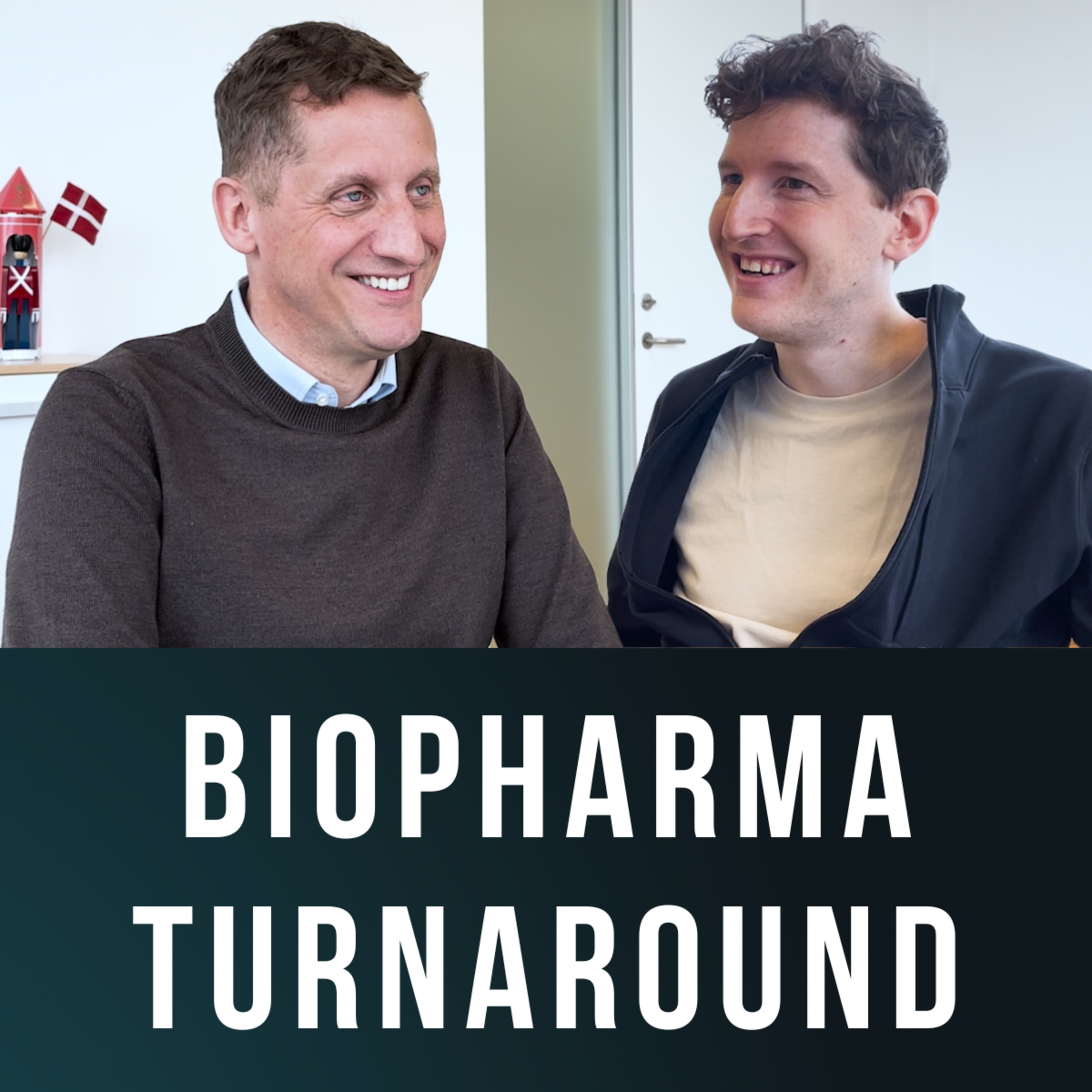
I'm your host Sillip and on this show I'm interviewing the best Europeans in biotech
to help you grow.
How do you turn around a 160-year-old biopharma company?
One of the best examples in the space is Leo Farmer, the CEO of Christophe Gordon, who
joined three years ago and the company is now back in the green.
So I went to Copenhagen to catch up with him.
I've known him for many years when he was back at Amgen and it's actually the first
time we meet offline.
We talked about the lessons behind the turnaround.
We also talked about innovation in dermatology, especially around biologicals, immunology
and inflammation, very hot topic, and about living in eight different countries.
So here's my conversation with Christophe and please hit the like, follow button if
you're enjoying it.
So, welcome to the show Christophe.
Thank you.
Morning.
Yeah.
Do you want to be on site?
Yeah.
I love it.
Yeah.
And I want to start with Leo Farmer at large, especially the turnaround from basically
loss-making to bringing back to profitability.
And you joined really to bring this to this mission three years ago.
Just wondering how are things going there?
Yeah.
Thanks for being here.
Thanks for the question.
I think, so I started three years ago and it's super interesting.
It's a company that was created 160 years ago, 60 years of strong focus in medical dermatology.
And every year the company is serving 100 million patients in more than 70 countries.
So, starting point is it's a strong brand.
I think every single dermatologist in the world has or is prescribing some Leo products.
I think everyone has a little fucidine tube at home in their pharmacy.
And so, when you start being a CEO of such a company, you want to make sure that you
need to protect what's working, because there are many things that is working well.
Having said that, we also needed to address where was not working well.
And so, together with the board, the question was, how could we accelerate the growth?
So, there are a lot of opportunities in the field of medical dermatology, so where to grow,
how to grow.
That was question number one.
Question number two is, what does it take for a company of more than a century to continue
to innovate?
You know, in an environment where, yes, there is a lot of unmet need, but you know, there
is a lot of competition, a lot of biotech popping up in the field of immunology.
So, how can Leo innovate?
And the third thing is, how can the company drive more profit?
I mean, the starting point in 2021, minus 17% of EBITDA, clearly not sustainable.
And I think, you know, looking back, three years down the road, you know, we just announced
the year 2024 results, top line, 10% growth again for the company, like second year in
a row, 10 quarters of WG growth.
We nailed, you know, we grew exactly where we wanted to grow, with a product we wanted
to grow.
Innovation-wise, we have, you know, make significant progress and happy to speak more about it.
And on the profit, you know, we close the year at, you know, with clearly no sites giving
guidance for this year of 15% to 18% of plus EBITDA.
So, you know, it's really, I mean, some newspaper calling one of the largest turnaround in Danish,
you know, industrial history.
And I think, you know, it's, it's, we are in track.
We're making very good progress.
You covered some of the question, it's great.
I'm curious on the, on the how, because turning around, an organization with 4,000 people
is, I mean, there's a lot of change management, I guess.
Yeah.
I mean, it's a very humbling job.
And I think, you know, I would be the first one to say we've made a lot of progress.
But you know, it's, it's, it's a day-to-day focus.
So I think the first thing you need to do is bringing clarity of where you want to go.
Give hope to people.
Give perspective.
I mean, in this industry, if you're not able to articulate that there is hope and, you
know, vision, people will run away and they will go somewhere else.
Partners will not, you know, work with us.
So you need to have a clear view of the future.
This is where point number one, we spend a lot of time on the strategy.
Reaffirming that, you know, we care about making a difference for patients.
And this really was communicated across the organization.
And then be very clear.
We need to grow.
We need to innovate.
Bring profit.
You know, it's been like every month, every month, I do a one-hour tunnel with the entire
organization, articulating confidence in the future, but also transparency on where we
are and what does it take to get there.
And I'm like the voice of the transformation really being transparent on this.
Then is, you know, it's not an excellent exercise.
You need to translate those PowerPoint and Excel spreadsheets into a human adventure.
Me alone, you know, like, okay, right, I have a vision, but people can say, slap, slap,
slap.
They need to kind of be inspired and follow you.
So one of the things I've done was to create an extended leadership team.
So 70 people, like basically the leadership team minus one, and those 70 leaders are the
ones that are really driving the change on a day-to-day basis.
And the way we have, again, one-hour teams call every month.
Twice a year, we have like a two days off-site where we tackle everything, you know, where
we're making progress, where it's tough.
And of course, you know, when you go from 6,000 to 4,000 employees, you know, it's tough.
It's tough on people.
It's tough to see colleagues leave.
It's uncertain on who does what, so you need to constantly bring clarity.
So look, there is no magic bullet, being authentic, embracing it, be transparent, being venerable
when it's tough.
But as a CEO, every morning when you show up at work, you need to show confidence and
show, like, what's the path forward, you know, one step at a time, and be absolutely ruthless
about this.
I like that.
You sound whistled as I wanted.
No, I don't.
And what I can say, you know, some people are, "Is it tiring?"
You sound very clear.
I mean, is there the clarity about it?
It is.
You know, I cannot, if I'm not clear, then, you know, 4,000 people will have question
marks, and then it's total chaos.
And look once a year what we do is, and Leo is having an engagement survey, and I take
this very seriously.
When I started, three years ago, one of my first thing, I sent an email to all the employees
and say, "Hey, what should we, you know, keep, what we change, what we should stop doing
at Leo?"
I got, like, I don't know, 1,500 answers.
I read all of them, and I think what it says was organization, they are super proud to
work for Leo.
When you work for a company that has more than a century of history, yes, people are proud.
And people were, okay, Christophe, give us some hope, reason to believe that we're gonna
be successful in this turnaround, you know?
And I think, you know, this is what I take very, with a lot of humility as a CEO is bringing
back the pride of working for Leo to the employees, and that's why, you know, being very transparent
on the progress and also on the lack of progress is what, you know, people expect from me.
And you build trust.
Yeah, exactly.
I like that.
I think we can talk more about also leadership lessons a bit after, maybe just you mentioned
also on the current product.
What I've seen in the current product offering, Albu is basically your lead product, but
was also launched quite recently.
Can you talk a bit more about, like, how it looks like at the moment, and a lot of the
100 million people, like, 100 million customers, what's the split basically?
So the core of what we call established portfolio is, like, 18 brands, you know, that have been
here around, so the first one in the 60s, and we have continuously been surfing different
wave of innovation.
Adria Tralsa is an IL-13 in use for patient affected by atopic dermatitis.
So we don't disclose exactly, but, you know, the number of patients.
But what's interesting is, if I look at the field of atopic dermatitis, roughly we have
like a middle single-digit percentage, like 5 to 10% of eligible patients, what we did
with the biologics.
And so the more products are available, the more awareness, you know, doctors have, it's
rising, and the more options patients have.
So we see the market growing, and Adria Tralsa is, yes, it's growing, it's been growing like
69% last year, it's approved in 20 countries, including Japan.
We have, you know, brought up, like, an auto-injector on top of the pre-filled syringe.
What has been interesting for us is it's been the first biologics we brought to market in
the US.
It's the first biologics we brought globally to the world, so we also launched in Japan.
And it's interesting.
So I came from Amgen, you know, 11 years working with biologics, and it's not only doing a
clinical trial.
What is important is also, once the product is approved, how you keep generating real-world
evidence that shows the benefit of the product.
And I think this is a mindset that has been a bit new at Liu is it's not only like getting
a product to the finish line in terms of regulatory and market access that the team has done in
the past very well, is keep generating, you know, real-world evidence.
Because this is what, you know, not only regulators, but payers and doctors and patients want to
see is how is the product actually working in real life.
Especially, I mean, in this case, you're competing with Dubixens, and they're quite strong, quite
established as well.
Yeah, exactly.
I mean, it's been launched, you know, before Atrasa.
It's like, you know, a very strong brand, and my conviction and the data that are being
generated show that, you know, actually the more product are available, the more the market
is growing, the more the awareness is raising.
And it's important that we are able to demonstrate, like we are doing, that at the Atrasa actually
represent a significant value-adding contribution to some pockets of patients.
And so how do you differentiate?
Because I mean, they're targeting at 13, and I'll 4, I guess.
And we are only at 13.
13.
So I guess for certain patients, it will fit better.
So it's very important that, you know, when you decide to enter such a competitive market,
that you are able to clearly identify which patient population you're after, and then
design the go-to market model accordingly.
And which was super interesting for me, you know, Leo had never launched a Biologics in
the U.S., and if I look, you know, we've been able not really over the last three years,
you know, with the medical team, the market access team, the marketing team, the sales
team, you know, we keep scoring points over there, you know, not only with commercial
patients, but also in integrated delivery networks.
This is a benefit of AdBree over there, and, you know, I'm very encouraged by it.
And talking about this also, the use of innovation, waves and bring biologics, one thing that,
and I said that I would beat you, one thing that came to my mind, oh, the Leo Pharma is
more like dematology creams.
And what I've seen, at least what's seen is that there's quite a shift into more complex
dematology diseases, and that you need a much more fine way to address it and much more
like, can you talk about this transition and the innovation waves?
It is a very good question.
So I think in the past, indeed, the only way to bring active ingredients into the body
was to use topicals.
And then, you know, about 20 years ago, people realized, actually, it's more about inflammation,
bringing like monoclonal antibody into the body to help tackle some, you know, inflammation
pathways.
This is where the IL-17 with psoriasis, and now with IL-4, IL-13, and atopic dematitis.
What's interesting is, I think, if I look at how we expect the market to grow, on one
side, I would say there is still unmet need in psoriasis.
There is still a lot of unmet need in atopic dematitis.
And we also see that there is a tremendous unmet need beyond those two diseases.
So if I look at dematology, what's super interesting is we're talking about 1,000, and I'm not
exaggerating, 1,000 of disease, whether it's still a very high unmet need.
Those are patients, you know, with no approved therapy.
No one is looking at the development, you know, costs for those.
I mean, basically no approved therapy.
And so this is going to also contribute.
We're seeing now, you know, companies like us entering this field, saying like, you know,
we got Anzupko, Delgositiniva, Panjack, we can talk about it, approving chronic anemone.
In Europe, there is one approved therapy.
We're talking about millions of patients, you know, that have their hands deeply affected
by this disease.
They cannot go to work.
You know, nurses, hairdressers, workers, I mean, it's really impacting millions of
people.
So what I'm saying, those are the diseases that we keep growing.
On the root of administration, I think, you know, what's interesting is I come from a
background in oncology and very different diseases.
Dematologic diseases are very serious diseases, but most of them are not life-threatening.
So we're talking about chronic condition.
So our conviction, and this is what, you know, that's why I brought in the leadership team,
some very top rank, you know, kid dermatologist, KOL, is to say, look, we want to be the companies
that offers all the treatment options in the course of the life of our patients.
I want dermatologists to look at Leo, not only being specialized in, okay, you know,
we had these assets that were used in asthma, and we found an opportunity in dermatology,
and that's why, no, no, we are a dermatology committed player, and we want to provide all
the options.
So in the future, you will have patients, if they want topicals, even oral.
You can cover the whole journey.
Exactly.
And that's for me, the conviction that this is what's going to drive the medical dermatology
market moving forward.
I like that, yeah.
And I see that you mentioned the mode of administration for biological, for chronic disease.
It's not that simple, or like there's some challenges as well.
So it's like preloaded pen, or syringe.
A typical pen, or auto-injector.
How is that for, how do the patients react to that?
I think, you know, the, I mean, if I look now, the level of efficacy we have in psoriasis,
you know, with L17s, patients are adopting and tolerating the treatment extremely well.
It's basically the same as for diabetes.
Yeah.
Exactly.
Yeah.
And I think, you know, dermatologists are very, very keen to look at safety data.
Because again, in oncology, most of the time you need to address a life-threatening disease.
So side effects, you know, it comes after.
The benefit of riskism.
Exactly.
In dermatology, yes, of course, it's very uncomfortable for a patient to live with atopic dermatitis.
But you don't want to have like significant side effects triggered by the treatment to
tackle, you know, an atopic dermatitis.
So the safety profile of the compound is absolutely essential.
Yeah, that's good.
And those, those, the biologics are still very fine targeted.
Exactly.
And just for the safety profile of our company is excellent.
That's good.
Can you talk about the, we are like the, talked a bit about the next generation.
And then there was like, protein, the greatest coming a stat 6, and you just announced a
really big deal with, with Gilead, that JPM was like a stat 6 was 250 million upfront,
totally 1.7 billion.
And then you retain the dermatology, basically application.
Can you talk a bit more about this and how, how, yeah, how it fits, how the deep fits and
how it's.
Yeah, it's interesting.
So I think, you know, first it shows that, before I talk about the deal, it talks about,
you know, I still see that in the next 10 to 20 years, there is still a lot of unmet
need to be addressed.
And the promise of stat 6 is basically saying, imagine wouldn't be great if we had an oral
once a week, instead of having, you know, a biologic.
So changing the standard of carrying atopic dermatitis.
So that's the promise.
We had in-house a stat 6 platform being developed by the team here.
It's still a preclinical asset.
And the question was for us, okay, it's still very early.
And we know that, you know, it's not about bringing the assets to the finish line.
What we want to do is make sure that we come fast in a differentiated way to the market
to maximize the value of the asset.
And that's why the idea of partnership, you know, started kind of being there in my brain.
Because I'm like, okay, we are a mid-sized game player.
Of course I have an interest in bringing innovation.
But wouldn't it be better if we were kind of looking for a partner that had deep pockets
and deep expertise in developing, you know, a chemical, like an oral compound, which we
had never done in the past.
But still for us, we are being able to retain some value long-term.
And this is what we have achieved with Gilead.
I'm very pleased, you know, with the outcome.
I think it's one of the, if not the largest preclinical deal ever, 250 million of upfront
indeed, total value of the deal, 1.7 billion.
And for us, you know, as a company in this transformation phase, it's also a ticket to
the future.
I think Gilead has recognized that Leo is absolutely a brand that is resonating among,
you know, all the dermatologists in 70 countries.
So that's why we have been able to retain the co-commercialization rights for the oral
compound outside of the U.S.
But also we have retained the right to develop and commercialize the topical version of
the stat 6.
Back to keeping options open.
I think patient one options, dermatologist one option, and this is what we have achieved
with this deal.
And why not keeping the U.S. if you already established the U.S. now?
But I think this was, you know, part of the discussion with Gilead.
So we also have to recognize, you know, what Gilead does, the strength of the company.
And I think, you know, we, we have the rights within the topical for the U.S. and I'm very
pleased with that.
I guess it's a negotiation.
I'm very pleased with the outcome.
And I think, you know, it's beyond the numbers, couple of things.
I think it gave immense proud pride to the, to the R&D organization here.
When you posted, it was like over 130 people involved, basically.
Yeah, we, exactly.
We did a small thank you party for, which is basically a whole biotech company.
Yeah.
And then for girls.
It's been a lot of expertise and the reality of this transformation, you know, where it's
not been easy.
We had to let people go that we are working on this program.
And I think, you know, that's why it was my way of saying, Hey guys, you know, it's not
my deal.
It's your deal.
You, you were the one behind the molecule.
And it's my way of saying thank you, you know, and it's a little thing.
But I think in, in life of biotech, you know, sometimes it's, it's, it's small word and
it's tough on numbers, but we need always to recognize the people who've been behind
something like this.
The second thing that the deal brought was, you know, three years ago when I went to JPM,
I had my old Amjain colleagues, they were like, Hey, why, why, why you went to Leo?
Are you sure?
And like, and three years down the road, you know, it's, it's, it's, it's a very different
game.
And, and, and now with this deal, you know, we want a partner, basically our innovation
model is about more partnering and in both ways, you know, it's, it's just playing to
our strengths, but also acknowledging where we don't have enough deep pocket or we don't
have the expertise.
We want a partner.
And so since we announced a deal like a couple of days before JPM, I mean, my phone was melting,
you know, it's not only people congratulating me, they were like, Hey, do you want a partner?
Can we partner with you?
So it has really put Leo in a different league in terms of ability to partner.
And that was really important for us.
Yeah.
That's good.
Yeah.
And can you talk about, what's quite fascinating also is a deal in statistics in general is,
is how much different application it can have.
I think in the deal, I mean, even oncology was meant, I think, or there's a lot of potential
applications.
Yes.
Which is quite fascinating.
I mean, if you get the password, I'm like, Yeah, I mean, look, I think it's, it's very
early days.
And this is a part of a part of the, you know, I'm a very curious person.
But you know, curiosity can also be a worse enemy if you're not able to focus at the
end.
And I think, you know, yes, in theory, you could envisage, you know, application of statistics
beyond their mythology, potentially in oncology, yes, but look, you know, we don't have the
resources, the time, the money to think about it.
So I think, you know, this is why, again, to really maximize the value of the assets,
putting it in the hands of a player like Gilead, who has more resource and bandwidth and potentially
to beyond their mythology, it would make a lot of sense and the one thing I am also going
is looking a bit at the bigger picture.
I heard at least in the last, I don't know, at least in the last years, that immunology
inflammation in general is very hot or this thing hot and not, not only dermatology applications,
also all the application.
Can you, yeah, how do you, how do you see it like, yeah, just how do you see it?
I really agree.
I think, you know, I and I immunology inflammation, everyone is, you know, rebranding themselves,
you know, especially in immunology.
I think it's, so I think the potential is tremendous.
The progress made there, you know, there is a lot of, you know, statistics as being one
example.
I think my focus on this one is, we, I think the learning from the transformation is, it's
okay to be open to new things.
We need to be very firm and clear on a strategy.
Yes, I want to strengthen and sharpen on our inflammation immunology expertise, but I want
to make sure that we do this with a clear line of sight of what are we solving for patients.
So I'm looking for real application in medical dermatology.
And if I see that, you know, things that could have application beyond their mythology, then
you know, we would be open to partnering.
I need to be very rigorous with capital allocation.
You know, this transformation, yeah, it's so important because, you know, this is, you
know, when you start as a CEO taking company over with minus 17% EBITDA, you know, it's
like by the day, you need to make sure where you need to invest.
It's not that we didn't have a large OPEC space is we have a billion, a bit less than
a billion to offer of euro to invest every year, but it goes fast in R&D.
So yes, I think the temptation to enter broad INI field is very, you know, it's a very
high temptation.
But I'm the chief capital allocation manager, I need to make sure like, okay, let's stay
very disciplined.
And that's why, you know, our partnering model, I think there are companies out there that
have, you know, preclinical or early stage INI expertise.
I'm open to partner because what then we bring is, you know, more downstream, the ability
to develop, get the product approved, reimbursed, and commercialized across, you know, our global
platform.
I like how it fits into the focus.
And yeah, I was also talking more about the field in general of like, I mean, what's
driving that's, what's driving really this hype?
Is there, yeah.
I would say probably a mixture of the progress in science, you know, the opening, the opportunity
of statistics.
And it's like, okay, new opportunities, but also the realization that, you know, all the
fields are becoming more crowded.
Is it a new IO basically, new immunoclogies that is very crowded, didn't work that well?
Yeah, I think the promise at the beginning is always very exciting.
I think now, yeah, oncology, immunoclogy is becoming more crowded, more difficult.
And I think it's more like a white space.
And people are saying, okay, INI, we can change the world.
And I think this is what's happening at the moment.
I'm optimistic about the real scientific progress that can be made.
But again, you know, along the way, you know, some will learn the hard way that, you know,
it's not going to be a walk in the park here.
And it's never, never, exactly.
That's good.
That's good.
But I mean, it must be good for two things that there are two things on the timing that
I just raised from everything our discussion so far is that you are in a good timing for
having biologicals, the biological transition.
Now more statistics in the hotness of the INI, you are like, well positioned even without
like doing too much just from being in the right timing, right place.
And I think, you know, for a company of our size with exactly to your point, what's important
is I don't want to have a single bet in one single modality, you know, and it's very important.
So yes, we have a food into biologics.
Delgo Cittini just got approved with a Panjack inhibitor, we just got approved launch in
Germany again.
So that's second leg, third leg will be statistics.
And that's how, you know, for me, it's ensuring that the innovation model not only focus only
on one modality short term, but like midterm and longterm, we have perspective.
And I think we've made very good progress there.
That's good.
Perfect transition.
I want to talk a little bit about the pipeline because you have basically at least two drugs
in the filing, two phase three.
Can you expand a bit more on the pipeline?
Yeah.
So I think first a philosophy on the pipeline, I think what's important for a company of
our size is when you have a product that works, make sure you really leverage your full potential
of the drug.
And I think this was something in the past lesson, I guess.
Yeah.
Exactly.
And also looking at the field.
And especially because in dermatology, you know, because we have all this disease that
are quite close in some diseases, you know, having an AL13 beyond atopic dermatitis, you
know, I mean, look what DUP has done, it's remarkable.
So we have a trial on going at the moment for AD of the hands for child acumen map.
So I keep generating data of trial.
Of course, I have to be rigorous with capital allocation and doing phase three trial in
biologics.
It's, you know, it's a heavy investment.
So you need to think very carefully on this one.
The big asset, you know, that we're embedding a lot, you know, for the future on the company
is Delgositinib.
You know, I'm convinced this could be, you know, one of the biggest cross drivers of
the organization, currently chronic an eczema.
And we're going to announce this year, you know, two to three potential additional indication
that we're seeking.
And so it's like go deep, go broad when you have a winner, like one of our previous board
member was saying, and this is what we have done with capital relocation.
And then we have, so that's really the bulk of our pipeline.
And then we have, yeah, we have already very advanced.
I mean, it's quite advanced here.
And then we have, you know, IL-22R, which has been in license from Arjenix, we're looking
into this.
I think, you know, it's IL-22R is another mechanism.
We believe that could play a role in AD.
I just want to make sure that, you know, looking at the results when there will be a communicated
that we have a very clear value proposition on how to differentiate the asset in this
field, because it's becoming crowded.
And you need to make sure that, you know, you know exactly which patients you're after.
Okay.
Yeah.
Okay.
So, but basically you have, you have, like, registration or trial or like, expanding indications.
Yes.
And then, IL-22R.
IL-22R.
Yeah.
So basically you don't have too much in the phase one, two, three.
I mean, you never have enough, you know, every morning I would like to have more, but joke
aside, I think, you know, what has been super important in this transformation, it's not
about stuffing, seeing on the shelf on the pipeline, saying I have a big pipeline.
It's like, okay, what's our strategy, where we want to go, we want to make a difference
for patients in medical dermatology, we want to be modality agnostic, we have to be mindful
of our resources.
So, you know, that's why we're open for business.
That's why we're seeking to do BDs, that's why we're looking to acquire new assets.
And yes, I want to strengthen the pipeline.
And we are working, you know, a lot in that field.
I would say financially, the deal with Gilead is also is helping us and we have the support
from our shareholders or you come back, you come back in a year, you know, and it's going
to be a different pipeline.
We'll talk again.
Yeah.
Exactly.
That's good.
But I mean, one thing I noticed, you mentioned Arjennex, you had a deal also with Morphosis,
which are two large European biotechs, like I think it's interesting that just before
recording, you also talked about like the merger and the fine line between the correlation
between biopharma and biotech.
Can you expand a bit on this or like, yeah, how do you see it?
Specifically for your family, you mentioned a bit for partnering, but also how do you
see it yourself?
I think the, I mean, first, the problem that the industry is trying to solve for patients
are very complex problems.
Complex in a sense, you know, the whole of science is super high, payers downstream are
becoming more and more picky on what they pay for.
Patients have a point of view.
So, you know, it's like, so I think, you know, to solve such complex problem, if you bring
more people around the table, diverse point of views, you are in a better place to solve
a complex problem.
And I think, you know, the truth is, and then you've seen this in the last 20 years, the
ecosystem biotech was in the US in Europe and China has grown so rapidly that you really
now have like, you know, a network of companies that have like really breakthrough ideas on
how to kind of eventually, you know, bring like the eye and eye feel what you described.
And I think they also, those companies, you know, realize, okay, once I have an idea pre-clinical
phase one, then it's a different set of capabilities you need to kind of bring the asset to the
finish line and bring it to patients.
And I think, you know, what has happened, or my conviction is, you don't need to do
everything to maximize the value.
I think you're better off, you know, I think they can, of course, you can, yeah, of course
they can.
But not everyone is our Gen X, and also I'm sure they had some tough times and, you know,
and of course I come from Amgen and they are played people that are able to do it.
But I think, you know, also is sometimes you also have to acknowledge that you can tap
into an innovation faster by partnering.
And those biotech can actually bring those innovations faster to patients by partnering
with companies like Leo.
So that's really the mindset, you don't need to own everything.
And I'm not sure sometimes it's the best use of resources.
And in your case, what can be also interesting is to partner.
One indication is a dermatology application.
Exactly.
I think a lot of the assets have been developed, you know, for respiratory, you know, application.
I'm not gonna start, you know, detailing product to, you know, to outside of dermatology.
We don't have the bandwidth without the resources.
So that's why we need to be pragmatic.
Of course, you know, at the end of the day, you need to, you need to have the mindset.
It takes, I'm saying this, you need to have a bit of humility and curiosity to do it.
And, you know, I, with Tim, you know, we speak quite regularly on the phone.
Yeah, and I think it's super important, you know, when we sign with Gilead, you know,
I'm speaking to Dan on a regular basis because it's not only about you, it's seeing honestly
that you're not here to kind of steal something or take some more pride.
It's really seeing, you know, how can two players be better together than, you know,
both being separated or individual.
Actually talking about, it makes me think about what I've, one thing that I've seen
also, especially was, especially not only in the European biotech industry, especially
Argynex or BioNTech and Genma, they signed this, like, yeah, co-development, 50/50 deals.
Yes.
Which were quite interesting, like, big biotech to big biotech, 50/50, we share everything.
And we put in comments, really.
Yeah, I mean, look, I've been, when I was at Amgen, you know, I was competing the field
of myeloma against, you know, JNJ, Dazalex, you know, once it was a Genma product, Jan
von der Wickel was in the board of Leo Farmer.
And I think, you know, we have to be at Janons on the show.
Yeah, you know, very inspiring leaders.
And Jan has always been very clear, you know, partnering, you know, it's also at some point
of time, it's the most pragmatic things to create value.
Look for Leo Farmer, 250 million, sorry, 250 million upfront from Gilead, yeah, it's real
impact in a transformation journey.
No, no, no, that's good, yeah, I think, I mean, at the end of the day, it's not partnering
or partnering, it's about finding the right, the right timing, the right opportunity, the
right partner, the right people, like, it's...
And I think the key thing for me also was the learning.
If I look at, you know, the successful partnership, it's a long-term commitment.
And if you do this with simply a short term, okay, I'm going to get cash in or cash out.
And if you only do it with short-term financial interest, it's not going to fly.
Because it's a real long-term commitment.
Like any long-term commitment, there are moments where it's tougher than others.
So you need to be really, you need to have some support from your board, and you need
to have really CEO to CEO, eye-to-eye conversation, like, okay, do we agree that we do this long-term?
Because the worst thing is to embark to something, and then there is a, you know, change course
and strategy, and then you're like, you don't have the assets, you don't have the milestones,
you don't have the royalties, and then it's kind of, yeah.
So long-term commitment.
Yeah, yeah, and that's where you unlock a lot of value as well, in that long-term.
No, it's good.
It's a good lesson for our deanmakers listening.
Yeah, listening to us.
One last thing on the transformation was, I'm curious, you mentioned that you're planning
also for IPO.
Yeah.
I think that's, I mean, I think it was more 2026, or you will see, I think.
Deep and open.
We will see.
We're preparing for, you know, I have a long-term plan, and the IPO is an important milestone.
It's in the hands of the shareholders, our chairman communicated, you know, it could
be in 2026, and we're preparing for that.
I mean, there are a lot of, you know, variables around it.
In case on the wise IPO, especially when you're owned by a foundation, but I guess also no
one knows this kind of owned by a foundation, but they have some shares that are liquid
on the market.
Exactly.
So, at the moment, you know, before I joined, the foundation realized that, you know, there
were better off also bringing another shareholder.
So we have two shareholders.
We have the foundation and the majority shareholders, and Nordic Capital as a minority shareholders.
And this is where the foundation, and basically agreed with Nordic, you know, that was the
best way to initiate this turnaround of the company in the transformation.
When I brought in a new chairman, I was brought in as a CEO.
And the plan here of the IPO is just a milestone to basically have access to more resources
and to drive more innovation and more growth.
I think it makes a lot of sense, you know, when the foundation retains still the majority
shareholders.
Exactly.
And we will be listed in Denmark.
And then there are, you know, A and B shares, and this is where it's pretty common in Denmark.
I think, you know, what I like about the foundation model, so I've been here, you know, four years
in Denmark, I think this industry deserves long term perspectives, you know, in the world
where there is a lot of, and we can talk about it, you know, question mark, and every day
you open the newspaper, it's like, you know, having a shareholder, a majority shareholders
that has, you know, a sole purpose, which is to think long term, like very long term,
I think is a real luxury in this industry.
And I'm not surprised that there are, you know, relatively for the size of Denmark, so
many companies.
That's insane.
Exactly.
And then, you know, and also, if I look, you know, what novel, the ways have also been
able to use all the resources have no proceed from all the success into strengthening the
long term ecosystem.
I know, I know you've been to the BIIs.
Yeah, Jens from BII, where I was on the show, yeah.
And you've seen this is like, it's, and the different novel institutes, that's it.
And BII for me is like an example, again, you know, of smart long term investments that
are supported by, yeah, but put in the right way, and then creating those bubble of startups,
it's super inspiring.
You see, Europe should learn from it.
We need more BII, say hello to Jens.
Yeah.
Yeah.
Yeah.
No, it's, it's a, I was impressed also the first time I came to, to Copenhagen, I did
like a kind of, was a documentary about biotechs in Denmark or in Copenhagen.
And then I realized that novel was basically almost everywhere from academic, financing
academic research to investing with novel seeds, stuff I was like, crazy.
And that was maybe six, seven years ago.
And now it's probably even more, but it's, it was very interesting to see what I liked
also as a model was like, was not only long-term vision, but also giving back and, and like
having the whole ecosystem grow.
I think the ecosystem is the most important, you know, they could have basically put money
for everyone to join novel, but no, they have like really help foster and create this ecosystem.
But they get back from it.
Of course they get back and their country gets back and so on.
But what's very interesting is you know it, you know, it's, it's long-term and, and I
think the BI for me is like, you know, I've been working at offers I'm before joining
the, you know, is the same set and it's, it's learning sometimes the hard way.
You get better when you fail, you know, in this industry, you cannot, you cannot simply
serve on successes, you know, I mean, like all the leaders have been, you know, really
inspired working from is, is, is basically how when you're facing this kind of either
clinical or scientific or regulatory like path wall in your face, okay, how you stay
calm as a leader, what you learn from it.
And what's important is, is what BI is creating is like those small companies, this is where
you learn, you know, this is how you learn from not only mistakes, but you learn from
it stuff when you headwinds and so on.
And that I think creates this ecosystem of entrepreneur that will be, you know, not only
curious and open to the world, but will have the strength and the courage to really kind
of hang in there when it's tough.
It's not an easy work, you know, people could say, oh, look at Novo, it's easy.
No, no, it's super tough business.
Look what we do at Leo.
It's not easy every day.
And as a leader, you need to learn resilience, you need to learn, you know, how to get back
on the horse when it's, when you fall from there.
I can imagine.
Yeah.
For you as a good learning as well.
I guess.
Yeah.
It's a very good.
Yeah.
You don't, you don't drive innovation by sailing on a blue sky.
There is not someone hanging in you like, okay, he's 215 million.
Here's like, okay, is you going to sell a billion?
Sign year.
Yeah.
No, it's super tough.
Yeah.
Yeah.
It is.
Yeah.
And we, I mean, and on the show, quite a lot of people talk also about luck and the
importance of luck, which I think there's a part like, I mean, of course, but you need
to create an environment where luck can pop up because it's stuck in because otherwise
luck can easily disappear with, you know, two bureaucratic governance or where a culture
of fear, you know, luck is hard to bring the little bubble to a bigger bubble to even
bigger bubble.
But a lot of companies putting so many filters that basically you, you eradicate luck by
wanting to control everything.
So you need to let it go.
You need to trust and then luck translate into value.
I like that.
I like that.
Last, a bit more, I mean, personal question or personal background.
You talk quite a lot about your personal lessons already, but one thing that struck
me as well is like me, you are a French German.
And then you've lived in many countries in eight and lived in working eight countries.
Yes.
Crazy.
And crazy.
I mean, crazy, especially in Europe, Japan, US, so also on different continents.
Can you talk quickly on some of your, of your lessons there?
How did you manage?
Yeah.
So first, I think, you know, I mean, like you are a same French German.
I was born in seventies and I remember in the eighties, you know, going at school and
people in the French, so I grew up in France, but my friends were like, do you like your
German grandparents as much as your French grandparents?
I'm like, what, what kind of question is that?
But it's, so very early, you learn that cliche, I don't like cliche and the world is full
of cliche and a bigger version for that.
And everyone's a question, do you feel more French or more German?
So when the ultimate test is football, then I have links.
I like both, but I have to say I'm more like that.
No, I see.
I like a good game.
That's too politically correct.
But I really feel that way, actually, when I watch French Germany, I'm like, no, I won't
do that.
But I just do it.
No, yeah.
I'm for the French team.
Sorry.
But I travel with my German passport because of global entry to the US, so I'm very pragmatic.
But I made sure that in Copenhagen, you know, I know the post ambassadors.
So that's just to maintain, you know, kind of, so that's one.
I think the thing that I personally, I was very lucky to, after doing my business school,
you know, I was like doing a VU, like working for instead of French military service, working
for a French company, work for Airbus in Japan, and at that time, you know, like arriving
in Japan 20 years old, there was like no internet, no phone.
I didn't speak the German language at that time.
And it's really, you know, the power of listening, the power of observing, also the power of
silence, you know, after the US is a different culture, but in Japan, you learn by also simply
saying "not talking" and simply observing.
And then along the way, for me, you always, I always pick something good from, you know,
I live in Norway, I live in Austria, I live in Germany, I live in Switzerland.
And I think, you know, no cliche, there is always something to learn.
The US was a tremendous experience.
I really like this, three years I lived there, was really kind of, you know.
Was that engine, like?
Yeah.
Exactly.
I lived in L.A. in Commute 202,000 Oaks.
And then now I found in love with Denmark now.
Four years.
It's good.
It's okay.
Love it.
Love it.
That's cool.
Maybe last, not much time left, I mean, we could talk forever, so the last part, just
a few quick questions, you answer like one sentence, a quick fire.
Who is one of your biopharma heroes?
Margaret Gaye there.
What are your favorite biotech book?
I don't read biotech book.
Or science book, maybe.
I think, you know, Originals pieces starring.
One advice to young life science professions who want to become CEO of a biopharma?
Every day.
That's a good one.
One mistake you made in the past 12 months?
Not learning Danish.
And the last one, a new habit you adopted recently?
Learning Danish now.
No, I have to admit the last 12 months have been pretty, now I read like every night before
going to bed.
I don't bring my phone to the room.
And I read, you know, couple of pages of like, mainly like history or scientific science
fiction books.
And I think, you know, as a CEO, you need to unplug and that's that's super important
for me.
It's a good one.
Great way to finish.
Thank you, Philipp.
Thanks a lot.
Thank you.
I'm impressed by what Christoph was able to achieve in such a short period of time and
how he did it.
I was also impressed by his openness and his multicultural depth.
If you've actually enjoyed this episode, please hit the like, follow, review button.
Any of these actions would help a lot to give access to more people to the show.
If you want to go even further, you can even make a donation to the show.
If you want to see similar videos, please feel free to check out our channel where we
have many of them.
Also, I would be curious to hear what you think.
So if you can leave a comment wherever you are or shoot me an email at
[email protected].
All right, thanks for watching to the end and catch you in the next episode.
 PodcastTranscript AI