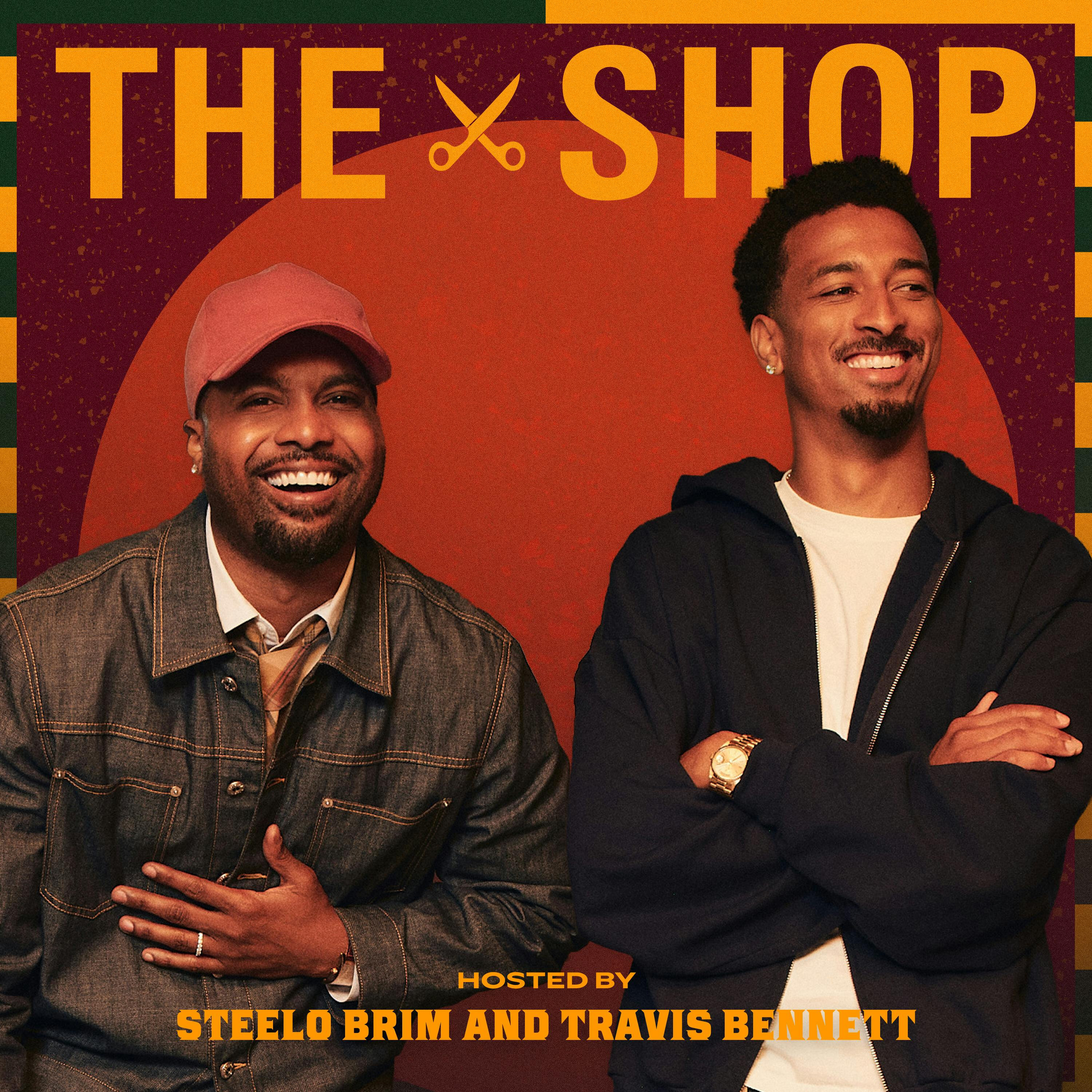
Chris Paul, LaKeith Stanfield, Ty Lue & Killer Mike
45m 22s
A collection of podcast episodes features conversations on a wide range of topics, from the aftermath of 9/11 and the exploration of Star Trek to the realities of Greek life and the challenges of youth development. Central themes include the importance of honesty, accountability, and mentorship in both sports and personal growth. Coaches are urged to speak truthfully to players, avoiding evasion or "talk-around" tactics, while emphasizing preparation and emotional intelligence. The discussion extends to financial literacy, where young people are encouraged to seek mentorship rather than rely on external advice, especially in navigating wealth and responsibility. A strong focus is placed on Atlanta as a model of Black economic and cultural advancement, rooted in historical resilience and community cooperation. The hosts advocate for Black-white collaboration, urging investment and shared leadership to transform cities. Personal stories—like writing a book about family trauma or starting a business—underscore the power of vulnerability and storytelling in building community trust. Ultimately, the conversation promotes authenticity, active engagement, and intergenerational knowledge sharing as vital tools for personal and societal progress.
Hey, it's Alec Baldwin. This season on my podcast, here's the thing I talked to actor Stephen Root. I'm a people watcher. You see that guy going down the drain though? Yeah, I can use that. An open igloo co-founder, Alia Muhammad. I love staying on top of what is going on in our city, what is on renter's minds. And taking all of that knowledge to build a platform that hopefully is going to make New York City better in the long run. Listen to here's the thing on the iHeart Radio app Apple podcasts or wherever you get your podcasts. Hi, I'm Michael and Perry Oli. I want to tell you about my new podcast Underground Zero. We're looking at the opportunity of a lifetime for us and the other families. It's about the aftermath of the 9/11 attacks. What's in the tunnels? Go boss over English. It can be worth half a billion. Starring Steve Sharipa, Rhea Brutzon, and me, Michael and Perry Oli. How far you prepared to go? Depends how far you are. Listen to Underground Zero on the iHeart Radio app Apple podcasts or wherever you get your podcasts. Hey, this is Robert Lam. And this is Joe McCormick and we're the hosts of The Stuff To Blow Your Mind podcast. This week on the show it's Star Trek. So we're going to be talking about the board all week long. Are you ready to get some probes put in your flesh? That's right. Tune in. Resistance is futile. We're going to talk science, the culture of the board, various interpretations, and we're going to talk about Star Trek first contact on Weird House Cinema on Friday. Listen to Stuff To Blow Your Mind on the iHeart Radio app Apple podcasts or wherever you get your podcasts. Back to school is here and you know what that means. Dirty Rush is on. As campuses come back to life and rush week kicks into high gear. We're taking you inside the mysterious journey of a sorority girl from pledging to initiation and just about everything in between. Join in me, Gia Judeis, Daisy Ken, and Jen Vessler. Dirty Rush takes you deep inside Greek life. Let's get dirty. Listen to Dirty Rush on the iHeart Radio app Apple podcasts or wherever you get your podcasts. No, I think the biggest thing, like I said, before I was being a player's coach, I just tell them the truth and I think a lot of people respect that. But are there coaches who won't tell players the truth? Are they lying to them or they just not withholding them? Well, it's some coaches that talk around, talk around, like a show video, CP, turn the ball with five times in a row, and I come and say, "Hey, we need to stop turning the ball." That's real. No, that's real. That's real. Bad Recarter and Paul Rivera are joined by Chris Paul. I wrote a book, man, and I'll tell you it's dope to be able to tell your story. You know what I mean? So people, you know what I mean? Get a chance to see the good and the bad that comes from here. The Keith Stanfield. It's sometimes your stumble and not be prepared, but part of what it means to show up is to be prepared. You've got to know your lines. If you're showing up to set what papers, I don't even know how you got here. I'm very confused. Tide Lou. I think when you say I'm sorry, players coach, like you can't pull none, you can't get none over on me. Like I'm from the streets, just like you from the streets, like you go on to the club. I'm cool, like I just be ready to play tomorrow. And Killer Mike. I would like to see more black people and white people who are truly allies and co-conspirators to bring you to Atlanta, make a real investment and help this city grow so that we may be the prototype for what we want to see other cities throughout the South Dakota. Check it out. Now, Mazoo does that what he's saying? He should have never said I lost locker room. What do you say? Oh, he said that? They asked him if he lost a locker room. He said, I think so. And that's why I got to try to get it back. Because you know, you never said that. Yeah, I mean, I'm a dive before I've been. Yeah. I'm going to the grade with that. But I mean, but he's going to help a job, you know, man. It's his first year. Is it first year? And like you said, to take over a team that went to the finals last year, he made it a great job. First time coaching, come from behind a bench, he's going to help a job. And they don't talk about how many mistakes a player making the game. Like I said, coach makes one mistake or two mistakes he gets fired, but a player got seven turnovers four to fifteen four to nineteen. Like you just keep, you know, keep firing good coaches and keep blaming the coaches. Like everybody's going to make mistakes. I don't care how you look at it. You can go into a series and be prepared. Boom. But like you're going to make a mistake. That happened last this year against a Sacramento. I think it was 157, 157. Whatever that's crazy. We pulled the foul into the game. But we did your foul. You know, you call for a foul. We supposed to foul. We did it again. It's the coach. So you look at it. You know, we're foul team. We supposed to foul. We didn't foul. We supposed to stay at home. We didn't stay at home. But then you look at it. You know, I go to press car. I take the blame. You take the whole blind. I don't care. I don't care what people are. I don't care. I don't know if I hear one coach here in the shop speaking. I think I hear another coach here in the shop. Now I got too much money. I need you. You better kind of money. You don't want to. You don't go. Wow. For what? I'm an A. I'm an A. You coach. You got to be interested being an NBA coach when you're done playing. No. No. Zero interest. No. I can't. Honestly, I don't want to travel like that. Got it. Man, the great players. They don't have patients either. Yeah. Like the great players. I think great players can't. I think great players like him can't identify talent because they just go like, you know, he can't play. No, I can't. If you sit and talk with him about who can play, who can't play, you're like, what the fuck are you talking about? Like, of course, that guy can play because he can't do the hardest thing ever. It's very hard for great players to evaluate. Man, the thing I look at it like that just because I'm on the grassroots level, right? Like, it's a kid job partner. It's a kid that played in my A.U. program. I'd be one of the favorite kids I ever coached. It was a kid named Altaric Gilbert. He never played in the league. He went on to UConn and played, but he just, especially when you're a guard, T, you know what I'm saying? Like when you're a guard and you're a coach, you just want somebody that got high basketball IQ. You want him to have that. You want him to have a dog. Yeah. You know what I'm saying? You want him to be a go-getter. You know, and so I think that's, but that's why I love A.U. Because you get a chance to actually mold kids at an early age. Because when we get to the NBA, we ain't trying to hear none of that. Bro, you get to the NBA. I mean, I can't imagine coaching us because we feel like we know here. No chance, I could do it. I mean, I met a great player. He's actually my favorite player. I got to call besides you, of course. But you wanted to play with him. He's those guy named Kobe Bryant, Kobe Bryant. I get a call from TIP in the middle of the night. He's like, hey, I'm like, what's up with him? Actually, it's like just eating. He's like, hey, he say, get down to the studio. I'm like, for what? He's like Kobe here and I know you love him. I got up and I took my wife. I made sure I hated him when we took the picture. I was like, LeBronz, our favorite player. So I was like, he like tall, I ain't taking over. I'm actually Kobe. I was like, yo, I say, you fed a retirement. I say, I don't, I don't really know who I'm going to be like, yo, this is the man's, the ghost is going to take it out this year. Who should I look to to follow? And he's something to tell you. He said, it's this kid if he could stay healthy because he's skinny. And I'm looking at Kobe like, if nobody, you know, on the television side, y'all never have seen him in person. He physically wasn't impressive. He was being a real thing. I used to wonder like, you be doing that on court. You look like a god on court. It looked like I could take you on the street fight. And he was like, man, this is kid. He say, I'm watching him. He says, but I think he's who you should follow. And I was like, who he's this kid, nice, death curve. And that's when I started watching, stepping on the stage. And he is not just one, I was like, oh my god. Like, so Kobe is one of those great. So I think identified because he's, he reminded me of Hercules. Like, you know, he knew he wasn't at some point the god Michael Jordan, but he's, he's one of the players that I really saw have the desire to defeat his idol. And that's admirable to me. It's like, as a rapper, every time I get on with the hundred three thousand with the whole, or even with my rap partner, L, like my goal is to be the most badass motherfucker on the track. On the track, you want to go over the best verse. But when I see it in a younger dude too, I walk up to him, like, hey, you got it. Like I'm a real company. I'm going to put your manager in about, you got it. And don't lose it. Well, so talk about AAU. You don't just coach A. Did I read correctly at 12 NBA players from your AAU program? Yeah, yeah, 12. It's crazy because I don't like to say kids, but they are because I coach them. I'll be with them during the summer or whatnot. And it's nothing like it. One of my teammates, kid, Josh Akogi, that played with me, with, you know, Josh had played. And Phoenix, he used to catch a Greyhound bus from Atlanta, because y'all know AAU, whatever the state she's got to touch. He used to catch a Greyhound bus to come down to my gym to come to practice. Like the dedication of it. And so my thing with my AAU kids is I'll just be trying to give them my opportunity. It's awesome for you to do that because we, you know, we needed like, we had Lamar Jackson on the show a while back. And he was saying, which we all know, he was like, you know, there's so many guys from where I'm from that some could have been better than me. Definitely played on the level, but because of the people around them just didn't get there, right? So when you look at somebody like what John's going through, right? Who's reached the top already, making money, but can't seem to, I'll know if it's the people around them or if they're. What is it that worked for all of us, Mike? - I think the money, John's had an interest in perspective that you don't like to be like if you look at that incident, I don't talk, I'm a gun guy. I'm very pro-seconded, and I think that part of the problem with guns in the black community is I'm from the deep south. Like I'm from Atlanta, but my family's from Tuskegee, Alabama, Eastern Georgia, places like that. You're given a gun at 19 years old, so you're already accustomed to it. You get your first, you get a BB gun, you go out, you learn how to shoot something small, anything to shoot, generally, you're gonna eat. So if you shoot a raccoon or a squirrel, you better be fed to eat, and otherwise, don't shoot it. So I believe when you look at a person like, "Jah," 'cause his friend tried to save him. It's free and soft. - Yeah, but it's fun. - Yeah, exactly. - Falling out the way. That's a good friend indeed. But I think that honestly, it's hard to tell a 23-year-old $100 million, you know, what to do. But to me, it's easier to get him in a Bass Reeves Gun Club or Naga, which is National African-American Gun Association. Things of that nature, because, you know, you're excited. Boys are excited about warrior culture. Every boy doesn't play baseball or football or basketball. Some boys need to enjoy fishing and hunting and things of that nature. So I think if black people as a culture, if we get quiet about commenting on each other every time we make a thug, and if we focus on nine to 13-year-old boys, getting them acclimated to being outside, getting them acclimated to doing like turkey hunting things of that nature, the guns won't seem so exotic. So I think we need to embrace the thug. Okay, it was a f**k up. But now this is how you direct that energy. So for me, if I had a conversation with John, just like, when you come to Atlanta, let's go through stutters. Let's let these old white guys teach us how to hold a gun 'cause you should never hold a gun like that. That was the stupid-- (laughter) I'm like, he's gonna-- - Yeah, that was the part that scared the-- - Yeah, that's the part that scared the shit out of me. - To the students. (laughter) - You know, having success, being polarized, being famous is something that requires a certain level of maturity. Understanding and experience to deal with. And it's the same thing with weapons and guns. It's a respect and an education thing. And I think we should be instilling within our youth what that education is, what that looks like, what responsibility looks like, yielding these tools that can be so devastating or can save your family. It's all about the person wielding them and the psychology within that person, I think. - Understanding exactly what you guys are saying. But there's also like, he's a part of the NBA. There's an image that the NBA wants to have that he has to think about that part, right? Dude, so like coach, when you have young guys, is that like a conversation I like everyone with guys? Sometimes about like, you're not a part of the NBA, you play for whatever team, the Clippers. - I didn't judge that. - Do you think that's part of your job or not? - Well, I think it's different. I think as an ex-player and being a coach now, when you see younger guys that, you know, you can try to help, you know, I think that, like, okay, I saw, you know, some things that went right, you know, just trying to help that younger kid out. Like, when you get older, 30s, like, see if, you know, I ain't, you know, see if they grow. - Yeah, yeah, yeah, yeah. - Like, you know, you got Bones Highland, Brandon Bauch, you know what I'm saying? - You pull him aside. - Yeah, pull him aside, like, listen, man. Like, you know, you grow, 'cause you're a man. Once you make it to the NBA, like, you become a man, you know, fast. - Who's job is it, C.P.D.? Like you said, that his job, who's job? - You know, it's crazy, 'cause T-Lew is unique in that. He's just a player's coach, you know what I mean? It don't matter if you, 35 or if you, 20, you're just gonna respect T-Lew, because he played, because of the way he come at guys. But I tell you, it's so crazy, 'cause I'm a big job fan. Right, Lil Chris had it. - You know him, huh? - So, John came to my basketball camp, right? When he was in college, and he came in the camp, nobody really knew who he was like that. And after camp, everybody knew who he was. That's when he blew up in order NBA scouts. And I'm gonna tell you, Lil Chris just had a, you turn him in this weekend, and he was playing in Josh Schoo. So, I always say like me, brawn, some of the older guys, we have a unique perspective in the lead, because we still play, right? So, we in the locker room with the younger generations, and we got kids, that's their age. You know, I got teammates that's closer than age to Lil Chris, than they are to me, you know what I mean? But it's so dope, 'cause it like keeps me young. And what I say about John, and just me being in the league in my position as president for the union for so long, is that everything that you guys just said is so real, but it happens so fast, right? I came in the league when I was 19. I had $151 in my bank account as a college student. I declared for the draft, got an agent. The agent offered me $100,000 up front money. Right, luckily I had two parents, who I was like, "That's too damn much." Right, but they said $25,000, cool. Right, so you know what happened? I was at wake, right, in Winston. I went to the bank right up the street, just so I could see what the statement looked like. Right, 'cause we, we don't, we don't know. We ain't never had no money like this. I went and got the statement that said $25,150. Right there, though. No education came along with it, right? First thing I did, I went to the mall. Of course. Took my girl to the mall. J. Gray, his girl, went to the mall. We went to the mall. What? What? We went to the, we went to, we went to the clothing store. We went to the clothing store. I said, "Everybody get you something." Right? At 19, now everybody looking at you as being the head of your household. That's what I said, your family, yeah. And now, also, you want me to try to be the best basketball player I gotta be. And I gotta learn how to deal with the media. And I gotta everybody asking me for this and that. So I, like, I mean, I would love to talk to John. But whose job is it to help? Huh? Whose job is the help? Whose actual job? It's not the coach. It's not really a GM. Is it your family? Is it your job? It's not the seek help, too. Yeah, yeah, yeah. That's a good point. Yeah, you gotta, like, even though you're young, you gotta understand, I don't, you don't have to have all the answers, but I do have a responsibility. Because you have people that are looking at you, and you have people that, that you're gonna be responsible to lead. So, I think you're supposed to seek mentorship, and I think that older black men in particular should offer mentorship. And mentorship, the people who are on the internet on IG, is not some charge you $30,000 to give you advice. Mentorship is free. The $30,000 is a consulting fee. And if I pay you a consulting fee, I better damn well see some results. You do, you do, you do. This is financial literacy. No, that's great. No, that's good. It's so important. It's so important for our youth and for, you know, young black men to know, and mentorship is a real thing. I was walking out of the mall one time, and this dude come up to me. I don't think I was like 20-something, like 25 or something. He'd come up, and he's like, "Hey, man, you know, I appreciate your work. I'm an actor, and I want you to be my mentor." And I thought it was weird, because I was like, "It's grown, like why are you telling me?" But I just had never had that happen to me before, and I didn't know what a mentor was. I didn't have one. I didn't know that that was a thing that could be a thing. And, you know, after I ruminated on it, and thought about it for a while, I was like, "Damn, I could be a mentor." And I understood what that connection actually meant. It's exchange of information. And that's helping each other, and being a stepping stone for each other to get the knowledge before we got to learn it the hard way. And I think our community could use a lot more of that, like, you know, interchanging and transferring information, especially upon you when it comes to being financially literate. I remember, I got my first check. How old were you? I was growing at this point. I was like 20, but I hadn't seen that kind of money before. And it was like, you know, I got like, it was like maybe $130,000 in a check or something like that. And it was just crazy. And it was like, this car that I really wanted. You know, like, it was just like, that was the only thing that was over my money. I had to get this car. And, you know, I didn't have, I didn't have anything. I walked into the dealership with a duffel bag full of money. Yeah. And just set it on the counter. Like, here is an exact amount for how much the car costs. And then they counted all the shit out. And I'm sitting there watching them count it out. And then I drove off the lot. And I was broke. And I, of course, learned the value in learning how to, you know, spend and use your money, because then I'm struggling for the check. I mean, I'm struggling for my rent the next week and trying to figure it out. I'm like, this has to be backwards. But if I had someone that was a mentor, someone to tell me, someone to just reach out to and say, hey, that's not how you spend your money. That would have been very, very helpful. But here's the challenge. You don't know what you don't know at that age. Like the other thing, too, you got to be vulnerable. You got to be willing to tell people what you don't know. Because some people have just talked to you. But they haven't done the homework or done the research. To what year was that when we was with the clubbers? 13, I think. It was a while ago. But men, Tee-Loo got real close, like real fast. And when you got a coach like that, that you respect his opinion. And what they say in the lead, they say that's like the furthest two inches between like being a long assistant coach or head coach or not. But Tee-Loo, man, our team changed drastically when he left. Because he just shouted to us straight. Regardless if you wanted to hear it or not, what not, Tee-Loo was like that. And I appreciated that. I respected that. I mean, I ain't played for him as a head coach, but I'm sure he's still the same way. Like, you can see the way you said nobody on the side line. No, I think the biggest thing, like you said, far as being a player's coach, it just tell him the truth. You know, a lot of times they'd be like, you know, cuss you out, whatever might be mad, but they ruled themselves tomorrow to come back. Like, you know what? You was right.
So all I can do is just tell you the truth. And I think a lot of people would respect that, you know, just to say. - Is there some coaches who won't, I've heard a lot of times when those coaches, they won't hold a guy accountable. - It's a lot. - I hate that word. - Tell me what that means to you. Is there, but are there coaches who won't tell players the truth? And are they lying to them or they just, withholding them from you? - Well, it's some coaches that talk around, problem, talk around like a show video. - Cp, Cp, turn the ball with five times in a row and I come and say, "Hey, we need to stop turning." - No, no, no, no, no, no, no, no, no, no, no, that's real. No, that's real, that's real. - Some coaches and show films and stuff will be like, "Look, I would defense got to be better." What coach they just going to, isn't? (laughing) But, but T, T wasn't like that. - He'll do it like that. - I've had teammates and T, no, I had teammates too that when he was like that, they ain't like it. - Yeah. - They didn't like it. - Well, 'cause he, 'cause you talking straight out, I'm like, "Yeah, if you, this out." - But it ain't, it ain't personal like that. - He was always at you either, you know what I mean? But I'm also a player that's like that. I much rather have a guy on my team sort of tell me like during the game, if I get like three turnovers and something like that, be like, "Damn, see, take care of the ball." You know what I'm saying? Like, I like that energy. - But sometimes you do, I know I could get it. I don't know, I never play on that being a team and I can watch the film. Sometimes it's also like, if you turn over to us, and I'm like, "Damn, see, stop turning over." You're like, "I know I'm turning over." - Yeah, you exactly like that. - You know what I mean? - You exactly like that. - You're saying that obvious. - I don't know what. - I might not turn the ball over. - It might not have to be about a turn over. - But, but like, I, I want a guy that got that same energy that I got. And I didn't always say this as a player. Like, I never asked my teammate to do something that I want to do. So, if I'm, if I'm some defense or something like that, I want a guy who passionate and like, who gonna tell me, you know what I'm saying? Book like that. You know, that's why I think we've gotten along so well because we competitive and I know that person want to win just as bad as I want to win. And, and T was like that as a coach, but everybody ain't necessarily like that. - I think you're saying that coach. - I'm sorry, I'm playing as a coach. Like, you can't pull nothing. You can't get nothing over on me. Like, I'm from the streets. You just like, you're going to the club. All right, cool. Like, I, just be ready to play tomorrow. - Yeah. - Like, you guys are a coach. - All they went out loud. - No. - Like, because. - We grown. - Because you played and you know what my friends go out. - I'm saying, what's the difference between the front I was being going out night before going to dinner and then come back to the hotel, 12, 31 o'clock. And the guys go to the club. It's just like, y'all drinking, you're doing the same thing. It's like, you didn't go to the club. So, like, I don't like, I understand what y'all doing. So, like, don't try to lie. I don't try to get over on me. So, when I say players coach, it's like, I think more so can relate to the guys, be truthful with the guys. But I ain't gonna never say like, don't go out. Like, you gotta enjoy it. - Yeah. - Like, it's a short window. Like, people think, oh, NBA, man, it's a short window. And so, and the biggest thing I hate about the word accountability is, you got 15 guys in the locker room. What's your accountability? - Yeah. - Don't keep saying the coach. - Oh, the coach didn't. - You see the same thing I see. (laughing) And you make 50 million dollars a year. (laughing) And you can't get fired. Like, I'm gonna call a guy. I'll be like, y'all in the locker room every day. You see a guy messing up. - You tell him. - You're telling. - All of us are grown enough to, we could actually be coaches at a high school, but something like that. So, why don't we talk about what we see? And then when the coaches come in, they gonna talk to us too. It all, it's best when it's collaborative, man. - Anything that you do. - Right, don't know. - This is the same thing on set with actors and directors? - It is the exact same one. And there's so much about what athletes do that I identify with being an artist on set. There's just so much internal competition with yourself to be better. And it requires a certain regiment of, you know, getting your lines down, getting the character down, study, you know, just a relentless effort and dedication. But it is teamwork. It's a set of hundreds of people. And everyone has their expertise that comes together to pull off the illusion, to create the magic and everybody has to be on their piece and cues. It is absolute teamwork. And we gotta be able to pass the, the spiritual rock. I wish I knew so much more about sports here. (laughing) - No, no, I'm listening, man. I do commercial stuff. - I'm listening. I'm listening. - I'm listening. I'm listening. - How do you remember all the lines? - Right, right, right. - 'Cause Lue, one day, you'll realize it's the same. - Like it is the same. - Yeah, it's the same. - Hey, look, he Chris said he knows when he's had three turnovers in a row. Do you know when you turn in the rock over, you're filming something you're like messing up? - I'm messing this thing up, man. - Yeah. - In the moment, do you know that? - Yes, yes. It's, you know, it's, it's some, a lot of times it's much more than lines. What it, what it typically is is you being prepared and not to be sort of situated in the story, the correct way. And we all got to help each other. And sometimes you'll stumble and not be prepared, but part of what it means to show up is to be prepared. You got to know your lines. If you're showing up to set what papers, I don't even know how you got it. (laughing) I'm very confused if that's happening. So that would be me. (laughing) I'm like, I don't, I'm like, I don't, I'm doing it. I got, I'm mad. - I always wanted to go to a set, man. - Man, this is the one? - It's never always true. - Oh, it's trippy, man. - Man, man. - It's trippy now, man. - I mean, I ain't there all the movies and stuff, but I've been doing these commercials for a long time, right? For a long, for a long, for a long time. - So it's crazy. - But for me, it's crazy to hear that, because everything you just said was so real, because I've been on set now doing all these things, and people come on set and they be like, Mr. Sutton Sutton, can we talk to you? What? I'm a human, talk to me like a human. What he just said was crazy because this is the thing that makes me mad when you're on set. You're like being between shots in the director or something like that would be right there, and then like the talent agency, they'll come over and like tell the director, can you tell him that we need him to talk a little bit louder? - I'm standing right there. I'm standing right there. And I'm like, uh, excuse me. - You can tell the agency, that's what they're saying. - Excuse me, can you tell me? I can hear you. And then I asked questions and they said that there are some, like actors and actresses who will be on set, and only like one person is allowed to talk to them. To give them feedback, if you need me to talk louder. - It is really crazy to lens people will go through to be passive-aggressive in certain fields and not be able, not directly tell you what they feel in, but in some roundabout way, get it across to you. This is a very, I feel like it's contract language translated in real time. It's like, that's what it is, that's what it is. That's what it is. - It's a fine print and people will, they'll allude to things without telling you directly what it is to say face. This is a very fear paradigm, like, you know, being an artist and being an actor. You exist in a fear paradigm. I started at the bottom of it when I first came into acting. I was playing smaller roles. No one knew who I was really. And so you're kind of at the bottom of that pecking order. And as you work your way up, you start to see the way in which people interact with you. It sort of changes and you become the special person and you become the person that is coveted and held at the top at a certain point. And because I've been through all the different layers, I can see the stark difference. And it doesn't feel good to me to have preferential treatment. And it doesn't feel good to me to have people being fake in front of me or treating other people wrong and then treating me nicely. And somehow I'm supposed to feel that that is a good thing. But I feel like the entertainment industry can sometimes be a place where there's just a lot of going on. There's a lot of fake, where there's a lot of things where people aren't being direct and being honest. And I wish that there were more people that would be honest. But it's all about the people who populate. We all say entertainers are frailers, too. Like, you know, at a certain point, you know, we all-- That's how the big of it is. So my man, Bear, is with me today, right? People always assume Bear is my security. I'm like, nah, you know what I mean? He can fight, you know? We're going to make it out. You know, even a comfortable practice room in boxing. Like, we're going to make it out of whatever jam we in. But I keep Bear with me because he's my, you ain't. Like, but I think about it from-- Oh, Mike. Right. Mike, you were so articulate. Mike, you were-- we get out, but I said, boy. But I'm always sad. OK. That's what he said. But you can be-- Exactly. And I love that about him because it oftentimes the most valued person in the King's Court is a jester. Because the only person who could tell the King of Joe, because I mean, the truth is he's telling me as a joke. And I know it's a lot of times entertainers. And after you have to inflate, you build a character. The killer Mike is a character that a nine-year-old boy named Michael created. So I'd drop a record next month, right? It's called Michael. It's me, a goofy nine-year-old kid, flyaway collar, buck teeth. But I created this character based on Scarface, based on Ice Cube, based on Ice T. I created this. So there have been times where I've let my temper get the best of me before I show. They didn't have to walk back to secured actual, like, "Hey, man. Oh, sorry. Oh, I don't want to be in that." But I just wanted to make sure my sister could get to the state. And me and security dappered up. Now, growth is shown, because last night, these shots out the Brian, who was security working the door, I'm like, Brian, we can't be turned some of these people. These white folks paying me a lot of money, Brian. We can't just turn these people away. I need some grace from you. What are the rules? If there are 10 people in the room, then I'll exit three out if I need to bring through you in. But I need you to let Brian know that it's OK to show me some grace. Within an eight-minute conversation, man, about the end of that conversation, me and Brian were ace now, but 27-year-old Michael. Feel disrespected, you know, crazy. Dude, come in, dude, you're out of me. Out of the head to come back like, "Man, I'm sorry." I got times when I'm sorry. So I said, "Let me get this on the front end." And that was one of those times where the growth is shown. Right after that, Bearcane took me said, "You still ain't." Yeah, but you got to kind of not be, too. you got to have it.
that part, you got to be, then, you come to multi-dimensional packets. Absolutely. How long you been rapping, you started rapping? I was nine years old, so. Wow. I started rapping professionally at 27, I knew I could do it for real at about 14, 15. I was the first time my homies took me to a studio. What made you know you could do it for real? The first thing I realized was all my friends were better than me at something, so I'd find something to be good at, right? I mean, at about 15, I remember rapping in a studio owner saying, "Who is that kid?" And that's my realized, I finally found my football, my basketball, my baseball. Like I'm that good at it. And man, they just kept pushing me, my friends kept pushing me. When I first wanted to press up my first mixtape, my friend Robert Hicksett got drafted by the Buffalo Bills '97. I can remember raw, raw I knew if I would, if I had to figure it out, I was going to get a pound of weed. And I was going to go figure out, getting it, getting bad. He said, "Hey, big fella," and he'll still hit me to this day, like, "Don't ever complain about your job, because God gave you what you wanted so non-complain." But he said, "I'm about to send you something," and he sent me a few grand just to press up the tape. I remember going to the bank to get it with the check he sent me and the lady said, "They're like, who your friend got a lot of money?" And I was like, "Yet. Reach." And I don't understand it that he wasn't at the time, but so it meant even more than me that he did that. But after that, I just never looked back. I just never looked back because my friend who had used his talent to go pro gave me financial aid to use my talent to go pro, and I never took that for granted. Mike, if there's one thing that you could tell young Mike that nine-year-old, "Yeah, what would it be?" "What it's going to work?" "What it's going to be?" "What you going to have a big house? You're going to have all the olds who'll cause you ever want it?" "What? The women going to come to your soul. Your girl's going to be so hot." It's hard to convince a child something's impossible. And I believe that something's impossible, it's true. It's hard to convince a child that they can't fly, otherwise you don't have the right brothers. So just eliminate the impossibility and let the child figure it out. Let the child fall. Let them stumble. Let them have to figure it out. But encourage. My mother didn't put me in the studio. She just said, "Yeah, you want to be a rapper? Get you a rapper." She was only 16 years old and she was like, "You can be a rapper." So when I got the opportunity, I didn't think it was impossible. I thought it was possible. So that nine-year-old kid, I'm just going to say, "Don't stop, but don't turn down opportunities to do other things. Don't turn down the opportunity to learn to do something else. Even if you aren't the best at it, you've been exposed to it." And that's the beautiful thing. There's nothing more beautiful than a well-traveled human being. What about you? The question for you. Yeah, it's interesting. I resonate a lot with the imagination of the child. When I was young, I mean, there was nothing I thought that I couldn't do. I was just very curious and mischievous and I had people in my life. I didn't have a father, but I had a lot of women in my life who allowed me to be expressive and allowed me to throw my aunt's wig and dance around in the mirror when I was really young and told me that it was okay and it was a safe space to be expressive. And that was really important in my formative years to know that it was okay to do that. Kids, kids don't have all of the, like, the jadedness that we come along with, the failures and the years of trying to do things and not following through, they're balls of potential. And I kind of want to say you got to pass that rock, but I don't feel like that's appropriate to say it. You got to encourage them to shoot the ball. Absolutely. I want to ask something, you know, I'm hearing a theme here, right? It's probably safe to say every single person in this room has been blessed to make more money than you ever thought you were going to make when you were nine, right? And I hear, like, the desire to help, the desire to share information, we talked about organizing, you know, the word activism, like, why is that important to you all? You guys have major money. You don't need to do anything. You can sit back and do the thing. Well, I still got it. Why haven't you had any grow rich? I ain't like a rich, but I'm on my way here. I live below my main stage. It's crazy, like, when you're a kid or whatnot and I know a lot of stuff come back to financial literacy, but when you was a kid growing up, you always said, "Man, if I get $1 million, everybody gon' be there." Until you. Back then you were, though. Yeah. Back then it was, it was close. Yeah. Back then you said that. And so now, knowing the people that you know, everybody, I'm sure, here are no billionaires, right? Absolutely. That work, every single day, so I think at a certain point, too, exposure is the big word that I'm hearing. That's what you learn. Yeah, the key word in activism, I think, is active. You want to be active, a lot of people figure that, you know, posting something online and update a tweet or something like that, and that's how you, you know, that's your form of activism. And by the way, that has its uses, but I think being on the ground floor, talking to people, you know, really, you know, spreading knowledge across, spreading wealth across, and doing that in a way that can help people mobilize and get up on their own two feet, I think is what's important. So experience is really an important part of the activism and taking people out of their comfort zones and putting them in places where they can learn things. I remember when I first came to L.A., I had never had wine before, and you know, I was, I think I was like 19, 20, you know, I came to L.A., and I was sitting on a table full of actors in this movie that I was in, and the waiter came over with the bottle of wine, you know, they show you the wine. I never knew that they showed you wine, so when they showed me the wine, I grabbed it and took it to the end. And everybody was looking at me like, "What the hell going on?" And I'm like, "Why y'all ain't, 'cause we're off from, you know, we used to steal bottles, and then we would like break the lock off and then pass it around, and everybody's drinking it." So I'm thinking like, "Oh, you, you know, this is the bottle you're passing me the bottle." This is a 40. Not even pissed off, I ain't going to lie to you. I was just like, "It's like you're going to help us." Yeah, that's the other thing, you're going to throw us something in the mouth. Yeah, it was, it was crazy, but I literally didn't know no better than I had to learn, you know, different etiquettes. I hadn't had sushi before. So I was like, "Yah, you raw fish?" They're like, "Yeah, you dip it in the thing, and chop sticks, I'm using them like this." But it's like, you know, you learning and being exposed to those days, you find out they're not really too much different than what you know, the game don't really change. It's really just, it's just molding into a different game. So like, oftentimes I bring some of my homies in, bring them all set, actors in the system or whatever, but you have an acclimated to the climate yet. As I told you, how climate's weird. How important is that, right? Like spreading the nut. You have a book coming out, you know, lessons like how important is spreading the learnings, the failures, the lessons. And it's time and two, it's time and figuring out when you're ready to sort of tell that story. I wrote a book, man, and I'll tell you, you know, if anybody else didn't ever did that, it's one of the craziest processes ever, ever. And I literally went on an emotional rollercoaster because it's called Lessons From Papa. My grandfather got murdered by senior year in high school, right, by five teenagers. And my granddad was my best friend. I mean, that was my right hand man. I lost my grandmother when I was eight and my grandfather, he had the first black-owned service station in North Carolina. So in my book, I'm talking about that, and through the process of writing a book, some of the stuff I hadn't talked about, you had to relive it a bit. I had to relive it. And I did the audio for my book too, so it was one thing writing it. So I got videos when I was doing an audio book of like, just breaking down, you know, because it's like therapy, right? They tell black people don't, man, you don't need to talk to about nobody, but this was like therapy for me. So in my book, I talk about all of that, so it's dope to be able to tell your story. Get a chance to see the good and the bad. You mention therapy, everybody get therapy, I think it's really important and gives you perspective. Like someone literally, what my therapist does is she's amazing, and I wish I could plug her. I can't. But she will lead you, she will always lead me back to myself. I'll say a bunch of things, I'm going through things and I'm thinking, I'm thinking, and she might even just sit there and be like, now what do you think? I'll be like, now that I said it. There's another perspective that I have about it, and there's something nice about having that bounce board that's skilled and has the tools to bring you back to yourself. And that's what I like about the book, too. It's like you open up that chamber being vulnerable, and I think you reap a lot of dope benefits from doing that, and the more we can encourage each other to do that, I think the better. Before we get out here to keep on, I'm sure you obviously, he talked a lot about Atlanta. He talked a bit. You played in Atlanta. You obviously on the show that represents Atlanta. What does that place mean to you? The first time I went to Atlanta, I was very pleasantly surprised to see that everyone there was black. I didn't know such a place existed in the U.S., and I'm from San Bernardino, which is our 30 North of here at LA, and you got a lot of different influx of cultures, but you don't see black people populating in the bankers, they're working at the airport, they're there. You know, everywhere you go, there's a black person that's employed there, and I just thought it was really beautiful, and it made me feel like, wow, the potential of what black people can be when we're congregated together, and what we can accomplish together, and to be on this show that was like a real, you know, like, we were.
We're taking the black experience and kind of like trying to polarize it and make it digestible and understandable to people that may not understand it, and also lend voices to those who, you know, feel how it feels to be black and exist and be black. And what I was really inspired by was Donald, you know, having come from the area and having, you know, been able to get to a point where he was able to bring his city back and express the city to the masses through his perspective. It was something I thought was real special, and that more of us should be doing. It's taking ownership of our narrative, and him being the one that's pinning it, it's like nobody else is telling us what blackness looks like. This is coming uniquely from a black man, you know, you get a lot of scripts and it's written by other people who don't live our experience, and they want to tell us what being black is, which is also why I think it's important to be selected. I advise all players and athletes and artists that I meet, I say buy something in Atlanta. I said, I don't buy a house for you, baby mama, your mama. Why Atlanta? Well, why Atlanta? 'Cause you're not playing from a defensive position. Atlanta's more than just a black city. It's a city, 1906, there was a huge riot there, right? Something gets worked out between the white class and the black class to say, hey, we're going to be a southern city that destroys itself, and at this time, it's known for trains, trains are coming through here, all the commerce that comes to the South East, all the freight is coming through there. Yeah, we can't do this again. So the first black millionaires, people like Alonso Harrington, who started with barbershops, there was all black barbers, but only served white business men. And then he learned about insurance. He said, well, we don't have life insurance insurance. So he used to be coming, and he started getting becoming a broker for insurance, built the largest, and this is, again, this is like 1900, early 1900, built the Atlanta Life Insurance Company. Atlanta has always been this peculiar cooperation between blacks and whites, William Hartzfield, white mayor, understood that aviation was the future, trains weren't going to be the future. Gave Delta like a 50-year contract for a dollar a year. They ran them out of town, ridiculed them. But that contract made us a huge delta hub. You see black people leading from the woman that put me on the billboard Delta up there who leaves their marketing to the woman to the people who literally when you land a plane unless you go on a Jamaica Africa, you don't see all black crews. And I would like to see more black people and white people who are truly allies and co-conspirators to bring you to Atlanta, make a real investment, and help this city grow so that we may be the prototype for what we want to see other cities throughout the South become. Tell me about that. Can you talk about all my businesses? That was beautiful. No, really. That's like put your money where your mouth is. You talk about being selective. Your next film is "Hundred Manchen", which is a scary movie. What was that like? Because that's kind of different than most of the things I've seen you do. Yeah, it was great. It was a Disney movie. For me, just the scale was different than anything I had experienced before. Day one, I'm taking a walk with the CEO of Disney, the guy who is the Mr. Disney guy. One thing that I found quite striking was that his shoes were, they were just some dusty like old Nike, and I was like, he's wealthy. There's any indication that your wealth is that you're not worried about what kind of shoes you got on because it really don't matter. They're used specifically for utility. It was a beautiful gift, the experience. I never experienced anything like that. It was really beautiful working with all these great people like Danny DeVito. I grew up watching him and never wanted to stop. He's a great man. He's so cool. Yeah, it's so fun. It was Owen Wilson and all these dope people chased Dylan, working with all of them and Justin Simeon, who's our director, who's black. It was dope. I'm cast as a lead in a Disney movie and I'm black and he's a director. He's black. So we go into his office one day and we just look at each other and we're like, what the hell is going on? But it was dope that we got to that position and we wanted to try it if we could maintain some integrity and blackness in them spaces. Because we know in a lot of times, it's just not represented that way. So we want to make sure everywhere we could put a little bit of black in there. So when I came in to do the role, they said, what you want your hair to be and I said, Dreads. And first people kind of like Dreads. And I'm like, just trust me. And so they put the Dread wig on me and they're like, oh, Dreads. It's Dreads. And I'm like, yeah, it's the little things we got to do to put ourselves in positions to be seen in our many multifaceted ways. I don't even really like to call them Dreads. I rather call them Locke's because there's a negative connotation. I get to ask one selfish question every episode and it's for you, Mike. You have a project coming out? Yeah, I have a project named Michael coming out on jelastic safe, interesting enough on Paxburg. And rumor. So first congrats on that. Rumor has it. You got one of my favorite artists, one of your favorite artists, Andre 3000. Yes, that's a future jump. Talk to us about that. I'm a Dungeon family. We're Dungeon family. I'd always wanted Dreads on something. I'd sit and stuff over the years. People are like, "Kill, that's hard." Man, that's hard, but I just don't feel like rapping right here. It's like, "God damn, Dread, I'll sell it." I just didn't know what I ain't for with Kill, you know? But you know, and he said, I came out here, I flew, no idea exactly to produce the project. And I learned so much working with him. It was like playing under a player's coach. You know, it truly was. And Dion says to me, he says, "Oh, I got to show you how to use prose." And I'm like, "You talking about a problem?" I got the hottest mix tape in the lounge. Now, we're going to make this album, so he says, "I asked my second Dread come in here." What does he say? "Yeah, Dread comes in. Here's it." And this time, I'm like, "I'm not asking Dread. I can't take another note." You know what I'm saying? And Dread comes back. He said, "Kill, I want to leave you something." I said, "Well, he left a bunch of records." He said, "You know, pick what you like." I said, "Foot like that I like." He said, "No, not for you." I said, "You're going to get on my project." You know, I talked to him and I was like, "Girl, you're going to get on my project." You're like, "Beats? What was the beat?" Beats and verses, just different ideas. He said, "It's art as you never stop." Of course you always have ideas. But he said two scientists and engineers. And he sent another that he ended up taking back. And then we did another record that's going to drop in the future. But scientists and engineers, he dropped it. And I'm just like, "Okay. It's some Drake 3000. Okay. I'm going to have to wrap this beat. Okay. My cousin, like you looked at me and said, "I don't give a fuck what it sound like." Because we're doing this record. It was funny because there was a evacuation protocol that essentially made sure the essential cast was safe. I was going to be good. It was a wife on the head of where it is. Never going to be like, "Man, I had him in my house. We protect the man." We ain't got nobody to kill him. Shout out to he here now. He's going like, "Let's look at you. Tell him what's up." He's just doing what he said, man. Thanks for listening to The Shop Uninterrupted. Make sure to subscribe, rate, and review wherever you're listening to the show. For full video episodes, check out Uninterrupted's YouTube channel. And for weekly show updates, follow The Shop Uninterrupted on social media. I love staying on top of what is going on in our city, what is on renters minds. Hi, I'm Michael and Perioli. Gold bars, silver ingots. It'd be worth half a billion. Starring Steve Sharipa, Ray Abruzzo, and me, Michael and Perioli. We're going to be talking about the board all week long. That's right, tune in. Dirty Rush is on. As campuses come back to life and Rush Week kicks into high gear, we're taking you inside the mysterious journey of a sorority girl from pledging to initiation and just about everything in between. Join and meet Gia Judeice, Daisy Ken, and Jen Vessler. Let's get dirty. Listen to Dirty Rush on the iHeart Radio app Apple Podcasts or wherever you get your podcasts.
Podcast Summary
Key Points:
Multiple podcast hosts discuss diverse topics including the 9/11 aftermath, Star Trek, Greek life, coaching accountability, and financial literacy.
There is a recurring emphasis on authenticity, mentorship, and vulnerability—particularly in coaching, mentorship, and storytelling—as essential for personal and community growth.
Atlanta is highlighted as a symbol of black economic and cultural resilience, with calls for Black and white allies to invest and co-create, ensuring equitable development in urban spaces.
Summary:
A collection of podcast episodes features conversations on a wide range of topics, from the aftermath of 9/11 and the exploration of Star Trek to the realities of Greek life and the challenges of youth development. Central themes include the importance of honesty, accountability, and mentorship in both sports and personal growth. Coaches are urged to speak truthfully to players, avoiding evasion or "talk-around" tactics, while emphasizing preparation and emotional intelligence.
The discussion extends to financial literacy, where young people are encouraged to seek mentorship rather than rely on external advice, especially in navigating wealth and responsibility. A strong focus is placed on Atlanta as a model of Black economic and cultural advancement, rooted in historical resilience and community cooperation. The hosts advocate for Black-white collaboration, urging investment and shared leadership to transform cities.
Personal stories—like writing a book about family trauma or starting a business—underscore the power of vulnerability and storytelling in building community trust. Ultimately, the conversation promotes authenticity, active engagement, and intergenerational knowledge sharing as vital tools for personal and societal progress.
FAQs
The podcast explores the aftermath of the 9/11 attacks, focusing on the hidden world of the tunnels beneath New York City and the emotional and historical impact of that event.
The podcasts include 'Underground Zero' (about 9/11 aftermath), 'The Stuff To Blow Your Mind' (about Star Trek and science), 'Dirty Rush' (about sorority life and Greek culture), and 'The Shop Uninterrupted' (about personal stories and experiences in entertainment and community).
The host emphasizes that mentorship is free and vital, especially for young black men, and that financial literacy should be taught early through real-life experience and guidance from trusted figures, not just theoretical knowledge.
Atlanta is highlighted as a city of unique black-white cooperation and innovation, with a history of entrepreneurship, resilience, and cultural development, making it a model for how diverse communities can grow and thrive together.
Honesty and direct feedback are valued in coaching, with players and coaches alike emphasizing that truth-telling helps build trust, accountability, and growth, especially in high-pressure environments like sports.
The host encourages children to believe in their potential, stating that it's important to eliminate the idea that something is impossible and to allow young people to fall, stumble, and learn from failure—because potential is limitless.
Chat with AI
Loading...
Pro features
Go deeper with this episode
Unlock creator-grade tools that turn any transcript into show notes and subtitle files.
 PodcastTranscript AI