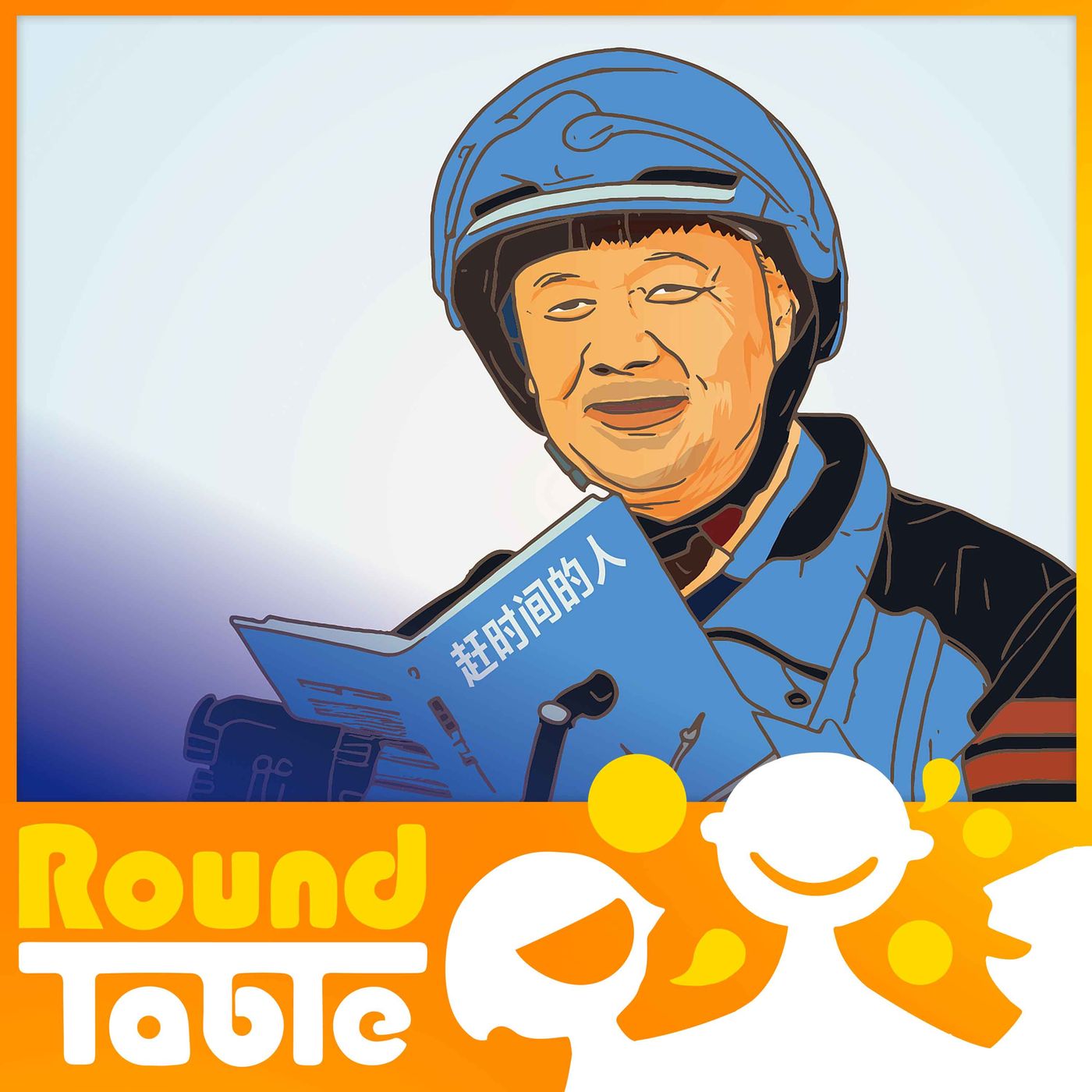
Wang Zibing, a 56-year-old food delivery rider from China, defied expectations by winning the Lu Xun Literature Prize, one of China's highest literary honors, for his poetry collection "Low Flight." Despite leaving school early and working various low-income jobs—including construction and street vending—Wang never stopped reading, often scavenging second-hand bookstores and discarded newspapers. He began writing poetry during brief moments between deliveries, turning frustrating experiences (like correcting a wrong delivery address) into poignant works. His poem "Men in the Hurry" went viral in 2022, leading to his first collection and eventual prize. Wang's poetry resonates deeply with ordinary people, celebrating resilience and the beauty of everyday life. As he said at the 2025 Spring Festival Gala, "Poetry is a piece of candy in my life." The discussion also connects Wang's success to a broader trend of "new popular literature" in China, where grassroots individuals create art from their lived experiences. This mirrors historical Chinese poets who wrote during hardship, suggesting that suffering often fuels profound artistic expression. Wang's story inspires anyone to pursue creativity, regardless of their circumstances.
Discussion keeps the world turning. This is Round Table. You're tuned in to Round Table. I'm Steve Hatherley today with Yushan and Yusha. Coming up, we usually search for great art in hallowed halls, but the literary world just got upended by a man who spends his days navigating rush hour. At 56 years old, the food delivery rider won a prestigious award, not despite his job, but because of it. Coming up, in China finds, we venture into the alleys to discover how urban life is birthing a new chapter in Chinese poetry. Perhaps you won't see your city the same way again. Don't forget you can find us at Round Table China on Apple Podcasts and we love hearing from you, Susender Voice notes our way or your emails our way as well. Also much appreciated, Round Table Podcast at qq.com one more time, Round Table Podcast at qq.com. Think history is behind us? Think again. Timeless discoveries, modern meanings. This is China Finds. It is time for the next edition of China Finds. It's the part of Round Table where we hand the reins over to Yushan because we love her beautiful artistic brain and where it likes to take her and it's often to artistic places and it is happening again today. I thought that was not the point of this segment. Well, it was. It was. You maybe I didn't express that out loud when we talked about it in the meetings. But anyway, what a great story you have for us today. It is, we do continue on today with our topics on art, but this time we switch over to poetry and finding it in unexpected places. Yeah, the story I'm telling you today belongs to 56-year-old Wang Zee. Being by day, he races through city streets delivering take-out meals. By night, however, or more accurately during the tiny gaps between his deliveries, he writes poetry. Today's artist is a delivery writer who became famous very recently and I will explain why later. At the very beginning, let's just introduce his becoming. He was born in Eastern China's down-soup province and he left school early and took various jobs from a construction worker, street vendor to Sandredger and scrape collector before becoming a food delivery man in 2019. But throughout all of these years, what surprised me at the very beginning when I was learning about Wang Zee being a story was that he never stopped reading. He would browse second-hand bookstores and even search through discarded newspaper, just looking for something to read. His love of words started from an early age. Yeah, despite what occupation he's taking at that time. I think that's something that we can all learn from because as we grow up, reading seems to be an ancient habit now that we are perceiving messages in a much faster way. And also, yes. I kind of can't imagine that. While so, he started to get ideas and maybe stories from his daily life because of the all of the experience that you just mentioned. And then it kind of makes sense to me that why he can make maybe good poems in these areas. Yeah, he first started off becoming famous on social media. That's when he started to release his own poems on social media. And all of those works of his that got most highly rated actually come from his everyday life. For example, one frustrating day, one of his customers and actually put down the run address for his or her delivery. And maybe it was you. You were probably at a movie at the time. Anyway, that forced one's immune to travel multiple times in order to correct the order. And while sitting at a red light eventually after that's all done, he was exhausted and irritated of course. But all of a sudden, a few poetic lines suddenly came to him. And those lines became men in the hurry. A poem that later went viral online in 2022. And one year later, he published his first poetry collection, "Men in the Hurry," "Poems of a Food Delivery" writer. And that's when more and more people started to notice him and start to follow him on social media. So it's not like he is brand new on the scene. He's been writing for a while. He's been posting and publishing for a while as well. And it was this year that a collection of poetry from him that earned him this very, very prestigious Chinese literature prize. Yeah, I think a lot of us started noticing works from him since a few years ago. And he was actually leading up a whole internet trend of people from all works of life. For example, a construction worker, he's wearing the orange vest and the yellow helmet while playing Gu Zheng, which is one of the traditional Chinese musical instrument in front of a live streaming camera. So that kind of kind of started after once it became famous. And also this year, his name got very well known like you said, Steve, after his poetry collection "The True Facing," which literally translates into low flight when the prestigious Lu Xun literature prize. This is a big deal in China, right? This is a big deal in China because it's one of China's highest literary honors and it's also named after a writer who has been referred to as the father of modern Chinese literature. It's amazing. And interestingly, Lu Xun himself, back in his time, used to write about very folk detail of the commoners and used the normal people's daily life to reflect a deeper lesson of what's going on in our society. I think that kind of hits the boomerang right back to your hand. Full circle. So many years later. So yeah, one of Wang Zibing's lines in that collection that won the award this year goes, "Who says spreading your wings means flying high? Flying low is also flying." So that's one simple line, but it speaks to millions of us ordinary people who work, whose work may not seem glamorous yet quietly keeps society moving. So we are all part of the society in pulling this off. And that reflects what he said back. And I think it was in the 2025 Spring Festival Gala, too. He was invited there after he got famous. And he was there to introduce one of the songs throughout the Gala. And the announcer asked him why he loves poetry so much amid his fast-paced life as a delivery writer. And this is what he said. I feel that with poetry, delivering food doesn't seem so hard anymore. With poetry, I'm not just delivering orders. I'm experiencing life. I'm traveling through it. Poetry is a piece of candy in my life. I think this world is incredibly beautiful. Life brought us into this world so that we could love. I believe that no matter how many storms life brings me, how fine just as many springs waiting on the other side. Many thanks to Shantin from Moore to Read. And yes, exactly. That is why people connect with his work so much. Yeah, I love what he said there about how he's something like he's not just living life, he's experiencing it. And that's what he's doing with his line of work. He's a delivery writer. And that's where he draws his motivation and his inspiration from when he's writing his poems. And I agree with what you said before. I forget which one of you said it about how it resonates with people because he's speaking for everyone almost because not everyone of course is a delivery writer, but at the same time everyone has those similar feelings, but he must see the world in a way that a lot of people can't. Yeah. And a lot of people and professionals have already explained and getting to details of his work. And I understand that of course that is the meaningful part. But what I can find out is that yeah, these kind of things, no matter it's the poetry or the movie. It is kind of reflecting one thing is that's the things or the work that is down to earth is one of the very attractive things that nowadays people want. Why just nowadays though? Or why has it become attractive again? Because I think art, not for the commoners, not for the common people, but art that resonates with people like you and I. Why, why sudden, you think that's a sudden comeback? I feel that. It is this way because while one thing is that before we don't have these kind of fancy poems that can use only
five words to just describe a very magnificent view of the mountain of the rip and the river. But the thing is that now we have them. That is something that can be the foundation of one person's cultural aesthetics. Of course, nowadays people, it is even kind of impossible for people to beat that kind of literature. But now it is the time for people to have another maybe angle and perspective. I think I see what you mean. It's a great point because you know, you can have a beautiful poem that says, "I was at the top of the mountain and peering over the clouds and blah, blah, blah, blah, which is beautiful." And it paints its own picture. But when you know that the source of a poem is from a person who works 12 to 14 hours a day at a relatively low-paying job, so you can assume the struggles, you can assume the sources of stress and the hardships. I think it adds a layer of humility to the art that people find very attractive. And maybe the contrast that you can feel when, of course, we know that that is a delivery driver, writing very good poems. And that kind of contrast that you just mentioned, maybe people in construction, uniform, dancing, or maybe play a musical instrument, is something nowadays people may. I have to say, it can be naturally popular on social media. I think to answer Steve's question earlier, why now? It has to give a quick look back on what we've done in the past 10, if not 15 to 20 years, and how fast our society has been changing within this period of time. I believe it's both sides kind of effort. We're working towards each other in the sense that art is becoming more accessible to us people, and people are becoming more aware of how we can become part of art, if not creating art. Yeah, it doesn't have to come from a scholar. Yeah, exactly. And I remember I used to write about how performing art here in China developed so fast in the past few decades. Like 20 years ago, going to a movie was common, but going to a musical or an opera is considered to be. in Chinese we call it "Young Trim Bass" like it's up there. Boogie. Yeah, well, there's a perfect word for it. For the opera. Yes, for the opera ones, it's not for me, but these days, theaters, governments, local authorities are trying to give incentives on one, lowering the price tickets, two, showing people how this can be connected with each and every one of us, because it's sharing something that all people can resonate about. Love, family bonds, and values that's treasured universally. I interviewed someone a few years ago by the name of Adam Hyde, and he became famous in Australia. He was a part of an electronic music duo called "Peaking Duck" by the way. No connection, but it's just a nice coincidence. But then he had his own solo career where he went under the name "Kelly Holiday". And I interviewed him, and I wanted to share this clip from. this interview was from maybe six years ago or so, but I wanted to share it with you because I think it kind of reminded me of what we're talking about today. I asked him, he's a musician and a singer. I asked him if there was any connection between art and pain or suffering. Do you think art can be created without pain or suffering, art being music or film or whatever the case may be? It's funny. I was having this conversation with my friend the other day, I think. I mean, look, to be honest with you, in my experience, all of the best stuff I've ever written personally has come from being in a strange place. And that's being caused by pain. Also, a lot of the artists that I am heavily inspired by, the artists whose work I love, whether that be, you know, a visual artist, a musician, a sculptor, whoever in my bay, even just human beings who I love talking to because they have the same to have such a deep inside. It's because they've kind of been through hell, you know what I mean? And once you walk through hell, you have more stories to tell than if you don't. And the reason I was reminded about of that conversation when I knew we were going to talk about this today is because I was thinking about our prize winner, the man who delivers food for many hours a day, could he have written these beautiful poems about his perspective on life and the world while sitting at a stoplight or being an elevator on the way up to drop off the food? Could he have written that poetry without going through those perhaps difficult experiences? I don't think we have to praise, you know, the value of suffering and maybe sometimes torture. Well, suffering is a relative term too. Yeah. Right. It doesn't mean bottoming out in life, necessarily. It could just mean going through a difficult time. But it is just, you mentioned it and I found it really interesting is that especially it is quite true in China, even backing history. A lot of very, very well known Chinese, you know, poets, many of their classic poems that have been passed down for centuries were written after their authors had been maybe exiled or suffered political satbacks or found themselves at the lowest points in their lives. And yeah, they were writing poems at these period of time in their lives and they were successful. So you agree with the clip we just heard what Adam said about beautiful art may need to come from some source of suffering. I kind of have to. But, but at the end of the day comes down to the people like for example, there's only one Adam and he becomes the musician after he been through hell according to him. And there's only one one Z being out of tens of millions of delivery writers. He been through that awkward incident of almost failing to do a delivery order. And then he digest that experience into a poem, not every other delivery writers. And then he becomes down to how you perceive suffering and what's going on with you and how you manage to portrait it into something artistic artistically related. And that's also something we're aiming for right now. It's a trend called new popular literature. Yeah, new popular literature and art, Sinta Zhongvin. It's something encouraging common people, ordinary people, grassroots to pursue art in their own way. Oh, that's really cool. So that gives hope to anyone who has perhaps a pen in their hand and a piece of paper or dare I say a keyboard and a screen in front of them. Anyone, you never know you might be the next great poet, wherever you're sitting and listening to this show right now. All right, that'll do it for today's around table. Thank you very much for hanging out with us today for you, Sean. And you should. I'm Steve. See you next time.
Podcast Summary
Key Points:
A 56-year-old food delivery rider named Wang Zibing won the prestigious Lu Xun Literature Prize for his poetry collection "Low Flight," which draws inspiration from his daily life and struggles.
Wang began writing poetry during gaps between deliveries, drawing from experiences like correcting wrong addresses, and gained fame on social media with poems like "Men in the Hurry."
His work resonates with ordinary people by celebrating everyday life and resilience, exemplified by his line: "Flying low is also flying."
The discussion highlights a broader trend of "new popular literature" in China, where grassroots individuals (e.g., construction workers, delivery riders) create art from their lived experiences.
The conversation explores whether art often stems from suffering or hardship, referencing historical Chinese poets who wrote during exile or difficulty.
Summary:
" Despite leaving school early and working various low-income jobs—including construction and street vending—Wang never stopped reading, often scavenging second-hand bookstores and discarded newspapers. He began writing poetry during brief moments between deliveries, turning frustrating experiences (like correcting a wrong delivery address) into poignant works. His poem "Men in the Hurry" went viral in 2022, leading to his first collection and eventual prize.
Wang's poetry resonates deeply with ordinary people, celebrating resilience and the beauty of everyday life. " The discussion also connects Wang's success to a broader trend of "new popular literature" in China, where grassroots individuals create art from their lived experiences. This mirrors historical Chinese poets who wrote during hardship, suggesting that suffering often fuels profound artistic expression.
Wang's story inspires anyone to pursue creativity, regardless of their circumstances.
FAQs
Wang Zibing is a 56-year-old food delivery rider in China who won the prestigious Lu Xun literature prize for his poetry collection 'The True Facing.' He became famous for writing poetry inspired by his daily experiences as a delivery worker.
He began writing poetry during gaps between his deliveries, drawing inspiration from everyday life, such as a frustrating delivery incident that led to his viral poem 'Men in the Hurry.' He never stopped reading, even browsing second-hand bookstores and discarded newspapers.
The line resonates with ordinary people whose work may not seem glamorous but quietly keeps society moving, emphasizing that all contributions are valuable.
His poetry collection 'The True Facing' won the Lu Xun literature prize in 2025 because it reflects the lives of common people, similar to the works of Lu Xun, the father of modern Chinese literature.
He said, 'With poetry, delivering food doesn't seem so hard anymore. Poetry is a piece of candy in my life.' He views it as a way to experience life, not just deliver orders.
His story sparked a trend where people from all walks of life, like construction workers playing musical instruments, share their art online, showing that art is becoming more accessible to everyone.
Chat with AI
Loading...
Pro features
Go deeper with this episode
Unlock creator-grade tools that turn any transcript into show notes and subtitle files.
 PodcastTranscript AI