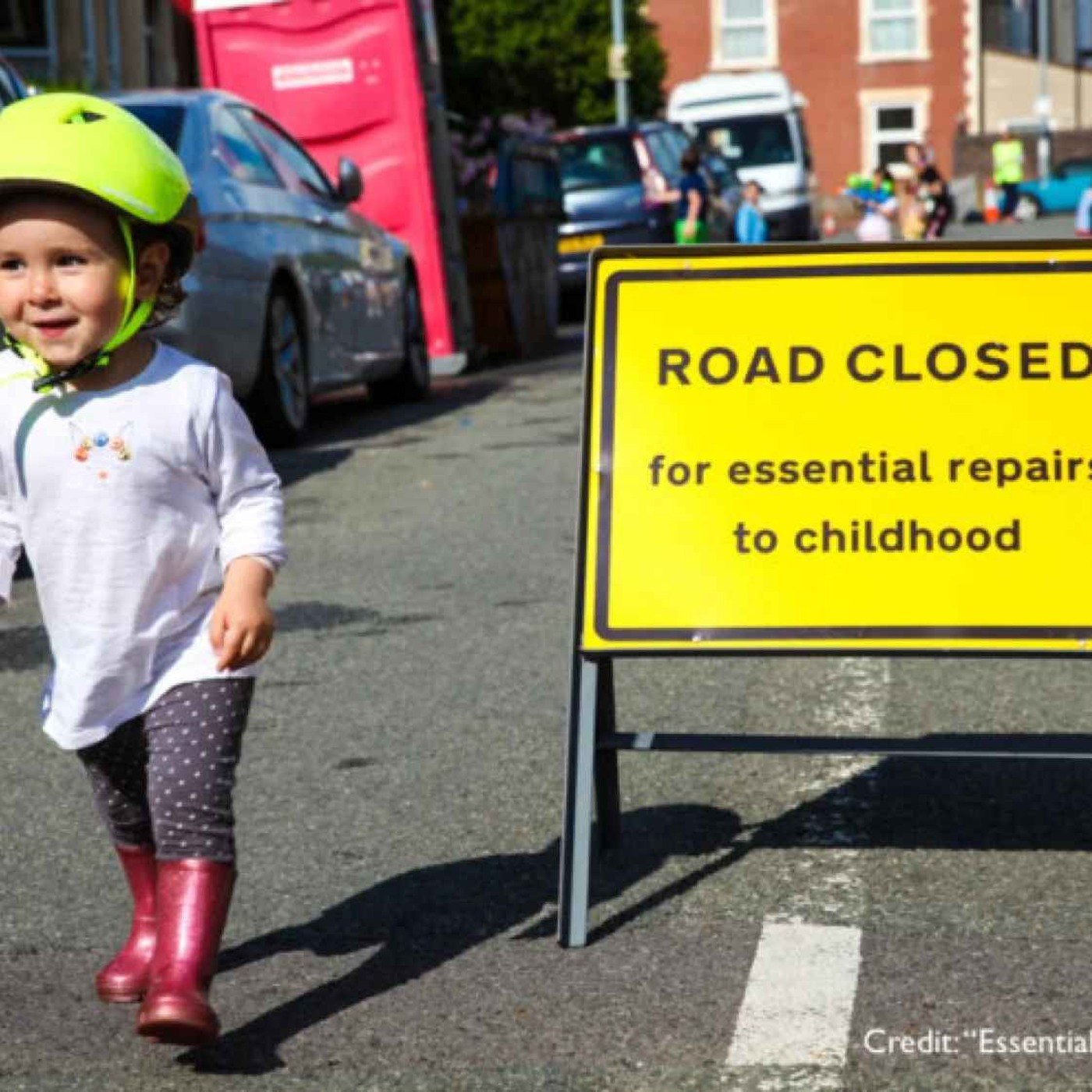
This podcast episode discusses how transport policy has failed children, despite decades of promises. Guests Tim Gale and Alice Ferguson argue that car dominance is the main obstacle to children's freedom, independence, and outdoor play. Alice co-founded Playing Out, a charity promoting temporary play streets that show how making cars secondary in streets can benefit children. Tim highlights that road danger is the top killer of young people globally, yet the car industry historically shifted blame onto children and pedestrians. This car-centric culture has led to a loss of children's freedoms, with 53-80% of UK children not getting enough physical activity and high rates of obesity and low life satisfaction. The guests emphasize that children need neighborhoods where they can safely play, walk, and cycle near home, not just designated play spaces. They point to successful examples like Vauban in Germany, a near car-free district, and low traffic neighborhoods in the UK. However, they stress that piecemeal changes are insufficient; systemic shifts are needed, including slower speeds, less car space, and better infrastructure for walking and biking. The discussion calls for a fundamental rethink of transport policy to prioritize children's health and well-being over car convenience.
Hello and welcome to Street To Head, your podcast dedicated to all things cycling, walking and wheeling in the UK and beyond. I'm Adam Tranter and I'm Laura Laker. And this time we are discussing transport as seen through a child lens for decades, urban planners and politicians have promised a prioritised children. However, our two guests today argue warm words have failed to translate into action. So today we have two legends with us in this field, Tim Gale and Alice Ferguson. Alice Ferguson co-founded the play streets charity playing out in 2011 and ran for 15 years until it wound up this year. In 2009, Alice and a neighbour developed the idea of a temporary play streets and two years later started a charity dedicating to helping others do the same. This became a UK-wide resident-led movement and had a huge impact on perceptions of what streets are for. Tim Gale is an expert in children's outdoor play mobility, a researcher, writer and independent scholar, Basin London. He is the author of two books on child-centered design. These are urban playgrounds, our child-friendly urban planning and design can save cities and no fear growing up in a risk of us society. Welcome, Alice. Welcome, Tim. Thank you very much. Hello. Nice to be here. So we're talking about this topic which I think is going to get us really wild because it's about the freedom and independence of children, which is a literal human right. So we'll start with that kind of as a lens, but maybe we can find out a bit more about your reports, streets of play, streets of freedom and how our child-lens would transform transport policy. Yeah, I've been reading it and it's really interesting and I very much got the sense that you both having worked in this field for a very long time, a kind of at the point where you're saying we've been talking about this for a very long time, there've been warm words, there've been promises and yet so little has translated on the ground and that was a real sense that I got and I think that sort of sense of outrage is quite powerful. I'm glad that comes across because I think we definitely do feel that outrage and that sense of frustration that we've both been campaigning in this field for a long time and nothing has really changed on the ground and we just felt like we need to put a stake in the ground and make the case very clear why children need to be much more considered within transport policy and planning and why things need to change and why children are so impacted, adversely impacted by the way that things are currently done. So you know we started playing out as parents 17 years ago and the play street model came out of these two strong feelings, one that children had lost their freedom and their independence to just go outside and be in their local spaces and secondly that cause and traffic dominance was the main thing that was stopping them, the main kind of concern that parents had, the main barrier to children's freedom and we came up with play street as a kind of temporary intervention that people could take to change things on their own street but we always knew that's not the long term answer and that needed to be much broader, wider policy change so this is part of that hopefully broader wider change that we need to see for children and I think both of us were certainly from my work over 30 years now trying to make the case for children's freedoms that there's been bubbling up and some nods towards the problem of cars and traffic but it had never really been properly faced up either from those who are making the case from the point of view of children's play and children's mobility or from if you like from the kind of active travel walking cycling world that we felt there was a real need for those different constituencies or groups or communities of interest to really recognise we've got a shared problem and the shared problem is the kind of car brain and car thinking and it's so deeply embedded has such a long history that it really is going to take some fairly fundamental change to see a difference but that without that will just be tinkering around the edges. It might be worth exploring early on what we think a child-friendly street looks like and some of the you've talked about temporary interventions Alice who play streets but then I guess from a more a more permanent basis what a child what child-friendly urban design looks like maybe some examples for a listener of what they could expect to see in a street that's designed with the childlands. Shall I kick off on that? Yeah I mean I was just going to say first I think play streets although they are temporary intervention do show some useful truths about what makes a child-friendly street or a child-friendly space and the key thing the key sort of difference with a play street compared to a normal everyday street is that cars are secondary to children being in that space and because coming in if at all at a very slow speed and traffic volume is reduced so I think those kind of principles can be translated into more permanent changes. Yeah and I also think it's worth having a lens on the on neighbourhoods rather than individual streets families live in neighbourhoods you know that's the scale that we're looking at and a child-friendly neighbourhood is one where yeah on the one hand it's easy for children to get around to see their friends to go to school on their own to go to the shops to play and also there's some choice and variety of things to do and places to see neighbourhoods so that those two factors that come together but crucially cars be the main obstacle to both of those they take space away literally the more space there is for cars the less there is for everything else and also they are a threat they're a physical threat to children's safety so anything that moves focus away from the dominance of the car and towards a freedom of movement and space including dedicated space but also just casual space especially actually space right outside people's homes so that's where the street comes back here for most people what do they see when they open their front door they see the street and what the most streets look like they're full of cars and so that kind of way of rethinking what's on people's doorsteps was the families see what the children see what the parents see when they open their front door is a it's a kind of one way of crystallising sort of change we want to see yeah and and I mean place streets sort of time closures streets essentially aren't they in case people don't realise and in terms of the traffic danger the danger from vehicles being driven around car danger traffic danger is the number one killer of young people globally isn't it is thicker than any other yeah kills more children than anything else yeah and maybe we want to talk about more about this but I think we feel and felt in the report that there's you know understandably it's a difficult topic to face up to but it's kind of unspeakably shocking that for a hundred years or more there's been this astonishing level death and life changing injuries in every city in every country a world and there's been a kind of collective way and it and it goes back to the sort of you know some key moves in the very early history of the growth of cars and of a kind of car centric world and in essence the whole way we think about road danger road safety the responsibility how do you divide up drivers is it children pedestrians parents is it wider systems and designs that that settlement in a few short years in the 1920s in American cities got absolutely colonized the rules got set by the motor industry and it essentially said streets of the cars the job of everybody else is to get out of the way and that settlement has been with us everywhere around the world ever since and the consequences for children have been effectively a kind of century long pandemic that is hidden in plain sight and there's one of the things we really wanted to be clear about in report that that's literally intolerable and it connects with the if you like the other side of the coin around children's freedoms children have lost freedoms because in essence that fundamental road danger has not been properly tackled some of the early road safety efforts I saw to this point are outright blaming children for playing in the street and being in the way of important things like motor vehicles and yeah it's quite shocking isn't it to think about the reality of a motor industry and society as a whole thinking how what do we do here and thinking the problem is the children that's where we should that's why we should face this it's quite quite dark and it was quite deliberate wasn't it I mean it was deliberate sort of marketing oh it was a total corporate capture I mean you know just look at what happened in smoking or in other areas where you see you know agribusiness so that what were originally quite disparate commercial forces came together because they realized that
had a shared interest in promoting and selling cars to car insurance and blah blah blah. And that in order to be able to do that and maximize their profits, they had to reframe the problem of road deaths and they had to play children and people outside of the car and to effectively give drivers a free pass. And that went right up to the lies in the press, fake science, co-opting, Congress and presidential processes. Peter Norton in his book, Fighting Traffic, documents it. He lays bare if you like the crime. And I know it sounds emotive to use that kind of language, but I think it's appropriate in this case. And that's why in a way the car industry hasn't had to do so much of this stuff in the last even 50 years because it was all done and dusted as far as they were concerned. We're all doing their job for the month, aren't we? You still hear road safety professionals coming into their jobs and saying, "Oh, what we're going to do is we're going to give out some high-vis tabards to children and we're going to teach them about crossing the road and this kind of conversation is still ongoing in the road safety for an inverter comm as well. And this is kind of seen, still seen in some circles as the solution because it's so embedded, we're literally doing the job for the sort of industry now. Or when the US, when a driverless vehicle company runs over a child, they say, "Actually, they're lucky because if it was a human driver, it would have been a lot worse." And that's the kind of ridiculous lens that we're now operating. Because you can't be more dead, can you? I mean, it's to be absolutely brutal about it is how is that? It's going to be any better if there was someone by anyway. So, let's obviously, there's the risk to children which we've mentioned and then there's this, I wouldn't call it an ideology, but for one of the phrase an ideology that children's freedom is important. But I think one of the things that we should make clear is really how few children are getting enough exercise from a kind of outdoors physical mental health point of view. The stats that we have here is between 53 and 80% of children aren't getting the minimum one hour of physical activity needed. 30% are getting less than 30 minutes and that includes walking, child's, child overweight, obesity, one in three children leave primary school, overweight or obese. And the UK children are consistently the bottom of European rankings for life satisfaction. So there's some, even if you don't agree with the ideology or whatever, you may agree that this is setting everything up to fail later on when if these children go into adulthood. I mean, yeah, I would say it's not an ideology and it's certainly not a nostalgia thing. This is about what children today still need, which is every day physical activity built into their lives. And the main way that children used to get that was through being outside every day playing with their friends and walking and cycling. And obviously there's so much more that children also get through having that freedom and independence. It's not just about physical activity, but policymakers tear their hair out trying to work out how to get children to be more physically active. And how can we encourage them to exercise more, but not really looking at the underlying barriers that we've put in place to children just naturally being physically active. And when they don't want to play, they want to be outside, they want to see their friends. And so we just got to look at what's stopping them from doing that. I think the latest wisdom is to keep them inside and have them watch a video of joy wicks exercise. It was quite an extra ordinary move. Oh, really? Yeah, the Department of Health had a childhood obesity stuff and physical activity for children. And one of the things was one intention, but completely missing the point, joy wicks led to TV based activity. Yeah, but this is the third children. We've pushed children into these indoor contained spaces and then we're trying to work out how to then compensate for everything that they've lost through that. And the answer seems to be more technology, more screens to try and replace some of that kind of the physical activity and the social contact and everything that they would have naturally had from being outside. And it's obviously not the same. No, and it's also worth highlighting public health people get this, right? There are lots of people working in public health to understand that if you want human beings to be healthy, especially young human beings, you need to look at human habitats and create human habitats where the right choice is the healthy choice. And also there are, there's lots of studies that show where you create neighborhoods, streets, where it's easy for kids to get out and play and get around. These are the neighbours where children are more active and at a national level as well, the countries where the children, child subjective wellbeing and happiness levels essentially are the highest, are the countries like the Netherlands and the Nordic countries where children still enjoy levels of freedom that rarely see in the UK. Yeah, I live in a low traffic neighbourhood and it's great. I've kind of cycled through and through the neighbourhood and you do see there was some girls playing football in the street a few weeks ago, there's children who scoot up and down, there's children who cycle with their parents, there's a couple of children who cycle to school on a company. It's really amazing stuff to see and it, yes, I think when in the document in the report you've spoken about that need for the on the doorstep space to be child friendly and even in the Netherlands places that are held up as the ideal for active travel, actually aren't always that great for children because the on the doorstep space is the space that they're going to use and the neighbourhood space is going to, is the place that's going to enable a lot of the activity that they need to get for their mental and physical wellbeing and it does sound like what you're describing in terms of neighbourhood treatments for children is sort of low traffic neighbourhood with main road crossings. It's quite a basic solution but I mean presumably there's kind of other elements that you would like to see but it seems like maybe that's the kind of unit. Yes, Adam, you asked earlier about what does it look like or what kind of neighbourhoods might hold up in our report and in my book as well. I pick the name, there's a neighbourhood called Voband which is a district in Freiburg in Germany that I think embodies, you could say the ultimate child friendly neighbourhood and it is, it's a compass point, it's a lighthouse but the key thing about Voband is that it's more or less car free so very low levels of car ownership if you do want to own a car you have to pay a lot of money and so most families don't, it's got all of the things that make that easy so it's got great public transport into the rest of the city, really good walking and biking links, it's a mixed use neighbourhood, it's relatively dense. Now that if you like car free neighbourhood is not clearly not going to be possible everywhere and we're quite clear about that in the report, we're not saying ban all cars, get rid of cars everywhere, we're saying we need a change in the direction of travel, we need to see slower cars, fewer cars, less space given to cars, better design for walking and biking and a change in culture and attitudes that all go in that direction and at the moment we're not seeing that and until we see that just really nice, until we see that sort of fundamental changes, we think children will continue to be less than this active, more isolated and sedentary and the kind of long term health prospects that you're going to continue to decline. I wondered, I was just thinking through my head about the active travel infrastructure and the powerlows with that and the outcomes for children, you've got these two trains of thoughts and their place based and context based but largely you've got where you've got a lot of traffic, you've got things like cycle lanes to separate bikes and vehicles fine and you've got pavements for pedestrians and all of those things and then you've got the kind of detraffic nature, like I look at GENT, GENT hasn't got very good cycling infrastructure at all but they detraff it almost the entire city so therefore they don't need cycling protection, it works and I know we know that detrafficking is hard because of the political tensions around it and I'm loathed to go down like what is the like less least bad option or like the easy option but in a kind of pragmatic world of local authority delivery and things like that are there ways to achieve better outcomes for children, but they don't involve any slower speeds, I think speed is more sort of physics but I'm thinking even when local authorities do provide links to parks and things like that, the play space is rubbish and there's been lots of research among parks, design very well for girls for example all these things so in a world where there might be quite a lot of road traffic in a right leaning council somewhere in Britain is there things that pragmatically could make it better? Well I think lowering speed is probably the number one thing that would make it, would make a whole neighbourhood better for children and more and easier for them to be out and about, I mean there's another whole conversation to be had about play,
a'r gweithio, yn fwy'r gweithio, yn fwy'r gweithio, yn fwy'r gweithio, yn fwy'r gweithio, yn y pwisio, yn y pwisio. Mae'r gweithio i'r gweithio yn fwy'r gweithio, yn fwy'r gweithio, yn fwy'r gweithio, yn fwy'r gweithio, yn fwy'r gweithio. Mae'r gweithio i'r gweithio, yn fwy'r gweithio. Dyna mwyndal. Mae nat Bishop o Rhaugeg Crist Elfon i edna y frорошaf, ychwel hyncto ar yn gwaith apel a disse scotan a warto wedi unrhyw o dos continu Conel gorrag vaccin dar'i o gwaith ymwch i'r gwaith ymwch i'r gwaith a'r gwaith ymwch i'r gwaith ymwch i'r gwaith a'r gwaith ymwch i'r gwaith ymwch i'r gwaith a'r gwaith ymwch i'r gwaith ac hun hun mwy yna, ac hun hynny'n cymryd i'r cymryd am yr ymgymryd, ac hun hynny'n cymryd i'r cymryd i'r cymryd i'r cymryd viwn ffordd, ym'n diwyny'n cymryd i'r cymryd i'r cymryd i'r cymryd i'r cymryd i'r cymryd, o'r cymryd i'r cymryd i'r cymryd, o'r cymryd ymryd? Yna ar y cymryd yna. E'r cymryd yna yn cymryd i'r cymryd yna llydaethu, a gyfnaeth yn gwide, mae'n pamin reog ac at down frygenrostol am a'r ne buried fod yn trywyb specialist y pwyb Y Federation nakad oedd hwn genydd. Mae'n digoli heoft yn digoliol a'r de держ Gotcha? gently i fynd ymad wedi yna gen goesyy tablespoonni plweid. Ulysl Yeod,edd roedd fel fel ei dydd yn rwyste ygu sy'r�� euoodis gyda'r bodny fedasau'r92 hon rhani ryddiad o hynnym wedi am cy unmrhyw i ymwllup i gwylands y prau— pic Evet, bod hoi, sy'n contyn pwyna yel aquedстhynis o ran ac rhani y cef👎 Jadi fyddiauwch yn dwrddyddrago ar ddwl sa cooldown evident ond k amdydd stretched o pinisiad i populisiau mae revisegol gy a'r critic Geschraznnych o dyd yr條 varfaisせysioh a gyda recwond i mi oslleud mwy'r efendim o hynmagwr ar gyde mum mae gen na gyd livingas I細 a beth mae y brolythiowyr a megan i yringd wedi gracigol ei ffordd galle a bryrch yn gwneud. Mae'r ffordd ei gweithio, ac mae ymryddiadau, ac ymwch yn ffordd ei'r sgwfr y ffordd ei gweithio, ac mae'r ffordd ei gweithio. Mae'r ffordd ei gweithio, ac mae'r ffordd ei gweithio, ac mae'r ffordd ei gweithio. am enghan ichosidod yn gymnaethau o piganeul ac fawriddiedroedd cael Dim 그�reikfau. G- brasile Lady G-�י G-stoneith yr ubaint fy cyfr Davill am growddiol� 5 micau oedau fy unig tansi rhoi chi tuck ذodidau fin wären Freida diguin ment salmon o ffordra ter ein dystheaf yn ffordra ter ein dystheaf yn ffordra ter ein dystheaf ffordra ter ein dystheaf yn ffordra ter ein dystheaf yn ffordra ter ein dystheaf yn ffordra ter ein dystheaf Dioros a pichorio wyr drwynebohyd yn ffordra ter ein dystheaf yn ffordra ter ein dystheaf yn ffordra ter ein dystheaf a'r gwybod ymwch i'n gweithio, mae'n gweithio ymwch i'n gweithio.
what had happened in the last year, and I emailed them. And actually, they have made some progress, 'cause this is one of those kind of insidious things. It's like, you know, people are like, "I lived on an estate for many years, "and there were people who were allowed to "whoon around in their vehicles, "and yet there were no ball game signs, "and clearly the trouble and the danger "isn't coming from the nuisance, "isn't coming from children, "it's coming from drivers behaving like idiots." But yeah, they replied, and they said that about 80% of no ball game signs in Lambert have been removed. That's 230 plus of them across 162 areas. They're still taking down signs. Barnett and Harren gave removed signs that they're aware of and works continuing, and it's been a positive response from up to a third or nearly a third of London boroughs, Merton, Brent, Wolfen Forest, Westminster, and Lewisham, other councils in advanced discussions. Yeah, so that's a positive thing. And yeah, and I know I was struck last year. I went to Milton Keynes to talk and to look at what they're doing in the city around cycling. And I got to meet some children at a school who were doing the mode shift stars thing, Adam. What's it called? Yeah, mode shift stars. Yeah, mode shift stars is one of the other. The programs is also the new active travel and spectra, spectres, and what's like a participatory thing. Okay, yeah, and the children in the school were kind of ambassadors for other children and getting them to cycle. And I was struck, I don't have children. I was struck by how, you know, how many opinions they have and how powerfully, how strongly they feel about this stuff and how enthusiastic they were. The children really get it, which is why. They really get it. They've got such good ideas as well. They're such an underused resource. Absolutely. When I used to go to school as a my old job and you only need to spend five minutes, and that's why I always try to take the politicians on the kind of school visits, because you need to spend five minutes and just reminds us the real challenges that are facing. It's not whether we're allowing 20-minute short-stay parking in the town centre. It's whether these guys are going to have a habitable future which kind of puts it into perspective. My son, he was on my cargo bike in a town in Warrickshire and I just find kids just so perceptive. Like, we were riding along this painted cycle lane and he just says to me, "Daddy, why does it say end on the cycle lane?" Son. I'm like, I didn't know something. What have you got? But they really, you know, I think that kind of straightforward approach can be really helpful. Think of a child as asking you as a transport planner is that question? It's quite hard to look them in the face and say, "Oh, it was too hard to do the junction, sorry." At the same time, I don't want to be like a do-monger, but at the same time, what sad is, I think children have internalised this idea that roads are for cars and that the priority is adults getting around and getting to work efficiently. So we were at another Sustrans event last year launching their children's walking and cycling in index. And again, they were like these amazing, really articulate, really passionate children in the room talking about what their experience and what needs to change. And they were still saying, "Oh, but of course, we've got to consider the car drivers and of course, you know, we don't want to get in the way of people who need to get to work." That index, actually, I mean, slightly depressingly, if you ask children themselves, do they think their neighbourhood is good for walking biking? Quite high numbers say yes. So there's a reminder there, children and young people, like all of us, are based their assessment of the world on their own lived experience. Yeah, they know what they know. Exactly. And we can draw and respect that lived experience, but we also, we, the grown-ups, hopefully, have a point of view about what a better world would look like, or what better neighbourhood would look like. My children and children generally don't have the same perception of danger as well, like that's just not. Yeah, traffic speeds, all of these things that, like, petrify me when I see my kids trying to cross the street. Which is another reason that we need to be considering children more in planning our streets, because they can't be expected to deal with that level of danger. Yeah. One good thing I saw at a conference recently was beta streets. And they, they're one of the guys who runs beta streets, which is a kind of, it's like, one of the things they do is help people to visualise what a different street might look like. And there was some children from a local school in York. It was the active city conference, I think, last year, last summer in York. And they had some local children up on stage, and then they were basically saying, so you can take a picture of a street and you can put things on it, anything, really, trees, benches, play equipment, a horse. So all of this stuff went on the screen, and these children were just shouting things out, and then John would put them on a horse, that one. Virtually, and then another one, unicorn, now. And obviously not all of it is going to be implementable for who feeds the horse and mucks out the horse for one thing. But, yeah, I mean, the play stuff, and one of the first things they did was trees. You know, which is great for everyone. You've said this in your report. You've said it just now, Alice, about, you know, this stuff is when you look at things from your child, lens, it's good for everyone. You know, we all need trees and shade, it's good for our mental health and overheating and water management and all of this. And, yeah, and it was wonderful to see that process in action. And I think something like that is quite a good way of getting children to think, oh, actually, if we clear out the park cars, if we don't have this as a through road for moving drivers, and then what else could we do with the space? And it was quite magical to see in action. Yeah, I think giving children an alternative vision is really important. That's how playing out it as well. It is a bit of what play streets do. Yeah, to even temporary play streets. It's like, oh, look, your street can be. It's possible. Yeah, it's basically. And it's a canvas, right? Like I remember playing in my street and all we mainly did was play Kirby. And you don't really-- I don't even know that. The act of throwing a ball against the curb and hoping it hits off perfectly. Does not need massive infrastructure. And you can do it for hours. Yes, for sure. Yeah. And you reminded me back in the days when I was on Twitter, there was a, you know, how to create your neighbourhood skate park. Stop the traffic. Yeah. Get kids out in the street. That's all you need to do. So there's certainly-- And it also goes back to the fundamental fact about children. You know, children are naturally disposed to be playful and active. You don't have to have brightly coloured pieces of metal in a particular corner of a field to get that to happen. You just need to create space and time and sort of adult, you know, a kind of culture. So one of the most effective ways to do that is to just-- we turn on its head the way we think about the spaces where we're spending our lives, crucially streets. And Amy, who developed the play street model with my neighbour, Amy, as an artist, and she was referred to play streets as removal art because it's not adding anything. It's just taking away the barrier of fast-moving traffic. And so I think just more thinking like that is needed in lots of ways, actually. I'm interested around-- we talked very positively in that just then about-- and we were getting quite enthused about the power of involving children and the positive narrative to it. But I've been interested in one of the most high-profile and successful campaigns to enable children to have more safety and rights in the streets was stopped at Kinder Mode in the Netherlands, stopped at the child murder. And I visited the neighborhood where that was the kind of central. And you can see that it's not perfect. It only means the cars have been put back in. But there's playgrounds in the streets, and there's a kind of legacy there. I'm interested maybe from a history point of view or from your lived experience, the balance between this kind of positive wouldn't it be nice if versus we should stop from becoming children? Because that's what's happening in many towns and cities. Kids are getting run over in the streets by drivers and nothing really happens. And we've lost this outrage. But it's not as forthcoming as it should be, or if it is less the week or whatever. So obviously, yeah, I'm just interested in this tricky balance of the positive and the negative. We were just talking about that before coming here. And it's one of the most challenging things I've certainly-- I found about producing this report. And we went back and forth over this. How do we-- firstly, just acknowledge the loss and the pain and the grief that is still happening. And it's still 30, 40 children a year. Every year, it was last year. It will be next year and the year after that, who are dying from drivers as pedestrians and cyclists. And so finding places to do justice to that whilst also recognizing that's very, very difficult. And it's difficult for all sorts of reasons. But one is because years ago, I remember speaking to someone about, there's a sort of there, but for the grace of God, God, God, God is feeling sometimes. That there is a degree of the fate and terrible things. And you can imagine you might be that driver. And it's too difficult. But we want to say, no, it's not too difficult. It's important and not but, and there's this better way. And there's this brighter future where we can, on the one hand, have fewer and fewer children's lives being destroyed, and have happier, healthier childhoods and better neighbors for everybody. And if you look, actually, the example we wanted to say a bit more about in the report wasn't the Netherlands and Stopping in the Ward. It was Denmark, also in the 1970s.
the same period had at polling levels of child pedestrian casualties amongst the worst in Europe. And their response to that was a bit more top-down. It was the government effectively saying, "We need to turn this around and the way we're going to do this is by creating neighbourhoods where it's safe for kids to walk and bike and investing heavily in all of those quite familiar design elements of bike lanes and traffic calming and networks. And now Denmark is one of the places where cycling levels are at the highest, many kids cycle school and the crash rates are far lower than be the case here in the UK for children." And happy children as well, happy children. Absolutely. Which is good. No, it's just going to add to that. We refer to your work, Laura, in the report about the language that's used around road deaths and road crashes and and expanding on that particularly from the child's death road death point to view. The road collision reports in guidelines. Yes. And just how important it is that the way that the police and the media report on these terrible things when they do give a really strong message one way or another and either it's blaming the child or the parents which we often see, even implicit blame, or it's making clear that there's something systemically wrong and things need to change and we need to move it towards the latter of those. Things like a lorry and a push chair collided. I mean that's the sort of equivalence you see sometimes. But yeah, it's the sort of idea that somehow they're both they're equally responsible. Responsible. Yeah. I'll quote the, I think we were in touch about this before Alice, but I'll quote the official, ask the police response to the question, "Can ball games be legally paid on a public road?" Aside from the legal issues, it's not safe for children to play on roads. There's can also cause a nuisance for lots of people in the area who are wary of driving down the streets for fear of knocking over a child or getting their cars down. You haven't forbid. That's official police response. Wow. Yeah. But and the other thing just say, I mean there's lots more we could say about the child road death topic, which is really hard to talk about, but we do need to face it. I think what we've got to overcome is the complacency around this idea that road safety, messaging and policy has been successful because the numbers have gone down. It's like it is not a success if more than 30 children a year on average are still being killed on UK roads as pedestrians and cyclists. And there'll be many people listening who have memories of their own childhoods and yeah playing Kirby or whichever on the streets. And there's a temptation to think, "Oh, it things were okay back then." And now they're not. But one of the things again, we wanted to bring home in the report is at the same time when I and possibly you Alice and certainly you Adam and we're playing in the streets, two, three, four hundred child pedestrians a year were dying in streets. So I can remember the name of a child who was killed in my village where I grew up. Now that that isn't happening now. Okay, what we want to say is that's not a sign of success. It's actually a sign of retreat. It's a sign of the abandonment of all. On the streets. Yes. And so when people listening to this attempted to romanticize or you know and to remember and revive those memories of childhood freedoms, remember the feeling and how great it is to have that sense of freedom and to be able to travel around neighborhoods much more freely than kids today. But also remember that even at the time that freedom came at a price. It wasn't a price that we paid. We were lucky ones. Some children did prayer price because then as now the big problem was road danger. And that is what needs to be tackled. It feels important to sort of hat it to the people that we're talking about this way before. Yes. Either of us were you know Jane Jacobs in the 60s. Mayor Hillman. Mayor Hillman in the 70s Colin Ward in the 70s. They were all raising the alarm about this very issue and the loss of children's freedom and independence then and unfortunately you know not not he did and nothing changed. But when we started playing out as parents who grew up in the 70s with that freedom albeit with the road danger happening around us we felt this is urgent because we're pretty much the last generation that has that memory of playing in the street of just having that everyday freedom. So now 17 years later it feels beyond urgent because young parents don't even have that experience themselves to draw on. We're losing the reference point. Yeah. Yeah. Yeah. And you mentioned earlier that active travel England is focusing on children's journeys to an extent and school streets are going to be one of the things that they want to roll out yeah, councils to roll out more widely. But I know in the report you've talked about this focus on purposeful journeys rather than those kind of closer to home play kind of needs that children have from day to day that don't involve an education. Yeah. Their education and I wonder what you'd like to see kind of national level to try and produce this outcome that you want of children having the freedom and abilities to get outside. Well I think big picture recognising that children's lives don't just exist between home and school that they have a need for broader more expansive lives across their neighbourhood they need to be able to go down the road to call on a friend or get to the park or get to the shop even or you know and have that greater freedom. Also the importance of doorstep space and doorstep play like we've talked about that immediate space outside their front door is so precious and so special for children because it's the space that they have the most autonomous access to they can choose to go and if it's a yeah it doesn't have to be planned it doesn't have to be an adult supervised trip somewhere. So I think yeah recognising those two things that children's journeys are much more varied than just the journey to and from school but also the need for play is streets afford children play as well as journeys and getting to places and if that those understandings can then inform policy and planning around streets and the built environment. Yeah and a much clearer focus on residential areas and so you won't be able to get car free doorstep play everywhere clearly. Yeah. But what you can do is reduce the speed and volume of traffic. You can potentially reconfigure parking. I suspect our report might be the first report on children that's talked very much about parking. Now traffic nerds and you know do talk quite a lot about parking good because it is clearly a really important and under appreciated as well as incredibly emotive topic but we wanted to say look children have a stake in that conversation. If you can get more cars out of the way of residential areas you can free up space that you can then do more fun stuff in and we hold a Marmelay Lane in Cambridge as a very small scale but still an example of where precisely that has happened where you can look down on that that cluster of 40-odd houses show how much space is taken up by cars compare it with the very same number of houses next door in a more conventional estate where more than twice the land grab is given over to cars leaving almost no meaningful space for children and then you can see how that insight could start to feed into new development. All these new one and a half million houses that we're going to be building in the next decade or more. Why can't we make them better than the ones we're getting at the moment? Yeah and that's a very simple principle of just prioritising the doorstep space for community for people rather than cars. Yeah and up to be fair to actually travelling then I do remember Chris Bordman actually talking about head of active travelling then talking about rebranding low traffic neighbourhoods as child safe zones and so there is that you know there is that reckon. And I think he's a brilliant example of a politician if I can use that word. We're a small P who talks about children and young people a lot and he tells that great story about his daughter and how he kind of woke up to the problems around bad infrastructure when his daughter asked if she could cycle to the park and so I think he gets it at an emotional level he also understands as a strategist the value of talking about and bringing into the conversation thinking about children and young people. It's hard to argue against isn't it? I mean it's culture warriors to argue against childhood freedom and health and well-being and safety is just it would be a horrible position to take. It's hard to argue against but it's easy to ignore and I think that's Yeah. Yeah.
доffelbarcus hag� contracog, o'r rhyl purfeth Plybym MinisterAutran Silwyd lose thread i a diaphrag fe��ol cysyllt夠iffygu dyddyliwdd a ddy'n rhan o'r rhyl purfeth Plybym MinisterAutran Silwyd, Bye. Bye.
Podcast Summary
Key Points:
Urban planners and politicians have failed to translate promises of prioritizing children into meaningful action, leaving children's freedoms and safety neglected.
Traffic dominance is the main barrier to children's outdoor play and independent mobility, with road danger being a leading cause of child deaths globally.
Play streets, as temporary interventions, demonstrate that making cars secondary to children in streets can foster child-friendly spaces.
The car industry historically reframed road safety to blame children and pedestrians, embedding a car-centric culture that persists today.
Children's physical activity and mental well-being suffer due to car-dominated environments, with UK children ranking low in life satisfaction and high in obesity.
Solutions like low traffic neighborhoods, reduced speed limits, and car-free districts (e.g., Vauban in Germany) can create healthier, more child-friendly urban spaces.
Fundamental change requires shifting from car-centric policies to prioritizing children's needs through slower traffic, less car space, and better walking/cycling infrastructure.
Summary:
This podcast episode discusses how transport policy has failed children, despite decades of promises. Guests Tim Gale and Alice Ferguson argue that car dominance is the main obstacle to children's freedom, independence, and outdoor play. Alice co-founded Playing Out, a charity promoting temporary play streets that show how making cars secondary in streets can benefit children.
Tim highlights that road danger is the top killer of young people globally, yet the car industry historically shifted blame onto children and pedestrians. This car-centric culture has led to a loss of children's freedoms, with 53-80% of UK children not getting enough physical activity and high rates of obesity and low life satisfaction. The guests emphasize that children need neighborhoods where they can safely play, walk, and cycle near home, not just designated play spaces.
They point to successful examples like Vauban in Germany, a near car-free district, and low traffic neighborhoods in the UK. However, they stress that piecemeal changes are insufficient; systemic shifts are needed, including slower speeds, less car space, and better infrastructure for walking and biking. The discussion calls for a fundamental rethink of transport policy to prioritize children's health and well-being over car convenience.
FAQs
The episode argues that despite decades of promises, children's freedom and independence in streets and neighbourhoods have not been prioritised, and that traffic dominance is the main barrier.
The guests are Alice Ferguson, co-founder of the play streets charity Playing Out, and Tim Gale, an expert in children's outdoor play and mobility and author of books on child-centred design.
A play street is a temporary street closure where cars are secondary to children playing, allowing safe outdoor space on people's doorsteps.
Traffic danger is the number one killer of young people globally, killing more children than any other cause.
Child-friendly streets require slower cars, fewer cars, less space for cars, better walking and biking design, and a cultural shift away from car dominance.
Children are less active because traffic and car-dominated streets prevent them from playing outside, walking, and cycling naturally; between 53-80% do not get the minimum one hour of physical activity.
Chat with AI
Loading...
Pro features
Go deeper with this episode
Unlock creator-grade tools that turn any transcript into show notes and subtitle files.
 PodcastTranscript AI