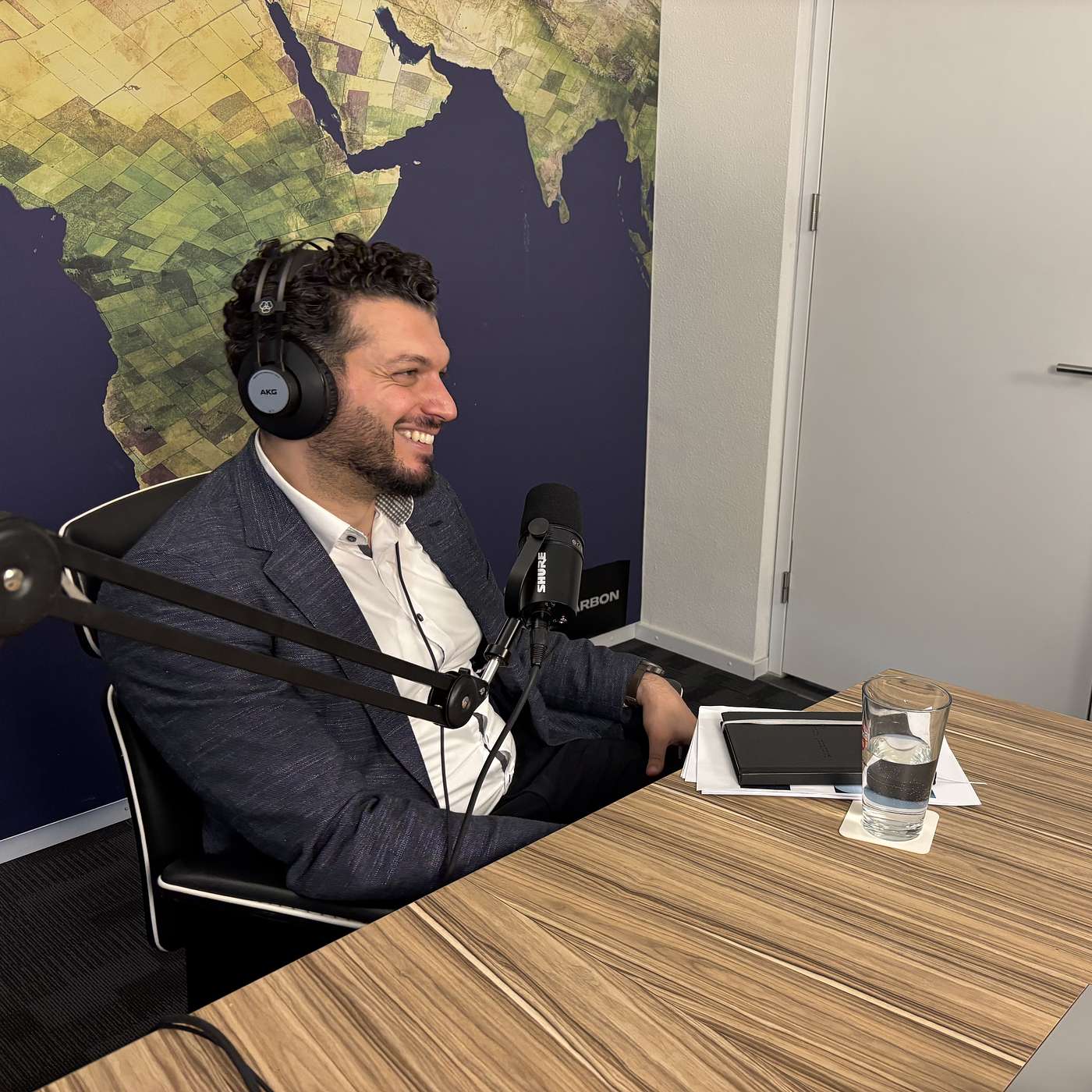
The discussion introduces a digital process monitor developed by Stamicarbon, which functions as a digital twin for urea plants. By leveraging real-time plant data sent to a secure cloud platform (Microsoft Azure), the system uses first-principle models to calculate key performance indicators like specific steam consumption, ammonia emissions, and equipment efficiencies—variables that are typically hard or slow to measure with traditional hardware. This provides operators with deeper, real-time insights into plant operations, enabling them to optimize performance, reduce energy use, and enhance sustainability. The tool has demonstrated tangible benefits, including a 3% reduction in steam consumption and early detection of potential mechanical failures, thereby preventing costly shutdowns. Data security is a priority, ensured through measures like unidirectional data transfer and regular penetration testing. While the system offers dashboards and consultancy sessions to guide operators, it does not automate decisions. Future directions include integrating AI and machine learning, using synthetic data from simulators to develop more reliable hybrid models, though the conservative nature of the industry and the need for high-quality data present ongoing challenges.
[Music] All right welcome everybody to a new episode of Stamy Talks. Today we have Ali, LCBi, as our guest, welcome Ali. Thank you Mark. Hello Mark, sorry. Thank you for having me here. Yeah, it's nice to be welcome in this podcast as well. Today we're going to talk about the digital process monitor, a digital tool to help produce, help more efficient production. Maybe before we get into the topic, can you tell us a bit more about yourself and your background? Yeah, so as you mentioned, my name is Ali, LCBi. I originally come from Lebanon and since I was in high school, I had a lot of passion for chemistry, so I did my bachelor degree in chemistry. But then I discovered that it's not as challenging as I expected, so I went for a switch to chemical and process engineering, so I did my master in this field in Germany and then I did my PhD in process systems engineering. Also in Germany and I worked as a research co-worker at Max Blank Institute. Okay, it's an interesting step up, so then it's still modeling chemical processes or what did you do at Max Blank? Yeah, so at Max Blank I was involved in designing and the model-based design and optimization of CO2 methaneation process for the storage of renewable energy. So basically, at that time, it was a really hot topic to explore how you can store renewable energy that is coming from solar or wind and the idea is to store this electrical energy in the form of gas and one of the candidates for that was synthetic natural gas. Okay, in sync show then, I'll agenda bit stomach carbon? Yes, after I finished my research at Max Blank or I got my PhD as well, I went back to Lebanon for one year where I worked as a professor at one of the universities. And then after one year, I came across one job advertisement from stomach carbon and at that time, they were looking for a modeling engineer to work on the digital twin principle for UEA processes. For me at that time, I was fond with modeling but also for me the digital twin concept was quite new at the time. What is the digital twin? So basically, what you do is you try to, what you do, basically is you develop or you model a virtual replica of an existing chemical process. So in this regard, it is like UEA process and you use actually this virtual replica in order to better understand what is really happening in your plant. This of course requires that you are feeding this virtual replica or model by plant data in real time. Okay, so then how do you get that data? Basically the client should send this data to us. So at the moment, the idea of this digital twin, as it is now offered by stomach carbon, is to monitor your plant. So we think this is a more revolutionary sort of monitoring tool where operators do not only rely anymore on process key variables that are measured by instruments like temperature or pressure. But they also monitor key performance indicators or key process variables which are specific to certain equipments or important units or critical units in your plant. And these key variables will provide you with a deeper insight into what is really happening in your plant, in your plant operations. And accordingly, the operators can then take measures or actions in order to better improve the performance of the plant. Okay. So it's linked to the, in basically the sensors that already are basically data from that scattered in the DCS. Yes. And then you link that up. So then the data stays doesn't say it client data is sent to a cloud. Yes. So basically we leverage the advancement that happened in the past years in big data and also in storing and processing this data in clouds. So basically what the client need to do is to send us plant data in real time. He sent it to the cloud. In the cloud you have a model that is wanting that is a real precise replica of the current plant of the client. And then you send this data, this data is fed after being processed. And we make sure that this quality of the data is is high. Then it is fed to the model. And then the model ones and then calculates certain key performance indicators as I mentioned earlier and key process variables. Okay. And what type of key performance indicators and process variables can you think of them? Yes. So for a UEA process, what we are talking about, what can be interesting for the client as a key performance indicator is actually the specific steam consumption. Okay. What also can be interesting is the ammonia emission. Maybe the load. And when we talk about key process variables, we talk about for instance the efficiency of the stripper because it is actually the unit which consumes the highest amount of steam. So by making sure that you are operating your stripper in an efficient way, you are actually reducing steam for example. Okay. So yeah, efficiency of the stripper tube load in the stripper. We talk about maybe water content in the low pressure carbonate condenser. We talk about NC ratio at the outlet of the reactor. So all these variables are actually variables that are either not measured online. You don't have real hardware to measure them or they are difficult to measure online. Yeah. So for example, what do you mean by measuring online? Yeah, that you have a tool that is measuring it in real time. Like a sensor. Yeah, like a temperature for example, you can measure it online. Yeah, easily. But when you talk for instance about the NC ratio, yeah. The current situation is that you need to take samples. For example, you have NC meter, which is actually a hardware that you use to measure the NC as the name implies. So the thing with the NC meter for instance is that you need to take a sample from the outlet of your reactor. And then you need to take the sample to the lab and then you do analysis and the result of the analysis will come after three hours or four hours. Then you can know for example, what is the urea content at the outlet of the reactor, which gives you an indication if your reactor is performing well or not. Yeah. Now the for example, when we talk about this type of measurement, yeah, there are two issues, two limitations. One is the time. So it takes to take the sample and then run it in the lab. We are talking about three hours for hours. And yeah, this is also troublesome because you are taking a sample from high pressure synthesis loop. And then also it is prone to errors. So either in your lab, for example, you can have systematic errors where you don't get really, you may not get really accurate results for instance, it could happen. And it takes, as I said, a lot of time for hours minimum or three hours. And this is normally in it is done in a urea plant in every shift. So every eight hours. So you can imagine, for example, that you need to wait eight hours to know if your if your reactor is performing well or not. Okay. And then let's say if your reactor was not performing well, you are losing like eight hours before you take actions, yes, which means that you are losing money. Yeah. For example, another example is the ammonia emission. Currently, you don't have a real online measurement device for ammonia emission. Okay. So you don't know if you are meeting too much ammonia or not. And this is also currently you have very strict regulations on ammonia emission. So it's not only about losing money in terms of ammonia, but also maybe you will be fined or you have regulations from the countries nowadays that you need to abide by. There's no losing a license to operate. I don't know.
depending but this also shows the importance of also being able to measure these type of emissions online. So these variables or performance indicators cannot really be measured by instruments. And this is where the process monitor can help a lot. Okay, so then you have to see the thermokinetics models of Tamukarban. Are those models then in the cloud or how does that work? Yeah, so as I said, normally you are creating a virtual replica of your plant. So a mathematical model of your plant. And currently what we use are first principle models. And this means of course that you have kinetic and thermodynamic models embedded within the process model. And yeah, these models are running, there are in the cloud. And they are being fed with plant data in the cloud and they are calculating in the cloud. Okay. And then the key variables and the key performance indicators are then displayed on a web page basically. So it's online accessible. So I'm assuming that's all protected because I can imagine if you have. So you sent the data feed from your DCS to Tamukarban in the cloud. We use Tamukarban kinetic and thermodynamic models to calculate all of those values. And then publish that on a web page that's only accessible for the client. Yes. So basically the client can have access to these dashboards, so to say, yeah. These dashboards. And all he needs is basically a screen and internet connection. Okay. So he can display this on a cell phone or a tablet or on a big screen in the DCS. I could use my watch. Maybe it's more. Okay. But I think a big concern at clients would have is I'm going to give all my data to Tamukarban. What about data security? This is actually true. Yeah. Since I joined Tamukarban 3 and a half years ago, when you talk to a client and tell him like, "Oh, please send, you need to send us the data." You see that a lot of resistance. Although they see the value in the product itself, but data security was always a concern. And of course, because we see a lot of potential in this tool, we also tried in Tamukarban to mitigate the concerns of the clients. And a number of actions were taken. So we make sure that data goes in one direction. So it goes only from the plant data to the cloud. And we do not send anything back to the DCS of the plant. Okay. So transfer of data is unidirectional. The second thing what we did is that we partnered with Microsoft Azure. So we use it as a cloud computational platform for us. And of course, Microsoft is one of the most reliable service providers. And they have the ISO 27001. Microsoft does or Tamukarban? Well, I think it is actually, if I'm not wrong. And what we also do at Tamukarban, this is something we do actually additionally, is that we have a software department in our company. And every year we do some sort of, not some sort of, we do a penetration and security test in order to make sure that it is very tough or it's maybe extremely hard to breach into our clouds or data. So a penetration test is paying somebody to try to hack us. Exactly. And so far they always failed. That's a good thing to add there. Okay. So then the data is sort of secured. At least the data security is less of an issue at least. Then the operator of the plant can see the results on their watch tablet or just on their screen. And then they respond to the values that they see. Yes. Correct. Do we give some advice of whatever they say, whatever is a high water content or low water content, whatever there's something not efficient in your plant? Do we give a suggestion on what to do next or what's the next step? Yeah. Okay. I'll answer that. But back to the security thing, I just want to point out also that we are quite confident in the cybersecurity measures that we take. That we even have our own proprietary knowledge running in the cloud itself, because as I said, like we have the process model which contains thermodynamic models. And this is really quite valuable knowledge for us. And still we deploy it in the cloud. So we really trust in security. Security. Security. Yes. So yeah. Now back to your question. Do we suggest or we command actions to the. To the operators, the answer is would be no, because what we can't do is we provide, as I said, like the DCS operators with dashboards that display information. Okay. But it is up to the operators to analyze this information and also to take the necessary or the, the, the measures that would help in, yeah, bringing these values into optimal, optimal values. Yeah. Okay. Or these variables into optimal, optimal values. But of course, we would like to, we always try to, yeah, bring most value to the client. Yeah. So we provide training to the operators in order to help them better understand how to interpret or, or analyze the information. And also we provide a context help. Or is it help context? Yeah. Yeah. My charm assistant. Yeah. And in that, for example, let's say if, if we say, if the water content is high on the, in the LPCC, for example, in the low pressure carbonic condenser, what you can do is this or this or this, for example, yeah. Okay. But of course, it's up to, to the operators to act and, and, and decide what to do. What we also actually, and this is also quite valuable thing that comes with the process monitor, is that we provide consultancy sessions. Okay. And this is the frequency of these consultancy sessions depend on how the agreement, the initial agreement with the client during the signing of the contract. Yeah. But it could happen maybe every three months or something like that. And during these sessions, we talk to the client, we discuss with them, how they are operating, because we also have access to, to the process monitor ourselves. Yeah. And we, we keep track of what is happening in the plant. Okay. More or less. And we analyze what is happening. And then during the consultancy sessions, we, of course, we can bring, we can bring recommendations to the, to the operators or, or the engineers in, in, in, in the plant. We can also do help them with certain troubleshooting if, or, or, or, or if they have any questions. Or so we can explain things to them or provide help as well and support. Okay. So then what types of, let's say, improvements, are you generally suggesting this is just for, I think you've many, you, you mentioned energy reduction, but how does that, how much frail you also bring is it like, like, I don't know, 1% to 10% or what, what types of benefits can a client get, of course, depending on how I plant, operates before you introduce a process monitor. But. Yeah. So, of course, how much benefit you gain from a process monitor is, depends on how good you are operating the plant before deploying a process monitor. And of course, that depends. However, we have a user case, or from our experience, we had the situation where we were managed to, we had a case where we managed to reduce specific steam consumption by almost 3%. And also increased productivity by, by 3%. In addition to that, because of the consultant's seashions, we also managed to help the operators of the plant to be aware of a mechanical failure that would have happened to a stripper. And, yeah, based on the data that we were receiving, our senior engineer, quite experienced one, he could analyze the data and he could realize that there is something wrong in the stripper. And indeed, they did inspection and it turned out that there will have been almost like a mechanical failure.
in this stripper and it's an equipment that calls millions of dollars. In addition, you would have needed to shut down the plan, so they could save a lot of money. And they were very, very happy with this. So in addition to just the process monitor itself, the consultancy to them proved to be very, very valuable. Yeah, I can imagine. So it's basically. So energy reduction, it's improved production produced and we could help them, let's say, with the maintenance to avoid failure in one of their most important. avoid. avoid. in a separate. yes. and there's also something related to sustainability that's an improvement of this process. Stability. Oh, what. Sustainability. Sustainability. Yes. As we said, like a process monitor can help you also with. yeah, reducing ammonia emission, for example. It could help you in case of reduction of specific steam consumption. You are basically also reducing energy, so you are operating your plant in a more sustainable way, yeah, because you will need less steam. Less steam means less burning of CO2 or natural gas, sorry. And then less release of CO2. And we also have. because also, chemically, you also have the plants in certain parts, especially from the EU, there are certain regulations that the plants need to abide by in terms of emission of CO2, etc. So we try also to add value in this aspect by developing, we are currently working on developing a CO2 footprint that could help the operators to keep track of the CO2 footprint. And in this case, yeah, of course, help them operate their plant in a more sustainable way. Okay. And if a client would, let's say, would revamp their plant or maybe change a bigger piece of equipment, then I'm assuming that the model changes and those sort of process monitor needs to be adjusted. Yeah, this is definitely true. Because as I said, you are monitoring the plant, yeah, your plant. You want to know what is really happening at the moment in your plant. So for that, it is always important that the model really is a very accurate replica of your current situation in the plant. And whenever you change the design or the sizing of the equipment, this is need to be included in taking into consideration and then modify or update your process model. Okay. And one last topic I wanted to discuss with you is, let's say the AI, I think the artificial intelligence is something that everybody has got a more experienced in in the last years. Why not just hook some AI model to the data that you have and come up with a model that predicts your plant performance? Yeah, well, of course you can, we are also considering and we are developing certain tools that we like to embed within the process monitor and that are also based on AI, also machine learning models. But it is always important to remember that AI models or machine learning models are trained or developed based on data. So they are data driven models. They are not governed by any physical or chemical loads. So the quality of the data is quite important. And if you want to have a quite efficient or quite reliable and precise AI model, it is important that the data you are using that it is of high quality and also probably big size as well. Now the situation is that in a plant, when you are running a euia plant, most of the time you want it in a stable manner or close to a stable way. So you don't have a lot of variability. You don't have a lot of variability. However, in a Stemic Carbon we have the benefit of having simulators. So we also have OTS, Operator Training Simulators. And these simulators are actually based on first principle models and our reliable thermodynamic and kinetic models. And we use this to generate a large amount of data with very high variability. And that also in addition to the plant data we collect, we allow us to really develop AI models. So we are currently working in this direction. We are working on developing AI models by combining plant data and also what we call synthetic data. And a step ahead, what you can also try to do is to combine first principle models with data driven models and you come up with what we call a hybrid model. And these are actually more reliable and more precise than just using AI models. Because I'm just thinking, now that you explain this, that usually in the, let's say AI image generators, everybody is played around with those online. You end up with a hand with six fingers. It could happen. So you don't want to have a euia plant with a something that doesn't exist or that's not a real model. Yes. I think that's the risk that you're describing. Yeah, exactly. So it's exactly. So one word can be easily a risky thing. And also the clients, I mean, our clients in the, in the euia business are quite conservative. So it's very, very hard to convince them to just have, to monitor the whole plant just based on AI models. I believe that you can have certain tools that are based on AI and you embed them. But as I said, like you need to derive these models or develop these models using high quality data with high variability data that covered large or wide, wide range of operation, considering different scenarios, which actually we are privileged to have as well. Yeah, it's a very, very interesting. Have you had a, because I'm also looking a bit at our time, is anything regarding the process monitor that we, that we're missing that we need to, need to discuss? I think not. You've pretty much covered everything. Well, well, you did, you did talking. I just asked a few questions. But again, that's really nice to have a deeper understanding of how this all works and what the context of the process monitor is. So Ali, thank you so much for, for giving us this, this insight. And also a big thank you to our listeners for tuning in to StamiTalks. Thank you very much.
Podcast Summary
Key Points:
The digital process monitor is a cloud-based tool that creates a virtual replica (digital twin) of a urea plant using real-time data and first-principle models to calculate key performance indicators (KPIs) and process variables that are difficult or slow to measure directly.
It helps operators improve plant efficiency, reduce energy/steam consumption, minimize ammonia emissions, prevent mechanical failures through early detection, and enhance overall sustainability, with demonstrated benefits like a 3% reduction in specific steam consumption.
Data security is addressed through unidirectional data flow, partnership with Microsoft Azure, and regular penetration testing, while the system provides dashboards and consultancy support but does not automate operator actions.
Future development includes integrating AI and machine learning models, enhanced by synthetic data from simulators, to create more reliable hybrid models while addressing the conservatism and data-quality challenges in the industry.
Summary:
The discussion introduces a digital process monitor developed by Stamicarbon, which functions as a digital twin for urea plants. By leveraging real-time plant data sent to a secure cloud platform (Microsoft Azure), the system uses first-principle models to calculate key performance indicators like specific steam consumption, ammonia emissions, and equipment efficiencies—variables that are typically hard or slow to measure with traditional hardware. This provides operators with deeper, real-time insights into plant operations, enabling them to optimize performance, reduce energy use, and enhance sustainability.
The tool has demonstrated tangible benefits, including a 3% reduction in steam consumption and early detection of potential mechanical failures, thereby preventing costly shutdowns. Data security is a priority, ensured through measures like unidirectional data transfer and regular penetration testing. While the system offers dashboards and consultancy sessions to guide operators, it does not automate decisions.
Future directions include integrating AI and machine learning, using synthetic data from simulators to develop more reliable hybrid models, though the conservative nature of the industry and the need for high-quality data present ongoing challenges.
FAQs
A digital twin is a virtual replica of a chemical process, like a urea plant, that uses real-time plant data to provide deeper insights into operations. It helps monitor key performance indicators and process variables that are not easily measured online.
It tracks indicators such as specific steam consumption, ammonia emissions, and plant load. It also monitors key process variables like stripper efficiency, water content in the low-pressure carbonate condenser, and NC ratio at the reactor outlet.
Data transfer is unidirectional, moving only from the plant to the cloud, with no data sent back to the plant's DCS. The system uses Microsoft Azure's secure cloud platform and undergoes regular penetration testing to ensure robust cybersecurity.
Clients can achieve energy reduction, increased productivity, and improved sustainability, such as lowering ammonia emissions. It also helps in predictive maintenance, potentially avoiding costly equipment failures and plant shutdowns.
No, it provides dashboards with data and insights, but operators analyze the information and decide on actions. Training and consultancy sessions are offered to help operators interpret data and optimize plant performance.
The process model must be updated to accurately reflect any changes in plant design or equipment. This ensures the digital twin remains a precise replica of the current plant operations for reliable monitoring.
Chat with AI
Loading...
Pro features
Go deeper with this episode
Unlock creator-grade tools that turn any transcript into show notes and subtitle files.
 PodcastTranscript AI