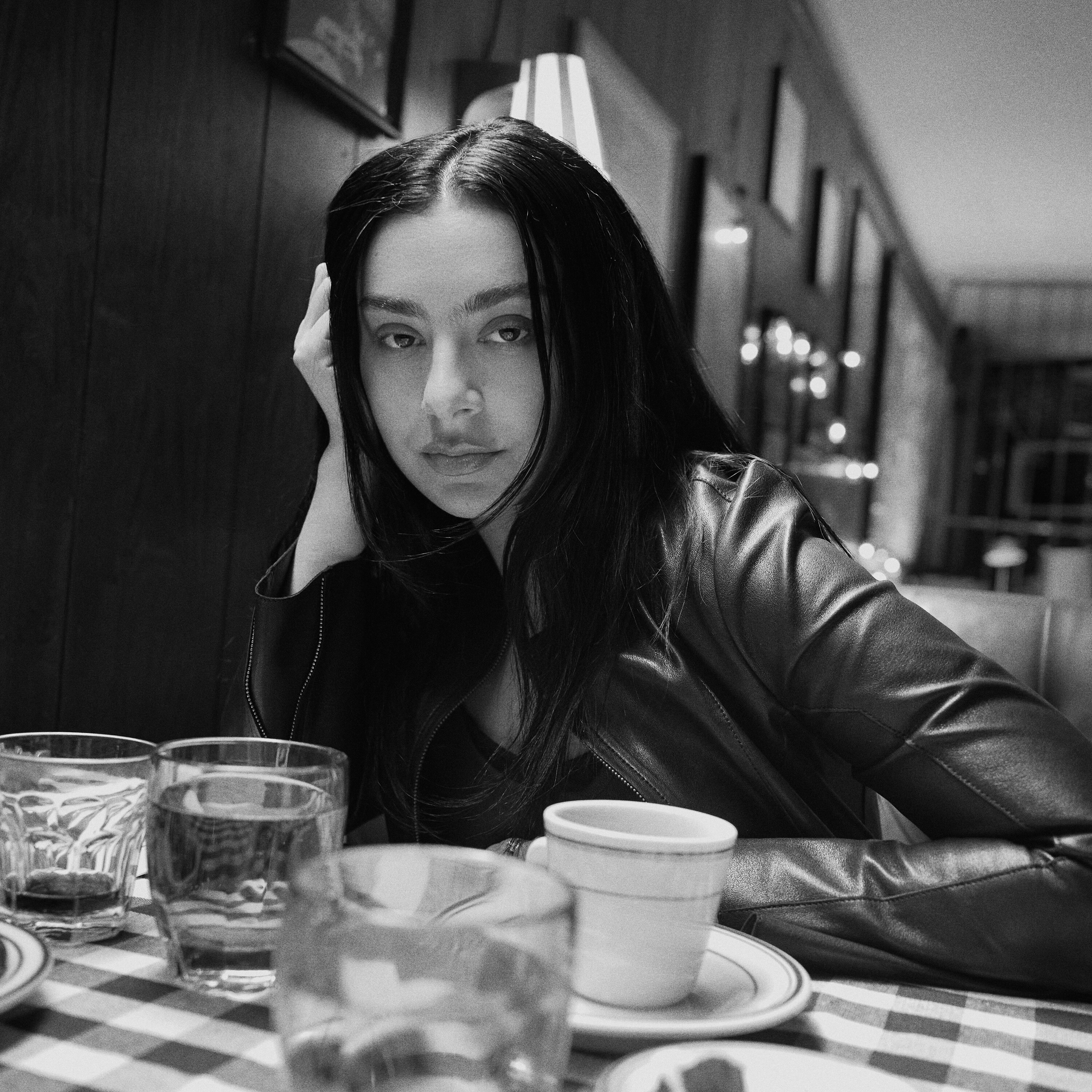
The artist discusses their creative journey following the massive success of "Brat," revealing they initially thought they wouldn’t make another record but were struck by new inspiration. The new album, centered on the opening line "me and my friends," emphasizes the importance of long-term relationships and collaborations, which have become the core of their work. They describe the process as a deep, honest self-exploration, acknowledging their contradictions—like being both serious and playful—which mirrors the album’s title referencing music, fashion, and film as pillars that can be both escapist and profoundly meaningful. After "Brat," they faced a crossroads: repeat a proven formula or pivot creatively. They chose the latter, collaborating with different people across spheres, driven by a restless desire for authenticity over predictability. The success of "Brat" surprised them because it came without compromise, proving they could achieve their goals while staying true to themselves. They also address their short film, clarifying it’s not purely a joke but a meta-commentary on how art is reinterpreted and how creators lose themselves in others’ perceptions, blending humor with mourning and a quest to reclaim identity. Throughout, they stress the importance of trusting their inner voice over industry pressure, aiming to create work that feels honest and relatable, even if it challenges audiences.
[MUSIC] After Brat, I really was like, I'm not going to make another record. Everybody sort of took that statement. It's like, she's retiring, no. But I really did think I would have like quite a long pause. And then inspiration struck. [MUSIC] It's cool. It's nice seeing the same people around you. Mm-hm. Yeah. It's like it's obviously probably, will you tell me, but I feel like the most important thing is the relationships and the people. And it really comes to the surface on this record mate as well. I mean, the first line is me and my friends. Yeah, yeah, yeah, it is. And I think that's such a kind of key sort of statement of the whole album. You know, I've been working with a lot of the same people for. I mean, kind of my whole career, but definitely for the past 10 years. And so I've just learned like over the amount of time that I've been doing this. However many records, mixed tapes, whatever it is that I've made. That the most enjoyable version of doing this is doing it with my friends. Mm-hm. And since music and making things has just become such a huge, kind of like my whole life, you know, it's like I've built so many amazing relationships with people through doing creative things. Yeah. And so it's nice to just kind of have them be around all the time and make things with them. You've built a beautiful cottage industry around yourself full of friends and family. Yeah. And being able to title into this wonderful credit exercise, which just keeps getting stranger. The journey just gets stranger and stranger. Why do you say that? What do you mean? Because every time you show up, the music reflects another party or life at another level of honesty. Obviously, this is just my experience for every time I make an album or sit down to make any kind of long form body of work. I do feel like you sort of mine yourself again. And the more you do it, the more you learn about yourself, the deeper you go. And for me, you know, I'm always sort of looking back at things that I have made before and figuring out what I've understood about myself as an artist and as a person through the work that I've previously done. It is just such a huge part of it for me, you know. And so it's kind of impossible not to get kind of like closer and closer to the core of who I am through my work. And I don't really know what the end goal is, like the ultimate quest. Norm Melody. Yeah, I don't know. Like the ultimate quest to know who I really am. That's a punchline. Normal. Yeah, yeah, yeah. I don't know that, you know, the journey of an end, really, but yeah, I think it is very honest this album and it's sort of me thinking about myself posts like the last album. Yeah, because you've put off a magic act here. You've made a record that directly reflects upon success and how great and challenging that can be and it doesn't suck. A lot of those kind of records can be really challenging because it feels so internalized. Like, oh man, I'm reflecting on something you don't understand and it's like you're right, we don't understand. But you've made it so universal through your experience by attaching it to friendships, your relationship, primary relationship now. Yeah. You know, even your past like on 2007, even going back and kind of giving that kid a hug in a weird way, it's what, isn't it? But that's all kind of made me feel like. Oh, that's cool. Yeah. I think the sort of human experience whilst we all have our different versions of it, there are kind of through threads that apply to everybody, you know, I think I'm very lucky to live the life that I lived and I've worked very hard for it. But there's still some, you know, like core feelings that I feel like my friends who, you know, aren't musicians or sort of making work publicly or even on the internet also experience, you know, which is their relationships with their friends, their relationships with themselves, their insecurities, their constant state of doom that they sometimes feel. And I think no matter who you are and what you do, everybody has their own kind of feelings about those things, you know. Yeah. It makes me happy that you say that it's relatable, I suppose. Yeah, very much so. Not that that's my kind of end goal. Well, you know, trying to relate to all of us when you're writing your story. No, I know, I know. What's wrong with you? I know, I know. It's about us too, you know. Yeah. But I think the second I try and actually, like, think about the audience and relate or something intentionally. Maybe that's when it actually doesn't really work or happens. In the past, I've kind of made choices or songs that I thought maybe, like, people would get more and actually they end up feeling the most distant from who I am as an artist because it's not me following, like, gut instinct. And especially in the music industry, there's always so many people in your ear, like, if you do this, this will happen, if you do that, you know. And I think I've definitely got a lot better at shutting that out and really trusting my own kind of inner voice to make the decisions I want to make creatively. And I always feel that those are the most rewarding decisions, you know. In a way, that is kind of 2007. Popstar in a bedroom, isn't it? Yeah, he has. He's pure and there isn't anybody telling you that you've got something if you just make do this a little more and then a little more, tune it a little more. There's an innocence to that, like you said, heaven, this idea of being a 13-year-old kid just trying to figure it out. Yeah. And, you know, it's funny. It's like that song, I think, on one level, it really is just about making TikToks and how everybody can kind of have this version of performance now if they want to. They can kind of literally be a star for 15 seconds in a video and put it online and people can respond to it in a very kind of warholian kind of way. And so in one way, that song really is about that. But, as you said, I think there is this sort of nostalgia and paying homage to my younger self who was on my space uploading, like, crappy songs and demos and doing that whole thing back then. And that was such a sweet kind of pure time because it was sort of before this kind of level of comparison that I think happens to all of us as we kind of grow older and get more immersed into the world around us and things like that. And it was like a very pure time. I was never embarrassed about anything back then, which is so sweet and cool and, you know, I kind of work hard to try and get back to that. Yeah, because you make this statement on the record too, which is I don't get embarrassed even if I start. Like, I don't believe you entirely because I think it's impossible for us to not feel some form of self-consciousness. But that's also a really cool theme of this record, which is like this term, like paradox shows up a lot on this record. You know, times two things are right and exactly the same breath. Like, wink, wink is literally like that, example of that. In the same line, you're making one statement and then contradicting it in a really interesting and funny way. How did you land in that place where you wanted to acknowledge things sort of truths and some accountability at the same time, not make it so self-obsessed that it's like, "I've got confessions to make this like," you know what I mean? Well, I think, you know, the whole album is kind of like that because I mean, that's my existence as a human. Like, I'm a very contradictory person. I believe one thing, but can sometimes kind of act another way. And I think that is just human nature in a way. And also, I think, for me, being a musician and getting to do all of the other things that I get to do alongside being a musician, it's so fun. And in ways, it's so light, but at the same time, it means everything to me. And that's kind of where that album title came from, too. You know, it's like these three kind of probably most popular pillars of the arts are things that people can engage with in a really kind of light-hearted, fun, escapist kind of a way. Or it could be desperately serious. Or that, exactly. Yeah. And I think that's why I feel about all of this stuff that I'm talking about on the record about music, fashion and film as a whole. It's like, it means everything.
also at the same time, it is quite, I don't know, like, cyclable or something in a way. And so I think the tone of the album, it's like, it can be really fun, but it's also very serious. And like, making sure that I am having fun and doing the things that make me feel passionate is kind of detrimental to me and my brain. Like, I need it to be like that. But at the same time, when I am in those moments of pure bliss and fun, I'm also like, wow, this is actually just so amazing. And I'm having the best time and how cool is that? - It sounds wonderful and exhausting and unique. - Yeah, I mean, it is both of those things, exactly. - I read the Rolling Stone piece. How was it shooting with Gus Ben? I feel like you're stuck in a minute. - I'm just trying to burn it, Gus Ben, it's just like, let me just, like Vincent Cassal, let's just go. Let's just get these old geese as these wrinkled legends and just fucking roll. - Yeah, yeah, well, Gus, I mean, with Gus, it was so cool. Like, when I knew I was gonna do Rolling Stone, I really wanted, I really wanted a film director to shoot the cover, but I wanted it to be somebody who really had like, longstanding relationship with photography as well. And that was Gus. I mean, he's also, he's an incredible painter. He makes incredible music. Like, he really kind of embodies that kind of thirst to create things. - Yeah. - And shooting with him was particularly inspiring because we shot at his house in LA. And in his house, his work is just everywhere. All of these paintings that he's made are just kind of propped up against the walls. I think there's a bit of a sort of negative connotation to people who are kind of multi-hyphenous in like the creative sphere. And I'm not talking about, I don't think people think that of him, but I think nowadays younger people who are like, I wanna sing, I wanna write, I wanna act, I wanna write a book, I wanna paint. It's like, I don't know, there is a, sometimes a kind of, a little bit of a backlash to that. Like, you can't do everything. I think it's maybe a little bit easier if you're a guy, you know, but to be there with somebody who has, you know, such a rich career across all of these different fields, you know, gave me hope. I was like, that's great. And I think he, yeah, I don't know, being there was very inspiring. When Brat kind of became what it became, I guess I knew I had this sort of cross-road situation where I was faced with the idea of kind of continuing down that same path, doing the same thing over and over again, not in a bad way, but, you know, using a certain formula, using familiar sounds that was, you know, were kind of related to that album. And I did that a little bit with the remix record, you know, by bringing other people into that world. And that was so fun and I had a really good time making that record. But I guess I could have kind of, you know, doubled down and done it again. Or I could have used the sort of platform that I had from Brat to go on and work in a slightly different way, and kind of collaborate with different people in different spheres. And that's what I ended up doing. And that was far more appealing to me because I don't know. I mean, you know this about me. I'm very restless. And I think I don't want to do the same thing over and over again. And maybe that is my sort of cross I have to bear and why people won't always perhaps like get me or whatever, but like musically I mean. But I'm okay with that because I think, you know, this is my life and I have to do what makes me happy and inspired. - This is something we were accustomed to and as fans of yours, we would hope for every single time. But if ever there was a time where you were going to get that ultimate test, it was post-Brat. That would have been the moment. And honestly speaking for myself, I can't speak for anybody else who's been with you through this a long time to think to your records. I wouldn't have blamed you. I would have been excited to hear how you would have followed 'Brat Up' and 'Don't Whatever You' were going to do. It was like, of course, you landed on something beautiful as long as it's fun and inspiring for you, but it doesn't surprise me you pivoted out really. - Yeah, yeah, yeah. And I think a lot of people who maybe only just kind of got to know me through 'Brat'. - It's probably most challenging for them. - Yeah, which is totally cool, but it's also like that's why you like artists. You don't like artists because you can predict their every move. That's not as fun or whatever. Or at least for me, I like my favourite artists' challenge me. - We also say that 'Brat' is not a home run the day before it comes out. It's a challenging record until it comes out and then it becomes this omnipresent, amazing, beautiful, zeitgeist. - Also, there were no. I mean, like, sort of hits. - Yeah, something. - You can't say super distorted in it. - Yeah, I'm not like a sort of pop off on the charts, like hit. - Fuck off. - 'Burn, clap, fuck it, I can't pop, come on. - No, no, no, no, no, no. - Stacked those. - Like, fucking 15 years ago. - But you know what you're doing. - No, no, I know, but you know what I'm not saying that in a self-deprecating way, by the way, like I'm just saying. - I just wanted to shout out 'Burn, clap'. - Yeah, you can. - That's just, you know, that's not why. That's not my sort of direction when I make music. And actually, you know, it's like. People are always like, "Yeah, but she could do that if she wanted to." I'm like, "Could I?" I'm like, "I don't fucking know." Like, whenever that has happened, it's never been like, this mastermind, like, "Oh, and now I'm gonna have it." I love it, and it's gonna be this thing. It's like, I was like, when I wrote that song, I was like, "This is the worst song I've ever met." You know what I mean? Like, I don't know. I don't know. So, but that's never my sort of goal to go there. If it happens awesome, you know, I'm never gonna say no to that, but that's not sort of what I'm aiming for. I mean, when we spoke about Brad, the remix album was on the verge. It was like teed and ready to go, but you were in it. You were touring. You're in New York doing sold-out shows at MSG. Running around from Marina to Marina. So, to get us back up to speed and to dive into music fashion and film, how did it feel for your number to come out of the barrel? You know, and it's like, "Oh, shit. People love this." And I'm being talked about and it's genuine, and the tickets are selling really fast, and people want my opinion, and it's just all of the pistons of firing. Maybe you wanted it your whole life. Maybe you didn't realize you wanted your whole life. What did it feel like when you got it? Well, you know, I have a big mouth, so I was definitely not having fun with it, for sure. Did I want it my whole life? Like, I don't know. Like, I was definitely interested in that. But actually, I guess I had a hard time sort of imagining a world where I could kind of get all of the things I wanted with little compromise. And actually, that is really what happened with Bra. You know, like, I didn't compromise the music at all to kind of try and make it more appealing. I didn't compromise anything about the way I made the visuals for that record, the album cover, the videos, like any of the language in, like, touring that album. I was really kind of, it was sort of tunnel vision on, "This is what I am doing, and if you like it great, and if you don't, then fine." And I suppose I never. Yeah, I guess, especially in pop, in my experience of pop, it always felt like there kind of had to be a bit of a sacrifice or something. And so I think I was quite surprised by that. And that was really cool, like, I was like, "Wow, like, I haven't really sacrificed any of my personality on myself to be in this position." And that was something that I always wanted. And I guess I was sort of proved wrong that you could get that. It made me kind of think the world was actually like an okay place for a second, which was cool. Yeah, it was cool. I'm very grateful for that. I haven't seen the moment. I'm going to watch it at some point, but. You don't need to, it's fine. No, I know, you need to, but I want to, you know, as your friend, but also as a fan, you know. But I do want to know what it was like making that and what you got out of taking something that for a long time, everyone took really seriously and then reminding everyone, perhaps as a gift, that actually, let's not take it too seriously. Well, it's funny that you say that. And that film isn't me going like, "Hah-ha, this is a joke." Like, that film is about what happens when something that you have created gains so much traction and speed and is reinterpreted over time.
and over and over again, to the point where it becomes actually quite far away from the initial thing that you intended and how you as the creator of that deal with that and how you lose yourself a little bit within other people's interpretations of your work, which is obviously something that is just part of being an artist who releases work into the public domain. That's not me going, "Paul me, feel sorry for me." That is just part and parcel of the deal. But it's not me going, "Haha, I'm smarter than all of you guys and you fell for my trick." I'm quite earnest as an artist sometimes, which people would never really believe of me because they think I'm a big troll the whole time. But I am actually just doing what I feel and what I love. A lot of my work is about commentating on how people engage with art in this day and age. That's a big, big through thread for me. I think some people have a lot of trouble with meta-commentry. I understand it. Whenever there's a movie about art school, people are like, "Oh, you're on," or whatever. But I find it fascinating. I think the moment is really a kind of about that. It's sort of about it's a movie about death in a way. It's very kind of mournful and it's about loss and how you reclaim yourself in that loss. What you do when your entire identity not only as an artist but as a person is attached to one thing and how you grapple with that. It's not just jokes, although there are a few. I'm just glad that you said that because you're right, I got the wrong end of it. I felt like we were entering into spinal tap territory. Look, the film would not have been made without a little bit of that. There are some shots at the label, for sure. I think there is a version of the film where you can really tap into that kind of stuff. The kind of Christopher Gasht, like sort of drop dead gorgeous vibes. But then there's also a lot of sadness in it for me. It depends what level you want to engage with that one. That is the balance that you present in your music. It's funny. I've heard you say a couple of times recently, you mentioned the troll thing. I don't personally get that from anyone I talked about your music or whether they're fans or they just know Brad or they're familiar. But they do definitely acknowledge that you don't just release and move on. You do like to observe and you do like the relationship to observe the relationship between us and the music and how it changes things. Who do you, if anyone, do you share that passion within your life? Who else gets that? I mean, I would say pretty much all of my collaborators because I think for all of us it doesn't really just end with the music, which again kind of goes back to the title of the album. It's so three-dimensional for us and obviously so, you know. But it's not even just about like, oh, how are we going to build the world and make the video and the album artwork or whatever. It's like, I don't know, like down to the communication of every single element of the album and the persona or not persona, you know. Is that why you said when you sit in subway takes, music is an important and. Artistry is important. Yeah, yeah. And obviously that was me giving like my like sound bite versus that. But yeah, obviously I think music is important but I think there are so many great songs. But if they're not communicated in a really thorough way, it's I think for me at least harder to feel an attraction and a desire towards them. Interesting. So if you heard a song in passing that was just really moving or connected with you, you're not going to get the full experience in this, you find out the context or that more to it. Yeah, I like context. Yeah. Which is probably why I don't really engage as a listener with that many artists but when I do, I'm like going deep, you know. So you wouldn't say you're a massive music fan? No. No. I don't know anything about music. I don't like, I don't know any, I like rarely listen to records. People who know me know this very, very well about me. I'm really, I'm rarely listening to albums in full, especially new records. I'm aware, obviously. And that's not being like shady, like I'm above it. It's just not what I do. I used to do a lot more when I was younger. I was a real like fiend for music when I was younger. I was very like into wanting to discover new things and I wanted to know. And I think part of it is the whole kind of when I'm making music, I don't really like to hear anybody else's music because I want to be super honed into my own world. Yeah, that's pretty wise. I mean most people I speak to will cop to that. Like if I'm zeroing it on my own as an artist, I can't be too influenced or pushed around. Exactly. Yeah, but you know there's definitely things I hear in isolation where I'm like, oh wow, I love that. And I think the biggest compliment of all is like, oh I'm kind of jealous. Like I think as an art, me and Aiden who shot the album cover, we talk about this all the time. It's like that sort of the biggest compliment. If you like get that pang of jealousy, you're like, that must mean it's really, really good. You know, one of the last songs you heard that made you feel that way. You know, I think for me the last piece of work, like video actually that I saw was when young lean and Raman did that generation video. I messaged both of them, I was like, I'm jealous. But luckily today when the camera video came out, Raman texted Aiden and I and was like, I'm jealous. So it's all like, you know, but it's yeah, so it's not it's kind of, you know, I think that's cool. Well, I think the internet in particular, it slowed down ideas like a young lean Raman idea, like something that feels impactful stops you. Like the first time you saw this is America, everyone was just like, wow. Yeah, yeah, yeah. And I feel like that's something you are committed to is like, it's not enough to just make, I've got to do my best to make it stand up in that in that world. Yeah. And I think with this album in particular, I've been thinking about it in kind of a really sort of long term type way. I want these videos and sort of the overarching message and feeling of the songs on the album to really be something that people cannot live with for a long time and revisit. And not to say that I think other records I've made don't feel that way, but actually when I look back at Brat, I think it really was a kind of sort of culmination of the time in a way. And I think maybe this album is a little bit like less representative of the time right now. I think you could listen to a song like I'm afraid now and I think someone could listen to it in 20 years time and it will resonate in a very real way. Yeah. It would be really disingenient of me to not stop and try to talk a little bit about that song because it's a singularity too. It's almost really, to me, at least listening to it like zero in a one particular moment, not the grand scheme of relationships and marriages and all the big swirl of the macro of it. It's like no, it's that singular moment of like, what does this moment mean to me? Yeah. This proposal, mean to me and all the things that flood through that. Yeah. That's the observer's point of view. I'd love to hear from the writer. Yeah. I mean, I'm afraid is a very, yeah, it's a very like real song and it's about Georgianized relationship but more specifically my relationship with commitment, I suppose, and why I kind of have sort of history with that and meeting Georg, you know, he was sort of the first person who really understood me so intricately like my prose and my comps, let's say, you know, and also the fact that on top of all of that, I'm also an artist who sometimes is extremely narcissistic. You know what I mean? He knows. It's funny that LaRue Quinn you talk about how, you know, all this pain is. All this pain.
It serves my art, which is a great excuse I tell myself in order to act. - I'm reasonably, yeah. - Yeah, exactly. Yeah, that is sort of what the whole thing is about, again, just my experience, but sometimes being an artist, you do get to be selfish. It's like kind of part of the job. You get to be like, I'm not doing that, I'm doing this, I'm doing it my way, I'm canceling this, I'm gonna be late, sorry, by the way. - Like whatever, it's like you get to just be selfish. - Damn it, I'm in the naveler, I was like, you're not late, come on, sit down, let's get started. - Yeah, but you know, it's like, then when you put that into a relationship, it's like you don't really get to be selfish all the time. Or you, you know, you can, but it shouldn't be like that. And you kind of have to separate those two parts of your brain, like, oh, this isn't like the artist brain, this is like being a good person, loving the person unconditionally. And you know, and that's obviously not just coming from me, like he's an artist too, you know, it's like, it works both ways and I think that's why it works for us, 'cause we both understand that. But yeah, it's like writing that song, it was kind of about the meeting of those two sides of me, you know, the artist and how sometimes it's painful to be an artist, sometimes it's painful to be like a normal functioning human who's supposed to do the right thing all the time. And sometimes it's not. And how those two sides of me kind of intersect and how George actually, God bless him, is somebody who understands that and understands where it comes from as well, you know. - And obviously means a lot to you. I can always tell because of its position and the album, it's at the center, it's at the soul of the record. It's a really beautiful, powerful performance, lovingly arranged as well by A.G. and Fern, I guess. - Yeah, yeah, they worked on that whole record. - Yeah, and they found a way to meet you when you really pull yourself open, they don't leave you out there on a limb, they meet you there musically, it makes sense. - No, it does, I mean, we have such an incredible working relationship, the three of us. And also, you know, like George isn't a part of this album, but I do have to say like, I wouldn't be where I am today without him, like he just gave me so much confidence in myself because he was able to sort of balance me as a human in our private life, you know. - There was almost more to life than just being. - Yeah, yeah, and he made me really happy and, you know, and still does, don't know what I've seen past, yes. (laughing) But no, you know, I think I owe so much to him because he has helped really allow me to kind of explore these different sides of myself in a way that, yeah, sometimes still feels a bit chaotic but sometimes actually feels quite like a safe, which is really nice. And then with Alex and Finn, I mean, we kind of just trust each other endlessly, you know, there's no bad ideas, there's no, nothing too crazy. There's nothing too simple and I think we all really have this desire to explore and kind of challenge each other and push each other in a way that feels really alive. So I think I could have probably only made this album with them and we had such a good time doing it. My favorite part of what I do is the making, like when I am making a record, it's like amazing, it's the best bit. I kind of wish I could just make records and never put them out, but obviously that would be, I'm not quite there in terms of selfless ego. - But see how it ain't even. - No, but I get it though, I get it because I mean, when you can go and spend a few weeks in Paris with people that you don't squash each other when you're not creating, I mean, you made it very clear and magic made on Montana that you have a very unique friendship with in particular, AG. I mean, because I just take all your words verbatim in your albums. - Right, right, right. - But I love that song because you know, it's such a tribute to a modern friendship, it's like. - Yeah. - We don't really talk that much, but we speak each other's language when it comes to music and we're super different and like who would have thought AG cooked like magic and hidden it all? And Montana. - Well, the clarification on that, magic actually, magic the card game. - Oh, okay. - Magic the gathering. - Okay. - Metal as in the material. - Oh. - And Montana the place, yeah. - Oh, okay, so, oh my God. - Yeah. - Really like the idea of him walking around with a type hat listening to Penteera. - Yeah, yeah, yeah, yeah, yeah, exactly. Oh, well, you know, never say never. - Never say never. - Yeah, you probably does do that. - You never say never. - But yeah, the not talking thing, it's like, we do talk, you know. - Sure. - But we don't really do much of that thing in the studio of kind of, okay, like, what are we gonna say today? Like, doing the whole preamble kind of, where are you at emotionally? Like, we don't do that. And we've never really done that. We do, we'll obviously talk about things here and there, but it's not really like that kind of what I associate as this sort of 2015 LA songwriter session. Like, we're not really doing that. It's a lot more kind of, I come in and we'll just get on it. And then we can go over a very kind of bare bones track and then we build it out. And there's not too much like, what are you trying to say, Charlie? Like, he's not sort of doing that. - So when you're doing your vocal from afraid or even a song like, "Camera," or "Pessona," the friendship doesn't show up in that regard. Like, hey, are you okay? There's a hard one to sing. It's just like, nah, we're-- - No, no, because we're not sort of emotionally dead inside. Like, obviously, but I think they know that in a way, the making of the song is sort of like me exercising the demon in a way, you know? And that's part of the process and part of the, in a way, the joy of it, you know, getting it out and putting it on the record. Going back to what we were saying at the beginning, that idea of kind of every album getting closer to the core of who you are and what makes you happy. This album has been a really big one for me in terms of that. Doing it with the people I've done it with, my way in Paris. The first couple of weeks that we were writing there was during Vashem week. And so that was fun just because there were so many other sort of characters around and that was a very sort of vibrant time, lots of parties and stupid dinners and whatever. And, you know, we could go out and see a bunch of people and come back and write and, you know, or not. Like, just, that was cool. And also we were all that dressing really well the whole time, which was cute, you know? We would sort of show up to the studio and like Alex was doing the music for a McQueen show whilst we were there. You know? And I was there for Son of Ron. So like the same thing was just there for us. So he was just rocking his, you know, back. You know, it was great. And it was cool like that it was sort of, we were kind of playing into that a little bit. Yeah. And that was very fun. I've been so surprised around this sort of about the conversation around genre with this because I've never been like that interested in genre to be honest. Like, if you don't look at things through the filter of genre, then even if you have words to describe it, how do you attribute some definition to what you've made? How do you kind of consider it at all? Well, I think we set out some rules, right? Where we'll be like, like, okay, for example, actually on Brad, we were kind of like, we can't really use razor bass. Like, because we'd use that so much on pop too, you know? And Alex and Finn talked about this way more eloquently than I do. But that was like one of our like slight rules, you know? And I think there were things with this album that we also had sort of slight rules. Less tune, less auto tune, was one of them. Yeah, like. Kind of definitely using more live instrumentation, live drums, things like that was another. Which obviously is not like the most drastic rule of all time. But when you come to our, like, my music, that kind of is, you know? Like, I haven't used a lot of live drums on my records in the past. And so having Alex play on some of the songs was like a really kind of big cool thing. And also, you know, his style of drumming is quite particular. Just like both of the guys, the way they're playing is kind of specific, you know? With guitar. So those were our, it wasn't like a genre of rule. It was more just like. I don't know. George and I actually talk about this a lot. I think sometimes like setting limitations can actually lead to really interesting decisions being made, you know, because when you're within these boundaries you're kind of forced to make sonic decisions that maybe you wouldn't make, you wouldn't have made if you had all of the tools. I think you're forced to make writing decisions too because all of a sudden the way you approach these songs is in step with these limitations. You got a zero in on the message and what is you trying to say? Otherwise, it's I think it's quite easy. Is there a writer especially somewhere like yourself who moves so eloquently in arrangement and creatively with ideas as a writer to be able to go, okay, I could get to the point or I could just lean into this bit of production and do something kind of abstract and just move you away a little bit. It's none of that going on here It's like straight down the line. Yeah, thank you. I think as well for me like lyrically, I think in ways all of the songs are sort of about process or my relationship to process and I think that was quite a guiding light in terms of how the production ended up sounding too So that was quite an important thing for us. Did you have fun writing persona? Yeah, I did. You know what's funny about persona is like I sent it to I sent it to Aidan and I was like, who do you think this is about? And he was like me, it's about me. And I was like, it's actually not about you but it left me realizing that like a lot of my friends probably will think it's about them and it's actually not really about one person. It's sort of about, I mean in ways it's about me too. It's like Yeah, the line I see you when you see me is Yeah, mutually applicable exactly exactly but it is funny. It's in a way is in a way it's sort of like a you're so very nice. Yeah, it is. But yeah, going back to like the first line of the album me and my friends, I think I feel very lucky that I have found people who truly get me and what I want to say and I can collaborate with them with such ease and um that just brings me so much happiness to be honest. Which just leaves the existential which brings us to not one last forever. Yeah, yeah, yeah, yeah. Right, when you don't have to worry about someone across the room anymore you just got to think about like when does this end? Yeah, and what happens after and I love the David Kronerberg piece where the idea of a blivvy and being freedom is such a few. I'd never heard that before. What an amazing phrase, you know, and he's so comforting. Yeah, and he's so right and God like doing that with him was just so special. So we met for the first time in Toronto last year at the film festival there. I was there with a film called A Rootsia and I haven't seen it. I'm sorry. You haven't seen any of my films and that's totally cool. Um, I'll get you links. Don't worry, babes. Um, and um, we met, I just wanted to meet him. I kind of like reached out thinking he would because obviously he's from there and I was kind of thinking like, oh, this probably won't happen but he was down. We just went for a coffee and we just spoke about um art and life and I was asking him a lot of questions about how he shoots and you know, I'm such a fan of his work. We actually got along really well and he was telling me about this time where he was going home and he kind of collapsed and um, had this moment where he was like, oh okay, I think this is maybe the moment that I'm going to go and I was asking him about the things he was thinking about during that moment. Um, and his response was just so present and you know, I naively was asking him like, were you thinking about your work and like, art and like, he was like, no, obviously not. I was thinking about my, you know, loved ones and also just being at peace with that this is the moment. And I that conversation really stuck with me and after we wrote this song, we kind of knew we wanted to have this sort of spoken outro. Um, kind of lamenting on this idea of no one lasting forever, nothing lasting forever. We're kind of going back and forth about who that person could be and then I remembered the conversation I'd had with David. And so I sent him some of the album and I sent him the song and just asked him if he would want to talk at the end if he responded to the song and he said that he did. And so I flew back to Toronto and we just sat in a studio and had a conversation for an hour where I asked him a bunch of questions. The whole recording is actually so incredible and I'm really I feel very grateful that I have that, you know, and towards the end of our conversation he kind of started talking about that story again and then dropped that crazy phrase of oblivion is freedom. And I sent it to the guys and it was funny like they had asked me who they went there they had asked me like as you're going, well you just flag like the parts that you think could be used and I basically flagged like the entire hour. Like every second I was like this. This seems just saying so much amazing stuff, you know, hearing him talk about art and how he sees himself as an artist and a director and a public figure versus like not he doesn't really see himself as that, you know, like it was all very very interesting to me so I flagged so much of it. And then yeah this phrase kind of came out the end and Alex and Finn really gravitated towards that and they kind of built out the outro of the song. Yeah, just magnificent. Yeah, and I sent it to David because he had been so chill he was like do whatever like chop it up. I don't care who's very very chill and yeah he he was happy so that was it. And now it's funny like listening to that I'm like I think it's kind of it's sort of it's it's changed the way I think about a lot of things actually that conversation and that song and what I want from my life. Which is really to do the things that I love in the moment that I want to do them and not sort of torch in myself thinking about the consequences. And I think I've always known that in the back of my mind but hearing honestly like a hero of mine sort of say that to me on one of my own songs has really just cemented that to me. Does it help you feel that way when you look at your album cover and you see these three people stack to each of them have been on their own unique journey. Individuals in every way. Yeah hugely influential in every way but outliers. Yeah, I mean yeah like I have to pinch myself to like get a reality check and be like oh my god these three people are on my album. I told you they're on a day. Oh my god yeah yeah yeah we were there and it was such a cute day being real like eight and a nine eight and we're shooting it as I said and we were obviously so nervous. You know it's like three legends in the room at the same time we were right down to the line we had to hand in like the vinyl work like the next day like no question otherwise we would like miss the vinyl. Like you know all that boring stuff and so we were like oh my god if we don't get it now we fucked and we did they came it was amazing and it was the first time they'd all kind of been in the room together. I think Marty and Mark had possibly met before but it was a lot of kind of nervous energy all round which was also quite sweet. Because John Cale doesn't fucking play either. He doesn't he doesn't he doesn't and yeah it was one of those days where I was like wow I'm really going to remember this for the rest of my life and this is probably never going to happen again. And I felt very emotional being in that room with those three people and my best friend shooting the image I was like wow this is going back to selfish I was like this is one for me you know. Because they mean so much to me and I think everybody probably has their own sort of trifecta of music fashion film and for me it's them. I wasn't sure if you were going to go play shows on this record because I would imagine that that would have been the one thing that would have been like I'm tired. Do I want to go hit the road again? I mean.
- Is that a bit of truth in that? - Yes, I'm ready. - The show is gonna be off the fucking hook. It's no no about that, but we should acknowledge it takes a lot out of people. - Yeah, yeah, and you know what? Like I'm a bit of a baby when it comes to touring. Like I don't tour a lot anyways. There's so many artists who tour endlessly. And that to me is like a superpower. It's so admirable and wild and it takes so much stamina. And I don't know how they do it. Like I find being on tour very emotional and volatile and physically quite challenging and mentally very destructive. Which is why generally speaking I don't do a lot of touring. Even though obviously there are moments where I'm like this is the best thing ever and I'm having the best time. And there were moments like that in the past and I'm sure there'll be moments like that in the future. But I will tour the record and I am looking forward to the tour. It's gonna be very different than the previous one. And that is inspiring to me to kind of like switch it up. And I hope people like it. But yeah, it won't be a long tour. When you announced it I was like wow okay this is cool. We're gonna get a chance to go around again because you know this record is enough. How are you sort of. You haven't stopped working since I've known you. You know this has been an incredible life so far. But it's got to go somewhere right or that's what the fucking stress is to go somewhere. Yeah, well it's funny. It's like after Bra I really was like I'm not going to make another record for a while, not like ever. It's like she's retiring, no. And then you know inspiration, struck and I feel that if that happens. You kind of have to chase it and follow it and you know because you don't know whether that might be the last time that it happens. So in a dream world I would really like to take a pause after this album musically. But I don't know if inspiration comes along I'm not gonna deny it. But I would like to sort of chill for like 2027, 2028. Maybe make some films, maybe write like you know not songs, like write a script or just for myself. But maybe I don't know maybe we'll be sat down just time next year, probably not that soon. But you know you never know, like you know I'm just going where the wind takes me really.
Podcast Summary
Key Points:
The artist initially felt done after "Brat" but found new inspiration, leading to a new album focused on relationships and friendship.
The album reflects on personal growth, contradictions, and honesty, exploring themes of success, self-discovery, and the universal human experience.
The title, referencing music, fashion, and film, captures the duality of these arts being both light-hearted and deeply serious.
The artist chose to pivot creatively post-"Brat" rather than repeat a formula, prioritizing authenticity and collaboration with friends over commercial predictability.
The "Brat" era brought unexpected success without compromise, challenging the artist’s assumptions about needing to sacrifice integrity for popularity.
The artist’s short film about a song reinterprets its legacy, blending meta-commentary on art engagement with themes of loss, identity, and reclaiming oneself, not just humor.
Summary:
The artist discusses their creative journey following the massive success of "Brat," revealing they initially thought they wouldn’t make another record but were struck by new inspiration. The new album, centered on the opening line "me and my friends," emphasizes the importance of long-term relationships and collaborations, which have become the core of their work. They describe the process as a deep, honest self-exploration, acknowledging their contradictions—like being both serious and playful—which mirrors the album’s title referencing music, fashion, and film as pillars that can be both escapist and profoundly meaningful.
After "Brat," they faced a crossroads: repeat a proven formula or pivot creatively. They chose the latter, collaborating with different people across spheres, driven by a restless desire for authenticity over predictability. The success of "Brat" surprised them because it came without compromise, proving they could achieve their goals while staying true to themselves.
They also address their short film, clarifying it’s not purely a joke but a meta-commentary on how art is reinterpreted and how creators lose themselves in others’ perceptions, blending humor with mourning and a quest to reclaim identity. Throughout, they stress the importance of trusting their inner voice over industry pressure, aiming to create work that feels honest and relatable, even if it challenges audiences.
FAQs
After Brat, Charli initially thought she wouldn't make another record and planned a long pause, but inspiration struck, leading to the creation of a new album.
The album focuses on relationships and friendships, with the first line 'me and my friends' highlighting that the most enjoyable part of making music is doing it with friends.
She chose not to double down on Brat's formula but instead collaborated with different people in different spheres, trusting her inner voice and making decisions that feel rewarding creatively.
'2007' is about making TikToks and paying homage to her younger self who uploaded demos on MySpace, representing a pure time before comparison and self-consciousness.
The title reflects the three pillars of arts that can be engaged with lightly or seriously, mirroring the album's tone of being fun yet serious, and meaning everything to her.
Shooting with Gus Van Sant was inspiring because his house was full of his paintings and work, showing a rich career across fields, which gave her hope as a multi-hyphenate artist.
Chat with AI
Loading...
Pro features
Go deeper with this episode
Unlock creator-grade tools that turn any transcript into show notes and subtitle files.
 PodcastTranscript AI