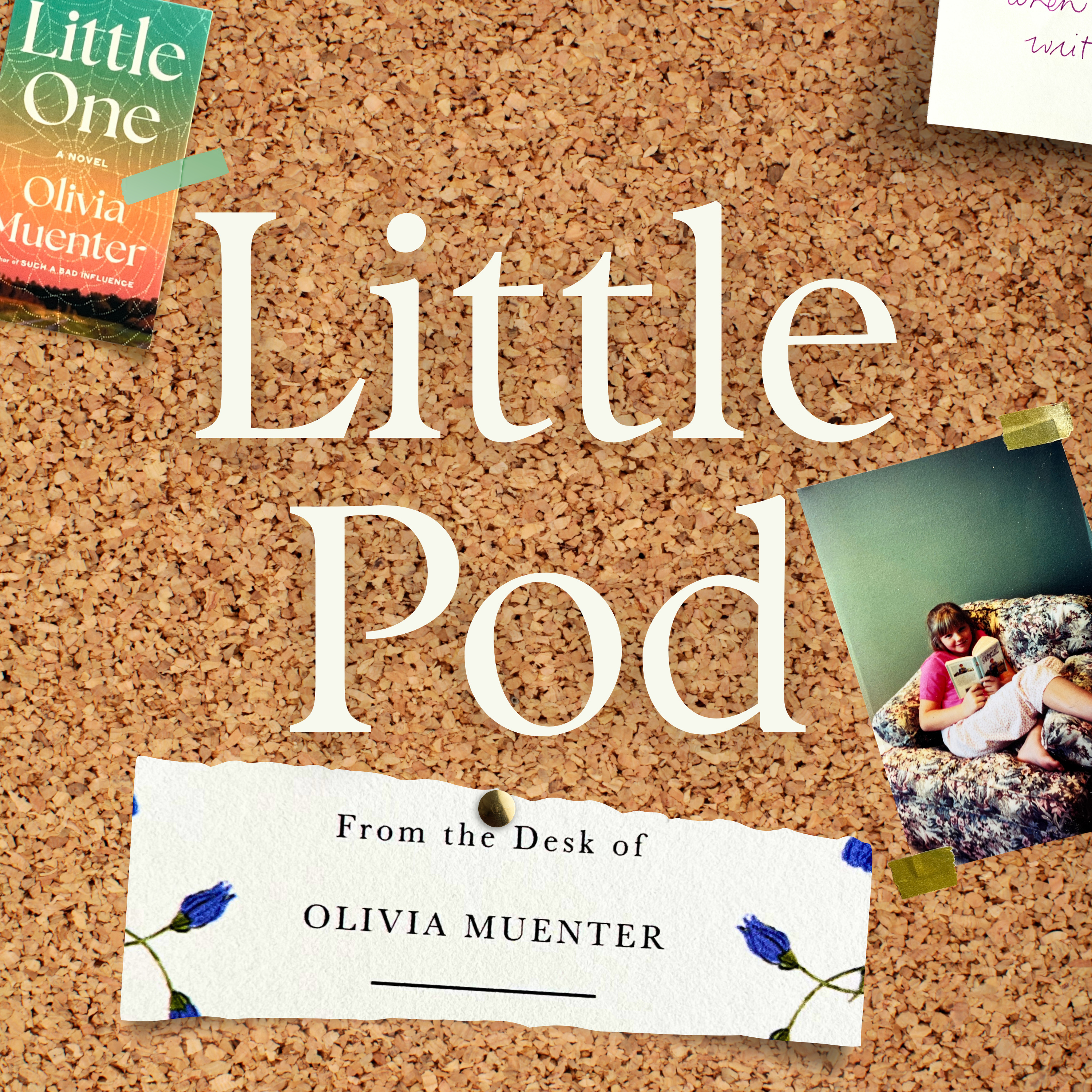
The transcription details a journey to Hatteras Island, a fragile and narrow barrier island in North Carolina known for its scenic beauty and vulnerability to erosion. The narrator's lifelong connection to the island centers on Buxton Village Books, a magical cottage bookstore owned for 42 years by the quiet and dedicated Gigi Rosal. As part of a podcast, the narrator interviews Gigi, who dispels the romantic notion of bookselling, emphasizing the intense labor, financial acumen, and customer focus required to sustain the business, which she built from nothing. She describes the store as a community anchor and a source of daily magic. Tragically, shortly after the interview, Gigi passes away. The narrator, heartbroken, expands the episode to include memories from Gigi's brother and a close friend, who celebrate her profound impact and the way her identity was intertwined with the bookstore, making its future uncertain without her. The story is a tribute to place, memory, and the often-unseen work of an independent bookseller.
We're headed from Avon to Bucston, which is such a nice drive because it's just uninterrupted highway, two lane highway with water on both sides. Almost every summer of my life, I have driven to Hatteris Island. This is the sound. The sound is on the right, the Atlantic Ocean is on the left, and sometimes you can see both of them at the same time. Located in the outer banks of North Carolina, Hatteris is one of the longest contiguous barrier islands in the United States. On one side there is the Pamlico Sound and on the other the Atlantic Ocean. It is roughly 50 miles long, give or take, and split down the middle by highway 12, the island's main road. There is a rumor. I don't think it's true, but there's a lot of kite surfing when surfing here, and then there is a rumor that someone once went from the sound to the ocean or back and forth, but now that I'm looking at these power lines, I don't think that's actually possible. No, that's a lie. Myth number one. I grew up visiting here most summers, sitting in the backseat as my parents made the 16-hour drive from Florida. As an adult, I have made my own way there from the different places I've lived over the years, New York City, Philadelphia, and now the Hudson Valley. No matter where you are coming from, it is not an easy place to get to. The closest major airport, for example, is almost three hours away. And once you are there, it is not always an easy place to stay. The narrowest point of Hatteras is just 150 yards wide. Many of the oceanfront houses are mere feet from the water, and it's getting closer. Bucksdon is one of the places where the houses keep falling into the ocean on the shore, I think, along the Atlantic side. So I think this past October, there was like 18 or 19 houses that collapsed, and it creates all this debris and it's very stressful and sad and this road down here by the motel washes out constantly. It wouldn't be as price of the water still now. To say it's a precarious place is putting it lightly. To me, Hatteras has always been a destination on the edge of everything. Both of the real world and not. Something more wild. Some of my very happiest, most pure memories are sitting on the beach, not moving until it was officially too dark outside to keep reading. It's why I keep a bowl of shells on my desk in my writing cottage now, all gathered from long walks in Hatteras. They remind me of the simple joy of being on that beach and walking, or more often simply sitting in front of the ocean with a book in my lap. Usually that book came from one place, Bucks in Village Books. And then we're going to Bucks in Village Books to interview JJ, who is the owner of 42 years. Since childhood, visiting this bookstore has been a staple of my trips to the Outer Banks. I can remember myself walking in the door at every single age. Every visit I left with a stack of books and a deep appreciation for the mysterious woman who ran the store, Gigi Rosal. Um, it's the store I grew up going to every summer when I was here for two weeks. And yeah, we're going to talk to her about owning a bookstore on an island in the middle of the Atlantic Ocean. What do you remember about Gigi when he came to come and sit here and throughout growing up here in summers? Well, she's always there, which I go to a lot of bookstores. And you know, there's usually a different person working every time, but it's always Gigi. She always has like her gray hair piled up on top of her head. Quiet. Kind of mysterious. Nice, but you know, she sort of left people to do her thing. And when I was in high school, I was very into photography, so I took a ton of photos of the store, which I thought was so charming and all the old wooden beams and the tiny rooms. And I posted all of them in a Facebook album as one does, and I think I tagged them or something. Because after that, every so often, Gigi would be like, "Are you the one who took the photos years ago?" And then eventually when I started publishing books, I introduced myself as an author. And then I emailed her and I said, "Can I come to your store and interview you?" Now is a 32 year old, which is crazy because I've been here every age of my life, basically. And now I write books. Here I am. So. As I got older, I went to journalism school, worked as an editor, and eventually started writing novels. I still visited the store each summer, and every time without fail, Gigi was behind that front counter. No matter how old I got, I never forgot about the magic of her cottage book store. In fact, with age, it only seemed to become more important to me. I'm kind of excited, but nervous. I've probably never spoken to her in person for more than five minutes while she came out, so. I always had this idea to do this and to sit down with her because this bookstore is so magical and mystical in my mind. And I kind of want to know more about her story and what it's like. Because to me, it's the most romantic thing in the world to be like, "I wake up every morning and I go to my antique cottage." And I, well, I guess I do. I don't sell books. Don't include those. So obnoxious. It's so annoying. Well, in a way, you know, maybe it's connected. I mean, there are, I've never thought about it until this moment, but there are similarities between the bookstore and where I work every day. You know, it feels kind of rickety and old, but charming, and there's a window, air conditioner, just like my cottage. And I don't know. So maybe it inspired me more than I actually think. This is LittlePod, a little podcast all about the big questions behind writing books. And though so far, we have talked to authors, teachers, publishers, and agents we haven't yet talked to one of the most important figures in the business of writing, a bookseller. If there was anyone who I thought might have the answers to some of the big questions I've been considering in this series, it was GG. So once again, I got in the car, drove 12 hours from upstate New York, this time with LittlePod producer James and went to Buckston Village Books. Hi, I'm Olivia. Hi. Hi, how are you? How are you? This is my friend James, who's doing all the audio. I'm recording doing some audio for this. Perfect. It was early January on the day of our interview, but somehow sunny, clear, 70 degrees. The hour James and I spent with GG in the quiet of her store, light pouring in the front windows, was like the store, light GG, special. Well, thanks so much for having us and making time for this. I'm so excited. I thought about it non-stop in the days and weeks after. And on January 30th, as we were scripting out this episode, I opened my Instagram and saw that I had received a DM. Not sure if you've seen this news yet, the message read, "I know how special this place is to you." And then a link to a Facebook post. When I opened it up, this is what it said. We were very sorry to say that GG Rosell, the beloved founder and owner of Buckston Village Books, has passed away. GG was a warm and caring friend to all readers, authors, publishers, vacationers, visitors, and others, always ready to stop and chat. To say she will be missed grossly understates it. In the days ahead, we will share information as it becomes available. In the meantime, please share any of your memories and thoughts here. The news shocked me. I cried. I couldn't and still can't believe it. A few days later, I got a message from GG's email account. It was from her brother, George. He wrote that GG was hospitalized with pneumonia and passed away a little more than a week later, with George and their sister, Linan, at her side. Shortly after that, I read a Facebook post from someone named Natalie Kavanaugh, a beautiful tribute to GG and their decades-long friendship that brought me to tears. From the beginning, I'd always wanted a conversation with GG to be the final episode of Little Pod. But now, it felt important to also include memories from two people who knew her the best. Here's who GG was, according to her little brother, George and friend Natalie, who described their relationship like this. I don't know. She was my boss. She was my friend. I don't know if you would call her like a big sister or like the coolest auntie ever, but she was like family to me. She said many times that space inside boxing
books was kind of magical and that that was one of the reasons she was excited every day to open the door because magic you know it's it's a prize commodity and to think that you were gonna create magic on a daily basis even if it was a minuscule moment it was worth taking the chance to see it happen I think one of her skills as a bookseller was to be able to find out within just a few minutes of talking to somebody what they were really looking for even if maybe they didn't know it themselves yeah I think by her being so interested in you know other people and helping other people find what they need through her work she didn't really like she was a very focused on her own self our father was a salesman for Chevrolet and he understood how difficult it is to deal with the public to do direct person-to-person sales to keep your customers happy to keep your customers coming back etc etc but she prevailed again ultimately and what you have seen at Bucston Village Books is a culmination of heartache heart break success failure restarts but through at all a conviction that she had made the right decision I think that Gigi proved that you could be on your own and still be such an amazing part of this community in world which I think some girls or women don't realize sometimes before it's like a double loss you know we lost Gigi we also lost the bookstore or the whatever the bookstore was with her yeah because they were they were very entwined in in the fabric of this community yeah those two things together it hurts me and it makes me smile at the same time that her star was still rising when she got sick you know she didn't speak too early and hanging on she she wasn't still struggling she was in the sweet spot it's a journey going into Bucston Village Books there's no direct line to go anywhere but that's kind of the charm of it that if you want to see what she has in stock and you've got to dedicate the time you got you got to be there for an hour now if you know what you want you walk in you grab it you walk out that's great but if you're browsing it you know it's it's a it's a journey it's not a short trip and what a what a gift to know that you could drive into Bucston and pull in front of that little store and it would be the same no matter what no matter how many new houses had been built which one's washed away in the surf the new bridge etc it's a change etc etc they could pull into the parking lot at the bookstore if they can find a parking place and walk in and Gigi would be sitting behind the plexiglass and the store would be this little oasis of magic and they could they could just go oh thank god this is still here tell me more about what you're saying about I want this to be a business and I want to be successful at this and it's not just oh this is the most romantic magic holy which James and I were talking about that like you must hear that like a thousand times oh yeah oh yeah this is my dream or when I retire when I want to slow down and I think here I am 73 years old looking like I'm 110 by the end of August and you're telling me you think this is something you can do when you want to slow down I get here at seven in the morning when I open it 10 and I'm often here an hour past when I lock the door and there are only seven days in the week but I'm here all that I just have to take a deep breath one of my clerks many years ago described it perfectly I had always said it's the duck paddling furiously below the water looking serene floating along what she said was we work really really really hard to make it look really really really easy yeah the I'll never let them see you sweat because and I take this very seriously we're helping folks build memories we're helping families build traditions and in the world today where everything is painful hurtful and hateful that is ever more important it's what will save us I think politically I don't know that anything can save us I mean somebody read Gibbons Rome and is following Matt Handbook Jesus and yes I've read Gibbons Rome and civilizations crumble we take ourselves down but that doesn't mean that there's not value in daily life and stories capture that your stories yeah capture that and that's that's what I think independent book stories do is offer those stories and they offer them not in pixels but in paper in in gun paper it's a tactile experience it's a whole body experience not just a mental exercise but in order to do that you got to pay the bills and that's the part that I didn't know I had an east yoke for the financial part when I opened the business I'm not sure I even knew how to balance a checkbook yeah tell me about like starting the bookstore and it's been open this is its 42nd year and how tell me about the journey how did that happen what was your mindset when you started what was your goal what was your vision or were you just kind of taking it a year at a time yeah I didn't have any of that my degrees in forestry so I'm a science geek I arrived on Havaris to do in the 70s and I don't tell this story in short bursts when folks say how do you get here because the part the National Park Service now has more less become a law enforcement agency because of so many people visiting National Parks they've had to I came here to do my undergraduate thesis research interestingly enough I just said so many people visiting the theme of my undergraduate research was carrying capacity of conservation lands we still haven't figured that out anyhow they hired me affirmative action I'm not gonna say nasty things about the I even though it can be abused and misused because I was hired because I was female was a forestry degree granted I was probably overqualified because I was also working on my masters at the time but I looked good on their employee list so of course it took the job I want to live at the beach I stayed four or five years six years I don't know how long I got frustrated with limitations of job descriptions you know it's it's the government but it's corporate structure if you did something outside your job description you made the guy that was supposed to be doing it look bad I was in trouble all the freaking time you know you need to not do that you need to take a layday you need to you know start a new project that doesn't step on somebody's chosen finally I just you know I went and worked at other parks and forests to see if
maybe it was just, you know, this park or whatever it was, and it was the government structure. So I thought, well, what do I know? I know books, 'cause all my undergraduate electives were in English. I saw them in books. (laughs) So I thought, well, I'll open a bookstore. Having no idea what that meant. And I was just driving around one day, and this building folks were in and out of it. And I had to go to the bank for some reason, and I asked to the local banker, and he said, "Oh, yeah, I was gonna open an art gallery, "but my wife said, no, you can't leave your corporate job." So I'm not going to. So I came right over here and said, "I heard you getting ready to rent that building." It had been where the property owners, kids lived during college summers. The mom and dad lived in the building next door. So to jump forward many, many, many years, and to prove my point that, and I will tell people, this all day long, a very comfortable, very good living can be made as an independent bookseller, because from that day, when I just wandered up to somewhat derelict, you can imagine college students summer housing, but charming, 1800s, 1860s, era building, to today when I owned this whole freaking compound that I bought and paid for, with money from selling books. You can do it. I'm not only on my own business, I own the real estate. And in any capitalist society, that tells you that somebody's doing something right. So I had to learn all of that along the way. And I enjoyed it. I had no idea, no idea whatsoever, that I would find numbers so satisfying. But it's the one place in life where two and two has to equal four. Everything has to come out even at the end. The rest of the world doesn't operate that way. The rest of the world is, well, we'll see what happens. So I find working with numbers very wrestle. When I have had a day where release dates for the New Best Seller got changed. And I already have a pile of pre-orders. And I'm having to call 110 people to say, your book won't release while you're here on vacation. What would you like to do? When I'm trying to navigate all of that unpredictability in the book world, I'll take an hour and balance accounts. Because by the end of that hour, the bottom line has to equal a certain number. And then the world is right again. That's so funny because having grown up going here, to me, it is a magical place that doesn't, not a numbers person, probably not surprisingly. To you. So it's so funny to me, but to you, you're back here just relaxing by doing that. And to me, I'm like, I could just sit here and stare at the books and the walls for forever. Sorry, this beautiful weather that you're enjoying has me. Take your time. And then allergy flare up. It is magical. Magic and numbers. Well, the numbers for me are part of the magic, the fact that it works in a capitalist society. I mean, that's pretty magical. And I invented the whole thing right out of the air inside my head. And that astonishes me just by following the string. Do you mean the store itself, like the business or what? Do you mean when you say you invented the whole thing out of thin air, do you mean the business itself or do you mean like how you do the numbers and accounting? No, numbers and accounting have very strict rules. That's what I like about it. But yeah, no, the whole concept of the store. And I listen to my customers. That's how I know what I need to do next. How many of your customers would you say are what percentage are people that you see every single summer? Oh gosh. The Chamber of Commerce visitor bureau tells us that 30% of the folks who cross the bridge have never been here before. So that means 70% are repeat customers. So yeah, probably are repeat visitors. Probably 70%. It becomes a tradition for folks. And to me, this is important because it's part of the magic. Year number 40. This is 2026 and opened in 84. So 42 years going on now and I opened in April. There's never been a day in those 42 years that I haven't been excited to unlock the front door and start my day. Is that astonishing or what? Is that a gift? Yeah. Wow. I mean, there are some days that there are things that I'm thinking, that is not my favorite chore. You know, can I delegate it? I'm gotten really good at delegate because the business has grown so much. What is it about? That's kept you so excited every day. I don't know. It's the magic. There's something that exists within this building itself. The building itself is a huge part of the personality of this store. The excitement and energy that all the customers shed while they're in here stays. Folks say, well, it's my business. If I want to do blah, blah, blah. Not really. It's not your business. It's your customers business. You got to listen to them. I love authors. I love hosting authors. I love planning to host authors. The couple of hours while the authors are here is fingernails on chalkboard for me because it's like hosting the world's most important cocktail party. Everybody needs to leave was what they came for. The author needs a good crowd and to sell books. The customer needs to feel that they got the time with the author. That the author met them face to face, looked them in the eye, and that their book purchased and their opinion about the book matters. It's a huge responsibility. What would you say is that you don't like doing the hosting part of it. What would you say is your favorite part of owning the business other than maybe the numbers? All of it. I love all of it. I have to say, oh my God, knowing when a contract has been signed with an author that I'm familiar with, even if a title hasn't been attached yet or a release date. I'm just excited to know there's something else coming that I can be excited putting in people's hands. Seeing the different families show up. I'll start thinking about them a week or so before their traditional vacation time. I look at a calendar or whatever, but just by 40 years of seeing the same people this ain't weeks. I loved back in the day. Now I hire Franklin fixtures to build my shelves for me, but back in the day I loved physically building the shelves. I did all the plumbing and all the wiring when I took over the building and don't tell they count me that because it probably was not up to code, but 40 years later I'm probably okay. So you did it all yourself in the 80s? Yeah. Yeah. Barred tools from the one local plumber and one local electrician and had them check my work afterwards because it wasn't going to get done otherwise. I put new floor joy set. Yourself? Yeah. Code. Yeah. It's not a retiree sort of job.
I actually remember one time I was in here with my mom of the many times and I think she asked you, this is very. I think she asked you, like, what's the hardest part? And I could be misremembering this, but I think you said, "Oh, the boxes are really heavy." You have to be really strong. And it always stuck with me because I found it. It was just so practical and true. I think she was expecting something. But it was just. And then I said, "Dear, I'm sort of complaining." Yeah, no. The indignities of aging, I'm telling you. I mean, yes, I was very strong as a younger woman, but 40 pounds has gotten heavier as time has gone on. And as much as I have struggled to keep up with that, my ego won't let me damage my business. So I have to be the oldest person on staff. And this is going to sound very ageous, and I don't care. I am ageous in this particular way. I will not be a business that is full of great-heart old ladies. The fastest growing, most robust segment of my business is the 18 to 40-year-olds. They don't want to buy their dragon sex books from their grandmother. Yeah. Sad to say that the most available cohort of part-time workers, at least on Hatteris, are retirees. I can't hire them unless I retired at 40. How do you get around this? I don't know yet. What I have done for the past 10 years is hire customers who have other full-time jobs, who say to me, "If you need help, give me a call." I'd love to pick up a shift here and there. At the moment, everyone who works for me either has a strong interest in a degree or a graduate degree in marine science. It is so fabulous when we're all here together unpacking 20 cartons. We're talking about pelagic virgin in Antarctica. We're talking about the krill that the whale are eating and the diminishment of that supply and why. I mean, the work environment is just so stimulating. That's the kind of staff I want. I want curious people. I want energetic people. The oldest of that crowd is early 60s. The youngest is late 30s. And that's the perfect age range. I can hire high school kids because they haven't lived long enough to have read long enough. And I have no interest in babysitting. Not. I don't want to hear. I'll be late to work because my mom can't pick me up until. That's for a different kind of business, not mine. Go work at the grocery store. Everybody here needs to be self-directed. It seems like you've figured it out. Or do you feel like you're still learning? Do you feel like it seems like you're still innovating every year and you're still figuring out systems? Well, you're going to comfortable. I'm just floating along here. It's like you're actively making it better every single year. I don't ever want to just float along on anything. The world's changing at warp speed. And sometimes not in a great direction. And I want to be involved in. I want Bucks and Village books to be involved in balancing that out. I won't say course correcting because say from the pandemic we learned a lot of important stuff. Purch pickups for just one very minor thing. I mean, I always left cartons out on the porch for folks to pick up who get off the restaurant at 10 o'clock. But now everybody says, oh, I won't be coming back through until the sense at such a time. Can I give you my credit card number? Leave it on the porch. That would have never become common practice without the whole faux-might. Can't go indoors, can't touch. So even difficult things have bright spots because we can learn from them. I'm jumping here because something that Bolivia is working on with this series is about this idea succeeding in this industry. When so many things outside of your control, forces outside of your control are stacked against you in so many ways. And you're talking about how you've been adapting over so many worlds changing. But also we're looking to the future and like this whole part of the country might be underwater soon. Like how do you you mentioned you figured it out and you built this this is your vision. You like being in control of them. So what do you think when you look into the future and you're considering those types of forces outside of your control? So mother nature wins every time. I've been interviewed multiple times over the year, probably over the years, probably because of my science background. I've been shamed because of my science background because you know we don't believe in science anymore. That's fine for you, but you know you're wrong. I think about it. I only end on higher ground. I bought a share of my mother's house with my brother and sister when she passed 10 years ago for just that reason. I could make them my home because there's a lot of good stuff there and a lot of family. It would not be my first choice. I have everything heavily insured. I know that may not be any help if the road goes because that's uninsurable. Access is not something you can claim on an insurance claim. But that's okay because being the filthy capitalist that I am, I have tucked cash aside for years knowing that that may be the only net worth I have if all my real estate is inaccessible. Because I've gotten to the age where I won't live long enough to wait it out. We could become an end-tucket. We could become a fly in only ferry in only islands. There are plans of foot for more ferry docks. We already have an airport landing strip, strip of pavement in the dunes where planes land. We've used it many times after hurricanes. Jimmy Buffett sent water once after a storm. I won't live long enough to see that transition. Human nature, nobody is moving forward fast enough to build the new ferry docks, to secure, well, I don't want this to sound like a negative to our electric company because they are fabulous. They're a co-op. We all get to say. And they do incredible work and we have generators and I have a generator on my building next door, a whole house generator. But it would be years before we could be self-contained. The business could hang in enough people would come to support, I think, an independent bookstore. I would. I know you would. With less staff, with, you know, less everything. But I'd be 95. Oh, yes, I planned to get to 95. But maybe with not enough widths about me to be navigating that sort of a transition. The road breaking is the only reason that I would willingly choose to not be here. The road breaking and not being able to be fixed. With my generator, with bottled water, with gardens, you see my gardens all around the building we grow food. I'd be fine for six months or so in a transition period. I'd probably love it actually. The one regret.
have about the road not breaking when I was younger was when I thought about it when I was younger. I would dream of all those long days I could spend on the beach because I wouldn't be tied to retail. Well, somewhere around Menopause, my personal thermostat broke. I don't spend long days on the beach in the middle of the summer anymore. It's too bloody hot. So unless the road broke in the winter, that dream kind of went out the window and I thought damn, you know, that didn't happen in a convenient time for me. But I think it would be lovely here for several months with only folks who really, really, really want to get here being able to come here. So it's unsettling. Explain to me again the we were talking earlier about your friends jokingly or seriously maybe I don't know calling you a filthy capitalist. Oh yeah, they were serious. Wanting to keep their own vision of happy happy joy joy old hippie blah blah blah that I was just kind of drifting along then devil make hair and you know I don't have to make money at this. Yeah, you do. We live in a capitalist society. You'll never be taken seriously unless you successfully monetize whatever project you're involved in. And I'm a pragmatist enough and I have to give my father credit for this. Even though he was probably one of the most generous people I ever knew fed all the neighborhood kids I grew up in Appalachia. We were comfortable. Let me say that. We had things to share and we did. He was adamant that having adequate financial resources was number one in this country. It buys independence it buys respect whether it should or not. That's another whole story. And I learned that lesson. And you know when I started off I probably was thinking oh that's not true for me. I'm on a barrier island. You know I can do the happy happy joy joy money doesn't matter. That last did maybe six months until insurance premiums came due. Another license that I didn't know about had to be paid for. Business was stronger than anticipated. I hadn't paid last month's bill to a publisher so it couldn't order this month's reality set in pretty quick. And I've done everything wrong in a business that can be done wrong just through ignorance. But I'm a quick learner. You know I'm not going to make the same mistake twice. It's a waste of time. Let me just say those message boards and Facebook. Oh yeah. In social media I try not to start long-winded conversations. But when folks who are planning to open a bookstore or have just opened a bookstore in our indie bookstore chats say oh I don't have to make money you know this is all about love of the written word and blah blah blah I will weigh right in and say oh yeah you do you will devalue my work you would devalue the writers work you will devalue the art and craft of everybody involved in independent book selling. If you don't make this a financial circus. If you don't think you need to make money go do something else don't come into this world. And then I talk about starting from renting a derelict building to owning the whole compound that my building's on. It can be done and it can be done very well and I live very comfortably. So on a barrier island 30 miles out to see for God's sake. I mean I don't look like that today wearing my book store swag in a pair of yoga pants but you look like you're thriving. You live on an island and you come to a bookstore every day I'd say that is success. Yes I would say beyond my wildest dreams and I'm still excited to get here every day. I'm trying to take a week a couple of weeks to sit at home work on numbers not make a lot of unnecessary commitments that don't have to do with the business. I had recently my Medicare wellness checkup which is the most ridiculous thing I've ever heard of but you do it because Medicare reacts at your doctor if you don't we have great docs so I do it. The one thing my doc said to me is the one thing you need the one thing I can tell you that you need that I know you won't do is to rest. You said you're too busy you love being busy I know you won't rest but I have to say it and it's like I'm not gonna rest. I have a specific memory of coming here with one of my still best friends and of course whenever I bring someone new here I'm always like we have two to the bookstore it's a whole thing so I told James I was like we're gonna go we're gonna go to the bookstore and I was very into photography so I walked around and I took photos of everything and I think that's how we first sort of met you know even though I had seen you for many many many years and yeah I must have talked to you on Facebook in the I don't remember how the connection was made I just remember you sent a digital album of some of the most stunning photographs of the interior of the store and I immediately messaged you back and said can I use those and I still have them I still pull from those to use the shell hanging over your head that's on the end of the fan cord. It's so funny looking around because finally enough I live in an 1860s house now and I write in an 1860s cottage it's behind the house and I'm not even kidding like James do you see like the little bottles up there on my ledge where I write my window I have little bottles we found under the cottage when we were renovating it I have she on a manuscript of little one I have a shell that I found here so it's very I have beams you feel it out and yeah I I never made that connection but I always had this dream of working in an building it's just so funny they're both 1860s yeah I look around I just see things and I mean James you it's kind of maybe that helps shape your dream maybe maybe because I just felt so subliminal yeah yes like I just always felt home looks like to Olivia yeah I think it is but it's beautiful and that's that that's what you built you built this and so your legacy is carried through in what Olivia's lifestyle and life is now writing books like I feel like you must have informed her in so many ways her vision of a successful writer life and now you're here talking about it and you know what I need to be grateful for that and set it aside because the human ego can take credit for things that are part of a whole different energy level the connection the triangle Olivia me the building is where that blessing lives it's not any one piece of that but my ego would say I had something to do with that the only thing I had to do with that was be excited to show up that morning and it happened you know that's the magic that's the magic and I'm here for it all day long I don't miss any of it but it takes all of us it it truly is community and community is the piece rightfully so that all of the wellness mental and physical wellness folks are talking about
in this disrupted world. The human need for connection is so strong. And there's a force out there that's trying to make us distrust everyone and everything. And me unlocking the front door of my independent bookstore every day is the strongest resistance against that that I can think of. This interview was one of the first we recorded for Little Pod. The goal was to get to know Gigi better, to learn from her and what she'd seen in her 42-year career. But it was also to simply convey to her, to you, how what she'd built, who she was, made so many people feel. For my whole life, walking into Bucks and Village books always made me feel exactly how writing does. Like I'm in the only place I want to be, totally at home, and also, like anything is possible. Like the world is full of similar pockets of magic waiting to be found. I don't know if I fully understood this until after our conversation, after re-listening to her words here. I will always think of Gigi walking into her store every morning excited to build memories for people. And I now think of how I, too, get to walk through the door of my old cottage, sit at my desk with my shells from hadarists and my glass bottles, and start writing again, even when it is hard, even when I am anxious and insecure. And as Gigi said, isn't that a gift? Little Pod was written by me, Olivia Mentor, and produced by James Cave. Special thanks to everyone who has made this podcast possible, including you, the listener. We have read every single message, email, review, and comment and we could not be more grateful. Thank you also to everyone who shared their time and perspective for the show. Pam LaGrosse, Rachel Taff, Catherine Newman, Sally Kim and the whole team at Little Brown, the events team at the Strand Book Store, Anna Sproul-Latimer, everybody who joined me on tour, Becca Freeman, and my parents, Kim and Bruce. And finally, thank you to George Butcher and Natalie Kavanaugh, and to Gigi Rosel. As a final small request, please consider joining me and making a donation to the Margin Gigi Rosel Memorial Scholarship Fund. We've linked to this in the show notes. This is created by the Bucsens Civic Association, along with Gigi's siblings and friends.
Podcast Summary
Key Points:
The narrator describes the scenic drive to Hatteras Island in North Carolina, a narrow barrier island between the Pamlico Sound and Atlantic Ocean, which is both beautiful and environmentally precarious.
The narrator shares a lifelong personal connection to Hatteras and specifically to Buxton Village Books, a cherished independent bookstore owned by Gigi Rosal for 42 years.
The podcast interview with Gigi reveals her deep commitment to bookselling, the store's community role, and the hard work behind its magical atmosphere, contrasting with the romanticized view of the business.
Shortly after the interview, Gigi passes away unexpectedly, leading the narrator to include tributes from her brother and a close friend, who highlight her legacy and the inseparable bond between Gigi and her bookstore.
Summary:
The transcription details a journey to Hatteras Island, a fragile and narrow barrier island in North Carolina known for its scenic beauty and vulnerability to erosion. The narrator's lifelong connection to the island centers on Buxton Village Books, a magical cottage bookstore owned for 42 years by the quiet and dedicated Gigi Rosal. As part of a podcast, the narrator interviews Gigi, who dispels the romantic notion of bookselling, emphasizing the intense labor, financial acumen, and customer focus required to sustain the business, which she built from nothing.
She describes the store as a community anchor and a source of daily magic. Tragically, shortly after the interview, Gigi passes away. The narrator, heartbroken, expands the episode to include memories from Gigi's brother and a close friend, who celebrate her profound impact and the way her identity was intertwined with the bookstore, making its future uncertain without her.
The story is a tribute to place, memory, and the often-unseen work of an independent bookseller.
FAQs
Hatteras Island is located in the Outer Banks of North Carolina. It is a long barrier island with the Pamlico Sound on one side and the Atlantic Ocean on the other, and it is traversed by Highway 12.
The island is narrow, with oceanfront houses very close to the water, and erosion causes houses to collapse into the ocean. Roads also frequently wash out, making it an unstable environment.
Buxton Village Books is an independent bookstore on Hatteras Island, owned for 42 years by Gigi Rosal. It is a cherished, magical destination for visitors and a community staple for generations.
Gigi, originally with a forestry background, moved to Hatteras for work. After becoming frustrated with government job limitations, she decided to open a bookstore, finding a charming old building and building the business from scratch.
Gigi focused on listening to customers to guide her store, creating a magical experience. She emphasized hard work behind the scenes to make it look effortless and valued building traditions and memories for families.
Running an independent bookstore requires balancing the romantic, magical appeal with practical financial management. It involves long hours, adapting to industry unpredictability, and maintaining a deep connection with the community.
Chat with AI
Loading...
Pro features
Go deeper with this episode
Unlock creator-grade tools that turn any transcript into show notes and subtitle files.
 PodcastTranscript AI