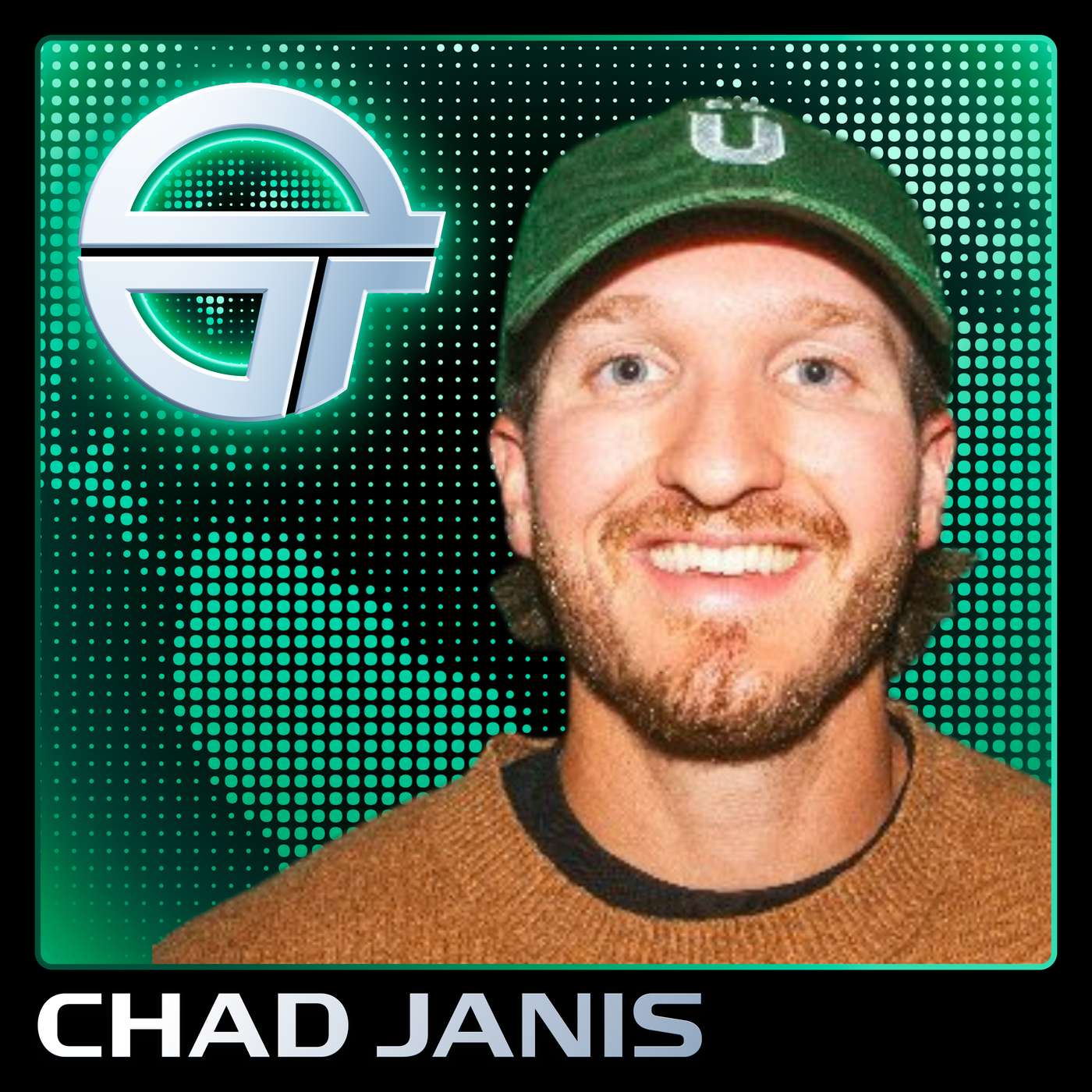
Chad Janis: How I Sold Grüns to Unilever for $1.2B
from TBPN
24m 23s
The interview features Chad Janice, founder of Grins, discussing the company's journey from inception to its recent acquisition by Unilever for $1.2 million. The idea originated from a desire to transform comprehensive health supplements into an enjoyable, daily gummy habit, leading to a launch in August 2023 after a year of development and testing with Stanford classmates. Growth was driven by creating entirely new product categories, maintaining intense operational urgency, and fostering a team culture where employees act as "CEOs of their domain." Significant hurdles included innovating the manufacturing process for daily gummy packs, which initially required manual labor, and rigorously managing supply chain to prevent stockouts for subscribers. While Meta was a primary marketing channel, the company diversified its mix and executed a major rebrand to succeed in retail, entering stores like Sprouts and Walmart starting in 2024. With a focus on product excellence and a lifestyle brand approach, Grins scaled to over 130 employees, raised approximately $50 million, and ultimately attracted acquisition interest, culminating in the deal with Unilever.
Let's bring in a goner. Chad Janice from Grims. Welcome to the show. What's going on? Hey guys, how are we doing? How are we doing? We'll do great. Congratulations on the massive acquisition. We have to hit the goner for you. Unilever paid 1.2 million congratulations. [MUSIC PLAYING] Big, big hit. We've been-- I think we tried to make this happen last year. So great to finally have you on the show. I think everyone was appreciating how offline you've been for the last little bit. I think somebody-- I saw somebody post like-- the founder hasn't posted on X since Q4 of last year. If you guys were busy grinding. But yeah, I guess like the-- I want to kind of dive right into-- and I'm sure you've told the story before, but I think it's fun to hear it now. Like, what drew you to this category in-- was it three and a half years ago? At this point, you'd been on the board of a bunch of different D to C brands. I would say like you started the company and probably the trot, like the very bottom of the trough in terms of like D to C sentiment. At the time, there were not many great kind of exit comps to point at. A lot of like the D to C darlings had been struggling. You clearly had faith in the category and managed to build to one of the biggest exits in the space in a while. So talk about those-- they're kind of the year months leading up to starting the company and what you saw. Yeah, thanks for having me on. So I actually was trying not to start a company. When I had the idea for Grins, I was going to go get my NBA at Stanford. And I was saying, hey, I want to have a pretty normal NBA experience, hang out with friends a ton. And there's about two weeks before I went out to Stanford. I was at my dad's place and I was drinking a Greens powder. And looked up in the corner of the room, and I was just like, there's no way I'm keeping this habit past 30 days. So that was sort of the epiphany of, hey, how do I take? Something is robust and comprehensive. And making it into a form factor-- didn't think gummies at the time-- I'd make it into a form factor that could build a habit for consumer, make it something they look forward to. They go to bed at night thinking about excited about taking Grins the next day. And so that started the journey of about a year formulating, piloting, testing, sampling, about 1/4 of my entire Stanford class, tried the early iterations of Grins before we launched. And then we launched in August of 2023. What other companies had you looked at in the category? I know there was-- I'm going to probably blink on the name, but there was a very high profile, like Apple cider vinegar, golly, golly. They had scaled extremely rapidly. But then not-- I don't know where that business knitted out, but I don't believe it was a fantastic outcome. So I felt like I kind of had this feeling at the time that maybe there was something wrong with gummies as a category. Like there was a bunch of demand, but maybe it wasn't possible to build to this level of outcome. Did you have any kind of concerns about the form factor at all, or you just had conviction because people love the product? I mean, not the form factor. The history of gummies actually really interesting. About 20 years ago, it didn't really exist. And I would say then Ollie came around in 2014, I believe, and made gummy an approachable category. And then I would say we're entering what I would consider a V3 of the gummy era, which is taking really robust blends and putting them into a form factor like gummy. So you sort of get the best of all worlds. You get robust copper heads of blends in a form factor that's convenient, enjoyable, consumers can look forward to it. And so I didn't necessarily tie the dots the way that you might have just there with Golly. I think they were more focused on individual ingredients that sort of rose and rose the road with trends, and then came back down as that sort of trended away. We stay away from like single ingredients. What would you say are the three biggest factors that contributed to your guys is what I would describe as hyper growth? I would say first is novel innovation. So each of the products you see us launching does not exist in the market. So when people say like, oh, are you competing with? It's like, well, we're kind of creating our own new categories against large outstanding categories. I would say second is just like unrelenting urgency every day. I sort of look back at the urgency I've had every single day over the last three and a half or years, as well as the urgency that my team has every day. It's just compounds over time if you're delivering that much urgency in and back every day. The third thing that I'd say is the absolute best important is the team. We've got 130 plus individuals here at this company. We have a culture of autonomy and accountability. And each individual here wakes up every day as the CEO of their domain. So when you sort of take 130 plus people who are CEOs of their function and stack that together, you end up in a place that we just have ended up here in the last week. Can you talk about how you thought about building the team? What roles you wanted to hire for and when and sort of how you stage the scale out? Yeah. The hardest part about building a company is use the founder after too much. You have to do too much to start. And so over time you get to a place of like, OK, where does the company need me most? Where am I uniquely capable? So I guess the advice I would take that question is like, hey, what advice would I give about building through the stages that we did? You've got to surround yourself with the absolute best in each function. And so you sort of pick off each function slowly over time where either you don't enjoy it. It's sort of pushing down on your vibes, I guess I could say. Or be alternatively things that you think somebody could do way better than you. And you need to clear that out so that you can focus on other things. And so I wouldn't say that we probably made some hires early that others wouldn't-- we hired our chief people officer pretty early in the company trying to think of another one that we might have hired earlier than most people would have-- What was the motivation between the early hire and the chief people officer? I think it comes back to like, ultimately, at the end of the day, like, a company successes the people. The culture that you have, how that facilitates friction the scruff. And so from the early days, we've always been focused on ensuring that we get the absolute best people here in the company and then put them in an environment where they can be their full self. They can excel to the extent that they can. And we've got people at the company who probably had impacted other companies. But when they got here, it was like, night and day, the impact that they were able to have. You mentioned that you demoed the product with your Stanford class. What was the actual process of the very first version of the product to the scale up? Were you formulating it yourself using off the shelf products and then go to a co-packer and then in-house manufacturing? Take me on like the actual product development journey. Yeah, early days of the business pre-launch, the process was calling up 20 different co-bands, co-manufacturing partners. And Tom, here's what I want to do. Here's what the ingredients are. I'll source all of it. And every single one of them, except for one, said, I'm not going to do that. That's going to taste disgusting. That doesn't work in a gummy. It's never going to work. The one who said he would give it a try, he was like-- It's so funny because you say that you talk about the product being innovative. But I think you guys have been so successful and probably had so many clones. My assumption has been that this category always existed. And you guys just came in and out executed, but actually creating the category. Well, here's where it gets crazier. So we finally got the one to try. And I was like, look, just produce it. We'll both sample it. We'll say it that tastes terrible or not. So we ended up by producing. It didn't taste terrible. It had some work to do. We went through multiple iterations with the Stanford classmates, 25% of them. And then the hardest part about building this business is the little pack that we have, the daily packs. That infrastructure for taking gummies and putting it into packs did not exist prior to us. So for the first six to eight months of this business, we had 20 bodies standing around a table, manually picking up gummies and putting them in packs and taking a clamsilor. It looks like a stable gun. Before we then were able to automate it. So I mean, that's been the hardest part about this business. It's getting the infrastructure to where it is today, where we can ship 10 million gummies a day and have the infrastructure for it. Is that because the gummies are sticky so they don't work on normal machinery to just fall into the pouches themselves on an automated line? Yeah, I mean, that's one of the biggest difficulties. Why it didn't exist prior? I think in the instances where it does exist would be like your general mills, like MOTs, gummies. They're like the flimsy or type packaging. Yeah. And that's all in-house. That's all in-house, yeah. That's how I show up. There's not really like a manufacturing supply chain that does that. Yeah. So yeah, did you stay with co-packer for a long time? Did you wind up dual sourcing? How did you solve the supply chain over time? Yeah, and this has been the biggest unlock of our business over time. And frankly, the part that people are going to overlook is like having operations scale at the rate that we've been able to do it is a massive feat. We've got multiple commands, multiple co-packers, multiple nodes, 3PL, in-house facility. Bye.
It's been a lot, finally, at a place where we can actually meet the demand that's out there. Yeah. Keep up with it. So we're in a good operational place right now, the operations to be sleeping. Did you raise a lot of money along the way? We raised probably around 50 million over the course of the business. Some of that was secondary over the course, and primaries, well, obviously. Yeah. You have a fantastic group of investors, by the way. Yeah. They're great, right? Yeah. All those people are fantastic. How did your marketing mix evolve over time? Was it relatively consistent? I mean, I'm assuming you've given quite a lot of money to meta-platforms, but anything that was surprising from a user acquisition standpoint, or was it the kind of thing where it was like 80, 90 percent Google meta for the history plus rotating in experimental budget? Yeah. I mean, meta is always going to be a beast for like every brand that's online. What I'll say though is it has been surprising to me when I hear others mix, and that meta makes up, like you said, like 85, 90 percent. It's like, oh, wow, you should probably like diversify that a little bit. Meta is always going to take up a massive chunk. I mean, they build such a good platform that allows for companies to find people in market for their particular product. And so we've diversified over time. We have intent to continue diversifying building awareness. And so it's not that we feel like we're overexposed in a channel, but we've just always had the intent to create the defensibility against the media mix. Yeah. Scariest moment over the last three and a half years. I can tell you the exact day. I, I, six months into the business January 29th. It's called my command. I was like, hey, we don't have, it was like two weeks of talent a day. I don't think we have enough inventory, right? It's like, no, no, no, we're good. We're good. We're good. January 29th. I was like, hey, we're not good, are we? And he's like, no, no, we're not good. And so we had to shut off marketing spend by 93 percent overnight. And this is because you had a bunch of subscribers and you're worried about delivering on the subscriptions. If you can't, you know, there's a huge amount of turn. So we've never gone out of stock for like more than a couple days. So there's been like a couple periods in the business where we were close. We've never gone out of stock in like a way that would hurt our consumer. But that you got it exactly right. Like they golden rule at grins is we do not go out of stock. These people expect they take it daily. We are in stock. If that means we can acquire customers, fine. We've got a delinger for this here, such as. So does that also affect the skew mix and how careful you are about launching new skews? Does every new skew adds complexity to the supply chain and the inventory management? Yeah. I mean, look, like we've got a couple of, I would say we have a couple of skews per brand. We launch if you ask our operations team and the actual skew that we have. They would tell you we have hundreds of skews. So I'm probably downplaying the complexity. But yeah, like we, the nice thing about this business is we have solutions that solve consumers needs and mass. So we don't have to create, you know, 50 different products that solve niche needs that a consumer has. Yeah. What's your outlook on consumer broadly? I love it. I can't imagine building in a different space. I would say consumer sentiment is rough in some ways right now. I don't think that's like a surprise. You can look probably you've seen trends. Like I would say consumer is a category. It's a beautiful thing, right? Like our team, world leveraging AI, probably in an opportunistic way, not in an existential way that a lot of tech companies are like, hey, if we don't do this right, are we existing next year? For us, it's an opportunity and we're finding some really nice and roads there. Interesting. How did you think about messaging in the early days and like honing the brand messaging? Was the product delivers on across a couple of actors, convenience and health benefits? Was there ever like a tension between those? Like how did you wind up sort what did you settle on for like the key value prop if you could just deliver one message? I think your consumer helps you identify what resonates best. I would say though the approach of like the overarching approach of what we've done, one brand that I looked up to is Dr. Squatch. As you know, there approach, you know, it's probably the first time I was in the shower. He's in a soap and I was like, wow, it's like really fun. This is a nice experience. Something like actually like Mark here experience there and I think we've taken some of that concept to the supplement category where as you've sort of called out, most brands are like, we do clinical research but we don't, it's not like the only thing we talk about, right? We do, we have studies, we've done all this wonderful stuff but we try not to lean too much on that because that's what the rest of the category is doing. We're kind of a lifestyle brand. So consumers buy it, they enjoy it, they look forward to it and it drives an impact in their life. So I would say the overarching theme and I think if you were to look at our ad account, if you were to look at our like what resonates with the consumer, it's that we're a brand that personifies our consumer and they like to associate and have the benefits from it. Talk to me about the D to C to retail transition. Was that in the pitch deck at the very start? Did you know exactly how long that was going to take or was there a moment when you were like, okay, I'm ready, we're ready to go. Now's the time. Or did, uh, did Shrey come and find you and say it's time to go? You guys know Shrey? I know, I know Shrey, yeah. Love it. Shrey's awesome. He's been a good buddy and, um, helping the business since the early days. Uh, he actually went with me to pitch, believe Walmart and Sam's Club in the summer of 2024. Uh, but we didn't have a lot of employees at the time and I was the original one pitching. Look, I just always knew this business was going to be on the channel. Uh, I don't think there's any reason to like have pride in being a solely D to C business or a solely on like, there's just, there's consumers everywhere like meet them with the solution that, and at the price point that works for them. Um, so I first had conversations about launching retail back in like January of 2024 and I'll tell you everybody was telling me, hey, it's kind of early. Like, do you really want to do this? And I said, yes, and guarantee like the selling cycles are so long here. We'll guarantee by next year when we're finally in this retailer, we're going to be really glad that we put in the time today. Totally. Um, and so we, you know, that process took really long. We launched with sprouts in October of 2024, uh, targeted February of 2025 and then, uh, Walmart in April of 2025. And then a bunch of other, uh, amazing retailers after that. And then what were you tracking? What, what changed about the business, the marketing, the strategy to actually be successful in retail? The biggest thing is the rebrand we did. Okay. So the original branding, um, I don't know if you've seen it. It was like a dark green color. Sure. I, I'm glad you haven't seen it. I developed it in Canva in an afternoon. Okay. You know, it's funny as it was like, it was so bad, but when we changed, like the vast majority of people are like, this is a really good rebrand change. Yeah. We got a few people who were like, hey, like, what's up with the, I want the whole branding. I was like, guys, like that's Canva. Like, nothing special there. Um, so we, we re did the packaging. We made it ready for retail. Sure. You could more quickly and sort of three seconds identify what, what the product was. And so that's probably the biggest change we had to do to get ready for retail distribution. Is, is product the only thing that really matters in, in, uh, with an early stage consumer brand? It's a big broad statement. I think it really matters for us because it's the, it is, it sets the stage for how big any of our businesses can become. So as you know, we've got prunes, we've got new treps, our mushroom product, new trepics, we've got immune, which is an immunity product. And we've got juice, which is our pre workout, pre anything energy product. If we don't get that product right, speaking to that category right, uh, then it, it caps the upside of how big that business can be. So it really matters for us. Um, I can't speak for every business though. Yeah. How, how diversified did the business become? I mean, uh, 130 employees is, uh, is a lot. I imagine that you've had success both in e-commerce and then also in retail and then also across these new product lines. But is there a power law where one product in retail is driving the vast majority of sales or is it pretty much like a sum of, some of all the different parts of it? There's always a power law. Yeah. Yeah. Everything's grown. Everything's doing well. Like all these products are phenomenal. People should try, uh, should try them. Yeah. See if they want to stay with them. I, I would say that our teams like super ambitious. So if you asked us, we'd be like, oh my goodness, we want these, uh, secondary products behind groups to be much bigger than they are. Yeah. But to be clear, like, they're large businesses. Yeah. And I think any founder would love to have just one of them, um, as their core business. So in it, and we've got a lot of really exciting innovation coming that I think all grown nicely like a greens has. Yeah. Uh, when did you first meet Unilever or the folks over there? I first had a conversation with them, probably like June of last year. Yeah. I will be started talking. But like, casually, not like, like, just getting to know that ultimately for me, what really matters is the individual is somebody that I'm excited to work with. I'm excited to build with. And so I've been chatting with them for quite some time today. I did a fire, whether it was a good fit for both sides. Yeah. Yeah. You also, like, give me another year. I'll like three, four acts again.
And then what do you think Unilever brings to the table to let you fulfill the vision here? They're awesome. I mean you may be familiar with their background, but they've done this like with multiple businesses before. Frankly, might be one of the few strategic partners that has. So you've got Neutralfall, which they just acquired probably about four years ago, and they're publicly stated that that business is significantly larger than when they acquired it. They acquired Liquid IV back in probably 2020. That business is massively larger. I think they just stated last year that it's around a billion of revenue. They acquired all the back in 2020. That business is significantly bigger. So they've just done a really good job. They know what to look for. And I think that's what our team's most excited for is we're getting a partner who can help us on our ambitious goals and knows the path to get there. You mentioned that you're using AI opportunistically. What does that actually look like in practice? Because I can imagine that you probably have some sort of software, SaaS product in many verticals. All of those companies are probably launching or adding AI features. So you can flip a switch and turn that on or you can go and build from scratch. What's working right now? One of the biggest things I'm grateful for is we have a really, really strong data and finance team. And so we have all the data infrastructure data warehouse in a place where it's accessible through CLAWD to our team. So you've got the CX team, you've got the finance team, you've got the marketing team, all immediately accessible with that information to make decisions. So I'd say that's probably the biggest unlock is everyone's in CLAWD. Everyone is like we all went through an effort. It's kind of the objectives kind of a joke, but it's basically make yourself replaceable. I can AI replace your job. So we're all taking it across the aspects of our roles and what we can automate through AI. And I find them a lot of productivity from it. But I would say the biggest takeaway there is you've got to have your data infrastructure and data warehouse in a place that it's a source of truth to every individual in the company. Yeah. Talk about your approach to creative. I've heard that you guys are like absolute powerhouse when it comes to just like generating high volumes of creative. And I'm curious if there's any unlocks on the AI side on that front as well. You know, we haven't really used AI for that. I imagine that like we're testing like a few things, but I'm sure you guys see all over X. There's a million posts about people creating like the Pixar animations and stuff. And you know, say what you will. Some of it's a little testy. It's kind of like a we're we're a reputable brand. Like we can't be putting some things out in the internet like that. And so we're pretty careful about it. I would say at this point, we're still like 99% plus like human generated whether it's like in a editing file or whether it's actually humans creating UGC or working with influencers who are creating content. We haven't moved, I would say, into like AI being the the generator of our creative. Interesting. Did you actually get your MBA or did did you drop out? Oh, I was so close. It's so close. Okay. So it's it. Exit at this scale. Can they not just say like, okay, this guy's a master of business? We'll give them. I don't think they would. I don't think they've done that for others who have had some success success welcomes just before I graduated every quarter. So the business was doing like 50 million of revenue when I graduated. We had probably like six people working on it at the time. And it was two weeks before I graduated. I came to my wife back to our dorm. But I was like, hey, there's like a real chance I'm not going to graduate. I was like right on the GPA cutoff. She's like, oh, I'm like, no, no, like like dead serious. We're like one test, one point lower and we're not going to graduate. She's like, do you want to come back? I was like, no. Either we graduate and I have an MBA or we don't. And I don't have an MBA. That's a good one. Well, you're a master, you're a master of business in our book. So I think you got you got the you won the right award. But thank you, thank you for hanging out on and congratulations to the entire team. Congratulations. Incredible. Thanks guys. We'll talk to you soon. Have a good rest of your day.
Podcast Summary
Key Points:
Grins was founded after the founder had an epiphany about making health supplements enjoyable and habit-forming through a gummy format, launching in August 2023 after extensive formulation and testing.
The company achieved hyper-growth through novel product innovation, creating new categories; relentless daily urgency; and building a strong, autonomous team culture.
Key operational challenges included developing unique manufacturing infrastructure for daily gummy packs and meticulously managing inventory to avoid stockouts, especially for subscribers.
Marketing relied heavily on Meta but diversified over time; a major rebrand was crucial for retail expansion, which began in 2024 after early skepticism.
The business was acquired by Unilever for $1.2 million, following a journey that involved raising about $50 million and scaling to over 130 employees.
Summary:
2 million. The idea originated from a desire to transform comprehensive health supplements into an enjoyable, daily gummy habit, leading to a launch in August 2023 after a year of development and testing with Stanford classmates. " Significant hurdles included innovating the manufacturing process for daily gummy packs, which initially required manual labor, and rigorously managing supply chain to prevent stockouts for subscribers.
While Meta was a primary marketing channel, the company diversified its mix and executed a major rebrand to succeed in retail, entering stores like Sprouts and Walmart starting in 2024. With a focus on product excellence and a lifestyle brand approach, Grins scaled to over 130 employees, raised approximately $50 million, and ultimately attracted acquisition interest, culminating in the deal with Unilever.
FAQs
The founder had an epiphany while drinking a greens powder, realizing it was unsustainable. The goal was to create a convenient, enjoyable form factor like gummies to build a daily habit for consumers.
Key factors included novel innovation in creating new categories, unrelenting urgency in execution daily, and building a strong team culture where each employee acts as the CEO of their domain.
Initially, the founder sourced ingredients and worked with a co-manufacturer who was willing to experiment. Early versions were tested with Stanford classmates, and packaging was manually done before automation was developed.
The scariest moment was six months into the business when inventory shortages forced a 93% overnight cut in marketing spend to avoid going out of stock and disappointing subscribers.
The transition involved early planning, a rebrand from the original Canva-designed packaging to retail-ready designs, and long selling cycles, launching with retailers like Sprouts and Walmart over time.
Meta was a major channel, but Grins diversified its marketing mix over time to build defensibility and awareness, avoiding over-reliance on any single platform.
Chat with AI
Loading...
Pro features
Go deeper with this episode
Unlock creator-grade tools that turn any transcript into show notes and subtitle files.
 PodcastTranscript AI