Botox is a first-line preventive treatment for chronic migraine, defined as 15 or more headache days per month lasting at least four hours. It reduces headache frequency by 1–2 days per month compared to placebo, making it a widely prescribed option. However, it carries risks, including serious side effects such as respiratory or neurological symptoms, which require immediate medical attention. Patients must disclose medical history and conditions such as ALS or muscle disorders to avoid severe complications. The Goiania radiation accident of 1987 serves as a stark warning about the dangers of radioactive materials, especially when mishandled by the public. In that incident, a discarded radiotherapy device containing cesium-137 was found by scavengers, leading to widespread contamination and exposure. The resulting health crises included numerous deaths and long-term illnesses, with over 100 fatalities by 2012. The tragedy revealed critical failures in public awareness, emergency response, and transparency, reflecting broader issues in crisis management, media responsibility, and public health safety. This case illustrates how scientific discoveries, while beneficial, can lead to immense risk if not properly controlled. The lesson remains vital in today’s context of technological advancement, health innovations, and global safety protocols.
Chronic migraine is 15 or more headache days a month, each lasting four hours or more.
Botox on a botulinum toxin A prevents headaches and adults with chronic migraine before they start.
It's not for those with 14 or fewer headache days a month.
It prevents, on average, 8 to 9 headache days a month versus 6 to 7 for placebo.
Prescription Botox is injected by your doctor.
Effects of Botox may spread hours to weeks after injection causing serious symptoms.
Alert your doctor right away as difficulty swallowing, speaking, breathing,
eye problems or muscle weakness can be signs of a life-threatening condition.
Patients with these conditions before injection are at highest risk.
Side effects may include allergic reactions, neck and injection site pain, fatigue,
and headache. allergic reactions can include rash,
welts, asthma symptoms, and dizziness.
Don't receive Botox if there's a skin infection.
Tell your doctor your medical history, muscle or nerve conditions,
including ALS Lou Gehrig's disease, myasthenia-gravis, or Lambert Eaton syndrome,
and medications, including botulinum toxins, as these may increase the risk of serious side effects.
Why wait? Ask your doctor, visit BotoxCronicMigraine.com, or call 1-800-44 Botox to learn more.
Fall never arrives all at once.
Verse the air, then the light, and slowly the things you love begin to find each other.
A jacket meets a dress, a hoodie slips beneath a blazer.
An old cap finds a new scarf, because you don't simply step into the season.
You create it, layer by layer, until it finally feels like fall.
Find fall your way, at Ross.
Is it really safe?
Which is the limit between new technologies and a risk to humanity itself?
These are just some questions we can make when we study with more attention.
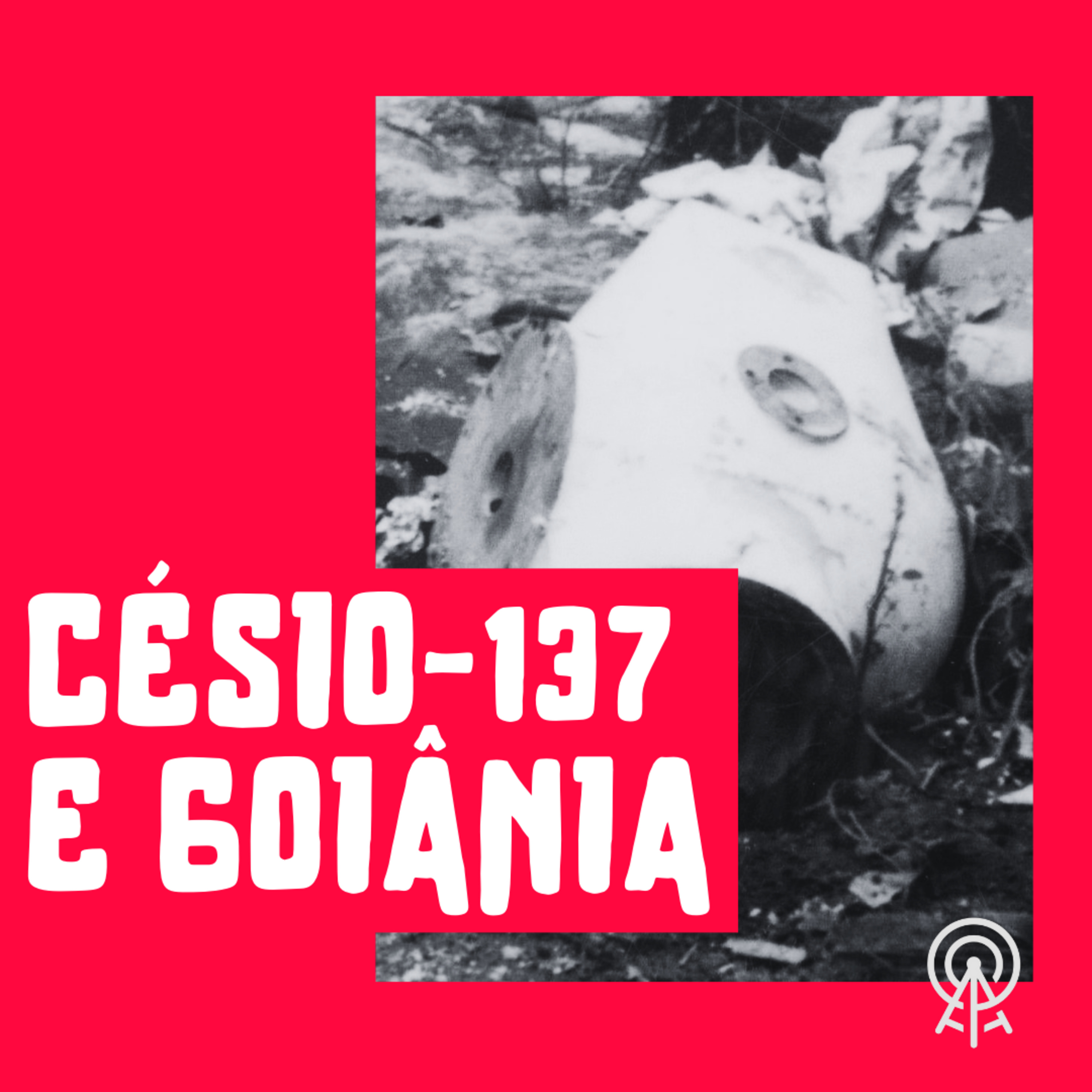
The Radiological Accident consists of 1-3-7 in Goiania.
This was one of the most tragic episodes of our recent history,
and unfortunately it's not something very known.
My goal today is to tell you what happened in Goiania,
but above all, analyze this event from a wider angle.
Observing how Brazil was being in global context when the subject is radiation.
As always, I want to remind you that the sources and reliable authors
that you can and must consult on the episode description.
But the Radiological Accident, which we will analyze today, has happened in Goiania,
this episode does not start in the center of the East, much less in Brazil.
To understand this accident with the Césio, we have to go to Poland.
It was in this country in 1867, which was not a "Sclodosca" river,
but known as "Maricurri".
The Polonese had a career as a scientist in France,
where he met his husband Pierre and Curri.
Along with him, they focused on analyzing how a recent government could be used.
Still in 1895, a man called Wilhelm Erhoitgen discovered the existence of the X-ray.
Following another scientist called Henry Becker,
he discovered that he leaves the Uranium and emits the rays that are similar to the X-ray.
This discovery was important because he managed to show that this radiation
did not depend on a external source of energy
and seemed to arise spontaneously from the Uranium itself.
Influenced by these two important discoveries,
Curri decided to consider the Uranium ray as a possible search field for a new thesis.
He used a new technique to invest the samples studied.
Some time ago, Pierre Curri and his brother had developed an equipment called "Electrômetro",
which used to measure electrical charges.
Using this equipment developed by Pierre,
Marie Curri discovered that the Uranium ray did a calculation in terms of a sample,
when there was electricity.
Using this technique, the first result was to discover that the activity of the Uranium compost
only depends on the amount of the Uranium present.
She raised the hypothesis that radiation was not the result of the interaction of molecules,
but it would be a characteristic of the atom itself.
And this hypothesis was a very important step,
to refute the idea that the atoms were indivisible.
For more than these researches were relevant and innovative,
Marie Curri had no adequate space to work,
and this had a series of consequences,
like, for example, the exposure to dangerous materials to health,
and this, more to the front, will be very important.
In her studies, she reached the next point,
which was recorded in her newspaper "Abre aspas".
The fact is very noticeable,
and takes the belief that these minerals can contain a much more active element than the Uranium.
Close aspas.
That is, in her work, she raised the hypothesis
and developed another chemical element in that reaction,
which in thatulture was not nominated,
because nobody managed to identify.
Marie Curri decided to focus on the research of this mysterious element,
and in July 1898,
Marie Curri and Pierre Curri published a document in conjunction,
announcing the existence of a new element, called "Polônio",
baptized in tribute to the Natal Earth of the Scientist.
In the same year, on December 26, 1898,
thecurries announced the discovery of another element,
the radio, which had this name because of the Latin word "Araio".
It was from the work of Casal Curri,
with these elements, mainly the radio,
that its term "radio activity".
The own Marie Curri and understood that the discovery of these elements
could generate a large transformation in society
because of the energy impact they would cause.
What did not happen was the transformation of these items
in a weapon of war of great proportions.
It was what happened in the G.A. 6 and 9 of August 1945.
They were in these days that the United States
bombed the city of Hiroshima and Nagasaki in Japan,
with two atomic bombs,
and so they put a final point in the Second World War.
It was the first time in history that a country used this type of armament
against civil war,
and the strikes were terrible.
The impacts of radiation in the population
that survived the collapse of the Bombers
were very traumatic.
The burning of the serious diseases
and the growth in the index of cancer
among the survivors
are just some collateral effects of radiation in these people.
Even, I want to tell the story of some people
who survived the collapse of the atomic bombs in Japan
in an exclusive episode of this week
by the supporters of the podcast there in the community.
If you want to hear this,
and the others of more than 160 episodes that have already been there,
just sign the support.se/historymeora
because, in addition to you receive several exclusive content,
you also help my job to continue to lose.
Well, use of a weapon created by two relations
between great powers,
such as the United States and the Soviet Union.
As these two nations had this type of armament,
they never entered a direct conflict,
causing the entire half of the 20th century
to be known as the Cold War.
Despite the non-existence of battles
involving directly the two countries,
the fear of nuclear weapons and radiation
spread throughout the world.
For you extreme idea,
when the Soviet Union began to develop
its nuclear weapons in 1953,
the United States made a series of pronunciations
to calm the population,
saying that this wouldn't be a problem for them.
They also developed some products that, theoretically,
would protect the population of an nuclear attack
and create a training protocol
for the population to learn how to protect themselves.
The historian, Eric Robesbaum, opened his arms.
The entire generations created a shadow of global nuclear battles
that believed to be firmly
could destroy any moment
and devastate humanity.
The conflict didn't happen,
but for almost 40 years,
it seemed like a possibility of an area.
Close-ups.
As I said, since the discovery of radiation,
it was known that its use could be very varied.
If, at first, the world context
made this resource be transformed into an weapon,
with time, enzymes and health equipment
that had to be used to use the radioactivity of chemical elements
to suppress its needs.
What was discovered with this was that using radiation in common life
could be so dangerous
how much use it in a war.
Chronic Migraine, 15 or more headache days a month,
each lasting four hours or more
can make me feel like a spectator in my own life.
Botox, on a botulinum toxin A,
prevents headaches and adults with chronic migraine.
It's the number-one prescribed branded chronic migraine preventive treatment.
Effects of Botox may spread hours to weeks
after injection causing symptoms.
Allerture doctor right away is difficulty swallowing, speaking, breathing, eye problems, or muscle
weakness can be signs of a life-threatening condition.
Allerture reactions can include rash, welts, asthma symptoms, and dizziness.
Tell your doctor your medical history, muscle or nerve conditions, including ALS Lugeric's disease,
Myastthenia Gravis, or Lambert Eaton Syndrome, and medications, including Botulinum toxins,
as these may increase the risk of serious side effects.
Why wait? Ask your doctor, visit BotoxChronicMigraine.com, or call 1-800-44 Botox to learn more.
The NBA's back on price picks. Pick a shootout in the west, and a boards battle in the east.
On price picks, you can make all the picks you want, all in the same app.
And now, price picks is available nationwide. So what are you waiting for?
Download the price picks app today and use code Spotify, that's code Spotify, to get $150 instantly in lineups.
If you win your first $5 lineup, price picks. Run your game.
Let's be present in certain states, visit pryspix.com for restrictions and details.
In 1972, the Soviet Union started building a nuclear plant, with an objective of having a more clean and especially powerful energy.
I am not a chemical, but the energy in a nuclear plant is extracted from the shell of a nuclear plant,
from an unstable element, in the case of uranium.
This process is called nuclear fiction, and it is the technology developed to extract the energy from these oceans.
This dangerous process, because uranium is an radioactive element, that is, it makes it very bad or human, in case we have contact with it.
But it is exactly for being dangerous that there are nuclear reactors,
which are devices created by the man, that control this nuclear fiction process, allowing the machine to use the energy.
The chemical and the algae resumed very well the operation of a resin.
It said the next phase, the process of fiction generates energy, the energy released provides the vaporization of the liquid water, the vapor of the water makes it generate a turbine, and the turbine's movement generates electrical energy.
In summary, it is as if the nuclear resin worked.
The Chernobyl resin was very large, the construction of it initially took six years, and in 1978 it was already working with two nuclear reactors.
For more than the structure of this resin was very large, for a set of factors, one of these reactors exploded, in 1986,
liberating a very large amount of radiation in the atmosphere.
All involved in the attempt of paying the fire were gravely injured, and due to contact with radiation,
there were serious problems, such as cancer and other terminal diseases.
At almost 800,000 people were convocated to work in the damage content after the explosion.
A large part of these people who had contact with all this radioactivity came to speak sooner.
It is impossible to find the right number of victims, but there is a estimate that says that up to 16,000 people developed cancer because of this exposure to radioactivity.
For more than this accident, it was very serious, it was not the only one.
The 80s were cruel to Brazil, our nation still lived on a dictatorship in the beginning of this decade, and it was only in 1985 that we returned to feel the taste of democracy.
However, it was in this same period that the economy entered in a large and instability period, because of the decisions taken in the previous years.
Many economists define the 80s as the "deca" of loss, with very high demand of inflation, unemployment and gender crisis.
In a scenario like this and several companies and institutions end up decretating failure, because simply they can't afford to keep the open doors open.
It was in this scenario that an institute of radio therapy used in the capital of the state of Goyars.
For being a center of radio therapy, people who sought treatment for different types of cancer sought this place.
And for the release of the exams, the laboratory used a radio therapy equipment, capable of identifying the cancer cells.
But to do this, this equipment contains radioactivity elements within a capsule with a 16-1-3-7 color.
You're already imagining where I'm going, right?
For being something very dangerous, this material was protected by a capsule of Aso Ischumbo.
According to the records, this equipment was with the institute since the 70s and without any problem.
Things started to worsen in 1985, when an institute of radio therapy had to be deactivated in that place after a judicial dispute.
The institute went to another point, but left behind good part of its equipment and inclusive radio therapy.
The biggest part of the desertification in particular was demolished, but some rooms were maintained in ruins, including the one located on the wall.
The place was abandoned and, with time, the building was taken by the map.
It didn't take long to appear on a building wall, and it was in this scenario that two Japanese decided to enter the old institutions of the Goyars Institute of Radio Therapy
to see if there were any opportunities for business.
Roberto dos Santos Alves and Wagner Mota Pereira came to the hall of the radioactivity equipment and found that they could sell that piece for a good price.
On September 13, 1987, they removed the equipment from the clinic and took it to the Roberto's house.
The set of pieces weighed about 200 kilos, and that's why it was a good value for the old farm.
On that same day, Roberto dos Santos and Wagner Mota began to present symptoms of radioactivity, such as torture, nausea and vomiting.
However, they believed that these symptoms were caused by excess of food management.
On the next day, Wagner had his clinical frame recorded by the king, while some were already injured in one of his hands.
On the 18th day, when he was illicit to the medical asylum in hospital, Wagner had to be diagnosed as an allergic reaction,
the food management was brought and was advised to stay in rest for a week. During the following three days after the arrival of the radioactivity equipment in his house,
Roberto dos Santos and without realizing the gravity of what was happening with his friend,
worked on the resettlement of Schumbo that protected the arrest in which the 6137 was found. On the 18th day, Roberto managed to remove a glass of glass,
taking a part of Schumbo's resettlement, leaving aside the capsule in which the radioactivity was being carried out.
This material called a lot of attention to the people who lived with him, and the equipment was in Roberto's house for five days.
It was after this period that he and Wagner agreed to take the equipment to sell on the Ferro Velho.
As I said, the material that they had was very heavy, so the expectation was that this would yield a good amount of money.
It was exactly on the Ferro Velho that they realized that, in fact, what would exist there could be something very important,
but what caused the admiration of the people was the same thing that brought a lot of suffering to the involved in this process.
Guys, I want to talk more about how Guayani was impacted by the radiation, and what was the response to the crisis that followed.
But I think there are a lot of people who, little by little, we come back, and I speak a little more about radiation, brightness, wealth, death and supernatural.
I'm sure there is only one minute.
Speaking of people, I'm going to ask you to see if you become a podcast supporter, you receive access to more than 140 exclusive episodes
that you can hear in the application of the support.
And every week I publish a new episode exclusive to you.
And depending on the level of the support you have, you also receive access to the club of the book store in my hour,
and it is the Closet Friends on Instagram, where I publish daily curiosities and stories.
So, that's it, support.se, the story in my hour, for you to receive a lot of exclusive content and help my work continue.
Abre aspas. A lei de Michamo. Titia vem ver a pedra em abrilhante que o papai trouxe.
Aí eu entrei no quarto e ela mesma pagou a luz. Realmente brilheava muito. Parecia até soltar raios.
Fecha aspas. As palavras que você acabou de ouvir foram dito-as por Luisa Odette.
Uma mulher que acompanhou com a tensão, a chegada de algo diferente do ferro velho.
Como disse no bloco anterior, Roberto e Wagner conseguiram levar as partes do equipamento radiológico
para um local que aceitava esse tipo de lixo. E foi a partir daí que as coisas pioraram muito.
O dono do ferro velho se chamava "Deva ir ferreira". Quando ele andava pelo seu parte durante a noite,
ele percebeu uma coisa estranha. E quando se aproximou, viu que algo estava brilhando.
O brilho era azul e estava saindo de uma cápsula de aço. Depois de um certo esforço,
ele conseguiu abrir a cápsula. E o objetivo inicial era reaproveitar o aço, algo valioso para um ferro velho.
Deva ir notou também que o que produzia a luminosidade era um pozinho parecido com um sal de cozinha.
O que ele não sabia é que aquilo era a Césio 137, um material altamente radioativo e perigoso para a saúde.
Deva ir ficou encantado com o pó que emitia um brilho azul no escuro.
Ele mostrou a descoberta para a sua esposa Maria Gabriela, bem como o distribuiu para familiares e amigos.
Durante os dias de 9/20/21, vários vizinhos, parentes, amigos e conhecidos foram convidados a ver aquele pozinho azul,
como sendo uma curiosidade. O irmão de Deva ir e vo ferreira levou um pouco de Césio para a sua filha,
leide das neves, que tocou na substância e ingeriu as partículas do Césio, junto com o ovo cozido que a sua mãe havia preparado para jantar.
Tudo isso aconteceu enquanto as pessoas começaram a ter os primeiros sintomas de intoxicação pela radioactividade, como vômitos e enjoos.
Outro irmão de Deva ir também teve contato direto com a substância.
Pelo fato desse sal ser "igroscópico" ou seja, absorver a umidade do ar, ele facilmente adere a roupa, pele e qualquer utensílio,
podendo contaminar os alimentos e o organismo internamente.
Durante o domingo do dia 20, crianças foram para casa de Deva ir para brincar com as outras crianças que viviam ali.
Elas ficaram aproximadamente três horas naquele ambiente, se expondo a radioactividade.
Na manhã da segunda-feira, dia 21, Deva ir recebeu a visita de um amigo pintor de 42 anos.
O visitante ficou muito empolgado com a descoberta do dono do ferrovelho.
O visitante e curioso com o que via, depositou uma pequena porção de Césio em um dos seus bolsos da calça,
e o levou para a sua casa, levando a radioactividade para outra parte da cidade.
Mas tarde, ele ofereceu um pouco do que possuía o seu irmão de 47 anos, morador de uma outra área de Goianha.
Esse homem também colocou o Césio no bolso da calça, enquanto não chegava ao seu destino final.
Ainda nesse mesmo dia, Deva ir ferreira se sentindo muito feliz por possuir algo que parecia de outro mundo ou até sobre natural,
distribuiu mais algumas porções a outros dos seus familiares.
Por essa razão, várias pessoas fascinadas pelo brilho do material radioativo pintaram o próprio corpo com fragmentos do Césio 137.
Infelizmente, muitas dessas pessoas estavam com seus dias contados.
Ainda no dia 21, a saúde de Maria Gabriela, esposa do Deva ir, começou a ficar ruim.
Ela apresentou sinais de piora, marcados por dia reias constantes.
Procurando o atendimento médico no hospital, são lucas.
Ela recebeu o mesmo diagnóstico dado ao Wagner, reação alérgica em gestão de alimentos estragados.
A mãe de Gabriela, ao saber que a filha não se sentia bem, saiu de enuma e cidadia próxima a Goianha para oferecer uma ajuda.
Durante os dias 22, 23 e 24 de setembro, os empregados do ferrovelho manusearam os pedaços do revestimento da cápula de Césio 137
na tentativa de remover o restante do chumbo.
No dia 23, Wagner, aquele primeiro que retirou o equipamento do Instituto Abandonado, não apresentava melhora e em seu quadro de saúde.
Por isso, ele foi internado no hospital Santa Maria, localizado no centro de Goianha.
Lá ele permaneceu até o dia 27, quando os efeitos da exposição radiativa na sua pele foram diagnosticadas como sendo uma doença de pele.
Por essa razão, providenciaram a sua remoção para o hospital de doenças tropicais, o HDT, localizado no setor parque das laranjeiras.
No dia 24, o sócio de devair foi para o ferrovelho para conhecer o pozinho que brilhava que tava todo mundo comentando.
Depois de ter sido presenteado pelo devair, esse sócio colocou o Césio em sua calça e foi para sua casa para mostrar o item brilhante para a sua família.
Na hora do almoço, ele colocou os fragmentos do Césio 137 sobre a mesa, para que todos da sua família pudessem ver enquanto se alimentavam.
Sua filha cassula de 6 anos manuseou o material radiativo por diversas vezes, devido ao fato de estar se alimentando com as mãos, a criança acabou ingerindo pequenas porções de Césio.
Os demais familiares, bem como alguns amigos presentes no local, também manusearam o material radiativo enquanto se alimentavam, mas com uma menor frequência.
Assim, a criança foi atingida pela radiação bem mais que os adultos que estavam ali.
O padrão que se seguiu a partir da li foi as pessoas que tiveram contato com o Césio começarem a passar mal e em seguida procuraram farmácias, postos de saúde e em casos mais graves ou espitais.
Pessoal, naquela época o Suis ainda não existia, então o acesso à saúde era um pouco diferente do que temos hoje, e até por isso a identificação do que realmente estava acontecendo demorou.
Os profissionais da saúde, observando os sintomas, pensaram-se tratar de algum tipo de doença contagiosa desconhecida, medicando os duentes em conformidade com os sintomas discritos.
Maria Gabriela desconfioou que aquele poque emitia um brilho azul era o responsável pelo sintomas que ocorriam na sua família.
Ela e um empregado do ferrovelho levaram a cápsula de Césio para a vigilância sanitaria, e a cápsula de Césio ficou abandonada sobre uma cadeira na vigilância sanitaria durante dois dias.
Ao ser atendida pelos médicos, a esposa do dono do ferrovelho relatou para a junta médica que os vômitos e a dia reia se iniciaram depois que o seu marido desmontou o que ela chamou de "aparelo estranho".
Foi nesse momento que um dos heróis dessa história entrou em cena. O físico Walter Mendes Ferreira foi a primeira pessoa a descobrir que se tratava de um acidente radiológico.
Walter pegou um equipamento capaz de medir a radiação no ambiente, e assim que ele ligou, o aparelho acusou um índice altíssimo de radiação, independentemente da direção que ele apontava.
O físico achou que tinha algum erro e trocou o equipamento, e esse outro equipamento apontou a mesma coisa.
Por conta de alguns protocolos do hospital, os bombeiros também foram chamados para atender a ocorrência do tal pobre liente.
Quando eles chegaram, tiveram como ideia de escartar o pó em um rio da cidade, e foi o Walter quem conseguiu impedir que isso acontecesse.
O sério não foi jogado no rio, e o físico fez com que o corpo de bombeiros e a polícia militar isolassem o prédio da vigilância sanitaria, impedindo o acesso de qualquer pessoa nas suas dependências.
Em seguida, Walter juntamente com uma equipe foram para o ferro velho para avaliar a situação e os equipamentos marcaram mais uma vez níveis altíssimos de radiação.
Demorou um bom tempo para que ele convencesse devair de que ele e sua família precisavam de cuidar os imediatos, caso quisessem continuar vivos.
A partir de então, os órgãos do estado foram chamados para a limpeza da área, e também para o cadastramento das pessoas que tiveram contato com o sério.
O governo da época tentou minimizar o acidente, escondendo dados da população, que foi obrigada a comparecer no estádio olímpico Pedro Ludovico para passarem pelos equipamentos que medem radiação.
O governo não deu o amparo necessário, e boatos começaram a se espalhar.
A memória recente que o mundo tinha sobre radiação era cheirnobil, que mesmo com dificuldades de acesso colocou muitas pessoas em alerta.
Pra mídia, o governo de Gohânia afirmava que o problema que estavam tratando era de um vazamento de gás.
Uma razão que vale ser destacada, pro fato do governo não querer muitas manchetes sobre isso, é que naquele mesmo período estava acontecendo o grande prêmio internacional de motovelocidade, no autódromo internacional a Irton Sena.
E o governador do estado em Rique Santilo não queria que o pânico fosse instalado nos estrangeiros.
Mesmo com todas essas ações, o Césio 137 fez algumas vítimas fatais em Gohânia.
A primeira foi leida das Neves Ferreira, a filha de Ivo Ferreira de seis anos, e foi a vítima com a maior. guardose de radiação do acidente. Quando uma equipe internacional chegou para
atratá-la, ela estava confinada a um quarta isolado no hospital, porque os funcionários
estavam com medo de chegar perto dela. Ela desenvolveu enchaço na parte superior do corpo,
perda de cabelo, danos nos jeans, pulmões e hemorragia interna. Ela morreu no dia 23
de outubro de 1987, de infecção generalizada no hospital naval Marcilho Díaz, no Rio de
Janeiro. Ela foi enterrada em um cemitério comum em Goiânia, em um caixão especial de fibra
de vidro revestida com o chumbo, para evitar a propagação da radiação.
Apesar dessas medidas ainda houve tumulto no cemitério, onde mais de dois mil pessoas
temendo que o cadáver da criança envenenasse toda a área, tentaram impedir seu interro usando
pedras e tijólos para bloquear a rua do cemitério. Depois de dia de impasse, leide foi enterrada
em um caixão de chumbo lacrado, erguido por um guindaste, tudo para conter a radiação
do corpo da menina. Além dela, a Maria Gabriela também faleceu no dia 23
de outubro. Dois funcionários no ferrovelho morreram por que manusearam o equipamento que continha
o pod sério. O próprio devaí veio a falecer, se sentindo culpado pelo que aconteceu, ele se tornou
ao qual outra, e por conta da radiação, desenvolveu o câncer e morreu em 1994. Uma outra morte
trágica foi a de Ivo Ferreira, que entrou em uma depressão profunda após a morte da sua pequena
leide. Ele passou a formar seis maços de cigarro por dia e desenvolveu em Fizema Pumoná
em 2003, o levando a morte. A associação das vítimas do Césio 137 afirma que até
um ano de 2012, quando o acidente completou 25 anos, 104 pessoas a exaviam morrido nos anos
seguintes pela contaminação, seja por câncer ou por outros problemas.
Pessoal, eu vou recomendar três episódios aqui no podcast, que você pode procurar aí no
vídeo do História Iméora, e eles vão servir de complemento para esse episódio aqui,
beleza? O primeiro episódio se chama Chernobyl, o segundo se chama Maricurri, e o terceiro
se chama Guerra Fria. Agora, bora fazer aquele resumão de um minutinho para você relembrar
o que você aprendeu hoje, vamos lá? Quando falamos na história do Césio 137 e Goianha,
precisamos pensar esse evento a partir de um olhar mais amplo. O século 20 foi marcado
pelo descobrimento de elementos radioativos, e logo a comunidade científica trabalhou
para transformar isso em uma arma. Após a segunda Guerra Mundial, o período de tensões
entre Estados Unidos e União Soviética à Guerra Fria garantiu que nenhuma explosão
acontecesse pela chance de uma destruição mútua. A partir de então, a radiação se tornou
foco pro ramo energético e da saúde. No Brasil, o abandono sem o descarte devido de materiais
com elementos radioativos e inaugurou um drama em Goianha, após alguns catadores de lixo
encontrarem o equipamento radiológico. A aparência do Césio acabou chamando a atenção
de pessoas próximas a um dono do ferrovelho, e com isso foram contaminadas. A curiosidade
deu lugar ao medo e em seguida o luto. O Brasil que já passava por uma situação
difícil foi impactado por mais esse problema, que levou a morte de muitas pessoas.
Em Goianha, o governo foi negligente em alertar o que estava de fato acontecendo, e isso nos
leva a refletir o papel da mídia e das autoridades em grandes crises como essa, e em pandemias
como a do covid-19, no ano de 2020, que o governo não só também escondeu informações, como
também disse que não havia pandemia, depois falou que era só uma gripezinha e por último
defender um tratamento precoce que não tinha comprovação científica.
Mas isso já é um papo para uma outra meia hora.
Senhores de muito obrigado por ter ouvido até aqui. Não é no Victor Suárez, sua professora
de história, e você acabou de ouvir o história em meia hora. Segue a gente aí na sua plataforma
de áudio favorita para não perder nenhum episódio, se você tiver ouvido no Spotify ou na Apple
podcast, avalia nosso podcast aí com cinco estrelinhas, tá bom? Quero lembrá-los também,
que a melhor forma de apoiar o podcast é assinando nosso apoio. É apoia.se/historymeiaora.
Uma outra forma de ajudar o podcast é através do nosso PIX, a nota I, que é o meu PIX,
e o meu contato também. É a história em meia hora, @gmeio.com.
Mas, se você não tiver condições de ajudar o podcast financeiramente, mas que ajuda
de outra forma, a melhor forma de longe é primeiro, indicando o podcast para um amigo,
e, segundo, compartilhando nas redes sociais. Aí você aproveita e me marca no @historymeiaora
porque aí eu vou poder te agradecer pela ajuda.
Se você tiver a fim de ouvir um podcast mais de humor, mas que também tem a temática
histórica, ou sou meu outro podcast, é o História para os Broder, ouvi lá depois que
eu acho que você vai gostar. Eu também crie o conteúdo pro TikTok, Instagram, Twitter,
tudo no arroba, profe, vitorçoares. É o meu perfil pessoal. Aproveita e segue ele também.
Então é isso, gente. Muito obrigado. Um beijo até semana que vem. E valeu.
Depois de no dia, o Glair totalmente roubou meu grande grande parte do meu grande grande. É quando o meu bote
recomendou Blinds.com.
Podcast Summary
Key Points:
Botox is a prescribed treatment for adults with chronic migraine defined as 15 or more headache days per month, each lasting four hours or more.
Botox injections prevent headaches by blocking nerve signals, reducing headache days from an average of 6–7 (placebo) to 8–9 per month.
Serious side effects can occur hours to weeks after injection, including difficulty swallowing, breathing, speaking, eye problems, or muscle weakness—these require immediate medical attention.
Allergic reactions such as rash, dizziness, and asthma symptoms may occur; patients should not receive Botox if they have skin infections.
Patients must inform their doctor of pre-existing conditions like ALS, myasthenia gravis, or Lambert-Eaton syndrome, or use of botulinum toxins, as these increase risk of severe complications.
The Goiania radiation accident in 1987 involved the mishandling of a cesium-137 radioactive source by scavengers, leading to widespread contamination and radiation exposure.
The disaster resulted in at least 104 deaths by 2012 and highlighted systemic failures in public health response, media coverage, and transparency.
The event underscores broader themes of scientific risk, human curiosity, and governmental negligence in managing radioactive materials.
Summary:
Botox is a first-line preventive treatment for chronic migraine, defined as 15 or more headache days per month lasting at least four hours. It reduces headache frequency by 1–2 days per month compared to placebo, making it a widely prescribed option. However, it carries risks, including serious side effects such as respiratory or neurological symptoms, which require immediate medical attention.
Patients must disclose medical history and conditions such as ALS or muscle disorders to avoid severe complications. The Goiania radiation accident of 1987 serves as a stark warning about the dangers of radioactive materials, especially when mishandled by the public. In that incident, a discarded radiotherapy device containing cesium-137 was found by scavengers, leading to widespread contamination and exposure.
The resulting health crises included numerous deaths and long-term illnesses, with over 100 fatalities by 2012. The tragedy revealed critical failures in public awareness, emergency response, and transparency, reflecting broader issues in crisis management, media responsibility, and public health safety. This case illustrates how scientific discoveries, while beneficial, can lead to immense risk if not properly controlled.
The lesson remains vital in today’s context of technological advancement, health innovations, and global safety protocols.
FAQs
Chronic migraine is defined as experiencing 15 or more headache days each month, with each headache lasting four hours or more.
Botox is recommended for adults with chronic migraine who have 15 or more headache days per month, not for those with 14 or fewer days.
Botox prevents headaches on average for 8 to 9 days per month, compared to 6 to 7 days for placebo.
Prescription Botox is injected by a licensed doctor, not at a pharmacy or self-administered.
Serious symptoms like difficulty swallowing, speaking, breathing, eye problems, or muscle weakness may occur and can indicate a life-threatening condition.
Conditions like ALS (Lou Gehrig's disease), myasthenia gravis, or Lambert-Eaton syndrome increase the risk of serious side effects.
Chat with AI
Loading...
Pro features
Go deeper with this episode
Unlock creator-grade tools that turn any transcript into show notes and subtitle files.
 PodcastTranscript AI