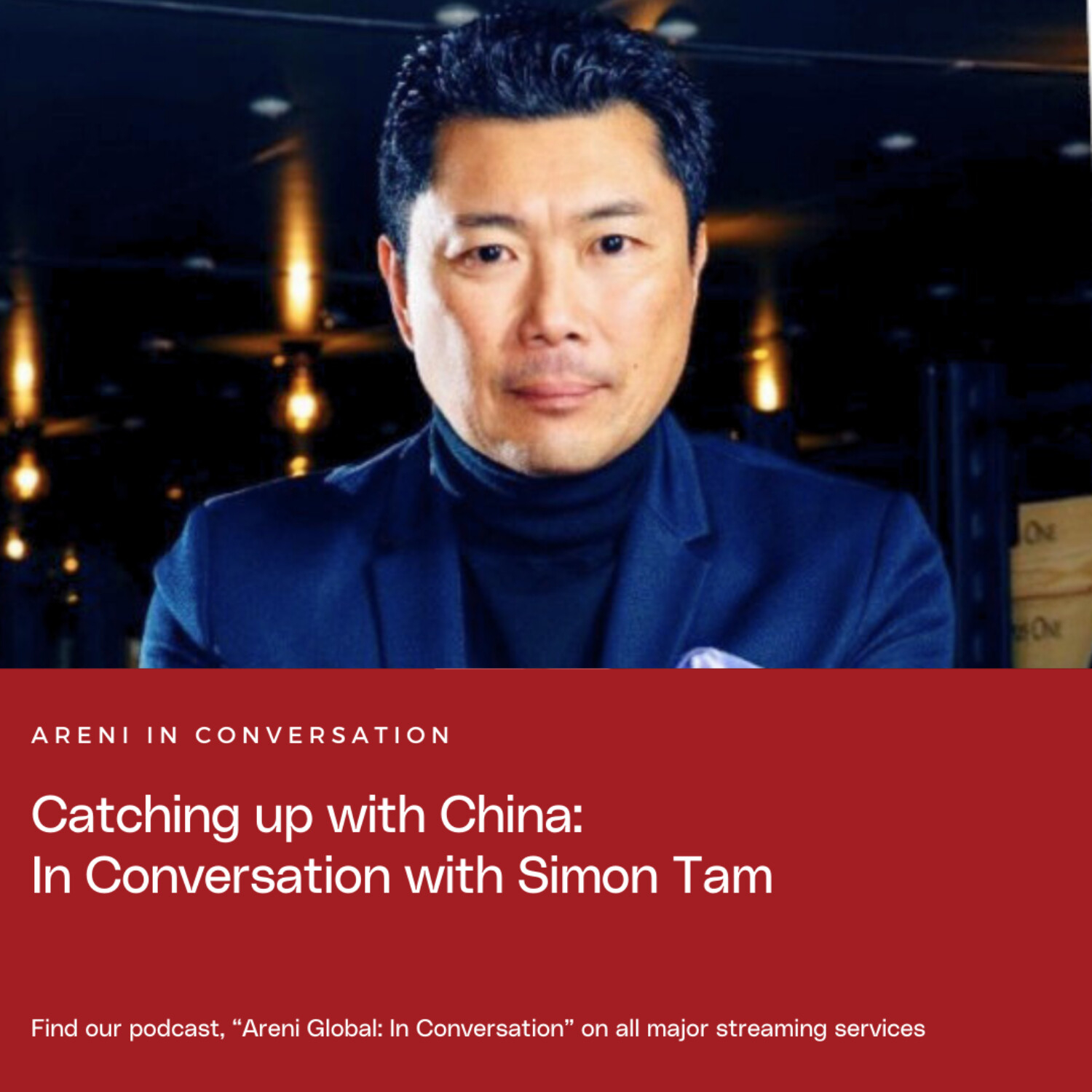
Catching up with China – In Conversation with Simon Tam
61m 39s
In this episode of the Aurene Global Podcast, host Pauline Vika interviews Simon Tam, a veteran wine expert who has spent over three decades shaping the fine wine market in Asia. Born in Hong Kong and raised in Australia, Tam began his career by founding Hong Kong's first wine school in 1993, later expanding to Shanghai, and spent 11 years as Christie's head of wine for Asia. He now leads the International Wine Centre and ASOS Options, focusing on bridging Western wine culture with Asian consumers, particularly the next generation in China. Tam discusses the evolution of the Chinese wine market from early days when expensive wines were mixed with soft drinks to a more refined appreciation today. He emphasizes the importance of respecting local traditions—such as the significance of lucky numbers and the color red—while integrating wine into daily life through food pairing. Despite progress, Tam sees ongoing work in sustaining wine's appeal among younger drinkers amid competition from other beverages. He advocates for a culturally sensitive approach that marries Western terroir with Eastern tastes, ensuring the future of fine wine in Asia.
Welcome to the Aurene Global Podcast. Aurene is a global research and action institute for the future of fine wine. In this series we bring you conversations with thought leaders in and adjacent to the fine wine world to discuss how we as an ecosystem can ensure the collective future of fine wine. Welcome to this new episode of the Aurene Podcast in Conversation. I would guess this week is the incomparable Simon Tam tuning in from Hong Kong. Simon has spent more than a decade as Christie's head of wine for Asia and is now leading two companies, the International Wine Centre, focused on wine education and ASOS options, the high-end auction house that he founded in 2021. Simon is an incredible wine enthusiast and has done and continues to do a great deal to develop wine in Hong Kong and China. After three decades of promoting marketing and selling wine in Asia, his core focus today is on the next generation and he invests I'm an energy in developing the connection between the wine world and the new generation of Chinese fine wine drinkers and in building bridges between what he calls delicious west and the thirsty east. And needless to say the thirsty east has changed enormously over the last decade and Covid had deep and long lasting impact on the Chinese relationship to wine. Impact that we are just beginning to understand in the west. But what impacts exactly? What does the Chinese fine wine market look like today? From traditional belief to very recent trends, what does the global wine world have to understand about modern China? With domestic production on the rise, what will be the role and place of China in the future fine wine? I am your host, Putin Vika and I hope you'll enjoy this fascinating episode as much as I did. And if you do, don't forget to subscribe to our podcast channel and whatever platform you are currently using. It really helps onto the episode. Simon, it's such a pleasure to sit down with you and to have that conversation. I can't wait because every time we sit down together we in for very, very long conversation, very interesting ones. But for, you know, our audience that doesn't have the chance and privilege to know you already you're going to start with a very open question, which is tell us about you and your role in place in fine wine. What do you do in fine wine? Who are you? Pauline, you know what? It's wonderful to catch up and we see each other around the world and lovely to be on your podcast. And by the way, I just lost my virginity to your podcast. Yeah, welcome. I hope it's a good experience. I'm looking forward to it. So, so I was born in Hong Kong. I ordered it back in 1968 and my mother for a long time cursed me every day, being a very heavy, heavy baby. I was a 12 pounder. But anyway, fast forwarding many years later. In 79, 76, 70, I can't remember roughly. My mother got blessed with a con-sox. She decided that 1997, the British handle back to Hong to China, was something that she didn't want to participate. And we already have a couple of uncles working, you know, having business set up in South Australian at a late. So we left Hong Kong. I was the oldest of three boys and my two younger brothers, you know, I could tell I was like seven, seven at a time. So, you know, two years in between us. My two youngest brother, still today, can't speak proper Cantonese or Chinese or kutong gua. So we went to Australia and that's why grew up. And our family, they were, they were restauranters. They opened up quite a few restaurants and they were the first to bring Chinese culture, line dance, and various other things to the beautiful city of Adelaide, self-estraided. I mean, my still call my other home. But it really was in Australia that I, I grew up in, you know, growing up in a family business in the kitchen. I was slicing onion, chopping carrots, you know, Chinese parents are slave drivers, right? In between order that I befriended our executive chef who was the executive chef of Genting in Malaysia, Casino. He taught me a lot of our flavors. He talked to me about flavors and cooking. My father loves his food. My mother much less so there was a business to her. But out of order that I really developed a lot for flavors. But it wasn't until sort of last couple of years high school that I, you know, counseled by the school counselor. Basically saying, Simon, the only thing that you qualify for with a gratitude, God, he's going to wine marketing at Waysworth, the agricultural college. You might be able to, at a letter part, you know, do a pro-sgraduate in wine making, wine science. But that's really your own reaction. And I thought, okay. And so, so that's where I started. I went to Roseworth University, which is now the University of Subestria. It was a functional wine read. It's one of the most famous of Southern Hemisphere wine schools. There are many amazing wine makers, you know, back then, you know, second, third, fourth, fifth generations of straight wine makers, the hardies, the pencils, the henchkins and so on. They all graduated from Roseworth University. So I, I specialised in wine marketing, but I never stopped my preference for tea. So after that, I went cooking and she's making and I feel out of things. So I'm actually here, qualified shift as well. And it's just the law of fun. So again, fast-forwarding to, you know, my 12 pound baby thing that my mother always cursed me about. In 1993, I came back to Hong Kong where I was born and I was then when he won. I didn't know anything. Absolutely no idea what the world was sort about. And I saw an opportunity for one education, which I am well qualified to. So I opened the first wine school in Hong Kong in 1994, I think it is. Well, when you were 21, that's impressive. Well, you know, it was, it was, it was necessary. It was necessary because the market was, you know, very buoyant. There are lots of people who enjoy wine and I saw an opportunity, you know, I came from a family of Chinese entrepreneurs and you know, where there's a buck to me, make you go to bed and you go to bed. Yeah. So I grew up in Hong Kong basically. So you came back in 1991? The 1992, but I opened my school in 1993. So before, before the handover. Oh, wait, before the handover that your mum wanted to escape. Yeah. So that was kind of a full circle. It was completely, it completely was. And my mother was like, what are you doing? I said, well, well, I'm actually actually brought a random ticket to see my grandmother in San Francisco. You know, like many old lady of her generation, she grew up and then lived in San Francisco, China town. But I came to Hong Kong. I saw an opportunity and I stayed here. It was difficult to not go back to Australia and back in those days, it was difficult being a minority with black hair. It was difficult to be in an area that was basically exclusively non-black hair minded if we know what I mean. And so I thought, well, okay, I'm going to, I'm going to learn, I'm going to discover what it's like to be Chinese because I, that kind of education, my parents didn't give us that. I mean, they were so quick to make sure that we would assimilate to the effect like I said earlier, my two brothers, they don't speak Chinese until much, much later. So I came back and then I was growing with Hong Kong and initially in the early 90s, you know, my students were all expats, English and so on and I, you know, I bumped into brick walls. It's sort of kind of like, hmm, why are you teaching us why? You've still got a wrong color here. But I had the right accent. Get I, mate? How I, yeah? So and then they went from there. So, you know, I opened up in Hong Kong and then I did a lot of hotel training, some alias training, back in those days, there wasn't so much a, some alias, you know, movement, as so much as, you know, service, just being assured that people know what's red, what's white, what needs a bit glass, what needs a skinny glass and what needs to be chilled. Then towards the end of 98, I think 99, I did a handle, but a lot of my hotel friends who in beverage directors, general managers, of course, they, they, they traveled the world to share their expertise. A lot of them ended up in Shanghai and they said, "Same unit, come up here and do something." So, I opened up the first wine school in Shanghai, 98, I think, or 99. It was incredible, it's an experience, you know, for many of us listening, I'm sure that we know Pudong across the river. Pudong, when I was there in the, in the late 90s, was still a swamp. And now you have Pudong Jingmau, you have the, you know, audience, incredible, some of the world's tallest buildings and, you know, conventional centers and so and so I was in such a privileged position to grow up with Shanghai. At the same time as the city was growing, yeah. Exactly right. But the one thing that I really treasure Pudong is the fact that I grew with Chinese culture introducing wine, which is foreign to Chinese culture, not drinking, but great wine culture. And that gave me incredible insights into what does it take for Hong Kong?
for mainland Chinese to enjoy wine. It was almost like wine was your link between East and West, between your Hong Kong native culture and Australia where you grew up. Pauline, completely, and in fact, in the early 2000s, were actually late 1990s and 2000s. The strip line for Simon Tam and my business then, independent wine center, because the independence I was very proud of, but the independence one center was where the bridge between the delicious West and the thirsty East. Oh, yeah, that makes sense. I was going to ask you how you ended up at Christie's? Apparently, it seems that having done this bridge gap between the East and the West for more than 12, 13, 14 years, was what exactly what Christie's was looking for. Christie's, of course, a significant auction of the House of 261 years of history, and wine, they saw very quickly. It has to, for it to flourish, has to appeal to the local market. The local market, but at the same time, if you only speak the local cultural language and behavior, there is no way that you can assimilate and merge the delicious West for the thirsty East. So I was the guy, and by the way, nine interviews later. Oh my god. That was a long process. It was a long process, but one day I saw my chairman in the lift after I've been on a job of our six months, and I was first engaged to be at a head of wine China. And then about three years later, I looked up the whole of Christie's business in all Asia. And I saw the chairman of APEAT, and he looked at me as a Frenchman, extraordinarily suave French person from Sua, Michul Couriel, Maestro. He said, "Are you not interested? Why we engage in you and not someone else, and when we have the choice of the whole world?" And I said, "Well, yeah, but I didn't know there was sort of thing that I could ask." And he said, "In the lift, I was on the 18th floor. He was going up to the God's floor, the 22nd, 23rd floor." The one you need the special key to get access to. And he said, "I'm in because we, yes indeed, could engage and bring on board anybody, but we've done so much research, and nobody has anything but great things to say about you, Sonny." And then at that moment, I thought, "Cool, wow, cool." And that's such a good advice as well. That's something coming from from people are very prone to judge and to talk behind people's back and with quite a judgey culture. But then I met growing up some people. I could see the difference with the people that nobody had anything bad to talk about. There has been a couple of people like this, and however deep you look for people don't have anything bad to say because they are so just good people and they've been generous and clean along their way. We're coming back to what you were saying about the bridge in culture and the importance of knowing your own culture and the wine culture. I can see that playing for me here in the UK, just being French and coming from the wine world. So having the wine maker's culture and understanding in my gut, what they are talking about because I've done those jobs. And then being in the UK culture, which is a different one, that still needs to understand in order to communicate my ideas. And this is two very, very close countries. I mean, we're talking in UK and France. There's a couple of mides between them. So I just can imagine how it was for you having to bridge those cultures must have been a fascinating thing to do as well and to be part of. Do you still feel like it's like this? Do you still feel like there's still a bridge that needs to be built like all the cultures as different as they were 30 years ago when you started or do they understand each other better? Pauline, that is an incredibly sensitive and insightful question. I was thinking about it today, actually. I am now at a place where I'm really fortunate. I love wine and I have really amazing circle of friends, business associates, but the one thing that I keep thinking about is what about an externaleration? What do they have now? And what is going to keep them drinking wine instead of drifting off to? I'm not saying other avatic beverages are not worthy. There are a lot of, you know, saltations are useful, but I am all about making sure that the wine market sustain itself through the generations because honestly, it has given me an incredible upbringing growing up in my career. I, you know, from nobody coming from Adelaide, Selva Stradia, you know, to Christy's and now to my own company and with all these friends and I've improved, you know, with the generosity of all my friends in my world having tasted some of absolute amazing wines. I just wonder what it takes for the next generations to continue. So I was thinking exactly that. Is my job done? No. You know, in the years gone by before I joined Christy's, I formed and created and formed the greater China Wine Critics Association, which today my dear friend Ronnie, Ronnie Lau, who is a accomplished wine expert, you know, educator, he's held onto that baton for the association. I was in partnership with my dear friend Deborah Mybert, Master of Wine, co-founder of the Catholic Pacific International Wine and Spirit's Competition. The first locally formed locally ran ancient palate-minded wine competition among whole lot of other things. So, you know, my 11 years at Christy sort of kind of taught me out of the system. So I am now slowly sort of finding my way back, really just trying to understand where the market is at. Not just those that I'm used to dealing with, the fine wine, whatever we can talk more about this and we will, the fine wine market. But basically, you know, how do we get people to get attracted to the next glass of wine? How do we sell this to them in a sensual way that ultimately comes actually not price but taste? Right? And so that's really what mission is. I suppose for you also how can we sell that to them? So it kind of underlines the culture without covering it, if that makes sense? Because you don't want to, you know, push a culture that's not yours. You want to integrate it and, you know, add something to it and not. Yeah, yeah, completely, completely. Look, you're absolutely quality. And I like, you know, the one thing that I've seen over the years and I, you know, I'm quite old. But you still have very, very black hair. You're a sweetheart. Thank you. I've seen a lot of well-intended ideas, but fully executed. I have seen some bad execution, but ended up using good results. So I think, you know, there's still a couple of things. I think what you're talking about here is really respecting two cultures, the delicious West in terms of wine from bitters for Nibbara or the Lendee area or the Terrier or whatever. But how do we integrate that into not just Hong Kong, not just China, but in Asia, our lifestyle? And the answer has to be food. It has to be food. Do you feel like the East is still as first year as it was 30 years ago? Oh, I think that East is even more first year than ever. We have over the years going back 25 years ago, 20 years ago, there was all Bordeaux Bordeaux and it was only 1982. And I think we all remember, and, you know, it was a bit of a loving, loving point whenever I used to go overseas. People say, "Well, so actually Simon, you guys are drinking lots of wine, but do you make sure we're cold, cold, seven-up or fenter?" And that was a generation I grew up on. And I, you know, without apologies, I have to tell you, in the mid-90s before '97, my biggest clients were karaoke bars. They wanted to know as a wine from a wine expert's perspective, which of the soft drinks were best mixed with legendary, expensive wines. Shock horror, yes. Why do you do that? It's because we are not. We didn't grow up in Navara or Yohra or in Bordeaux with a little bit of lemonade in our wine, right? Pauline, you may remember that when you were a little girl, your parents probably gave you a little bit of lemonade to dilute the wine to ease you into the enjoyment of wine. So we did that as growing adults. Yeah, and to me, to me, it's quite similar to my in-laws of Chinese and they also tend to mix stuff with wine. And they were like, "Well, but you put sugar in your tea." And that's exactly the same type of things through.
is that green tea can be quite. -Exactly, yes, yes, thank you. -You know, better as well when you're not used to that and so the more you grow into it, the more you appreciate it with the flavour but at the beginning you use a bit of sugar, a bit of milk, you know, to take that up. -And it is just the beginning, I mean, sangria is a thing, a nation is bad or this an action of drink, you know? -Yeah, you wouldn't use the iconic wine, so to make that. You still do it. We still have so many, you know, there's so many abitities that are based on the wine mix with stuff. I guess the difference is people don't use the expensive ones to do that. I want to say, I want to say because we're talking about, you know, China and the Chinese traditions and of course we heard a lot about, you know, as Westerners, you know, red is a good colour, eight is a good number, the dragon year is a good number. I wanted to focus a bit with all those traditions and belief that we are talking the West that they matter. Do they really matter? I mean, within the wine trade, to what extent are they important? And if not those one, then which traditions are important? -You know, Paulina and I are very insightful since it a question, I appreciate it. The fact is that many Chinese traditions and beliefs are still very much alive to them, like number eight, colour red, and you have the dragon and so on. So let me tell you a couple of stories and then a little something that just around that concept of. So as part of the independent wine centre, I was in a very privileged position to consult to the New Zealanders, some Australians, print producers, Portuguese producers and so on and so on. And that would be like a, you know, like a cultural, you know, ice breaking sort of tour, languages, culture, food, wine, ideas and so on. So in this particular tour, I brought along some of my dearest friends who were the founding members of the Greater China Wine Critics Association. So there were, I think four of us. We went to one of the most beautiful parts of the world, which is a daughter of value and all portal. And we were treated, you know, as the first sort of black hair group of journalists who covered a lot of amazing titles in Hong Kong and China to, you know, really amazing, you know, hospitality. Upon having stayed a night in a, you know, in a cruise along the door, which is an amazing experience and I urge everybody to try and find opportunity for that. Our host, which is one of the most significant port houses, like historically, quality and also volume wise, they presented us with a goodie bag with a book, a DVD, back in those days. Yeah. It was the last time you heard about DVD, right? Yeah. I know. Those are one of those technology that disappeared so quickly. Like if you think about it, it was what six or seven years ago. It wasn't that, you know, it's not like a walk man or something. You know, I walk, but you're like, really very progressive. So our host presented us with a goodie bag. And of course, we're like, wow, wow, wow, you know, it's fantastic, really generous. And it's just a lovely, we opened it. And one of my other friends from the association, looked at me, I looked at him, I looked inside the bag. We know exactly what the hell we were looking at each other for. The company of this port house, copper color, is green. And green, beautiful as it can be. In Chinese culture, especially if you put it on a cap, right? You know, a sun visor cap means that how they're putty delicately. That means that we know that your wife is having enough air. Okay, I can see that. Yeah. So there were four gentlemen, four boys of us from the association and two ladies. And we were looking at each other and laugh. And our host, lovely, who's still a dear friend today, said, what are you guys laughing at? Yeah, then I could put him aside and just said, hey, listen, you know what this is. I don't know whether they changed the copper color, but I actually did ask how many caps of jerk made. They said, well, many thousands. So I hope that it didn't continue to hand it out. But that's one of those funny things. Or not Asia at least. Yeah. Yeah, or not Asia at least exactly right. But for example, this is the dragon here. It's supposed to be, you know, one of the best in the Chinese lunar calendar. Like, are we going to really see more babies is the, is there going to be like a boost in the economy just because of that? I think that the Chinese culture would try very hard. And of course, even starting now, they didn't start last year. It's over nine months ago. So yes, I think that would be the case. Whether it directly affects wine sales, I don't know. Did you see, you know, in all your time selling wines at auctions, for example, did you see any kind of differences in the trapidation of the market depending on what year it was? Well, actually, Pauline, you know, still now today and you know, never mind the decade in the heart and the bitter Hispanic Christmas. One of the things that I think that was first in the auction industry in the world was actually correlate each vintage to a Chinese star sign, Chinese horoscope sign. And that was purely because of gifts given and face given. So and we yield incredible success back in the Christmas days. And today, in my company, we still do that. It is a passing conversation that it's not the only reason why you want to buy that bottle. And that is definitely not the reason why you want to pay more than the estimates for that bottle or for a case of wine. So yes, definitely. I mean, the dragon, the dragon is the most auspicious, it's a mystical animal, the most of the Chinese calendar. So this vintage will probably be one that will be looked for in the market. If it's a good one, I mean, again, if it's a crappy one, yes, exactly right. If it is good, I think this is a caveat for me. This is a really important caveat. I remember 2008, Chocolat Fitt, they consider trouble of monogramming or you know engraving the red eight into the neck and the shoulder of the bottle. Yes, I remember that. Luckily, it was a decent vintage, but did they really have to do that? Did I really bridge the cultural gap between the ease that delicious Western authority is? I was extremely skeptical of that. And in fact, I think we should career my astrologer, chairman of Christmas back in those days. One of his thing was he actually gave me a spot of La Fitt 2008. And he said, Simon, what did you think about this? I squinted my nose and I showed my head, I didn't say a word. Unfortunately, because there were some 30,000 cases made, we'll be reminded of that for a long time yet. Was it because the vintage wasn't up to scratch or was it because the eight was an appreciated? Why was it necessary to be so engaging into the eight and instead of allowing your first growth status, the quality of the wine to speak for itself? That to me was trying too hard and that's my point for that. And so would you still advise this to producer not to try too hard to stay true to themselves and then just. Totally. You will appeal to a section of a market, but as the wine market in China, in Hong Kong, the power of this maturing, the consumption, the international travel is rampant and now after Covid, you will do yourself a disservice by trying to appeal to the cliché Chinese beliefs. Sell the wine for what it is, that is exactly what it is for its virtues and don't do anything unnecessary. Be true to yourself. Like put a big dragon on your label this year or something. Oh my God, you know, putting you have no idea what I see on the daily basis in this part of the world. Yes, please don't do that. But if you are not a premier gon crew, you might need those dragons to sell your wines. Yeah, I suppose it depends where you are. The top of the pyramid doesn't need that, but it can help the bottom, I suppose. That's right, that's right. So it really depends on where you are in the market segment. It is not possible for anybody, me especially to say, don't do this or do this. It depends on where your product is at. I think that is important. So that's actually a very good segue to your next question is how would you segment the upper level of wine in Hong Kong and China at the moment? Because we are talking about fine wine, but fine wine.
can have very, very different sub-segment in it. So just talking about the top of the pyramid, the more expensive wines, how would you segment them? How are they segmented here? Well, there, where you are. I think there are a couple of things. Let's just say, and we have a lovely privilege following to speak at La, you know, La last year. I just wanted to say this clearly for everybody, having been the head of a significant auction house. The one thing that I always tell people is you buy what you want to drink and you don't pay a single cent more. And fine wine is a notion. It's a notion. So I was again thinking that knowing that we're going at this conversation tonight and it's going to be shared with one of us around the world. I came up with my definition of fine wine actually. It's pretty interesting. Valdrum. Dandandandand. A fine wine is a bottle or a case or whatever size of a container of wine that you would treat and preserve and take care of as much as your children from the way it goes. Okay. Well, that's not a lot of wine then. Well, but it doesn't, well, what do you see? Putting. It doesn't matter. No, no, no, it doesn't matter. I'm not saying it matters. I'm just saying that limits the number. Yes, pulling, but pulling the thing is it can only be a fine wine if it has been taken care of with tender loving care and the greatest attention of provenance. And one other thing that I would say is a fine wine to me, I can tell you, my godparents still got some 1990, 1990, one sure as they are made in a browser. They have taken care of it as much as they have taken care of the sun and the godsson, that to me is fine wine. Now, you see, it is all about the regards and respect. I can see that. It is not about price. It is not about price pulling. It is not about style as well because it's really the wines that matter to you. Exactly right. Oh, thank you, thank you, thank you. That right is exactly what I'm talking about. You know, if your grandfather worked on that wine, you want to take care of it, you'll be able to one day show your son, your great-grandchildren, that's where your grandfather made, or whatever, or I still have three bottles of Portuguese sparkling wine, long to long, that's I have kept from my wedding. So, just a question for me because I'm very attached to my bottles. I might not regard them as my kids, but certain years my friends, like they remind me of travels and journeys and people I tasted the wine with and I've got that relationship of love and care for my wine. But the problem that I've got after that is that I've got a huge problem drinking those wines because when I open a bottle it feels like losing a friend. So, do you have any advice for me on that front because that's the thing. I mean, that's one of the things why I loved, I mean, that's a big aside, but one of the reason why I love Servenium Blanc from New Zealand here in the UK is that they taste very similar. So, I can drink them, I like them and every time I can find a new one, it's like having a friend that comes back all the time. But if I drink my special bottles, I will never found something similar like this. So, how do you reconcile this, the fact that you care so much for your bottle, but still at the end you have to drink them. I share with my other friends who have similar value to bottles of wine. Instead of it being commodity, there is a level sentimentality, but certainly there is a level and very importantly, this is very important to me and I'm sorry, if I come across as being a snob, I'm not, but a level of connoisseurship. That means that when they drink a poorly stored, 99-lip arolo in these things of soy sauce, they think, wow, there's a great bottle, I'm sorry, I'm not going to open wines that are so pristine, you know, in that environment. But I think it's a story and then next week, for the first time ever, in the history of the wine world, there will be a Chinese made wine competition at Win Palace. I head over to Macau tomorrow, such a tune on Friday, so there's something money to choose. They, you know, people like, you know, our friends and who I got must have wine, Jane Ensen. And a few other, you know, people are coming over, flying, especially if you're home, going to Macau to taste this wine. I have, okay, you're going to laugh. Do you know anybody with three litres, three litres of bottle support? I have six, and I'm 77, Taylor's, three litres of porch. There must be hell or why, but I end up somehow, I end up with it. So I am fully thinking that I'm going to be sharing that with 20 or so judges. Can you see from tell, you know, first Japanese must have wine, if you are the boys and girls, I'll probably open that. And then they'll probably say, "Why the hell would you give it a three litres of bottle of 77, Taylor's?" Right? And then I'll have you think, "Oh, how did I get quiet about it?" You know, and so on. So it's nice to have a bit of a story, but I know that a juice inside will be great. Someone gave me their definition of fine wine, which is, "No, the capacity for the wine to create a memory. It is not fine until it has created a memory." So I guess that's the continuation of your definition. This fine wine is wines that you love and care and you take with you alongside your live journey as you would do for your kids. But when you open them, they transform into something which is memories with friends and it's like adding something and not losing something. Completely pulling, completely right. So that's going to be something that I'll be looking forward to. I mean, looking at these bottles for like 30 years or so, my god. Yeah, I'm not even there. So now you're like, "Oh, I have a polymire and five more to worry." Well, I want to come back to something that you've said a while ago, when we were talking about traditions and belief in China. And you were talking about the concept of giving face. And that's something that we've also discussed in Austria when we've seen each other last December. And again, as I've got, you know, my in-laws are Chinese. And I was quite familiar with the concept of losing face, so really saving people from being ashamed of any kind of situation. But you talked about the concept of giving face and that it was also very linked and it had an influence on the fine wine market in Asia. Can you talk about this? And is it still the case today? Pauline, again, I thank you for this amazingly sensitive question. Given face, face is a part of, I dare say, culture of every naturally black hair person. If you choose to dye your hair, you're a mint to it. In Asia, the concept of giving face is extremely alive and well. Giving face means respect. Giving face means homage. Giving face means I respect your whole pink homage homage. Okay? And giving face means I respect, I understand, I acknowledge, and I think on what you said. It is not easy to do. At the same time, most importantly, is about not surrendering yourself. And this is that juggle, that fine line. Going back when I first came to Hong Kong, so let's China 30 years ago, giving face was all of our monetary value. So if I invite you out with dinner, I have a bottle of 82 petruz and abalone sides of a golf ball. The next time you will invite me out with a magnum of petruz 82, the abalone will be size of a tennis ball and tick tick tick tick tick tick tick tick. So it goes. That is not sophisticated anymore and that is completely frowned upon in some cultures that is also big no no because of very sorry external governmental procedures. And you can see how it would derail quite easily if it was always, you know, topping up with money. Exactly right. So where the hell do you stop? So nowadays, it is a lot more settled and this is the protocol. The protocol is do it cleverly, subtly and pay homage, homage, okay, and respect without being blasphemed. Years ago was always about 82 petruz, Romain Conti, the abalone, you know, other, you know, rare extinct food. Now it's sort of unordered. Okay.
My job, Pauline asked earlier, you know, how is my work changed? And thank God he got. My work now is empowering one lover with soundbikes. They can't find anywhere else. Soundbikes that they can pass on about a certain mind, that they can empower the next person. Ah, easy said and done. He's not about the size of hectares, how the minds are, but something that is really tangible, something that actually turns a lay bulb on. Like what, for example? Like for example, this is absolutely diabolical, with say, for example, black bean sauce. Because the bitterness in black beans will murder the friendly tenants and assault will elevate the fruit and also the sweet vanilla. So that's not going to be a good match. I choose always fruit and wine. Because nowadays with internet and all the wonderful master wine and James, great tasting and Hong Kong next week for Paul Mao's 67, my older colleague back in the days of his visit to the wine, just for Morris Master wine. He comes out, he's so so often, you know, educating, educating, educating. But where he really comes back to, the food and wine and lifestyle message. So that's what I do. So if I understand correctly, giving face now, would be able to, when you are pouring your wine, not just impress people by the price of the bottle, but just having the small bite of knowledge that you can transmit without looking down at the people at which you're pouring the wine, but to help them also you understand the wine a bit better. And that would be how you show respect, right? Completely. Because the aspect of that is that you are empowering in a subtle, gentle way, right? You're empowering, you're educating. But I'm not talking down at you because you know the lowest common denominator with all of us, with Black hair, listen, Hong Kong and China's food. Right? So that is the basis of the communication. If you talk about esoteric, oh, did you know that the mention of the Romani Conti Cross is 1 meter point 3 versus "Palo", right? What good is that information? You end up isolating yourself from being part of the group, and actually the other thing that I would say about face is there are not a lot of opportunities to gain face and plenty to lose, you lose at once or twice, you're out. So that's a big, I mean when we were talking about wine makers trying to hide, you know, putting dragons in the label. And of course we, I'm very much aware that we are talking of a niche, right? Because we're talking about those wines that don't need to put dragons on the label because they have a reputation, because they have a followership and etc. But when we were talking about people who once do establish brands in that sphere in China, it's not about the label or the number eight. It's really about how they behave when they're in China, right? And how to engage, you know, you know, for a very long time in the beginning of my career pulling a lot of my French brains, who are still great friends today, they will come to Hong Kong. It was easier, more accessible than China, breaking those states in the 90s and the early 2000s. So I was like, oh, a wine is perfect for Chinese people, mate. You can put three Europe's in China, which part of China you're talking about. And what food, right? You know? Exactly right. I mean, chromatically, you can put three Europe's in China, two and a half actually. And so what food are you talking about? In a South, four seasons coastal, in a North, Destiny, Continental, Aries. So the spices are so different as well, like the spiciness of the food, the texture. Yeah. Completely pulling. Completely pulling. You know it. You've eaten so well. You know what's different. It's absolutely really important. Well, actually, I know just what my in-laws are cooking. So it's just a part, you know, it's a small part of China that is cooking. I wouldn't say I know Chinese food. I know a kind of Chinese food. Oh, come on. Come on. You're a foodie. You're a foodie. No, you and I were like, we're absolute twins. Actually, we had a question in the interview about the Chinese palate. And I'm also very conscious from the beginning of been using China to cover both Hong Kong and China. And I don't know if I should be doing this. Are we talking about a Hong Kong palate, a Chinese palate? Like how similar are those two geography now in terms of culture, taste, palate, you know, traditions and beliefs? Well, I think I think to be fair, despite the fact that it's under the same administration, the history of the two country, China, and then you must isolate Shanghai out of that. And Hong Kong history are completely different. Because it just, you know, by nature, you know, Hong Kong was French colonial rule, Macau Portuguese rule for 300 years, Shanghai Japanese French rule territories, the rest of China geographically has had in the past, lady, more isolated, but not anymore. The only other thing that I would say it would be, I think today is still more free to travel in and out of Hong Kong to Europe, to other countries. Then it is the freedom and frequency based on historical background and the development of business and all migration. That's thing in place over the years Canada, and give it to Rontal London, New York, San Francisco, Australia, New Zealand. It's much more prevalent. So with travel, people carry back lines, culture, understanding, exposure. So I would say only because of that, that Hong Kong. An exposure to food and flavour as you were saying as well. Exactly right, exactly right. And I think only because of that, that I think Hong Kong may have a little bit more exposure to the rest of the world, but here's the thing, Holly. I have so many dear friends and clients, they live in the middle of China. They come down to Hong Kong to experience everything. They die in star restaurants. They drink great wines. They are not available locally, but they come to Hong Kong with the local loyalty of flavours and the upbringing of flavours and they taste and they judge and they understand. Now that is the most exciting time. I think Hong Kong is still a step into China and Hong Kong used to be springboarding into China. Now it's China springboarding and Hong Kong to the rest of the world. If I understand what you say correctly, is that if there's some things that the Chinese palate share, even if we know that there's three Europe in China, is there willingness to taste and to understand flavour? Yes, completely, completely. And there is one thing that is true for all culture in Asia, people with black hair. And that is Stien 10 or Stien 10, which is a flavour sweetness. So Stien 10, when you talk to a wine maker in Burgundy, they talk about fruit. The fruit sweetness, not the vanilla or oak sweetness, not the better-nashed roundness, but fruit sweetness. The terroir's flavour, the terroir minerality, that all goes towards Stien 10 or Stien 10. And that is one flavour that is true for all black hair people in the whole of the region. Where do you tie? Singaporean, Malaysian, Indian, Chinese. That is really important. And this is one of the reasons why great wines, which is fruit-focused with all the other flavours, had it around to enhance it, are the biggest selling wines, not just foreign wines, but the biggest selling wines in Asia. Well, that is again the perfect segue, because we have been talking about traditions and beliefs, and China and Hong Kong in a cultural context. I want to talk economy now, and I want to talk money, and I want to talk market. And I am going to separate Hong Kong and China a bit for that, because one of the things that we see now is that many of us Westerners will be returning to China for the first time since, you know, the end of COVID, because it's reopening, and we can travel back and etc. What can we expect? Like, what's your look?
What's your take on the Chinese wine market today? Like what change was someone that hasn't traveled to China for the last four years needs to be aware of? - I think the first thing, given that China had taken strong measures to isolating themselves from the rest of the world, it aid and add to the flourishing domestic wine industry. I think for any wine lover, it's the first thing that you're gonna find out that there are no longer, well, they're still around, but there are going to be a lot more China-made wines for less than 100 hour and being 15 US dollars a bottle. And these are all the wines that we're gonna be judging in the next few days in Macau in Wins, Palace. And these wines go up to up to 150 200 US a bottle. So that's the first thing. Two, China has had its lover's tip with Australia. So Australian wines you can find in China now at extremely sensible prices because it was the number one, number two, big of selling in China. So all the importers have to quit stock. There are still some great bargains to be had, but now that China and Australia have made up, you're going to find out they're gonna be same sort of wines available at fair price, still fair price. Then I think the third thing is that in the few years of COVID, it's amazing that the knowledge of Chinese amelias, you are going to find incredible advice. That is just absolutely so gonna be in the growth. We're talking why the China, right? So not just Shanghai, which I'm sure the level was already. Yes, yes, yes, indeed indeed. But of course, that was start in sort of five-soluble tales, but that knowledge heals us down everywhere. So that is very important to remember that. So I think China is becoming a very important wine player in the world. There are in the Charmen, for example, they have three quarter already there, and already launched in the latest people work yet. But they have actually allocated a substantial piece of land for a duty-free wine warehouse, international wine warehouse. So wine can go into Charmen, which is just overlooking Taiwan. It's the closest point from China to Taiwan. You can import wines in China, drink it there, duty-free. Sheb out of there with a favorable duty to distribute to the rest of China domestic, not Shanghai. They're doing in Bond warehouse. Yes, exactly. In Bond warehouse. Because they have seen what has been happening in Hong Kong and how wine is not going away. It is going to be even more and more international. So it's not just in Bond warehouse, like the LCB here, because you're saying people can drink. So it's going to be like a mini city where within those walls of the city, there's no duty on alcohol. Isn't that cool? Oh, wow. Isn't that cool? Yeah. I'm so excited. When is it opening? I'm hoping to get a press release shot leave on there but tell you how. Oh, wow. And then by the way, Charmin in the strait has some of the best seafood on the planet. He's the lower part of the Japanese ocean than Taiwan's strait. Seafood is amazing. However you want to do. So you were talking about the Chinese wine industry and Chinese wines in China. From what you can see, and I'm sure you will have more insights after next week, but are those wines geared to the Chinese market? Or is there also a well of China being an international producer exporting abroad? Oh, Pauline, what a wonderful question. Look, I know I hope that at some point we can have a chat next week with my fellow judges. But what I've seen, what I know are two things. One, almost all wine makers are training boarded. My friend, Emma Go from Ling Xia, she studied a big sheet of wine making in Bordeaux. Who wines has more than a tinge of Bordeaux fragrance. Plus, I mean, that has been a benchmark for what wine makers in Ling Xia. The great variety is very, there are some whites. And so I think more next week. But definitely, the loyalty of Chinese wine lovers will favor Chinese made wines, China made wines. And then you have some of these wines made by Bordeaux, Gaisenheim, Bone, graduates. And they will have their thumbprint on it. Now, whether price or price, thought or in sense, whether they remain competitive, it's another thing. I'm hoping, wholeheartedly, they will not be sold as a Chinese novelty, but something that is essential in quality. But we'll see you next week. Yeah, not just for attraction. Like, look, there's a wine from China, but look, there's a good wine. One of the-- and I'm sorry if it's delicacy, but one of the things that China was for wine makers before COVID was it was a very attractive market, because of course, the number of people, the size of the market. But it was also a very complex one to understand because the players in China could-- Yes, of course it is. Also, the turnover and the players, you would have people being an import of a five years and then they would do something else because they would see another business opportunity. Is it still the case or is it this stabilizing as well? And now we've got the number of players that are going to stay or how do you feel as a kind of distribution system working in China? Pauline, I treat I do not qualify to give a lot of advice in that area. OK. Because my niche now is very much quote-unquote FI-MDS, fine wines. But I think that's what is important is that some of the friends that I met back in the early 2000s, they are still operating as an amazing distributor. And I think for anybody who is seeking distribution in China, history, proven track records, that is the key. You mentioned-- so one of the things that I wanted to ask you to finish on China before moving on to Hong Kong, I've seen a bit from afar, but the notion and the understanding and the thirst for luxury evolve as well, at least from an outsider, we could read those things. And I was wondering where is luxury at in China in the way it's understood? And also the trend that you mentioned that during COVID people focused on locally produced wine, is it the same thing? Is it a global trend for luxury as well that people are going to look more and more for what's been locally made? Years went by, one of my best friends in Ming Tian Guangchang, where the conraders in Shanghai underneath is the Lamborghini dealership. And Malcolm used to say, OK, here we go. Are you ready to help me cut some cash? Because somebody young gorgeous would come in with suitcases of Chinese currency, and they wanted to change the Canary Yellow Lamborghini Contache to a grasshopper green cottage. So I was very privileged. I've seen a lot. I think that this is a big difference now. What luxury means? I think the buzzword is quite luxury. You have a lot of brands either in crossovers or individually releases more subtle luxury products. In China, again, you can't generalize. China is a very big place. Hong Kong even still, you can still divide the market on many, many levels. So I just say that now I hope that for wine, there is an aspirational new market. As I was saying before, there will always be new people coming into the wine market and join wine finding out about wine. And they want to know what the best tastes like. Then they're going to work their way down or across whatever the case might be. So I don't want to get stuck in the word luxury. But rather, I think let's look at downright quality and what appeals to the palate. Going back to what I was saying about fine wine is what you nurture. So that's what I write up to, to think about. You were telling me about--
the very beginning that your work's not done because you are concerned about the new generation going to wine. Yeah. Can you talk a bit more about this, Lec? What's the vibe about young people and wine in China? The one phrase I can tell you is that they are much easier than the parents. I thought I was Chinese people when they are like, "Did the surname dress so plain? Stop it, oh my god." So it is actually, honestly, it is much easier to do my work. Thank you, Pauline. Because they are open? They are more open. They are more open and it's not about dollar. It is about pleasure. Thank you for listening to this episode of Inconversation, a podcast series produced by your Winnie Global, a thing that I dedicated to the future of fine wine. The Winnie Global helps wineries, distributors and retailers to understand how the world is changing and how that creates risk to be managed and opportunities to be seized. What risks, what opportunities? Well, be sure to visit our website at rene.global and become a member so you don't miss any of our reports, events and analysis. Because whether you are producing or selling fine wine, you need reliable specific data to make informed decisions. And we have just that in store for you. Until next time, Cheers. Thank you for joining us for the Rene Global podcast. If you liked what you heard today, please give us a positive review and share this episode widely. Stay connected with us and join our conversations via Facebook, Twitter or Instagram and visit our website at rene.global to find out how you can take action to ensure the future of fine wine.
Podcast Summary
Key Points:
Simon Tam, born in Hong Kong and raised in Australia, has spent over three decades bridging the gap between Western wine culture and Asian markets, notably through wine education and auctioneering.
He founded the first wine school in Hong Kong in 1993 and later in Shanghai, focusing on integrating wine into Chinese culture, particularly through food.
After 11 years as Christie's head of wine for Asia, he now leads the International Wine Centre and ASOS Options auction house, emphasizing engagement with the next generation of Chinese wine drinkers.
The Chinese fine wine market has evolved from a focus on Bordeaux and mixing wine with soft drinks to a more sophisticated appreciation, though traditions like lucky numbers and colors still influence consumer behavior.
Tam stresses the need to adapt wine marketing to local tastes and customs, using food pairing as a key strategy, while respecting both Western terroir and Eastern lifestyles.
Summary:
In this episode of the Aurene Global Podcast, host Pauline Vika interviews Simon Tam, a veteran wine expert who has spent over three decades shaping the fine wine market in Asia. Born in Hong Kong and raised in Australia, Tam began his career by founding Hong Kong's first wine school in 1993, later expanding to Shanghai, and spent 11 years as Christie's head of wine for Asia. He now leads the International Wine Centre and ASOS Options, focusing on bridging Western wine culture with Asian consumers, particularly the next generation in China.
Tam discusses the evolution of the Chinese wine market from early days when expensive wines were mixed with soft drinks to a more refined appreciation today. He emphasizes the importance of respecting local traditions—such as the significance of lucky numbers and the color red—while integrating wine into daily life through food pairing. Despite progress, Tam sees ongoing work in sustaining wine's appeal among younger drinkers amid competition from other beverages.
He advocates for a culturally sensitive approach that marries Western terroir with Eastern tastes, ensuring the future of fine wine in Asia.
FAQs
The Aurene Global Podcast is a series that brings conversations with thought leaders in and adjacent to the fine wine world to discuss the collective future of fine wine.
Simon Tam is a wine enthusiast who spent over a decade as Christie's head of wine for Asia and now leads the International Wine Centre and ASOS Options auction house. He grew up in Australia, studied wine marketing at Roseworth University, and opened the first wine school in Hong Kong in 1993.
His core focus is on the next generation, developing connections between the wine world and new Chinese fine wine drinkers, and building bridges between the 'delicious West' and the 'thirsty East'.
COVID-19 had a deep and long-lasting impact on the Chinese relationship to wine, with changes that are just beginning to be understood in the West.
Yes, many Chinese traditions and beliefs such as number eight, the color red, and the dragon are still alive and important to them, influencing wine marketing and sales.
Food is key to integrating wine into Asian lifestyles, as it helps respect both Western wine culture and local customs, making wine more accessible and enjoyable.
Chat with AI
Loading...
Pro features
Go deeper with this episode
Unlock creator-grade tools that turn any transcript into show notes and subtitle files.
 PodcastTranscript AI