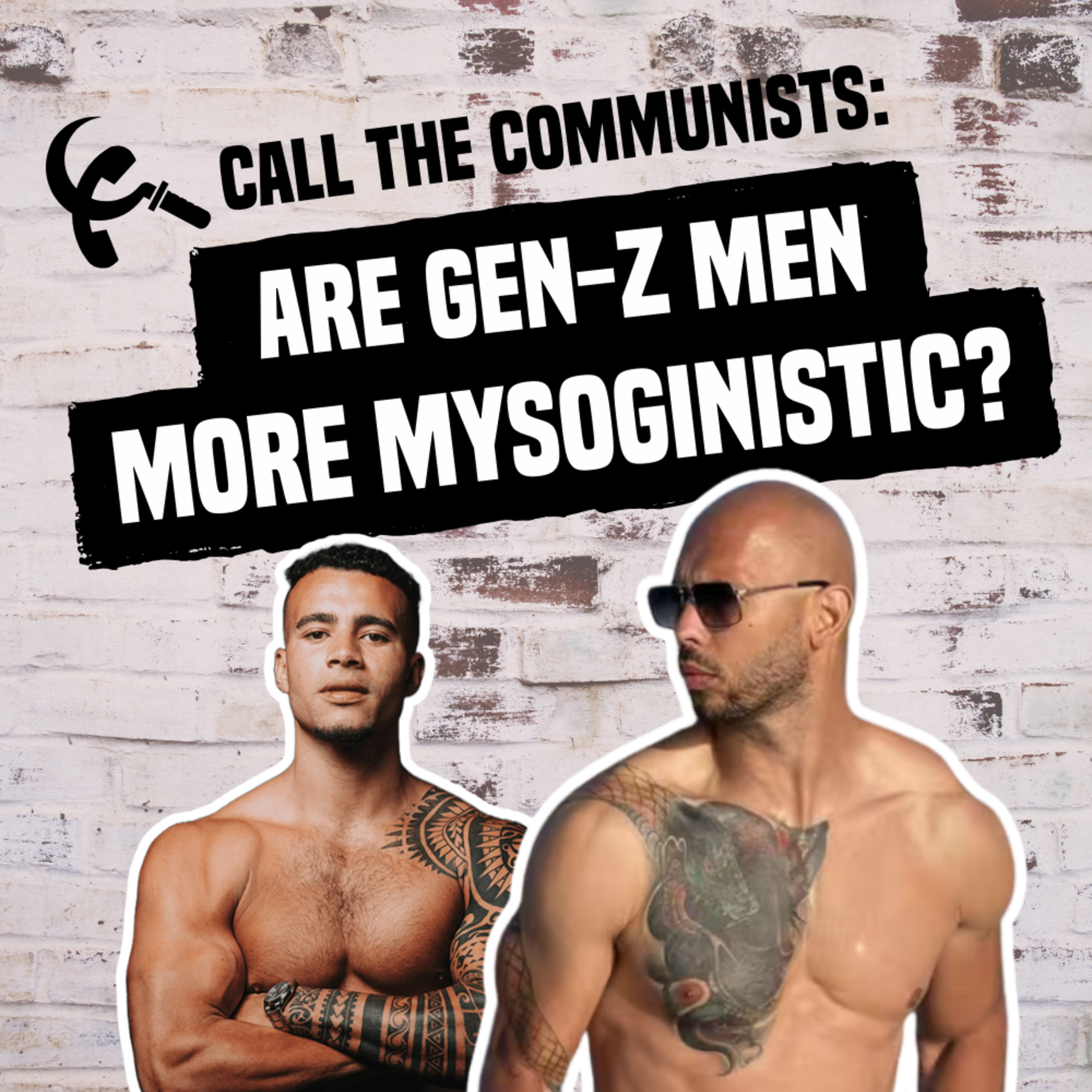
Capitalism has created the manosphere! | A World on Fire #14
from A World on Fire
51m 59s
The rise of misogyny in contemporary society, particularly within the manosphere, is not a biological or innate phenomenon but a product of class-based exploitation under capitalism. This ideology, promoted by the ruling class through media, education, and economic systems, historically emerged with the development of private property and the nuclear family. Social media acts as a key amplifier, spreading hyper-masculine, sexist, and objectifying content that fuels polarization and alienation among young people. The show *Adolescence* highlights how systemic failures—overcrowded schools, parental neglect, and economic stress—create conditions for radicalization, not just in boys but in society at large. Misogyny is not natural; it is a tool of oppression maintained by capitalist structures that profit from gendered roles and the division of labor. While individual resistance is valid, it is insufficient without collective political action. Revolutionary movements, such as those in Egypt and Sudan, show that when working-class women take up political struggle, they achieve radical shifts in self-perception and power. Under socialism, economic liberation would dismantle the foundation of gender oppression, leading to genuine equality, autonomy, and freedom in relationships. The key takeaway is that women’s liberation must be rooted in class struggle, not isolated identity politics or individual empowerment. This framework challenges the myth of inevitable sexism and offers a realistic path to a more just, human future.
Mewing, mugging, looks-maxing, ascending, chad, stacey, you might not know what all these
words are, but that's okay, maybe it's a good thing, but these are words that are in or
are adjacent to the manosphere, which is this kind of somewhat extreme area of the internet
that is very, very prominent right now. You see it all over social media, it really can't
be avoided. And it's quite an overwhelming space. A lot of people right now are trying
to understand, where does the rise in misogyny come from? In 2026, shouldn't we be past all
of this? Now, we're Marxists and what we're going to try and do is break down, yeah, where
does misogyny come from, but also place the manosphere in that context. As Marxists, we
understand that in general, class society promotes the idea that women are the property of men,
and I think that the manosphere is really the most extreme reflection that we see of
that idea, and it's being spewed out on social media. That's our starting point, and welcome
to a world on fire. So yeah, the manosphere, it's out there, and I think it's causing a
lot of stress and anxiety and anger in a lot of people.
For sure, I mean, the first time I heard about it was when I watched adolescence last year,
which I think was a real flashpoint and captures what you were describing, the rise of misogyny
in society, the rise of extreme acts against just women, but young girls as well.
Yes, yeah, children. Children, and it also, it does, it shows the other side very well,
I think it's a very excellent show, as showing the alienation that young boys feel, and
the radicalization that's not necessarily along political lines as well, but just to spoiler
a little, just to explain a little bit about what the show is about for those that haven't
seen it. It's the 13, 14-year-old working-class kid who was accused of murdering his female
peer, and he is in denial for basically the whole show, up until right at the end, when
you see that he admits he will plead guilty. And it caused a moral panic in Britain, the
show. Cheers, Dharma came out and said, we need to show this in schools. Yes. I feel like
a big emphasis in the press as well, was this question of like social media, the nefarious
world that parents cannot see. Yeah, because in the show, it comes out that he has spent
a lot of time on social media, and I think there's even a scene where someone is trying,
one of the students is explaining to you. Yeah, and explaining the terms. Yes. And I
remember seeing article in people being like, oh god, I need to go see if my son knows
these terms or anything like that. That was exactly it, that was exactly it. And I think
what we saw, especially from politicians in the press, was an attempt to basically blame
the radicalization and extreme acts of violence, purely on social media, on the extreme content
that's generated and that young people are exposed to earlier and earlier ages. But when
I watched the show, what screamed out to me was, this is a society that is sick. This
is a society that is in decay, where people feel more isolated and atomized than ever
before, where bullying is rampant, where you have overworked parents that can't really
monitor their child's behaviour, overcrowded schools as well. The scenes of the schools
are so striking because it's just teachers not even being able to, I think, you know,
it kind of points to the teachers not knowing really what's going on with the students.
It's like, yeah, because the schools are completely overrun and are under pressure. Yes,
exactly. Overcrowded schools, teachers that have no idea how to deal with the behaviour
or problems, kids scrapping in the playground. Which is a real thing, and that there's
actually reports from the N.E.U. talking about how teachers are struggling in general,
about overcrowded classrooms, but also misogyny and behaviour in the classroom, that they
see in the kids, but they also receive, like female teachers are on the receiving end
of a lot of horrifying misogyny as well. Absolutely, absolutely. And so when I look at
this show, the conclusion that you draw out is one of, this shows this sickness within society,
one where, for instance, someone who doesn't exhibit any abnormal behaviour is able to
carry out the most heinous, extreme act of violence against a young girl. And the response
in this country, I thought, showed really how many bad faith actors there are in politics.
A hundred percent. It was really cynical, and what you saw across the political spectrum,
the right wing, the kind of extreme right wing, promoted a culture war around the issue
of knife crime, they said that the show was an attack on young white men who are on the
receiving end of many attacks, and that actually, you know, knife crime isn't the problem
of young white men, it's the problem of black men specifically, which is not an honest
appraisal of where knife crime comes from at all, or the causes for it, or its driving
force in society. But also, I think we should say, I think that many on the left responded
to the show in a bad way as well, from a different perspective, but they used the show to highlight
that, yeah, misogyny is a real problem in society, and it comes from boys, not that it comes
from society at large, and then it comes from the system, which actually is what the show,
I would say, yeah, as you've already described, very aptly describes. I think when the show
ends, it's, I mean, it's horrific, the ending, it's a really sad scene, and I was crying,
you know, you feel so uncomfortable, because it's not a neat storyline where, oh, that
was the problem, and that's the moral story that's there, but actually you're sat there
and we live in a sick society that has produced this extreme act of violence, and I think,
yeah, we have to call out the left when it falls into this trap of blaming men or boys in
the abstract, and not the system, because when you just blame or just highlight the psychology
of a man and how it produces violence, you're not really empowering people, and I think
it leads to, especially women and young women to feel demobilized and just scared of men,
scared of boys in their class, or any very man or guy that they know, which is a very
difficult way to live your life. For sure, and I feel like, I feel like there's also
kind of a confirmation biases that the left has when it comes to this stuff as well, because
something that popped up on my phone, I'm sure it popped up on yours, was this study
from KCL, which found the revival of, say, traditional beliefs amongst Gen Z men, and it
suggested in a very small sample size, but that third of Gen Z boys, some men, would like
their wives to obey them, basically, that was the essence of it, amongst other things
as well. And the left will look at this and say, look at something innate, rather than
understanding it as a product of society, but I think there is something to be said about,
yes, feeding this culture war and entrenching this divide between young boys and girls, which
can be a very dangerous thing, but there is also something to be said about where these
ideas come from in society and why they are promoted.
And I think, look, we should, and we will try to tackle this a bit more historically later
on in the episode, but as you say, we could say, yet misogyny is innate to class society,
and it's innate, actually, to the ruling class. I mean, the Epstein files is a very good
example of the fact that the ruling class have always used and abused women and promoted
that idea. And I think that when these studies come out, it can be shocking at first, but
in a way, it's not that surprising, not because all men are inherently misogynistic, but
because we are still living in a barbaric capitalist system of which the dominant ideas are
promoted by the ruling class through their institutions, through their culture, through
their media, has done for a very, very long time because it is in their interest to divide
men and women and it is in their interest to promote also specific roles that people
play in society, gender roles, because that provides a justification for the existing
order and that this is the natural way of things and it's to do with your biological
makeup.
Yeah, let's talk about that because when we talk about the manosphere, we're talking
a little bit about, yeah, this kind of dark corner of the internet, but what is promoted
on it, it's the idea of what it is to be a man, right, kind of this hyper-masculinity.
And I feel like we can't have a serious conversation about this without talking about the economic
component of this, right?
100%.
You know, a lot of these people, like Andrew T, are basically the newest version of a
get-rich-quick type of man, right?
That's what it is. They put out schemes.
Yes.
And it's also to do with like, trading, and I feel like probably Bitcoin, they run, you
can pay them and they can teach you how to be a man, but also how to get rich.
Yes, exactly.
So masculinity is associated, not just bread-winning, it's obscene wealth, and if you have wealth,
everything else
will follow. And everything else in this scenario is women, right? You will somehow become
desirable. And I think that's that's something we need to we need to unpack. Because there's
something very vapid and vacuous about this lifestyle. It's not as if everyone is drawn
into it, of course. But what are they praying on? They're praying upon young boys that feel
like tomorrow is going to be more uncertain than today, right? There is this economic instability
and this ideological questioning taking place. And so I feel like they really get their
claws in quite early, and this is the really panicious role that these ideas can play.
And fuel this idea that, yes, the source of your problems is women. That's the problem
that you're up against. And there is also the flip side of this with the kind of revival
of trad, trad wife lifestyleism, right? Yeah, yeah. You have these accounts and they put
out these lifestyle videos of women who, yeah, just are rearing their children, their baking,
they've got their herbs in the garden, they're, you know, it's often crocheting, crocheting,
in this kind of innocent, pure format. But actually, this flies in the, yeah, and basically
promoting this idea that this is what would make you happy, right? The a lot of the problems
and the anxiety and the stress that young women have today, which is a real phenomena,
is because you're trying to do too much as a woman, just revert back into your natural
role of motherhood, of nurturing, and that will make you happier. And it's always this
like idyllic, stable life, which we should say for a certain, it's reaching or striking
a nerve with a real feeling that people have. They do want a stable life, they do want
to feel, yeah, which capitalism isn't producing for them. Yes. But that is entirely related
to your economic position. Absolutely. Well, Jordan Peterson, like, is a, is a proponent
of these ideas, right? Exactly. There's been, I feel like Jordan Peterson
couched it in academic language. There's like different variations. Yeah, biology. He's
saying, I think there's, there's probably clips we can find of him literally saying like
women aren't happy because they're trying to subvert the natural order. Yes. And then
he also uses it to justify general inequality. It wasn't his idea, the stuff about crabs.
Yeah. Lobsters. Lobsters. Yeah. Like that hierarchy and oppression is natural and normal
because you can find it in the natural world and therefore it's innate to human, human beings
as well. And anyway, that's the way we know of it, distracted. And Charlie Kirk as well.
Charlie Kirk, get married and have kids. Yes. All of these people in different formats
promote the same idea, which is the specific gender roles that men and women should play
in society, the idea that because we've lost that in the West specifically, that is creating
drug problems, mental health crises, did it? And the solution is the is the nuclear family
unit. Yes. Yeah. How convenient. Yeah. And obviously, this is not something that many young
women want as far as their life prospects go, right? It seems to be fueling a backlash online
where they see all of this, yeah, incendiary divisive crap. Yes. And this fear that you were describing
earlier. Yeah. You were telling me before the episode about Groc. Yes. It's so interesting
because on the one hand, you've got this tradwife content, which is all about being a pure mother.
And then on the flip side, the other main idea about women that is promoted on social media is
this really objectified, sexualized image of women. And actually on Twitter or on X a month or
so ago, there was a lot of anger around the fact that the AI tool within the app was allowing people
to produce sexualized images of women. And they would take just pictures that women had posted
of themselves. And then they would just sexualize them, not just women, also children, teenagers,
miners. And this obviously led to a huge backlash. And the problem with these manifestations
is it creates this idea that there is a this that men and women cannot relate or communicate in
a natural way. And to be honest, if you spend any time on X, I wouldn't blame you for thinking
that. The thinking that men are the men on that app in particular are like perverted and disgusting
and seem to relish in the idea of taking away the agency of women and producing these really
horrific images. But this is a very, very extreme facet of the internet. We should say that is
also consciously promoted by a social media platform, which is run in the interests of profit
and traffic. That's why they don't care if sexualized images are produced, if it like harms children,
because all they want is traffic. But the point is this is producing this, really producing
this meant political polarization amongst men and amongst women. And that has serious political
consequences. Yeah, I want to talk about that a little bit because a lot of these get rich quick
types, they promote this idea that feminism has gone too far. Feminism you see was never really
about equality between the sexes, which has already been achieved, you can find it in the law.
What feminism is about is you being told that you are the problem. And you see how all of the
political elite subscribe to this idea, all of the big corporations as well with their DEI schemes
and their quotas and representation and positive action in the workplace and so on.
This is really used to say there is a zero sum game between men and women and we are losing that
battle. So this is what we're really outlining is this kind of culture war dynamic that is promoted
yes on social media as you were saying as well like the traffic, the algorithms, more extreme views
obviously just gaining more traction, like generating more outrage. But in society as well,
these ideas serve a function. And I think one of the key things is yes to pit men and women against
one another, but also I think a lot of people wrongly draw the conclusion that this is how things
have always been. Maybe it's a little bit more extreme now and we can deal with that by I don't
know banning social media as the government was trying to do at a certain point. Yes, but it's
always being quite extreme and it's quite natural for the sexes not to get on for there to be
these issues between them. Yes, and I mean that's what the extreme right wing in cell culture is
actually all about. It's that taking I think it's the red pill, I don't know, but it's that you
understand that actually there's a it's a lie that women are oppressed. It's actually we are
oppressed as men and the women actually do have this dominant role in society and it's tapping
into this idea that yeah there's this there's this lie that exists and there are there is a lie
of capitalism and of class society. But this has serious political consequences and one of the
other things I wanted to say is that this idea that that Gen Z men are yeah inherently becoming
more right wing or whatever which is then picked up upon and amplified by the left. It ignores
that one this is a kind of especially the most extreme version of it. It's actually a minority
we should say of young men. Yes, more young men don't vote at all than vote for these right wing
parties and and that's an important caveat to any and all discussion around social media is
that it's it's very distorted and as you say promoted by these by these bots and it's just a very
superficial way to understand what is what is happening and what is driving these men towards it
and and the fact that the main thing we should be talking about is how it relates to the economic
system and the economic insecurity in in these people's lives. Yes, yeah this is a really important
point because sometimes the left can pick up on prejudices in society and smear it onto the
whole of history and that can have a very paralyzing effect because what you're essentially saying is
that oppression against women has always existed and will always exist and we understand as Marxist
that that is not the case that the ideas that are promoted are the ideas of the ruling class
and the ideas that that come about through the interaction between the sexes really reflect
the economic basis of society how society is organized and what the dominant ideas are
and I think what's particularly liberating about being a Marxist is understanding that
the roots of women's oppression are to be found in the beginnings of class society
with the emergence of private property the need for women to play a certain role as well
and so once you grasp that add its root and we've produced a lot of material on this question
an article that went up on international working women's day was the fall of women a very good article
by by Fred that you can find on Marxist.com obviously we organized a lot of reading groups around
origins of the family private property in the state as well which is kind of our framework for
understanding how oppression emerged but there is something very powerful about understanding that
this has not existed forever and there is a way of actually tackling it.
Yes it's liberating and when we say that the oppression of women is not inevitable
or that the way that men and women relate to each other today is not now
natural, we're not saying that to be sentimental. We're saying that because, historically, that
has also been proven. That is what the origins of the family is all about. It explains how
women went. From, we should say, living more or less equally with their male counterparts
to suddenly being subjugated. And there is an accusation against Marxist that we don't
consider the oppression of women adequately. And this is totally false. I mean, Engels describes
it very explicitly. He talks about how the, he explains it in terms of, now's not the
time to go into all of it. And we can, as you say, do it in other places. But he explains
how when the patrilineal descent was changed to, sorry, when matrilineal descent was changed
to patrilineal descent, he describes that as being part of the historic defeat of the
female sex. And this is where there's actually an incredible quote that I think is worth
putting out in full, where he says, and this is why he's talking about, yeah, the overthrow
of mother right. And basically, he's explaining how was it that women became essentially property
of men, right? And when men were able to control the family. And he says, the man took command
in the home, the woman was degraded and reduced to servitude. She became the slave of his lust
and a mere instrument for the production of children. This is about why monogamy had to
be enforced on women, because before this monogamy wasn't enforced, right? And children
was a much, the raring of children was a much more communal activity. It didn't matter
so much whether you knew who the father of that particular child was. But as you say,
with the development of a surplus and private property, women then became a part of this
private property in the form of the family and this nuclear family unit. And I really
want to, this sentence about women becoming, you know, the slave of his lust and mere instrument
for the production of children. When I read that, it made me think about just the general
gender roles that are presented around women today. You know, there's this idea, I don't
know, in like feminist critique about the Madonna whore complex. And it's about how women
are viewed, which is either Madonna, motherly or the whore as this kind of sexual way. And
I think that, you know, that is something that young women, especially when you're being
politicized and when you're being radicalized, you become very aware of that, that those
are the kind of the main ways in which women are presented in art and in culture and in
religion. And when you read the origins of the family and angles explains it in this way,
I think there's a, it's not like one straight line, of course. We should say that the, the
oppression of women and the misogyny, the ideology around it has a logic of its own. It's
been repackaged in many different ways over a long period of time. But there is a, there
is a route, there is a material route to women becoming, yeah, just totally insurvitude
to men. And it's because they needed to control the family unit and they needed to control
their property within it. Yes. And that has horrific, horrific consequences and has done
for many, many years. And the most extreme example of that is still here today, in violence
against women, in feminicides, in the sexual trafficking and exploitation of women that
remains a massive issue for millions of girls, we should say, all over the world. But it's,
it's the product of how class society emerged, the product of a ruling class being formed.
And that's an important thing to understand. Yes. Because otherwise, you know, the other
explanation is just that it's, yeah, biologically inevitable. Yes. The desire in men to physically
dominate women. Yes. And we have to say that is wrong. That is a lie. It's not inevitable.
And, and yeah, it doesn't explain things. And it doesn't help women. So what should we
do? Kill all men. It's not really feasible. And it's not possible. And it's a bit silly.
A bit silly, yes. And we should, we should say that in advance of this episode, we fielded
some questions. I didn't want to interrupt you, but you just answered one of the first
questions. Sorry. Why did the historical defeat of women happen? Why not men? I think, I think
you put it very, very well, linking it to the emergence of class society, the role that
men would play predominantly in production, and in owning this surplus that was produced.
And how then this leads to the needs for them to control, yes, where their property ends
up, which means control over, over a woman's body, a woman's sexuality. And what you say
is, is very important, I think, in terms of when, when people often think about sexism,
they think about it as extremely ingrained within society. And it has, and it's been repackaged
in many different ways over and over again through film, through culture, and, and this kind
of thing. And that's not a new phenomena in terms of, with capitalism, but you find
the economic seeds of it within the development of class society. And as a result, it's obviously
the case that the, that working class people do help hold misogynistic sexist views. And
I feel like a lot of people on the left view this as some unalterable part of the way
in which working class men's minds operate. And that's something we have to push back
against, right? We can come to this a little bit later on a question about common struggle
and how, how oppression is overcome through political organizing and, and revolutions as
well in this highest expression. But I think the point you make about how this has always
come from the top of society and permeated down is a very, very important point that
we need to draw out. And you see that with the Epstein files and, yeah, the biggest grooming
gang in the world, being the people that also decide the economic fate of the entire world
economy, right?
Yes. And these people, as we've said a few times, they, they constantly promote certain
ideas. I mean, when you think about violence against women in particular, you know, the
designation of women as being nothing more than sex objects, you could say that it's,
it's not a surprise that working class men and working class women have those ideas when
that is the main thing that is promoted by the ruling class and its media. I think in
particular in regards to the objectification of women, we should say that that is getting
worse. That's my opinion anyway, that the objectification of women and women's bodies has
gotten worse in recent years. And that is also, even with more women, being capitalists,
being in the media. And why is that? It's because the objectification of women under capitalism
is a very profitable thing. It's a very profitable thing. And it taps into these pre-existing, horrific
ideas that exist. And there's a really penacious side to it that, obviously, almost encourages
women to objectify themselves, actually. Buy products, do this, act in this way. You can
even sexualize yourself and make money, get an only fans. All of these things, I think
that in particular, the violence that women face in especially sexual violence is, it's
a historic phenomena, as we've already explained, but there's a very, very crude reflection
of it that exists under capitalism right now that comes from the rule. And as you see,
in the Epstein files, I mean, the Epstein files, if you look into how they groomed these
women, it's really, and children, it's really horrible. They targeted poor, vulnerable girls.
But I've also read that, Gisleyne Maxwell, she would just stop the car at the site of
pretty women and girls, and go and try and lure them in. The way that these people viewed
women was not as human beings, but it was objects of sexual desire and gratification.
And these people sit at the top of society. And so it's no wonder that those ideas are
constantly promoted in its system. Yeah, absolutely. And this leads us on to the next question,
which is, what would you say to liberals who point to progress for women under capitalism?
Yeah, I think the answer is kind of, well, yes and no. In that clearly, there has been
a development of the position of women in society, democratic legal rights. There are some
formal things that we have that we didn't in the past. But we should say that this is
a very contradictory process. I think, you know, there's some elements, also, of economic
dependence on men that has loosened women, you know, as they've entered into the workforce,
do you have a different position than they would have done when they weren't able to,
they weren't able to work. But it's constantly constrained by the capitalist system itself.
I mean, we often say that women are doubly oppressed as workers, and then also as women
because the burden of domestic labor in particular is still privatised and forced into the home,
which is ironic because actually capitalism has developed a lot of the tools that can
liberate women from this type of work. We shouldn't underestimate the significance of
the development of things like the washing machine and how that actually has the potential
to free people from the drudgery of the most kind of demanding, laborious tasks of looking
after the home or child rearing in this kind of thing. But under capitalism, it's constrained
and rather being done on a mass basis.
which is the socialist answer and socialist response to this,
it's constrained in the home.
So it's a contradictory process,
the position that working-class women hold under capitalism today.
Yes, absolutely.
And I find it strange that there are people today,
quite popular authors like Sylvia Federici,
that deny that capitalism was really a necessary stage
in the development of society,
and in fact that fetishized the role,
the social role that women would play in previous societies.
In the example of Federici,
it's of the feudal female surf
that's kind of put on this pedestal.
And capitalism with the enlightenment and with machinery and industry
didn't bring about liberation for women.
So she can point that out, which is absolutely true.
And as Marxists, we understand that this kind of girl-boss feminism
and the fact that now a select minority of women
are able to be elevated to the heights of society
doesn't bring about any real liberation.
This isn't what we argue for as Marxists, right?
And I think what you say about the tools of a higher form of society
being furnished by the capitalist development
is the important point we need to bring out
because with things like the washing machine,
with just general innovations in science and technique,
the development of the productive forces,
we now have the possibility of a higher form of society,
one where people can actually live their lives for leisure,
rather than just be kind of crushed by work.
And so there's double oppression that women face at the moment.
You know, the oppression they face in the household
and being dragged back into that,
and some feminists even arguing that that is a progressive development,
and also the oppression as a worker as well,
is, of course, a very big factor, I would say,
why women play such key roles in revolutionary events, right?
Yeah, one of the other kind of questions or comments
that I got was someone who said,
"Yeah, could you comment on this idea that they want us to feel liberated
just because individual women are part of the capitalist class?"
And I think this is really true that the way that women's liberation is measured,
even on the UN, a lot of these kind of websites or reports,
is by things like how many women sit on boardrooms,
how many female bosses are there out there?
This is held up as a mark of progress.
Women in business.
Women in business.
And we should say that capitalism today in its current crisis
is actually pushing working-class women further back into the home,
because of austerity, because of, in particular,
the cost of childcare, which people can't afford,
it forces them to think, "Well, I'm going to have to stay at home
and look after these kids myself."
It's having a direct impact, and anytime there's an economic crisis,
women are hit the hardest anyway,
because they tend to work more in the informal economy,
in precarious work, this kind of thing.
And so, yeah, the idea that individual women,
being a part of the capitalist class is benefiting working-class women,
is a total lie, and it flattens the discussion entirely.
So you're telling me you don't feel empowered
when you see girl-boss videos of Kamala Harris,
and I don't know, lumped together
with actual good political activists like Greta Thunberg.
This is extreme.
I always get these videos on my few page of women empowerment.
And it'll start off when it's got Greta or something.
Okay, cool.
And then it goes to a Hollywood actress,
accepting an Oscar on that, okay?
And then it's Kamala Harris.
And, you know, it's a shame,
because it's tapping into a real mood
that young women actually have right now.
They're very politicized.
But it's actually promoting class collaboration.
It's promoting the idea that our struggle
is all women, whether you're a Palestinian woman,
or Kamala Harris, against all men.
And it's so shallow, and it's so vacuous,
and it's very demobilizing, and it's quite penacious as well.
Yes, for sure, for sure.
I think we need to talk about class.
Yes.
Because especially with a lot of people
that believe in identity politics
and make that kind of their political outlook on the world,
class is relegated to being entirely unimportant.
And that leads to certain political conclusions, right?
That you have more in common.
I don't know, I have more in common with an Obama,
with let's say, or I don't know,
some figure in the Arab world, I guess,
some leader, some dictator.
And then I do with, for instance,
you know, a working class woman.
And I think we have to say that this is false, of course.
But there is another side to it,
which is you kind of, everything moves
to the realm of discourse and discussion and language
with a lot of people in the identity politics crowd.
And so political practice is essentially just trying to,
trying to convince people that the ideas they have,
the norms in society are wrong.
And it becomes kind of your own, let's say, moral crusade, right?
Against the forms of oppression that you find within language
and microaggressions, it brings everything down
to the level of the subjective, right?
Like to the level of you as an individual.
- Yeah.
- And so the best thing you can do from this point of view
is not challenge anything systemic,
but just kind of hyperfixate on microaggressions
that you find in your interpersonal relationships
with others and this kind of thing.
- Yes.
And the reason that we need to talk about this is because
this is actually in the long run,
I think quite a demobilizing activity for you to engage in.
As a woman or as any kind of oppressed person.
And I think that it's hard because a lot of the ways
in which women are politicized or kind of even brought
into adulthood is probably through some of the
interpersonal dynamics they face, whether it's harassment,
whether it's in the extreme violence,
but more broadly, just the way in which you realize
you're being perceived, whether it's in the classroom
and your family in life, however, as an individual,
it's very, very hard.
Well, actually you can't make sense of and challenge
this entire thing.
And I think that sometimes if you force yourself
to obsess over making sure in all of your interpersonal
dynamics, it's 100% the way you want to,
you actually don't have the energy in the political space
and I would take conviction to be engaged in collective struggle
which can make more of an impact.
This is the point is collective struggle.
Even between men and women,
the collective struggle more generally
is the most important political activity you can take part in.
That doesn't mean that you shouldn't call out
a sexist behavior when you see it, absolutely do it.
It's a big part of gaining confidence in yourself,
but confidence alone is not the same thing as political
organizing and political activity.
Political activity is a very conscious thing and is impossible
to do by yourself as an individual.
And I think that that is really important
because you can confuse your individual lifestyle
as being a political statement.
And today, the conditions of women that they face
with the onslaught of austerity and attacks
that women have, what you're doing as an individual
has to be as part of an organization.
It has to be as part of a collective.
Otherwise, it's not really going to make the difference
you want it to you.
- Yes, this brings me on to a question that was asked.
Which I think is very good.
What are some great detailed examples of prejudice
being washed away by class struggle?
And to modify take to my first stab of this.
- Do you think?
- Yeah, a couple of weeks ago, I was in Tariya Square.
I was traveling around Egypt.
And this was really the mecca of the Arab Spring.
And in the Egyptian revolution of 2011,
I think we saw just how quickly prejudice can be overcome.
And the ferocity of women in putting themselves
in the firing line.
I remember I was 12 when this took place.
But I remember my dad showing me the video
of this young Egyptian activist called Asma Mahfouz,
who went onto YouTube to basically call out
the terrible economic conditions that young people faced.
And the line that she used was, "I, a young girl,
I'm going to Tariya Square to protest."
And she was calling on people to join her.
And what you saw in the space of 17 days, I think,
in the Egyptian revolution,
is the most entrenched dictatorship,
one of the most vicious dictatorships of the Arab world,
full like a house of cards, you should use expression.
And she was urging people to overcome their fear
and to face down basically the threat of the state.
And what's very interesting when you read accounts
of women that participated in the revolution,
is they say things like, all of a sudden,
I felt like I was a man.
I all of a sudden felt like I was an equal,
as if the rights that I had and the way I was viewed
was fundamentally changed in the heat of revolution.
Women played an enormous role, actually,
in a lot of political life across the world.
But I'm thinking specifically about Egypt.
And you can kind of see the
consequences of when a revolution does not go through to completion because in
that square, in Turria Square, in 2014 when LCC the dictator was being sworn in,
there was actually a video that went viral of a woman being stripped and attacked
and assaulted during one of these rallies. I think she was trying to protest
against it. And you see all of the old crap coming back in, right? Of what a
woman's role really should look like and we've got to say that's because this
is what the status quo requires, right? So you saw this incredibly inspiring
moment where women were at the forefront of a revolution and the brutal
consequences that come when it's not taken to its completion. Yes and you know
there's so many examples of women being at the forefront of revolutions or
revolutionary processes. I'm sure people will have seen the you know iconic and
really inspiring images of women in Sudan leading, chance, poetry, singing,
about the need for revolution and we won't stop and we will struggle and there
was a lot of horrific violence and sexualized violence. And so these women came
out in spite of all of that in order to be a part of this revolutionary process
because you know they had if you want the most to gain from that revolution
being successful unfortunately it wasn't and we have a lot of material going
into why that why that was the case the revolution not being successful but I
think this is the point and it flows really well from again moving from
thinking about it individually to thinking about it more collectively in huge
revolutionary movements even women who you think wouldn't be able to struggle
they do and they move and this reminds me of one of the questions that we got
someone asked on my TikTok you know what do you think about women's rights in
Iran I think they were not asking it in good faith and they were using it to
obviously as the right wing are at the moment justify the ongoing bombing
campaign which has already killed over a thousand Iranians a hundred or so of
which are school children primary school girls and so there's an obvious point
to be made though which is that these people do not care about the rights of
women they weaponize actually the conditions women face like in Afghanistan
exactly but in any case there will be some people who think about it in good
faith and to that we should say that these women will and do struggle on their
own terms and we've even seen that not many many very very recently in the
women life freedom movement that was sparked by by the killing of Masa
Amini by the morality police and you saw women coming out and not just
women also school girls they were incredible images of them struggling in
their classrooms and kind of you know swearing at images of the of the
Ayatollah and all of this kind of stuff it's because we don't need to like
from the outside spark something that's not how revolutions take place that
revolutions take place by the masses themselves men and women on their own
terms when they're ready moving into moving into struggle and it's a
transformative moment in the consciousness in terms of as you've just
described how they're viewed by their counterparts as well yes and I would
I would caution anyone asking this question to view any oppressed layer in
society as passive victims as people that have no agency because it's not
often you don't just find this in terms of you know what about women's rights
and this kind of thing but you you can also hear people talk about this in
kind of about the ex-colonial world as well right like people are so
brutally crushed maybe they can't rise up and so I won't my advice to anyone
thinking in this group would be study the revolutionary traditions of these
countries because for instance in the Iranian Revolution of 1979 what you
will find is young women being at the forefront of huge struggles and of
course that was a revolution that didn't go through to completion it was
hijacked by the mullers and we we as Marxists have nothing in common with with
the regime of the Ayatollah and and this kind of thing we we oppose it it's a
reactionary force but what is the question right now it is where do you stand on
the imperialist intervention within Iran yeah where where do you stand on that
do you think that bombs will bring freedom to women or any oppressed group
within Iran has there been any case of that happening before we covered this I
think in our last podcast episode so yes it's it's really important yes to to
not worry about what roles certain oppress marginalized groups will play in
future struggles it's actually through those struggles that class unity comes
out and this prejudice begins to melt away yeah that leads us on really nicely to
the kind of last question and the last point I think we should tackle which I
say is a more positive one which is basically how would men and women relate to
one another under socialism which I think is an interesting and an
important question not one that we should sit about imponder you know just kind
of endlessly because again we're talking about this not our sentimentality but
out of what we really believe human potential is and can achieve and from the
starting point that the way men and women relate to each other under capitalism is
completely distorted and perverted by the constraints of the system and the
roles that they are forced to play but that is because of the economic system
and actually if you liberate women and men from this economic system it will
transform the way in which they relate to each other and I want to mention it's
always a bit click-vative or this trendy kind of article headline that always comes
up which is that women have better sex under socialism and actually it sounds
bit silly but what it's trying to get at is that if you free women from the
economic dependence they have on men then they can actually make free choices
of course in general your life conditions will be better but for me what that
really is about is the freedom to choose if you want to be in that relationship
if you want to have sex with that person it's about actually having choice in
society and then we can think okay I wonder how the relations between men and
women will look like but in order to even get there we have to free us from the
constraint that capitalism the coercion that really guides a lot of how yeah
men and women are forced to relate to each other today there's also material
things if you actually look at what the Russian Revolution achieved right in
regards to democratic rights abortion divorce making it easier to access which
are not guaranteed even in America today yeah it's being stripped back and and
this is supposed to be the enlightened West or the free world of America
for example so there are these material things and the attempt at kind of
freeing women also from domestic labor in the home this is everything that the
Russian Revolution was trying at in the very early days to achieve and we
should hold this up as a real example of what women's liberation materially
could look like and then once you're materially freed then the emotional and
kind of spiritual almost freedom is will come after that yes the ability to
develop free freely yeah develop yourself and for not everything to hinge
around economic dependence that's the framework those are the parameters and
how far that that will affect the way in which the sex is reactant and
interact with one another it's very difficult to say but what we can say and I
think Marx wrote this in the Communist Manifesto when he talks about
everything that was wholly becoming profane and everything kind of being
reduced down to egotistical calculation everything being commodified I
think that's a very clear thing that affects the way in which men and women
relate to one another right these these roles in which people are supposed to
play they feel like they cannot play and this economic insecurity that is
driving this alienation this rise of misogyny there is a real explanation we
can find for that and I think what we have to say to come back to what we started
on is the rise in misogyny and the alienation felt by young men is a product of
a very sick system one that has exhausted its historic usefulness and what we
can see on the basis of how far the society has developed is the seeds of a new
and higher form of society one where yes it wouldn't just be constraints that
keep people together right and coercion that would keep people together in
fact it's only by really developing fully as human beings that will be able to
relate to one another as human beings yes yes for sure yeah and I think this is
an important note for us to end on and I think that it's important that we did
this also as a man and a woman right it's about how we actually view the the
way in which women can be can be liberated and we've spoken about it from a
political perspective which is obviously what we're here to do but I think that
you know I really want to say from a personal point of view and I think this is
true for a lot of women who I know in this party in this organization that one
of the most liberating things that I have ever done has been to become a
communist and to join this organization because there's nothing more empowering
than first and foremost understanding the source of your oppression and then
fighting against it and struggling against it and I think that that's really
important because it goes against
the general idea that is promoted in society, which is that misogyny is so powerful
there's very little you can do, which is deeply disempowering.
Yes, deeply disempowering. There's very little you can do, or if you're going to do anything
it's in these small little lifestyle choices, which I think is really horrible and really
wrong and it misses the revolutionary potential that does exist in young women today.
And you see that all over the world in many different formats, and so I think that women
and women who are listening to this, they should defy that message in society, which in
generally, you know, is disappearing you politically, economically, socially, sexually, in all
of these different formats. The way to overcome that is to take action and that conviction
will come from studying these ideas and then putting them into practice. The best way
to put them into practice is with other people, is with fellow comrades, and that's what
I have done for many many years, and I think that's what, yeah, we all should try to do,
and I'll just say not just women, but then also men. You know, women should defy the
oppressive ideas that they feel or that they're fed in society, but men can also do that
as well, and it's political education, but it's also, yeah, it's how we live our lives.
Yeah, and with that, I think we can end on that note. Next week we're going to have a discussion
about how to fight racism. I just wanted to say thank you for everyone who sent us questions
in. It's really helped us put together the script for today, and we now have a signal
which will be linked in the media description where you can ask questions relating to racism
for the next episode, but also suggestions for what you would like us to discuss in the
future. I'm Khaled Malakai. I'm Fiona Lally. And this has been a World on Fire.
Podcast Summary
Key Points:
The manosphere represents an extreme expression of misogyny rooted in class society, where the ruling class promotes gender roles that subordinate women to men.
Social media platforms amplify radicalized ideologies, including hyper-masculinity, objectification of women, and gender-based violence, often driven by profit and algorithmic amplification of outrage.
The rise in misogyny and youth radicalization is not due to biology or innate male psychology but stems from economic instability, systemic inequality, and the capitalist structure that enforces gendered roles.
Historical analysis shows that women's subjugation began with the emergence of private property and class society, as explained in Marx and Engels’ critique of the family.
Misogyny is not inevitable—it is a product of capitalism and state power, perpetuated through media, institutions, and the fetishization of gender roles.
Individual political actions, such as calling out sexism, are valuable but insufficient; true transformation requires collective political struggle and class-based solidarity.
Revolutionary movements, like those in Egypt and Sudan, demonstrate how women can overcome prejudice and achieve political agency when united in struggle.
Under socialism, gender relations would be transformed through economic liberation, enabling true autonomy, freedom from domestic labor, and equal relationships between men and women.
Summary:
The rise of misogyny in contemporary society, particularly within the manosphere, is not a biological or innate phenomenon but a product of class-based exploitation under capitalism. This ideology, promoted by the ruling class through media, education, and economic systems, historically emerged with the development of private property and the nuclear family. Social media acts as a key amplifier, spreading hyper-masculine, sexist, and objectifying content that fuels polarization and alienation among young people.
The show *Adolescence* highlights how systemic failures—overcrowded schools, parental neglect, and economic stress—create conditions for radicalization, not just in boys but in society at large. Misogyny is not natural; it is a tool of oppression maintained by capitalist structures that profit from gendered roles and the division of labor. While individual resistance is valid, it is insufficient without collective political action.
Revolutionary movements, such as those in Egypt and Sudan, show that when working-class women take up political struggle, they achieve radical shifts in self-perception and power. Under socialism, economic liberation would dismantle the foundation of gender oppression, leading to genuine equality, autonomy, and freedom in relationships. The key takeaway is that women’s liberation must be rooted in class struggle, not isolated identity politics or individual empowerment.
This framework challenges the myth of inevitable sexism and offers a realistic path to a more just, human future.
FAQs
The manosphere refers to a specific, often extreme, corner of the internet that promotes hyper-masculine ideologies and misogynistic views. It's significant because it is widely visible on social media and contributes to rising anxiety, alienation, and moral panic, especially among young people.
Marxism argues that misogyny is not innate or biological but emerges from class society, where the ruling class uses gender roles to maintain power. Women were historically subjugated as property of men to serve the interests of private property and economic control, a pattern that continues under capitalism.
Blaming boys or men in isolation can reinforce fear and demobilize women, especially when it ignores structural issues like economic inequality and the role of capitalism in promoting gendered divisions. This approach fails to address the root causes embedded in societal and economic systems.
Such content promotes an idealized, gendered life of motherhood and domesticity, which can be appealing but also reinforces the idea that women's happiness lies in domestic roles. This ignores the real economic and social struggles women face under capitalism and can deepen gendered anxiety.
Social media platforms prioritize engagement and profit, which often means amplifying extreme or controversial content, including sexually objectifying images of women or children. This creates toxic environments and fuels political polarization, often without concern for harm.
Capitalism profits from the objectification of women’s bodies and reinforces gender roles. Economic insecurity, especially among working-class families, leads to anxiety, and social media amplifies these fears by promoting hyper-masculine or patriarchal ideologies as solutions.
Chat with AI
Loading...
Pro features
Go deeper with this episode
Unlock creator-grade tools that turn any transcript into show notes and subtitle files.
 PodcastTranscript AI