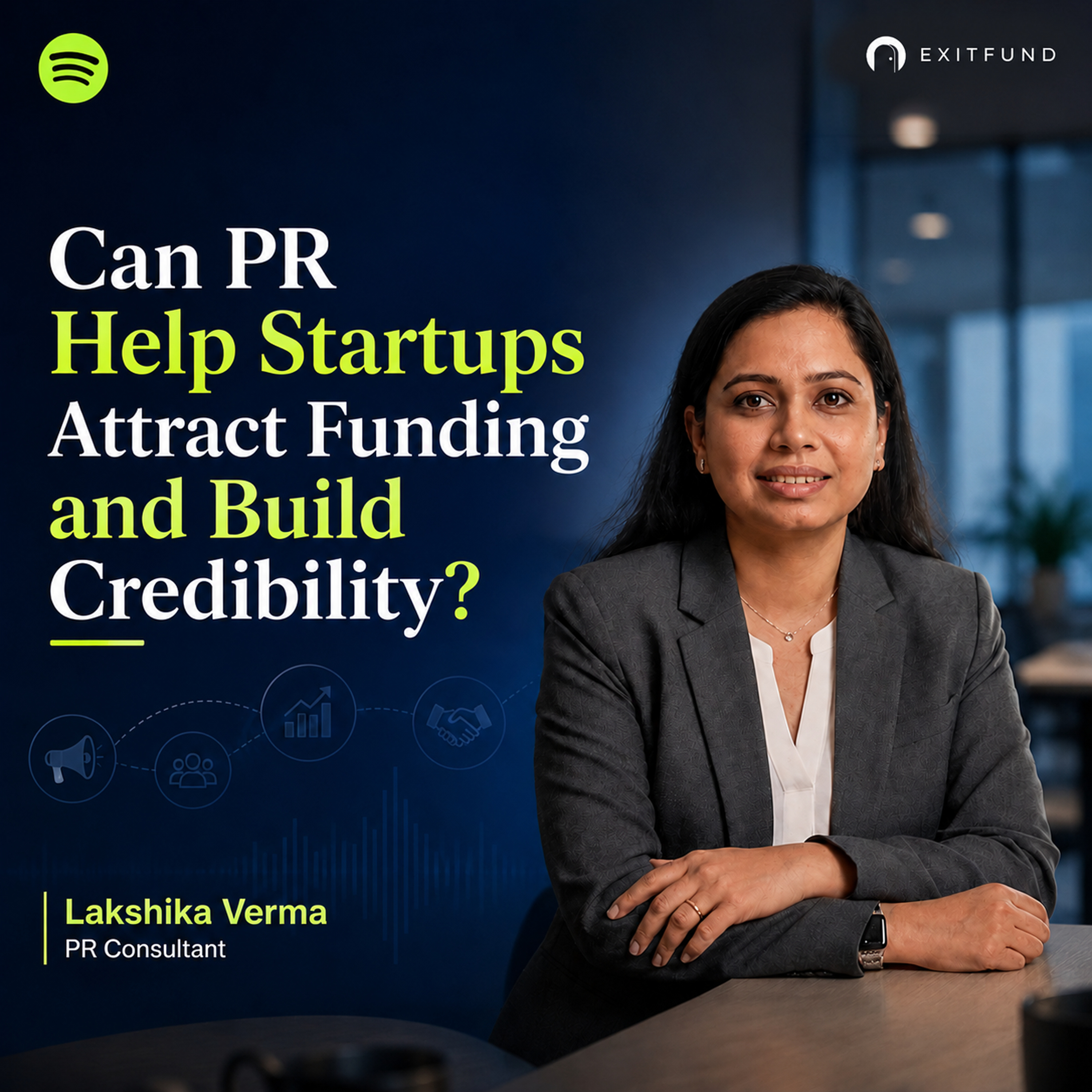
Can PR Help Startups Attract Funding and Build Credibility?
26m 9s
The global public relations market is expected to grow substantially from $110.35 billion in 2026 to $141.22 billion by 2030, fueled by digital adoption, founder-led branding, and rising demand for authentic, transparent communication. In this discussion, PR entrepreneur Lakshika highlights how startups can leverage personal brand strength to build trust and visibility. She emphasizes that founders should be visible as brand ambassadors, as seen with successful brands like Zomato and Sugar, where a recognizable face drives consumer recall. The industry has evolved from traditional in-person media rounds to digital, AI-supported outreach, where story relevance and social media appeal are crucial. While agencies now rely on digital tools to pitch journalists, the human element—such as understanding media beats and building genuine connections—remains essential. Despite increased competition and the rise of low-cost, high-volume content farms, quality PR still delivers better impact through strategic, long-term storytelling. Lakshika notes that SMEs and startups are increasingly valuable due to their agility and personal engagement, offering opportunities for PR agencies to build stronger, more meaningful client relationships. Ultimately, she stresses that doing good work with passion leads to organic growth, referrals, and sustainable success—proving that quality, authenticity, and consistency remain the core of effective PR in today’s landscape.
The global public relations market is expected to grow from $110.35 billion in 2026 to $141.22 billion
by 2030. In this episode of the Exit Fund podcast, PR Entrepreneur Lakshika discusses what
is driving this growth and how startups can benefit from it. She also explores founder-led
branding, client acquisition, AI adoption and the realities of building a successful PR agency.
Hello everyone and welcome to the Exit Fund podcast where we talk about startups and
engine investors. I'm your host Shatich and joining us today is Lakshika. Lakshika, thank you so
much for joining us on the Exit Fund podcast. How are you? Hi Shatich, thank you so much for
inviting me here. It gives me immense pleasure to be a part of this. I am doing all well,
how are you, how are things? Oh, I'm doing good and it is my pleasure to host you on the Exit Fund
podcast. Lakshika, you being an entrepreneur yourself and helping a lot of people with their
PRs and whatnot. I really want to ask you one question which is not related to PR agency or
marketing at all. Okay. I have seen this notion a lot in today's day and age that let's say in the
early 90s and 2000s in the early 2000s in that period of time. A lot of women were very enthusiastic
about building their own careers and being standing on equal grounds when it comes to
making money and being out there in the workforce. Now I'm listening a lot from a lot of my friends
and a lot of women that you want us to bear the child, you want us to work, make money and take care
of the family as well. One human being cannot possibly find time to do everything in their life
and still manage to keep everyone happy. What's your take on this?
That's a very coincidence. Today when I was talking to my mother on the call, she just
once told me that like any goddess who has eight hands, be it Durga Ma or beat Kali Ma,
that's the reason we women are meant and supposed to function. So when you see any picture,
any anything on women's day or a mother's day, any resemblance or any image that you see
has a lately standing with eight of her hands as a tentacles where she's holding a baby. She's
doing household chores. She's running from pillar to post to getting the things done. So that's
what we are positioned to. I mean, anything historically, in mythological also, we have
felt that it's not something that women are not meant to do this. We are positioned
function that you have to deliver a baby also. You have to do the social commitments also.
You have to go to work also. You have to manage the house also and on the other hand, we are lucky
that we are blessed with a family and nowadays the perception is also changing. You are getting
your partner who is so supportive. They understand you well. You're family understands you well,
but if you see in the past where you were being told that a mother or a lady is only supposed to
do everything and if anything happens, let's say your kid is not doing well. She's unwell. Your son
is unwell. It's always the mother who stays at home and she's meant to do those things. No,
you have to stay. You have to take care of the kid, even if you're working. But nowadays,
I see that that notion is changing. Men are becoming supportive and financial independence that
gives you that liberty where you have a right to say yes or no. If you are working and earning,
you have a liberty and you have a right to say this to your husband. No, I'm also, you know,
on it. I'm also working. Why don't you stay and take care of the kid? But somehow, Shirtich,
I felt that this is only 30-40%. You know, the percentage. If we see the larger horizon, if we
see the broader perspective, we still see there in a family, if you're stepping, there would be
some ladies or aunties or somebody would be like, no, no, a mother only has to take care of the
kid. Why she's stepping out or not? Why the father is, if a father is even stepping out, going
to the work, it's all good and all very beautiful in the eyes of the audience. But on the other hand,
we have achieved a lot that notion will also change and considering the eight arms, eight nine
arms, we have, we are meant to multi-task. We have, we are meant to work in position in that way.
So I think I've answered your question. Absolutely. I mean, it is, I honestly feel like it's
supposed to be a collective effort. In one household, there is work that earns you money,
there's work that you really need to do, for example, chores and taking care of people around you.
That is supposed to be a collective effort from men and women and whoever there is in the household,
just one person cannot do everything. Everyone will have to do everything, right?
Yes. Yes. And I believe it's very similar when it comes to entrepreneurship as well.
Because as an entrepreneur, one has to be in men or women, one has to do the task that one feels like
this should have been delegated, this should have been done by someone else, or I should put this
responsibility on someone else's shoulder. But as an entrepreneur, especially in the beginning,
one has to do everything by themselves. What's your thing on that?
It is shit there. There are some days when I am trying to speak to the brands that I'm handling,
when I'm completing the docket that was your part, which is very operational, when I'm trying to
make a couple of calls to the journalist and the media fraternity, saying, okay, there's a crisis
happen, or there is a story that has to come out, there is this angle we have to give.
So definitely, like the multiple tentacles while keeping all this, we are doing everything.
And when you run a business, when you start any business, you don't feel any work is condescending.
You just stood at this is your part, this is your business. I'm sure when you work for any organization,
you take the perspective in a different way, but are running your own show, you are the protagonist,
you are the circus master, you are the one who drilling, drilling, and doing everything.
So you just can't blame to anyone. If a team is not working, you have to come up, you have to
smell the coffee, you have to pull up your socks, and you have to do everything.
So that goes without thinking on a brand new shift.
Absolutely. So this 15th August, I went to the mountains for a very little road trip,
and I met a couple over there. So that couple works as they make websites, they do marketing
for brands, but they are very strict about the fact that we do not really want to work for any
Indian clients. I'm like, whoa, why? Why do you not want to work for Indian clients? Because
the effort that they are putting into getting the work done, and after that, the reward that they get,
and delay in payments, this, that, and they feel like it's a lot of hassle. What's your experience
with it? There will be very frank shortage. I've been blessed with that line. So it's been super
cordial and support terms of payments and terms of work in terms of deliverables, whatever we
have given it to them. Like I said, there is a there is a mental block and preconceived notion in
your mind, which have this. And of course, everybody has a different perception and take to it.
You can't, you know, broom everyone with the same stick, but yes, in the past, when I started
the startup, I used to take the clients and work on a very small retainer, considering that
because PR is all wood of mouth, I need to build my brand. There have been certain circumstances
where we have faced because I have, till now, we are working with a couple of international brands,
but the Falcos are Indian. So definitely, when you work any international brand or a person who
is a Brit, who is a French, then the mindset is very different. But likewise, having said that,
yes, there have been certain circumstances where the payment was not clear. We had to really beg,
not like a beg, beg kind of a thing, but we have to wish, we have to tell them,
this is our hard work, we have to clear the retainer. So multiple times, but there have been
certain times, yes, when the client has been superb, it's in a jolly mood. Yeah, they are like,
no, okay, we have done this work, this is your, you know, due diligence, this is your paycheck,
that you have to, we have to clear it. So I think it's a big stuff, persona that people create,
I should, I would slightly digress here saying, it's very difficult, it's not very difficult to
work with Indian brands till the time you are sorted, your deliverables are done, the clients are
them exactly what are they asking for if you are in a need of eating a burgo and if I give
this or that would not substantiate your hunger right then so according how you treat the conversation
when you pitch any brand that time the conversation has to be super transpired and that time you don't
phase these kind of thing which the other brands these days or the other you know agencies face it
later just for for the sake of adding one more brand to the kitty or making sure your invoice
gets clear you should just pursuing it got it got it this one more thing that they talked about
on that trip which shook me from the inside and I'm like this must be the reality for a lot more
people maybe not as harsh but definitely for a lot more people they told me that in order to get
two three clients every month they have to cold approach their clients potential clients
by the number of 300 potential clients a day and I was shook by it that if earlier it was not
this bad is it this bad for mostly everyone or is it just about the people who are starting with
their own venture especially in Piafield oh should this to be very frank when I started this
definitely going from one to ten was a milestone and it was not a paper to crack and it's
still tedious but I personally believe when you do good work and you do with your heart and soul to
it work you keep getting work like in navigation tone if I have to say just do good work if money will
follow so the thing is yes it is difficult to get the plans do a bd or business development
to multiple pitching we also fill a lot of rfp or request for proposal we send our deck to them
and it's a multi-c pitch all the agencies come pitch their brands so entire process but when you
get associated with one let's say venture capitalist or maybe a startup or somebody where you
want to do a release they keep referring you with the kind of work you have done
they'll now spend three years it has been hunky-dory for me I keep getting referrals I keep getting
brands and that's how I've increased my business but yes like set the more the merrier we also do
pitch not 300 but yes we also try to pitch 5 to 10 brands in a day that makes a sum of 70 brands
in a in a week and then you see the conversion rate sometimes there are instances because we
are a very small fish in the pond there are there have been some instances that we have shared
the invoice the brand of time and whenever it's a festive month whenever the months are little slow
it's a festival heavy dates then also you get comparatively you know affected so what I feel
we do we do business development every day it's a part of all the business whether are you in
sales or marketing or any agency anything but the conversion rate depends on how the work
you have done in the past and what you will deliver once the client comes on board
yeah got it got it so testimonials are one thing which can really sell
whatever one or service or product that you are trying to sell for example there is
comment section even on amazon so that people can see the testimonials in person apart from testimonials
what other strategy do you use in order to convince your clients that the service that you are
offering is the one that they really need apart from testimonials to be very frank till the
clients we have been associated with we have been giving them all the strategies that we have been
using be it telling them that their product is very good they should promote on you know e-commerce
e-commerce they should do PR they should do articles they should do what cars like the one we are
doing it so these stuff is keep on coming on and off but on the other hand we suggest them
that founder should be the face of any particular brand that's how people resembles the brand
today if I know the zomato it's because of the pender goil or maybe if I know the sugar it's
maybe because of veneta yeah so having said that there are a lot of things comes on and off the
strategies the proposal we work the kind of we are tools we use so apart from founders face
and the visibility we also tell them to interact more and more with the audience because somebody who
is remembering the face of a CEO will definitely remember the brand yeah definitely you work
with over more than 100 brands now across multiple sectors if you have to generalize it because
I'm pretty sure a lot of different brands from different sectors have different requirements to
what they require in terms of PR or marketing if you have to generalize it what are the brands
looking for when it comes to getting their PR or marketing done see many brands come to us whenever
they're in a require of a funding like we say there is saying in PR that whenever you get your
story you will get funding and if you get funding it means you will come in your story your store is
one of a credible renowned a part of portals having said having said it a lot of brands they come
to us whenever there's a lot of funding whenever they need some visibility whenever they want
some action saying okay the other competitors brand are doing this and we should also do
and they slightly confuse the PR with advertising though I understand advertising and PR are the
two sides of the same coin yeah but they're comparatively very different in advertising you pay a
very humongous amount the conversion rate is low yeah and out it's very less but in PR again
I wouldn't be saying amount is that humongous it is lucrative or is a lucrative field
but even spending a small retainer you get some visibility in the media yeah now for me
help them understand how do we get the visibility there has to be a complete process of you know
the tools that we provide the work that we do and I started to develop for them and PR is not
an exact science to like we say Rome was not built in a day in a similar way you can't be you
know skeptical of the fact that today we are giving you xyz amount and tomorrow you will be in
the news it takes time to work on any brand if today Colgate has done a positioning it means there
has been someone who has worked for it today in a in a normal household nobody sees you know
give me a toothpaste people say give me a Colgate yeah that matter people say don't give me
detergent people say so pixel because that's how the positioning has been done in the past many
many decades yeah so it's the funding or it's an awareness or it's a consumer building or it's
a positioning that's how the brands come to us got it got it so how has it transformed so far
because the the things that work in today's day and age they are not exactly the things which
used to work let's say five ten years ago how has the industry transformed so far because
if we take an example of a podcast host or a show host the things that I am doing right now work
right now but the things that used to work let's say in the black and white era people if if
someone tried to do the exact same thing on a podcast let's say people would laugh at that guy
what are you doing this does not work so in the PR in the PR field what do you think has changed
right now oh I think Chathach as we cross any decade and as the newer generation steps in
there has been time with traditional way of doing a PR becomes a Robe's elite there have been
times I started my career in 2015 and we still used to go to I mean sorry not still would be a
bad word or here incorrect word used to go to the media round we used to meet the journalist
greet them give them meetings on occasions of the valley and you know Chris for whatever any
you can so that transition has I feel has reduced a lot I mean I would be incorrect if I say none
of them to visit or go for a media round yes there are people who have been doing it but of
course the transition and the gap has increased that has become various nowadays because the journalists
are approachable if the story is very good I'm not saying the answer Michael they in and
they out but if you're pitching them correctly if you know with journalists is writing on which
beat who's the right media who's just the right platform they will respond to you so that
approachability factor has also been one of the case where you're connecting them on WhatsApp
whether the answer you call they don't they are reading your messages right yeah so that thing
has become increased, so meeting them in person.
has drastically reduced. Now it is with a content of AI which has come earlier
with the days where you used to write the press release think I used to work on a
pitch note of course only we used to use just to correct the subject for
Bergryman part but then we actually used to ponder what will be the five
things if I have to write a pitch note how do I work on this brand I mean I
started the way back like a decadago but now with the things have become super easy
so you are just doing the basic research typing all the information and sending
it to the journalist so that thinking part or understanding or knowing the
journalist that has also become drastically reduced always PR has
become more digital yeah all your we used to carry the press release with
ourselves meet them send them do everything know about the journalist everything
is available at a one click I think that transition has changed but what not
has changed is is the way you pitch them earlier we also used to have this pitch
where we have to convince the journalist that they do our story because it's a
complicated we are organic but it's not an advertorial yeah I think that has remained
because now the way it sounds to me is it has become a little less human it has
become more digital now so if the stories let's say easily sellable on let's
say social media or news platform it would sell if it's not we are not being
able to make it in a way that it's not really very good for social media then
it would simply not sell it's not about that human connection anymore am I
understanding it right yes it is so ideally with a lot of commercialization
which has happened everybody's running their own business and everybody has to
generate money there are agencies there are buyers if 10 years ago it would
have been one or two now they are 100 or 200 okay and even the brands have
become you know knowledgeable they also they are also aware knowledgeable wouldn't
be the right thing because they have been doing it but they have they have also
become aware with the advent of social media that they know where to go if
they're not going with an agency on boarding and definitely they're going to
get these buyers who will get their news uploaded on 100 or 200 other websites
and if they will give them 300 400 links and at a very nominal cost so that
has also come into the picture which is killing a lot of your business as
well but the brats about understanding the fact that whatever money they are
spending and getting those 300 400 links are short and they're useless whereas
if there is an agency on board who knows how to convince and pitch this to any
journalist from any renowned organization will have a different impact
absolutely so that bridge that gap we are trying to bridge here got it got it
as we close our podcast let me ask you a few very quick questions and I wanted
to answer them very quickly okay mountains or beaches oh I'm always been a
beach person oh but you listen to the mountains I lived in the mountain I was born
in Pasigot but I was ever liked it all these a person a beach person okay okay
got it got it take companies or factories oh tech companies I've always been
wanted to marry to a person who's been a working professional okay somebody who
has a nine to five job but definitely my husband has a work from home set up but
it has been all these always tech companies never like a factory kind of a
setup I like of course the latter is more lucrative in terms of money but
fact working professionals have a different vibe there's a there's definitely
some charismatic thing they have so I've always been glued to SMEs or really
big companies which one is better to work with I I feel really big companies have
a lot of standard procedures and then hierarchy is more than you then you're
able to learn or understand and associate them okay you're working with these
brands but I would still say SMEs because it's good to associate with them
convince them get more referrals yeah yeah SME instead of the procedure to follow you
can actually do a human connection with the people you are working with yes rather
than getting into all this hierarchy structure and then we're half of them the
work is always procrastinated so I feel like the future of India is is filled with
a lot of SMEs and a lot of work is coming your way as well I assume so up to
this podcast who server is listening if anyone yeah absolutely I'm pretty sure
a lot of people are going to approach you like shika thank you so much for
joining us on the exit front podcast it was so much fun talking to you about a
lot of topics not just PR or marketing and I really enjoyed it I'm sure audience
will do the same I'm glad I'm hopeful or I get more referrals more work and yes
I'm just a call away I have to be willing effective PR can help startups
earn credibility sprint in their position and build meaningful visibility
over time thanks for listening follow the exit front podcast for more
conversations on startups entrepreneurship marketing technology and emerging
industries.
Podcast Summary
Key Points:
The global public relations market is projected to grow from $110.35 billion in 2026 to $141.22 billion by 2030, driven by digital transformation, founder-led branding, and increased demand for authentic visibility.
Startups benefit from this growth by leveraging founder-driven narratives, where CEOs become brand faces, enabling deeper audience connection and trust through personal authenticity.
The PR industry has shifted significantly—from traditional media rounds and manual pitch notes to digital, AI-assisted, and content-driven outreach—where success now depends on story relevance, social media compatibility, and efficient client acquisition through referrals.
Summary:
22 billion by 2030, fueled by digital adoption, founder-led branding, and rising demand for authentic, transparent communication. In this discussion, PR entrepreneur Lakshika highlights how startups can leverage personal brand strength to build trust and visibility. She emphasizes that founders should be visible as brand ambassadors, as seen with successful brands like Zomato and Sugar, where a recognizable face drives consumer recall.
The industry has evolved from traditional in-person media rounds to digital, AI-supported outreach, where story relevance and social media appeal are crucial. While agencies now rely on digital tools to pitch journalists, the human element—such as understanding media beats and building genuine connections—remains essential. Despite increased competition and the rise of low-cost, high-volume content farms, quality PR still delivers better impact through strategic, long-term storytelling.
Lakshika notes that SMEs and startups are increasingly valuable due to their agility and personal engagement, offering opportunities for PR agencies to build stronger, more meaningful client relationships. Ultimately, she stresses that doing good work with passion leads to organic growth, referrals, and sustainable success—proving that quality, authenticity, and consistency remain the core of effective PR in today’s landscape.
FAQs
The global public relations market is expected to grow from $110.35 billion in 2026 to $141.22 billion by 2030.
Startups can benefit by leveraging founder-led branding, building trust through authentic storytelling, and gaining visibility through strategic media outreach and PR campaigns.
AI has simplified PR tasks like pitch note writing and press release drafting, making content creation faster and more accessible, though the human element in storytelling and pitching remains crucial.
Founders are seen as authentic and relatable face of brands, helping build trust and emotional connections with audiences, as demonstrated by brands like Zomato and Sugar.
The industry has shifted from in-person media rounds and traditional pitch methods to digital, content-driven approaches where journalists are more approachable via messaging and social media.
Brands seek agencies that offer authentic storytelling, strong media relationships, clear deliverables, and proven track records—especially during funding rounds or when competing with others.
Chat with AI
Loading...
Pro features
Go deeper with this episode
Unlock creator-grade tools that turn any transcript into show notes and subtitle files.
 PodcastTranscript AI